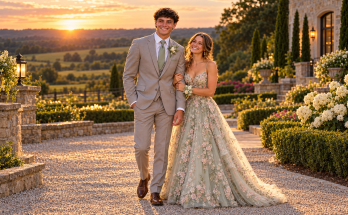
“There’s something else you should know about why Daniel disappeared after Dad died.” Sophie’s voice was soft. Not accusing. That somehow made it worse. Around us, the wedding continued in a strange suspended silence. A child chased soap bubbles near the fence.
Someone adjusted a tray of lemonade. Wildflowers trembled in glass jars. The little backyard I had entered expecting to pity suddenly felt more dignified than every ballroom Valerie’s family had ever rented. I looked at my brother. Daniel lowered his eyes. “Sophie.” “No,” she said gently. “He should know.”
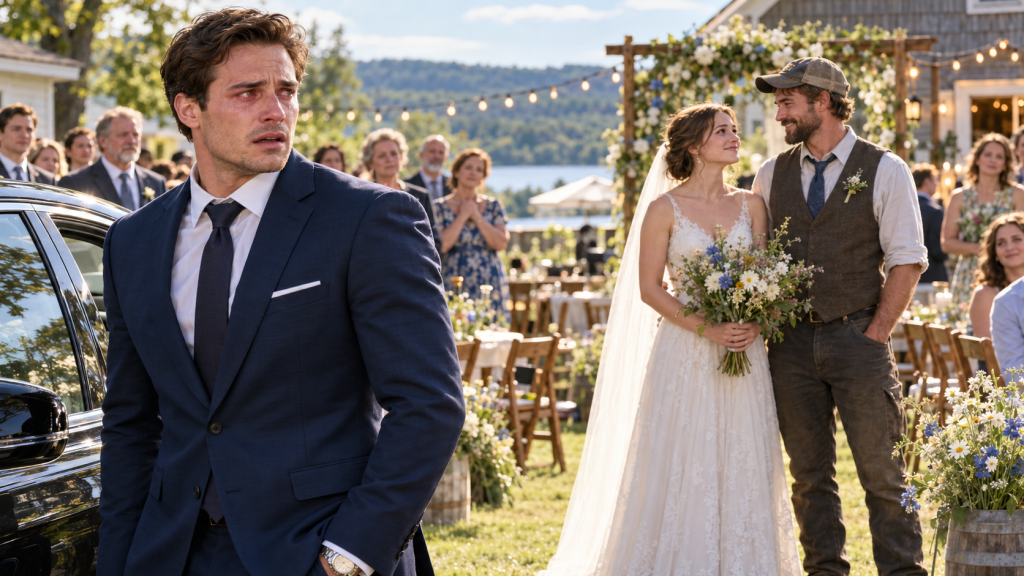
My stomach tightened. “Know what?” Daniel leaned on his cane. His left leg still carried the stiffness of the accident, but his face carried something heavier. Resignation. “Dad didn’t leave me money, David.” I frowned. “I never said he did.” “No.” Daniel looked at me. “You assumed I left because I took what was left.” Memory came back immediately. Our father’s funeral.
Rain.
Black umbrellas.
Anger.
I had been twenty-five, exhausted from work, still desperate to prove I belonged in the world of expensive suits and glass offices.
Daniel had arrived late in work boots.
Mud on his cuffs.
I had hated him for looking like a laborer at our father’s funeral.
As if grief had a dress code.
After the burial, we argued behind the church.
I called him irresponsible.
Said he had wasted his life.
Said Dad had worried about him until the day he died.
Daniel said almost nothing.
Then disappeared from New York less than a week later.
I told myself he had run.
Now he asked:
“Do you remember Dad’s house?”
“Of course.”
“The bank took it.”
I stared.
“No.”
“Yes.”
“He owned it.”
“He owed on it.”
I shook my head.
“Dad paid that mortgage for twenty-eight years.”
Daniel gave a sad smile.
“And borrowed against it three times.”
My chest tightened.
“For what?”
He did not answer immediately.
Sophie did.
“For you.”
The word fell quietly.
It landed like stone.
I looked at her.
“What?”
Daniel’s jaw tightened.
“Sophie.”
She looked at him.
“You’ve protected him long enough.”
Then she looked at me.
“Your father refinanced the house after you got into Columbia.”
I laughed once.
Not because it was funny.
Because my mind rejected the sentence.
“I had financial aid.”
“You lost part of it sophomore year,” Daniel said.
I remembered.
A scholarship had been reduced.
Dad told me not to worry.
He said he had “worked something out.”
I assumed savings.
I assumed discipline.
I assumed the kind of quiet parental competence children mistake for magic.
Daniel continued.
“Your tuition balance was almost thirty-two thousand that year.”
My mouth went dry.
“Dad borrowed.”
“And the next year?”
“Again.”
I stared.
Daniel’s voice became quieter.
“By the time you graduated, he had taken out more than ninety thousand dollars against the house.”
The string lights above us blurred.
“No.”
“He never told me.”
“I know.”
“Why would he—”
“Because you were the first Harris to get into Columbia.”
Daniel smiled painfully.
“He was proud.”
My throat burned.
“He was proud of you too.”
Daniel looked away.
“That wasn’t the point.”
Of course it was.
It had always been the point.
Dad praised my grades.
My internships.
My suits.
My future.
Daniel worked construction.
Fixed engines.
Framed houses.
Came home with concrete dust in the lines of his hands.
I had mistaken the difference in our lives for a difference in our worth.
Just like I later did to Sophie.
I whispered:
“What happened after he died?”
Daniel looked toward the wooden fence.
“His life insurance was smaller than you thought.”
“How small?”
“Twenty-seven thousand after final expenses.”
I swallowed.
“The mortgage?”
“About one hundred eighteen thousand outstanding.”
My chest tightened.
“What did you do?”
“I sold my truck.”
“You loved that truck.”
He shrugged.
“I sold Dad’s tools.”
I stared.
“The red toolbox?”
“Yes.”
“He left that to you.”
“I know.”
“What else?”
Daniel’s mouth tightened.
“My savings.”
“How much?”
“Twenty-six thousand.”
“And?”
“I took over the remaining debt as part of an arrangement with the lender.”
I shook my head.
“You couldn’t assume the whole mortgage.”
“Not directly.”
“No.”
He sighed.
“Dad had other unsecured debt too. I negotiated some. Paid some. Let the house go.”
I stepped backward.
“You did all that alone?”
“You were starting your new job.”
“You should have told me.”
Daniel finally looked angry.
“Really?”
The word cut.
I fell silent.
He continued.
“At Dad’s funeral you told me I had wasted my life because I still worked with my hands.”
I closed my eyes.
“I remember.”
“You told me not to come asking you for money when the consequences of my choices caught up with me.”
Each sentence returned exactly as I had spoken it.
Cruelty has excellent memory.
Daniel continued.
“And I was standing there knowing Dad had gone into debt to keep you in school.”
My eyes filled.
“I didn’t know.”
“I know.”
“You should’ve told me.”
“Maybe.”
He leaned harder on the cane.
“But Dad asked me not to.”
“What?”
Daniel reached inside his jacket.
Another folded paper.
Older than the first.
He handed it to me.
Dad’s handwriting.
Daniel,
David has spent his whole life afraid of becoming poor again. Do not let my mistakes become chains around his ankles. If there is debt, deal with what you can. Tell him when he is old enough to understand that being helped is not the same as being weak.
I stopped reading.
There was more.
I couldn’t.
My father had known me better than I knew myself.
Afraid of becoming poor again.
That was true.
We had grown up in a narrow apartment above a laundromat before Dad finally bought the little house in Queens.
I remembered powdered milk.
Heat turned low in winter.
Dad counting coins at the kitchen table.
Daniel patching my school shoes with glue.
I had promised myself I would never live like that again.
Somewhere along the way, I stopped wanting security.
I started wanting distance.
Distance from cheap shoes.
From construction dust.
From hotel reception desks.
From anything that reminded me where I came from.
And I had mistaken people for the poverty I feared.
I looked at Daniel.
“Why didn’t you come back?”
His expression changed.
“That part isn’t about Dad.”
Sophie reached for his hand.
Daniel glanced at her.
Then at me.
“Three years ago, I was working a commercial site near Albany.”
I nodded slowly.
“The scaffolding accident.”
“Yes.”
“You said it collapsed.”
“It did.”
“But?”
Daniel took a breath.
“The site was part of the Northstar development.”
My blood went cold.
Northstar.
My company had spent eighteen months closing that account.
A massive regional commercial development deal.
Hotels.
Retail.
Office space.
Construction procurement.
I had celebrated when the contract was signed.
I remembered champagne in Valerie’s father’s office.
A bonus.
My BMW came two months later.
Daniel watched my face.
“You know it.”
“Yes.”
“I helped sell the account.”
“I know.”
I stared at him.
“How?”
Sophie answered.
“Your name was on the paperwork Daniel found during the lawsuit.”
My mouth went dry.
“What paperwork?”
Daniel looked away.
“The subcontractor was under pressure to reduce costs.”
“That’s normal.”
The words came automatically.
Corporate language.
Safe language.
Daniel looked back at me.
“They cut safety staffing.”
My heart started pounding.
“I didn’t authorize safety reductions.”
“I know.”
“They reduced certified inspections from daily to three times weekly on that section.”
“That would’ve been the contractor.”
“Yes.”
“Not sales.”
“I know.”
“Then why are you looking at me like this?”
Daniel’s face softened.
“I’m not blaming you for the collapse.”
That should have relieved me.
It didn’t.
He continued.
“But one of the emails used during the civil case came from your department.”
“What did it say?”
Daniel hesitated.
“David.”
“What did it say?”
He sighed.
“Northstar complained that the initial contractor bid was over budget.”
“I remember.”
“Your team pushed for an eight-percent reduction.”
“That was my job.”
“I know.”
“Daniel, every corporate client negotiates cost.”
“I know.”
“Then say it.”
He looked at me.
“The email said, ‘I don’t care where they find the savings. Make the number work.’”
The backyard disappeared.
I remembered writing it.
Not exactly when.
There were hundreds of emails like it.
Quarter-end pressure.
Valerie’s father demanding margin.
My own ambition.
I don’t care where they find the savings. Make the number work.
I whispered:
“That doesn’t mean cut safety.”
“No.”
Daniel’s voice was calm.
“It doesn’t.”
“But the subcontractor testified the cost pressure moved downstream.”
I stared.
“Did my email cause your accident?”
“No.”
“Tell me the truth.”
“I am.”
He stepped closer.
“A failed locking pin caused the collapse.”
“The equipment had missed an inspection.”
“Would a daily inspection have caught it?”
“Maybe.”
“Maybe not.”
“So no, David.”
“You did not push me off a scaffold.”
I breathed.
But not enough.
Daniel continued.
“The company lawyers tried to blame the subcontractor entirely.”
“Valerie’s father?”
“His legal department.”
“What happened?”
“They offered settlements.”
“How much?”
Daniel gave a humorless laugh.
“Enough to cover my surgeries.”
“Not enough to give me my leg back.”
My chest tightened.
“You took it?”
“No.”
“Why?”
“I joined the group claim.”
Of course he did.
Daniel had always been stubborn in ways I called foolish when they didn’t make money.
“What happened?”
“Two years of litigation.”
“Safety violations were established against the subcontractor.”
“Northstar accepted partial civil responsibility through settlement without admitting the larger allegations.”
“Your company wasn’t criminally responsible.”
I swallowed.
“And you?”
“Got compensated eventually.”
“How much?”
“That isn’t relevant.”
“It is to me.”
“No.”
His voice sharpened.
“It isn’t.”
I stopped.
He was right.
I had spent too much of my life using numbers to decide whether pain counted.
Daniel looked toward Sophie.
“She was there before any settlement.”
Sophie squeezed his hand.
He smiled at her.
“When I met her, I had eighty-three dollars in my checking account.”
She smiled.
“Seventy-six.”
He looked offended.
“You remember?”
“You bought coffee.”
“Right.”
For the first time that afternoon, they laughed.
Together.
Easy.
Unperformed.
I looked at them and understood why I had come.
I had wanted Sophie to see what she had lost.
Instead, I was being forced to see what she had found.
Not a rich man.
Not an executive.
A man who had been broken physically and still knew how to love without making someone feel smaller.
Sophie looked at me.
“When I first saw Daniel at the rehabilitation center, I didn’t know he was your brother.”
I stared.
“You really didn’t?”
“No.”
“He gave his name as Dan.”
Daniel shrugged.
“I was tired of being Daniel Harris on every legal form.”
Sophie continued.
“He was angry.”
“I was charming.”
“You threw a pudding cup at a wall.”
“It missed the wall.”
“It hit a nurse’s cart.”
Daniel cleared his throat.
“Technical distinction.”
Sophie smiled.
Then looked at me.
“He had been told he might never walk without assistance.”
“He had lost the apartment he was renting.”
“He couldn’t return to his old work.”
“He thought his life was over.”
Daniel’s expression darkened.
Sophie continued.
“So I started bringing books.”
“Bad books,” Daniel said.
“Wonderful books.”
“Romance novels.”
“You read all of them.”
“I was trapped.”
“You asked for the sequels.”
I watched them.
Something inside me cracked quietly.
I remembered dating Sophie.
How she used to bring me coffee during finals.
How she once waited three hours outside an interview because I forgot my umbrella and it was raining.
How she mailed my mother a birthday card every year even after my mother forgot hers.
I had called those things sweet.
Then ordinary.
Then insufficient.
I wanted sophistication.
Connections.
Status.
I married Valerie.
And spent five years trying to earn permission to feel equal in my own home.
There are punishments life does not impose.
We build them ourselves.
I looked at Sophie.
“Did you know about the email?”
She nodded.
“When?”
“Before Daniel and I started dating.”
My stomach dropped.
“So you knew my company was involved in his accident.”
“Yes.”
“And you never called me?”
Her expression changed.
“Why would I?”
The question was not cruel.
It was clean.
I had no answer.
She continued.
“You weren’t part of my life anymore.”
That hurt more than accusation.
Not anger.
Irrelevance.
I whispered:
“I’m sorry.”
Sophie looked at me.
“For what?”
Everything.
How could a single apology carry that weight?
“For coming here like this.”
She understood.
Maybe she always had.
“I know why you came.”
Daniel’s face hardened.
“You came to mock us?”
I looked down.
“Yes.”
He laughed once.
Not amused.
“Nice suit.”
I deserved that.
“I heard Sophie was marrying a poor construction worker.”
Daniel raised an eyebrow.
“Technically unemployed construction worker.”
Sophie nudged him.
“He teaches vocational classes now.”
Daniel looked at me.
“And consults on site safety.”
I blinked.
“What?”
He shrugged.
“I can’t climb scaffolds.”
“But I know what should happen before other people do.”
There it was again.
Worth detached from prestige.
A skill transformed instead of discarded.
I had spent my whole life asking how high a person had climbed.
Daniel had learned how to stop others from falling.
Sophie said:
“He also runs a small training nonprofit with two former foremen.”
Daniel looked embarrassed.
“It’s tiny.”
“Last year they certified two hundred apprentices.”
I stared.
“You never told me.”
He laughed.
“You never asked where I was.”
That one landed.
I had not.
Seven years.
Not once had I truly searched for him.
I told people:
“My brother and I aren’t close.”
As if distance were weather.
As if no one created it.
Across the yard, an older woman clapped her hands.
“Sophie, honey, we should start soon.”
The wedding.
Of course.
I had turned their wedding into my reckoning.
Shame crawled up my neck.
I stepped backward.
“I should leave.”
Sophie looked at me.
Daniel said nothing.
I nodded toward the gate.
“I shouldn’t have come.”
I turned.
“David.”
Sophie’s voice stopped me.
I looked back.
She walked toward me.
Not close enough to touch.
“You can leave because you’re embarrassed.”
“Or you can stay because your brother is getting married.”
My throat tightened.
Daniel looked at her.
“Sophie.”
She smiled at him.
“He can sit in the back.”
I almost laughed through tears.
“Why?”
She looked at me.
“Because humiliation isn’t the lesson.”
“Then what is?”
She thought.
“Maybe learning to stay when you’re no longer the most important person in the room.”
I looked at my brother.
Daniel’s jaw worked.
Then he pointed toward the last row of folding chairs.
“One seat.”
I nodded.
“Thank you.”
He held up a finger.
“No speech.”
“Fine.”
“No BMW references.”
“Fine.”
“No networking.”
I almost smiled.
“Fine.”
“And if you criticize the food, I’ll hit you with this cane.”
Sophie gasped.
“Daniel.”
“What? Symbolically.”
For the first time in years, I laughed with my brother.
It hurt.
It also felt like air entering a sealed room.
I sat in the back.
The ceremony began at 4:17 in the afternoon.
I remember the time because my phone lit when Valerie called.
I silenced it.
For once.
Sophie walked down a path of flower petals with her mother.
No orchestra.
No cathedral.
No designer dress I recognized.
She wore simple ivory.
Daniel cried before she reached him.
He did not hide it.
The officiant spoke about partnership.
Not completion.
Partnership.
“Love,” she said, “is not finding someone impressive enough to decorate your life.”
My eyes burned.
“Love is finding someone whose humanity you are willing to protect, especially when protecting it costs you convenience.”
I wondered if Sophie had chosen that sentence.
Probably not.
Life sometimes has a cruel sense of timing.
Daniel said his vows.
“Sophie, you met me when I could barely stand.”
He paused.
“Literally.”
Everyone laughed.
He continued.
“You never treated me like a project.”
“You never loved me for what I might become.”
“You loved me while I was angry, scared, broke, and impossible.”
Sophie smiled through tears.
“You were extremely impossible.”
“I know.”
Then his voice broke.
“You made me understand that being helped does not make a man smaller.”
My father’s letter.
The same lesson.
I lowered my head.
Daniel continued.
“So I promise I will never make you earn kindness from me.”
That sentence destroyed me.
Valerie had made me earn kindness every day.
A promotion.
A dinner invitation.
A seat beside her father.
A compliment.
Every good moment carried a price.
And I had once done something similar to Sophie.
I made love conditional on how impressive she looked beside my ambitions.
Sophie’s vows were simpler.
“You stayed alive long enough for me to meet you.”
Daniel laughed.
“That was dramatic.”
“Be quiet.”
More laughter.
Then:
“And every day since, you have shown me that dignity is not a number on a paycheck.”
Her eyes moved briefly toward the back.
Toward me.
Not cruelly.
Just truthfully.
“I promise never to measure our life by what other people envy.”
I looked away.
When they kissed, everyone stood.
So did I.
I applauded until my hands hurt.
Not because I was redeemed.
Because they were happy.
And their happiness did not require my suffering.
That distinction mattered.
After the ceremony, I tried to leave quietly.
Daniel found me beside my car.
Of course he did.
He looked at the BMW.
“Still nice.”
I laughed weakly.
“You always liked cars.”
“Still do.”
He ran a hand along the roof.
“Dad would’ve hated the maintenance.”
I smiled.
Then silence.
I said:
“I’m sorry.”
He looked at me.
“For today?”
“For the funeral.”
“For seven years.”
“For thinking what you did made you less than me.”
His eyes hardened slightly.
“Don’t apologize because you found out I paid Dad’s debt.”
I swallowed.
“I’m not.”
“Good.”
“Because even if you hadn’t…”
I looked toward the backyard.
“You still deserved better from me.”
Daniel stared at me for a long time.
Then:
“That’s closer.”
I nodded.
He leaned against the cane.
“You know what hurt the most?”
“What?”
“You were embarrassed by me.”
I closed my eyes.
“Yes.”
“You’d introduce Valerie’s father to everyone.”
“CEO.”
“Board member.”
“Big office.”
“But when people asked about me, you said, ‘He works construction.’”
I opened my mouth.
No defense came.
Daniel continued.
“Like you were apologizing.”
“I was.”
The honesty tasted awful.
He nodded.
“I know.”
“I’m ashamed of that.”
“You should be.”
I looked at him.
“I am.”
Then he sighed.
“Good.”
I almost laughed.
“That’s it?”
“No.”
“But I’m getting married.”
“I don’t want to spend my wedding rehabilitating your personality.”
Fair.
He started walking away.
Then stopped.
“David.”
“Yes?”
“Dad wasn’t disappointed in you.”
My throat tightened.
“He worried.”
“Different thing.”
Daniel looked back.
“He was proud of you.”
“Right until the end.”
I wiped my eyes.
“I don’t know if that makes it better.”
“It isn’t supposed to.”
Then he returned to his wedding.
I drove back to Manhattan that night.
Slowly.
No music.
Valerie had called eleven times.
By the time I reached our apartment, she was waiting in the living room with a glass of wine.
“Where the hell have you been?”
I took off my jacket.
“My brother’s wedding.”
She blinked.
“You have a brother?”
That said more about our marriage than anything else.
“Yes.”
“You never talk about him.”
“I know.”
She looked at my face.
“Why are you crying?”
“I’m not.”
“You obviously are.”
I sat down.
She studied me.
Then:
“Was Sophie there?”
I looked up.
“How do you know?”
Valerie smiled coldly.
“You’re transparent when it comes to that woman.”
I should have been angry.
Instead, tiredness settled over me.
“She married my brother.”
Valerie stared.
Then laughed.
Not because it was funny.
Because cruelty had become her reflex.
“That receptionist married a crippled construction worker?”
Everything inside me stopped.
There are moments when a marriage ends before anyone files paper.
That was ours.
I looked at Valerie.
Really looked.
Beautiful.
Elegant.
Perfect posture.
Diamond bracelet.
A woman I had once chosen because she looked like proof I had escaped my past.
And all I could hear was:
crippled construction worker.
I stood.
“Don’t call him that.”
She blinked.
“What?”
“Don’t call my brother that.”
“Oh, please.”
“He was injured on the Northstar project.”
That changed her expression.
Slightly.
Too slightly.
I noticed.
“You knew?”
She took a sip.
“Knew what?”
“That Daniel was injured there.”
“No.”
“Valerie.”
She looked away.
My stomach tightened.
“You knew his name?”
“Dad mentioned some claimants.”
“My brother was one of them.”
“I didn’t connect it.”
Maybe.
Maybe not.
I watched her.
“What do you know about the safety issue?”
Her expression sharpened.
“David, don’t bring work into this.”
“It already is.”
She placed the wineglass down.
“Northstar was settled.”
“What does that mean?”
“It means lawyers handled it.”
“People were hurt.”
“Construction is dangerous.”
The sentence sounded casual.
My chest tightened.
“Daniel nearly died.”
“I’m sorry.”
She did not sound sorry.
Then:
“But what exactly do you want from me?”
I stared.
For five years, I had asked myself that question about our marriage.
What did I want?
Approval?
Access?
Status?
A father-in-law who opened doors?
A wife whose last name made rooms turn toward us?
I realized I no longer knew.
Valerie said:
“You’re being emotional.”
Maybe.
I replied:
“I’m going to sleep in the guest room.”
She laughed.
“Because your poor brother got married?”
“No.”
I looked at her.
“Because I finally heard how we sound.”
Her face changed.
“We?”
“Yes.”
That hurt more than blaming her.
Good.
Because she was not the only one.
I had become fluent in contempt long before Valerie.
She had simply spoken it with better tailoring.
The following Monday, I opened the Northstar files.
Not secretly.
I had legitimate access to parts of the commercial record because I had managed the account.
I requested archived correspondence through compliance.
One email led to another.
Mine.
My director’s.
Operations.
Procurement.
Nothing criminal in my messages.
No instruction to ignore safety.
No knowledge of faulty equipment.
That mattered.
But the broader correspondence disturbed me.
Northstar had demanded aggressive cost compression.
Our company pushed those expectations onto contractors.
Some managers raised concerns that the cuts were unrealistic.
One operations manager wrote:
There is no responsible way to meet this timeline and cost without reducing inspection frequency or staffing.
The reply from a senior executive was:
Then find people who can.
The executive was not me.
It was Valerie’s father.
Richard Richards.
CEO.
My father-in-law.
I stared at the email.
Then found a follow-up.
The subcontractor later proposed reduced inspection staffing.
Approved.
Not by sales.
By project operations.
But the pressure had moved exactly as Daniel described.
No single email said:
Endanger workers.
Corporate failures rarely announce themselves so politely.
I sent the records to internal compliance.
That decision changed my life.
Two hours later, Valerie called.
“You opened Northstar?”
“Yes.”
“My father says compliance contacted him.”
“Good.”
“What are you doing?”
“My job.”
“No.”
Her voice hardened.
“You are making a personal issue out of a closed business matter because your brother happened to be injured.”
“Compliance can decide whether it’s closed.”
“David.”
“What?”
“You need to think very carefully.”
I almost laughed.
Five years earlier, those words would have terrified me.
Her father had made my career.
Or at least I believed he had.
Now Daniel’s face rose in my mind.
Mud on his cuffs at Dad’s funeral.
His cane.
The pudding cup.
Sophie saying:
He stayed when I had nothing.
I replied:
“I am.”
Valerie went silent.
Then:
“If you embarrass my father, don’t expect him to protect your position.”
There it was.
Protection.
The invisible leash around my career.
I said:
“If my position depends on protecting him from compliance, it isn’t much of a position.”
She hung up.
I sat alone in my office.
Hands shaking.
Not brave.
Terrified.
Real courage is often just fear that has run out of acceptable exits.
The review took six months.
Not six dramatic days.
Six months of interviews.
Lawyers.
Document holds.
Board meetings.
Outside counsel.
The company eventually disclosed that earlier internal reviews of the Northstar project had been incomplete.
Several managers had failed to escalate safety-related warnings appropriately.
Richard was not charged with causing the accident.
Evidence did not establish that.
But the board found serious governance failures in how cost pressure, contractor oversight, and later internal responses had been handled.
Richard resigned.
Officially, retirement accelerated by “strategic transition.”
Everyone knew.
I testified internally.
Not against him personally.
About my own emails.
My sales pressure.
What I knew.
What I didn’t.
What I should have questioned.
That distinction mattered.
I did not pretend to be a whistleblower hero.
I had helped build the culture.
I simply stopped protecting it.
My own career suffered.
No dramatic firing.
Worse, in some ways.
People stopped inviting me into certain rooms.
Clients moved.
My promotion track disappeared.
My annual bonus fell by almost half.
Then, nine months later, I resigned.
Valerie called it career suicide.
Maybe.
I called it being tired of waking up ashamed.
Our divorce began before the corporate review ended.
She filed first.
I was relieved.
That surprised me.
We had no children.
Property division was unpleasant but manageable.
She tried once to blame Sophie.
During mediation, Valerie said:
“You destroyed our marriage after seeing your ex.”
I looked at her.
“No.”
“You did.”
“Sophie showed me something.”
“A comparison?”
“Yes.”
Her face tightened.
I continued.
“She was happy without needing anyone beneath her.”
The mediator shifted uncomfortably.
Valerie said:
“So I’m a terrible person?”
I thought.
“No.”
That surprised her.
“You learned the same thing I did.”
“What?”
“That status can hide insecurity.”
Her eyes filled.
For the first time, she looked less like Valerie Richards, CEO’s daughter.
More like a woman who had spent her own life being measured by proximity to her father.
I continued.
“You made me feel small.”
“Yes.”
“And I stayed because being married to you made me feel important.”
She looked away.
“That isn’t love either.”
No.
It wasn’t.
We divorced eleven months later.
No grand revenge.
No humiliation.
Just signatures.
Lawyer invoices.
Two people admitting the contract had ended long before the paperwork.
I sold the BMW.
Not as penance.
The maintenance really was ridiculous.
Daniel laughed for five minutes when I told him.
Our reconciliation was slower.
Much slower.
For the first year after the wedding, I called.
He usually let it go to voicemail.
I kept calling.
Not every day.
No guilt.
No dramatic messages.
“Hey, it’s David. Hope the safety class went well.”
“Happy birthday.”
“Mom’s old recipe book turned up in storage. Do you want it?”
Small things.
Ordinary.
Eventually he called back.
“Stop leaving polite voicemails.”
“What should I leave?”
“Funny ones.”
“I’m not funny.”
“I know.”
That was the first opening.
I took it carefully.
I visited upstate.
Not in a suit.
Daniel noticed.
“Who died?”
“No one.”
“Then why are you dressed like a civilian?”
I looked at my jeans.
“This is normal.”
“For you this is witness protection.”
Sophie laughed from the kitchen.
Their house was small.
Rented.
Warm.
The kitchen table had scratches.
Daniel’s cane leaned against the counter.
There were wedding photos everywhere.
I felt something I had not expected.
Peace.
Sophie handed me coffee.
“Still take it black?”
I stared.
“You remember?”
She shrugged.
“I remember lots of things.”
I looked down.
She added:
“Remembering isn’t the same as wanting them back.”
Clean.
Kind.
Necessary.
“I know.”
Good.
We never discussed our old relationship romantically again.
There was nothing to discuss.
Sophie did not belong to my regret.
She belonged to her own life.
And Daniel.
Over time, I started helping with Daniel’s nonprofit.
Not by giving speeches.
Not by writing a giant check and putting my name on a wall.
At first, he asked me to help build budgets.
Grant applications.
Insurance projections.
Vendor negotiations.
Economics.
The thing I had once believed made me superior became useful when offered without superiority.
One evening, we stayed late in their tiny office.
Daniel reviewed an apprenticeship proposal.
I built a spreadsheet.
He looked over.
“You’re good at this.”
I smiled.
“Columbia.”
He threw a paperclip at me.
“Don’t ruin it.”
I laughed.
Then grew serious.
“Daniel?”
“What?”
“How much did you actually pay after Dad died?”
He sighed.
“Still doing this?”
“I want to know.”
“Why?”
“Because I spent years thinking you abandoned us.”
Daniel stared at the proposal.
Then:
“About sixty-three thousand personally.”
My throat tightened.
“Plus the truck?”
“Yes.”
“Plus tools?”
“Yes.”
“Why didn’t you ask me for half after I started earning?”
He looked at me.
“Because by then, I didn’t want your money.”
That hurt.
He continued.
“I wanted my brother.”
I looked down.
“I know.”
“No.”
He leaned back.
“I don’t think you did.”
“I thought if I asked you for money, you’d feel vindicated.”
“Like I really was the failure you said I was.”
My eyes filled.
“I’m sorry.”
He nodded.
“I know.”
This time, the words felt different.
Not dismissal.
Recognition.
I asked:
“Can I repay you?”
“No.”
“Daniel.”
“No.”
“Why?”
“Because Dad’s debt wasn’t an invoice between us.”
“Then let me do something.”
He considered.
Finally:
“Fund three apprentices.”
I blinked.
“What?”
“Three.”
“Tools.”
“Certification.”
“Transportation stipend.”
“You can afford that without turning it into a monument.”
I smiled through tears.
“Okay.”
“Anonymous.”
“Fine.”
“And you don’t get to pick the smartest ones.”
I frowned.
“Why?”
“Because you always confuse polished with promising.”
That stung.
Accurate.
“Fine.”
Three apprentices became five the next year.
Then ten.
Not because I needed redemption points.
Because it worked.
One young man named Luis had dropped out of high school.
Brilliant with electrical systems.
Terrible at paperwork.
Old David would have dismissed him.
Daniel did not.
Luis eventually became a licensed electrician.
Started his own company.
At his certification dinner, he hugged Daniel first.
Then me.
“Mr. Harris, thanks for believing in me.”
I almost corrected him.
Daniel had believed first.
Then I realized belief can be learned.
I simply said:
“You earned it.”
Daniel heard.
He smiled.
Years passed.
Sophie became director of community services at a rehabilitation center.
The receptionist I once considered unambitious ended up managing programs serving hundreds of families.
She had never lacked ability.
She had lacked my definition of success.
Different problem.
At her promotion dinner, I raised a glass.
“Sophie taught me something in college.”
She looked suspicious.
“Only one thing?”
Daniel said:
“Keep expectations realistic.”
Everyone laughed.
I continued.
“She taught me that kindness is not what people do when they lack ambition.”
The room quieted.
“Sometimes kindness is the hardest ambition.”
“Because it asks you to build a life other people can survive beside.”
Sophie’s eyes filled.
Daniel whispered:
“Not bad.”
I sat down.
No apology speech.
No attempt to make her promotion about my growth.
Just truth.
Richard Richards, my former father-in-law, contacted me four years after his resignation.
I almost ignored the call.
Then answered.
“David.”
“Richard.”
His voice had aged.
“I heard about your brother’s safety program.”
“Daniel’s.”
“Yes.”
He paused.
“I want to donate.”
My stomach tightened.
“How much?”
“Two hundred thousand.”
Old instincts rose.
Big number.
Big opportunity.
Then Daniel’s voice in my head:
You always confuse polished with promising.
I asked:
“Why?”
Richard sounded offended.
“Does it matter?”
“Yes.”
Silence.
Then:
“I owe people.”
“That’s not an answer.”
He sighed.
“I spent forty years believing the executive’s job was to demand results and let other people solve the details.”
I said nothing.
He continued.
“When Northstar happened, I told myself I never ordered anyone to cut safety.”
“You didn’t.”
“I know.”
“But I made it expensive to tell me no.”
That sentence was better than I expected.
I sat down.
Richard continued.
“Your brother’s accident was not mine alone.”
“No.”
“But I was part of the structure.”
“Yes.”
He exhaled.
“I want to help.”
I told him:
“I’ll ask Daniel.”
“Thank you.”
Daniel said no.
Immediately.
“No.”
I stared.
“Two hundred thousand.”
“I heard you.”
“That could fund twenty apprentices.”
“No.”
“Why?”
“Because I don’t want him buying moral anesthesia.”
Fair.
I called Richard back.
“He said no.”
Long silence.
Then:
“How do I change his mind?”
“You don’t.”
Richard was silent again.
I continued.
“He said if you want to help, donate to an independent worker-safety organization with no connection to us.”
Richard did.
Quietly.
No plaque.
No press release.
I learned about it only because someone mentioned the foundation years later.
That mattered more than a check we accepted.
Even Valerie changed.
I heard through mutual friends that she left her father’s company after our divorce.
Started a small interior-design firm.
Failed the first year.
Tried again.
For once, she had no family title to hide behind.
We ran into each other seven years after the divorce at a restaurant.
She was alone.
So was I.
We spoke for ten minutes.
She looked different.
Less armored.
She asked:
“Are you happy?”
I thought about it.
“I’m peaceful.”
She smiled.
“That sounds very old.”
“It feels expensive.”
She laughed.
Then:
“I was awful to you.”
I looked at her.
“I was awful before I met you.”
She nodded.
“Still.”
“Yes.”
She looked down.
“My father apologized.”
“That’s good.”
“He doesn’t know how.”
“Most people don’t.”
Then she said:
“I used to think you married me because you loved me.”
My chest tightened.
“I did love you.”
“Partly.”
I did not lie.
“Yes.”
She smiled sadly.
“I married you partly because you impressed him.”
There it was.
Two ambitious people using each other as mirrors.
No villain.
No innocence.
Just a bad foundation under expensive furniture.
I said:
“I hope you’re doing well.”
“You too.”
We parted.
No bitterness.
That felt like wealth.
Daniel’s leg never fully recovered.
By forty-five, he needed another surgery.
Sophie called me the night before.
“He’s scared.”
“Daniel?”
“He won’t say it.”
Of course.
I drove up.
Found him sitting on the porch in the dark.
“You look terrible,” he said.
“You’re having surgery.”
“I know. Why do you look terrible?”
I sat beside him.
For a while, neither spoke.
Then Daniel said:
“What if it gets worse?”
There it was.
The man who survived the scaffold.
Built a nonprofit.
Married Sophie.
Still afraid.
I asked:
“What did the surgeon say?”
“Good odds.”
“That isn’t what I asked.”
He laughed softly.
“Look at you.”
“What?”
“Acting human.”
I shoved him lightly.
He smiled.
Then grew serious.
“If I lose more mobility…”
“Sophie stays.”
“I know.”
“The nonprofit adapts.”
“I know.”
“I stay.”
Daniel looked at me.
That one mattered.
I repeated:
“I stay.”
He nodded.
Surgery went well.
Recovery was ugly.
Daniel cursed physical therapy.
Sophie threatened him.
I brought food.
Bad food.
He complained.
Normal brotherhood.
Years after I first walked into that backyard intending to mock him, I stood beside his hospital bed helping him pull on socks.
Neither of us mentioned the irony.
We didn’t need to.
Our father’s last letter stayed with me.
I framed nothing.
Kept it folded in a drawer.
Every few years, I read the line again.
Never become so successful that you can no longer recognize a good person.
At first, I thought Dad had written it about Sophie.
Then Daniel.
Eventually, I understood it was also about myself.
A person can become so obsessed with appearing successful that he stops recognizing the good person he still has the option to become.
Not secretly good.
Not misunderstood.
Becoming.
Through action.
Repeated.
Unimpressive action.
Calling your brother.
Admitting you were wrong.
Refusing a promotion built on silence.
Learning someone else’s work without condescension.
Paying attention.
Staying.
I never became poor.
That surprised me.
For years, I had believed losing prestige meant losing everything.
After leaving the corporation, I started consulting for mid-sized companies on sales ethics, procurement controls, and contractor-risk management.
The work was less glamorous.
I made less money.
Then more.
Then less again.
Business does that.
I bought a modest apartment.
Kept an old Subaru longer than any BMW salesman would recommend.
Daniel mocked it mercilessly.
“You finally drive like a social worker.”
Sophie threw a napkin at him.
I dated occasionally.
No hurry.
At forty-two, I met Leah.
She taught public-school history.
On our third date, she asked:
“What are you proudest of?”
Old David would have said Columbia.
Deputy director before thirty.
Northstar before I understood what that meant.
I thought.
Then said:
“My brother answers my calls.”
Leah stared.
“That sounds like a story.”
“It’s a long one.”
“Good.”
We married three years later.
Backyard.
String lights.
Daniel arrived in a suit he actually owned this time.
I told him:
“You look expensive.”
He replied:
“Don’t insult me at your wedding.”
Sophie cried.
Leah’s father danced badly.
No CEOs.
No luxury hotel.
I did not care what anyone envied.
During my vows, I told Leah:
“I spent too much of my life confusing love with being impressive.”
She smiled.
“I promise not to make you compete with the version of yourself you show strangers.”
Daniel lowered his head.
Maybe crying.
Probably allergies, he would later insist.
After the ceremony, he handed me a small envelope.
I groaned.
“Another dead-relative letter?”
“No.”
Inside was a photocopy of an old check.
My father’s handwriting.
Payable to Columbia University.
Thirty-two thousand dollars.
I looked at Daniel.
“Why?”
He shrugged.
“You wanted to know where the money went.”
My eyes filled.
On the memo line, Dad had written:
DAVID — FALL TUITION
I ran my thumb over the photocopy.
Daniel said:
“I found it in storage.”
“Keep it.”
“I don’t want it.”
“Neither do I.”
We laughed.
Then Sophie approached.
“What are you two crying about?”
Daniel straightened.
“Nothing.”
I handed her the paper.
She read it.
Then looked at me.
“Your father believed in you.”
“Yes.”
Daniel added:
“Too much.”
“Shut up.”
Sophie smiled.
For the first time, that old tuition did not feel like debt.
It felt like love badly documented.
Dad had not wanted repayment.
He wanted possibility.
Daniel had paid money.
Dad had borrowed.
I had received.
Years later, I learned the only useful way to repay sacrifices like those is forward.
Not backward.
You cannot reimburse the dead.
You can become less wasteful with what they gave you.
At fifty, Daniel’s nonprofit opened a permanent training center.
Nothing huge.
Three classrooms.
Workshop.
Safety simulation rig.
Small library.
The board wanted to name it after Daniel.
He refused.
Then after our father.
Daniel called me.
“What do you think?”
I smiled.
“He’d hate it.”
“Exactly.”
We named one scholarship instead.
The Frank Harris Second-Chance Apprenticeship.
For students who had dropped out, changed careers, failed exams, served time for nonviolent offenses, or simply started late.
People whose lives did not look polished enough on paper.
At the opening ceremony, Daniel spoke.
Not me.
He stood with his cane before a room of apprentices.
“My brother went to Columbia.”
Everyone looked at me.
I wanted to disappear.
Daniel continued.
“I barely finished community college.”
Laughter.
“He wore suits.”
“I wore boots.”
“He thought he was better than me.”
More laughter.
I covered my face.
Daniel grinned.
“He was wrong.”
Applause.
I shouted:
“Wrap it up.”
He laughed.
Then his voice softened.
“But I also spent years thinking being angry at him proved I didn’t need him.”
The room quieted.
“That was wrong too.”
He looked at me.
“People can fail you and still change.”
“Sometimes they don’t.”
“Sometimes they do.”
“You don’t owe anyone a front-row seat while they figure it out.”
I swallowed.
“But when change becomes behavior, not speech…”
He paused.
“You’re allowed to notice.”
My eyes filled.
Daniel finished:
“This building exists because a lot of people noticed someone’s value before the résumé caught up.”
That was the whole story.
Sophie kissed his cheek when he stepped down.
I hugged him.
He whispered:
“Don’t make this weird.”
“Too late.”
He hugged back.
Our father would have been proud.
Of both of us.
I finally believed that.
Sophie and Daniel never became rich.
Not in the way I once used the word.
They paid a mortgage.
Argued about insurance.
Complained about grocery prices.
Took one good vacation every few years.
Daniel drove a pickup with 170,000 miles on it.
Sophie still cut coupons.
They were happy.
Not constantly.
Nobody is.
But they were safe with each other.
That impressed me more as I aged.
One Christmas, long after the wedding that changed everything, we sat around Daniel’s table.
Leah beside me.
Sophie carrying pie.
Daniel arguing with the oven.
Children and nieces and nephews everywhere.
Someone asked how Daniel and Sophie met.
Daniel said:
“She stalked me at rehab.”
Sophie shouted from the kitchen:
“I volunteered there!”
“Exactly.”
Then a niece asked:
“Uncle David, were you at their wedding?”
The table went quiet.
Daniel started smiling.
I pointed at him.
“Don’t.”
Sophie laughed.
The niece looked confused.
“What?”
Daniel said:
“Your Uncle David came to my wedding because he heard I was poor.”
The children laughed.
I sighed.
“And?”
Sophie added:
“He wanted to make fun of us.”
More laughter.
Leah stared at me.
“I’ve heard the tasteful version of this story.”
I rubbed my forehead.
“Yes.”
The niece asked:
“What happened?”
Daniel answered before I could.
“He saw me.”
The room softened.
I looked at my brother.
The truth was larger.
I saw him.
Really saw him.
Maybe for the first time.
And once I did, I could no longer avoid seeing myself.
I said:
“I learned I was the poorest man there.”
Daniel groaned.
“That was disgustingly sentimental.”
Sophie cried anyway.
Leah squeezed my hand.
The children demanded pie.
Life moved on.
That night, after everyone left, Daniel and I sat outside.
Cold air.
Christmas lights.
He asked:
“Do you still think about that wedding?”
“Yes.”
“What part?”
I thought.
Not Dad’s letter.
Not Northstar.
Not Sophie.
The moment I stepped backward after seeing him.
The tears.
The urge to run.
“I think about almost leaving.”
Daniel nodded.
“You were close.”
“Yes.”
“If Sophie hadn’t stopped you?”
“I probably would’ve driven home.”
He looked toward the dark yard.
“Then maybe we would’ve lost another ten years.”
My chest tightened.
“Probably.”
He smiled.
“She’s annoying like that.”
I laughed.
Then:
“Daniel.”
“Yeah?”
“Thank you.”
“For what?”
“Not making me earn my way back all at once.”
He thought.
“I did make you earn it.”
“Fair.”
“You just didn’t notice because it was spread over fifteen years.”
We laughed.
Then he became serious.
“I didn’t forgive you that day.”
“I know.”
“I barely liked you.”
“I know.”
“But Sophie was right.”
“About what?”
“Humiliation wasn’t the lesson.”
I looked at him.
He continued.
“If you’d left feeling ashamed and never changed, then what?”
Nothing.
Exactly.
Shame is useless when it becomes a room you hide in.
Remorse matters only when it becomes direction.
Daniel stood slowly.
His leg was stiff.
Older now.
He leaned on the rail.
“I’m tired.”
“Go sleep.”
“You staying?”
“For another minute.”
He nodded.
“Lock up.”
He went inside.
I sat alone under the string lights.
Not the same backyard.
Same kind of lights.
Warm.
Simple.
Enough.
I thought about the man I had been at thirty-two.
BMW polished.
Suit perfect.
Marriage hollow.
Brother forgotten.
Former wife reduced to a salary and job title.
I had thought success meant entering a room and making other people question whether they had enough.
Now I knew better.
Success was entering a room and leaving nobody smaller because you were there.
Dad understood something like that.
Sophie lived it naturally.
Daniel learned it through pain.
I learned late.
Late is not never.
Years later, after Daniel died peacefully at seventy-six, I found Dad’s original letter among his things.
Daniel had kept it all that time.
Folded.
Repaired with clear tape.
Beside it was another note.
Daniel’s handwriting.
David,
If you’re the one reading this, you outlived me, which is irritating.
I laughed through tears.
Do not turn me into a saint because I died. I was stubborn. I held grudges too long. I stole Dad’s socket wrench and blamed you when we were fourteen.
I laughed harder.
You were arrogant. Then you weren’t as arrogant. That counts.
My vision blurred.
You once thought I was poor because I worked with my hands.
I once thought you were empty because you worked behind a desk.
We were both lazy in the way we judged each other.
I stopped reading for a moment.
Then continued.
Dad paid for your education because he believed in what you could become.
I covered what I could because I loved you even when I didn’t like you.
And you spent the next forty years paying it forward instead of trying to repay me.
That was enough.
My hands trembled.
At the bottom, one last line:
Also, the Subaru was still ugly.
I laughed until I cried.
Sophie found me sitting on the floor.
She was seventy-four.
Gray hair.
Same kind eyes.
She sat beside me.
“Did you find the note?”
I nodded.
“You knew?”
“He wrote it two years ago.”
“Of course he did.”
We sat quietly.
Then I said:
“I used to think you were too good for me.”
Sophie smiled.
“You were right.”
I looked at her.
She laughed.
“Come on. You walked into my wedding to mock my husband.”
“Fair.”
Then she softened.
“You weren’t ready for me.”
That was different.
More accurate.
“No.”
“And I wasn’t waiting.”
“I know.”
She looked toward Daniel’s workshop.
“He was.”
“For you?”
“For life.”
Her eyes filled.
“He was broken and furious, but some part of him was still waiting for a reason to stay.”
I took her hand.
“He found one.”
“So did you.”
I looked at her.
She smiled.
“Eventually.”
That word.
Eventually.
So much mercy inside it.
Not immediately.
Not without consequence.
Not because remorse deserves reward.
Eventually.
I kept Daniel’s note.
Dad’s letter went to the apprenticeship center, displayed behind glass beside an old photograph of our father in work clothes.
Not the line about success.
I did not want strangers turning private love into a slogan.
Instead, we displayed one simpler sentence from another page Dad had written:
A man’s work should help him stand taller without making someone else kneel.
That became the center’s unofficial motto.
I wish I could say I understood it when I was twenty-two.
I didn’t.
Thirty-two?
Barely.
Forty?
More.
Sixty?
Enough to teach it.
Life is generous that way if you survive your worst versions long enough to stop defending them.
I had gone to Sophie’s wedding intending to laugh at a poor laborer.
Instead, I saw my brother.
The man who sold his truck after our father died.
The man who let me finish building a career without chaining me to guilt.
The man who nearly died inside a project shaped partly by the corporate culture I had proudly served.
The man who lost the ability to climb scaffolding and built a life teaching younger workers how to come down safely.
The man Sophie loved when he had eighty-three dollars.
Seventy-six after coffee.
And I finally understood why I turned away and cried when I saw him beneath those string lights.
It was not because Daniel looked poor.
It was because, in one terrible second, I realized how poor my own definition of a good life had become.
I had money.
He had character.
I had an office.
He had people who trusted him.
I had a luxury car.
He had a woman who stayed beside him when he could barely walk.
I had spent years climbing.
He had spent years becoming someone worth standing beside.
And the miracle was not that he forgave me.
The miracle was that, once I stopped demanding to be admired, there was still time left to become his brother again.
THE END STORIES! THANK YOU FOR READING GOOD LUCK !❤️
Related Posts