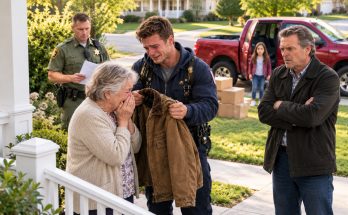
The moment Mr. Vance’s daughter whispered, “He couldn’t have known,” I felt something cold move through my chest. Her brother stood beside her, his face drained of color, while the estate attorney carefully returned the mysterious document to its envelope. My eighteen-year-old son, Noah, looked from one face to another.
He still held Arthur Vance’s handwritten letter. His fingers were trembling. “Known what?” he asked. Nobody answered. Mr. Ellison, the attorney, adjusted his glasses. “Perhaps we should continue this conversation somewhere private.”
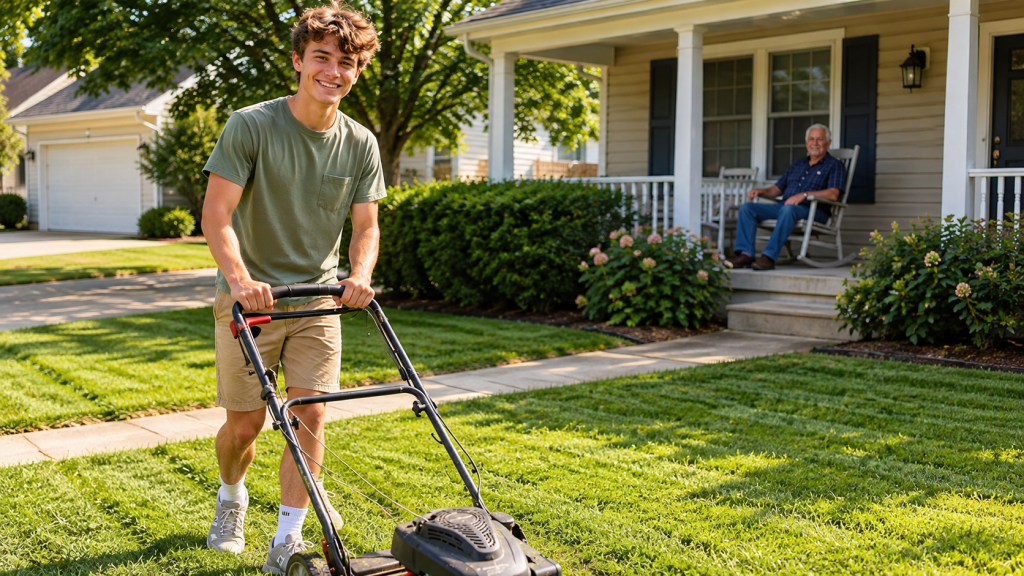
Arthur’s son stepped forward. “No.” His voice was unusually sharp. “No one is going anywhere near that shed.” The attorney studied him. “Mr. Vance, your father left explicit instructions concerning its contents.” “I don’t care what he left.” The man’s face reddened. “That property belongs to the family.” Mr. Ellison remained calm.
“The estate is being administered according to your father’s legally valid instructions. The contents of the shed are part of that process.”
Arthur’s daughter suddenly grabbed her brother’s arm.
“Richard, stop.”
He turned toward her.
“Don’t tell me to stop, Caroline.”
She glanced toward Noah.
Then toward the envelope.
And for one strange moment, I saw something in her eyes that didn’t resemble anger.
It looked like fear.
Not fear of losing money.
Fear of something buried beneath the past finally coming into the light.
My son swallowed.
“Mom?”
I touched his shoulder.
“I’m here, sweetheart.”
He looked at the letter again.
Then asked a question so innocent that it nearly broke my heart.
“Why would Mr. Vance leave me something that makes his children upset?”
I didn’t know.
But I was beginning to understand that the quiet old man across the street had been carrying secrets far heavier than any of us imagined.
And that my son, who had only wanted to mow a lonely neighbor’s lawn, had somehow become the person Arthur trusted to uncover them.
Mr. Ellison arranged for us to meet at his office the following morning.
He explained that the shed would need to be opened in accordance with the estate’s instructions, with the appropriate inventory and witnesses.
Richard protested.
Caroline remained silent.
Noah looked miserable.
As we walked toward the parking lot, he slipped his hand into mine.
He hadn’t done that in years.
Not since he was little enough to believe holding my hand could protect him from everything.
I squeezed his fingers.
“Are you okay?”
He shook his head.
“Not really.”
I nodded.
“That makes two of us.”
He stared at the pavement.
“Mom, I didn’t do anything special.”
My throat tightened.
“I know what you mean.”
He looked up.
“I just mowed the grass.”
I stopped walking.
Then turned toward him.
“Noah, you showed up every Saturday for four years.”
He shrugged.
“Anyone could’ve done that.”
I smiled sadly.
“But they didn’t.”
He looked away.
And I realized something.
He genuinely didn’t understand the difference his kindness had made.
Perhaps that was what made it so beautiful.
We drove home in silence.
The neighborhood looked exactly as it always had.
The same houses.
The same sidewalks.
The same maple trees lining the street.
But when we turned onto our block, Noah immediately looked toward Arthur’s house.
The lawn was beginning to grow.
A few leaves lay scattered along the driveway.
The porch chair sat empty.
Its faded green cushion had been left outside.
For four years, I’d grown accustomed to seeing Arthur sitting there while Noah worked.
Sometimes reading a newspaper.
Sometimes holding a cup of coffee.
Sometimes simply watching the world pass.
Now the chair was empty.
And I suddenly understood why Noah had cried at the funeral.
He hadn’t merely lost a neighbor.
He’d lost someone who had become part of his life.
That evening, I found Noah standing beside the window.
He was looking across the street.
“Sweetheart?”
He didn’t turn.
“Mr. Vance always waited for me.”
My heart tightened.
I approached quietly.
“What do you mean?”
Noah swallowed.
“Every Saturday.”
He kept his eyes on the empty porch.
“Even when it was cold.”
I nodded.
“He liked watching you work.”
Noah shook his head.
“No, Mom.”
His voice trembled.
“I think he waited because he knew I’d come.”
I couldn’t speak.
Noah continued.
“Sometimes I’d finish mowing, and he’d ask whether I wanted lemonade.”
He smiled sadly.
“Sometimes we didn’t talk at all.”
A tear slipped down his cheek.
“But he was always there.”
I put my arm around him.
And we stood together, watching the empty porch.
The next morning, we arrived at Mr. Ellison’s office at nine.
The building was old-fashioned.
Dark wooden furniture.
Tall windows.
Bookshelves filled with legal volumes.
Noah wore the blue shirt he’d chosen for graduation photographs.
He said he wanted to look respectful.
I didn’t tell him how much that touched me.
We sat across from Mr. Ellison.
Arthur’s children arrived several minutes later.
Richard wore an expensive charcoal suit.
Caroline wore a simple black dress.
She looked exhausted.
There were dark circles beneath her eyes.
Neither greeted us.
The attorney opened a thick folder.
“Before we visit the property, I want to clarify your father’s instructions.”
Richard folded his arms.
“This better not take all morning.”
Mr. Ellison ignored the comment.
He looked toward Noah.
“Arthur Vance prepared his estate plan with independent legal advice. He made certain provisions for his children, as well as a separate gift for you.”
Noah swallowed.
“But why?”
Mr. Ellison smiled gently.
“Your father left a letter explaining that.”
Richard laughed bitterly.
“My father was clearly losing his mind.”
The attorney’s expression hardened.
“Mr. Vance, the estate documents were executed with appropriate safeguards. Your disagreement with his decisions does not establish incapacity.”
Richard leaned back.
His jaw tightened.
Caroline stared at the table.
Then Mr. Ellison opened another document.
And everything began to change.
“Arthur owned more property than the family realized.”
Richard sat forward immediately.
“What property?”
The attorney turned a page.
“Several investments, a small commercial building, and a parcel of land that had been held separately for many years.”
Richard’s eyes widened.
“How much?”
Mr. Ellison paused.
“The total estate is still being valued.”
Richard leaned forward.
“Give me a number.”
Caroline closed her eyes.
“Richard, please.”
He ignored her.
Mr. Ellison remained composed.
“The figure in the envelope concerns a specific property-related gift with an estimated value of approximately six hundred eighty thousand dollars.”
Noah’s face drained.
I felt my stomach tighten.
Six hundred eighty thousand dollars.
More money than I’d earned in years.
More money than Noah had ever imagined possessing.
I reached for my son’s hand beneath the table.
He looked at me.
His eyes were wide.
“Mom…”
I squeezed his fingers.
Mr. Ellison continued.
“However, Arthur’s instructions concerning the shed are not simply about distributing property.”
He looked toward Richard and Caroline.
“They concern a matter your father wanted documented before the estate was settled.”
Richard stood abruptly.
“I’m not listening to this.”
Caroline grabbed his wrist.
“Sit down.”
He stared at her.
Then slowly lowered himself into the chair.
And for the first time, I wondered whether Caroline already knew exactly what we were going to find.
At ten thirty, we drove to Arthur’s house.
Mr. Ellison had arranged for the estate’s representative to meet us.
The neighborhood was quiet.
A light breeze moved through the trees.
Birds sang in the gardens.
It felt painfully ordinary.
I looked toward Arthur’s porch.
For a moment, I imagined him sitting there.
His old cardigan.
His white hair.
His hands resting on the wooden arms of the chair.
Watching Noah approach with the lawn mower.
I swallowed.
Noah looked toward the house.
Then whispered, “I wish he was here.”
I touched his shoulder.
“Me too.”
The shed stood behind the house.
It was small.
Weathered.
Painted dark green.
A little padlock hung from the door.
I’d seen it hundreds of times.
Never thought much about it.
Arthur kept gardening tools inside, or so I assumed.
Noah had never entered.
He always said Mr. Vance preferred to do his own little repairs.
Now, standing before it, I noticed something strange.
The ground near the doorway looked recently disturbed.
A few leaves had been pushed aside.
And there were scratches around the lock.
Mr. Ellison noticed too.
He glanced toward the estate representative.
“Document that before we proceed.”
Richard shifted uneasily.
Caroline looked away.
Noah stood beside me.
His face had become very pale.
The representative photographed the door.
Then used the authorized key.
The padlock opened with a metallic click.
For a moment, nobody moved.
Then Mr. Ellison stepped aside.
“Noah, your neighbor specifically requested that you be present when the contents were inventoried.”
My son swallowed.
“Yes, sir.”
The door opened.
And a faint smell of cedar drifted into the morning air.
At first, the shed looked ordinary.
Rakes.
Shovels.
Old paint cans.
A folded ladder.
Several cardboard boxes.
A wooden workbench.
But against the back wall stood a tall cabinet.
Dark oak.
Beautifully made.
Completely out of place among the gardening tools.
On its doors were two small brass handles.
And above them, someone had carved a single word.
ELIZABETH.
I felt my chest tighten.
Elizabeth was Arthur’s late wife.
The woman whose death had left him alone on that porch.
Noah took a step forward.
Then stopped.
“Mr. Vance used to talk about her.”
I looked at him.
“He did?”
Noah nodded.
“Sometimes.”
His voice softened.
“He said she loved yellow flowers.”
I glanced toward the yard.
A row of faded yellow roses grew beside the fence.
I’d never thought about who planted them.
Now I knew.
Mr. Ellison opened the cabinet.
Inside were carefully arranged boxes.
Photograph albums.
Letters.
A small wooden chest.
And several sealed envelopes.
Everything was labeled in Arthur’s handwriting.
Richard made a strangled sound.
“No…”
Caroline covered her mouth.
Mr. Ellison carefully removed the first album.
Its cover was dark blue.
On the front, embossed in faded gold letters, were the words:
OUR FAMILY, 1978–2005.
He opened it.
And the first photograph showed Arthur and Elizabeth standing outside a modest house.
They were young.
Smiling.
Holding two little children.
Richard and Caroline.
For a moment, nobody spoke.
Then Noah whispered, “They look happy.”
Caroline began crying.
Richard stared at the photograph without moving.
The attorney turned another page.
More photographs.
Family vacations.
Birthday cakes.
Christmas mornings.
School graduations.
Arthur coaching a little league team.
Elizabeth helping Caroline with a science project.
Richard holding a trophy.
Then the photographs changed.
The children became adults.
The family gatherings grew more formal.
The smiles looked less natural.
And eventually, Elizabeth disappeared from the pictures.
I knew she’d died years earlier.
But the final photographs showed something that made me pause.
Arthur sitting beside his wife in a hospital room.
Holding her hand.
Her hair had fallen out.
Her face looked tired.
But she was smiling.
Beneath the photograph, Arthur had written:
THE LAST CHRISTMAS WE HAD TOGETHER.
Noah wiped his eyes.
And for the first time, Richard looked as though he might cry.
Then Mr. Ellison opened the second box.
Inside were financial documents.
Receipts.
Bank statements.
Copies of property records.
Letters.
And a small black notebook.
Richard suddenly stepped forward.
“That’s private.”
Mr. Ellison looked at him.
“These materials are being inventoried according to your father’s instructions.”
Richard’s voice sharpened.
“You don’t understand what you’re looking at.”
The attorney remained calm.
“Then the records can be reviewed by the appropriate professionals.”
Caroline began crying harder.
I looked at her.
“Caroline?”
She shook her head.
“Please…”
Her voice broke.
“Please don’t make me explain.”
Mr. Ellison opened a letter addressed to both children.
He read the first line.
Then stopped.
He looked toward Richard.
“Your father wanted this read after the records were secured.”
Richard stared.
“Don’t.”
But the attorney continued.
Not loudly.
Not dramatically.
Simply reading the words Arthur had written.
“My dear Richard and Caroline…”
The shed seemed to grow smaller.
Even the birds outside went quiet.
“I loved you both before you were born.
“Your mother and I spent our lives trying to give you opportunities we never had.
“We worked hard.
“We saved.
“We helped when you struggled.
“And for many years, I believed that family meant being willing to forgive anything.”
Caroline covered her face.
Richard stared at the floor.
Mr. Ellison continued.
“But there comes a point when forgiveness becomes something people expect rather than something they value.
“And I have spent too many years allowing the truth to remain hidden because I was afraid of losing the only family I had left.”
My throat tightened.
Noah looked at me.
I squeezed his hand.
The letter continued.
“After your mother became ill, she trusted both of you to help manage certain financial matters.
“She believed you would protect the savings we had spent decades building.
“She believed you understood how much those resources mattered to her care.
“And when the records began changing, she didn’t want to believe either of you could have acted dishonestly.”
Richard whispered, “Stop.”
Mr. Ellison paused.
Then looked at him.
“Your father specifically requested that this letter be included in the estate record.”
Richard’s eyes filled.
“Please.”
For a moment, he sounded like a frightened little boy.
But the attorney continued.
“Elizabeth died believing the missing funds were the result of an investment failure.
“I allowed her to believe that.
“Not because I wanted to protect you.
“But because I couldn’t bear to tell her that the children we loved had misused the authority she placed in them.”
Caroline began sobbing.
I covered my mouth.
Noah looked stunned.
Arthur had known.
He had known something was wrong.
And he had carried that knowledge alone while sitting on his porch for years.
Richard shook his head.
“It wasn’t like that.”
Caroline turned toward him.
“Richard…”
He raised his voice.
“We were going to replace the money.”
Mr. Ellison closed the letter temporarily.
He looked at Richard.
“Your father documented the transactions and obtained professional advice. The financial records will be reviewed according to the law and the estate’s instructions.”
Richard stared.
Then whispered, “He promised he wouldn’t tell anyone.”
Caroline looked at him.
“Richard, enough.”
Her voice trembled.
“He’s dead.”
Those two words silenced everyone.
He’s dead.
Arthur was gone.
And suddenly, the arguments that had once kept his family divided seemed unbearably small.
Noah stepped backward.
He looked toward the photographs.
Then the letter.
His face crumpled.
“Mom?”
I turned.
“Yes?”
“I don’t want to be here.”
My heart tightened.
I nodded.
“We can step outside.”
He shook his head.
“I thought this was going to be something nice.”
Tears filled my eyes.
I touched his cheek.
“Oh, sweetheart.”
He looked toward the cabinet.
“Mr. Vance was always so quiet.”
His voice broke.
“I thought he was just lonely.”
I swallowed.
“He was lonely.”
Noah shook his head.
“But he was sad too.”
I pulled him close.
And we stood beside the shed while he cried.
After a few minutes, Mr. Ellison approached us.
“Noah?”
My son wiped his eyes.
“Yes, sir?”
The attorney’s expression softened.
“Arthur knew this would be difficult.”
Noah looked down.
“He shouldn’t have made me part of it.”
Mr. Ellison nodded slowly.
“He didn’t want you responsible for judging his children. That isn’t your job.”
Noah looked up.
“Then why did he ask me to come?”
The attorney smiled sadly.
“Because he wanted someone who’d treated him with kindness to be present when the truth was finally acknowledged.”
Noah swallowed.
Mr. Ellison continued.
“And because there’s another letter for you.”
We returned to the shed.
The attorney removed a small envelope from the wooden chest.
It was addressed in Arthur’s careful handwriting.
TO NOAH — MY SATURDAY FRIEND.
My son’s eyes filled immediately.
He took the envelope.
Held it for a moment.
Then opened it.
Inside was a folded letter.
He began reading silently.
After a few seconds, his lips trembled.
Then he looked at me.
“Mom, can you read it?”
I nodded.
He handed it over.
My hands shook as I unfolded the page.
“Dear Noah,
“If you’re reading this, I suppose I’ve finally run out of Saturdays.
“I hope you won’t be too sad.
“I had more years than many people get, and I was fortunate enough to spend the last four watching a very good young man grow into himself.”
My voice broke.
Noah lowered his head.
I took a breath.
Then continued.
“When you first pushed your lawn mower across the street, I thought your mother had sent you.
“I assumed she felt sorry for the old man who couldn’t keep up with his yard.
“But when I asked what I owed you, you looked almost offended.
“You said, ‘Nothing, Mr. Vance. Everybody deserves a nice lawn.’
“I laughed about that for days.”
Noah began crying.
I looked at him.
He nodded.
“I remember.”
I continued reading.
“Your kindness reminded me of my wife.
“Elizabeth believed small acts of care mattered more than grand speeches.
“She used to say that people reveal their character in the things they do when nobody is offering a reward.
“For years, I believed the world had forgotten that lesson.
“Then you came along with your noisy old mower.”
A broken laugh escaped Noah.
I smiled through tears.
“You probably never knew how much those Saturdays meant.
“Sometimes I woke up feeling there was no reason to get dressed.
“Then I remembered you would be coming.
“I would make coffee.
“Put on my cardigan.
“And sit outside waiting to hear the mower start.
“You gave structure to days that had become painfully empty.
“And more importantly, you reminded me I was still someone worth visiting.”
I stopped reading.
My throat closed.
For a moment, I couldn’t speak.
Noah covered his face.
And I wrapped an arm around him.
After a while, I continued.
“I know you never asked for money.
“That’s why I want you to understand that what I have left you isn’t payment.
“Kindness isn’t something that should come with a price tag.
“But gratitude deserves to be expressed while we still have the chance.
“And I waited too long to express mine properly.”
My eyes filled.
I looked down.
The next lines made my breath catch.
“I’ve made arrangements that I hope will help you build a future.
“But before you accept anything, remember this:
“You owe me nothing.
“You don’t have to become the person I hoped you’d be.
“You don’t have to study a particular subject.
“You don’t have to live in my house.
“And you don’t have to carry my family’s mistakes.”
Noah stared at me.
I swallowed.
Then read the final words.
“Just promise me you’ll remain the kind of person who notices when someone needs help.
“Not because you expect a reward.
“But because the world is kinder when people look after one another.
“Thank you for my Saturdays, Noah.
“Your friend,
“Arthur.”
For a long time, nobody spoke.
Richard stood beside the cabinet.
Caroline was crying quietly.
Mr. Ellison looked down at his papers.
And my son stood in the little shed holding the letter of a man he had loved without realizing how much that love was returned.
Then Noah whispered, “I never even hugged him.”
My heart broke.
I looked at him.
“What?”
He began crying harder.
“I mowed his lawn for four years, Mom.”
His voice trembled.
“And I never hugged him.”
I pulled him close.
“Oh, sweetheart.”
He shook his head.
“I thought there would always be another Saturday.”
Those words stayed with me.
Because there are some losses that hurt not because of the things we did.
But because of the things we assumed we’d still have time to do.
Mr. Ellison allowed us a few minutes.
Then he explained that the financial records in the cabinet would be formally inventoried and reviewed.
Arthur had obtained legal advice before his death.
He had left documentation supporting his concerns.
The estate’s representatives would determine what claims or proceedings were appropriate.
The allegations were serious.
But no one was going to decide guilt based solely on a letter.
I appreciated that.
Arthur had wanted the truth handled responsibly.
And I didn’t want Noah pulled into a family dispute he hadn’t created.
As we prepared to leave, Caroline approached my son.
Her eyes were swollen.
“Noah?”
He turned.
“Yes?”
She swallowed.
“I owe you an apology.”
Noah looked confused.
“For what?”
She glanced toward the house.
“For being angry when the attorney gave you that envelope.”
My son looked down.
She continued.
“My father talked about you.”
Noah raised his head.
“He did?”
Caroline nodded.
“Sometimes.”
Tears filled her eyes.
“He told me there was a boy across the street who came every Saturday.”
She smiled sadly.
“He said you reminded him there were still good people in the world.”
Noah began crying again.
Caroline touched her face.
Then whispered, “I should’ve visited more.”
Richard stood several feet away.
He didn’t speak.
I watched Caroline.
For the first time, she didn’t look like a wealthy woman afraid of losing an inheritance.
She looked like a daughter grieving a father she’d failed to understand.
And I realized the truth was more complicated than I’d expected.
Her role in the disputed financial matters still needed examination.
But regret was written plainly across her face.
She looked toward the porch.
Then whispered, “He stopped calling me.”
Noah swallowed.
Caroline continued.
“I told myself he wanted to be alone.”
Her voice broke.
“But maybe he was waiting for me to come.”
I felt tears rise.
Because loneliness can hide behind pride.
And pride can disguise regret.
And sometimes families spend years waiting for one another to make the first move.
Until time runs out.
Richard finally spoke.
“Caroline, let’s go.”
She turned.
“No.”
He stared.
“What?”
She wiped her eyes.
“I want to stay.”
Richard’s face hardened.
“Why?”
She looked toward the cabinet.
“Because I want to know what Dad wrote.”
He scoffed.
“You heard enough.”
Caroline shook her head.
“No.”
Her voice became steadier.
“I spent years telling myself we hadn’t hurt him.”
Richard looked away.
She continued.
“And I want to stop lying to myself.”
We left them there.
My son and I walked across the street.
The lawn mower sat in our garage.
Still covered in grass clippings from the last time Noah had used it.
He stopped beside it.
For a moment, he simply stared.
Then he whispered, “I wish I’d mowed one more time.”
I put my arm around him.
“Maybe we can ask the estate representative whether the lawn still needs care while everything is being settled.”
He looked at me.
“Would that be okay?”
I smiled sadly.
“We can ask.”
He nodded.
Then touched the mower’s handle.
And began crying.
That evening, I made Noah’s favorite dinner.
Chicken and mashed potatoes.
He barely ate.
Afterward, we sat at the kitchen table.
Arthur’s letter lay between us.
Noah traced the edge of the paper with his finger.
“Mom?”
“Yes?”
“Do you think Mr. Vance was happy?”
The question surprised me.
I considered.
Then looked toward the window.
“I think he had some very sad years.”
Noah nodded.
“But I think you helped make some of his days happier.”
My son swallowed.
“Do you really?”
I smiled.
“He said so himself.”
Noah looked down.
Then whispered, “I wish that was enough.”
My heart tightened.
I reached across the table.
“Sweetheart, kindness doesn’t erase someone’s grief.”
He looked up.
“But it can make the grief less lonely.”
His eyes filled.
And he nodded.
The next morning, Mr. Ellison called.
He wanted to discuss the property-related gift Arthur had left Noah.
I felt nervous.
Noah looked even more nervous.
We returned to the office.
This time, Richard and Caroline weren’t present.
Mr. Ellison explained the documents carefully.
The estimated six-hundred-eighty-thousand-dollar figure referred to a property Arthur had designated for Noah in his estate plan.
It was a small commercial building on the edge of town.
The building had been leased for years.
It generated rental income.
And Arthur had made arrangements concerning its management.
Noah stared.
“A building?”
Mr. Ellison nodded.
“Yes.”
My son shook his head.
“Why would he give me a building?”
The attorney smiled gently.
“Because he wanted to help with your future.”
Noah swallowed.
“But I don’t know anything about owning property.”
“That’s a sensible concern,” Mr. Ellison replied.
He explained that the transfer would involve legal and financial responsibilities.
There might be taxes.
Maintenance.
Insurance.
Tenants.
And other considerations.
Noah would need independent advice before deciding how to handle the gift.
I was relieved.
Arthur hadn’t left my son an effortless fortune.
He’d left him an opportunity.
And opportunities, I knew, came with responsibilities.
Then Mr. Ellison opened another letter.
“This explains why Arthur chose that property.”
I looked at him.
He smiled.
“Arthur owned it for nearly forty years.”
Noah listened.
“He purchased it shortly after his first child was born.”
The attorney paused.
“He always said it represented the years when he and Elizabeth believed anything was possible.”
My throat tightened.
He continued.
“But there’s another reason he wanted you to have it.”
Noah looked up.
“What?”
Mr. Ellison smiled gently.
“Elizabeth used to run a small bookstore in one of the ground-floor units.”
My heart warmed.
Noah’s eyes widened.
“A bookstore?”
“Yes.”
The attorney turned a page.
“Arthur believed you might appreciate having the opportunity to preserve part of something she loved.”
My son stared at the document.
Then whispered, “Mr. Vance loved books.”
I nodded.
“He did.”
Noah smiled through tears.
“He used to lend me mysteries.”
I looked at him.
“He did?”
Noah nodded.
“Every summer.”
Then his face brightened for the first time since the funeral.
“He said his wife believed every child should have a library card.”
The attorney smiled.
“Arthur remembered that.”
He turned another page.
Then read a short passage from the estate letter.
“If Noah chooses to keep the building, I hope he will consider making space for something that helps young people learn.
“But that decision must be his.
“I don’t want my gratitude to become another person’s obligation.”
Noah stared.
Then slowly nodded.
For the first time, I saw him beginning to understand Arthur’s gift.
It wasn’t a demand.
It was trust.
The kind Arthur’s own children had failed to honor.
We spent the next several weeks learning.
We met with an independent attorney.
A financial adviser.
And a property manager.
We reviewed the building.
Its tenants.
Expenses.
Potential liabilities.
And the practical choices available to Noah.
He was eighteen.
Legally an adult.
But still very young.
I wanted him to understand what he was accepting.
And I wanted him to know he could decline, sell, or manage the property according to the law and his own goals.
Arthur’s generosity should never become a burden that swallowed my son’s future.
Noah surprised me.
He listened carefully.
Asked questions.
Took notes.
And didn’t rush.
One afternoon, after a meeting with the property manager, he looked at me.
“Mom?”
“Yes?”
“I think I want to keep it.”
I smiled.
“Why?”
He considered.
Then said, “Because Mr. Vance thought it could become something good.”
My heart tightened.
I nodded.
“And what do you want it to become?”
He looked toward the building.
Then smiled.
“I have an idea.”
The building stood on a quiet corner near the old downtown district.
Brick walls.
Tall windows.
A narrow staircase.
And a faded sign above one storefront.
The first time Noah walked through it, he stopped in the middle of the empty unit.
Sunlight fell across worn wooden floors.
Dust floated in the air.
The space smelled faintly of old paper.
He turned slowly.
Then whispered, “Mom.”
I smiled.
“What?”
He looked around.
“Can you imagine shelves here?”
I nodded.
“Yes.”
“And tables?”
“Yes.”
“And a place where kids could come after school?”
My heart warmed.
I looked at him.
He continued.
“Somewhere they could read.”
“Or do homework.”
“Or just have somewhere to go.”
I stared at my son.
The boy who had spent four years mowing a lonely man’s lawn without asking for anything.
Now imagining a place where other people might feel less alone.
I smiled through tears.
“That’s a beautiful idea.”
But before we could move forward, another problem appeared.
Richard Vale was not our story; Richard Vance was.
And Richard Vance was furious.
He filed a challenge concerning his father’s estate.
He argued that Arthur hadn’t been thinking clearly.
That Noah had influenced him.
That the gift was unreasonable.
That a teenage neighbor should never receive property while family members were still alive.
The legal challenge was distressing.
But Mr. Ellison had expected the possibility.
Arthur’s estate plan included records of independent advice and assessments relevant to its validity.
Noah hadn’t asked for the gift.
He hadn’t known about it.
And for four years, he’d provided lawn care without receiving money.
Still, the court process had to run its course.
One afternoon, Richard appeared outside our house.
I was watering the flowers.
Noah was inside studying for college entrance assessments.
Richard stopped at the sidewalk.
His face was red.
“Mrs. Miller.”
I looked up.
“Yes?”
“I want to speak to your son.”
I set down the watering can.
“About what?”
He folded his arms.
“His inheritance.”
I took a breath.
“Please communicate through the attorneys.”
Richard laughed bitterly.
“Of course.”
He looked toward Arthur’s house.
“Funny how people become legal experts when there’s money involved.”
I felt my chest tighten.
“Mr. Vance, Noah never asked your father for anything.”
Richard’s eyes narrowed.
“Then he should give it back.”
I looked at him.
“That’s a decision Noah will make with proper advice, not under pressure on our front lawn.”
Richard stepped closer.
“Your son stole my father’s affection.”
The words stunned me.
For a moment, I couldn’t speak.
Then I answered quietly.
“No.”
He stared.
“Your father offered him affection.”
My voice softened.
“Because Noah kept showing up.”
Richard looked away.
And for one brief moment, something painful crossed his face.
Then he whispered, “You don’t understand.”
I waited.
He looked toward the empty porch.
“My father was never easy.”
His voice shook.
“He expected too much.”
I nodded slowly.
“He might have.”
Richard swallowed.
“He never told me he was proud of me.”
My heart tightened.
For a moment, I saw the grieving son beneath the anger.
Not a villain from a story.
A man carrying years of resentment.
But then he looked toward our garage.
Toward Noah’s lawn mower.
And his expression hardened again.
“Your boy gets everything because he cut some grass.”
I took a breath.
“Richard, this isn’t a competition Noah created.”
He stared at me.
Then turned and walked away.
I watched him go.
And felt strangely sad.
Because somewhere inside all that anger was a man who had wanted his father’s love.
But had mistaken inheritance for proof of it.
That evening, Noah asked what Richard wanted.
I told him the truth.
Carefully.
Without turning Richard into a monster.
Noah listened.
Then looked down.
“Mom?”
“Yes?”
“Maybe I should give him the building.”
My heart tightened.
I sat beside him.
“Is that what you want?”
He hesitated.
“I don’t know.”
“Then don’t decide out of guilt.”
He looked up.
I continued.
“Mr. Vance made a choice. Richard has legal ways to challenge it. We need to respect that process.”
Noah nodded.
I squeezed his hand.
“And if you eventually decide to give or sell the property, make sure it’s because you’ve thought it through.”
He swallowed.
“Not because someone made me feel bad?”
I smiled.
“Exactly.”
The estate challenge took several months.
It was uncomfortable.
Expensive.
And emotionally exhausting.
But the proceedings also brought more of Arthur’s story into the open.
Independent records supported his capacity to make estate decisions.
His intentions were documented.
He had expressed gratitude toward Noah repeatedly.
And he had maintained consistent reasons for the gift.
Eventually, the challenge to that provision did not succeed.
The property-related gift could proceed according to the estate plan.
When Mr. Ellison called with the news, Noah didn’t celebrate.
He sat quietly.
Then whispered, “Does that mean it’s really mine?”
I nodded.
“Subject to completing the necessary transfer and responsibilities, yes.”
He looked down.
Then said something that made my eyes fill.
“I wish Mr. Vance could see what I want to do.”
I put my arm around him.
“Maybe the best way to honor him is to do it well.”
He smiled.
And nodded.
We began planning the reading space.
Not a grand project.
Not an expensive monument.
Something practical.
Noah worked with local educators and community organizations.
He learned about insurance.
Permits.
Safety.
Accessibility.
And the cost of maintaining a public-facing space.
He also learned that good intentions weren’t enough.
A project needed planning.
Reliable partners.
And people willing to keep showing up long after the excitement faded.
I watched him learn.
Make mistakes.
Ask questions.
And slowly grow into a young man who understood that responsibility was another form of kindness.
He named the project Saturday House.
When I asked why, he smiled.
“Because Saturdays changed everything.”
My throat tightened.
I looked toward the old photograph of Arthur he’d placed on his desk.
The old man in his cardigan.
Standing beside Elizabeth in their garden.
Both smiling.
I nodded.
“They certainly did.”
The space opened the following spring.
We kept the renovation simple.
Fresh paint.
Good lighting.
Bookshelves.
Tables.
Comfortable chairs.
A small homework area.
And a corner where children could sit quietly with a book.
On one wall hung a photograph of Arthur and Elizabeth.
Beneath it was a plaque.
ARTHUR AND ELIZABETH VANCE
IN GRATITUDE FOR THE SMALL KINDNESSES THAT CHANGE LIVES.
Noah stood before it on opening day.
His hands trembled.
I stood beside him.
“You okay?”
He nodded.
Then shook his head.
I smiled.
“Both?”
He laughed through tears.
“Yeah.”
Children began arriving.
Some with parents.
Some after school.
Some simply curious.
Volunteers helped them choose books.
Teachers offered occasional homework support.
And the space slowly filled with laughter.
Noah stood near the door.
Watching.
At one point, a little boy approached him.
“Are you the owner?”
Noah smiled.
“Sort of.”
The boy looked around.
“Do I have to pay to read?”
Noah shook his head.
“No.”
The boy’s eyes widened.
“Really?”
Noah nodded.
“Really.”
The child grinned.
Then ran toward the shelves.
Noah watched him go.
And began crying.
I stepped beside him.
“Sweetheart?”
He wiped his face.
“Mom…”
I put my arm around him.
He looked toward the children.
Then whispered, “I think Mr. Vance would’ve liked this.”
My eyes filled.
I nodded.
“I think he would’ve loved it.”
Later that afternoon, Caroline arrived.
I hadn’t expected her.
She stood near the doorway holding a bouquet of yellow flowers.
Her expression was nervous.
“Noah?”
My son turned.
“Caroline?”
She smiled sadly.
“I hope it’s okay that I came.”
Noah nodded.
“Of course.”
She handed him the flowers.
“Yellow.”
His eyes filled.
“My dad said Elizabeth loved them.”
Noah smiled.
“I remember.”
Caroline looked around the room.
At the books.
The children.
The little tables.
Then her face crumpled.
“Oh, Dad.”
She covered her mouth.
And began crying.
Noah led her toward the photograph.
Caroline stood before it for several minutes.
Then whispered, “He would’ve been so proud.”
My son looked down.
She turned toward him.
“Noah, I want to thank you.”
He shook his head.
“You don’t have to.”
She smiled through tears.
“Yes, I do.”
She took a breath.
“My father spent his final years feeling terribly alone.”
Noah’s eyes filled.
Caroline continued.
“And while I was busy making excuses for not visiting, you showed up every Saturday.”
Her voice broke.
“I can never change that.”
She wiped her face.
“But I can tell you how grateful I am.”
Noah began crying.
Then, without warning, he stepped forward and hugged her.
Caroline froze.
Then wrapped her arms around him.
And wept.
I watched them.
And something warm settled inside my chest.
Because maybe this was what Arthur had wanted most.
Not his children humiliated.
Not his family destroyed.
But the truth acknowledged.
And the kindness he’d experienced allowed to grow beyond his lifetime.
Richard didn’t attend the opening.
For a while, I thought he never would.
But three months later, Noah received a letter.
It arrived in a plain white envelope.
The handwriting was careful.
Unfamiliar.
Inside was a short note.
Noah,
I have spent too much time being angry about what my father left you.
I still have complicated feelings about our family.
But Caroline told me about the reading center.
I visited the street last week.
I stood outside and watched the children through the window.
My father would have liked it.
I wanted you to know that.
Richard.
Noah read the letter twice.
Then looked at me.
“Mom?”
“Yes?”
“Do you think I should answer?”
I smiled gently.
“That’s your choice.”
He considered.
Then nodded.
“I think I will.”
He wrote back.
Not a long letter.
Not an attempt to fix decades of family pain.
Just a few honest sentences.
Dear Richard,
Thank you for writing.
Your father was kind to me.
I hope Saturday House honors both him and Elizabeth.
You’re welcome to visit when you’re ready.
Noah.
He mailed it.
Then returned to studying.
And I realized how much he’d grown.
He no longer felt responsible for making everyone happy.
He could offer kindness without surrendering his boundaries.
And that mattered.
As the months passed, Richard slowly became less hostile.
He attended one community event.
Then another.
He didn’t become an enthusiastic volunteer overnight.
There was too much history.
Too much grief.
Too much guilt.
But one afternoon, I saw him sitting at a table helping a little boy assemble a model airplane.
The child laughed.
Richard smiled.
For a moment, he looked younger.
Softer.
And I thought about Arthur.
About the father who’d spent his final years sitting alone on a porch.
Perhaps Richard was beginning to understand that love wasn’t something you could claim because of your name.
It was something you practiced.
Noah started college that autumn.
He chose to study business administration with a focus on nonprofit management.
When he told me, I smiled.
“Really?”
He nodded.
“I want to understand how to keep Saturday House running properly.”
My eyes filled.
I hugged him.
“I’m proud of you.”
He laughed.
“Mom, don’t cry.”
I laughed through tears.
“Too late.”
The first day he left for college, I stood in our driveway watching him load his car.
He had packed books.
Clothes.
A coffee maker.
And approximately fourteen chargers for devices I didn’t understand.
I watched him.
The little boy who once pushed a mower across the street.
Now a young man preparing to begin a new chapter.
He closed the trunk.
Then turned toward me.
“Mom?”
I smiled.
“Yes?”
“Thank you.”
My throat tightened.
“For what?”
He looked down.
“For letting me help Mr. Vance.”
I stared.
He continued.
“Some parents would’ve told their kid not to bother.”
My eyes filled.
I shook my head.
“You wanted to help someone.”
He smiled.
“And you never made me stop.”
I pulled him close.
“Oh, sweetheart.”
He hugged me tightly.
Then whispered, “I love you, Mom.”
I closed my eyes.
“I love you too.”
After he drove away, I stood in the driveway for a long time.
The neighborhood was quiet.
Arthur’s house stood across the street.
Someone had recently repainted the porch.
The old chair was gone.
A new family had moved in.
Two children played in the front yard.
A little girl chased bubbles across the grass.
I smiled.
Life had continued.
As it always does.
But Arthur’s kindness had become part of our lives in ways I never could have imagined.
Over the next several years, Saturday House grew.
Slowly.
Responsibly.
More volunteers joined.
Local teachers offered support.
Community members donated books.
Families began using the space regularly.
Noah remained involved while studying.
He learned to delegate.
To manage budgets.
To ask for help.
And to remember that his education mattered too.
He couldn’t spend every waking hour saving the world.
Arthur hadn’t asked that of him.
He’d simply asked him to remain kind.
One Christmas, Noah came home and found a package waiting.
The return address belonged to Caroline.
Inside was an old photograph.
Arthur sitting on his porch.
A glass of lemonade beside him.
And in the background, barely visible, a fourteen-year-old boy pushing a lawn mower.
Noah stared.
Then began crying.
He held the photograph toward me.
“Mom.”
I looked.
There he was.
Fourteen.
Skinny.
Wearing an oversized blue T-shirt.
Focused entirely on mowing the grass.
Arthur sat in his chair.
Watching.
Smiling.
Not his usual faint, restrained smile.
A real smile.
The kind that reached his eyes.
My throat tightened.
I touched the edge of the photograph.
“Oh, Noah.”
He laughed through tears.
“He was happy.”
I nodded.
“Yes.”
For the first time, we had photographic proof of what Arthur’s letter had told us.
Those Saturdays had mattered.
Caroline included a note.
I found this among Dad’s photographs.
He had written something on the back.
Noah turned the picture over.
There, in Arthur’s careful handwriting, were six words.
THE BEST PART OF MY WEEK.
Noah covered his face.
And cried.
We framed the photograph.
Hung it at Saturday House.
Beside Arthur and Elizabeth’s wedding portrait.
And beneath it, Noah placed a small plaque.
FOUR YEARS. EVERY SATURDAY. NO PAYMENT REQUESTED.
Then he stepped back.
Studied it.
And smiled through tears.
One evening, after the center closed, Noah and I sat at one of the reading tables.
The room was quiet.
Books lined the shelves.
Soft light fell across the wooden floor.
He looked around.
Then smiled.
“Mom?”
“Yes?”
“Do you remember when I first asked to mow Mr. Vance’s lawn?”
I laughed.
“Of course.”
He grinned.
“What did you say?”
I considered.
Then smiled.
“I said you could help him as long as you finished your homework and stayed safe.”
Noah laughed.
“Sounds like you.”
I nodded.
“Very reasonable mother.”
He grinned.
“Mostly.”
I laughed.
Then looked toward Arthur’s photograph.
“And you kept going.”
Noah’s smile softened.
“Yeah.”
He looked down.
“I liked knowing he was waiting.”
My heart tightened.
I reached for his hand.
“He liked knowing you were coming.”
Noah became a confident young man.
Not wealthy in the way people imagine when they hear about an inheritance.
He understood that property required management.
That rental income wasn’t the same as unlimited spending money.
And that a community program needed responsible planning.
The gift helped create financial stability.
But it didn’t eliminate the need to work.
To learn.
To make thoughtful decisions.
Or to treat other people with respect.
And I was grateful.
Because Arthur had wanted to give Noah an opportunity.
Not a reason to stop growing.
As the years passed, I sometimes thought about Arthur’s children.
Caroline continued rebuilding her relationship with Richard.
They dealt with the consequences of the financial matters through appropriate professional and legal processes.
There were difficult conversations.
Hard truths.
And questions that couldn’t be answered with apologies alone.
I didn’t follow every detail.
Their family history belonged to them.
But I hoped they eventually found a way to live more honestly.
Caroline became a regular supporter of Saturday House.
She donated books.
Helped organize community events.
And occasionally spoke about her mother’s love of reading.
One afternoon, she brought an old wooden sign.
It had once hung above Elizabeth’s bookstore.
The paint was faded.
The letters were chipped.
But the words were still visible.
ELIZABETH’S BOOK CORNER.
Noah stared.
“Can we keep it?”
Caroline smiled through tears.
“I hoped you would.”
We mounted it above a small reading area.
And every time I saw it, I thought about a woman I’d never known.
A woman who believed children deserved books.
And whose husband had spent his final years being reminded of her kindness by a teenage boy mowing his lawn.
Then, six years after Arthur died, something unexpected happened.
A little boy named Oliver began coming to Saturday House.
He was eleven.
Quiet.
Shy.
He usually sat alone near the window.
Reading the same adventure novel.
Noah noticed him.
At first, he simply said hello.
Then he asked whether Oliver wanted help choosing another book.
The boy shook his head.
Noah smiled.
“No problem.”
The following week, Oliver returned.
Again, Noah greeted him.
No pressure.
No demands.
Just a friendly hello.
After several visits, Oliver finally spoke.
“Mr. Miller?”
Noah looked up.
“Yes?”
“Why do you keep saying hi to me?”
My son smiled.
“Because you’re here.”
Oliver frowned.
“But you don’t know me.”
Noah considered.
Then said something that made my eyes fill when he told me later.
“That’s how people get to know each other.”
Oliver stared at him.
Then smiled.
A small smile.
But a real one.
Over time, Oliver began talking more.
He loved science fiction.
Wanted to build robots.
And had a difficult time making friends at school.
Noah helped him find books.
Connected him with suitable programs.
And made sure he felt welcome.
Nothing dramatic.
Just ordinary kindness.
But one day, Oliver’s mother approached Noah.
Her eyes were wet.
“Thank you.”
Noah looked confused.
“For what?”
She smiled sadly.
“My son hasn’t wanted to leave the house much lately.”
Her voice trembled.
“But every Saturday, he asks whether we can come here.”
Noah’s expression changed.
He looked toward Oliver.
The boy was sitting at a table reading.
Quietly.
Contentedly.
Then Noah looked back at his mother.
And whispered, “I’m glad.”
That evening, Noah called me.
His voice sounded strange.
“Mom?”
“Yes?”
“I understand something now.”
I smiled.
“What?”
He was quiet.
Then whispered, “Mr. Vance.”
My heart tightened.
“What about him?”
Noah took a breath.
“I think I finally understand why he said Saturdays mattered.”
Tears filled my eyes.
I looked toward the window.
Arthur’s old house stood across the street.
The porch lights glowed softly.
I swallowed.
“Tell me.”
Noah’s voice broke.
“Sometimes people don’t need us to fix their lives.”
I closed my eyes.
He continued.
“They just need to know someone notices they’re there.”
I began crying.
“Yes, sweetheart.”
I smiled through tears.
“Exactly.”
Years later, when Noah married, he placed a small photograph of Arthur on a remembrance table beside photographs of other loved ones who had died.
I stood near the table before the ceremony.
Looking at the old man smiling from his porch chair.
Beside him was the photograph of Elizabeth.
And a little card.
THANK YOU FOR HELPING ME BECOME THE MAN I AM.
My eyes filled.
I touched the frame.
Then whispered, “He would’ve been proud of you, Noah.”
Noah’s wife, Emily, was kind.
Thoughtful.
And deeply supportive of his work.
She didn’t marry him because he owned property.
She admired how he treated people.
The way he remembered small details.
The way he listened.
The way he always asked whether someone needed help before assuming he knew what they wanted.
On their wedding day, Emily looked at me.
Then smiled.
“You raised a good man.”
My throat tightened.
I glanced toward Noah.
He was laughing with his friends.
Then I looked back at her.
“Thank you.”
My eyes filled.
“But he made a lot of those choices himself.”
Emily nodded.
“And that’s why I love him.”
During the reception, Noah gave a speech.
He thanked his friends.
His wife.
Her family.
And me.
Then he paused.
His expression softened.
“There was someone else who helped shape my life.”
The room grew quiet.
Noah looked toward Arthur’s photograph.
“His name was Arthur Vance.”
My throat tightened.
“He lived across the street from my mom and me.”
Noah smiled sadly.
“When I was fourteen, I started mowing his lawn.”
He laughed softly.
“I thought I was doing him a favor.”
A few guests smiled.
Then Noah’s voice changed.
“But years later, I realized he was giving me something too.”
He paused.
“An example of how much a small act of care can mean.”
My eyes filled.
He looked toward Emily.
“And that’s the kind of love I want us to build.”
He smiled.
“One where we keep showing up.”
The room fell silent.
Then the applause began.
I covered my mouth.
And cried.
After the wedding, I stood outside beneath the evening lights.
Noah approached.
“Mom?”
I smiled.
“Yes?”
“You okay?”
I laughed through tears.
“Very.”
He put an arm around me.
For a moment, I remembered him at fourteen.
Dragging the mower across the street.
Coming home sweaty.
Covered in grass clippings.
Asking whether there was any lemonade left.
Now he was a married man.
A community leader.
Someone other people trusted.
I looked at him.
And whispered, “I’m proud of you.”
He smiled.
“Love you, Mom.”
I held him tightly.
“Love you too.”
As I grew older, I thought about Arthur more often.
Not because of the inheritance.
Not because of the legal drama.
Not because of the shed.
But because of the strange way a simple act of kindness had changed so many lives.
A teenage boy noticed a lonely neighbor.
He pushed a lawn mower across the street.
He returned the next week.
Then the next.
Then the next.
For four years.
And while he thought he was cutting grass, he was giving an old man something to anticipate.
A familiar sound.
A friendly face.
A reason to sit outside.
A reminder that someone remembered him.
Arthur eventually expressed his gratitude in a way none of us expected.
But the most important part of his gift wasn’t the property’s monetary value.
It was the story behind it.
A story that taught Noah how much consistency matters.
How relationships grow through ordinary attention.
And how kindness can become part of someone’s life even when neither person recognizes its full importance.
One summer morning, I walked past Arthur’s old house.
The new family had planted flowers.
Children’s bicycles lay on the lawn.
A dog barked cheerfully behind the fence.
I stopped beside the sidewalk.
For a moment, I imagined Arthur on the porch.
His faded cardigan.
His white hair.
The little nod he gave Noah when the mowing was finished.
I smiled.
Then whispered, “Thank you, Arthur.”
Not for the property.
Not for the money.
But for seeing the good in my son.
For encouraging it.
And for helping him carry that goodness into adulthood.
Later that day, I visited Saturday House.
The reading space was busy.
Children sat at tables.
Volunteers helped with homework.
Parents chatted near the entrance.
A little boy laughed over a picture book.
Noah stood near the bookshelves, talking with a teacher.
When he noticed me, he smiled.
“Mom.”
I waved.
He walked over.
“Everything okay?”
I nodded.
“Just wanted to visit.”
He smiled.
“Want some coffee?”
I laughed.
“You’re starting to sound like Mr. Vance.”
Noah’s expression softened.
Then he grinned.
“Guess that’s not a bad thing.”
I shook my head.
“No.”
My eyes filled.
“Not at all.”
We sat beside the window.
The same window where Oliver had once sat silently.
Now it overlooked a little community garden.
Yellow flowers grew beside the walkway.
Noah had planted them in Elizabeth’s memory.
I watched the sunlight fall across the tables.
Then asked him something.
“Do you ever regret accepting Arthur’s gift?”
He considered.
Then shook his head.
“No.”
I smiled.
“Why?”
He looked around the room.
At the children.
The volunteers.
The books.
The photographs.
Then answered.
“Because I think he wanted his kindness to keep going.”
My throat tightened.
He smiled.
“And it has.”
For years, people told the story of the teenager who inherited a valuable property after mowing a lonely neighbor’s lawn.
They loved the surprise.
The envelope at the funeral.
The shocked relatives.
The locked shed.
The hidden photographs.
And the revelation that Arthur had left something extraordinary to a boy who never asked for money.
But those details weren’t what stayed with me.
What stayed with me was a Saturday morning.
Four years before the funeral.
When I looked out my kitchen window and saw Noah pushing our old lawn mower across the street.
He was fourteen.
Too young to drive.
Old enough to notice that the elderly man next door was struggling.
I remembered opening the window.
“Noah?”
He looked back.
“Yeah, Mom?”
“Where are you going?”
He pointed toward Arthur’s house.
“Mr. Vance’s grass is getting really long.”
I smiled.
“And?”
Noah shrugged.
“Thought I’d help.”
That was all.
No announcement.
No grand plan.
No expectation.
Just a boy who saw something he could do.
And did it.
I often think about what would’ve happened if I’d called him back.
If I’d told him not to bother.
If I’d said Arthur’s family should handle it.
If I’d insisted he spend Saturday morning doing something more productive.
Perhaps nothing dramatic would’ve happened.
Perhaps Arthur would’ve hired a gardener.
Perhaps the grass would’ve grown.
Perhaps Noah would’ve found another way to help someone.
But something beautiful began that morning.
And it began because kindness was allowed to remain simple.
Arthur’s children eventually came to understand parts of their father’s life they had overlooked.
Some regrets remained.
Some relationships couldn’t be completely repaired.
The financial matters had consequences.
And Arthur was no longer alive to hear every apology.
But the records in the shed had forced his family to face truths they’d spent years avoiding.
Not just about money.
About trust.
About neglect.
And about the loneliness that can exist even when someone has relatives living only a short drive away.
Caroline once told me something I will never forget.
We were standing beside Arthur’s photograph at Saturday House.
She looked at it.
Then whispered, “I spent years thinking Dad didn’t need me.”
My throat tightened.
She continued.
“He never complained.”
I nodded.
“Some people don’t.”
She began crying.
“I wish I’d known he was waiting.”
I placed a hand on her shoulder.
She looked toward the photograph.
Then whispered, “Noah knew.”
I shook my head gently.
“Caroline, Noah didn’t know everything your father needed.”
She looked at me.
I continued.
“He just kept showing up.”
Her face crumpled.
And she nodded.
Sometimes, that is the difference.
Not knowing every answer.
Not solving every problem.
But refusing to let someone disappear from our attention simply because their life has become quiet.
On the tenth anniversary of Arthur’s death, Saturday House held a small gathering.
Nothing extravagant.
Just volunteers.
Families.
Friends.
And people whose lives had been touched by the center.
Noah stood beneath Arthur’s photograph.
He was twenty-eight now.
Confident.
Thoughtful.
Holding his little daughter in his arms.
Her name was Elizabeth.
After Arthur’s wife.
I stood beside him.
My eyes filled.
He smiled at me.
Then looked toward the photograph.
“Mom?”
“Yes?”
“Can you believe it’s been ten years?”
I shook my head.
“No.”
He looked down at his daughter.
She was sleeping peacefully against his chest.
Then he whispered, “I wish Mr. Vance could’ve met her.”
My heart tightened.
I touched the baby’s tiny hand.
“I think he would’ve adored her.”
Noah smiled.
“Yeah.”
Then he looked toward the wall.
And whispered, “Thank you, old friend.”
Later that evening, after the gathering ended, Noah asked if I wanted to walk past Arthur’s house.
I smiled.
“Of course.”
We walked slowly through the neighborhood.
The sun was setting.
The air smelled of freshly cut grass.
We stopped across the street from the old house.
The porch had been repainted.
The garden was flourishing.
A swing hung from a nearby tree.
Children laughed in the backyard.
Noah stood quietly.
Holding Elizabeth.
Then he looked toward the place where Arthur’s chair used to sit.
“I still remember him there.”
I nodded.
“Me too.”
He smiled sadly.
“He never talked much.”
“No.”
“But he always listened.”
My heart warmed.
Noah looked toward his daughter.
Then whispered, “I hope I can teach her that.”
I smiled.
“You already are.”
We stood together.
Three generations.
A mother.
A son.
And a little girl who would one day hear the story of the old man across the street.
The man who sat alone on his porch.
The boy who mowed his grass.
The envelope at the funeral.
The hidden family history.
And the gift that helped create a place where children could learn and belong.
Noah looked at me.
“Mom?”
“Yes?”
“Do you remember what Mr. Vance wrote?”
I smiled.
“Which part?”
He took a breath.
Then quoted softly.
“Thank you for my Saturdays.”
My eyes filled.
I nodded.
“Yes.”
Noah looked toward the house.
Then whispered, “I wish I could tell him thank you too.”
I put my arm around him.
“Sweetheart.”
He looked at me.
“You already did.”
He frowned.
“When?”
I smiled through tears.
“Every Saturday you showed up.”
He stood quietly for a long time.
Then smiled.
And I saw the fourteen-year-old boy in him again.
The one who never asked for payment.
The one who noticed a lonely old man struggling.
The one who didn’t understand why kindness should require permission.
When we returned home, I found myself thinking about how life changes through small decisions.
Not always the dramatic ones.
Not always the choices made in boardrooms or courtrooms.
Sometimes the choices that matter most happen in ordinary places.
A kitchen.
A driveway.
A quiet street.
On a Saturday morning.
My son never knew Arthur was wealthy.
He never knew the man owned valuable property.
He never imagined an inheritance.
He didn’t expect gratitude beyond an occasional nod.
He simply noticed someone needed help.
And he kept helping.
Arthur, meanwhile, had spent years believing the best part of his life was behind him.
His wife was gone.
His children were distant.
His house felt empty.
The days stretched long and quiet.
But every Saturday, a lawn mower started across the street.
And a young boy arrived.
Not because he had to.
Because he wanted to.
One day, when I was much older, little Elizabeth asked me to tell her the story.
She sat beside me on the couch.
Her hair was tied with yellow ribbons.
She held a picture book.
“Grandma?”
“Yes, sweetheart?”
“Daddy says a man gave him a house because he cut grass.”
I laughed.
“That’s part of the story.”
She frowned.
“Why?”
I smiled.
“Because the man was lonely.”
Elizabeth looked thoughtful.
“And Daddy helped?”
I nodded.
“Yes.”
She smiled.
“Did he make him happy?”
My eyes filled.
I looked toward Arthur’s photograph.
Then whispered, “Very.”
She considered.
Then asked, “Can I help somebody too?”
My heart nearly burst.
I smiled.
“Of course.”
She grinned.
“Good.”
Then she ran toward the kitchen.
And I sat quietly, realizing that Arthur’s greatest gift was still growing.
The money had changed Noah’s opportunities.
The property had helped create Saturday House.
The hidden records had brought difficult truths into the open.
But the lesson that lasted was much simpler.
Notice people.
Show up.
Don’t assume someone is fine because they never complain.
And don’t wait until a funeral to express gratitude for the people who have made your life better.
I don’t believe every kindness is rewarded with money.
Most aren’t.
And they don’t need to be.
Kindness isn’t a bargain.
It’s a choice.
A choice that sometimes changes someone else’s life in ways we never get to see.
Arthur’s letter had made that clear.
He hadn’t paid Noah for mowing his lawn.
He’d thanked him for being present.
For noticing.
For returning.
For reminding an old man that he still mattered.
And Noah had accepted the gift without forgetting the lesson.
That was what made me proudest.
Not that he owned a valuable building.
Not that he had built a successful community program.
Not that people admired him.
But that he remained the same young man who would quietly cross the street to help someone.
One warm Saturday morning, years after Arthur’s funeral, I visited Saturday House early.
The sun had barely risen.
The street was quiet.
Noah was already there.
He stood outside with a broom, sweeping leaves from the walkway.
I watched him for a moment.
Then smiled.
“Starting early?”
He looked up.
“Hey, Mom.”
I walked closer.
“Couldn’t sleep?”
He laughed.
“No.”
He leaned on the broom.
“Just wanted everything ready before the kids arrive.”
My heart warmed.
I looked at him.
Then toward Arthur’s photograph visible through the window.
And suddenly, it felt as though the years had folded together.
A fourteen-year-old boy.
An old lawn mower.
A lonely neighbor.
A Saturday morning.
Noah noticed my expression.
“What?”
I laughed through tears.
“Nothing.”
He grinned.
“Mom.”
I shook my head.
“Just remembering.”
He smiled.
“Mr. Vance?”
I nodded.
“Yes.”
He looked toward the building.
Then whispered, “I think about him every Saturday.”
My eyes filled.
He smiled sadly.
“I don’t think that’ll ever change.”
I placed a hand on his shoulder.
“I hope it doesn’t.”
For a while, we stood quietly.
Then Noah picked up the broom again.
“Want to help?”
I laughed.
“Absolutely not.”
He grinned.
“Come on, Mom.”
I smiled.
“Fine.”
He handed me another broom.
And we began sweeping the walkway together.
The morning sun warmed our shoulders.
Birds sang in the trees.
And somewhere in the distance, someone started a lawn mower.
I stopped.
Listened.
Then smiled.
Because that familiar sound no longer made me think only of loss.
It reminded me of the beginning of something beautiful.
At Arthur’s funeral, the lawyer had walked past his family and handed Noah an envelope.
Everyone thought the story was about money.
The children worried about inheritance.
The neighbors wondered what Arthur had left.
And my son stood there, frightened and confused, because he believed he’d only cut an old man’s grass.
But the truth was much larger.
Arthur had left Noah a chance to build a future.
He had also left his family records they could no longer ignore.
And he had left all of us a reminder that the smallest kindness can become the most meaningful part of someone’s week.
The locked shed eventually opened.
The photographs were found.
The letters were read.
The financial matters were examined.
The family faced its past.
And the boy who never asked for payment grew into a man who used his unexpected opportunity to help others.
I wish Arthur could have seen it.
The bookshelves.
The children.
The little garden.
The photographs.
Noah standing beside his wife and daughter.
The laughter filling the building that had once been Elizabeth’s bookstore.
I think he would’ve sat quietly in a corner.
Holding a cup of coffee.
Watching everyone.
And smiling.
Just like he did on his porch.
Perhaps someone would’ve approached him.
Asked if he needed anything.
And Arthur would’ve shaken his head.
Then said, “No, thank you.”
Because for the first time in years, he would have been surrounded by the very thing he missed most.
People.
Life.
Connection.
And maybe he would have looked toward Noah.
The boy with the old lawn mower.
Now a grown man.
And given him that familiar little nod.
The one he used to give every Saturday.
No speech.
No ceremony.
Just a quiet acknowledgment.
Well done, son.
When I think about Arthur now, I no longer picture the lonely old man sitting on his porch.
I picture his smile in Caroline’s photograph.
The one taken while Noah mowed the lawn.
I picture the man who loved Elizabeth.
Who carried regrets.
Who made mistakes.
Who struggled with loneliness.
And who found comfort in the consistency of a teenager’s kindness.
And when I think about Noah, I don’t picture the envelope.
Or the six-hundred-eighty-thousand-dollar property.
Or the shocked faces at the funeral.
I picture my son at fourteen.
Walking across the street on a sunny morning.
Pushing a lawn mower.
Unaware that he was about to change two lives.
Arthur’s.
And his own.
One evening, little Elizabeth sat beside Noah at Saturday House.
She was holding an old photograph.
The one showing him mowing Arthur’s lawn.
She looked up.
“Daddy?”
He smiled.
“Yes, sweetheart?”
“Is that you?”
He laughed.
“Yep.”
She pointed toward Arthur.
“Who’s that man?”
Noah’s expression softened.
He took the photograph.
Then smiled.
“That’s my friend Arthur.”
Elizabeth frowned.
“Your friend?”
He nodded.
“Yes.”
She looked at the old man sitting on the porch.
“Was he nice?”
Noah’s eyes filled.
“Very.”
She smiled.
“Did he love you?”
My son stopped speaking.
For a moment, he stared at the photograph.
Then he looked toward me.
I was standing nearby.
Watching.
My eyes filled.
Noah took a breath.
Then looked at his daughter.
“Yes, sweetheart.”
His voice broke.
“I think he did.”
Elizabeth nodded.
As though the answer were obvious.
Then she looked toward the photograph again.
“And you loved him?”
Noah smiled through tears.
“Yes.”
He kissed her forehead.
“I did.”
That night, after Elizabeth fell asleep, Noah called me.
“Mom?”
“Yes?”
“Thank you.”
I smiled.
“For what this time?”
He laughed softly.
“For teaching me that helping somebody doesn’t have to be a big deal.”
My eyes filled.
I looked toward Arthur’s old house.
The porch light glowed across the street.
I swallowed.
“Sweetheart, I think you taught me that too.”
And as I ended the call, I finally understood the most beautiful part of the story.
Arthur hadn’t left Noah an inheritance because Noah was special in the way the world usually defines special.
He wasn’t famous.
Wealthy.
Powerful.
Or important.
He was a teenager with an old lawn mower.
A kind heart.
And a willingness to show up.
But to Arthur, that was everything.
Because when the world grew quiet and the people he loved stopped visiting, Noah kept coming.
Through summer heat.
Autumn leaves.
Spring rain.
And four long years of Saturday mornings.
He never asked for a dollar.
Never demanded thanks.
Never expected a reward.
And somehow, he gave Arthur something more valuable than money.
The feeling that he hadn’t been forgotten.
In the end, the lawyer’s envelope revealed a valuable inheritance.
The locked shed revealed painful family secrets.
And the photographs revealed the truth of a family that had lost its way.
But the most important revelation was written in six simple words on the back of an old photograph.
THE BEST PART OF MY WEEK.
Because sometimes, what feels like a small favor to us is the very thing helping someone else hold on.
Sometimes a few minutes of attention can make an empty day feel bearable.
Sometimes a familiar face can become the reason someone opens their curtains in the morning.
And sometimes, a teenage boy pushing a lawn mower across the street can remind an old man that his life still matters.
Arthur left Noah a building.
But Noah had already given Arthur something no money could purchase.
Four years of Saturdays.
Four years of kindness.
Four years of being remembered.
And that is how I will always tell their story.
Not as the story of a boy who became wealthy because he mowed a lawn.
But as the story of two people who needed something they didn’t know how to ask for.
An old man needed companionship.
A young boy needed to discover that his kindness mattered.
And somehow, without contracts or promises, they gave each other exactly that.
Today, Saturday House is still filled with children.
The bookshelves are worn.
The tables have scratches.
The garden needs weeding.
And the volunteers occasionally complain about the old coffee machine.
But every Saturday morning, the doors open.
Families arrive.
Children laugh.
Books are borrowed.
Friendships begin.
And Noah stands near the entrance, greeting people as though every visitor matters.
Because to him, they do.
And sometimes, when the sunlight falls through the windows just right, I look toward Arthur’s photograph.
The quiet old man.
His beloved Elizabeth.
The boy pushing the mower.
And I whisper the words Noah never had the chance to say in person.
“Thank you, Mr. Vance.”
Thank you for seeing the kindness in my son.
Thank you for reminding him that small actions matter.
Thank you for trusting him with an opportunity.
And thank you for leaving behind a story that continues to make our world a little gentler.
Because the greatest inheritance wasn’t the money.
It wasn’t the property.
It wasn’t the legal documents.
It was the lesson that remained after the envelopes were opened, the photographs were found, and the family secrets had finally come into the light.
The smallest kindness, repeated faithfully, can become the greatest gift someone receives.
And every Saturday, when the doors of Saturday House open, that lesson lives again.
THE END STORIES! THANK YOU FOR READING GOOD LUCK !❤️
Related Posts