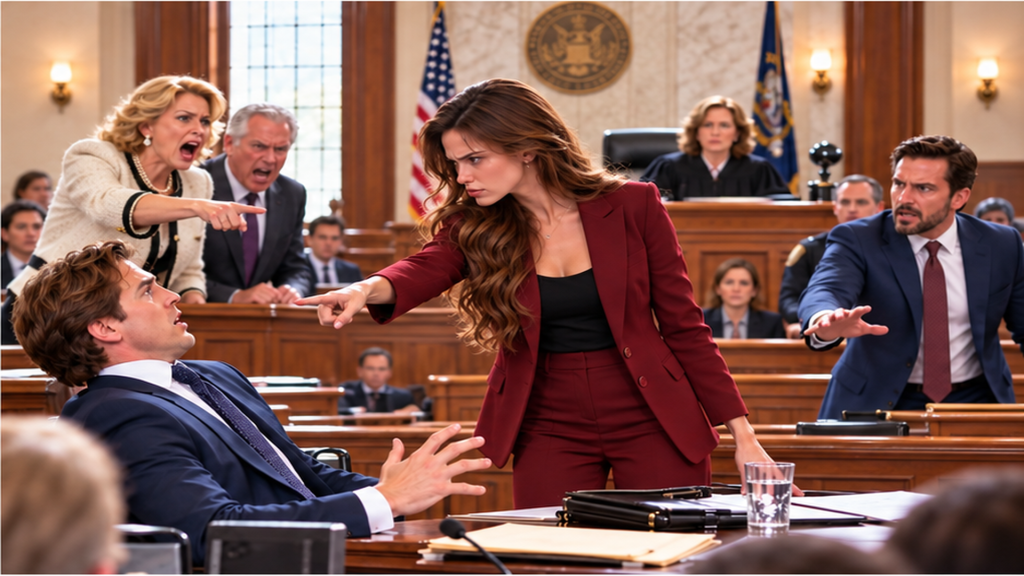
For the first time that morning, I forgot I was standing in a courtroom. I forgot Preston. I forgot his three expensive attorneys, my mother-in-law’s mocking laughter, and the judge who had just been handed evidence that my husband and his family had falsified financial documents.
All I could see was the message glowing on my phone. Amelia, please don’t trust the judge. Beneath those words was a photograph of a handwritten note. I knew the handwriting. The uneven capital letters. The way the writer crossed his sevens. The little hook he always added to the end of the letter A.
My younger brother, Nathan, had written like that since middle school. Eight years earlier, he had disappeared during a humanitarian deployment overseas. The official explanation was that the relief convoy he accompanied had been attacked in a remote area and that he was presumed dead.
No body had ever been recovered.
I had spent years trying to accept that uncertainty.
And now someone was sending me his handwriting.
My fingers began trembling.
“Mrs. Hale?”
I looked up.
Judge Rebecca Morrison was watching me.
“Are you prepared to continue?”
For a moment, I almost told her everything.
About the photograph.
The storage locker.
The warning.
Then I remembered Nathan’s words.
Please don’t trust the judge.
I forced myself to breathe.
“Your Honor, I need to request a brief continuance to allow newly identified evidence to be properly authenticated and disclosed.”
Martin Voss rose immediately.
“Your Honor, this is another attempt to delay a straightforward divorce proceeding.”
I turned toward him.
“Mr. Voss, your client’s property waiver bears the seal of a notary who died three years before its execution. Six additional agreements show the same defect. Those documents allegedly support millions of dollars in liabilities assigned to my marriage.”
His expression hardened.
I continued.
“Determining whether those obligations are genuine is not a delay tactic. It is necessary to a reliable distribution of property.”
The judge studied us.
Then she turned toward Voss.
“Counsel, the court has serious concerns about the documents already presented. I expect all parties to preserve relevant records and comply with appropriate discovery.”
Voss opened his mouth.
She raised a hand.
“I am not inviting further argument at this moment.”
Then she looked at me.
“Mrs. Hale, your request will be considered in accordance with the procedural posture of this case. We will address scheduling and evidentiary matters with both sides.”
“Thank you, Your Honor.”
I sat down.
My heart was beating so loudly that I barely heard the next exchange.
Across the aisle, Preston was glaring at me.
His father, Richard Hale, leaned toward him and whispered something.
Vivian kept staring at her lap.
For the first time since the divorce began, not one member of that family looked amused.
But I wasn’t thinking about winning anymore.
I was thinking about the brother whose absence had shaped every day of my life for eight years.
And the possibility that his disappearance had never been what I’d been told.
I waited until I was outside the courtroom before responding to the unknown number.
Who are you?
The reply arrived immediately.
My name is Mara Ellison. I worked with Nathan.
My breath caught.
Where is he?
Three dots appeared.
Disappeared.
Then returned.
He is alive.
I stopped walking.
People moved around me in the courthouse corridor.
Someone laughed near the elevators.
A clerk pushed a cart of files past the water fountain.
But the world had gone silent.
I stared at those three words.
He is alive.
My brother.
The boy who used to steal french fries from my plate.
Who called me Captain Bossy Boots when I joined the Army.
Who once drove six hours through a snowstorm because I was sick and didn’t want to spend Christmas alone.
Alive.
I pressed a hand against the wall.
Where?
The reply came.
He’s receiving medical care. He wants to see you, but he needs you to understand the danger first. Please don’t approach the locker alone.
I swallowed.
What danger?
The same people who took his freedom are using your divorce to destroy the evidence he kept.
My knees weakened.
A voice spoke behind me.
“Amelia.”
I turned.
Preston was standing near the courthouse exit.
His expensive tie was crooked, and his face had lost its usual arrogance.
“We need to talk.”
I slipped my phone into my pocket.
“No.”
He stepped closer.
“You don’t understand what you’re doing.”
I looked at him.
It was the same sentence he’d whispered to me during the recess.
The same warning he’d used whenever I questioned his family’s finances.
For seven years, he’d treated my intelligence as an inconvenience.
Now he looked almost frightened of it.
“What exactly am I doing, Preston?”
He glanced toward the hallway.
“You’re dragging my parents into something they don’t deserve.”
I studied his expression.
“Did you know Nathan?”
He went completely still.
It lasted less than a second.
But I saw it.
“What?”
“My brother. Nathan Carter.”
Preston swallowed.
“You’ve told me about him.”
“That’s not what I asked.”
His eyes shifted toward the courthouse entrance.
I took one step closer.
“Did you know him before you met me?”
He said nothing.
And in that silence, I felt the first terrible certainty settle inside me.
My husband had not simply stolen from our marriage.
He knew something about the brother I had spent eight years mourning.
Preston finally whispered, “Amelia, some things are better left alone.”
I stared at him.
“That’s what people say when the truth threatens them.”
Then I walked away.
I drove directly to the office of Colonel Esther Quinn.
She had retired from the Army Judge Advocate General’s Corps three years earlier.
Before that, she’d been my mentor, my commanding officer, and one of the few people who understood how profoundly Nathan’s disappearance had changed me.
She was also a licensed civilian attorney with experience in complex financial litigation.
When I explained what had happened, she listened without interrupting.
Then she read the messages.
Her expression changed.
“Amelia, have you contacted law enforcement?”
“Not yet about the locker. I wanted to understand what this is first.”
She nodded.
“Then we start there. No private confrontation, no entering an unknown property, and no treating that handwriting as conclusive proof until it has been verified.”
I swallowed.
“You think someone’s trying to manipulate me?”
“I think someone is asking you to act on information that could change your life. That makes verification essential.”
She looked down at the photograph.
“Do you remember Nathan mentioning a relief contractor called Meridian Field Services?”
I frowned.
“Yes.”
“Did he tell you what they were doing?”
“He said their records didn’t match the shipments reaching the villages.”
Esther leaned back.
I remembered those conversations.
Nathan had been a civilian logistics specialist attached to an international humanitarian mission.
He helped coordinate medical supplies, emergency shelter materials, and food deliveries to communities displaced by conflict.
He believed that work mattered.
He used to tell me about children who walked miles to reach temporary clinics.
About mothers waiting in line for clean water.
About doctors trying to operate without enough basic equipment.
But shortly before he vanished, his emails became strange.
He said shipping manifests had been altered.
That containers marked for humanitarian clinics were disappearing.
That local workers who asked questions were being threatened.
I’d encouraged him to report everything through the mission’s official channels.
He told me he had.
Then he disappeared.
I looked at Esther.
“Why are you asking about Meridian?”
She turned her computer toward me.
A corporate filing filled the screen.
Meridian Field Services — Principal Financial Partner: Hale Global Infrastructure.
My breath caught.
Hale.
My husband’s family.
Esther watched my face.
“Did you know about this?”
I shook my head.
“No.”
Then she said quietly, “Amelia, I think your divorce is only one piece of a much larger problem.”
The storage locker was located in a warehouse district near the edge of town.
I didn’t go there that afternoon.
Esther contacted a federal investigator she had worked with on a previous procurement-fraud case, and the information was referred to the appropriate authorities.
By evening, a detective named Sofia Reyes had called me.
She listened to my account.
Then she asked permission to examine the messages I’d received.
I sent them through the secure process she provided.
“Mrs. Hale,” she said, “the photographs may contain important evidence. But before anyone handles the contents of that locker, we need to establish who controls it and how the materials were obtained.”
I nodded.
“I understand.”
“Do you know Mara Ellison?”
“No.”
“Have you ever met her?”
“Not that I remember.”
“Then we’ll verify her identity and speak with her directly.”
I hesitated.
“Detective, she says Nathan is alive.”
There was a pause.
“I know.”
My voice broke.
“I don’t think I can survive finding out that’s another lie.”
Her tone softened.
“Then we won’t ask you to treat it as fact until we’ve confirmed it.”
I sat at Esther’s conference table, staring at my brother’s handwriting.
For eight years, I’d lived with a terrible uncertainty.
Now I was being offered hope.
And hope, I discovered, could be almost as frightening as grief.
Mara agreed to meet investigators the following morning.
She was forty-one, with dark hair cut to her shoulders and a small scar beneath her chin.
When I saw her through the glass wall of the interview room, something stirred in my memory.
I had seen that face before.
Not in person.
In one of Nathan’s photographs.
He’d sent me a picture of his relief team standing beside a truck loaded with medical supplies.
There had been a woman near the back, holding a clipboard.
Mara.
When the detective invited me into the room, Mara stood.
“Amelia.”
I stared at her.
She began crying.
“I’m sorry.”
I didn’t understand.
“For what?”
“For waiting so long.”
I sat opposite her.
My hands were trembling.
“Where’s my brother?”
She looked toward Detective Reyes.
Then back at me.
“He’s in a rehabilitation residence under an arrangement made for his protection.”
My heart began pounding.
“Is he hurt?”
Mara’s eyes filled.
“Yes.”
I covered my mouth.
She continued.
“But he’s alive. He remembers you. And he’s been asking to see you.”
For a moment, I couldn’t speak.
Then I whispered, “Why didn’t he contact me?”
Mara lowered her eyes.
“Because for years, he couldn’t.”
She took a breath.
“After the convoy incident, Nathan was held by an armed group operating in the region. They accused him of stealing humanitarian supplies and turned him over to local authorities using fabricated documentation.”
I stared.
“He was arrested?”
“He was detained. There were no meaningful proceedings that would have allowed him to challenge the accusations.”
My stomach turned.
Mara continued.
“He was moved between facilities. His family wasn’t notified. Several organizations spent years trying to establish his whereabouts.”
“Seven years?” I whispered.
She nodded.
“Nearly seven.”
I pressed my hands against my face.
Seven years.
My little brother had spent nearly seven years imprisoned in a foreign country while I believed he had vanished into the wilderness.
Mara’s voice broke.
“An international legal-aid organization finally obtained records showing he was still alive. A human-rights team helped secure his release after the underlying allegations were exposed.”
I looked up.
“When?”
“Nine months ago.”
My hands went cold.
“He’s been free for nine months?”
“Yes.”
“Then why didn’t he call me?”
Mara’s eyes filled again.
“He was badly injured and medically unstable when he was released. He needed extensive treatment. He also believed people connected to the original operation still had the ability to threaten his family.”
I shook my head.
“He should have told me.”
Mara nodded.
“He knows.”
I looked away.
Part of me wanted to be angry.
Another part was already imagining Nathan in a hospital bed somewhere, frightened and exhausted, trying to understand a world that had continued without him.
Mara continued.
“When he learned you’d married Preston Hale, he became terrified.”
I turned back.
“What?”
“He recognized the family name.”
My stomach tightened.
“From Meridian?”
She nodded.
“He had copies of documents connecting Hale Global Infrastructure to the diverted relief shipments.”
I stared at her.
“And Preston?”
Mara hesitated.
“Nathan believes Preston was involved in an effort to conceal the records after the convoy incident.”
My chest tightened.
“Was he?”
“Investigators are examining what each person knew and did. Nathan can tell you what he personally witnessed, but the documents need independent verification.”
I nodded slowly.
Then I asked the question I’d been avoiding.
“Why did he say not to trust Judge Morrison?”
Mara’s expression changed.
She looked toward Detective Reyes.
Then reached into her bag.
“Because Nathan found a connection between her family and the companies involved.”
She placed a photograph on the table.
It showed Judge Rebecca Morrison standing beside Richard Hale, my father-in-law, at a private fundraising dinner.
Between them was an older man wearing a silver tie.
“Who is he?” I asked.
Mara answered.
“Thomas Morrison. The judge’s husband.”
I stared at the image.
Then Mara said, “His investment trust received payments from one of the same companies Nathan was investigating.”
For a moment, I didn’t speak.
A photograph at a fundraiser wasn’t proof of corruption.
And the fact that someone’s spouse owned investments didn’t automatically establish wrongdoing.
But the combination was concerning.
Especially when the judge was currently hearing a case involving financial documents connected to the same family.
I looked at Detective Reyes.
“Does the judge know?”
“That’s one of the questions the appropriate authorities will need to examine.”
I sat back.
Nathan’s warning hadn’t necessarily meant Judge Morrison would deliberately rule against me.
It meant there was a possible conflict I couldn’t afford to ignore.
I looked at Mara.
“Did Nathan write the note?”
She nodded.
“He wrote it yesterday after learning which judge had your case. His handwriting hasn’t changed much.”
I covered my mouth.
Yesterday.
My brother had been holding a pen yesterday.
Writing my name.
Trying to protect me.
He was alive.
And for the first time, I began to believe that I might actually see him again.
Two days later, I was shown the contents of the storage locker.
The investigators had obtained the necessary authorization to examine it, and Mara had confirmed that she had maintained it on Nathan’s behalf.
Inside were several boxes of records.
Original shipping manifests.
Copies of contractor invoices.
Photographs of relief trucks.
A battered external hard drive.
And a small metal case with a lock.
When Detective Reyes opened the case, I saw something that made my heart stop.
Nathan’s dog tags.
I’d given him the chain for his twenty-first birthday.
He wasn’t in the military, but he wore an identification tag when traveling into dangerous areas, and I had jokingly told him he needed something sturdy enough to survive his adventures.
The little silver tag bore his name.
NATHAN CARTER.
Beneath it was a date.
His birthday.
I reached toward it.
Then stopped.
“May I?”
Reyes nodded after documenting the item.
I lifted it carefully.
The chain was worn.
One corner of the tag was scratched.
But it was his.
I held it in my palm.
And remembered him laughing in my apartment before leaving for the deployment.
“You worry too much, Amelia.”
I’d punched his shoulder.
“Somebody has to.”
He smiled.
“Then when I get back, I’ll let you worry about me in person.”
I began crying.
For eight years, I’d remembered that promise as a goodbye.
Now I was holding something he had carried through the years I thought he was gone.
Detective Reyes waited until I could speak.
Then she showed me another document.
It was an original contract bearing Richard Hale’s signature.
The agreement authorized Meridian Field Services to manage freight movements connected to a humanitarian supply program.
But several attached schedules listed shipments that never reached the intended destinations.
The investigators were comparing those records with independent information.
A second document showed payments to a company called Harborstone Capital Management.
I recognized the name immediately.
It was the same holding company that had received money from Preston’s supposed business loans.
The same company I’d identified in court.
I stared at the page.
“So the money from our marriage was going into the same network?”
Reyes nodded carefully.
“There’s evidence of overlapping ownership and transactions. We’re tracing the funds to determine the nature of those payments.”
I looked toward Esther.
My mentor’s face was grave.
“Amelia,” she said, “the documents you’ve brought into the divorce may be connected to the financial arrangements Nathan uncovered eight years ago.”
I swallowed.
And suddenly I understood why Preston had reacted with such fear when I mentioned my brother.
My divorce wasn’t merely threatening his claim to our marital property.
It threatened to expose an entire history his family had worked to bury.
The first time I saw Nathan, I didn’t recognize him immediately.
He was sitting in a garden outside a rehabilitation center, wearing a gray sweater and holding a cup of tea.
His hair had gone almost entirely silver at the temples.
There was a deep scar near his left ear.
One of his hands trembled slightly whenever he lifted the cup.
He looked older than thirty-six.
Much older.
But then he turned toward me.
And smiled.
The same crooked smile he’d had when he was twelve years old and had gotten caught stealing cookies before dinner.
“Hey, Captain.”
My knees nearly gave way.
Only Nathan called me that.
Even after I left the Army.
Even after I stopped wearing the uniform.
To him, I would always be Captain Amelia.
“Nate?”
His smile broke.
I crossed the garden.
He rose too quickly and caught himself against the table.
I reached him before he could fall.
Then my little brother was in my arms.
Alive.
Warm.
Breathing.
And shaking so badly that I wondered whether he was even more frightened than I was.
I held him carefully.
For eight years, I’d imagined this moment in dreams.
Sometimes I found him standing on our parents’ porch.
Sometimes he knocked on my apartment door.
Sometimes he appeared at the end of a crowded street, waving as though he’d only been away for the weekend.
But in every dream, just as I reached him, he disappeared.
This time, he didn’t.
“You’re here,” I whispered.
He nodded against my shoulder.
“I’m here.”
I began crying.
Then he whispered, “I’m sorry.”
I pulled back.
“For what?”
His eyes filled.
“For missing everything.”
I stared at him.
He looked down.
“Your wedding. Your birthdays. All those years.”
I placed my hands against his cheeks.
“Nathan, you were trying to survive.”
He shook his head.
“I should have found a way to tell you.”
My throat tightened.
“You don’t have to apologize for what someone did to you.”
He began crying.
And suddenly I was holding the little brother I’d spent my childhood protecting.
Except this time, there was no scraped knee I could clean.
No school bully I could confront.
No ordinary problem I could solve by calling someone’s parents.
There were eight stolen years.
And I couldn’t give them back.
So I held him.
And let him cry.
We sat in the garden for nearly an hour.
Mara remained nearby, giving us privacy while making sure Nathan didn’t become exhausted.
He told me about the rehabilitation process.
The nightmares.
The difficulty sleeping in rooms with closed doors.
How ordinary sounds sometimes made him flinch.
He didn’t describe everything he’d endured.
And I didn’t ask him to.
But he wanted me to understand what had happened before he disappeared.
“I found the first false shipment,” he said.
I looked at him.
“It was supposed to contain antibiotics and emergency surgical supplies for a rural hospital.”
He stared into his tea.
“The manifests showed delivery. But the clinic had received nothing.”
I remembered his old emails.
He continued.
“I thought it was an accounting mistake. Then I found another shipment. And another.”
“What happened to the supplies?”
“Some were diverted to private buyers. Others were never purchased at all. The invoices claimed the aid program had paid for goods that didn’t exist.”
I swallowed.
“And Hale Global?”
Nathan nodded.
“They financed some of the contractor arrangements and received payments through related companies.”
He paused.
“I discovered internal records suggesting senior people knew the shipments were being falsified.”
I looked down.
“Richard?”
“He was involved in the negotiations. Preston attended several meetings.”
My heart tightened.
“Preston was there?”
Nathan looked at me.
“Amelia, I recognized his face when Mara showed me your wedding photographs.”
I stared.
“Why didn’t you tell me?”
His eyes filled.
“I was still in treatment. I didn’t know whether I could safely contact you. I didn’t know whether you were involved.”
The words hurt.
I understood why he had been cautious.
But it was painful to imagine my own brother looking at my wedding photograph and wondering whether his sister had willingly married into the family connected to his disappearance.
“Nathan, I never knew.”
He nodded.
“I know that now.”
He looked away.
Then whispered, “I thought Preston was watching you.”
My stomach tightened.
“What do you mean?”
Nathan took a breath.
“After I disappeared, the people holding me told me that my family would be punished if I continued discussing the documents.”
He paused.
“One of them showed me a photograph of you at a charity fundraiser.”
I stared.
“With Preston?”
He nodded.
“You’d just met him.”
My entire body went cold.
Preston and I had met at a military charity reception approximately six months after Nathan disappeared.
He was charming.
Thoughtful.
He knew how difficult the past year had been for me.
He brought me coffee.
Called to check on me.
Listened when I cried.
For years, I’d remembered that meeting as the first kind thing that happened after my brother vanished.
Now I wondered whether it had been arranged.
I looked at Nathan.
“Do you think he approached me deliberately?”
Nathan hesitated.
“I don’t know what was in his mind. But the people holding me knew who he was, and they were using his presence in your life to frighten me.”
I stared at the ground.
Preston had proposed eleven months after we met.
We married soon afterward.
And over seven years, he had slowly persuaded me to stop asking questions about the disappearance.
He told me the investigation had been thorough.
That I was hurting myself by refusing to accept the conclusion.
That being a military attorney didn’t mean I could fix every tragedy.
I remembered the nights I sat with old photographs spread across our bed.
Preston would kiss my forehead.
Then quietly put them away.
You have to let him go, Amelia.
Now I understood how much that advice might have served his family.
The second time I appeared before Judge Morrison, Esther was beside me as co-counsel.
I had chosen to represent myself at the first hearing.
But once the case expanded into possible fraud, conflicts of interest, and complex financial tracing, I understood that experienced independent counsel would help protect the integrity of the proceedings.
Knowing how to question witnesses didn’t mean I had to carry every burden alone.
We had filed a motion requesting review of a possible judicial conflict.
The filing was supported by records showing that Thomas Morrison’s investment trust had received funds through Harborstone Capital Management.
The same company controlled by Richard Hale.
The judge listened as Esther explained the relationship.
Then Martin Voss rose.
“Your Honor, this is speculation designed to embarrass the court.”
Esther remained calm.
“We are not asking the court to conclude that anyone committed misconduct. We are asking for disclosure and an appropriate determination concerning an apparent financial interest.”
The judge’s expression tightened.
“I understand the distinction, counsel.”
She looked down at the documents.
For several seconds, the courtroom was silent.
Then she said, “I was not aware that the trust held an interest in that entity.”
I watched her carefully.
She continued.
“Given the information presented, I will refer the matter for the appropriate review and take no further substantive action until the conflict question is resolved.”
I looked toward Preston.
He was staring at his father.
Richard’s face had gone pale.
For the first time, I wondered whether the Hales had counted on the judge being unaware of the financial connection.
A conflict could exist without a judge intentionally participating in wrongdoing.
But failing to address it once discovered would have undermined the proceedings.
Several weeks later, Judge Morrison recused herself.
A different judge was assigned.
The matter involving her husband’s trust was referred for independent examination.
Later findings established that his financial interests had not been properly disclosed to her. The review did not establish that she had knowingly assisted the Hales.
Nathan had been right to warn me.
But the truth was more complicated than simply declaring the judge corrupt.
The problem was that people connected to Richard Hale had placed money in so many businesses and trusts that even those responsible for making fair decisions could encounter hidden conflicts.
And that, I realized, was one reason independent disclosure mattered so much.
Preston requested a private meeting a month later.
I refused.
Then his attorney contacted Esther to propose a formal settlement conference.
This time, I agreed.
Not because I wanted to rescue our marriage.
But because the discovery process had uncovered something I needed to hear from my husband himself.
A series of communications showed Preston had been asked to attend the charity reception where we first met.
Richard had sent him information about me beforehand.
My military career.
My relationship with Nathan.
My attempts to obtain records concerning the missing relief convoy.
And a note describing me as “a continuing exposure risk.”
I read that phrase until the words lost their meaning.
A continuing exposure risk.
Not a sister mourning her brother.
Not a woman trying to understand why someone she loved had vanished.
A risk.
Something to manage.
Something to contain.
Preston arrived at the settlement conference looking tired.
He sat opposite me.
For a moment, neither of us spoke.
Then I placed the document in front of him.
“Did your father ask you to meet me?”
His face changed.
“Amelia—”
“Yes or no.”
He stared at the page.
Then whispered, “Yes.”
I closed my eyes.
It wasn’t a surprise.
Not anymore.
But hearing him admit it still hurt.
“Did you know why?”
He swallowed.
“He said you were obsessed with your brother’s disappearance and that you were threatening legitimate business operations.”
I looked at him.
“So you approached me.”
He nodded.
“At first, I was supposed to find out what you knew.”
My throat tightened.
“At first?”
His eyes filled.
“I fell in love with you.”
I stared at him.
For a moment, I wanted to laugh.
Not because it was impossible.
But because he’d chosen those words as though they could erase what came before them.
“You fell in love with me,” I repeated.
He nodded.
“Then why didn’t you tell me?”
He lowered his head.
“I thought I could keep you away from the investigation and still give you a good life.”
I stared.
“A good life?”
He looked up.
“We had good years, Amelia.”
I swallowed.
“We had years when you knew my brother might still be alive.”
Preston’s face crumpled.
“I didn’t know he was alive.”
“Did you know your family’s companies were connected to his disappearance?”
Silence.
“Preston.”
He whispered, “I knew there had been an effort to stop him from releasing the documents.”
I felt cold.
“And when I cried for him?”
His eyes filled.
I leaned forward.
“When I woke up from nightmares? When I sat in our bedroom staring at his photograph? When I told you I thought I’d failed him?”
Preston covered his face.
I continued.
“You let me believe the worst thing I’d done was not finding him.”
My voice broke.
“And all along, you had information that could have changed everything.”
He began crying.
“I’m sorry.”
I looked at him.
Then said quietly, “I believe you may have loved me.”
He lowered his hands.
“But love that depends on keeping someone ignorant isn’t the kind of love I can build a life around.”
I stood.
Preston reached toward me.
“Amelia, please.”
I stepped back.
“Don’t.”
For once, he stopped.
And I walked out of that room with no desire to win him back.
I wanted my life back.
That was different.
The criminal investigations took nearly two years.
There were separate inquiries into the falsified loan agreements, the relief-contract payments, and the events surrounding Nathan’s disappearance.
Witnesses were interviewed across several jurisdictions.
Corporate records were examined.
Financial transactions were traced through companies that had existed largely to conceal who controlled the money.
Nathan provided testimony and documents when his health allowed.
Investigators compared his account with the original shipping records, communication logs, and testimony from people who had worked on the humanitarian mission.
The evidence established a scheme to divert relief funds and conceal missing supplies.
It also revealed efforts to intimidate people who questioned those transactions.
Richard Hale and several associates faced criminal proceedings.
Some eventually entered guilty pleas.
Others contested the allegations.
The people directly responsible for Nathan’s detention were investigated through the appropriate international channels, although not everyone involved could be brought before an American court.
That uncertainty hurt.
There were people who had taken years of my brother’s life and might never answer fully for what they’d done.
But I learned that justice and restoration are not the same thing.
Justice could establish responsibility.
It could impose consequences.
It could recover money.
But it couldn’t return Nathan’s twenties.
It couldn’t give him back the birthdays he missed or the ordinary confidence of a man who had once believed the world was fundamentally safe.
What we could do was help him build a life in which those losses did not define every remaining day.
My divorce was finalized under the supervision of the newly assigned judge.
The disputed property waiver was not accepted as genuine.
The supposed loan obligations were subjected to independent scrutiny.
And the financial evidence showed that money had been transferred from our joint business accounts into companies connected to Richard Hale.
The court considered the actual records, not merely Preston’s claim that I had contributed nothing to our marriage.
I remembered the morning he placed the divorce papers beside my breakfast plate.
You looked after the house, Amelia.
As though organizing our home, supporting his career, maintaining our finances, and sacrificing opportunities had been a form of idleness.
I remembered the way Vivian laughed when I arrived at court alone.
The way Richard smirked.
The way Martin Voss described the case as straightforward.
Now the proceedings had exposed financial documents that were anything but straightforward.
The final judgment addressed our property based on the proven assets, liabilities, and applicable law.
It didn’t give me everything I asked for.
Courts rarely resolve complicated lives with perfect symmetry.
But it rejected the fabricated obligations that Preston’s family had tried to use against me.
I left the courthouse with my financial security protected and my marriage legally ended.
For a moment, I stood on the steps where Preston had once grabbed my sleeve.
Then I looked toward the sky.
I wasn’t smiling because he’d lost.
I was smiling because I no longer had to spend my life proving I deserved a place in it.
Nathan moved into a small house near mine the following spring.
Not because I wanted to supervise him.
But because he wanted family nearby while he continued rebuilding his independence.
He chose the house himself.
A yellow cottage with a porch and a little garden.
The first thing he bought was a battered wooden table from a secondhand shop.
The second was a set of blue coffee mugs.
The third was a dog.
A scruffy brown rescue named Jasper who followed him from room to room as though he’d been assigned a permanent security detail.
One Saturday afternoon, I visited while Nathan was planting tomatoes.
He wore gardening gloves and an old baseball cap.
Jasper was lying in the shade, watching us.
I carried two sandwiches and a pitcher of lemonade.
Nathan looked up.
“Captain.”
I smiled.
“Still calling me that?”
He grinned.
“Until somebody promotes you.”
I laughed.
Then sat on the porch steps.
For a while, I watched him work.
His movements were slower now.
Sometimes his hand trembled.
Occasionally he had to stop and rest.
But he was outside in the sunshine.
Choosing what to plant in his own garden.
Making plans for the next week.
Living.
He sat beside me after a while.
Then asked, “Do you ever wish you hadn’t found out?”
I turned toward him.
“What?”
“About Preston. The money. All of it.”
I stared at the little tomato plants.
Then answered carefully.
“I wish none of it had happened.”
He nodded.
“But I don’t wish I’d stayed ignorant.”
His eyes filled.
I continued.
“Knowing the truth cost me a marriage.”
I looked at him.
“But it gave me my brother back.”
Nathan lowered his head.
Then whispered, “I was afraid you wouldn’t recognize me.”
My throat tightened.
I reached for his hand.
“I recognized you the moment you smiled.”
He began crying.
I leaned against his shoulder.
And we sat there until the sunlight shifted across the garden.
A year later, I returned to the courtroom where everything had begun.
Not for another hearing.
I had been invited to speak at a professional gathering about financial fraud, evidence preservation, and the importance of independent legal representation.
After the proceedings, I had renewed my civilian legal credentials and begun working with a nonprofit that assisted people facing financial exploitation.
I still took private cases occasionally.
But much of my work involved helping people understand documents they’d been pressured to sign.
Sometimes they were older adults.
Sometimes they were spouses whose partners controlled every account.
Sometimes they were people who had been told they weren’t intelligent enough to understand the paperwork placed in front of them.
I recognized that particular humiliation.
And I remembered what it felt like to be the only person at a table who knew the truth but had not yet been allowed to prove it.
During my speech, someone asked whether I regretted representing myself at the original hearing.
I thought about the question.
Then smiled.
“No.”
A few people laughed.
I continued.
“But I also learned that knowing the law doesn’t mean you should face every problem alone.”
I paused.
“Evidence matters. Procedure matters. Independent counsel matters. And sometimes the strongest decision an attorney can make is recognizing when another professional should help.”
When the gathering ended, I walked slowly through the empty courtroom.
I stopped beside the table where I’d sat with my leather briefcase and glass of water.
I could almost hear Vivian’s laughter.
Richard’s smug voice.
Preston whispering that I had no idea what I was destroying.
Then I remembered the moment my phone vibrated.
The photograph of the storage locker.
The handwriting I had loved since childhood.
And those words.
Amelia, please don’t trust the judge.
That message had frightened me.
But it had also reminded me of something my brother understood long before I did.
People in positions of authority can be mistaken.
Conflicts can be concealed.
Documents can be forged.
And confidence is never a substitute for evidence.
I touched the edge of the table.
Then smiled.
Because I no longer remembered that courtroom as the place where my marriage ended.
I remembered it as the place where my life began returning to me.
That evening, Nathan came over for dinner.
He brought Jasper, who immediately made himself comfortable beneath the kitchen table.
I made roast chicken, mashed potatoes, and the lemon cake our mother used to bake on Sundays.
Nathan ate two slices.
Then announced he was taking the remaining cake home.
I laughed.
“You haven’t changed at all.”
He grinned.
“That’s debatable.”
I looked at him.
The scars were still there.
So were the difficult memories.
But he could laugh again.
And so could I.
After dinner, we sat on the porch.
The evening air smelled of freshly cut grass.
Somewhere across the street, children were riding bicycles.
Nathan leaned back in his chair.
“Amelia?”
“Yes?”
“Are you happy?”
I considered the question.
For years, I had believed happiness meant maintaining a peaceful marriage.
Keeping everyone comfortable.
Avoiding arguments.
Making sacrifices quietly enough that nobody noticed.
But that version of happiness had required me to become smaller and smaller until the people around me almost forgot I existed outside their expectations.
Now my life was different.
Sometimes it was lonely.
Sometimes I worried about Nathan.
Sometimes memories of Preston still hurt.
But I could ask questions without being mocked.
Make decisions without seeking permission.
And look at my own reflection without wondering whether someone else had convinced me to abandon the person I used to be.
I smiled.
“Yes, Nate.”
He looked at me.
“Really?”
I nodded.
“Not every minute. But yes.”
He smiled.
“Good.”
For a while, we sat quietly.
Then he reached across the space between our chairs and took my hand.
And suddenly I remembered two children sitting together on the back steps of our childhood home.
A little boy telling his older sister that nothing bad could happen while she was around.
A girl promising him that she’d always find him if he got lost.
I had carried the guilt of that promise for eight years.
Now I understood that I hadn’t failed him.
I had never stopped loving him.
And when the truth finally reached me, I had followed it.
I squeezed his hand.
For the first time, neither of us needed to say anything.
My brother was home.
My life was mine again.
And the family that had laughed at me in court had taught me one final, unforgettable lesson:
Never mistake someone’s silence for weakness. Sometimes the quietest person in the room is simply waiting for the truth to speak.
THE END STORIES! THANK YOU FOR READING GOOD LUCK !❤️
Related Posts