For several seconds, I couldn’t move. The photograph on my phone showed an elderly man sitting beside a window, holding yesterday’s newspaper. His hair was almost entirely white. His shoulders appeared smaller. There were deep lines around his mouth that I had never seen before. But those eyes.
Those unmistakable gray eyes. I knew them better than my own reflection. They belonged to my father. The man I had buried four years earlier. The man whose coffin I’d followed through a rain-soaked cemetery. The man whose business I’d inherited, whose empty office I still couldn’t enter without feeling a terrible ache in my chest.
“Detective Ramirez,” I whispered. He looked up from the documents he’d been examining. “What is it?” I held out the phone. His expression changed. “Who sent you this?” “I don’t know.” He studied the photograph. “Is that someone you recognize?” My lips trembled. “That’s my father.”
Ramirez looked at me.
“Your father is deceased, correct?”
I nodded.
“Four years ago.”
He looked back at the screen.
Then he asked, “Are you certain this isn’t an older photograph?”
I turned the phone toward him.
The newspaper was clearly visible.
Yesterday’s date appeared beneath the masthead.
My father was holding it in both hands.
Ramirez examined the picture carefully.
“A photograph can be manipulated, Evelyn. We need to establish where this came from and whether it’s genuine.”
I understood what he was saying.
But something inside me had already recognized the man.
Not just his face.
The way his right thumb rested over the edge of the paper.
The slight tilt of his head.
The faded scar above his left eyebrow.
He’d gotten that scar when I was eleven, after slipping on the ice while helping me carry my first bicycle into the garage.
My father.
My dead father.
Alive.
My knees weakened.
Ramirez pulled out a chair.
“Sit down.”
I sank into it.
From the hallway came the sound of Margaret arguing with an officer.
“This is a family misunderstanding! My daughter-in-law is trying to destroy us!”
Then Daniel’s voice.
“Evelyn, tell them they’re making a mistake!”
I stared at the photograph.
Four years of mourning.
Four Christmases without him.
Four birthdays when I’d placed flowers beside his grave.
And now someone was showing me a picture that suggested everything I believed about his death might be a lie.
My phone vibrated again.
Another message from the unknown number.
He asked me to send this. Please don’t tell Arthur Bell.
I felt the blood drain from my face.
Arthur.
My father’s oldest friend.
The man who had carried his coffin.
The man who had insisted I shouldn’t question the circumstances of his death because doing so would only deepen my grief.
The man who had reported the missing $2.4 million.
The same man who had apparently withdrawn a sealed envelope from my father’s safe only yesterday.
I showed Ramirez the message.
His expression hardened.
“Do not reply until we document the communication.”
I nodded.
Then I looked toward the doorway.
“Detective, if that’s really my father, where has he been?”
Ramirez studied the image once more.
“I intend to find out.”
At seven twenty that morning, I was supposed to be boarding a flight to Chicago.
Instead, I sat at the dining-room table of the home where my husband and mother-in-law had tried to frame me for carrying a gun.
The carry-on had already been secured as evidence.
The handgun had been documented and taken into police custody.
The hidden-camera recordings had been preserved.
And Daniel and Margaret were being questioned separately.
Nothing about the morning felt real.
A few hours earlier, I’d believed the worst thing my family could do was steal my inheritance and send me to an airport carrying a concealed weapon.
Now I was wondering whether they’d also helped steal four years of my father’s life.
Ramirez returned to the room.
“We’ve made contact with the person who sent the photograph.”
My heart began pounding.
“Who is it?”
“A nurse named Ruth Molina. She works at a private rehabilitation facility called Briar Hill.”
I gripped the edge of the table.
“Where?”
“Outside Albany.”
I stood immediately.
“I’m going.”
“Evelyn, we first need to verify the information and assess the situation.”
“That’s my father.”
My voice broke.
“Do you understand? I watched them bury him.”
Ramirez nodded.
“I understand why you’re desperate to see him.”
I shook my head.
“No, you don’t.”
Then I stopped.
Because that wasn’t fair.
He was trying to help.
I sat back down.
“I’m sorry.”
He pulled up a chair.
“Ruth says the man in the photograph is registered at the facility under the name Martin Vale.”
I stared.
“That’s not his name.”
“What was your father’s full name?”
“Charles Edward Carter.”
Ramirez wrote it down.
“Ruth says the patient has significant speech and mobility difficulties following a stroke. But in recent months, he’s become increasingly able to communicate.”
I covered my mouth.
My father had reportedly died after a massive stroke.
The attending physician told me his condition had deteriorated rapidly following his transfer to a private medical facility.
I remembered sitting beside Daniel while a doctor explained that my father hadn’t survived.
There had been a closed-casket funeral.
Arthur handled most of the arrangements.
At the time, I’d been grateful.
I was devastated.
I couldn’t think clearly.
And Arthur had been like an uncle to me since childhood.
He told me he’d promised my father that he would take care of everything if the worst happened.
I’d believed him.
I looked at Ramirez.
“Why didn’t Ruth contact me sooner?”
“She says the patient’s records identify another man as his legal guardian. Staff were told that his family had died and that he became confused when discussing the past.”
My chest tightened.
“His family died?”
Ramirez nodded.
“According to her account, that’s what she was told.”
I stared at the wall.
For four years, I’d believed my father was dead.
And somewhere in a rehabilitation facility, my father may have been told the same thing about me.
I began shaking.
“Who is listed as his guardian?”
Ramirez hesitated.
Then answered.
“Arthur Bell.”
The room seemed to tilt beneath me.
By late morning, the investigators had enough information to begin examining the circumstances surrounding my father’s reported death and his placement at Briar Hill.
I called an attorney named Lillian Grant.
She had represented Carter Holdings before my marriage, back when my father still insisted that I attend every quarterly meeting even though Daniel complained that business wasn’t a suitable interest for me.
Lillian was nearly sixty, with a sharp mind and a reputation for refusing to be intimidated by wealthy men.
When I told her what had happened, she was silent for almost a minute.
Then she said, “Evelyn, I need you to answer something carefully.”
“Okay.”
“Did you ever personally see your father’s body after he was pronounced dead?”
I closed my eyes.
“No.”
“Did you review the original medical records?”
“Arthur told me everything had been handled.”
“And the death certificate?”
“I received a certified copy.”
Lillian took a slow breath.
“Then we need independent verification of every one of those records.”
I nodded.
She continued.
“And Evelyn, your shares in Carter Holdings were transferred into an irrevocable ownership arrangement before your father’s stroke. Your fifty-two percent interest does not depend on the truth of his reported death.”
I frowned.
“Why are you telling me that?”
“Because if your father is alive, someone may try to use the discovery to create confusion about corporate control.”
I closed my eyes.
Of course.
The business.
The missing millions.
The fraudulent trust.
My father hadn’t simply been a loved one to these people.
He had been the founder of an empire worth more than Daniel and Margaret could ever hope to control legitimately.
And if Arthur was involved, the plan might have begun long before I found the missing money.
Lillian’s voice softened.
“First, we find Charles.”
I swallowed.
“Yes.”
“Then we establish what happened to him.”
She paused.
“And after that, we deal with anyone who believed they could build a fortune on his disappearance.”
I returned to my childhood home that afternoon.
The house stood on a quiet street lined with old maple trees.
My father had purchased it when I was eight.
He used to say it was the first thing he bought after Carter Holdings became profitable.
Not a sports car.
Not an expensive watch.
A home with a garden because my mother loved roses.
She died when I was twelve.
Afterward, Dad filled the house with photographs of her.
He never remarried.
He told me once that some people spend their entire lives looking for a person who makes the world feel like home, and he’d been fortunate enough to find that person young.
Now the house was quiet.
Too quiet.
I’d kept it maintained, but rarely visited.
Walking through the front door felt like entering a memory I hadn’t been brave enough to face.
Lillian met me inside.
She had brought an independent forensic document specialist and a corporate records attorney.
We weren’t there to disturb the old safe or conduct our own investigation.
That was being handled through appropriate legal channels.
We were there to examine copies of records my father had left in his personal office and determine what documents might be relevant to the ownership and trust arrangements.
I stood in the doorway.
His desk was still there.
Dark walnut.
A green reading lamp.
A photograph of me at graduation.
And beside it, a little wooden sign.
DO THE RIGHT THING, EVEN WHEN NOBODY IS WATCHING.
Dad had kept that sign on his desk for thirty years.
He said integrity was what a person did when dishonesty would be easier.
I touched the edge of the desk.
And suddenly I was sixteen again, sitting opposite him with tears running down my face because I’d failed an important exam.
He’d smiled and said, “Evelyn, a mistake is an event. It isn’t your identity.”
I sat in his chair and began crying.
Lillian quietly closed the door.
For a while, she allowed me to sit alone.
Then she returned carrying a slim folder.
“Evelyn, there’s something I think you should see.”
I looked up.
It was a copy of a letter my father had written five months before his reported death.
Addressed to Arthur Bell.
The first line made my stomach tighten.
Arthur, I have discovered discrepancies in the North Coast acquisition accounts that require an independent audit.
I kept reading.
Until those discrepancies are resolved, I am suspending your authority to approve transactions involving the family investment trust.
My hands began trembling.
Arthur had told me he managed the trust because my father wanted him to.
But according to this letter, Dad had been trying to remove him.
I looked at Lillian.
“Did Arthur receive this?”
“There’s an acknowledgment from his office.”
I closed my eyes.
My father had discovered something.
Then suffered a catastrophic medical emergency.
Then disappeared into a private facility under another name.
And the man he had been trying to remove from financial control became his supposed guardian.
I looked at Dad’s photograph.
The smile I remembered.
The eyes I had just seen in yesterday’s picture.
For the first time, grief gave way to something sharper.
Determination.
“Whoever did this,” I whispered, “thought I’d never question them.”
Lillian nodded.
“Then it’s fortunate they were wrong.”
The next morning, Ramirez called shortly after eight.
His voice was measured, but I heard urgency beneath it.
“Evelyn, investigators have located the patient at Briar Hill. A medical team is assessing him, and we’re working with the appropriate authorities to verify his identity and legal status.”
I gripped the phone.
“Is he safe?”
“He’s receiving independent medical attention. The facility has been instructed to preserve records, and we’re examining the guardianship documents.”
I closed my eyes.
“Can I see him?”
“We’re arranging that as soon as his condition and the necessary safeguards allow.”
I pressed my forehead against the kitchen window.
Outside, the city was waking.
Cars moved along the street.
A woman jogged past with her dog.
Somewhere, children were heading to school.
Everything looked ordinary.
But my entire life had been divided into two impossible halves.
Before the photograph.
And after.
Then Ramirez said, “Ruth told us something you should know.”
I turned.
“What?”
“Your father had been trying to communicate your name for months. At first, his speech was difficult to understand. She began working with him using a letter board.”
Tears filled my eyes.
“Did he write Evelyn?”
“Eventually.”
I covered my mouth.
“She says he became distressed whenever Arthur visited. He repeatedly pointed toward your name and made gestures indicating that he wanted to leave.”
My knees weakened.
“Why didn’t she call me?”
“She raised concerns internally. She says she was told the patient suffered from confusion and that Arthur had legal authority to make decisions.”
I closed my eyes.
I could imagine how easily those explanations might have worked.
A wealthy elderly patient recovering from a stroke.
A respected businessman listed as his guardian.
Staff members instructed to believe the patient’s memories were unreliable.
And my father, trapped inside a body that struggled to speak, trying to tell strangers that his daughter was alive.
Ramirez continued.
“Yesterday, Ruth heard Arthur argue with a facility administrator about removing some of your father’s personal documents. She decided she couldn’t ignore her concerns any longer.”
“The envelope,” I whispered.
“Possibly.”
He paused.
“She photographed your father holding the newspaper because she wanted to provide something that showed his current condition and the date. Then she used information he’d given her to contact you.”
I looked at Dad’s photograph on my kitchen table.
He was staring directly into the camera.
Not smiling.
Not confused.
Looking determined.
And suddenly I realized that photograph wasn’t merely proof of life.
It was a message.
My father was still trying to come home.
I saw him two days later.
The meeting took place in a quiet rehabilitation room after independent clinicians had assessed him and confirmed that he could receive visitors.
Lillian accompanied me.
A social worker explained that my father’s speech was improving, but he became exhausted easily.
He might need time to recognize people.
He might become overwhelmed.
I nodded.
I understood every word.
But my hands were shaking so badly that I couldn’t hold my handbag.
Then the door opened.
And there he was.
My father sat in a wheelchair beside the window.
His hair was white.
His face was thinner.
One hand rested awkwardly on the armrest.
But he was alive.
I stopped breathing.
“Dad?”
He turned.
For a moment, he stared at me.
Then his eyes widened.
His lips began trembling.
“Eve…”
It was barely a sound.
But I knew it.
He’d called me Eve since I was a little girl.
I crossed the room and knelt beside his wheelchair.
“Daddy.”
Tears streamed down his face.
His left hand lifted slowly.
I caught it between mine.
He tried to speak.
The effort made his mouth tremble.
“Thought…”
I leaned closer.
“It’s okay.”
He shook his head.
“Thought… gone.”
I began sobbing.
“They told you I was dead?”
He nodded.
I rested my forehead against his hand.
“Oh, Daddy.”
For several minutes, neither of us could speak.
Then he moved his fingers against my cheek.
Just as he’d done when I was little.
When I fell off my bicycle.
When I cried after my mother’s funeral.
When I came home from college frightened that I wasn’t smart enough to build a career of my own.
He had always touched my cheek that way.
I looked into his eyes.
“I’m here.”
His lips moved.
“Lived?”
I nodded through tears.
“Yes. I’ve been alive. I’ve been working at the company. I thought you were gone.”
His face crumpled.
I wrapped my arms carefully around him.
“I’m so sorry I didn’t find you.”
He tried to shake his head.
I held him gently.
“I’m here now.”
And for the first time in four years, I felt my father’s heartbeat beneath my cheek.
We couldn’t discuss everything that day.
He was exhausted.
The physicians wanted to avoid overwhelming him.
And there were legal questions that investigators needed to pursue without turning his recovery into an interrogation.
But he communicated enough for me to understand one important truth.
He hadn’t chosen to disappear.
He hadn’t abandoned me.
He hadn’t staged his death.
He believed Arthur had taken control of his care after the stroke.
He remembered being moved between facilities.
He remembered someone telling him I had died in an accident.
And he remembered trying, over and over, to communicate that something was wrong.
I held his hand while he used a letter board to spell a sentence.
It took several minutes.
His fingers trembled.
Sometimes he needed to rest.
But finally, the words appeared.
I TRIED TO COME HOME.
I began crying again.
Dad watched me.
Then carefully touched my hand.
I smiled through tears.
“You don’t have to explain anything today.”
He looked toward the window.
Then back at me.
His lips moved.
“Arthur.”
I nodded.
“We know.”
He shook his head urgently.
Then pointed toward the letter board again.
Slowly, painfully, he spelled another sentence.
ARTHUR WAS NOT ALONE.
I felt cold.
Lillian leaned forward.
“Dad,” I whispered, “who helped him?”
His hand hovered over the letters.
He selected one.
Then another.
M.
A.
R.
His breathing grew uneven.
The social worker gently intervened.
“Mr. Carter, we can stop for now.”
He looked frustrated.
But I understood.
Margaret.
My mother-in-law.
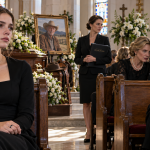
The woman who had stood beside me at his funeral.
The woman who had brought casseroles to my house.
The woman who had told me that grief made people confused and that I should let Daniel handle the company.
I looked toward Lillian.
Her expression had gone pale.
And I realized that the scheme to steal my father’s business hadn’t begun three months earlier.
It had been unfolding for years.
The truth emerged slowly.
Not from one dramatic confession.
From records.
Financial transfers.
Medical documents.
Statements from former employees.
And communications that investigators were able to recover.
My father had suffered a severe stroke during a meeting with Arthur four years earlier.
He was taken to a hospital and initially received appropriate emergency treatment.
But while he remained unable to speak clearly, Arthur arranged for a transfer to a private facility.
Documents later found in the investigation suggested that his authority to make long-term decisions had been misrepresented.
A physician associated with the subsequent private care arrangement had signed records that falsely reported my father’s death.
Those records were used to obtain a death certificate.
The closed-casket funeral followed.
Arthur claimed Dad had requested no viewing.
He claimed the arrangements were necessary to preserve his dignity.
I had believed him because I was grieving.
And because Arthur had been standing beside my father for almost my entire life.
The investigation into the false death certification involved medical authorities, public records officials, and the people responsible for the funeral arrangements.
It was a complicated process.
There were unanswered questions about precisely who knew what.
But one fact became undeniable.
The coffin I had followed to the cemetery had not contained my father’s body.
He had been alive.
And his reported death had allowed the people around him to operate without his oversight.
I sat in Lillian’s office as she explained the developing findings.
Then I asked, “What about Daniel?”
She hesitated.
“Investigators have evidence that Daniel and Margaret participated in improper transactions after your father’s reported death.”
I stared at her.
“But did they know he was alive?”
“We have strong evidence Margaret knew. Daniel’s knowledge at different points is still being examined.”
I closed my eyes.
For seven years, Daniel had slept beside me.
Held me when I cried about Dad.
Told me he understood how difficult losing a parent could be.
And all along, his family had benefited from a lie that kept my father away.
I looked toward the window.
Then whispered, “I used to wonder why Dad trusted Arthur more than anyone.”
Lillian shook her head.
“Your father trusted him once. But he’d begun investigating him before the stroke.”
I nodded.
“He tried to warn me.”
She looked at me.
“Do you remember something?”
I closed my eyes.
Three weeks before his stroke, Dad invited me to lunch.
He asked whether I still had copies of the shareholder agreements.
I laughed and told him Daniel handled those things now.
Dad became unusually serious.
“Evelyn, never let anyone convince you that understanding your own business is unnecessary.”
I’d told him he was worrying too much.
He squeezed my hand.
And said, “One day you may need to stand alone.”
I opened my eyes.
Tears ran down my cheeks.
He’d been trying to prepare me.
And I hadn’t understood.
The sealed envelope became the next piece of the investigation.
Arthur had removed it from my father’s old safe the day before I discovered the photograph.
A security recording from the property showed him entering the study with an old access code.
He had apparently believed no one would notice.
After all, for four years, he had been treated as the person most familiar with my father’s affairs.
But investigators recovered communications indicating that Arthur wanted the envelope destroyed before an independent review of Carter Holdings began.
It contained a signed memorandum, correspondence with an outside accountant, and records of transactions my father had flagged before his stroke.
Dad had been examining a series of payments connected to a company called Meridian Hospitality Partners.
At first, the payments appeared to be consulting fees.
Then he discovered that Meridian was connected to a network of businesses controlled through Arthur’s associates.
Millions had moved through those companies under vague descriptions such as development planning and strategic advisory services.
My father requested an independent audit.
Within weeks, he suffered his stroke.
Arthur assumed authority.
The records were buried.
And later, Daniel became chief executive officer.
When I studied the financial reports three months earlier, I’d identified $2.4 million in unexplained transfers.
I thought I’d discovered a recent fraud.
Instead, I’d found the visible portion of a scheme that had been growing for years.
The private trust listing me as beneficiary was part of it.
On paper, the money had been moved for my benefit.
But the trust gave Arthur control over the funds.
Further records showed that the money was intended to support transactions involving businesses connected to Daniel and Margaret.
My name had been used to make an unauthorized transfer appear legitimate.
I looked at Lillian.
“They were stealing from the company and making it look like the money belonged to me.”
She nodded.
“That’s what the records suggest.”
I stared at the documents.
“And when I discovered it, they tried to send me through airport security with a gun.”
Lillian’s expression darkened.
“An arrest or prolonged investigation could have distracted you, damaged your credibility, and interfered with your efforts to challenge the transfers.”
I leaned back.
For seven years, Daniel had called me his decorative shareholder.
Margaret laughed whenever I asked questions during company meetings.
Arthur told me I should focus on charitable work because financial oversight would only exhaust me.
They hadn’t merely underestimated my intelligence.
They had worked to keep me from using it.
I took a slow breath.
“How much can we recover?”
“Some of the funds have been traced and restricted pending the legal proceedings. Others may require civil recovery. We won’t know the full amount until the accounting is complete.”
I nodded.
“And my shares?”
“Your fifty-two percent interest remains intact under the documents your father executed before his stroke.”
For the first time that day, I felt a small measure of relief.
My father had given me control of the company before his disappearance.
That decision had remained valid despite everything that followed.
I looked down at the shareholder agreement.
Then whispered, “He was trying to protect me.”
Lillian smiled sadly.
“He also believed you were capable of protecting the company yourself.”
The hardest conversation I had was with Daniel.
It took place months later, after his criminal attorney had arranged a formal meeting in connection with the civil proceedings.
By then, the investigation into the planted handgun had produced evidence of his involvement.
His messages to Margaret showed he knew the weapon had been placed in my luggage.
He had also submitted the anonymous airport security report they planned to use against me.
The evidence was being handled through the criminal process.
I didn’t meet him to negotiate his responsibility.
I met him because I wanted to understand how he could have lived beside me while participating in the destruction of my family.
He entered the meeting room wearing a plain white shirt.
His face was tired.
For a moment, I remembered the young man I’d married.
He used to bring me coffee when I stayed late preparing reports.
He listened to stories about my childhood.
He told me he admired how deeply I loved my father.
Or perhaps he simply knew that saying those things would make me trust him.
I didn’t know anymore.
“Evelyn,” he said.
I looked at him.
“Did you know my father was alive?”
He lowered his eyes.
I waited.
Finally, he whispered, “Yes.”
The room seemed to contract around me.
“How long?”
He swallowed.
“About eighteen months.”
I stared.
Eighteen months.
He’d known.
For a year and a half, Daniel had known my father was alive while I visited his grave.
While I lit candles on his birthday.
While I cried on the anniversary of his death.
I gripped the edge of the table.
“How did you find out?”
“Arthur told me there was a complication involving your father’s medical records.”
“A complication?”
Daniel looked ashamed.
“He showed me documentation from the facility.”
I stared at him.
“And you didn’t tell me.”
He shook his head.
“Arthur said exposing it would create legal chaos and cost us the company.”
I almost laughed.
“The company?”
He looked up.
“He said your father was too ill to understand what was happening. That bringing him back into the picture would destabilize everything.”
I felt tears rise.
“So you decided my grief was easier to manage than the truth.”
Daniel covered his face.
“I made terrible choices.”
I shook my head.
“You made them repeatedly.”
He lowered his hands.
I continued.
“Every morning you woke beside me, knowing my father was alive, you chose not to tell me.”
My voice broke.
“Every time I cried for him, you chose not to tell me.”
He began crying.
“And then you helped your mother put a gun in my suitcase.”
He whispered, “I’m sorry.”
I looked at him.
“Did you want me arrested?”
He shook his head.
“I thought security would stop you, question you, and delay your trip. Arthur said we just needed a few days to resolve the records before you met the auditors.”
I stared.
“You thought an airport weapons investigation was a minor inconvenience?”
He didn’t answer.
“And what if they’d believed the gun was mine? What if I was charged? What if I’d lost my freedom?”
His face crumpled.
“I didn’t think it through.”
I stood.
“No, Daniel.”
My voice was steady now.
“You thought it through enough to plan it. You simply decided the consequences to me were acceptable.”
He looked up.
“Evelyn, please. Seven years of marriage must count for something.”
I stared at him.
They did count.
Seven years of birthdays.
Holidays.
Private jokes.
The ordinary comforts of living beside someone.
But they also contained seven years in which he’d treated my inheritance as something he was entitled to control.
Seven years of dismissing my intelligence.
And at least eighteen months of knowing that my father was alive.
I took a breath.
“Seven years taught me who you were willing to become when money mattered more than love.”
Then I walked out.
I didn’t turn around when he called my name.
Margaret never offered me an apology.
When the evidence against her became public, she insisted she had been protecting the family.
Her attorney argued over the meaning of the recordings and communications.
She challenged documents.
Questioned witnesses.
And continued telling anyone who would listen that I’d turned against her because I resented Daniel’s success.
But the evidence had grown far beyond the midnight surveillance footage.
Investigators obtained communications connecting her to Arthur’s financial dealings and my father’s concealed whereabouts.
She had known of the rehabilitation facility.
She had participated in arrangements that helped conceal his identity from me.
And she had used her position inside Carter Holdings to discourage employees from asking questions about questionable payments.
The documents established far more than her willingness to plant a weapon in my suitcase.
They showed a pattern of decisions made over years.
Decisions intended to preserve financial control by keeping the rightful owners uninformed.
Sometimes I wondered whether Margaret had ever felt guilty.
Whether she had lain awake remembering my father’s funeral.
Whether she had looked at me across the dinner table and considered telling me that the man I mourned was still alive.
But eventually, I stopped wondering.
Her feelings couldn’t restore those years.
Her regret, if she ever experienced it, couldn’t change what she had done.
And I had more important things to do than wait for her conscience to appear.
My father needed me.
Our employees needed honest leadership.
And I needed to learn how to live without allowing the people who betrayed me to occupy every corner of my mind.
The legal proceedings continued for more than a year.
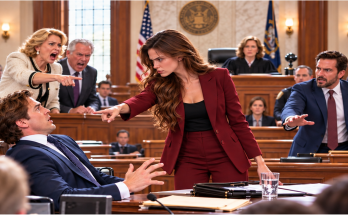
Arthur Bell, Daniel, Margaret, and other individuals connected to the false records and financial transactions faced investigations and, where the evidence supported it, criminal charges.
There were separate proceedings concerning my father’s false death certification, his confinement, the forged financial documents, and the attempted framing at the airport.
The courts examined evidence that included medical records, financial transactions, communications, and testimony from people who had worked inside the companies and facilities involved.
The outcomes did not arrive all at once.
Some defendants entered guilty pleas.
Others contested the charges before judgments were reached.
The financial recovery required additional litigation.
And correcting my father’s official records took time, medical documentation, and court orders.
But eventually, the truth was recognized.
Charles Edward Carter had not died four years earlier.
He had been deprived of his freedom while other people used his supposed death to protect their financial interests.
Arthur had betrayed a friendship that lasted nearly forty years.
Margaret had helped conceal the deception.
And Daniel had participated in wrongdoing against the very family he’d married into.
No courtroom could return the years they stole.
But their lies could no longer determine how we lived.
I resigned from the passive role I’d allowed myself to occupy at Carter Holdings.
I didn’t resign as an owner.
I began acting like one.
Working with Lillian and an independent board committee, I suspended the implicated executives’ authority, strengthened financial controls, and commissioned a complete review of the business.
We introduced independent approvals for major transactions.
Expanded whistleblower protections.
And established a process through which employees could report concerns without having those reports routed back to the managers they were questioning.
I also held a company-wide meeting.
Nearly four hundred employees attended in person or remotely.
For a moment, standing before them, I remembered Daniel laughing at me over dinner.
Sweetheart, leave the important decisions to people who understand money.
I adjusted the microphone.
Then looked across the room.
“My name is Evelyn Carter.”
A few people smiled.
“I know many of you have been told that my involvement in this company was largely ceremonial.”
I paused.
“That changes today.”
The room became quiet.
“My father established Carter Holdings because he believed a good business should provide opportunities, not merely profits.”
I looked toward the front row.
Several employees had been with the company since its earliest years.
I recognized a maintenance supervisor who used to bring me candy when I visited Dad’s office as a child.
I recognized an accountant who’d worked with me during my first summer internship.
People who remembered the business before it became an empire.
“Over the past several years, decisions were made that violated the trust placed in our leadership,” I continued. “We’re cooperating with the investigations, correcting the records, and recovering funds wherever possible.”
I took a breath.
“But financial accountability is only part of rebuilding trust.”
I looked around.
“From now on, nobody in this company should be afraid to ask where money is going.”
There was silence.
Then someone began applauding.
Others joined.
I stood there, fighting back tears.
For years, I’d believed I had to become louder or more aggressive to be taken seriously.
But that morning, I understood that my strength had never depended on imitating Daniel.
It came from the skills I’d worked to develop.
From the values my father had taught me.
And from my willingness to examine uncomfortable truths instead of hiding them.
Dad’s recovery took much longer than I wanted.
He had lost strength.
Speech came slowly.
Some days he became frustrated when words wouldn’t form.
Other days he could speak almost an entire sentence before needing to rest.
We arranged appropriate medical care and rehabilitation with independent professionals who treated him as a person with his own wishes, not merely as someone else’s responsibility.
Gradually, he regained more control over his daily life.
He could choose his meals.
Decide whom he wanted to see.
Listen to music.
Read short articles.
And tell me when he was tired.
Those freedoms seemed ordinary.
But after four years of having his life controlled by people who lied about his identity, they mattered enormously.
One afternoon, I brought him a photograph of the Carter Holdings headquarters.
He looked at it.
Then at me.
“Company?”
I nodded.
“It’s doing better.”
He smiled faintly.
“Numbers?”
I laughed through tears.
“Yes, Dad. I’ve been checking the numbers.”
He squeezed my hand.
“Good.”
I sat beside him.
Then said, “I have something to confess.”
He looked worried.
I smiled gently.
“I spent years pretending I didn’t care about the company because Daniel told me I should leave everything to him.”
My father’s face tightened.
I continued.
“I thought keeping my marriage peaceful meant letting him make the decisions.”
Dad shook his head.
Slowly, carefully, he said, “Your… mind.”
I looked up.
He pointed toward me.
“Always… yours.”
My eyes filled.
I took his hand.
“I know that now.”
He smiled.
Then whispered, “Proud.”
I began crying.
For four years, I’d wanted to hear that word from him again.
I thought I’d never have the chance.
And now he was sitting beside me, struggling to speak, telling me he was proud.
I leaned forward and kissed his cheek.
“I love you, Dad.”
His eyes filled.
“Love… Eve.”
My divorce from Daniel was finalized after the necessary proceedings.
I kept my ownership interest in Carter Holdings and protected the assets that were legally mine.
The financial misconduct was addressed through separate proceedings and recovery efforts.
I didn’t rush into another relationship.
For a while, I didn’t even want to think about marriage.
I wanted ordinary mornings.
Coffee beside the kitchen window.
Afternoons working beside honest colleagues.
Evenings visiting my father.
And nights when I could fall asleep without wondering whether someone was entering my bedroom.
I replaced the security system in my home.
Changed access codes.
Reviewed my personal accounts.
And established boundaries that no one else could negotiate on my behalf.
Then, slowly, I began discovering that peace didn’t have to be earned through obedience.
It could be built through choices.
One after another.
Sometimes those choices were enormous.
Sometimes they were as simple as deciding not to answer a telephone call.
On the second anniversary of the morning I discovered the photograph, I traveled to Chicago.
It was the trip I’d originally planned to take before Margaret planted the handgun in my carry-on.
This time, I traveled to meet with a hospitality development team.
We were discussing improvements to several hotels and a new employee education program.
I packed my suitcase myself.
Checked the compartments.
Closed the zipper.
And carried it through the airport without fear.
As I passed through security, I remembered the woman I’d been two years earlier.
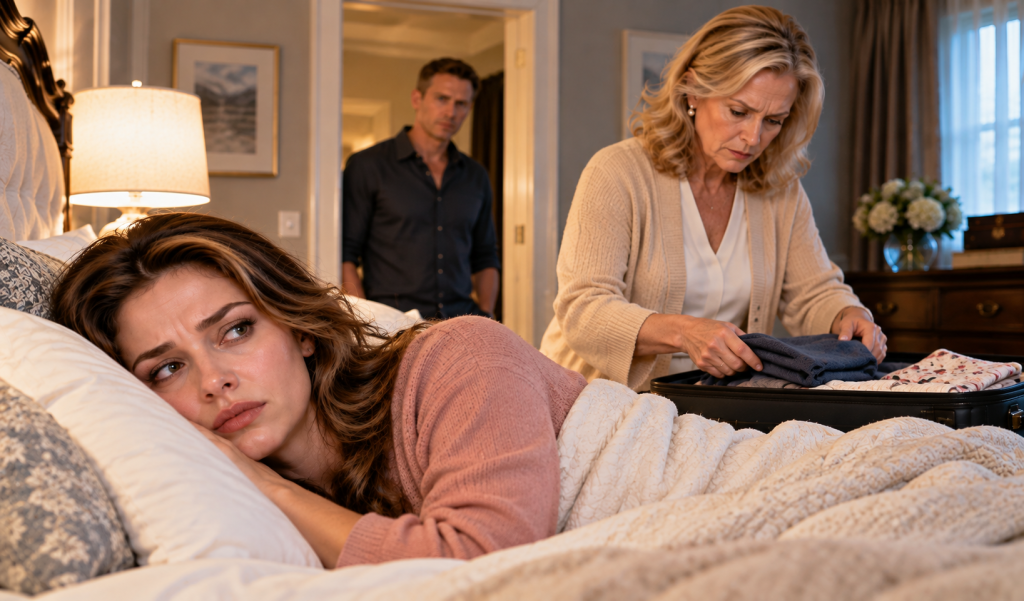
Lying beneath the bedcovers at 12:07 a.m.
Watching Margaret open my luggage.
Hearing her whisper that by breakfast I’d be finished.
She had believed one secret object could destroy my reputation and end my ability to challenge the stolen money.
Instead, her attempt had exposed a much larger betrayal.
One that eventually led me back to my father.
I boarded the plane and sat beside the window.
The flight attendant welcomed me.
I smiled.
And as the aircraft rose above the city, I thought about how close I’d come to losing everything.
Not merely the business.
Not even my freedom.
But the possibility of knowing that my father was still alive.
I looked out at the clouds.
Then whispered, “I’m still here, Dad.”
Later that year, my father came home.
Not to the sprawling house where he’d lived before his stroke.
He chose a smaller, accessible home with a sunny garden and a wide porch.
He liked watching the birds.
He liked listening to old jazz records.
And he loved sitting outside in the early evening with a cup of tea.
I visited whenever I could.
Sometimes we spoke for hours, though his words came slowly.
Sometimes we sat in silence.
We both understood that there were years we could never recover.
Four Christmas mornings.
Four birthdays.
Four anniversaries of my mother’s death.
Four years of ordinary conversations that should have belonged to us.
I could spend the rest of my life grieving those missing days.
And sometimes, I did.
But I also learned to be grateful for the days that remained.
One evening, as the sunlight turned the garden gold, Dad reached into the pocket of his cardigan.
He pulled out a little wooden object.
It was the sign he’d kept on his desk for thirty years.
DO THE RIGHT THING, EVEN WHEN NOBODY IS WATCHING.
I stared.
“Dad?”
He held it toward me.
“For… you.”
I began crying.
“You should keep it.”
He shook his head.
Then smiled.
“You… did.”
I looked down at the faded wood.
For years, I had tried to be the sort of person my husband and his family would approve of.
Quiet.
Agreeable.
Unquestioning.
I thought those qualities made me a good wife.
But all they had done was make it easier for dishonest people to assume I would never challenge them.
Now I understood what my father had been trying to teach me since childhood.
Being kind didn’t mean being blind.
Being patient didn’t mean accepting betrayal.
And being quiet didn’t mean surrendering my right to know the truth.
I placed the wooden sign in my lap.
Then looked at Dad.
“Do you remember what you used to tell me when I was little?”
He smiled.
I continued.
“You said that being brave doesn’t always mean fighting someone.”
His eyes filled.
“Sometimes,” I whispered, “it means refusing to pretend something wrong is right.”
He nodded slowly.
Then reached for my hand.
We sat together as the evening deepened.
The garden smelled of roses.
Somewhere in the distance, a dog barked.
And for the first time in years, I wasn’t thinking about Margaret, Daniel, Arthur, or the money they had stolen.
I was thinking about the little girl who used to sit beside her father while he checked accounts at the kitchen table.
The young woman who became a forensic accountant because she loved solving problems.
The daughter who buried a man she believed she would never see again.
And the woman who finally learned that trusting herself was not an act of disloyalty.
It was an act of survival.
I looked at my father.
He squeezed my hand.
And I whispered something I’d been waiting four years to say.
“Welcome home, Daddy.”
His eyes filled.
He smiled through his tears.
And answered, slowly but clearly:
“I’m home, Eve.”
That was the moment I finally understood.
Margaret had tried to destroy my future with something hidden in a suitcase. But the truth she wanted buried gave me back the person I thought I’d lost forever.
They had stolen years from us.
They had stolen money.
They had stolen our trust.
But they had not stolen everything.
My father was alive.
My name was my own.
And my future no longer belonged to the people who believed they could control me.
I rested my head against Dad’s shoulder.
He held my hand beneath the fading sunlight.
And for the first time since his funeral, I was no longer saying goodbye.
I was beginning again.
THE END STORIES! THANK YOU FOR READING GOOD LUCK !❤️
Related Posts