At Manhattan’s elite gala, my husband hurled his wedding ring at me, snarling: “Get out, you barren leech!” As his mistress paraded her ultrasound, I wiped splashed wine from my face and calmly hit speakerphone: “Activate Chairwoman authority. Terminate the CEO and seize the estate tonight.” My mother-in-law cackled at my “delusional act,” until exactly 30 minutes later when the doors…

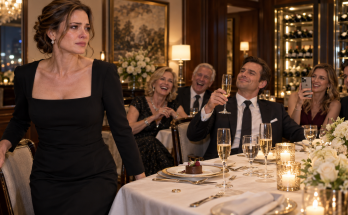
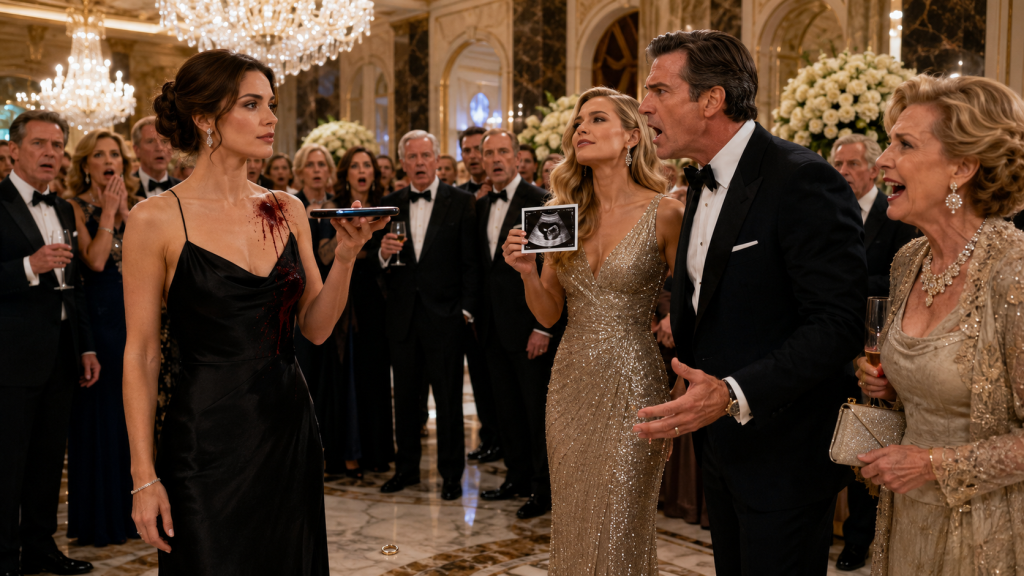
Right in the middle of Manhattan’s most exclusive elite banquet, Sloan—my husband’s mistress—smirked. With a flick of her wrist, an entire glass of red wine splashed directly onto the chest of my simple black silk dress. Reaching into her glittering designer clutch, she pulled out a small, glossy piece of paper and held it high for the gasping crowd of executives to see. It was an ultrasound photo.
“I didn’t want to do this,” Sloan wept theatrical tears, swaying weakly and burying her face in my husband’s bespoke chest. “But your wife is violently jealous. She knows I’m carrying your true heir. The heir she could never give you!”
The ballroom fell into a suffocating silence. My husband, Caldwell, wrapped a protective arm around her. His face contorted in exaggerated disgust as he glared at me.
“You hear that, Saraphina?” Caldwell’s voice boomed. “For ten years, you’ve been a barren wasteland, a useless leech bleeding me dry. You don’t belong in this world. You never did!”
“How dare you insult my son’s true love!” my mother-in-law, Lorraine, shrieked, pushing her way through the crowd. “If you don’t get on your knees and apologize to the mother of my future grandchild right now, I’ll have Caldwell throw you out of the house tonight! A useless woman like you should be begging for our mercy.”
I stood frozen. The sheer audacity of their lie, the meticulously planned cruelty of this public execution—it was breathtaking. But instead of breaking down as they expected, an absolute, terrifying calm washed over me.
Caldwell violently stripped off his wedding band and threw it at my feet. It clattered sharply against the cold marble floor. “Security! Drag this mad woman out of here before she ruins the night for people who actually matter!”
Ten years of my youth. Ten years of quietly enduring their abuse and hiding my true identity in the shadows to protect his fragile ego—all of it ended here, shattered alongside that discarded ring. I slowly raised my head, wiping a drop of wine from my chin. In my eyes was the chill of a thousand-year-old glacier looking down at ants marching willingly into a fire.
“You said I’m a nobody here, right?” I scoffed, my voice a quiet island in the sea of their manufactured drama. “Fine. I will show you exactly what you are without me.”
Under hundreds of curious, mocking gazes, I pulled out my phone, dialed a number, and put it on speaker. My voice echoed through the massive ballroom, crisp and metallic:
“Thaddius, execute the emergency board resolution immediately. I have submitted my majority shareholder authorization. Terminate Caldwell Vance from the position of Chief Executive Officer. Freeze all his financial access. Dispatch private security to immediately seize the Greenwich estate and all three company supercars. Everything must be executed tonight.”
A deeply respectful voice replied from the speaker. “Yes, Madame Chairwoman. The security detail is already awaiting orders in the lobby.”
I ended the call. Silence hung heavily in the air for three seconds before my mother-in-law burst into hysterical, mocking laughter.
“Oh my god! She’s completely lost her mind!” she shrieked, pointing a trembling finger at me. “You hired an actor over the phone to scare us? You think you can strip my son of his CEO title?”
Caldwell chuckled with sheer pity, pulling his mistress tightly against his chest. “You don’t even comprehend the power I hold.”
I crossed my arms, the corners of my lips curling into a dangerously lethal smile.
“Hold on tight to your heir, your mistress, and your pathetic pride, Caldwell. Let’s see if you and your mother can still laugh this loudly in thirty minutes when.
PART 2: THIRTY MINUTES UNTIL CALDWELL LOST EVERYTHING
“Let’s see if you and your mother can still laugh this loudly in thirty minutes.”
The sentence floated through the ballroom.
Quiet.
Precise.
Almost gentle.
That seemed to unsettle Caldwell more than if I had screamed.
For ten years, he had known me as the woman who lowered her voice when his rose.
The woman who stepped out of photographs when Lorraine complained my dress looked “cheap.”
The woman who never corrected him when he told investors that my late father had been a minor accountant rather than the architect of the fortune underwriting half of Caldwell’s empire.
He had mistaken restraint for weakness.
That was his first mistake.
Believing the empire belonged to him had been the second.
Lorraine wiped tears of laughter from beneath her eyes.
“Thirty minutes?”
She looked around at the guests.
“Did everyone hear that?”
A few people laughed nervously.
Most did not.
The men near the Vance Holdings table had stopped smiling altogether.
They understood words like:
Emergency board resolution.
Majority shareholder authorization.
Chairwoman authority.
Those were not phrases hysterical wives usually invented while drenched in wine.
Caldwell noticed their expressions.
His own smile tightened.
Then Sloan leaned into him.
“Baby, ignore her.”
Her hand drifted possessively over her stomach.
“Stress isn’t good for our son.”
Our son.
She said it loudly enough for the nearby tables to hear.
Caldwell kissed her temple.
A performance.
Even now.
Especially now.
Then he looked back at me.
“You have no shares with voting power.”
I tilted my head.
“Are you sure?”
He laughed.
“I sign the annual shareholder disclosures.”
“No.”
I smiled.
“You sign the summaries your office gives you.”
That silenced him.
Only for a second.
But I saw it.
Lorraine snapped:
“What is she talking about?”
Caldwell ignored her.
“You own a passive family trust.”
I raised one eyebrow.
“Do I?”
“Yes.”
His confidence returned.
“You have beneficial interest in a block my father arranged years ago.”
“Nonvoting.”
“Restricted.”
“And completely irrelevant.”
I looked toward the enormous crystal chandelier above us.
The Vance family had rented the ballroom because they loved rooms where everything glittered.
Glitter made people assume value.
It rarely made them inspect foundations.
“Interesting.”
I said.
“Because the corporate secretary seems to disagree.”
Caldwell’s jaw tightened.
“Stop bluffing.”
I looked at the clock mounted discreetly near the ballroom entrance.
9:04 p.m.
Twenty-six minutes.
Then I turned toward the nearest waiter.
“Could I have a glass of water?”
He looked terrified.
Still, he brought it.
Lorraine made a disgusted sound.
“You’re standing there drinking water after humiliating our family?”
“No.”
I took a sip.
“I’m standing here drinking water after your son announced his mistress’s pregnancy in front of four hundred people and threw his wedding ring at me.”
I looked down.
The ring was still on the marble.
Nobody had touched it.
“How exactly did I humiliate you?”
Lorraine’s face reddened.
“You know what you’ve done.”
“I do.”
I smiled faintly.
“That’s why I’m calm.”
A ripple moved through the ballroom.
Phones had appeared.
Of course they had.
Half of Manhattan’s social world had just been given live entertainment between the seafood course and dessert.
I hated that.
Not for Caldwell.
For me.
For whatever pieces of my life would be turned into captions by morning.
But I had learned something years ago.
Privacy and secrecy are not the same.
Privacy protects dignity.
Secrecy protects people who depend on nobody asking questions.
Tonight, I was done protecting them.
Sloan stepped forward.
“You’re jealous.”
I looked at her.
She was beautiful.
Objectively.
Platinum hair.
Emerald earrings.
A white couture gown chosen, no doubt, because she wanted to look bridal without making the symbolism too obvious.
She held the ultrasound against her chest.
“You’ve always hated me because I could give Caldwell what you couldn’t.”
My fingers tightened around the water glass.
There it was.
The old wound.
The one they thought still controlled me.
I had spent ten years being called barren because Caldwell and I had no children.
What nobody in the ballroom knew—
what Lorraine did not know—
what Sloan certainly did not know—
was that infertility had never been mine.
I said nothing.
Not yet.
Some truths deserved timing.
Caldwell saw the silence and smiled.
He thought he had hurt me.
Again.
Then his phone buzzed.
He ignored it.
Buzzed again.
Then again.
He glanced down.
His expression changed.
Not much.
But enough.
Lorraine noticed.
“What?”
“Nothing.”
He turned the screen facedown.
I looked at the clock.
9:09.
Twenty-one minutes.
Another phone began ringing.
The chief financial officer.
Then general counsel.
Then one of Caldwell’s board directors.
Three men at three different tables, all reaching for their phones at nearly the same moment.
The ballroom shifted.
You could feel it.
Conversation fragmented.
Eyes moved.
Whispers began.
Caldwell’s phone rang again.
This time, he answered.
“What?”
No greeting.
That was Caldwell whenever fear interrupted etiquette.
He listened.
His face hardened.
Then:
“No.”
Pause.
“No, absolutely not.”
More silence.
His eyes found mine across the ballroom.
“What resolution?”
I took another sip of water.
He turned away.
“Who authorized it?”
Pause.
Then his voice dropped.
“What majority?”
Lorraine stopped breathing.
Sloan looked between us.
The room around Caldwell seemed to contract.
He listened for another ten seconds.
Then:
“You’re telling me this is already effective?”
My heart did not race.
That surprised me.
For months, I had imagined this moment.
In those fantasies, I felt vindicated.
Powerful.
Maybe even triumphant.
In reality, I mostly felt tired.
Ten years is a long time to wait for someone to reveal exactly what they think you deserve.
Caldwell lowered the phone.
His face had gone pale.
Lorraine rushed to him.
“What happened?”
He did not answer.
“Caldwell.”
Nothing.
She grabbed his arm.
“What happened?”
He looked at me.
Then said, almost inaudibly:
“They suspended me.”
The ballroom erupted.
Not loudly.
Not all at once.
A hundred whispers can be louder than a scream.
Lorraine stared.
“Suspended from what?”
Caldwell’s jaw worked.
“The CEO role.”
She laughed once.
A brittle sound.
Then:
“That’s impossible.”
No one answered.
She looked around.
“Someone tell me that’s impossible.”
Vance Holdings’ general counsel stood near the far wall.
He did not move.
That was answer enough.
Lorraine turned on me.
“You.”
I set the water glass down.
“Yes.”
“What did you do?”
“Exactly what I said.”
She started toward me.
Two men stepped between us.
Private security.
Not hotel security.
Mine.
Their jackets carried no visible logo.
They did not need one.
Lorraine stopped.
“You brought guards?”
“No.”
“They were already here.”
Her face changed.
That was the part she had missed on the speakerphone.
The security detail is already awaiting orders in the lobby.
Caldwell looked at me.
“You planned this.”
“No.”
I answered calmly.
“I prepared for it.”
His eyes narrowed.
“What’s the difference?”
“Planning means I came here intending to destroy you.”
I looked at Sloan’s ultrasound.
Then the wedding ring.
Then the wine staining my dress.
“Preparing means I came here knowing you might give me a reason.”
Silence.
That sentence landed harder than I expected.
Because it was true.
For six months, I had been quietly putting documents in order.
Not because I knew about Sloan.
I suspected another woman.
But suspicion was not evidence.
What I did know was that Caldwell had become reckless.
Company assets used as personal trophies.
Corporate aircraft diverted for private weekends.
Properties placed in family-controlled entities without board review.
Loans disguised as executive perks.
And throughout all of it, he assumed nobody could challenge him because the Vance name sat above the headquarters doors.
He had forgotten who owned the letters.
His phone rang again.
He answered.
This time his voice was lower.
“What estate?”
I almost smiled.
There it was.
Second layer.
Lorraine stared at him.
“What estate?”
Caldwell looked at me with genuine confusion now.
Not anger.
Confusion.
“The Greenwich house.”
I nodded.
“What about it?”
He listened.
Then said:
“No.”
His face tightened.
“That property is in the Vance family trust.”
I tilted my head.
“Which trust?”
He froze.
Lorraine did too.
People who build their lives on inherited structures often stop asking who actually owns the structure.
That laziness had been very convenient.
The Greenwich estate had belonged to Caldwell’s grandfather.
Then his father.
Then—
after a succession dispute nobody in the family liked discussing—
it was placed inside an asset-holding company during a refinancing.
That company had eventually been acquired.
Caldwell believed by one of his father’s shell entities.
He was wrong.
My father had acquired it.
Quietly.
Legally.
Twenty-two years ago.
When Caldwell’s father needed liquidity after a failed hotel development.
My father had rescued the property.
Then held it.
When Dad died, control passed to me.
Caldwell had lived there for ten years.
Hosted fundraisers.
Renovated the west wing.
Photographed himself beside the pool.
Introduced it as:
My family estate.
Technically, he had been living in property I controlled.
I never used that fact against him.
Marriage should not feel like a landlord arrangement.
But tonight he had instructed security to throw me out of what he called his house.
I decided the paperwork could finally speak.
Caldwell lowered the phone.
“You own Greenwich?”
Lorraine laughed.
“No.”
She pointed at me.
“No.”
Her voice rose.
“My husband inherited that estate.”
“Your husband lost controlling ownership during restructuring in 2004.”
“That’s a lie.”
“Ask your lawyer.”
She looked toward general counsel.
He did not meet her eyes.
Lorraine’s face slowly drained.
“You knew?”
she demanded.
He answered carefully.
“The current ownership structure has been disclosed in estate documents.”
“To whom?”
“To relevant parties.”
Caldwell stared.
“I’ve lived there for ten years.”
“Yes.”
I said softly.
“You have.”
“You let me renovate it.”
“Yes.”
“You let me call it mine.”
“Yes.”
His eyes flashed.
“Why?”
The answer hurt more than I expected.
“Because I was your wife.”
Silence.
I continued.
“I didn’t need to remind you who owned the walls every time we ate dinner.”
My throat tightened.
“I thought marriage meant building a home, not keeping score.”
For the first time that night, something like shame moved across his face.
Then Sloan whispered:
“Caldwell?”
Everyone turned.
She looked frightened now.
Not for him.
For herself.
“Where are we supposed to live?”
I almost laughed.
There are moments when a person reveals the exact distance between love and logistics.
That was Sloan’s.
Caldwell glanced at her.
Then at me.
“You are not throwing a pregnant woman out on the street.”
“No.”
I answered.
“That would be cruel.”
Sloan visibly relaxed.
“Security will allow you to collect personal belongings under supervision.”
Her face fell.
“You can stay wherever Caldwell can legally provide.”
Caldwell stepped toward me.
“You vindictive—”
One security officer moved.
I raised a hand.
He stopped.
“I’m not seizing Sloan’s property.”
I looked at Caldwell.
“I’m protecting mine.”
His face twisted.
“Yours?”
“Yes.”
“The house.”
“The vehicles titled to Ardent Meridian Holdings.”
“The art leased from the Lucienne Foundation.”
“The company jet access already suspended by the board.”
Each item stripped another layer from his identity.
Not because wealth defines a man.
Because Caldwell had made wealth his entire language.
I was simply translating.
Lorraine looked ill.
“What is Ardent Meridian?”
I turned toward her.
“My holding company.”
She stared.
“Never heard of it.”
“I know.”
That was almost the point.
For ten years, Lorraine had been so interested in my womb, clothes, family background, and table manners that she had never bothered asking how my money worked.
Her contempt had protected me.
Caldwell looked at the clock.
9:18.
Twelve minutes.
He whispered:
“What happens at thirty?”
I smiled.
“Wait.”
He hated that.
Then the ballroom doors opened.
Not dramatically at first.
Two hotel managers entered.
Behind them came four more security personnel.
Then Vance Holdings’ board chair.
Everett Shaw.
Seventy years old.
Silver hair.
The man Caldwell called “Uncle Everett” despite no biological relationship.
The man who had held Caldwell as a baby.
Everett walked straight toward us.
Caldwell exhaled.
“Thank God.”
He stepped forward.
“Everett, tell them this is insane.”
Everett stopped.
Then removed the Vance Holdings lapel pin from his jacket.
He placed it in his pocket.
My heart tightened.
Caldwell stared.
“What are you doing?”
Everett looked at him.
“You are no longer authorized to represent the company tonight.”
Caldwell laughed.
“Don’t be ridiculous.”
“The resolution passed.”
“How?”
“Voting authority representing sixty-three percent of outstanding shares.”
Caldwell looked toward me.
“No.”
Everett followed his gaze.
“Yes.”
Lorraine began shaking.
“You mean her trust?”
Everett answered:
“Her shares are not held in the Vance trust.”
That silenced everyone.
Caldwell whispered:
“Then where?”
Everett looked at me.
My turn.
I folded my hands.
“My father’s company acquired forty-one percent during the 2008 recapitalization.”
Caldwell stared.
That much he knew.
Everyone did.
But Dad’s stake had supposedly been diluted later.
What they did not know was who acquired a second block when Caldwell’s uncle sold in 2016.
Me.
Through Ardent Meridian.
Quietly.
Then more through subsequent tender offers.
Never enough to trigger gossip.
Enough to matter.
Everett continued.
“Additional voting agreements were executed this afternoon by two institutional shareholders after receiving the emergency governance package.”
Caldwell’s face twisted.
“What package?”
I answered:
“The one documenting your undisclosed related-party transactions.”
His mouth opened.
Then closed.
Sloan stepped away from him.
Just slightly.
I noticed.
So did Caldwell.
“What transactions?”
Lorraine asked.
He ignored her.
I continued.
“Company money paid for your yacht charter in Capri.”
Caldwell snapped:
“Client development.”
“No clients were present.”
His face hardened.
“The Napa property?”
“Executive retreat.”
“Purchased in Sloan’s LLC?”
The ballroom went silent.
Sloan went white.
Caldwell turned toward her.
Then me.
“How do you know about that?”
Finally.
A useful question.
“I read.”
I smiled faintly.
“Unlike you.”
Sloan clutched her stomach.
“I don’t own anything.”
I looked at her.
“The LLC does.”
“I don’t know what you’re talking about.”
“Silver Lark Ventures.”
Her face collapsed.
Caldwell swore.
There.
Confirmation.
A few board members exchanged looks.
Everett continued.
“Company counsel will handle the rest.”
Lorraine looked from one face to another.
“This is a family matter.”
Everett’s expression hardened.
“No.”
“It became a governance matter when corporate resources entered it.”
Caldwell’s voice rose.
“I built Vance Holdings.”
Everett looked genuinely sad.
“No.”
“Your grandfather built it.”
“Your father expanded it.”
“Your wife’s family saved it twice.”
Then:
“You inherited a chair.”
The sentence broke something.
You could see it.
Caldwell had spent twenty years turning inheritance into achievement.
Everett had just separated them in public.
He lunged toward me.
Not to strike.
To grab my arm.
Security intervened before he touched me.
The ballroom gasped.
Caldwell froze between two guards.
“Get your hands off me!”
Everett turned away.
“Please escort Mr. Vance from restricted corporate areas after the event.”
“Restricted?”
Caldwell laughed wildly.
“This whole room is mine.”
“No.”
I looked around.
“The gala sponsorship contract is Vance Holdings.”
Everett said.
“Which means corporate access rules apply.”
Caldwell stared at him.
Then me.
Then Sloan.
And for the first time that evening, he looked genuinely lost.
The clock showed 9:24.
Six minutes.
Lorraine whispered:
“What is left?”
I looked at her.
“What?”
“You said thirty minutes.”
Her voice was barely audible.
“The company.”
“The house.”
“The cars.”
“What else could you possibly do?”
I stared at her.
For ten years, this woman had called me barren.
At Christmas.
At dinners.
At hospital fundraisers.
Once, while pouring tea, she told me:
“A wife who cannot continue a bloodline is temporary whether the husband admits it or not.”
Caldwell laughed.
Not because he found it funny.
Because fear had finally turned him desperate.
“There’s nothing left.”
He looked at me.
“You’ve made your point.”
“No.”
My voice softened.
“I haven’t.”
Sloan raised the ultrasound.
“Then what?”
She shouted.
“You want to punish a baby too?”
“No.”
I looked at her stomach.
“I would never punish a child for the adults around him.”
Then I looked at Caldwell.
“But since the baby is apparently the reason I deserve humiliation…”
His face changed.
“…perhaps we should correct one final lie.”
Lorraine’s eyes narrowed.
“What lie?”
I reached into my clutch.
Caldwell went still.
From it, I removed a sealed medical envelope.
Not because I needed it legally.
Because I had known this moment might come eventually.
Not tonight.
Not like this.
But eventually.
I had spent ten years carrying someone else’s shame as though it were mine.
That ended too.
I looked at Caldwell.
“Tell them why we don’t have children.”
He went pale.
Sloan looked at him.
“What?”
Lorraine scoffed.
“Because she’s infertile.”
I kept my eyes on Caldwell.
“Tell them.”
His jaw tightened.
“Saraphina.”
“Tell them.”
“Stop.”
That word.
Fear.
Real now.
I handed the envelope to Everett.
He did not open it.
Good.
That was not his information to announce.
I did not need medical records read aloud in a ballroom.
I only needed Caldwell to understand I was done carrying his lie.
I said:
“Ten years ago, we were both tested.”
Lorraine frowned.
Caldwell closed his eyes.
I continued.
“My results were normal.”
Sloan slowly turned toward him.
The room seemed to stop breathing.
Lorraine whispered:
“No.”
I looked at her.
“The fertility diagnosis was Caldwell’s.”
Silence.
The kind that almost has weight.
Sloan stared at him.
“What?”
Caldwell’s face went gray.
I continued carefully.
“I will not discuss his private medical details publicly.”
Then:
“But I will no longer accept being called barren because he asked me to protect his pride.”
Lorraine’s mouth opened.
Nothing came out.
I remembered the day of the diagnosis.
Caldwell sitting in the clinic parking lot.
Hands over his face.
“I can’t let Mom know.”
I held him.
Promised.
I had thought I was protecting the man I loved from humiliation.
Then he allowed that protection to become a weapon against me.
For years.
Every insult.
Every joke.
Every pitying glance.
He stood beside me and let them believe my body had failed.
Sloan’s voice shook.
“You told me…”
She stopped.
Caldwell looked at her.
“What did he tell you?”
I asked.
She stared.
“He said you refused treatment.”
Of course.
“He said you were too proud to admit you couldn’t conceive.”
I almost laughed.
Caldwell snapped:
“Sloan, stop talking.”
She stepped away from him.
“No.”
There it was.
The evening’s most popular word.
“What did you tell me?”
Her face hardened.
“You said your doctors confirmed you were completely fine.”
Caldwell said nothing.
Lorraine looked sick.
“My grandson…”
Her voice faltered.
Sloan immediately covered her stomach.
“The baby is his.”
I looked at her.
“I didn’t say otherwise.”
But something had changed.
Everyone heard it.
Including Sloan.
Including Lorraine.
Including Caldwell.
If he had lied about his fertility history, then the ultrasound was no longer automatic proof of anything beyond pregnancy.
That was not my accusation to make.
I did not need one.
I simply said:
“The child deserves certainty without being used as a prop in a ballroom.”
Sloan’s face crumpled.
For the first time all night, she lowered the ultrasound.
Good.
A baby should never have been a weapon.
The clock reached 9:29.
One minute.
Caldwell noticed.
“So this is it?”
His voice sounded hollow.
“You got what you wanted.”
I looked at him.
“No.”
“What more?”
Before I answered, the ballroom doors opened again.
Exactly 9:30.
Thaddius entered.
Not an actor.
My chief of staff.
Former federal prosecutor.
Gray suit.
Black leather portfolio.
Behind him walked two attorneys, the head of Ardent Meridian security, and a woman Caldwell recognized immediately.
He went completely still.
So did Lorraine.
Sloan looked confused.
The woman was Elena March.
Chief audit officer of Vance Holdings.
She had resigned three months earlier.
Caldwell told everyone she left for “personal reasons.”
That was another lie.
Elena had come to me.
With documents.
Thaddius walked toward us.
“Madame Chairwoman.”
Lorraine flinched at the title.
Thaddius handed me the portfolio.
“Emergency resolutions executed.”
“Estate possession notice served electronically.”
“Vehicle recovery underway.”
“Corporate access terminated.”
Then he paused.
“And Ms. March has completed her signed statement.”
Caldwell’s face changed.
“Elena.”
She looked at him.
No fear.
Not anymore.
“You shouldn’t be here.”
She answered:
“That is exactly what you told me when I questioned the accounts.”
Everett looked at her.
Then Caldwell.
Elena continued.
“The board now has the full ledger.”
Caldwell whispered:
“What ledger?”
My stomach tightened.
Because this was the part even I had not fully known until that afternoon.
Elena opened her own folder.
“Fourteen million dollars.”
Lorraine gasped.
Sloan stopped moving.
Caldwell’s face went blank.
Elena continued.
“Corporate funds routed through vendor agreements, executive reimbursements, property entities, and consulting contracts over thirty-one months.”
Caldwell snapped:
“That is false.”
“Then the forensic audit will clear you.”
Silence.
Beautiful sentence.
No accusation needed.
Records would decide.
Elena looked at Everett.
“I have also identified transfers associated with Silver Lark Ventures.”
Sloan’s face went white.
“Stop saying that name.”
Everyone turned.
She realized too late.
Elena looked at her.
“You know the entity?”
Sloan said nothing.
Caldwell stepped toward her.
“Don’t answer.”
Thaddius spoke calmly.
“Mr. Vance, nobody here is interrogating Ms. Sloan.”
Then he looked toward me.
“There is one additional matter.”
I frowned.
“What?”
Thaddius hesitated.
That frightened me.
Thaddius never hesitated.
He lowered his voice.
“We located something during the estate inventory.”
Caldwell stared.
“What estate inventory?”
“The Greenwich residence.”
I looked at Thaddius.
“What did they find?”
He opened the portfolio.
Removed a photograph.
Placed it in my hand.
I stared.
Then felt the floor disappear beneath me.
It was not money.
Not an account.
Not jewelry.
A document.
Dated seven years earlier.
Signed by Caldwell.
Witnessed by Lorraine.
My name appeared at the top.
SARAPHINA VALE VANCE — POSTNUPTIAL ASSET WAIVER
My heart stopped.
I had never signed such a document.
Yet at the bottom—
there was my signature.
Or something pretending to be.
I looked at Caldwell.
He went white.
Lorraine whispered:
“No.”
Thaddius continued.
“The original was found in Lorraine Vance’s locked desk at Greenwich.”
The ballroom disappeared around me.
My voice came out quietly.
“What does it waive?”
Thaddius looked at me.
“Any marital claim to specified corporate appreciation, several residential assets, and certain trust distributions.”
I stared at Caldwell.
Seven years earlier.
Three years into our marriage.
The year his father died.
The year Caldwell told me estate lawyers needed routine spousal acknowledgments.
I remembered signing several documents.
But not this.
Never this.
“Is that my signature?”
I asked.
Thaddius answered carefully.
“A forensic document examiner has not reviewed it yet.”
Good.
No conclusions.
But he continued.
“There’s another problem.”
Of course.
“What?”
“The notary listed on the document died eleven months before the date shown.”
The entire ballroom seemed to inhale.
I looked at Lorraine.
She backed away.
“Caldwell handled the paperwork.”
He snapped toward her.
“Mother.”
She covered her mouth.
Too late.
I stared at my husband.
The affair suddenly felt small.
The wine felt small.
Even ten years of fertility humiliation seemed to retreat behind what was sitting in my hands.
Caldwell had not only planned to replace me publicly.
Someone had been preparing to erase me financially years before Sloan ever arrived.
Thaddius looked at me.
“There’s more.”
I almost laughed.
“Of course there is.”
He lowered his voice.
“Several estate files reference a second document.”
“What document?”
His expression hardened.
“A divorce settlement draft.”
I stared.
“From when?”
“Seven years ago.”
My blood went cold.
Three years into our marriage.
Long before Sloan, as far as I knew.
Long before tonight.
I looked at Caldwell.
“Who were you planning to divorce seven years ago?”
He said nothing.
The answer was obvious.
Me.
But Thaddius continued.
“That isn’t the concerning part.”
I looked at him.
“What is?”
He handed me another page.
A handwritten note attached to the settlement draft.
Lorraine’s handwriting.
I recognized the looping L.
The sharp capital S.
It read:
If Saraphina refuses, use the fertility issue. She will never let the truth become public. Caldwell agrees.
My vision blurred.
For ten years, I thought I had protected my husband’s dignity.
Apparently he and his mother had spent seven of those years understanding exactly how useful my silence could become.
I raised my eyes.
Caldwell no longer looked powerful.
Lorraine no longer looked amused.
Sloan stood three feet away clutching an ultrasound that had suddenly become irrelevant to the oldest betrayal in the room.
And I understood something terrible.
Tonight had not been the night my marriage broke.
It was simply the night Caldwell grew arrogant enough to break it where everyone could see.
The real damage had begun years earlier.
Quietly.
With forged-looking paperwork.
Hidden files.
And a husband who had learned that the secret I kept to protect him could also be used to control me.
I looked at Thaddius.
“Secure every document from Greenwich.”
“Yes, Madame Chairwoman.”
“Nothing leaves without chain-of-custody documentation.”
“Already arranged.”
“Preserve all estate and corporate communications involving Caldwell and Lorraine.”
“Yes.”
Then I looked at Everett.
“The board investigation continues independently.”
He nodded.
“Agreed.”
Only then did I face Caldwell.
His voice was almost gone.
“Saraphina…”
I looked at the man I had married.
The man I had defended.
The man who threw his ring at my feet forty minutes earlier because he believed I had nothing left once he rejected me.
“You were right about one thing.”
He stared.
“What?”
I looked down at the wedding ring still resting on the marble.
Then back at him.
“I don’t belong here anymore.”
His face changed.
I stepped closer.
“But not because I’m beneath this room.”
My voice remained soft.
“I don’t belong anywhere that requires me to disappear so a weaker man can look powerful.”
Then I walked past him.
Security did not drag me out.
Nobody laughed.
Nobody stopped me.
And just before I reached the ballroom doors, Sloan called my name.
“Saraphina.”
I turned.
She was crying.
Not theatrically now.
Really.
“What?”
She looked at Caldwell.
Then Lorraine.
Then the ultrasound in her hand.
Her face had gone colorless.
“There’s something you need to know.”
Caldwell snapped:
“Don’t.”
Sloan flinched.
I stared at her.
“What?”
She swallowed.
Then whispered:
“The baby isn’t the reason Caldwell wanted to divorce you.”
The room went silent again.
Caldwell lunged toward her.
Security moved instantly.
Sloan backed away.
Her hand trembled over her stomach.
“He was planning this before I was pregnant.”
My heart stopped.
“How long?”
She started crying.
“Almost two years.”
I stared.
Caldwell shouted:
“She’s lying!”
Sloan ignored him.
“He told me there was money he couldn’t access while you were still his wife.”
My breathing stopped.
“What money?”
She looked at Lorraine.
Then at Caldwell.
“I don’t know.”
“But he called it the Vale reserve.”
The world inside me went completely still.
Vale.
My maiden name.
My father’s name.
Not Vance money.
Mine.
Thaddius’s expression changed beside me.
Everett whispered:
“Oh no.”
I looked at him.
“What?”
He stared toward Caldwell.
Then at me.
“Saraphina…”
My heart began pounding.
“What is the Vale reserve?”
Nobody answered.
Not immediately.
And in that terrible silence, I realized the most dangerous secret in the ballroom was not Caldwell’s mistress.
Not the unborn child.
Not the forged-looking waiver.
Not even the fourteen million dollars.
It was an account carrying my family’s name that apparently everyone except me already knew existed.
And Caldwell had been trying to reach it for years.
PART 3: THE RESERVE THEY THOUGHT MY SILENCE WOULD BUY
“The Vale reserve.”
The words left Sloan’s mouth so quietly that, for a moment, nobody reacted.
Then Everett Shaw closed his eyes.
Thaddius did not.
He simply looked at me.
And that frightened me more.
“What is it?”
I asked.
Everett exhaled.
“Saraphina…”
“No.”
My voice sharpened.
“Not another family answer.”
I looked around the ballroom.
“At least one person in this room is going to tell me plainly.”
Thaddius stepped closer.
“The Vale reserve is not one bank account.”
“Then what is it?”
“A group of assets your father placed into a protective holding structure before he died.”
My pulse quickened.
“I know about my father’s holdings.”
“Not all of them.”
That hurt.
Not because Dad had hidden money.
Because apparently Caldwell had learned something about my family before I did.
I looked at Everett.
“You knew?”
He nodded reluctantly.
“Part of it.”
“How much?”
“Enough to understand why Caldwell might have been interested.”
Lorraine found her voice.
“This is absurd.”
Nobody looked at her.
She tried again.
“Whatever Saraphina’s father left belongs to her family.”
Thaddius turned toward her.
“That is correct.”
Her relief lasted half a second.
Then he added:
“Which is precisely why your son has no automatic claim to it.”
Lorraine’s face tightened.
Caldwell laughed bitterly.
“There is no reserve.”
I looked at him.
“You just told Sloan there was.”
“I told her what she wanted to hear.”
Sloan stared at him.
“You spent two years talking about it.”
His expression changed.
Not enough.
Too late.
She continued.
“You said once the marriage ended, you could finally restructure everything.”
Caldwell snapped:
“You misunderstood.”
“No.”
Sloan’s voice shook.
“You said Saraphina’s father tied up capital because he didn’t trust the Vances.”
The ballroom went silent.
That sounded like my father.
Painfully.
Perfectly.
Dad had liked Caldwell once.
But he had never trusted the Vance family.
At our wedding, he pulled me aside before walking me down the aisle.
He adjusted my veil.
Then said:
Love a man with your whole heart if you choose. Never hand him your eyes too.
I had laughed.
Called him dramatic.
He kissed my forehead.
You can love someone and still read what you sign.
For years, I thought that was all he meant.
Now I was not sure.
Thaddius opened the black portfolio again.
“There are three primary pieces.”
He spoke carefully.
“First, a liquid investment reserve.”
“Second, a block of Vance Holdings securities and debt instruments your father acquired during prior recapitalizations.”
“And third…”
He paused.
“What?”
I asked.
“A series of callable loans secured by Vance family assets.”
Caldwell’s face went white.
There.
That was the first real answer.
I stared at him.
“You knew.”
He said nothing.
Everett spoke.
“Your father did more than buy shares when Vance Holdings struggled.”
“He provided private credit.”
“To whom?”
“Caldwell’s father.”
Lorraine interrupted.
“My husband repaid those loans.”
Everett looked at her.
“Some.”
Her mouth closed.
Thaddius continued.
“The remaining notes were assigned to the Vale reserve.”
“How much?”
I asked.
He gave me the number.
“Current principal and accrued contractual value across the enforceable instruments is approximately one hundred eighty-six million dollars.”
The ballroom disappeared.
One hundred eighty-six million.
Not eight.
Not fourteen.
A number large enough to make every cruelty of the evening feel suddenly connected to something older.
Caldwell stared at the floor.
I whispered:
“You knew my family still held Vance debt.”
He answered finally.
“Yes.”
“How long?”
“Years.”
“Did my father tell you?”
“No.”
“Then who?”
His eyes moved.
Toward Lorraine.
My stomach turned.
Lorraine immediately shook her head.
“Do not look at me.”
Caldwell laughed without humor.
“You told me.”
“You misunderstood.”
“You showed me the old refinancing papers after Dad died.”
“Because you were CEO.”
“You said if Saraphina ever asserted the Vale notes, we could lose control.”
Lorraine’s face went slack.
I felt something cold settle inside me.
“Lose control of what?”
Everett answered.
“Certain pledged assets.”
“The debt does not automatically mean anyone loses the company.”
He glanced toward Thaddius.
“But the security package is significant.”
“Some corporate real estate.”
“Several family-held interests.”
“Additional voting shares if default conditions are met.”
I stared at Caldwell.
“You thought I could take Vance Holdings from you.”
“No.”
“You thought my father’s estate could.”
“No.”
“Then why the postnup?”
Silence.
I stepped closer.
“Why the fake-looking waiver?”
His jaw tightened.
“The document was meant to protect the company.”
“From me?”
“From uncertainty.”
I almost smiled.
There was that word.
Men like Caldwell rarely said theft when they could say restructuring.
Rarely said control when they could say stability.
Rarely said wife when they could say uncertainty.
“What did the waiver actually do?”
I asked Thaddius.
“Assuming it were valid?”
“Yes.”
“It attempted to disclaim marital claims to specified Vance assets and also contained language acknowledging that certain Vale family rights would not be exercised against Vance interests during the marriage.”
I frowned.
“Would that have given Caldwell access to the reserve?”
“No.”
Thaddius’s answer was immediate.
Good.
Reality.
Not magic.
“Then what was the point?”
“Leverage.”
He looked at Caldwell.
“If you were made to believe you had already surrendered valuable rights, it would be easier to pressure you into a settlement later.”
My stomach tightened.
“So the reserve was never his.”
“No.”
“Even if we divorced.”
“No.”
“Even if I signed a valid postnup.”
“Not without much more.”
I looked at Sloan.
“Then Caldwell lied to you too.”
Her face crumpled.
Caldwell snapped:
“I was trying to create a clean separation.”
I turned.
“For seven years?”
His mouth closed.
That was the part he could not explain.
Not Sloan.
Not pregnancy.
Not tonight.
Seven years.
The scheme predated the affair.
Maybe even multiple affairs.
I picked up the forged-looking waiver.
“Why did you need me frightened of the fertility issue?”
Caldwell stared at me.
Lorraine answered before he could.
“Because you were impossible to reason with.”
I looked at her.
There was almost relief in finally hearing the truth unpolished.
“You mean I would not have signed.”
“You were always suspicious.”
“My father taught me to read.”
“He poisoned you against this family.”
I laughed.
“No.”
“He underestimated how much effort it would take for me to stop protecting it.”
Lorraine’s eyes flashed.
“We gave you a name.”
I stared at her.
“I had one.”
Silence.
That silenced even her.
I continued.
“My father’s name opened doors before I ever met Caldwell.”
“My money rescued this company before your son became CEO.”
“My silence protected his medical privacy.”
“My votes kept him in power.”
“My house gave him a stage.”
Then:
“The Vance name did not create me.”
My voice lowered.
“It benefited from me.”
Caldwell looked as though I had slapped him.
Maybe because truth lands hardest when it replaces a story someone has lived inside for years.
Sloan slowly removed Caldwell’s hand from her waist.
He looked down.
Then at her.
“What are you doing?”
“I need space.”
“From what?”
She laughed weakly.
“Which lie should I pick?”
He frowned.
“I told you Saraphina trapped you.”
“You told me she refused treatment.”
“I didn’t know—”
“You told me the Greenwich house would be ours.”
“That was the plan.”
“You told me the Vale reserve would finance a clean start after the divorce.”
“I said there were options.”
She shook her head.
“No.”
“You told me if I had your child, nobody could push me aside.”
Lorraine whispered:
“Sloan…”
She turned.
“And you told me the same thing.”
Lorraine went pale.
Sloan’s tears came faster.
“You said the Vance family finally had an heir.”
“I believed—”
“You didn’t even ask whether I was okay.”
That silenced Lorraine.
Sloan stared at the ultrasound in her hand.
Then carefully placed it inside her clutch.
Not waved.
Not displayed.
Put away.
Good.
The child disappeared from the spectacle.
For the first time all evening, Sloan looked less like a mistress in a white gown and more like a frightened pregnant woman who had built her future on the promises of a man currently losing the ability to deliver any of them.
I did not forgive her.
She had humiliated me knowingly.
The wine.
The performance.
The cruel words.
But I could recognize when someone discovered she was standing on the same trapdoor.
Thaddius handed me another document.
“This was located with the waiver.”
I read it.
A memorandum.
No signature.
No formal force.
Just notes.
Caldwell’s handwriting.
Seven years earlier.
Objective: neutralize Vale exposure before succession event.
My stomach tightened.
Succession event.
His father’s death.
Options: spousal waiver / marital release / board dilution / negotiated reserve buyout.
Then a line underlined twice:
S will never publicize fertility facts. Use reputational sensitivity if needed.
My hands began shaking.
Not because I was surprised anymore.
Because I remembered the clinic parking lot.
Caldwell crying.
Me holding him.
His voice against my shoulder:
Please don’t let Mom know.
I had thought his fear was vulnerable.
Human.
And perhaps, once, it had been.
But somewhere along the way, he noticed the protection I gave him could also function as a gag around my own throat.
I looked at him.
“When did you decide my kindness was leverage?”
He flinched.
“Saraphina…”
“When?”
“I was under pressure.”
“No.”
I shook my head.
“That explains stress.”
“Not strategy.”
He looked away.
I could feel the ballroom watching.
For once, I did not care.
Not because humiliation had become harmless.
Because I was no longer the person being humiliated.
Caldwell was finally standing beside his own decisions without me covering them.
Everett approached.
“The board has another issue to address.”
Caldwell snapped:
“You’ve already removed me.”
“Yes.”
“Then address it tomorrow.”
“No.”
Everett’s voice hardened.
“We received confirmation on the fourteen-million-dollar review.”
Sloan went still.
Lorraine grabbed a chair.
Everett continued.
“Not all fourteen million appears to be misappropriated.”
Good.
Facts again.
“Some transactions were legitimate corporate expenditures.”
Caldwell exhaled.
Then Everett added:
“Several were not adequately authorized and require further investigation.”
His relief disappeared.
“Board counsel has referred relevant material to outside forensic accountants and appropriate authorities.”
The room filled with whispers again.
No arrest.
No handcuffs.
No theatrical prosecutor bursting through the doors.
Just something worse for a man like Caldwell.
Process.
A process he could not charm away in one room.
“The company will issue a statement in the morning.”
Everett said.
“You are suspended pending investigation and removed from all current executive authority.”
Caldwell stared.
Then:
“My shares still matter.”
“Yes.”
“But not enough.”
Everett looked at me.
“Not tonight.”
Caldwell followed his gaze.
Hatred arrived fully then.
Not pain.
Not betrayal.
Hatred.
“You did this.”
I almost smiled.
“No.”
“I voted.”
“You created the conduct.”
His eyes narrowed.
“You were waiting.”
“Yes.”
That answer surprised him.
I continued.
“I spent months preparing because I did not trust the governance around you.”
“That is not the same as hoping you would fail.”
He said nothing.
“I hoped I was wrong.”
My throat tightened.
“That is the saddest part.”
For the first time, tears entered my eyes.
I let them.
No wiping.
No pretending calm meant numbness.
“I wanted to be wrong about my own husband.”
Caldwell’s face changed.
For half a second, the man I married appeared.
Then he was gone.
He looked toward the ring at my feet.
“You’re really leaving?”
I stared at him.
“You threw your ring at me.”
“That was anger.”
“You called me barren in front of hundreds of people.”
“I was angry.”
“You let your mother insult me for ten years.”
His jaw tightened.
“You planned financial leverage around my silence.”
No response.
“You built a second life with Sloan.”
Silence.
“And your question is whether I’m really leaving?”
His eyes filled.
Good.
Let him feel it.
I bent down.
Picked up the wedding ring.
Caldwell watched.
Then I placed it in his palm.
Not mine.
His.
“Keep it.”
His fingers closed automatically.
“This is the last thing of yours I intend to carry.”
I turned to Thaddius.
“Take me home.”
Caldwell laughed bitterly.
“To my house?”
I looked back.
“No.”
“To mine.”
The Greenwich estate was not where I went.
That property needed inventory.
Security.
Attorneys.
Too many memories.
Instead, I went to my father’s old townhouse on East Seventy-Third.
It had sat mostly unused since he died.
Mine.
Quiet.
Dusty.
Safe.
I showered until the wine smell disappeared.
Then stood in front of the bathroom mirror.
No couture.
No diamonds.
No Chairwoman title.
Just me.
Saraphina Vale.
Forty-one.
Married ten years.
Humiliated publicly.
Powerful privately.
Heartbroken completely.
I cried harder that night than I had cried at the gala.
People imagine power cancels grief.
It does not.
I could remove Caldwell as CEO.
Protect assets.
Call votes.
Preserve evidence.
None of that could unlove him for me.
I slept on my father’s old sofa with a blanket that still smelled faintly like cedar.
In the morning, Manhattan knew.
Headlines.
VANCE CEO SUSPENDED AFTER GALA MELTDOWN.
CHAIRWOMAN SARAPHINA VALE EMERGES AS CONTROLLING POWER.
CORPORATE INVESTIGATION FOLLOWS PUBLIC FAMILY FEUD.
I hated every one.
The story was not glamorous.
There was nothing glamorous about finding out your husband had been planning around your silence for years.
I issued one statement.
Short.
Vance Holdings is conducting an independent governance and financial review. I will not discuss private medical matters, the pregnancy of any third party, or ongoing family litigation publicly.
That was all.
No interviews.
No revenge tour.
No glossy magazine cover in the Greenwich library.
Children were involved now.
Potentially one unborn child.
Sloan deserved privacy about her pregnancy, even after denying me dignity.
Caldwell deserved due process regarding financial allegations.
And I deserved to stop turning my life into spectacle.
The paternity question was resolved months later.
Privately.
The baby was Caldwell’s.
I was glad.
Not for him.
For the child.
No adult needed another excuse to turn that baby into evidence of betrayal.
Caldwell’s old fertility diagnosis had never meant conception was impossible.
Medical reality was more complicated than the cruel story he had allowed everyone to tell about me.
Sloan gave birth to a son.
Healthy.
She named him James.
I met him once years later.
Not as family.
Not exactly.
But I insisted during the divorce that no corporate or Vale-controlled asset dispute should deprive the child of legitimate support from his father.
Caldwell had used James as a symbol before birth.
I refused to do the same after.
Sloan and I spoke privately three weeks after the gala.
She requested the meeting through attorneys.
I agreed.
She entered my office wearing no white gown.
No emeralds.
No smirk.
She looked tired.
“I’m sorry.”
I stared.
“For the wine?”
“Yes.”
“For calling myself his true love?”
“Yes.”
“For letting him tell a room full of people your body failed?”
Her eyes filled.
“Yes.”
I nodded.
“Good.”
She looked surprised.
“I’m not going to tell you it didn’t matter.”
“I know.”
“You knew he was married.”
“Yes.”
“You enjoyed humiliating me.”
Her face collapsed.
“For a while.”
“Why?”
She cried.
“Because he told me you looked down on me.”
I almost laughed.
“I barely knew you.”
“I know now.”
She stared at her hands.
“He made everything a competition.”
There it was.
Winner.
Wife.
Mistress.
Heir.
Chairwoman.
Mother.
Barren.
As long as women fought over categories, nobody asked why Caldwell needed to rank them.
Sloan whispered:
“I’m leaving him.”
“That is your decision.”
“I don’t want anything from you.”
“Good.”
She almost smiled through tears.
Then:
“Except one thing.”
I waited.
“If he tries to say I imagined what he promised…”
Her voice shook.
“…will you let my lawyer have copies of the messages you recovered that mention me?”
“If legally appropriate.”
“Yes.”
No friendship.
No sisterhood speech.
Just truth where it belonged.
That was enough.
Lorraine refused accountability longer.
She challenged the Greenwich ownership structure.
Lost.
Challenged the estate inventory.
Lost.
Claimed the waiver was authentic.
Then stopped saying that once document examination raised serious concerns about its execution.
She never admitted forging my signature.
Investigators and lawyers handled the evidence.
I stopped trying to extract confessions from people who had spent a lifetime surviving by changing explanations.
Eventually, the suspicious postnuptial document became part of civil and legal proceedings involving Caldwell and Lorraine.
I will not decorate the outcome.
There were settlements.
Sanctions.
Financial consequences.
And enough official findings surrounding the false paperwork that neither of them could ever again safely describe the document as my voluntary agreement.
That was what I needed.
The record corrected.
Not revenge.
Caldwell never returned as CEO.
The board made the suspension permanent after the independent review identified governance failures, undisclosed conflicts, and misuse of certain corporate resources.
Some of the fourteen million was cleared as legitimate.
Some was repaid.
Other transactions produced civil and legal consequences.
He kept wealth.
Less than before.
He kept part of his ownership.
Less power than before.
That mattered to me because I did not want a fairy-tale ending where divorce somehow turned him into a penniless man overnight.
He had assets.
Rights.
Lawyers.
So did I.
What he lost most completely was control.
The ability to walk into Vance Holdings and assume everyone stood because his grandfather’s name was on the wall.
I became permanent chair after a shareholder vote six months later.
Not CEO.
I did not want Caldwell’s office.
We hired one.
An actual operator named Miriam Chen who had run a multinational manufacturing division and did not care what anyone’s grandmother thought of her shoes.
The company improved.
That was the best revenge I never needed to call revenge.
The Vale reserve remained mostly untouched.
That surprised people.
The Vance debt instruments were reviewed independently.
Some were renegotiated.
Some repaid.
Some converted under agreements beneficial to both sides.
I did not call every loan simply because I could.
Power does not become wisdom merely because it finally belongs to you.
My father had created the reserve as protection.
I intended to keep it that way.
Thaddius once asked:
“Do you know why your father never told you the full size?”
I smiled.
“Because he knew I would argue.”
“He left a letter.”
I stopped.
“What?”
Of course there was a letter.
Fathers in these stories always seem to leave one.
Mine actually had.
Thaddius gave it to me.
Dad’s handwriting.
Short.
No dramatic prophecy.
Sera,
If you are reading this, someone finally decided you needed the whole picture.
I laughed through tears.
The reserve exists because wealthy families often confuse affection with access. I hope you never need it as armor. If you do, remember that armor is for protection, not conquest.
Then:
Do not destroy people merely because they gave you the legal ability to do so. Protect what is yours. Correct lies. Then go live.
That was my father.
Even dead, he could still make an order sound like advice.
I framed the letter.
Not the financial documents.
The letter.
My divorce from Caldwell took almost two years.
There were property disputes.
Corporate valuations.
Arguments over the Greenwich estate.
Claims.
Counterclaims.
Depositions.
Nothing romantic.
Nothing cinematic.
At the end, I kept what was legally mine.
He kept what was legally his.
The forged-looking waiver did not erase me.
The fertility secret did not silence me.
And the reserve did not become his.
On the day the divorce was finalized, Caldwell asked to see me alone.
I almost refused.
Then agreed.
Neutral conference room.
Glass walls.
Two cups of untouched coffee.
He looked older.
Not ruined.
Older.
“I loved you.”
He said it as if the sentence could still win something.
I looked at him.
“I believe you did.”
His eyes filled.
“That makes it worse.”
“Yes.”
He stared.
“You could forgive Sloan.”
“I did not say that.”
“You helped her.”
“She was pregnant.”
“You protected the baby.”
“The baby didn’t betray me.”
Caldwell looked down.
Then:
“Do you hate me?”
I thought.
“No.”
That disappointed him.
Maybe hatred would have felt like connection.
I continued.
“I don’t organize my life around you anymore.”
His face changed.
That was worse.
Then he whispered:
“I should’ve told them the truth.”
“About fertility?”
“Yes.”
“Years ago.”
“Yes.”
“You should have.”
“I was ashamed.”
“I know.”
He looked at me.
“I thought if they knew…”
“They would think you were less of a man?”
He nodded.
I leaned back.
“So you let them think I was less of a woman.”
He cried.
Finally.
No defense.
No:
But.
No:
You don’t understand.
Just tears.
“I know.”
I nodded.
“That sentence is probably the closest thing to an apology I needed.”
He looked hopeful.
I ended that quickly.
“It does not restore the marriage.”
His shoulders fell.
“I know.”
Good.
We stood.
He held out his hand.
I stared at it.
Then shook it.
Ten years reduced to one formal gesture.
Sad.
Clean.
Necessary.
Lorraine and I spoke only once after that.
At James’s fifth birthday.
Sloan had invited her.
I attended because Miriam’s family had become close to Sloan through a children’s charity event, and somehow life had become complicated enough that all of us could occupy one backyard without a chandelier.
Lorraine saw me.
She looked away.
Then back.
Finally:
“You took everything from him.”
I almost laughed.
“No.”
“He kept plenty.”
“You took his company.”
“The shareholders removed him.”
“You took Greenwich.”
“It was never his.”
“You took his reputation.”
I looked at her.
“No.”
“His behavior did.”
She went silent.
Then:
“And my grandson?”
I looked toward James.
Running through sprinklers.
Laughing.
Ordinary child.
“He is not yours to weaponize either.”
Lorraine flinched.
I continued.
“Love him because he is James.”
“Not because he is an heir.”
Her face changed.
I do not know whether she learned.
That was no longer my responsibility.
Years passed.
Vance Holdings stopped being a family monarchy.
Independent directors gained real authority.
Related-party transactions required stricter review.
Executive compensation changed.
Company jets became transportation again rather than personality accessories.
The Greenwich estate became something else.
I did not live there.
Too many ghosts.
Instead, I converted part of the property into a rehabilitation retreat through the Vale Foundation.
Quietly.
No giant plaque with my name.
Women recovering from major illness could stay with family during long outpatient treatment in the city.
The first resident was a thirty-nine-year-old mother recovering from ovarian cancer surgery.
One afternoon, I saw her sitting beneath the same pergola where Lorraine once told me a childless woman could never understand legacy.
Her daughter was asleep against her shoulder.
I stood at the window and cried.
Not because life had corrected itself perfectly.
It hadn’t.
Because a house once used to rank women by what they could produce had become a place where women were allowed to heal without proving anything.
That felt right.
I never had biological children.
For years, people treated that sentence like an unfinished one.
It isn’t.
I became an aunt.
A godmother.
A mentor.
A chairwoman.
A terrible gardener.
A surprisingly good cook.
A woman who eventually learned that motherhood is one form of meaning, not the price of admission to womanhood.
And James?
He grew.
Caldwell became a better father than he had been a husband.
Not perfect.
But better.
Maybe losing everything he believed made him powerful forced him to learn that a child does not care about voting shares.
James cared whether his father arrived at soccer.
Whether he remembered the science fair.
Whether he listened.
I was glad Caldwell learned.
From a distance.
I did not need to stand beside him to validate his growth.
Sloan eventually married someone else.
We exchange holiday cards now.
That still makes me laugh.
Life has no respect for neat categories.
The woman who once threw wine in my face once mailed me a card with James wearing antlers.
I put it on the refrigerator.
Not because the past disappeared.
Because it no longer controlled the present.
Sometimes people ask me what I remember most from the gala.
They expect:
The wine.
The ultrasound.
The security guards.
Caldwell losing his CEO title.
Lorraine’s face when she learned who owned Greenwich.
The hundred eighty-six million dollars.
No.
I remember the ring.
The sound it made against marble.
Small.
Sharp.
Almost unimpressive.
Caldwell thought he was rejecting me.
In reality, he had handed me permission to stop protecting the marriage alone.
I remember picking it up later.
Placing it in his palm.
This is the last thing of yours I intend to carry.
That became true in ways I did not understand then.
I stopped carrying his shame.
His mother’s opinion.
His company.
His family history.
His need to look powerful.
His diagnosis.
His affair.
His excuses.
His future.
Those belonged to him.
And once I stopped carrying them, I discovered how much space remained inside my own life.
My father’s letter hangs beside my desk.
The final sentence is underlined.
Protect what is yours. Correct lies. Then go live.
For years, I thought the first two parts were the hard ones.
They weren’t.
Living afterward was harder.
Because revenge has structure.
Healing is open space.
You have to decide what to put there.
I put good work.
Quiet mornings.
People who knock before entering.
Friends who do not need my humiliation to feel important.
And rooms where nobody has to prove they deserve a chair.
The night Caldwell threw his wedding ring at my feet, he thought he was expelling a barren wife from the Vance world.
Thirty minutes later, he learned I was the chairwoman who could remove him from the office he thought defined him.
But even that was not the real victory.
The real victory came years later when I could walk into a ballroom again without wondering who thought I belonged there.
Because I finally understood:
A room does not become important because powerful people are inside it.
Powerful people become dangerous when they believe they alone decide who deserves to enter.
Caldwell once told me:
You don’t belong in this world.
He was right about one thing.
I did not belong in the world he had built.
The one where wives carried husbands’ shame.
Where mothers ranked women by fertility.
Where mistresses became trophies.
Where children became heirs before they became people.
Where wealth excused cruelty.
Where silence was mistaken for consent.
I left that world.
And built a better one.
THE END STORIES! THANK YOU FOR READING GOOD LUCK !❤️
Related Posts