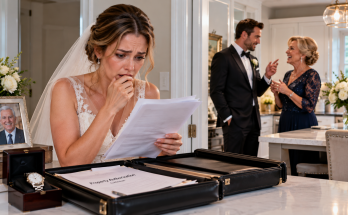
Mom told me her anniversary dinner started at nine, so I arrived at 8:55. They had already finished eating. My sister slid a $5,300 check toward me and said, “You weren’t invited to dinner.

You were invited to pay.” Mom laughed. I didn’t argue. I simply called the manager over and asked, “Remember what I requested earlier?” He nodded—and my sister’s expression changed immediately…
A month earlier, I had honestly believed the dinner might be the beginning of something better.
Dad called me on a Tuesday night while I was sitting at my kitchen table in Tucson grading junior essays. We had barely spoken for weeks, so when his name appeared on my phone, I watched it ring twice before answering.
“Rosie girl,” he said.
That alone softened me.
Nobody else called me that.
“Your mother and I hit forty years next month,” Dad continued. “We’re having a dinner. It would mean a lot if you were there.”
Then he said something I had spent half my life pretending I didn’t need to hear.
“It wouldn’t feel like forty years without you in the room.”
So I agreed.
A week later, Mom called with the details.
La Vista del Sol, a beautiful resort restaurant in the Catalina foothills.
Private terrace room.
“Nine o’clock,” she said.
“Nine?” I laughed. “You and Dad usually eat before the evening news.”
“That’s when the room is available. Everything is arranged.”
The next morning, she texted me.
Dinner starts at 9:00. Terrace room. Don’t be late.
She even added a little red heart.
I saved the message.
Maybe because things between us had been strained for months.
Maybe because hope makes you sentimental about tiny things.
I bought a blue dress.
Found an anniversary card.
Then restored the only surviving photograph from my parents’ 1986 wedding.
In the original, Mom was twenty-four, standing outside the church laughing so hard her eyes were closed.
Water damage had been slowly spreading across one corner for years, so I took it to a restoration shop near the university.
Sixty dollars later, the stain was gone.
My mother was laughing beneath a clean Arizona sky again.
I wrapped the frame in brown paper and placed it on my kitchen table.
That was the gift I intended to carry into their anniversary dinner.
The irony was that my family had spent years teaching me to arrive with something far more useful than a gift.
My wallet.
I’m thirty-six and teach high school English.
I earn a normal teacher’s salary, drive an aging Corolla, and spend weekends grading essays while my sister Courtney lives a very different life in Scottsdale with her husband, Preston.
Courtney always appeared financially comfortable.
Beautiful house.
Pool.
Expensive restaurants.
Trips.
But whenever our family ate out together, something strange happened when the bill arrived.
Courtney suddenly never had a card.
“Oh, Preston has them.”
Or:
“I switched purses.”
Then the check would sit in the center of the table.
Nobody directly asked me to pay.
That would have required admitting it was a favor.
Instead, Mom would smile at the server and say,
“Rosie’s got it. She always does.”
And I did.
Birthdays.
Mother’s Day.
Holiday brunches.
Family dinners.
The amounts grew larger, but the expectation never changed.
I was “the strong one.”
That label started when I was twelve.
I fell from the bleachers during P.E. and ended up with my arm in a bright blue cast.
Dad came to the clinic because Mom was busy helping Courtney prepare for a piano recital.
When Mom finally arrived, she looked at me sitting there quietly and smiled.
“See? You’re the strong one. You don’t need all the fuss.”
At twelve, I thought that meant I was special.
At thirty-six, I understood it meant I was convenient.
Still, family habits are difficult to break.
A few years earlier, after Dad had to slow down his small HVAC business, Mom asked whether I could help with household expenses.
“Just temporarily,” she said.
Four hundred dollars a month.
“Send it to Courtney,” Mom told me. “She handles our online bills.”
So I did.
Every first of the month.
For years.
The transfer note always read:
For Mom and Dad.
Then one afternoon, while fixing Dad’s laptop, he proudly showed me the small spiral notebook he carried everywhere.
Dad recorded every kindness anyone did for him.
Dates.
Amounts.
Names.
“A man should know what he owes,” he always said.
He opened to one page.
Water heater — $1,100 — Courtney.
“Your sister handled that,” he said proudly. “I don’t know what we’d do without her.”
I stared at Courtney’s name.
By then, I had already sent thousands of dollars through her account.
“Dad, does Mom ever mention the four hundred I send every month?”
He frowned.
“Four hundred?”
That answer changed something inside me.
I went into the kitchen.
Mom was drying dishes.
“Dad thinks I give you fifty dollars here and there.”
Her towel kept moving.
She didn’t ask what I meant.
That was the part I remembered later.
She already knew.
“Your sister has pressures you don’t understand,” Mom said.
“The money is mine.”
“It goes toward family expenses.”
“Then why does Dad think Courtney paid them?”
Mom finally turned around.
“Don’t make this about money, Rosemary.”
I didn’t.
I simply went home and canceled the recurring transfer.
No announcement.
No confrontation.
A gray confirmation appeared in my banking app.
Recurring transfer canceled.
After that, the temperature in the family changed.
Messages became colder.
At Christmas, Courtney told me dinner started at six.
I arrived at 5:50.
Dinner had actually been at four.
My plate was already covered in plastic wrap with ROSIE written on a strip of tape.
They had prepared my leftovers before I had even arrived “late.”
I checked the message.
Six o’clock.
I told myself it had been a mistake.
Five months later, Mom told me nine again.
This time, on the afternoon of the anniversary, the teacher in me decided to confirm.
At 2:15, I called La Vista del Sol.
“I’m with the Collier anniversary party tonight,” I told the hostess. “Could I sit next to Tom Collier? I’m his daughter.”
I heard typing.
“Collier-Marsh. Yes. Party of eight at seven.”
My hand stopped moving.
“Seven?”
“Yes, ma’am.”
“I was told nine.”
The typing stopped.
Then her tone changed.
“Oh.”
A pause.
“Wait. Are you the guest arriving at nine?”
I stared at the wrapped wedding photograph sitting on my kitchen table.
“Yes.”
“Could you hold?”
A minute later, the general manager came on the line.
“Nate Sullivan,” he introduced himself.
His voice was careful.
“Ms. Collier, the reservation is for eight guests at seven o’clock.”
“I understand.”
“There’s also an instruction sheet at our host desk.”
“What kind of instructions?”
Another pause.
“The party requested that the entire check be presented to a ninth guest arriving at approximately nine.”
I sat down.
“And that guest is me?”
“Yes.”
“How would your staff know who I am?”
His answer made my kitchen suddenly feel too quiet.
“They provided a photograph.”
For several seconds, I couldn’t speak.
“My photograph?”
“Yes, ma’am.”
Then Nate added something even worse.
“The instructions specifically state that the ninth guest is not to be seated for dinner service.”
I looked again at Mom’s text.
Dinner starts at 9:00.
Don’t be late.
They hadn’t invited me late.
They had invited my credit card on time.
“Who brought the instructions in?” I asked.
Nate hesitated.
“I received them personally from Courtney Marsh.”
My sister.
I could have stayed home.
Instead, I said something Nate clearly hadn’t expected.
“Don’t change anything.”
“Ms. Collier?”
“Don’t warn them. Don’t cancel the reservation. Let the evening happen exactly the way they planned it.”
Then I asked him for two small favors.
The first was simple.
“When I ask you later what instructions you received, tell the truth. Out loud.”
He agreed.
Then I told him the second request.
After that, I put on my blue dress, placed the restored wedding photograph on the passenger seat, and drove into the foothills.
At 8:55, I walked into the terrace room.
Dinner was over.
Wine bottles were empty.
Champagne flutes held the remains of a toast I hadn’t been there to hear.
The cake had already been eaten.
Eight chairs surrounded the table.
There was no ninth.
Dad saw me and looked genuinely confused.
“Rosie? I thought you couldn’t come to dinner.”
That was when I knew for certain he had been told a different story.
Mom quickly touched his wrist.
“Let her settle in.”
There was nowhere to sit.
For ten minutes, I stood beside a finished family celebration while Mom praised Courtney for organizing “every detail.”
Then Courtney gave a server a tiny nod.
Eleven seconds later, the leather check folder appeared.
She slid it toward me.
“You weren’t invited to dinner,” she said. “You were invited to pay.”
Mom laughed.
I opened the folder.
$5,300.
And in small print at the top was..
PART 2 — THE BILL THEY THOUGHT WAS MINE
And in small print at the top was:
AUTHORIZED HOST: COURTNEY MARSH.
I stared at the words for a moment.
Then at my sister.
Courtney was still smiling.
She had that particular expression she wore whenever she believed she had arranged a situation so carefully that nobody else could move inside it.
Preston sat beside her, leaning back in his chair with one arm draped across the backrest.
Mom had a champagne flute in her hand.
Dad looked from me to the bill, still confused.
“What’s going on?” he asked.
Courtney answered without looking at him.
“Nothing.”
Then she tapped one manicured finger against the leather folder in front of me.
“Rosie’s taking care of dinner.”
I looked down again.
Five thousand three hundred dollars.
For eight people.
Not nine.
There was no entrée with my name on it.
No wine poured into a glass for me.
No slice of anniversary cake.
No chair.
Just a bill.
I closed the folder.
“Mom.”
She smiled as though we were discussing something harmless.
“Yes?”
“You told me dinner started at nine.”
Her eyes shifted slightly.
“Things moved faster than expected.”
“That’s interesting.”
Courtney exhaled.
“Oh my God, Rosemary. Please don’t do this.”
“Do what?”
“Turn everything into a dramatic little courtroom.”
I almost laughed.
A courtroom at least allowed the accused to hear the charges before sentencing.
I looked at Dad.
“What time did you think dinner started?”
He frowned.
“Seven.”
Mom touched his wrist again.
“Tom.”
He looked at her.
“What?”
Courtney cut in.
“Rosie had work.”
I turned toward her.
“No, I didn’t.”
She blinked.
“I was told you did.”
“By whom?”
Silence.
Then Mom said:
“This is your father’s anniversary dinner. Can we not ruin it?”
Something inside me became very calm.
That sentence used to work on me.
For years, every time I noticed something unfair, Mom found a larger occasion to protect.
Don’t ruin Christmas.
Don’t upset your father.
Don’t embarrass Courtney.
Don’t make this about money.
There was always some sacred family peace that somehow required only me to swallow the truth.
Not tonight.
I looked toward the doorway.
Nate Sullivan, the general manager, stood discreetly near the service station.
I raised my hand.
“Nate?”
Courtney’s head turned.
The smile disappeared from her face.
Nate approached.
“Yes, Ms. Collier?”
I rested my hand lightly on the closed check folder.
“Remember what I requested earlier?”
His eyes flicked briefly toward Courtney.
Then he nodded.
“Yes, ma’am.”
Courtney went very still.
Mom’s face tightened.
I looked at Nate.
“Would you mind telling the table what instructions your staff received for tonight?”
The room changed.
Tiny movements stopped.
Preston lowered his arm.
Mom put down her champagne glass.
Dad leaned forward.
Courtney spoke quickly.
“There’s no need for this.”
Nate remained professional.
“I’m afraid Ms. Collier asked that I answer directly if she requested it.”
Courtney stared at me.
“When did you talk to him?”
“This afternoon.”
Mom’s face lost color.
Nate continued.
“The reservation for the Collier-Marsh anniversary dinner was for eight guests at seven p.m.”
Dad looked at me.
Then slowly toward Mom.
Nate continued.
“Separate written instructions were provided requesting that a ninth individual arrive at approximately nine p.m.”
Dad’s brows pulled together.
“What ninth individual?”
Nate looked at me.
“Ms. Rosemary Collier.”
Dad stared.
“What?”
I said nothing.
Nate continued.
“The instructions stated that Ms. Collier was not to receive dinner service and was not to be seated with the reservation.”
Dad’s face changed.
Not anger yet.
Confusion first.
The kind people experience when reality refuses to fit the story they were given.
“What are you talking about?”
Mom whispered:
“Tom, don’t.”
He turned sharply.
“Don’t what?”
Courtney stood.
“This is ridiculous.”
Nate remained composed.
“I’m simply answering the question.”
Dad pointed at the empty space near the wall.
“You were told not to give Rosie a chair?”
Nate nodded once.
“Yes, sir.”
“And who gave you those instructions?”
Courtney’s face hardened.
“No.”
Nate looked at her.
“Mrs. Marsh, you delivered the written instructions personally.”
Dad turned.
The expression on his face made Courtney sit back down.
“You did what?”
She crossed her arms.
“Dad, it wasn’t like that.”
“What was it like?”
“She always pays.”
There it was.
Not a misunderstanding.
Not a scheduling mistake.
Not something the restaurant had confused.
She always pays.
Dad looked at me.
I watched something painful settle behind his eyes.
Not just tonight.
Other nights.
Other bills.
Years.
He said quietly:
“Rosie?”
I looked at him.
“How many times?”
That question almost broke me.
Because I had never counted them as a number.
I counted them as birthdays.
Mother’s Days.
Sunday brunches.
Courtney’s engagement dinner.
Mom’s retirement party.
Dad’s sixty-fifth birthday.
Holiday lunches.
Small family gatherings that became large checks.
“I don’t know.”
My voice sounded thin.
“Enough.”
Dad looked at Mom.
“You knew?”
She pushed her chair back slightly.
“We all contribute differently.”
I almost smiled.
There it was.
Her favorite phrase when contribution meant Courtney received praise and I received invoices.
Dad frowned.
“What does that mean?”
Mom’s voice sharpened.
“Courtney helps us constantly.”
I looked at her.
“With my money?”
The silence dropped hard.
Dad turned toward me.
“What?”
Courtney closed her eyes briefly.
Mom whispered:
“Rosemary.”
“No.”
I looked at Dad.
“You asked me a year ago whether Mom ever mentioned the four hundred dollars I sent monthly.”
His face went blank.
“I remember.”
“She didn’t.”
I nodded.
“No.”
He looked at Mom.
“Four hundred a month?”
She said nothing.
“For how long?”
I answered.
“Almost three years.”
Dad’s face drained.
Courtney leaned forward.
“That money went toward family expenses.”
“Some of it.”
I looked at her.
“Maybe.”
Her eyes narrowed.
“What is that supposed to mean?”
“It means Dad’s notebook gives you credit for bills I know my transfers covered.”
She froze.
Dad stared.
“The water heater?”
I nodded.
Courtney spoke quickly.
“I managed the payment.”
“With my money.”
“That still means I handled it.”
I looked at her.
“Then why didn’t you write ‘from Rosemary’?”
She scoffed.
“Because nobody audits family favors.”
I laughed once.
Small.
Bitter.
“No. Apparently only family bank accounts.”
Mom cut in.
“Enough.”
I turned.
“Why?”
Her face tightened.
“Because this was supposed to be a happy evening.”
I looked at the used plates.
The empty glasses.
The crumpled napkins.
The single uneaten dinner roll on Preston’s plate.
“It probably was.”
My voice softened.
“For you.”
That hurt her.
I saw it.
Dad looked toward the wrapped package I still held in one hand.
“What’s that?”
I glanced down.
The restored wedding photograph.
For the first time since arriving, I almost wished I had left it in the car.
“Your anniversary present.”
Mom looked away.
Dad whispered:
“You brought us a gift?”
I met his eyes.
“Yes.”
His face crumpled slightly.
That was worse than anger.
Dad had never been a dramatic man.
He became quiet when hurt.
Mason-like, if I had been thinking about another family.
He rubbed one hand over his mouth.
Then he looked at Courtney.
“You told me Rosie couldn’t make dinner.”
Courtney said nothing.
Mom intervened.
“She said she had work.”
“I did not.”
I looked directly at Mom now.
“You texted me nine.”
Her mouth tightened.
“Maybe I got the time wrong.”
I unlocked my phone.
Opened the message.
Placed it on the table.
Dinner starts at 9:00. Terrace room. Don’t be late. ❤️
Dad read it.
His shoulders dropped.
Then he looked toward Mom.
“You sent this?”
Her eyes filled.
“Tom—”
“Did you send it?”
“Yes.”
“Why?”
Mom exhaled shakily.
“Because if Rosemary came at seven, she would have made everything uncomfortable.”
I stared at her.
“What would I have made uncomfortable?”
Her eyes moved toward Courtney.
Then away.
That was enough.
I understood before she answered.
Money.
Always money.
Courtney spoke.
“We knew you’d make a scene about paying.”
I laughed.
“You mean I might have objected to being charged for dinner.”
“It was Mom and Dad’s fortieth anniversary.”
“Yes.”
“And you’re their daughter.”
“So are you.”
Courtney’s face tightened.
“My life is different.”
“Why?”
“You don’t have children.”
There it was.
The old arithmetic.
Courtney had children.
Therefore, her money mattered more.
My life required less.
My expenses were less real.
My salary more available.
My time more flexible.
I looked at her.
“You have a husband who earns three times what I do.”
Preston’s face reddened.
“That’s not accurate.”
I turned toward him.
“You post your quarterly sales awards online.”
Courtney snapped:
“Why are you bringing Preston into this?”
“Because apparently everyone gets included except me when the check arrives.”
Dad closed his eyes.
“Jesus.”
Mom whispered:
“Tom, please.”
He looked at her.
“Was this your idea?”
Silence.
“Marianne.”
Mom’s mouth trembled.
“It was Courtney’s suggestion.”
Courtney stared at her.
“Mom.”
“But you agreed.”
Dad’s voice was hard now.
Mom looked at him.
“I thought it would prevent conflict.”
Dad laughed.
I had rarely heard him laugh that way.
Dry.
Disbelieving.
“You prevented conflict by tricking one daughter into paying for eight people who ate without her?”
Mom began crying.
That used to end arguments.
The moment tears appeared, Dad softened.
Courtney defended her.
I apologized.
Not tonight.
Dad stared at her tears like he did not recognize them.
Then Courtney stood again.
“This has gone too far.”
I looked at her.
“No.”
I placed one finger on the bill.
“It hasn’t gone anywhere yet.”
Her face changed.
She remembered.
My second request.
Nate was still standing beside the table.
Courtney looked at him.
“What did she ask you to do?”
He did not answer her.
I did.
“I asked him to separate the bill according to who actually ordered what.”
Preston frowned.
“What?”
Courtney laughed nervously.
“That’s impossible. This was a fixed group menu.”
“Most of it.”
Nate nodded.
“We were able to break out the supplemental items.”
Mom stared at him.
“What supplemental items?”
He opened the leather folder.
Another receipt sat underneath.
This one itemized.
The private room fee.
Champagne upgrade.
Three bottles of reserve Cabernet.
A seafood tower.
Premium steaks.
Caviar add-on.
Custom cake.
Floral arrangement.
Valet vouchers.
And one line near the bottom:
Organizer’s supplemental selections — authorized by Courtney Marsh.
Total:
$3,870.
Dad stared at it.
“Courtney?”
She looked furious now.
“They were for everyone.”
“Then everyone can pay.”
I kept my voice quiet.
“The base anniversary dinner is $1,430.”
Courtney scoffed.
“Fine. So pay that.”
I smiled faintly.
“No.”
Her eyebrows rose.
“What?”
“My second request wasn’t just itemization.”
Nate reached into a small folder.
“I was also asked to verify the payment method placed on file for the reservation.”
Courtney’s face went white.
Dad looked between us.
“What payment method?”
Nate answered.
“A card ending in 4419.”
Courtney said nothing.
Preston slowly looked at her.
I asked:
“Whose card?”
Nate remained professional.
“The reservation was guaranteed under Mrs. Courtney Marsh’s name.”
Preston’s head snapped toward his wife.
“You used our card?”
Courtney’s face flushed.
“It was only to hold the room.”
Nate nodded.
“That is correct.”
I folded my hands.
“And what happens if the designated ninth guest declines payment?”
Nate answered:
“The restaurant charges the card on file.”
Courtney pushed her chair back.
“No.”
There it was.
Not smugness anymore.
Panic.
“You cannot charge my card.”
Nate’s expression remained calm.
“Mrs. Marsh, the signed reservation authorization permits that in the absence of another valid payment method.”
“I told you she was paying.”
“Ms. Collier never authorized any charges.”
Everyone looked at me.
I leaned back.
“No, I didn’t.”
Courtney’s voice sharpened.
“You knew.”
“Since two fifteen this afternoon.”
“You came anyway?”
“Yes.”
“Why?”
That question surprised me.
Why did I come?
For years, I thought the strongest thing a person could do was walk away from mistreatment.
Sometimes it is.
But sometimes you need to watch the lie collapse in the room where it was built.
“I wanted Dad to hear the truth from someone other than me.”
Dad looked down.
Courtney’s eyes narrowed.
“You planned this.”
“I confirmed what you planned.”
“That’s the same thing.”
“No.”
I shook my head.
“You created the trap.”
“I just stopped stepping into it.”
Nate gently closed the folder.
“Would you like us to process the card on file?”
Courtney immediately said:
“No.”
I said:
“Yes.”
She stared at me.
“You don’t get to decide.”
Nate answered:
“Actually, the account holder can provide an alternate method.”
Preston turned toward Courtney.
“Use yours.”
Her face changed.
“I don’t have it.”
I almost laughed.
Of course.
The oldest trick.
I switched purses.
Preston stared.
“You told me your card was in the clutch.”
“I thought it was.”
He closed his eyes.
Dad rubbed his forehead.
“Unbelievable.”
Courtney turned toward me.
“Fine.”
Her voice shook.
“You want to humiliate me? Congratulations.”
I stared at her.
“I wanted dinner.”
That silenced her.
Not money.
Not revenge.
Not an apology.
Dinner.
A chair.
A plate.
A place at my parents’ fortieth anniversary.
She had made it sound like I demanded the world when all I had expected was to be included.
I looked at Mom.
“You could have told me.”
She cried quietly.
“I didn’t know how.”
“Yes, you did.”
My voice became softer.
“You knew exactly how to text me the wrong time.”
She flinched.
Dad looked toward me.
“Rosie.”
I turned.
He looked devastated.
“I am sorry.”
My throat tightened instantly.
Not because I needed him to apologize.
Because I believed him.
He truly had not known.
That mattered.
“I should have noticed.”
His voice broke.
“I should have asked why your chair was missing.”
I swallowed.
“You believed what they told you.”
“I wanted to.”
That sentence landed heavily.
He looked at Mom.
“Maybe that’s the problem.”
Mom stared at him.
“What does that mean?”
“It means I kept accepting the version of this family that was easiest for me.”
The room became quiet.
Dad continued.
“Courtney always helping.”
“Rosie always fine.”
“Marianne always handling everything.”
He shook his head.
“I never checked whether any of it was true.”
Mom whispered:
“Tom.”
He looked at me.
“How much have you paid over the years?”
“I honestly don’t know.”
“Find out.”
I frowned.
“What?”
“Go through your statements.”
Courtney stared at him.
“Dad.”
He turned toward her.
“No.”
His voice hardened.
“I want to know.”
“This is insane.”
“No.”
He pointed at the bill.
“This is insane.”
Courtney’s face flushed.
“After everything I’ve done for you?”
Dad stared.
“What have you done?”
The question wounded her.
I saw it.
She had spent years being praised as the responsible daughter.
The organizer.
The helper.
The one who “handled” Mom and Dad’s expenses.
Now Dad was asking a devastatingly simple question.
What have you actually done?
Courtney stood.
“I don’t have to sit here for this.”
Preston rose too.
“Yes, you do.”
She turned.
“What?”
His face was pale.
“When we get home, we’re looking at our accounts.”
Courtney froze.
The first real fear of the night entered her face.
Not restaurant money.
Something larger.
“What are you talking about?”
“You said your parents reimbursed us for several things.”
Mom stopped crying.
Dad looked up.
Courtney stared at her husband.
“I never said that.”
Preston laughed once.
“Yes, you did.”
His voice became sharper.
“You said the Scottsdale furniture deposit came back from your mother.”
Courtney’s face went blank.
My pulse changed.
What?
Preston continued.
“You said they reimbursed the anniversary planning costs.”
Mom whispered:
“We didn’t.”
He looked at her.
“That’s what I thought.”
Courtney grabbed her handbag.
“We’re leaving.”
Preston did not move.
She stared.
“Preston.”
“No.”
His voice was quiet.
“What money have you been moving?”
Courtney’s face had gone completely white.
I looked at Dad.
He looked at me.
Then toward Mom.
Mom’s expression changed too.
Not confusion.
Fear.
That chilled me.
“Mom?”
She did not answer.
I stood.
“What money?”
Courtney snapped:
“Nothing.”
Preston laughed.
“Then why are you scared?”
Courtney looked toward Mom again.
There.
A glance.
Fast.
Barely noticeable.
But I saw it.
So did Dad.
He said slowly:
“What are you two hiding?”
Mom’s shoulders collapsed.
“Tom.”
“What?”
She stared at the table.
“It’s not about tonight.”
My heartbeat began to pound.
“What isn’t?”
Mom’s voice was barely audible.
“The four hundred dollars.”
I froze.
Courtney closed her eyes.
Dad turned toward Mom.
“What about it?”
She began crying again.
This time, the tears looked different.
Less defensive.
More frightened.
“I should have told you.”
My stomach went cold.
“Told him what?”
Mom whispered:
“Courtney wasn’t keeping all of it.”
That was not the answer I expected.
I stared at her.
“What?”
Mom lifted her eyes toward me.
“Some of your money did go toward our expenses.”
“How much?”
She did not answer.
“Mom.”
“Not enough.”
Courtney snapped:
“Stop.”
Dad slammed his hand against the table.
“Let her speak.”
Everyone froze.
Mom wiped her face.
“Your father’s business had problems.”
Dad stared.
“What problems?”
“You didn’t know.”
He went still.
“Know what?”
Mom looked down.
“I borrowed against the house.”
Dad’s face emptied.
The sentence hung in the air.
Even Courtney stopped moving.
Dad whispered:
“You did what?”
Mom’s hands shook.
“When the HVAC business slowed down, you were so worried.”
“I never told you to borrow against the house.”
“I know.”
“How much?”
No answer.
“Marianne.”
She whispered:
“One hundred and twenty thousand.”
Dad looked as though he had been struck.
I felt the room tilt.
“That’s impossible.”
His voice became hollow.
“The mortgage was nearly paid.”
“I know.”
“When?”
“Three years ago.”
Three years.
Almost exactly when Mom asked me for four hundred dollars a month.
My skin went cold.
Dad looked at me.
Then back at her.
“What happened to the money?”
Mom stared at Courtney.
Courtney shook her head violently.
“Don’t.”
Dad saw it.
“What did you do?”
Mom’s voice broke.
“Courtney needed help.”
Preston sat down slowly.
“What kind of help?”
Courtney began crying.
No one moved to comfort her.
Mom continued.
“Her business.”
I frowned.
“What business?”
Courtney had always described herself as a “consultant.”
Nobody really knew what that meant.
“She invested in a luxury event company.”
Preston stared at his wife.
“You told me that company was funded by investors.”
Courtney whispered:
“It was.”
“Your parents were the investors?”
Silence.
Mom answered.
“Partly.”
Dad’s face was gray.
“You took out a loan against our house for Courtney?”
“I thought it would succeed.”
“How much did she get?”
Mom whispered:
“Eighty thousand.”
Preston swore under his breath.
My stomach turned.
“And the rest?”
Mom stared at the table.
“Bills.”
“Whose?”
No answer.
I suddenly understood why she did not want this to become about money.
Because money was the one subject that could open every locked door.
Courtney started toward the exit.
Dad said:
“Sit down.”
She stopped.
He had not raised his voice.
He did not need to.
She sat.
Dad looked at Mom.
“Where did Rosie’s monthly money go?”
Mom’s lips trembled.
“Toward the loan.”
My heart sank.
“How much?”
“Some.”
“How much?”
“About half.”
I stared.
“And the rest?”
Courtney looked away.
There it was.
I felt physically ill.
“You gave it to her.”
Mom whispered:
“She had expenses.”
I laughed.
I could not help it.
My teacher salary.
My aging Corolla.
My canceled trips.
My patched clothes.
And I had been subsidizing Courtney’s Scottsdale life.
“How much?”
Mom covered her face.
“Maybe eight thousand.”
Courtney snapped:
“It was not that much.”
That was the worst possible thing she could say.
Because she knew the number.
Dad stared at her.
“You knew Rosie thought she was helping us.”
Courtney said nothing.
“You let her send money.”
Silence.
“You took it.”
“I was going to pay it back.”
The sentence was so old it barely deserved language.
I looked at her.
“When?”
She stared.
“When exactly were you going to pay me back?”
“I don’t know.”
“You didn’t even tell me you borrowed it.”
“I didn’t ask you.”
“No.”
My voice turned cold.
“You just took it.”
Courtney began crying again.
“Everybody acts like I have everything.”
I stared at her.
“You made sure we did.”
She flinched.
“The house is mortgaged.”
I said nothing.
“The Audi is leased.”
Preston closed his eyes.
“The trips are mostly credit cards.”
Dad stared.
Courtney’s voice became frantic.
“You have no idea how expensive our life is.”
For one absurd moment, nobody spoke.
Then I laughed.
Actually laughed.
Because after everything, that was her defense.
Her beautiful life cost too much.
So I was supposed to fund the illusion.
“You could have lived differently.”
She stared.
“You don’t understand.”
“I understand perfectly.”
I leaned forward.
“You needed everyone to think you were doing better than me.”
Courtney’s face changed.
I saw it land.
“You needed Mom to praise you.”
“You needed Dad’s notebook to contain your name.”
“You needed the house.”
“The restaurants.”
“The trips.”
“And every time the performance became too expensive…”
My voice cracked.
“…you sent the bill to me.”
She looked away.
No denial.
Dad pushed his chair back.
“I want to go home.”
Mom stared at him.
“Tom.”
He did not look at her.
“I cannot do this here.”
He stood.
Then he looked toward Nate.
“Charge Courtney’s card.”
Courtney shot up.
“Dad!”
He turned.
“You invited me to dinner.”
His voice was exhausted.
“You organized the evening.”
“You ordered the extras.”
“And you intentionally excluded your sister so she could finance it.”
He shook his head.
“You pay.”
Courtney looked at Mom.
“Say something.”
Mom remained seated.
For once, she had nothing to say.
Nate quietly walked away to process the bill.
The anniversary had ended.
Not with a toast.
Not with dancing.
With eight adults sitting beneath terrace lights while forty years of marriage and thirty-six years of family roles cracked open around one restaurant check.
I picked up the wrapped photograph.
Dad noticed.
“Can I see it?”
My throat tightened.
I handed it to him.
He carefully tore away the brown paper.
The restored wedding photograph appeared.
Mom laughing.
Dad young and thin beside her.
Arizona sunlight.
Forty years before debt.
Before daughters learned roles.
Before secrets became habits.
Dad touched the frame.
His eyes filled.
“Oh, Rosie.”
Mom looked over.
Then broke.
Her sob came suddenly.
Not delicate.
Not performative.
She pressed both hands over her mouth.
“I remember that day.”
I nodded.
“So do I.”
Her eyes lifted.
“You weren’t born.”
“I know.”
That almost made Dad smile.
I continued.
“You told the story a hundred times.”
Mom stared at the photograph.
“You said Dad stepped on your dress.”
He looked at her.
“I did.”
“You laughed so hard the photographer kept the picture.”
Mom touched the edge of the frame.
For one heartbeat, they looked like the two people in the photograph again.
Then the present returned.
Dad gave the frame back to me.
“No.”
I frowned.
“It’s yours.”
He shook his head.
“Keep it tonight.”
“Dad—”
“Please.”
His voice broke.
“I don’t know what forty years means right now.”
That sentence hurt more than anything else that happened.
Mom closed her eyes.
Dad walked toward the door.
I followed.
Behind us, Preston was quietly asking Courtney for her phone.
Mom remained at the table.
Alone.
At the entrance, Dad stopped.
“Rosie.”
I looked at him.
“Did you really think I knew?”
The question was fragile.
I answered honestly.
“Until tonight?”
“Yes.”
His eyes filled.
“That may be what hurts most.”
I touched his arm.
“I’m sorry.”
“No.”
He shook his head.
“Don’t apologize.”
Then he gave a tired, bitter smile.
“You’re the strong one, right?”
The old phrase cut through me.
For thirty-four years, it had followed me.
You’re the strong one.
I looked at Dad.
“No.”
He blinked.
“I’m just the one nobody checked on.”
His face crumpled.
And this time, when he hugged me, I let him.
Not because everything was fixed.
Nothing was.
But because some truths open wounds.
Others finally explain why they were there.
When we separated, Dad went home in a taxi.
He refused to ride with Mom.
I drove back toward Tucson alone.
The restored wedding photograph sat on the passenger seat beside me.
At a red light, my phone buzzed.
Courtney.
I expected anger.
Instead, one message appeared.
You destroyed everything.
I stared at it.
Then typed:
No. I stopped paying to keep it hidden.
I sent it.
A few minutes later, another message arrived.
From Preston.
Rosemary, I’m sorry. I found transfers. More than you know about. Please call me tomorrow.
My hands tightened around the steering wheel.
More.
Of course there was more.
The next morning, Dad called me before seven.
His voice sounded strange.
“Rosie girl.”
I sat up in bed.
“What happened?”
“Your mother finally told me about the second account.”
A cold sensation moved through me.
“What second account?”
He was silent for several seconds.
Then he said:
“The one in your name.”
I stopped breathing.
“What are you talking about?”
Dad’s voice cracked.
“Rosie…”
I gripped the phone.
“What account?”
“She and Courtney opened it six years ago.”
My heart began pounding.
“Opened what?”
“A credit account.”
My mouth went dry.
“How much?”
Dad could barely say it.
“Forty-seven thousand dollars.”
The room seemed to fall away.
I whispered:
“In my name?”
“Yes.”
I looked toward my purse.
My wallet.
My teacher ID.
My life.
All the years I thought the worst thing my family had done was make me pay for dinner.
Dad started crying.
“Rosie, I swear to God, I didn’t know.”
I believed him.
But belief did nothing to slow my heartbeat.
“Is it still open?”
“I don’t know.”
“Who used it?”
A pause.
Then:
“Courtney.”
I closed my eyes.
Yesterday, I had walked into La Vista del Sol thinking the five-thousand-three-hundred-dollar check was the trap.
It wasn’t.
It was only the loose thread.
And when I finally pulled it, the whole family story started coming apart.
Because my sister had not merely spent the money I gave our parents.
She had not merely tricked me into paying restaurant bills.
For six years, Courtney had apparently been spending money under my name.
And by the time I finally saw the first statement, I would discover something that made the anniversary dinner look almost insignificant.
There were charges from cities I had never visited.
Businesses I had never heard of.
Luxury purchases I had never made.
And one payment that stopped me cold.
A monthly transfer.
Always the same amount.
Always on the fifteenth.
Going to an account with a name I recognized immediately.
My mother’s.
PART 3 — THE ACCOUNT IN MY NAME
The first statement arrived in my inbox at 8:12 that morning.
I stared at it for almost a full minute before opening the attachment.
The account had been created six years earlier.
Six years.
Long before I stopped the monthly transfers.
Long before the anniversary dinner.
Long before I understood that my family had turned my reliability into a resource they believed belonged to them.
At the top of the page was my name.
Rosemary Anne Collier.
My address.
My date of birth.
My Social Security information.
Every detail correct.
Every detail mine.
Except I had never opened the account.
I scrolled.
Luxury hotel.
Scottsdale.
$1,840.
Designer boutique.
$2,300.
Furniture showroom.
$4,750.
Airline tickets.
Spa packages.
Jewelry.
Restaurants I had never entered.
Then the monthly transfer.
$400.
Always on the fifteenth.
Always moving into an account belonging to my mother.
Marianne Collier.
My chest went cold.
For years, Mom had told me to send four hundred dollars every month to Courtney.
For Mom and Dad.
At the same time, another four hundred dollars had been traveling in the opposite direction.
From debt created under my name.
To Mom.
I sat at my kitchen table, the same place where Dad had called about the anniversary a month earlier.
The restored wedding photograph leaned against the wall beside my grading pile.
Mom laughing.
Dad smiling.
Forty years before any of this.
I looked at the photograph and whispered:
“Why?”
My phone rang.
Dad.
I answered.
“Did you get it?”
“Yes.”
His breathing sounded uneven.
“Rosie, I don’t understand most of this.”
“I do.”
That was the strange thing.
Once the shock settled, the numbers were easy.
English teachers notice patterns too.
Maybe not in spreadsheets first.
But patterns are patterns.
Repetition.
Motive.
What is emphasized.
What is omitted.
The account told a story.
And Courtney had been writing it for six years.
“Dad, where’s Mom?”
“At the house.”
“Is Courtney there?”
“No.”
“Good.”
“Rosie…”
I closed my laptop.
“I’m coming over.”
“No.”
I paused.
“What?”
Dad’s voice dropped.
“Before you come, there’s something else.”
My stomach tightened.
Of course there was.
“What?”
“Preston called.”
“What did he find?”
“He says Courtney had another card.”
I closed my eyes.
“In my name?”
“No.”
Relief came too quickly.
Then Dad finished.
“In Mom’s.”
I went still.
“How much?”
“About thirty-two thousand.”
I leaned back.
The room felt suddenly too bright.
“So Courtney used Mom too.”
Dad was silent.
“That doesn’t make what Mom did to me disappear.”
“I know.”
“But it matters.”
“Yes.”
For the first time, the story became more complicated.
Courtney had not simply manipulated me through Mom.
She had manipulated Mom too.
Maybe not from the beginning.
Maybe not equally.
But enough.
I said, “I’ll be there in thirty minutes.”
When I reached my parents’ house, Dad opened the door before I knocked.
He looked terrible.
Same shirt as the night before.
Gray stubble.
Eyes swollen.
The anniversary card I had bought them sat unopened on the entry table.
Mom was in the kitchen.
She looked even worse.
No makeup.
Hair uncombed.
The red heart-shaped anniversary balloon Courtney had given them floated near the ceiling behind her.
Its cheerful message felt obscene now.
FORTY YEARS OF LOVE.
Mom looked at me.
“Rosemary.”
I put my handbag down.
“Tell me about the account.”
She started crying immediately.
I held up a hand.
“No.”
Her crying stopped.
Not because she was calm.
Because for once, I had refused to let tears become the first language.
“Words first.”
She stared at me.
Dad sat at the table.
I remained standing.
Mom wiped her face.
“I didn’t open it.”
“Courtney did.”
“Yes.”
“You knew.”
“Not at first.”
My jaw tightened.
“When did you know?”
“About two years after.”
“So four years ago.”
“Yes.”
“And you said nothing.”
Her face crumpled.
“I thought she had closed it.”
I laughed softly.
“You thought.”
“I made her promise.”
“You saw a credit account in my name that I didn’t know existed.”
“Yes.”
“And instead of calling me, you asked the person who committed identity theft to promise she would stop.”
Mom shut her eyes.
When spoken plainly, family excuses sound ridiculous.
That was another thing I had learned.
Secrecy survives because everyone wraps the ugly thing in softer language.
Helping.
Borrowing.
Protecting.
Family.
You strip those words away, and sometimes all that remains is theft.
“Why did she open it?”
Mom whispered:
“She couldn’t qualify for more credit.”
I stared.
“For what?”
“The event company.”
“Again.”
“Yes.”
“She needed startup capital?”
“At first.”
“And afterward?”
Mom said nothing.
Dad’s face hardened.
“Marianne.”
She looked at him.
“Afterward?”
Mom swallowed.
“Lifestyle.”
There it was.
I sat down.
Not because I felt calmer.
Because my knees had begun to shake.
“How did she get my information?”
Silence.
I already knew.
I looked at Mom.
“You gave it to her.”
She started crying again.
“Not for that.”
The room became very quiet.
“What did you give her?”
“She said she was helping refinance the house.”
Dad looked up sharply.
“What?”
Mom turned toward him.
“I needed copies of tax records, Social Security cards, things like that.”
Dad stared.
“You gave Courtney our documents?”
“She said she needed them.”
I laughed.
“Mom, she didn’t need mine.”
She looked at me.
“No.”
My voice dropped.
“So how did she get mine?”
Mom covered her mouth.
I knew before she answered.
“You kept copies.”
She nodded.
“From college financial aid.”
My stomach turned.
An old folder.
Tax documents.
Identity forms.
My mother had held onto everything because mothers keep things.
Report cards.
Birth certificates.
Old medical records.
And apparently enough information for one daughter to financially impersonate another.
“Did you give her my folder?”
Mom whispered:
“Yes.”
Dad stood.
He looked physically sick.
“Marianne.”
“She said she was checking something.”
“Checking what?”
“I don’t know.”
“You didn’t ask?”
“I trusted her.”
I looked at him.
The sentence hurt all three of us in different ways.
I trusted her.
Dad trusted Mom.
Mom trusted Courtney.
And everyone trusted me to absorb whatever damage remained.
I opened my laptop.
Pulled up the statement.
Turned it toward Mom.
“Explain these transfers.”
She stared.
“I can’t.”
“Four hundred dollars every month.”
Her face changed.
“I didn’t know where those came from.”
“You didn’t ask?”
“They appeared as family assistance.”
“From whom?”
“I thought Courtney.”
I laughed.
Of course.
Courtney had been feeding Mom stolen credit while receiving my real four hundred-dollar transfers.
Money in.
Money out.
She became the hero in both directions.
I looked at Mom.
“You praised her for sending you money.”
Her eyes filled.
“Yes.”
“Money borrowed under my name.”
“Yes.”
“And when I asked why Dad didn’t know about my monthly support, you defended her.”
Mom looked down.
“Yes.”
“Why?”
Her voice came out small.
“Because she always needed more.”
I stared.
“And I didn’t?”
The question broke something in her.
She cried harder.
“I told myself you were okay.”
There it was.
The strong one.
Again.
I leaned forward.
“No, Mom.”
She looked at me.
“You told yourself I was okay because that version of me cost you less.”
She stopped breathing.
Dad closed his eyes.
I continued.
“If Courtney was struggling, everyone moved.”
“If Courtney was scared, everyone listened.”
“If Courtney overspent, we called it pressure.”
“If I struggled, I was strong.”
My voice cracked.
“You gave her sympathy and gave me responsibility.”
Mom shook her head.
“I loved you equally.”
“I believe you.”
That surprised her.
Then I finished.
“But you did not treat us equally.”
Silence.
Love and fairness are not the same thing.
That truth had taken me thirty-six years to understand.
Dad sat back down.
“What do we do?”
I looked at him.
“We tell the bank.”
Mom flinched.
“Rosemary.”
“We freeze the account.”
“Yes.”
“We dispute every fraudulent charge.”
Her face went pale.
“And we make a police report.”
“No.”
The answer came instantly.
I looked at her.
Dad looked at her too.
Mom stood.
“No.”
“Why?”
“She’s your sister.”
There it was.
The final refuge.
Family.
I stared at Mom.
“So am I.”
She went silent.
Dad spoke quietly.
“Marianne.”
She looked at him.
“She did this to Rosie.”
“But if police get involved—”
“What?”
His voice rose.
“She might face consequences?”
Mom began crying.
Dad did not soften.
“She used Rosie’s name.”
“I know.”
“She lied to us.”
“I know.”
“She put our house at risk.”
“I know.”
“She used your credit too.”
“I know.”
“And you still want Rosie to protect her.”
Mom whispered:
“I don’t want to lose another daughter.”
The sentence made me stop.
Another daughter.
For a moment, I saw not the woman who enabled Courtney.
I saw a mother afraid that truth would split the family beyond repair.
That did not excuse her.
But I understood it.
I said softly:
“You don’t lose someone because consequences happen.”
Mom looked at me.
“Sometimes you lose them because you spend years protecting them from every reason to change.”
She cried quietly.
I continued.
“If I don’t report this, what happens next time?”
Nothing.
“Whose identity does she use?”
Nothing.
“Preston’s?”
Mom looked away.
“One of her children’s?”
That landed.
Hard.
Mom covered her face.
Dad said:
“Enough.”
Not to me.
To the whole pattern.
He stood.
“We report it.”
Mom looked at him.
“Tom.”
“We report it.”
His voice broke.
“And then we stop lying to ourselves about what helping means.”
That afternoon, I sat inside a bank office with a fraud investigator.
I expected humiliation.
Instead, I felt relief.
Someone finally asked questions that did not depend on family roles.
Did you authorize this?
No.
Did you open the account?
No.
Did you make these purchases?
No.
Did you give Courtney permission to use your identity?
No.
Simple.
Clean.
Facts.
By the time I left, the account was frozen.
A fraud case was opened.
My credit reports were locked.
The bank provided records.
I filed a police report the next morning.
Courtney called before lunch.
Twenty-one times.
I did not answer.
Then the messages began.
How could you do this?
We could have handled this privately.
You’re going to destroy my family.
I have children, Rosemary.
That one made me stare at the screen.
Children.
The same children she used for years to explain why her money mattered more than mine.
Now they were shields.
I typed nothing.
Then another message arrived.
Mom said you’d calm down.
I looked toward my parents’ house.
Mom had not said that to me.
I called her.
“Did you tell Courtney I’d calm down?”
Silence.
“Mom.”
“I told her to give you space.”
“That isn’t what I asked.”
“No.”
“Did you tell her I would drop the report?”
Mom exhaled.
“I said maybe after you weren’t so angry.”
My stomach dropped.
“Still.”
“What?”
“You’re still doing it.”
She began to speak.
I stopped her.
“You still think this is about my mood.”
“No.”
“Yes.”
I looked out the window.
“This isn’t a tantrum.”
“I know.”
“It isn’t punishment.”
“I know.”
“It is a crime committed under my name.”
She went quiet.
Then:
“You’re right.”
The words came slowly.
But they came.
“I’m sorry.”
I closed my eyes.
Not forgiven.
Not fixed.
But finally pointed in the right direction.
“Tell Courtney that.”
“I will.”
“And don’t negotiate for me again.”
“I won’t.”
That promise meant more than an apology.
Three days later, Preston called.
“Rosemary?”
“Yes.”
“I found more.”
I sat down.
“What?”
He sounded exhausted.
“Courtney used one of our home equity lines to cover card payments.”
“How much?”
“Almost ninety thousand.”
I stopped.
“Does she know you found it?”
“Yes.”
“What happened?”
“She left.”
My chest tightened.
“Where?”
“Her friend Megan’s.”
Silence.
Then Preston said:
“I’m filing for separation.”
I closed my eyes.
I did not feel victorious.
Not even a little.
Courtney had done terrible things.
But there were children in that house.
A marriage.
People who would now spend years untangling the damage.
Consequences are satisfying only from far away.
Up close, they have names.
Bedrooms.
School schedules.
People crying in bathrooms.
“I’m sorry.”
He laughed bitterly.
“Why?”
“Because this hurts.”
He went silent.
Then quietly:
“Yeah.”
He sent me spreadsheets.
Transfers.
Cards.
Loans.
A financial maze built around appearances.
Courtney had been moving money for years.
Borrowing here to pay there.
Using one account to keep another alive.
She was not secretly rich.
She was drowning in debt while performing wealth so convincingly that the rest of us mistook the costume for reality.
For the first time, I understood something about my sister.
She had spent her entire adult life needing to be seen as successful.
Not comfortable.
Not happy.
Successful.
She needed Dad’s notebook to contain her name.
Needed Mom to say:
“I don’t know what we’d do without Courtney.”
Needed me to appear smaller.
Because if I, the unmarried teacher in the old Corolla, was somehow stable and content while she lived behind designer labels financed by debt, then what did that say about all the things she had built her identity around?
Understanding her did not mean excusing her.
That distinction saved me.
A week later, Courtney appeared outside my school.
I found her leaning against my Corolla at four-thirty in the afternoon.
No designer purse.
No Audi.
Jeans.
Sweatshirt.
Hair pulled into a messy bun.
She looked like the sister I remembered from college.
Before comparison became our family language.
I stopped several feet away.
“You can’t come to my workplace like this.”
“I needed to see you.”
“You have my number.”
“You won’t answer.”
“That should have told you something.”
Her eyes filled.
“I’m sorry.”
I did not move.
“I mean it.”
“Which part?”
She flinched.
“Everything.”
“That’s broad.”
“The card.”
She swallowed.
“The transfers.”
“The dinners.”
“The money.”
“My mouth tightened.
“And Mom and Dad?”
“Yes.”
“Preston?”
She looked away.
“Yes.”
“Your children?”
Her face collapsed.
“Yes.”
For a long moment, neither of us spoke.
Students crossed the far side of the parking lot.
A bus pulled away.
Life kept moving around us.
Courtney wiped her face.
“I don’t know how I got this far.”
I looked at her.
“Yes, you do.”
She stared.
“You just don’t like the answer.”
Her mouth trembled.
I continued.
“You lied once.”
“Then again.”
“Then the second lie needed a third.”
“Then people started praising the version of you the lies created.”
She cried quietly.
“And you liked that version.”
She nodded.
Finally.
No defense.
No children.
No husband.
No Mom.
Just yes.
“I hated you sometimes.”
That hurt.
But I appreciated the truth.
“Why?”
“Because you made everything look easy.”
I almost laughed.
“Easy?”
“I know.”
She covered her face.
“I know that sounds insane.”
“It does.”
“You had less money.”
“You worked more.”
“You never had the house or trips or any of that.”
She lowered her hands.
“But you could sleep.”
The sentence surprised me.
“What?”
“You weren’t afraid of your mailbox.”
I stared.
“You didn’t hide bills.”
“You didn’t lie to Preston every morning.”
“You didn’t need people to be impressed.”
Her voice broke.
“And I hated you because you were living the life I kept pretending mine was.”
For the first time, I saw her shame without Mom standing between us.
It looked ugly.
And human.
“Why use my identity?”
She closed her eyes.
“My credit was gone.”
“That isn’t an answer.”
“I knew yours was good.”
“That still isn’t an answer.”
She looked at me.
“Because I thought you’d survive it.”
There it was.
I felt something in my chest crack.
Not from surprise.
Recognition.
The strong one.
Even Courtney had believed it.
I could hurt Rosemary.
She survives everything.
I whispered:
“That may be the cruelest thing you’ve ever said to me.”
“I know.”
“No.”
My eyes filled.
“You thought my strength made harming me safer.”
Courtney started sobbing.
“I’m sorry.”
I stepped back.
“I believe you’re sorry.”
Hope flickered across her face.
“But I’m not dropping the report.”
It vanished.
“Rose—”
“No.”
“My kids—”
“No.”
She stopped.
Good.
I continued.
“If you ever use them to avoid responsibility again, you will teach them exactly what Mom taught you.”
Her face went still.
“That love means someone else should absorb the consequences.”
She looked down.
I said softly:
“Don’t do that to them.”
She nodded.
“Okay.”
“And don’t ask me for forgiveness right now.”
She cried harder.
“Okay.”
“Get help.”
“I started.”
I blinked.
“What?”
“Therapy.”
She laughed through tears.
“And a debt counselor.”
That mattered more than dramatic apologies.
“Good.”
“I’m selling everything.”
“The Audi?”
“Gone.”
“The event company?”
“Closing.”
“The house?”
She swallowed.
“Probably.”
I nodded.
Reality.
At last.
Before leaving, Courtney touched my car.
“You always hated this thing.”
“I don’t hate it.”
“You complain every time the air conditioner breaks.”
“That’s different.”
She smiled weakly.
Then she looked at me.
“Did you really restore Mom and Dad’s wedding picture?”
“Yes.”
“Why?”
The question almost made me sad.
“Because I loved them.”
She looked away.
“I loved them too.”
“I know.”
That was the tragedy.
None of this happened because there was no love.
It happened because love was mixed with favoritism.
Fear.
Dishonesty.
Image.
And everyone kept calling the mixture family.
Two months later, Courtney entered a plea agreement related to the identity theft and fraudulent accounts.
Because she had no prior record, cooperated fully, and began restitution, she avoided jail.
She received probation.
Mandatory financial counseling.
Community service.
Restitution.
A criminal record that would follow her.
Mom thought the punishment was terrible.
Then she caught herself.
The first time she said:
“My poor Courtney—”
She stopped.
Looked at me.
And corrected herself.
“Courtney did this.”
That tiny sentence told me she was changing.
Slowly.
Dad’s house situation was harder.
The home-equity debt Mom had taken out still existed.
They had to sell.
The place I grew up in disappeared from our family not because anyone died, but because secrets had mortgages.
Dad cried the day the sign went up.
Mom did too.
So did I.
Not because they deserved to keep the house.
Because walls can be innocent.
That kitchen had held birthday cakes.
Michael Jackson playing from an old radio while Mom cooked.
Dad teaching me to make coffee.
Courtney and me building blanket forts in the living room.
Losing the house did not erase those memories.
But it taught us all something.
Sentiment cannot make debt disappear.
Dad and Mom moved into a small two-bedroom townhouse.
No big yard.
No formal dining room.
No room for pretending everything was grander than it was.
Strangely, it suited them.
Dad went through every account.
Every statement.
Every loan.
For the first time in his life, he stopped letting other people “handle” the uncomfortable details.
He also started a new notebook.
One afternoon, I saw it.
Same spiral binding.
Same neat handwriting.
But the title page was different.
Things I Was Wrong About.
I laughed.
“Seriously?”
He smiled.
“Old dogs.”
I opened it.
First entry:
Rosemary was not “the strong one.” She was the overlooked one.
My throat tightened.
Second:
Courtney needed accountability, not rescue.
Third:
Marianne needed honesty, not my comfort.
Then:
I should have asked more questions.
I closed the notebook.
“Dad.”
He looked at me.
“I can’t undo it.”
“I know.”
“But I can stop calling ignorance innocence.”
That sentence stayed with me.
Mom changed differently.
More slowly.
She still tried to smooth conflict.
Still wanted everyone at the same table.
Still occasionally said:
“But she’s your sister.”
Then caught herself.
She apologized more.
Defended less.
The first Christmas after the anniversary disaster, she called me in November.
“What time do you want dinner?”
I laughed.
“What?”
She sounded embarrassed.
“I thought maybe you should choose.”
“Six.”
“Six?”
“Yes.”
“Normal human dinner time.”
She laughed.
“Six it is.”
Then she added:
“And nobody is paying for everyone.”
I smiled.
“Good.”
Dad cooked.
Mom burned the rolls.
Courtney came.
That was the question everyone had been afraid to ask.
Would she come?
She did.
In a borrowed sedan.
With a homemade pie.
No designer labels.
No performance.
Her children ran inside first.
Preston arrived separately.
They were still separated.
Trying to co-parent.
Not reconciled.
Not enemies.
Something in between.
Courtney stood in the doorway holding the pie.
“Hi.”
I looked at her.
“Hi.”
For several seconds, the whole family seemed to hold its breath.
Then I stepped aside.
“Come in.”
That was not forgiveness.
Not completely.
It was an open door.
Sometimes that is enough for the first year.
Dinner cost less than two hundred dollars.
Dad paid for the groceries.
Mom bought the turkey.
Courtney brought dessert.
I brought wine.
No one kept score.
No check appeared in the middle of the table.
Nobody laughed when I reached for my wallet because I never had to.
At one point Dad looked around.
Then quietly said:
“This is nice.”
Mom touched his hand.
“Yes.”
He glanced at me.
I understood what he meant.
Not expensive.
Not perfect.
Honest.
That mattered more.
The anniversary photograph came out again that Christmas.
I finally gave it back.
Mom held it for a long time.
Her younger self laughing beneath the Arizona sky.
She touched the glass.
“I miss her.”
I looked at her.
“Who?”
“That girl.”
She smiled sadly.
“She thought love would make her brave.”
I sat beside her.
“Maybe it still can.”
Her eyes filled.
She looked at me.
“I’m sorry I taught you that being strong meant needing less.”
That apology landed differently from all the others.
Because it named the wound.
I took her hand.
“I’m trying to unlearn it.”
“So am I.”
We sat there quietly.
No grand forgiveness speech.
No miracle.
Just two women trying to stop repeating something old.
A year after the restaurant dinner, Dad asked me to meet him at La Vista del Sol.
I almost refused.
Then he said:
“Trust me.”
That phrase still made me nervous.
But I went.
Seven p.m.
Exactly.
When I entered the terrace room, one table waited.
Three chairs.
Dad.
Mom.
And me.
No Courtney.
No Preston.
No extended family.
Dad stood.
“Rosie girl.”
I smiled.
“Am I actually invited this time?”
Mom closed her eyes.
Dad laughed.
“Yes.”
“And who’s paying?”
He held up his wallet.
“Me.”
I sat.
Dinner was simple.
No caviar.
No reserve Cabernet.
No seafood tower.
Dad ordered steak.
Mom ordered salmon.
I ordered pasta.
At dessert, Dad handed me a small wrapped box.
“What is this?”
“Open it.”
Inside was a fountain pen.
Beautiful.
Dark blue.
Silver trim.
I looked at him.
“Why?”
He smiled.
“You’re a writer.”
“I teach writing.”
“Same family.”
I laughed.
Then Mom slid an envelope toward me.
My chest tightened.
“No bills.”
She smiled.
“No bills.”
Inside was a check.
$14,400.
I looked up.
“What is this?”
“The monthly money.”
Mom’s eyes filled.
“Three years.”
Four hundred dollars.
Thirty-six months.
Exactly.
My throat tightened.
“I thought some went to expenses.”
“It did.”
Dad said:
“But we decided that doesn’t matter.”
Mom nodded.
“You gave it believing it was being used one way.”
“It wasn’t.”
She pushed the check closer.
“So it belongs back with you.”
I stared.
They did not have fourteen thousand dollars to spare.
“Where did this come from?”
Dad smiled.
“We sold some things.”
“What things?”
“The boat.”
My eyes widened.
“You love that boat.”
“I loved not using it too.”
Mom laughed.
“And jewelry.”
I looked at her.
“Mom.”
She shrugged.
“I had too much.”
I shook my head.
“I don’t want this.”
Dad’s smile faded.
“I know.”
Of course.
The family habit.
Rosemary refusing to take because taking felt like burden.
He leaned forward.
“This is not charity.”
I looked at him.
“It is not payment for forgiveness.”
He tapped the envelope.
“It is correction.”
That word stopped me.
Correction.
Not erasing.
Not pretending.
Setting one line right where it could still be set right.
I took the check.
“Thank you.”
Mom cried.
Dad pretended he had something in his eye.
For once, I did not tease him.
The $5,300 anniversary dinner became family legend eventually.
Not immediately.
Some stories need years before people can laugh without reopening the wound.
Three years later, at Dad’s birthday, Courtney brought it up herself.
“Remember when I tried to make Rosie pay five grand for a dinner she didn’t attend?”
Everyone went quiet.
Then Courtney added:
“I was absolutely insane.”
I laughed first.
Then Dad.
Then Mom.
Even Preston, who had come with the kids, smiled.
Courtney looked at me.
“I’m sorry.”
Not dramatic.
No tears.
She had apologized many times by then.
Through restitution payments.
Through honest conversations.
Through not asking Mom to intervene.
Through living smaller.
Through rebuilding.
I smiled.
“I know.”
She raised her glass.
“To not committing fraud at dinner.”
Dad nearly choked.
Mom shouted:
“Courtney!”
We laughed until we cried.
That was when I knew something had changed.
Not because the past was funny.
Because it no longer controlled the room.
As for me, I stopped being “the strong one.”
At least, I stopped answering to it.
I took a summer trip to Ireland.
Alone.
Three weeks.
I spent too much money on tea.
Got lost twice.
Sat beside the ocean reading a novel without grading a single essay.
When I returned, Dad asked:
“Didn’t you get lonely?”
“Sometimes.”
“Was that bad?”
“No.”
That surprised him.
It had once surprised me too.
I also bought a newer car.
Not luxury.
Just one whose air conditioner worked without prayer.
Courtney helped me negotiate the price.
We laughed about that too.
Eventually, she rebuilt her credit.
Slowly.
Honestly.
She started bookkeeping for a nonprofit.
The irony was not lost on anyone.
She became obsessive about receipts.
One afternoon she told me:
“I think I was trying to be impressive because I didn’t know how to be proud of myself.”
I understood that.
More than she knew.
Because I had spent years being proud of surviving things I should never have been asked to survive.
We had both built identities around roles given to us too early.
Her:
The special one.
Me:
The strong one.
Neither was healthy.
One demanded constant rescue.
The other demanded constant self-erasure.
We had spent half our lives living inside two sentences our family repeated until they felt like personalities.
It took a $5,300 dinner bill to finally break them.
Five years after that anniversary, Mom and Dad celebrated forty-five years.
No resort.
No private terrace.
They had dinner in the backyard of their townhouse.
Courtney made lasagna.
I brought cake.
Dad strung lights across the little patio.
At sunset, Mom carried out the restored wedding photograph.
She placed it on the table.
Young Marianne laughing.
Young Tom smiling.
Dad looked at it.
Then at us.
“You know what I used to think made a good family?”
Courtney groaned.
“Oh no. Speech.”
Dad ignored her.
“I thought it was loyalty.”
Mom looked down.
“I thought it meant protecting each other no matter what.”
He shook his head.
“I was wrong.”
I smiled.
“Notebook entry?”
“Page twelve.”
We laughed.
Dad continued.
“I think a good family tells the truth before the truth becomes a weapon.”
The laughter faded.
He looked at me.
“And notices when one person is carrying more than everyone else.”
My throat tightened.
Then he looked at Courtney.
“And lets people face consequences without confusing that with abandonment.”
Courtney nodded.
Mom added softly:
“And stops deciding that one child needs more love because another child looks stronger.”
I blinked quickly.
Courtney reached beneath the table.
Took my hand.
For once, neither of us needed to say anything.
Later that night, after everyone left, Dad caught me near my car.
“Rosie girl.”
I turned.
He looked older now.
Not weak.
Just unmistakably older.
“What?”
“Are you happy?”
The question surprised me.
I thought about it.
My classroom.
My little house.
My newer car.
Trips.
Friends.
Quiet mornings.
Family dinners that no longer arrived with hidden invoices.
Courtney rebuilding.
Mom learning.
Dad’s ridiculous notebook.
“Yes.”
I smiled.
“I think I am.”
He nodded.
“Good.”
Then he added:
“And if you’re not someday…”
I raised an eyebrow.
He smiled.
“You’re allowed to say so.”
That was the gift.
Not the pen.
Not the money.
Not the apology.
Permission to need.
I hugged him.
When I drove home, the desert night stretched dark and clear beyond my windshield.
For years, I thought strength meant paying the bill.
Fixing the problem.
Arriving even after the food was gone.
Not asking why my chair was missing.
Not making anyone uncomfortable with my hurt.
But strength was never that.
Strength was calling the manager.
Asking the question.
Checking the statement.
Filing the report.
Saying no.
Saying this hurt me.
Saying I need more.
Sometimes strength looks less like endurance and more like refusing to endure one unnecessary thing longer.
I still keep Mom and Dad’s original anniversary text.
Dinner starts at 9:00. Terrace room. Don’t be late.
Not because I am bitter.
Because every once in a while, I need to remember the version of myself who read those words and still hoped she was invited.
I love that woman.
I do not pity her anymore.
She wanted a chair at the table.
There was nothing weak about that.
And when she discovered the chair had never been there, she finally did something better than pay for one.
She stopped asking people who excluded her to decide where she belonged.
That was the night everything changed.
Not when Courtney’s card was charged.
Not when Mom confessed.
Not when the fraudulent account was discovered.
The real change happened when I looked at a $5,300 check for a dinner I had never eaten and understood one simple truth.
I did not owe anyone the cost of mistreating me.
Not money.
Not silence.
Not forgiveness on demand.
Not my reputation as “the strong one.”
Nothing.
I had spent years paying family bills because I thought love meant covering what other people left behind.
Now I know better.
Love is not the person who quietly picks up every check.
Love is the person who notices whether you were ever given a plate.
THE END STORIES! THANK YOU FOR READING GOOD LUCK !❤️
Related Posts