Nobody from my family came to my wedding. Not my father. Not my mother. Not my brother. Not a single aunt, cousin, or uncle who had once filled holiday tables and birthday photographs. No one called. No one sent a message. No one even bothered to invent an excuse.

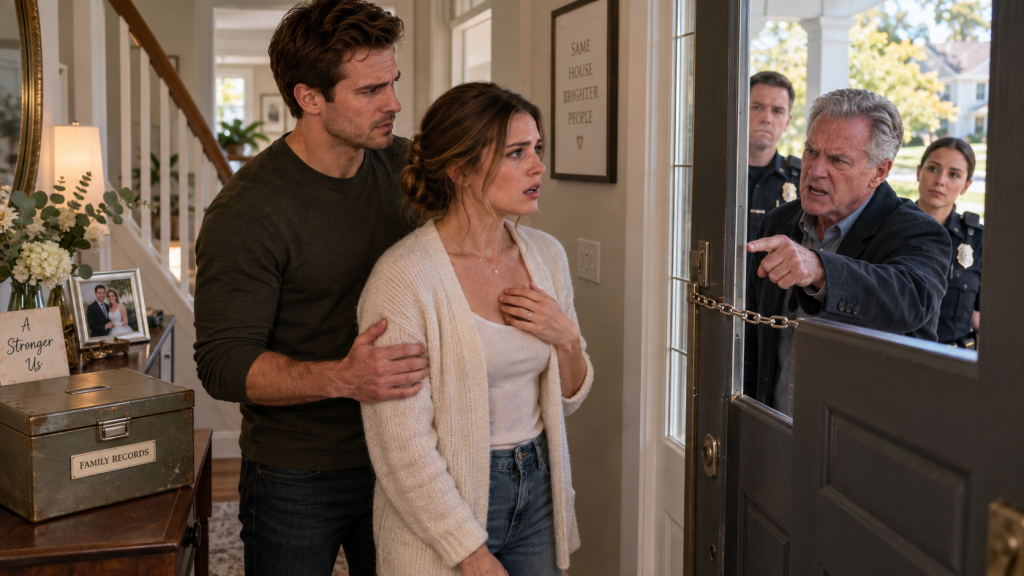
I stood in the little bridal room staring at my phone until the screen went dark in my hand, still half expecting it to light up with some last-minute apology. It never did. My husband, Aaron, found me there ten minutes before the ceremony, already dressed, already smiling for everyone else, but with mascara threatening to betray me. “You don’t have to pretend with me,” he said. That almost broke me more than their absence. I had spent my whole life pretending around my family. Pretending it didn’t hurt when my brother, Caleb, got praised for things I was punished for. Pretending I didn’t notice that my college graduation became an inconvenience while his promotion at work became a family celebration. Pretending I wasn’t always the one expected to help, forgive, contribute, understand, and stay quiet. Even my wedding had somehow become another test of whether I would accept being treated like an afterthought. Three weeks before the ceremony, Dad called to say Caleb had chosen the same weekend for his engagement party. “You understand,” he said. “Family needs to support him.” I remember staring at the invitation on my kitchen table and asking, “Am I not family?” There was a pause. Then Dad sighed the way he always did when I made my feelings inconvenient. “Don’t make this difficult.” So I stopped asking. I married Aaron beneath strings of white lights in the garden behind his parents’ house. His mother helped fasten my veil. His father walked me halfway down the aisle, then stopped and asked quietly if I wanted to finish alone. I did. I walked toward Aaron with my chin high and my heart in pieces, surrounded by people who had chosen to be there. Afterward, I cried in the bathroom for five minutes, washed my face, and went back out to dance. For the first time in my life, I understood that absence could also be an answer. Then, three weeks later, my father texted me at 8:14 on a Tuesday morning as though nothing had happened. No apology. No question about the wedding. No congratulations. Just: “We need $8,400 for your brother’s wedding. Your share.” I read it twice. Then a third time. Something inside me, something that had spent years bending itself into whatever shape my family needed, finally went still. Aaron was making coffee across the kitchen. “Everything okay?” he asked. I looked at him and laughed. Not because anything was funny, but because sometimes disbelief has nowhere else to go. “Dad wants eight thousand four hundred dollars for Caleb’s wedding.” Aaron stopped pouring. “After they skipped ours?” “Apparently.” I opened my banking app. For years, I had been the emergency wallet. Dad’s property tax shortage. Mom’s dental work. Caleb’s car repair. A cousin’s security deposit. Family, they always said, helps family. Funny how that rule only seemed to point in one direction. I entered the transfer details carefully. Amount: $1. Memo: Best wishes. Then I pressed send. Aaron stared at me for a second, then smiled. “That may be the best dollar you’ve ever spent.” “Not quite.” I set my phone down. “I need you to change every lock in this house.” His smile vanished. “Why?” I looked toward the hallway closet where a spare key used to hang. “Because Dad still has one.” Aaron didn’t question me. By noon, the locksmith had replaced the front and back locks, the garage code was changed, and the old spare keys were useless pieces of metal. I felt ridiculous at first. Dramatic, even. Then at 2:37 p.m., someone began pounding on the front door. Not knocking. Pounding. Aaron and I looked at each other. My stomach tightened before I even checked the camera. Dad stood on the porch. Behind him were two uniformed police officers. My blood went cold. “What the hell?” Aaron whispered. Dad saw the camera and pointed directly at it. “Open the door!” I didn’t move. One of the officers stepped closer and rang the bell. Aaron squeezed my hand. “Stay behind me.” We opened the door but left the chain secured. Dad immediately started shouting. “You changed the locks!” “Yes.” “You had no right!” I almost laughed again. “It’s my house.” One of the officers raised a hand. “Sir, let her speak.” Dad’s face reddened. “She’s keeping property that belongs to me.” I stared at him. “What property?” “Don’t play stupid.” The officer looked between us. “Your father says there are documents and valuables inside this residence that belong to him.” My pulse started hammering. “There aren’t.” Dad leaned toward the gap in the door. “Check the upstairs office.” Something in his voice changed everything. He wasn’t angry about the one-dollar transfer. He wasn’t even angry about the locks. He was afraid. I turned slowly toward Aaron. “The upstairs office?” Dad’s expression tightened, and that was when I remembered the old metal filing box he had asked me to store in our attic nearly two years earlier, saying his basement was too damp. I had forgotten it existed. The officer asked, “Do you have something belonging to him?” I swallowed. “Maybe.” Dad immediately said, “Give it to me now.” Too quickly. Far too quickly. I looked back at him. “What’s in the box?” His eyes flickered. “Family papers.” “What kind?” “None of your business.” The second officer spoke for the first time. “Sir, if the property is here, we can document the exchange.” Dad’s face went pale. “No.” Everyone went silent. The officer frowned. “No?” Dad looked at me with an expression I had never seen before. Fear. Real fear. “She should bring it out unopened.” And suddenly, for the first time in my life, I understood exactly why he had come with police behind him. Not to force his way into my house. To make sure I never looked inside that box.
PART 2 — THE BOX MY FATHER WAS AFRAID I WOULD OPEN
“She should bring it out unopened.”
My father said the word unopened too quickly.
Too sharply.
Like the metal box itself was harmless, but whatever happened when the lid came up might destroy him.
The officer nearest the door looked at Dad.
Then at me.
“Ma’am, do you know where the box is?”
“Yes.”
“Is it locked?”
“I think so.”
Dad immediately stepped forward.
“I have the key.”
The officer raised one hand.
“Sir.”
Dad stopped.
Barely.
I looked at him through the narrow opening created by the security chain.
For sixty-three years, my father had believed authority came naturally to him.
At dinner tables.
In family arguments.
In every conversation where Caleb wanted something and I was expected to understand.
But right then, standing on my porch beside two police officers, he did not look authoritative.
He looked scared.
I asked:
“If these are just family papers, why can’t I open it?”
His eyes hardened.
“Because they’re mine.”
“Then tell me what’s inside.”
“That is not your concern.”
“They’ve been in my attic for two years.”
“I asked you to store them.”
“Yes.”
“And now I’m asking for them back.”
“Unopened.”
His jaw tightened.
“Yes.”
The officer looked at me.
“We’re not here to conduct a search.”
“I understand.”
“This sounds like a property dispute.”
Dad interrupted.
“It isn’t a dispute. The box belongs to me.”
The second officer looked toward him.
“Then we can document that you retrieved your property.”
“No.”
Dad said it again.
Everyone went quiet.
He realized what he had done.
His voice softened.
“I mean, there’s no need to document the contents.”
Interesting.
Aaron squeezed my hand behind the door.
He knew too.
Dad was not worried about getting the box back.
He was worried about anybody seeing what was in it.
I unlatched the chain.
Aaron looked at me.
“Are you sure?”
“Yes.”
Dad immediately moved toward the doorway.
The first officer stepped in front of him.
“Sir, you remain outside unless the homeowner invites you in.”
Dad stared at him.
Then at me.
I almost smiled.
“No invitation.”
His face darkened.
I turned to Aaron.
“Come with me.”
We left Dad on the porch with the officers.
The attic stairs came down from the hallway ceiling with a familiar wooden groan.
Aaron climbed first.
I followed.
Dust hung in the flashlight beam.
Christmas ornaments.
Suitcases.
Boxes labeled COLLEGE.
A cracked lamp I had been promising to throw away for five years.
And behind a stack of winter blankets sat the metal filing box.
Gray.
Scratched.
Older than I remembered.
Dad’s initials were painted in black near the handle.
R.M.
Robert Morgan.
My father.
I stared at it.
Aaron crouched.
“You okay?”
“No.”
“Good answer.”
I laughed softly.
Then I saw something beneath the handle.
A faded white label.
Almost completely peeled away.
One word was still visible.
My name.
I stopped breathing.
“Aaron.”
He followed my eyes.
“That’s your name.”
“Yes.”
Not Dad’s.
Mine.
Written in my grandmother’s handwriting.
I knew those letters.
Nobody made the capital S in my name the way Grandma Evelyn did.
She used to write my birthday cards in blue fountain pen and underline the last sentence twice.
Never apologize for taking up room.
I had forgotten that.
I touched the label.
My fingertips started trembling.
“This was Grandma’s.”
“You’re sure?”
“Yes.”
Dad had told me the box contained old insurance documents from his basement.
He never mentioned Grandma.
Never mentioned my name.
Aaron picked it up.
Something shifted inside.
Paper.
Lots of it.
Then something metallic.
We carried it downstairs.
Dad saw the label before we reached the door.
His face went white.
Not pale.
White.
“Give me that.”
I placed the box on the entry table.
“What’s inside?”
“Open the door.”
“What is inside?”
“Enough.”
He slapped one palm against the outside of the door.
The officer stepped closer.
“Sir.”
Dad lowered his voice.
“She has no right to go through private documents.”
I stared at him.
“My name is on the box.”
“That means nothing.”
“Grandma wrote it.”
Silence.
There.
For the first time, Dad could not find a sentence quickly enough.
I looked at the officer.
“I want to identify whether any of this belongs to me before I hand it over.”
Dad exploded.
“No.”
The officer frowned.
Dad pointed at me.
“She’s doing this because she’s angry about her brother’s wedding.”
Aaron laughed once.
Dad glared.
Aaron said:
“You showed up with police three weeks after skipping ours because she sent you one dollar.”
“This is family business.”
Aaron’s face hardened.
“She is my family.”
Dad looked like he wanted to hit something.
For a second, I was twelve again.
Caleb had broken the garage window playing baseball.
Dad made me help clean it because I had “distracted him.”
I remembered holding broken glass in a dustpan while Caleb sat inside with lemonade.
The memory passed.
I looked at the box.
There was a small keyhole.
Dad had the key.
But Aaron turned the latch.
Click.
It wasn’t locked.
Dad stopped breathing.
I lifted the lid.
“Don’t.”
His voice changed.
No anger now.
Fear.
Pure fear.
I opened it anyway.
The first folder was blue.
My name was written across the tab.
The second was green.
CALEB MORGAN.
The third was thick.
Brown.
EVELYN MORGAN FAMILY TRUST.
I stared.
“What trust?”
Dad closed his eyes.
Aaron looked at me.
“You know about this?”
“No.”
I had never heard those words together in my life.
Grandma had died fourteen years earlier.
Dad told us her estate was simple.
A little savings.
Her car.
A few pieces of jewelry.
Most of the money, he said, had gone to end-of-life care.
Caleb received her watch.
I received a box of recipes.
I had been grateful.
God.
I had been grateful.
My hands shook as I opened the brown folder.
The first page was notarized.
THE EVELYN MARIE MORGAN IRREVOCABLE DESCENDANT TRUST.
Creation date:
Sixteen years earlier.
Grandma created it while she was still alive.
I skimmed.
Then stopped.
Initial funding:
$640,000.
My mouth went dry.
“Dad.”
He looked away.
“What is this?”
No answer.
I read farther.
Investments.
Land-sale proceeds.
An insurance settlement.
Beneficiaries.
My name.
Caleb’s.
I looked at Dad.
“You told me Grandma had no money.”
“I never said no money.”
“You said almost everything was spent before she died.”
“Some was.”
“Six hundred forty thousand dollars?”
His face hardened.
“You don’t understand the circumstances.”
I laughed.
That sentence.
The family anthem.
You don’t understand.
Usually what it meant was:
You know enough to be upset, but not enough for me to lose control.
Aaron leaned beside me.
“Keep reading.”
I did.
The trust was not divided equally.
I stared at the percentages.
Then checked again.
Seventy percent.
Me.
Thirty percent.
Caleb.
My stomach dropped.
Dad said quietly:
“That was the problem.”
I looked up.
“The problem?”
“Your grandmother was unfair.”
I could not believe him.
“She left me more.”
“Yes.”
“Why?”
He laughed without humor.
“You know how she was.”
“No.”
“Tell me.”
He folded his arms.
“She thought Caleb was irresponsible.”
My heart started beating harder.
“She thought you would need protection from the family.”
Silence.
Aaron turned slowly toward him.
I stared at Dad.
“From the family.”
He said nothing.
I looked back down.
There was a letter behind the trust agreement.
An envelope.
My name.
Grandma’s handwriting.
The seal had been broken.
Years ago.
My father had read it.
I knew before opening.
Dad suddenly said:
“You don’t need to read that.”
I almost smiled.
“Now I absolutely do.”
Inside was one sheet of cream-colored paper.
The blue fountain-pen handwriting was faded.
But unmistakable.
I read silently.
Then the words became impossible to keep inside my head.
So I read them aloud.
“My darling girl…”
Dad turned away.
Aaron stood beside me.
I continued.
“You have always been called responsible when what people often mean is convenient.”
My throat tightened.
The room blurred.
I kept going.
“Your brother will be loved loudly.”
“You may be loved through expectations.”
“Do not confuse being capable with owing everyone rescue.”
I stopped.
I could not breathe.
Grandma had seen it.
Before I had language for it.
Before college tuition.
Before Dad’s tax shortage.
Before Caleb’s car.
Before cousin Matthew’s security deposit.
Before eight thousand four hundred dollars for a wedding belonging to the brother whose engagement party had been considered more important than my marriage.
My grandmother had seen me becoming the emergency wallet before I had an adult bank account.
Aaron touched my back.
I continued reading.
“I have left you more because I have watched your parents compensate Caleb every time life asks something of him.”
“You will be told this arrangement is unfair.”
“It is not.”
“He will receive enough to begin.”
“You will receive what I intend for you.”
Then the sentence that made my father look at me again.
“If anyone tells you that being stronger means you should receive less, remember that strength is not consent.”
I lowered the letter.
Nobody spoke.
Even the officers outside seemed to understand that the argument had become something else.
I looked at Dad.
“You read this.”
He swallowed.
“Yes.”
“When?”
“After she died.”
“And then?”
His eyes hardened again.
“What do you want me to say?”
“The truth would be interesting.”
“She favored you.”
“No.”
I held up the letter.
“She knew you favored him.”
His face reddened.
“You think one dead woman understood our family better than I did?”
“I think she understood me.”
“You always were dramatic with her.”
I actually laughed.
“Dramatic.”
Of course.
Grandma leaving legal protection had become me being dramatic.
I opened my blue folder.
Statements.
Dozens.
Every year.
The trust had grown.
At one point, my share alone had exceeded $510,000.
My fingers went numb.
I had borrowed money during college.
Worked two jobs.
Skipped a semester abroad because I could not afford it.
Dad told me:
“Sometimes responsible adults sacrifice.”
Meanwhile, there had been half a million dollars with my name on it.
I turned another page.
Distribution.
$18,000.
Recipient account.
Caleb.
Another.
$32,500.
Caleb.
Another.
$11,800.
Dad.
Another.
$46,000.
A company I recognized as the contractor who remodeled my parents’ kitchen.
I stared.
Then another.
$27,000.
Vehicle purchase.
Caleb.
My breathing changed.
“No.”
I looked at Dad.
“Caleb’s truck.”
His face went still.
“You told me he bought it himself.”
“He made payments.”
“With whose down payment?”
No answer.
I found another distribution.
$14,200.
My parents’ property taxes.
Another.
$9,700.
Caleb’s MBA tuition.
Another.
$22,000.
Condo deposit.
Caleb.
Every family miracle suddenly had a source.
Caleb working hard.
Mom and Dad catching up.
A surprise renovation.
A better car.
The engagement ring everyone praised him for saving months to buy.
My share of Grandma’s trust had been quietly turning into everyone else’s accomplishments.
Aaron took the folder from me when my hands became too unsteady.
He read.
Then looked at Dad.
“How much did you take?”
Dad snapped:
“It wasn’t theft.”
The officer on the porch looked toward him.
Dad realized what he had said.
I stared.
“I didn’t ask if it was theft.”
Silence.
“I asked how much.”
Dad looked away.
“Family money moved between beneficiaries.”
“Seventy percent was mine.”
“You were young.”
“I’m thirty-three.”
“You weren’t thirty-three when this began.”
“When was I old enough to know?”
No answer.
“Twenty-five?”
Nothing.
“Thirty?”
Nothing.
“After I bought my own house?”
His eyes flickered.
I caught it.
“There.”
I whispered.
“What happened when I bought this house?”
Dad said:
“Nothing.”
I looked through the papers faster.
House.
House.
Mortgage.
Distribution.
Then I found it.
Four years earlier.
A document titled:
BENEFICIARY AUTHORIZATION FOR EXTRAORDINARY DISTRIBUTION.
Amount:
$186,000.
Purpose:
Equalization and family real-estate assistance.
Signature:
Mine.
My heart stopped.
“That isn’t my signature.”
Aaron looked.
Dad did not.
I knew my signature.
This looked close.
Very close.
But whoever made it gave the final letter too much flourish.
I had stopped doing that in college.
“Dad.”
No answer.
“I never signed this.”
Silence.
The officer moved closer to the doorway.
“Ma’am, are you alleging the signature is forged?”
Dad snapped:
“No one is alleging anything.”
I looked at him.
“I am.”
His face changed.
Then a woman’s name beneath the signature caught my eye.
Notary.
My mother.
I stopped breathing.
Mom had been a commissioned notary when she worked at the credit union.
I stared.
“No.”
Aaron leaned closer.
“What?”
I pointed.
My mother had notarized a signature I never made.
The betrayal changed shape.
Dad was no longer standing alone inside it.
“Mom knew.”
He said nothing.
“Mom knew.”
“She did what she thought was best.”
The words came automatically.
As though he had used them for years.
I felt sick.
“What was the $186,000 for?”
“Various things.”
“Which things?”
“Family.”
“Caleb.”
Silence.
I laughed.
“Of course.”
Dad finally exploded.
“He needed help!”
The officer raised a hand.
Dad ignored him.
“He was drowning!”
“And I wasn’t?”
“You always landed on your feet.”
There it was.
Grandma’s letter.
Being capable.
Being convenient.
Being punished for surviving.
Dad continued:
“You had a good job.”
“You bought a house.”
“You married Aaron.”
“You never needed what Caleb needed.”
My eyes filled.
“You made sure I didn’t.”
He froze.
I stepped closer.
“You took the thing Grandma left me so I wouldn’t have to spend my entire life rescuing everyone.”
My voice broke.
“And used it to make me rescue everyone.”
Dad stared.
For once, he had no answer.
I turned back to the papers.
Attached to the $186,000 authorization was an allocation schedule.
$62,000 to Caleb’s condo refinance.
$40,000 to my parents.
$21,000 to pay off one of Caleb’s credit cards.
$28,000 toward a business he tried to start and abandoned.
And $35,000 listed simply as:
Family reserve.
I looked at Dad.
“Where did that go?”
He looked away.
“Where?”
No answer.
Aaron spoke.
“Maybe we should stop handling this ourselves.”
Dad’s head snapped up.
“You stay out of it.”
Aaron’s voice was quiet.
“No.”
Dad stared.
“You have spent years telling her she has to stay inside family problems alone.”
He put his arm around me.
“She doesn’t.”
That nearly broke me.
The first officer asked whether I wanted to make a report regarding the disputed signature.
I looked at Mom’s notarization.
Then Dad.
Not yet.
Not because I wanted to protect them.
Because I had just realized the box contained hundreds of pages.
I did not know what I did not know.
“I want an attorney first.”
Dad scoffed.
“There.”
I looked at him.
“There what?”
“This is what I knew you’d do.”
“What?”
“Turn family into a legal matter.”
I almost laughed.
“You brought police to my house.”
That shut him up.
I removed Dad’s personal documents from the box.
Old insurance papers.
His birth certificate.
A military record.
A few property receipts.
I placed them inside a grocery bag.
“That’s yours.”
He stared at the metal box.
“And the rest?”
“Has my name on it.”
“It belongs to the trust.”
“Then the trustee can request it through my attorney.”
His face twisted.
“I am the trustee.”
Aaron flipped back to the trust agreement.
“No.”
Dad went still.
I looked at Aaron.
“What?”
He pointed to a paragraph near the end.
Successor provisions.
Dad had been named initial trustee.
Then, upon my thirtieth birthday, authority over my subtrust was supposed to transfer.
To me.
I read the sentence three times.
My pulse thudded in my ears.
“I became trustee at thirty.”
Aaron nodded.
“You’re thirty-three.”
I looked at Dad.
He said nothing.
Three years.
Three years during which he had continued moving money.
Signing.
Authorizing.
Keeping statements.
Pretending.
“How much has moved since I turned thirty?”
Dad looked away.
“How much?”
“I don’t know.”
I laughed.
“You came here with police because you don’t know?”
Silence.
My phone began ringing.
Mom.
I stared at her name.
Dad said:
“Answer it.”
“No.”
“She’s upset.”
“Good.”
The word surprised even me.
Dad looked wounded.
Funny.
Apparently, pain became unacceptable when it belonged to him.
My phone stopped.
Immediately rang again.
Caleb.
Then Mom.
Then an aunt.
Then Caleb.
For a family that had been completely unavailable on my wedding day, they had developed remarkable telephone skills.
I silenced the phone.
Dad looked at me.
“Your brother’s wedding is in six weeks.”
I stared.
“That is what you’re worried about?”
“Deposits have been paid.”
“With whose money?”
His mouth closed.
That answer was enough.
The $8,400.
My share.
Maybe it was not about whether I could afford it.
Maybe it was about keeping the old pattern alive one more time.
I looked at him.
“Did you use the trust for his wedding?”
Dad said nothing.
“How much?”
Nothing.
Aaron turned through statements near the back.
Then stopped.
“Oh.”
My stomach dropped.
“What?”
He handed me a page.
Transfer.
Two weeks earlier.
$24,000.
Vendor listed:
Rosewood Manor Events.
I recognized the venue.
Caleb’s wedding venue.
My family had skipped my wedding three weeks earlier.
Then used money from my grandmother’s trust to pay for my brother’s.
I started laughing.
I could not stop.
It came out too high.
Too sharp.
Then tears came with it.
Aaron took the paper.
“Hey.”
I covered my face.
All those empty chairs.
The bridal room.
My dark phone.
Aaron’s mother fastening my veil.
His father walking me halfway down the aisle.
My own father telling me family needed to support Caleb.
Meanwhile, Caleb’s celebration was still being funded from a source Grandma had left to protect me.
Absence could be an answer.
So could accounting.
I wiped my face.
Dad whispered:
“It wasn’t supposed to happen this way.”
I looked at him.
“How was it supposed to happen?”
“You were supposed to send the money.”
He stopped.
Too late.
I stared.
Dad’s face changed.
I understood.
“The $8,400.”
No answer.
“It wasn’t random.”
Silence.
“What was it for?”
His jaw clenched.
I looked at the $24,000 venue payment.
Then another invoice clipped behind it.
Outstanding balance.
$8,400.
I almost smiled.
Of course.
My “share” was not symbolic.
It was the final venue payment.
Caleb’s wedding had literally been waiting for me to finish paying for it.
Dad had expected one text.
One demand.
One transfer.
Because that was how our family worked.
I sent one dollar instead.
Then changed the locks.
And apparently, that tiny refusal frightened him enough to bring police to my house.
I looked at him.
“You were afraid I’d start asking questions.”
He said nothing.
“That’s why you came for the box.”
Silence.
“You thought if I refused $8,400, I might finally look at everything else.”
Dad’s face became tired.
Older.
For one tiny second, I almost felt sorry for him.
Then I looked at Grandma’s letter.
Strength is not consent.
The feeling passed.
The officers documented the return of Dad’s personal papers.
He left with the grocery bag.
Not the metal box.
Before walking down the porch steps, he turned.
“You’re going to destroy this family.”
I looked at him.
“No.”
My voice was quiet.
“I think I just found out who has been paying to keep it looking whole.”
He stared.
Then walked away.
That night, Aaron and I spread the contents of the box across the dining table.
We made piles.
Trust documents.
Statements.
Distributions.
Letters.
Tax records.
Signed authorizations.
I drank coffee until my hands shook harder.
At midnight, Aaron took the mug away.
“You need sleep.”
“I need numbers.”
“You need both.”
I laughed.
“I married a very irritating man.”
“So I’ve been told.”
That made me smile.
Then my phone buzzed.
A text from Caleb.
You happy now? Dad says you’re threatening everyone over Grandma’s money.
I stared.
Grandma’s money.
He knew.
I typed:
How long have you known there was a trust?
Three dots.
Gone.
Back.
Gone.
Then:
I knew she left something. I didn’t know details.
I replied:
Did you know my share paid your condo?
No answer.
Your truck?
Nothing.
Your MBA?
Nothing.
Then:
Your wedding venue?
The three dots appeared.
Finally:
Dad said it was family money.
There it was.
Family money.
Money becomes family money when the person it belongs to is me.
I typed:
Grandma disagreed.
Then I sent him a photograph of the page showing seventy percent.
His reply came two minutes later.
What the hell?
I stared.
That reaction seemed real.
Maybe Caleb knew less than Dad.
Maybe not.
I had spent too many years being told what to believe about him.
Now I wanted documents.
Not assumptions.
At 1:18 a.m., Aaron found a business card clipped behind the original trust agreement.
Margaret Sloan, Estate Counsel.
There was a phone number.
He looked at me.
“Think she’s still practicing?”
“At one in the morning?”
“Maybe not enthusiastically.”
Despite everything, I laughed.
We waited until eight.
I called at 8:01.
A receptionist answered.
Margaret Sloan was semi-retired.
Still with the firm.
I gave my name.
The receptionist went silent.
Then:
“Please hold.”
Thirty seconds later, an older woman came on the line.
“Is this Evelyn Morgan’s granddaughter?”
My skin prickled.
“Yes.”
There was a long pause.
Then:
“I have been hoping you would call for thirteen years.”
I stopped breathing.
Aaron looked at me.
“What?”
I put the phone on speaker.
Margaret continued.
“Your grandmother instructed me to contact you directly after your thirtieth birthday.”
My heart began pounding.
“You didn’t.”
“I tried.”
“What?”
“Letters were returned.”
“I never got letters.”
“Certified mail was signed for at your parents’ address.”
My stomach turned.
By Mom?
Dad?
Someone.
Margaret continued.
“Then I was sent a beneficiary instruction signed in your name requesting no direct contact.”
“That wasn’t me.”
Silence.
“I was afraid you would say that.”
Aaron leaned closer.
“Ms. Sloan, we found the original trust documents.”
“Where?”
“In a metal filing box her father stored in our attic.”
Another silence.
Then the woman said something strange.
“Metal?”
“Yes.”
“Gray box?”
“Yes.”
She inhaled.
“Does it have Evelyn’s handwriting on the label?”
My skin went cold.
“Yes.”
“Your name?”
“Yes.”
Margaret said nothing for several seconds.
Then:
“Do not let Robert take that box.”
“I’m not.”
“Do not remove any document.”
“I won’t.”
“And photograph everything before anyone else touches it.”
Aaron and I looked at each other.
“Why?”
Margaret exhaled slowly.
“Because your grandmother expected this possibility.”
I felt cold.
“What possibility?”
“That your father would try to redistribute the trust.”
I sat down.
“She knew?”
“She knew Robert.”
The simplicity of that sentence hurt.
Margaret continued.
“Evelyn amended the trust after a serious argument with him.”
“About Caleb?”
“Yes.”
“What happened?”
“Robert told her he intended to make sure both children ultimately received the same amount, regardless of her instructions.”
I closed my eyes.
Grandma had known exactly what would happen.
“What did she do?”
“She changed the structure.”
“How?”
Margaret hesitated.
Then said:
“The documents in your box are not the final trust documents.”
The room went completely silent.
I stared at the brown folder.
“What?”
“What you have is the earlier executed version.”
My mouth went dry.
“Then what is the final version?”
“I have it.”
Aaron sat down beside me.
“What changed?”
Margaret’s voice softened.
“A great deal.”
My pulse began racing.
“How much?”
“The seventy-thirty division was changed.”
I stopped.
“To what?”
She paused.
“Eighty-five percent to you.”
I stared at Aaron.
Fifteen to Caleb.
Dad had not merely taken from an unequal trust.
He had apparently hidden the version that gave me even more.
“Why?”
Margaret answered carefully.
“Because Evelyn became convinced your parents would spend your adulthood making you responsible for your brother.”
Tears filled my eyes again.
“She wrote a second letter too.”
I swallowed.
“To me?”
“Yes.”
“Do you have it?”
“Yes.”
I could barely speak.
“Why didn’t she put it in the box?”
“She did not trust Robert to leave it there.”
Of course.
I looked toward Grandma’s first letter.
Even in death, she had needed a backup plan.
Margaret continued:
“And there is something else.”
Every muscle in my body tightened.
“What?”
“The final trust created an independent asset that Robert was never supposed to control.”
Aaron frowned.
“What asset?”
Margaret went quiet.
Then asked:
“Do you remember your grandmother’s cottage near Willow Creek?”
I did.
Barely.
A white house with a green roof.
Apple trees.
A porch swing.
We stopped going after Grandma died.
Dad told me it had been sold to pay medical bills.
“Yes.”
“It was never sold.”
My heart stopped.
“What?”
“It was transferred into a separate holding trust.”
“Who owns it?”
Silence.
Then:
“You do.”
I could not breathe.
Aaron whispered:
“Oh my God.”
Margaret continued.
“The property was leased for years.”
My head spun.
“Where did the rent go?”
“That is one of the reasons we need to talk.”
“How much?”
“I don’t want to speculate before reviewing records.”
I pressed my fingertips against my forehead.
Dad had told me the cottage was gone.
Another lie.
Another asset.
Another piece of Grandma’s protection buried beneath the word family.
Margaret said:
“I need you and your attorney here today if possible.”
“I don’t have an attorney yet.”
“I can give you the names of independent counsel who had no role in administering the trust.”
“Okay.”
Then she paused.
“One more thing.”
I almost laughed.
“Of course.”
Her voice changed.
This time, even Aaron heard it.
“Your grandmother left a second container with my firm.”
My breathing stopped.
“What kind of container?”
“A small safe-deposit case.”
My entire body went cold.
“When am I supposed to get it?”
“Evelyn’s instructions were very specific.”
“What instructions?”
Margaret read from something.
“If Robert Morgan ever attempts to remove or conceal the family-trust records from my granddaughter…”
She paused.
“…release the case directly to her.”
I stared at the metal box on my dining table.
Dad pounding on my door.
Police behind him.
Unopened.
He had triggered Grandma’s final instruction without even knowing it.
I whispered:
“What is in the case?”
Margaret was silent.
“Ms. Sloan?”
“I know only part of it.”
“What part?”
“A recorded statement from your grandmother.”
My throat closed.
Grandma’s voice.
Fourteen years after her death.
Aaron reached for my hand.
“And the rest?”
Margaret hesitated.
Then said:
“Documents concerning your father.”
My pulse slowed.
“What documents?”
Another pause.
“Evelyn told me you would understand once you saw them.”
I looked down at the trust statements.
The forged authorizations.
Mom’s notarization.
Caleb’s wedding venue.
All those years of being called difficult for noticing unfairness.
All those years of being told I was stronger, luckier, more capable, less needy.
And somewhere across town, my dead grandmother had left a second box designed specifically for the day my father became desperate enough to take the first one back.
I asked Margaret:
“When can we come?”
Her answer was immediate.
“Now.”
I stood.
Aaron picked up his keys.
Then Margaret said:
“And there is one thing you should prepare yourself for before you hear Evelyn’s recording.”
I stopped.
“What?”
The woman inhaled slowly.
“Your grandmother did not believe the trust money was the reason your father treated Caleb differently.”
My hand went cold around the phone.
“What do you mean?”
“She believed the money came later.”
“Later than what?”
Silence.
Then:
“The original family secret.”
I could barely breathe.
“What secret?”
Margaret’s answer came quietly.
“The one your father made her promise never to tell you while she was alive.”
I stared at Aaron.
And suddenly the $8,400 request, the empty chairs at my wedding, the trust, even the forged signatures felt like pieces sitting around the edge of something much older.
Something my grandmother had carried all the way to her grave.
Margaret said:
“Come to my office.”
Then she added:
“And bring your marriage certificate.”
My heart stopped.
“Why?”
There was a pause.
When she answered, her voice was almost gentle.
“Because Evelyn said the truth was only to be released after you married.”
The call ended.
I stood in the middle of my kitchen holding the phone.
Three weeks earlier, nobody from my family had come to my wedding.
I had thought their absence was the final insult.
Now, staring at the metal box my father had tried to retrieve with police standing behind him, I began to wonder whether my wedding had not merely offended my family.
Maybe it had triggered something they had been terrified I would finally inherit.
And whatever Grandma Evelyn had been waiting until my marriage to tell me was sitting in a second locked case across town.
PART 3 — WHAT GRANDMA WAITED UNTIL MY WEDDING TO TELL ME
Margaret Sloan’s office was on the fourth floor of an old brick building downtown.
Aaron carried the metal box.
I carried my marriage certificate.
It felt absurd.
One document proving the beginning of my new family.
One box containing evidence that my old one had never been what I believed.
Margaret was waiting when we arrived.
She was probably in her seventies, small and silver-haired, dressed in navy blue with a fountain pen clipped neatly inside her jacket.
When she saw the metal box, she stopped moving.
“Oh, Evelyn.”
She whispered my grandmother’s name like an apology.
Then she looked at me.
“You have her eyes.”
I had heard that my entire life.
Dad always hated when relatives said it.
Until that moment, I never wondered why.
Margaret brought us into a conference room.
On the table was a narrow black case.
Two brass clasps.
A paper seal across the center.
My name was handwritten on it.
Again, Grandma’s writing.
My throat tightened.
Margaret took my marriage certificate.
Checked the names.
The date.
Then looked at me.
“I need to explain something before I open this.”
I nodded.
“Your grandmother’s instruction was unusual.”
“That seems to be a theme.”
Aaron almost smiled.
Margaret did too.
Then her expression softened.
“She did not believe a woman needs to be married before she can hear difficult truths.”
I blinked.
“She was very specific about that.”
Of course she was.
That sounded like Grandma.
“Then why wait?”
Margaret folded her hands.
“Because Evelyn believed that when you learned what was inside this case, you might feel as though the family you came from had been taken away.”
My stomach tightened.
“She wanted you to have built a family by choice first.”
Aaron’s hand found mine beneath the table.
Margaret continued.
“She told me, ‘I want her to hear the truth after she has stood beside someone who chose her freely.’”
My eyes filled immediately.
The bridal room flashed through my mind.
Dark phone screen.
Empty chairs.
Aaron standing in the doorway.
You don’t have to pretend with me.
I looked down.
“She knew?”
“Not about Aaron.”
Margaret smiled faintly.
“But she hoped there would be someone.”
My voice shook.
“And if I never married?”
“Then the case would have been released to you on your thirty-fifth birthday.”
I laughed through my tears.
“Grandma always had a backup plan.”
“Several.”
Margaret broke the paper seal.
Then opened the case.
Inside were four things.
A small digital recorder.
A thick envelope of legal documents.
A bundle of letters tied with blue ribbon.
And a photograph.
Margaret handed me the photograph first.
I stared.
My mother was in it.
Young.
Maybe twenty-two.
Long hair.
Bare feet.
Laughing.
Beside her stood a man I recognized immediately.
Not because I had ever met him.
Because he looked enough like my father to be family.
But softer.
Thinner.
Different around the eyes.
His hand rested over my mother’s stomach.
I stopped breathing.
“Who is he?”
Margaret did not answer.
Aaron looked at her.
She pointed toward the recorder.
“Evelyn wanted to tell you herself.”
My fingers trembled as I picked it up.
There was one file.
I pressed play.
Static.
Then Grandma’s voice filled the room.
Older than I remembered.
But unmistakably hers.
“My darling girl.”
I covered my mouth.
Fourteen years disappeared.
Suddenly I was seventeen again, sitting at Grandma’s kitchen table while she cut apple pie into pieces too large for the plates.
Her voice continued.
“If you are hearing this, then either you have married someone you chose, or Margaret has decided I have kept you waiting long enough.”
Aaron squeezed my hand.
A tiny laugh escaped me through tears.
Grandma continued.
“I am sorry that I was not brave enough to tell you this while I was alive.”
The laughter disappeared.
“I made a promise when you were a baby.”
A pause.
“I have regretted that promise for most of your life.”
My heart began pounding.
“The man you know as your father, Robert Morgan, is your father under the law.”
I froze.
Under the law.
Not biologically.
I knew before she said it.
Some truths arrive one second before the words.
“Robert is not the man who gave you life.”
The room went still.
I stared at the photograph.
My mother.
The other man.
Grandma’s voice softened.
“Your biological father was Robert’s younger brother.”
I stopped breathing.
“Thomas.”
Aaron whispered my name, but I barely heard him.
Thomas Morgan.
I knew the name.
Uncle Thomas.
Except we never called him Uncle Thomas because he had died before I was born.
There were two photographs of him at Grandma’s house.
A young man beside a motorcycle.
Another holding a fishing pole.
Dad almost never talked about him.
He said Thomas had been reckless.
Restless.
The brother who never grew up.
Grandma’s recording continued.
“Thomas and your mother, Diane, were going to be married.”
I closed my eyes.
“They loved each other very much.”
The words hurt in a place I had not known existed.
“Your mother was pregnant with you when Thomas was killed in a construction accident.”
Aaron’s thumb moved slowly over my knuckles.
“He never knew whether you were a boy or a girl.”
Grandma laughed softly on the recording.
“But he was convinced you were a girl.”
My tears fell onto the table.
“He wanted to name you after his grandmother.”
I whispered:
“What name?”
Margaret looked at me but said nothing.
Grandma answered from the recording.
“He wanted Sarah.”
I laughed through my tears.
My middle name was Sarah.
Mom had never explained why.
I bent forward.
For thirty-three years, a dead man had been hidden inside my own name.
Grandma continued.
“After Thomas died, Diane was devastated.”
“Robert helped her.”
“He helped all of us.”
“He was kind during a time when none of us were functioning very well.”
A pause.
“Eventually, he and Diane married.”
I looked at Margaret.
She slid one document toward me.
An adoption decree.
I was two years old.
Robert Morgan had legally adopted me.
My signature was obviously not involved.
Mom’s was.
Dad’s.
Grandma had signed as witness.
The recording continued.
“Robert agreed to raise you as his daughter.”
“At first, I believed he intended to do exactly that.”
That sentence chilled me.
“At first.”
Grandma’s voice changed.
“He loved you in his way.”
“But after Caleb was born, I began seeing differences.”
My throat closed.
“Small differences become large when repeated through childhood.”
I pressed my lips together.
She had seen.
Christmas mornings.
School plays.
Birthdays.
Caleb’s mistakes becoming funny stories.
Mine becoming character flaws.
His needs urgent.
Mine negotiable.
“I watched Robert excuse Caleb for things he punished you for.”
“I watched Diane stay quiet because she was terrified that challenging him would expose the secret.”
Mom.
My anger shifted.
Not softened.
Changed.
Grandma continued.
“I confronted Robert when you were twelve.”
My breath caught.
Twelve.
The year everything seemed to become worse.
The year Dad stopped attending my soccer games.
The year Caleb got a dirt bike after I was told we could not afford art camp.
“What happened?”
I whispered.
The recording answered.
“Robert told me Caleb was his responsibility because Caleb was his son.”
The room disappeared.
“And when I asked what that made you, he said something I never forgave.”
Grandma paused.
I could hear her breathing.
“He said, ‘I’ve already done more for Thomas’s child than anyone had a right to expect.’”
I broke.
Not elegantly.
Not quietly.
I put both hands over my face and sobbed.
Aaron moved his chair close and wrapped his arms around me.
For years, I had searched for the flaw in myself.
Too sensitive.
Too demanding.
Too independent.
Too successful.
Not grateful enough.
Always something.
Now the truth was almost worse.
I had been punished for being someone else’s child.
For carrying the face of a dead man into a home where my father had agreed to raise me but apparently never stopped keeping score.
Grandma’s voice continued beneath my crying.
“That was when I changed the trust.”
I lifted my head.
“The money I placed there came partly from my own assets and partly from proceeds connected to Thomas’s estate and the settlement after his death.”
My heart stopped.
Thomas’s estate.
“The settlement legally belonged in part to the child he left behind.”
Me.
Margaret pushed another document across the table.
Wrongful-death settlement.
Beneficiary allocation.
An unborn child listed.
I stared at it.
Grandma continued.
“Robert always believed I was favoring you.”
“He was wrong.”
“I was preserving what should have reached you in the first place.”
Everything shifted.
The eighty-five percent was not Grandma punishing Caleb.
It was not favoritism.
Much of that money had come into the family because my biological father died.
Dad had been spending it on Caleb as though redistribution could correct something he personally considered unfair.
I looked at Margaret.
“How much of the original trust came from Thomas?”
She checked a ledger.
“Just over four hundred thousand dollars.”
My stomach turned.
Four hundred thousand.
The truck.
The condo.
The MBA.
The kitchen.
The property taxes.
Caleb’s wedding venue.
All built partly from money connected to the death of a father I had never been allowed to know was mine.
Grandma’s recording continued.
“I told Robert I had protected your share.”
“He became furious.”
“He said family money should benefit the whole family.”
I laughed bitterly.
There it was.
Even then.
Family money.
“He threatened to tell you the truth in anger.”
“Then Diane begged both of us not to.”
Mom.
I looked at the photograph again.
Young Mom.
Thomas.
A hand over her stomach.
“She feared losing Robert.”
“She feared losing the home she had built.”
“And I was afraid the truth would reach you as a weapon rather than a gift.”
Grandma’s voice trembled.
“So I promised not to tell you while I lived.”
She paused.
“That promise was wrong.”
I stared at the recorder.
“I should have trusted you with your own life.”
That sentence hurt more than almost anything else.
Because it was the apology everyone else should have given me years ago.
“You were never less entitled to the truth because the adults around you were frightened of it.”
I closed my eyes.
Aaron rested his forehead briefly against my temple.
Grandma continued.
“If Robert has treated you as though you owe the family more because you are capable, remember this.”
“You do not owe anyone repayment for being raised.”
My breath caught.
“Children are not debts.”
“Love is not an invoice.”
“And adoption is not a loan a parent gets to collect later.”
I cried harder.
Margaret looked away to give me privacy.
The recording continued.
“If Caleb has received more affection from Robert, do not hate your brother for that alone.”
“Children learn the family structure they are handed.”
“Judge him by what he does once he understands it.”
That sentence would matter later.
I did not know how much.
Then Grandma’s voice softened again.
“As for the cottage…”
I laughed through tears.
Of course.
“The Willow Creek house belonged partly to Thomas.”
“He helped me restore it when he was twenty.”
“He planted the first apple tree.”
I pressed my fingers against my mouth.
“I placed the cottage in your holding trust because I wanted there to be one place connected to your father that Robert could not turn into somebody else’s rescue.”
My heart broke open.
Not painfully this time.
Differently.
“Go there someday.”
“Sit on the porch.”
“Be angry with me if you need to.”
“I probably deserve some of it.”
I laughed.
Grandma would say that.
“And when you are ready, know this.”
“You were wanted before you were born.”
I stopped breathing.
“Thomas wanted you.”
“Diane wanted you.”
“I wanted you.”
“Robert’s failures do not get to rewrite that.”
Then came the final sentence.
“I hope by the time you hear this, you also understand that family is not merely the people whose names explain where you came from.”
“It is the people who make room for who you become.”
The recording ended.
Nobody spoke.
For a long time, I stared at the black recorder.
Then Aaron kissed my forehead.
I whispered:
“My father died before I was born.”
“Yes.”
He held me tighter.
“And the man who raised me resented me for it.”
Aaron did not give me a comforting lie.
He simply said:
“Sometimes.”
That honesty mattered.
Because Robert had not been cruel every day.
He taught me to ride a bicycle.
Took me for ice cream after I got braces.
Sat beside my hospital bed when I had appendicitis.
Life would have been easier if he had been a monster from beginning to end.
He wasn’t.
He was a man capable of love who allowed resentment to corrupt it.
That was harder.
And more real.
The bundle of letters belonged to Thomas.
Letters to Mom.
Letters to Grandma.
One unfinished note written after he learned Mom was pregnant.
He had written:
If it’s a girl, tell her I’m already outnumbered and delighted about it.
I cried until my head hurt.
We spent three hours in Margaret’s office.
By the end, I knew two things.
The trust had been mishandled badly.
And my father knew exactly what he had been doing.
The final trust named me trustee at thirty.
Margaret’s firm had sent notice.
Dad signed for two certified letters.
Mom signed for another.
Then somebody sent back a beneficiary instruction carrying a forged version of my signature.
The firm should have investigated harder.
Margaret admitted that.
Her voice shook when she apologized.
“We accepted a document we should have challenged.”
I looked at her.
“Are you going to help fix it?”
“Yes.”
“Then start there.”
That afternoon, I hired independent counsel.
A forensic accountant followed.
The numbers took months.
The truth took less time.
Mom came to my house three days later.
Alone.
She stood on the porch without trying the old key.
That mattered more than it should have.
I opened the door but did not invite her inside.
She looked at me.
“You know.”
“Yes.”
Her face collapsed.
“Everything?”
“Enough.”
I held up the photograph of her and Thomas.
She touched her mouth.
Then cried.
“I loved him.”
“I know.”
“He would have loved you.”
“I know.”
She looked surprised.
That was the first gift Grandma’s recording gave me.
I did not need Mom to tell me whether I had been wanted.
“Why didn’t you tell me?”
She cried harder.
“At first, because you were little.”
“Then because Robert asked me not to.”
“Then because Caleb came.”
“Then because every year made the lie bigger.”
I stared at her.
“And eventually the lie became easier than me.”
She shook her head.
“No.”
“Yes.”
My voice cracked.
“You let me spend thirty-three years thinking Dad’s favoritism was something I caused.”
“I know.”
“You watched him use money Thomas left behind for Caleb.”
Her eyes dropped.
“I know.”
“You notarized my forged signature.”
She covered her face.
“I know.”
There would be no magic answer.
No reason noble enough to survive those facts.
I asked:
“Why?”
She whispered:
“I was afraid of losing my marriage.”
I nodded.
“At least that’s true.”
She looked at me.
I continued.
“You protected your marriage by letting me finance everybody’s peace.”
She cried.
“Yes.”
I did not hug her.
Not then.
Some apologies should be allowed to stand without immediately receiving comfort.
Before leaving, Mom said:
“Robert loves you.”
I looked at her.
“That isn’t the question anymore.”
She nodded slowly.
For once, she understood.
Dad did not apologize for another four months.
First, he denied.
Then minimized.
Then blamed Grandma.
Then called the trust unfair.
Then said raising another man’s child had cost him things no one appreciated.
That was the sentence that finally killed something between us.
I told him:
“You adopted a two-year-old.”
“You were not doing me a favor I was old enough to bargain for.”
Silence.
“You signed up to be my father.”
“You don’t get to invoice me thirty years later because you regretted the terms.”
He had no answer.
The forensic audit found that $427,000 had been improperly distributed from my trust interest over fourteen years.
Another $96,000 in rental proceeds from Willow Creek had been routed into accounts controlled by my parents.
Some money was gone.
Some could be traced.
Some had become real estate equity.
Dad and Mom eventually signed a civil restitution agreement.
They sold the renovated house.
That hurt them.
I did not enjoy it.
But I did not rescue them either.
That distinction became one of the hardest things I ever learned.
Dad also faced charges connected to forged financial documents.
Mom cooperated and admitted the false notarizations.
There were legal consequences.
Probation.
Restitution.
Professional restrictions for Mom.
No dramatic prison sentence.
Just years of payments and the public humiliation of admitting that what they had called family help was not theirs to give.
Caleb surprised me.
Not immediately.
At first, he was defensive.
He called.
“I didn’t forge anything.”
“I know.”
“I didn’t know the percentages.”
“I believe you.”
“Then why are you acting like I stole from you?”
I said:
“Because once you know, what you do next matters.”
Grandma’s words.
Judge him by what he does once he understands it.
Caleb went quiet.
Two days later, he came to my house.
Aaron stayed in the kitchen.
Close enough if I needed him.
Far enough to let Caleb speak.
My brother looked terrible.
He placed a cashier’s check on the table.
$24,000.
I stared.
“What is this?”
“The venue money.”
My throat tightened.
“You canceled?”
“Moved it.”
“To where?”
“A park lodge.”
Despite myself, I laughed.
“Your fiancée agreed to that?”
Caleb smiled weakly.
“Maya was the one who told me we weren’t getting married in a ballroom paid for with money stolen from my sister.”
I liked Maya immediately.
Caleb looked down.
“I thought Dad meant family money.”
“I know.”
“I never asked whose.”
“That mattered too.”
He nodded.
“I know.”
There was no instant hug.
No complete forgiveness.
But he paid back what he could.
Sold the truck he no longer needed.
Set up monthly restitution directly into the trust recovery account.
It took years.
Not because I demanded every dollar.
Because he did.
At his wedding six months later, I attended.
So did Aaron.
Mom and Dad sat three rows away.
Not with me.
Caleb asked me to give a reading during the ceremony.
I almost said no.
Then he showed me the passage he wanted.
It was from Grandma’s letter.
Not the private parts.
Just one sentence.
Strength is not consent.
I stood before seventy people and read it without crying.
Almost.
Afterward, Caleb hugged me.
“I’m sorry I let being favored feel normal.”
That was the apology I had been waiting for without knowing it.
Not:
Sorry Dad did this.
Not:
Sorry you’re upset.
Sorry I let it feel normal.
I hugged him back.
The extended family was harder.
Some apologized.
Some defended themselves.
“We didn’t want to choose sides.”
“You did.”
“Your father said Caleb needed support.”
“So did I.”
“We thought you would understand.”
“I did.”
That answer confused them.
I understood perfectly.
And understanding did not require allowing the same behavior again.
A few relatives returned to my life.
Many did not.
I stopped treating shared blood like a lifetime subscription.
The Willow Creek cottage became mine without dispute once the holding documents were verified.
Aaron and I drove there the following spring.
The white paint had faded.
The green roof needed work.
The porch leaned slightly.
But the apple tree still stood.
Huge now.
Branches spreading over half the yard.
I walked toward it and placed my hand against the bark.
Thomas planted this.
My father.
Not the man who raised me.
The man who never got the chance.
I cried beneath that tree for a long time.
Aaron did not interrupt.
Eventually, I sat on the porch swing.
It creaked.
I laughed.
“Grandma told me to sit here.”
Aaron sat beside me.
“So naturally you waited six months.”
“She knew I was stubborn.”
We stayed until sunset.
Before leaving, I found initials carved faintly beneath the porch railing.
T.M.
Thomas Morgan.
Twenty-something years old.
Alive.
Probably holding a pocketknife.
Probably never imagining his daughter would find those letters decades later.
I touched them.
Then whispered:
“Hi.”
That was all.
Enough.
Aaron and I kept the cottage.
We fixed the roof.
Painted the walls.
Left the porch swing exactly where it was.
On our fifth wedding anniversary, we invited the people who had shown up for us.
His parents.
Caleb and Maya.
Laura from work.
Margaret, who came for an hour and brought apple pie.
Mom was invited too.
Dad was not.
Not yet.
Maybe never.
That was okay.
The dinner was simple.
Long wooden table under the apple tree.
String lights.
Exactly like our wedding.
At one point, Aaron’s father raised his glass.
“To five years.”
Everyone cheered.
I looked around the table.
No empty chair hurt.
That was when I understood something.
For years, I said:
Nobody from my family came to my wedding.
It was true in one sense.
My father was absent.
My mother.
My brother.
The aunts.
The cousins.
The uncles.
But I had been using the wrong definition of family.
Aaron came.
His mother fastened my veil.
His father walked me halfway down the aisle and respected me enough to stop when I said I wanted to finish alone.
Friends came.
People danced.
People stayed.
People chose me.
The chairs had not been empty of family.
They had been empty of relatives.
There is a difference.
I still have the screenshot of Dad’s $8,400 request.
Under it:
Transfer: $1.00
Memo: Best wishes.
Aaron still calls it the best dollar I ever spent.
He may be right.
That dollar did not punish anybody.
It interrupted a pattern.
It was the first time my family asked:
How much can we take?
And I answered:
Not this time.
One dollar.
Then new locks.
Then a metal box.
Then Grandma’s voice.
Then the truth.
Funny how a life can change because one person finally refuses the amount everyone assumed she would pay.
Sometimes I think about Dad standing on the porch with two police officers behind him.
So desperate to recover a box he believed would preserve the story he had spent decades controlling.
He thought if I never opened it, he could remain my father in the only way he understood fatherhood.
Authority.
Obligation.
Debt.
He was wrong.
Opening the box did not erase the years he raised me.
It simply ended his right to define what those years meant.
Robert was my legal father.
Thomas was my biological father.
Aaron became my husband.
Grandma Evelyn was the person who saw me most clearly before I knew how badly I needed to be seen.
All of those things can be true at once.
Families are complicated that way.
But love becomes much simpler when you stop confusing it with obligation.
Years later, I keep Grandma’s first letter in my desk.
The second one is framed at Willow Creek.
And whenever I begin slipping back into old habits—
Helping before being asked.
Paying before questioning.
Forgiving before anyone apologizes.
Making myself smaller because someone else has needs—
I remember the line she left me twice.
Once on paper.
Once in her own voice.
Strength is not consent.
I finally understand it.
Being capable does not mean everyone gets access to me.
Being generous does not mean everyone gets my money.
Being forgiving does not mean everyone gets another chance.
Being family does not mean someone gets to hurt me and call the damage love.
And being strong never meant I had to stand alone.
On our wedding day, I walked the final half of the aisle by myself because I thought nobody from my family had come to walk beside me.
Now, years later, I see that moment differently.
I was not walking away from a family that had abandoned me.
I was walking toward one that had already made room.
Aaron was waiting at the end.
And for once in my life, nobody there needed me to pay for the privilege of belonging.
THE END STORIES! THANK YOU FOR READING GOOD LUCK !❤️
Related Posts