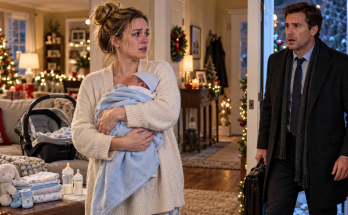
After 6 years working abroad, I came home to surprise my mom in the $600k house I bought her. My sister’s husband answered the door: “The maid is out back.” The maid was my mom. But I still held the deed. So by 9 pm, I had changed every lock, every emergency contact, every line of…

Julian looked me up and down from the doorway like I had taken a wrong turn.
I had just flown home from Dubai after six years overseas. I was tired, dusty from travel, and standing on the porch of the $600,000 Austin house I had bought for my mother.
He did not recognize me.
“Can I help you?” he asked, holding a glass of scotch. His silk robe hung open at the collar. “We don’t buy anything at the door.”
“I’m here to see Martha.”
His mouth curled into a dry smile.
“If you’re here to clean, the maid is out back.”
For a second, I thought I had heard him wrong.
Then he added, “Make it quick. We have guests coming at seven.”
And he shut the heavy front door in my face.
I stood there without moving.
The words stayed in my head.
The maid is out back.
I walked around the side of the house toward the backyard.
Then I saw her.
My 62-year-old mother was on her knees on the hot stone patio with a bucket of soapy water beside her. She wore oversized old clothes, and both hands were red from scrubbing grease off the outdoor kitchen counters.
“Mom.”
She stopped.
The brush slipped from her fingers into the bucket.
“Natalie?”
She tried to stand, but her knees gave slightly. I crossed the patio and caught her.
“My baby,” she whispered. “You’re home.”
I held her, then looked at her knees, her hands, and the clothes hanging loosely from her thinner frame.
“What is happening here?”
She lowered her eyes.
“Why are you cleaning like this?” I asked. “Why did Julian call you the maid?”
That was when she started crying.
Two years earlier, while I was still finishing my overseas contract, I had bought this house in cash so she would never have to work again. I also sent her $3,000 every month for utilities, groceries, and comfort.
Khloe and Julian were supposed to stay in the guest suite for a couple of weeks.
They never left.
My mother told me they had moved into the master bedroom, taken over the house, and pressured her into handing over the cards connected to her monthly allowance.
Whenever I called from overseas, she smiled into the camera and told me everything was fine.
“Why didn’t you tell me?”
She wiped her face with her wrist.
“They said if I bothered you, you might sell the house. They said I would have nowhere to go.”
“I just wanted to keep the family together,” she said.
I picked up the scrub brush and tossed it into the yard.
“You are never kneeling here again.”
My voice was quiet enough that she looked at me differently.
Then I took her hand and walked through the patio doors.
Khloe was stretched across the living-room sofa with her phone. Julian stood near the bar pouring another drink.
Khloe looked up first.
Her face changed immediately.
“Natalie?”
Julian froze.
“What are you doing here?” Khloe asked. “You said you weren’t coming back until next month.”
Julian’s eyes moved from her to me.
Then recognition hit him.
“Wait. You’re the sister from Dubai?”
I stepped farther into the room.
“I’m the owner of this house.”
Nobody spoke.
“And I just heard you call my mother the maid.”
Julian gave a nervous laugh and adjusted his robe.
“You’re taking that out of context.”
“Am I?”
“It was a joke. Your mother likes staying busy. It gives her purpose.”
I looked at him.
“You have thirty minutes to pack your clothes and leave.”
Khloe shot off the couch.
“You can’t do that.”
“I just did.”
“We’ve lived here for two years,” she snapped. “Mom let us stay. This is our home too.”
Julian moved beside her, suddenly more confident.
“She’s right,” he said. “Texas law protects established residents. You can’t just show up after six years and throw people out without notice.”
He took a slow sip.
“So why don’t you calm down, get a hotel, and we’ll discuss this tomorrow like adults?”
My mother’s fingers tightened around mine.
Julian mistook my silence for hesitation.
He smiled.
That was his mistake.
I looked at my watch.
4:30 p.m.
“You think you’re tenants?” I asked.
Khloe folded her arms.
Julian shrugged.
I nodded once.
“Then let’s see what the law says by nine tonight.”
I took my mother upstairs only long enough to collect the few belongings they had pushed into the small room near the garage.
Then we left.
Five miles away, I checked her into a quiet hotel suite, ordered her a hot meal, and arranged for a nurse to look at her knees.
When she was resting, I stepped into the hallway and made one phone call.
Harrison Vance had handled my domestic assets while I worked overseas.
I told him everything.
He asked me only two questions.
“Did you ever sign a lease with them?”
“No.”
“Did they ever pay you rent?”
“Not one dollar.”
There was a pause.
Then Harrison’s voice changed.
“Natalie, do not argue with them again. Send me everything you have on the property.”
I opened my laptop.
The deed. Property records. Tax records. Utility accounts. Bank transfers.
Every document I had kept while Julian was standing in my living room acting as if I needed his permission to enter.
By early evening, Harrison called back.
I listened without interrupting.
Then I looked through the hotel window at the fading Texas light.
“What do you need from me?” I asked.
“Nothing else,” he said. “Just be there at nine.”
At 8:45 p.m., I turned onto my street.
The house was glowing.
Cars lined the curb. Music came from inside. Through the front windows, I could see Julian and Khloe entertaining guests as if nothing had happened.
Then headlights appeared behind me.
One vehicle.
Then another.
Then a third.
I parked across from the driveway and checked the time.
8:59.
The front door opened.
Julian stepped outside with his drink still in his hand, wearing the same robe and the same smug expression.
Then he saw what had pulled in behind me.
His smile disappeared.
PART 2 — THE PAPERS THEY WERE BUILDING AROUND MY MOTHER
At exactly 9:00 p.m., three vehicles stopped behind mine.
Julian’s smile disappeared.
The first belonged to Harrison Vance.
The second belonged to a licensed process server.
The third was an unmarked SUV carrying two private security officers Harrison had arranged as a civil standby.
No sirens.
No dramatic police raid.
No sheriff arriving to drag my sister and her husband onto the sidewalk.
Real law is rarely that convenient.
Julian had been right about one thing earlier that afternoon.
They had lived in the house for two years.
Whatever I thought of them, I could not simply throw their clothes onto the lawn, change the locks while they were inside, and call it justice.
Harrison had explained that very clearly.
“If they refuse to leave voluntarily,” he told me, “we use the proper process.”
I hated hearing that.
Then I understood why it mattered.
If Julian and Khloe had spent two years convincing my mother that they could rewrite reality simply by acting entitled long enough, I was not going to answer by deciding that ownership allowed me to ignore rules too.
The deed gave me rights.
It did not make me law.
So the vehicles behind me were not there to perform an eviction.
They were there because by nine o’clock, this had become about much more than who slept in which bedroom.
Julian stood barefoot on the front walk.
His glass of scotch was still in his hand.
Behind him, music floated through the open door.
Someone laughed from inside.
A woman in a red dress stepped into the foyer, saw Harrison getting out of his sedan carrying a leather folder, and quickly stepped backward.
Julian looked at me.
Then at Harrison.
Then at the process server.
“What is this?”
I got out of my car.
“Exactly what you asked for.”
His face tightened.
“What?”
“You told me to see what the law says.”
I closed the door.
“So I did.”
Harrison approached.
Gray suit.
No theatrics.
“Mr. Mercer?”
Julian stared.
“Who are you?”
“Harrison Vance. I represent Natalie.”
He handed Julian his card.
Julian did not take it.
Harrison simply held it until Julian finally did.
Then Harrison said:
“Before anything else happens, I want to make the boundaries tonight very clear.”
He looked toward me briefly.
“No one is physically removing you from the property tonight.”
Julian’s confidence returned almost instantly.
I could see it.
He smiled.
“I told her.”
Harrison continued as though Julian had not spoken.
“You are, however, being formally notified that the owner has revoked permission for your continued occupancy and will pursue possession through the appropriate legal process if necessary.”
The process server stepped forward.
Julian’s smile weakened.
Harrison added:
“You are also receiving separate written notice regarding property preservation, financial records, and the use of accounts belonging to Martha Reyes or Natalie Reyes.”
That changed everything.
Julian’s hand stopped halfway toward his mouth.
“What accounts?”
he asked.
Too quickly.
I noticed.
So did Harrison.
“Those are addressed in the letter.”
Julian looked at me.
“What did your mother tell you?”
Interesting question.
Not:
What are you talking about?
What did she tell you?
I said nothing.
Harrison did.
“We are not conducting a driveway argument.”
Then he looked toward the house.
“Are these your guests?”
Julian’s jaw tightened.
“Yes.”
“Then I recommend you tell them there is a private family and legal matter underway.”
“I’m not ending my party.”
“You don’t have to.”
Harrison’s voice remained maddeningly calm.
“But your guests may want to make their own decisions about whether they remain.”
Apparently they did.
Because within ten minutes, people began leaving.
Not because I ordered them out.
Because nothing kills a cocktail party faster than a process server standing beside the host.
One couple walked past me without making eye contact.
Another whispered:
“Hope everything works out.”
I almost laughed.
People say that when they are deeply grateful the problem belongs to someone else.
Khloe finally appeared in the doorway.
She had changed clothes since I left.
White dress.
Gold earrings I recognized.
They had belonged to Mom.
I stared.
Khloe noticed.
Her hand went instinctively to one earring.
That tiny movement told me everything.
“Take those off.”
I said.
Her face hardened.
“Excuse me?”
“Those are Mom’s.”
“She gave them to me.”
Behind her, Julian said:
“Khloe, don’t engage.”
I looked at him.
“Did he teach you that phrase tonight?”
Khloe’s eyes flashed.
“I am your sister.”
“Yes.”
“And somehow that became your favorite defense against acting like one.”
Her face fell.
Good.
Then Harrison stepped between the emotion and the legal problem.
“Natalie.”
I stopped.
He looked at Khloe.
“Ms. Mercer, the notices are for both of you.”
The process server handed her copies.
She stared at the pages.
Then:
“This is ridiculous.”
Maybe.
But she read them.
I went back to the hotel instead of staying.
That surprised Julian.
Probably Khloe too.
They expected me to sit outside the house like a victorious owner waiting to watch their humiliation.
I had better things to do.
Mom was upstairs in a hotel bed with both knees elevated.
A nurse had checked the swelling.
No acute injury.
But her skin was irritated.
Her blood pressure was high.
And she was exhausted in a way no sixty-two-year-old should look while living in a house bought specifically so she would never have to exhaust herself again.
When I walked in, she looked frightened.
“Did they leave?”
“Not yet.”
Her face fell.
I sat beside her.
“Mom, listen to me.”
She looked at me.
“We are doing this properly.”
“But the house is yours.”
“Yes.”
“And they’re treating you—”
“I know.”
She started crying.
“Then why can’t you just make them go?”
Because fear wants instant solutions.
I understood.
“I can require them to leave.”
“But if they refuse, there’s a process.”
“That does not mean they own anything.”
“It does not mean I’m changing my mind.”
“It means I’m not giving Julian the satisfaction of turning my anger into his legal argument.”
Mom wiped her face.
Then whispered:
“I should have told you.”
I looked at her red hands.
“Yes.”
She flinched.
I immediately reached for her.
“But we are not spending tonight punishing you for being afraid.”
That mattered too.
She leaned against me.
For a moment, she felt much smaller than the woman who raised me.
At 9:46, Harrison called.
“Where are you?”
“With Mom.”
“Good.”
His tone had changed.
“What?”
“Did your mother ever give Khloe power of attorney?”
My entire body went still.
“No.”
I looked at Mom.
“Did you?”
She froze.
That was answer enough.
“Mom?”
Her face went pale.
“What kind of power of attorney?”
I asked Harrison.
“Durable financial.”
I stood.
“Mom.”
She looked terrified.
“They told me it was in case something happened.”
“When?”
“Last year.”
My chest tightened.
“What did you think you were signing?”
“Emergency paperwork.”
“What emergency?”
“If I fell.”
“If I got sick.”
“Khloe said somebody local needed to be able to help.”
That, by itself, was not absurd.
I had been thousands of miles away.
A local agent can make sense.
The problem was what happened around it.
“Harrison.”
I said into the phone.
“Where did you find out?”
“The notice prompted Julian to call his lawyer.”
“His lawyer sent over copies of documents Julian says prove Khloe had authority to manage Martha’s finances.”
My stomach turned.
“Is it valid?”
“Potentially.”
“Signed.”
“Notarized.”
“Broad.”
I looked at Mom.
She was crying now.
“What did she authorize?”
I asked.
Harrison replied:
“Banking.”
“Benefits.”
“Contracts.”
“Real property belonging to Martha.”
“Insurance.”
“Claims.”
“Routine financial management.”
Then:
“It does not give them rights over your house because Martha does not own your house.”
Good.
At least one wall remained where it belonged.
“But it does explain how they may have obtained access to more than the allowance card.”
I closed my eyes.
“What do we do?”
“Your mother is competent?”
“Yes.”
Mom heard.
“I am.”
she said loudly.
Harrison continued.
“Then if she wants it revoked, we revoke it.”
Mom immediately said:
“Yes.”
Not hesitation.
Not confusion.
“Yes.”
That was the first decision she made for herself all day.
I looked at her.
“Are you sure?”
“Yes.”
“Mom, this is yours to decide.”
“I said yes.”
Good.
I handed her the phone.
Harrison explained everything to her.
Slowly.
No legal jargon he did not define.
Mom listened.
Asked questions.
More than I expected.
When he finished, she said:
“I want Natalie.”
I closed my eyes.
Not because I wanted control.
Because I wanted her choice to be voluntary.
Harrison asked:
“As your new financial agent?”
“Yes.”
Then Mom looked at me.
“If she’ll do it.”
I sat.
“Temporarily.”
Her face tightened.
“What?”
“Until we get you independent advice.”
I could hear Harrison inhale.
He approved.
I continued.
“I’m your daughter.”
“I own your house.”
“I send you money.”
“I don’t want you signing everything over to me tonight because you’re scared.”
Mom began crying.
“I trust you.”
“I know.”
“That is exactly why we should do it correctly.”
She stared.
Then nodded.
That may have been the first healthy use of trust in this family all day.
A mobile notary came to the hotel.
Not to transfer the house.
Not to give me everything.
To document Martha’s revocation of Khloe’s financial power of attorney.
Then Harrison prepared notices to the relevant institutions.
Bank.
Retirement administrator.
Insurance.
Doctors.
Pharmacy.
Anyone who had received the old authorization would be told it was revoked.
Some updates would take a business day.
Some longer.
Nothing magical.
But the process had begun.
At 10:38 p.m., Mom removed Khloe as her emergency contact from her primary clinic’s online portal.
She added me.
Then stopped.
Looked at the screen.
And cried.
“What?”
I asked.
She pointed.
The portal listed:
Primary Emergency Contact: KHLOE MERCER — DAUGHTER / CAREGIVER
Caregiver.
My mother stared at the word.
“I never told them she was my caregiver.”
I felt something cold move through me.
“Who did?”
Mom shook her head.
“I don’t know.”
We checked another account.
Her pharmacy.
Khloe.
Then her dental office.
Khloe.
Then the orthopedic clinic.
Khloe and Julian.
My number was nowhere.
Six years overseas had not erased me from Mom’s life.
Someone else had done that manually.
“Did you ask them to remove me?”
“No.”
“Did you ever tell anyone I was estranged?”
Mom’s face changed.
“No.”
I believed her.
Then she whispered:
“Khloe always filled out the forms.”
There it was.
The word caregiver had not appeared accidentally.
At 11:07, Harrison called again.
“We need an accounting.”
“Of what?”
“Everything that went through Martha’s accounts for the last two years.”
Mom looked sick.
I asked:
“How bad?”
“I don’t know yet.”
That frightened me more than a number.
He continued.
“Your three-thousand-dollar monthly transfers landed in the same account they’ve been using for household spending?”
“Yes.”
“Did Martha have Social Security or retirement income separately?”
Mom answered from beside me.
“About twenty-three hundred a month total.”
Harrison heard.
“So roughly five thousand three hundred dollars a month was flowing into accounts available for her living expenses.”
“Yes.”
“That is more than one hundred twenty thousand over two years before we count any existing savings.”
My stomach tightened.
Mom had lived in a house with no mortgage.
I paid property taxes.
Insurance.
Major maintenance.
Where had one hundred twenty thousand dollars gone?
I looked at her oversized shirt.
Her thin arms.
The red skin on her hands.
“How much do you have left?”
She stared at the floor.
“I don’t know.”
That was the first moment I felt genuine fear.
Not anger.
Fear.
The next morning, Harrison brought in a forensic accountant named Evelyn Park.
She was forty-eight, wore no makeup, and had the unsentimental kindness of someone who had spent a career telling families where money actually went.
Mom authorized access to her own records.
Important.
Not me.
Mom.
We sat in the hotel suite while Evelyn worked.
Statements.
Credit cards.
Cash withdrawals.
Transfers.
Authorized-user activity.
Two years of numbers.
By noon, she had enough to identify patterns.
Not every dollar stolen.
That would have been easier.
There were legitimate expenses.
Groceries.
Utilities.
Mom’s prescriptions.
Restaurants where she had clearly eaten too.
Household supplies.
But there were also things that had nothing to do with her.
A four-thousand-eight-hundred-dollar resort stay.
Mom had not gone.
Designer stores.
A high-end liquor retailer.
Car payments for Julian’s SUV.
Spa charges.
A furniture company.
Expensive dinners.
A golf club initiation payment.
I stared at Julian’s name beside the charge.
“No.”
Mom whispered.
“I thought his work paid for that.”
Evelyn looked at her.
“It appears twelve thousand dollars toward the membership came from your account.”
Mom covered her mouth.
The total questionable spending was not hundreds of thousands.
That would have turned them into cartoon criminals.
It was worse in a quieter way.
Approximately sixty-seven thousand dollars over two years appeared primarily for Khloe and Julian’s personal benefit.
Another nineteen thousand required clarification.
Some may have benefited the household.
Some may not.
Mom had around seventeen thousand remaining in liquid savings.
I stared.
Two years earlier, when they moved in, she had nearly forty-five thousand saved from earlier transfers plus her own retirement cushion.
Gone.
Mostly.
Not all.
Enough.
“Did you approve these?”
Evelyn asked her.
Mom cried.
“Some.”
“Which?”
“I knew Khloe bought clothes sometimes.”
“I said she could use the card for groceries.”
“I knew Julian needed car repairs once.”
Then:
“I didn’t know about the club.”
“The resort.”
“Most of it.”
Evelyn nodded.
No accusations.
Just notes.
That mattered.
Then she asked:
“Did they ever tell you these purchases were payment for caring for you?”
Mom looked confused.
“No.”
Evelyn glanced at Harrison.
That look scared me.
“What?”
I asked.
Harrison opened a folder.
“There’s another document.”
Of course there was.
FAMILY CAREGIVER AGREEMENT.
The title sat at the top of the first page.
Mom stared.
“I’ve never seen that.”
Her signature was at the bottom.
Or something that looked like it.
I felt sick.
“Is that your signature?”
I asked.
She leaned closer.
“Yes.”
Then:
“But I didn’t sign this.”
I looked at her.
“What do you mean?”
“I signed pages.”
“What pages?”
“Khloe had me sign things after my fall last year.”
“What things?”
“She said insurance.”
“Medical.”
“Emergency.”
Harrison held up one hand.
“We are not calling anything forged.”
Good.
Careful.
“We need the original execution package.”
“The signature may be genuine.”
“The question is whether Martha understood what she was signing and whether this agreement was actually presented with the signature page.”
Mom looked frightened.
“What does it say?”
I read.
The document described Khloe as providing:
daily meal assistance
medication management
transportation
household cleaning
personal supervision
financial organization
I almost laughed.
Mom had been cleaning the patio when I found her.
Then:
Compensation: $4,500 per month, payable from Martha’s income, savings, gifts, or family support funds.
My entire body went cold.
Four thousand five hundred.
Almost exactly what was disappearing each month beyond Mom’s minimal costs.
Mom started shaking.
“I never agreed to pay her.”
I looked at Harrison.
“Has she actually paid herself that exact amount?”
“Not as payroll.”
He said.
“But the pattern of expenditures could later be described that way.”
There it was.
A justification prepared after—or around—the spending.
The agreement had another section.
Not ownership.
Nothing so crude.
Instead:
Long-Term Housing Expectation.
It said Martha intended that Khloe and Julian remain housed with her as long as necessary for caregiving stability.
Then:
Martha understands that Natalie Reyes resides abroad and is unavailable for routine care.
My throat tightened.
Unavailable.
Then:
Martha expresses her wish that Natalie consider transferring or otherwise arranging continued occupancy of the Austin residence for Khloe after Martha’s death in recognition of caregiving services.
I stared.
It did not transfer my house.
It could not.
But it created a story.
Khloe the devoted caregiver.
Natalie the absent daughter.
Julian and Khloe sacrificing two years for Mom.
Mom wanting them rewarded with the house.
Except the actual picture was my sixty-two-year-old mother kneeling on hot stone with a scrub brush.
A story can become dangerous long before it becomes legally successful.
“Did you want them to have the house?”
I asked.
Mom looked horrified.
“No.”
“Did you ever say anything like that?”
She hesitated.
I felt my chest tighten.
“Mom.”
“One time.”
“What did you say?”
“They were arguing about moving.”
“Julian said maybe they should rent somewhere.”
“Khloe cried.”
“I told her…”
Mom covered her face.
“What?”
“That she would always have a home with me.”
I exhaled.
Of course.
A mother comforting a daughter.
Turned into housing expectation.
“Anything about after your death?”
“No.”
“I don’t think so.”
Harrison said:
“That is why we document now instead of assuming.”
He looked at Mom.
“You get to state what you actually want.”
She nodded.
Tears running down her face.
By late afternoon, Julian had hired his own attorney.
Good.
I wanted him represented.
That surprised even me.
But I did not want a fight built on somebody later claiming they had been bullied by my resources.
His attorney contacted Harrison.
They wanted to discuss a voluntary move-out agreement.
Apparently formal notice, loss of financial access, and the caregiver documents becoming part of an accounting had changed Julian’s enthusiasm for tenant-rights speeches.
Harrison looked at me.
“They are willing to surrender possession within forty-eight hours.”
My first instinct:
Tonight.
Then I stopped.
“Mom?”
She looked at me.
“This is your home too.”
Her eyes filled.
“I want them gone.”
“Forty-eight hours?”
She considered.
Then nodded.
“Yes.”
So we agreed.
Not as blackmail.
Not in exchange for silence.
The financial accounting would continue separately.
Any legal rights either side had remained intact.
The move-out agreement concerned only possession.
They could remove their belongings during scheduled hours.
Anything left behind would be handled according to the agreement and applicable law.
No midnight trash pile.
No illegal lockout.
No revenge.
Just an ending written down.
That felt strangely powerful.
Khloe called me that evening.
I almost did not answer.
Mom said:
“Please.”
So I did.
“Hello?”
She was crying.
“Natalie.”
I said nothing.
“Julian says you’re trying to make us criminals.”
“No.”
My voice stayed calm.
“I’m trying to find out what happened to Mom’s money.”
“I took care of her.”
There it was.
The prepared sentence.
“You made her clean for you.”
“She likes cleaning.”
“Stop.”
Silence.
“You don’t get to turn Mom’s coping habits into consent.”
Khloe cried harder.
“You have no idea what it was like.”
“What what was like?”
“You were gone.”
There.
Six years.
The absence she had weaponized.
“I was working.”
“And sending money.”
“You think money means you were here?”
“No.”
I closed my eyes.
“I think phone calls meant I was here.”
“Flights home when I could manage meant I was here.”
“Mom telling me she was fine meant something because I believed her.”
Khloe laughed bitterly.
“She always protected you.”
I stared.
“From what?”
“From feeling guilty.”
That landed.
Because maybe some of it was true.
Mom had hidden things before Khloe ever used the hiding.
That did not excuse Khloe.
But families build vulnerabilities together.
“She never wanted to worry you.”
Khloe said.
“So when she fell last year, who took her to urgent care?”
I looked at Mom.
She looked down.
Khloe continued.
“Me.”
“When she forgot to renew her prescription?”
“Me.”
“When the air conditioner stopped?”
“Julian handled it.”
“You sent money, Natalie.”
“We were physically here.”
That hurt because it was true.
Then I said:
“And none of those things entitle you to use her money without clear agreement.”
Silence.
“To call her the maid.”
Silence.
“To describe yourself on legal papers as a caregiver earning forty-five hundred dollars a month when she says she never agreed.”
Khloe’s voice sharpened.
“She signed.”
There.
Not:
She understood.
She signed.
My stomach turned.
“Did you explain the caregiver agreement?”
“I explained everything.”
“Then why doesn’t she remember it?”
“She’s getting older.”
The room went silent.
Mom heard.
I watched her face change.
Not fear this time.
Pain.
Khloe had just used age against her.
And somehow, that sentence did more damage than any dollar amount.
Mom reached for the phone.
I handed it to her.
“Khloe.”
Silence on the other end.
“Mom?”
Mom’s hand shook.
But her voice did not.
“I am sixty-two.”
“Mom, I didn’t mean—”
“I remember enough.”
Khloe started crying.
“I remember feeding you when you were little.”
“I remember sitting outside your college dorm because you begged me not to drive away.”
“I remember helping you after your miscarriage.”
“Mom—”
“I remember you telling me Natalie would sell the house if I bothered her.”
Silence.
My throat tightened.
Mom continued.
“I remember giving you my card for groceries.”
“I do not remember agreeing to pay you four thousand five hundred dollars a month.”
Khloe sobbed.
Then Mom said:
“And I remember cleaning that patio while your husband poured himself a drink.”
No one spoke.
Then:
“I love you.”
Khloe cried harder.
Mom’s eyes filled too.
“But I want you out of my house.”
There it was.
Not my decision.
Hers.
I could have bought every deed in Texas and it would not have mattered as much as those words.
Forty-eight hours later, they left.
No audience.
No champagne.
No dramatic police escort.
A moving truck.
Boxes.
An attorney’s representative.
Khloe cried.
Julian barely looked at me.
Before leaving, he handed Harrison both house keys.
Then the garage remotes.
Then a mailbox key.
Harrison checked the surrender agreement.
Looked at me.
“Possession has been returned.”
Only then did the locksmith begin.
Front door.
Back door.
Garage entry.
Patio.
Side gate.
Electronic codes.
Every exterior lock.
Every access code.
All changed.
Legally.
Quietly.
By the time the sun went down, the house belonged in practice to the same person it had belonged to on paper all along.
But it did not feel like mine.
Not really.
I looked at Mom.
“This is your home.”
She cried.
Then:
“Can we change the bedroom?”
“What?”
She looked toward the staircase.
“I don’t want their room.”
Of course.
They had taken the master suite.
She did not want to inherit it back like a prize.
So we moved her into the bright upstairs room overlooking the garden.
The one I had originally designed for her.
New mattress.
Her quilt.
Dad’s old photograph on the dresser.
No one else’s clothes in the closet.
She stood in the doorway.
Then whispered:
“This feels like mine.”
That was worth more than the deed.
Over the next week, we changed everything else.
Not because I took control.
Because Mom did.
Emergency contacts.
Bank access.
Online passwords.
Beneficiary information reviewed—not automatically changed.
Medical authorizations.
Pharmacy contacts.
Insurance correspondence.
Mail forwarding.
The old power of attorney formally revoked everywhere we could identify.
A new limited arrangement drafted after Mom met separately with her own elder-law attorney.
Not mine.
Hers.
That distinction mattered.
She named me for certain emergencies.
A professional fiduciary as backup.
No broad blank check.
No one person holding every key.
We were learning.
Then Evelyn Park finished the first full accounting.
She met Harrison and me in his office.
Mom chose to attend by video.
The numbers were ugly.
But not catastrophic.
Approximately sixty-nine thousand dollars of spending appeared primarily for Khloe and Julian.
Another fourteen thousand remained unclear.
Mom’s own expenses accounted for much of the rest.
There was no secret mortgage on the house.
No forged deed.
No enormous loan against the property.
No hidden criminal empire.
I was relieved.
Then Evelyn slid one more page toward us.
“This is not from Martha’s bank account.”
I looked at her.
“What is it?”
“A credit report.”
Mom’s.
My stomach tightened.
“What?”
“There are two cards in her name she does not recognize.”
Mom stared from the screen.
“I only have one credit card.”
Evelyn nodded.
“That’s why we’re flagging them.”
Balances:
$8,740.
$13,260.
Total just over twenty-two thousand.
Opened eighteen months earlier.
Mailing address:
The house.
Authorized user:
Khloe Mercer.
My body went cold.
“Mom?”
She shook her head.
“No.”
“I never opened those.”
Harrison said quietly:
“Then we dispute them.”
No accusation yet.
No jumping.
Records first.
Applications.
Signatures.
Device logs if available.
Statements.
Payments.
We would find out.
That was enough.
Then Evelyn added:
“There’s one other thing.”
I almost laughed.
Of course.
There was always one other thing.
She opened a new file.
Not financial this time.
Court records search.
Draft documents obtained from Julian’s attorney during the exchange because they had been referenced in the caregiver file.
My eyes landed on the title.
Then stopped.
APPLICATION FOR APPOINTMENT OF GUARDIAN — DRAFT
The room went silent.
Mom’s face on the screen changed completely.
“What is that?”
I could not answer.
Harrison did.
“A draft petition.”
“For who?”
Mom whispered.
Evelyn looked at her.
“For you.”
My stomach dropped.
I started reading.
Proposed Guardian: Khloe Mercer.
Then:
Basis: increasing vulnerability, difficulty managing finances, dependence on local family for daily needs.
My hands started shaking.
The next paragraph was worse.
Adult daughter Natalie Reyes has resided overseas for approximately six years and is believed to have limited practical involvement in Martha’s daily care.
Believed.
Then:
Martha currently resides in a home provided by Natalie, but continued housing stability may depend upon preservation of the existing caregiving arrangement.
There it was.
The house.
Not ownership.
Control through Mom.
If Khloe became guardian, she would not magically own my property.
But she would gain court-supervised authority over parts of Mom’s life.
And the story supporting it had already been built.
Khloe present.
Natalie absent.
Mom financially confused.
Khloe caregiver.
Julian helping.
A house they needed to remain in for “stability.”
The same narrative, repeated until it looked like fact.
“Was this ever filed?”
I asked.
“No.”
Harrison answered immediately.
Relief.
“Any court case?”
“No.”
“Any doctor certify incapacity?”
“Not that we know of.”
Mom looked furious now.
Good.
Anger was healthier than fear.
“I am not incompetent.”
“No.”
I said.
“You aren’t.”
Harrison added:
“And a draft petition proves only that someone considered filing.”
“We do not know how far it went.”
Then Evelyn pointed to the final page.
An email printed behind the draft.
From Julian.
To someone named:
Dr. Stephen Keller.
Subject:
Martha evaluation
I froze.
Mom knew the name.
I could see it.
“Who is Dr. Keller?”
I asked.
Her voice went quiet.
“My old primary doctor.”
I stared.
“Old?”
“Khloe took me to him twice.”
“Why?”
“She said my regular doctor was too far.”
Harrison picked up the email.
Read silently.
His face changed.
“What?”
I asked.
He handed it to me.
Julian had written:
We need documentation that Martha is becoming increasingly dependent and may not be able to manage complex financial decisions without assistance. As discussed, her daughter overseas is not available. Khloe is providing day-to-day care. Please let us know what evaluation would support future planning.
My hands went cold.
No request to lie.
No bribe.
Nothing obviously criminal.
More careful than that.
A request for an evaluation.
A narrative supplied in advance.
Then Dr. Keller’s reply:
I cannot predetermine capacity. She would need an independent assessment, and guardianship is a legal determination. If there are specific concerns, document them and schedule a visit.
Good doctor.
At least from that email.
Then Julian replied:
Understood. We’ll start documenting.
I stared at those four words.
We’ll start documenting.
My chest tightened.
Because suddenly the oversized clothes mattered.
The cleaning.
The controlled money.
The “caregiver” label.
The emergency contacts.
The forms.
The way Mom had been told not to bother me.
Maybe they had not simply been taking advantage of a convenient living arrangement.
Maybe they had been building a record.
Not necessarily from the first day.
Not necessarily some master plan from the beginning.
But at some point, hospitality had become strategy.
Mom’s face disappeared from the video for a moment.
Then returned.
She was crying.
“I thought she was taking care of me.”
My heart broke.
I looked directly into the camera.
“Mom.”
“She kept telling me I was forgetting things.”
My stomach dropped.
“What things?”
“Little things.”
“Where I put my glasses.”
“Whether I took vitamins.”
“Once I forgot a lunch date.”
Her voice shook.
“She started saying I shouldn’t handle the bills.”
I closed my eyes.
There it was.
Maybe genuine concern at first.
Maybe manipulation later.
We would not decide without evidence.
But the effect was the same.
Mom had begun doubting herself.
“I thought I was getting stupid.”
she whispered.
“You’re not.”
“How do you know?”
I paused.
Important.
“I don’t know whether your memory is perfect.”
“Nobody’s is.”
“But forgetting a lunch does not mean somebody else gets to define your capacity.”
Harrison nodded.
Then:
“We’ll arrange an independent evaluation if you want one.”
Mom wiped her face.
“I do.”
Good.
Her decision.
Again.
The evaluation happened two weeks later.
Not because we needed to “prove” Mom competent for my sake.
Because after months of being told she was declining, she wanted reality from someone who had no stake in the answer.
The neuropsychologist found normal age-related lapses.
Stress.
Anxiety.
No evidence of dementia.
No basis for guardianship.
Mom read the report twice.
Then put it on the table.
And cried.
“What?”
I asked.
“They made me afraid of my own mind.”
That sentence hurt more than the money.
Money returns sometimes.
Confidence is harder.
I held her.
“We’ll build it back.”
She shook her head.
“No.”
I looked at her.
“I’ll build it back.”
There she was.
My mother.
Khloe denied that the guardianship draft had been a plan to take over Mom’s life.
Through her attorney, she said they had been worried.
That Mom had fallen.
Forgotten appointments.
Signed things without reading.
Ironically, that last part was true.
They argued the draft was precautionary.
Never filed.
Never completed.
Julian said the caregiver agreement was intended to formalize a real arrangement.
Khloe had transported Mom.
Managed medications at times.
Handled groceries.
Coordinated repairs.
Again—
not everything was invented.
That made the truth harder.
They had helped.
And they had exploited.
Both could be true.
That was the lesson I had not expected.
People rarely become villains all at once.
Sometimes they carry your groceries for six months before deciding the card in their hand should buy their dinner too.
Sometimes entitlement grows inside helpfulness.
Quietly.
Until nobody remembers where one ended and the other began.
The financial disputes took months.
The credit-card applications became central.
One had been opened online using information Khloe possessed.
The bank investigated.
Khloe eventually admitted she had opened one with Mom’s permission—or what she claimed was permission.
Mom denied it.
The second appeared to have been opened after Khloe told Mom it was a replacement card for household expenses.
Messy.
Not a dramatic criminal trial.
The banks closed the accounts after review.
Some charges were repaid through a negotiated settlement.
Khloe and Julian agreed to reimburse a substantial portion of disputed personal expenditures over time.
Not every dollar.
Lawyers explained risk.
Proof.
Consent.
Shared household spending.
Reality.
I accepted imperfection.
That surprised me.
Once, I would have wanted every cent.
Then I looked at Mom.
She wanted her life back more than a ledger.
So that became the priority.
For nearly a year, Mom did not speak to Khloe.
I did not pressure her.
Neither did I encourage permanent estrangement.
Her relationship.
Her pace.
Khloe wrote letters.
No surprise visits.
No phone ambushes.
At first, the letters were defensive.
We were trying to help.
Mom did not answer.
Then:
I did more for you than Natalie knows.
Mom did not answer.
Then, six months later:
I keep trying to prove I was helpful because admitting I became entitled to your life is harder.
Mom read that one twice.
Still did not answer.
Good.
An apology does not create a deadline for the injured person.
A year after I came home, Mom finally invited Khloe to meet.
Not at the house.
A therapist’s office.
I went only because Mom asked.
Julian did not come.
He and Khloe had separated by then.
Not because of me.
Because once the house disappeared, their marriage had to survive without a shared entitlement to organize itself around.
Apparently it did not.
Khloe entered the therapist’s room looking thinner.
Older.
No gold earrings.
Mom stared at her.
Then:
“Did you think I was stupid?”
Khloe started crying.
“No.”
“Did you think I was helpless?”
“No.”
“Then why did you tell people you were my caregiver?”
Khloe covered her face.
“Because I was doing things for you.”
“Daughters do things for mothers.”
Mom’s voice shook.
“That is not ownership.”
Khloe sobbed.
“I know.”
“No.”
Mom leaned forward.
“Do you?”
Silence.
Then Khloe whispered:
“I started believing that because Natalie sent money and I was physically there, I was the one who deserved control.”
There.
The ugly sentence.
Mom cried.
So did I.
Khloe continued.
“Julian said if something happened to you, Natalie would sell the house and I’d have nothing.”
I looked at her.
“You had your own life.”
“I hated my life.”
That surprised me.
She laughed bitterly.
“We were broke.”
“Julian’s business was failing.”
“We moved in because we needed two weeks.”
“Then two weeks became easy.”
“No rent.”
“Nice house.”
“Your money.”
She looked at Mom.
“And you kept saying family helps family.”
Mom closed her eyes.
That phrase had betrayed all three of us.
Khloe continued.
“At first, I used the card only for groceries.”
“Then gas.”
“Then one dinner.”
“Then Julian said it didn’t matter because we were taking care of you.”
“And every time nothing happened, the next thing felt less wrong.”
There it was.
How entitlement grows.
Not one giant decision.
A staircase.
One ordinary step at a time.
Mom whispered:
“And the guardianship?”
Khloe cried.
“I was scared Natalie would come home and throw us out.”
I stared.
“So you considered having Mom declared incapable.”
“I told myself it was about protecting her.”
“Was it?”
Khloe shook her head.
“Not only.”
Truth.
Late.
Still truth.
Mom did not forgive her that day.
She said:
“I love you.”
Then:
“I do not trust you.”
Khloe nodded.
“I understand.”
“No access to my money.”
“Yes.”
“No forms.”
“Yes.”
“No keys.”
“Yes.”
“And you never call yourself my caregiver again.”
Khloe cried.
“Okay.”
That was the beginning.
Not restoration.
Beginning.
I stayed in Austin longer than planned.
My Dubai contract ended.
I had options.
London.
Singapore.
Doha.
For the first time in my adult life, I did not choose based only on compensation.
I took a position in Houston with occasional travel.
Close enough to see Mom.
Far enough not to become her entire world.
That distinction mattered.
I did not come home to replace Khloe’s control with mine.
Mom joined a water-aerobics class.
Made friends.
Started volunteering twice a week at a literacy center.
Hired a housekeeper.
A real one.
The first morning the housekeeper arrived, Mom called me laughing.
“Natalie.”
“What?”
“I’m paying someone else to scrub the patio.”
I laughed until I cried.
“Good.”
Then Mom said:
“I tipped her.”
“Excellent.”
“Too much, probably.”
“Even better.”
We sold none of the house.
Moved no deed.
Gave no one a promised inheritance.
The property stayed in my name.
Eventually, I placed it into a trust with clear instructions that Mom could live there for life if she wanted.
No sisterly ambiguity.
No verbal promise anyone could convert into entitlement.
After Mom’s death, the house would be sold and the proceeds divided according to my estate plan unless I changed it.
Khloe got no automatic claim.
Neither did anyone else.
Mom approved.
Actually read the documents this time.
Every page.
Then looked at me.
“Lawyers write terribly.”
Harrison, sitting across the table, said:
“We call it job security.”
Mom laughed.
That sound meant more than the six hundred thousand dollars ever had.
Two years after I came home, Julian sent me an email.
I almost deleted it.
Then read.
Natalie,
I owe Martha an apology I do not expect her to accept.
Good start.
I called her the maid before I knew who you were because by then I had already started thinking of her as someone whose work existed for my comfort.
I stopped.
That was honest.
Then:
I used tenant law as a threat because I knew enough to sound confident and not enough to understand that having legal protections did not make my behavior decent.
Then:
The worst thing I did was help Khloe turn ordinary aging into a case for control.
My chest tightened.
We were afraid of losing a lifestyle we had not earned. We dressed that fear up as caregiving.
I finished the letter.
No request.
No money.
No forgiveness.
I forwarded it to Mom.
She read it.
Then said:
“At least he finally knows what he did.”
“Do you forgive him?”
She smiled sadly.
“I don’t think I need to decide.”
That was wisdom.
By the third anniversary of my return, Khloe could come to the house for dinner.
Only invited.
No key.
No overnight stays.
No access to Mom’s accounts.
She brought dessert.
Helped clear plates.
Then stopped when Mom said:
“I’ve got it.”
That tiny moment mattered.
Before, help had become authority.
Now no meant no.
Simple.
Difficult.
Healthy.
One evening, we sat on the patio.
The same patio where I had found Mom kneeling.
The stone had been professionally cleaned.
The outdoor kitchen repaired.
Mom wore white linen pants and sandals.
No bucket.
No scrub brush.
Khloe sat across from her.
I was beside them.
For a while, nobody mentioned the past.
Then Mom looked at me.
“You know what the strangest thing is?”
“What?”
“When you bought this house, I thought you were giving me security.”
“I was.”
“I know.”
She looked around.
“But I turned the house into something I was afraid to lose.”
My chest tightened.
She continued.
“That’s why they could scare me.”
“If I had believed I could leave…”
She paused.
“I would have told you sooner.”
I understood.
The gift had become a cage not because I designed it that way.
Because Mom thought security meant never risking the thing that provided it.
“What would you tell yourself now?”
I asked.
She smiled.
“That a home is not safe if keeping it requires silence.”
There.
That was the whole story.
People later told the story as though I came home from Dubai and threw my freeloading sister and brother-in-law into the street before bedtime.
That did not happen.
It sounds satisfying.
It also misses the point.
I owned the house.
But ownership did not give me permission to become reckless.
The locks changed only after they voluntarily surrendered possession under a written agreement.
The emergency contacts changed because Mom chose to change them.
The financial authority changed because she revoked it.
The accounts were reviewed because she authorized the review.
Her medical capacity was assessed independently because she wanted to know the truth.
That difference matters.
I did not rescue my mother by taking over her life.
I helped her take it back.
Those are not the same thing.
And the biggest thing Khloe and Julian took was not the money.
Not even the master bedroom.
It was Mom’s confidence that she could disagree without becoming homeless.
They told her:
Do not bother Natalie.
Do not ask questions.
Do not challenge us.
You may forget things.
You need us.
The house might disappear.
Eventually, fear did what locked doors could not.
It kept her compliant.
So the real repair was not a locksmith.
It was Mom saying:
No.
No to the old power of attorney.
No to the caregiver story.
No to the guardianship narrative.
No to the idea that aging meant surrendering authority.
And eventually—
no to letting one terrible chapter define her relationship with her daughter forever.
The last time I saw the original deed, Harrison had it open on his conference table.
My name.
Property description.
Purchase price.
Legal language.
Six hundred thousand dollars represented in ink.
He asked:
“Do you want the original back?”
I looked at Mom.
She was arguing with the new housekeeper about whether cleaning behind the refrigerator was necessary.
Completely alive.
Completely irritating.
Free.
I smiled.
“Keep it in the file.”
Harrison raised an eyebrow.
“You don’t want it framed?”
“No.”
“Why?”
I looked toward Mom.
“Because the deed was never the part I needed to remember.”
He nodded.
Good lawyer.
I had flown home believing the surprise would be mine.
I imagined Mom opening the blue front door.
Crying.
Holding me.
Maybe complaining that I was too thin.
Instead, Julian answered wearing a silk robe and told me the maid was out back.
He meant to humiliate a stranger.
Instead, he exposed an entire arrangement.
And for a while, I thought the answer was ownership.
My deed.
My lawyer.
My locks.
My money.
I was wrong.
Those things gave us tools.
The answer was Mom remembering that she had choices even without them.
She could speak.
Leave.
Revoke.
Ask.
Refuse.
Read before signing.
Change her mind.
Love Khloe without handing her authority.
Love me without making me her new keeper.
That was the freedom no deed could create on its own.
And just when I thought I finally understood everything, Harrison called one evening almost four months after the guardianship draft surfaced.
His voice was quieter than usual.
“Natalie.”
“What happened?”
“We finished reviewing the documents Julian’s attorney produced.”
My stomach tightened.
“And?”
“There is one item your mother has not seen.”
“What kind?”
“A letter.”
“From who?”
“Khloe.”
My chest tightened.
“To whom?”
A pause.
Then:
“To a lawyer she consulted eighteen months before you came home.”
I went still.
“What does it say?”
Harrison was silent long enough that I stood.
“Tell me.”
He finally said:
“It says she was not originally asking how to become your mother’s guardian.”
I frowned.
“Then what was she asking?”
His answer made every hair on my arms rise.
“How to prove that the six hundred thousand dollars you used to buy the house had actually been a gift to Martha.”
I stopped breathing.
“Why would that matter?”
Harrison’s voice dropped.
“Because if Martha owned the house—even beneficially—Khloe believed she could eventually inherit part of it.”
Silence.
Then:
“And Natalie…”
“Yes?”
“There’s an attachment.”
“What?”
“A signed statement from your mother.”
My legs went weak.
“What statement?”
Harrison exhaled.
“One that says you bought the house for her because you wanted it to belong to her.”
I stared across the room.
Mom was outside watering herbs.
Calm.
Unaware.
Then Harrison said the sentence that made me realize the fight over the house had started long before Julian ever opened my front door.
“Your mother’s signature is real.”
PART 3 — THE HOUSE MY MOTHER THOUGHT SHE HAD TO EARN
For several seconds after Harrison finished speaking, I could not move.
My mother was outside my window watering basil.
She wore a wide straw hat she claimed made her look “like somebody’s eccentric aunt.”
The afternoon sun fell across the patio where, months earlier, I had found her on her knees with a bucket of dirty water.
She looked peaceful.
Free.
And somewhere in Harrison’s office was a signed statement saying the six-hundred-thousand-dollar house I legally owned was supposed to belong to her.
“Natalie?”
I heard him say.
“I’m here.”
“Do not panic.”
“I’m not panicking.”
“You’ve gone completely silent.”
“That’s how I panic.”
Fair.
I sat down.
“Read it to me.”
Harrison hesitated.
“I’d rather you see the whole document.”
“Read it.”
So he did.
The statement was short.
One page.
Dated eighteen months before I came home.
My mother’s signature at the bottom.
Not forged.
Not copied.
Real.
I, Martha Reyes, understand that the residence at 417 Willow Crest was purchased by my daughter, Natalie Reyes, for my permanent use and benefit. Natalie told me when she purchased the property that she wanted me to consider it my home and that she did not intend to take it away from me. I have always understood the home to be mine in every practical sense.
I closed my eyes.
There.
Nothing in it said:
Natalie gifted me legal title.
Nothing said:
Transfer the deed.
Nothing said:
Khloe inherits.
But I understood immediately why Khloe had kept it.
Mine in every practical sense.
A lawyer could make questions out of that sentence.
Maybe not a successful ownership claim.
But questions.
And questions can be expensive.
“Anything else?”
I asked.
“Yes.”
Of course.
Harrison continued.
I have relied on the home as my permanent residence and expect to remain here for the rest of my life.
That part did not bother me.
That was what I wanted.
Then:
My daughter Khloe and her husband Julian presently reside with me and assist with household matters. I want my family to understand that this home was provided for my security and should not be used to make me feel dependent or removable.
I went still.
That sentence hurt.
Not because it gave Khloe anything.
Because I understood why Mom had signed.
Should not be used to make me feel dependent or removable.
She had been afraid long before I came home.
Not of Khloe.
Of me.
Maybe not me personally.
Of the fact that everything beneath her feet legally belonged to someone else.
I had bought her security.
But I had kept the deed.
And apparently, somewhere inside that arrangement, she had never stopped noticing the difference.
“Does this give her ownership?”
I asked.
“No.”
Harrison answered immediately.
Relief.
Then:
“But?”
“It is evidence.”
“Of what?”
“Her understanding.”
“Not title.”
“No.”
“Could Khloe use it to claim Mom owns the house?”
“She could try.”
“How strong?”
“Based on what I’ve seen?”
He paused.
“Not strong enough that I would lose sleep over title.”
I breathed.
“Why?”
“Because real-property ownership does not usually move merely because somebody says, ‘I think of this as mine.’”
“The deed is in your name.”
“You paid the purchase price.”
“You paid taxes and major insurance.”
“You never executed a deed to Martha.”
“There is no recorded transfer.”
“No written gift instrument from you conveying ownership.”
“Nothing that clearly says you intended to surrender title.”
Then:
“But family-property cases get messy when people mix legal rights with promises.”
Of course.
That was our family specialty.
“What did Khloe’s lawyer tell her?”
I asked.
“We only have the initial correspondence.”
“What does it say?”
Harrison read.
Khloe had written:
My sister bought a home for our mother but kept the deed in her own name because she lived overseas and handled finances. Mom has always considered the house hers. If Mom dies, can Natalie simply take the house even though it was intended as Mom’s?
I stared.
Even the wording annoyed me.
Simply take the house.
As though I were waiting abroad for my mother to die so I could seize my own property from her.
The lawyer replied carefully.
He asked whether Natalie had ever signed a deed.
No.
Whether Martha paid purchase money.
No.
Whether Natalie had written that title belonged to Martha.
Unknown.
Whether there was an enforceable trust.
Unknown.
Then he said something that mattered.
Do not assume beneficial use equals legal ownership. Additional facts would be required.
Good lawyer.
Khloe then asked whether a written statement from Martha would help.
There.
My stomach tightened.
“What did the lawyer say?”
“That a statement from Martha might preserve her understanding of events but could not, by itself, establish what you intended.”
“So Khloe had Mom write one anyway.”
“Yes.”
I looked toward the patio again.
Mom had stopped watering.
She was trimming dead basil leaves.
Ordinary life.
I whispered:
“Did the lawyer draft it?”
“No.”
That mattered.
“Who did?”
Harrison paused.
“Khloe.”
Of course.
I went outside.
Mom looked up.
“You’re pale.”
“Come sit with me.”
Her face changed immediately.
Months ago, that tone would have frightened her.
Now she put down the scissors and sat beside me at the patio table.
“What happened?”
I placed my phone between us.
Harrison was still on speaker.
“Mom, do you remember signing a statement about the house eighteen months ago?”
Her face went blank.
Then slowly changed.
“Yes.”
There.
No confusion.
No denial.
“You remember?”
“I think so.”
“What did Khloe tell you it was?”
Mom looked toward the garden.
“She said we needed something in writing.”
“For what?”
“In case you ever changed your mind.”
My chest tightened.
“About what?”
“Letting me live here.”
I stared.
“Mom.”
She flinched.
“I know.”
“No.”
My voice softened.
“You don’t know yet.”
I touched her hand.
“Tell me.”
Mom started crying.
It had begun after an argument.
Not with me.
With Julian.
Eighteen months before I returned, Julian had been drinking at dinner and made some comment about how “technically Natalie could sell this place tomorrow.”
Mom had frozen.
Khloe told him to stop.
Then later, in the kitchen, she sat with Mom and said:
“You know he’s right.”
Mom had called me the next morning.
I remembered the call.
Vaguely.
I had been in a taxi between meetings.
She asked:
“You’re not thinking of selling the house, are you?”
I laughed.
Why would I?
“Of course not.”
I said.
“It’s yours.”
There.
Two words.
Casual.
Loving.
Dangerous.
Mom remembered them exactly.
“It’s yours.”
I had meant:
This is your home.
You are safe here.
Not:
I hereby transfer title.
But families rarely speak in legal definitions.
Khloe knew that.
Or later decided it could be useful.
“So after that call…”
Mom continued.
“Khloe said I should write down what you told me.”
“Why?”
“So nobody could change the story later.”
My stomach tightened.
That phrase.
Change the story.
Khloe had been thinking about evidence long before the guardianship draft.
“What exactly did she say?”
Mom wiped her face.
“She said if you married someday, a husband might pressure you.”
That surprised me.
“She said if something happened to you, somebody else could inherit the house.”
That was technically possible under a careless estate plan.
My anger softened slightly.
Not gone.
Because underneath the manipulation was one legitimate question.
Mom had no recorded right to remain if I died.
I had intended to fix that.
Never did.
Dubai.
Work.
Later.
Always later.
Mom continued.
“She said I needed proof you bought it for me.”
“And the statement?”
“She wrote it.”
“Did you read it?”
“Yes.”
“Every word?”
Mom hesitated.
“Most.”
I closed my eyes.
There it was again.
“Mom.”
“I know.”
“No.”
I took a breath.
“We are not turning this into you calling yourself stupid.”
She looked at me.
“You signed because you were afraid.”
“Yes.”
“And because some of what it said was true.”
Her eyes filled.
“Yes.”
I leaned back.
That mattered.
“Did you believe the house legally belonged to you?”
I asked.
Mom took a long time.
Then:
“I didn’t know.”
Honest.
“I knew your name was on the deed.”
“Yes.”
“But when you bought it, you said it was for me.”
“It was.”
“So…”
She looked ashamed.
“I thought maybe both things could be true.”
In a way, they were.
I legally owned it.
She morally experienced it as her home.
The problem came when other people turned emotional ownership into possible financial ownership.
I asked:
“Did you want Khloe to inherit part of the house?”
Mom’s face tightened.
“At the time?”
I stared.
“Mom.”
“At the time, I thought maybe.”
That hurt.
More than I expected.
She saw it.
“I’m sorry.”
“No.”
I forced myself to stay still.
“Don’t apologize for having a thought.”
She cried.
“I was angry with you then.”
My throat tightened.
“Why?”
“Because you were gone.”
There it was.
Not money.
Not title.
Absence.
“You called.”
she said.
“You sent more money than I needed.”
“You paid taxes.”
“You fixed everything from thousands of miles away.”
“But when the water heater broke, Khloe was standing there.”
“When I fell in the bathroom, she was the one who drove me.”
“When I got scared at night, she was across the hall.”
I nodded.
Painfully.
Mom continued.
“I knew you loved me.”
“But sometimes I resented that your love arrived through bank transfers.”
That sentence hurt because it deserved to exist.
I looked down.
“I didn’t know.”
“I never told you.”
“No.”
“But maybe I should have asked.”
She looked surprised.
I continued.
“I bought you a house because I thought money could solve the part of distance I felt guilty about.”
Mom shook her head.
“You were working.”
“I know.”
“You were building your life.”
“I know.”
“And I chose to go.”
I looked at her.
“But I still decided what security should look like for you.”
A house.
Allowance.
Maintenance.
Everything except recorded independence.
That did not make me guilty of what Khloe did.
Important.
But it made me part of the architecture she later exploited.
Both things could be true.
Harrison remained silent on the phone.
Good lawyer.
Eventually Mom asked:
“Can Khloe take the house?”
“No.”
he answered.
Not because he was comforting her.
Because legally, based on the evidence, she could not simply take title through Mom’s statement.
He explained carefully.
The document might show Mom’s belief.
It might become evidence if a dispute arose.
But it did not itself convey title.
And even if Mom had some equitable argument to lifetime use, that did not automatically create an inheritable interest for Khloe.
That distinction visibly calmed Mom.
Then Harrison said:
“But we should fix the real problem.”
“What real problem?”
Mom asked.
“That you have been living in a home you were told was yours in every practical sense without a clear legal document guaranteeing your right to stay.”
I stared.
Yes.
There.
The original gap.
Not ownership.
Security.
Harrison continued.
“We can fix that without giving anyone more control than you want.”
Mom looked at me.
I nodded.
“Let’s fix it.”
Mom hired her own attorney.
Her name was Celia Ramos.
Seventy.
Silver hair.
Eyes that made everybody tell the truth faster.
She represented Mom.
Not me.
That mattered enough that Mom laughed about it.
“For once, I have my own lawyer.”
“Terrifying.”
Celia reviewed everything.
The original purchase documents.
My deed.
My transfers.
Mom’s statement.
The caregiver agreement.
The revoked power of attorney.
The guardianship draft.
Then she asked Mom one question.
“If Natalie dies before you, what do you want to happen?”
Mom answered immediately.
“I want to stay in my home.”
Not:
Own it.
Stay.
Good.
Celia looked at me.
“If Martha dies first, what do you want?”
“I want the property to remain mine or in my trust.”
“Any promise to Khloe?”
“No.”
“Any promise to Julian?”
“Absolutely not.”
Celia almost smiled.
Then:
“Then stop using vague family language and document exactly that.”
My mother and I looked at each other.
We both laughed.
Fair.
We transferred the property into a residence trust.
Not Mom’s outright ownership.
Not mine in a way that left her dependent on my continuing goodwill.
The trust granted Mom a legally protected lifetime right to occupy the house.
Her right could not be revoked merely because I became angry.
If I died, it survived.
If I married, it survived.
If I became incapacitated, it survived.
The trust paid major structural costs from a designated fund I created.
Mom remained responsible only for ordinary living expenses she could comfortably manage.
She could leave voluntarily.
She could move.
She could request sale under defined circumstances if the home no longer suited her.
But she could not transfer her occupancy right to Khloe.
Could not mortgage the property.
Could not promise it to anyone.
After Mom died or permanently surrendered the occupancy interest, the house returned fully to my estate trust.
Clear.
Boring.
Beautiful.
When Mom signed, she read every page.
Then Celia asked:
“Do you understand that you do not own the house in fee simple?”
Mom nodded.
“Yes.”
“Do you understand that you have a legally enforceable lifetime right to live there?”
“Yes.”
“Do you understand your daughter cannot simply remove you because she becomes angry?”
Mom looked at me.
Then cried.
“Yes.”
That was the sentence.
The one she had needed all along.
Not:
The house is yours.
But:
You cannot be discarded.
Afterward, in the parking lot, Mom hugged me.
“I’m sorry I signed that statement.”
I held her.
“I’m not.”
She pulled back.
“What?”
“It exposed something we should have fixed earlier.”
Her face crumpled.
“You’re not angry?”
“I’m angry at how Khloe used it.”
“I’m angry that you were scared.”
“I’m not angry that you wanted security.”
Mom cried harder.
Then:
“I thought if I told you I was afraid you could sell the house, you’d think I didn’t trust you.”
I looked at her.
“Trust is not pretending you don’t need protection.”
She stared.
That was the lesson we had both been learning.
People who love each other still write things down.
Not because love is weak.
Because memory changes.
Fear changes.
Marriages happen.
Deaths happen.
Money changes people’s interpretations.
Documents can protect relationships from needing to carry every future possibility in conversation.
Khloe learned about the new trust through her attorney.
Her response surprised me.
She did not challenge it.
Did not claim Mom lacked capacity.
Did not revive the ownership argument.
Instead, she sent Mom a letter.
Mom read it alone.
Then handed it to me.
Mom,
I used the fact that Natalie kept the deed as a way to make you afraid of her.
My throat tightened.
I told myself I was protecting you because it was easier than admitting I needed you to be afraid of losing the house. If you felt secure without me, I was afraid you would eventually ask me to leave.
There.
Ugly.
Specific.
True.
The statement about the house started as something I thought might protect you. Later, I kept it because I realized it might protect me. That is the part I am most ashamed of.
Mom cried.
So did I.
Then:
I am glad you now have something Natalie cannot casually take away. I am also glad I cannot inherit it by pretending your security belongs to me.
That sentence surprised me.
Growth.
Late.
Still.
Mom folded the letter.
“What are you going to do?”
I asked.
“Nothing today.”
Good.
Julian never made a claim to the house.
That deserves saying.
Once his lawyer saw the deed, trust history, Mom’s capacity evaluation, and the circumstances around the statement, the fantasy dissolved.
He had rights during occupancy.
Those were respected.
He had no title.
No leasehold after surrender.
No inheritance.
No magical tenant ownership.
He moved on.
Eventually, so did we.
The disputed financial settlement took almost another year.
Khloe and Julian reimbursed Mom twenty-eight thousand dollars.
Not sixty-seven.
Not eighty.
Twenty-eight.
Some charges could be clearly proven personal.
Some were ambiguous.
Some had been authorized verbally.
Some could not be reconstructed.
Mom accepted.
I asked:
“Are you sure?”
“Yes.”
“Does the amount bother you?”
“Yes.”
“Then why settle?”
She looked at me.
“Because I am seventy now.”
Years had passed.
“I don’t want to spend five of them proving whether a dinner in 2023 was groceries or theft.”
That was wisdom.
Justice has costs.
Not only attorney fees.
Attention.
Sleep.
Life.
Mom wanted enough accountability to stop the lie.
Not enough litigation to make the lie the center of her remaining years.
So she chose.
Important word.
Chose.
She put the settlement money into her own account.
Not mine.
Then used part of it to hire the housekeeper.
That delighted me.
Every Tuesday morning, a woman named Rosa came to clean.
Mom adored her.
They spent more time talking than cleaning.
I paid the first month.
Mom fired me from that responsibility.
“I can afford it.”
“Yes, ma’am.”
“Don’t patronize me.”
“Yes, ma’am.”
She threw a dish towel.
Good.
I moved back to Texas permanently two years after returning from Dubai.
Not into Mom’s house.
Important.
I bought a condo twenty minutes away.
Mom hated it.
“Tiny.”
“It has two bedrooms.”
“Tiny.”
“It has a pool.”
“Communal.”
Apparently security had restored her ability to complain professionally.
I loved it.
Khloe rebuilt too.
Very slowly.
She took a job managing scheduling for a dental group.
Not glamorous.
Steady.
Her divorce from Julian finalized after sixteen months.
She rented a small apartment.
At first, Mom worried about her.
Old habit.
“Should I help with rent?”
she asked me.
I almost laughed.
Then stopped.
“Do you want to?”
“I don’t know.”
“Then wait.”
She did.
Three weeks later, Khloe called Mom and said:
“I’m okay.”
No request.
Mom cried afterward.
“That’s the first time she’s said she was okay without expecting me to fix something.”
I understood exactly why that mattered.
Their relationship grew back smaller.
Better.
Khloe came for birthdays.
Never had a key.
If Mom needed a ride, she asked:
“Can you drive me?”
Not:
You’re my caregiver.
Language changed.
Behavior followed.
Sometimes.
Not perfectly.
At Christmas one year, Khloe started clearing everyone’s plates before dessert.
Mom said:
“Sit down.”
Khloe froze.
Then sat.
Tiny.
Powerful.
Nobody had to earn their place at the table through usefulness anymore.
We were learning.
One afternoon, Mom asked me something unexpected.
“Do you ever resent Khloe for getting six years with me while you were abroad?”
I looked at her.
“Yes.”
She blinked.
I laughed.
“What answer did you expect?”
“I don’t know.”
“I resent parts.”
“Do you regret Dubai?”
That took longer.
“No.”
Then:
“Sometimes.”
Both.
I had built a career.
Seen the world.
Earned enough to buy the house.
Made friends I loved.
Learned independence.
And missed ordinary Tuesdays with my mother.
One truth did not cancel the other.
“I thought success would make leaving feel justified.”
I said.
Mom looked at me.
“And?”
“It just made it successful.”
She laughed.
Then cried.
So did I.
That was adulthood too.
Some choices are good and still cost something.
Years later, Mom had another fall.
Nothing dramatic.
She tripped over a garden hose.
Sprained her wrist.
This time she called me immediately.
No fear.
No hiding.
No Khloe telling her she would burden me.
Just:
“Natalie, I did something stupid.”
I was at her house in twenty minutes.
At urgent care, the receptionist asked:
“Emergency contact?”
Mom pointed at me.
“Her.”
Then:
“And my other daughter Khloe as secondary.”
I looked at her.
She looked at me.
No tension.
No competition.
Two daughters.
Different trust.
Different roles.
Clear.
That was progress.
The house eventually became too much for her.
She was seventy-eight.
Stairs.
Yard.
Maintenance.
One morning she called and said:
“I want to move.”
I almost dropped my coffee.
“You?”
“Yes.”
“From the house?”
“Yes.”
“The sacred six-hundred-thousand-dollar house?”
“Do not make me regret honesty.”
I laughed.
“What changed?”
Mom was quiet.
Then:
“I finally believe I can leave it without losing my security.”
There.
The house had stopped being the thing keeping her safe.
It was simply a house.
That may have been the greatest success of the trust.
She chose a one-story townhouse in a senior community fifteen minutes away.
Not assisted living.
Independent.
Pool.
Book club.
Terrible landscaping.
She loved it.
Under the trust terms, she voluntarily surrendered occupancy.
The Austin house came back fully under my control.
For the first time since I bought it, it was truly empty.
I stood in the living room alone.
No Julian near the bar.
No Khloe on the sofa.
No Mom in the little garage-side room.
Furniture mostly gone.
Sunlight across the floor.
I remembered arriving from Dubai.
Dusty.
Exhausted.
Excited.
I had thought the worst thing that could happen was Mom not being home.
Instead, I found her kneeling outside a house I had bought so she would never have to kneel for anyone again.
I walked onto the patio.
The stone was warm.
For a second, I could see her there.
Red hands.
Bucket.
Oversized clothes.
Then another memory replaced it.
Mom years later.
White linen pants.
Watering basil.
Complaining about Rosa charging too much.
Better.
I let that one stay.
I sold the house.
That shocked Khloe.
Maybe everyone.
“You’re selling?”
she asked.
“Yes.”
“But you fought so hard for it.”
I looked at her.
“No.”
She frowned.
“I fought so Mom could choose what happened to her inside it.”
That was different.
The house itself had never deserved loyalty.
We all learned that eventually.
I sold it to a family with two children and an elderly grandmother.
When I heard that, I almost backed out.
Too symbolic.
Then I laughed at myself.
People are allowed to live in houses without becoming lessons.
I signed.
I used part of the proceeds to replenish the investment account I had originally created for Mom’s support.
Not because she needed all of it.
Because I wanted her later years funded independently of any daughter’s mood.
The rest remained mine.
I did not divide it with Khloe.
I did not pay her an inheritance because she once expected one.
I also did not use money to punish her.
When Mom eventually died, years later, her own estate was modest.
Savings.
Jewelry.
Furniture.
A small investment account.
She left half to me.
Half to Khloe.
No house.
No six-hundred-thousand-dollar symbol sitting between us.
Thank God.
Mom died at eighty-four.
At home.
The townhouse.
Khloe on one side of the bed.
Me on the other.
No dramatic final confession.
No secret paperwork.
Her last lucid request was:
“Don’t let Rosa see my kitchen.”
I laughed.
Khloe cried.
Mom opened one eye.
“I mean it.”
Even dying, she feared housekeeping judgment.
Perfect.
After the funeral, Khloe and I went through Mom’s things together.
That was the first time I trusted her around financial papers without feeling my body tense.
Years had passed.
Trust had not returned automatically.
It had been rebuilt through hundreds of uneventful choices.
She opened drawers.
Asked before taking jewelry.
Made lists.
No assumptions.
In the bottom of Mom’s desk, we found the old copy of the statement about the house.
Mine in every practical sense.
Khloe stared at it.
Then handed it to me.
“Do you want this?”
I looked at the page.
So much fear had once lived inside those words.
Mom’s fear of losing housing.
Khloe’s fear of losing comfort.
My fear of losing control.
Julian’s fear of losing a lifestyle.
All of us pretending the house itself could settle something emotional.
“No.”
I said.
Khloe looked surprised.
“What do we do with it?”
I took the page.
Tore it in half.
Then again.
Not because it was legally dangerous anymore.
Because its work was over.
Khloe laughed.
“Very dramatic.”
“I learned from your ex-husband.”
Fair.
We threw it away.
Then Khloe found something else.
An envelope.
My name.
Mom’s handwriting.
Of course.
Families apparently cannot die without stationery.
I opened it.
One page.
Natalie,
You bought me a house because you wanted me safe.
My throat closed.
I let fear turn that gift into something I thought I had to defend from everyone, including you.
Tears blurred the page.
Khloe used that fear. Julian used it. I also fed it every time I told myself I could not upset them because I might lose the roof over my head.
Then:
I know now that the safest thing you gave me was not the property. It was the chance to learn that I could say no and still be loved.
I stopped.
Khloe turned away.
She was crying too.
Then:
Do not turn my mistakes into proof that generosity is dangerous.
That line hit me.
Because I had.
For years after returning from Dubai, I became suspicious of giving.
Help.
Money.
Housing.
Favors.
I worried every gift might become entitlement later.
Mom knew.
Just make your generosity clear enough that nobody has to guess what it means.
I laughed through tears.
Legal advice from beyond the grave.
Harrison would approve.
Then:
And do not confuse owning something with being responsible for everybody who wants a piece of it.
Of course.
At the bottom:
You gave me a home.
Then you helped me understand I was allowed to leave it.
That was the greater gift.
Love, Mom.
I pressed the letter against my chest.
Khloe sat beside me.
For a while, neither of us spoke.
Then she whispered:
“She forgave me more than I deserved.”
I looked at her.
“No.”
She frowned.
“Don’t do that.”
“What?”
“Turn forgiveness into another debt.”
Her face crumpled.
I continued.
“She chose what relationship she wanted with you.”
“That was hers.”
“Your job was to respect it.”
Khloe nodded.
Then leaned her head against my shoulder.
For the first time since we were young, I let it stay there.
Julian eventually remarried.
I heard through someone else.
Good.
I hope he became better.
I mean that.
Not because he deserved a blessing from me.
Because the world is improved whenever someone stops mistaking confidence for entitlement.
I never saw him again.
That was also fine.
Not every chapter needs reunion.
Some simply need ending.
Khloe and I became sisters again.
Not the same sisters.
Better, maybe.
Smaller certainly.
We no longer had unrestricted access to each other.
No surprise stays.
No shared bank anything.
No “family means you have to.”
We asked.
That sounds simple.
It is not.
“Can I come over?”
“Can you help?”
“Do you want advice?”
“Is this okay?”
Questions saved us.
The family I grew up in treated closeness like implied consent.
We learned that love works better with doors.
And knocking.
Especially knocking.
Years after Mom died, I drove through the old neighborhood.
The house still stood.
Different paint.
Children’s bicycles in the driveway.
A woman I did not know watering flowers.
I did not stop.
Did not need to.
The house was no longer mine.
No grief.
No anger.
Just memory.
Then I passed the side gate.
For one second, I saw the patio beyond.
And I remembered Julian opening my own front door in a silk robe.
The maid is out back.
That sentence had started everything.
At the time, I thought the story was about disrespect.
Then I thought it was about theft.
Then control.
Then law.
I was wrong every time.
The story was about fear.
Mom feared homelessness.
Khloe feared instability.
Julian feared losing comfort.
I feared discovering that money and distance had made me irrelevant.
We all responded by reaching for control in different ways.
The deed.
The cards.
The power of attorney.
The caregiver agreement.
The guardianship draft.
The signed statement.
Every piece of paper trying to make uncertainty hold still.
Some papers protected.
Some threatened.
The difference was whether the person affected had truly chosen.
That became the lesson.
When I bought that house, I believed security was something you could purchase for another person.
Six hundred thousand dollars.
Paid in cash.
Taxes handled.
Three thousand a month.
Done.
I know better now.
Security is not just a roof.
It is knowing what happens if the person paying changes her mind.
It is having documents you understand.
Money you can access.
Doctors who speak to you directly.
A phone nobody monitors.
The confidence to say:
No.
Leave.
I disagree.
I need help.
I changed my mind.
It is knowing that love will not vanish simply because obedience does.
That was what Mom had lost.
That was what we gave back.
Together.
People still tell the shortened version.
Natalie came back from Dubai.
Found her mother working like a maid.
Kicked out the freeloaders.
Changed the locks.
Saved the day.
I hate that version.
Not because it is completely false.
Because it makes Mom passive.
She was not.
I did not save her by replacing Khloe’s control with mine.
Mom revoked the authority.
Mom asked them to leave.
Mom changed the contacts.
Mom chose independent evaluation.
Mom hired her own lawyer.
Mom accepted the settlement.
Mom chose when to see Khloe again.
Mom eventually chose to leave the house.
That was the real victory.
Not that I owned the deed.
That she recovered her decisions.
I still have the original purchase file.
Harrison returned it years ago.
Deed.
Closing statement.
Wire confirmation.
Six hundred thousand dollars represented in neat numbers.
I keep it in a cabinet.
Not framed.
Not displayed.
Sometimes people ask why.
Because paper is useful.
But it does not deserve worship.
The deed proved the house was mine.
It did not prove Mom was safe.
The trust later proved she had a right to stay.
Even that did not teach her she could leave.
People are always larger than the documents surrounding them.
The best paperwork protects choice.
It cannot create it by itself.
The last object I kept from that house was not the deed.
Not a key.
Not the locksmith invoice.
It was the little metal garden scissors Mom had been using the day Harrison called about her signed statement.
Rust on one hinge.
Green paint chipped from the handles.
Ordinary.
They remind me of the afternoon I looked outside expecting another legal emergency and saw my mother trimming basil.
Alive.
Annoying.
Independent.
No one supervising her.
No one documenting her decline.
No one calling her caregiver.
No one telling her she might lose her home.
Just Martha.
That is how I remember her now.
Not kneeling.
Standing.
And if there is one sentence I wish I could change from the entire story, it would not be Julian’s.
Not:
The maid is out back.
It would be mine.
Years earlier.
Casual.
Loving.
Unclear.
It’s yours.
I know what I meant.
Mom knew what she hoped I meant.
Khloe later used what it might mean.
So I learned to say more.
This is your home for as long as you want it.
You do not own the underlying property.
You cannot be removed on a whim.
You may leave whenever you choose.
No one inherits your security simply because they helped you.
Less poetic.
Much safer.
Sometimes love needs precise language.
Especially when houses, money, age, and fear live in the same room.
I had returned from Dubai thinking I was surprising my mother.
Instead, my family surprised me.
Not only with cruelty.
With complexity.
Khloe had helped Mom before she exploited her.
Julian knew some tenant law while understanding almost nothing about decency.
Mom had hidden the truth while also being manipulated.
I had been generous while assuming money could substitute for presence.
Nobody fit cleanly into one category forever.
That used to frustrate me.
Now I think it is where adulthood begins.
You hold people accountable without flattening them.
You forgive without rewriting.
You protect without possessing.
You love without making access automatic.
And you learn that sometimes the best ending is not getting everything back exactly as it was.
Sometimes the best ending is making sure it can never work that way again.
The house is gone from our family now.
The money moved on.
The locks belong to strangers.
The old emergency contacts are irrelevant.
The caregiver agreement is dead paper.
The guardianship petition was never filed.
The statement about ownership was torn apart in Mom’s study.
But the boundaries we learned remained.
And in the end, that mattered more than any deed.
Because a home is not truly safe when one person owns the walls.
It is safe when everyone inside knows they are allowed to speak.
Allowed to leave.
Allowed to refuse.
Allowed to ask.
Allowed to be loved without being useful.
Mom learned that late.
So did Khloe.
So did I.
But we learned it.
And after everything—
that was enough.
THE END STORIES! THANK YOU FOR READING GOOD LUCK !❤️
Related Posts