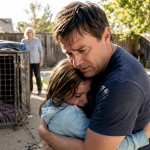
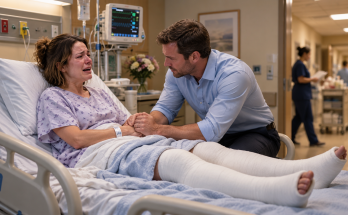
They buried me up to my neck in the backyard dirt for days while I was pregnant, pouring water and insects over me as “punishment for disobedience.”

My husband laughed from the porch.
I breathed through a hidden straw.
Wet soil pressed against my jaw, cold before sunrise and fever-warm by afternoon. The yard smelled like mud, cut grass, and the sour water they kept pouring over my hair.
Whenever the porch boards creaked, I counted the footsteps without lifting my eyes.
My husband called it discipline.
His mother called it a lesson.
His sister Mara said families handled problems privately, then moved her lawn chair two feet so its legs would stay out of the mud.
I kept breathing.
Our baby shifted low inside me that first morning—a slow pressure beneath my ribs that stopped before I could be certain it had happened. I pressed my tongue against the straw and waited for another movement.
Nothing came.
When my husband leaned over the porch railing and asked whether I was ready to behave, I lowered my eyes toward the dirt.
He mistook silence for surrender.
That helped me.
Beneath the loose soil near my right shoulder, my phone sat inside a freezer bag with the microphone uncovered and the screen dark. I had slipped it there before they dragged me outside, after hearing my husband tell his mother that embarrassment was the only language I understood.
My right hand was buried too, but they had left enough space around my wrist for me to move one finger.
Every few hours, I found the record button by touch.
Morning.
Sometime near noon.
After the porch light came on.
Different files held different voices, but the laughter barely changed.
My husband explained that a wife who followed directions would never end up in the dirt. His mother asked whether the baby could feel me being stubborn. Mara said the insects were probably harmless, although she stepped back whenever one landed near her sandal.
I saved everything.
The phone was not there to rescue me. It was there because my husband had spent months telling people I became confused when I was upset, and I needed something that could remember without shaking.
By the next morning, my lips had split around the straw. My neck burned where the wet dirt rubbed against my skin, and my left foot had gone numb hours earlier.
I had not eaten since they brought me outside.
A paper plate with half a sandwich sat on the porch railing until the wind pushed it onto the grass.
My husband came down the steps carrying a plastic pitcher and stopped close enough for me to see dried soil packed into the seams of his work boots.
“Still stubborn?” he asked.
I watched the pitcher instead of his face.
He poured slowly, careful to miss the straw while his mother watched from the doorway.
“There,” he said softly. “We’re taking care of you, even after what you did.”
I swallowed the water that reached my mouth and let the rest run into the dirt.
The baby moved once.
Small, but clear.
I shifted my buried finger and started another recording.
My husband crouched beside me and spoke in the patient voice he used around neighbors.
“All you have to say is that you understand why this happened.”
I breathed through the straw and gave him nothing he could edit into forgiveness.
His smile thinned.
Late that afternoon, the phone vibrated beneath the soil.
Mara said it was probably the sprinkler timer, although the sprinkler box was attached to the opposite fence.
My husband did not answer her.
He stepped off the porch, scanning the dirt around my shoulders while the others stopped laughing.
“What was that?”
I kept my lips around the straw.
He crouched, pressed one hand into the wet earth, and searched near my right shoulder.
“You didn’t bring something out here, did you?” he whispered.
His fingers scraped the freezer bag.
I pushed the side button beneath the soil before he could pull it free.
The phone screen lit through the cloudy plastic.
A calm voice came through the dirt.
“Sheriff’s dispatch,” the woman said. “We have your location. Keep him talking.”
PART 2 — THE STORY THEY HAD PREPARED FOR MY BODY
My husband’s fingers stopped inside the wet dirt.
For one second, nobody moved.
Not him.
Not his mother.
Not Mara.
Not me.
The dispatcher’s voice came through the plastic bag beneath the soil.
Calm.
Professional.
Terrifying only because everyone in that backyard understood exactly what it meant.
“We have your location.”
Then:
“Keep him talking.”
My husband stared at the faint light beneath his hand.
His face changed.
Not confusion.
Recognition.
He understood immediately.
The phone.
The recordings.
The fact that somebody outside our fence was listening.
“You called them?”
His voice came out almost soundless.
I kept my mouth around the straw.
He dug faster.
Mud packed beneath his fingernails.
“Did you call the police?”
His mother stepped off the porch.
“What is it?”
He did not answer.
He ripped the freezer bag from beneath the dirt.
My phone shone through the cloudy plastic.
The call was still connected.
His expression became something I had never seen before.
Not rage.
Panic.
Rage had always belonged to a man who believed there would be no witnesses afterward.
Panic belonged to a man who had just discovered one had been listening the entire time.
He tore open the bag.
“Hello?”
The dispatcher answered immediately.
“Sir, place the phone on the ground and step away from the woman.”
His mother gasped.
Mara stood so quickly her lawn chair fell backward.
My husband looked toward the fence.
Then toward the house.
Calculating.
For months, he had been telling me I was irrational.
Confused.
Unstable when emotional.
Now I watched his mind search desperately for a version of this backyard that could survive another person seeing it.
He found one.
Of course he did.
“She’s fine.”
he said into the phone.
“She’s not hurt.”
I nearly laughed.
My body was buried to the neck.
My lips were bleeding.
One foot was numb.
I had not eaten properly in days.
And my husband’s first defense was:
She’s fine.
The dispatcher said:
“Step away from her.”
“This is private property.”
“Sir.”
“You don’t understand what’s happening.”
The dispatcher’s voice did not change.
“Deputies are arriving now.”
Then we heard them.
Sirens.
Not close enough.
Then closer.
Then the sharp bark of a dog somewhere beyond the neighboring houses.
My husband stared at me.
And for one horrible second, I thought he might do something desperate before anyone reached the yard.
He looked at the straw.
My breathing.
The phone.
His mother said:
“Take the phone inside.”
Mara whispered:
“Don’t.”
Everyone turned toward her.
It was the first time she had contradicted them.
My husband’s face hardened.
“What?”
Mara’s skin had gone white.
“I said don’t.”
He laughed once.
“You’re choosing now to grow a conscience?”
Her eyes filled.
“No.”
She looked at me.
“I think we’re out of time.”
The first deputy came through the side gate with his weapon drawn but pointed down.
Another followed.
Then a third.
The backyard transformed instantly.
Not because the dirt changed.
Because there were finally adults present who did not accept my husband’s rules as natural law.
“Hands where I can see them.”
My husband raised his arms.
His mother began talking immediately.
“This is not what it looks like.”
The deputy closest to me glanced down.
I watched his face.
He had probably learned in training not to react.
He reacted anyway.
His jaw tightened.
“What happened to her?”
“She agreed to this.”
my mother-in-law said.
I closed my eyes.
Of course.
My husband grabbed the explanation.
“Yes.”
“It was supposed to be therapeutic.”
The deputy stared at him.
“Therapeutic.”
“She has emotional problems.”
There it was.
The story.
Ready.
Practiced.
Months of telling people I became confused when upset had not been random cruelty.
He had been laying foundation.
The deputy crouched near me.
“Ma’am, can you hear me?”
I nodded.
“Can you speak?”
My throat barely worked.
“Yes.”
“Are you here voluntarily?”
The question mattered.
I looked at my husband.
For the first time in days, I did not lower my eyes.
“No.”
One word.
His mother shouted:
“She’s lying.”
A deputy turned toward her.
“Ma’am, stop talking.”
She did not.
“She does this.”
“She gets dramatic.”
“She changes stories when she’s angry.”
My husband joined in.
“She’s pregnant.”
“Hormones.”
“She’s been paranoid for months.”
Every word had been waiting.
They came too quickly.
Too neatly.
Then the dispatcher’s voice spoke from the phone still lying in the grass.
“We have audio from before units arrived.”
My husband stopped.
The deputy looked at the phone.
Then at him.
“What audio?”
The dispatcher answered.
“Caller line remained open.”
Silence.
My husband’s face emptied.
He understood.
They had heard him ask whether I had brought something outside.
Heard his mother tell him to take the phone.
Heard enough.
Maybe not everything.
Enough.
Emergency medical technicians arrived next.
They did not simply pull me out.
I had imagined rescue differently.
Hands grabbing my arms.
One dramatic lift.
Freedom.
Real rescue was slower.
Careful.
They were worried about pressure injuries.
Circulation.
Dehydration.
My numb foot.
The baby.
A paramedic knelt beside me while others started removing soil from around my shoulders by hand.
“How long have you been here?”
I tried to answer.
“Two…”
My throat burned.
“Two days?”
I nodded.
My husband shouted from across the yard:
“She came inside at night.”
I turned my head as much as the dirt allowed.
“No.”
His mother said:
“She’s confused.”
The paramedic looked at me.
“Stay with me.”
That became the only voice I followed.
Not theirs.
“Can you feel your legs?”
“One.”
“One leg?”
“My right.”
“Left is numb?”
I nodded.
The paramedic’s expression changed.
“Any bleeding?”
“No.”
“Cramping?”
“Sometimes.”
“Baby moving?”
My eyes filled.
“Not enough.”
His voice softened.
“We’re going to check.”
It took almost forty minutes to free me.
Forty minutes.
Freedom measured in handfuls of soil.
Every few minutes somebody asked my name.
The date.
How many weeks pregnant.
Whether I had eaten.
Whether I had passed urine.
Whether I knew what medications I took.
Simple questions.
I answered as well as I could.
When they cleared my right arm, the skin looked wrong.
Mottled.
Swollen.
My fingers cramped when I tried to open them.
When they finally freed my chest, the first full breath hurt so badly I cried out.
Not because something broke.
Because my ribs had forgotten expansion.
The paramedic supported my neck.
“Slow.”
I inhaled.
Air.
Nothing dramatic.
No movie music.
Just air entering my body without permission from anyone else.
I sobbed.
They lifted me onto a stretcher.
A blanket covered the mud.
My husband tried to step closer.
A deputy blocked him.
“She’s my wife.”
The deputy said:
“Stay where you are.”
“She needs me.”
I turned my face away.
That was the first sentence he had said all week that almost made me angry enough to stand.
He had watched me buried in his yard.
Poured water over my head.
Denied food.
Laughed.
And now, because uniforms were present, I needed him.
No.
For the first time, the world agreed.
As they wheeled me through the side gate, I saw Mara.
She stood with both arms wrapped around herself.
Her brother was being questioned near the porch.
Their mother sat in a chair crying.
Mara looked at me.
Our eyes met.
Then she mouthed something.
I could not hear it.
Two words.
I thought she said:
I’m sorry.
I looked away.
Sorry had very little weight beside two days of dirt.
At the hospital, everything became white.
White lights.
White sheets.
White walls.
People cutting ruined clothes away.
Warm saline through an IV.
Blood taken.
More blood.
Fetal monitor strapped around my abdomen.
I held my breath until sound finally came through the machine.
Fast.
Steady.
My baby’s heartbeat.
I started crying so hard the nurse had to remind me to breathe.
“There she is.”
the nurse said.
Or maybe he.
I did not ask yet.
I only listened.
The baby was alive.
Alive.
Alive.
The word repeated with every rapid beat.
For the first time since the backyard, I allowed myself to believe there might be a future larger than surviving the next hour.
The doctor introduced herself as Dr. Lena Avery.
She spoke carefully.
“You’re significantly dehydrated.”
I nodded.
“We’re concerned about muscle injury from prolonged compression.”
Another nod.
“Your left leg circulation is improving.”
I started crying again.
“Can I walk?”
“We don’t know yet.”
The sentence frightened me.
Then she added:
“We’re evaluating you.”
Not:
No.
Not false reassurance.
Truth.
I had begun to understand that honest uncertainty felt safer than confident lies.
Dr. Avery continued.
“There are skin injuries around your neck and shoulders.”
“Evidence of insect bites.”
“Mild infection in some areas.”
“We’ll monitor your kidneys and electrolytes.”
“What about the baby?”
“So far, fetal monitoring is reassuring.”
I closed my eyes.
“So far.”
Enough.
Then another doctor entered.
Obstetrics.
Dr. Priya Shah.
She examined me.
Ultrasound.
More monitoring.
Questions about contractions.
Fluid.
Bleeding.
Pain.
Finally she pulled a chair close.
“You’ve been through severe physical stress.”
My throat tightened.
“Am I going to lose the baby?”
Her answer came slowly.
“I cannot promise you what happens next.”
I appreciated her for that.
“But right now, we have a heartbeat.”
“No obvious signs of placental abruption.”
“No active labor.”
“We’re going to watch you closely.”
I covered my face.
Then whispered:
“I kept breathing.”
Dr. Shah looked at me.
“What?”
“The straw.”
“I kept thinking if I stopped…”
My voice broke.
She put one hand near mine.
Not touching until I moved first.
I reached.
She held it.
“You kept yourself alive long enough for help to reach you.”
No praise.
No heroic speech.
Just fact.
Sometimes fact is enough.
A detective arrived that afternoon.
Detective Ana Ruiz.
She did not ask me to tell everything immediately.
That surprised me.
I thought police interviews required beginning at the beginning.
She said:
“You’re medically unstable.”
“We can do this in pieces.”
I cried at the word pieces.
That was all I had.
Pieces.
Porch boards.
Mud.
A pitcher.
Laughter.
The straw.
The phone.
My baby moving once.
She asked only what she needed urgently.
“Were you restrained before being put in the ground?”
“Yes.”
“Who put you there?”
“My husband.”
“Anyone help?”
I closed my eyes.
“His mother.”
“And Mara?”
“She watched.”
“Did she physically help?”
I thought.
“No.”
“Did she stop them?”
“No.”
Important distinction.
Detective Ruiz wrote it exactly that way.
Then she asked:
“Why did they say they were punishing you?”
My stomach tightened.
I had almost forgotten there was a beginning.
A reason.
Or what they called a reason.
“I refused to sign papers.”
Ruiz’s pen stopped.
“What papers?”
I looked toward the hospital door.
Then remembered my husband was not coming through it.
“A home-equity application.”
“What property?”
“My house.”
Her eyebrows tightened.
“You own the home?”
“No.”
I swallowed.
“The backyard house.”
“My husband and I live there.”
“But the land came from my father.”
“It’s titled partly in a family trust.”
“I’m the beneficiary.”
I saw something change in her face.
“What was your husband asking you to sign?”
“Permission to borrow against my interest.”
“How much?”
“I don’t know exactly.”
“More than three hundred thousand.”
Ruiz stopped writing.
“Why?”
“He said business debt.”
“What business?”
“His.”
I almost laughed.
“It’s always his.”
The story went back six months.
My husband had a construction-supply company.
Not enormous.
Not failing visibly.
At least not to me.
Then invoices started arriving at home.
Late-payment notices.
He began asking questions about my father’s land trust.
What my interest was worth.
Whether the property could secure a business line.
I said no.
The first time.
He laughed.
The second time, he called me selfish.
The third, his mother came over.
She said marriage meant shared risk.
Mara said her brother needed support.
I refused.
Then the punishments began.
Not burial.
Not yet.
Phone taken for a night.
Car keys hidden.
Bedroom door blocked.
Money moved from our joint account.
My husband said:
“If you want to behave like you’re single, I’ll show you what being alone feels like.”
I had started documenting.
Quietly.
Bank screenshots.
Emails.
A photo of the papers.
The phone recordings came later.
When I realized he had begun telling neighbors I was “not myself lately.”
Detective Ruiz asked:
“Do you have those documents?”
“My email.”
“Phone too.”
“We recovered the phone.”
My heart stopped.
“From the yard?”
“Yes.”
“It will be processed appropriately.”
I nodded.
Then:
“There are recordings.”
“So dispatch told us.”
“More than the call.”
“I know.”
I stared at her.
“You listened?”
“Not personally.”
“Not yet.”
Her answer was careful.
“But officers were told multiple audio files may exist.”
I closed my eyes.
For two days, that phone had been my witness.
Now it was evidence.
Different word.
Same memory.
That evening, the hospital social worker helped arrange for my father’s sister, Aunt Joanne, to come.
I had not spoken to her in eight months.
My husband hated her.
Of course he did.
She asked questions.
He called that intrusive.
She noticed when I stopped working.
He called that disrespectful.
She once told me:
“You sound like you ask permission to breathe.”
I did not speak to her for three months afterward.
Now she walked into my hospital room carrying no flowers.
Thank God.
She simply stood beside the bed.
Looked at me.
Looked at the bruises around my neck.
Then began crying.
I cried too.
She said:
“I’m not asking why you didn’t call me.”
That almost broke me more than if she had.
I whispered:
“I should have.”
“Maybe.”
She wiped her face.
“But today I’m here.”
That became enough.
My husband was arrested that night.
I learned later.
Not from dramatic footage.
From Detective Ruiz.
His mother was also detained and later charged with offenses connected to what happened.
Mara was interviewed separately.
Her role was less clear.
She had been present.
She had failed to intervene.
She had participated in humiliating comments.
But investigators were still determining what actions could be proved and what legal responsibility applied.
I wanted her charged with everything.
Then hated myself for wanting certainty before facts.
Pain has terrible legal instincts.
It wants categories immediately.
Good.
Bad.
Victim.
Monster.
Real cases insist on slower nouns.
Witness.
Suspect.
Evidence.
Statement.
Charge.
Conviction.
Not interchangeable.
I learned to wait.
My husband’s attorney released a statement two days later.
I saw it online because somebody sent it to Aunt Joanne, who tried to hide it from me.
I made her show me.
It said the incident had been “a consensual marital exercise that was tragically misunderstood.”
I laughed.
Then vomited.
My body still did that when stress came too quickly.
Consensual marital exercise.
There are phrases so polished they reveal their own desperation.
Then the statement said I had “a documented history of emotional instability.”
My hands went cold.
There it was.
The story he had prepared.
Not improvised in the yard.
Prepared.
“Documented?”
I asked Detective Ruiz later.
“What does that mean?”
She hesitated.
Then:
“We found paperwork.”
My stomach tightened.
“What paperwork?”
“Copies of mental-health evaluation forms.”
“I’ve never had an evaluation.”
“I know.”
I stared.
“What?”
She pulled her chair closer.
“Your husband had drafted materials describing episodes of confusion, paranoia, impulsivity, and threats of self-harm.”
My heart stopped.
“I never—”
“We have not found a legitimate clinician’s diagnosis supporting them.”
“Then what are they?”
“Drafts.”
“Notes.”
“Emails.”
I could barely breathe.
“He was writing a psychiatric history for me?”
“It appears someone was.”
Someone.
Careful.
Again.
Then she said:
“Your mother-in-law contacted a lawyer about emergency decision-making authority.”
My skin went cold.
“What?”
“Several months ago.”
“Why?”
“She claimed you were becoming unable to manage finances safely.”
I stared.
The home-equity papers.
My refusal.
The timing.
“Oh my God.”
Ruiz continued.
“No court granted anything.”
“No guardianship existed.”
“No power of attorney gave them authority over you.”
“Those distinctions matter.”
I nodded mechanically.
“But they tried?”
“We found communications discussing options.”
My baby moved.
Strong this time.
I placed both hands on my stomach.
The movement grounded me.
Something living inside a body people had been preparing to describe as incompetent.
Three days after rescue, I stood for the first time.
Two nurses.
A walker.
My left leg trembling.
Pain shot through my calf.
I cried.
Then took one step.
One.
Another.
That was all.
I sat down exhausted.
Aunt Joanne clapped once before I glared at her.
“Sorry.”
she said.
“No inspiration speeches.”
“Agreed.”
Then:
“That was still impressive.”
I threw a tissue at her.
My body was returning in pieces.
Good.
The baby remained stable.
Dr. Shah warned me pregnancy after severe physical stress still required close monitoring.
I would need follow-up.
Rest.
Nutrition.
Watch for symptoms.
No guarantees.
I accepted all of it.
Uncertainty had become another kind of freedom.
Nobody claiming to know my body better than I did.
Nobody calling pain disobedience.
Nobody using certainty as a weapon.
A week after the rescue, Detective Ruiz returned with another woman.
Assistant District Attorney Claire Mendez.
That frightened me.
Not because I thought I had done anything wrong.
Because prosecutors meant the recordings had become serious.
Mendez sat.
Introduced herself.
Then said:
“We’ve reviewed enough of the preserved audio to ask you some additional questions.”
My throat tightened.
“Okay.”
“There are approximately nineteen usable recordings.”
Nineteen.
I had not counted.
“Some are short.”
“Some longer.”
“We hear your husband.”
“His mother.”
“Mara.”
I closed my eyes.
“What did Mara say?”
Mendez looked at Ruiz.
Then back to me.
“This is why we’re here.”
One recording had been made two nights before they buried me.
I did not remember pressing the button.
Maybe the phone had been inside my robe pocket.
My husband and his mother were talking in the kitchen.
Mara was there.
My husband said:
She signs by Friday or we stop treating this like a negotiation.
His mother:
And if she still refuses?
My husband:
Then we document another episode.
My entire body went cold.
“What episode?”
I whispered.
Mendez continued.
On the recording, Mara asked:
You mean like the bathroom thing?
My husband answered:
Exactly. She gets overwhelmed, locks herself in, stops eating, says things she doesn’t remember later.
I stared.
None of that had happened.
Not the way he described.
The “bathroom thing” had been me locking the door because he was shouting and I needed ten minutes alone.
I had eaten dinner afterward.
I remembered every word.
He had converted a boundary into a symptom.
His mother then said:
The attorney said you need more than family statements.
My husband:
We’ll have more.
Mara:
How?
Then a pause.
My husband answered:
You make the situation bad enough, eventually she reacts.
I stopped breathing.
Mendez let the silence remain.
That sentence changed everything.
The punishments were not only punishment.
Some had been provocation.
He wanted a reaction.
Crying.
Screaming.
Breaking something.
Running outside.
Anything that could be filmed after the context disappeared.
A frightened woman reduced to ten seconds of behavior.
Proof of instability.
“Did they record me?”
I asked.
Ruiz nodded carefully.
“We found video clips.”
My stomach turned.
“What clips?”
“Arguments.”
“You crying.”
“You knocking a glass from a counter.”
I remembered that.
He had blocked the doorway.
I reached around him.
Hit a glass.
It shattered.
He told me later:
“Look at yourself.”
Apparently he had filmed the ending.
Not the beginning.
There were more.
Me crying in the car.
Me shouting:
“Leave me alone.”
Me throwing his business papers back onto the table.
Tiny pieces.
Edited by omission.
Not necessarily digitally altered.
Contextually altered.
Sometimes all a lie needs is to begin ten seconds late.
Mendez said:
“The recordings from your phone are important because they provide broader context.”
I stared.
Then:
“Is that enough?”
She did not answer the question I really meant.
Enough to convict.
Enough to protect me.
Enough to make him stop.
Enough to make everyone believe.
She said:
“It is evidence.”
That was honest.
I nodded.
Then she reached for a folder.
“Mara gave us something.”
My body tightened.
“What?”
“Her phone.”
I stared.
“She volunteered it after speaking with counsel.”
“Why?”
“She said there were messages we needed to see.”
I almost laughed.
Mara had spent two days sitting in a lawn chair while insects crawled over my neck.
Now she wanted to help.
Anger burned through me.
Mendez seemed to see it.
“Cooperation does not erase prior conduct.”
she said.
Good.
Then:
“But what she preserved may matter.”
“What?”
“An audio file your husband thought had been deleted.”
My stomach dropped.
“How?”
Mendez opened the folder.
“Mara says he used her phone one night to record a conversation because his battery was dead.”
“He later deleted it.”
“But it remained in cloud backup.”
I stared.
“What conversation?”
Mendez looked at me.
Then said:
“The night they decided to bury you.”
The hospital room seemed to contract.
Aunt Joanne reached for my hand.
I let her.
Mendez continued.
The recording was made in the garage.
My husband.
His mother.
Mara.
My husband sounded angry because I had refused the home-equity application again.
His mother said:
She needs to be scared enough to stop thinking she has choices.
My body went cold.
Then Mara:
Don’t do anything that hurts the baby.
A long pause.
My husband laughed.
Not loud.
Familiar.
The same porch laugh.
Then:
The baby is exactly why she’ll cooperate.
I stopped breathing.
Mendez paused.
“Do you want me to continue?”
I wanted to say no.
I said:
“Yes.”
His mother asked:
How long?
My husband answered:
A day. Maybe two.
Mara:
In the ground?
My husband:
Only up to the shoulders. She’ll have air. Water. We’re not idiots.
His mother:
And if she signs?
My husband:
Then it was a family lesson and we never mention it again.
The room blurred.
A day.
Maybe two.
They had planned it.
Not snapped.
Not lost control.
Planned.
Then Mara asked the question that changed the entire meaning of the punishment.
What if she doesn’t sign?
My husband replied:
Then by the time she gets out, she’ll look exactly like somebody who had another breakdown.
I covered my mouth.
He continued on the recording.
Dehydrated. Confused. Filthy. Crying.
His mother laughed.
Then:
And who’s going to believe she volunteered to sit in the dirt?
My husband corrected her.
We don’t say she volunteered.
Pause.
We say she did it herself.
I felt the baby move beneath my hands.
Strong.
Alive.
I started crying.
Mendez spoke quietly.
“There’s more.”
I almost could not bear the phrase.
“What?”
“The plan appears to have been that if you complied and signed, they would treat the incident as private.”
“If you did not…”
She stopped.
I forced myself to look at her.
“If I didn’t?”
“They were discussing calling emergency services themselves.”
My throat tightened.
“After burying me?”
“Yes.”
“And saying what?”
“That you had become delusional.”
“That you dug into loose landscaping soil during a mental-health crisis.”
I stared.
“That doesn’t even make sense.”
“No.”
Mendez said.
“But people in crisis sometimes do things that do not make sense.”
That was why the lie frightened me.
Not because it was perfect.
Because it only needed to be plausible long enough for frightened professionals to inherit the wrong starting assumption.
Pregnant woman.
Dehydrated.
Confused.
Husband calm.
Mother-in-law concerned.
Videos of prior emotional reactions.
Draft psychiatric notes.
A family saying:
She has been deteriorating for months.
My phone had not been only evidence.
It had been the difference between my condition being interpreted as proof of what they did—
or proof of what they claimed I was.
I whispered:
“Why did Mara keep this?”
Mendez looked down.
“She says she became frightened after hearing the plan.”
“Not frightened enough.”
“No.”
“Not enough to call anyone.”
“No.”
“Not enough to stop them.”
“No.”
Each answer hurt.
Then:
“She says she began saving messages because she was afraid her brother would eventually blame her too.”
There it was.
Not heroism.
Self-preservation.
Believable.
Human.
Ugly.
Mara had not saved me.
She had saved insurance against becoming the next person erased by his story.
And accidentally, she may have saved part of mine.
Then Mendez slid a printed page toward me.
A text exchange.
My husband to Mara.
Dated the night before they buried me.
Tomorrow. Mom gets her outside after breakfast. You keep Susan’s aunt from coming if she calls.
Mara:
What do I say?
My husband:
That she’s sleeping.
Mara:
And if she won’t sign after?
My husband:
Then we go with Plan B.
Mara:
Hospital?
My husband:
Yes. Once she’s weak enough.
My hands went numb.
Once she’s weak enough.
The hospital had always been part of the plan.
Not to save me.
To authenticate their story.
A hospital chart describing dehydration, confusion, emotional distress.
Maybe a psychiatric consult requested by the concerned husband.
Maybe questions about capacity.
Maybe another attempt at authority over my finances.
They had not merely been hurting me.
They had been preparing to use the medical consequences as evidence against me.
I looked at Mendez.
“What was he trying to borrow the money for?”
She exchanged a glance with Ruiz.
“We’re still investigating.”
My stomach tightened.
“But?”
“Your husband’s business debt appears substantially larger than what you were told.”
“How large?”
“Potentially more than a million dollars across several obligations.”
I stared.
“That’s impossible.”
“Maybe.”
“He doesn’t own enough.”
“That may be why he wanted access to the property interest.”
I felt cold.
Then Ruiz said:
“We also found a draft guarantee bearing your name.”
My heart stopped.
“What?”
“Unsigned.”
She emphasized it.
“Not valid simply because it existed.”
“But someone had prepared it.”
“My husband?”
“We’re determining that.”
I closed my eyes.
Even now, they refused to guess for me.
Good.
Facts.
Always facts.
Mendez gathered the papers.
“I want to be clear about something.”
I looked at her.
“The investigation is ongoing.”
“Charges are not convictions.”
“Mara’s cooperation does not make her conduct disappear.”
“Your husband’s statements will be tested.”
“Your mother-in-law’s too.”
I nodded.
I understood.
For the first time in my marriage, nobody needed me to exaggerate the truth to make it serious.
What happened was serious enough.
Two weeks after the rescue, I left the hospital.
Walking.
Slowly.
With a cane.
My left foot still tingled.
Doctors expected improvement.
No guarantee of complete recovery yet.
The baby was stable.
I had lost weight.
Had scars around my neck.
And developed a hatred of wet soil so deep that Aunt Joanne removed every potted plant from her guest room before I arrived.
I moved in with her temporarily.
I did not return to the house.
Not yet.
Maybe never.
The backyard belonged to another version of my life.
I was not ready to decide whether I wanted it back.
My husband sent a letter through his attorney.
I read three lines.
I never wanted you or the baby seriously harmed.
I stopped.
That sentence belonged to the same worldview as pouring water carefully enough to miss the straw.
As though managing the amount of harm converted domination into care.
I gave the letter to my lawyer.
Did not finish it.
Some explanations arrive too late to deserve your nervous system.
A month later, Mara asked to speak with me.
Through lawyers.
I said no.
Then, two weeks later, changed my mind.
Not because I forgave her.
Because I wanted one answer.
We met in a conference room.
No backyard.
No lawn chair.
No family.
Mara looked terrible.
I did not care.
She sat across from me.
“I’m sorry.”
I raised one hand.
“Why didn’t you call?”
Her mouth trembled.
“I was afraid of him.”
“So was I.”
“I know.”
“No.”
My voice cracked.
“You got to go home.”
“You got to sleep in a bed.”
“You watched insects crawl over my face and moved your chair so your shoes stayed dry.”
Mara began crying.
“I know.”
I leaned forward.
“Why didn’t you call?”
This time she answered.
“Because I thought if I helped you, he would turn Mom against me and say I planned it.”
I stared.
There.
Cowardice in complete sentences.
No heroic excuse.
Then:
“And because I kept believing he’d stop before it became…”
She looked at me.
“This.”
I sat back.
“That belief almost killed me.”
“I know.”
“Stop saying you know.”
She covered her face.
Then whispered:
“You’re right.”
Good.
I asked my one remaining question.
“What is Plan B really?”
Mara looked up.
Her face changed.
That was not the answer she expected me to ask for.
“The hospital story?”
“Yes.”
“Was that all?”
She went silent.
My stomach tightened.
“Mara.”
Her hands began shaking.
“No.”
The room became cold.
“What else?”
She looked toward her attorney.
He said nothing.
Then back at me.
“There was a document.”
Of course.
“What document?”
“Your husband had papers drafted.”
“What papers?”
“I don’t know the legal name.”
Her voice broke.
“Something about temporary control if you were hospitalized.”
“Control of what?”
“Your trust.”
My entire body went still.
She continued.
“He said if doctors thought you weren’t competent, there was a way to ask a court for emergency authority.”
“That is not how it works automatically.”
“I know that now.”
“But he thought…”
She stopped.
“What?”
“He thought if the baby came early or you were too sick to answer questions, there would be enough time.”
“Enough time for what?”
Mara stared at me.
“To sign the property guarantee before your father’s trustee could object.”
I stopped breathing.
“My father is dead.”
“I know.”
“Then who?”
Her face drained.
“The backup trustee.”
I froze.
There was a backup trustee.
My father’s older brother.
Uncle David.
Living three states away.
I had not spoken to him in years.
Mara whispered:
“Your husband knew he was coming.”
My throat tightened.
“Coming where?”
“To town.”
“When?”
“The morning after they buried you.”
Everything inside me went cold.
“Why?”
Mara looked down.
“Because he had asked to inspect the trust property.”
I stared.
The backyard.
The timing.
The punishment.
Not random.
My husband knew the one person outside his control who understood the property documents was coming.
He needed me compliant before Uncle David arrived.
Or incapacitated enough that someone else could claim authority.
Then Mara whispered:
“There’s one more recording.”
I almost laughed.
The phrase had become unbearable.
“What recording?”
“Not mine.”
She looked directly at me.
“Your husband recorded it.”
“Who is on it?”
“Your uncle.”
My heart stopped.
“When?”
“Three days before they buried you.”
“What does he say?”
Mara swallowed.
Then answered:
“He tells your husband the trust audit found something wrong with the loan documents.”
My entire body went still.
“What?”
“He says your signature appears on a preliminary property-consent form.”
I could barely breathe.
“I never signed one.”
Mara nodded.
“I know.”
And suddenly the plan became even darker.
Maybe the burial was not only about forcing me to sign.
Maybe someone had already used my name before I ever refused.
Maybe the papers my husband kept pushing toward me were not the beginning.
They were an attempt to make an earlier document look legitimate after the fact.
And somewhere, three days before I was buried in my own backyard, my uncle had already told my husband that somebody had been caught.
Mara looked at me.
Then whispered:
“That’s why they needed you to sign by Friday.”
My hands went cold.
“Because Uncle David was bringing the original document with him Saturday morning.”
I stared at her.
Then at the recorder on the table.
For two days, I had thought my husband buried me because I said no.
Now I understood the possibility was worse.
He may have buried me because he needed my real signature to cover the one somebody had already forged.
PART 3 — THE SIGNATURE THEY NEEDED BEFORE MORNING
For several seconds after Mara finished speaking, I could hear nothing except the air conditioner above us.
Not her crying.
Not her attorney shifting in his chair.
Not the blood beating in my ears.
Only the mechanical hum of cold air moving through a room where nobody had to ask permission to breathe.
My uncle had found a document bearing my signature.
I had not signed it.
My husband knew Uncle David was bringing the original to town.
And before David could put that paper in front of me, my husband had buried me in the backyard and demanded that I sign another one.
The pieces finally stopped looking separate.
The business debt.
The pressure.
The fake psychiatric history.
The videos of me crying.
The discussions about emergency control.
The burial.
The hospital plan.
They had not invented one terrible punishment after an argument.
They had built an explanation in advance for why a woman’s signature might need to be replaced by someone else’s authority.
Or why a frightened, injured woman might later deny signing something everybody else insisted she had signed.
I looked at Mara.
“Did he forge my name?”
She shook her head quickly.
“I don’t know who physically did it.”
Good.
Even now, that distinction mattered.
I had spent too long inside a family where certainty belonged to whoever spoke loudest.
I would not carry that habit out with me.
“Did he know the signature was false?”
Mara’s eyes dropped.
“Yes.”
My stomach turned.
“How do you know?”
“Because I heard him say it.”
The room went cold again.
Three days before the backyard, my husband had recorded a phone conversation with Uncle David.
Not because he wanted evidence.
Because he liked recording business calls he thought might later become useful.
That arrogance preserved the one conversation he most needed erased.
Mara told investigators where the backup was stored.
The recording was recovered from a synced work account.
When Detective Ruiz played it for me two days later, I recognized Uncle David’s voice immediately.
Older than I remembered.
Sharper.
Still impatient.
He said:
“I’m looking at the preliminary consent you sent with the loan package.”
My husband answered:
“Okay.”
David:
“The signature is wrong.”
Silence.
Then my husband laughed lightly.
“What does that mean?”
“It means I have twenty years of trust records with her signature on them.”
“She did not sign this.”
My whole body became still.
My husband’s voice changed.
Not angry.
Careful.
“She signed what I gave her.”
David replied:
“Then she can tell me that herself Saturday.”
My husband said:
“She’s pregnant. She’s not up for some audit interrogation.”
Uncle David:
“This is not an interrogation.”
“It’s trust property.”
“And you are trying to pledge an interest you do not own.”
My husband’s voice sharpened.
“We’re married.”
David answered:
“That does not make her trust interest yours.”
I closed my eyes.
That sentence had probably enraged him more than any insult could have.
Then David said:
“I’m bringing the original consent form and the lender correspondence.”
“We’ll sit down with her.”
“If she confirms the signature, fine.”
“If she doesn’t, I notify the lender that the authorization is disputed and we investigate how it got there.”
My husband went silent.
Then:
“Can we handle this Monday?”
“No.”
“David—”
“Saturday morning.”
Then the line that explained the timetable.
“Until I hear it directly from her, nothing moves.”
The recording ended three minutes later.
Two days after that call, they buried me.
They had until Saturday morning.
They needed a real signature.
Or a reason I could not give one.
I handed the headphones back to Detective Ruiz.
My hands were shaking.
“Did the lender release money?”
“No.”
I looked up.
“None?”
“Not against that property interest.”
Relief moved through me so suddenly I almost laughed.
The forged paper had failed.
Uncle David had stopped it before money moved.
Then Ruiz added:
“There may have been separate business borrowing unrelated to your trust.”
“But the transaction involving your property was halted.”
I leaned back.
For weeks, I had imagined some enormous debt attached to the land.
A lien.
A foreclosure.
A financial disaster waiting beneath the physical one.
There wasn’t.
Not yet.
They had hurt me in anticipation of a crime they had not successfully completed.
Somehow that did not make it smaller.
It made it more senseless.
“Who created the false consent?”
I asked.
Ruiz chose her words carefully.
“Forensic review found the document was generated from your husband’s business computer.”
My throat tightened.
“The signature image?”
“Copied from an older document stored in a shared household folder.”
I knew the one.
Years earlier, I had signed paperwork allowing a contractor onto trust land while my father was ill.
Scanned signature.
PDF.
Perfectly ordinary.
My husband had access to the household computer.
So did I.
So, occasionally, his mother.
Mara had used it too.
“Can you prove who placed the signature?”
“Not yet.”
There it was.
Not yet.
Maybe never.
“But we have messages about the document.”
I stared.
“What messages?”
Ruiz opened a printed exchange.
My husband to his mother.
David caught the first one. Need her to sign the clean version before Saturday.
My mother-in-law:
Then stop asking nicely.
My husband:
Working on it.
Three lines.
That was all.
No explanation needed.
The “clean version” was the paper they had pushed toward me the morning before they dragged me outside.
I remembered it perfectly.
Not because I understood every page.
Because I remembered his finger tapping the signature line.
“Sign.”
“No.”
“Don’t make this harder.”
“No.”
His mother stood behind him.
Mara near the refrigerator.
My husband said:
“It’s the same thing you already approved.”
I had stared at him.
“I approved nothing.”
His face changed.
For one second, barely.
Then he smiled.
That was the moment he knew I could not be persuaded into validating the first document by accident.
So they changed methods.
By afternoon, his mother had begun talking about “consequences.”
By evening, my car keys disappeared.
The next morning, they brought me outside.
Uncle David came to see me after investigators cleared him to discuss what had happened.
I had not seen him in six years.
He entered Aunt Joanne’s living room carrying no documents.
I appreciated that.
He looked at my cane.
Then the scars near my neck.
His face broke.
“I should have come Friday.”
“No.”
“I could have.”
“You said Saturday.”
“I should have known something was wrong when he kept trying to delay.”
I shook my head.
“No.”
He looked at me.
“I’m not doing this.”
“What?”
“Letting another person make my husband’s choices their fault.”
His eyes filled.
I continued.
“You caught the document.”
“You stopped the loan.”
“You scheduled a meeting.”
“You had no reason to think they were going to bury a pregnant woman in the yard.”
David looked down.
“When you say it like that…”
“How else should I say it?”
He gave a miserable little laugh.
Then nodded.
“Fair.”
He eventually explained the trust.
My father had placed the land into it years before because the property had belonged to our family for generations.
My husband and I had been permitted to live there.
I held a beneficial interest.
Certain major decisions required my consent.
Certain others required trustee review.
The details were tedious.
Thank God.
Tedious documents had saved me from a rushed loan.
My husband’s business had accumulated severe debt after two projects collapsed and a supplier sued over unpaid invoices.
He hid much of it from me.
He personally guaranteed some obligations.
Others belonged to the company.
He needed liquidity.
Our home sat on valuable land.
To him, my trust interest became an answer.
To me, it was the last thing my father had asked me not to gamble.
I said no.
And apparently, no had become dangerous.
“Can he take the house?”
I asked David.
“No.”
“Can creditors?”
“Not simply because he owes them money.”
He explained more.
I heard about half.
The important point was that my interest had not been successfully pledged.
The trust remained intact.
The house itself, however, no longer felt like mine.
Legally, maybe.
Emotionally, absolutely not.
Every photograph in my mind contained dirt.
Porch boards.
A pitcher.
His boots.
I told David:
“I don’t want to live there.”
He nodded.
“You don’t have to.”
No speech about heritage.
No:
Your father would want—
Just:
You don’t have to.
I nearly cried.
The criminal case took more than a year.
I learned how misleading television had been.
Nobody walked into court two weeks later and announced the truth.
There were motions.
Interviews.
Experts.
Medical records.
Audio authentication.
Digital forensics.
Arguments over what could be admitted.
The defense challenged context.
Consent.
Intent.
The reliability of recordings.
The meaning of financial drafts.
Exactly what lawyers are supposed to challenge.
I hated it.
Then understood why the process had to allow it.
Truth that cannot survive questions is only belief with good lighting.
Mine survived.
The prosecution did not charge every terrible thing I thought morally belonged to my husband.
They charged what they believed they could prove under the law.
The prolonged restraint.
The physical harm.
The coordinated coercion.
The effort to force or obtain a financial signature.
The attempt to create a false account of my condition afterward.
Financial offenses connected to the trust documents were handled separately and more narrowly than I once expected because the loan never funded and proof of who physically applied the copied signature had limits.
That frustrated me.
Then I reminded myself:
A criminal case is not a biography.
It does not need to punish every cruel sentence he ever spoke.
It needs to prove defined conduct beyond the required standard.
The backyard was enough.
The recordings were enough.
The messages were enough.
My husband eventually pleaded guilty to several serious charges rather than take everything to trial.
Not everything prosecutors initially alleged.
Enough.
He received years of incarceration followed by supervision and financial consequences tied to the conduct and business matters that could be established.
When the sentence was announced, I felt nothing.
Then relief.
Then grief.
Then guilt for the grief.
Then anger at the guilt.
Human emotion is embarrassingly inefficient.
I had imagined I would feel victorious.
Instead I thought about the man who once assembled a crib at midnight because one screw refused to fit.
The man who brought me soup when I had influenza.
The man who rubbed my feet during the first trimester.
The man who later stood on a porch laughing while I breathed through a straw.
All of those men occupied the same body.
That truth was harder than turning him into a monster.
Monsters are easy to leave.
People are harder.
His mother also faced criminal consequences.
Her role was direct.
She helped plan.
Helped put me outside.
Helped maintain the confinement.
Participated in the pressure.
Her age did not erase that.
Neither did motherhood.
She had spent years saying she was protecting her son.
Eventually a court required her to answer for choices she had made as an adult, not simply as someone’s mother.
Her sentence was different from his.
Shorter.
Structured differently.
I did not attend every hearing.
I stopped believing my presence was required to make consequences real.
Sometimes justice happens in rooms you do not enter.
Mara’s outcome was more complicated.
As it should have been.
She had known enough to leave.
Had watched.
Had mocked.
Had failed to call.
She had also preserved evidence.
Warned my husband not to take the phone.
Eventually cooperated.
Her conduct did not fit the same role as her brother’s or mother’s.
The legal system treated it differently.
She accepted responsibility for offenses prosecutors could establish, cooperated under an agreement, and received a substantially lesser sentence with conditions that reflected both her participation and assistance.
I did not argue for mercy.
I did not argue against it.
That was not my job.
For a while, I hated that her evidence helped her.
Then my therapist asked:
“Would you prefer a system where cooperation never matters?”
No.
Of course not.
Late truth should have value.
It just should not rewrite early cowardice into heroism.
So I held both.
Mara failed me.
Mara helped prove what happened.
Neither sentence erased the other.
She wrote to me once after sentencing.
I almost threw the letter away.
Then read it.
No excuses.
That surprised me.
She wrote:
I moved my chair because I did not want mud on my shoes while you were suffering in the ground. There is no version of that memory in which I am proud of myself.
I stopped.
Then continued.
I kept telling myself I was not the person doing it. I understand now that standing beside cruelty and protecting your own comfort is still a choice.
My throat tightened.
Then:
I do not expect you to forgive me. I hope someday what I saved is useful enough that something decent came from one of the worst things I ever failed to stop.
I folded the letter.
I did not answer.
But I kept it.
Not for forgiveness.
For accuracy.
My baby stayed with me.
That was the miracle I never allowed myself to call guaranteed.
The rest of the pregnancy was monitored obsessively.
Appointments.
Ultrasounds.
Blood pressure.
Growth scans.
Questions about movement.
I counted kicks until numbers became a language.
Every quiet hour frightened me.
Every strong movement made me cry.
At thirty-eight weeks, labor started on its own.
Aunt Joanne drove me to the hospital doing forty miles per hour in a sixty-five zone because she was terrified.
I spent the whole ride yelling at her to drive faster.
She yelled back that after everything we had survived, she was not killing me with a traffic citation.
That was the first time I laughed during labor.
My daughter was born after eleven hours.
Seven pounds, two ounces.
Angry.
Loud.
Perfectly committed to the idea that everybody in the room needed to hear her opinion immediately.
The nurse placed her on my chest.
I looked at her tiny wet face.
Her mouth open.
Crying.
Breathing.
I began sobbing.
Not graceful tears.
My whole body shook.
Dr. Shah was there.
She remembered me.
She touched my shoulder.
“She’s here.”
I looked at my daughter.
“Yes.”
Not:
We saved her.
Not:
Everything happens for a reason.
Nothing about the backyard needed to happen for this moment to be beautiful.
Suffering does not earn babies.
Trauma does not purchase gratitude.
She was alive because her body endured, doctors watched carefully, and sometimes terrible things do not get the ending they threaten.
That was enough.
I named her Clara.
My father had once suggested the name years earlier.
It meant nothing dramatic to me.
That was why I loved it.
I did not need to name her Hope.
Or Grace.
Or Victory.
She was not a symbol of what happened to me.
She was a baby.
Clara.
She hated socks.
Slept only when I desperately needed her awake.
Screamed whenever Aunt Joanne sang.
Had a little fold above her left ear.
She deserved a childhood larger than the story of how close we came to losing her.
So I gave her one.
The family court orders around her father were strict at first.
Then remained strict because the underlying conduct was severe.
I followed professional advice.
I did not make promises about future contact I could not control.
I did not tell Clara her father was dead.
He wasn’t.
I also did not build bedtime stories around a man she could not safely know.
When she was little, the explanation was simple.
“Your father made choices that were unsafe.”
Later, there would be more.
Age-appropriate.
True.
No fabricated hero.
No invented monster.
Just enough truth for the age asking.
I had learned what happens when adults decide a child can only survive a rewritten family story.
I would not do that to her.
I divorced him.
That sentence looks small on paper.
It was not.
Divorce meant forms.
Accounts.
Property.
Business liabilities.
Trust questions.
Insurance.
Names.
Future medical decisions.
People asked whether it felt liberating.
Sometimes.
Mostly it felt administrative while my heart was still trying to understand something enormous.
The trust protected the land.
The marital estate was handled according to actual law and documentation.
I did not become instantly rich because he went to prison.
I did not take every asset.
Some business obligations consumed what they were legally entitled to consume.
Some property remained protected.
Some was divided.
Life did not reward me with a financial fantasy for surviving.
It gave me something less cinematic.
A clean account in my own name.
A safe place to sleep.
Enough.
I never moved back into the house.
For almost two years, it remained vacant except for maintenance visits approved through the trust.
Then David asked:
“What do you want to do?”
I looked through the kitchen window at the yard.
Grass had grown over the place where the hole had been.
Of course it had.
The earth did not keep scars the way bodies do.
That offended me at first.
Then relieved me.
I walked outside.
Slowly.
The first time I stepped onto wet soil after the rescue, I vomited.
The second time, I made it six feet.
The third time, I stood beneath the oak tree and listened to Clara babble from Aunt Joanne’s arms.
I never went to the exact spot.
I did not need to conquer it.
That is another lie people tell about healing.
You do not have to touch every wound to prove it no longer owns you.
Some places can remain places you choose not to stand.
Choice is enough.
Eventually, with trust approval and legal guidance, we sold the property.
Uncle David worried I would regret it.
I did not.
The land had belonged to my father.
He loved it.
I loved my father.
Neither fact required me to keep the backyard where my husband tried to turn my body into evidence against me.
The sale proceeds remained governed by the trust.
Boring.
Proper.
Protected.
I bought a modest house twenty minutes from Aunt Joanne.
Small yard.
No porch.
I specifically rejected three properties with large backyards.
My real-estate agent never asked why.
Another kindness.
For the first year, I kept every window locked even during the day.
I slept with a lamp on.
If rain softened the soil outside, I could smell the backyard again.
Mud.
Cut grass.
Sour water.
I would wake with my mouth searching for the straw.
My therapist taught me grounding exercises.
I hated them.
Used them anyway.
Five things I could see.
Four I could touch.
Three I could hear.
Two I could smell.
One I could taste.
Sometimes the only thing I could taste was panic.
Still counted.
Recovery is not elegant enough to deserve the word journey.
It is more like housekeeping.
You keep putting things back where they belong.
Again.
Again.
Again.
Until the room becomes yours.
My left foot improved.
Not perfectly.
I kept a patch of numbness along the outer edge.
For a long time, I resented it.
A piece of my husband still living in my nerves.
Then one day Clara was learning to walk.
She gripped my index finger.
Stepped on that foot.
I barely felt it.
She laughed.
I laughed too.
And suddenly the numb patch belonged to a different memory.
Not only dirt.
Her first steps.
Bodies can accumulate new meanings without erasing old ones.
I liked that.
Uncle David retired as trustee several years later.
Before he did, he asked whether I wanted to take over.
I laughed so hard he looked offended.
“No.”
“Why?”
“I have had enough family documents for one lifetime.”
He smiled.
“Fair.”
We appointed a professional fiduciary under the terms available to us.
I wanted one part of my life that no relative could describe as personal obligation.
David understood.
Maybe better than anyone.
Aunt Joanne became Clara’s favorite person.
Unfairly.
I did all the parenting.
Joanne arrived with pancakes and became royalty.
Once, when Clara was four, she asked:
“Why does Aunt Jo live alone?”
Joanne answered:
“Because I like my snacks where I leave them.”
Perfect.
I watched them together and sometimes thought about the months my husband had taught me Joanne was dangerous to our marriage because she asked questions.
Questions saved me long before the dispatcher did.
Not because Joanne knew everything.
Because she had once made me notice how often I asked permission to breathe.
I did not understand the sentence then.
I do now.
Years after the case ended, I listened to the backyard recordings once.
Only once.
My lawyer no longer needed me to.
The courts were done.
The files had served their legal purpose.
I wanted to know whether I could hear the woman in them without becoming her again.
Morning.
My husband’s laughter.
His mother:
“Has she learned yet?”
Mara moving the chair.
My breathing through the straw.
At first, it sounded weak.
Tiny.
Almost nothing.
Then I realized it had continued under every voice.
In.
Out.
In.
Out.
The entire recording.
They laughed.
I breathed.
They threatened.
I breathed.
They planned.
I breathed.
They poured water over my head.
I breathed.
They mistook silence for surrender because they were listening for words.
They did not understand that survival had its own sound.
Near the end of one recording, my husband said:
“You have no idea how much easier this would be if you stopped fighting me.”
For years, I thought about that sentence.
Because I had barely been fighting.
Not the way people imagine.
I was not screaming.
Not throwing dirt.
Not delivering a speech.
I was breathing.
Recording.
Refusing to sign.
That was enough for him to call resistance.
Eventually I understood why.
Control does not require dramatic rebellion to feel threatened.
Sometimes one woman saying no is enough.
Sometimes one unsigned line is enough.
Sometimes a person continuing to possess her own mind is intolerable to someone who believes marriage transferred ownership of it.
I deleted none of the recordings.
But I stopped carrying them on my phone.
They went into secure storage with the case records.
I did not want my daughter accidentally tapping a file one day and hearing the worst hours of my life.
Evidence deserves preservation.
Trauma does not deserve permanent residence on the home screen.
That distinction took me years to learn.
Clara turned seven last spring.
We had her birthday in the front yard.
Not because I was afraid of backyards anymore.
Because the front got better sunlight.
There were balloons.
A cheap plastic sprinkler.
Six children screaming over cupcakes.
At one point, Clara grabbed the hose and sprayed Aunt Joanne directly in the face.
Joanne shrieked.
Clara froze.
For half a second, my whole body remembered water used as punishment.
Then Joanne wiped her eyes.
Pointed at Clara.
And said:
“You have chosen war.”
The children screamed with laughter.
Joanne chased them with the hose.
I stood beneath the maple tree laughing so hard I cried.
Water.
Grass.
Mud near the curb.
Children barefoot.
Nothing bad happened.
No one called obedience love.
No one used fear as discipline.
An ordinary afternoon reclaimed things I thought would always belong to the backyard.
Later that night, Clara found an old photograph of her father in a box.
She brought it to me.
“Who’s this?”
I had known the day would come.
I sat beside her.
“That’s your biological father.”
She studied his face.
“Where is he?”
“He lives somewhere else.”
“Why?”
I took a breath.
“Because when you were in my tummy, he hurt me very badly.”
Her eyes widened.
“Did he hurt me?”
“I don’t know whether you felt what happened.”
I would not invent certainty.
“But he did things that were not safe for either of us.”
“Is he a bad person?”
There it was.
Children love categories because categories make the world feel navigable.
I thought.
“He made very bad choices.”
“Some very serious ones.”
“And because of those choices, he isn’t part of our everyday life.”
Clara stared at the picture.
Then:
“Do you hate him?”
I answered honestly.
“Not every day.”
She nodded as if that made perfect sense.
Children are sometimes better at complexity than adults expect.
Then she put the photograph back.
“Can I have cereal?”
And life continued.
Thank God.
I never told Clara she saved me.
She didn’t.
She was unborn.
She was not responsible for giving me courage.
I hate stories that hand children the burden of becoming their parents’ reason to survive.
I survived because I wanted to live.
Because my body kept breathing.
Because I hid a phone.
Because dispatch answered.
Because deputies came.
Because paramedics dug carefully.
Because doctors treated me.
Because evidence existed.
Because other people helped when help was possible.
Clara did not owe me gratitude for any of that.
Her job was to be born.
Then to live.
She has done both beautifully.
Mara saw Clara once.
From a distance.
Years later.
At a courthouse-related administrative hearing over a lingering restitution matter.
I had brought Clara only because childcare fell through.
Mara stood across the lobby.
Older.
Thinner.
She saw my daughter.
Her face crumpled.
She did not approach.
Good.
Then she looked at me.
Question in her eyes.
May I?
For once, somebody in that family asked without words.
I shook my head.
No.
Mara nodded.
And stayed where she was.
That moment meant more to me than an apology would have.
No argument.
No entitlement to closure.
No:
But I helped.
Just my boundary.
Accepted.
Years after everything ended, Uncle David mailed me a copy of the first disputed consent form.
I called him immediately.
“Why would you send me this?”
He said:
“Turn it over.”
On the back, in his handwriting from the day he first reviewed it, he had written:
DO NOT PROCESS — SIGNATURE UNVERIFIED. MUST SPEAK TO BENEFICIARY DIRECTLY.
I stared at the sentence.
Must speak to beneficiary directly.
The entire nightmare reduced to one professional habit.
Ask the person.
Not the husband.
Not the mother-in-law.
Not a copied signature.
Not a story about mental health.
The person.
I framed that page.
Not the forged front.
The back.
It hangs in my office now.
People assume it is some business motto.
Sometimes clients ask.
I tell them:
“It’s a reminder to verify consent.”
That is true.
They do not need the rest.
Privacy is not secrecy.
Another lesson.
I am allowed to own parts of my story without making them available to everyone who asks.
I used to think freedom would feel loud.
Sirens.
Court doors.
A judge’s sentence.
The clang of something ending.
It didn’t.
Freedom became quieter.
A mortgage statement with only my name.
A doctor asking before touching me.
A daughter splashing through mud.
A lawyer saying:
“You can decide.”
A relative hearing no and answering:
“Okay.”
A bedroom window open during rain.
My own signature appearing only where I put it.
Those things became sacred.
Sometimes I still dream about the straw.
In the dream, the opening is clogged with mud.
I try to breathe.
Nothing comes.
Then I wake.
Sit up.
Air floods my lungs.
For years, I hated those dreams.
Now, after the panic passes, I place one hand on my chest.
Feel it rise.
And remind myself:
No one is standing on the porch.
No one is counting how long I can remain silent.
No one is waiting for me to become weak enough to rewrite.
I am home.
My daughter is down the hall.
The door locks from the inside.
My phone is beside me.
And my breath belongs to me.
They buried me because they thought dirt could make me smaller.
They thought pregnancy made me easier to control because fear for my baby would turn every no into yes.
They thought dehydration could become evidence of instability.
They thought bruises could become symptoms.
They thought a copied signature could become consent.
They thought a calm husband would be more believable than a frightened wife.
And for two days, they almost succeeded in creating the woman they needed the world to see.
Weak.
Dirty.
Confused.
Dependent.
Then my phone spoke from under the soil.
We have your location. Keep him talking.
That sentence saved more than my body.
It interrupted their authorship.
For once, somebody heard the story while it was happening instead of after they had rewritten it.
But the dispatcher was not the beginning of my rescue.
The beginning was smaller.
Earlier.
At the kitchen table.
A stack of loan papers.
My husband’s finger tapping the line.
“Sign.”
And me saying:
“No.”
That was the first opening.
Everything after came because he could not tolerate it.
For years, I wondered whether saying no caused what happened.
Trauma is cruel that way.
It asks victims to inspect the door they refused to open instead of the hand that tried to break it down.
Eventually I learned the correct sentence.
My no did not cause violence.
His belief that no was unacceptable did.
There is a world of difference.
I live in that difference now.
My father once told me the trust existed so no one person could make an irreversible decision with land that belonged to generations.
I thought he was talking about property.
Maybe he was.
But I hear it differently now.
No one person should have that authority over another life either.
Not a husband.
Not a mother.
Not a family.
Marriage does not turn two people into one legal soul with one voice.
Love does not erase separate consent.
Pregnancy does not reduce a woman into a container everyone else gets to manage.
Family is not permission.
Silence is not permission.
Fear is not permission.
A forged signature is not permission.
Only yes is yes.
And no does not require an explanation long enough to satisfy the person hearing it.
I am not the woman in the dirt anymore.
But I do not hate her.
For years, I could not think about her without shame.
Her cracked lips.
Mud in her hair.
Eyes lowered.
Barely speaking.
I thought strength should have looked different.
Louder.
Then one day I listened to the recording and heard her breathing.
Steady.
Careful.
Saving battery.
Saving files.
Waiting.
That woman was not weak.
She was using the only freedom still available to her.
One finger.
One straw.
One hidden phone.
One unsurrendered answer.
No.
I owe her everything.
So when people ask how the story ended, I do not begin with sentencing.
I do not begin with divorce.
I do not begin with the sale of the house.
I tell them about a spring afternoon years later.
Clara was five.
It had rained.
The backyard of our new house was soft and brown.
She ran outside barefoot before I could stop her.
I stood at the door.
Frozen.
She jumped directly into a patch of mud.
Then turned.
“Mom!”
I could not answer.
She held out both hands.
“Come!”
Every part of me said no.
Not the healthy no.
The old terrified one.
Mud means danger.
Wet earth means pressure against your jaw.
Backyard means porch laughter.
Then Clara smiled.
Not knowing any of that.
Just wanting her mother to come outside.
I took off my shoes.
Stepped onto the grass.
Then into the mud.
Only once.
My foot sank perhaps an inch.
Nothing held me.
I lifted it again.
Clara laughed.
I laughed too.
Then I picked her up before she could destroy the rest of the yard.
That was enough.
I did not need to stand there longer.
Healing does not require proving you can stay.
Sometimes it means knowing you are free to leave.
I carried my daughter inside.
Washed the dirt from both our feet.
Closed the door.
And breathed without a straw.
THE END STORIES! THANK YOU FOR READING GOOD LUCK !❤️
Related Posts