My best friend married my sister, who has Down syndrome — while she was fighting for her life, he gripped my hands and said, “Now it’s time for you to understand why I really married her.”
My sister, Rosie, is a year younger than I am. Growing up, some kids avoided her or treated her differently because she had Down syndrome.
But not my best friend, Ben.
“Rosie, you’ll always have me and Ben,” I used to tell her.
Ben was always there for her. He made sure Rosie was never left out. In fourth grade, he even told her that one day, he would take her to prom.
For years, everyone thought Ben and I would end up together. But instead, when we were older, he asked Rosie to marry him.
I cried even more than she did. My best friend had become my brother, and my sister had found real happiness.
When Rosie announce at their wedding that she was pregnant with twins… We were overjoyed.
But the pregnancy was difficult.
At thirty-four weeks, Rosie was rushed to the hospital. The doctors gave us little reason to hope. They were doing everything they could to save her and the babies.
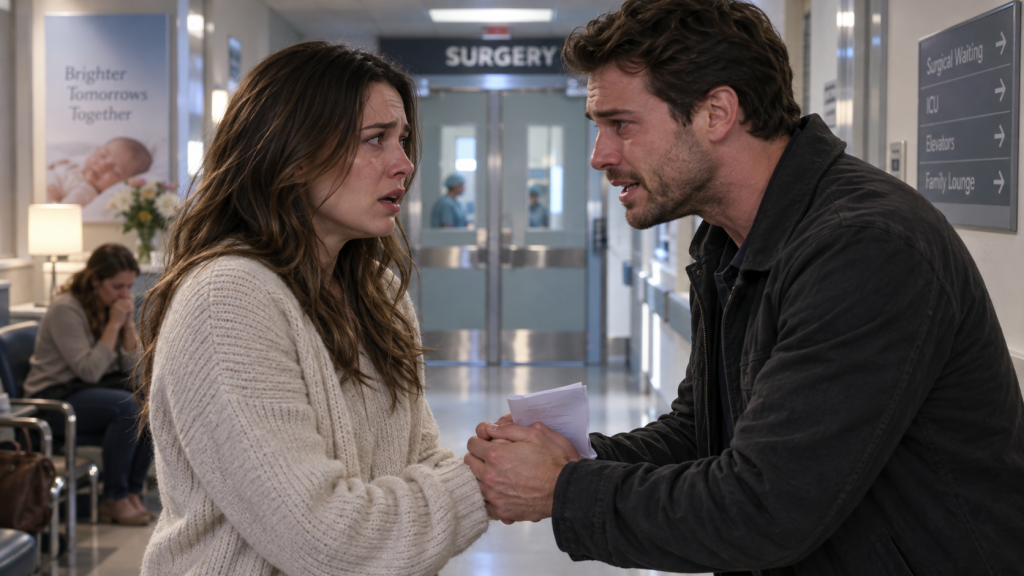
Ben never left her side. He looked completely terrified, his face drained of color. Then, out of nowhere, he grabbed my hand and pulled me into an empty hallway.
“What’s going on?” I asked.
“Before surgery, Rosie made me promise to tell you this only if she didn’t wake up.”
Ben looked as though he was about to cry.
“Now it’s time for you to understand why I really married her,” he said, squeezing my hands tightly.
My stomach dropped.
“Ben, why would you even say that?”
My mind immediately went to the darkest possibilities.
Had he married Rosie for money? Was he after our parents’ inheritance? Or worse… had he only married my sister because it gave him a reason to stay close to me?
Ben watched my face for a moment, as if he could see exactly where my thoughts had gone.
Then he said,
“It’s much worse than you think. You’d better sit down.”
He pulled a sheet of paper from his jacket.
I barely made it through the first line before I screamed.
PART 2 — THE PROMISE ROSIE MADE US KEEP
The first line on the paper said:
I, Hannah Carter, believe my sister Rosalie Carter lacks the ability to understand marriage, manage money independently, or make responsible decisions concerning future children.
My name was beneath it.
My signature too.
I screamed.
Not loudly at first.
It came out as a strangled sound that made Ben grab my shoulders.
“No.”
I looked at him.
“No.”
My hands started shaking so violently the paper rattled between my fingers.
“I never wrote this.”
“I know.”
“I never said this.”
“I know.”
“That’s my signature.”
“I know.”
“Ben.”
My voice cracked.
“What the hell is this?”
He looked toward the operating-room doors.
Then back at me.
“A draft declaration for a guardianship petition.”
The hospital corridor seemed to tilt beneath my feet.
I looked at the page again.
My name.
Rosie’s name.
Words about my sister that I would rather have swallowed glass than say aloud.
Unable to understand marriage.
Unable to manage money.
Unable to make responsible decisions concerning future children.
I turned the page.
There were three more.
Every one of them made Rosie sound like a child wearing an adult body.
That was not my sister.
Rosie needed support with some things.
She read slowly.
Numbers could overwhelm her when they became complicated.
She asked me to explain insurance statements and sometimes needed reminders about appointments.
She also chose her own clothes, worked four days a week at the children’s museum, made a better lasagna than I did, remembered every birthday in our family, took the bus alone, managed a checking account with a budgeting app, and could tell within thirty seconds when someone was talking down to her.
Rosie had limitations.
So did I.
Only hers came with people assuming they were entitled to speak for her.
I turned to the final page.
A signature block.
My name.
A copied version of my signature.
And underneath:
Prepared at the request of Margaret Carter.
My mother.
I stopped breathing.
“Mom?”
Ben closed his eyes.
“Yes.”
For one second, I thought I might faint.
Our mother was twenty yards away in the waiting room.
She had been crying into tissues for the last hour.
She had kissed Rosie’s forehead before the doctors rushed her away.
She had prayed with both hands locked together.
And now I was holding a document suggesting she had once prepared to tell a court that her own daughter could not understand marriage or motherhood.
Using my name to help prove it.
I whispered:
“When?”
“Two years ago.”
My stomach dropped.
Before Rosie and Ben got engaged.
Before the wedding.
Before the twins.
I looked at him.
“What does this have to do with why you married her?”
Ben sat beside me.
For a moment, he looked older than thirty-two.
Exhausted.
Terrified.
Then he said:
“Because Rosie found this before I did.”
I stared.
“She found it?”
“Yes.”
“Where?”
“In your parents’ house.”
My parents’ house.
The house where Rosie had grown up.
The house where we had celebrated birthdays.
The house where Mom kept framed photographs of both daughters on the piano and told everyone how proud she was.
Ben rubbed his hands together.
“She was helping your mom clean out your dad’s office.”
Dad.
That hurt too.
Our father was still alive, but after a stroke three years earlier, he had given Mom control over most household paperwork and had become less involved in complicated legal decisions.
His speech remained slow.
His mind was mostly intact.
But he tired easily.
Mom had gradually become the person who “handled things.”
I had never questioned it.
Neither had Rosie.
Until apparently she did.
Ben continued.
“Rosie opened a folder with her name on it.”
“She thought it was insurance.”
“It wasn’t.”
Inside were drafts.
A guardianship petition.
Statements about Rosie’s abilities.
A list of assets.
A proposed care plan.
And my declaration.
Fake.
I felt sick.
“What assets?”
Ben looked at me.
“That’s where it gets worse.”
I almost laughed from disbelief.
“Worse than my mother forging my signature to say Rosie can’t understand marriage?”
“Yes.”
He looked down.
“Your grandfather left Rosie money.”
I frowned.
“I know.”
When our grandfather died eight years earlier, he left each grandchild something.
I received a modest investment account.
Rosie’s inheritance had gone into a trust because she received disability-related benefits and because Grandpa wanted long-term support available without jeopardizing services she might need.
Mom had explained it.
We all thought it was responsible.
“What about it?”
Ben took a breath.
“Rosie’s trust is worth a lot more than any of us were told.”
My heart started pounding.
“How much?”
“Just over eight hundred thousand dollars when Rosie found the statements.”
I stared.
“No.”
Grandpa had not been a millionaire.
At least not that I knew.
Ben nodded.
“Property sale.”
“He owned land with his brother.”
“Your mom never explained that part.”
I sat completely still.
“And Mom was trustee?”
“Yes.”
My mouth went dry.
Ben quickly added:
“That doesn’t mean the money was hers.”
“I know that.”
“She was supposed to use it according to the trust terms for Rosie’s benefit.”
“Healthcare.”
“Education.”
“Quality-of-life expenses.”
“Support services.”
“Things the trust allowed.”
I nodded.
This was not the part that terrified me.
“What did she do?”
Ben hesitated.
“Rosie noticed payments she didn’t recognize.”
My stomach tightened.
“Payments for what?”
“A vehicle.”
“Home renovations.”
“Travel.”
“Some cash withdrawals.”
I stared.
“How much?”
“We still don’t know the exact amount.”
“Ben.”
“At least ninety thousand dollars was questioned when the new trustee reviewed the records.”
Ninety thousand.
My mother.
From Rosie’s trust.
I felt something inside me tear.
“No.”
I stood.
“I’m going to ask her right now.”
Ben grabbed my wrist gently.
“Hannah.”
“Let go.”
“Rosie made me promise.”
I froze.
His hand released immediately.
“What promise?”
“That if she went into surgery and didn’t wake up, I had to tell you everything.”
I stared at him.
“Why only then?”
His eyes filled.
“Because she didn’t want you carrying this while she was pregnant.”
Anger collided with love so violently I could barely speak.
“She should have told me.”
“She wanted to.”
“Then why didn’t she?”
“Because she thought you might blame yourself.”
I looked at the forged declaration.
“Why would I blame myself?”
Ben looked at me for several seconds.
Then said:
“Because for almost a year, Rosie thought you really signed it.”
The words hurt more than anything else.
My knees gave way.
I sat.
“She thought I said those things about her?”
“At first.”
I covered my mouth.
“Oh, God.”
Ben told me what Rosie had done after finding the folder.
She did not confront Mom.
That surprised me.
Rosie, who once threw an entire bowl of mashed potatoes at me when I called her favorite singer terrible, had somehow been calmer than I would have been.
She took photographs of the papers.
Then called Ben.
Not me.
Because my signature was on them.
She did not know whom she could trust.
Ben met her at a coffee shop.
She showed him everything.
He later told me she cried so hard she could barely drink her hot chocolate.
Then she said:
“If Hannah thinks I can’t get married, maybe everyone thinks that.”
Ben had taken her hands.
“No.”
“How do you know?”
“Because I know you.”
Rosie replied:
“That’s not the same as everybody.”
That sentence broke me.
Because that was exactly what people with disabilities spend their lives fighting.
Not whether one person loves them.
Whether the world will respect their choices when someone else decides love is not enough.
Ben did something important next.
He did not say:
I’ll handle it.
He did not march into my mother’s house.
He did not tell Rosie what she should do.
He asked:
“What do you want?”
Rosie said:
“I want to know if Mom can do this.”
So Ben found an attorney who specialized in disability rights and estate planning.
Janet Ruiz.
Rosie met with Janet alone first.
Ben waited outside.
I loved him for that more than I knew how to say.
Janet explained that Down syndrome did not automatically make Rosie legally incapable of making decisions.
Capacity depended on the decision and the person.
Marriage had its own legal standards.
Financial management could be supported without removing every right.
Guardianship, where used, was supposed to be based on actual need and due process, not simply diagnosis.
And Rosie was entitled to her own lawyer if anyone tried to take control over her life.
Rosie’s response had apparently been:
“Good. I want my own lawyer.”
That sounded exactly like her.
Janet arranged an independent evaluation.
Not to prove Rosie was “normal.”
Not to force her into some impossible standard.
To document her actual abilities and support needs.
Rosie understood marriage.
She understood that Ben was not her parent.
She understood money at the level necessary for daily decisions, though complex investment matters required assistance.
She understood sex.
Pregnancy.
Medical choices.
Where she needed support, she could identify whom she trusted.
The evaluator recommended supported decision-making and professional financial assistance rather than broad guardianship.
In other words:
Help where needed.
Choice where possible.
A person, not a diagnosis.
Then Janet reviewed the trust.
That was when things became serious.
Mom had broad discretion as trustee.
Broad did not mean unlimited.
The payments Rosie questioned required explanation.
So Janet requested an accounting.
Mom resisted.
At first gently.
Why was Rosie suddenly worried about money?
Who was influencing her?
Was Ben putting ideas in her head?
Then less gently.
She told Rosie that lawyers would “confuse” her.
That Grandpa had trusted Mom for a reason.
That families should not treat each other like criminals.
Rosie replied:
“I’m not treating you like a criminal. I’m asking where my money went.”
Again.
My sister.
Eventually Mom hired her own attorney.
The trust accounting was reviewed.
Some expenditures were legitimate.
Medical copays.
Transportation.
Education.
Adaptive services.
A vacation Rosie had taken with our parents.
Others were questionable.
Part of the kitchen renovation at my parents’ house had been charged to Rosie’s trust under the argument that Rosie lived there at the time and benefited from accessibility changes.
Some of that was defensible.
Some was not.
A vehicle titled in Mom’s name had partly been justified as transportation for Rosie.
Yet Rosie rarely used it.
Cash withdrawals had weak documentation.
A cruise Mom took with friends had somehow included expenses charged to the trust account.
No single dramatic theft.
No suitcase of money.
Something more ordinary.
Boundary erosion.
Mom had begun telling herself that because caring for Rosie cost her time and energy, money set aside for Rosie could sometimes reimburse family life around her.
Then “sometimes” expanded.
The matter never became a sensational criminal case.
That surprised me.
Instead, lawyers got involved.
Records were reconstructed.
Mom agreed to resign as trustee rather than fight removal.
A professional fiduciary replaced her.
Some money was repaid.
Some expenses were credited or settled.
The final disputed amount had been lower than the first frightening estimate once legitimate costs were separated.
Still large enough to matter.
Still wrong enough to break trust.
And I had known none of it.
“Why didn’t Rosie tell me after she learned I hadn’t signed the declaration?”
I asked.
Ben looked ashamed.
“She didn’t know right away.”
“What do you mean?”
“The signature looked real.”
“Because it is.”
“Copied.”
“Yes.”
“How did Mom get it?”
Ben stared at the floor.
“Your passport renewal form.”
I frowned.
Then remembered.
Three years earlier, Mom had helped gather documents while I was moving apartments.
She had scanned a signed form for me.
My signature.
Clean.
High resolution.
Easy to paste.
My stomach turned.
Eventually Janet contacted me indirectly.
Not about the declaration.
About whether I had ever expressed concerns over Rosie’s capacity.
I remembered the call.
God.
I remembered it.
A woman from a law office had asked whether I believed Rosie could make adult decisions independently.
I said:
“She sometimes needs help, but she knows what she wants.”
The woman asked whether I had signed anything stating otherwise.
I laughed.
“Absolutely not.”
At the time, she said:
“Thank you.”
Nothing more.
I forgot the conversation.
Now I understood.
That was when Rosie learned the declaration was false.
My sister had probably cried after hearing that.
And I had gone back to work as if nothing happened.
I felt anger rise again.
“At that point she should have told me.”
Ben nodded.
“I told her the same thing.”
“And?”
“She said she wasn’t ready.”
“Why?”
“Because your mom was begging her not to ‘split the family apart.’”
Of course.
That phrase.
The favorite weapon of people who create a family crisis and then accuse the person naming it of causing division.
Ben continued.
“Your dad’s health was bad.”
“Rosie was scared the stress would hurt him.”
“And she was scared you’d confront your mom immediately.”
“She was right.”
Despite everything, I almost laughed.
“Yes.”
Then Ben added:
“And Rosie had just found out she was pregnant.”
I went quiet.
The pregnancy had not been an accident.
That surprised me too.
Rosie and Ben had talked with doctors before trying.
They attended preconception counseling.
Discussed the additional medical considerations associated with Down syndrome.
Talked honestly about parenting supports.
Ben’s job had flexible hours.
Rosie wanted to reduce work after the baby came.
They planned for help.
Not because Rosie had Down syndrome and therefore needed permission to become a mother.
Because every responsible couple should think about what support parenting will require.
Then they learned it was twins.
Rosie called me screaming with joy.
I had cried.
Had no idea another legal battle sat underneath that happiness.
I looked at Ben.
“You still haven’t answered the question.”
“What question?”
“Why did you say I needed to understand why you really married her?”
His face changed.
Then he smiled sadly.
“Because you were going to assume something ugly.”
“I did.”
“I know.”
He squeezed his eyes closed.
“And Rosie knew you would.”
That stung.
“She made me promise to say it exactly that way.”
“What?”
“‘Tell Hannah it’s time to understand why you really married me.’”
I almost laughed through tears.
“That little jerk.”
Ben laughed too.
For one second, the hospital corridor felt less terrifying.
Then his face became serious.
“The reason is that Rosie asked me.”
I stared.
“That’s it?”
“No.”
He took a breath.
“When she found those documents, everyone around her suddenly had an opinion about whether she was capable of marriage.”
“Your mom.”
“Lawyers.”
“Evaluators.”
“Doctors.”
“People who meant well.”
“People who didn’t.”
“She hated it.”
Then one night Rosie asked Ben:
“If nobody was talking about whether I’m allowed to marry you, would you still want to marry me?”
Ben said yes.
She asked:
“Then why are we waiting?”
He laughed as he told me.
“I said I wanted to give her a perfect proposal.”
“She said, ‘You already asked me four times what ring size I wear. You’re not subtle.’”
That was Rosie.
Absolutely Rosie.
So Ben proposed.
Not because marriage would magically end guardianship.
It would not.
Not because he could “protect” Rosie by becoming another person who made decisions for her.
He understood that too.
He married her because she chose marriage and because he loved her.
But the timing mattered.
Rosie wanted one adult choice in her life that did not occur after someone else granted permission.
She did not want to wait for her mother to approve.
Or a lawyer.
Or me.
Or some evaluator.
She wanted to marry the man she loved because she understood what marriage meant and wanted it.
Ben told me:
“I didn’t marry Rosie to rescue her.”
His voice cracked.
“I married her because she was tired of people treating love like something she needed to qualify for.”
I started crying again.
Then I looked toward the operating-room doors.
“Does Mom know Rosie knows everything?”
“Yes.”
“Everything?”
“The trust.”
“The declaration.”
“All of it.”
“And they still speak?”
Ben’s expression became complicated.
“Sometimes.”
That was another truth adults hate.
Rosie loved Mom.
Even after what happened.
Forgiveness had not restored financial authority.
Mom was no longer trustee.
Rosie did not let her handle legal paperwork.
But she still called her mother.
Still had dinner with her.
Still cried into her shoulder when the pregnancy became frightening.
People want betrayal to simplify love.
It rarely does.
“Does Dad know?”
I asked.
Ben hesitated.
“Some.”
My heart sank.
“How much?”
“He knows your mom misused some trust money and resigned.”
“The forged declaration?”
“No.”
“Why?”
“Rosie decided not to tell him while his health was unstable.”
I rubbed my forehead.
“So everyone protected everyone until nobody knew the truth.”
“Pretty much.”
God.
Family.
Then a doctor appeared.
Everything else vanished.
Ben stood so fast his chair tipped backward.
The doctor removed her surgical cap.
“Mr. Carter?”
Ben went white.
“Yes.”
I stood beside him.
“Rosie is out of surgery.”
His knees almost buckled.
“Is she alive?”
The doctor’s face softened.
“Yes.”
Ben covered his mouth.
A sound came out of him that I will never forget.
Half sob.
Half prayer.
“The babies?”
“One boy and one girl.”
I started crying immediately.
“Both alive.”
The doctor continued.
“They are premature and need respiratory support in the neonatal intensive care unit.”
“But right now, both are stable.”
Ben bent forward with both hands on his knees.
I grabbed his shoulder.
Rosie was alive.
The babies were alive.
For that minute, nothing else mattered.
Rosie had suffered severe preeclampsia complicated by placental problems and bleeding.
The team had performed an emergency cesarean delivery.
She had required transfusion and close monitoring.
She was not awake yet.
Not because the doctors expected the worst.
Because she remained heavily sedated and critically ill enough to need intensive observation.
Ben asked the same question four different ways.
“Will she wake up?”
The doctor answered carefully every time.
“We expect her to.”
Not promise.
Expect.
Enough.
We returned to the family waiting room.
Mom saw our faces and stood.
“Well?”
Ben collapsed into her arms.
“Alive.”
Mom started sobbing.
“The babies?”
“Alive.”
Dad cried too.
His weakened hand shook as he reached for Ben.
I stood several feet away.
Watching my mother hold the man married to the daughter whose autonomy she had once apparently tried to limit.
Love.
Wrongdoing.
Fear.
All occupying the same room.
I hated how complicated it was.
Then Mom looked at me.
She knew immediately.
Not because Ben told her.
Because I was still holding the paper.
Her face emptied.
“Hannah.”
Dad looked between us.
“What?”
Nobody spoke.
Mom whispered:
“Not here.”
I felt anger surge.
For once, I agreed.
Not here.
Not while Rosie was fighting to wake up.
Not with Dad trembling.
Not while two premature babies were learning to breathe.
So I folded the declaration.
Put it inside my bag.
And said:
“Later.”
Mom nodded.
She looked terrified.
Good.
Ben was allowed into the ICU first.
Husband.
Rosie’s chosen healthcare proxy.
That mattered.
Long before the pregnancy became dangerous, Rosie had completed advance directives with her own attorney.
Not because she expected disaster.
Because after the guardianship scare, she wanted her wishes documented.
Ben was primary healthcare agent if she could not speak.
I was alternate.
Mom was not.
That had caused enormous hurt when Rosie made the decision.
Now, in the hospital, the paperwork meant nobody had to argue in a hallway.
Rosie had chosen.
Her choice spoke while she could not.
Dad would have understood the beauty of that if he had known the full story.
An hour later, Ben came back.
“She moved her hand.”
I stood.
“Really?”
“She squeezed mine.”
The nurse was not sure it was fully purposeful yet.
Ben did not care.
To him, Rosie had already returned.
He laughed and cried simultaneously.
Then the NICU nurse came and asked whether Ben wanted to see the babies.
He looked terrified.
I went with him.
Two incubators.
Two impossibly small human beings.
Our niece and nephew.
The girl weighed a little over four pounds.
The boy slightly less.
Tubes.
Monitors.
Tiny knitted hats.
Ben pressed his hand against the incubator wall.
“That’s Lily.”
He whispered.
Then pointed toward the other.
“And Noah.”
They had already chosen names.
Rosie had insisted nobody hear them until birth.
Even during chaos, my sister apparently remained committed to surprises.
Standing in the NICU, I finally understood why Ben’s announcement had sounded so frightening.
Now it’s time for you to understand why I really married her.
I had assumed money.
Manipulation.
Pity.
Something ugly.
The truth was almost the opposite.
He married Rosie because when other people started treating her adulthood as a legal debate, Ben remained the one person who kept asking her what she wanted.
That was love.
Not making every decision for someone.
Creating enough safety that their answer can exist.
Then my phone buzzed.
Martin.
Not our family lawyer.
A different Martin.
Martin Ruiz, Janet’s law partner, who had helped Rosie update her estate and healthcare documents after she became pregnant.
I had met him once.
His message said:
Hannah, Ben asked us to contact you if Rosie became incapacitated. Please call when you can. There is a time-sensitive issue concerning hospital authorization paperwork.
My stomach dropped.
Not again.
I called from the NICU family room.
“Hannah?”
“Yes.”
“I’m glad Rosie and the babies are alive.”
“Thank you.”
“What issue?”
He paused.
“Earlier today, before the emergency surgery, the hospital received a copy of a document naming Margaret Carter as alternate medical decision-maker for Rosie.”
I went completely still.
“My mother?”
“Yes.”
“That’s wrong.”
“We know.”
“Ben is primary.”
“You are alternate.”
“Yes.”
“The hospital has the valid directive.”
“Then what document did Mom give them?”
“That’s what we’re trying to determine.”
The false document had not displaced Ben.
The hospital’s records already contained Rosie’s current advance directive, properly executed.
Good systems again.
But someone had uploaded an older-looking healthcare power of attorney through the patient portal approximately two weeks earlier.
It purported to give Mom broad authority if Rosie was “unable to understand medical information.”
The phrase made my skin crawl.
It sounded familiar.
Too familiar.
From the guardianship declaration.
“Did Rosie sign it?”
“No.”
Martin said.
“At least we do not believe so.”
The signature image did not match the way Rosie signed current legal documents.
Rosie wrote her name slowly.
Carefully.
Large letters.
The uploaded document had a smoother, compressed signature that appeared copied from something else.
It needed proper examination.
Facts first.
Always.
Then Martin said:
“There’s more.”
Of course.
“The document mentions authority related to the newborn children.”
I stopped breathing.
“What kind of authority?”
“It says that if Rosie lacks capacity after delivery, Margaret Carter may participate in decisions concerning temporary placement and caregiving for any child born to Rosie.”
My entire body turned cold.
“Can she do that?”
“Not just because a paper says so.”
He answered immediately.
“Parentage, custody, and medical authority over newborns involve separate legal questions.”
“This document does not magically give Margaret custody of anyone.”
Relief.
Measured.
Then:
“But we need to know why it exists.”
Yes.
I walked back toward the waiting room.
Mom was sitting beside Dad.
Hands folded.
Still crying.
Still looking like a frightened grandmother.
I stared at her and wondered how many versions of her I was looking at.
The woman who taught Rosie to read by labeling kitchen cupboards.
The woman who punched a school administrator’s desk when he suggested Rosie should not attend the same field trip as everyone else.
The woman who had apparently misused trust money.
The woman who prepared a guardianship declaration.
The woman who might now have tried to place herself into Rosie’s medical decisions before the twins were born.
Nothing about her fit neatly into good or evil.
That almost made me angrier.
I did not confront her.
Not yet.
I called Ben out of the NICU.
Showed him Martin’s message.
His face changed.
“No.”
“You knew about this?”
“No.”
He read it again.
Then:
“Rosie changed everything before the pregnancy.”
“I know.”
“We signed all of it with Janet.”
“I know.”
“Mom knows she isn’t healthcare proxy.”
“Yes.”
His eyes filled with fury.
“Then why would she—”
He stopped.
We both looked toward the waiting room.
Then he whispered:
“Rosie told me something last month.”
“What?”
“She said your mom kept asking what would happen if Rosie couldn’t care for the babies right away.”
My stomach tightened.
“What did Rosie say?”
“That I’m their father.”
“Obviously.”
“Mom kept saying she meant if both of us needed help.”
“And?”
“Rosie said we had already chosen temporary caregivers.”
My heart began pounding.
“Who?”
Ben looked at me.
“You.”
I froze.
“Me?”
“And your cousin Emily as backup.”
He swallowed.
“Rosie wanted you.”
For a second, all the anger vanished.
My sister trusted me with her children.
After once believing I had signed a paper saying she was incapable of raising them.
I covered my mouth and cried.
Then Ben said:
“She didn’t tell your mom.”
“Why not?”
“Because Mom had started talking like being their grandmother gave her first rights.”
There it was again.
Love confused with authority.
Different story.
Same disease.
Martin sent the uploaded document.
I opened it.
First page.
HEALTHCARE AND FAMILY SUPPORT AUTHORIZATION
It looked official.
Too official.
Rosie’s name.
Date of birth.
Address.
Then the clause giving Mom authority to participate in healthcare decisions if Rosie lacked capacity.
And another about newborn caregiving.
The signature at the bottom looked like Rosie’s.
If you did not know her.
I did.
Rosie always put a heart above the i when signing birthday cards.
Never legal documents.
On legal documents, Janet had taught her to slow down and use her full name:
Rosalie Marie Carter.
This said simply:
Rosie Carter.
That was how she signed family notes.
Not legal forms.
Then I reached the witness section.
My stomach dropped.
Witness:
Hannah Carter.
My name.
Again.
My signature.
Again.
I had not signed it.
The exact same signature image from the old guardianship declaration.
My mother had apparently reused my identity.
Or someone had.
Facts first.
But the pattern was becoming difficult to ignore.
I looked toward Mom.
She saw my face.
Then saw the document in my hand.
Her expression collapsed.
“Hannah.”
I stood.
Ben beside me.
Dad looked confused.
“What’s happening?”
Mom started crying.
“Please.”
I spoke quietly.
“Did you upload this to Rosie’s hospital portal?”
Dad looked at her.
“What document?”
Mom said nothing.
I repeated:
“Did you upload it?”
Her shoulders shook.
Then she whispered:
“Yes.”
Ben stepped backward as if she had hit him.
“Why?”
His voice broke.
Mom looked at him.
“I was scared.”
“You’re always scared.”
Ben rarely raised his voice.
He did then.
“That doesn’t make you her parent forever.”
People across the waiting room turned.
A nurse glanced over.
I touched Ben’s arm.
Not to silence him.
To remind him where we were.
He lowered his voice.
Mom cried harder.
“I thought if something happened to Rosie, the babies would need someone stable.”
Ben stared.
“I am their father.”
“I know.”
“Do you?”
“Yes.”
“Because you uploaded a document trying to put yourself into decisions we already made.”
Mom shook her head.
“I wasn’t taking them from you.”
“What were you doing?”
She had no answer.
That was the answer.
Dad spoke.
Slowly.
His speech had never fully recovered from the stroke, but when he was angry, he chose words with painful care.
“Margaret.”
Mom looked at him.
“What did you do?”
She covered her face.
And for the first time, I realized Dad truly did not know.
Not about this.
Maybe not about half of it.
I felt a different kind of grief.
Mom had spent years being his helper after the stroke.
Handling bills.
Appointments.
Paperwork.
Speaking when he struggled.
Had helping become another place where she forgot the difference between support and control?
I suddenly wondered whether Rosie was the only person whose choices Mom had quietly begun managing.
That question frightened me.
But not today.
Not yet.
Mom finally said:
“I thought Rosie might die.”
Ben flinched.
“So did I.”
“I thought the babies might come home without her.”
“And you thought that made you their decision-maker?”
“No.”
Her voice cracked.
“I thought I needed something in writing in case people didn’t listen to me.”
There.
The truth.
Not protection exactly.
Fear of not being listened to.
She had created authority because she feared she would not be given enough naturally.
Exactly what she had done with Rosie’s trust.
Exactly what she had almost done through guardianship.
I asked:
“Did you create the document?”
“Yes.”
“Did Rosie sign it?”
Mom cried.
“No.”
“Did I?”
“No.”
Dad made a sound.
Small.
Destroyed.
I could not look at him.
Mom continued.
“I copied the signatures from old family papers.”
Ben’s hands curled into fists.
“Why?”
“I wasn’t going to use it unless there was an emergency.”
The sentence chilled me.
“You uploaded it before the emergency.”
She stopped.
Yes.
Two weeks earlier.
Prepared in advance.
Waiting.
Ben whispered:
“You thought my wife becoming unconscious would finally make your authority valid.”
Mom shook her head violently.
“No.”
But none of us could unhear the sentence.
A nurse approached.
“Mr. Carter?”
Ben turned.
“Your wife is waking up.”
Everything stopped.
Mom covered her mouth.
I grabbed Ben.
“Go.”
He hesitated.
Looking between Mom and Rosie’s room.
I said it again.
“Go.”
He ran.
And despite everything, Mom smiled through tears.
Rosie was waking up.
My sister.
Alive.
Still herself.
And before anyone could decide what happened next, she was coming back to speak for herself.
I looked down at the false document.
Then at Mom.
“This conversation is over until Rosie can decide whether she wants you in it.”
Mom stared.
“Hannah.”
“No.”
The word felt heavy.
Correct.
“For once, nobody decides what Rosie needs before Rosie gets to answer.”
Dad closed his eyes.
Mom cried.
I sat beside him.
And across the hallway, behind an ICU door, my sister was opening her eyes.
But the paper in my hand had revealed something even Ben had not known.
The guardianship plan had not ended when Mom lost control of the trust.
It had changed shape.
And if Rosie recovered enough to speak, our family was finally going to have to hear what she wanted—
without anyone else signing her name first.
PART 3 — THE ANSWER ROSIE GOT TO GIVE HERSELF
Rosie opened her eyes at 6:42 that evening.
Ben was the first person she saw.
Of course he was.
He had been sitting beside her bed with one hand wrapped around hers for almost three hours, speaking quietly even when the nurses told him she might not remember any of it.
He told her the babies were alive.
He told her Lily had more hair than Noah.
He told her Noah had already kicked one nurse hard enough to make everyone laugh.
He told her that neither baby had inherited his terrible nose.
He told her I was outside.
He told her Dad was there.
He did not mention Mom.
Not yet.
When Rosie finally moved her fingers around his hand, Ben stood so quickly that the chair behind him tipped over.
Her eyelids fluttered.
Her mouth moved.
Nothing came out.
He bent close.
“Rosie?”
Her lips moved again.
This time he understood.
“The babies?”
Ben cried before answering.
“Alive.”
Rosie closed her eyes.
Two tears slid toward her temples.
Then she whispered something else.
Ben leaned closer.
“What?”
She tried again.
“Both?”
“Yes.”
His voice broke.
“Both.”
Rosie smiled.
Barely.
It was the smallest smile I had ever seen.
It was also the most beautiful.
The doctors did not let us crowd her.
Good.
Rosie had survived emergency surgery, severe blood loss, dangerously high blood pressure, and the delivery of two premature babies.
She needed monitoring.
Medication.
Rest.
Time.
Not a family tribunal beside her bed.
Ben stayed.
I waited.
Dad sat quietly with both hands around a paper cup of coffee he never drank.
Mom was no longer in the family waiting room.
After she admitted creating the false healthcare document, Dad asked her to go home.
She resisted.
“She’s my daughter.”
Dad looked at her.
Slowly.
Painfully.
“So let her decide if she wants you here.”
Mom cried.
Then left.
For once, no one chased her.
The hospital’s risk-management team became involved before midnight.
The false document was preserved.
The valid healthcare directive remained controlling.
Ben was still Rosie’s chosen healthcare agent while she lacked capacity to make particular decisions.
I remained alternate.
The forged paper did not magically give Mom authority over Rosie or the twins simply because it had been uploaded into a portal.
The hospital placed a clear notation in Rosie’s chart that the document was disputed and should not be relied upon.
Security was informed.
So was hospital legal counsel.
Martin Ruiz preserved a copy.
Janet was notified.
No one burst into the hallway waving handcuffs.
No one declared Mom a criminal before the facts were reviewed.
Procedure moved quietly around us.
I had never appreciated boring procedure so much in my life.
By the next morning, Rosie could speak in short sentences.
She was exhausted.
Her throat hurt from the breathing tube.
She kept drifting back to sleep.
The nurse asked whether she wanted Ben in the room while the doctor explained what happened.
“Yes.”
The nurse asked whether she wanted me too.
Rosie looked at Ben.
Then at me.
“Yes.”
Then she whispered:
“Mom?”
The room became still.
I did not answer for her.
That mattered.
Ben did not either.
The nurse said gently:
“Your mother is not here right now. Would you like us to contact her?”
Rosie stared at the blanket.
For a long time.
Then:
“No.”
One word.
No explanation required.
The nurse nodded.
“All right.”
Nothing broke.
The hospital did not collapse.
The world kept moving after Rosie said no.
That fact seemed important.
The doctors explained the surgery.
The preeclampsia.
The bleeding.
The transfusion.
The babies’ prematurity.
Rosie listened.
Asked questions.
Slowly.
Sometimes she asked Ben to repeat something.
Sometimes she asked the doctor to use simpler words.
There was no shame in that.
People confuse understanding with speed far too often.
Rosie took longer.
She still understood.
When the doctor finished, Rosie asked:
“When can I see them?”
“Not yet.”
Her face fell.
The doctor explained that if her blood pressure and bleeding continued improving, they would try to get her into a wheelchair later.
Rosie nodded.
Then:
“Pictures?”
Ben already had eighty-seven.
Of course he did.
He sat beside her and showed them one by one.
Lily.
Noah.
Tiny hats.
Tiny hands.
Rosie cried.
Then laughed.
Then cried again.
I stood near the window and watched my sister become a mother before she had even been able to hold her children.
No document in the world could make that moment belong to anyone else.
We did not tell her about Mom that morning.
Not because we wanted to hide it.
Because Rosie had just survived a medical crisis.
Janet, the attorney Rosie had chosen for herself, spoke with the hospital social worker and Ben.
They agreed on something simple.
Rosie deserved the truth.
She also deserved to receive it when she had enough strength to process it.
There is a difference between respecting someone’s autonomy and dumping every disaster onto them the second they open their eyes.
Support includes timing.
What matters is who controls that timing.
Rosie did.
On the third day, she asked.
“Why isn’t Mom here?”
Ben looked at me.
I looked at Rosie.
“Do you want the short answer or the whole answer?”
She frowned.
“The whole one.”
Of course.
So I pulled the chair closer.
Ben sat on the other side.
And we told her.
Not dramatically.
No performance.
The hospital upload.
The false healthcare authorization.
The clause about the babies.
My forged signature.
Mom’s admission.
Rosie listened without interrupting.
Her face changed slowly.
Not shock.
Recognition.
That hurt more.
When I finished, she whispered:
“She did it again.”
Ben reached for her hand.
Rosie let him.
I asked:
“Did you know she had anything like that?”
“No.”
Then she became angry.
Not loudly.
Rosie’s anger had always been physical.
Jaw tight.
Hands clenched.
Eyes bright.
“She promised.”
Ben whispered:
“I know.”
“She promised she was done making papers about me.”
“I know.”
“She lied.”
“Yes.”
No one softened it.
Rosie looked at me.
“Did you sign?”
“No.”
“I know.”
She closed her eyes.
“I know now.”
Those words landed between us.
I reached for her hand.
“Rosie.”
She looked at me.
“I’m sorry you ever had to wonder whether I would say those things about you.”
Her eyes filled.
“For a while, I thought you did.”
“I know.”
“That hurt.”
“I know.”
“No.”
She squeezed my fingers.
“You don’t know.”
She was right.
So I stopped pretending.
“You’re right.”
Silence.
Then:
“I’m sorry.”
Rosie stared at me for several seconds.
Then nodded.
Not instant forgiveness.
Not a hug that erased everything.
Just acknowledgment.
Good.
She wanted Janet.
That afternoon, Janet joined by video.
Rosie insisted on speaking for herself.
Ben remained because Rosie asked him to.
I stayed because she asked me.
No one else.
Janet explained what had happened with the false healthcare document and what options existed.
Preserve it.
Report it.
Ask the hospital to flag it permanently.
Consider a formal complaint.
Speak with law enforcement if Rosie wished.
Review every current estate and healthcare document again.
Rosie listened.
Then said:
“I want the police report.”
Janet nodded.
“Okay.”
“I want Mom to know I did it.”
“Okay.”
“And I want my babies’ papers checked too.”
“Which papers?”
“All of them.”
That was sensible.
The hospital had already begun that review.
No mystery caregiver forms.
No custody transfer.
No valid authorization giving Mom control over Lily or Noah.
Good.
Then Rosie said:
“I want Hannah as backup still.”
My throat tightened.
“You do?”
She rolled her eyes.
“Don’t make it weird.”
Ben laughed.
I cried.
Apparently both responses were acceptable.
Rosie stayed in the hospital nine days.
The twins stayed much longer.
Lily needed oxygen for several weeks.
Noah struggled with feeding at first.
There were alarms.
Weight checks.
Tiny victories measured in milliliters.
Rosie could not simply recover from major surgery and become a full-time NICU mother overnight.
So we built support around her.
Ben learned every feeding schedule.
I handled groceries and laundry when asked.
Dad came twice a week and sat beside the incubators telling the twins long stories about fishing that neither infant had requested.
Emily organized a meal calendar.
The hospital social worker helped coordinate transportation and follow-up appointments.
A nurse taught Rosie and Ben how to recognize signs that required urgent medical attention after discharge.
Support.
Real support.
Not taking over.
That distinction became sacred to us.
Mom was not allowed into the NICU at first because Rosie did not put her on the visitor list.
That was Rosie’s decision.
Mom cried when she learned.
I knew because she called me.
“Hannah, please.”
“No.”
“I just want to see them.”
“I know.”
“They’re my grandchildren.”
“I know.”
“She’s punishing me.”
“No.”
My voice stayed calm.
“She’s choosing who enters her hospital room and her babies’ NICU.”
“That is not punishment.”
Mom started crying harder.
“I’m her mother.”
I closed my eyes.
“And she is a mother now too.”
Silence.
That sentence finally reached somewhere deeper.
Dad moved into my apartment temporarily.
That surprised all of us.
He did not want to stay at home with Mom.
Not because he was filing for divorce.
Not because he suddenly hated her.
Because he needed space.
One evening, he sat at my kitchen table struggling to butter toast with his weaker hand.
I offered help.
He shook his head.
“I can.”
So I waited.
It took him almost a minute.
Then he looked at me.
“You see?”
“What?”
“That.”
His eyes filled.
“Your mother started doing everything after the stroke.”
I sat slowly.
“She thought she was helping.”
“Yes.”
“At first, she was.”
He looked toward the window.
“Then I stopped getting asked.”
My chest tightened.
“What do you mean?”
“Bills.”
“Doctors.”
“Visitors.”
“Food.”
He spoke slowly.
Each word deliberate.
“She would say, ‘You’re tired. I handled it.’”
I felt sick.
“Dad, did she ever sign things for you?”
He looked down.
“I don’t know.”
That answer opened another door none of us wanted.
We did not assume.
Again.
Dad obtained his own attorney.
Not Janet.
Not Mom’s former trust lawyer.
His.
They reviewed his accounts, powers of attorney, medical records, and property documents.
Most were fine.
Mom had legitimate authority on several accounts because Dad had knowingly granted it after the stroke.
Some decisions had been made jointly.
But there were also small things he had not understood fully.
A beneficiary change on one savings account.
A vehicle title.
Automatic transfers.
Nothing like Rosie’s trust.
Nothing that suggested some enormous hidden theft.
Still, the pattern was there.
Mom had become accustomed to solving uncertainty by increasing her control.
Sometimes legally.
Sometimes informally.
And twice, with Rosie, by creating documents that crossed lines no love could justify.
When Rosie was strong enough to leave the hospital, the babies stayed behind.
That first night home nearly broke her.
She stood in the nursery between two empty bassinets and cried.
Ben held her.
I sat on the floor.
Nobody told her to be grateful the babies were alive.
She was grateful.
She was also heartbroken that they were not home.
People can hold two truths.
We were becoming experts.
Rosie whispered:
“I feel like a bad mom.”
I looked up.
“Why?”
“I’m here.”
“They’re there.”
Ben knelt in front of her.
“You gave birth during emergency surgery.”
“You visit every day.”
“You pump milk every three hours even when you hate it.”
“You call the nurses at midnight.”
“You know Lily’s oxygen numbers better than I do.”
“You are not a bad mom because the NICU has better equipment than our bedroom.”
Rosie laughed through tears.
That was Ben.
Never rescuing her from emotion.
Just refusing to let fear define her.
Lily came home first.
Noah twelve days later.
The day Noah finally left the hospital, Rosie insisted on carrying the empty car seat in herself.
Ben started to take it.
She said:
“I’ve got it.”
He released the handle.
Simple.
That image stayed with me.
Love knowing when to let go.
Mom’s legal problems moved in the background.
Rosie filed a formal report regarding the forged healthcare document and the earlier declaration bearing my signature.
I gave my statement.
So did Ben.
The hospital preserved electronic upload information.
The attorneys preserved the old guardianship materials.
Investigators reviewed who created and submitted what.
Mom eventually admitted responsibility through counsel.
No sensational courtroom battle.
No family member dragged away from a dinner table.
The supported allegations involving forged signatures and false healthcare documents were taken seriously.
The exact legal resolution reflected that no false medical authority had ultimately been relied upon to override Rosie, no custody had changed, and no physical harm resulted from the document itself.
Mom entered a plea on document-related offenses that prosecutors could prove.
She received probation, financial penalties, required counseling, and restrictions related to acting as fiduciary or decision-maker for vulnerable adults during the supervision period.
The court also considered the prior trust-accounting history.
It did not send her away for thirty years.
It did not pretend nothing happened.
Reality landed between.
The remaining trust accounting was completed too.
A professional trustee stayed in place.
The old disputed expenditures were reviewed again.
Legitimate expenses remained legitimate.
Improper ones did not become acceptable merely because Mom said she had meant well.
The final repayment figure was substantial but lower than the frightening early estimate.
Mom sold an investment account and refinanced part of the house to repay what was required under the settlement.
Rosie did not become rich overnight.
The trust was not a lottery prize.
It existed to support her life over decades.
Housing.
Healthcare.
Education.
Assistance.
Future needs.
The most important outcome was not the balance.
It was that Mom no longer controlled it.
Rosie chose supported decision-making arrangements with people she selected.
Professional help for complex finances.
Ben for some practical support.
Me for backup on healthcare.
Janet for legal matters.
No single person became her replacement.
That was exactly the point.
Sometimes Rosie changed her mind.
We learned to survive it.
She once chose a more expensive adaptive stroller system for the twins than Ben preferred.
He thought it was unnecessary.
Rosie thought the storage mattered.
They argued.
Then Rosie said:
“You don’t get extra votes because I have Down syndrome.”
Ben stared.
Then laughed.
“Fair.”
They bought the stroller.
Marriage.
Actual marriage.
Not one person protecting another by becoming the boss.
Mom did not see Rosie for four months.
That was Rosie’s choice.
Dad saw her.
Dad saw the babies.
Mom received photographs only when Rosie approved.
At first, relatives pressured her.
“A baby needs a grandmother.”
“Your mom made mistakes.”
“She’s suffering too.”
Rosie became furious.
I did something I should have done years earlier.
I stopped the relatives before Rosie had to.
“This is not a family vote.”
That sentence traveled quickly.
Good.
Mom kept writing letters.
Rosie ignored the first several.
Then one day she asked me to read one aloud.
I did.
Mom wrote:
I kept telling myself I was protecting you because admitting I wanted control sounded ugly.
My throat tightened.
The sentence reminded me of something I had heard in other families, other forms.
Control often dresses itself as protection because protection is harder to challenge.
Mom continued:
When you were little, I had to fight people who underestimated you. I became so used to fighting for you that I did not notice when I started fighting instead of listening to you.
Rosie began crying.
I kept reading.
I was terrified that if I stopped managing everything, someone would hurt you. Then I became someone who hurt you.
I stopped.
Rosie wiped her face.
“Keep going.”
Mom apologized for the trust.
For the declaration.
For copying my signature.
For the hospital document.
Then:
I treated your need for some support as proof that I should be in charge of every important decision. That was not support.
Rosie whispered:
“No.”
Then:
“That one is right.”
She asked me to finish.
The last paragraph said:
I hope one day you let me know Lily and Noah. But I understand that being their grandmother does not give me a right to them.
Rosie sat quietly.
Then asked:
“Do you think she means it?”
Dangerous question.
“I think she means it while she’s writing it.”
Rosie frowned.
“What does that mean?”
“It means change is what she does next.”
Rosie nodded.
Smart.
Two months later, Rosie agreed to meet Mom.
Public park.
Ben came.
I came.
Dad did not.
He said it was Rosie’s meeting.
Mom arrived early.
She looked thinner.
Older.
She saw Rosie and immediately began crying.
Rosie did not hug her.
Mom stopped herself before reaching out.
That mattered.
They sat.
For a while nobody spoke.
Then Mom said:
“I’m sorry.”
Rosie looked at her.
“You said that in the letter.”
“I know.”
“What are you sorry for?”
Mom inhaled.
Everything in me tightened.
This was the test.
Not one Rosie had designed.
One truth always creates.
Mom said:
“For deciding your diagnosis meant my judgment should outrank yours.”
Rosie stared.
Mom continued.
“For using money that belonged to your trust in ways I could not fully justify.”
“For trying to prepare guardianship papers without telling you.”
“For using Hannah’s signature.”
“For making the hospital document.”
“For trying to put myself between Ben and your medical decisions.”
“And for treating fear like permission.”
Rosie’s face crumpled.
Then she asked:
“Did you think I would be a bad mom?”
Mom started sobbing.
“No.”
Rosie did not let her escape.
“Then why did you make a paper about my babies?”
Mom covered her mouth.
“Because I was afraid.”
“That’s not an answer.”
Mom lowered her hands.
“I was afraid you would need help and choose someone else.”
There.
The ugliest truth.
Not concern about the babies.
Fear of being unnecessary.
Rosie looked at me.
Then Ben.
Then back at Mom.
“You wanted me to need you.”
Mom nodded.
“Yes.”
“And when I didn’t need you the way you wanted, you made papers.”
“Yes.”
Rosie cried.
So did Mom.
Nobody hugged.
Not yet.
Then Rosie said something I will remember forever.
“I do need people.”
Mom looked up.
Rosie continued.
“I need Ben.”
“I need Hannah.”
“I need doctors.”
“I need Janet.”
“I need Dad.”
“I need help with money.”
“Sometimes I need help understanding big words.”
She wiped her face.
“But needing help does not mean I belong to the helper.”
No one moved.
Ben lowered his head.
I cried into my hands.
Mom whispered:
“I know.”
Rosie shook her head.
“You’re learning.”
Better.
More accurate.
Mom nodded.
“Yes.”
Rosie allowed one visit with the twins the following month.
At our house.
For one hour.
Ben stayed.
I stayed.
Mom asked before picking Lily up.
Rosie said yes.
Mom cried while holding her.
Then Noah began fussing.
Mom started to stand.
Automatically.
Then stopped.
Looked at Rosie.
“Do you want me to get him?”
Rosie smiled faintly.
“No.”
Ben picked him up.
Tiny moment.
Massive.
Trust returned slowly.
Not completely.
Mom never became trustee again.
Never held healthcare authority.
Never became automatic babysitter.
She eventually saw the twins regularly, but always by invitation.
At first, that hurt her.
Then it became normal.
Healthy things sometimes feel insulting to people who were used to access without asking.
Time teaches.
If people let it.
Dad moved home eventually.
But his relationship with Mom changed too.
He kept his own attorney.
Participated directly in financial decisions.
Used supported communication when speech fatigue made long meetings difficult.
Mom learned to wait while he spoke instead of finishing every sentence.
That was hard for her.
I watched her bite her lip sometimes.
Good.
Restraint is a skill.
Their marriage survived.
Different.
Less efficient.
More honest.
Dad once told me:
“She asks now.”
I said:
“About what?”
He smiled.
“Everything.”
Then:
“Annoying.”
I laughed.
He did too.
The twins grew.
Not magically without complications.
Premature babies come with follow-ups.
Lily had physical therapy for a while.
Noah needed feeding support longer than expected.
There were cardiology appointments for Rosie too.
Sleep disappeared from everyone’s life.
Ben once showed up at my apartment wearing two different shoes.
Rosie laughed at him for fifteen straight minutes.
Their house became noisy.
Messy.
Alive.
Exactly what Mom had feared Rosie might not be able to manage.
Rosie did not manage it alone.
Neither does any good parent.
That became one of my favorite truths.
When Lily and Noah turned one, Rosie threw a birthday party.
Nothing enormous.
Cake.
Balloons.
Family.
Mom came.
She arrived with gifts and asked where to put them.
Asked whether she could help in the kitchen.
Rosie said:
“No, sit with Dad.”
Mom sat.
No offense.
No sigh.
Progress.
During cake, Noah smeared frosting into his hair.
Lily threw an entire piece onto the floor.
Rosie laughed so hard she cried.
I watched her.
My sister.
Wife.
Mother.
Trust beneficiary.
Museum employee.
Woman with Down syndrome.
None of those identities canceled another.
That was what everyone had struggled to understand.
Rosie was not impressive because she overcame being Rosie.
She was Rosie.
Enough.
Years passed.
The legal documents became old files.
The NICU photographs moved from terrifying to precious.
The twins started school.
Rosie reduced her museum hours when they were small, then returned to four days a week.
Ben changed jobs so his schedule was more predictable.
They fought about laundry.
Money.
Bedtime.
His habit of leaving cabinets open.
Her habit of ordering craft supplies and forgetting she already had them.
Ordinary marriage.
Wonderful ordinary marriage.
One evening, when the twins were six, I was helping Rosie put away decorations after their birthday party.
Mom had already left.
Ben was bathing the kids.
Rosie stood on a chair trying to reach a shelf.
I said:
“Get down. I’ll do it.”
She looked at me.
I froze.
Then laughed.
“Sorry.”
She grinned.
“See?”
“I know.”
“You’re all bossy.”
“Genetic.”
She climbed down anyway.
Then handed me the box because she actually could not reach the shelf safely.
That was the balance.
Help.
Requested.
No philosophy needed.
Later we sat at the kitchen table.
Rosie asked:
“Do you remember when we were kids and you said I’d always have you and Ben?”
My throat tightened.
“Yes.”
“I liked that.”
“I meant it.”
“I know.”
She smiled.
Then:
“But you forgot someone.”
“Who?”
She pointed at herself.
“Me.”
I could not answer.
Rosie laughed.
“Hannah, don’t cry.”
Too late.
She rolled her eyes.
Then reached across the table and squeezed my hand.
“I have you.”
“I have Ben.”
“I have everybody.”
She tapped her chest.
“And I have me.”
That was the sentence.
The one our family had spent years learning.
Mom learned it too.
Eventually.
Not perfectly.
Nobody does.
At Lily’s eighth birthday, Mom began giving Rosie unsolicited advice about school placement.
Rosie said:
“Mom.”
Mom stopped.
“Right.”
That was it.
No twenty-minute fight.
No document.
No secret call.
A correction.
Accepted.
Sometimes repair looks disappointingly small from the outside.
Inside a family, it can be enormous.
The professional trustee remained in place.
Rosie liked him because he explained things without baby talk.
Once a year, he met with Rosie and Ben to review the trust.
When Rosie did not understand something, she asked.
When she disagreed, he documented it.
When a decision required technical expertise, he explained options.
Her trust supported a home modification later.
Education savings for services not otherwise covered.
Healthcare expenses.
Transportation.
Exactly what Grandpa intended.
Not control.
Support.
Money became boring again.
That was healing too.
Ben and I stayed close.
Different after everything.
He was still my best friend.
Still my brother now.
Years later, I asked him something I had been afraid to ask.
“When you said it was worse than I thought, did you know how awful that sounded?”
He laughed.
“Rosie wrote the line.”
“I know.”
“She enjoyed knowing you’d panic.”
“That also sounds like Rosie.”
He smiled.
Then became serious.
“I think she wanted you to feel for one minute what she felt when she saw your name on that declaration.”
I went quiet.
That made sense.
For one minute, I believed someone I loved might have betrayed another person I loved.
Rosie had lived with that uncertainty much longer.
I deserved to understand the weight.
Not as punishment.
As perspective.
Mom died many years later.
Peacefully.
Rosie was with her.
So was I.
Forgiveness had come by then.
Not erasure.
Not restored authority.
Mom never handled Rosie’s money again.
Never became her proxy.
Those boundaries lasted until the end.
That was part of forgiveness too.
Rosie held Mom’s hand and said:
“I love you.”
Mom whispered:
“I know.”
Then after a pause:
“Thank you for letting me learn.”
Rosie cried.
So did I.
There are no perfect endings to complicated families.
Only honest ones.
After Mom died, we found the old guardianship folder in a locked box.
The original draft.
My copied signature.
Notes.
Trust statements.
Rosie stared at it for a long time.
I asked:
“What do you want to do with it?”
Years earlier, I might have decided.
Burn it.
Preserve it.
Give it to the attorney.
Now I asked.
Rosie said:
“Keep the court stuff.”
“And this?”
She held up the fake declaration.
Then tore it in half.
Again.
Again.
Again.
Tiny pieces.
No ceremony beyond what she wanted.
Then she threw them in the trash.
“That’s enough.”
So it was.
The false hospital authorization stayed in the legal archive because it had become part of a formal record.
Rosie did not care.
“It can live with the lawyers.”
she said.
“Lawyers like paper.”
Janet laughed when I told her.
True.
Lily and Noah eventually learned the story in pieces appropriate to their ages.
Not because Rosie wanted them carrying family trauma.
Because secrets become dangerous when children accidentally discover them before adults can give context.
When they were teenagers, Rosie told them more.
Noah asked:
“Grandma tried to take us?”
Rosie shook her head.
“No.”
Important.
“She tried to create authority she didn’t have because she was scared.”
“That was wrong.”
“Yes.”
“Did you forgive her?”
“Yes.”
“Why?”
Rosie thought.
“Because she changed.”
Then Lily asked:
“Would you forgive her if she didn’t?”
Rosie smiled.
“I could forgive and still say no.”
Exactly.
I once thought Ben was the hero of this story.
For years, maybe I wanted him to be.
The boy who included Rosie.
The friend who defended her.
The husband who loved her.
He was good.
Deeply good.
But he was not the hero because he “accepted” a woman with Down syndrome.
Rosie did not need a man’s love to prove she was worthy.
Ben’s best quality was not that he rescued her.
It was that when everyone else began discussing Rosie’s life as though she were absent from the room, he kept turning toward her and asking:
“What do you want?”
That should not be extraordinary.
It was.
And I was not the hero either.
I loved my sister.
Fiercely.
Still, even I had habits to unlearn.
Stepping in too fast.
Explaining too quickly.
Assuming that because I could do something more easily, I should do it for her.
Love can become controlling without ever becoming cruel.
That was the frightening lesson.
Intentions matter.
So do outcomes.
Rosie taught us all the difference.
Support says:
I’m here if you want me.
Control says:
I know what you need.
Support asks:
Do you want help?
Control says:
I already handled it.
Support can tolerate no.
Control experiences no as rejection.
Once I saw those differences, I started noticing them everywhere.
In parenting.
Marriage.
Caregiving.
Medicine.
Money.
Grief.
Even kindness.
Years after the hospital, I found the original sheet Ben handed me tucked inside an old folder Janet had returned after the legal matter ended.
The fake declaration.
A certified evidentiary copy, not the one Rosie destroyed.
My name still beneath those terrible words.
For a moment, I was back in the hospital hallway.
Rosie behind operating-room doors.
Ben shaking.
My mother crying somewhere nearby.
I almost tore it up.
Then stopped.
It no longer frightened me.
A signature can be copied.
A voice cannot be replaced forever.
Not if people make room for the real person to speak.
I returned the paper to the file.
Closed it.
Went downstairs.
Rosie was in my kitchen.
She had come over with Lily and Noah.
Noah was raiding my refrigerator.
Lily was arguing with her mother about homework.
Ben was fixing something under my sink without being asked, which I immediately yelled at him for.
Rosie laughed.
“What?”
I said.
“He’s doing things without permission.”
Ben crawled out from beneath the sink.
“The pipe was leaking.”
Rosie pointed at him.
“Ask first.”
He raised both hands.
“Yes, ma’am.”
We all laughed.
Ordinary.
Beautiful.
Then Rosie walked over to me.
“You okay?”
I looked at her.
“Yes.”
“You’re doing the face.”
“What face?”
“The crying face where you pretend you’re not crying.”
Apparently no amount of adulthood protects you from siblings.
I smiled.
“I found the old paper.”
Her expression softened.
“Oh.”
“You want to see it?”
“No.”
No hesitation.
“Okay.”
She reached for a cookie.
Then said:
“That paper was stupid.”
I laughed.
“Yes.”
“It said I couldn’t understand marriage.”
“Yes.”
She pointed toward Ben under the sink again.
“I understand it enough to know husbands are annoying.”
Ben shouted:
“I can hear you.”
“Good.”
Lily laughed.
Noah stole another cookie.
And suddenly the old declaration felt smaller than it ever had.
Not because what Mom did was unimportant.
Because it no longer had power to define the person it described.
When Rosie was little, people constantly told me I was a good sister because I included her.
I believed them.
Now I think inclusion was the wrong word.
Rosie did not need permission to enter our family.
She was already there.
She did not need permission to grow up.
To fall in love.
To marry.
To become a mother.
To choose help.
To refuse help.
To forgive.
To remain angry.
To make mistakes.
To change her mind.
Those were not special privileges granted because she proved herself capable enough.
They were parts of being a person.
The support around them could look different.
The person underneath did not become less.
That night, after everyone left, I stood in my kitchen washing glasses.
I thought about the hospital.
About Ben gripping my hands.
About the sentence that terrified me:
Now it’s time for you to understand why I really married her.
I had imagined the worst.
Money.
Pity.
Obsession.
Something hidden.
In the end, the answer was both simpler and more important.
Ben married Rosie because he loved her.
He married her when he did because Rosie chose not to postpone her own life while other people debated whether she was qualified to live it.
And when danger came later, the marriage did not make Ben her owner.
It made him the person Rosie had chosen to stand beside her.
There is a world of difference.
Years before, I used to tell Rosie:
You’ll always have me and Ben.
I meant it as protection.
A promise.
Now I understand why the sentence was incomplete.
Yes.
She has us.
Always.
But Rosie was never a life waiting for stronger people to hold it together.
She was never a trust account.
Never a diagnosis.
Never a court petition.
Never a forged signature.
Never a mother’s fear.
Never a husband’s goodness.
She was the person at the center of all of it.
And after years of people writing documents about what she could understand, what she could manage, and what she might need—
the answer that finally mattered was the one no one else could write for her.
Rosie got to decide.
She had Ben.
She had me.
She had family.
She had support.
But most importantly—
she had herself.
THE END STORIES! THANK YOU FOR READING GOOD LUCK !❤️
Related Posts