My mom excluded me from Mother’s Day because of my job, texted “only successful kids allowed,” and blocked me while everyone laughed—so I left for good, and 5 years later…

My mother did not call me on Mother’s Day.
She sent a photo instead.
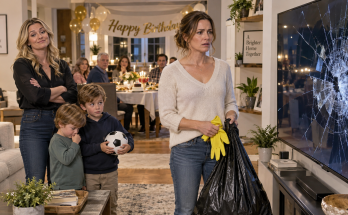
Everyone was seated around her backyard table in white linen, holding champagne glasses under a banner that said, Blessed with successful children.
Then came her text.
Only successful kids allowed.
Before I could answer, she blocked me.
I stood in my tiny apartment kitchen wearing the blue diner uniform she hated, staring at my phone while my shift shoes dripped rainwater onto the floor. My younger brother Mason was in the photo with his doctor’s coat folded over a chair. My sister Chloe held up her law school acceptance letter like a trophy. My cousins were laughing at something off camera.
Then another message came from Chloe before she could delete it.
Mom said don’t come. She doesn’t want customers thinking we’re related to the waitress.
A second later, three laughing emojis appeared.
I did not cry.
Not then.
I untied my apron, sat at the kitchen table, and looked at the grocery-store flowers I had bought for Mom with tip money. Pink carnations. Her favorite. I had worked a double shift to afford the nicer bouquet.
My phone buzzed again from an unknown number.
It was a video.
Mom stood at the head of the table, raising her glass. “To my children who made something of themselves.”
Someone asked, “What about Lena?”
Mom smiled like my name tasted cheap. “Lena chose a simple life. We respect that from a distance.”
Everyone laughed.
That was the moment something inside me went quiet.
They did not know why I worked at the diner.
They did not know I had dropped out of college because Dad’s cancer bills had swallowed everything before he died. They did not know I had been paying the property taxes on Mom’s house for three years because she said she was “temporarily short.” They did not know I had been taking night classes online with scholarship money no one helped me apply for.
They only knew the version of me that made them feel superior.
So I placed the flowers in the trash.
Then I opened my laptop and canceled the automatic payment scheduled for the next morning.
Mortgage assistance.
Property tax account.
Mom’s health insurance supplement.
Chloe’s application fee loan.
Mason’s medical board review payment.
All of it had come from me.
Quietly.
Because Dad’s last words to me were, “Take care of your mother if she loses her way.”
But Dad had not asked me to let her bury me alive.
I packed one suitcase that night.
At 4:18 a.m., I sent Mom one final message through email because my number was blocked.
You said only successful kids allowed. I understand. I won’t come back.
Then I left town before sunrise.
Five years later, I returned for the first time.
Not as a waitress.
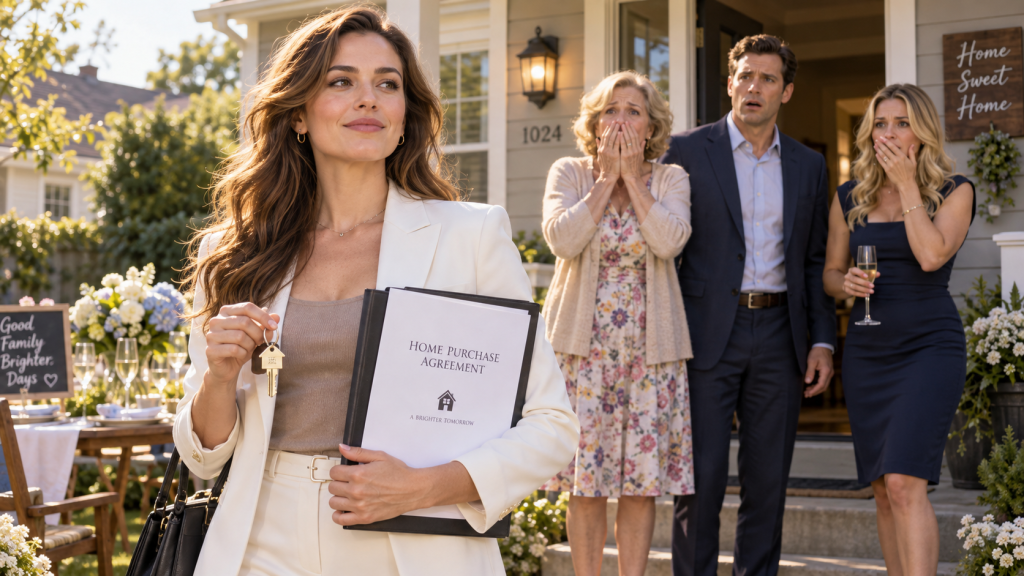
As the buyer of my mother’s house.
PART 2 — THE HOUSE I CAME BACK TO BUY
Five years later, I returned to the town where my mother had taught me that love could have conditions.
I came back in a charcoal-gray coat, carrying a leather folder beneath one arm, sitting in the back seat of a car I would once have been afraid to touch because I would have assumed it belonged to someone more important than me.
The town had not changed much.
The pharmacy still had the same faded red awning.
The library still leaned slightly toward the street as if tired from holding too many stories.
The diner where I had worked double shifts still glowed behind steamed windows on the corner.
For several seconds, I could not look away from it.
I saw myself through the glass even though I knew she was not there anymore.
Twenty-six years old.
Blue uniform.
Cheap black shoes.
Hair tied back.
Smelling like coffee and frying oil.
Counting tips beneath the counter between orders.
Smiling at customers who sometimes left two dollars on a forty-dollar bill.
Studying economics textbooks during thirty-minute breaks.
Calling Mom afterward to ask whether the tax notice had arrived.
Sending money to Mason.
Paying Chloe’s fees.
Apologizing for not giving enough.
Believing, somehow, that one day my family would turn around and notice that the person they were embarrassed by had been quietly holding pieces of their lives together.
They never did.
So I stopped waiting.
“Ms. Hart?”
My attorney’s voice pulled me back.
I looked at him.
“Yes?”
“We’re about five minutes away.”
“Thank you.”
He returned to his phone.
I turned toward the window again.
My name was Lena Hart.
And five years earlier, I had left this town before sunrise with one suitcase, eight hundred and forty-three dollars in savings, and a heart so exhausted I could no longer tell whether it was broken or simply finished.
I had not known where I was going.
Only that I could not stay.
For the first two months, I rented a room from an elderly widow named Mrs. Alvarez three cities away.
The room was barely bigger than the pantry in my mother’s house.
It had one window.
One lamp.
A mattress that sank toward the middle.
And for the first time in my adult life, nobody asked me for money.
That silence felt richer than anything I had ever owned.
I found work within three days.
Not glamorous work.
Not the kind my mother would have photographed for Facebook.
I started in the billing department of a medical supply company because years of managing Dad’s cancer invoices had taught me more about insurance codes than I had realized.
At night, I finished my degree.
Some evenings I studied until two in the morning.
Some mornings I woke at six.
There were weeks when my meals were rice, eggs, and whatever vegetables were on sale.
There were months when loneliness sat beside me like a second person.
But loneliness is strange.
It hurts differently when it is chosen.
When you leave people who make you feel small, solitude does not always feel empty.
Sometimes it feels like oxygen.
A year after I left, I earned my degree.
There were no relatives in the audience.
No bouquet.
No family dinner afterward.
Mrs. Alvarez came.
She wore a purple dress and brought me supermarket roses.
When my name was called, she stood up and screamed so loudly that three rows of strangers laughed.
I laughed too.
Then I cried in the restroom afterward because I had spent years imagining Dad in that seat.
He would have been proud.
Not because of the degree.
Because I finished.
Dad had always cared more about finishing than appearing impressive.
“You don’t have to run faster than everyone,” he used to tell me.
“You just have to keep moving when life gives you a reason to stop.”
So I kept moving.
After graduation, I received a promotion.
Then another.
The medical supply company was small and badly run.
I noticed where money disappeared.
I noticed where inventory sat unused.
I noticed how hospitals were being charged for inefficiencies nobody bothered to correct.
I built a model for reducing waste.
My manager ignored it.
So I sent it to his manager.
He ignored it too.
Then, after three weeks of staring at the spreadsheet on my laptop, I did the thing my family would never have believed the waitress was capable of doing.
I quit.
And I started my own company.
Not because I was brave.
Because I was angry enough to stop waiting for permission.
The beginning was humiliating.
There is nothing glamorous about entrepreneurship when nobody knows your name.
I worked from Mrs. Alvarez’s dining-room table.
I made cold calls.
I sent hundreds of emails.
I went to meetings where men twice my age looked at me like I had wandered into the wrong room.
One hospital administrator asked whether my “boss” would be joining us.
I looked him in the eye.
“You’re looking at her.”
He did not become a client.
The next one did.
Then another.
Within two years, my company was helping regional hospitals cut supply costs without cutting care.
By the third year, we had twenty-three employees.
By the fourth, seventy-eight.
I moved into a real office.
I hired people smarter than me.
I stopped measuring every grocery item before putting it in my cart.
I bought Mrs. Alvarez a new refrigerator after hers died.
She yelled at me for spending too much.
I bought it anyway.
And through all of it, I never called home.
Not once.
At first, Mom tried to contact me.
That part surprised me.
Three days after I canceled the payments, she emailed.
Lena, something is wrong with the property tax account. Call me immediately.
Not:
Are you safe?
Not:
Where did you go?
Not:
I’m sorry.
Something is wrong with the property tax account.
I did not answer.
Two days later:
Your brother says his review course payment was declined. This is childish.
Then:
Chloe’s application reimbursement is overdue.
Then:
You cannot punish this family because your feelings were hurt.
I read that one several times.
My feelings were hurt.
That was how she translated years of humiliation.
Like I had thrown a tantrum because nobody saved me a seat at brunch.
I still did not respond.
The messages became angrier.
Then frightened.
Then quiet.
Three months later, Mason emailed.
Mom may have to refinance the house. Call her.
I did not.
Six months later, Chloe sent:
I think everyone overreacted. We should move on.
Move on.
People who benefited from your silence love that phrase.
Move on means:
Do not make me sit with what I did.
Move on means:
Return to the role where your pain was convenient for everyone else.
I deleted the email.
After that, silence.
For nearly five years.
Until three months ago.
That was when my chief financial officer walked into my office carrying a property portfolio.
“We’re looking at possible satellite offices,” he said.
He placed the folder on my desk.
“There’s a redevelopment zone near your hometown. Small city. Good hospital access. Affordable commercial property.”
I almost said no before he finished.
Then I saw the address on one of the pages.
214 Willow Lane.
My childhood home.
I stared at it until the letters blurred.
“What?”
My CFO leaned forward.
“You know it?”
I knew every room.
Every crack.
Every noise the stairs made.
I knew which cabinet door would not close unless you lifted it slightly.
I knew the mark in the hallway where Dad measured our heights.
I knew the maple tree where Mason broke his wrist when he was twelve.
I knew the window Chloe climbed out of at sixteen.
I knew the spot beside the kitchen sink where Mom had stood the morning after Dad died and told me there was no money left.
I knew the dining-room table where I opened the first overdue tax notice.
I knew that house better than I knew most people.
“It’s my mother’s.”
My CFO sat back.
“That’s awkward.”
“You have no idea.”
The property had entered pre-foreclosure six months earlier.
Multiple tax liens.
Second mortgage.
Deferred maintenance.
The lender was preparing a negotiated sale before auction.
I should have closed the folder.
I should have told him to remove it from consideration.
Instead, I asked one question.
“What would we use it for?”
He frowned.
“The property itself?”
“Yes.”
“It’s residential. But the parcel behind it is part of the same holding. With rezoning, we could convert the site into temporary housing for traveling nurses or patient families.”
I looked down at the photographs.
Temporary housing.
For people who needed somewhere to stay while someone they loved was in a hospital.
Dad spent eleven months in and out of oncology wards.
Mom and I slept in chairs.
We ate vending-machine dinners.
We watched families choose between hotel bills and staying near dying parents.
Something stirred inside me.
“Run the numbers.”
My CFO looked at me carefully.
“Lena.”
“Professionally.”
He understood.
“No sentimental premium.”
“No.”
“And if it doesn’t make sense?”
“We walk away.”
But it did make sense.
In fact, it made almost too much sense.
The house sat less than four miles from the new medical center expansion.
The surrounding lots had appreciated.
The bank wanted a clean exit.
My company could buy it below market, renovate, and use it as the first property in a nonprofit lodging program I had been discussing for years.
A month later, we submitted an offer.
Through an LLC.
My name was not disclosed.
Yesterday, it was accepted.
Today, I was returning for the inspection and final signing.
And my mother still had no idea that the buyer she had been told would take possession within sixty days was me.
The car turned onto Willow Lane.
My heartbeat changed.
No amount of success prepares you for the street where you once felt worthless.
The houses became familiar one by one.
Mrs. Peterson’s yellow porch.
The red mailbox Dad hit with the lawn mower twice in one summer.
The narrow sidewalk where Chloe learned to ride a bike.
Then I saw it.
214 Willow Lane.
The house looked smaller than I remembered.
That was the first shock.
As a child, it had seemed enormous.
As an adult, it looked tired.
The white paint had grayed.
One shutter hung crooked.
The flower beds Mom once guarded like a royal estate were mostly bare.
The roof needed work.
A brown patch spread across the lawn.
The banner from that Mother’s Day was gone, of course.
Still, I could see it.
Blessed with successful children.
My chest tightened.
The car stopped.
My attorney opened his door.
“You ready?”
No.
“Yes.”
I stepped onto the sidewalk.
The front door opened almost immediately.
A real-estate agent came out first.
Behind her stood my mother.
For five years, I had wondered what seeing her again would feel like.
I expected anger.
Maybe satisfaction.
Maybe the old ache of wanting her approval.
Instead, I felt something quieter.
Grief.
Mom looked older.
Not dramatically.
But enough.
Her hair was shorter.
More silver threaded through it.
She had lost weight.
Her expensive blouses had been replaced by a simple beige sweater.
For one moment, she did not recognize me.
Then she did.
Her entire body went still.
“Lena?”
My attorney glanced at me.
The agent looked between us.
Mom stepped forward.
“What are you doing here?”
I looked at the house.
Then at her.
“I’m here for the inspection.”
Confusion crossed her face.
“The inspection?”
The agent cleared her throat.
“Mrs. Hart, this is Ms. Lena Hart, CEO of Hartwell Medical Logistics.”
Mom looked at the woman.
Then at me.
Then back at her.
I watched understanding arrive slowly.
Painfully.
“No.”
The agent hesitated.
“Ms. Hart represents the purchasing entity.”
Mom shook her head.
“No.”
Her eyes locked on mine.
“You bought my house?”
Not yet.
Technically.
But close enough.
I answered softly.
“Yes.”
The word fell between us.
Mom took a step backward.
Her face changed in a way I had never seen before.
Not anger.
Not shame.
Fear.
“You did this?”
I almost laughed.
The question was so familiar.
You did this?
As though I had secretly created the debt.
As though I had forced her to refinance.
As though I had spent years draining her account.
“No.”
I looked toward the peeling porch.
“You did this.”
Her mouth tightened.
“What is that supposed to mean?”
“It means I didn’t put the house into foreclosure.”
“You knew.”
“I found out when it became available.”
“And you decided to humiliate me.”
There it was.
Five years.
Same language.
Different room.
Everything was still about humiliation.
I held her gaze.
“Mom, nobody here is humiliating you.”
“You bought my home.”
“I made an offer on a property that the lender was already preparing to sell.”
“You could have helped me.”
I stared at her.
The irony was almost too enormous to hold.
“I did.”
She blinked.
“For years.”
Her face stiffened.
“That was different.”
“How?”
“You were family.”
I actually smiled.
Not because it was funny.
Because there are sentences so revealing they leave you with nothing else to do.
“I was family when I paid.”
Mom crossed her arms.
“Do not twist my words.”
“I don’t need to.”
Behind us, a car door slammed.
I turned.
Mason stepped onto the sidewalk.
For a second, I barely recognized him.
He looked older too.
Of course he did.
Five years had happened to all of us.
He wore hospital scrubs beneath a jacket.
His face tightened when he saw me.
“Lena.”
“Mason.”
He looked toward Mom.
Then at the lawyer.
“What’s going on?”
Mom spoke before I could.
“Your sister bought the house.”
Mason frowned.
“What?”
“She bought it to throw me out.”
I closed my eyes briefly.
The real-estate agent looked deeply uncomfortable.
My attorney, to his credit, remained expressionless.
Mason turned toward me.
“Is that true?”
“I bought the property.”
“To throw Mom out?”
“No.”
“What do you call it?”
“A business purchase.”
He laughed once.
“A business purchase?”
“Yes.”
“This is our childhood home.”
“You’re welcome to buy it.”
That stopped him.
His expression hardened.
“You know I can’t.”
“I didn’t know that.”
He stared at me.
“You disappeared.”
“Yes.”
“You cut everyone off.”
“I stopped paying everyone’s bills.”
“Same thing.”
That sentence hurt more than I expected.
Not because it was cruel.
Because Mason seemed to believe it.
I looked at my brother.
For years, I had wondered whether he ever understood where the money came from.
Apparently, he understood exactly enough to resent losing it.
“Do you know why I left?”
Mason sighed.
“Because Mom made that stupid Mother’s Day joke.”
Mom flinched.
A joke.
Of course.
I laughed softly.
“That’s what you call it?”
“It was cruel, okay? Everyone knows that.”
“Do they?”
“Yes.”
“Then why did nobody apologize?”
Silence.
The front door opened again.
Chloe stepped out.
She looked exactly like the future Mom had always imagined for her.
Tailored black coat.
Perfect hair.
Leather handbag.
She was a practicing attorney now.
I knew because I had looked her up once.
Only once.
She froze when she saw me.
“Oh my God.”
I watched her eyes move over my clothes.
My attorney.
The car.
Then the folder beneath my arm.
Five years earlier, she had sent me laughing emojis because our mother was embarrassed by the waitress.
Now she seemed unable to decide where to look.
“Hi, Chloe.”
“Lena.”
Nobody hugged.
That felt honest.
Mom wiped her eyes dramatically.
“She bought the house.”
Chloe stared at me.
“What?”
“I’m beginning to feel like we should print brochures.”
“This isn’t funny.”
“No.”
I looked at the house again.
“It never was.”
Chloe stepped down from the porch.
“I heard you were doing well.”
That almost made me smile.
Doing well.
A phrase people use when your success has grown too large for them to ignore but they still do not want to admit they underestimated you.
“I’m fine.”
“Mason said you own some medical company.”
“Something like that.”
My attorney coughed quietly.
I knew what he was hiding.
Hartwell had just closed a contract worth more than my mother’s neighborhood combined.
But I had not returned to recite numbers.
That would make me too much like them.
Chloe lowered her voice.
“Did you really buy the property through a shell company?”
“An LLC.”
“Why hide your identity?”
“I wasn’t hiding it from you.”
That was true.
Our legal department routinely purchased property through subsidiaries.
“But you knew Mom wouldn’t sell to you.”
“She didn’t sell to me.”
I paused.
“She sold because the bank gave her very few alternatives.”
Mom’s eyes flashed.
“I would never have agreed if I knew.”
My attorney finally spoke.
“Mrs. Hart, the transaction terms were approved with independent counsel.”
Mom turned on him.
“I am speaking to my daughter.”
“No.”
The word left me before I planned it.
Everyone looked at me.
I lowered my voice.
“You are speaking to the buyer during a scheduled inspection.”
Mom stared at me.
I felt the cruelty of the sentence immediately.
Part of me regretted it.
Another part remembered standing in my apartment with pink carnations in the trash.
Customers thinking we’re related to the waitress.
I breathed slowly.
“I’m sorry.”
Mom looked surprised.
“So you admit—”
“I’m sorry for saying it that way.”
I held her eyes.
“But I need you to understand something.”
“What?”
“I am not twenty-six anymore.”
The street went quiet.
“You cannot embarrass me, insult me, ask me for money, block me, then summon me back whenever consequences become uncomfortable.”
Mom’s lips parted.
“I am not doing this to punish you.”
“Then why this house?”
That question had been waiting inside me too.
Why this house?
Why not another property?
Why did I say yes when I saw the address?
Why did something inside me need to come back?
I looked toward the upstairs window of my old bedroom.
“I didn’t know at first.”
My voice softened.
“Maybe part of me wanted to see whether walking through that door again would still make me feel ashamed.”
Chloe looked away.
Mason lowered his eyes.
Mom said nothing.
“I spent years thinking this house was proof that I failed.”
I gestured toward it.
“Every time I came here in my diner uniform, I felt like I was entering a courtroom.”
My throat tightened.
“Everyone had evidence.”
“Mason was a doctor.”
“Chloe was going to law school.”
“I served pancakes.”
I laughed weakly.
“Except nobody bothered asking why.”
Mom whispered, “Lena—”
“No.”
I shook my head.
“You get to hear this now.”
Her face changed.
“Dad got sick during my second year of college.”
Mason looked at me.
“We know.”
“No, you know Dad got sick.”
My voice sharpened.
“You don’t know what happened next.”
I looked at him.
“His insurance denied one treatment.”
Mason frowned.
“I appealed it.”
“Three times.”
I looked toward Chloe.
“Mom was barely functioning.”
“Dad asked me not to tell you two how bad the money was because you were both in school.”
Chloe’s face went pale.
“I dropped out because somebody had to work.”
Mom looked at the ground.
“I took two jobs.”
“I paid the late electricity bill.”
“The hospital parking debt.”
“The property taxes.”
“The mortgage shortfall after Dad died.”
Mason stared at Mom.
“What mortgage shortfall?”
Mom said nothing.
I continued.
“I paid for your board review.”
Mason’s face changed.
He looked at me.
“No.”
“Yes.”
“Mom said Dad had set aside money.”
“There was no money left.”
He looked at Mom.
“Is that true?”
She still did not answer.
Chloe spoke slowly.
“My application fees?”
I nodded.
“Most of them.”
Her eyes filled.
“I thought Mom—”
“I know.”
I looked at Mom.
“She let you.”
Mom finally snapped.
“What was I supposed to say?”
“The truth.”
“I was grieving.”
“So was I.”
“I had just lost my husband.”
“And I had just lost my father.”
My voice cracked for the first time.
Silence followed.
Not the triumphant silence I once imagined.
A painful one.
Because the truth does not always make you feel powerful.
Sometimes it only reveals how much time was wasted.
Mom’s eyes filled with tears.
“You never complained.”
I almost could not believe it.
“I was twenty-six and paying your health supplement with diner tips.”
“I thought you were fine.”
“I wasn’t.”
The words came out softly.
“I was drowning so quietly that all of you assumed I liked the water.”
Chloe covered her mouth.
Mason looked toward the street.
Mom began crying.
“I didn’t know.”
“Yes, you did.”
Her head jerked up.
“Maybe not every number.”
I stepped closer.
“But you knew enough.”
I remembered every phone call.
Every “just this once.”
Every promise that she would repay me.
“You knew the tax bill was in my name.”
“You knew I paid your supplemental insurance.”
“You knew Chloe’s fees came from my account.”
“You knew Mason’s payment came from me because you asked me to make it.”
Mom’s face crumpled.
“But you didn’t tell them.”
“That was your choice.”
She looked at her other children.
“They were doing important things.”
There it was.
Even now.
Important things.
My laugh came out broken.
“And I wasn’t.”
“No, Lena, that isn’t—”
“That is exactly what you meant.”
Tears burned my eyes.
“For years, I thought if I helped enough, you would eventually see me.”
Mom whispered my name.
“I paid because Dad asked me to take care of you.”
My voice shook.
“I kept telling myself I was honoring him.”
Then I looked directly at her.
“But on that Mother’s Day, you taught me something he never meant me to learn.”
She cried silently.
“You taught me that taking care of someone who does not respect you is not always love.”
“It can become permission.”
Nobody spoke.
A breeze moved through the bare branches above us.
Somewhere down the street, a dog barked.
Normal life continued around a family finally being forced to look at the truth.
Chloe wiped her cheeks.
“I’m sorry.”
I turned toward her.
She stepped closer.
“I mean it.”
Her voice trembled.
“I remember that message.”
“So do I.”
“I sent the emojis because everyone was laughing.”
“I know.”
“I wanted Mom to think I was on her side.”
“I know.”
She swallowed.
“I was awful.”
I said nothing.
“I thought you were jealous of me.”
That surprised me.
“What?”
“Mom always said you resented that I got into law school.”
I looked at my sister.
“I paid the application fee.”
Her face collapsed.
She cried.
Not delicately.
Not like someone hoping to manipulate a room.
Like someone who had just discovered that part of the story she used to build her identity had been false.
“I’m sorry,” she whispered again.
I nodded once.
“I believe you.”
She looked up hopefully.
“I don’t know what to do with it yet.”
The hope faded slightly.
But she nodded.
“That’s fair.”
Mason still had not spoken.
I turned toward him.
His eyes were wet.
“Did Dad really not leave the money?”
“No.”
He stared at the ground.
“My board course was thirty-two hundred dollars.”
“I remember.”
“You paid that?”
“Yes.”
“From the diner?”
“Some.”
“And your other job?”
“I cleaned offices at night for about seven months.”
Mason closed his eyes.
“Oh God.”
I remembered one night clearly.
Finishing a diner shift at ten.
Changing clothes in a gas-station bathroom.
Cleaning a dental office until two.
Going home.
Opening my laptop.
Taking an exam.
Then waking at seven because Mom needed me to call the insurance company.
At the time, it had simply felt necessary.
Now, spoken aloud, it sounded like someone else’s life.
Mason looked at me.
“Why didn’t you tell me?”
“Because you were studying.”
“I could have helped.”
“Maybe.”
“You should have told me.”
I held his gaze.
“You should have asked.”
That hurt him.
I saw it.
But he nodded.
“You’re right.”
Mom suddenly stepped between us.
“So this is it?”
We looked at her.
“You come back successful, tell everyone how terrible I was, and take my home?”
Her voice rose.
“Does that make you feel better?”
I stared at her.
“No.”
That answer seemed to surprise her.
“No?”
“No.”
“Then give it back.”
Chloe closed her eyes.
“Mom.”
“What?”
She looked at me desperately.
“If this isn’t revenge, then give it back.”
I glanced toward my attorney.
Then at the agent.
Then back at Mom.
“I can’t.”
“Can’t or won’t?”
“Both.”
Her face hardened.
I opened the leather folder.
Inside were the plans.
Architectural drawings.
Program budgets.
Partnership letters.
I removed the top page.
“This house is going to become something else.”
Mom looked down at it.
“What?”
“A residence.”
“For who?”
“For families.”
She frowned.
“What families?”
“The ones sitting in oncology waiting rooms.”
Everything changed.
Mom went completely still.
I continued.
“Families who live too far from the hospital to drive back and forth.”
“Parents whose children are receiving treatment.”
“Spouses who can’t afford hotels.”
“People sleeping in cars because staying near someone they love costs more than they have.”
My voice softened.
“People like us.”
Mom stared at the plans.
I looked toward the house.
“The company is purchasing three neighboring properties.”
“The nonprofit will operate them.”
“We’re calling it David House.”
Dad’s name.
Mason covered his mouth.
Chloe started crying again.
Mom looked at me as if I had struck her.
“David?”
“Yes.”
A tear slid down her cheek.
“Your father would have…”
She could not finish.
“I know.”
For several seconds, none of us moved.
This was why I bought the house.
I finally understood it fully.
Not to take my mother’s home.
To turn a place where love had once become conditional into somewhere strangers could receive care without earning it.
To make a house that had taught me shame become useful.
To take the worst room inside my memory and open a window.
Mom looked down at the plans.
“And where am I supposed to go?”
The question changed the air.
I had prepared for it.
Legally.
Financially.
Emotionally, perhaps not.
I opened another section of the folder.
“The sale agreement gives you sixty days.”
She laughed bitterly.
“I know that.”
“I bought a condo.”
Her eyes lifted.
“What?”
Mason looked at me.
Chloe did too.
I removed a key envelope.
“It’s twelve minutes from here.”
Mom stared at it.
“Two bedrooms.”
“Ground floor.”
“Small patio.”
“HOA fees prepaid for three years.”
Nobody said anything.
Mom’s face went blank.
“Why?”
I looked at her.
Because despite everything, Dad’s voice still lived somewhere inside me.
Take care of your mother if she loses her way.
But I finally understood that taking care of someone did not require surrendering myself to them.
“Because I don’t want you homeless.”
Her chin trembled.
“You hate me.”
“No.”
“That’s worse.”
I frowned.
She laughed through tears.
“You don’t even hate me.”
“No.”
She pressed one hand to her chest.
“Do you know how terrible that feels?”
I thought about it.
Then answered truthfully.
“I spent years hating myself enough for both of us.”
Mom began to cry harder.
I held out the envelope.
“This is not an invitation back into my life.”
Her hand stopped before touching it.
“It’s housing.”
“Nothing more.”
Her face crumpled.
“You’re treating me like charity.”
“No.”
My voice remained calm.
“I’m treating you the way I wish you had treated me.”
She stared at me.
“As a person whose worth does not depend on success.”
Nobody laughed.
Five years earlier, laughter had followed my humiliation.
Now there was only wind.
Mom slowly took the envelope.
Her fingers shook.
“Lena…”
I waited.
“I’m sorry.”
I had imagined those words for years.
In fantasies, they healed me.
In some versions, I cried.
In others, I embraced her.
Sometimes she fell to her knees.
Sometimes I walked away.
Reality was quieter.
I looked at my mother.
At the woman who made pink carnations feel foolish.
At the woman whose approval once governed my entire sense of worth.
At the person Dad loved despite all her sharp edges.
At someone older now.
Smaller.
Not defeated.
Just human.
“What are you sorry for?”
She looked confused.
“What?”
“What exactly?”
Her eyes filled again.
I needed specificity.
Not because I wanted to torture her.
Because vague apologies are often doors people use to escape accountability.
Mom looked down.
“For the Mother’s Day message.”
I waited.
“For blocking you.”
Another pause.
“For letting everyone laugh.”
Her voice broke.
“For being ashamed of your job.”
Chloe wiped her face.
Mason stared at Mom.
She continued.
“For taking your money and acting like it didn’t count because of how you earned it.”
A tear slid down my cheek.
Mom looked at me.
“For making you believe Mason and Chloe were more valuable because their success looked better in photographs.”
My throat tightened.
“For never asking what your life cost you.”
That one reached something deep.
Mom cried openly.
“And for letting you take care of me while I made you feel like you were the failure.”
I could not speak for several seconds.
Finally, I nodded.
“Thank you.”
Her eyes searched mine.
“Can you forgive me?”
I looked at the house.
Then at Mason.
Chloe.
The street.
Five years of distance stood between the question and the answer.
“I don’t know.”
Mom’s face fell.
“But I’m not saying never.”
She began crying again.
“This is where I am today.”
I held her gaze.
“And if you want any relationship with me, it has to start there.”
She nodded.
No argument.
No guilt.
Just a nod.
That mattered.
Then my attorney’s phone rang.
He stepped away.
The real-estate agent asked whether we wanted to continue the inspection another day.
I looked at the house.
“No.”
Mom watched me.
“I’m ready.”
We entered together.
The first thing I noticed was the smell.
Every childhood home has one.
Wood.
Laundry detergent.
Old furniture.
A faint trace of whatever meals were cooked there most often.
This one smelled like lemon cleaner and dust.
The hallway looked narrower.
Dad’s coat hooks were gone.
The photographs had changed.
Mason in his white coat.
Chloe at graduation.
Several pictures of Mom at charity events.
Then I saw something I did not expect.
A photograph of me.
It sat on a small table near the stairs.
Me at seventeen.
Holding Dad’s birthday cake.
Laughing.
I stopped.
Mom noticed.
“I put that there last year.”
“Why?”
She looked embarrassed.
“I didn’t have many pictures of you after that.”
Of course she didn’t.
My adulthood had been something she rarely thought worthy of documenting.
I touched the edge of the frame.
“I remember this.”
“Your father burned the burgers.”
“He blamed the grill.”
“He always blamed the grill.”
For one second, we smiled at the same memory.
It was the first peaceful thing we had shared in years.
Then we walked through the house.
The inspector took notes.
Roof.
Electrical panel.
Water damage.
Foundation.
My mother followed silently.
In the kitchen, I saw the old table.
Not the exact same chairs.
But the table remained.
The place where bills once covered everything.
The place where I had written checks after everyone slept.
My fingers brushed the wood.
“Do you remember the night Dad came home after his first round of chemo?” Mom asked.
“Yes.”
“He couldn’t eat.”
“You made soup.”
“He hated it.”
“He ate three bites because you were watching.”
Mom smiled.
Then cried.
“He loved us.”
“Yes.”
“I think I got angry at him for dying.”
I turned toward her.
That confession seemed to surprise even her.
She sat down.
“When he died, everything fell apart.”
I remained standing.
“And you were still functioning.”
She stared at the table.
“You were always functioning.”
Her voice became smaller.
“I think I resented you for it.”
That was not something I expected.
“I wasn’t functioning.”
“You looked like you were.”
“I didn’t have a choice.”
“I know that now.”
She rubbed one hand over the tabletop.
“Mason was succeeding.”
“Chloe was succeeding.”
“And I needed that.”
“Needed what?”
“Proof that we weren’t ruined.”
The answer made me sad.
“So you made me the evidence that we were.”
She closed her eyes.
“Yes.”
There it was.
Ugly.
Honest.
Human.
“I’m sorry.”
I sat across from her.
“For years, I told myself you chose that diner because you lacked ambition.”
I almost smiled.
“You never asked.”
“No.”
She looked at me.
“I didn’t want the answer.”
That sentence was perhaps the most honest thing she said all day.
Because sometimes people do not misunderstand us accidentally.
Sometimes the truth would force them to change the way they benefit from us.
Mom wiped her face.
“You know what I thought when the payments stopped?”
“What?”
“That you would calm down.”
The sadness inside me deepened.
“I thought you’d come back.”
“Why?”
“Because you always did.”
There it was.
The trap I had spent my twenties living inside.
I always came back.
After insults.
After requests.
After being forgotten.
After being used.
My reliability had become something they considered permanent.
Like electricity.
Like running water.
Nobody feels grateful for the light until the bill is not paid.
“I almost did,” I admitted.
Mom looked at me.
“Really?”
“The first month.”
My voice softened.
“I kept checking my email.”
“For what?”
“For someone to say they missed me.”
She looked away.
“Nobody did.”
Tears filled her eyes.
“I know.”
“The messages were all about money.”
“I know.”
“So I stayed gone.”
She nodded.
“I understand.”
And somehow, hearing her say that meant more than begging me to return would have.
The inspection lasted almost two hours.
When we finished, the sun was lowering behind the neighboring roofs.
My attorney went to the car.
The agent left.
Mason and Chloe stood near the sidewalk talking quietly.
Mom remained on the porch.
I walked toward my car.
“Lena.”
I turned.
She held the key envelope.
“Will I see you again?”
There was no accusation in the question.
Only fear.
Five years ago, she had blocked me before I could answer.
Now she stood waiting for one.
“I’ll be in town for the project.”
Her eyes lowered.
“That isn’t what I meant.”
I knew.
I looked at my mother.
“I can’t give you the old relationship back.”
“I know.”
“It wasn’t healthy.”
“I know.”
“If we have something after this, it has to be different.”
“Yes.”
“No jokes about my work.”
She shook her head.
“No comparisons.”
“No asking Chloe and Mason to convince me when I say no.”
“I won’t.”
“And you don’t get to call me ungrateful when I set a boundary.”
Her mouth trembled.
“I understand.”
I studied her.
Then I said the sentence that frightened me more than any business negotiation ever had.
“You can call me Sunday.”
Her eyes widened.
“This Sunday?”
“Yes.”
“What time?”
I almost laughed.
“After six.”
She nodded quickly.
“After six.”
I turned.
Then Mom called my name again.
I looked back.
“Happy Mother’s Day.”
I froze.
For a second, I thought she had lost track of the calendar.
Then I realized.
It was Mother’s Day weekend.
Five years exactly.
I had not noticed.
Or perhaps some part of me had.
Mom wiped her cheeks.
“I know I don’t deserve flowers.”
My chest tightened.
Pink carnations flashed through my memory.
The trash can.
The rainwater beneath my shoes.
The unopened message.
“No,” I said softly.
“Not yet.”
She nodded.
And for once, she did not ask for more.
I got into the car.
As we drove away, I looked through the rear window.
Mason had one arm around Mom.
Chloe stood beside them.
The house rose behind all three.
Tired.
Peeling.
Waiting to become something new.
And maybe we were too.
I thought I would feel victorious.
Instead, I felt light.
That was better.
Because victory still requires an opponent.
Freedom does not.
My attorney closed his laptop.
“You okay?”
I watched Willow Lane disappear.
“Yes.”
This time, I meant it.
Then my phone buzzed.
A message.
From Chloe.
I almost ignored it.
Instead, I opened it.
I’m sorry I laughed.
You were never the embarrassing one.
I stared at the words.
A moment later, another message arrived.
Mason.
I owe you more than money. I know that now.
I closed my eyes.
Five years earlier, my phone had carried laughter into my tiny kitchen.
This time, it carried something else.
Not redemption.
That would take longer.
But recognition.
And sometimes recognition is the first stone in the road back.
I looked once more through the window.
The old diner appeared at the end of the street.
On impulse, I asked the driver to stop.
I went inside alone.
The bell above the door made the same tired sound.
The booths had been reupholstered.
The menu had changed.
But the coffee smelled exactly the same.
A young waitress approached.
She could not have been more than twenty-two.
Blue uniform.
Hair tied back.
Tired eyes.
“Just one?”
“Yes.”
She seated me at the counter.
“What can I get you?”
“Coffee.”
“Anything else?”
I looked at the pie display.
For some reason, I smiled.
“And a slice of apple pie.”
She returned a minute later.
I watched her rush between tables.
Refill cups.
Carry plates.
Apologize to a man who had snapped his fingers at her.
At one point, she leaned against the counter for three seconds and closed her eyes.
I knew that exhaustion.
I knew that invisible life.
When I finished, the bill was nine dollars and eighty cents.
I put a hundred-dollar bill beneath the cup.
Then I hesitated.
Money alone was not the message I wanted to leave.
So I asked for a pen.
On the receipt, I wrote:
There is nothing shameful about honest work.
Whatever you are building after this shift, I hope you keep going.
The waitress picked up the receipt as I reached the door.
“Ma’am?”
I turned.
Her eyes were wide.
“I think you made a mistake.”
“No.”
She held up the money.
“This is way too much.”
I smiled.
“So was the work.”
Her face changed.
For one brief moment, I saw the girl I had once been.
A girl nobody at home respected because her exhaustion wore an apron instead of a white coat.
I opened the door.
“Keep it.”
Outside, evening rain had begun to fall.
Five years earlier, I had walked through rain believing my job made me small because the people I loved had told me it did.
Now I understood.
The apron had never been humiliating.
The work had never been humiliating.
Serving people had never made me less intelligent.
Struggling had never made me unsuccessful.
Starting later had never meant I was behind.
The humiliating thing had been the way my family measured human worth.
And I no longer used their ruler.
I stood beneath the diner awning and looked toward the end of the street.
Somewhere beyond those buildings sat the house I had once fled.
Soon its walls would shelter people waiting beside hospital beds.
Its bedrooms would hold families praying for good news.
Its kitchen would serve coffee to spouses too scared to sleep.
Dad’s name would hang above the front door.
Not mine.
That mattered.
Because the final gift he gave me was not the obligation to save everyone.
It was the courage to care without disappearing inside the people I cared for.
My phone buzzed again.
This time, it was Mom.
Not a call.
A text.
Thank you for not leaving me with nowhere to go.
I stared at it.
Then another message appeared.
And Lena—
I waited.
Three dots.
Gone.
Then back again.
Finally:
I should have been proud of you when you wore the blue uniform too.
I stopped breathing.
Of all the things she could have said, that was the one that broke me.
Not the company.
Not the house.
Not the money.
Not the title.
The uniform.
The girl.
The one standing in a kitchen holding carnations.
The one who had needed somebody to say:
I see how hard you are trying.
I lowered my head as tears fell onto my coat.
For five years, I had believed I needed nothing from my mother anymore.
Maybe that had been mostly true.
But there had still been one young version of me waiting somewhere inside.
Still standing beside the trash can.
Still wondering why love disappeared whenever she failed to look impressive.
I typed slowly.
I wish you had been.
I stared at the sentence.
Then I sent it.
Her answer came almost immediately.
So do I.
I put the phone away.
And I walked into the rain.
Not toward the past.
Not away from it either.
Just forward.
Because sometimes leaving is not the end of a family.
Sometimes it is the first time a family is forced to understand what your presence was worth.
Sometimes success is not returning in expensive clothes and making everyone regret laughing.
Sometimes success is becoming the person who no longer needs their laughter to stop.
And sometimes the most powerful thing you can do with a house full of painful memories is not burn it down.
Not reclaim it.
Not preserve it.
But open the doors.
Turn on the lights.
And make sure the next frightened family who walks inside feels welcome.
Even if they arrive wearing a waitress uniform.
PART 3 — THE HOUSE WITH THE LIGHTS ON
The first time I walked into David House after the renovation was complete, I cried before I reached the kitchen.
Not because it looked beautiful.
It did.
The old wallpaper was gone.
The cracked tiles had been replaced.
The front room had been opened into a wide, sunlit sitting area with soft chairs, warm lamps, and shelves full of books people could borrow without asking.
The upstairs bedrooms had been repainted in quiet colors.
Each room had fresh linens, blackout curtains, a small desk, and a basket filled with things no one thinks about until they have spent three nights beside a hospital bed.
Phone chargers.
Toothbrushes.
Tea bags.
Socks.
Notepads.
Pain reliever.
A tiny card that simply said:
You do not have to be strong here.
That card almost undid me.
But it was the kitchen that broke me.
The old table was gone.
The one where bills had once been stacked like accusations.
The one where I had signed checks while everyone else slept.
The one where Mom once told me Mason’s career was “too important to interrupt” when I suggested he might help with Dad’s hospital costs.
In its place stood a long wooden table made by a local carpenter.
There were twelve chairs.
Twelve.
Enough for strangers to sit beside one another after long days in oncology waiting rooms.
Enough for families who had arrived scared and exhausted to discover that somebody else understood.
I ran my fingers across the wood.
Then I saw the small brass plaque mounted at the end.
FOR DAVID HART
WHO BELIEVED NO ONE SHOULD FACE HARD THINGS ALONE.
My throat closed.
For years, I had carried Dad’s final words as a command.
Take care of your mother if she loses her way.
I had treated them like an unpaid debt.
I had mistaken sacrifice for loyalty.
I had believed loving my family meant standing beneath whatever they dropped on me and calling the bruises duty.
But standing in that kitchen, surrounded by evidence of what those words could become when interpreted with wisdom instead of guilt, I finally understood something.
Dad had not asked me to disappear.
He had asked me to care.
Those were not the same thing.
A soft voice came from behind me.
“You like it?”
I turned.
Mrs. Alvarez stood in the doorway.
Purple cardigan.
Silver hair pinned up.
Same sharp eyes.
She had flown in the night before for the opening ceremony and spent the entire morning criticizing the hotel breakfast.
I laughed through tears.
“You knew about the plaque.”
“Of course.”
“You helped choose the wording.”
“Of course.”
“You’re terrible at surprises.”
“I am excellent at surprises. You are terrible at not snooping.”
I wiped my face.
She walked closer.
For a moment, neither of us spoke.
Then she looked around the kitchen.
“This is good.”
“Yeah.”
“Your father would be proud.”
I smiled.
“I hope so.”
She frowned.
“Hope?”
I knew that expression.
It meant a lecture was coming.
“Lena.”
“Please don’t.”
“I am eighty-one. I have earned the right to ignore requests.”
I laughed.
She took both my hands.
“Your father would not be proud because you became rich.”
I looked at her.
“He would not be proud because your company is successful.”
Her grip tightened.
“He would be proud because the girl who used to study at my dining table until her eyes closed from exhaustion did not let humiliation make her cruel.”
That landed somewhere deep.
Mrs. Alvarez continued.
“You had every reason to come back and destroy people.”
“I thought about it.”
“I know.”
I raised an eyebrow.
“How?”
“You used to grind your teeth when you were angry.”
“I did not.”
“You sounded like a lawn mower.”
I laughed again.
Then she softened.
“But you did not build this place to prove them wrong.”
She looked around.
“You built it because you remembered what fear felt like.”
I swallowed.
“And you decided strangers should feel less of it.”
For a moment, I could not answer.
Finally, I said, “Maybe.”
Mrs. Alvarez smiled.
“No maybe.”
Then she kissed my forehead.
“Now stop crying before your mother arrives.”
My stomach tightened.
That part had been occupying the corner of my mind all morning.
Mom was coming.
So were Mason and Chloe.
It would be the first time all four of us had stood together in the old house since the day I bought it.
The first time since everything changed.
I had spoken to Mom on Sundays, just as I promised.
At first, the calls were painful.
Fifteen minutes of careful conversation.
Weather.
Work.
Her condo.
A book she was reading.
Nothing dangerous.
Nothing that might expose the old fault lines beneath us.
Then one Sunday, she apologized again.
Not dramatically.
Not because I had brought up the past.
She simply said, “I realized something this morning.”
“What?”
“I used to call you only when I needed something.”
I did not answer.
She continued.
“So today I called because I wanted to hear your voice.”
That was the first call that lasted an hour.
After that, things changed slowly.
Mom did not become a different person overnight.
People rarely do.
She still slipped sometimes.
Once, when telling me about Chloe’s promotion, she said, “She’s doing so well. You must be proud that both of you finally found success.”
I went quiet.
Mom caught it immediately.
“Oh.”
I waited.
“That was wrong.”
“Yes.”
“I’m sorry.”
I heard her inhale.
“You were successful before I understood what success looked like.”
That mattered.
Not because it erased what came before.
Because she corrected herself without asking me to do the emotional labor for her.
There is a difference between someone being sorry and someone becoming safer.
I was learning to recognize it.
Mason had changed too.
His apology had not ended at words.
Two months after I returned, he asked for a meeting.
Not coffee.
Not family dinner.
A meeting.
We sat in my office conference room.
He placed a folder in front of me.
“What is this?”
“Money I owe you.”
I stared at him.
“Mason.”
“Please.”
Inside was a repayment schedule.
The board review course.
Two months of rent from medical school.
A loan I had forgotten.
A car repair.
Three other things.
Interest added.
I closed the folder.
“I don’t need this.”
“I know.”
“Then why are you doing it?”
His jaw tightened.
“Because you should never have had to pay it.”
I watched him.
“Dad wanted us to stay in school.”
“So did I.”
“You paid so I could.”
“Yes.”
He looked down.
“And I turned around and called your job a choice.”
I said nothing.
“That makes me sick.”
His voice cracked.
“I told myself I was too busy to know what you were carrying.”
He shook his head.
“I wasn’t too busy.”
“I was comfortable.”
That honesty hurt him to say.
I could see it.
He continued.
“I benefited from not asking.”
I looked at the folder again.
“I don’t want interest.”
He laughed once.
“Lena.”
“I’m serious.”
“Fine.”
He removed the page.
“No interest.”
“And you are not going to wreck your finances doing this.”
“I can afford it.”
“That is not the point.”
He smiled faintly.
“Still taking care of everyone.”
“No.”
I shook my head.
“Learning how to stop.”
He nodded.
Then he did something I did not expect.
He pushed another document toward me.
“What is this?”
“My schedule.”
“For what?”
“The clinic.”
I opened it.
One Saturday every month had been blocked.
DAVID HOUSE — FREE CONSULTS.
I looked up.
Mason’s eyes were wet.
“I can’t give you back those years.”
“No.”
“But I can show up now.”
That was the first time I hugged my brother after coming home.
Not because he repaid the money.
Because he finally understood that apology without participation is only language.
Chloe’s change came differently.
She had always been better with words than actions.
That was probably why law suited her.
She called me one night three months after the house sale.
“I need a favor.”
My body tensed automatically.
Five years disappeared.
Suddenly I was twenty-six again, hearing someone ask for money.
She heard the silence.
“Oh God.”
“What?”
“That sounded terrible.”
I laughed despite myself.
“What do you need?”
“Nothing financial.”
“Good start.”
She sighed.
“I’ve been looking at David House’s nonprofit documents.”
“Why?”
“Because they’re bad.”
I sat up.
“They are not bad.”
“They are not good.”
“Our attorneys wrote them.”
“Your corporate attorneys wrote them.”
“Yes.”
“Corporate lawyers are not gods, Lena.”
“Careful.”
“I am offering free legal work.”
I paused.
“What?”
“I want to handle the nonprofit compliance.”
“Why?”
“Because I’m good at it.”
“That’s not what I mean.”
Chloe went quiet.
Then she said, “Because you paid for my first law school application.”
I closed my eyes.
“I spent five years pretending that did not matter because admitting it mattered would mean admitting you had believed in me before I believed in you.”
That sentence stunned me.
She continued.
“I can’t change what I laughed at.”
“No.”
“But maybe I can use the thing you helped me become for something decent.”
I smiled.
“You realize if I say yes, I will still argue with you.”
“I’m counting on it.”
“You’re impossible.”
“You funded my education.”
“Partly.”
“Then this is technically your fault.”
We both laughed.
It felt strange.
Good.
Fragile.
Like a bridge no one should run across yet.
But a bridge nonetheless.
By the time opening day came, Mason was volunteering monthly.
Chloe had built the legal framework that allowed David House to partner with hospitals.
Mom had volunteered every Tuesday afternoon.
That one shocked me most.
Not because she volunteered.
Because she refused to tell anyone she was related to me.
The first week, she called.
“I cleaned three bathrooms.”
I almost dropped the phone.
“You?”
“Yes.”
“Voluntarily?”
“Do not enjoy this too much.”
“I’m framing the moment.”
She laughed.
Then her voice softened.
“I met a woman named Teresa.”
“Who’s Teresa?”
“Her husband has leukemia.”
The laughter disappeared.
“She’s sleeping here because their insurance doesn’t cover lodging.”
I listened.
“She has two children.”
Mom inhaled.
“She works at a grocery store.”
Something in her voice changed.
“She kept apologizing because she couldn’t afford to donate anything.”
I knew where this was going.
“What did you tell her?”
Mom was quiet.
Then she whispered, “I told her money had nothing to do with whether she deserved to be here.”
I closed my eyes.
Five years earlier, my mother had raised a glass beneath a banner celebrating successful children.
Now she was telling a frightened grocery clerk that dignity did not require a résumé.
Some apologies happen in sentences.
Others happen while cleaning a bathroom no one will ever photograph you standing beside.
I preferred the second kind.
The opening ceremony began at noon.
No balloons.
No champagne.
I had forbidden both.
Chloe complained that champagne would have been classy.
I reminded her what had happened the last time champagne and family pride shared a table.
She stopped suggesting it.
There were reporters.
Hospital administrators.
Local officials.
Families who had already stayed in the pilot rooms.
Former coworkers from my company.
Mrs. Alvarez in the front row.
Mason in a suit.
Chloe holding a folder she did not need but apparently lawyers become physically uncomfortable without documents.
And Mom.
She sat in the second row.
Not the first.
I had offered her a front seat.
She declined.
“This isn’t about me,” she said.
I noticed.
Five years ago, everything had been about her.
Growth sometimes looks as small as choosing the second row.
I stood behind the podium.
The old front porch stretched behind me.
Above the door hung the new sign.
DAVID HOUSE.
Beneath it:
A HOME BETWEEN HARD DAYS.
My hands shook.
Public speaking had never frightened me.
I negotiated contracts with hospital systems.
Presented to investors.
Fired people.
Hired people.
Stood before rooms where millions of dollars moved according to what I said next.
But this was different.
This was Dad.
This was home.
This was every night I had once believed nobody saw.
I looked at the crowd.
Then began.
“My father hated hospitals.”
People laughed softly.
I smiled.
“He said every hallway smelled like somebody had mixed bleach with fear.”
More laughter.
“During the last year of his life, my family spent more time in those hallways than any of us wanted.”
I looked toward Mom.
Her eyes filled.
“We learned things families only learn when someone gets sick.”
I paused.
“We learned which vending machine took wrinkled dollar bills.”
“Which parking garage elevator got stuck.”
“Which nurses brought extra blankets without being asked.”
“And how expensive it can be to simply remain close to someone you love.”
The crowd grew quiet.
“There are families who receive devastating diagnoses and then discover grief has an invoice.”
I swallowed.
“Hotels.”
“Food.”
“Parking.”
“Childcare.”
“Transportation.”
“Time away from work.”
“Being present should not be a luxury.”
I looked toward the house.
“So this place exists for one reason.”
“To make staying possible.”
Applause rose.
I waited.
Then continued.
“My father’s name was David Hart.”
My voice softened.
“He believed family meant showing up.”
A painful smile touched my face.
“I spent many years misunderstanding what he meant by that.”
Mom lowered her head.
“So I want to say something today that took me a very long time to learn.”
I looked out at the crowd.
“Showing up for someone does not mean disappearing from yourself.”
The silence deepened.
“Care is not the same as surrender.”
“Love is not proved by how much disrespect you survive.”
“And sacrifice stops being noble when everyone assumes one person will always be the one making it.”
My eyes burned.
I let the words settle.
“This house will not ask guests what they do for work.”
“It will not ask where they went to school.”
“It will not ask how impressive their lives look from the outside.”
“It will ask one question.”
“Do you need somewhere safe to stay?”
I looked at the doorway.
“If the answer is yes, the lights will be on.”
For several seconds, nobody moved.
Then Mrs. Alvarez stood.
She started clapping.
Mason followed.
Then Chloe.
Then Mom.
Soon everyone was standing.
The applause was loud.
But I did not feel triumphant.
I felt something quieter.
Whole.
After the speeches, people toured the property.
Reporters asked questions.
Hospital administrators shook my hand.
A woman whose son had been receiving treatment hugged me so tightly I almost lost my balance.
Then the crowd began to thin.
Near three o’clock, I found Mom standing alone in the hallway.
She was looking at the height marks.
We had preserved them.
That decision had been controversial.
The contractor wanted to paint over everything.
I refused.
A clear protective panel now covered the pencil lines.
Mason, age ten.
Chloe, age eight.
Lena, age thirteen.
Then later marks.
Beside them was a small note:
THIS HOUSE HAS ALWAYS MEASURED GROWTH.
Mom touched the plastic covering.
“You kept these.”
“Yes.”
She looked at me.
“I thought you’d erase everything.”
“I thought about it.”
“Why didn’t you?”
I studied the marks.
“Because not everything that happened here was bad.”
She nodded.
“Your father loved measuring you kids.”
“He cheated.”
Mom smiled.
“What?”
“He made Mason stand on his toes.”
“He did not.”
“He absolutely did.”
She laughed.
I did too.
For a moment, Dad felt close enough to turn the corner.
Then Mom’s smile faded.
“I found something.”
My body stilled.
“What?”
“At the condo.”
“From the old house?”
“Yes.”
She reached into her handbag.
An envelope.
Yellowed.
My name on the front.
LENA.
Dad’s handwriting.
My heart stopped.
“Where was that?”
“In the box with his hospital papers.”
“Why didn’t you give it to me before?”
Her face tightened.
“I didn’t know it was there.”
I took it.
My fingers trembled.
The envelope had never been sealed.
Inside was one sheet of paper.
Dad’s handwriting tilted slightly downward, as it always did when he was tired.
Lena,
If you are reading this, I probably did not get the chance to say this properly.
You have always taken too much responsibility when you are scared.
You were like that even as a little girl.
You tried to fix things before anyone asked.
I need you to understand something.
Taking care of your mother does not mean becoming her parent.
It does not mean giving up your own life.
It means help her if she loses her way, but do not lose yours trying to find her.
Take care of Mason and Chloe only as far as brothers and sisters should.
They must learn to carry their own weight.
And you, Lena, must learn that being needed is not the same as being loved.
Build your own life.
Please.
I stared at the page.
The hallway disappeared.
The voices from outside disappeared.
Everything blurred.
Mom whispered, “Lena?”
I could not answer.
Dad knew.
All those years.
He knew exactly who I was.
Exactly what I would do.
Exactly how easily duty could become a cage in my hands.
I read the last lines again.
Being needed is not the same as being loved.
Build your own life.
Please.
A sob escaped me before I could stop it.
Mom reached toward me.
Then stopped.
She did not touch me without permission.
Even that small hesitation mattered.
I looked at her.
“You didn’t know this existed?”
“No.”
“Promise me.”
“I promise.”
I believed her.
That surprised me.
Five years earlier, I would not have.
Mom’s eyes filled.
“He knew you.”
I laughed through tears.
“Too well.”
“He always said you carried the whole room even when nobody asked.”
I folded the letter carefully.
“I thought I was honoring him.”
“I know.”
“I gave up years because I thought—”
My voice broke.
Mom stepped closer.
“You did honor him.”
I shook my head.
“No.”
“Yes.”
She was crying now.
“You took care of me.”
“Too much.”
“Yes.”
Her voice cracked.
“Far too much.”
Then she said something I never expected.
“And I let you.”
That was it.
No excuse.
No grief defense.
No explanation.
I let you.
Mom wiped her face.
“I think part of me knew you would never say no.”
I stared at her.
“I hated feeling helpless after your father died.”
She looked down.
“You made me feel safe.”
“Because I paid everything.”
“Because you handled everything.”
She swallowed.
“And instead of being grateful, I resented you for seeing me weak.”
That hurt because it made sense.
Not enough to justify anything.
But enough to understand.
“I praised Mason and Chloe because their success let me pretend I had raised children who were fine.”
She looked at me.
“You reminded me that we weren’t fine.”
I held Dad’s letter against my chest.
“So you made me the failure.”
“Yes.”
Tears ran down her face.
“I did.”
“I’m sorry.”
I closed my eyes.
For years, I had wanted Mom to tell me why.
I had imagined some explanation that would rearrange the past.
There was none.
Only human ugliness.
Fear.
Grief.
Pride.
Weakness.
And choices.
Understanding them did not make them acceptable.
But it made them smaller.
No longer monsters.
Just mistakes made by flawed people.
I opened my eyes.
“Can I ask you something?”
Mom nodded.
“Did you actually think I was unsuccessful?”
She looked at me.
“For a while, yes.”
The honesty stung.
She continued before I could turn away.
“Because I was shallow.”
I looked back.
“I thought success had a costume.”
Her voice softened.
“A white coat.”
“A law degree.”
“A polished job title.”
She glanced toward the kitchen.
“I did not understand that sometimes success wears nonslip shoes and smells like coffee.”
My eyes filled again.
“I know better now.”
I nodded slowly.
“Good.”
Mom waited.
I looked at Dad’s letter.
Then at her.
“I forgive you.”
Her face changed.
Completely.
Not relief.
Something deeper.
Pain.
Because forgiveness, when someone understands what it cost, does not always feel like winning.
Sometimes it makes the weight of what they did more visible.
Mom covered her mouth.
“Lena.”
“I forgive you.”
I took a breath.
“But I am not going backward.”
She nodded quickly.
“I don’t want you to.”
“I won’t become the person who fixes everything.”
“You shouldn’t.”
“I won’t lend money because someone is family.”
“I understand.”
“And if you disrespect me again, I leave.”
Mom wiped her face.
“You should.”
I smiled faintly.
“That might be the first healthy thing you’ve ever told me.”
She laughed through tears.
Then she opened her arms slightly.
Not assuming.
Asking.
I stepped forward.
And hugged my mother.
The first hug in more than five years.
It did not erase anything.
I still remembered the photograph.
The banner.
The message.
The laughter.
The carnations in the trash.
Forgiveness did not burn those memories.
It simply changed who had to carry them.
I no longer carried them alone.
That evening, after everyone left, I stayed behind.
The first guests were arriving the next morning.
A father from three hours away whose ten-year-old daughter needed heart surgery.
A woman caring for her sister after a bone marrow transplant.
An elderly couple whose son was in intensive care.
Their rooms were ready.
The refrigerator was stocked.
The porch light was on.
I walked through the house one last time.
Upstairs.
Downstairs.
Past the height marks.
Past Dad’s photograph near the entrance.
Into the kitchen.
I sat at the long table.
Dad’s letter rested beside my hand.
Outside, rain tapped against the windows.
The sound transported me back five years.
My apartment.
Blue uniform.
Wet shoes.
Pink carnations.
Only successful kids allowed.
I closed my eyes.
I wanted to speak to that version of myself.
Not as the CEO.
Not as the woman who bought the house.
Not as someone with money.
Just as me.
I wanted to tell her:
Do not throw the flowers away because you are ashamed of loving someone.
Throw away the belief that love requires humiliation.
Your uniform is not embarrassing.
Your exhausted hands are not embarrassing.
The fact that you are struggling does not make you lesser.
The people laughing at you do not understand what you are carrying.
One day, they will.
But more importantly, one day you will stop needing them to.
The thought made me cry again.
Quietly.
Then the front door opened.
I froze.
“Hello?”
Mason’s voice.
“In here.”
He appeared in the kitchen carrying two paper bags.
“What are you doing here?”
“I brought food.”
“You left an hour ago.”
“I know.”
“Why did you come back?”
He shrugged.
“Thought you might be hungry.”
I looked at the bags.
Chinese takeout.
Dad’s favorite.
Before I could answer, Chloe walked in behind him carrying drinks.
I stared.
“You too?”
She lifted one cup.
“I was told there would be dumplings.”
“Traitor,” Mason said.
Then another voice.
“You started without me?”
Mom.
She entered with paper plates.
I looked at all three of them.
“What is happening?”
Mason pulled out a chair.
“Dinner.”
“Here?”
“Where else?”
Mom sat at the table.
For a second, nobody knew what to do.
Then Chloe opened cartons.
Mason complained there was not enough fried rice.
Mom told him he was a doctor and should eat vegetables.
He reminded her that being a doctor did not make broccoli taste better.
Chloe stole a dumpling from his plate.
He slapped her hand.
I sat there watching them.
Not healed.
Not perfect.
Not magically restored.
But present.
That mattered.
We ate around the table built where our old one once stood.
At some point, Mason looked toward Dad’s plaque.
“He would’ve hated the font.”
I laughed.
“He hated every font.”
“Remember when he made his own birthday banner?”
Chloe groaned.
“Comic Sans.”
Mom covered her face.
“He thought it looked festive.”
For the first time in years, we told Dad stories without grief swallowing the room.
We laughed.
Really laughed.
Not at someone.
With one another.
There is a kind of laughter that wounds.
I had spent five years remembering it.
But there is another kind that makes a room feel safe.
I had almost forgotten that one.
After dinner, Chloe began clearing containers.
Mason wiped the table.
Mom took out the trash without being asked.
I stood in the doorway and watched.
Nobody asked me to manage anything.
Nobody handed me a bill.
Nobody assumed I would carry the leftovers, solve the problem, arrange the schedule, pay the cost.
It was such a small thing.
And it felt enormous.
Eventually, we walked outside.
The rain had stopped.
The street shone beneath the lamps.
Mom stood beside her car.
“I’ll call Sunday.”
“After six.”
She smiled.
“After six.”
Mason hugged me.
Chloe did too.
Then they left.
I remained on the porch.
Alone.
But not lonely.
There is a difference.
Five years earlier, leaving town had felt like tearing myself out of a life.
Tonight, standing on that porch, I understood I had not torn anything away.
I had planted distance.
And sometimes distance is the soil where people finally grow.
I looked at the sign above the door.
DAVID HOUSE.
The porch light cast a warm circle across the steps.
Tomorrow, strangers would arrive carrying overnight bags.
Maybe plastic grocery sacks.
Maybe hospital paperwork.
Maybe fear.
They would not know that this house had once been the place where a waitress learned she was considered an embarrassment.
They would not know that beneath its floors lived years of unpaid bills, grief, resentment, and silence.
They did not need to know.
A house does not have to remain what happened inside it.
Neither does a person.
That became the final lesson.
For years, I thought success meant proving my mother wrong.
Then I thought success meant becoming wealthy enough that her opinion could not touch me.
Then I thought success meant buying the house she had nearly lost.
I was wrong every time.
Success was simpler.
It was waking up and liking the life I had built.
It was paying my own bills without bitterness.
It was employing people and remembering that every résumé had a private story behind it.
It was looking at a waitress and seeing effort instead of status.
It was helping families without turning help into control.
It was loving my mother without becoming responsible for her life.
It was letting Mason and Chloe repair what they had broken instead of rescuing them from the discomfort of doing it.
It was understanding that forgiveness did not require access without limits.
It was learning that boundaries are not punishments.
They are doors with locks.
And healthy people knock.
I reached into my coat pocket.
Dad’s letter was there.
I read the final line once more beneath the porch light.
Build your own life.
Please.
I smiled.
“I did, Dad.”
The words disappeared into the quiet street.
“I finally did.”
A year later, David House had served two hundred and eighty-seven families.
We opened a second location.
Then a third.
Mason expanded the free clinic days.
Chloe created a legal aid partnership for patients fighting insurance denials.
Mom became famous among the guests for her terrible coffee and surprisingly good listening.
She never became perfect.
Neither did I.
One afternoon, she introduced me to a guest.
“This is my daughter Lena. She owns—”
She stopped herself.
I noticed.
Mom smiled.
“This is my daughter Lena.”
Nothing else.
No title.
No company.
No proof.
Just my name.
I smiled back.
That was enough.
Later that year, on Mother’s Day, Mom invited us all to lunch.
I almost declined.
The date still carried a bruise.
Then she sent a second message.
No dress code.
No speeches.
No banners.
Come if you want.
So I went.
Mason arrived late.
Chloe brought dessert.
We ate on Mom’s small condo patio.
No white linen.
No champagne.
Paper napkins.
Iced tea.
Sandwiches.
Nothing anyone would post to impress strangers.
At one point, Mom disappeared inside.
She returned carrying something wrapped in brown paper.
She handed it to me.
“What is this?”
“Open it.”
Inside were pink carnations.
I stopped breathing.
Mom sat across from me.
“I know those were your favorite flowers to buy me.”
My eyes filled.
“I remember.”
Her voice shook.
“I didn’t deserve the ones you bought five years ago.”
I touched the petals.
“So I thought maybe these should be yours.”
I looked at her.
“No speech?”
She smiled sadly.
“No speech.”
I held the flowers.
For a long moment, the old memory and the new one existed together.
The carnations in the trash.
The carnations in my hands.
Pain does not always disappear when something beautiful replaces it.
Sometimes they simply stand beside each other.
And the newer memory becomes strong enough that the older one no longer owns the whole story.
“Thank you,” I whispered.
Mom nodded.
Across the table, Chloe was crying.
Mason pretended not to be.
I laughed.
“Can everyone stop making this weird?”
Chloe wiped her eyes.
“You started it.”
“I opened flowers.”
“Emotionally.”
“Lawyers are exhausting.”
Mason raised his glass.
“To Lena.”
I groaned.
“No.”
Mom laughed.
“No toast?”
“Absolutely not.”
“Why?”
I looked around the table.
At my mother.
My brother.
My sister.
At the simple lunch.
At the flowers.
Then I smiled.
“Because nobody needs to earn their seat today.”
The room went quiet.
Mom’s eyes filled.
Mason looked down.
Chloe reached across and squeezed my hand.
And that was how we spent Mother’s Day.
No successful children.
No unsuccessful children.
No hierarchy.
No performance.
Just people trying, imperfectly, to become kinder than they had been before.
Years later, someone interviewing me for a business magazine asked a question I had heard a hundred times.
“What motivated your success?”
They expected an answer about ambition.
Discipline.
Strategy.
Maybe entrepreneurship.
I thought about the diner.
The blue uniform.
Dad’s hospital bills.
The Mother’s Day photograph.
Mrs. Alvarez screaming at my graduation.
The first office.
The house.
The letter.
Then I answered.
“Being underestimated helped.”
The interviewer smiled.
“But that wasn’t the biggest thing.”
“What was?”
I thought for a moment.
“Learning not to underestimate myself.”
That was the truth.
My family had hurt me.
But the deepest wound was not that they believed I was less.
It was that for a while, I believed them.
I believed a waitress could not be successful.
I believed dropping out meant failing.
I believed needing time meant falling behind.
I believed giving money made me useful.
I believed being useful made me lovable.
I believed tolerating disrespect made me loyal.
It took years to unlearn those things.
But I did.
And if I could leave anything behind when my own life eventually ended, I hoped it would be that lesson.
Your worth does not rise when people applaud you.
It does not fall when they laugh.
Your worth does not depend on the letters after your name.
The money in your account.
The school you attended.
The car outside your house.
The job printed beneath your photograph.
There are people with impressive lives who cannot sit beside someone else’s pain.
There are people serving coffee who carry entire families through storms nobody sees.
There are janitors studying after midnight.
Cashiers supporting parents.
Drivers paying tuition.
Waitresses reading textbooks between shifts.
People beginning again at thirty.
Forty.
Sixty.
People rebuilding after failure.
Illness.
Divorce.
Grief.
Success is not a room with a guest list.
And anyone who tells you otherwise probably needs the door more than you do.
Five years after my mother told me only successful kids were allowed, I bought the house where she had once excluded me.
But that was never the victory.
The victory came later.
When I opened its doors to people who had nowhere else to go.
When my brother washed dishes after dinner without being asked.
When my sister used her law degree to help strangers fight insurance companies.
When my mother learned to say my name without attaching my résumé to it.
When pink carnations stopped meaning humiliation.
When Dad’s last words stopped feeling like chains.
When I finally understood that leaving my family had not meant I stopped loving them.
It meant I loved myself enough to stop participating in my own erasure.
And that changed everything.
On the fifth anniversary of David House, I arrived early.
The sun was barely rising.
A nurse leaving the night shift waved at me from across the street.
I unlocked the front door.
Inside, the house was quiet.
A child’s drawing hung on the refrigerator.
Someone had written THANK YOU beneath a photograph of Dad.
A blanket lay folded on the couch.
Coffee waited to be made.
I switched on the entry light.
Warm gold filled the hallway.
Then I stepped outside and looked back through the open door.
For a moment, I saw every version of myself standing there.
The college student who dropped out.
The daughter who paid bills nobody thanked her for.
The waitress carrying plates on aching feet.
The woman staring at a cruel text on Mother’s Day.
The frightened person who packed one suitcase before dawn.
The graduate.
The founder.
The buyer.
The daughter learning how to forgive.
None of them embarrassed me anymore.
I loved all of them.
Especially the waitress.
She had carried me farther than anyone knew.
I smiled and walked back inside.
The first family would arrive soon.
The lights were on.
The door was open.
And this time, nobody had to prove they were successful before they were allowed to come in.
THE END STORIES! THANK YOU FOR READING GOOD LUCK !❤️
Related Posts