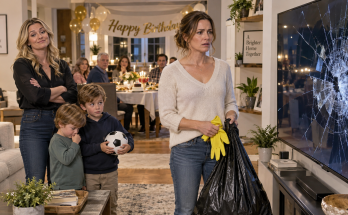
My Mother and Sister Called the Police on My Five-Year-Old Daughter and Said, “Take Her Away So She Can Learn Her Lesson.” I Came Home One Day Early and Found Her Shaking in Front of Two Officers. I Didn’t Argue. I Simply Canceled Three Monthly Transfers Adding Up to 18,000 Dollars… One Week Later, They Received a Notice They Never Saw Coming.

PART 1
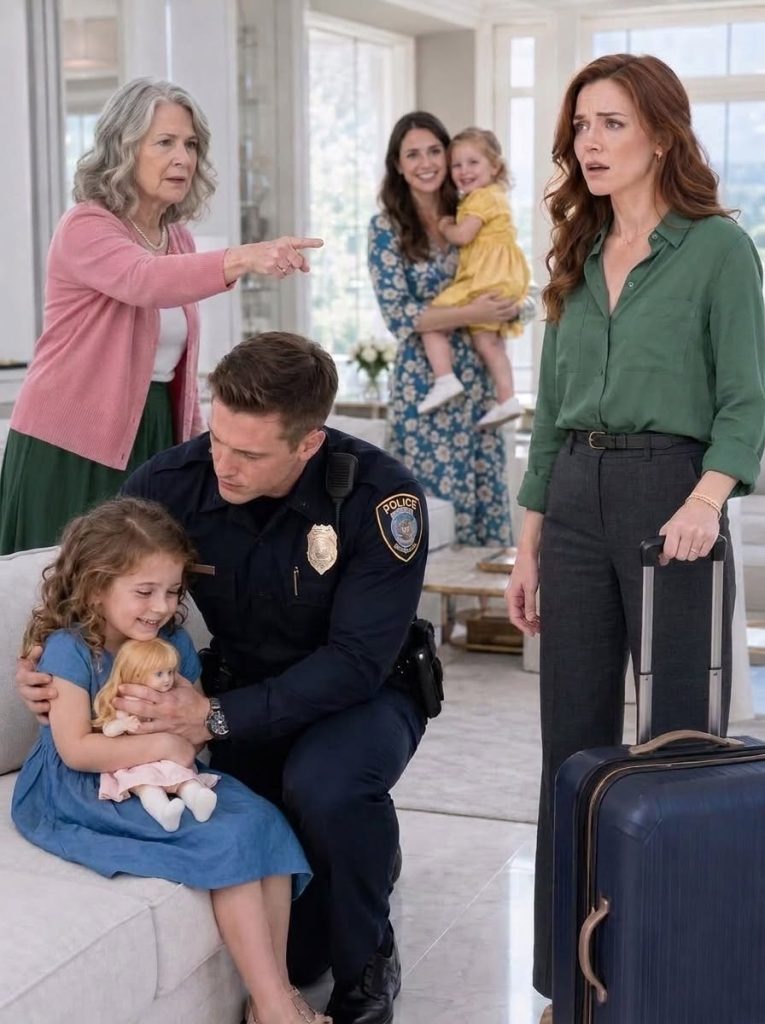
“Take her away so she can learn her lesson!” my mother yelled, pointing toward my five-year-old daughter as two police officers stood in the center of my living room.
I came back from San Jose a day earlier than planned after my client canceled our final meeting. I caught the earliest flight to Albuquerque, excited to surprise Bella with the cinnamon rolls she loved for breakfast. But when I opened the door to my house in North Valley, I found my little girl curled tightly on the couch, silently crying, as though even making a sound might somehow get her into more trouble.
My mother, Penelope, stood nearby with her arms folded across her chest. My sister, Genevieve, was holding her four-year-old daughter, Chloe, who was pretending to cry while happily eating a cookie. One of the officers was crouched in front of Bella, calmly reassuring her that nobody was going to take her away.
“What happened?” I asked.
The officer rose to his feet.
“We received a report concerning an altercation between two children. We were informed that you were out of state.”
I turned toward my mother.
“You called the police because two little girls got into a fight?”
“Bella pushed Chloe,” Genevieve said. “She got aggressive because she refused to let Chloe borrow a doll.”
Bella finally lifted her head. Her eyes were red and swollen.
“Mommy, Grandma said they were going to lock me up.”
Something inside me broke, but I kept my voice calm. I sat down beside her and pulled her into my arms.
The younger officer glanced at Penelope, clearly irritated.
“Ma’am, the emergency line isn’t meant to frighten a child over a disagreement involving toys. There are no injuries, and there are no grounds for any legal action. If you misuse emergency services this way again, there may be consequences.”
Genevieve immediately objected.
“So you’re not even going to put anything on her record?”
The officer looked at her as though he couldn’t believe what he was hearing.
“She’s five years old.”
Before walking out, he approached Bella.
“You’re not a bad little girl. Pushing someone isn’t okay, but nobody is taking you anywhere. If something makes you upset, ask an adult for help.”
The door shut behind them, and my mother stood there expecting me to apologize.
“You’ve completely lost your mind,” I said. “You will never be left alone with my daughter again.”
Penelope didn’t even flinch.
“You spoil her far too much. Eventually, someone has to teach her discipline.”
“You scared her.”
“Maybe that’s what it takes for her to learn.”
Genevieve kept insisting they had only done it “for her own good.” Then Bella quietly explained that Chloe had tried to take the doll her father had sent her for her birthday, and Grandma had told her to give it to Chloe because “Chloe knows how to take care of nice things.”
That evening, while I washed her hair, Bella admitted something that hurt even more.
“Grandma said you were ashamed of me… and that maybe you didn’t want to be my mommy anymore.”
I held her in my arms until she finally fell asleep. Then I opened my banking app and stopped every automatic transfer I had been making to Penelope and Genevieve for years. My mother’s health insurance, my sister’s car loan, the so-called repairs around the house, and every utility bill that somehow always ended up being my responsibility.
I didn’t call them. I didn’t threaten either of them. I simply tapped Cancel.
Five days later, my mother found out what I had done.
And once she realized she could no longer control the money I had been giving her, she decided to destroy the one place where my daughter still felt safe.
She had absolutely no idea what was coming.
PART 2 — THE NOTICE THEY NEVER SAW COMING
Five days after I canceled the transfers, my mother called me twenty-seven times.
I did not answer once.
That was unusual for me.
For most of my adult life, Penelope had treated my availability like a utility.
If she called, I answered.
If Genevieve needed money, I transferred it.
If Chloe needed a birthday present my sister could not afford, I bought one and let Genevieve write her own name on the card.
If Mom’s roof leaked, I found the contractor.
If her insurance premium increased, I covered the difference.
If Genevieve’s car needed tires, somehow the emergency became mine.
I had spent so many years making their problems disappear that they had forgotten problems existed before I solved them.
The first missed insurance payment reminded them.
The second reminder came when Genevieve’s car loan failed to draft from my account.
The third came when my mother’s utility payment did not go through.
Then my phone began vibrating like something trapped.
Mom.
Mom.
Mom.
Genevieve.
Mom.
Genevieve.
UNKNOWN CALLER.
Mom.
I sat at my dining-room table while Bella colored a picture of a purple elephant beside me.
My phone lit up again.
She glanced at it.
“Is Grandma mad?”
Five years old.
That question should never have sounded so careful.
I turned the phone facedown.
“Grandma is having big feelings.”
Bella considered that.
Her kindergarten teacher used the phrase big feelings whenever a child became overwhelmed.
“Like when I wanted Chloe to stop taking my doll?”
My heart tightened.
“Yes.”
“Did I have bad feelings?”
“No, sweetheart.”
I put down my coffee.
“You can feel angry.”
“You can feel sad.”
“You can want someone to stop touching your things.”
“Those feelings aren’t bad.”
She stared at the elephant.
“Pushing was bad.”
I nodded.
“Pushing wasn’t the right choice.”
Bella’s lower lip trembled.
“Am I bad?”
I pulled her chair closer.
“No.”
I said it firmly enough that I hoped the words reached wherever my mother’s cruelty had settled inside her.
“You made a mistake.”
“That is different from being a mistake.”
She looked up.
I brushed a curl from her forehead.
“And nobody is allowed to make you believe one wrong thing means you deserve to be frightened.”
Bella thought about that.
Then she whispered, “Grandma said police take bad kids where their mommies can’t find them.”
My chest went cold all over again.
“She lied.”
“Why?”
There are questions children ask that adults should not have to answer honestly.
Because your grandmother wanted to scare you.
Because she believes fear is obedience.
Because adults sometimes repeat the harm they never bothered healing.
Instead I said, “Grandma made a very wrong choice.”
Bella nodded slowly.
“Is she in trouble?”
I looked at my phone.
Twenty-seven missed calls.
“She’s learning about consequences.”
Bella went back to coloring.
Five minutes later, my phone buzzed with a voicemail.
I waited until Bella was watching cartoons before listening.
Mom’s voice came through sharp enough to cut glass.
“Miranda, I don’t know what childish game you’re playing, but the insurance company says the payment was rejected. Genevieve says her car payment is missing too. You need to fix this immediately.”
No apology.
No mention of Bella.
No acknowledgment that she had summoned armed police officers into my five-year-old daughter’s living room and demanded they “take her away.”
Only money.
I deleted the message.
The next voicemail was from Genevieve.
“You can be angry at me, fine. But involving Chloe by messing with my car is disgusting. I need that car to take her to preschool. Grow up.”
I actually laughed.
Not because it was funny.
Because sometimes entitlement becomes so complete that reality sounds like satire.
Her car.
My payment.
Her emergency.
My responsibility.
I deleted that one too.
Then I opened my laptop.
The transfers had totaled just under eighteen thousand dollars a month.
Seeing the number written together embarrassed me.
Not because I could not afford it.
I could.
My work in cybersecurity consulting had grown steadily over the previous nine years, and after my divorce from Bella’s father, Ethan, I had become even more careful about building financial stability.
But eighteen thousand dollars.
Every month.
Two hundred and sixteen thousand dollars a year.
Money I had treated as family support.
Money they had apparently begun treating as salary.
Mom’s supplemental health coverage.
Her property taxes.
Utilities.
Home maintenance.
A monthly “household allowance.”
Genevieve’s car.
Part of her rent.
Chloe’s preschool.
Credit-card payments.
Random emergencies.
Always temporary.
Always just until next month.
Next month had lasted years.
I stared at the spreadsheet I had built the night before.
Then I noticed something.
One of the payments was not like the others.
A property-management charge.
$3,950.
I frowned.
That amount went to an LLC I had created years earlier.
North Valley Holdings.
I clicked into the records.
And slowly, something I had been too exhausted to think about properly became obvious.
The house where my mother lived was not hers.
Not legally.
Not financially.
Not even partially.
It was mine.
Dad had died when Genevieve and I were in our twenties.
Mom lost their old house afterward because of debts he had hidden.
At the time, I was already doing well enough to buy a smaller property.
I purchased a four-bedroom house in Rio Rancho through North Valley Holdings and told Mom she could live there indefinitely as long as she covered ordinary expenses.
Within a year, I was covering those too.
Genevieve later moved into the guest suite after separating from Chloe’s father.
Temporary, again.
That was three years ago.
They paid no rent.
They had no ownership.
They had no lease giving them permanent possession.
I had never cared.
Until now.
My attorney, Rachel Kim, cared immediately.
She stared across her desk at me the following afternoon.
“They called the police on a five-year-old?”
“Yes.”
“And asked officers to remove her?”
“Yes.”
“Because of a doll?”
“Because Bella pushed Chloe after Chloe tried to take it.”
Rachel took off her glasses.
I had known her for seven years.
She handled business contracts for me and had helped with part of my divorce.
I had never seen her look quite so disgusted.
“Where were you?”
“San Jose.”
“And your mother was supervising Bella?”
“For two nights.”
“Did you authorize your sister to stay at your house?”
“Yes. She and Chloe were visiting Bella.”
Rachel wrote something down.
“You said this happened in your home?”
“My actual home. Not Mom’s.”
“And this was the first time?”
My stomach tightened.
“The first time I know of.”
Rachel caught the wording.
“That is not the same answer.”
“I know.”
“What else has Bella told you?”
I stared at my hands.
“Grandma told her I was ashamed of her.”
Rachel stopped writing.
“She told Bella maybe I didn’t want to be her mother anymore.”
Rachel leaned back.
“Miranda.”
“I know.”
“No.”
Her voice softened.
“I don’t think you do.”
My eyes burned.
“She is five.”
“I know.”
“And she believed her.”
That hurt enough that I looked away.
Rachel waited.
After a while I said, “Bella asked me yesterday whether I was going to find a better little girl.”
The office blurred.
I swallowed hard.
Rachel slid the tissue box across the desk.
I ignored it until I couldn’t.
“I should have seen it.”
“Don’t do that.”
“I left her with Mom.”
“You left your daughter with someone you believed was safe.”
“She wasn’t.”
“You know that now.”
I wiped my face.
“What matters is what you do with that information.”
I took a breath.
“Then tell me what I can do.”
Rachel looked at the folder I had brought.
“First, no unsupervised contact.”
“Already done.”
“Second, document everything Bella tells you, but don’t interrogate her. If she needs help processing what happened, use a child therapist.”
“I have an appointment Thursday.”
“Good.”
“Third?”
Rachel opened the property records.
“We deal with the financial relationship.”
I looked down.
“Can I make them leave?”
“Yes.”
The answer came quickly.
I still felt something twist inside me.
Rachel noticed.
“You’re hesitating.”
“They’re family.”
“So?”
I looked at her.
She waited.
The question embarrassed me.
So?
Family had always been the end of the argument in my house.
Mom needs help.
She’s family.
Genevieve made a mistake.
She’s family.
You have more money.
They’re family.
Bella should share.
Chloe is family.
For years, the word had not described affection.
It had described access.
Access to my money.
My time.
My house.
My forgiveness.
My child.
“I don’t want them homeless.”
“Then don’t make them homeless.”
Rachel shrugged.
“But you also don’t have to provide indefinite free housing to people who terrorized your daughter.”
She turned the documents toward me.
“We give proper notice.”
“How long?”
She explained the relevant process.
Long enough for them to make arrangements.
Not so long that they could pretend nothing had changed.
My chest tightened.
“And if they refuse?”
“Then we proceed legally.”
I stared at the address.
The house had cost me less than many of the investments I made now.
But suddenly it felt heavy.
“What happens to it afterward?”
Rachel asked.
“I don’t know.”
“Sell it?”
“Maybe.”
“Rent it?”
“Maybe.”
She watched me.
“You don’t have to decide today.”
I nodded.
Then she asked, “Do they know you own it?”
“They know I bought it.”
“That wasn’t my question.”
I thought back.
Mom always called it her house.
Genevieve called it Mom’s place.
At family gatherings, Penelope said things like, “When I leave this house to the girls…”
The first few times, I corrected her.
Later, I stopped.
It seemed petty.
She lived there.
I owned it.
What difference did the language make?
Now I understood.
Language becomes dangerous when repetition hardens entitlement into belief.
“I’m not sure they remember.”
Rachel gave me a grim smile.
“They’re going to.”
That evening, Bella had her first nightmare.
I heard her at 2:13 a.m.
“Mommy!”
I ran down the hallway.
She was sitting upright in bed, hair stuck to her forehead, clutching the birthday doll against her chest.
Her father had mailed it from Portland.
Ethan and I had divorced peacefully enough, and although his work kept him traveling more than either of us liked, he loved Bella fiercely.
The doll wore a tiny yellow raincoat because Bella loved jumping in puddles.
She had named her Maisie.
I sat beside her.
“I’m here.”
Bella climbed into my arms.
Her body shook.
“Don’t let them take me.”
My heart shattered so quietly that only I heard it.
“No one is taking you.”
“They had handcuffs.”
“They carry those because it’s part of their job.”
“Grandma said they would put them on me.”
“She was wrong.”
“What if I’m bad again?”
I held her face gently.
“Listen to me.”
Her wet eyes found mine.
“You could spill every cup in this house.”
“You could color on the wall.”
“You could scream because you’re angry.”
“You could push somebody and need a consequence.”
“You could make a hundred mistakes.”
My voice broke.
“And you would still be my daughter.”
Her lip trembled.
“Forever?”
“Forever.”
“Even when I’m old?”
“Especially when you’re old.”
That made her smile a little.
“How old?”
“Ninety-seven.”
“That’s too old.”
“Fine. Ninety-six.”
She giggled.
A tiny sound.
The most precious sound in the world.
I lay beside her until she fell asleep.
Then I remained there.
Staring at the ceiling.
Anger is different when someone hurts your child.
When people hurt you, history begins negotiating.
Maybe they were stressed.
Maybe they didn’t mean it.
Maybe I should forgive.
Maybe family is complicated.
But when your child wakes shaking because someone deliberately placed fear inside her, the fog burns off.
I had forgiven my mother for a thousand small cruelties because I was an adult.
Bella was five.
She would not inherit my tolerance.
I would not teach my daughter that family got unlimited opportunities to frighten her.
The next morning, Penelope appeared at my front door.
I knew it was her because she pressed the bell four times.
Then knocked.
Then called.
Bella was at kindergarten.
Thank God.
I checked the camera before opening.
Genevieve stood beside her.
I opened the door but left the security chain in place.
Mom’s expression changed.
“What is this?”
“A boundary.”
“Stop being ridiculous.”
Genevieve folded her arms.
“We need to talk.”
“We’re talking.”
“Open the door.”
“No.”
Mom’s eyes widened.
I had never said no to her so simply.
No explanation.
No apology.
Just no.
She hated it.
“You canceled my insurance.”
“I canceled my payment.”
“That is my insurance.”
“Yes.”
“And it needs to be paid.”
“Then pay it.”
Genevieve stepped forward.
“My car payment bounced.”
“I know.”
“Are you serious?”
“Yes.”
“I have a child.”
“So do I.”
The words landed.
Genevieve flushed.
“This is different.”
“How?”
“I need transportation.”
“And Bella needed adults who didn’t threaten her with police over a toy.”
Mom slapped one hand against the door.
“Stop exaggerating.”
I stared at her.
“Two officers were standing in my living room.”
“Because Genevieve called.”
Genevieve spun.
“Mom!”
There it was.
The first crack.
I looked at my sister.
“You called?”
She shook her head too quickly.
“Mom told me to.”
“Oh, don’t blame me now,” Penelope snapped.
“You said she needed to be scared!”
“You agreed.”
I watched them turn on each other with almost clinical detachment.
Five days ago, they had been united.
Then the money stopped.
Apparently loyalty had a shorter shelf life than I thought.
Genevieve looked back at me.
“We weren’t actually going to have Bella arrested.”
“She’s five.”
“I know that.”
“Then why did you ask whether officers would put something on her record?”
Her face changed.
She had forgotten I heard that.
“That was…”
She searched for a word.
“A misunderstanding.”
“No.”
Mom interrupted.
“Miranda, the point was discipline.”
“The point was cruelty.”
“You make everything emotional.”
“It involved my five-year-old crying in front of police.”
“She pushed Chloe.”
“And she lost television for two days.”
Mom scoffed.
“That’s not punishment.”
“Good thing she’s my child.”
Mom leaned closer.
“That is exactly your problem.”
I almost smiled.
“What?”
“You think having money makes you smarter than everyone.”
There it was.
I had heard variations for years.
If I disagreed, I was arrogant.
If I gave money, I was generous.
If I stopped, suddenly success became a character flaw.
“This has nothing to do with money.”
“Of course it does. You’re punishing us financially because we corrected Bella.”
“No.”
I looked at them both.
“I stopped financing people I no longer trust.”
Silence.
Genevieve’s face hardened.
“So this is permanent?”
“Yes.”
“What am I supposed to do about my car?”
“Pay for it.”
“I can’t.”
“Sell it.”
Her mouth dropped open.
“That car is only two years old.”
“I know. I paid the down payment.”
“That was a gift.”
“Yes.”
“The payments were part of it.”
“No.”
“You said you’d help me.”
“I did.”
“For three years.”
Her voice rose.
“And now you suddenly stop?”
I looked at her.
“You called the police on my daughter.”
“For pushing Chloe!”
“You wanted a five-year-old to think she might be taken away from her mother.”
Mom interrupted.
“Stop acting like Bella is traumatized.”
My entire body went cold.
“She woke screaming last night.”
For the first time, both women went quiet.
Mom recovered first.
“Children are dramatic.”
Something inside me closed.
Not broke.
Closed.
A door.
A chapter.
A lifelong reflex.
I looked at my mother and realized I had spent decades trying to reach a version of her that might not exist.
“You need to leave.”
Mom blinked.
“What?”
“Get off my property.”
“You cannot speak to me like that.”
“I just did.”
“Miranda—”
I closed the door.
Her palm hit it immediately.
Once.
Twice.
Then she shouted my name.
I locked the deadbolt.
My hands shook afterward.
Not from fear.
From the physical shock of finally choosing myself over the role they had assigned me.
My phone rang.
I turned it off.
And for the first time in years, my mother had to leave a problem unresolved.
The following day, the school called me.
That was when everything changed.
“Ms. Alvarez?”
Bella’s principal, Mrs. Hammond.
“Yes?”
“Do you have a moment?”
My stomach tightened immediately.
“Is Bella okay?”
“She’s fine. She’s in class.”
I exhaled.
“What happened?”
“We received a call this morning from someone identifying herself as Bella’s grandmother.”
Every muscle in my body went still.
“What did she say?”
There was a pause.
“She expressed concerns about Bella’s home environment.”
My hand tightened around the phone.
“What concerns?”
“She claimed you frequently leave Bella alone while traveling for work.”
I stood.
“That is false.”
“She also claimed Bella has behavioral issues you are refusing to address.”
“False.”
“And she requested to be added as an emergency pickup contact because she said you are…”
Mrs. Hammond hesitated.
“Unreliable.”
The room went silent around me.
My mother had lost access to my money.
So she was going after my child.
“Did you add her?”
“No.”
Relief hit hard enough to make me dizzy.
“You had previously removed her authorization in writing after the police incident.”
“Yes.”
“Our policy is very strict.”
“Thank you.”
Mrs. Hammond’s voice softened.
“There’s something else.”
Of course there was.
“What?”
“She told our office she believes Bella may not be safe with you.”
I sat slowly.
“How exactly?”
“She implied you were emotionally unstable after a recent family conflict.”
I could barely breathe.
“Did she report me?”
“We don’t know.”
But I knew.
My mother had spent my entire life treating authority like a weapon.
When she could not win an argument, she found someone she believed outranked you.
A teacher.
A relative.
A pastor.
Now school administrators.
Police.
Possibly child protection.
“I need copies of everything.”
“We can document the call.”
“Please do.”
“Already done.”
Then Mrs. Hammond said something I never forgot.
“Bella is doing well today, Ms. Alvarez.”
My eyes filled.
“She seems happy.”
I swallowed.
“Thank you.”
“And for what it’s worth, every interaction we have had with you has reflected an attentive, involved parent.”
I had not realized how badly I needed someone to say that.
“Thank you.”
After hanging up, I called Rachel.
She listened silently.
When I finished, her voice changed.
“Okay.”
“What?”
“We stop treating this as family drama.”
A chill moved through me.
“What does that mean?”
“It means we document harassment.”
“We notify the school formally.”
“We preserve the police incident report.”
“And if your mother makes knowingly false reports, we respond through appropriate legal channels.”
I closed my eyes.
“I don’t want war.”
“I know.”
“I just want them away from Bella.”
“Then our goal is not war.”
Rachel paused.
“It’s distance.”
That word calmed me.
Distance.
Not revenge.
Not punishment.
Safety.
“What about the house?”
“The notice is ready.”
I stared toward the window.
“When do they get it?”
“Monday.”
One week after the police incident.
Exactly.
Monday morning began with pancakes.
Bella liked blueberries placed in faces.
Two eyes.
One crooked smile.
She was telling me about a classmate named Oliver who had apparently committed the unforgivable kindergarten crime of using purple where the teacher said blue.
“He doesn’t listen.”
“Maybe purple was important to him.”
“Mommy.”
She gave me a deeply serious look.
“It was the ocean.”
I nodded.
“Unacceptable.”
She giggled.
Then the doorbell rang.
My body tensed.
Bella noticed.
“Is it Grandma?”
“No.”
I checked the camera.
Delivery driver.
I relaxed.
That reaction bothered me.
This was my house.
Bella’s house.
Neither of us should have to tense at a doorbell.
I signed for the package.
Inside were replacement locks and a new camera unit I had ordered for the side entrance.
Bella inspected the box.
“Are we making a fort?”
“Kind of.”
She liked that answer.
At 11:06 a.m., my mother received the notice.
I knew because she called at 11:09.
Genevieve called at 11:11.
Mom again at 11:12.
By 11:18, there were twelve missed calls.
At 11:23, Rachel texted.
They received service.
At 11:31, my mother left a voicemail.
I played it once.
“What have you done?”
No greeting.
Just rage.
“You cannot throw me out of my own house!”
My own house.
I almost felt sorry for her.
Almost.
The voicemail continued.
“I have lived here for nine years. Everyone knows it is my home. You cannot suddenly decide you own everything just because your name is on some paperwork.”
I actually stopped the recording.
Then replayed that sentence.
Just because your name is on some paperwork.
The deed.
The mortgage-free purchase.
Property taxes.
Insurance.
Maintenance.
Apparently ownership was paperwork when it inconvenienced her.
I continued.
“Genevieve has a child! Where are we supposed to go? You are doing this because you’re vindictive and unstable. I will fight you.”
The message ended.
Genevieve’s voicemail was different.
She was crying.
“Miranda, please call me. Mom’s losing it. I can’t move right now. Chloe’s preschool is here. I don’t have enough savings for a deposit. Please. I know you’re mad, but don’t do this to Chloe.”
I sat quietly.
There was the knife.
Chloe.
My niece.
Four years old.
Innocent.
Exactly as Bella had been innocent.
For a second, I almost folded.
Then I remembered Genevieve standing in my living room asking a police officer whether something would go on Bella’s record.
I remembered laughing emojis in her voice when Mom mocked me at other family gatherings.
I remembered every time she used Chloe as a reason I should pay for something.
Still, Chloe did not deserve instability because her mother had behaved terribly.
I called Rachel.
“I want to help Genevieve with a deposit.”
Rachel sighed.
“You knew this would happen.”
“I know.”
“Miranda.”
“Not for her. For Chloe.”
“There is always going to be a Chloe.”
That hurt.
She continued gently.
“There will always be one innocent person whose needs make your sister’s responsibility feel like yours.”
I stared at the floor.
“I can structure it.”
“How?”
“I pay the deposit directly to a landlord after she signs a lease.”
“No cash.”
“One time.”
“That’s it.”
Rachel was quiet.
“You can.”
“But?”
“But make sure you understand what you’re doing.”
“I do.”
“Say it.”
I frowned.
“Rachel.”
“Say why.”
I exhaled.
“I am helping my niece transition safely.”
“Not?”
“I am not resuming financial support for Genevieve.”
“Good.”
“And you’ll put it in writing?”
“Yes.”
“Then I have no objection.”
After we hung up, I felt strangely relieved.
Boundaries had always sounded cruel when my family discussed them.
But boundaries did not require me to stop being generous.
They required generosity to stop being compulsory.
That difference changed everything.
That evening, Mom came to my house again.
This time alone.
She stood on the porch holding the notice.
I watched through the camera.
“Miranda!”
I did not open the door.
She held the papers toward the lens.
“You think this scares me?”
I pressed the intercom.
“Leave.”
Her face turned toward the camera.
“You’re evicting your own mother.”
“I am ending free occupancy of property I own.”
“Listen to yourself.”
“I am.”
“You sound heartless.”
“And you sounded what, exactly, when you asked police to take my five-year-old away?”
Her face hardened.
“Still this?”
Still this.
A week had passed.
In my mother’s mind, Bella’s terror had already exceeded its permitted lifespan.
“Yes.”
I spoke slowly.
“Still this.”
“You’re going to destroy our family over one mistake.”
“One?”
She stared at the camera.
I surprised myself by laughing softly.
“Mom, the police call was not the whole problem.”
“It was simply the first time I saw the problem through Bella’s eyes.”
Penelope’s expression changed.
I continued.
“When you insulted me, I called it personality.”
“When you used guilt to get money, I called it family obligation.”
“When you favored Genevieve, I called it complicated.”
“When you criticized every decision I made, I told myself that was just who you were.”
My throat tightened.
“But then I watched my daughter shake.”
Mom looked away.
“And suddenly I realized I had been teaching Bella something.”
“What?”
“That love means staying close to people who make you afraid.”
Her mouth opened.
“No.”
“Yes.”
“I won’t teach her that anymore.”
“I never made you afraid.”
The child inside me almost answered.
The forty-year-old woman standing safely behind a locked door did instead.
“You did.”
Mom went completely still.
“You made me afraid of disappointing you.”
“Afraid of saying no.”
“Afraid you’d tell the family I had become selfish.”
“Afraid that if I stopped paying, you would stop loving me.”
Her face twisted.
“That is ridiculous.”
“Maybe.”
My voice softened.
“But it was true.”
For a moment, she had nothing.
Then she lifted the notice.
“Where am I supposed to go?”
“I don’t know.”
“Your sister can’t support me.”
“I know.”
“I’m sixty-eight years old.”
“You have income.”
“Not enough for this lifestyle.”
There it was.
Not survival.
Lifestyle.
The house.
The utilities.
The spending money.
The convenience.
I had not been keeping my mother alive.
I had been keeping her comfortable enough that she never had to examine the cost to me.
“There are smaller apartments.”
Her mouth fell open.
“You expect me to rent?”
“Yes.”
“I haven’t rented in thirty years.”
“Then it will be new.”
“You enjoy this.”
“No.”
The answer came instantly.
“I don’t.”
And I didn’t.
Revenge would have felt hot.
This felt heavy.
“I wish you had loved Bella more than you loved being obeyed.”
Mom flinched.
“I love her.”
“Then why did you want her terrified?”
“I wanted respect.”
“She is five.”
“Children need discipline.”
“Discipline teaches.”
I looked directly into the camera.
“Humiliation only wounds.”
Mom’s eyes glistened.
I had almost never seen her cry.
She looked down at the papers.
“What would your father think?”
An old weapon.
Dad.
The dead cannot defend themselves against being used in arguments.
For years, mentioning him was enough to make me surrender.
Not today.
“I think Dad would ask why his granddaughter was crying in front of police.”
Mom’s head snapped up.
Then I said the sentence that ended the conversation.
“And I think he would be ashamed that we’re talking about money instead of that.”
Penelope stood there for another ten seconds.
Then she turned and walked away.
I did not feel victorious.
I went upstairs.
Bella was asleep beneath her rainbow blanket.
Maisie tucked under one arm.
I sat beside her and watched her breathe.
Everything I was doing became simple again.
Not easy.
Simple.
Protect the child.
Break the pattern.
Let adults carry adult consequences.
Two days later, Genevieve asked to meet me.
Public place.
A café near downtown.
I almost said no.
Then she wrote:
Without Mom.
That changed my mind.
Genevieve was already seated when I arrived.
No makeup.
Hair tied back.
She looked tired.
There were no tears this time.
“Thanks for coming.”
I sat.
“What do you want?”
She flinched slightly.
Fair.
“I found an apartment.”
“That was fast.”
“It’s small.”
I waited.
“Two bedrooms.”
“Good.”
“Chloe can stay at the same preschool if I drive twenty minutes.”
“Good.”
Genevieve looked at her hands.
“I heard from Rachel about the deposit.”
“Yes.”
“Thank you.”
“For Chloe.”
“I know.”
I studied her.
“Do you?”
“Yes.”
She sounded tired rather than defensive.
For several seconds we sat quietly.
Then Genevieve said, “Mom told me calling the police was a good idea.”
I almost stood.
“No.”
“I know.”
She rubbed her forehead.
“I’m not saying that to escape responsibility.”
“It sounds like you are.”
“I agreed.”
She met my eyes.
“I made the call.”
“I told them Bella had attacked Chloe.”
My stomach tightened.
“I exaggerated.”
“How much?”
Genevieve looked ashamed.
“I said Bella was uncontrollable.”
My fingers tightened around my coffee cup.
“She pushed Chloe once.”
“I know.”
“You made her sound dangerous.”
“I know.”
“She is five.”
“I know.”
“Stop saying that.”
Genevieve’s eyes filled.
“What do you want me to say?”
“The truth.”
She breathed shakily.
“The truth is…”
Her voice dropped.
“I was angry at you.”
That surprised me.
“At me?”
“You always have everything together.”
I stared.
“You think I have everything together?”
“Yes.”
She gave a bitter little laugh.
“You have the career.”
“The house.”
“Money.”
“You travel.”
“Bella is smart.”
“Ethan actually pays child support and remembers birthdays.”
I almost interrupted, but she continued.
“And I’m thirty-six living in Mom’s house while my sister pays my car payment.”
The shame in her voice was raw.
“I hated myself.”
“So you frightened Bella?”
“No.”
She closed her eyes.
“I’m explaining badly.”
“Then try again.”
Genevieve breathed.
“Chloe wanted the doll.”
“Bella said no.”
“Mom said Bella was selfish.”
“I agreed because…”
She swallowed.
“Because sometimes I resent how much Bella has.”
That was hard to hear.
“What does Bella have that Chloe doesn’t?”
“You.”
The answer came quietly.
I said nothing.
Genevieve looked at me.
“You make her feel safe.”
My anger shifted.
Not gone.
Changed shape.
“Chloe has you.”
Genevieve’s eyes filled.
“I know.”
“But sometimes I’m so busy feeling like I failed that I forget she doesn’t need me to be you.”
There it was.
Something honest.
Ugly.
But honest.
“I have spent years comparing myself to you.”
“Mom helped.”
Genevieve laughed through tears.
“She made it a sport.”
“Yes.”
“And when Bella refused Chloe, Mom said, ‘See? Miranda is raising her to think she’s better than us.’”
My jaw tightened.
“I should have told her to stop.”
“Yes.”
“I should have taken Chloe home.”
“Yes.”
“I should have dealt with the pushing like a normal parent.”
“Yes.”
“Instead, I called the police.”
Her voice cracked.
“Yes.”
“I’m sorry.”
I looked at my sister.
For once, she did not add but.
No explanation after it.
No request for immediate absolution.
Just:
“I’m sorry.”
My eyes burned.
“You traumatized my daughter.”
“I know.”
“She asked whether I wanted another child.”
Genevieve covered her mouth.
I continued because she needed to hear it.
“She wakes up afraid police will take her.”
Tears ran down Genevieve’s face.
“Oh God.”
“She doesn’t want to sleep alone.”
“I’m sorry.”
“You don’t get to see her right now.”
Genevieve nodded.
“I understand.”
“Neither does Chloe.”
That hurt her more.
“She didn’t do anything.”
“I know.”
“And that is unfair.”
“I know.”
“But Bella needs time before she is around anything connected to that day.”
Genevieve looked down.
“Okay.”
I had expected an argument.
There wasn’t one.
After a minute, she said, “I’m getting a job.”
I blinked.
“What?”
“Full-time.”
“Doing what?”
“The dental office where I used to work.”
“You hated that job.”
“I hated having a boss.”
She smiled miserably.
“Turns out having my sister pay my bills wasn’t a career plan.”
I almost laughed.
Almost.
“They offered me office manager.”
“That’s good.”
“It’s not your kind of money.”
I leaned back.
“There it is.”
“What?”
“The comparison.”
She caught herself.
“Right.”
I softened.
“You don’t need my income.”
“You need your own life.”
Genevieve stared at me.
“I don’t know if I remember how.”
“That doesn’t mean you can’t learn.”
She nodded.
Then she surprised me.
“Mom wants me to move with her.”
“And?”
“I said no.”
That was significant.
“Why?”
“Because I think…”
Genevieve looked through the window.
“I think if I go with her, nothing changes.”
I knew exactly what she meant.
Mom would complain.
Genevieve would listen.
They would feed each other resentment.
I would remain the villain.
No one would grow.
“I think you’re right.”
Genevieve looked at me.
“Do you hate me?”
The question sounded young.
We were both adults.
For one second, I saw two girls again.
Penelope praising one.
Criticizing the other.
Then switching whenever useful.
Keeping us just competitive enough that neither asked why we needed her approval so badly.
“No.”
Genevieve began crying again.
“I’m very angry.”
“I know.”
“I don’t trust you with Bella.”
“I know.”
“And I don’t know what our relationship becomes after this.”
She nodded.
“But no.”
I looked at my sister.
“I don’t hate you.”
She wiped her eyes.
“That’s more than I expected.”
When we stood to leave, she did not hug me.
She knew better.
At the door, she stopped.
“Miranda?”
“Yes?”
“The doll.”
“What about it?”
“Chloe told me something.”
My stomach tightened.
“What?”
“She said Grandma told her Bella’s doll should belong to her because…”
Genevieve hesitated.
“Because Daddy left Bella.”
The room seemed to move.
“What?”
“She told Chloe that Bella already had too many nice things because Ethan sends gifts out of guilt.”
My hands went cold.
“And that one day he’d probably stop.”
I stared at my sister.
“Bella heard that?”
“I think so.”
Suddenly another piece fit.
Bella clutching Maisie.
Refusing to let Chloe touch it.
Pushing when Chloe pulled.
It had never really been about a doll.
To Bella, that doll had become proof that her father still remembered her.
And my mother had threatened that too.
I closed my eyes.
“Thank you for telling me.”
“I’m sorry.”
I nodded.
Then I walked to my car.
I sat behind the wheel without starting it.
And cried.
Not from rage.
From understanding.
Children build meanings adults never see.
A doll is not always a doll.
A police officer is not always a police officer.
A grandmother’s sentence is not always forgotten when the afternoon ends.
Sometimes one careless adult sentence becomes a fear a child carries to bed.
I called Ethan.
He answered on the second ring.
“Hey.”
I told him everything.
Not just the police.
The doll.
Mom’s comment.
Bella’s nightmares.
There was a long silence.
Then Ethan said, “I’m flying in.”
“You don’t have to.”
“Yes.”
His voice broke.
“I do.”
He arrived the following evening.
When Bella saw him outside school, she froze.
Then screamed:
“Daddy!”
She ran so hard one shoe nearly came off.
Ethan dropped his bag and knelt.
Bella crashed into him.
He held her for a long time.
Then she whispered something into his neck.
I saw his face change.
Later, he told me what it was.
“Grandma said you’ll forget me.”
Ethan cried in the school parking lot.
So did I.
He knelt again and told Bella:
“I could travel to the moon, and I would still be your daddy.”
Bella asked, “Even farther?”
“Even Mars.”
“What about Jupiter?”
“That’s getting inconvenient.”
She laughed.
And just like that, one frightening story inside her acquired competition.
A better story.
A true one.
The deadline on the notice arrived six weeks later.
Genevieve had already moved.
Mom waited until the last forty-eight hours.
Of course she did.
She called relatives.
She called family friends.
She called an uncle I had not spoken to in eleven years.
Suddenly people who had never contributed one dollar to Penelope’s life had strong opinions about what I owed her.
“She’s your mother.”
“She sacrificed for you.”
“You have plenty.”
“Why make an elderly woman move?”
I answered only once.
To my aunt Cecilia.
“I’m not making Mom homeless.”
“She has options.”
“She doesn’t like them.”
“That’s different.”
Cecilia went quiet.
I continued.
“And if everyone is so worried, any of you can offer her a room.”
Nobody did.
That ended most of the calls.
On the final day, I drove to the property with Rachel.
Not because I wanted to watch Mom leave.
Because there were documents to sign and keys to collect.
A moving truck sat outside.
Penelope stood on the front porch.
Nine years in that house.
She looked older than she had six weeks earlier.
For the first time, the sight hurt.
Not enough to change my decision.
But enough to remind me that boundaries can be right and still hurt.
Mom handed Rachel the keys.
Then looked at me.
“I hope you’re happy.”
I sighed.
“No.”
That confused her.
“What?”
“I’m not happy about this.”
“You won.”
“There wasn’t supposed to be a winner.”
Her face tightened.
“You took everything.”
“No.”
I looked at the moving truck.
“You’re taking your furniture.”
“Your savings.”
“Your income.”
“Your belongings.”
“You’re moving into a two-bedroom apartment you can afford.”
“I stopped paying for your life.”
“That isn’t the same as taking it.”
She looked away.
For a moment, neither of us spoke.
Then she said, “Genevieve apologized to you.”
“Yes.”
“You bought her loyalty.”
There she was again.
I almost walked away.
Instead I said, “Genevieve got a job.”
Mom rolled her eyes.
“At a dental office.”
“Yes.”
“As though that’s something impressive.”
The words landed differently now.
I saw it.
The mechanism.
How Mom had kept Genevieve dependent too.
If nothing she did was ever impressive enough, then she would always return to the one person willing to tell her what she should be.
“You know what?” I said.
“What?”
“I am proud of her.”
Mom stared at me.
“She’s supporting Chloe.”
“She found an apartment.”
“She is trying to fix something she broke.”
“That is impressive.”
Mom’s face hardened.
“She turned you against me.”
“No.”
I stepped closer.
“You did that yourself.”
Her eyes filled.
For once, the anger faded.
“What do you want from me?”
The question sounded exhausted.
I thought about it.
An apology?
Remorse?
Recognition?
For most of my life, I had wanted my mother to become the person I needed.
Maybe the cruelest truth of adulthood is learning some people cannot meet you there.
“I want you to leave Bella alone.”
Mom flinched.
“Forever?”
“For now.”
“She’s my granddaughter.”
“And I am her mother.”
Penelope looked down.
Then, unexpectedly, she whispered, “I didn’t think she would be that scared.”
My heart stopped.
It was not an apology.
But it was the first crack.
“You told police to take her away.”
“I thought they’d lecture her.”
“You told her I might not want her.”
Mom shut her eyes.
“I was angry.”
“At who?”
She did not answer.
“Bella?”
“No.”
“Me?”
Silence.
There it was.
“You hurt a child because you were angry with her mother.”
Mom began crying.
Quietly.
That was worse than shouting.
“I don’t know why I said it.”
I did.
Control.
Habit.
Fear.
Maybe cruelty mixed with all three.
“You need to figure that out.”
She looked at me.
“Then what?”
“Then maybe one day we talk.”
Her face changed.
“You mean that?”
“Yes.”
“But not until you can say what you did without calling it discipline.”
Mom swallowed.
“And not until Bella is ready.”
“What if she never is?”
I looked at her.
“Then that is one of the consequences.”
Penelope cried harder.
I did not hug her.
That was difficult.
For years, I had rushed to comfort her every time accountability became painful.
This time, I let her feel it.
Not because I was cruel.
Because remorse needs room too.
She wiped her face.
“Where will you go for Christmas?”
I almost laughed.
The question was so ordinary.
So deeply my mother.
“I don’t know.”
“You always come to me.”
“Not this year.”
She nodded.
Then walked toward the truck.
Halfway there, she turned.
“Miranda.”
“Yes?”
“I did love her.”
Past tense.
The word hurt.
“You can love someone and still hurt them.”
Mom stared at me.
I continued softly.
“The loving part does not cancel the hurting part.”
She nodded once.
Then left.
I stood in the driveway as the truck disappeared.
Rachel came beside me.
“You okay?”
“No.”
Then I considered it.
“Yes.”
Then I laughed weakly.
“I have no idea.”
“That sounds more believable.”
I looked at the empty house.
“What am I going to do with this place?”
Rachel shrugged.
“Sell it?”
Maybe.
But something about that felt wrong.
Not because I wanted it.
Because the house had been built into our family story.
Mom’s dependence.
Genevieve’s stagnation.
My guilt.
Maybe it deserved another purpose.
I walked inside.
Empty rooms always echo strangely.
In the hallway were faint pencil marks from Chloe’s height.
A scuff where Mom’s old cabinet had stood.
In the kitchen, sunlight spread across the floor.
I stood there for a long time.
Then an idea came.
Not complete.
Not yet.
But enough.
Six months later, the house reopened.
Not as a rental.
Not as my mother’s home.
As the first location of a nonprofit program I created with a local family-services organization.
Temporary furnished housing for mothers and children leaving unsafe homes.
Not only physical abuse.
Financial abuse.
Coercive control.
Family crises.
Women who needed sixty days to breathe while they found work, childcare, and permanent housing.
I called it Haven House.
Rachel told me the name was sentimental.
I told her attorneys lacked poetry.
She agreed.
Genevieve volunteered there twice a month.
Not because I asked.
Because she wanted to.
Mom knew about it.
I heard through Cecilia that she cried when she learned.
She did not call.
That was good.
For once, she respected silence.
Bella began therapy.
Slowly, the nightmares stopped.
She remained protective of Maisie.
Ethan started calling every night when he traveled.
Sometimes only for two minutes.
Sometimes for twenty.
One evening, nearly eight months after the police incident, Bella sat beside me on the floor building a tower.
She suddenly asked:
“Is Grandma still in trouble?”
I placed another block carefully.
“She had consequences.”
“Like when I lost TV?”
“A little bigger.”
Bella thought.
“Because she’s bigger?”
I smiled.
“Something like that.”
“Does she miss me?”
My heart tightened.
“Yes.”
“How do you know?”
“Because she told Aunt Cecilia.”
Bella placed a yellow block on top.
“I miss her sometimes.”
I went still.
Children are inconveniently capable of loving people who hurt them.
Maybe adults are too.
“That’s okay.”
Bella looked at me.
“It is?”
“Yes.”
“You can miss someone and still not be ready to see them.”
She seemed relieved.
“Can Grandma become good?”
The question nearly broke me.
I pulled her into my lap.
“Grandma isn’t a bad person.”
Bella frowned.
“But she did a bad thing.”
“Yes.”
“People can learn?”
“I hope so.”
Bella leaned against me.
“Officer Miguel said I’m not bad either.”
I remembered the officer crouching beside her.
“No, sweetheart.”
“You’re not.”
She smiled.
Then went back to the tower.
The tower fell three minutes later.
Bella stared at the scattered blocks.
Then began rebuilding.
Children understand certain things better than adults.
Falling does not have to become identity.
You simply decide what deserves rebuilding.
One week after I canceled eighteen thousand dollars in monthly transfers, my mother and sister received notices telling them they had to leave a house they had begun calling their own.
At the time, they believed that was the consequence.
It wasn’t.
The real consequence was much larger.
For Genevieve, the money disappearing forced her to discover she was capable of standing without me.
She got the job.
Paid her own car payment.
Eventually traded the expensive car for something practical.
She started therapy too.
For the first time since we were teenagers, we began speaking as sisters instead of competitors our mother had assigned opposing roles.
We were not healed.
Not yet.
But we were honest.
For Mom, the consequence was silence.
No immediate forgiveness.
No granddaughter running toward her.
No daughter rushing in to make everything comfortable.
She had to sit with what she had done without turning me into the person responsible for relieving her guilt.
And for me?
The consequence was freedom.
Not the cheerful kind.
Not at first.
Freedom can feel terrible when you have spent your whole life confusing obligation with love.
There were nights I questioned myself.
Times I nearly restarted Mom’s insurance payments.
Moments I looked at Genevieve’s old transfer and wondered whether canceling it made me selfish.
Then Bella would crawl beside me on the couch.
Or laugh.
Or sleep through the night without nightmares.
And I remembered.
My job was not to make grown women comfortable.
My job was to make one little girl safe enough that she never had to earn love by tolerating fear.
That was the lesson my family had avoided for decades.
Money was never the thing holding us together.
It was the thing allowing us to pretend we were together.
The moment I stopped paying, every hidden crack became visible.
And painful as that was, I became grateful for it.
Because a family built entirely on one person giving and everyone else expecting is not a family structure.
It is a debt system.
And love should never send invoices written in guilt.
Almost a year after that terrible afternoon, Bella and I drove past Haven House.
A woman stood on the porch holding the hand of a little boy.
Two suitcases rested beside them.
The boy had a stuffed dinosaur tucked under his arm.
Bella pressed her face to the car window.
“Do they live there?”
“For a little while.”
“Why?”
“Because sometimes families need a safe place while they figure things out.”
Bella thought about that.
“Is that Grandma’s old house?”
“Yes.”
She stared.
“Did Grandma give it to them?”
I smiled sadly.
“No.”
“Who did?”
I looked at my daughter in the rearview mirror.
“I did.”
Bella smiled.
“That was nice.”
Children simplify what adults make complicated.
Maybe she was right.
At the next traffic light, she asked:
“Mommy?”
“Yes?”
“Can police take houses to jail?”
I laughed so suddenly I startled myself.
“No.”
“Good.”
She leaned back.
Then said:
“Can we get cinnamon rolls?”
And in that moment, something inside me loosened.
Because a year earlier, I had walked into my house holding cinnamon rolls and found my five-year-old daughter trembling in front of two police officers.
Now she was asking for them again.
The memory had not disappeared.
But it no longer owned the food.
Or the morning.
Or her.
Healing is strange like that.
Sometimes it is not a grand apology.
Sometimes it is your child asking for cinnamon rolls without remembering why you once stopped buying them.
I turned toward the bakery.
“Chocolate or regular?”
“Both.”
“That’s excessive.”
“I’m five.”
I laughed.
“Excellent legal argument.”
She giggled from the back seat.
And as I drove, I realized the one thing my mother had never understood.
Discipline does not make children feel small enough to obey you.
Love does not make people afraid to lose your approval.
Family does not mean unlimited access.
And generosity does not mean surrender.
The day I canceled those transfers, Penelope believed I was taking eighteen thousand dollars away from her.
I wasn’t.
I was taking my daughter out of a family pattern that had been expensive in ways money could never measure.
And for the first time in my life, I finally understood something simple.
My mother had taught me to keep the peace.
Bella taught me there are moments when peace is not worth keeping.
Sometimes you have to break the old peace so a child can grow up somewhere safer.
Sometimes you have to disappoint your mother to protect your daughter.
And sometimes the most loving thing you can pass down through a family is not money.
Not a house.
Not forgiveness without limits.
It is the courage to say:
This ends with me.
THE END STORIES! THANK YOU FOR READING GOOD LUCK !❤️
Related Posts