My 9-year-old daughter called me from the hospital and whispered, “Mommy closed the curtain while they were hurting me.” I came home without making a sound. My ex-wife’s powerful family thought they had covered everything and that no one would ever dare challenge them.

But they had made one mistake.
One piece of evidence had survived—and I was about to uncover it.
What it revealed could destroy everything they had built.
PART 1
At 2:17 in the morning, my nine-year-old daughter called me from a hospital to tell me her mother had pulled the window curtain shut while her uncles beat her with a tire iron.
I was deployed at a military training facility in New Mexico, forty-eight hours away from finishing an eight-month rotation. When her name flashed on my phone screen, I thought she had simply had a nightmare or missed me.
Then I heard her broken, shallow breathing.
“Daddy… I’m in the hospital.”
I stood up so fast my chair crashed against the barracks floor. “Maya? Where are you?”
“In El Paso. Everything hurts.”
There are moments when you discover whether you truly know how to master fear. I had spent twelve years in tactical service trained to stay calm under extreme fire, but nothing prepares a man to hear his nine-year-old daughter trying not to cry so her father won’t worry.
“Maya, look at me in your mind. Breathe slowly, baby. Tell me who hurt you.”
A long, suffocating silence followed.
“Uncle Ross and Uncle Ethan.”
They were the brothers of my ex-wife, Veronica Vance.
The previous afternoon, they had arrived drunk at their parents’ estate in San Jeronimo—a wealthy enclave where the Vance name carried more weight than any local law. Maya had accidentally spilled a glass of soda on Ross’s new leather boots.
That was all it took.
“They took me out to the garage,” Maya whispered.
My hands began to burn with ice. “What did they do, Maya?”
“Ross opened the truck. He got the heavy tire iron.”
Then my daughter said something that still echoes in my mind in the quiet hours of the night.
“I was screaming for Mommy. She was standing right at the second-floor window. She looked right at me… and then she pulled the curtain shut.”
A pediatric nurse took the phone because Maya was hyperventilating and couldn’t speak anymore.
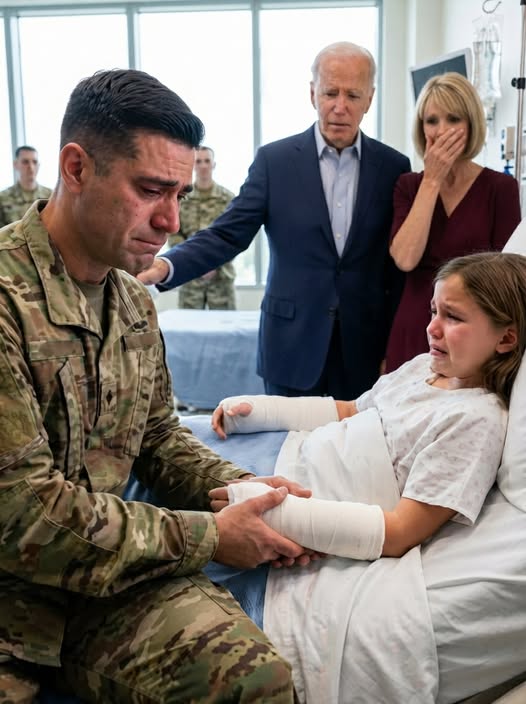
Twelve hours later, I walked into the Children’s Hospital trauma unit, still wearing my uniform. Dr. Karina Sterling met me outside the room, her expression grim. She didn’t use soft language.
Maya had compound fractures in both forearms, three broken ribs, a shattered left femur, and two crushed fingers from trying to shield her face.
“Physically, she will recover,” Dr. Sterling told me. “Emotionally, it is going to take a long time.”
I looked through the glass window at my little girl hooked up to IV drips, covered in soft casts. Something deep inside me wanted to tear the world apart. I didn’t let it.
I knew why the Vance family thought they could walk away from this completely clean.
Arthur Vance, my former father-in-law, owned the largest timber and logistics operation in the region. His private finance firm held mortgages and business loans over half the town. He funded judicial campaigns, sponsored municipal events, and controlled the regional news outlets. The local Chief of Police, Hector Miller, ate dinner at Arthur’s estate almost every Sunday.
During my marriage, it had taken me years to realize that for the Vance family, affection was just a debt they intended to collect later. When Veronica and I divorced, I was awarded joint legal custody, but they treated the court order as an insult. They rescheduled visits, hid family trips, and made decisions for Maya as if my signature were invisible.
I spent four days sitting beside Maya’s hospital bed.
On the afternoon of the fourth day, my phone rang. It was Pauline Vance, my ex-mother-in-law.
“Look who finally decided to play father,” she chuckled coldly. “Don’t bother hiring a lawyer, Mark. Your former brothers-in-law are not going to spend a single hour in a jail cell. My husband owns the police department, the town council, and half the local bench.
PART 2 — THE EVIDENCE THEY FORGOT TO DESTROY
Pauline Vance laughed into the phone.
“Don’t bother hiring a lawyer, Mark. Your former brothers-in-law are not going to spend a single hour in a jail cell. My husband owns the police department, the town council, and half the local bench.”
For a moment, I said nothing.
Maya was asleep beside me.
The afternoon light coming through the hospital window made her look smaller than nine.
One arm was elevated in a sling.
Her left leg was fixed in traction.
A stuffed rabbit a nurse had given her rested against the pillow.
I looked at my daughter while Pauline kept talking.
That helped.
Because rage wants speed.
It wants movement.
It wants you to do something so immediately that afterward you no longer recognize yourself.
Maya needed something different from me.
She needed a father who stayed.
So I stayed in the chair.
Stayed on the phone.
Stayed calm.
Pauline mistook silence for fear.
People like her often do.
“You should be thinking carefully about how ugly you want this to become,” she continued.
I looked down at the notebook beside Maya’s bed.
Every conversation since I arrived had gone into it.
Dates.
Names.
Times.
Nurses.
Doctors.
Hospital security.
Every person who touched the case.
Every inconsistency.
I wrote the time.
3:42 p.m.
Then Pauline said:
“Veronica is still Maya’s mother.”
I stopped writing.
“Yes.”
“She is devastated.”
My eyes moved toward Maya’s bruised face.
“She should be.”
Pauline’s voice sharpened.
“That is exactly the attitude I mean.”
“What attitude?”
“You have always enjoyed punishing Veronica.”
I almost laughed.
“Pauline, your sons put my daughter in a trauma ward.”
“That is your version.”
“No.”
I looked through the glass panel in the door.
A nurse passed.
“That is the orthopedic surgeon’s version.”
Silence.
Then Pauline lowered her voice.
“Accidents happen in families.”
Not like this.
But I didn’t say it.
I wanted her to continue.
People reveal more when they believe you are still trying to understand them.
“What accident?”
I asked.
She hesitated.
Just slightly.
Then:
“The boys were drinking.”
“Which boys?”
“Ross and Ethan.”
“And?”
“And things got out of hand.”
“What things?”
“Mark.”
Her patience thinned.
“You know exactly what I mean.”
“No.”
I said.
“I know what Maya told me.”
Another pause.
“Children are confused after trauma.”
That sentence went into the notebook too.
I underlined it once.
“Is that what Veronica says?”
Pauline stopped speaking.
There.
A tiny silence.
A mistake.
I leaned back.
“What does Veronica say happened?”
“Veronica is in shock.”
“That wasn’t my question.”
“She saw almost nothing.”
My hand tightened around the pen.
Almost.
Not nothing.
Almost.
“What did she see?”
“Mark, this interrogation is childish.”
“You called me.”
Silence again.
Then Pauline said:
“You should focus on your daughter getting well instead of trying to destroy everyone around her.”
I looked at Maya.
“I am.”
Then I hung up.
Ten seconds later, I saved the recording.
I had started recording before I answered.
New Mexico is a one-party consent state.
Texas is too.
A small legal fact.
An important one.
I emailed the file to myself.
Then to a secure folder.
Then to someone Pauline Vance did not know existed.
Colonel Nathan Briggs.
My commanding officer.
Not because the military had jurisdiction over what happened to Maya.
It didn’t.
But Nathan had spent twenty-three years watching powerful people assume that rank, money, and relationships could turn facts into inconvenience.
He called me five minutes later.
“You okay?”
“No.”
“Good.”
I almost smiled.
Nathan hated automatic answers.
“What did she say?”
“You have the recording.”
“I heard it.”
“Then why ask?”
“Because I’m asking about you, not evidence.”
I looked at Maya.
“I’m holding.”
“That’s not the same answer.”
“It’s the only one I have.”
He accepted that.
Then:
“Do you have civilian counsel?”
“Not yet.”
“You need someone outside that county.”
“I know.”
“State-level if possible.”
“I know.”
“And Mark?”
“Yes?”
“Do not confront those men.”
My jaw tightened.
“You think I’m going to do something stupid?”
“I think you are a father.”
That was worse.
Nathan continued.
“You have training.”
“They know that.”
“If they can make this about an angry military father threatening a wealthy family, they will.”
I knew.
God, I knew.
“They would love one bad decision from you.”
I closed my eyes.
“So don’t give them one.”
I looked at Maya again.
“I won’t.”
That promise became the line I walked for the next several months.
An hour later, Dr. Sterling came in.
She checked Maya’s chart.
Then looked at me.
“Can we talk outside?”
My stomach tightened.
“Medical?”
“Not exactly.”
I followed her into the hallway.
She closed the door behind us.
“What happened?”
Dr. Sterling folded her arms.
“There was a police officer here this morning.”
“Who?”
“Detective Alan Pike.”
I knew the name.
San Jeronimo Police Department.
Worked under Chief Hector Miller.
Arthur’s Sunday-dinner friend.
“What did he want?”
“Maya’s medical records.”
My pulse slowed.
“Did you give them to him?”
“No.”
I looked at her.
“Why not?”
“He didn’t have a warrant.”
“Parents can authorize release.”
“Yes.”
“Did Veronica?”
Dr. Sterling stared at me.
“That is the problem.”
My skin went cold.
“She tried.”
“When?”
“Yesterday.”
“From here?”
“No.”
“Her attorney sent a signed authorization.”
“What did it say?”
“That she, as Maya’s custodial parent, consented to release records to San Jeronimo Police.”
“She’s not sole custodial parent.”
“I know.”
“How?”
Dr. Sterling nodded toward the room.
“You gave admissions a copy of the custody order.”
Right.
The first day.
Joint legal custody.
Equal access to major medical decisions.
“And the hospital attorney blocked it?”
“Yes.”
I exhaled.
“Good.”
Dr. Sterling didn’t move.
“There’s more.”
Of course.
“There is always more.”
She lowered her voice.
“Detective Pike asked whether the injuries could have resulted from a fall.”
I stared at her.
“A fall.”
“Yes.”
“From where?”
“He didn’t specify.”
I almost laughed.
A shattered femur.
Broken ribs.
Both forearms.
Two crushed fingers.
And someone had already started building a fall.
“Did you answer?”
“Yes.”
“What did you say?”
“That the pattern is inconsistent with a single accidental fall.”
My throat tightened.
“What did he say?”
“He asked whether I would be willing to state only that the cause was undetermined.”
I stared.
“Would you?”
Dr. Sterling’s expression changed.
“No.”
That one word meant more than she probably knew.
I nodded.
“Thank you.”
She looked toward Maya’s room.
“Do not thank me for doing my job.”
“Today I’m thanking everybody who still does.”
That softened her.
Only slightly.
“Mark.”
“Yes?”
“I’ve treated children from powerful families before.”
My stomach tightened.
“And?”
“Power makes adults predictable.”
“What does that mean?”
“They become obsessed with controlling the narrative.”
She looked me directly in the eye.
“But injuries do not read newspapers.”
That sentence stayed with me.
That evening, Maya woke from a nightmare.
She did not scream.
That was somehow worse.
Her eyes opened wide.
Her breathing turned fast.
Then she whispered:
“Close it.”
I stood immediately.
“What, baby?”
“The curtain.”
I looked toward the hospital window.
The curtain was already half open.
Her whole body trembled.
I closed it.
Then sat beside her.
“Better?”
She nodded.
Not really.
I knew.
A few seconds later, she whispered:
“Mommy closed one too.”
My throat tightened.
“I know.”
“She looked at me.”
I reached toward her hand.
Stopped before touching.
Since the assault, Maya startled if anyone touched her without warning.
“Can I hold your hand?”
She nodded.
I took it carefully.
Her fingers were swollen.
Two wrapped separately.
I held what I could.
“Daddy?”
“Yes?”
“Did I make them mad?”
The question nearly destroyed me.
I bent forward.
“No.”
“But the soda—”
“No.”
I said it more firmly.
She flinched.
I softened immediately.
“No, baby.”
“You spilled a drink.”
“That is all.”
“Adults are responsible for what they do when they’re angry.”
“You are not responsible for what Uncle Ross or Uncle Ethan did.”
She looked at me.
“What about Mommy?”
There are questions fathers are not prepared to answer.
Military training gives you procedures.
Emergency medicine gives doctors protocols.
There is no checklist for telling a nine-year-old why her mother watched and turned away.
So I told the only truth I could safely give her.
“What Mommy did was wrong too.”
Maya’s eyes filled.
“Does she still love me?”
My chest broke quietly.
“I think she does.”
“Then why did she close it?”
I had no answer.
So I did not invent one.
“I don’t know.”
She cried.
I stayed.
Sometimes love is not knowing how to repair the thing.
It is refusing to leave while it remains broken.
The next morning, I met the lawyer Nathan had recommended.
Her name was Elena Marquez.
She was forty-six, wore no jewelry except a plain watch, and arrived carrying one folder.
No entourage.
No theatrics.
She sat in the hospital cafeteria and listened to everything without interrupting.
When I finished, she asked:
“What do you want?”
“Custody.”
“Immediately?”
“Yes.”
“Criminal charges?”
“Yes.”
“Against Veronica?”
I hesitated.
That mattered.
Elena noticed.
“I need an answer.”
“She watched.”
“That is not the legal question.”
“I know.”
“What do you want?”
I thought of Maya asking whether her mother still loved her.
“I want the truth established.”
Elena nodded.
“That is a better answer.”
She opened the folder.
“Emergency custody petition first.”
“Protective order.”
“Independent child advocate.”
“Request for state-level review of the assault investigation due to conflicts.”
“Can we get around the local police?”
“We can ask.”
“Will they?”
“That depends.”
“On Arthur?”
“On evidence.”
I leaned back.
“There it is again.”
“What?”
“Evidence.”
Elena’s expression didn’t change.
“What did you think would matter?”
“The truth.”
She nodded.
“The truth is what happened.”
“Evidence is how strangers are permitted to believe it.”
That was the first thing she said that made me trust her.
Not because I liked it.
Because I didn’t.
She listened to Pauline’s recording.
Twice.
Then asked:
“Anything from Veronica?”
“Nothing.”
“No calls?”
“No.”
“Texts?”
“Two.”
I handed her my phone.
The first had arrived the morning after Maya was admitted.
Please do not make this worse than it already is. Maya needs calm.
The second:
My brothers are devastated. Everyone made mistakes.
Elena’s face remained unreadable.
“Did you answer?”
“No.”
“Good.”
I hated how many people were praising me for not responding.
Silence had become work.
Elena continued.
“Do you have anything showing Arthur or Pauline interfering?”
“The phone call.”
“That shows attitude.”
“Not interference.”
“Correct.”
“What about the police?”
“Dr. Sterling can testify about Detective Pike’s request.”
“She may.”
“Anything else?”
“No.”
Elena tapped the table.
“Then we need to find what they missed.”
That sentence brought me back to the first night.
Maya whispering.
They thought everything was covered.
But powerful families make a specific kind of mistake.
They assume evidence only exists where they expect it.
The estate had cameras.
I knew that.
At least twelve.
Front gate.
Driveway.
Pool.
Main entry.
Service entrance.
Stable.
Garage exterior.
Arthur believed in surveillance.
He used to joke that trust was for people without money.
So why had nothing surfaced?
I asked Elena.
“The police report says the estate cameras were offline that afternoon.”
“All of them?”
“According to the preliminary incident note.”
I laughed.
“Convenient.”
“Maybe.”
“You believe that?”
“I believe the word according to.”
“What does that mean?”
“It means I want the underlying records.”
She made a note.
“We subpoena the system provider.”
“Can Arthur delete footage?”
“Locally?”
“Yes.”
“Cloud?”
“That depends on the service.”
My pulse changed.
“What company?”
“Do you know?”
I thought.
Years ago, during the marriage, Arthur had changed vendors after someone stole equipment from a warehouse.
BlueTrace Security.
Maybe.
I told Elena.
She wrote it down.
“That could matter.”
For the first time in days, something inside me moved toward hope.
Carefully.
Hope is dangerous when you are waiting for proof.
The emergency custody hearing happened two days later.
Veronica appeared by video.
She looked terrible.
That surprised me.
No makeup.
Hair pulled back.
Eyes swollen.
For one weak second, seeing her hurt softened something in me.
Then Maya’s voice returned.
Mommy closed the curtain.
The judge was from outside San Jeronimo.
Elena had requested transfer because of Arthur’s documented relationships with local officials.
The Vance attorneys objected.
The judge granted temporary venue reassignment anyway.
That was the first wall to crack.
Veronica’s lawyer argued Maya was medically stable and should remain under the existing joint custody order.
Elena said:
“The child is currently hospitalized following an assault allegedly committed by maternal relatives at the maternal family residence while the mother was present.”
Then she added:
“The mother has not visited the child in six days.”
Silence.
Even I turned toward the screen.
I knew Veronica had not come.
Hearing it formally made it uglier.
Her attorney said:
“Mrs. Vance-Mercer has been advised to avoid further emotional destabilization.”
The judge looked up.
“Whose destabilization?”
The attorney hesitated.
“The child’s.”
Elena spoke before I could react.
“The child has repeatedly asked why her mother has not come.”
That was true.
Painfully.
The judge’s face changed.
Temporary sole physical custody went to me.
Veronica’s visitation suspended pending psychological review and forensic interview.
The order did not feel like victory.
Maya still had casts.
I still had a daughter afraid of curtains.
A paper could protect tomorrow.
It could not rewrite Tuesday.
Outside court, reporters waited.
That told me Arthur had lost control of the story faster than expected.
Elena put one hand in front of me.
“Do not speak.”
A reporter called:
“Sergeant Mercer, do you believe the Vance family covered up child abuse?”
Another:
“Do you think local police are compromised?”
Another:
“Did your ex-wife participate?”
I kept walking.
That was harder than any briefing I had ever done.
Because I wanted to tell them everything.
But outrage spends evidence too quickly.
Elena had warned me.
“If you want this tried in court, do not try it on the courthouse steps first.”
So I stayed silent.
Then I saw Arthur.
Across the parking area.
Dark suit.
White hair.
Still as stone.
Our eyes met.
He did not look afraid.
He looked offended.
That told me something important.
He still believed this was a challenge to his authority.
Not a response to Maya’s suffering.
That was the moment I stopped hoping he might choose his granddaughter over his name.
BlueTrace answered the subpoena four days later.
Not with video.
With server logs.
Elena called me at 7:10 in the morning.
“Are you sitting down?”
“No.”
“Sit.”
I did.
“Maya asleep?”
“Yes.”
“Good.”
She exhaled.
“The estate security system was not offline.”
My grip tightened on the phone.
“What?”
“Cameras were functioning.”
“All of them?”
“Eleven of fourteen.”
“The garage?”
“Exterior garage camera was active.”
My pulse hammered.
“Interior?”
“Not BlueTrace.”
“What does that mean?”
“There’s a second system.”
I froze.
“What second system?”
“Commercial hardware.”
“Installed separately.”
“Who owns it?”
“We don’t know yet.”
“Where?”
“Garage.”
My entire body went cold.
Arthur had used part of the garage for vehicle storage.
Expensive cars.
Collectibles.
He had a separate theft alarm.
Of course.
“Do they have footage?”
“Unknown.”
“Why unknown?”
“The vendor record is incomplete.”
“Can we subpoena it?”
“We are.”
I stood.
“Elena.”
“Mark.”
“There’s video.”
“Maybe.”
“There has to be.”
“Do not build your daughter’s case around something we do not have.”
But hope had already entered.
I could feel it.
Small.
Terrifying.
The BlueTrace logs gave us something else.
At 4:36 p.m. on the day Maya was assaulted, someone with administrator credentials remotely disabled three camera channels.
Garage exterior.
South driveway.
Rear courtyard.
At 5:52 p.m., they were reenabled.
Maya had arrived at the hospital at 6:19.
I stared at the timeline.
“Whose credentials?”
Elena looked at the printed report.
“Account registered to Arthur Vance.”
My breath slowed.
“Could anyone else use it?”
“Yes.”
“So not enough.”
“No.”
“But somebody deliberately turned off the exact cameras.”
“Yes.”
“Before the ambulance?”
“Yes.”
“After Maya was hurt?”
“We don’t know exact injury time yet.”
Dr. Sterling later estimated the assault likely occurred between 4:30 and 5:15.
The window fit.
Perfectly.
Too perfectly.
Then the emergency call record arrived.
Not 911.
That was the first surprise.
The estate had not called 911.
They had called a private ambulance service owned by a Vance subsidiary.
I read the report.
Patient fell from retaining wall while playing.
My vision narrowed.
“She didn’t fall.”
“I know.”
“Who gave them that history?”
Elena pointed.
Caller identified as V. Vance.
Veronica.
I stared at the page.
My ex-wife had not merely watched.
She had provided the false accident story.
I sat down.
For a long time, I said nothing.
Then:
“Can she be charged?”
“Possibly.”
“For what?”
“False report.”
“Evidence tampering if more is established.”
“Child endangerment.”
“Failure to protect.”
“It depends.”
I hated that phrase.
Depends.
Law is full of doors that do not open until enough facts stand in front of them.
I wanted one door.
One answer.
My daughter deserved more than depends.
But Elena was right.
So we kept going.
The private ambulance crew changed the case.
There were two EMTs.
One had left the company three days after Maya’s transport.
Her name was Celia Ruiz.
We found her in Las Cruces.
She agreed to meet.
Elena, a state investigator named Thomas Grey, and I sat across from her in a coffee shop.
Celia looked terrified.
Not of me.
Of the Vances.
That told me more than any affidavit.
She stirred the same coffee for ten minutes.
Finally she said:
“I knew it wasn’t a fall.”
My heart started pounding.
Thomas asked:
“Why?”
“The injuries.”
“Anything else?”
Celia looked down.
“There was blood in the garage.”
I closed my eyes.
Thomas continued.
“Where?”
“Near the workbench.”
“Did you see the child there?”
“No.”
“She had already been moved.”
“Where was she?”
“Guest bedroom.”
My eyes opened.
“What?”
Everyone looked at me.
I could not help it.
Celia continued.
“She was on a bed upstairs.”
Maya had never told me that.
Maybe she didn’t remember.
“How long was she there?”
Celia shook her head.
“I don’t know.”
“Who was present?”
“Mrs. Vance-Mercer.”
“Veronica?”
“Yes.”
“Ross?”
“No.”
“Ethan?”
“No.”
“Arthur?”
“Yes.”
My stomach turned.
“What did he say?”
Celia’s hands began trembling.
“He told us she had fallen from the retaining wall.”
“And you disagreed?”
“I said we needed to call law enforcement because the injuries looked suspicious.”
“What happened?”
Celia laughed once.
Without humor.
“My supervisor told me Mr. Vance had already handled it.”
Thomas leaned forward.
“What does that mean?”
“I don’t know.”
“You must have understood something.”
Celia’s eyes filled.
“I understood I was supposed to stop asking.”
Silence.
Then she said:
“I didn’t.”
That was why she left.
She had filed an internal incident report.
The next day, the report disappeared from the company system.
Three days later, her supervisor told her she was “not a cultural fit.”
She resigned before they could fire her.
“Do you have a copy?”
Thomas asked.
Celia reached into her bag.
Pulled out a flash drive.
“I emailed it to myself.”
Everything inside me went still.
Evidence survives in ordinary ways.
Someone gets scared.
Someone makes a copy.
Someone refuses to trust a system built by powerful people.
One flash drive.
That was all.
The report contained three things.
First:
Celia’s original clinical observations.
Injuries inconsistent with described fall.
Second:
A note that Maya repeatedly said:
“Uncle Ross hit me.”
And:
“Mommy saw.”
Third:
A photograph.
One photograph.
Taken on Celia’s work tablet before the device was collected.
The image showed part of the garage floor.
Not Maya.
Not the assault.
A dark smear near the workbench.
And beside it—
A tire iron.
My hand began shaking.
There was something on the handle.
Yellow tape.
Three black stripes.
I knew that tool.
Arthur used colored tape to distinguish equipment assigned to different vehicles.
Ross’s truck had yellow-coded tools.
I had helped him change a tire years earlier.
The memory made me sick.
Thomas enlarged the image.
“There may be biological evidence.”
Elena said:
“If the tool still exists.”
That was the problem.
Where was it?
The local police inventory listed no tire iron seized from the estate.
Nothing from the garage at all.
Because according to the first report, there had been no crime scene.
Only a fall.
I looked at Thomas.
“Can state investigators search the property?”
“With probable cause.”
“You have the photo.”
“We have enough to ask.”
“Then ask.”
He studied me.
“We will.”
The search warrant was granted.
Not by a San Jeronimo judge.
That mattered.
State investigators arrived at the Vance estate at 6:30 the next morning.
Arthur’s attorneys were there by 6:48.
Influence moves quickly when frightened.
The garage had been cleaned.
Professionally.
Floor pressure-washed.
Workbench replaced.
Tools rearranged.
No yellow-striped tire iron.
But they found something else.
A floor drain.
And inside the trap beneath it, technicians recovered trace biological material.
Not enough to tell us anything immediately.
Testing would take time.
More importantly, they recovered the digital recorder for the garage’s separate security system.
Not connected to BlueTrace.
It had been physically damaged.
Hard drives removed.
Arthur’s attorney claimed the system had been discarded after a malfunction.
Thomas asked:
“Where are the drives?”
No one answered.
That made the investigation bigger.
Destruction of evidence has its own language.
Sometimes the missing thing speaks by being missing.
Ross and Ethan were arrested two days later.
Not convicted.
Arrested.
Charges included aggravated assault against a child.
Ross surrendered through counsel.
Ethan was taken into custody at a hunting lodge outside town.
Pauline’s promise returned to me.
Not one hour in a jail cell.
Ross spent his first night in county detention.
Ethan spent his second.
I took no pleasure in imagining it.
That surprised me.
For days, I had thought the arrests would make me feel something powerful.
Instead, I felt tired.
Maya still had nightmares.
Justice is disappointing when you first encounter it because nothing vanishes when the handcuffs appear.
The bones remain broken.
The fear remains.
The child still asks questions.
Veronica came to the hospital the next morning.
Or tried.
Her visitation suspension was still in place.
Hospital security called me.
“She’s downstairs.”
I stared at the phone.
“Alone?”
“Yes.”
“Does she know she can’t see Maya?”
“Yes.”
“She says she wants to see you.”
I almost refused.
Then I agreed.
Elena told me not to meet her alone.
So hospital security put us in a family conference room with a social worker present.
Veronica looked worse than on video.
She sat across from me.
For a while, neither of us spoke.
Then she whispered:
“How is she?”
I stared.
“You have doctors.”
“They won’t tell me everything.”
“Court order.”
Tears filled her eyes.
“I know.”
Silence.
Then:
“Mark, I didn’t know Ross was going to—”
I raised one hand.
“Do not.”
She stopped.
“You do not get to start with what you didn’t know.”
Her face crumpled.
“I froze.”
“No.”
“You walked to the window.”
She cried harder.
“Maya saw you.”
“I know.”
“You looked at her.”
“I know.”
“Then closed the curtain.”
Veronica covered her face.
“I was scared.”
“Of what?”
“My father.”
I almost laughed.
“Your father wasn’t holding the tire iron.”
“No.”
“But everything in that house…”
She struggled.
“You don’t understand.”
“I lived there.”
I did understand.
Arthur’s moods.
Arthur’s control.
The family’s hierarchy.
Everyone learned early which truth was allowed at dinner.
But Maya was nine.
“What happened after?”
I asked.
Veronica looked up.
“What?”
“After the curtain.”
She shook her head.
“I can’t.”
“Then leave.”
“Mark.”
“Leave.”
She cried.
“I came downstairs.”
I stayed still.
“Ross had stopped.”
“And Ethan?”
“He was yelling.”
“Maya?”
“On the floor.”
Her voice broke.
“I thought she was dead.”
My chest became stone.
“What did you do?”
“I picked her up.”
Maya had not told me that.
Maybe she did not remember.
“I carried her upstairs.”
“To the guest bedroom.”
Veronica froze.
“How do you know that?”
“Answer.”
She stared.
“Dad said we needed to think.”
There it was.
Not ambulance first.
Not police.
Think.
“How long?”
“I don’t know.”
“Minutes?”
She cried.
“Maybe twenty.”
Twenty minutes.
My daughter with a shattered femur.
Broken ribs.
Compound fractures.
Twenty minutes while adults discussed consequences.
I had to grip the chair.
The social worker watched me carefully.
I stayed seated.
“Then what?”
“Dad called the ambulance company.”
“Not 911.”
“No.”
“Who created the retaining-wall story?”
Silence.
“Veronica.”
“My father.”
“Did you repeat it?”
She looked at the floor.
“Yes.”
That word seemed to destroy her.
“Why?”
“I thought if Ross went to prison, everything would explode.”
I stared.
“Everything did.”
“I know.”
“No.”
I leaned forward.
“Everything exploded when two grown men hurt a child.”
“Not when somebody reported it.”
She sobbed.
“I know.”
I sat back.
There are apologies that arrive too early to matter.
That was one.
Then I asked the question that changed the investigation.
“Where is the tire iron?”
Veronica stopped crying.
Her eyes lifted.
I saw fear.
Different fear.
“You know.”
She shook her head.
“Veronica.”
“I don’t.”
“You know who took it.”
Silence.
Then she whispered:
“Dad.”
The room disappeared around me.
“What did he do with it?”
“I don’t know.”
“Did you see him take it?”
“Yes.”
“When?”
“That night.”
“Before Maya left?”
“No.”
“After.”
“Where?”
“He wrapped it in a shop towel.”
My heartbeat slowed.
“Then?”
“He gave it to Hector.”
Chief Hector Miller.
Sunday dinner.
Family friend.
Police chief.
The man who had supposedly overseen the first incident response.
The social worker inhaled sharply.
I said:
“You saw Chief Miller take the weapon?”
Veronica whispered:
“Yes.”
There it was.
The piece that turned corruption from suspicion into testimony.
I looked toward the observation camera in the corner of the room.
The entire conversation was being recorded with notice.
Veronica knew that.
She had agreed before entering.
Maybe some part of her had come to confess.
Maybe she had simply reached the point where fear no longer outweighed guilt.
Either way, the words existed now.
Outside her father’s house.
Outside his police department.
Recorded.
Preserved.
Veronica left through a side exit.
She was not arrested that afternoon.
Not yet.
But Thomas Grey received the recording within an hour.
By evening, the state attorney general’s public-integrity unit had been notified.
Chief Hector Miller was placed on administrative leave the next morning.
San Jeronimo exploded.
Arthur went on television.
Of course.
He stood outside Vance Timber headquarters and called the investigation a “politically motivated attack on a respected local family.”
He said my military status was being used to create sympathy.
He called Maya’s injuries “a tragic family accident.”
I watched exactly thirty seconds.
Then turned it off.
Maya was doing physical therapy.
That was where my attention belonged.
Her first session was awful.
She hated the therapist.
Hated the exercises.
Hated everyone saying “good job.”
At one point she threw a foam ball across the room.
Then burst into tears.
“I can’t do it.”
I crouched beside her wheelchair.
“You don’t have to do everything today.”
“I used to run.”
“You will again.”
“What if I don’t?”
The question stopped me.
Adults love promises because promises make pain easier to tolerate.
But I had learned not to lie to her.
“Then we’ll figure out what you can do.”
She looked at me.
“You think I won’t run?”
“I think the doctor believes you will.”
“Then why did you say that?”
“Because I love you whether you run or not.”
Her face crumpled.
She leaned into me carefully.
That was the first time she initiated physical contact after the assault.
I held her without moving.
The therapist turned away.
So did I.
Sometimes the most important victories are invisible to everyone except the people who know how impossible they were.
The biological material from the garage drain came back twelve days later.
Maya’s DNA.
Mixed with a second profile.
Ross.
That alone changed the criminal case dramatically.
Ross’s attorney stopped giving interviews.
Ethan’s lawyer began discussing plea possibilities.
But still no tire iron.
Chief Miller denied receiving anything.
Arthur denied asking him to conceal evidence.
Veronica’s testimony stood alone.
Powerful.
But defense attorneys love isolated testimony from frightened ex-spouses.
We needed more.
Then the mistake surfaced.
The one piece of evidence they had forgotten.
Not the garage cameras.
Not the ambulance report.
Not the drain.
Something smaller.
Something nobody had thought to erase.
It came from Maya’s tablet.
A cheap purple tablet I had bought her for her eighth birthday.
It had been at the Vance estate that day.
I assumed it was gone.
Veronica assumed it was gone.
Police inventory did not list it.
Then, while I was packing Maya’s things after she was finally discharged from the hospital, she asked:
“Where’s Purple?”
“What?”
“My tablet.”
“I don’t know.”
“It was in my backpack.”
“What backpack?”
“The unicorn one.”
My whole body went still.
“Where?”
“In Grandma’s mudroom.”
I called Elena.
State investigators executed a supplemental property request the next day.
Pauline claimed she had no idea where the backpack was.
A housekeeper did.
It had been moved to a storage closet behind the laundry room.
The tablet was inside.
Dead battery.
Cracked corner.
Nothing dramatic.
No one had bothered with it because nobody knew what it contained.
When technicians powered it on, most of the storage looked ordinary.
Games.
Drawings.
Homework.
Videos of our dog.
Then they found an automatic cloud-sync application.
Maya used it for school projects.
It had been running in the background the day of the assault.
And at 4:41 p.m., the tablet had captured an audio file.
Not because Maya intentionally recorded anything.
She had been using an animation app that records microphone audio while children narrate their drawings.
The app had not fully closed.
It ran in the background for eleven minutes and thirty-eight seconds.
The tablet had been inside her backpack.
The backpack had been sitting in the garage mudroom.
Near enough.
Near enough to hear.
When Thomas told me, I stopped breathing.
“Is Maya on it?”
He looked at me.
“Yes.”
I closed my eyes.
“I don’t want to hear it.”
“You don’t have to.”
“Does she?”
“No.”
“Good.”
I never listened to the full file.
I still haven’t.
I know enough.
Thomas and Elena listened.
A forensic audio specialist enhanced it.
There were voices.
Ross.
Ethan.
Maya.
And, faintly, Veronica.
The sound of something metal hitting concrete.
Maya crying.
Ross swearing.
Ethan laughing once.
Then Veronica’s voice.
Not close.
Higher up.
Calling:
“Ross, stop.”
That mattered.
She had seen.
She knew.
Then another voice arrived.
Arthur.
Clearer.
Angry.
Not about Maya.
About the noise.
According to the transcript, he said:
“What the hell have you done?”
Then:
“Get her inside.”
Then later:
“No police.”
Those two words changed everything.
No police.
Not after.
During.
Before the false report.
Before the private ambulance.
Before the missing camera drives.
Arthur’s knowledge was no longer something we had to infer.
It existed in eleven minutes of accidental audio recorded by a nine-year-old’s forgotten tablet.
One piece of evidence.
Survived because nobody thought a child’s animation app mattered.
Thomas came to my temporary apartment that night.
Maya was asleep.
He handed me a printed transcript.
I did not open it.
“What happens now?”
He sat across from me.
“We present this to the grand jury.”
“For Arthur?”
“Yes.”
“Chief Miller?”
“We are still working the chain on the weapon.”
“But?”
Thomas hesitated.
“We searched a storage unit leased by Miller’s brother-in-law.”
My pulse changed.
“And?”
He looked at me.
“We found a tire iron.”
For a second, I heard nothing.
“Yellow tape?”
“Three black stripes.”
My hands began shaking.
“DNA?”
“Testing.”
“Why the storage unit?”
“Financial records.”
“Miller paid the unit cash two days after the assault.”
I sat back.
Arthur’s world had depended on everyone assuming connections could remain invisible.
But connections leave receipts.
Phones.
Logs.
Payments.
Cloud backups.
People.
Power can frighten witnesses.
It cannot always anticipate systems.
The DNA returned.
Maya.
Ross.
Trace from Ethan.
And fibers matching the shop towel taken from Arthur’s garage inventory.
Chief Miller was arrested at 6:04 the following morning.
Evidence tampering.
Official misconduct.
Obstruction.
Arthur Vance was indicted the same afternoon on charges related to obstruction, evidence tampering, conspiracy, and child endangerment.
Pauline was not charged at that stage.
Veronica was.
Failure to protect.
False statement.
Child endangerment.
The prosecutor also considered obstruction.
I sat in Maya’s hospital follow-up appointment when Elena texted me the news.
For several seconds, I just stared.
Maya noticed.
“What?”
I put the phone away.
“Nothing you need to worry about today.”
She frowned.
“Is it about them?”
She was learning to read adults too well.
“Yes.”
“Did they get arrested?”
I hesitated.
Then nodded.
“Some of them.”
She stared at her hands.
“Mommy?”
That word hurt every time.
“Yes.”
Her eyes filled.
“Is she going to jail?”
“I don’t know.”
“Did I do that?”
I moved closer.
“No.”
“Because I told?”
“No.”
I waited until she looked at me.
“The people who hurt you made choices.”
“The adults who covered it up made choices.”
“You telling the truth did not create those choices.”
“But if I didn’t tell—”
“They might not have consequences.”
“That is different.”
She started crying.
I said:
“You are not responsible for protecting adults from what they did to you.”
That sentence would become something we repeated for years.
Not only to her.
To me.
The Vance family began collapsing publicly.
Bank partners requested audits.
Two board members resigned from Arthur’s logistics company.
A local judge returned campaign donations.
The town council suddenly discovered ethical concerns it had apparently misplaced for a decade.
People who once bragged about knowing Arthur began explaining how little they actually knew him.
That is another thing power forgets.
Loyalty purchased by fear evaporates quickly once fear changes direction.
I watched none of it closely.
Not at first.
Because Maya had surgery again.
Then physical therapy.
Then nightmares.
Then her first day home.
That mattered more.
She refused curtains.
All of them.
At my apartment, every curtain had to remain open.
At night, that meant streetlights across her bedroom wall.
I bought blackout blinds.
She hated those too.
So we lived with light.
For months.
Privacy became less important than safety.
One evening, about six weeks after discharge, I found her standing beside the living-room window.
She held the curtain in one hand.
Not closing it.
Just touching it.
I stood in the hallway.
Said nothing.
She looked at me.
“Daddy?”
“Yes?”
“If I close it, will you still hear me?”
My throat tightened.
“Always.”
“Even if you’re asleep?”
“I’ll try.”
“That’s not always.”
Fair.
I walked closer.
“If you need me, you can call.”
“What if I can’t?”
I thought.
Then I pointed toward a small wireless button on the table.
Nathan had helped me set up a home alert system.
She could press it from any room.
It rang my phone and a chime in my bedroom.
“You press that.”
“What if it breaks?”
“I check it every night.”
She looked at the curtain.
Then slowly pulled it halfway closed.
Stopped.
Opened it again.
“I’m not ready.”
“That’s okay.”
She looked relieved.
Two months later, she closed it all the way.
For seven seconds.
Then opened it.
We celebrated with ice cream.
Healing is strange.
Sometimes victory is a curtain being closed for seven seconds.
Veronica requested supervised visitation.
I opposed it initially.
Maya’s therapist did not.
That surprised me.
She explained:
“Maya needs control.”
“Not reconciliation.”
“Control.”
“If she chooses not to see her mother, that choice should be honored.”
“If she wants to ask her mother questions in a safe setting, that should also be honored.”
I hated that.
Because part of me wanted Veronica erased.
But this was not my trauma alone.
Maya deserved ownership of her own questions.
Eventually, after months of therapy, she chose one supervised meeting.
I did not attend.
I waited down the hall.
Forty-three minutes.
Longest forty-three minutes of my life.
When Maya came out, she looked exhausted.
I crouched.
“Want to go?”
“Yes.”
In the car, she said nothing.
Then halfway home:
“Mommy said she was sorry.”
I gripped the steering wheel.
“What did you say?”
“That sorry didn’t make my arms unbreak.”
My eyes filled.
“That’s true.”
“She cried.”
“How did that make you feel?”
Maya thought.
“Bad.”
Then:
“And mad.”
“Both are okay.”
She stared out the window.
“She said she was scared of Grandpa.”
I waited.
“I told her I was scared too.”
That sentence nearly made me pull over.
Maya continued:
“But I was nine.”
There are moments when children say what entire courtrooms cannot improve upon.
I reached across the console.
“Can I hold your hand?”
She placed it in mine.
We drove home like that.
Veronica entered a plea months later.
Not to everything.
Enough.
Child endangerment.
False reporting.
Failure to protect.
No prison at first.
A suspended sentence conditioned on cooperation, therapy, and testimony in the larger obstruction case.
People were angry.
Some said she deserved years.
Part of me agreed.
Another part watched Maya and understood that punishment was not the only outcome that mattered.
Veronica lost custody.
Lost unsupervised access.
Lost her family’s protection.
Lost the story she had told herself about what fear excused.
Whether she rebuilt anything after that was not my responsibility.
That was important.
Ross refused a plea.
Ethan took one.
Then testified.
Not because his conscience awakened.
Because prison frightened him more than family loyalty.
Truth does not always arrive nobly.
Sometimes it arrives because incentives change.
That does not make it useless.
Ethan confirmed the assault.
Confirmed Ross used the tire iron.
Admitted he struck Maya too.
Confirmed Arthur ordered everyone to stay quiet.
Confirmed Chief Miller took the weapon.
Confirmed Pauline told the house staff:
“What happened today stays inside these gates.”
That brought Pauline into the investigation.
At last.
Her attorney called Elena.
Wanted a meeting.
I refused.
Then changed my mind.
Not because I owed Pauline anything.
Because there was one thing I wanted to know.
We met in a conference room.
Lawyers present.
Recorder on the table.
Pauline looked smaller without the estate around her.
Still elegant.
Still controlled.
But age had arrived quickly.
She looked at me.
“You’ve destroyed this family.”
I almost laughed.
There she was.
No apology.
No opening.
Just blame.
I asked:
“Why didn’t you call an ambulance?”
“We did.”
“Immediately.”
Silence.
“No.”
“Why?”
She looked away.
“Arthur said we had to understand what happened first.”
“Maya understood.”
Pauline flinched.
“Why did you tell the staff to stay quiet?”
“To keep rumors from spreading.”
“A child had broken bones.”
“I know.”
“Why was reputation your first concern?”
Her expression hardened.
“You don’t know what it takes to hold a family like ours together.”
I stared.
Then finally understood something.
Pauline believed that sentence.
Deeply.
Power had not merely corrupted her.
It had become identity.
Family survival meant reputation.
Reputation meant control.
Control meant silence.
And a nine-year-old girl had become less important than preserving the machine.
I said:
“You didn’t hold it together.”
She looked at me.
“You held the lid down.”
Silence.
“And eventually pressure does what pressure does.”
Her eyes filled.
Not enough.
Maybe nothing would ever be enough.
I stood.
At the door, Pauline said:
“Do you enjoy this?”
I turned.
“What?”
“Watching everything fall apart.”
I thought about Maya learning to bend her knee again.
About seven seconds of closed curtain.
About the way she still startled if someone raised their voice.
“No.”
I said.
“That is the difference between us.”
Then I left.
The state case against Arthur and Chief Miller was scheduled for the following spring.
By then, Maya could walk short distances without assistance.
The first time she crossed the physical therapy room without crutches, everyone clapped.
She hated it.
“Stop!”
We stopped.
Then she laughed.
That was the first full laugh I had heard from her since before the assault.
I cried so hard the therapist handed me tissues without comment.
Maya rolled her eyes.
“Dad.”
“What?”
“You cry too much.”
“I’ve been informed.”
She smiled.
I would have paid anything for that smile.
Fortunately, it was free.
Then, three weeks before Arthur’s trial, Elena called.
There was something in her voice I recognized immediately.
Not alarm.
Discovery.
“Mark.”
“What happened?”
“You remember the audio file from Maya’s tablet?”
“Yes.”
“We had it reprocessed.”
“Why?”
“Because one section beneath the metal impact had overlapping speech.”
My stomach tightened.
“What did they find?”
“A second adult voice.”
“Who?”
“We don’t know yet.”
“What did it say?”
Elena hesitated.
That was enough to frighten me.
“Elena.”
“The voice appears to say, ‘You should have handled this before Mark came home.’”
I went cold.
“Who were they talking to?”
“Arthur.”
I said nothing.
She continued.
“We’re trying to identify the speaker.”
“Male?”
“Yes.”
“Ross?”
“No.”
“Ethan?”
“No.”
“Miller?”
“Preliminary comparison says no.”
I stared at the wall.
“Then who?”
“We don’t know.”
And just like that, everything widened again.
Because the assault had happened forty-eight hours before I was due home from deployment.
Someone had known exactly when I was returning.
Someone outside the immediate family had been discussing Maya as a problem that needed to be “handled” before I came back.
I thought of custody disputes.
Hidden trips.
Missed visitation.
Arthur’s influence.
Veronica’s fear.
The local police.
Then something else.
Something I had dismissed months earlier.
During my deployment, I had filed three complaints about denied calls with Maya.
Each had gone nowhere.
Someone had repeatedly told Veronica:
“Mark can’t do anything from New Mexico.”
At the time, I assumed it was Arthur.
Maybe it wasn’t.
I asked:
“Elena, how many people knew my exact return date?”
“Military?”
“A few.”
“Family?”
“Veronica.”
“My attorney.”
“And the court-appointed custody coordinator.”
Silence.
Elena said:
“What’s his name?”
My throat tightened.
“Samuel Keene.”
She stopped typing.
Then:
“The family-court mediator?”
“Yes.”
He had handled three of our post-divorce disputes.
Always polite.
Always neutral.
Always somehow concluding that I should be more flexible because Veronica had “stronger local support.”
He had also been photographed at Arthur Vance’s charity golf tournament.
I remembered because it had annoyed me.
At the time, not enough.
“Elena.”
“Yes?”
“Look at his finances.”
A pause.
Then:
“We already are.”
I closed my eyes.
Of course.
She continued:
“And Mark?”
“Yes?”
“Keene’s wife sits on the board of Vance Community Trust.”
My body went still.
There it was.
Not proof.
A thread.
One more thread running through a system I had thought ended at Arthur’s front gate.
That night, Maya and I ate grilled cheese on the couch.
She complained about math homework.
I pretended fractions were a national emergency.
Normal.
Beautifully normal.
She looked toward the window.
The curtains were open.
Then she stood.
Walked over.
And closed them.
All the way.
My heart stopped.
She turned.
“Don’t make a big deal.”
“I wasn’t.”
“You’re making the face.”
“What face?”
“The crying face.”
“I have allergies.”
“It’s winter.”
“Very aggressive allergies.”
She smiled.
Then came back to the couch.
The curtain stayed closed.
Not because someone wanted to hide what was happening behind it.
Because Maya chose it.
That difference nearly broke me.
She took another bite of sandwich.
Then said:
“Daddy?”
“Yes?”
“Are the bad people gone?”
I looked at her.
I wanted to say yes.
God, I wanted to.
But I had learned something about promises.
Love does not require certainty.
It requires honesty.
“Some are.”
“And the others?”
“We’re still finding out.”
She thought about that.
Then leaned against me.
“Okay.”
Not fearlessly.
Not healed.
Okay.
For that night, okay was enough.
Two days later, Elena sent me a photograph.
A bank record.
Samuel Keene.
Deposit.
$48,000.
Paid through a consulting company registered to a subsidiary of Vance Logistics.
The payment had been made six months before Maya’s assault.
Description:
FAMILY RISK ADVISORY.
I stared at those words until they stopped looking like language.
Then Elena called.
“Mark.”
“What was he advising them about?”
“We don’t know yet.”
“I do.”
My voice sounded distant.
“Custody.”
Silence.
Then:
“Maybe.”
“No.”
I stood.
“It was me.”
“Mark—”
“They weren’t only covering up what happened to Maya.”
I looked toward the closed curtain.
“They had been preparing for me before it happened.”
Elena said nothing.
That was when the real fear arrived.
Not the rage I had felt hearing Maya’s voice.
Not the grief beside her hospital bed.
Fear.
Because for the first time, I understood that what happened in Arthur Vance’s garage might not have begun with spilled soda.
The soda may only have been the spark.
The system around Maya had been tightening for months.
Missed calls.
Altered custody reports.
Local recommendations.
A mediator on Vance money.
A family waiting for my deployment to end.
And an unknown voice on my daughter’s accidental recording saying:
“You should have handled this before Mark came home.”
I looked at the little purple tablet sealed inside an evidence bag on the photograph Thomas had sent me.
A child’s toy.
Cracked corner.
Sticker of a unicorn on the back.
The one thing nobody thought important enough to destroy.
Arthur Vance had money.
Police friends.
Lawyers.
Companies.
Judges who attended his fundraisers.
He had spent a lifetime building a world where inconvenient facts could be delayed, softened, purchased, or buried.
But he had forgotten something.
Systems built on silence are terrified of records.
And records do not care who your father-in-law is.
A cloud server does not attend Sunday dinner.
A timestamp cannot be intimidated.
DNA does not owe anyone a favor.
And a nine-year-old girl’s forgotten tablet had listened while powerful adults assumed nobody was listening at all.
I called Elena back.
“What do you need from me?”
“Nothing tonight.”
“I mean for Keene.”
“We’ll handle it.”
“No.”
I looked toward Maya.
She was at the kitchen table now, drawing.
“I have every custody email from the last two years.”
Elena went quiet.
“Every one?”
“Yes.”
“I never deleted them.”
“Good.”
“Some include his recommendations.”
“Send them.”
“I will.”
Then I remembered something else.
A voicemail.
Months before the assault.
Samuel Keene telling me not to “escalate routine parenting disagreements into legal warfare.”
I had saved it because it made me angry.
At the end, almost as an afterthought, he said:
“You’re away right now. Let the people who are physically present make the day-to-day judgment calls.”
At the time, it sounded patronizing.
Now it sounded like permission.
I found the file.
Sent it.
Then sat quietly.
The story had changed again.
Ross and Ethan had hurt my daughter.
Veronica had failed her.
Arthur had covered it up.
Chief Miller had carried away evidence.
Pauline had protected the family name.
But someone else had spent months helping create the conditions that told them I could be managed.
Delayed.
Marginalized.
Kept away.
And if the $48,000 meant what it appeared to mean, the assault was not the beginning of the conspiracy.
It was where their confidence finally became careless.
I looked at Maya.
She was coloring a sky purple because, according to her, blue was boring.
For the first time in months, she was humming.
Softly.
Almost absentmindedly.
I listened.
Then my phone vibrated.
Elena.
One message.
Do not contact Samuel Keene.
We found another payment.
I stared.
A second attachment arrived.
$75,000.
Different Vance subsidiary.
Three weeks before my deployment began.
My pulse slowed.
Then another message.
And Mark—
This one wasn’t made to Keene.
I opened the attachment.
The recipient name stopped me cold.
Because I knew it.
I had trusted it.
For years.
I had signed documents prepared by that person.
Sat across from them in conference rooms.
Listened while they promised me the custody process was neutral.
And suddenly I understood why every complaint I filed had seemed to disappear before reaching anyone who might act.
Maya looked up from the table.
“Daddy?”
I realized I had stopped breathing.
“You okay?”
I looked at my daughter.
At her casts now replaced by slimmer braces.
At the closed curtain behind her.
At the life she was slowly taking back.
Then I looked down at the payment record.
Seventy-five thousand dollars.
A name I had never expected.
And a date that proved the Vance family had been buying influence around my daughter long before Ross ever lifted that tire iron.
I turned the phone face down.
“Yeah, baby.”
I forced my voice steady.
“I’m okay.”
She went back to coloring.
I stayed where I was.
Because Part of me had believed that once we found the weapon, the cover-up would have a boundary.
A beginning.
An end.
I had been wrong.
The tire iron was evidence of what they had done to Maya in one garage on one afternoon.
The bank records were evidence of something much larger.
A system.
Built quietly.
Paid for months in advance.
Designed to make sure that if I ever challenged the Vances, the people who were supposed to hear me would already have reasons not to.
And now, for the first time, we had the paper trail.
They had thought Maya’s tablet was the mistake that could destroy them.
It wasn’t.
It was only the first surviving witness.
The real mistake was believing everyone they paid would stay invisible forever.
And as I stared at that second name on Elena’s attachment, I realized the person who had taken seventy-five thousand dollars from Arthur Vance was someone whose betrayal could reach far beyond one family.
If the payment meant what it appeared to mean, it could reopen custody cases.
Collapse careers.
Trigger investigations across the county.
And turn Maya’s case from a brutal family assault into proof that Arthur Vance had spent years purchasing pieces of the very system meant to protect children from people like him.
I had spent months trying to prove what happened inside one garage.
Now I understood the truth.
The garage was only where the blood became visible.
The real crime had started much earlier.
And in the morning, Elena and I were going to follow the money all the way back to the beginning.
PART 3 — THE NAME ON THE SECOND PAYMENT
The name on the second payment belonged to Dr. Elaine Porter.
For several seconds, I simply stared at it.
$75,000.
Three weeks before my deployment.
Paid through a Vance Logistics subsidiary called Meridian Strategic Services.
The memo line read:
FAMILY CONSULTATION.
I read the name again.
Dr. Elaine Porter.
Court-appointed child psychologist.
Custody evaluator.
The woman who had spent almost nine hours interviewing me and Veronica after our divorce.
The woman who had sat across from Maya with colored pencils and stuffed animals and promised her that nothing she said would be used to make her choose between her parents.
The woman whose final report had described me as a “loving but rigid father whose military obligations limited his capacity for flexible co-parenting.”
The woman who had recommended that Veronica receive greater practical discretion whenever I was deployed.
The woman who had written, in language I could still quote from memory:
Mrs. Vance-Mercer benefits from a strong local family support structure.
Strong local family support structure.
Arthur.
Pauline.
Ross.
Ethan.
The same people who had placed my daughter in a hospital bed.
I sat at the kitchen table with my phone in my hand while Maya colored ten feet away.
Purple sky.
Green sun.
A red dog that looked nothing like any dog nature had ever produced.
She was humming.
That little sound saved me from doing something stupid.
Not violence.
I had long since understood that giving Arthur Vance one angry military father would be a gift.
But rage has other forms.
Calls.
Accusations.
A drive across town.
A confrontation you convince yourself is necessary because your heart is moving faster than your judgment.
I did none of them.
I looked at the message Elena had sent.
Do not contact Dr. Porter.
Then another arrived.
State investigators are already moving.
I typed:
How sure are we?
Elena called instead.
I stepped into the hallway.
“What exactly was the payment for?”
“We don’t know yet.”
“She evaluated our custody case.”
“I know.”
“She recommended Veronica have greater discretion during deployments.”
“I know.”
“And Arthur’s company paid her seventy-five thousand dollars three weeks before I deployed?”
“Yes.”
My voice went flat.
“Elena.”
“I know what it looks like.”
“What else could it look like?”
“A legitimate consulting engagement unrelated to your case.”
“Do you believe that?”
“No.”
At least she respected me enough not to lie.
“What do you have?”
“A bank record.”
“Anything else?”
“We found invoices.”
My skin went cold.
“What invoices?”
“Porter billed Meridian Strategic Services for ‘family systems consulting.’”
“When?”
“Four times over fourteen months.”
“How much total?”
A pause.
“Just over one hundred eighty thousand dollars.”
I closed my eyes.
One hundred eighty thousand.
“Before or after our custody evaluation?”
“Both.”
My hand tightened around the phone.
“Did she disclose any financial relationship with the Vances?”
“No.”
“She swore under oath she had none.”
“Yes.”
The hallway seemed to narrow.
“What does that do to her report?”
“That will be for the court.”
“What does it do to everyone else she evaluated?”
Another pause.
“That is a much larger question.”
There it was.
The reason Elena had sounded different.
This was no longer just about us.
Dr. Porter had served as a court-appointed evaluator in dozens of custody cases across the county.
Maybe more.
If Arthur had paid her for access or favorable recommendations, then every case touched by that relationship had just become unstable.
“How many families?”
“We don’t know.”
“Can you find out?”
“The attorney general’s office already requested her appointment history.”
I stared at the wall.
Maya laughed softly from the kitchen.
Some cartoon she was watching.
The sound felt impossible next to the conversation.
“Elena.”
“Yes?”
“Promise me something.”
“I don’t make promises for prosecutors.”
“Not that.”
“What?”
“Whatever this becomes…”
I looked toward Maya.
“Do not turn my daughter into a mascot for cleaning up the county.”
Elena was silent.
Then:
“I won’t.”
“She is not evidence with a face.”
“I know.”
“She is nine.”
“I know.”
“She has already paid enough.”
Elena’s voice softened.
“Yes.”
Then she said something I needed to hear.
“Mark, the state can prosecute corruption without making Maya carry it.”
I closed my eyes.
“Good.”
Because I had spent months thinking justice meant proving what happened.
Now the proof was growing larger than the child at the center of it.
I refused to let the case do what the Vances had done.
Use Maya for someone else’s purpose.
Dr. Porter was suspended from court appointments forty-eight hours later.
No press conference.
No dramatic arrest.
Just an administrative order.
Then search warrants.
Office.
Home.
Electronic devices.
Financial records.
The story broke anyway.
It always does.
LOCAL CUSTODY EVALUATOR UNDER INVESTIGATION FOR UNDISCLOSED FINANCIAL TIES.
Then:
VANCE SUBSIDIARY PAYMENTS EXCEED $180,000.
Then:
STATE TO REVIEW DOZENS OF FAMILY COURT CASES.
Suddenly parents I had never met began appearing on television.
A father who said he had lost meaningful access to his son after Dr. Porter described him as “emotionally inflexible.”
A mother who said Porter had dismissed documented threats from her wealthy former husband as “high-conflict communication.”
A grandmother whose guardianship petition had been rejected after Porter praised a family’s “established local support network.”
Same language.
Different lives.
I stopped watching.
Not because I didn’t care.
Because I cared too much.
There is a danger in discovering your suffering belongs to a pattern.
At first, it comforts you.
You were not imagining it.
Then it horrifies you.
You were not the only one.
The third name came next.
Not another family member.
Not another Vance employee.
Judge Malcolm Reeves.
The family-court judge who signed the temporary modifications that gave Veronica greater control over Maya’s schedule while I was deployed.
Arthur Vance had donated legally to Reeves’s campaign.
I knew that.
Everybody knew that.
What nobody knew was that a consulting firm owned by Reeves’s adult son had received $92,000 from a Vance-affiliated development company over two years.
Maybe legitimate.
Maybe not.
By then, nobody was willing to assume.
Reeves recused himself from all Vance-related matters.
Then from family court entirely.
A judicial conduct investigation opened.
I read the notice once.
Set it down.
And felt almost nothing.
That surprised me.
Months earlier, seeing one powerful man fall would have felt like oxygen.
Now I understood something grief had been teaching me quietly.
There is no number of ruined careers that can make a nine-year-old unafraid of a garage.
Consequences matter.
They matter enormously.
But they do not travel backward.
That is why revenge always overpromises.
It tells you enough pain in the other direction will balance the scale.
It won’t.
The scale itself is broken.
You build something else.
Arthur Vance’s trial began eleven months after Maya called me from the hospital.
By then, she was ten.
She could walk without crutches.
Not perfectly.
Her left leg still stiffened when she was tired.
Two fingers on her right hand had limited movement.
She hated anyone noticing.
Her therapist told me not to say:
“You’re doing so much better.”
That phrase made Maya hear:
You were worse before.
So I learned to ask:
“How does today feel?”
Sometimes:
“Good.”
Sometimes:
“Stupid.”
Sometimes:
“My leg hates me.”
All were acceptable.
The prosecutor did not call Maya to testify in open court.
That was one of the greatest gifts anyone gave us.
Her forensic interview, medical evidence, tablet recording, and corroborating witnesses made it unnecessary.
Ross’s case had already been resolved.
After initially refusing a plea, the audio destroyed his position.
So did the DNA.
So did Ethan.
Ross pleaded guilty to aggravated assault of a child and related charges.
The sentence was long.
Not life.
Long enough that Maya would be grown before any realistic release.
Ethan received less because he cooperated.
I disliked that.
Then accepted it.
Justice is not built to satisfy every emotion of every injured person.
It is built to establish responsibility in rules imperfect humans can administer.
That is less satisfying than rage.
And safer.
Arthur’s trial was about what came after the assault.
Obstruction.
Conspiracy.
Evidence tampering.
Child endangerment.
Financial misconduct related to the broader corruption investigation would be handled separately.
Chief Miller sat at the defense table in a separate proceeding.
Dr. Porter faced charges of her own.
Judge Reeves resigned before the conduct commission could remove him, though the criminal inquiry continued.
The machine did not collapse in one explosion.
It came apart bolt by bolt.
That felt more honest.
Arthur entered court every morning looking exactly like Arthur.
Tailored suit.
White hair.
Straight back.
A man who had spent his life confusing composure with innocence.
I attended only twice.
The first time, he saw me.
His eyes moved past me.
As if I were an employee who had disappointed him.
That old instinct surfaced.
Wanting him to know.
Wanting him to feel.
Then I remembered Maya.
I did not need Arthur Vance to understand what he had done.
Understanding is not a prerequisite for consequences.
That realization freed me from him more than any verdict could.
Veronica testified.
I watched that day.
I almost didn’t.
Elena told me I was not obligated.
But I went.
Maybe because Maya would someday ask what her mother did after the truth came out.
I wanted to answer accurately.
Veronica walked to the witness stand in a gray suit.
She looked older.
Not by years.
By truth.
The prosecutor began gently.
“Where were you when Ross Vance first struck Maya Mercer?”
Veronica’s voice shook.
“Inside the house.”
“Could you see the garage area?”
“Yes.”
“Did you see your daughter?”
“Yes.”
“Did she see you?”
Veronica closed her eyes.
“Yes.”
“What did you do?”
A long pause.
“I closed the curtain.”
No one in the courtroom moved.
The words sounded even worse without Maya’s whisper around them.
The prosecutor continued.
“Why?”
“I was afraid.”
“Of Ross?”
“My family.”
“Your daughter was nine.”
Veronica began crying.
“Yes.”
“Was she afraid?”
“Yes.”
“Did you go to her?”
“Not then.”
“Why?”
“I wish I had.”
“That was not my question.”
Veronica swallowed.
“Because in my family, when something went wrong, we waited for my father to decide what version of it we were allowed to tell.”
That sentence moved through the room like cold air.
Arthur did not react.
Of course not.
The prosecutor asked:
“When did you go downstairs?”
“A few minutes later.”
“What did you see?”
“Maya on the garage floor.”
“And then?”
“I carried her inside.”
“Did you call 911?”
“No.”
“Why?”
“My father told me not to.”
“And you obeyed?”
“Yes.”
“Did you know Maya was badly injured?”
“Yes.”
“Did you understand delaying medical treatment could worsen those injuries?”
Veronica sobbed.
“Yes.”
I looked away.
Not to protect her.
To protect myself from becoming addicted to her shame.
There is a point where witnessing someone else’s remorse stops helping you.
I had reached it.
Then came the question I had wondered about for almost a year.
“Mrs. Vance-Mercer, did your family begin discussing ways to limit Mark Mercer’s custody before this incident?”
Arthur’s attorney objected.
Overruled.
Veronica stared at her hands.
“Yes.”
“How long before?”
“More than a year.”
My chest tightened.
“Why?”
“My father hated that Mark could challenge family decisions.”
“Did Mark abuse Maya?”
“No.”
“Neglect her?”
“No.”
“Did Maya fear him?”
“No.”
“Then what was the concern?”
Veronica looked toward Arthur.
For the first time, he looked back.
Not love.
Command.
Even now.
She turned away from him.
“The concern was that Mark said no.”
Silence.
The prosecutor waited.
Veronica continued.
“He asked questions.”
“He wanted records.”
“He wanted schedules followed.”
“He challenged my father.”
“And your family viewed those things as dangerous?”
“Yes.”
“To whom?”
“To us.”
I felt something inside me settle.
That was the story.
Not spilled soda.
Not one drunken afternoon.
A family built around obedience had met a man who kept asking for his daughter.
And they had spent money teaching the system to call that rigidity.
The prosecutor produced Dr. Porter’s payments.
Samuel Keene’s payments.
The consulting invoices.
Emails.
Calendar entries.
A note from Arthur’s assistant:
Need Mark minimized during rotation. Elaine says court framing can support local discretion.
Minimized.
That word almost broke me.
Not because of what it said about me.
Because Maya had become the terrain on which adults practiced control.
Samuel Keene had already agreed to cooperate.
He testified two days later.
The $48,000 was real.
So were smaller payments.
Arthur called them consulting fees.
Keene called them “family coordination work.”
In reality, he had passed private information about my deployment schedule, custody complaints, and legal strategy to Arthur’s team.
He had also delayed forwarding two complaints to the court.
Not destroyed.
Delayed.
Long enough for hearings to pass.
Small acts.
That is how corruption often survives.
Not movie villains burning files.
A document held three weeks.
A recommendation softened.
A phone call not logged.
A conflict undisclosed.
Tiny weights placed repeatedly on one side of a scale until the result looks natural.
Keene lost his license.
Later, he pleaded guilty to charges related to bribery and official misconduct.
He apologized through his attorney.
I did not respond.
Some apologies are for the person making them.
I did not need to attend.
The audio from Maya’s tablet was played only in part.
The court heard Arthur say:
“No police.”
It heard Ross’s voice.
Ethan.
Veronica.
It heard the unidentified voice that investigators eventually matched to Keene:
“You should have handled this before Mark came home.”
That phrase tied the day of the assault to months of manipulation.
Keene later testified that he had come to the estate that afternoon for a private meeting regarding a planned emergency custody filing.
Not because anyone expected Maya to be beaten.
I want that clear.
The assault itself had not been planned.
Ross’s drunken violence was his own.
But the adults surrounding it were already preparing to reduce my rights.
Maya’s spilled soda did not cause a conspiracy.
It exposed one.
When Ross lost control, the family reacted according to habits already in place.
Silence Mark.
Control the record.
Use local influence.
Keep the narrative inside the gates.
They had rehearsed every part except the blood.
That was why the cover-up began so quickly.
They did not need to invent a culture under pressure.
They already had one.
The jury convicted Arthur on nearly every major count.
Not everything.
Enough.
When the verdict was read, Arthur’s face changed only once.
At guilty.
A tiny blink.
That was it.
I waited for satisfaction.
It came.
For maybe thirty seconds.
Then my phone buzzed.
A message from Maya’s physical therapist.
She ran six steps today. Don’t tell her I told you. She wants to surprise you.
I began crying in the courtroom.
People probably thought it was the verdict.
It wasn’t.
That moment taught me everything.
Arthur Vance had just lost his freedom.
And the only thing I truly cared about was six steps taken by a child who once asked whether she would ever run again.
That was the scale I wanted.
Not his fall.
Her life.
Arthur received a substantial prison sentence.
Chief Miller did too.
Dr. Porter pleaded guilty to bribery-related charges, perjury, and professional misconduct.
Her license was revoked.
Dozens of family court cases were reopened or independently reviewed.
Not all outcomes changed.
That mattered too.
Corruption existing in a system does not mean every decision touched by it was wrong.
Precision again.
Some parents had valid cases.
Some did not.
Some children were moved.
Some remained where they were.
The review took years.
Judge Reeves faced criminal charges tied to undisclosed benefits and later entered a plea.
His son’s consulting company closed.
The state restructured how outside custody evaluators were appointed and required expanded financial disclosures.
People called Maya’s case the catalyst.
I hated that phrase.
Catalyst sounded noble.
Clean.
Maya had not volunteered.
So whenever reporters asked whether I was proud her case “changed the system,” I said:
“I’m glad adults finally did their jobs.”
That was all.
She deserved no responsibility for reform.
The adults who failed children should carry that.
Pauline pleaded guilty to obstruction and witness intimidation after Ethan testified that she ordered staff members to stay silent.
She did not go to prison for long.
Health.
Age.
Plea agreement.
People criticized it.
I no longer spent much energy measuring years.
She lost the estate.
Not directly because of me.
Arthur’s companies unraveled under criminal investigations, lender calls, lawsuits, and audits.
Vance Timber survived under new ownership.
The logistics arm was broken apart.
The finance company entered receivership.
The newspaper holdings were sold.
The giant name over half the town came down one sign at a time.
I drove through San Jeronimo once while it was happening.
The VANCE LOGISTICS sign had been removed from the warehouse.
Only pale rectangles remained where the letters had protected the paint from sunlight.
That image stayed with me.
Power leaves marks after the name comes down.
So does fear.
That does not mean the name is still there.
Veronica’s sentence was different.
Her cooperation mattered.
So did her failure.
She received supervised probation, mandated treatment, and strict restrictions regarding Maya.
Custody remained with me.
Sole physical.
Sole decision-making for several years.
The judge left a pathway for future supervised contact only if Maya’s therapists believed it could benefit her.
Not Veronica.
Maya.
That distinction mattered.
For the first time, the system asked what helped the child rather than what the adults felt entitled to.
Maya did not see Veronica again for almost a year after their first supervised meeting.
Her choice.
Then, when she was eleven, she asked:
“Can Mom come to my therapy office?”
I felt my whole body tense.
I did not say no.
That was harder than people understand.
Protecting a child can become control if fear takes over.
I had spent years fighting adults who believed their reasons outweighed Maya’s voice.
I would not become another one.
So I asked:
“Why?”
Maya shrugged.
“I have questions.”
“What questions?”
She looked at me.
“Mine.”
Fair.
I nodded.
“Okay.”
The meeting lasted an hour.
Afterward, Maya came out carrying a folded piece of paper.
We got into the car.
I did not ask.
Halfway home, she said:
“Mom wrote me a letter.”
“Okay.”
“She says she was a coward.”
I kept my eyes on the road.
“What do you think?”
“I think she was.”
I almost smiled.
Then Maya said:
“She says she loves me.”
Silence.
“Do you believe her?”
“Yes.”
That surprised me.
Maya looked out the window.
“I think she loved me and still did something terrible.”
My throat tightened.
At eleven years old, my daughter understood a truth adults spend decades avoiding.
Love does not automatically make behavior safe.
I said:
“Those can both be true.”
“I know.”
Then:
“I don’t forgive her yet.”
“You don’t have to.”
“Maybe later.”
“Maybe.”
She looked at me.
“Would you be mad?”
“No.”
“Really?”
That question hurt.
I pulled into a parking lot and stopped.
Then turned toward her.
“Maya.”
She looked at me.
“You never have to hate someone for me.”
Her eyes filled.
“And you never have to forgive someone for me either.”
“What do I have to do?”
“Tell yourself the truth.”
She nodded.
Then:
“That sounds annoying.”
“It usually is.”
She laughed.
That laugh was worth every courtroom I had ever sat through.
By thirteen, Maya could run.
Not fast.
She did not care.
Her first race was a school charity mile.
She finished near the back.
I was screaming like she had won the Olympics.
She stopped at the finish line and yelled:
“Dad, you’re embarrassing!”
Good.
That was normal fatherhood.
I treasured embarrassment.
It meant we had reached a place where I could annoy her for ordinary reasons.
After the race, she sat on the grass rubbing her left leg.
I asked:
“How does today feel?”
She smiled.
“Worth it.”
That became one of my favorite answers.
The curtains became ordinary too.
That took longer.
For years, she preferred blinds.
Then one afternoon when she was fourteen, I noticed dark blue curtains in her room.
New.
She had chosen them herself.
I stood in the doorway.
She caught me staring.
“Do not.”
“I didn’t say anything.”
“You’re doing the face.”
“What face?”
“The emotional dad face.”
“I have allergies.”
“In July?”
“Seasonal.”
She rolled her eyes.
Then walked to the window.
Closed the curtains.
Opened them.
Closed them again.
Nothing happened.
No memory seized the room.
No panic.
Just fabric.
I looked away so she would not see me cry.
She saw anyway.
“Dad.”
“Sorry.”
“No, you’re not.”
“No.”
I wasn’t.
Healing had turned a symbol back into an object.
That is one of the quiet miracles trauma never gets enough credit for.
A garage becomes a garage.
A ringing phone becomes a phone.
A curtain becomes cloth.
Not always.
Not completely.
Enough.
Veronica rebuilt her life slowly.
Away from San Jeronimo.
She sold everything tied to the estate that legally belonged to her.
Moved into a small townhouse.
Got a job for the first time in years.
Administrative work at a medical supply company.
Nothing powerful.
Nothing glamorous.
Maya saw her under supervision until she was fifteen.
Then Maya asked to remove the supervisor.
I hated the idea.
Her therapist supported it.
So did Maya’s guardian ad litem.
Veronica had complied with every requirement for years.
No excuses.
No pressure.
No requests for restored custody.
She had learned, apparently, that motherhood did not entitle her to immediate restoration.
One coffee.
Public place.
Ninety minutes.
That was how unsupervised contact began.
Not reconciliation.
Practice.
One evening after seeing her mother, Maya came home quiet.
She was sixteen.
Almost my height.
She stood in the kitchen opening and closing the refrigerator like food might explain something.
“What happened?”
“Nothing.”
I waited.
Teenagers need silence more than interrogation.
Finally:
“Mom told me Grandpa used to scare her when she was little.”
I closed my eyes.
Arthur.
Of course.
“Okay.”
“She said he never hit her.”
“But?”
“She said he could make everyone stop talking by walking into a room.”
I knew exactly what she meant.
Maya shut the refrigerator.
“Do you feel sorry for her?”
I thought carefully.
“Yes.”
“Even after what she did?”
“Yes.”
She frowned.
“Does that mean she shouldn’t have gotten in trouble?”
“No.”
“Why?”
“Because understanding why someone failed does not erase who paid for it.”
Maya stared at me.
Then nodded.
“I think I forgive her a little.”
My chest tightened.
“Okay.”
“That’s all you’re going to say?”
“What do you want me to say?”
“I don’t know.”
I smiled.
“This one belongs to you.”
She looked relieved.
That sentence became important in our family.
This one belongs to you.
Your anger.
Your forgiveness.
Your relationship.
Your choice.
The Vances had built an empire around deciding for other people.
I wanted my daughter to inherit the opposite.
Years passed.
Not the montage kind.
Real years.
Dental appointments.
Homework.
Bad boyfriends.
College applications.
Car insurance.
Arguments about curfew.
The first time Maya got a speeding ticket, I was furious.
Then halfway through the lecture I started laughing.
She stared.
“What is wrong with you?”
“Nothing.”
“Then why are you laughing?”
I looked at my daughter.
Healthy enough to speed.
Defiant enough to argue.
Safe enough to complain about consequences.
“Long story.”
She rolled her eyes.
“You’re still paying the ticket.”
“I know.”
Normal problems became precious.
Not because trauma made everything afterward beautiful.
That kind of thinking is unfair too.
Some days were simply bad.
Some birthdays were hard.
Certain metal sounds still bothered her.
She refused to enter Arthur’s former estate when it was eventually sold and converted into a private rehabilitation center.
I never asked her to.
Healing does not require visiting every battlefield.
At nineteen, Maya enrolled in college.
Psychology.
That scared me.
“Because of what happened?”
She sighed.
“Dad.”
“I’m asking.”
“Yes.”
“Partly.”
I worried she was turning pain into obligation.
She saw it.
“You think I’m trying to fix every abused kid in America.”
“Maybe.”
“I’m nineteen.”
“I mostly want to understand why people do stupid things.”
“That degree may not be enough.”
She laughed.
Then became serious.
“I’m not doing this because I owe anybody.”
Good.
I nodded.
“Okay.”
“Also, I might change majors.”
“Even better.”
She switched to environmental science sophomore year.
That made me absurdly happy.
Not because environmental science was better.
Because it proved the assault did not get to choose her profession.
Trauma had influenced her.
It did not own her future.
The corruption cases lasted longer than Maya’s adolescence.
Appeals.
Civil suits.
License proceedings.
Reopened custody matters.
Arthur died in prison when Maya was twenty-one.
Heart failure.
Elena called me.
I expected something.
Relief.
Victory.
Closure.
Instead, I looked out at my backyard and thought:
That’s over.
Not coldly.
Not warmly.
Just fact.
Then I called Maya.
She was at college.
“I heard.”
She said.
“You okay?”
“I think so.”
“Do you want to talk?”
“Not really.”
“Okay.”
Then she said:
“Dad?”
“Yes?”
“I don’t forgive him.”
“You don’t have to.”
“I don’t hate him either.”
“That’s okay too.”
She was quiet.
“I think I just don’t want to carry him.”
My throat tightened.
“Then don’t.”
That was closure.
Not love.
Not forgiveness.
Release.
Pauline died several years later.
Maya did not attend the funeral.
Veronica did.
I sent no flowers.
That was not cruelty.
It was honesty.
Some relationships end without ceremony.
The old San Jeronimo police department changed leadership.
The state imposed external oversight for several years.
Policies changed.
Conflict disclosures.
Evidence handling.
Independent review in cases involving major donors or public officials.
Court evaluators now had to submit extended financial disclosures.
Custody coordinators could not privately consult for families appearing in their cases.
None of those rules brought Maya’s childhood back.
Still, they mattered.
A repaired bridge does not help the person who fell through it.
But you repair the bridge.
Because someone else is coming.
When Maya was twenty-four, she asked me to attend a small ceremony.
She had gone back to graduate school.
Not psychology.
Public administration.
Her final project dealt with conflict-of-interest safeguards in child welfare systems.
I stared at the title.
She caught me.
“No emotional dad face.”
“I am a decorated professional.”
“You cried at my middle-school choir concert.”
“It was moving.”
“We sang about recycling.”
“Powerful message.”
She laughed.
At graduation, she wore a blue dress and walked without any visible limp unless you knew what to look for.
I knew.
Fathers know.
She found me afterward.
I hugged her.
Carefully at first.
Old habits.
Then she squeezed harder.
“Dad.”
“Yes?”
“You can stop asking with your face.”
“What?”
“If it’s okay to hug me.”
I froze.
For years, I had asked.
Can I hold your hand?
Can I hug you?
Can I sit here?
Trauma taught us consent in thousands of tiny motions.
Maya smiled.
“You can hug me.”
So I did.
And in the middle of a crowded university lawn, I cried into my grown daughter’s hair.
She tolerated it.
Barely.
Veronica came too.
She stood several yards away.
Unsure.
Maya saw her.
Then waved.
That was all.
Veronica came closer.
They hugged.
Not like television.
No collapse.
No grand reconciliation.
Two women holding each other carefully because history still existed between their bodies.
Then Maya pulled away.
Introduced her mother to a professor.
Normal conversation.
Weather.
School.
Plans.
That was more moving than forgiveness speeches.
Their relationship never returned to mother-and-child dependence.
It became something else.
Adult.
Limited.
Honest.
Veronica never asked Maya to call her every day.
Never demanded holidays.
Never said:
I’m your mother.
She had finally learned that biology could explain a relationship.
It could not command one.
That was her redemption, if she had one.
Not being forgiven.
Learning to stop requiring it.
Years after the cases ended, a documentary producer contacted me.
He wanted to tell “the definitive story of the Vance corruption scandal.”
I declined.
He offered money.
Declined again.
Then he said:
“People should know what Maya survived.”
That sentence made me angry.
I answered:
“People know enough.”
He said:
“But her story could help others.”
Maybe.
But that argument had been used too often in my life.
Your pain could be useful.
Your story could serve.
Your trauma could educate.
All possibly true.
Still her choice.
I gave him Maya’s email and said:
“Ask her.”
He looked surprised.
Of course he did.
People still expected fathers to manage daughters.
Maya said no.
Documentary happened anyway.
Without us.
That was fine.
Our absence became part of the boundary.
When Maya was twenty-eight, she married a man named Jonah.
I disliked him for approximately six months.
Not because he was bad.
Because he was dating my daughter.
Maya informed me that this was not a valid legal category.
She was right.
Annoyingly.
Jonah was a civil engineer.
Quiet.
Funny.
Never impressed by my service record.
Good.
The first time he visited my house, he asked Maya before closing the living-room curtains because the sun was hitting the television.
He had no idea why I stopped breathing.
Maya looked at me.
Then at him.
“Close them.”
He did.
That was it.
Later, I went outside and cried behind the garage like an idiot.
Not because of the curtain.
Because my daughter had reached a life where a man could close one beside her and it meant nothing except sunlight on a screen.
Objects becoming ordinary again.
That is one definition of healing.
The night before her wedding, Maya came to my hotel room.
She was twenty-eight.
Confident.
Terrified.
Happy.
She sat on the bed.
“Do you think Mom should walk in with us?”
I looked at her.
“What do you want?”
“I asked you first.”
“I know.”
She threw a pillow at me.
“Dad.”
“This one belongs to you.”
She groaned.
“You’ve been saying that for twenty years.”
“And yet you keep asking.”
She smiled.
Then became quiet.
“I want her there.”
“Then have her there.”
“You’re not hurt?”
“No.”
That was true.
Years earlier, maybe.
Not now.
Maya looked at the floor.
“I think she spent the rest of her life trying to become someone who wouldn’t close the curtain again.”
My throat tightened.
“Did she?”
Maya thought.
“Yes.”
That answer belonged to her.
Not me.
On the wedding day, Veronica and I both walked Maya partway.
Then Maya stopped us.
“Here.”
“What?”
She smiled.
“I’m going the rest myself.”
Of course.
She kissed Veronica.
Then me.
Then walked the last stretch alone toward Jonah.
People later told me it was beautiful.
It was.
But not because of symbolism.
Because she wanted to.
That distinction was the whole story.
At the reception, Maya danced badly.
Jonah danced worse.
Veronica laughed.
I sat with Elena Marquez, who had somehow become a family friend despite insisting she hated weddings.
“You okay?”
She asked.
“No.”
“Good.”
I smiled.
She had not changed.
Across the room, Maya was arguing with the DJ.
Alive.
Loud.
Completely unafraid to be difficult.
I said:
“You know what I used to think justice would look like?”
“What?”
“Arthur convicted.”
“Ross in prison.”
“Miller gone.”
“Porter exposed.”
Elena looked toward Maya.
“And now?”
I watched my daughter laugh.
“This.”
Elena nodded.
“Better.”
Much.
Maya had a daughter three years later.
Her name was Sophie.
The first time I held her, I was terrified.
Babies do that.
They remind you how vulnerable every human being begins.
When Sophie was nine, the same age Maya had been, she spent a weekend at my house.
That age hit me harder than I expected.
Nine.
Not almost grown.
Not mature enough to understand adult fear.
Nine.
She spilled orange juice at breakfast.
The glass tipped.
Juice everywhere.
She froze.
Then immediately said:
“Sorry.”
Something inside me cracked open.
I knelt.
“It’s juice.”
She stared.
“You’re not mad?”
“No.”
“Mom gets mad sometimes.”
“Sure.”
“I mean really mad?”
“No.”
I handed her a towel.
“We clean it.”
“That’s all?”
“That’s all.”
She shrugged.
Then started wiping.
I went into the bathroom afterward and cried.
Thirty years later, spilled liquid could still take me back to a garage I had never seen.
That is how trauma travels through people who were not even present.
Then I looked at Sophie laughing in the kitchen.
And understood something else.
So does repair.
One generation spills something.
Nobody gets hurt.
The world keeps moving.
That matters.
Maya eventually told Sophie the story.
Not all at nine.
Pieces.
Age appropriate.
She asked my opinion first.
I said:
“This one belongs to you.”
She rolled her eyes.
“Retire the phrase.”
“Never.”
She told Sophie that some relatives had hurt her when she was little.
That adults had made bad choices.
That Grandpa came home.
That doctors helped.
That people told the truth.
Later, more.
Always more truth as Sophie became old enough to carry it.
No family mythology.
No secret shame.
No instruction to hate.
That was the inheritance Maya chose.
Truth without conscription.
I retired from service years earlier than planned.
Not immediately.
I finished my obligation.
Then left.
People assumed Maya’s assault destroyed my career.
It didn’t.
It changed my definition of duty.
For twelve years, I had thought duty meant being the person willing to go.
After Maya, I understood it also means being the person willing to stay.
I took a civilian training position closer to home.
Less prestige.
Less travel.
More school pickups.
I regret none of it.
That does not mean every parent should make the same decision.
Again:
Choice.
Mine.
Dr. Sterling remained in Maya’s life too.
At sixteen, Maya sent her a photograph from the finish line of a 5K.
Caption:
Physically, I recovered. You were right.
Dr. Sterling wrote back:
Emotionally takes longer. I was right about that too.
Maya showed me.
Then said:
“She’s kind of annoying.”
“She’s a doctor.”
“Same thing.”
Years later, Maya invited her to the wedding.
She came.
Nurses too.
Celia Ruiz came.
The EMT whose copied report survived because she trusted her conscience more than her employer.
I hugged her harder than she expected.
She said:
“I only saved a file.”
I answered:
“No.”
“You refused to help them forget.”
That mattered.
People like Arthur depend on everyone thinking their small action will not matter.
Celia made a copy.
A technician preserved server logs.
A doctor refused to soften medical language.
A title of an app kept recording.
A housekeeper remembered a backpack.
A lawyer kept asking for records.
A child told the truth.
Systems fail through small acts.
They are repaired the same way.
Decades after the assault, I drove past the old Vance estate with Maya.
Sophie was in the back seat.
The property had changed completely.
The main house still stood.
But the gates were gone.
The rehabilitation center had added a public garden.
The garage had been demolished.
I knew that.
Still, seeing the empty space surprised me.
Maya looked out the window.
“That’s where it was.”
“Yes.”
Sophie leaned forward.
“Where what was?”
Maya glanced at me.
Then at her daughter.
“An old garage.”
That was all.
We kept driving.
I did not feel the need to stop.
Neither did she.
Some places do not deserve pilgrimage.
They deserve distance.
That night, Maya and I sat on my porch after Sophie went to bed.
She asked:
“Do you ever think about the phone call?”
Every day.
I did not say that.
Instead:
“Sometimes.”
She smiled.
“Liar.”
“Fine.”
“Yes.”
She looked toward the yard.
“I barely remember making it.”
That shocked me.
“Really?”
“I remember your voice.”
“What did I say?”
“You told me to breathe.”
My throat tightened.
“I remember thinking if I heard you, I wasn’t alone.”
For years, I had imagined that call as the worst moment of my life.
Maya remembered it differently.
Not the hospital.
Not the fear.
Connection.
That mattered.
She continued:
“I remember Mom closing the curtain more clearly.”
Silence.
“Does that still hurt?”
“Yes.”
Then:
“But not like it did.”
I waited.
“She opened a lot of curtains afterward.”
I looked at her.
“What does that mean?”
Maya smiled sadly.
“It means she showed up.”
“Not perfectly.”
“Not enough to undo it.”
“But she stopped hiding.”
I nodded.
That sounded fair.
Maya said:
“I forgave her years ago.”
“I know.”
“No.”
She looked at me.
“I mean really.”
“Okay.”
“I don’t think forgiveness means I believe she had a good reason.”
“No.”
“I think it means I stopped needing her to suffer whenever I remembered mine.”
I stared at my daughter.
Thirty-something now.
Mother.
Wife.
Woman.
Not the broken child in the hospital bed.
Not the brave victim newspapers wanted.
Maya.
Just Maya.
She laughed.
“What?”
“Nothing.”
“You’re doing the face.”
“What face?”
“The emotional dad face.”
I smiled.
“Still allergies.”
“Sure.”
Veronica died when Maya was forty-two.
Cancer.
Maya sat beside her for the final two days.
I did not.
That relationship belonged to them.
Afterward, Maya came to my house.
She cried.
Harder than she had at Arthur’s death.
Harder than she expected.
“I thought because everything was complicated, grief would be smaller.”
I held her.
“It doesn’t work like that.”
“I’m still angry.”
“I know.”
“I forgave her.”
“I know.”
“I miss her.”
“I know.”
She pulled back.
“You need new material.”
I laughed.
Then she said:
“All of those can be true?”
“Yes.”
“Good.”
She leaned against me.
People want relationships categorized.
Good mother.
Bad mother.
Forgiven.
Unforgiven.
Loved.
Hated.
Real life refuses.
Veronica had failed her daughter in a way no mother should.
She had also spent decades afterward refusing to lie about that failure.
She did not earn back the childhood Maya lost.
Nobody could.
But she became someone Maya chose to know.
That was not absolution.
It was life after accountability.
Sometimes that is the best ending available.
I am an old man now.
Older than Arthur was the afternoon he told everyone:
No police.
Maya jokes that I tell stories too slowly.
Sophie says that is because I think every sentence needs a tactical briefing.
Maybe.
I still have the notebook from the hospital.
3:42 p.m.
Pauline’s call.
Dr. Sterling.
Detective Pike.
Elena.
Every name.
Every time.
I kept it for years because I was afraid details would disappear.
Then one day, I realized the important things had already survived.
Not the evidence.
The lessons.
Maya’s purple tablet sits in a state evidence archive somewhere.
Or maybe it was eventually released.
I honestly don’t know.
For years, people treated it like the object that destroyed the Vance family.
I never liked that description.
The tablet destroyed nothing.
It recorded.
The people on that recording did the rest.
That distinction matters.
Evidence does not create guilt.
Truth does not create consequences.
Reporting harm does not destroy families.
The choices people make do that.
I spent years repeating that to Maya.
Eventually, I had to learn it too.
If you ask what defeated Arthur Vance, it was not me.
That story would flatter me.
It would also be false.
Arthur was undone by hundreds of things he considered too small to fear.
A nurse who documented bruising precisely.
A doctor who refused to say “undetermined.”
An EMT who emailed herself a report.
A cloud server that logged disabled cameras.
A payment system that kept bank records.
A housekeeper who remembered where a unicorn backpack went.
A prosecutor who did not eat at Arthur’s dinner table.
A child advocate who listened.
A lawyer who told me anger was not evidence.
A little girl who called her father at 2:17 in the morning.
And a cheap purple tablet nobody thought important enough to destroy.
Power makes the same mistake over and over.
It watches the biggest doors.
Then truth enters through the crack beneath one.
But that is not the ending I carry.
The ending is not Arthur in prison.
Ross behind bars.
Chief Miller disgraced.
Dr. Porter stripped of her license.
Keene convicted.
The Vance empire sold piece by piece.
Those things mattered.
They had to happen.
But they are consequences.
Not the ending.
The ending came much later.
A Sunday morning.
Sophie was nine.
Maya was making pancakes in my kitchen.
Blueberry.
The recipe came from nowhere important.
Sophie knocked over a glass of milk.
It hit the floor.
Shattered.
Everything went silent.
That sound still had power in our family.
For half a second, Maya froze.
I saw it.
She saw me see it.
Then Sophie whispered:
“I’m sorry.”
Maya walked around the counter.
Not angry.
Not frightened.
She crouched.
“Don’t move, sweetheart.”
Sophie’s eyes widened.
“Am I in trouble?”
“No.”
“You spilled milk.”
She smiled.
“That’s all.”
I turned away because my eyes filled.
Maya noticed.
Of course.
“Dad.”
“Allergies.”
“Inside?”
“Very aggressive.”
She laughed.
Then got a broom.
Sophie stood safely on the other side of the kitchen while her mother swept broken glass from the floor.
No one screamed.
No one raised a hand.
No one closed a curtain to hide what came next.
There was nothing to hide.
Just milk.
Broken glass.
A child.
A mother.
A grandfather pretending not to cry.
That was the moment I knew the Vances had finally lost.
Not when the jury returned.
Not when Arthur’s companies collapsed.
Not when the state rewrote its rules.
Here.
In an ordinary kitchen.
Because fear had reached our family through a nine-year-old girl once.
And it stopped with her.
Maya cleaned the floor.
Sophie asked if she could have orange juice instead.
Maya said:
“Plastic cup.”
Sophie complained.
Life continued.
That was victory.
Later that afternoon, Maya opened the curtains over my living-room window.
Sunlight filled the room.
For a second, I remembered a different curtain.
A second-floor window.
A mother too afraid to remain visible.
A child on the ground calling for her.
Then Maya looked at me.
“You okay?”
“Yes.”
This time, I was.
She smiled.
Outside, Sophie was running across the yard.
Nine years old.
Arms free.
Knees dirty.
Laughing because nothing hurt.
I watched her until she disappeared around the side of the house.
Then I looked at my daughter.
The girl who had once whispered into a phone:
“Mommy closed the curtain while they were hurting me.”
She had survived more than bones.
More than trials.
More than a powerful family’s attempt to turn her pain into an inconvenience.
And she had grown into something none of them knew how to control.
A person who could choose.
Who to love.
Who to forgive.
Who to leave.
When to speak.
When to close a curtain.
When to open one.
Maya walked toward the window and pulled the curtains wider.
Not dramatically.
She wanted more light.
That was all.
Maybe the most beautiful endings are like that.
No speech.
No verdict.
No powerful man finally admitting defeat.
Just an ordinary room becoming bright because someone who once had no control over a curtain now opened one because she felt like it.
I spent years believing my job was to destroy the people who hurt my daughter.
I was wrong.
My job was to help protect enough space around her that they did not get to decide who she became.
The courts handled punishment.
Time handled some of the anger.
Therapy handled things I could not.
Maya handled the rest.
And in the end, the evidence that truly mattered was not stored on a tablet, in a laboratory, or inside a courthouse file.
It was standing in front of me.
Alive.
Laughing.
A mother herself.
Watching her own nine-year-old daughter run through an open door without fear.
Arthur Vance once believed he could buy judges, police officers, evaluators, coordinators, newspapers, and silence.
For a while, he nearly did.
But the one thing he never managed to buy was the ending.
That belonged to Maya.
And she chose light.
THE END STORIES! THANK YOU FOR READING GOOD LUCK !❤️
Related Posts