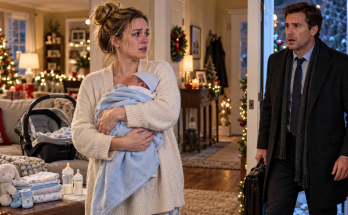
My daughter arrived home from college and wouldn’t talk to her father, then suddenly asked me, “How long have you known?”

Initially, I assumed Harper was simply tired. Graham soon came into the kitchen.
“Hey, kiddo. How’s school?”
She took her coffee and left without a word.
I watched after her.
“What was that?”
Graham just shrugged.
“You know how she gets.”
But I knew my daughter well enough to realize something was different.
Later, I found Harper in her room.
“What’s going on with you and your dad?”
She looked at me for a while, then asked,
“How long have you known?”
“Known what?”
She responded with a bitter laugh. “Never mind. Obviously, you don’t.”
I sat beside her. “Harper. Tell me.”
She explained she’d been hoping Graham would visit her in college, but he always had reasons not to: work, the distance, being busy.
The latest attempt ended with him snapping,
“Harper, I can’t drop everything whenever you want me to. I’m working to pay for that college.”
A few days ago, she’d asked him to pay some tuition fees. He said he already did, but the payment was missing from her records.
“Maybe it takes a few days,” I suggested.
“That’s what I thought,” she answered.
Even so, I felt unsettled. That evening, I checked our bank account. Graham had made the payment to the university.
I sent proof to Harper.
The next morning, Harper called the student accounts office. Afterward, she called me.
“Mom… they found Dad’s payment.”
“Then what’s the problem?”
Pause.
“It wasn’t put on my account.”
They would not disclose whose account it was credited to.
We kept this between us, saying nothing to Graham.
A few days later, Harper called.
“Mom.”
She sounded afraid.
“What happened?”
“Dad’s here.”
“What?”
She said he was on campus after months of being ‘too busy.’
“He’s with someone.”
“Who?”
“A guy about my age.”
Initially, I believed maybe Graham knew this person somehow through work. Harper then fell silent.
“Mom… Dad just hugged him.”
Words failed us.
My husband was secretly supporting someone else’s education, coming to campus—not for Harper.
We both started fearing the implication: another family.
I confronted Graham that day.
“Who is he?”
He changed instantly.
“Who?”
“The boy you’re meeting at Harper’s college.”
He was quiet.
“And whose tuition are you actually paying?”
“Elaine—”
“Don’t. Harper knows too.”
He looked at both of us.
“How much do you know?”
“Apparently not enough.”
He rubbed his face. “Please. Tonight, I’ll explain.”
That evening, Harper and I sat, not wanting excuses. Graham entered and didn’t have a chance to sit.
“Is he your son?” Harper blurted.
Graham paused.
“Harper—”
“Just tell me. Is he my brother?”
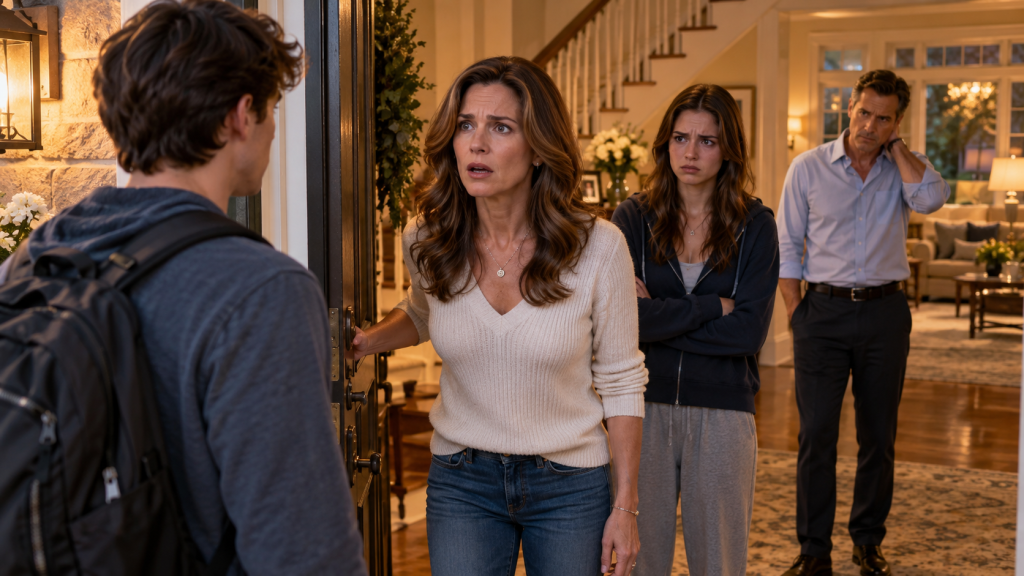
The doorbell interrupted. All eyes went to the entryway.
Graham shut his eyes.
“Who is that?” I asked.
He didn’t reply.
I stood and headed for the door. Harper joined me.
I opened it and stopped cold.
“What are you doing here?
PART 2 — THE SON HE HID IN PLAIN SIGHT
I opened the front door and forgot how to breathe.
The woman standing beneath our porch light had once slept on the floor of my college dorm room when I had the flu.
She had helped me choose my wedding dress.
She had stood beside me while I practiced signing my married name on the backs of junk-mail envelopes because I was twenty-three and ridiculous and hopelessly in love.
Then, less than a year after Graham and I married, she disappeared from our lives.
No dramatic fight.
No explanation.
Just fewer calls.
Missed birthdays.
Christmas cards that stopped arriving.
Eventually, silence.
“Sabrina?”
Her face crumpled.
“Hi, Elaine.”
Behind me, Graham whispered:
“Oh, God.”
That was when I knew the worst part of the evening had not happened yet.
Harper stepped beside me.
She looked from Sabrina to her father.
Then back.
“Who is she?”
My voice barely worked.
“Sabrina Wells.”
Harper frowned.
The name meant nothing to her.
Why would it?
By the time Harper was old enough to remember people, Sabrina had already become one of those names stored in an old photo album.
Then movement near the sidewalk caught my attention.
A young man was standing several feet behind Sabrina.
Hands inside his jacket pockets.
Head lowered.
The boy from Harper’s campus.
My husband’s secret student.
The one Harper had watched Graham hug after months of being told her father was too busy to visit.
He slowly raised his face.
And this time I saw him properly.
Not through Harper’s hurried description.
Not through fear.
His nose belonged to Sabrina.
His dark hair probably did too.
But the eyes—
Graham’s.
Same hazel.
Same slight downward turn at the outer corners.
Same crease between the eyebrows when he was frightened.
Harper saw it too.
Her hand found mine.
“Mom.”
One word.
Small.
Terrified.
Sabrina turned toward the young man.
“Evan.”
He stepped forward.
Graham appeared behind us.
For several seconds, the four of us stood around one another like strangers gathered after an accident.
Finally, Harper looked at her father.
“Answer me.”
Graham’s eyes filled.
“Harper—”
“Is he your son?”
Evan flinched.
Sabrina closed her eyes.
I stared at Graham.
He had spent twenty-two years waking beside me.
Making coffee.
Paying bills.
Arguing over thermostat settings.
Standing beside me when Harper was born.
Holding my hand when my mother died.
And suddenly I was looking at him as though our marriage were a house in which someone had just opened a door I never knew existed.
“Graham.”
My voice shook.
“Answer her.”
He looked at Evan.
Then Harper.
Then me.
“Yes.”
Harper’s fingers went cold inside mine.
“Yes what?”
she demanded.
Graham swallowed.
“Evan is my son.”
The sentence landed without sound.
Harper released my hand.
She stepped backward.
Once.
Then again.
“No.”
Graham moved toward her.
“Harper.”
“Don’t.”
She raised both hands.
“Don’t touch me.”
He stopped.
Her face twisted.
“You have a son?”
“I was going to tell you.”
“When?”
She laughed.
It was a terrible sound.
“When, Dad?”
“After you paid his graduation bill?”
“After you visited him enough times?”
“After I finished college and stopped noticing you never came for me?”
“That isn’t fair.”
Graham said automatically.
Harper’s expression changed.
I saw the moment his words hurt more than the confession.
“Not fair?”
she whispered.
Sabrina looked away.
Evan did too.
I wanted to scream.
Instead I said:
“Everyone inside.”
Graham looked at me.
“Elaine—”
“Inside.”
My house.
My marriage.
My daughter.
If the truth had been living outside the door for twenty years, it could finally come in.
We sat in the living room.
Nobody chose their normal seat.
That detail stays with me.
Graham usually sat in the leather chair beside the fireplace.
He remained standing.
Harper curled into the far corner of the sofa.
I sat beside her.
Sabrina took the chair nearest the door.
Evan stood until I finally said:
“You can sit down.”
He looked startled.
As if he had expected me to hate him.
Maybe part of me had expected that too.
But the moment I looked at his face, I understood something important.
Whatever Graham had done, this boy had not created himself.
Evan sat.
Hands folded tightly between his knees.
Then I asked:
“How old are you?”
“Twenty.”
His voice was quiet.
Harper was nineteen.
Eleven months apart.
My stomach dropped.
I looked at Graham.
He knew exactly what I had calculated.
“Before we were married.”
he said quickly.
I stared.
“That was not the question.”
Sabrina spoke.
“Elaine, I am sorry.”
I turned toward her.
“For what?”
Her eyes filled.
“Everything.”
“That is not an answer either.”
She nodded.
Fair.
Then she looked at Graham.
“You should tell her.”
He rubbed both hands over his face.
The same gesture he made whenever taxes annoyed him.
As if this were another problem that had become more complicated than expected.
Finally he sat across from us.
“You remember when we broke up senior year?”
Of course I remembered.
Three months.
One of those stupid young-love disasters that seemed enormous at twenty-two.
Graham had accepted a job several states away.
I wanted graduate school.
Neither of us wanted to compromise.
We broke up.
I cried for weeks.
Then we got back together before graduation.
A year later, we married.
“Yes.”
I said.
Graham glanced toward Sabrina.
“During that time, Sabrina and I…”
He stopped.
Harper closed her eyes.
I finished for him.
“Slept together.”
“Yes.”
The room became very still.
I looked at Sabrina.
She did not deny it.
Pain arrived strangely.
Not as jealousy.
Not at first.
The event had happened while Graham and I were broken up.
He had been free to sleep with someone.
So had I.
I hadn’t.
But that was irrelevant.
The betrayal was not twenty-two-year-old Graham having sex while single.
The betrayal was that the consequences of that night had apparently been living, breathing, attending college, and receiving money from my husband while I knew nothing.
“When did you find out you were pregnant?”
I asked Sabrina.
Her face tightened.
“After graduation.”
“And Graham?”
Silence.
Graham answered.
“Three years ago.”
Sabrina looked at him.
Something flashed across her face.
So quick I almost missed it.
Harper did not.
She sat straighter.
“What?”
Nobody answered.
Harper pointed at Sabrina.
“You just looked at him.”
Sabrina’s lips parted.
Graham said:
“Harper, please.”
“No.”
My daughter’s voice sharpened.
“She looked at you like you lied.”
Then to Sabrina:
“Did he find out three years ago?”
Sabrina stared at her hands.
Graham stood.
“This is already hard enough.”
That sentence changed everything.
Because innocent truth does not usually need protection from detail.
I looked at him.
“Sit down.”
“Elaine.”
“Sit.”
He did.
Then I turned toward Sabrina.
“When did Graham learn Evan might be his son?”
She closed her eyes.
“Elaine…”
I felt Harper tense beside me.
“Tell me.”
Sabrina’s voice broke.
“I told him I was pregnant twenty years ago.”
The room disappeared.
Not literally.
But walls became meaningless.
Sound narrowed to one sentence.
Twenty years ago.
I looked at Graham.
He stared at the floor.
“You knew?”
“Not for certain.”
His answer came immediately.
Not denial.
Qualification.
My heart cracked.
“You knew she was pregnant?”
“Yes.”
“You knew the child could be yours?”
“Yes.”
“But I didn’t know he was mine.”
I stood.
The movement startled everyone.
“For twenty years?”
“Elaine, listen—”
“No.”
I pressed one hand against my chest.
“You do not get to say ‘listen’ as though I missed a sentence.”
“You let me live twenty years without knowing there was a child who might be yours.”
“I thought he wasn’t.”
“Why?”
Graham’s mouth opened.
Nothing came.
Sabrina answered.
“Because he wanted to.”
Graham turned toward her.
“That is not fair.”
“There’s that phrase again.”
Harper muttered.
Sabrina looked exhausted.
“I wrote you when Evan was six weeks old.”
My knees weakened.
Graham whispered:
“Sabrina.”
“No.”
She looked at him.
“I did not come here tonight to help you edit this.”
Then she turned toward me.
“I sent him a letter.”
“I told him Evan had been born.”
“I told him the timing made paternity possible.”
“And I asked whether he wanted a test.”
My eyes stayed on Graham.
“What did you do?”
He swallowed.
“I didn’t answer.”
Harper’s mouth fell open.
“You ignored her?”
Graham looked toward Evan.
Pain crossed his face.
“I was married.”
I actually laughed.
“What does that have to do with whether you had a child?”
“Everything at the time.”
he snapped.
Then immediately softened.
“I was scared.”
There.
At least that was true.
Sabrina continued.
“I called once.”
“He told me he had started his life with you.”
“He said bringing uncertainty into your marriage would destroy both of you.”
“I was angry.”
“I said he didn’t get to decide that.”
“But then…”
She looked at Evan.
“I was twenty-three.”
“Alone.”
“Humiliated.”
“I didn’t want my son growing up feeling like a question somebody resented.”
“So I stopped calling.”
Evan stared at the carpet.
My anger shifted.
Not away from Graham.
Around the room.
Toward all the young versions of us who had made frightened decisions and then let twenty years harden around them.
I asked Sabrina:
“Why didn’t you tell me?”
Tears spilled down her face.
“I wanted to.”
“Then why didn’t you?”
“Because I had slept with the man you married.”
“Because you were my friend.”
“Because I was ashamed.”
“And because Graham told me you would think I had done it deliberately.”
That one hurt differently.
I looked at him.
“You told her what I would think too?”
Graham covered his face.
Apparently he had been speaking for me for decades.
Evan finally spoke.
“I didn’t know any of this until I was seventeen.”
We all turned toward him.
His voice was controlled.
Barely.
“My mom told me my father was someone she knew in college.”
“She never gave me a name.”
“I pushed.”
“I wanted medical history.”
“Family history.”
“Anything.”
“So she told me.”
He looked at Graham.
“I contacted him.”
Three years ago.
There it was.
That was what Graham had meant.
Not when he discovered Evan existed.
When Evan finally forced the question open.
“What happened?”
I asked.
Evan shrugged.
“He asked for a DNA test.”
The gesture tried to look casual.
It failed.
“And?”
Harper whispered.
Evan looked at her.
“He’s my father.”
No surprise.
Still, hearing it confirmed changed the room.
Possibility became blood.
Harper stood.
“So you got three years.”
Evan looked confused.
“What?”
“You got three years of him knowing.”
“Harper.”
I said softly.
She shook her head.
“No, Mom.”
Then to Graham:
“You knew for three years that he was definitely your son.”
“Yes.”
“And you didn’t tell me.”
“No.”
“Why?”
Graham looked desperate now.
“I didn’t know how.”
Harper laughed bitterly.
“You visited him.”
“Yes.”
“You had lunch with him.”
“Yes.”
“You paid his tuition.”
Graham hesitated.
“Yes.”
“You knew how to do all of that.”
Her voice cracked.
“You just didn’t know how to tell me I had a brother?”
That sentence broke through whatever defenses Graham had left.
He started crying.
Harper did not move.
I asked the question that had been burning since the bank transfer.
“Why was Harper’s tuition payment credited to Evan?”
Graham wiped his face.
“It wasn’t supposed to happen that way.”
“So how was it supposed to happen?”
Evan looked confused.
“That payment was hers?”
Graham’s head snapped toward him.
“Evan.”
The young man stood.
“You told me the payment came from the education account you set up for me.”
Harper went pale.
“What education account?”
Graham closed his eyes.
There it was again.
Another room inside the house.
“Graham.”
I said.
He looked at me.
“How much money have you given Evan?”
Sabrina immediately spoke.
“I don’t know anything about his finances.”
Evan added:
“I never asked him to take money from Harper.”
I believed him.
Not because I knew him.
Because his face looked sick.
Graham stood again and walked toward the fireplace.
“After the DNA test, I wanted to help.”
“Of course.”
I said.
“That isn’t what I asked.”
He stared at the family photograph on the mantel.
Harper at sixteen between us.
All three smiling.
“Tuition.”
“Rent.”
“A car repair.”
“Some medical expenses.”
“How much?”
He hesitated.
“Graham.”
“About sixty thousand.”
I stopped breathing.
Harper whispered:
“What?”
Graham turned quickly.
“Over three years.”
As though spreading the betrayal across thirty-six months made the number softer.
“From where?”
I asked.
“My bonuses.”
“That is not an account.”
“Our checking?”
“Some.”
“Your investment account?”
“Some.”
I stared.
“What about Harper’s college fund?”
Silence.
Harper’s face emptied.
“Dad.”
Graham looked at her.
“No.”
She stood very still.
“Did you take money from my college fund?”
“Not exactly.”
I nearly screamed.
“Then exactly what did you do?”
He sat down again.
Defeated.
“Years ago, we moved some of the 529 money into a broader education investment structure because Harper had scholarships.”
I remembered.
Vaguely.
Graham handled most long-term investments.
He was good at spreadsheets.
Taxes.
Numbers.
I signed forms when he put tabs beside my name.
Trust is astonishingly efficient until it isn’t.
“How much?”
I asked.
“Elaine—”
“How much of Harper’s education money has paid for Evan?”
Harper stopped breathing.
Graham whispered:
“About twenty-two thousand.”
I heard the clock in the hallway.
Tick.
Tick.
Tick.
Twenty-two thousand dollars.
Money saved from birthdays.
Bonuses.
Years when we skipped expensive vacations because Graham said college mattered more.
I had contributed.
My parents had contributed before they died.
Harper had worked summers believing the account was being preserved for graduate school.
And my husband had quietly redirected part of it to a son nobody knew existed.
Harper sat down slowly.
Not beside me this time.
On the floor.
Like her legs had given up.
“I don’t understand.”
she whispered.
“I had scholarships.”
“Yes.”
Graham said quickly.
“And there was more than enough for your tuition.”
“Until this semester.”
Her voice changed.
He said nothing.
She looked up.
“That’s why my payment went to him.”
Graham’s face crumpled.
“Evan’s aid fell through.”
“So you used mine.”
“I was going to replace it before the deadline.”
“With what?”
“My year-end bonus.”
“Then why did you tell me it was already paid?”
No answer.
Harper’s eyes filled.
“Why is lying always the part you find easiest?”
No one spoke.
Evan stood.
“I’ll pay it back.”
Harper looked at him.
“No.”
“I can.”
“No.”
She shook her head.
“This is not about you paying me.”
“It is my tuition.”
“I benefited.”
“You didn’t know.”
Harper’s voice softened for the first time.
“Did you?”
Evan looked at Graham.
Then back at her.
“No.”
“Then stop trying to clean up something he did.”
I looked at my daughter.
Pride and heartbreak can occupy the same body.
I learned that that night.
Sabrina turned to Graham.
“You told me you were paying Evan from money you had set aside yourself.”
“I did set money aside.”
“Then why touch Harper’s?”
“Because the timing—”
She stood.
“No.”
Her face hardened.
“I carried the guilt of this for twenty years.”
“I will not carry theft from your daughter too.”
Graham snapped:
“It wasn’t theft.”
I looked at him.
He saw my face.
His anger vanished.
Maybe legally the exact classification depended on ownership, account structure, and documents.
But morally, the sentence had already failed.
“You moved education money intended for Harper without telling either of us.”
I said.
“You can choose a prettier noun with an attorney.”
He looked down.
Harper went upstairs.
No goodbye.
No dramatic slam.
That worried me more.
Evan watched her disappear.
Then whispered:
“I didn’t know she didn’t know about me.”
I looked at him.
“What did Graham tell you?”
His expression tightened.
“That the family situation was complicated.”
“What does that mean?”
“He said you knew there had been someone before you got married.”
“That part is true.”
“And he said he was waiting for the right time to tell Harper.”
I laughed quietly.
Three years.
Apparently the right time required geological conditions.
Evan looked ashamed.
“I believed him.”
“You had reason to.”
He stared at me.
“You’re not mad at me?”
I thought.
“I don’t know you well enough to be mad at you yet.”
That startled a tiny laugh from him.
Good.
Then I added:
“But no. I am not blaming you for being born.”
His eyes filled immediately.
I understood then how many times he must have blamed himself for existing inconveniently.
Graham’s secrecy had hurt more people than he understood.
Sabrina and Evan left an hour later.
Before she went, Sabrina hugged herself beside the door.
“I know you may never forgive me.”
I looked at her.
“For sleeping with him while we were broken up?”
“No.”
“For staying silent.”
That answer was harder.
“I don’t know yet.”
She nodded.
Fair.
Then she said:
“I should have told you.”
“Yes.”
No comforting lie.
She deserved honesty too.
She left.
Evan paused.
“Can I…”
He stopped.
“What?”
“Can I talk to Harper sometime?”
I thought about my daughter upstairs.
“That needs to be her choice.”
He nodded.
“Okay.”
A good answer.
Then he left too.
Graham and I were alone.
Twenty-two years of marriage between us.
I looked at him.
He looked exhausted.
Older.
Human.
I hated that.
It would have been easier if betrayal turned people into monsters.
Instead, my husband still had the same gray beginning near his temples.
The same wedding ring.
The same small scar on his chin from falling off a bicycle at fourteen.
Everything familiar remained attached to someone I no longer understood.
“Why?”
I asked.
He started explaining immediately.
Fear.
Shame.
Timing.
Protecting me.
Protecting Harper.
Protecting Evan.
Protecting Sabrina.
I let him talk for almost five minutes.
Then stopped him.
“You keep saying protect.”
He went silent.
“But every person you protected lost the right to choose.”
He stared at me.
“You decided Sabrina did not deserve an answer.”
“You decided I did not deserve the truth.”
“You decided Harper did not deserve to know her brother.”
“You decided Evan had to exist in secret.”
“And then you decided our money could fix what your honesty had broken before anyone even knew it was broken.”
His eyes filled.
“I was trying to make it right.”
“No.”
I shook my head.
“You were trying to make it manageable.”
There is a difference.
I slept in Harper’s room that night.
She did not ask me to.
I simply found her sitting against the headboard, knees pulled to her chest.
When I entered, she moved over.
That was enough.
We lay beside each other like we had when she was small and thunderstorms frightened her.
After almost an hour, she whispered:
“Do you think he loves Evan more?”
My heart broke.
“No.”
“How do you know?”
“I don’t.”
Wrong answer.
Too honest.
I tried again.
“I don’t think love works that cleanly.”
“He visits him.”
I closed my eyes.
There it was.
Not money.
Not paternity.
Presence.
“He came here for him.”
Harper said.
“And every time I asked him to come see me, he said he was busy.”
I had no defense for Graham.
So I did not create one.
“That hurt.”
Harper laughed bitterly.
“Great therapy language, Mom.”
“I know.”
“Sorry.”
“No.”
She wiped her face.
“I just want to know why I wasn’t enough to drive two hours for.”
“You were.”
“He didn’t act like it.”
“No.”
That answer made us both cry.
The next morning, Graham left for a hotel.
Not because I theatrically threw his suitcase onto the lawn.
Because I told him I needed space.
He agreed.
Before leaving, he stood in the hallway and asked Harper:
“Can I hug you?”
She shook her head.
He nodded.
“Okay.”
That was probably the first correct thing he had done in days.
Then I started looking at money.
Not to punish him.
Because suddenly I understood how dangerous it was to love someone enough not to verify what they were doing.
I downloaded statements.
College accounts.
Checking.
Savings.
Investments.
Credit cards.
Three years.
Then five.
The numbers were not catastrophic.
We were not secretly bankrupt.
There was no second mortgage.
No offshore account.
No lavish second household.
That should have comforted me.
Instead, small recurring transfers began appearing.
$600.
$900.
$1,250.
Tuition installments.
Rent.
A used-car down payment.
Insurance.
All connected eventually to Evan.
Some came from Graham’s bonus account.
Some from joint money.
Some from education savings.
I made a spreadsheet.
I hated myself for becoming a woman with a betrayal spreadsheet.
Then realized numbers were not the betrayal.
They were how I stopped guessing.
Harper sat beside me.
She should not have had to see every detail.
But she was nineteen.
The tuition money affected her directly.
I showed her only what she needed.
She stared at the total.
Then asked:
“Did Dad pay for my dorm visits?”
“What?”
“When he came to see Evan.”
I had not considered that.
We checked the travel card.
Hotels near campus.
Meals.
Gas.
Dates.
Harper opened her calendar.
Her face changed.
“What?”
I asked.
She pointed to one weekend.
“I asked him to come that weekend.”
I remembered.
She had called crying after failing an exam.
Graham said quarter-end reports made travel impossible.
His credit card showed a hotel fourteen minutes from her dorm.
My chest tightened.
He had been there.
Near enough to drive to her room in less time than it took to finish a coffee.
He had visited Evan.
Not Harper.
She stood.
Walked into the kitchen.
I followed.
“Harper.”
She turned.
Tears streamed down her face.
“He lied from the same city.”
There are sentences a mother cannot repair.
I just held her.
Two days later, Graham asked to meet.
I refused at first.
Then agreed with one condition.
No explanations until he answered questions.
He came home.
Sat at the dining table.
Harper stayed upstairs by choice.
I placed my spreadsheet in front of him.
His face sank.
“You went through everything.”
“Our everything.”
I said.
“Yes.”
Then I pointed toward the total.
“Is this complete?”
He scanned the entries.
“Mostly.”
My stomach tightened.
“Mostly?”
“There were a few things before the DNA test.”
I stared.
“What?”
He froze.
The mistake had already escaped.
“Before the DNA test?”
I repeated.
He looked toward the stairs.
Then back at me.
“I sent Sabrina money occasionally.”
“For Evan?”
“Yes.”
“When?”
“Over the years.”
The room tilted.
“You told me you did not know he was yours.”
“I didn’t know.”
“But you thought he might be.”
“Yes.”
“And you sent money.”
“Sometimes.”
“How long?”
He closed his eyes.
“Since he was a baby.”
My hands went cold.
“So you did not ignore the letter.”
“I ignored the paternity test.”
“That is not the same thing.”
“I know.”
“You financially supported him.”
“Not consistently.”
“Do not minimize this.”
I stood.
“You knew enough to send money.”
He looked defeated.
“Sabrina would tell me when something serious happened.”
“Medical bills.”
“School.”
“Once when her car broke down.”
“Did you meet him?”
Graham did not answer.
My heart began pounding.
“Graham.”
“Once.”
I stopped breathing.
“When?”
“He was nine.”
The floor might as well have disappeared.
He told me he had traveled to Sabrina’s city for work.
He met them in a park.
Evan did not know Graham was his possible father.
Sabrina introduced him as an old friend.
Graham watched his son play baseball for an hour.
Then left.
I stared.
“You saw him.”
“Yes.”
“And came home to me.”
“Yes.”
“To Harper.”
His face crumpled.
“Yes.”
“And said nothing.”
“Yes.”
Twenty years of marriage did not shatter in one giant sound.
It cracked quietly.
One hidden visit.
One transfer.
One hotel receipt.
One lie laid carefully beside another.
That evening, after Graham returned to his hotel, I opened the old fireproof document box in our closet.
I do not know why.
Instinct, maybe.
I wanted Harper’s birth certificate because I was making copies of financial documents and decided to gather everything important.
Insurance policies.
Marriage certificate.
Old tax records.
At the bottom sat a manila folder I had never noticed.
No label.
Graham organized everything obsessively.
An unlabeled folder was strange.
I opened it.
Inside were old papers.
Twenty years old.
A hospital birth announcement.
EVAN MATTHEW WELLS
Six pounds, eleven ounces.
A photograph.
Newborn.
Then a handwritten letter.
Sabrina’s writing.
I knew it before reading a word.
My hands began shaking.
Graham,
I am not asking you to leave Elaine. I am asking you to decide whether you want to know if this child is yours.
I sat on the closet floor.
There were three pages.
Then another document.
Not a DNA test.
Something worse in a different way.
A certified-mail receipt.
Signed.
By Graham.
Dated twenty years earlier.
Proof he had received the letter.
Then underneath it—
a photocopy of a check.
Five thousand dollars.
Payable to Sabrina Wells.
Memo line:
For Evan.
Dated six weeks after the letter.
I stared at it.
Graham had not merely known there was a possibility.
He had begun financially acknowledging that possibility almost immediately.
And kept the proof.
Why?
Guilt?
Fear?
Insurance against his own memory?
I did not know.
Then I found the last page.
A handwritten note in Graham’s own writing.
Not to Sabrina.
To himself.
A list.
Do not tell Elaine until paternity certain.
If Sabrina agrees, send support quietly.
No contact unless necessary.
Then one line circled twice:
Protect Harper from this.
My daughter had not even been born yet.
I stopped.
Looked at the date.
Then counted backward.
Harper was conceived nearly a year later.
Not already present.
Not already needing protection.
Graham had written her name before she existed.
No.
That made no sense.
I looked closer.
The ink was different.
The final line had been added later.
Much later.
I turned the page over.
Another date appeared faintly in the corner.
Fifteen years ago.
Graham had reopened this folder when Harper was four.
Why?
I kept searching.
Then I found the document that answered me.
A laboratory report.
My eyes moved to the date.
Fifteen years ago.
Not three.
Not last year.
Fifteen.
Probability of paternity: 99.99%.
I stopped breathing.
Graham had not learned Evan was his son three years ago.
He had known since Harper was four years old.
For fifteen years, he had tucked the truth beneath our marriage certificate, kissed our daughter goodnight, and let both families live inside a story he already knew was false.
I sat on the closet floor holding the report until Harper found me.
“Mom?”
I looked up.
She saw my face.
Then the paper.
“What is it?”
I wanted to protect her.
That instinct came automatically.
Maybe it always would.
But suddenly I understood the difference between protecting someone and choosing reality for them.
So I handed her the report.
Harper read the date.
Her face went white.
Then she looked at me.
“He knew?”
I nodded.
“For fifteen years?”
I could barely speak.
“Yes.”
She sank down beside me.
Neither of us cried immediately.
Some betrayals are too large for tears at first.
They simply rearrange time.
Every birthday.
Every family vacation.
Every time Graham talked about honesty.
Every time he told Harper he was too busy to visit.
Every dollar quietly moved.
Every secret meeting.
Fifteen years.
Then Harper turned the page.
Another paper slipped onto the floor.
A form.
I reached for it.
A beneficiary designation.
An old life-insurance policy.
Graham’s name at the top.
My name listed first.
Then Harper.
Then, handwritten beneath hers:
Evan Matthew Wells — 25%.
Date changed three years earlier.
No problem with Graham wanting to provide for his son.
That was not what froze me.
At the bottom was a second form.
A revision prepared only six months ago.
Still unsigned.
My percentage reduced.
Harper’s reduced.
Evan’s increased.
Beside it, in Graham’s handwriting:
Need to restructure everything before Elaine finds out.
Harper stared at the sentence.
Then at me.
And for the first time since this began, I realized the secret was not something Graham had simply failed to confess.
He had been preparing for the day it finally exploded.
PART 3 — THE FAMILY TRUTH COULD FINALLY BELONG TO
The paternity report lay between Harper and me on the closet floor.
Fifteen years.
I kept looking at the date because my mind refused to let it become real.
Fifteen years ago, Harper had been four.
She had slept with a stuffed rabbit tucked beneath her chin and believed her father could fix anything with duct tape.
Fifteen years ago, Graham had taken her to preschool on Tuesdays.
He had read bedtime stories in ridiculous voices.
He had stood beside me at kindergarten orientation and whispered that he was not emotionally prepared for her to grow up.
And somewhere inside those same years, he had known there was another child calling someone else’s home his own.
A son.
His son.
Not possibly.
Not maybe.
Not after a recent test.
Known.
I looked at Harper.
She was still holding the report.
Her hands had begun shaking.
“He knew when I was four?”
“Yes.”
Her voice broke.
“And he kept saying three years.”
“Yes.”
“Why?”
I had no answer.
That was becoming the most painful sentence in our house.
Harper picked up the unsigned life-insurance revision.
Need to restructure everything before Elaine finds out.
She stared at her father’s handwriting.
Then she laughed.
Not because anything was funny.
“I love that.”
I looked at her.
“What?”
“Not before he tells you.”
Her eyes filled.
“Before you find out.”
There was the difference.
Confession leaves room for another person.
Discovery leaves only damage control.
Graham had apparently been planning for discovery.
Not honesty.
That distinction ended something inside me before I ever spoke to him again.
I photographed every document.
Not because I planned to post them.
Not because I wanted ammunition.
Because I had spent too many days learning that memory becomes strangely negotiable when someone else is frightened enough.
Then I put everything back exactly where I found it.
Except the paternity report.
That I placed in a folder of my own.
Harper watched.
“Are you calling Dad?”
“No.”
“Why not?”
“Because I’m done confronting him before I understand what I’m confronting.”
She nodded slowly.
For once, neither of us wanted an explanation quickly enough to let Graham shape it first.
The next morning, I called an attorney.
Her name was Marisol Grant.
A colleague had used her during a complicated divorce and said only one thing:
“She doesn’t make you feel powerful. She makes you feel informed.”
That sounded better.
I met her that afternoon.
Took the documents.
The bank statements.
The old paternity report.
The education-account transfers.
The life-insurance forms.
The payment records connecting Graham to Evan over the years.
Marisol read quietly.
Then asked:
“What do you want?”
I stared.
Everyone kept asking that.
As if I were supposed to know what twenty-two years of marriage should become after forty-eight hours of truth.
“I want Harper’s education money protected.”
“Good.”
“I want to know what else I don’t know.”
“Good.”
“I want Graham to stop moving money before we understand what’s happened.”
She nodded.
“And the marriage?”
My throat tightened.
“I don’t know yet.”
Marisol closed the folder.
“You are allowed not to know that today.”
The relief almost embarrassed me.
She explained the financial part carefully.
Not every transfer Graham had made was automatically theft.
Joint money is complicated.
Education accounts are complicated.
Life-insurance beneficiary designations are generally changeable before death unless some agreement says otherwise.
The unsigned revision was not itself a completed act.
The old paternity test proved knowledge.
It did not prove every motive I feared.
“Do not turn bad evidence into bigger evidence because you’re hurt.”
Marisol said.
“Use what it actually proves.”
That sentence saved me from becoming unfair.
I was angry enough to imagine entire secret lives.
The truth was already large enough.
I did not need to enlarge it.
What the records did show was serious.
Graham had known Evan was his son since Evan was five.
He had supported him quietly for years.
Then, when Evan reached seventeen and contacted him directly, Graham’s involvement increased.
Tuition.
Rent.
Travel.
A car repair.
Medical expenses.
Meals.
Visits.
Harper’s education account had been used for approximately twenty-two thousand dollars of that support.
Exactly what rights Graham had over the account depended on how it had been structured.
But the money had been saved for Harper.
Some of it came from my parents.
Some from me.
Some from Graham.
And Harper had been told it was being preserved for her future.
That mattered.
A great deal.
Marisol’s advice was simple.
Preserve.
Do not drain joint accounts.
Do not confront through text.
Do not destroy documents.
Change passwords only on accounts that were mine individually.
And request complete financial disclosure if separation followed.
Adult consequences.
Boring enough to trust.
Then I called Sabrina.
She answered on the second ring.
“Elaine?”
“I found the DNA test.”
Silence.
Not surprise.
That told me she knew.
“You knew he tested fifteen years ago.”
“Yes.”
My chest tightened.
“Why did you let him tell me it was three?”
She began crying.
“I didn’t know he would.”
“You were sitting in my living room.”
“I know.”
“You looked at him.”
“I know.”
“Then you stayed quiet.”
“I froze.”
I closed my eyes.
For twenty years, everyone seemed to freeze exactly when honesty became expensive.
“When did the test happen?”
I asked.
Sabrina took a breath.
“When Evan was five.”
“Why then?”
“He had a heart murmur.”
My stomach turned.
“What?”
“It turned out to be benign.”
She said quickly.
“But the pediatric cardiologist asked about family history.”
“I didn’t have Graham’s.”
“I called him.”
“And this time he agreed to test.”
There it was.
Not romantic guilt.
Medical necessity.
A five-year-old child had needed his own family history badly enough that secrecy finally bent.
Not broke.
Bent.
“What happened after the result?”
I asked.
Sabrina became quiet.
“He cried.”
“Then what?”
“He asked me what I wanted.”
“And?”
“I told him Evan deserved the truth eventually.”
“What did Graham say?”
A long silence.
Then:
“He said Harper was too young.”
I laughed bitterly.
“Harper was four.”
“I know.”
“He said he would tell you when the time was right.”
I looked out the window.
Fifteen years.
Apparently the right time was always somewhere just beyond the next birthday.
“Did you believe him?”
“At first.”
“For how long?”
“Not long.”
“Then why didn’t you tell me yourself?”
She cried harder.
“Because by then I had already let five years pass.”
“I felt like every year made the next year harder.”
“I was scared you would hate me.”
“I was scared Evan would become a scandal in your marriage.”
“And if I am completely honest…”
She stopped.
“Be honest.”
“I was afraid Graham would disappear from Evan’s life completely if I forced it.”
That one I understood.
Did not forgive.
Understood.
She had been protecting her child too.
Badly.
Fearfully.
But the motive was not nothing.
“Did Graham see Evan before three years ago?”
“Yes.”
“How often?”
“Not much at first.”
“Once when Evan was nine.”
“Again when he was twelve.”
“Then a few times after fourteen.”
My hand tightened around the phone.
More visits.
More years.
More lies.
“Did Evan know?”
“Not until seventeen.”
“So before that, Graham was what?”
“An old family friend.”
I closed my eyes.
A father attending his son’s life disguised as a family friend.
There was something unbearably sad about it.
Not beautiful.
Sad.
Cowardice can still contain love.
That is what makes it dangerous.
I ended the call without forgiving Sabrina.
Without condemning her forever either.
I simply said:
“I need time.”
She answered:
“I know.”
For once, nobody told me how long.
Graham came home that evening because I asked him to.
Harper chose to be present for the first part.
He sat at the dining table.
The same table where we had celebrated birthdays.
Filled out college forms.
Argued about paint colors.
His wedding ring remained on his finger.
Mine did too.
I had not yet decided what to do with twenty-two years of metal.
I placed the paternity report in front of him.
He looked at the date.
His face collapsed.
No denial.
Good.
I was tired of denial.
“Fifteen years.”
I said.
He nodded.
“Say it.”
His voice barely worked.
“I have known Evan is my son for fifteen years.”
Harper inhaled sharply beside me.
Hearing it aloud made the lie larger.
“Why did you tell us three?”
Graham stared at the table.
“Because that’s when Evan knew.”
“No.”
Harper said.
We both looked at her.
She was crying now.
“That isn’t what we asked.”
Graham swallowed.
“I thought it would be easier.”
She laughed.
“For who?”
No answer.
Exactly.
I pushed the second document toward him.
The handwritten note.
Protect Harper from this.
“You wrote this when she was four?”
“Yes.”
“Protect her from what?”
He looked at our daughter.
“From feeling replaced.”
Harper’s face changed.
“You protected me by giving him my college money?”
The question hit with almost physical force.
Graham closed his eyes.
“I know how that looks.”
Harper stood.
“No.”
Her voice shook.
“Stop saying that.”
He looked up.
“It doesn’t look like anything.”
“You did it.”
Margaret Whitmore from another life could have said that.
Facts do not need softer lighting.
Graham began explaining.
At first, he thought telling me about Evan would destroy our marriage.
Then he thought Harper was too young.
Then school became difficult.
Then my mother became ill.
Then his father died.
Then Harper was a teenager.
Then Evan still did not know.
Then Evan found out.
Then Graham wanted time to establish a relationship first.
Every year had a reason.
That was the problem.
Reasons are endlessly renewable.
Truth is not.
“Did you love him?”
Harper asked.
Graham looked at Evan’s invisible place in the room.
“Yes.”
“How long?”
He started crying.
“From the first time I saw him.”
Harper looked away.
I could see pain move through her face.
Not because a father loved his son.
Because love had been happening somewhere she was forbidden to see.
Graham continued.
“I thought if I kept the two parts of my life separate, nobody would lose anything.”
I stared.
“But everybody did.”
He nodded.
“Yes.”
At least he knew now.
Then I asked about the tuition.
No philosophy.
No childhood fear.
Just money.
“Why did Harper’s payment go to Evan?”
Graham wiped his face.
“His financial aid was delayed.”
“So?”
“He was at risk of being dropped from classes.”
“And Harper?”
“Her deadline was later.”
I closed my eyes.
There it was again.
The family member he believed could wait.
The responsible one.
The secure one.
The one whose pain would be postponed because someone else’s looked more urgent.
Harper stared at him.
“You thought I could handle it.”
“Yes.”
His answer came quietly.
She laughed through tears.
“Mom always says that about me.”
I looked at her.
“No.”
“Not like that.”
But I understood what she meant.
Competence becomes dangerous when the people who love you begin treating it as permission to give your share away.
Graham said:
“I planned to replace every dollar.”
“When?”
I asked.
“Before you knew.”
He stopped.
Wrong answer.
The room went silent.
Before we knew.
Not before Harper needed it.
Not before doing it.
Before discovery.
Again.
Always.
Harper stood.
“I can’t do this.”
She walked toward the stairs.
Graham called:
“Harper.”
She stopped.
Did not turn.
“I love you.”
he said.
My daughter stood completely still.
Then answered:
“I know.”
That surprised all of us.
She looked back.
“That’s what makes it worse.”
Then she went upstairs.
Love was no longer Graham’s defense.
That was important.
Nobody was claiming he had never loved us.
He had.
Maybe desperately.
But love without respect for other people’s right to reality becomes something distorted.
A cage with soft walls.
Graham had protected us from truth until truth became the thing most capable of hurting us.
I asked him about the unsigned insurance revision.
He admitted he had been planning to restructure his estate.
Not to cut Harper out.
Not to leave everything to Evan.
To acknowledge both children openly once he finally told us.
“Why reduce my percentage?”
I asked.
“Because after divorce—”
He stopped.
I felt cold.
“After what?”
He looked terrified.
I stared.
“Were you planning to divorce me?”
“No.”
“Then why did you say after divorce?”
He rubbed his face.
“I considered that you might leave.”
Different.
Still devastating.
So the note—
before Elaine finds out
—was preparation for consequences he expected but still refused to prevent with honesty.
He had been planning around my reaction instead of allowing me one.
“Did you ever plan to tell me voluntarily?”
I asked.
He looked at me.
For a long time.
Then the final lie left his face.
“I don’t know.”
There.
The most honest thing he had said.
I nodded.
“Thank you.”
He began crying harder.
Because sometimes truth comes too late to save what lying protected.
Graham moved into an apartment the following week.
No dramatic expulsion.
No locks changed overnight.
We agreed it was best.
Marisol prepared temporary financial arrangements while disclosure began.
The full accounting took months.
There were no secret offshore accounts.
No second house.
No hidden mistress.
No giant conspiracy.
Just years of concealed support and financial decisions Graham had made alone.
In some ways, that ordinary scale made it harder.
Our marriage had not been a complete fiction.
It had been a real marriage with a locked room inside it.
The education money became one of the first settlement issues.
Graham agreed that the amount diverted from the account intended for Harper should be restored from his share of marital assets before the final property division.
Not Evan’s money.
Not Sabrina’s.
His.
That mattered to me.
Harper had no interest in taking tuition back from a brother who had accepted help without knowing where it came from.
Neither did I.
Responsibility belongs where the decision was made.
Evan tried anyway.
He called Harper before either of them had decided they were ready to call each other siblings.
“I can take loans.”
he told her.
“I can pay it back.”
Harper said:
“No.”
“I benefited.”
“You didn’t steal from me.”
“My dad did.”
Then she caught herself.
My dad.
Not our dad.
Not yet.
Evan heard it.
Did not correct her.
That may have been the first reason Harper eventually trusted him.
He never forced the relationship to arrive faster than she could bear.
Their first meeting alone happened in a coffee shop near campus.
Harper told me about it afterward.
I asked only:
“How was it?”
She shrugged.
“Weird.”
“Bad weird?”
“Just weird.”
Then:
“He hates mushrooms.”
I stared at her.
“What does that have to do with anything?”
“Dad hates mushrooms.”
“Oh.”
She looked irritated.
“I keep noticing stupid things.”
Same eyebrows.
Same handwriting.
Same way of tapping a spoon against the cup.
Biology introducing itself through tiny habits.
It was unsettling.
Also fascinating.
Harper hated both truths.
They met again.
Then again.
Not weekly.
Not immediately close.
Sometimes they went months without speaking.
Then one would send the other a joke.
Or ask about school.
Eventually Harper admitted she liked him.
“That seems inconvenient.”
I said.
“Extremely.”
She smiled.
Then became serious.
“He’s angry too.”
“At Graham?”
“Yes.”
That surprised me less than it surprised her.
Evan had received fifteen years of partial fatherhood.
Money in envelopes.
Occasional visits.
A man sitting at the edge of his life because he was too frightened to enter fully.
Being the secret child is not the same thing as being the favored child.
Harper slowly understood that.
Her father’s hidden attention had not given Evan what Harper feared.
It had given him a different kind of absence.
Sabrina and I met six months later.
Just us.
Coffee.
No children.
No Graham.
She looked older than the woman in my wedding photographs.
So did I.
We both deserved that.
She apologized again.
This time without trying to explain immediately.
“I betrayed our friendship.”
“Yes.”
“I let fear become an excuse for silence.”
“Yes.”
“I should have told you when Evan was born.”
“Yes.”
She cried.
I did not comfort her right away.
Then I asked the question I had carried for months.
“Did you love Graham?”
She thought.
“At twenty-two?”
“Yes.”
“For a little while.”
“Later?”
“No.”
That helped less than I expected.
Affairs were not the story.
Secrets were.
“Why keep taking his money?”
I asked.
Her face tightened.
“Because Evan needed things.”
“And because part of me thought Graham owed him.”
“That part was right.”
Then:
“But I should have insisted he provide openly.”
“I let secrecy become the price of support.”
There.
Her part.
Accurately named.
I could work with that.
We never became best friends again.
Too much distance had formed.
But eventually we became something gentler.
Two women who loved children tied together by one man’s fear.
Not enemies.
Not sisters.
Just honest.
That was enough.
The divorce took fourteen months.
Long enough for anger to lose some heat and gain sharper edges.
We mediated most of it.
House equity.
Retirement.
Savings.
Education-account restoration.
Insurance.
No dramatic courtroom speech.
No judge declaring Graham morally bankrupt.
Family law is often much more interested in numbers and parenting arrangements than poetic justice.
Harper was already an adult.
Custody was irrelevant.
That saved us one battlefield.
The final settlement restored the diverted education funds from Graham’s share and divided everything else according to negotiated terms and applicable law.
I kept the house for two years.
Then sold it.
Too many rooms still contained questions.
Graham did not lose his relationship with Harper completely.
He nearly did.
For the first five months, she barely spoke to him.
He sent messages.
Not dozens.
One every week or two.
I love you. No need to answer.
I’m sorry.
Good luck on your exam.
Eventually Harper replied:
Thanks.
One word.
Graham called me afterward.
He was crying.
I almost said:
Do not make her one-word response into a redemption story.
Instead I said:
“Go slowly.”
He did.
Maybe for the first time in his life.
He started therapy.
Not because therapy earns forgiveness.
Because he needed somewhere to examine the instinct that had governed him for decades.
He had grown up in a house where conflict was treated like catastrophe.
His father stopped speaking to family members for years after disagreements.
His mother threatened to leave whenever emotions became intense.
Graham learned early that truth could destroy relationships.
So he managed information.
Delayed.
Softened.
Separated people into compartments.
He genuinely believed secrecy preserved love.
Understanding that made his behavior intelligible.
It did not make it acceptable.
Explanation is not absolution.
But sometimes explanation makes boundaries easier to build because you finally know what the boundary is protecting.
Two years after the divorce, Harper graduated.
Graham attended.
So did Evan.
Sabrina sat three rows behind me.
Not because we had staged some modern-family performance.
Because Harper invited everyone and assigned seats herself.
Apparently control can be healthy when it belongs to the person whose day it is.
Graham sat nowhere near me.
That was fine.
When Harper crossed the stage, we all stood.
All of us.
For one moment, the people who had lied, hidden, hurt, and healed were united by one simple fact.
We loved the same young woman.
Love had not been enough to keep us together.
But it was enough to make us clap.
Sometimes that is what remains.
After the ceremony, Harper took photographs.
One with me.
One with Graham.
One with Evan.
Then she surprised everyone.
“Dad.”
Graham looked up.
“Get over here.”
He approached cautiously.
Harper pulled Evan beside her.
Then stood between them.
“Mom, take one.”
I lifted the phone.
In the frame stood my daughter.
Her father.
Her brother.
Three people whose relationship should have existed fifteen years earlier.
I pressed the button.
Nobody smiled perfectly.
Good.
Perfect had caused enough trouble.
Later that evening, Harper showed me the photo.
“I don’t know what to call him yet.”
“Evan?”
She rolled her eyes.
“I mean to other people.”
“My brother sounds weird.”
“My half-brother sounds clinical.”
“Dad’s secret son sounds hostile.”
“Accurate but hostile.”
She laughed.
Then:
“I think I’ll just say Evan.”
“Excellent.”
Names before roles.
People before categories.
We were learning.
Graham and Evan developed a more honest relationship too.
Less money.
More time.
That mattered.
Evan once told Harper:
“I used to think tuition was how Dad showed up.”
“Now he actually shows up.”
The irony hurt.
But maybe growth should.
Graham stopped trying to compensate for twenty years with checks.
He attended Evan’s graduation.
Helped him move apartments.
Called without solving anything.
Sometimes fatherhood begins with presence long after biology starts the clock.
Harper eventually forgave the tuition money.
Not the lying.
She was very specific.
“I don’t care about the twenty-two thousand anymore.”
she told Graham during one family therapy session.
“You paid it back.”
“What I care about is that you decided I could take the hit because I was doing okay.”
Graham nodded.
“I know.”
“No.”
She leaned forward.
“I need you to really know.”
“I spent years wondering why you wouldn’t visit.”
“Then I found out you were already there.”
“That changed how I understood my place in your life.”
Graham cried.
Harper did not rescue him.
Good.
Some pain should be witnessed before it is comforted.
Then she said something that changed him.
“You kept saying you were protecting me from feeling replaced.”
“But secrecy is what made me feel replaceable.”
There it was.
Fifteen years reduced to one sentence.
Had Graham told us when Harper was four, there would have been pain.
Confusion.
Arguments.
Counseling.
Maybe even divorce then.
But Harper could have grown up knowing her brother.
Evan could have grown up knowing his father openly.
I could have chosen my marriage with the truth included.
Instead, Graham removed everyone’s choice because he feared the choices we might make.
That was the deepest betrayal.
Not Evan.
Not Sabrina.
Not the money.
Choice.
I rebuilt my own finances after the divorce.
Not because Graham had stolen everything.
He hadn’t.
Because I had let financial trust become financial ignorance.
I learned the accounts.
Taxes.
Insurance.
Retirement.
I hired an adviser who explained things without making me feel foolish for asking.
The first year I filed my taxes independently, I bought myself an absurdly expensive dinner.
Harper joined me.
She raised her glass.
“To financial literacy.”
I laughed.
“To never signing something because a man put a sticky arrow beside it.”
She nearly spit out her wine.
We toasted anyway.
I dated again eventually.
Very eventually.
His name was David Moreno.
A widower.
History teacher.
Terrible cook.
Before things became serious, I told him the story.
Not every transfer.
Not every lie.
Enough.
He listened.
Then asked:
“What would make you feel safe in a relationship now?”
The question almost scared me more than a lie.
No one had asked before.
I thought.
“Transparency.”
He nodded.
“Anything else?”
“The right to hear bad news before somebody decides what I can handle.”
He reached across the table.
“That seems reasonable.”
Simple.
No grand promise.
Reasonable.
I liked that.
Graham never remarried while Harper was in her twenties.
Maybe later he did.
Our lives eventually became separate enough that I did not know every detail.
That was healthy.
We could attend the same birthday.
Exchange polite messages.
Talk about Harper without turning history into an argument.
Forgiveness did not make us friends.
Time made us less dangerous to each other.
Sometimes that is plenty.
Years later, Harper married.
She asked Graham to walk her halfway down the aisle.
Then stopped.
Turned.
And walked the rest alone.
Some relatives found it strange.
I thought it was perfect.
Her father accompanied her.
He did not deliver her.
Harper had become very serious about symbolism.
Apparently family trauma creates annoying poets.
At the reception, Evan gave a short toast.
He said:
“I met my sister too late.”
Everyone became quiet.
Then he smiled.
“But not so late that we ran out of time.”
Harper cried.
So did Graham.
So did I.
Sabrina covered her face.
There are griefs that cannot be repaired by getting the lost years back.
The years do not return.
What you can do is stop wasting the ones still coming.
Afterward, Graham found me near the terrace.
“Elaine.”
I looked at him.
He had gone almost completely gray.
“Hi.”
He held a glass of water.
No dramatic drink.
Very Graham.
“I’ve wanted to say something for years.”
“That sentence has historically gone badly for me.”
He laughed.
Then became serious.
“I thought telling the truth would destroy our family.”
I said nothing.
“And by hiding it, I made sure the truth would arrive as destruction.”
That was accurate.
He continued.
“If I had told you when Evan was five…”
He stopped.
We both knew the impossible question.
Would I have stayed?
I had asked myself a thousand times.
“I don’t know what I would have done.”
I said.
“I know.”
His eyes filled.
“That’s the thing I took from you.”
Choice.
Finally, he understood the right word.
“I’m sorry.”
he said.
Not for Sabrina.
Not for Evan.
Not even for the money.
“For deciding your choices were more dangerous than my lies.”
I looked at him for a long time.
Then nodded.
“Thank you.”
Did I forgive him completely?
I stopped needing to answer that question.
Some relationships do not need a final moral score.
The marriage ended.
The apology mattered.
Both can be true.
Harper and Evan became closer as they got older.
Not inseparable.
Real siblings rarely are.
They argued.
Ignored each other’s messages.
Borrowed money in small amounts and actually paid it back.
Once Evan forgot Harper’s birthday and she called me outraged.
I listened for fifteen minutes.
Then said:
“You wanted a brother.”
She shouted:
“Not like this.”
I laughed until she hung up on me.
Family, finally ordinary.
What a gift.
Years after everything happened, Harper found the old paternity report while helping me sort boxes before a move.
She held it up.
“Do you still need this?”
I looked at the paper.
That date had once felt capable of swallowing fifteen years.
Now it was just a document.
Evidence of a truth nobody denied anymore.
“No.”
She fed it into the shredder.
The machine pulled it in slowly.
Black letters became strips.
Fifteen years did not disappear.
But the paper stopped carrying them for us.
That felt right.
I kept one thing.
Not a financial statement.
Not Graham’s handwritten note.
A photograph from Harper’s graduation.
Harper in the middle.
Graham on one side.
Evan on the other.
None of them perfectly comfortable.
All of them present.
That photograph became the opposite of Graham’s secret folder.
Nothing hidden.
Nothing mislabeled.
Nobody introduced as an old friend who was actually family.
Just three people standing in the truth, however awkwardly.
When Harper first came home from college and asked me:
How long have you known?
I thought she was asking whether I had known about another son.
Later I understood the question had been larger.
How long had I known our marriage contained rooms I never entered?
How long had Graham been somewhere else while telling us he was busy?
How long had Harper sensed an absence before she knew its name?
The answer changed depending on which truth you meant.
I had known nothing about Evan.
But perhaps I had known for years that Graham avoided difficult truths until they became someone else’s emergency.
I had simply never understood the cost.
The secret did not destroy us because Evan existed.
That matters.
A child is never the betrayal.
Evan was not evidence of Graham’s failure.
He was a person who deserved a father without being hidden as a threat.
Harper deserved a brother without discovering him through a missing tuition payment.
Sabrina deserved an answer twenty years earlier.
And I deserved the chance to know what marriage I was actually choosing.
We all lost something because Graham believed secrecy was kinder than uncertainty.
Eventually, we stopped making Evan carry that meaning.
He was not the secret anymore.
The secret was what Graham had done with the truth.
I used to believe a good family was one in which everyone protected each other from pain.
I don’t anymore.
Pain arrives whether invited or not.
A good family is one where no one gets to decide alone which truths another person is strong enough to hear.
Love does not require revealing every private thought.
But when the truth changes another person’s identity, finances, marriage, parenthood, or future, silence is not protection.
It is control.
Graham learned that late.
So did I.
Harper learned it young enough to build differently.
Maybe that is the part of the story that matters most.
The last time all five of us were in one room together—me, Graham, Harper, Evan, and Sabrina—it was at the hospital after Harper had her first baby.
Life has an alarming sense of humor.
Graham stood by the window.
Sabrina held flowers.
Evan paced like a nervous uncle.
I sat beside Harper.
Then a nurse brought in a tiny sleeping girl wrapped in white.
Harper looked at her father.
Then at Evan.
Then at me.
“No secrets.”
she said.
Graham’s face crumpled.
“No secrets.”
Evan nodded.
Sabrina whispered:
“No secrets.”
I touched my granddaughter’s tiny hand.
Not because we could promise she would never be hurt.
We could not.
Not because our family had become perfect.
It never would.
But because at last we understood something Graham had spent fifteen years trying not to learn.
Truth can hurt a family.
But people can heal from truth.
What is much harder to heal from is discovering that everyone else was allowed to live your life before you were allowed to know it.
Harper’s daughter opened her eyes.
Everyone laughed softly.
And in that hospital room, surrounded by people who had once been separated by secrets, nobody had to pretend they were someone else.
Nobody had to be hidden.
Nobody had to wait for permission to belong.
For the first time in our family’s history, that was enough.
THE END STORIES! THANK YOU FOR READING GOOD LUCK !❤️
Related Posts