Three days after my father passed away, my husband quit his job and said, “Why keep working? Your inheritance should be enough for both of us.” Then he told his mother, “I’ll buy you a house,” and promised his sister $200,000. I didn’t argue. I simply let them make their plans. Then the estate attorney called—and one question changed the entire conversation…

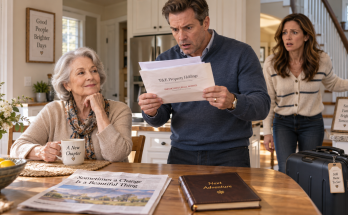
I found Mark sitting at our kitchen table at 10:30 on a Wednesday morning, wearing gray sweatpants and drinking coffee as though it were Saturday.
For twenty-two years, my husband had been the kind of man who left the house before eight with a travel mug in one hand and his company phone in the other.
Seeing him home in the middle of a weekday felt strange enough that I stopped in the doorway.
“Why are you home?”
He looked up from his laptop.
“I quit.”
For a second, I thought I had misunderstood him.
Dad had been gone only three days.
His funeral arrangements were spread across our kitchen island.
Sympathy cards were stacked beside the toaster, and I still had his final voicemail saved on my phone because deleting it felt too much like admitting he would never call again.
“You quit your job?”
“Yesterday.”
“Without talking to me?”
Mark leaned back and gave me the patient expression he usually wore whenever he thought I was worrying over nothing.
“Clare, I’ve worked for thirty-three years. Maybe it’s finally time to enjoy life.”
“With what income?”
That was when he said it.
“Why keep working? Your inheritance should be enough for both of us.”
I remember staring at the empty chair across from him and thinking how strange it was that my father had barely been gone seventy-two hours, yet Mark had already turned whatever Dad might have left me into his retirement plan.
“What inheritance?”
He almost smiled.
“Come on. Your dad sold Hail Mechanical for millions. His house is paid off. He had investments.”
“How much do you think I’m getting?”
“I don’t know exactly.”
“Then how do you know it’s enough for you to stop working?”
He hesitated.
Only slightly.
“Well, conservatively, it has to be a few million.”
Conservatively.
That word stayed with me.
Because it meant he had been thinking about numbers I had never even tried to calculate.
Dad and I never discussed his estate.
Walter Hail could complain for twenty minutes about the price of furnace filters, then immediately change the subject if anyone asked about his investments.
I knew he was comfortable.
I knew the company sale had gone well.
That was all.
Mark apparently knew—or believed he knew—much more.
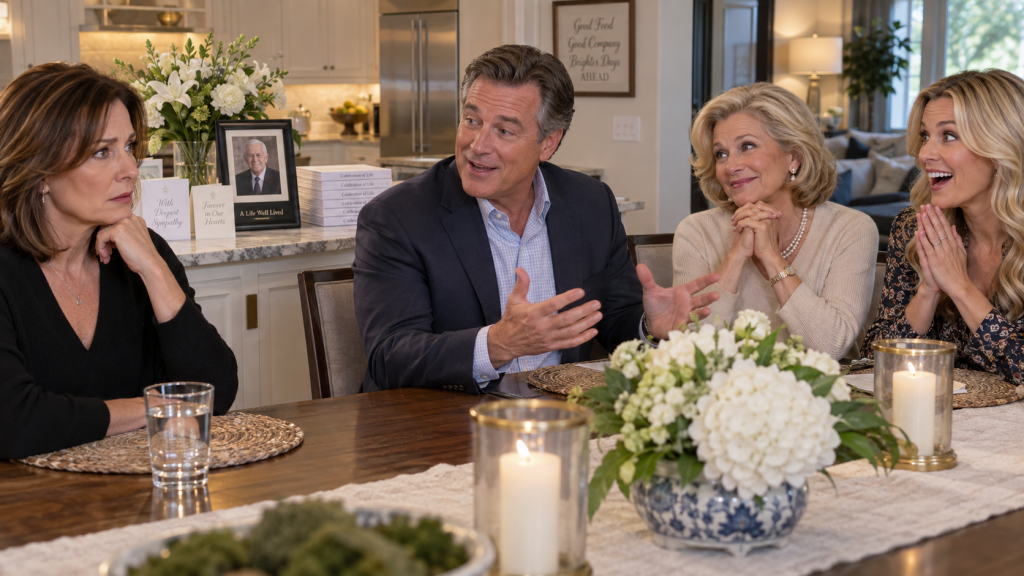
That evening, his mother Diane and his sister Melissa came over for dinner.
Diane brought lasagna.
Melissa brought a bottle of wine.
For the first twenty minutes, we talked about ordinary things.
The funeral.
The weather.
Which relatives were driving in.
Whether the church parking lot would have enough spaces.
Then Diane mentioned that her rent had gone up again.
Mark barely paused.
“Don’t worry about it, Mom. Once everything clears, I’ll buy you a house.”
My fork stopped.
Diane blinked.
“Oh, honey, I couldn’t let you do that.”
Then almost immediately, she added, “There are some nice little ranch houses near Westerville.”
Melissa laughed.
“Mom already has a neighborhood picked out.”
Diane waved her off, smiling.
“I’ve looked. That doesn’t mean anything.”
Mark laughed with them.
Then he turned to Melissa.
“And we’ll get you straightened out too.”
She frowned.
“What does that mean?”
“Your business debt. I’ll give you two hundred thousand. You can start over.”
Melissa slowly set down her fork.
“Seriously?”
“Absolutely.”
She stood and hugged him.
I stayed seated with both hands wrapped around my water glass.
Nobody asked what Dad had actually left me.
Nobody asked whether there was even an inheritance large enough to support any of this.
Nobody asked what I wanted.
In less than ten minutes, my husband had bought his mother a house, erased his sister’s debt, and retired himself using money that had not reached me—and might not even exist in the form he imagined.
“Mark.”
He looked over.
“What?”
“Dad hasn’t even been buried.”
The room changed immediately.
Diane lowered her eyes toward her plate.
Melissa slowly sat back down.
Mark’s smile disappeared.
“Clare, that’s not what this is.”
“Then what is it?”
“I’m talking about taking care of family.”
I looked from him to his mother, then to his sister.
“Whose family?”
Nobody answered right away.
After they left, Mark followed me into the kitchen while I covered the leftover lasagna with foil.
“You embarrassed my mother.”
I stopped smoothing the foil.
“I embarrassed your mother?”
“She already feels uncomfortable accepting help.”
“She seemed to adjust.”
His jaw tightened.
“Why are you making this difficult?”
I turned toward him.
“You promised away hundreds of thousands of dollars without asking me.”
“We’re married.”
“That doesn’t answer the question.”
“If your dad left what I think he left, there’s more than enough.”
“What you think he left.”
Mark sighed.
“Clare, there isn’t going to be your money and my money. We’re set.”
That sentence bothered me more than I admitted.
Not because I believed married couples should keep score over every dollar.
Mark and I had shared bills, mortgage payments, vacations, college expenses, home repairs, and twenty-two years of ordinary life.
But Mark had always had a habit of volunteering things before discussing them with me.
Once, he loaned my SUV to Melissa and told me afterward.
When Diane needed a new water heater, he promised we would pay for it before mentioning it to me.
More than once, I discovered we were hosting Thanksgiving because his mother called to ask what time she should bring the rolls.
I had always called those things small.
I had always told myself that not every disagreement needed to become an argument.
The next morning, I went to Dad’s house to choose the suit he would wear for the service.
His bedroom still smelled faintly of his aftershave.
His reading glasses sat on the dresser.
A hardware-store receipt stuck out from beneath a lamp, and the blue tie Mom had bought him years earlier was still hanging exactly where he always kept it.
My phone rang.
“Clare? It’s Samuel Green.”
Dad’s estate attorney.
We spoke briefly about paperwork, certificates, and the house.
Then Samuel said, “There are several estate documents Walter wanted me to review with you. Could you come to my office tomorrow morning?”
“Of course. Mark can come with me.”
Silence.
Not much.
Maybe two seconds.
But long enough that I noticed.
“Actually,” Samuel said carefully.
PART 2 — THE INHERITANCE HE HAD ALREADY SPENT
“Actually,” Samuel said carefully, “I would prefer to meet with you alone first.”
I stood in Dad’s bedroom with his blue tie still hanging from my hand.
For a moment, I thought I had misunderstood him.
“Alone?”
“Yes.”
“Why?”
Another pause.
Then Samuel asked the question that changed the shape of everything.
“Clare, has Mark already quit his job because he believes Walter’s estate is going to support both of you?”
My fingers tightened around Dad’s tie.
The room seemed to grow smaller.
“How did you know he quit?”
Samuel was quiet.
That frightened me more than the question.
“He quit yesterday.”
I continued.
“He said there was no reason to keep working because Dad probably left me enough money for both of us.”
Samuel exhaled slowly.
Not surprised.
Not shocked.
Almost disappointed.
“I see.”
My heart started beating harder.
“Samuel.”
“Yes?”
“Why did you ask me that?”
“I think we should discuss it in person.”
“That’s not an answer.”
“No.”
His voice softened.
“But it is the most responsible one I can give you before you see the documents yourself.”
I looked at Dad’s empty bed.
His shoes beneath the chair.
His reading glasses on the dresser.
A man could die and somehow still leave unanswered conversations in every room.
“What time tomorrow?”
“Nine.”
“I’ll be there.”
“Without Mark.”
“Yes.”
This time I did not argue.
Mark was still awake when I got home that evening.
He sat in the den with his laptop open and a yellow legal pad on his knee.
For one second, I thought he might be updating his résumé.
Then I saw the heading.
POST-WORK BUDGET
Not retirement.
Not unemployment.
Post-work.
As though earning an income were simply a phase he had completed.
I stood in the doorway.
“What are you doing?”
He looked up cheerfully.
“Running numbers.”
“Based on what?”
“Rough assumptions.”
There was that word again.
Assumptions.
A dangerous little bridge people build when facts refuse to arrive quickly enough.
“What assumptions?”
He turned the laptop toward me.
Mortgage payoff.
Travel.
Health insurance.
A new SUV.
“Gift to Mom — $350K.”
I stared.
“Three hundred fifty?”
“For the house.”
“You told her you would buy her a house.”
“Yes.”
“You did not mention a budget.”
“I looked at listings today.”
Of course he had.
Then another line.
Melissa — $200,000
Exactly as promised.
Below that:
Home renovation — $150,000
I laughed once.
Not because anything was funny.
“What renovation?”
“The kitchen.”
“We renovated the kitchen four years ago.”
“Yes, but not the way we really wanted.”
I stared at the cabinets I had spent six months choosing.
Apparently granite had feelings and mine had been insufficiently ambitious.
“Mark.”
He sensed the change in my voice.
“What?”
“How much money do you think Dad left?”
He leaned back.
“I told you.”
“No.”
“You said ‘a few million.’”
“How many?”
He shrugged.
“Five?”
Then:
“Maybe more.”
“How much more?”
“I don’t know.”
“Eight?”
“Ten?”
He said the numbers casually.
Like weather forecasts.
My father had been dead four days.
Mark had already created three imaginary estates.
“Did Dad ever tell you what he had?”
“No.”
“Did Samuel?”
“No.”
“His accountant?”
“No.”
“His banker?”
“No.”
“Then where are these numbers coming from?”
Mark sighed.
“Clare, your father sold a mechanical contracting company after forty years.”
“I know.”
“The sale was public enough that people knew it was substantial.”
“People knew there was a sale.”
“Yes.”
“They did not know what Dad kept after taxes, partners, debt, charitable giving, or anything else.”
He frowned.
“Why are you acting like I’m doing something wrong by planning?”
“Because you’re planning with money that isn’t yours.”
His face changed.
There.
The sentence he did not like.
“We are married.”
“I know.”
“For twenty-two years.”
“I was there.”
“So if you inherit something, it affects both of us.”
“That is different from you promising two hundred thousand dollars to Melissa before I have even met with the estate attorney.”
He closed the laptop.
“You’re still upset about dinner.”
“Yes.”
“Why?”
I almost admired the question.
“Because Dad is dead.”
“I know.”
“Do you?”
His jaw tightened.
“That’s unfair.”
“Maybe.”
I sat across from him.
“But here is what I need you to hear.”
“I don’t know what Dad left.”
“I don’t know how he left it.”
“I don’t know what debts, taxes, trusts, or instructions exist.”
“And you do not get to create obligations for me before I know what I even inherited.”
Mark stared at me.
Then said:
“Fine.”
Too quickly.
“Fine what?”
“I won’t promise anything else until you meet Samuel.”
That should have comforted me.
Instead it sounded like a temporary ceasefire until the vault opened.
I did not tell him Samuel had asked me to come alone.
Not yet.
That night, I barely slept.
Mark did.
That irritated me in a way I knew was irrational.
Grief had turned sleep into moral evidence.
If I stared at the ceiling at three in the morning, I loved Dad.
If Mark snored beside me, apparently he did not.
Human beings become unfair when they are hurting.
I knew that.
Still hated his snoring.
At 8:57 the next morning, I walked into Samuel Green’s office carrying a notebook I never opened.
Samuel had represented Dad for almost nineteen years.
He was seventy himself.
Silver hair.
Navy suit.
The careful manner of a man who had spent decades watching families become temporarily insane around property.
He shook my hand.
Then closed the conference-room door.
“I’m sorry about Walter.”
“Thank you.”
“He was difficult.”
I smiled despite myself.
“He would have appreciated that more than condolences.”
Samuel smiled too.
Then the smile disappeared.
“There are several things we need to discuss.”
He placed three folders on the table.
I looked at them.
“Before we start, I need to know something.”
“Yes?”
“How did you know about Mark quitting?”
Samuel folded his hands.
“I didn’t know.”
I frowned.
“I suspected he might.”
“Why?”
“Because Walter suspected he might.”
Everything in me stopped.
“Dad thought Mark would quit his job?”
“Not specifically on Wednesday morning.”
Samuel said.
“But your father was concerned that Mark viewed any eventual inheritance to you as money available to the marriage generally—and, more specifically, as money Mark could plan around before you made any decisions.”
I stared.
“When did Dad say that?”
“More than once.”
“Why didn’t he tell me?”
“That would be a question for Walter.”
A painful answer.
An honest one.
Samuel opened the first folder.
“Your father liked Mark.”
That surprised me enough that I almost laughed.
“Did he?”
“Yes.”
“He thought Mark was intelligent.”
“Hardworking.”
“Generous.”
“Sometimes too generous with things that did not belong exclusively to him.”
I went still.
Samuel continued.
“Walter told me about the SUV.”
I closed my eyes.
Of course.
Three years earlier, Mark had loaned my SUV to Melissa for six weeks because her car was being repaired.
He told me after she had already taken it.
I had been furious for two days.
Then let it go.
Dad had apparently remembered.
“He told you that?”
“He told me several things.”
“What else?”
“The Thanksgiving arrangements.”
I groaned.
“One year?”
“Three.”
I stared.
Samuel almost smiled.
“Your father kept notes.”
“Of course he did.”
Walter Hail had once documented a dispute with his cable company for nine months.
My marriage never stood a chance.
Samuel became serious again.
“Walter’s concern was not that Mark would steal from you.”
That mattered.
“He never alleged that.”
“Then what?”
“That Mark often created a social obligation before obtaining your consent.”
The sentence was so precise it hurt.
I said nothing.
Samuel continued.
“If he told his mother you were hosting Thanksgiving before asking you, saying no afterward made you the person disappointing everyone.”
“If he promised Melissa use of your vehicle before asking, refusing meant taking something away rather than declining to give it.”
My throat tightened.
“That sounds dramatic when you say it like that.”
“Does it sound inaccurate?”
No.
That was the problem.
I thought of years of little moments I had dismissed.
Mark volunteering our guest room.
Mark telling neighbors I would organize the fundraiser.
Mark offering our lake-weekend reservation to his sister because she “needed it more.”
Nothing terrible.
Nothing worth ending a marriage over.
Each event small enough to swallow.
Together?
A pattern.
Samuel tapped the first folder.
“Your father noticed.”
I looked down.
“So he changed his will because he hated my husband?”
“No.”
Samuel answered immediately.
“And I want to be very clear about that.”
He pushed the folder toward me.
“Walter did not structure his estate to punish Mark.”
“He structured it to give you something you have apparently had difficulty demanding for yourself.”
“What?”
“Time to decide.”
I stopped breathing.
The estate was larger than Mark had guessed.
And smaller than fantasy.
Walter had sold Hail Mechanical years earlier for a substantial sum, but there had been partners.
Taxes.
Charitable gifts.
Investment changes.
He had also quietly given money to former employees, paid medical expenses for two relatives, and funded a trade-school scholarship nobody in the family knew about.
Still, after estimated administration expenses and specific gifts, the estate was worth approximately $9.8 million.
I stared at Samuel.
“Dad had almost ten million dollars?”
“Approximately.”
“He complained about eight-dollar orange juice.”
“Yes.”
“He drove a twelve-year-old Ford.”
“Yes.”
“He once drove across town because furnace filters were four dollars cheaper.”
Samuel nodded.
“He contained multitudes.”
I laughed.
Then cried.
Without warning.
Dad.
Of course.
Millions in investments.
Coupons in his glove compartment.
Samuel waited.
No tissues pushed toward me.
No interruption.
When I could breathe again, he continued.
“Some assets pass directly.”
“Some through the estate.”
“And the largest portion is governed by a trust.”
I wiped my face.
“For who?”
“You.”
My stomach tightened.
“How much?”
“Based on current valuations, likely between six and seven million dollars after administration is complete.”
I stared.
Mark’s kitchen-table guesses suddenly looked less ridiculous.
That frightened me.
Then Samuel added:
“But it is not six or seven million dollars arriving in your checking account.”
There it was.
The sentence Mark would hate.
Dad had created the trust five years earlier.
Then revised it twice.
The structure was not a cage.
Samuel emphasized that immediately.
The trust existed for my benefit.
Its purpose was to preserve the inheritance as separate property, provide professional administration, reduce the chance of impulsive commingling, and create continuity if I became incapacitated.
A trust company would serve as administrative trustee.
I had certain powers.
Could request distributions.
Could replace trustees under defined conditions.
Could receive income and principal for broad personal needs.
The exact legal language mattered, Samuel said, and I should have my own independent counsel review how it interacted with my marriage and state law before moving money anywhere.
But one point was simple.
Mark was not a beneficiary.
His mother was not a beneficiary.
Melissa was not a beneficiary.
They could not call the trustee.
Could not pledge trust assets.
Could not borrow against them simply because I was married to Mark.
“Can I give Mark money?”
I asked.
Samuel looked almost amused.
“Yes, Clare.”
“Your father did not attempt to forbid you from being generous.”
“Can I buy Diane a house?”
“Yes.”
“Give Melissa two hundred thousand?”
“Yes.”
“Pay off our mortgage?”
“Potentially, yes, after appropriate advice and distribution.”
“So what did Dad actually accomplish?”
Samuel leaned back.
“He made sure each of those actions has to begin with you.”
The room became very quiet.
There it was.
Not prohibition.
Consent.
I looked at the trust documents.
My name repeated across pages.
Not Mark’s.
Not Dad’s anymore, except as grantor.
Mine.
“Why didn’t Dad tell me?”
Samuel sighed.
“I encouraged him to discuss the broad structure with you.”
“He refused.”
“Why?”
“He said if he told you, you would spend five years worrying about whether Mark would be offended.”
I laughed through tears.
“That sounds like him.”
“He also worried you would pressure him to simplify it.”
“I would have.”
“I know.”
“So did he.”
Then Samuel handed me an envelope.
Dad’s handwriting.
For Clare — after Samuel explains the trust.
My hands began shaking.
“I can read it later.”
Samuel said.
“No.”
I opened it.
The paper inside was yellow legal-pad paper.
Dad hated stationery.
Of course his final wisdom came on something he probably stole from Hail Mechanical.
Clare,
If you are reading this, I am dead, which is inconvenient but predictable.
I laughed.
Then covered my mouth because crying arrived with it.
Samuel looked at the window.
Giving me privacy while remaining three feet away.
Dad continued:
Do not turn this into a story where I hated Mark. I did not. He has been good to you in many ways, and you have been good to him.
But Mark has a habit you keep calling generosity. Sometimes it is generosity. Sometimes it is spending your answer before you give it.
I stopped.
The words blurred.
I wiped my eyes and continued.
You have spent your whole life being easier than necessary.
That line hurt.
Your mother did it too. She would agree to Christmas after I invited everyone before asking. I told myself she was flexible. Years later, I realized I had often made her refusal more expensive by announcing the plan first.
I stared.
Dad was not merely judging Mark.
He was confessing.
That changed everything.
The letter continued.
I taught you some of this.
You grew up watching a decent man assume that a loving woman would eventually say yes.
I am sorry for that.
I pressed the paper against my mouth.
My father had apologized for something I had never accused him of.
Maybe because he finally saw it in someone else.
The trust is not meant to keep Mark from your money.
It is meant to keep everyone—including Mark, me, and even the version of you who hates disappointing people—from deciding before you do.
Then:
If you want to share every dollar with your husband, share it.
If you want to buy Diane ten houses, buy eleven just to irritate me.
I laughed again.
If you want to give Melissa two hundred thousand dollars, make sure you are doing it because you choose to, not because someone announced your generosity before asking.
And then the line that finally broke me:
Inheritance is not permission for other people to retire from respecting you.
I lowered the letter.
Cried into both hands.
Samuel waited a long time.
Then slid the tissue box over.
“So.”
I whispered.
“That’s why you asked whether Mark quit.”
“Yes.”
“Dad thought he might.”
“He feared the inheritance would become psychologically spent before you ever controlled it.”
I looked at Samuel.
“Did Mark ever talk to Dad about the money?”
Another pause.
“Yes.”
The answer chilled me.
“When?”
“About six months ago.”
My stomach tightened.
“What did he say?”
Samuel opened the second folder.
Dad and Mark had gone to lunch.
I remembered.
Mark came home irritated.
Said Dad had been “in one of his moods.”
I never asked what they discussed.
Apparently I should have.
According to a memorandum Dad asked Samuel to place in the estate file, Mark had raised the subject of retirement.
Not Dad’s.
His.
He told Dad he was burned out.
That thirty-three years at the same company had taken enough.
He joked that once Dad “finally let Clare inherit something useful,” he and I could travel.
Dad did not laugh.
Then Mark asked whether Dad had considered making lifetime gifts to reduce the eventual estate.
Again, not automatically sinister.
People discuss estate planning.
But then he suggested Dad could help Diane with housing “through Clare’s eventual share” and perhaps help Melissa clear business debt.
Exactly the same promises he had made after Dad died.
Only he had been rehearsing them six months earlier.
My hands turned cold.
“He talked to Dad about giving his mother a house?”
“Yes.”
“And Melissa?”
“Yes.”
“Why didn’t Dad tell me?”
“Walter believed that conversation was between him and Mark unless it became relevant.”
I laughed bitterly.
“Apparently death made it relevant.”
Samuel nodded.
“What did Dad say?”
Samuel looked down at his notes.
“According to Walter, he asked Mark a question.”
“What?”
“‘Has Clare agreed to any of this?’”
Of course.
“What did Mark say?”
Samuel hesitated.
“Walter recorded his answer as: ‘She will. Clare always takes care of family.’”
I looked at the table.
My heart did something strange.
Not break.
Settle.
Because there was no misunderstanding left.
Mark had not guessed I would help Diane and Melissa.
He had built plans around my predictable surrender.
And Dad had heard it.
“What happened next?”
“Walter told Mark not to plan with money that was not his.”
“That sounds like Dad.”
“Mark apparently said marriage meant there was no point pretending an inheritance would not benefit both spouses.”
“That sounds like Mark.”
“Walter agreed it probably would benefit both of you.”
I looked up.
“He did?”
“Yes.”
“Your father was not opposed to Mark benefiting.”
“He objected to Mark treating benefit as authority.”
That distinction landed deep.
Samuel handed me a second page.
Dad had written one final line beneath the memorandum:
Trust structure stays. Clare needs a decision before she needs a defense.
I read it twice.
Then folded it carefully.
The third folder contained the practical details.
House.
Investment accounts.
A small collection of municipal bonds.
Dad’s truck.
Specific charitable bequests.
The scholarship.
A $75,000 gift to Harold, his longtime foreman from Hail Mechanical.
A separate education fund for my children.
Not enormous.
Thoughtful.
And $350,000 that would pass to me outright after estate administration.
Enough cash to change ordinary decisions.
Not enough to finance every promise Mark had already made plus permanent retirement without thought.
The larger trust would take time to fund.
Assets had to be valued.
Accounts transferred.
Taxes and claims resolved.
No magical check by Friday.
“What do I tell Mark?”
I asked.
Samuel closed the folders.
“The truth.”
“All of it?”
“That is your decision.”
There it was.
Again.
Your decision.
I was beginning to realize how rarely people said those words to me.
Or maybe how rarely I heard them.
Before I left, Samuel stopped me.
“One more thing.”
My stomach dropped.
Apparently estate lawyers should be legally prohibited from saying that.
“What?”
“Mark called my office yesterday.”
I stared.
“When?”
“After you told him I had contacted you.”
My skin turned cold.
“What did he want?”
“To know when distributions would occur.”
I laughed.
Actually laughed.
Samuel did not.
“He also asked whether spouses needed to sign anything related to inherited assets.”
“What did you tell him?”
“That I represent the estate and trustees in the capacities defined by the documents, and that I could not discuss your beneficiary information with him without appropriate authorization.”
“How did he react?”
Samuel paused.
“He said, ‘I’m her husband. There shouldn’t be secrets between us.’”
The irony was almost elegant.
“Did you tell Dad’s trust details?”
“No.”
“Amounts?”
“No.”
“Anything?”
“No.”
“Thank you.”
Samuel looked at me.
“You don’t need to thank an attorney for not disclosing confidential information.”
“I’ve had a strange week.”
“Fair.”
When I reached the parking lot, Mark had called three times.
I sat in my car and listened to the voicemail.
“Clare, call me.”
Then:
“I just want to know what Samuel said.”
Then:
“Mom found a ranch she loves, but obviously I told her not to do anything until we know timing.”
Timing.
Not whether.
Timing.
I put the phone down.
For twenty-two years, I had believed our marriage’s biggest strength was that Mark and I rarely fought.
Sitting in Samuel’s parking lot, I wondered whether maybe we rarely fought because I had spent two decades preventing conflict before it could become visible.
A marriage can look peaceful when one person keeps swallowing every inconvenient no.
That thought frightened me more than the trust.
I did not go directly home.
I went to Dad’s house.
The funeral was the next morning.
Cars already lined the street.
Flowers filled the living room.
Dad’s suit was laid carefully across the bed.
I sat beside it.
Then opened his letter again.
You have spent your whole life being easier than necessary.
I hated that sentence.
Because it was true.
Mom used to call me her peacemaker.
Teachers called me adaptable.
Friends called me easygoing.
Mark called me reasonable.
All nice words.
Nobody ever called me a woman who changed her mind after someone else announced it.
Because I rarely did.
Maybe not because I agreed.
Maybe because refusing once people were counting on me felt like cruelty.
Dad had seen that.
Too late to tell me while alive.
Still in time to change something.
Mark was waiting when I got home.
Laptop closed this time.
No legal pad.
He stood as soon as I entered.
“Well?”
I took off my coat.
“Dad’s estate is significant.”
His face changed instantly.
“How significant?”
I looked at him.
“Why is that your first question?”
He froze.
Then corrected.
“Sorry.”
He took a breath.
“What did Samuel say?”
“Dad had an estate plan.”
“I assumed that.”
“Most of what I inherit will be through a trust.”
His expression emptied.
“A trust?”
“Yes.”
“What kind?”
“One for my benefit.”
“Can you access it?”
There.
Again.
Not:
Are you okay?
Not:
Was there a letter?
Access.
“I can receive distributions.”
“How much?”
“I don’t know yet.”
“Clare.”
“Administration is not finished.”
He stared.
“What’s the approximate value?”
I sat.
“Between six and seven million in the trust, if current estimates hold.”
Mark lowered himself into the opposite chair.
For several seconds, he said nothing.
Then:
“Okay.”
Not joy.
Calculation.
I watched numbers move behind his face.
Six million.
Seven.
Mortgage.
Diane.
Melissa.
Retirement.
Travel.
Our kitchen.
He had resurrected the spreadsheet without touching a computer.
Then I said:
“You are not a beneficiary.”
His expression changed.
“What?”
“The trust is for me.”
“We’re married.”
“Yes.”
“So obviously I benefit too.”
“If I choose to use distributions that way.”
His face hardened.
“If you choose?”
There it was.
The phrase sounded offensive to him.
My choice.
“Dad structured it as my inheritance.”
Mark laughed once.
“So he really did this.”
“Did what?”
“Found a way to control us after he died.”
“No.”
“That’s exactly what this is.”
“No, Mark.”
“He never trusted me.”
“This was not about whether he trusted you.”
“Of course it was.”
“He wrote me a letter.”
That stopped him.
“What did it say?”
I hesitated.
Dad’s letter was mine.
Not evidence.
Not a weapon.
Mine.
So I answered without handing it over.
“He said the trust exists so no one can make decisions about the inheritance before I do.”
Mark stared.
“That’s insulting.”
“Why?”
“Because we’re married.”
“You keep saying that as though marriage answers every question.”
“It answers whether we build a life together.”
“Yes.”
“It does not answer whether you can promise your mother a house from an inheritance I haven’t received.”
He stood.
“So this is about Mom.”
“No.”
“It’s about everything.”
Mark paced toward the sink.
“You’re acting like I’m some gold digger.”
“I didn’t say that.”
“You’re implying it.”
“I am saying you quit your job without talking to me because you assumed my father’s estate would replace your salary.”
“I’ve worked thirty-three years.”
“That is not the issue.”
“It matters.”
“Yes.”
“It matters enough that you were allowed to decide when your career ended.”
“You did not allow me to decide what replacing that income would mean for us.”
Silence.
That landed.
Then I asked:
“Why did you call Samuel yesterday?”
Mark stopped.
His back remained toward me.
There.
The reaction before the explanation.
“I had questions.”
“About my inheritance.”
“Our future.”
“No.”
He turned.
“What?”
“Say it correctly.”
His jaw tightened.
“I asked about the estate.”
“You asked when distributions would happen.”
“So?”
“You asked whether spouses sign anything.”
“Clare, these are normal questions.”
“Not when the beneficiary hasn’t even had her first meeting.”
He stared.
Then:
“I was trying to plan.”
There was the word.
Again.
“Did you talk to Dad about buying your mother a house?”
Mark went completely still.
My heart sank.
Not because I needed confirmation.
Because I wanted, stupidly, one more chance for Samuel’s memo to be wrong.
“How do you know about that?”
That was confirmation enough.
“Dad wrote it down.”
Mark rubbed his forehead.
“Oh, for God’s sake.”
“You asked him six months ago whether he would help Diane using what you called my eventual share.”
“I was having a conversation.”
“You also talked about Melissa.”
“Her business was collapsing.”
“That is not the point.”
“What is the point?”
“The point is you were spending my inheritance before Dad was dead.”
He flinched.
Good.
The truth should occasionally have edges.
“I wasn’t spending it.”
“You made plans around it.”
“Families plan.”
“Then why didn’t you tell me?”
He opened his mouth.
Stopped.
There it was.
The answer.
Because I might say no before the promises became socially expensive.
Mark lowered himself into a chair.
For the first time since I came home, he looked tired.
Not angry.
Tired.
“I knew you’d help them.”
I stared.
“Exactly.”
“What?”
“That is exactly what Dad wrote.”
His face changed.
“What did he write?”
“That you said, ‘Clare always takes care of family.’”
Mark looked down.
“I probably said that.”
“You did.”
“And is it wrong?”
The question hurt more than an accusation.
“No.”
I whispered.
“I do take care of family.”
“Then what are we fighting about?”
“Whether caring should be my choice.”
Silence.
Finally.
The right silence.
Mark stared at his hands.
“I didn’t think you’d mind.”
“I know.”
“That sounds worse now.”
“Yes.”
He laughed bitterly.
“You’re enjoying this.”
“No.”
I was not.
That surprised me.
Some part of me had expected righteous anger to feel powerful.
Instead, I felt sad.
Twenty-two years.
Thousands of ordinary mornings.
A man who brought me tea when I was sick.
Who sat beside me through my hysterectomy.
Who cried when Dad died even though the two of them argued constantly.
Mark was not a villain.
He was my husband.
A husband who had grown very comfortable treating my eventual consent as guaranteed.
Both things were true.
I told him about Dad’s letter.
Not every line.
Enough.
The Thanksgiving example.
The SUV.
Dad admitting he had done similar things to Mom.
That changed Mark’s face.
“He said that about himself?”
“Yes.”
“He thought he taught you this?”
“Partly.”
Mark stared toward the dark kitchen window.
Then whispered:
“I thought I was being generous.”
“I know.”
“With Mom.”
“With Melissa.”
“With everybody.”
“I know.”
He rubbed his eyes.
“My whole family comes to me.”
“I know.”
“If Mom needs something, I solve it.”
“Yes.”
“If Melissa falls apart, I solve it.”
“Yes.”
“And you always help.”
“There.”
I said.
“You said it.”
“What?”
“You.”
“Then me.”
“Then somehow my yes becomes part of your generosity.”
He closed his eyes.
That one hurt.
Good.
Not because I wanted him injured.
Because I finally needed him to feel where I had been standing.
We did not solve twenty-two years that night.
People rarely do.
Mark slept in the guest room.
His choice.
I did not stop him.
The next morning was Dad’s funeral.
That mattered more.
At nine, the church filled.
Former Hail Mechanical employees.
Neighbors.
Men Dad had fired and apparently somehow remained friends with.
The cashier from his hardware store.
Harold from the shop.
People I had never met.
The pastor talked about Dad’s stubbornness so often I wondered whether the sermon had been legally approved.
I laughed.
Then cried.
Mark sat beside me.
He held my hand.
I let him.
Conflict does not erase grief.
Grief does not erase conflict.
Human beings insist on carrying multiple things at once.
After the burial, Diane approached me.
She hugged me.
Then whispered:
“Mark told me about the trust.”
I pulled back slightly.
Of course he had.
Her eyes were red.
“I’m sorry.”
“For what?”
“The house.”
That surprised me.
“I shouldn’t have started looking.”
“You didn’t ask him to promise it.”
“No.”
“But I liked the promise.”
Honest.
She looked toward the cemetery.
“I’ve spent years letting my son solve things for me.”
“I think maybe he learned some of this from me too.”
Interesting.
Everyone discovering ancestry inside behavior.
Melissa approached later.
Less graceful.
“So I guess the two hundred thousand isn’t happening.”
I stared.
Diane closed her eyes.
“Melissa.”
“What?”
She looked embarrassed.
“I’m just asking.”
“No.”
I said.
Melissa blinked.
No explanation.
No apology.
Just:
“No.”
The word felt strange in my mouth.
Not cruel.
Not generous.
Complete.
She flushed.
“Okay.”
Then walked away.
I waited for guilt.
It came.
Of course it did.
Then something else came behind it.
Relief.
Dad had been right.
Saying no before anyone built their future around my yes was easier.
Not painless.
Easier.
Three days later, Mark asked to talk.
Not at the kitchen table.
He took me for a walk.
No laptop.
No spreadsheet.
We reached the park near our house.
Then he said:
“I called my company.”
I stopped.
“What?”
“My resignation isn’t reversible exactly.”
“But they haven’t filled the position.”
“They offered me a consulting arrangement for six months while we figure things out.”
I stared.
“You called them?”
“Yes.”
“Why?”
“Because I quit based on an assumption.”
There it was.
No excuse.
He continued.
“I’m embarrassed.”
“Good.”
He laughed.
“Your father would’ve enjoyed you saying that.”
“He would’ve enjoyed all of this far too much.”
Probably true.
Mark looked at me.
“I still want to retire.”
“Okay.”
“Eventually.”
“Okay.”
“But I think we should decide what that means together.”
Together.
A better word than ours when used correctly.
“I’d like that.”
He nodded.
Then:
“And I told Mom not to look at houses.”
“Good.”
“I told Melissa the two hundred thousand was never mine to promise.”
My throat tightened.
“How did she take it?”
“Badly.”
“Good.”
He smiled.
Then grew serious.
“I’m sorry.”
I waited.
He continued.
“For quitting without talking to you.”
“For promising money.”
“For asking your dad about your inheritance.”
“For calling Samuel.”
“Anything else?”
He almost laughed.
“I assume therapy will uncover more.”
Now I laughed.
Maybe we had a chance.
Then he said:
“There is something else.”
My smile disappeared.
Apparently every story eventually develops a hatred of those four words.
“What?”
Mark looked toward the pond.
“When I met your dad six months ago, he asked me something.”
I waited.
“He asked what I would do if he left you nothing.”
My stomach tightened.
“What did you say?”
Mark swallowed.
“I said I’d keep working.”
“So?”
“He asked why I was planning retirement around money that only existed if he died.”
I closed my eyes.
Dad.
Of course.
“What did you say?”
“I got angry.”
“That part I guessed.”
“He said I was treating his death like a maturity date on an investment.”
The sentence was brutal.
Accurate.
Very Walter Hail.
“Did you apologize?”
“No.”
Mark stared at the ground.
“I told him he was twisting things.”
“Were you?”
“I don’t know.”
Then:
“Yes.”
Better.
“I was burned out.”
“I wanted an exit.”
“Your dad’s money became a story I told myself about how I could have one.”
He looked at me.
“That was unfair to you.”
“And to Dad.”
“Yes.”
I thought that was the end of it.
It wasn’t.
Because the following Monday, Samuel called again.
His voice was careful.
Too careful.
“Clare, I found something in Walter’s file that I need to show you.”
My stomach tightened.
“What?”
“A memorandum from a meeting he had with Mark.”
“I know about the lunch.”
“Not that meeting.”
I stopped walking.
“What meeting?”
“This one occurred twelve days before Walter died.”
The hallway seemed to tilt.
“Mark saw Dad twelve days before he died?”
“Yes.”
I could barely speak.
“He never told me.”
“I suspected that.”
“What happened?”
Samuel paused.
Then asked:
“Can you come in?”
“Samuel.”
Another pause.
“Mark brought Walter a document.”
My fingers went cold.
“What document?”
“A proposed family loan agreement.”
I stopped breathing.
“For what?”
“Three hundred fifty thousand dollars.”
My mind immediately found the number.
Diane’s house.
Before Dad died.
Before the kitchen promises.
Before Mark quit his job.
“He asked Dad for money?”
Samuel answered carefully.
“He asked Walter to consider advancing funds that Mark described as part of your eventual inheritance.”
The hallway disappeared around me.
“How did Dad respond?”
“He refused.”
I closed my eyes.
Then Samuel added:
“And Walter wrote one sentence across the top before handing it back.”
“What?”
Samuel read it to me.
Clare has not agreed to this. Therefore there is nothing to discuss.
I stood perfectly still.
The trust had not been Dad’s first attempt to protect my choice.
It had been his last.
And suddenly I understood something that frightened me far more than Mark’s retirement spreadsheet.
My husband had not begun spending my inheritance after Dad died.
He had started trying to access it while Dad was still alive.
PART 3 — THE INHERITANCE HE COULDN’T SPEND FOR ME
I went back to Samuel Green’s office alone.
Again.
By then, the receptionist had stopped asking whether I wanted coffee.
Apparently grief, trusts, and marital revelations eventually qualify a person as a regular.
Samuel was waiting in the same conference room.
The same three windows.
The same long polished table.
But this time there was only one document in front of him.
Five pages.
Stapled.
Plain.
Ordinary.
I had learned to fear ordinary paper.
“Before you read it,” Samuel said, “I want to be precise about what this is.”
I sat.
“Please.”
“It is a draft.”
“Walter did not sign it.”
“No money changed hands.”
“No loan was made.”
“Mark did not forge your signature or represent that you had signed anything.”
I let out a breath I had not realized I was holding.
“So he didn’t do anything illegal.”
“I’m not giving you a legal conclusion beyond the documents I have.”
Samuel replied.
“But nothing in this file suggests a completed unauthorized transaction.”
That mattered.
It did not make what came next hurt less.
Samuel slid the draft toward me.
Across the top:
FAMILY LOAN AGREEMENT
Lender:
Walter Hail
Borrower:
Mark Benson
Amount:
$350,000
Purpose:
Acquisition of residential property for Diane Benson.
My mother-in-law.
The little ranch house near Westerville had existed in Mark’s mind before my father died.
Before the lasagna.
Before Diane pretended she could never accept such generosity.
Before Mark sat at our kitchen table in gray sweatpants announcing retirement.
I read the next paragraph.
Repayment proposed over fifteen years.
Low interest.
Then I reached the section that made my hands cold.
Borrower anticipates repayment may be accelerated from distributions or inheritance received by Borrower’s spouse, Clare Benson, from Walter Hail’s estate or lifetime estate-planning transfers.
I read it again.
Slowly.
“Borrower’s spouse.”
My name.
My inheritance.
My father.
My husband’s obligation.
All in one sentence.
Except I had never been in the room.
“Did Dad draft this?”
“No.”
“Mark did?”
“He told Walter he had an attorney prepare a starting form.”
“Whose attorney?”
Samuel gave me a name I did not recognize.
A general-practice lawyer Mark had used years earlier for a real-estate matter.
“Did that attorney know I hadn’t agreed?”
“I don’t know.”
Samuel said.
“And I would not assume otherwise without evidence.”
Right.
Facts.
Always facts.
I was beginning to resent facts for behaving more honorably than people.
I turned the page.
There was no space for my signature.
That surprised me.
“Why am I not signing?”
Samuel looked at the document.
“Because under the draft, you were not the borrower.”
“But repayment was supposed to come from my inheritance.”
“Potentially.”
“How?”
“Not automatically.”
He shook his head.
“This document, even if Walter had signed it, would not have magically assigned future inheritance you did not yet own.”
“Then what was Mark trying to do?”
Samuel folded his hands.
“Create an obligation now and rely on you later to help satisfy it.”
There it was.
The entire marriage problem in one sentence.
Create the obligation first.
Make my refusal expensive later.
“What happened in the meeting?”
Samuel opened Dad’s memorandum.
Walter’s handwriting filled half a page.
He had written the date.
Time.
Who was present.
Of course he had.
My father documented emotional betrayal like a furnace inspection.
Mark had arrived at Dad’s house with the draft.
He told Walter that Diane’s landlord was raising rent again.
That she needed stability.
That property prices would only increase.
He said helping her now would be more efficient than waiting until after Walter’s death and then using inheritance money later.
Dad asked:
Has Clare agreed?
Mark said:
Not yet, but she will. She always takes care of family.
Dad asked:
Did she ask you to arrange this with me?
Mark said no.
Dad asked why he was discussing Clare’s inheritance with Walter instead of discussing his mother’s housing with Clare.
According to the memorandum, Mark answered:
Because once Clare knows Mom is counting on it, she’ll feel guilty saying no. I’m trying to get the practical part settled first.
I stopped reading.
The room blurred.
Samuel said nothing.
There are some sentences so complete in their cruelty that explanation only insults them.
“He said that?”
Samuel nodded.
“That is Walter’s written recollection.”
I closed my eyes.
Not:
Clare will want to help.
Not:
We’ve discussed supporting Mom.
He had named the mechanism.
Guilt.
He knew.
He knew making a promise first made my refusal harder.
This was not a blind spot anymore.
It was a strategy he had learned to call generosity.
“What did Dad say?”
Samuel turned the page toward me.
Walter had written the answer in block letters.
THAT IS NOT GENEROSITY. THAT IS LEVERAGE.
I laughed.
Then cried.
Dad had probably pointed his finger while saying it.
I could see him.
Samuel continued.
Walter refused the loan.
Mark became defensive.
Said Walter had always disliked helping Diane.
Dad denied it.
Then apparently said:
If Clare wants to buy Diane a house after I’m dead, she may buy the whole street. But you don’t get to borrow against her yes before she gives it.
That was Dad.
Blunt enough to hurt.
Precise enough to remember.
Then came the part Samuel had not told me over the phone.
The meeting ended badly.
Mark accused Dad of creating distrust inside our marriage.
Dad said:
If one question about whether Clare agreed creates distrust, I didn’t create it.
Mark left.
Twelve days later, Dad died.
I pressed both hands against my face.
“Did they speak again?”
Samuel looked down.
“No.”
My heart broke in a new place.
Mark had carried that unresolved argument into Dad’s death.
And said nothing.
He had stood beside me at the hospital.
Helped choose flowers.
Called the funeral home.
Held me while I cried.
All while knowing my father’s last meaningful interaction with him had been a fight over money Mark expected me to inherit.
“Why didn’t Dad tell me?”
Samuel’s answer came slowly.
“Walter called me immediately after Mark left.”
“He was angry.”
“He asked whether the trust needed additional protection.”
“That’s when he made the last amendment?”
“Yes.”
My throat tightened.
“What did it change?”
“Mostly administration.”
Samuel said.
“He already had separate-property provisions.”
“He strengthened the independent trustee structure.”
“Clarified that no beneficiary’s spouse could direct distributions.”
“Added language making clear trust interests could not be voluntarily assigned or pledged in advance except as expressly permitted.”
Dad had not disinherited me.
Had not banned Mark.
Had not created some theatrical punishment clause.
He had simply closed the door Mark had already tried to open.
“Did Dad think I was weak?”
The question escaped before I could stop it.
Samuel frowned.
“No.”
“He built all of this because he thought I couldn’t say no.”
Samuel thought for a moment.
Then:
“I think Walter believed you were strong enough to carry other people’s disappointment.”
“He worried you had begun confusing that strength with an obligation to avoid causing disappointment in the first place.”
I stared.
That sounded exactly like Dad.
I hated it.
Because it was true.
Samuel pushed Dad’s original letter toward me.
The one I had already read.
Then a second envelope.
I froze.
“What is that?”
“He left an addendum after the meeting with Mark.”
“Another letter?”
“Three sentences.”
I opened it.
Dad’s handwriting.
Less steady this time.
Clare, if Mark ever makes you feel that protecting your own choice is selfish, remember that he came to me asking me to help make your no harder.
I swallowed.
Do not punish him with my money.
Then the last line:
Just stop lending everyone your answer before you know what it is.
I cried quietly.
Not because Dad had solved anything.
Because he had understood exactly what I would be tempted to do.
Punish Mark.
Withhold.
Rewrite the marriage around the trust.
Turn Dad’s money into evidence.
And even in death, Dad had refused to give me permission to become cruel just because someone else had crossed a line.
When I got home, Mark was cooking.
Pasta sauce simmered on the stove.
He looked over his shoulder.
“You went to Samuel.”
“Yes.”
His hand stopped stirring.
There it was.
He knew why.
I put my purse on the counter.
“Why didn’t you tell me about the loan?”
He turned off the burner.
For several seconds, neither of us spoke.
Then:
“I was going to.”
“When?”
His face tightened.
“I don’t know.”
“Before Dad died?”
“No.”
“After?”
“I should have.”
“That isn’t what I asked.”
“No.”
The honesty hurt.
Still better than another excuse.
I placed a copy of the draft on the counter.
Mark looked at it.
His face changed.
“Samuel gave you that.”
“Yes.”
“Of course he did.”
“Don’t do that.”
“Do what?”
“Make Samuel the problem.”
Mark closed his eyes.
“You’re right.”
At least we were learning faster now.
I pointed to the sentence about repayment from my inheritance.
“What did you think would happen if Dad signed this?”
Mark stared at the paper.
“He would loan me the money.”
“And?”
“I’d buy Mom the house.”
“And repayment?”
“I would make payments.”
“From what?”
“My income.”
“You were already planning to retire.”
He said nothing.
There it was.
“And if your income stopped?”
He looked at me.
“I assumed once your inheritance came—”
“Stop.”
My voice cracked.
Not loud.
Worse.
“Listen to yourself.”
He did.
For once.
“You wanted to borrow three hundred fifty thousand dollars from my father.”
“Yes.”
“To buy your mother a house.”
“Yes.”
“And you expected that eventually my inheritance would help repay it.”
“Yes.”
“Without asking me first.”
His eyes filled.
“Yes.”
“Why?”
He looked toward the stove.
Then at me.
“Because I thought you’d say yes.”
“That is not an answer anymore.”
“I know.”
“Try again.”
He sat.
Slowly.
Like an old man.
“I was afraid you would say no.”
There.
The sentence beneath all the others.
I sat across from him.
“Why?”
“Because it was too much.”
He rubbed both hands over his face.
“Three hundred fifty thousand is a lot of money.”
“Yes.”
“And Mom needed stability.”
“She needed cheaper housing.”
“Not necessarily a house.”
“I know that now.”
“You knew it then.”
He looked at me.
“Yes.”
That mattered.
No rewriting.
He continued.
“I’ve spent my whole life being the person my family calls.”
“Dad died when I was twenty-six.”
“Mom panicked about bills.”
“Melissa was nineteen.”
“I became…”
He searched.
“The answer.”
I softened despite myself.
That did not erase what he had done.
It explained the shape of it.
“When Mom needed rent, I found money.”
“When Melissa wrecked a car, I found another.”
“When she started that business, I cosigned the first equipment lease.”
“I’ve always fixed things.”
“I know.”
Mark looked at me.
“And then I married someone who fixes things too.”
I almost laughed.
Not because it was funny.
Because suddenly I could see how two rescuers had built a marriage where neither one knew who was volunteering whom.
“You never asked me to stop.”
he said.
“No.”
“I thought that meant you agreed.”
“That was my mistake.”
He looked surprised.
“My mistake too.”
I continued.
“I kept thinking each thing was too small to fight over.”
“The SUV.”
“Thanksgiving.”
“Your mother’s water heater.”
“Melissa’s debt.”
“I swallowed irritation because I didn’t want to become the difficult wife.”
Mark’s eyes filled.
“You weren’t difficult.”
“No.”
“I was convenient.”
The sentence hurt us both.
Good.
Some truth needs two witnesses.
I told him what Dad had written.
Not the private letter.
The meeting memorandum.
The line about guilt.
Mark closed his eyes.
“I said that.”
“Yes.”
“I remember.”
“Why?”
He stared at the table.
“Because it worked.”
There it was.
The ugliest honesty yet.
He cried.
Not dramatically.
Silently.
“I knew if Mom already had her hopes up, you would have a harder time saying no.”
I did not rescue him from the confession.
He continued.
“I told myself I was making things easier.”
“For whom?”
“Myself.”
Finally.
We sat there for a long time.
The pasta sauce cooled.
The house smelled like oregano and something burning slightly on the bottom of the pan.
Ordinary life continuing while a marriage changed shape.
Then I said:
“I need you to move out.”
Mark looked up.
Not shocked.
That surprised me.
“For how long?”
“I don’t know.”
He nodded.
No argument.
No reminding me the house was jointly owned.
No threat.
Just:
“Okay.”
That helped more than begging would have.
He packed a suitcase that night.
Stayed at an extended-stay hotel first.
Then rented a furnished apartment.
Diane offered him her couch.
He said no.
Later he told me that was deliberate.
He needed to stop becoming the person his mother called to solve everything while simultaneously becoming the son who ran home whenever his own life became uncomfortable.
For the first time, Mark lived alone.
At sixty.
That fact humbled him more than I expected.
He learned he hated ironing.
Overwatered a plant until it died.
Called me once to ask where we bought our good coffee.
I refused to tell him.
Some consequences are sacred.
We started couples counseling two weeks later.
Not because I promised the marriage would survive.
Because twenty-two years deserved an honest examination before either of us pronounced them dead.
Our therapist was named Dr. Lena Foster.
She wore bright earrings and asked questions nobody wanted.
In the third session, she asked Mark:
“What made Clare’s likely yes feel equivalent to actual consent?”
He sat for nearly a minute.
Then:
“History.”
I looked at him.
He continued.
“She usually said yes.”
Dr. Foster asked:
“Did she usually say yes before or after you made the commitment?”
Mark’s face changed.
“After.”
“And did that matter to you?”
“Not enough.”
There it was.
Then Dr. Foster looked at me.
“What did you get from saying yes?”
That offended me.
“I helped people.”
“Yes.”
“What else?”
I stared.
She waited.
Eventually I said:
“I got to be good.”
The room went quiet.
That hurt worse than anything Mark had admitted.
I liked being the reasonable one.
The flexible one.
The person no one could accuse of selfishness.
Every time I swallowed a no, I also protected an image of myself.
Easygoing.
Kind.
Dependable.
No wonder resentment kept growing.
I had been paying for goodness with honesty.
The trust began funding months later.
Not all at once.
Samuel and the trustee handled the administration.
Dad’s house sold.
Taxes were paid.
Specific gifts went out.
The scholarship was funded.
I received the $350,000 outright distribution Dad had planned.
The irony of the amount was not lost on me.
Exactly what Mark had asked Dad to loan.
I almost laughed when Samuel confirmed it.
“What are you going to do with it?”
he asked.
I smiled.
“Nothing fast.”
Dad would have approved.
I did not buy Diane a house.
That mattered.
Not because she deserved punishment.
Because I had never chosen to buy her one.
When I told her, she looked disappointed.
Of course she did.
Then embarrassed by the disappointment.
“I shouldn’t have assumed.”
“No.”
She took a breath.
“Mark made it sound settled.”
“I know.”
She looked at me.
“Did I make it worse?”
I thought.
“You started looking at houses.”
She closed her eyes.
“Right.”
Then:
“I’m sorry.”
I believed her.
Three months later, Diane moved to a smaller apartment on her own.
Not because I paid.
Because Mark helped her compare options without promising to cover them.
She sold some furniture.
Reduced expenses.
Her new apartment had terrible carpet and a small balcony.
She loved the balcony.
One afternoon she invited me for coffee.
We sat outside.
She said:
“You know, I wanted that ranch house.”
“I know.”
“I was angry with you for not buying it.”
“I know.”
She looked embarrassed.
“For about a week.”
I smiled.
“What changed?”
“I realized I was angry at the wrong person.”
Then she laughed.
“I should have been angry at my son for giving me imaginary real estate.”
That was fair.
Melissa handled her disappointment less gracefully.
She called Mark repeatedly.
Reminded him he had promised two hundred thousand dollars.
Mark eventually said:
“I promised you money I didn’t own.”
“That was wrong.”
She shouted.
He did not ask me to intervene.
That was growth.
Her business restructured its debt.
She sold equipment she was not using.
Took on a partner.
Nearly closed once.
Survived.
A year later, she told me over Thanksgiving:
“If you’d given me the two hundred, I probably would have poured it into the same hole.”
I raised an eyebrow.
“Probably?”
She smiled.
“Fine.”
“Definitely.”
Sometimes not rescuing someone gives them information no check can buy.
I did help Diane eventually.
But differently.
Two years later, her building was sold and rents increased again.
By then Mark and I had rebuilt enough trust that he came to me and said:
“Mom has a problem.”
Then stopped.
No proposed solution.
No promise.
I asked:
“What does she want?”
That was new too.
Diane wanted to move closer to her sister in a less expensive town.
She could afford most of the purchase price of a small condo but would be short.
I thought for three weeks.
Talked to my own financial adviser.
Then chose to gift her $60,000.
My idea.
My timing.
My yes.
Mark cried when I told him.
I pointed at him.
“Do not make this sentimental.”
He laughed.
“It’s not the money.”
“What?”
“You chose.”
Yes.
That was exactly the point.
Mark did not return to his old job full-time.
His consulting arrangement lasted eight months.
Then he found a part-time advisory role elsewhere.
Three days a week.
Enough income.
Health insurance through my plan eventually changed as we planned together.
Not because my inheritance automatically financed his retirement.
Because after two years of counseling and actual budgeting, we agreed that a slower work life made sense for both of us.
My inheritance benefited him.
Of course it did.
We traveled.
Paid off the mortgage after I decided I wanted to.
Replaced our roof.
Bought a small camper.
The trust was never a wall between us.
It was a door that required me to open it.
That difference saved our marriage.
Yes.
Our marriage survived.
Barely, at first.
Not because Dad’s letter told me to forgive Mark.
It did not.
Not because twenty-two years automatically deserved twenty-three.
They did not.
It survived because Mark stopped asking me to judge him by intention.
He began letting behavior answer instead.
He asked before volunteering our house.
He asked before offering money.
Once, Diane called during dinner and said Melissa needed help covering an attorney’s bill.
Old Mark would have turned to me afterward.
New Mark said:
“I’m sorry she’s dealing with that. Let me talk to Clare before I offer anything.”
I heard it.
He did not know I could.
I sat at the table and cried into mashed potatoes like an idiot.
Not because the sentence was romantic.
Because respect often sounds embarrassingly ordinary when it finally arrives.
I changed too.
That was harder.
Mark would ask:
“Do you mind if Mom stays for a week?”
I would feel the old yes rise automatically.
Then stop.
Think.
Sometimes yes.
Sometimes no.
The first time I said:
“Three nights is what I can handle.”
I spent twenty minutes convinced everyone hated me.
Nobody died.
Diane stayed three nights.
Went home.
Civilization survived.
It was almost disappointing.
Dad’s trust grew quietly.
I did not become extravagant.
Not immediately.
I did buy one ridiculous thing.
A restored 1967 Ford Mustang.
Blue.
Dad had wanted one when he was nineteen and never bought it.
When Mark saw it in the driveway, he stared.
“You bought a classic car?”
“Yes.”
“With trust money?”
“Yes.”
“You hate old cars.”
“I know.”
“Why?”
I handed him Dad’s old sunglasses.
“Because I wanted to.”
He laughed so hard he had to sit down.
Dad would have loved that too.
I also used some distributions to expand the trade-school scholarship Dad had started.
HVAC.
Plumbing.
Electrical.
The trades that built Hail Mechanical.
I named it after Walter and my mother, Elaine.
Dad would have complained about having his name on anything.
Mom would have secretly loved it.
Mark never suggested it.
No one did.
My choice.
That became the quiet test I used—not on people, but on myself.
If no one had already announced this plan, would I still want it?
If the answer was yes, I moved.
If the answer was no, I stopped.
If the answer was I don’t know, I waited.
I had never understood how luxurious waiting could feel.
Samuel retired three years after Dad died.
At our last meeting, he handed me the remaining original estate papers.
Then asked:
“Do you still hate the trust?”
I laughed.
“I never hated the trust.”
“You called it ‘Dad’s posthumous babysitter’ during the second meeting.”
“I was grieving.”
“Convenient defense.”
I smiled.
Then grew serious.
“I think I misunderstood it.”
“How?”
“I thought Dad built it because he didn’t trust Mark.”
Samuel shook his head.
“He built it because he trusted you to decide.”
That sentence stayed with me.
Years passed.
Diane died at eighty-six.
Peacefully.
Melissa was with her.
Mark arrived twenty minutes later.
I drove him.
At the funeral, Melissa hugged me and whispered:
“She loved that condo.”
“I know.”
Then:
“Thank you for helping.”
I answered:
“You’re welcome.”
No modesty.
No:
It was nothing.
It had been something.
I had chosen it.
I could accept gratitude without pretending generosity had happened by accident.
That was another skill.
Mark’s relationship with Melissa changed too.
He stopped being her emergency financial department.
She hated it.
Then adapted.
Their conversations became shorter at first.
Later, better.
One Christmas, she gave him a mug that said:
NOT YOUR ATM
He laughed for ten minutes.
Healing occasionally has merchandise.
When Mark turned sixty-five, we held a small dinner.
No surprise party.
I had learned to ask.
Our children came.
Diane was still alive then.
Melissa too.
After dessert, Mark stood.
I immediately said:
“No speeches.”
He ignored me.
“I spent a lot of years believing generosity meant saying yes before anyone could ask.”
I stared.
He continued.
“I thought being the guy who solved things made me valuable.”
“Sometimes it made me controlling.”
The room went still.
Melissa looked down.
Diane’s eyes filled.
Mark looked at me.
“And I married someone who was so good at accommodating everyone that I confused her patience with permission.”
My throat tightened.
He raised his glass.
“To Clare.”
“No.”
I pointed.
“This is your birthday.”
“Too late.”
He smiled.
“To the woman who taught me that asking is not less loving than giving.”
I cried.
Naturally.
Very inconvenient.
Later, after everyone left, I told him Dad would have enjoyed the speech.
Mark laughed.
“Your father would have edited it.”
“Absolutely.”
Then his face became serious.
“I still think about that last meeting.”
I knew which one.
The loan.
“Me too.”
“I hate that my last conversation with him was an argument.”
I touched his hand.
“You don’t get to change that.”
“I know.”
“But?”
“You get to decide whether that argument was wasted.”
He looked at me.
Then smiled sadly.
“Samuel says Walter would be pleased.”
“You still talk to Samuel?”
“Christmas cards.”
I laughed.
Traitors everywhere.
We never pretended Mark’s behavior had been harmless.
That mattered.
There is a temptation, once a marriage heals, to rewrite the injury so the reconciliation feels inevitable.
It wasn’t.
I could have left.
There were weeks I nearly did.
Mark had knowingly used my guilt as part of his planning.
He had gone to my father about money that was not his.
He had quit his job based on an inheritance I had not even received.
Love did not make those things small.
Change made staying possible.
Different.
And I was not blameless either.
Not equally responsible for his choices.
That distinction matters.
But responsible for mine.
I had spent years saying yes while privately counting the cost.
That is not generosity forever.
Eventually it becomes a hidden ledger.
I had expected Mark to notice resentment I refused to express.
Expected people to understand boundaries I had never stated.
Dad’s inheritance forced all of that into daylight.
Millions of dollars did not create the problem.
They simply made the old pattern too expensive to pretend was small.
When I turned seventy, I revised my own estate plan.
Samuel was retired, so another attorney handled it.
Mark did not attend the first meeting.
His idea.
Our children did not either.
I sat alone with my lawyer.
For the first time, I understood why Dad had liked that.
The room was quiet.
Nobody reacting.
Nobody needing reassurance.
Just me deciding.
My plan was not Dad’s.
It did not need to be.
Some assets would pass directly.
Some through trusts.
There were charitable gifts.
Education funds.
Clear instructions.
Mark would be provided for appropriately if he survived me.
Our children would receive meaningful inheritances.
No punishment clauses.
No secret moral scorecards.
No provision saying:
Melissa gets nothing because of something she said in 2028.
No dead-hand revenge.
I had watched enough families mistake estate documents for final arguments.
I wanted mine to be boring.
Boring is underrated.
Before signing, my attorney asked:
“Have you discussed the broad plan with Mark?”
“Yes.”
“Is he pressuring you?”
I laughed.
“No.”
Then I told Mark afterward exactly what he needed to know.
He listened.
Asked two questions.
Then said:
“Sounds like you.”
That was one of the best compliments he ever gave me.
Not:
Sounds fair.
Not:
Sounds generous.
Sounds like you.
A life owned by its author.
That was what Dad had been trying to leave me all along.
I still have Walter’s three-sentence note.
The one Samuel gave me after the loan agreement.
It stays inside Dad’s old hardware-store receipt book.
No special frame.
Dad would have hated framed wisdom.
Sometimes I unfold it.
Especially the last line.
Just stop lending everyone your answer before you know what it is.
I spent half a century doing exactly that.
With time.
Money.
Holidays.
Cars.
Guest rooms.
Emotional labor.
Even silence.
I gave away the answer before I had asked myself the question.
Then called the result peace.
It wasn’t peace.
Peace does not require disappearing from your own decisions.
That was the inheritance Dad actually left me.
Not the $9.8 million estate.
Not the trust.
Not the Mustang.
Not the scholarship.
Permission would be the wrong word.
I did not need my father’s permission to own my own yes.
What he gave me was something subtler.
Proof that someone who loved me had noticed I kept giving it away.
And cared enough not to make another decision for me while trying to stop it.
Mark once asked me, years later:
“If Walter had left you everything outright, do you think we’d still be married?”
I thought for a long time.
“I don’t know.”
He nodded.
Neither of us pretended.
Then I said:
“The trust bought us time.”
He looked surprised.
“Money can buy time.”
“Apparently.”
“But it didn’t force the answer.”
“No.”
That was the beauty of it.
Dad’s estate did not save my marriage.
It prevented us from spending the future before we had decided what we wanted it to be.
Then we had to do the rest ourselves.
I still remember that first Wednesday morning.
Mark at the kitchen table.
Gray sweatpants.
Coffee.
“I quit.”
Three days after Dad died.
Then:
“Why keep working? Your inheritance should be enough for both of us.”
At the time, I thought the shocking part was that he had turned my father’s death into retirement arithmetic.
Later I realized the deeper problem was the assumption beneath it.
Not that we might share money.
Married people share money all the time.
We shared plenty after that.
The problem was that Mark had already decided the answer before I entered the conversation.
Dad saw it before I did.
Maybe because he had once done the same thing to Mom.
Maybe regret sharpened his vision.
People become wise in strange directions.
Walter Hail could complain about furnace filters for twenty minutes.
Drive twelve miles to save four dollars.
Argue with waiters about coffee temperature.
And quietly leave behind enough money to change lives.
But the smartest thing he ever did with that money was make sure it could not speak louder than I did.
He left me a trust.
He left me letters.
He left me time.
And one sentence I have carried longer than any dollar he ever gave me:
Clare has not agreed to this. Therefore there is nothing to discuss.
I used to think no was the word that disappointed people.
Now I know something better.
Sometimes the most loving word in a family is not yes.
It is:
Ask her.
And wait for the answer.
THE END STORIES! THANK YOU FOR READING GOOD LUCK !❤️
Related Posts