The investigator did not repeat herself. For several seconds, I stood in the middle of my apartment with the phone pressed against my ear, listening to the faint hiss of the connection.
Something suggesting Sophia might not be the only child. Those words had emptied the room of everything else. Alex was standing across the kitchen from me. One look at my face made him put down his coffee.
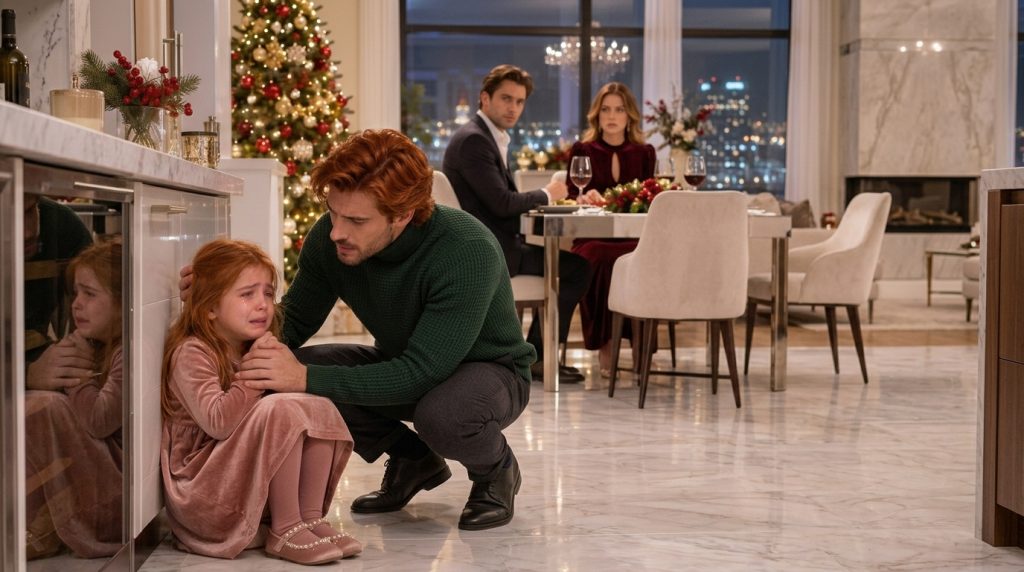
“What happened?” I raised a hand. The woman on the phone continued. “My name is Detective Nora Bennett. I’m working with the child-protection unit. Mr. Hale, before anything else, I need you to understand that Sophia is safe.”
My knees almost weakened.
“Where is she?”
“At the hospital with a child advocate.”
“Is Marcus there?”
“No.”
“Elisa?”
“No.”
“Where are they?”
“I can’t discuss operational details over the phone.”
“What did you find beneath the chair?”
A pause.
“Come to the station.”
“Detective—”
“Please.”
Her voice softened.
“I know she’s your niece. I know you’re frightened. But there are things you need to see in person.”
I closed my eyes.
“I’ll be there in twenty minutes.”
I ended the call.
Alex was already reaching for his coat.
“I’m coming.”
“No.”
“Michael.”
“You’re a journalist.”
“So are you.”
“I direct documentaries.”
“That is journalism with better lighting.”
Normally I would have laughed.
I couldn’t.
“If they’ve found something connected to Marcus’s company, I don’t want his attorneys later claiming I brought a reporter into an active investigation.”
Alex stared at me.
Then slowly removed his hand from his coat.
“Fine.”
I grabbed my keys.
He caught my arm before I reached the door.
“Michael.”
“What?”
“Don’t become an investigator today.”
I stared at him.
“What am I supposed to become?”
“Her uncle.”
“I am her uncle.”
“No.”
His voice remained calm.
“You’re scared, which means you’re doing what you always do. You’re turning everything into a case.”
“That’s how I solve problems.”
“Not this one.”
I pulled away.
“She needs someone to solve this.”
“She needs someone to protect her.”
“Same thing.”
“No.”
Alex stepped closer.
“Evidence, timelines, records, witnesses—that’s how you survive terrible stories professionally. But when Sophia sees you, she doesn’t need the man who exposes powerful people.”
He squeezed my shoulder.
“She needs Uncle Michael.”
I drove to the station alone.
Detective Bennett met me in a small interview room.
She was perhaps forty-five, with tired gray eyes and the deliberate movements of someone who had learned that panic was contagious.
Beside her sat Dana Ruiz from child protective services.
There was a folder on the table.
Neither woman opened it immediately.
I sat.
“Where’s Sophia?”
Dana answered.
“She remains at the hospital. She’s medically stable.”
Stable.
A word that should have comforted me.
It didn’t.
“Can I see her?”
“We’ll discuss that.”
“What did the doctor find?”
Detective Bennett folded her hands.
“First, I need you to tell us exactly what Sophia said to you.”
I gave them everything.
Christmas dinner.
The chair.
The kitchen.
The bruises.
The stuffed rabbit.
The words she had whispered.
I did not interpret.
I did not embellish.
I had spent years interviewing frightened whistleblowers.
I knew the difference between evidence and assumption.
When I finished, Dana asked:
“Did you ask Sophia detailed questions about what her father was doing?”
“No.”
“Why not?”
“I didn’t know what to ask.”
“Good.”
I frowned.
“Good?”
“Children who make disclosures should not be repeatedly questioned by relatives. It can increase distress and complicate later interviews.”
I swallowed.
“I just told her I believed her.”
Dana nodded.
“That was exactly what she needed.”
My eyes burned.
“What did the doctor find?”
Detective Bennett finally opened the folder.
“Multiple bruises in different stages of healing.”
“I saw those.”
“There were patterns suggesting restraint.”
My stomach turned.
“Restraint?”
“Yes.”
“What kind?”
“We’re still investigating.”
“Was she sexually—”
I couldn’t finish.
Dana understood.
“There is currently no medical evidence establishing sexual assault.”
I shut my eyes.
Relief rushed through me.
Then shame followed it.
Dana seemed to recognize both.
“Michael.”
I looked at her.
“Don’t rank her trauma.”
I swallowed.
“She was harmed. That is enough.”
I nodded.
“What was beneath the chair?”
Detective Bennett slid a photograph across the table.
At first, I couldn’t understand what I was seeing.
The underside of Sophia’s wooden bedroom chair.
A thin black housing had been attached beneath the seat.
Inside it were wires, a battery, a pressure sensor, and a small mechanical component.
“What is that?”
“We’re waiting for a complete technical analysis.”
“But you have an idea.”
“Yes.”
“What?”
She placed another photograph beside it.
A label inside the housing read:
NC-BR17
My skin went cold.
“Nathan Cole.”
Detective Bennett’s eyes narrowed.
“How do you know that name?”
I told her about Alex’s research.
The payments.
The private subsidiary.
The suspended physician.
She exchanged a look with Dana.
“What?”
I asked.
“Nothing.”
“Don’t do that.”
“Do what?”
“That look people exchange when they know something they don’t want to tell you.”
Detective Bennett leaned back.
“We executed a warrant at your brother’s house this morning.”
My heart accelerated.
“Where is Marcus?”
“Being interviewed.”
“Elisa?”
“Separately.”
“Are they under arrest?”
“I didn’t say that.”
“What did you find?”
She placed another photograph down.
A basement room.
I recognized the walls.
I had been in Marcus’s basement years earlier.
There had been a home theater, gym equipment, wine storage.
The photograph showed a narrow room behind what I remembered as a locked utility door.
Inside were shelves.
Boxes.
Electronic components.
And three more chairs.
Child-sized.
I stared.
“No.”
Detective Bennett said nothing.
“How many?”
“Four modified chairs in the residence.”
“One was Sophia’s.”
“Yes.”
“One at the dining table?”
“Yes.”
“And two downstairs?”
“Yes.”
I looked at the photograph again.
Then noticed folders stacked on a metal shelf.
Each had initials.
Dates.
Numbers.
I counted twelve.
My mouth went dry.
“You said Sophia might not be the only child.”
“We don’t know what those files represent yet.”
“You think they’re children.”
“We are investigating.”
A blue geometric logo appeared on one of the boxes.
I knew it.
“Sentinel.”
Detective Bennett looked up.
“What?”
“Sentinel Behavioral Systems.”
“How do you know that?”
“That’s the company connected to the payments Alex found.”
She wrote the name down.
I leaned back.
My hands had begun trembling.
“What the hell was my brother doing?”
Nobody answered.
That terrified me more than an answer would have.
Then Detective Bennett asked a strange question.
“Did Marcus ever talk to you about behavioral prediction?”
I frowned.
“He ran a cybersecurity company.”
“That isn’t what I asked.”
I thought.
And remembered.
Three years earlier.
Thanksgiving.
Bourbon.
Marcus explaining one of his new projects with the excitement of a man who believed he had glimpsed the future.
“He said cybersecurity had become too reactive.”
Detective Bennett stopped writing.
“What did he mean?”
“He said companies waited until people clicked malicious links, stole files, ignored procedures.”
“What else?”
“He said the next generation of security would predict noncompliance before it happened.”
Dana’s expression changed.
I continued.
“He said human behavior was just another vulnerability.”
Silence.
My stomach twisted.
“Oh God.”
Detective Bennett leaned forward.
“Michael, listen carefully.”
I looked at her.
“You are not going to investigate this yourself.”
I almost laughed.
“You know what I do for a living.”
“Yes.”
“That’s why I’m telling you.”
“My niece was hurt.”
“And if you contaminate witnesses or evidence because you think your professional experience exempts you from normal procedure, you may help the defense.”
That stopped me.
She continued.
“Do not contact Cole.”
“I wasn’t planning to.”
“Do not interview Marcus’s employees.”
I said nothing.
“Do not contact the families associated with those folders if you somehow identify them.”
I stared.
“You think I could.”
“I think you already found Cole before we told you his name.”
Fair.
She continued.
“You want to help Sophia?”
“Yes.”
“Then stay inside your role.”
I looked down.
“My role.”
“Her uncle.”
Alex’s words again.
I nodded.
“Fine.”
Dana opened another folder.
“There is something else.”
My heart tightened.
“What?”
“Would you be willing to be evaluated as a temporary placement resource?”
I stared.
“For Sophia?”
“Yes.”
The answer left my mouth before she finished.
“Yes.”
“There will be a home inspection.”
“Yes.”
“Background check.”
“Yes.”
“Interviews.”
“Yes.”
“You may need to make changes to your work schedule.”
“Done.”
“Michael.”
“Done.”
My voice broke.
“If she needs somewhere safe, everything else moves.”
Dana nodded.
“Good.”
I saw Sophia that evening.
The hospital room had cartoon animals painted along one wall.
She sat beneath a pale blanket with Rabbit tucked against her side.
She was coloring a penguin purple.
When she saw me, she froze.
For one terrible second, I thought she was afraid of me.
Then her eyes widened.
“Uncle Michael?”
I smiled.
“Hi, little bird.”
Her crayon fell.
“You came back.”
Not a question.
A discovery.
I crossed the room.
“I came back.”
She lifted her arms.
I hugged her carefully.
She buried her face against my chest.
“You promised.”
“I know.”
“You said soon.”
“I know.”
“Is Daddy mad?”
I closed my eyes.
“That isn’t something you have to worry about right now.”
“Mommy said I told bad lies.”
I pulled back.
“You told me what happened.”
Her lower lip trembled.
“Am I bad?”
“No.”
“Are police taking me away?”
“No.”
“Where am I going?”
I remembered Dana’s instructions.
“The grown-ups are making a safe plan.”
Sophia frowned.
“What’s a safe plan?”
“It means we’re figuring out where you can sleep and eat breakfast and color purple penguins while everybody sorts things out.”
She looked at Rabbit.
“Can he come?”
“Rabbit has full security clearance.”
A tiny smile.
“Can I stay with you?”
My throat closed.
“If the people making the plan say yes, I would love that.”
“Do you have strawberry cereal?”
“I can acquire strawberry cereal.”
“What’s acquire?”
“It means Uncle Michael has a car and knows where Target is.”
She giggled.
That sound nearly broke me.
I stayed for two hours.
I didn’t ask about Marcus.
I didn’t ask about the chair.
We discussed penguins.
Sophia had extremely strong opinions about penguins.
I listened to every one.
Three days later, she came home with me.
Temporary placement.
Two sterile words for the most important responsibility of my life.
She arrived carrying two small bags and Rabbit.
I had transformed the guest room.
New sheets.
Night-light.
Books.
Too many stuffed animals because I had panicked in a toy store.
Sophia stood in the doorway.
She looked around.
Then asked:
“Where’s the chair?”
My heart stopped.
“There isn’t one.”
She looked at the little desk.
Then beneath it.
“Can we keep it that way?”
“Yes.”
No hesitation.
“We can keep it exactly that way.”
That night, she slept on the floor beside the open door.
I found her there at midnight.
I wanted to move her.
I didn’t.
I brought a blanket.
Then I lay down in the hallway outside her room.
At three in the morning, tiny fingers touched my shoulder.
“Uncle Michael?”
I opened my eyes.
“Yes?”
“Why are you sleeping on the floor?”
“Excellent question.”
She pointed toward my bedroom.
“Your bed is over there.”
“So is yours.”
She looked into her room.
“Can the door stay open?”
“As wide as you want.”
She climbed into bed.
I returned to the hallway.
Neither of us slept much.
The next morning, I burned pancakes.
Sophia took one bite.
“Daddy makes them better.”
My chest tightened.
Children do not stop loving a parent simply because that parent frightened them.
Adults want feelings arranged neatly.
Victim.
Offender.
Love.
Fear.
But children can miss someone who hurt them.
That does not mean they belong back in danger.
It means grief is complicated.
I poured syrup over my culinary failure.
“Your father has defeated me in pancakes.”
Sophia nodded solemnly.
“Way better.”
“Brutal.”
She smiled.
Then asked:
“Is he coming here?”
“No.”
Her smile vanished.
“Because I told?”
I crouched beside her.
“No.”
“But police came because I told.”
“Sophia, look at me.”
She did.
“You are responsible for telling the truth about what happens to you.”
She listened.
“Grown-ups are responsible for the choices they make.”
“Even Daddy?”
“Especially grown-ups.”
She thought about that.
Then returned to her pancakes.
I went into the bathroom and cried.
Four days later, Elisa called.
Unknown number.
I almost ignored it.
Then answered.
“Michael.”
Her voice sounded hollow.
“Elisa.”
“You took my daughter.”
“No.”
“Yes, you did.”
“Child protection placed her with me.”
“Because you called them.”
“Because Sophia was hurt.”
“She exaggerates.”
I shut my eyes.
Even now.
“Elisa.”
“You don’t know what she’s like every day.”
“She’s five.”
“She lies when she wants attention.”
“She asked whether I would believe her.”
Silence.
Then Elisa began crying.
“You don’t understand Marcus.”
My skin went cold.
“What does that mean?”
Nothing.
“Elisa?”
“He said it was treatment.”
I stood.
“What treatment?”
“I can’t talk to you.”
“Then talk to the police.”
“They want to destroy him.”
“Did Marcus hurt Sophia?”
Silence.
“Elisa.”
“I never touched her.”
Not the question.
“Did you know she was being hurt?”
A sob.
Then the line went dead.
I called Detective Bennett immediately.
I told her everything.
She asked whether I had recorded the call.
I hadn’t.
“Good,” she said.
“Good?”
“We don’t need you improvising surveillance law.”
“I hate how well everyone knows me.”
“You’re predictable.”
“So was Marcus.”
The words came out before I meant them.
Silence.
Then she said:
“Michael, don’t do that to yourself.”
“Do what?”
“Turn resemblance into guilt.”
I looked toward Sophia’s room.
She was singing to Rabbit.
“I should have seen it.”
“You saw enough to act.”
“After years.”
“You were not living in that house.”
“I make films about people hiding things.”
“That doesn’t make you psychic.”
I said nothing.
She continued.
“Your brother’s choices belong to him.”
Those words became important later.
Two days after Elisa’s call, Nathan Cole was arrested.
The public records began filling in pieces.
Cole had once been a respected pediatric neurologist.
His license had been suspended after findings involving unapproved behavioral interventions, improper recordkeeping, and falsified documentation.
After losing his license, he reinvented himself as a consultant.
Sentinel Behavioral Systems paid him.
Marcus funded Sentinel through layers of corporate entities.
Officially, Sentinel researched employee stress, compliance, and human factors in cybersecurity environments.
Unofficially, it had moved somewhere far darker.
The chair beneath Sophia was not designed primarily as an instrument of punishment.
That distinction gave me no comfort.
Sensors measured pressure and movement.
The system could detect when someone shifted, stood, or resisted remaining in position.
Another mechanism could create a painful but supposedly “controlled” physical stimulus.
Marcus called it an aversive feedback response.
Cole called it behavioral conditioning.
Sophia called it:
The chair hurts.
That was the only description that mattered to me.
The bruises on her arms and legs were consistent with being restrained during some sessions.
The nighttime “secret game” had been a series of unauthorized behavioral trials.
Monitoring.
Commands.
Forced sitting.
Physical restraint when she tried to leave.
No evidence supported the darkest interpretation my mind had first feared.
But what actually happened was monstrous enough.
My brother had turned his own daughter into data.
When I understood that, I vomited.
Alex found me sitting on my kitchen floor.
Sophia was at school.
He sat beside me.
Neither of us spoke for several minutes.
Then I whispered:
“He experimented on her.”
Alex stared at the opposite wall.
“Yes.”
“I thought Marcus was cold.”
No answer.
“I thought that was the worst thing about him.”
Alex finally said:
“You couldn’t know.”
“I should have.”
“No.”
“She flinched.”
“And you noticed.”
“Too late.”
“You acted.”
“Too late.”
Alex turned toward me.
“Michael.”
“What?”
“Don’t turn guilt into vanity.”
I stared at him.
“That’s a horrible thing to say.”
“Yes.”
“Explain.”
“The idea that you should have known everything assumes you had some special ability everyone else lacked.”
My jaw tightened.
“You weren’t there.”
“Exactly.”
He pointed toward me.
“You weren’t there every night. You weren’t inside their marriage. You didn’t know about Sentinel.”
“I should have visited.”
“Maybe.”
That hurt because it was true.
“But that’s different from saying you could have magically prevented everything.”
I looked away.
“Then what do I do with the guilt?”
“Use the part that’s useful.”
“What part?”
“The part that makes you show up now.”
So I did.
Sophia started therapy.
The first months were difficult.
Nightmares.
Fear of hard chairs.
Panic when doors clicked shut.
Fear when adults whispered.
Fear when I took too long in another room.
We gave her choices.
Small ones.
Red cup or blue.
Bath before dinner or after.
Door open or halfway.
Ponytail or braids.
Pancakes or cereal.
Floor or chair.
The choices seemed insignificant.
They were not.
Control had been taken from her.
We returned it in teaspoons.
One Saturday, she stood beside the padded chair I had bought for the kitchen.
She touched it.
“Does this one hurt?”
“No.”
“Promise?”
I hesitated.
She noticed.
“Why didn’t you promise?”
I crouched.
“Because I can’t feel what you feel.”
She frowned.
“I can promise nobody put anything under it.”
She bent down.
Checked herself.
Then sat.
Her shoulders were rigid.
Ten seconds.
Twenty.
Thirty.
Then she reached for her cereal.
I turned away so she wouldn’t see me cry.
Three months later, Elisa was charged.
The evidence against her was devastating.
Not because she had designed anything.
She hadn’t.
Not because she had activated the devices.
Investigators found no evidence she had.
But because she knew Sophia was being hurt.
There were messages.
One from Elisa to Marcus:
She has bruises again. Michael will notice at Christmas.
Marcus replied:
Then cover them.
Cover them.
The red velvet dress.
Long sleeves.
Stiff fabric.
I had thought it was a Christmas outfit.
It was camouflage.
Another message:
She keeps saying she’ll tell Michael.
Marcus:
Then stop leaving them alone.
Elisa:
She’s scared of you.
Marcus:
Fear is part of the compliance problem.
I had to stop reading.
The language made everything worse.
He had turned his daughter’s fear into evidence that she needed more of what frightened her.
Then investigators found something that changed the entire case.
A locked cloud account.
Marcus had believed local devices were vulnerable.
So he stored research data remotely.
Encrypted.
Layered behind corporate credentials.
The irony was almost unbearable.
The cybersecurity expert had preserved his own evidence.
Inside were logs.
Test dates.
Device settings.
Notes.
And coded participant identifiers.
Twelve.
The folders from the basement.
Twelve families.
Sophia was not the only child.
But the truth was not exactly what I had imagined.
Marcus and Cole had marketed an invitation-only “behavioral optimization” program to wealthy parents.
Children with anxiety.
Attention difficulties.
Sleep problems.
School refusal.
Emotional outbursts.
Parents desperate for help.
They were promised cutting-edge monitoring.
Stress mapping.
Behavioral analytics.
Personalized interventions.
Most parents never knew Cole had lost his license.
Several were led to believe he was still practicing medicine.
Some of the devices were ordinary sensors.
Others crossed lines no legitimate research protocol should have approached.
The families had not knowingly consented to painful conditioning.
At least two children had complained.
One had been injured badly enough that his mother threatened litigation.
Marcus settled.
Confidentially.
That was the first twist that destroyed any argument that my brother simply did not understand the risk.
He had been warned.
Two years before Sophia whispered to me, another child had said the system hurt.
Marcus paid for silence.
Then continued.
I learned about the settlement from court filings months later.
The boy was identified only as E.R.
His real name did not matter.
He mattered.
His warning mattered.
Sophia had not been the first child to speak.
She was simply the child whose voice finally reached someone who refused to bury it.
The second major discovery came from someone I had never heard of.
Rachel Kim.
Twenty-nine.
Former data scientist at Sentinel.
She contacted investigators after Marcus’s arrest.
She had resigned eleven months before Christmas.
At the time, she told colleagues she was leaving for another job.
That was a lie.
She had discovered data from minors mixed into what she believed was adult workplace research.
She confronted Marcus.
He told her the records were synthetic.
She did not believe him.
She copied metadata.
Not patient files.
Not private child records.
Enough to prove the datasets were real.
Then Marcus’s legal department threatened her with trade-secret litigation.
She became frightened.
She left.
And stayed silent.
When the arrests became public, she came forward.
Rachel possessed an email that prosecutors later described as crucial.
She had written:
If these identifiers correspond to real minors, we cannot continue without ethics review and informed consent.
Marcus replied:
Your responsibility is the integrity of the model, not the business context surrounding data acquisition.
She wrote:
I need confirmation these are synthetic records.
Marcus responded:
You have received all confirmation necessary to perform your job.
Then, fifteen minutes later, he sent another message to Cole:
Kim is asking questions. Remove family identifiers from the next export.
There it was.
Knowledge.
Intent.
Concealment.
Not a misunderstanding.
Not a father trusting the wrong doctor.
A system.
A choice.
A cover-up.
When the email became public, Marcus’s company board removed him permanently.
Government clients suspended contracts.
Private clients left.
Investors sued.
Employees resigned.
The company Marcus had spent eighteen years building began collapsing.
I did nothing.
That surprised me.
On Christmas night, I had told Alex I wanted to dismantle my brother.
By spring, I understood I didn’t need to.
Truth had hands of its own.
Then came the third twist.
Elisa had evidence.
Not accidentally.
Deliberately.
She had been collecting it for almost a year.
Detective Bennett told me only after prosecutors disclosed part of it in court.
A flash drive.
Hidden inside a jewelry box.
Messages.
Photographs.
Audio recordings of arguments with Marcus.
Copies of medical notes.
Elisa had documented Sophia’s injuries.
My first reaction was rage.
If she knew enough to collect evidence, why hadn’t she taken Sophia and run?
The answer came months later.
Fear.
Money.
Custody.
And cowardice.
Marcus had controlled nearly everything.
The house was in a trust.
Most financial accounts were structured through entities she did not control.
He had convinced Elisa that if she left, he would portray her as unstable.
He had screenshots of angry messages.
Records of anxiety medication.
Photographs of wine glasses.
Anything could become a weapon if framed correctly.
He told her he could afford a custody war indefinitely.
She believed him.
So she began collecting evidence.
She told herself she was preparing to leave.
But she never did.
Then Sophia told her she was hurting.
And Elisa faced a choice.
Protect the child immediately.
Or keep building a perfect escape plan.
She chose the plan.
Then the plan became an excuse.
Then fear became complicity.
I learned that from her testimony.
She sat in court and said:
“I kept waiting until I had enough evidence to guarantee I would win.”
The prosecutor asked:
“Win what?”
“Custody.”
“And while you waited?”
Elisa cried.
“Sophia stayed there.”
The courtroom was silent.
The prosecutor continued.
“Why did you tell your daughter she was lying?”
Elisa covered her mouth.
“Because if she told someone before I was ready, I thought Marcus would know I had been collecting evidence.”
“Why threaten her with police?”
“Because I was afraid.”
The prosecutor waited.
Then asked:
“Who paid for that fear?”
Elisa looked toward the floor.
“My daughter.”
I left the courtroom.
I couldn’t listen anymore.
Outside, I punched a concrete wall.
It was stupid.
Pain shot through my hand.
Two fractured fingers.
Sophia saw the brace that evening.
“What happened?”
“I made a poor decision involving architecture.”
She frowned.
“What?”
“I punched a wall.”
Her eyes widened.
“Why?”
“I was angry.”
“Did the wall do something?”
“No.”
“Then why’d you hit it?”
Excellent question.
“I wasn’t thinking.”
“Did the wall win?”
“Decisively.”
She laughed.
Then became serious.
“Were you mad at me?”
My heart broke.
“No.”
“Sure?”
“Yes.”
I sat beside her.
“Little bird, listen to me.”
She looked up.
“You are never responsible for what I do when I’m angry.”
“What if I make you angry?”
“You can be responsible for your choices.”
I held up my injured hand.
“This was mine.”
“Not yours.”
She nodded.
Then reached for a marker.
“Can I draw on it?”
By bedtime, my brace had six purple dinosaurs and something she claimed was a horse.
It looked like a potato with legs.
I called it beautiful.
The criminal cases moved slowly.
Sophia came to live with me permanently under guardianship while the custody proceedings continued.
One evening, almost a year after Christmas, she asked:
“Do you want me here forever?”
I put down the dish I was washing.
“Yes.”
“Even if I cry?”
“Yes.”
“Even if I’m annoying?”
“You possess extraordinary talent there.”
She smiled.
“Even if I break something?”
“Yes.”
“Even your camera?”
I hesitated dramatically.
She gasped.
“Uncle Michael!”
I laughed.
“Yes.”
I crouched.
“I want you here.”
Her eyes filled.
“Daddy said nobody wants a difficult child.”
I stopped breathing.
“When?”
She shrugged.
“Sometimes.”
I wanted to find Marcus and scream.
Instead, I took her hands.
“Your father was wrong.”
“Mommy said I was difficult too.”
“They were wrong.”
“Am I?”
I thought carefully.
“You are a person.”
She frowned.
“That’s weird.”
“People can be easy sometimes and difficult sometimes.”
“Are you difficult?”
“Ask Alex.”
She smiled.
“He says yes.”
“Traitor.”
Then I became serious.
“You do not have to be easy to deserve love.”
Her face crumpled.
She climbed into my arms.
I held her.
That sentence became one of our family rules.
You do not have to be easy to deserve love.
The trial began fourteen months after Christmas.
Marcus fought every charge.
His attorneys argued Cole had exceeded his authority.
They argued the devices had legitimate research applications.
They argued the injuries were caused by unauthorized settings.
They argued Elisa had independently misused equipment.
They argued employees misunderstood internal terminology.
They argued prosecutors were exploiting public fear of surveillance technology.
Marcus had spent his career building systems designed to resist intrusion.
Now he built one around himself.
Layer after layer.
Then prosecutors played a video.
Corporate demonstration.
Eighteen months before Christmas.
Marcus.
Cole.
Two engineers.
A prototype chair.
An adult volunteer.
The test itself was uneventful.
Then the volunteer left.
Cole said:
“If we increase aversive intensity, we move beyond observational research.”
Marcus asked:
“How far beyond?”
Cole answered:
“Enough that I would not test it on minors.”
Marcus leaned back.
Then said:
“Then don’t call them test subjects.”
The courtroom changed.
You could feel it.
His attorneys objected to how prosecutors characterized the exchange.
The judge gave instructions.
But the words existed.
Then came another recording.
Elisa had made it.
Marcus’s voice:
“She needs to learn that saying stop doesn’t automatically end every uncomfortable situation.”
Elisa:
“She’s five.”
Marcus:
“Which is why the conditioning works now.”
I closed my eyes.
The prosecutor stopped the recording.
I wanted to leave.
I forced myself to stay.
Not because Sophia needed me in that courtroom.
She didn’t.
She was at school.
She needed me to be functional at dinner.
That thought saved me.
Rachel Kim testified.
So did engineers.
Parents.
Compliance officers.
Cole testified under an agreement.
Then I testified.
Marcus looked at me when I entered.
For one second, I saw my brother.
The boy who had taught me to ride a bicycle.
The teenager who punched a bully for stealing my backpack.
The man who held Sophia in the hospital after she was born and cried because her fingers were so small.
People want monsters to have always been monsters.
It makes the world easier.
Marcus had not always been one.
Or perhaps no one is only one thing.
That made it worse.
The prosecutor asked about Christmas.
I described Sophia standing beside the chair.
Her tears.
The kitchen.
The bruises.
Her question.
Would you believe me?
Marcus looked down.
Then cross-examination.
His attorney approached.
“Mr. Hale, you and Marcus were estranged before these allegations.”
“Yes.”
“You disagreed professionally.”
“Yes.”
“You once described his industry as surveillance dressed in a suit, correct?”
“I don’t remember the exact phrase.”
“But you criticized him.”
“Yes.”
“You already viewed him negatively.”
“In some ways.”
“You make films about corporate misconduct.”
“Yes.”
“So when Sophia made an allegation involving your brother, it fit an existing narrative you already had about him.”
I looked at the attorney.
“No.”
“No?”
“My opinion of Marcus’s business had nothing to do with what I saw.”
“What did you see?”
“My niece was in pain.”
“You did not witness Marcus causing those injuries.”
“No.”
“You did not see him activate a device.”
“No.”
“You did not attend any alleged session.”
“No.”
“So you cannot personally testify that Marcus caused the injuries.”
“I can testify to what I personally observed and what Sophia said to me.”
The attorney paused.
“You wanted Marcus exposed.”
“I wanted Sophia safe.”
“Those aren’t mutually exclusive.”
“No.”
I looked at Marcus.
“They weren’t.”
Silence.
The attorney changed direction.
“You currently have guardianship of Sophia.”
“Yes.”
“You want that arrangement to continue.”
“Yes.”
“So you benefit if Marcus loses parental rights.”
I stared.
“Benefit?”
“You understand the question.”
“I understand the word.”
His expression tightened.
I continued.
“Nothing about becoming responsible for a traumatized five-year-old because my brother harmed her felt like a benefit.”
The courtroom went silent.
“No further questions.”
The jury deliberated for four days.
Marcus was convicted on multiple charges related to child endangerment, conspiracy, unlawful experimentation-related conduct, evidence concealment, and financial offenses connected to Sentinel.
Not every charge resulted in conviction.
Real cases are messy.
Cole was convicted separately.
Elisa entered a plea agreement involving child endangerment and obstruction-related conduct.
She avoided prison.
Some relatives called that unfair.
Others called the entire prosecution a family betrayal.
I stopped answering relatives.
When the judge sentenced Marcus, I expected satisfaction.
Instead, I felt grief.
Pure grief.
For Sophia.
For the other children.
For my brother.
For the person he could have been.
For the family we had lost long before any courtroom admitted it.
Marcus turned as officers prepared to lead him away.
His eyes found mine.
He mouthed:
“Michael.”
I did nothing.
Later, I cried in a courthouse bathroom.
Alex sat outside the stall.
He didn’t speak.
That evening, Sophia wanted macaroni and cheese.
So I made macaroni and cheese.
The world can split open while children still need dinner.
I came to love that about life.
Sophia was seven.
She knew her father had gone away because adults determined he had hurt people and broken serious rules.
She did not know everything.
She didn’t need to.
“Is Daddy bad?”
she asked.
I sat beside her.
“I don’t think people are only one thing.”
“But he did bad things.”
“Yes.”
“To me?”
My throat tightened.
“Yes.”
“Can I miss him?”
“Yes.”
“Does that make me bad?”
“No.”
She cried.
“I remember him carrying me upstairs.”
I nodded.
“He made pancakes.”
“Better than you.”
“Apparently this insult will follow me to death.”
She smiled through tears.
Then leaned against me.
I learned that night that healing does not require stealing good memories from someone.
Sophia could remember a father who once carried her to bed.
She could also know he hurt her.
Both truths could exist.
Elisa began writing letters.
The first one Sophia’s therapist allowed her to read said:
You told me you were hurting, and I did not protect you.
No but.
I told you that you were lying because I was afraid. That was wrong.
You were telling the truth.
You were never bad.
You did not cause what happened to our family.
Adults made choices. You were a child.
Sophia kept the letter.
Months later, supervised visits began.
I waited outside.
The first lasted twenty minutes.
Sophia emerged looking exhausted.
“Want to talk?”
“No.”
“Okay.”
“Can we get ice cream?”
“Absolutely.”
Halfway there, she whispered:
“Mom cried.”
I kept driving.
“Okay.”
“She said sorry.”
“Okay.”
“I didn’t hug her.”
“You didn’t have to.”
“Will she be sad?”
“Probably.”
Sophia looked worried.
I pulled over.
“Little bird.”
“What?”
“You are not responsible for making adults feel better about things they did to you.”
She listened.
“You can hug someone because you want to.”
“Okay.”
“You can refuse because you don’t.”
“Okay.”
“You can change your mind later.”
She nodded.
“Can I get chocolate and strawberry?”
“Now you’re exploiting my emotional vulnerability.”
She giggled.
We got both.
Years passed.
Slowly.
Painfully.
Beautifully.
At eight, Sophia joined a children’s choir.
The first concert almost collapsed before it began.
Her teacher called.
“Michael, she won’t sit backstage.”
I arrived.
Sophia stood in a hallway beside a row of hard plastic folding chairs.
My heart stopped.
Another hallway.
Another frightened child.
But this time the door was open.
“What do you need?”
I asked.
“I want to sing.”
“Okay.”
“I don’t want to sit there.”
“Then don’t.”
Her teacher allowed her to stand backstage.
That simple.
No punishment.
No lecture.
No forced exposure.
Sophia sang in the third row.
Blue dress.
Missing front tooth.
I cried through the entire performance.
Alex whispered:
“You’re embarrassing her.”
“I don’t care.”
“You’re filming vertically.”
I immediately lowered the phone.
“Now you’ve gone too far.”
Afterward, Sophia ran toward me.
“Did you hear me?”
“No.”
Her mouth dropped open.
I smiled.
“Of course I heard you.”
She punched my arm.
“Mean.”
“Excellent singing.”
“Did you cry?”
“No.”
Alex said:
“He sobbed.”
“Traitor.”
Sophia laughed.
By ten, she beat me at chess.
By eleven, she informed me my clothes were embarrassing.
By twelve, she wanted privacy.
That became my next lesson.
One afternoon, she closed her bedroom door.
Five minutes later, I knocked.
“What?”
“Everything okay?”
“Yes.”
Ten minutes later.
Knock.
“Uncle Michael.”
“Yes?”
“Stop.”
I froze.
Stop.
A small word.
An enormous word in our family.
I stepped away.
“Okay.”
Her therapist later told me:
“You need to let Sophia have doors.”
That sentence pierced me.
“What if she needs me?”
“She can open it.”
“What if—”
“She is safe.”
“I know.”
“Do you?”
I looked down.
“You spent years teaching her that a closed door doesn’t have to mean danger.”
“Yes.”
“Now you need to learn the same thing.”
So I practiced.
She closed doors.
I did not knock unless necessary.
She attended sleepovers.
I panicked privately.
School trips.
I checked my phone too often.
Then less.
Trauma had changed me too.
I had become terrified of missing signs.
Protection can become control if fear is allowed to drive it.
Marcus had taught me that lesson in the ugliest possible way.
I refused to repeat it.
At thirteen, Sophia asked:
“What was actually under the chair?”
I had dreaded that question.
We sat at the kitchen table.
Padded chairs still.
I explained carefully.
Sensors.
A concealed mechanism.
A device designed to detect movement and create an unpleasant physical response.
“Pain.”
she said.
I looked at her.
“Yes.”
“Don’t call it unpleasant.”
She was right.
“Pain.”
“Did Dad build it?”
“He funded the company that developed it.”
“Did he know?”
“Yes.”
“Did Mom?”
“She knew you were being hurt.”
Sophia stared at the table.
“Why didn’t she stop him?”
“She was afraid.”
“So?”
One word.
So?
I nodded.
“Fear can explain a choice.”
I looked at her.
“It does not automatically excuse it.”
She cried.
Then asked:
“Was I the only kid?”
“No.”
“How many?”
“Twelve families were connected to the records. We don’t know that every child experienced the same thing.”
“Did they get help?”
“Some did.”
“All?”
“I don’t know.”
She hated that answer.
So did I.
“Can I see the court papers?”
“Not yet.”
“Why?”
“Because they contain information about other children.”
She paused.
Then nodded.
“Their stories aren’t mine.”
“Exactly.”
She sat quietly.
Then pointed toward our padded chairs.
“Can we get rid of these?”
I stared.
“What?”
“They’re ugly.”
I laughed.
“They cost a fortune.”
“They look like a dentist office.”
“That is deeply hurtful.”
“I want wooden chairs.”
My eyes filled.
She noticed.
“Oh no.”
“What?”
“You’re crying about furniture.”
“I have allergies.”
“In February?”
“Rare seasonal condition.”
She hugged me.
We bought wooden chairs.
Sophia chose them.
That evening, she sat at one doing algebra.
No cushion.
No checking underneath.
Just homework.
I stood in the kitchen watching.
She looked up.
“Stop staring.”
“I live here.”
“Go live somewhere else.”
I laughed.
That chair became my favorite piece of furniture.
At fifteen, Sophia asked to meet Rachel Kim.
Rachel agreed only after consulting lawyers and Sophia’s therapist.
We met in a quiet café.
Rachel looked nervous.
Sophia was calmer.
“You tried to stop them?”
Sophia asked.
Rachel swallowed.
“I asked questions.”
“That isn’t what I asked.”
Rachel’s eyes filled.
“No.”
She answered honestly.
“I didn’t stop them.”
“Why?”
“I was scared.”
Sophia stared at her.
That word again.
Rachel continued.
“I thought I might lose my career.”
“Did you know kids were getting hurt?”
“Not at first.”
“When did you know?”
“When I saw enough data to realize the records were real.”
“What did you do?”
“I copied evidence.”
“And left.”
“Yes.”
Sophia looked down.
“Do you wish you had called police?”
“Every day.”
Sophia nodded.
Then said:
“My mom was scared too.”
Rachel cried.
“I know.”
For a moment, I worried the meeting had been a mistake.
Then Sophia asked:
“Why did you come forward later?”
Rachel wiped her face.
“Because when I saw your father’s arrest, I realized another child had done what I had been too afraid to do.”
Sophia stared.
“What?”
“Told someone.”
Silence.
Rachel continued.
“You were five.”
Her voice broke.
“You were braver than I was at twenty-eight.”
Sophia looked uncomfortable.
“I don’t feel brave.”
“I didn’t either.”
Sophia thought.
Then said:
“Maybe brave doesn’t feel brave when you’re doing it.”
Rachel smiled through tears.
“Maybe.”
That sentence stayed with me.
At sixteen, Sophia wrote a school essay about ethical technology.
She did not mention herself.
She wrote:
A system cannot be ethical merely because its designers call its purpose beneficial. Ethics must include the dignity, consent, and vulnerability of the person subjected to the system.
I read it twice.
Then cried.
She walked into the kitchen.
“Oh my God.”
“What?”
“Again?”
“Allergies.”
“You need medical help.”
“Probably.”
She took the paper.
“Was it okay?”
“It was extraordinary.”
“You have to say that.”
“No.”
“I’m your niece.”
“Exactly. I’m legally obligated to criticize your semicolon usage.”
She laughed.
Then became quiet.
“I think I want to work in this field.”
“What field?”
“Technology policy.”
I looked at her.
“You sure?”
“No.”
“Good.”
She frowned.
“Good?”
“People who are completely certain at sixteen are terrifying.”
She rolled her eyes.
At eighteen, Sophia graduated high school.
Elisa attended.
So did Alex.
Marcus did not.
He was still incarcerated.
Sophia had not seen him since before trial.
After the ceremony, she stood in her blue gown.
Elisa approached carefully.
“Can I hug you?”
That question mattered.
Sophia considered.
Then opened her arms.
Elisa cried.
I looked away.
Not because I disapproved.
Because the moment belonged to them.
Reconciliation, when chosen freely, is not betrayal.
Neither is distance.
Sophia had learned both.
College move-in day nearly killed me.
She chose Northwestern.
Close enough to come home.
Far enough to pretend she wouldn’t.
I carried boxes up three flights of stairs.
“Why do you own seventy books?”
“I read.”
“Buy digital books.”
“I like paper.”
“You’re destroying my spine.”
“You’re old.”
“I can still disinherit you.”
“You have three cameras and student-loan trauma.”
“Cruel.”
She laughed.
Then I saw Rabbit.
Packed carefully on her pillow.
“You brought him?”
“Obviously.”
“He’s missing an ear.”
“He has character.”
Her roommate arrived.
Parents flooded the hallway.
Eventually, it was time for me to leave.
I hugged Sophia.
Too long.
“Uncle Michael.”
“One more second.”
“You said that thirty seconds ago.”
I let go.
She smiled.
“I’m okay.”
“I know.”
“Do you?”
“Working on it.”
She looked toward the hallway.
Then back at me.
“Remember when I asked if you would believe me?”
My throat closed.
“Yes.”
“You did.”
I couldn’t speak.
She hugged me again.
“That’s why I’m here.”
I cried all the way to the parking garage.
Alex called.
“How bad?”
“Shut up.”
“You crying?”
“No.”
“Liar.”
“I hate everyone.”
“She’ll be home in six weeks.”
“That is several geological eras.”
He laughed.
Sophia studied technology ethics and public policy.
She interned at a nonprofit focused on children’s digital rights.
Then a state policy office.
Then a research institute.
She never used her story publicly.
That was deliberate.
Her trauma was not a résumé.
But it informed the questions she asked.
Who consented?
Who benefits?
Who carries the risk?
What happens when the subject says stop?
Who gets believed when a system says everything is functioning correctly but a human being says it hurts?
Those questions became her life’s work.
At twenty-one, she asked to see Marcus.
I almost said no.
Then remembered.
She was twenty-one.
The decision was hers.
“Do you want me there?”
“Yes.”
That surprised me.
So we went.
The visitation room smelled like disinfectant and stale coffee.
Marcus entered.
Older.
Thinner.
Gray hair.
He saw Sophia.
Stopped.
She stood beside me.
For several seconds, nobody moved.
Then he sat.
We sat opposite.
“Sophia.”
“Hi, Dad.”
His eyes filled.
“You look like your mother.”
She said nothing.
Then:
“I have questions.”
Marcus swallowed.
“Okay.”
“Did you know the chair hurt me?”
Silence.
“Yes.”
I closed my eyes.
At least no euphemism.
“Why did you keep doing it?”
“I believed the system could be adjusted.”
“That isn’t what I asked.”
Marcus stared.
Sophia continued.
“Why did you keep doing it after I said stop?”
He looked down.
“I thought I knew better.”
“Because you were my dad?”
“Yes.”
“Because I was a kid?”
“Yes.”
“Because Dr. Cole told you?”
“Partly.”
She shook her head.
“No.”
Marcus looked up.
“You were the adult.”
“Yes.”
“You made the choice.”
“Yes.”
Tears ran down his face.
Sophia asked:
“Did you love me?”
That question almost destroyed me.
Marcus whispered:
“Yes.”
“Then why?”
He had no answer.
Eventually:
“Love does not make someone incapable of doing terrible things.”
Sophia stared at him.
“No.”
She nodded.
“It doesn’t.”
Marcus wiped his face.
“I am sorry.”
“I know.”
“I know that doesn’t repair anything.”
“No.”
“I don’t deserve forgiveness.”
Sophia tilted her head.
“I don’t know what deserve means with forgiveness.”
Marcus said nothing.
“I came because I wanted to know whether you were still pretending it was treatment.”
His face collapsed.
“It wasn’t.”
“What was it?”
He took a long breath.
“Control.”
Silence.
“I was obsessed with proving the model worked.”
“What happened when it didn’t?”
“I blamed the subject.”
Sophia’s eyes filled.
“Me.”
“Yes.”
“The other kids.”
“Yes.”
“I was five.”
“I know.”
“No.”
Her voice sharpened.
“You know now.”
Marcus closed his eyes.
“Yes.”
She stood.
He panicked.
“Wait.”
Sophia paused.
“I don’t know if I’ll come again.”
“I understand.”
“I don’t forgive you today.”
“I understand.”
“But I don’t hate you every day anymore.”
Marcus covered his face.
Sophia walked toward the exit.
I stood.
Marcus looked at me.
“You raised her.”
I swallowed.
“She did a lot of that herself.”
He almost smiled.
Then whispered:
“Thank you.”
Part of me wanted to hit him.
Part wanted to hug the brother I remembered.
Instead, I said:
“She deserved better.”
Marcus nodded.
“Yes.”
“She still does.”
Then I left.
Outside, Sophia stood beneath a gray sky.
“You okay?”
“No.”
Honest.
“Talk?”
“No.”
“Food?”
“Yes.”
We found a diner.
She ordered pancakes.
I stared.
“What?”
“Nothing.”
“You’re smiling.”
“Your father really did make better pancakes.”
She smiled sadly.
“I remember.”
We ate.
Then she whispered:
“I thought seeing him would make everything make sense.”
“Did it?”
“No.”
“Most things don’t.”
“He loved me.”
“Yes.”
“And hurt me.”
“Yes.”
“I hate that both are true.”
“I know.”
She looked at me.
“Did you stop loving him?”
I thought of bicycles.
Christmas mornings.
Fights.
Funerals.
The man behind the glass.
“No.”
Sophia nodded.
“Me neither.”
Neither of us apologized.
Marcus died in prison nine years later after a sudden medical event.
Sophia was thirty.
I received the call.
I sat alone afterward.
I expected relief.
Instead, grief came.
Complicated.
Embarrassing.
Human.
Sophia arrived that evening.
She found me at the kitchen table.
Wooden chair.
Her old chair across from me.
She took my hand.
“I’m sorry.”
“He hurt you.”
“He was still your brother.”
I cried.
“So much.”
“I know.”
She cried too.
Marcus’s funeral was small.
Sophia attended.
Elisa stood at the opposite side of the room.
Afterward, Sophia placed a folded piece of paper beside the urn.
I never asked what it said.
That story belonged to her.
Years later, Elisa told me Sophia had written:
I remember the good things too. I wish you had chosen to be that father more often.
I wished Elisa hadn’t told me.
Some words belong with the dead.
But I understood.
Sophia married at thirty-two.
A kind man named Jonah.
Before the ceremony, she handed me a small box.
“What is this?”
“Open it.”
Inside was a silver tie clip.
Engraved with four words.
I knew you’d believe me.
I couldn’t breathe.
“Sophia.”
“You’re going to ruin your face before photographs.”
“I hate you.”
“No, you don’t.”
She hugged me.
“You believed me when I thought nobody would.”
I held her tightly.
“You told the truth when nobody had made it safe to tell.”
She cried.
“So did you.”
At the wedding, I walked her down the aisle.
Not as her father.
I never tried to replace Marcus.
I was Uncle Michael.
That had always been enough.
Halfway down, she squeezed my arm.
“Nervous?”
I asked.
“No.”
“Liar.”
“A little.”
“We can run.”
She laughed.
“Terrible advice.”
“I have a car.”
Then we reached Jonah.
I kissed her forehead.
“Little bird.”
She whispered:
“I know.”
Fly.
I sat beside Alex.
Old now.
Still irritating.
“You crying?”
“No.”
“You’ve been crying since the parking lot.”
“Mind your business.”
During the reception, Sophia gave a speech.
She talked about family.
Not perfect family.
Not biological obligation.
People who listen.
People who tell the truth.
People who respect your no.
People who stay when staying is safe.
People who leave when leaving is necessary.
People who understand that love without respect can become another form of possession.
Across the room, Elisa cried.
Our eyes met.
She nodded.
I nodded back.
That was enough.
Sophia eventually had a daughter.
Emma.
The first time I held her, I panicked.
“Why are babies still this small?”
Sophia laughed.
“They haven’t updated the design.”
“Seems irresponsible.”
“Support her head.”
“I know how babies work.”
“You dropped a watermelon last week.”
“That watermelon was structurally compromised.”
Emma wrapped her hand around my finger.
I cried.
Sophia smiled.
Then said:
“She’s going to know.”
I looked at her.
“Know what?”
“That no means no.”
My chest tightened.
“That adults can be wrong.”
She continued.
“That secrets about being hurt are never secrets she has to keep.”
I nodded.
“That asking for help doesn’t make her bad.”
I couldn’t speak.
“And that chairs are furniture.”
I laughed through tears.
“Especially that.”
When Emma turned five, the age Sophia had been at Christmas, I struggled.
Every time I saw her, two children overlapped in my mind.
Emma.
Safe.
Sophia.
Terrified.
One afternoon, Emma climbed onto one of my wooden kitchen chairs.
She swung her legs.
“Great-Uncle Michael?”
“Yes?”
“The chair hurts.”
I froze.
The room disappeared.
Red velvet.
Silent tears.
Christmas music.
Sophia was beside me.
She saw my face.
Then calmly approached Emma.
“What hurts?”
“The edge pokes me.”
Sophia checked.
A splinter.
Ordinary.
Tiny.
She moved Emma.
“Thanks for telling me.”
Emma shrugged.
“Can I have juice?”
“Yep.”
That was it.
Sophia looked at me.
I exhaled.
“Different chair,” she said.
I nodded.
“Different life.”
“Yes.”
That evening, I understood something.
For decades, the words the chair hurts had belonged to terror.
Now they could belong to a splinter.
A child could complain.
An adult could listen.
The problem could be fixed.
No threats.
No secret.
No punishment.
Maybe that was healing.
Not erasing an old meaning.
Creating new meanings powerful enough to stand beside it.
I eventually retired.
Alex claimed nobody wanted to hear me complain about editing software anymore.
Possibly true.
My final documentary examined ethics in emerging surveillance technology.
No Sophia.
No Marcus.
No recognizable family history.
But I wrote the closing narration myself.
“Technology does not remove human responsibility. It magnifies the consequences of human choices.”
Sophia attended the premiere.
Afterward, she hugged me.
“You finally made your Marcus movie.”
“No.”
She raised an eyebrow.
“No?”
“I made my Michael movie.”
“What does that mean?”
“It was about what I needed to learn.”
“That you’re wrong sometimes?”
“Don’t become arrogant.”
“Too late.”
We laughed.
Years softened many things.
Not everything.
I still sometimes dreamed about Christmas dinner.
Marcus slicing prime rib.
Elisa pouring wine.
Sophia beside the chair.
In the dream, I always act sooner.
I overturn the table.
I grab Sophia.
I somehow know everything before she speaks.
But real life does not allow revisions.
You cannot return to a terrible moment carrying knowledge you gained afterward.
You can only decide what happens next.
That was what I eventually learned.
The promise I made in the kitchen was not:
I will erase this.
I couldn’t.
It was not:
I will destroy everyone who hurt you.
That would have made my anger the center.
The promise was:
I will help you.
And helping turned out to be less dramatic than revenge.
Calling professionals.
Following instructions.
Sitting through interviews.
Driving to therapy.
Making breakfast.
Learning when not to ask questions.
Learning when not to investigate.
Keeping doors open.
Then learning to let them close.
Buying padded chairs.
Then replacing them with wooden ones.
School concerts.
Homework.
Arguments.
College.
Bad dates.
Good friends.
Graduation.
Wedding.
Babies.
Life.
That was the rescue.
Not one heroic phone call.
Thousands of ordinary days afterward.
When I was seventy-three, Sophia drove me back through Lake Forest.
Marcus’s old house had been sold decades earlier.
New owners.
New paint.
Different landscaping.
We didn’t stop.
“That was it?”
Sophia asked.
“Yes.”
She looked through the window.
“Smaller than I remember.”
“Childhood places usually are.”
She waited.
“I thought I’d feel something.”
“Do you?”
“Hungry.”
I laughed.
“Excellent.”
We found a diner.
She ordered pancakes.
Again.
I stared.
“What?”
“You people have been torturing me with pancakes for forty years.”
She smiled.
“Dad really did make them better.”
“I know.”
We ate.
Then she asked:
“Do you regret calling?”
I looked up.
“What?”
“That night.”
“No.”
Immediate.
“Not once.”
“Even after everything?”
“Especially after everything.”
She nodded.
“I used to think I destroyed the family.”
My heart hurt.
“You didn’t.”
“I know now.”
“Good.”
“But when I was little, I thought if I hadn’t told you, Dad wouldn’t have gone away.”
I reached across the table.
“Your father went away because of choices he made.”
“I know.”
“Your mother faced consequences because of choices she made.”
“I know.”
“Cole faced consequences because of choices he made.”
“I know.”
“You did one thing.”
“What?”
“You told the truth.”
Tears filled her eyes.
“Never apologize for that.”
She smiled.
“I don’t anymore.”
Snow began falling outside.
Soft.
Quiet.
Christmas weather.
For years, Christmas had been difficult.
Then slowly it became Christmas again.
Trees.
Music.
Ridiculous sweaters.
Emma tearing wrapping paper.
Burned pancakes.
Family.
Not perfect.
Never perfect.
But safe.
That year, Sophia hosted Christmas dinner.
Elisa came.
Older.
Quieter.
She brought pie.
Alex came with his husband.
Emma brought a friend.
I sat at the table.
Wooden chairs.
Nobody noticed.
That was the beautiful part.
Nobody noticed.
Halfway through dinner, Emma suddenly stood.
“My chair hurts.”
Every adult froze.
Emma stared at us.
“What?”
Sophia started laughing.
I did too.
Then Elisa.
Then Alex.
Soon half the table was laughing while Emma looked deeply offended.
“This isn’t funny!”
“You’re right,” Sophia said, wiping tears.
She checked.
A decorative tack had loosened beneath the cushion.
Sophia moved Emma to another chair.
“Better?”
“Yes.”
“Good.”
Conversation resumed.
I sat quietly.
Sophia looked at me from across the table.
Our eyes met.
Five years old.
Decades later.
Same words.
Different ending.
That was everything.
After dinner, I helped wash dishes.
Sophia stood beside me.
“Uncle Michael?”
“Yes?”
“Thank you.”
“For dishes?”
“For that night.”
I looked at her.
“I made one phone call.”
“You know that’s not what I mean.”
I dried my hands.
She continued.
“I asked if you’d believe me.”
“Yes.”
“You did.”
“I did.”
She smiled.
“You know what my therapist told me years later?”
“What?”
“She said the first safe response after a child tells the truth can change how they understand the whole world.”
My eyes filled.
“I didn’t know what I was doing.”
“Maybe that’s why it mattered.”
“What do you mean?”
“You weren’t trying to say the perfect thing.”
She took my hand.
“You just believed me.”
I squeezed hers.
“You saved yourself when you told me.”
She shook her head.
“I was five.”
“And unbelievably brave.”
“I didn’t feel brave.”
“Maybe brave doesn’t feel brave when you’re doing it.”
She smiled.
“You stole that from Rachel.”
“I prefer borrowed.”
We stood quietly.
Then she whispered:
“Sometimes I still remember Mom telling me police would take bad girls away.”
My chest tightened.
“I’m sorry.”
“But I remember something else now.”
“What?”
“You kneeling in the kitchen.”
I couldn’t speak.
“You told me I didn’t do anything wrong.”
“Yes.”
“That memory got louder.”
I closed my eyes.
She huggedged me.
The worst memories do not always disappear.
Sometimes better memories simply learn to speak louder.
Later, everyone left.
I stood beside the Christmas tree.
Lights reflected in the dark window.
For a moment, I thought about Marcus.
I wished he had chosen differently.
I wished Elisa had protected Sophia sooner.
I wished Cole had never entered our lives.
I wished Rachel had called someone immediately.
I wished the first family had never accepted a settlement.
I wished no child had ever needed to test whether an adult would believe them.
But wishing backward is a useless form of love.
So I looked forward.
Emma was asleep upstairs.
Sophia and Jonah were arguing about leftovers.
Elisa was putting on her coat.
Alex was stealing cookies.
Life.
Messy.
Ordinary.
Beautiful.
Sophia came into the room.
“Ready?”
“For what?”
“Family picture.”
“I hate photographs.”
“You spent forty years behind cameras.”
“Behind.”
She dragged me over.
Elisa hesitated at the edge.
Sophia noticed.
“Mom.”
Elisa froze.
“Come here.”
She did.
No one pretended the past had disappeared.
No one needed to.
The camera timer flashed.
We smiled.
Later, when I looked at that photograph, I noticed what was missing.
No one stood rigid.
No one hid bruises.
No one was afraid to speak.
No one had been threatened into silence.
No child was wondering whether telling the truth would make them disappear.
That was the family we rebuilt.
Not untouched.
Not innocent.
But honest.
Safe enough for truth.
Strong enough to survive it.
And every time I think back to that Christmas when a five-year-old girl whispered that her chair hurt, I remember what she asked next.
Would you believe me?
People imagine courage as shouting.
Confrontation.
Breaking doors.
Destroying villains.
But the bravest person in that enormous house was a little girl holding a stuffed rabbit.
She walked into a kitchen.
She showed one adult what everyone else had taught her to hide.
And she asked one question.
Would you believe me?
The most important thing I ever did was not investigate.
Not expose.
Not dismantle a corporation.
Not testify.
Not confront Marcus.
It was answer.
Yes.
I believe you.
Everything came afterward.
Marcus lost his company.
Cole lost his freedom.
Elisa lost custody before slowly rebuilding part of what she had broken.
Sentinel collapsed.
Other families learned the truth.
Lawsuits followed.
Companies changed procedures.
People wrote articles.
Experts debated ethics.
But none of those consequences mattered to me as much as what happened to Sophia.
She learned something stronger than the lesson her father tried to teach her.
He taught her powerful adults could ignore pain.
She learned some adults listen.
He taught her resistance deserved punishment.
She learned no mattered.
Elisa taught her silence protected family.
Sophia learned truth can rebuild one.
Marcus tried to teach her obedience was love.
She grew up knowing they were never the same.
And me?
I spent my career believing truth was something you uncovered.
Sophia taught me otherwise.
Sometimes truth is already standing in front of you.
Small.
Terrified.
Barely whispering.
The question is not whether you are clever enough to discover it.
The question is whether, when it finally speaks, you are brave enough to believe it.
I was.
Thank God.
And so was she.
Years after that Christmas photograph, Emma came to interview me for a school project.
She was sixteen.
Sophia dropped her off and warned me:
“Don’t turn this into a three-hour documentary.”
“I am a professional.”
“You are incapable of concise answers.”
“Defamation.”
Emma opened her notebook.
“Great-Uncle Michael?”
“Yes?”
“My assignment is about someone who changed your life.”
I smiled.
“Easy.”
“Who?”
“Your mother.”
Emma looked surprised.
“Mom?”
“Yes.”
“What did she do?”
I looked toward the kitchen.
The wooden chairs were still there.
Old now.
Scratched.
Ordinary.
“She taught me how to listen.”
Emma wrote that down.
“How?”
I smiled.
“That story belongs partly to her.”
Emma looked disappointed.
“So I can’t use it?”
“You can ask her.”
“She said you’d say that.”
“Smart woman.”
Emma tapped her pencil.
“Then tell me something that belongs to you.”
I thought.
“My part?”
“Yes.”
I looked at her.
“I learned that believing someone is not the same as knowing every fact.”
She frowned.
“Explain.”
“When your mother came to me, I didn’t know exactly what had happened.”
I continued.
“I didn’t need to know everything before taking her pain seriously.”
Emma wrote.
“I could believe that she was frightened and hurting while still calling people trained to determine the facts.”
“So believing someone doesn’t mean you become judge?”
“Exactly.”
She smiled.
“That’s actually good.”
“Actually?”
“I expected something more dramatic.”
“Cruel.”
She continued writing.
Then asked:
“Did you save Mom?”
I stopped.
“No.”
Emma looked up.
“No?”
“I helped.”
“But Mom says—”
“Your mother saved a piece of herself when she decided to speak.”
I leaned forward.
“The doctor helped.”
“The detective helped.”
“Her therapist helped.”
“Teachers helped.”
“Friends helped.”
“She helped herself over and over.”
Emma nodded.
“So no hero?”
I smiled.
“Lots of helpers.”
She wrote that.
I liked it better.
When Sophia arrived to collect her, Emma ran ahead.
Sophia stayed behind.
“What did she ask?”
“Whether I saved you.”
Sophia smiled.
“What did you say?”
“That I helped.”
“Good.”
She hugged me.
“You did.”
Then she whispered:
“A lot.”
After they left, I sat alone at the kitchen table.
I ran my hand over the wood.
The chair did not hurt.
It creaked slightly.
That was all.
A piece of furniture.
Nothing more.
I thought about the hidden mechanism under Sophia’s childhood chair.
Marcus had believed technology could tell him when a child was resisting.
But he never learned the simplest thing.
He didn’t need sensors.
Sophia had told him.
Stop.
It hurts.
Those were data too.
Human data.
The most important kind.
He ignored them because they contradicted what he wanted to believe.
That, more than any device, was the failure.
Years later, Sophia published an essay in a major academic journal.
She sent it to me.
The title was:
When Systems Stop Listening
I called her.
“Subtle.”
She laughed.
“You like it?”
“I love it.”
“It isn’t about Dad.”
“I know.”
“But it kind of is.”
“I know.”
Her conclusion said that ethical systems must contain meaningful ways for vulnerable people to refuse participation, report harm, and be believed without needing extraordinary proof before protection begins.
I read that paragraph repeatedly.
Then called again.
“You’re going to change things.”
She groaned.
“Don’t become inspirational.”
“Too late.”
“I’m hanging up.”
“Little bird.”
Silence.
Then:
“Yeah?”
“I’m proud of you.”
Her voice softened.
“I know.”
She hung up.
I sat by the window.
Chicago moved below me.
Cars.
People.
Lights.
Somewhere, another child was probably trying to tell an adult something difficult.
Somewhere, an adult was deciding whether inconvenience mattered more than listening.
I could not protect every child.
That truth had once tortured me.
Now I understood my responsibility differently.
I could listen when someone spoke to me.
I could support systems that took children seriously.
I could teach younger filmmakers not to treat suffering as entertainment.
I could refuse to turn Sophia into a story she had never consented to tell publicly.
And I could keep the promise I made in that kitchen.
Not just once.
For a lifetime.
Soon, little bird.
Just hold on a little longer.
At the time, I thought soon meant hours.
Then days.
Eventually, I understood the promise lasted decades.
Soon, you’ll sleep without fear.
Soon, you’ll sit without checking underneath.
Soon, you’ll close your bedroom door because you want privacy, not because someone ordered you to.
Soon, you’ll go to college.
Soon, you’ll ask your father questions.
Soon, you’ll decide what forgiveness means for yourself.
Soon, you’ll fall in love.
Soon, you’ll become a mother.
Soon, another five-year-old will tell you a chair hurts, and you will simply listen.
Soon, the memory will no longer own you.
And one day, without noticing exactly when it happened, soon became now.
Sophia was safe.
Not because the world had become harmless.
It never does.
She was safe because she knew her voice belonged to her.
She knew pain was not something adults could redefine for her convenience.
She knew fear did not make her weak.
She knew love did not require silence.
She knew family could fail.
She knew family could change.
She knew some relationships deserved distance.
Others deserved careful rebuilding.
She knew forgiveness was a choice, not a debt.
Most of all, she knew the answer to the question she had once whispered with tears running down her face.
Would you believe me?
Yes.
Every time.
Yes.
THE END STORIES! THANK YOU FOR READING GOOD LUCK! ❤️
Related Posts