I stared at Alyssa’s message until the words blurred. If you loved this family, you’d stop asking questions. For years, that sentence would have worked on me. Maybe not those exact words.
But some version of them. If you loved your sister, you would help. If you loved your parents, you would keep the peace. If you loved your family, you would understand. Family had always been the rope they used to pull me toward whatever boundary they wanted me to surrender.
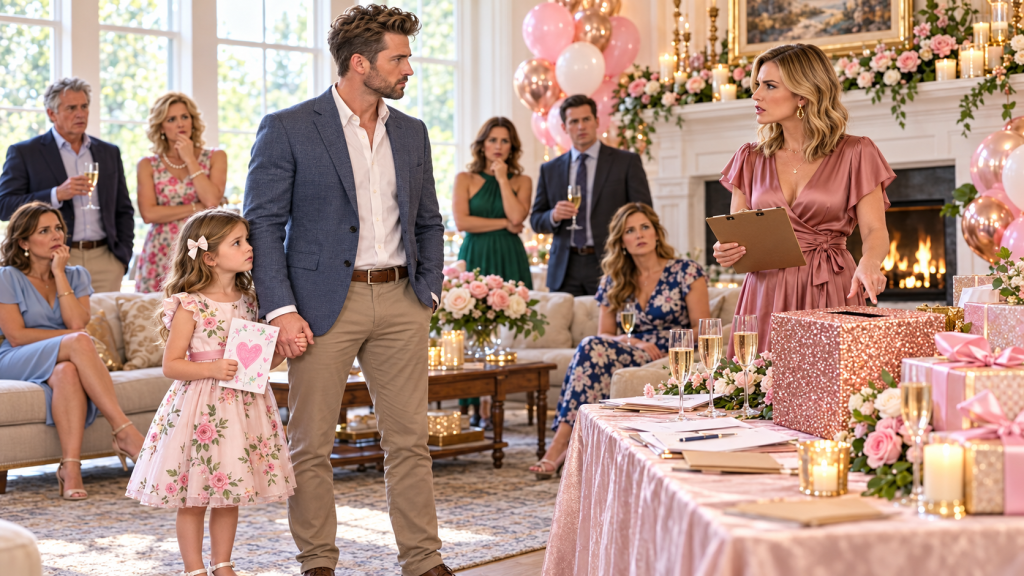
This time, however, Lily was sitting across from me. Seven years old. Blue eyes focused intently on the glowing star she had just stuck to the back of my hand. She had no idea someone had apparently submitted a financial guarantee in my name.
She had no idea her aunt’s wedding had just been canceled.
She only knew the adults had been behaving strangely ever since she was told she was not attractive enough for photographs.
And she was watching me.
That mattered more than anything.
I turned my phone facedown.
“Daddy?”
“Yes?”
“Is Aunt Alyssa mad?”
I looked at her.
“Very.”
“Because the wedding got canceled?”
“Yes.”
“Because of me?”
My heart stopped.
“What?”
She shrugged, but her face changed in that tiny way children’s faces do when they are trying to pretend something does not hurt.
“She said I would ruin it.”
I pulled my chair beside hers.
“No.”
“But if I wasn’t going—”
“Lily.”
She looked at me.
“The wedding was canceled because adults made decisions about money they could not afford.”
She listened carefully.
“And because some paperwork appears to have information on it that should not be there.”
“What paperwork?”
“Boring grown-up paperwork.”
She looked relieved.
“Okay.”
“This is not because of you.”
“Promise?”
“Absolutely.”
“What if Aunt Alyssa says it is?”
“Then Aunt Alyssa would be wrong.”
Lily nodded.
Then peeled another glow-in-the-dark star from the sheet.
“Can I put this one on your forehead?”
“No.”
“Why?”
“Because I’m trying to be serious.”
“That’s why.”
I laughed despite everything.
She put it on my forehead.
Ten minutes later, someone knocked on the door.
Not rang.
Knocked.
Hard.
Lily looked up.
“Is that Grandma?”
I already knew.
My mother knocked like the police when she was upset.
“Go finish your stickers in your room for a minute.”
“Am I in trouble?”
“No.”
“Are you?”
I almost smiled.
“Apparently.”
She gathered the stickers and disappeared down the hallway.
I opened the door.
Mom stood there.
Dad beside her.
Neither looked angry.
That was worse.
Mom looked terrified.
“Jordan.”
“Come in.”
Dad entered without speaking.
Mom followed.
She glanced toward the hallway.
“Where’s Lily?”
“In her room.”
“Good.”
That answer irritated me immediately.
“Why is that good?”
“She doesn’t need to hear this.”
“No.”
I closed the door.
“She didn’t need her photograph used in a public argument either.”
Mom flinched.
“I told Alyssa to take that down.”
“She hasn’t.”
“She said she would.”
“She hasn’t.”
Dad rubbed his forehead.
“Can we focus on the wedding?”
I stared at him.
“No.”
He looked surprised.
“What?”
“We are not beginning with the wedding.”
“Jordan—”
“We’re beginning with my name appearing as guarantor on paperwork I never signed.”
Mom’s face went completely white.
Dad stared.
“What?”
“You didn’t know?”
“Know what?”
I studied both of them.
They genuinely looked confused.
I unlocked my phone and showed them the email from Elaine.
Mom read it twice.
Her hand started shaking.
“This can’t be right.”
“I agree.”
Dad took the phone.
“Guarantor?”
“Yes.”
“For what?”
“I don’t know yet.”
“Your sister wouldn’t—”
I raised one hand.
“Do not finish that sentence.”
Dad stopped.
“We don’t know who submitted it.”
Mom sat on the couch.
“Alyssa said the venue canceled because you called them.”
“I did call them.”
Dad’s expression hardened.
“You admitted it?”
“Yes.”
“Why?”
“Because she was missing payments while telling everyone everything was secured, and you two had just handed her eighty thousand dollars.”
“That was our decision.”
“Yes.”
“And you had no right to interfere.”
“I didn’t order the venue to cancel.”
“You called.”
“Yes.”
“You knew what would happen.”
“No.”
I paused.
“I knew they might review the account.”
Dad shook his head.
“That’s the same thing.”
“No.”
“It isn’t.”
Mom whispered:
“Jordan, that was her wedding.”
“And this is my name.”
I held up the phone.
“On a financial document.”
Dad looked at the email again.
For the first time, his anger began losing shape.
“What exactly did Elaine say?”
“That a revised financing form listed me as guarantor.”
“Financing?”
“Yes.”
“I thought Alyssa was paying the venue directly.”
“So did I.”
Mom looked at Dad.
His face changed.
That was when I understood.
“You don’t know where your eighty thousand went.”
Neither answered.
“Dad.”
“We gave Alyssa a cashier’s check.”
“To her?”
“Yes.”
“Not the venue?”
Silence.
Mom whispered:
“She said several vendors needed to be paid quickly.”
My stomach tightened.
“Did you ask for invoices?”
Dad looked insulted.
“She’s our daughter.”
“That isn’t an invoice.”
“Jordan.”
“No.”
I sat opposite them.
“How much of the eighty thousand do you have left in savings?”
Mom looked down.
Dad answered.
“Enough.”
“How much?”
“That’s private.”
“Then don’t tell me.”
I leaned back.
“But do not ask me to rescue anyone if you discover you gave away money you could not afford.”
Mom’s eyes filled.
“Why are you being cruel?”
I stared.
“Cruel?”
“Yes.”
“Our daughter’s wedding was canceled.”
“Our daughter posted a photograph of my seven-year-old online to shame me into financing that wedding.”
Mom looked down.
“That was wrong.”
“You still haven’t said that to her.”
“Yes, I have.”
“What did you say?”
Mom hesitated.
“I told her she shouldn’t have posted Lily.”
“What did Alyssa say?”
“She was upset.”
“That doesn’t answer me.”
Mom’s face tightened.
“She said you embarrassed her first.”
There it was.
Even cruelty required symmetry in my family.
Everyone had to be equally wrong because then nobody had to choose a side.
I stood.
“I’m freezing my credit.”
Dad frowned.
“Why?”
“Because I don’t know who submitted that guarantee.”
“You think Alyssa would steal your identity?”
“I think somebody used my name on paperwork without permission.”
“That is not the same thing.”
“I know.”
I looked at him.
“That’s why I’m investigating instead of accusing.”
Mom wiped her eyes.
“Can you call the venue?”
“I already spoke to them.”
“Tell them it was a misunderstanding.”
“What was?”
“The payments.”
“Were they made?”
She went quiet.
I continued.
“Was the guarantor form valid?”
“No.”
“Then what exactly should I tell them?”
“That we’ll fix it.”
“We?”
Dad stood.
“She is your sister.”
“And?”
“Family helps family.”
I actually laughed.
He stared.
“What is funny?”
“The timing.”
“Jordan.”
“Family helps family.”
I repeated it.
“Is that why everyone laughed when Alyssa said Lily would ruin the pictures?”
Mom said:
“No one laughed at Lily.”
“Yes, they did.”
“Uncomfortably.”
“Do you hear yourself?”
She covered her face.
Dad’s shoulders lowered.
I continued.
“Do you know what Lily asked me five minutes before you arrived?”
Neither answered.
“She asked whether the wedding was canceled because of her.”
Mom started crying.
Dad closed his eyes.
“She is seven.”
I said.
“She heard what all of you said.”
“We never meant—”
“I don’t care what you meant.”
My voice cracked.
“I care what she learned.”
Silence.
“She learned that her aunt cared more about pictures than having her there.”
Mom whispered:
“I’m sorry.”
“She learned that nobody defended her because everyone was afraid of upsetting the bride.”
Dad’s face tightened.
“I defended her.”
“No.”
He stared.
“You told me privately that Alyssa was being ridiculous.”
“That is defending—”
“No.”
I stepped closer.
“Defense happens where the harm happens.”
He looked away.
That sentence sat between us.
Mom stood slowly.
“What do you want us to do?”
Finally.
Not:
What do you want us to pay?
Not:
How do we save the wedding?
“What do you want us to do?”
“Tell the truth.”
Mom looked confused.
“About what?”
“Everything.”
I counted on my fingers.
“Tell Alyssa the way she treated Lily was wrong.”
Dad nodded slowly.
“Tell her I am not responsible for her wedding.”
Another nod.
“Find out where your eighty thousand dollars went.”
Mom looked sick.
“And stop telling relatives I refused to attend a wedding my daughter was already excluded from.”
Mom closed her eyes.
“I’ll correct the message.”
“Today.”
“Yes.”
Dad looked at me.
“And the venue?”
“Let their process happen.”
“Jordan.”
“No.”
“What if everything can be fixed?”
“Then Alyssa and Blake can fix it.”
“With what money?”
“That is exactly the question everyone should have asked before planning a wedding that cost more than some people’s houses.”
They left twenty minutes later.
Mom hugged me.
Dad didn’t.
At the door, he stopped.
“I don’t want this family destroyed over money.”
I looked at him.
“Then stop making money the price of belonging.”
He left without answering.
That night, I froze my credit.
All three bureaus.
I changed passwords.
I checked accounts.
I pulled my credit reports.
Nothing unfamiliar appeared.
That gave me some relief.
Then I called an attorney.
Not because I wanted Alyssa arrested.
Not because I wanted revenge.
Because my signature had apparently been used.
My attorney’s name was Nora Feldman.
She had helped me close on my condo several years earlier.
When I explained what Elaine had said, her tone changed immediately.
“Do you have the document?”
“No.”
“Request a copy through the venue or their counsel.”
“Elaine said their compliance department is reviewing it.”
“Good.”
“Should I call police?”
“Not before we know what happened.”
“Okay.”
“Freeze your credit.”
“Already did.”
“Good.”
“Do you think it’s serious?”
“I think putting someone’s name on financial paperwork without authorization can become serious very quickly.”
My stomach tightened.
“I don’t want to destroy my sister.”
Nora was quiet.
“Then don’t.”
“What does that mean?”
“It means protect yourself.”
“Preserve documents.”
“Correct false representations.”
“And let facts determine what follows.”
I exhaled.
“Can you help get Lily’s photograph removed?”
“Yes.”
That mattered more to me than anything.
Alyssa’s post came down the next morning.
Not because she suddenly developed empathy.
Because Nora sent a formal request demanding removal of Lily’s image and preservation of all communications related to its publication and the financing matter.
Alyssa called me immediately.
I answered.
“What the hell is wrong with you?”
“Good morning.”
“You sent a lawyer after me?”
“I asked for my daughter’s photograph to be removed.”
“You could have called.”
“I did.”
“When?”
“Three days ago.”
“I was planning a wedding!”
I almost laughed.
“Not anymore.”
Silence.
Then she screamed.
“You did this!”
“No.”
“You called Rockville.”
“Yes.”
“You told them lies.”
“No.”
“What did you say?”
“That there appeared to be payment issues and that I had messages that might be relevant.”
“That was none of your business.”
“You were asking me to guarantee eighty thousand dollars.”
“That was before.”
“And then someone listed me as guarantor anyway.”
Silence.
There.
Tiny.
But real.
“Alyssa?”
“What?”
“Did you know?”
“Know what?”
“That my name was on a guarantor form.”
“No.”
Too fast.
“You answered quickly.”
“Because I didn’t.”
“Did Blake?”
“How would I know?”
“He’s your fiancé.”
“That doesn’t mean I review every financial form.”
I stared at the wall.
“Did you give him any documents with my signature on them?”
Silence.
“Alyssa.”
“No.”
Then:
“I don’t think so.”
Which meant yes.
“What did you give him?”
“Nothing.”
“What did you give him?”
She exhaled.
“There was an old lease.”
My stomach dropped.
“What lease?”
“Remember when I moved to Rockville after college?”
I remembered.
Eight years earlier.
Alyssa had poor credit.
Our parents were already stretched.
I co-signed her apartment lease.
One year.
She paid late four times.
The landlord called me twice.
I swore afterward I would never co-sign anything for her again.
“You still have that?”
“I had a PDF.”
“Why?”
“Because I keep documents.”
“What did Blake need it for?”
“He asked for proof that family had helped me financially before.”
I went still.
“For what?”
“The lender.”
My mouth went dry.
“You gave a lender paperwork showing I had co-signed for you before?”
“Not directly.”
“What does that mean?”
“I emailed it to Blake.”
“For what purpose?”
“He said it would help explain family support history.”
I laughed once.
“You cannot be serious.”
“Jordan, I didn’t tell him to copy your signature.”
My body went cold.
I had never said copied.
Not to her.
Not to Mom.
Not to Dad.
I lowered my voice.
“What did you just say?”
Silence.
“Alyssa.”
“Nothing.”
“You said you didn’t tell him to copy my signature.”
“I’m upset.”
“How did you know my signature was copied?”
“I assumed.”
“From what?”
“From what you’re accusing us of.”
“I haven’t accused anyone of copying anything.”
Silence.
“Alyssa.”
“Blake handled the financing.”
“And you knew he used the lease.”
“Yes.”
“Did you know he intended to use my signature?”
“No.”
A pause.
Then quieter:
“Not exactly.”
I closed my eyes.
“What does ‘not exactly’ mean?”
“He said the lender needed something showing family backing.”
“That is not my question.”
“He said we could submit a preliminary guarantee and replace it after you agreed.”
I stopped breathing.
“What?”
“It wasn’t final.”
I could hear her crying now.
“He said it was only to keep the application moving.”
“You knew my name was being used.”
“Not like this.”
“You knew.”
“I thought you would eventually sign.”
My stomach turned.
“You asked me.”
“Yes.”
“I said no.”
“You always say no first.”
I could not speak.
She continued quickly.
“Dad said you’d come around.”
That hurt.
“What?”
“Dad said once you saw everyone had contributed, you wouldn’t let the wedding collapse.”
I closed my eyes.
Of course.
Everyone had mistaken my boundaries for opening bids.
“No.”
I said quietly.
“What?”
“I meant no.”
“I know that now.”
“You knew it then.”
She started crying harder.
“Jordan, I swear I didn’t think Blake would actually submit your signature as final.”
“Did you tell him I would sign later?”
“Yes.”
“Did you authorize him to use my name?”
“I said he could keep working on the paperwork.”
“That isn’t an answer.”
“Yes.”
There it was.
My own sister.
Not an innocent misunderstanding.
Not exactly a forged check in a dark room.
Something almost more familiar.
She had treated my consent as an administrative delay.
A technicality.
Something that would eventually catch up to the decision she had already made for me.
I whispered:
“You had no right.”
“I know.”
“No.”
My voice broke.
“You know now because the wedding was canceled.”
“That’s not fair.”
“Would you be apologizing if the guarantee had worked?”
Silence.
I had my answer.
Then she said:
“Blake is the one who submitted it.”
“I understand.”
“You can’t blame me for everything.”
“I don’t.”
“Then call off your lawyer.”
“No.”
“Jordan.”
“No.”
“You’re going to ruin my life.”
“I am going to protect mine.”
She hung up.
I sat there for a long time.
Then Nora called.
“Do not delete whatever conversation you just had.”
“How did you know?”
“Because you sound like someone who just learned something.”
I told her.
Everything.
The lease.
The preliminary guarantee.
Alyssa’s admission.
Nora was quiet.
Then:
“Write down the conversation while it’s fresh.”
“I will.”
“Do not paraphrase dramatically.”
“I know.”
“Exact phrases where you remember them.”
“Yes.”
“And Jordan?”
“What?”
“Stop talking to them directly about the financing.”
That was harder than it sounded.
Because families are built around direct access.
Parents call.
Siblings text.
Aunts message.
People show up.
The legal world creates distance.
The family world punishes it.
Within hours, Mom called.
“What did you say to Alyssa?”
“I’m not discussing financing with her anymore.”
“She’s hysterical.”
“I’m sorry.”
“Blake says the form was preliminary.”
“I’m not discussing it.”
“Jordan.”
“No.”
“She might lose everything.”
I closed my eyes.
“She already lost the wedding.”
“She could lose Blake.”
“That is between them.”
“She could face legal problems.”
“That depends on what happened.”
Mom whispered:
“You’re really going to let your sister go through this?”
There it was again.
Let.
As if I controlled whether consequences existed.
“Mom.”
“Yes?”
“If Alyssa used my name after I said no, I didn’t create the problem by finding out.”
Silence.
“You could forgive.”
“Forgiveness doesn’t make paperwork valid.”
She started crying.
“I don’t recognize you.”
That hurt.
I almost backed down.
Then Lily appeared in the hallway.
She was wearing pajamas.
Holding a stuffed fox.
I looked at her.
And remembered.
I was not teaching my daughter to become hard.
I was teaching her that love does not require pretending harm didn’t happen.
“I’m still me.”
I told Mom.
“I’m just not saying yes to make everyone less uncomfortable.”
She hung up.
Three days later, the document arrived through Nora.
The guarantee.
My name.
My address.
My phone number.
An estimated income that was wrong but close enough to look plausible.
And my signature.
I stared at it.
It was mine.
Except it wasn’t.
The shape was identical to the one on Alyssa’s old apartment lease.
Identical.
Not similar.
Copied.
I had signed that old lease on a tablet with an ugly stylus.
My J had a strange flat top because the screen lagged.
The guarantee had the same flaw.
Blake had not imitated my signature.
Someone had inserted the image.
Nora looked at me across her desk.
“Do you recognize the source?”
“Yes.”
“The lease?”
“Yes.”
She nodded.
“That is useful.”
“Useful.”
I hated that word.
“Sorry.”
“No.”
I rubbed my eyes.
“What happens?”
“The venue’s financing partner has already referred the matter to its fraud department.”
My chest tightened.
“Police?”
“Maybe.”
“Can I stop it?”
Nora stared.
“Why would you?”
“Because Alyssa is my sister.”
“That is not a legal answer.”
“I’m not asking legally.”
She softened.
“You cannot control what another institution reports.”
I looked down.
“Can I refuse to cooperate?”
“You can make choices about your participation.”
“But?”
“But if your identity was used, protecting yourself matters.”
I laughed bitterly.
“Everything matters.”
“Yes.”
Then she slid another document toward me.
“What is this?”
“Payment ledger from Rockville.”
I frowned.
“Why do I have this?”
“Because the venue’s counsel produced the records relevant to the guaranty issue.”
I scanned the page.
Deposits.
Installments.
Late fees.
Credits.
My parents’ eighty thousand did not appear.
Not all of it.
There was one payment.
Thirty-one thousand dollars.
I looked up.
“Where is the rest?”
Nora shook her head.
“Rockville did not receive it.”
Forty-nine thousand dollars.
Missing from the venue.
I immediately called Dad.
Then stopped.
Nora raised an eyebrow.
“Remember what I just said.”
“This is my parents’ retirement money.”
“Then tell them to obtain their own financial records.”
I hated that she was right.
So I called Dad and said only:
“You need to look at the account where the eighty-thousand-dollar check was deposited.”
He sounded irritated.
“Why?”
“Because Rockville received thirty-one.”
Silence.
“What?”
“The venue’s ledger shows thirty-one thousand from Alyssa.”
“That’s impossible.”
“Check.”
“Jordan.”
“Check.”
He called me two hours later.
His voice sounded twenty years older.
“The check went into Alyssa and Blake’s joint account.”
“I know.”
“Forty-nine thousand didn’t go to Rockville.”
“I know.”
“Where is it?”
“I don’t know.”
Dad started crying.
My father rarely cried.
Not at his own father’s funeral.
Not when he retired.
Not even when Lily was born and he held her like a glass ornament.
Now he cried over money.
Not because eighty thousand dollars was more important than family.
Because he finally understood he did not know what he had funded.
“I trusted her.”
I sat down.
“I know.”
“She said every dollar was for the wedding.”
“I know.”
“Your mother took that money from the retirement account.”
My stomach tightened.
“All of it?”
“Most.”
“How much did you have left?”
He ignored the question.
“Why would she do this?”
I knew he meant Alyssa.
“I don’t know.”
Then he whispered:
“I told you to give her ten thousand.”
“Yes.”
“I told you it was only paperwork.”
“Yes.”
“I’m sorry.”
There are apologies you wait years to hear.
Then when they arrive, they do not feel like victory.
They feel like someone finally walked into the same room you had been standing in alone.
“Thank you.”
He cried harder.
“What do I do?”
That question terrified me.
My father had always been the man with answers.
“You talk to a financial adviser.”
“Yes.”
“And a lawyer if you need one.”
“Should I call Alyssa?”
“Yes.”
I paused.
“But ask questions.”
“What does that mean?”
“Don’t begin by telling her what explanation you need.”
He understood.
“Okay.”
“Dad?”
“Yes?”
“Don’t give anyone more money today.”
He almost laughed.
“Not a problem.”
That evening, the family group chat exploded.
Dad had asked Alyssa about the missing forty-nine thousand.
She said Blake handled the account.
Blake said twenty-seven thousand paid other vendors.
Dad asked for receipts.
Some existed.
Some didn’t.
Then Chloe—no, wrong story. Alyssa’s maid of honor cousin Stephanie jumped into the chat claiming everyone was attacking the bride.
I muted the conversation again.
By midnight, Dad sent me a private message.
$18,700 went to Blake’s credit cards.
I stared at it.
Then another.
$9,000 transfer to something called Grayline Ventures.
Blake’s last name was Gray.
My stomach sank.
Alyssa called me at 12:18 a.m.
I did not answer.
At 12:23 she texted:
I didn’t know.
I believed that one might be true.
The next morning, Blake disappeared.
Not dramatically.
He did not flee the country.
He checked into his brother’s apartment and turned his phone off.
Alyssa arrived at my parents’ house before sunrise.
Dad later told me she was wearing sweatpants and yesterday’s makeup.
For the first time in months, no white outfit.
No clipboard.
No bride identity.
Just my little sister.
Crying.
She admitted Blake had controlled most wedding payments because he said he was better with numbers.
The irony almost hurt.
She knew they were behind.
She knew they had used my name on the preliminary guarantee.
She knew my parents’ money had gone into their joint account.
But she claimed she did not know Blake had used part of it for personal debt.
Dad asked:
“What is Grayline Ventures?”
Alyssa said she didn’t know.
It turned out to be Blake’s failed event-rental side business.
He had started it eighteen months earlier.
Tents.
Lighting.
Furniture.
He bought inventory on credit.
The business failed quietly.
He told almost no one.
Not even Alyssa.
At least not fully.
By the time they became engaged, Blake had more than sixty thousand dollars in personal and business debt.
The extravagant wedding was not simply Alyssa’s fantasy.
It was his too.
He wanted clients.
Photographs.
Visibility.
A wedding that looked successful because he believed success might attract people to his failing business.
Alyssa wanted magazine-worthy pictures.
Blake wanted a portfolio.
Each encouraged the other’s worst instinct.
Appearance.
Bigger.
More expensive.
More impressive.
Nobody asked whether it was real.
My parents’ money became a patch.
My signature became another patch.
The wedding itself was turning into one giant attempt to cover the fact that the foundation had already cracked.
Three days after Blake left, he contacted an attorney.
Then the truth began arriving in pieces.
He admitted inserting my signature image onto the preliminary guarantee.
He said Alyssa had given him the old lease.
He insisted she had not specifically told him to forge anything.
He claimed he believed Jordan—me—would eventually sign and that the document would be replaced before final approval.
That logic sounded familiar.
Consent later.
Consequences later.
Truth later.
Everything could be fixed after the appearance had served its purpose.
His attorney contacted Nora.
Nora called me.
“He wants to resolve this.”
“What does resolve mean?”
“Cooperate with the lender.”
“Admit what he did?”
“Potentially.”
“Repay?”
“Financial restitution may become part of whatever process follows.”
I stared out my condo window.
“Did the lender lose money?”
“No funds were advanced based on your guarantee.”
“Then what is the financial loss?”
“Investigation costs, possibly fees.”
“And the venue?”
“Separate issue.”
“Can I tell them I don’t want charges?”
“You can express your preferences if investigators ask.”
“But it isn’t my decision.”
“Correct.”
That sentence became a strange comfort.
Not my decision.
I had spent my entire life being told everything was somehow my decision when family needed something.
Would the wedding survive?
My decision.
Would Alyssa feel supported?
My decision.
Would Mom and Dad be embarrassed?
My decision.
Would Lily be welcome?
Apparently not my decision.
But everyone else’s consequences?
Suddenly mine.
No.
Some things belonged to systems larger than family guilt.
The venue pursued unpaid contractual amounts.
Some deposits were nonrefundable.
Other vendors returned portions.
My parents eventually recovered about twenty-three thousand dollars from canceled services and unused deposits.
It was nowhere near eighty.
Blake’s personal transfers remained a separate problem.
His family helped him repay part.
He sold the inventory from Grayline Ventures.
Alyssa returned several designer purchases.
The wedding dress.
That hurt her.
I heard through Mom.
She had chosen it eleven months earlier.
Hand-beaded.
Custom alterations.
She sold it online for less than half what it cost.
When Mom told me, I said:
“That’s sad.”
She stared at me over coffee.
“You mean that?”
“Yes.”
Mom seemed almost suspicious.
“You’re not happy?”
“Why would I be happy my sister is miserable?”
“She was cruel to Lily.”
“Yes.”
“She tried to use your signature.”
“She treated my no like a temporary inconvenience.”
“Yes.”
“And I’m angry.”
I paused.
“But pain is not a competition.”
Mom’s eyes filled.
“I thought you wanted her wedding ruined.”
“No.”
“Then why call the venue?”
“Because you had given her eighty thousand dollars and she was still missing deadlines.”
Mom looked down.
“I thought if I didn’t tell someone, everyone would keep pretending.”
She whispered:
“We did.”
“Yes.”
Mom cried.
“I’m sorry.”
I waited.
Then she said something I had not expected.
“I liked the wedding.”
I frowned.
“What?”
“The idea of it.”
She wiped her eyes.
“Alyssa’s photos.”
“The venue.”
“The dress.”
“The flower wall.”
“She showed me everything.”
“I knew we couldn’t afford eighty thousand.”
“Dad told me.”
“I knew it.”
“Then why?”
She looked ashamed.
“Because it made me feel like we had given her something beautiful.”
I remained quiet.
“She always thought you were the successful one.”
My chest tightened.
“Mom.”
“You were.”
“No.”
“I was stable.”
“You finished college first.”
“So did half my friends.”
“You bought your condo.”
“With a mortgage.”
“You got promoted.”
“I worked.”
“You never needed us financially.”
That sentence explained more than she intended.
“Alyssa did.”
“Yes.”
“So helping her made you feel needed.”
Mom looked at me.
Tears filled her eyes.
“Yes.”
There it was.
A family pattern wider than the wedding.
Alyssa had learned that crisis brought attention.
Mom had learned rescuing proved love.
Dad had learned money could silence conflict.
I had learned keeping peace meant disappearing from arguments.
And Lily?
Lily was watching all of us decide whether those lessons had to continue.
Mom whispered:
“I should have told her no.”
“Yes.”
“I thought saying yes made me a good mother.”
“I know.”
She looked at me.
“What if she hates me now?”
“Then she’s angry.”
“That’s easy for you to say.”
“No.”
I thought of Lily.
“It isn’t.”
“But someone being angry at a boundary doesn’t automatically make the boundary wrong.”
Mom laughed weakly.
“Your therapist?”
“No.”
“I have a seven-year-old.”
“Worse.”
We smiled.
Then I asked:
“Have you apologized to Lily?”
Mom froze.
“No.”
“Why?”
“I didn’t think—”
“Do it.”
“She’s seven.”
“Exactly.”
“What do I say?”
“The truth.”
Mom visited that afternoon.
She sat on Lily’s bedroom floor among stuffed animals.
I stayed in the hallway.
Not hidden.
Available.
Mom said:
“Lily, Grandma needs to tell you something.”
Lily looked up from a puzzle.
“Okay.”
“When Aunt Alyssa said you weren’t invited because of pictures, I should have told her that was wrong.”
Lily stared.
“I didn’t.”
“Why?”
Mom swallowed.
“Because I was afraid she would get mad.”
Lily looked genuinely confused.
“But you’re her mom.”
“Yes.”
“Moms can be scared of their kids?”
Mom laughed through tears.
“Sometimes.”
“That’s weird.”
“Yes.”
“I’m sorry I stayed quiet.”
Lily placed a puzzle piece down.
“Okay.”
Mom blinked.
“You forgive me?”
Lily shrugged.
“I guess.”
Then:
“But it was mean.”
Mom nodded.
“Yes.”
“You should tell Aunt Alyssa.”
“I did.”
“What did she say?”
“That she was sorry.”
Lily frowned.
“She didn’t tell me.”
Children do not accept secondhand apologies.
I loved that.
Mom looked down.
“No.”
“Then she isn’t sorry to me yet.”
From the mouths of seven-year-olds.
Mom cried afterward in my kitchen.
“She’s right.”
“Yes.”
“That child is brutal.”
“Yes.”
“Where does she get that?”
I smiled.
“Hopefully not from me.”
The legal situation with Blake ended months later.
He admitted submitting the unauthorized guarantee during the lender’s investigation.
Because no money had been advanced against my signature, the consequences were not the dramatic prison sentence some relatives predicted.
There were legal costs.
A formal record of the incident.
Restitution connected to expenses.
He lost a professional certification opportunity.
Grayline Ventures closed.
Most importantly for me, the written resolution clearly established that I had never authorized the guarantee.
My credit stayed clean.
My name was mine again.
Alyssa and Blake ended their engagement before any of that finished.
Not because of me.
Not because Rockville Gardens canceled.
Because when the financial lies came out, Alyssa realized the man she planned to marry had hidden tens of thousands of dollars in debt.
Blake realized Alyssa had promised family money he believed would always appear.
They had built a wedding before building trust.
Without the flowers and venue appointments, neither could avoid the relationship underneath.
They separated.
For months, Alyssa blamed him entirely.
Then something changed.
Maybe therapy.
Maybe humiliation.
Maybe losing a wedding forces reflection when invitations have already been mailed and the dress is hanging unworn in your closet.
A year after everything, she asked to meet me.
I said no.
She asked again three months later.
No.
Not to punish.
Because I wasn’t ready.
Then Lily turned nine.
At her birthday party, a card arrived.
No gift.
Just a card addressed to Lily.
I hesitated before handing it over.
“You don’t have to read this.”
“Who’s it from?”
“Aunt Alyssa.”
Lily thought.
Then opened it.
I watched her eyes move across the page.
She finished.
Read it again.
Then handed it to me.
Alyssa had written:
Dear Lily,
I said something cruel about you before my wedding.
I told myself I was stressed and wanted everything to look perfect.
That does not make what I said okay.
You were seven years old.
You should never have been made to feel that your face, your mood, your dress, or anything else about you could ruin a photograph.
The person behaving badly was me.
I also posted your picture without permission because I was angry at your dad.
That was wrong too.
You do not owe me forgiveness.
I just wanted you to know that I am sorry.
Love,
Aunt Alyssa.
I looked at Lily.
“What do you think?”
She shrugged.
“It’s better.”
“Better than what?”
“Not saying sorry.”
Fair.
“Do you want me to respond?”
“No.”
“Okay.”
She took the card back.
“Can I keep it?”
“Of course.”
“Why?”
I smiled.
“You don’t need a reason.”
She tucked it into her desk.
Six months later, Lily asked:
“Is Aunt Alyssa still sad?”
I looked up from dinner.
“Sometimes.”
“Because of the wedding?”
“Yes.”
“And Blake?”
“Yes.”
“Do you hate her?”
“No.”
“Are you mad?”
“Yes.”
She considered.
“That’s confusing.”
“Adults are very annoying.”
“I know.”
“Do you want to see her?”
Lily stirred pasta around her plate.
“Maybe.”
“Why?”
“She used to paint my nails.”
I smiled.
There it was.
People are not only the worst thing they did.
That does not mean we give them immediate access after harm.
It means memory is allowed to remain complicated.
I called Alyssa.
Our first conversation in eighteen months lasted four minutes.
“Hi.”
“Hi.”
Her voice sounded different.
Smaller.
“Lily asked about you.”
Silence.
“Is she okay?”
“Yes.”
“What did she say?”
“She remembers you painting her nails.”
Alyssa began crying.
“Oh.”
“I’m not calling to make promises.”
“I know.”
“She might be willing to see you.”
“I’ll do whatever you want.”
“No.”
I corrected her.
“Whatever Lily wants within what I think is safe.”
“Yes.”
“Short visit.”
“Yes.”
“My place.”
“Yes.”
“No family ambush.”
“Of course.”
“No wedding discussion unless she asks.”
“Absolutely.”
“And Alyssa?”
“Yes?”
“You apologize to her directly.”
“I will.”
She came Sunday afternoon.
No makeup.
Jeans.
Sweater.
No clipboard.
No dramatic gift.
She brought one small bottle of blue nail polish.
Lily opened the door.
Alyssa froze.
Children grow quickly when you’ve been absent.
“Oh my goodness.”
Lily looked at her.
“You look different.”
Alyssa laughed through tears.
“So do you.”
They sat at my kitchen table.
I stayed nearby.
Not hovering.
Okay.
Hovering slightly.
Alyssa said:
“I owe you an apology.”
Lily nodded.
“I read the card.”
“I know.”
“Dad said you didn’t make excuses.”
Alyssa looked toward me.
Then back at Lily.
“I don’t have one.”
“Why didn’t you want me at the wedding?”
There it was.
Alyssa inhaled.
“Because I cared too much about what pictures looked like.”
“Why?”
“I thought if everything looked perfect, people would think my life was perfect.”
Lily frowned.
“Was it?”
“No.”
“Then that’s lying.”
Alyssa laughed weakly.
“Yes.”
“Pictures don’t change your life.”
“No.”
“I look weird in lots of pictures.”
I almost interrupted.
Alyssa said immediately:
“No.”
Lily looked at her.
“I mean everybody makes faces and blinks.”
“Exactly.”
Alyssa’s eyes filled.
“I was the one thinking wrong.”
Lily nodded.
Then:
“Why did you post my picture?”
Alyssa cried.
“Because I wanted your dad to feel guilty.”
“Did he?”
“Yes.”
I answered from the counter.
Lily glanced at me.
“Did it work?”
“It made me angry.”
“So not guilty?”
“Both.”
She looked back at Alyssa.
“You shouldn’t use kids when you’re mad at adults.”
Alyssa covered her mouth.
“You’re right.”
“Okay.”
That was it.
No hug.
Not yet.
Then Lily slid the nail polish across the table.
“Can you do my left hand?”
Alyssa cried so hard she could barely open the bottle.
I turned away.
Not because I didn’t want to see.
Because some repair belongs primarily to the people doing it.
Alyssa and I repaired more slowly.
Months.
Then years.
At first, our conversations stayed practical.
Lily’s birthday.
Mom’s doctor appointment.
Dad’s retirement finances.
No money between us.
That was my rule.
Not a dollar.
No loans.
No co-signing.
No emergency credit cards.
If Alyssa needed financial advice, I gave information.
Not cash.
She got a second job for a while.
Paid down debt.
Moved into a smaller apartment.
Sold designer bags.
Canceled memberships.
The first time she told me she had six months of emergency savings, she sounded prouder than she had announcing Rockville Gardens.
“That’s good.”
“Just good?”
“Very good.”
“I expected applause.”
“I can clap.”
“Do it.”
So I did.
She laughed.
Our parents changed too.
Dad returned to part-time consulting because the eighty-thousand-dollar loss delayed retirement.
For a while, I was furious about that.
Then he said something that changed how I saw it.
“I made the decision.”
We were fixing a shelf in my condo.
“You don’t need to be angry for me.”
I looked at him.
“She pressured you.”
“Yes.”
“You couldn’t afford it.”
“Also yes.”
“You were trying to save her.”
“Yes.”
“Then—”
“And I signed the withdrawal.”
He tightened a screw.
“That part is mine.”
I became quiet.
Dad looked at me.
“I spent years blaming Alyssa for needing help.”
“She needed a lot.”
“She did.”
“But nobody made me say yes.”
He smiled sadly.
“I taught her that Dad would solve it.”
I thought about Mom saying the same thing.
Families teach through patterns.
Even when nobody is giving lessons.
Dad continued.
“You’re teaching Lily something different.”
“I hope so.”
“You are.”
His eyes filled.
“She knows your no means no.”
I smiled.
“She knows it better than anyone.”
“That’s good.”
“Yes.”
“Annoying.”
“Extremely.”
At ten, Lily asked for a horse.
“No.”
“At eleven, she asked for a phone.”
“No.”
“At twelve, she asked to go to a concert two cities away with friends.”
“No.”
She stood in the kitchen with arms crossed.
“You love saying no.”
“I’ve had practice.”
“Aunt Alyssa ruined you.”
I laughed for ten minutes.
Alyssa found it less funny.
By then, she could laugh at herself.
That was another sign of change.
One Christmas, she handed me a tiny box.
I immediately said:
“I’m not co-signing it.”
She rolled her eyes.
“Open the box.”
Inside was a rubber stamp.
Huge red letters:
NO.
I looked at her.
She grinned.
“For efficiency.”
I laughed until I cried.
Mom hated the joke.
Dad loved it.
Lily stole the stamp.
That became dangerous.
Years passed.
The wedding-that-never-happened became less central.
At first, every family gathering seemed to orbit it.
Who lost what.
Who said what.
Which relatives still blamed me.
Which vendors refunded deposits.
Whether Blake had remarried.
Whether Alyssa regretted everything.
Eventually, life produced newer stories.
Dad had knee surgery.
Mom took painting classes.
Alyssa changed jobs.
Lily joined theater.
Then quit theater because she hated rehearsals.
Then joined robotics.
Then quit robotics because one boy told her girls were “usually the note-takers.”
She came home furious.
“What did you do?”
“I told him to build his own robot.”
“Reasonable.”
“Then ours won.”
“Even better.”
She grew.
That was the thing I had been protecting at seven.
Not her feelings from every cruel sentence.
Impossible.
Her sense that cruelty did not define her.
At fourteen, she found the old family group messages while searching my email for a school document.
She saw what people had said.
About me.
About her.
About the wedding.
I found her crying in my office.
“What happened?”
She turned the laptop.
My stomach dropped.
“I was going to show you those someday.”
“Why didn’t you?”
“You were little.”
“I remember some.”
“I know.”
“Aunt Alyssa really said I would ruin the pictures.”
“Yes.”
“And Grandma knew.”
“Yes.”
“And everyone wanted you to pay anyway.”
“Yes.”
She stared.
“Why?”
That question remained harder at fourteen than at seven.
“Because people can get used to treating one person as the fixer.”
“You?”
“Yes.”
“Why you?”
“I was financially stable.”
“You had money.”
“Some.”
“You were easy to guilt?”
I laughed despite myself.
“Yes.”
“You don’t seem easy to guilt.”
“Growth.”
She scrolled.
Then found my original message to Alyssa.
No.
One word.
Lily smiled.
“Iconic.”
“Please don’t use TikTok language about my trauma.”
She laughed.
Then became serious.
“Did you get the wedding canceled on purpose?”
I thought carefully.
“I knew calling the venue might make them review the account.”
“So kind of.”
“I did not control whether they canceled.”
“But you knew something might happen.”
“Yes.”
“Do you regret it?”
That question mattered.
“Sometimes I regret the way I acted from anger.”
“You were angry?”
“Very.”
“But I don’t regret warning people when I believed financial representations might be unreliable.”
She frowned.
“That sounds lawyer-y.”
“It’s supposed to.”
“Would you do it again?”
“I’d probably call my lawyer sooner.”
She nodded.
Then:
“Were you trying to punish Aunt Alyssa?”
I thought.
“Part of me wanted consequences.”
“Is that bad?”
“Not automatically.”
I sat beside her.
“But if your only goal is making someone hurt, you can become too interested in their pain.”
She listened.
“I’m glad the wedding didn’t go forward on forged paperwork.”
“Yes.”
“I’m glad Grandma and Grandpa eventually stopped giving money they couldn’t afford.”
“Yes.”
“I’m glad Aunt Alyssa learned.”
“Yes.”
“But I’m not glad she suffered.”
Lily looked at me.
“Even after what she said about me?”
“No.”
She leaned against my shoulder.
“That’s annoying.”
“Very.”
“Can I hate Blake?”
“I’m not assigning emotions.”
She smiled.
“I’ll decide later.”
At sixteen, Lily got her first job.
A little bookstore.
Her first paycheck was $187.
She held it like a winning lottery ticket.
“What should I do with it?”
“Whatever you want.”
“That’s terrible financial advice.”
I laughed.
“What do you want to do?”
“Save half.”
“Good.”
“Spend some.”
“Good.”
“Buy Grandma dinner.”
“Why?”
“Because she always pays.”
I smiled.
“Ask first.”
Lily rolled her eyes.
“I know.”
Permission.
Even generosity needs it.
Mom accepted.
At dinner, she cried when Lily handed over the card.
“I can pay.”
“I know.”
“I have money.”
“I know.”
“Then why?”
Lily smiled.
“Because I want to.”
Mom looked at me.
I raised my eyebrows.
See?
Help offered.
Not assigned.
Mom let her granddaughter buy pasta.
That may have been one of the healthiest financial transactions in our family history.
Alyssa eventually dated again.
For nearly three years, she refused anything serious.
Then she met Marcus.
A school counselor.
Divorced.
One son.
The first time she told me, she looked nervous.
“He has a child.”
“That sounds normal.”
“You know what I mean.”
I did.
“You’re afraid I’ll think you hate children.”
“I was horrible to Lily.”
“Yes.”
“I don’t want to be that person.”
“Then don’t be.”
She sighed.
“You make everything sound simple.”
“It isn’t.”
“Marcus’s son is nine.”
“What’s his name?”
“Eli.”
“Do you like him?”
“Yes.”
“Does he like you?”
“He tolerates me.”
“That’s basically love at nine.”
Alyssa smiled.
A year later, Marcus proposed.
She told me before Mom.
I stared.
“You’re getting married.”
“Yes.”
I waited.
She laughed nervously.
“Please say something.”
“Congratulations.”
She cried.
Then:
“I want Lily there.”
I smiled.
“That is a low bar.”
“I know.”
“All children invited?”
“Yes.”
“Budget?”
She rolled her eyes.
“Twenty-two thousand.”
I nearly applauded.
She laughed.
“And it’s paid for.”
“Actually paid?”
“Actually.”
“No loans?”
“No.”
“No guarantors?”
“None.”
“No donation box?”
“Jordan.”
“I’m checking.”
She smiled.
“Marcus’s parents are contributing five.”
“You can afford the rest?”
“Yes.”
“Good.”
She hesitated.
“I want you there.”
I looked at her.
“Okay.”
Her eyes widened.
“Really?”
“Yes.”
“After everything?”
“That was years ago.”
She started crying.
“Don’t make this bigger than it is.”
“Too late.”
The wedding took place in a community arts center.
Nothing like Rockville Gardens.
No marble staircase.
No imported flowers.
No string quartet.
Food from a local restaurant.
Wildflowers in glass jars.
Children running everywhere.
One ring bearer got distracted halfway down the aisle and sat on the floor.
Nobody panicked.
Alyssa laughed.
That was how I knew she had changed.
The photographer called for family pictures.
I felt Lily stiffen beside me.
She was eighteen.
Beautiful.
Confident.
Still my little girl.
Alyssa noticed too.
“Lily?”
“Yes?”
“Come here.”
She walked over.
The photographer arranged everyone.
Then Alyssa stopped him.
“No.”
He looked confused.
“What?”
She took Lily’s hand.
“Put her beside me.”
Lily stared.
“Aunt Alyssa.”
“I mean it.”
The photographer smiled.
“Perfect.”
Alyssa shook her head.
“No.”
She looked at him.
“Not perfect.”
Everyone went quiet.
She smiled.
“Just us.”
The photographer lowered the camera for a second.
Then nodded.
“Got it.”
The picture was terrible.
Eli blinked.
Mom was talking.
Dad’s tie had shifted.
I was looking at Lily instead of the camera.
Alyssa’s veil caught on Marcus’s jacket.
Lily was laughing.
It became my favorite family photograph.
Alyssa framed it for me.
Underneath she wrote:
Nothing ruined.
I kept it on my desk.
Years after that, Lily left for college.
The night before, she sat on the floor of my living room surrounded by boxes.
“Dad?”
“Yes?”
“Can I ask something?”
“Always.”
“When Aunt Alyssa’s first wedding got canceled…”
I groaned.
“We’re still discussing this?”
“It’s family mythology.”
“Apparently.”
“Did you know she’d marry someone else?”
“No.”
“Did you know she’d change?”
“No.”
“So why didn’t you cut her off forever?”
I thought.
“I almost did.”
“What stopped you?”
“You.”
Her eyebrows rose.
“Me?”
“Yes.”
“How?”
“You kept remembering good things about her.”
“Nail polish?”
“Nail polish.”
She smiled.
“I realized I could protect you without telling you what you had to feel about her.”
She became quiet.
“I could decide who had access to you when you were little.”
“Yes.”
“But I didn’t need to teach you hate.”
Lily looked down.
“That sounds hard.”
“It was.”
“Would it have been easier?”
“What?”
“To hate her?”
“For a while.”
“And later?”
“Probably not.”
She nodded.
Then:
“I’m glad you didn’t make me forgive her either.”
“So am I.”
“That would’ve made me hate both of you.”
“Noted.”
She laughed.
Then leaned against me.
“You were a good dad.”
My throat closed.
“Were?”
“I’m moving out.”
“That does not end fatherhood.”
“I know.”
“Good.”
She smiled.
“You were good when I needed you most.”
I had no clever response.
So I hugged her.
The next morning, Alyssa came to help load the car.
She carried one box.
Complained immediately.
“Why does a college freshman own thirty-seven books?”
Lily shouted:
“Education!”
Alyssa groaned.
Marcus carried the heavier box.
Mom brought sandwiches.
Dad checked the tires.
Family.
Not perfect.
Not erased.
Rebuilt.
Blake became a name we rarely mentioned.
I heard he eventually recovered financially.
Married someone else.
I hoped he learned.
I did not need proof.
That chapter was not mine anymore.
Rockville Gardens continued hosting weddings.
Years after everything, I attended a charity event there.
I almost laughed when I received the invitation.
The ballroom looked exactly as Alyssa’s social media posts had shown.
Glass walls.
Gardens.
Chandeliers.
Perfect stone terrace.
Elaine still worked there.
She recognized me.
“Jordan?”
I smiled.
“Elaine.”
She laughed.
“I wondered whether you’d ever come back.”
“I never actually came before.”
“That’s true.”
We spoke for a few minutes.
Then she said:
“I always wanted to tell you something.”
“What?”
“When you called, I thought you were a bitter brother.”
I laughed.
“Fair.”
“You were very calm.”
“That can be suspicious.”
“Yes.”
She smiled.
“But the messages you offered matched concerns we already had.”
I nodded.
“The account would have been reviewed even without you.”
That surprised me.
“What?”
“Too many missed deadlines.”
“Financing delays.”
“Changes in guarantor information.”
She shrugged.
“You accelerated it.”
“But you didn’t cause the underlying problem.”
I looked toward the ballroom.
For years, some relatives still said:
Jordan canceled the wedding.
Even after everything.
It was easier than saying:
Alyssa and Blake planned something they could not afford.
Blake used an unauthorized signature.
My parents gave away retirement savings.
Everyone ignored the warning signs.
Families love a single villain because systems are harder to admit.
“Thank you.”
I said.
Elaine nodded.
“Your daughter okay?”
That surprised me.
“You remember?”
“Her photograph was part of the documentation.”
My smile faded.
“She’s great.”
“Good.”
Elaine looked toward the garden.
“You know what’s funny?”
“What?”
“People spend years planning perfect weddings.”
“Then?”
“The weddings I remember are usually the ones where something goes wrong.”
I laughed.
“That’s comforting.”
“Rain.”
“Wrong music.”
“Kids screaming.”
“Grandma gets drunk.”
“Cake tilts.”
She smiled.
“Those are the pictures people love twenty years later.”
I thought of Alyssa’s second wedding.
Nothing ruined.
“Maybe perfection is bad photography.”
Elaine laughed.
“I’m stealing that.”
Years later, Lily got engaged.
That is where I thought this story would finally end.
It didn’t.
Stories rarely end where we expect.
Her fiancé, Daniel, was kind.
Funny.
Nervous around me.
Good.
A little fear is healthy.
He asked to meet me privately.
I assumed he wanted my blessing.
He did.
I said:
“She is not property.”
He looked horrified.
“I know.”
“Then you don’t need permission.”
“I know.”
“But you’d like support.”
“Yes.”
“You have it.”
He exhaled.
Then:
“One more thing.”
“What?”
“We want a small wedding.”
“Excellent.”
“Lily is worried about Aunt Alyssa.”
I frowned.
“Why?”
“She thinks the history might make things weird.”
“Does she want Alyssa there?”
“Yes.”
“Then invite her.”
“That’s what I said.”
“Why are we meeting?”
He laughed.
“Because Lily said you’d have a speech about boundaries.”
“She knows me.”
The wedding was held at a lakeside lodge.
Eighty guests.
Children everywhere.
Alyssa came with Marcus and Eli.
My parents were older.
Dad used a cane.
Mom cried before anything happened.
Lily wore a simple dress.
Not blue.
White.
Though she had sewn a tiny piece of blue fabric into the lining.
From the dress she wore at seven.
I found out while helping with a button.
“What is that?”
She smiled.
“Something old.”
I stared.
“You kept it?”
“Grandma did.”
Of course.
I touched the fabric.
My eyes filled.
“Why?”
“Because I wanted to remember something.”
“What?”
“That I was never the thing ruining the picture.”
I could not speak.
She hugged me.
“Dad.”
“Yes?”
“Breathe.”
I laughed through tears.
During the ceremony, a toddler started crying.
The mother stood to leave.
Lily stopped her from the altar.
“It’s okay.”
Everyone laughed.
The toddler kept crying.
The ceremony continued.
Perfect.
At the reception, the photographer gathered the family.
Alyssa stood near the edge.
Lily noticed.
“Aunt Alyssa.”
“Yes?”
“Get over here.”
Alyssa hesitated.
“You sure?”
Lily laughed.
“I invited you.”
Alyssa moved closer.
Then one of the children ran into the frame.
The photographer said:
“Let’s do another.”
Lily shook her head.
“No.”
Everyone looked at her.
She smiled.
“Keep it.”
The photo captured chaos.
A child mid-run.
Dad laughing.
Mom looking surprised.
Daniel blinking.
Me crying.
Alyssa’s hand covering her mouth.
Lily grinning.
Years earlier, my sister believed my daughter could ruin a wedding photograph simply by being present.
Now Lily chose the imperfect frame.
Not because she was proving anything.
Because perfection had never been the point.
People were.
At the father-daughter dance, she whispered:
“Do you remember the glow stars?”
I laughed.
“Which ones?”
“The day the first wedding got canceled.”
“Yes.”
“You had one on your forehead.”
“I remember.”
“I thought you were scared.”
I looked at her.
“I was.”
“You didn’t look scared.”
“Adults lie with posture.”
She laughed.
Then became serious.
“I thought everything was my fault.”
My heart broke all over again.
“I know.”
“You told me it wasn’t.”
“Yes.”
“I believed you.”
I swallowed.
“Good.”
“That was important.”
She leaned her head against my shoulder.
“You didn’t teach me family means never getting hurt.”
“No.”
“You taught me family doesn’t get to make you responsible for the hurt they cause.”
I closed my eyes.
Maybe that was the thing I had been trying to teach without knowing the words.
After the dance, Alyssa found me outside.
Older.
Calmer.
Happy.
She stood beside me near the lake.
“Beautiful wedding.”
“Yes.”
She laughed softly.
“The kids are destroying the dessert table.”
“Good.”
She looked toward the reception hall.
“Do you ever think about Rockville?”
“Sometimes.”
“I do.”
Silence.
“I hated you for calling them.”
“I know.”
“I told myself for years you wanted to destroy me.”
“I didn’t.”
“I know now.”
She looked at me.
“You know what hurts most?”
“What?”
“You didn’t need to destroy anything.”
I waited.
“I had already built something that couldn’t stand.”
That sentence stayed with me.
She continued.
“Too much money.”
“Too much pretending.”
“A man I didn’t know.”
“A wedding I couldn’t afford.”
She laughed bitterly.
“And I was worried about Lily’s face.”
I smiled sadly.
“You were twenty-nine.”
“That doesn’t excuse it.”
“No.”
“But you aren’t twenty-nine anymore.”
She looked at me.
“Do you forgive me?”
After all those years.
I thought.
“I forgave you a long time ago.”
Her eyes filled.
“Really?”
“Yes.”
“Why didn’t you tell me?”
“Because I didn’t know you needed an announcement.”
She laughed.
“I thought forgiveness would feel bigger.”
“It didn’t.”
“What did it feel like?”
I looked toward Lily through the glass doors.
“Like not needing you to suffer anymore.”
Alyssa cried.
I put an arm around her.
Not because the past disappeared.
Because it no longer needed to stand between us every minute.
Dad died three years later.
Quietly.
Home.
Mom beside him.
He left each of us letters.
Mine was short.
Jordan,
I spent too many years believing being a good father meant solving problems with money.
You taught me that sometimes love sounds like no.
I did not enjoy the lesson.
I’m proud of you anyway.
Take care of your mother.
But ask her first.
Dad.
I laughed so hard at the last line I cried harder.
Alyssa’s letter said something different.
She never showed me all of it.
Only one sentence.
I should have taught you that failure was survivable before teaching you rescue was guaranteed.
She carried that line in her wallet.
Mom lived another eight years.
She never again used “family helps family” as an argument.
She did use it correctly sometimes.
When I had surgery, she brought soup.
Asked first.
When Alyssa’s car broke, Mom offered a ride.
Not money.
When Lily had her first child, Mom sent diapers.
Not because anyone demanded them.
Because she wanted to.
Our family did not become independent to the point of isolation.
That was never the goal.
We still helped.
We still lent hands.
Time.
Food.
Advice.
Occasionally money.
The difference was permission.
Need was no longer an invoice.
Love was no longer collateral.
And no became a complete sentence that could survive without becoming a family emergency.
Years after Lily’s wedding, she sent me a photograph.
Her daughter, Emma, was six.
She stood in front of a mirror wearing an outrageous purple dress with yellow tights.
The caption read:
She dressed herself for school picture day. Pray for us.
I laughed.
Then replied:
Perfect.
Lily immediately wrote:
Wrong answer.
I stared.
Then understood.
I corrected myself.
She looks like herself.
Three dots appeared.
Better.
I smiled.
That was how lessons travel.
Not through speeches.
Through corrections.
Through little choices.
Through what we say when a child shows up in something we would not have chosen.
I thought of Alyssa’s first wedding.
“Perfect pictures.”
The phrase once caused so much pain.
Now my granddaughter was walking into school wearing purple and yellow because she liked them.
Nobody stopped her.
Nobody said she would ruin anything.
Lily sent the official school photograph weeks later.
Emma’s eyes were half closed.
One pigtail had fallen out.
Her smile was enormous.
I framed it.
Of course.
Alyssa asked for a copy.
I gave her one.
She placed it beside the photograph from her second wedding.
Nothing ruined.
Sometimes healing is that ordinary.
A photograph on a shelf.
A bad dress.
A child allowed to be seen.
When I think about that morning now, the morning Rockville Gardens canceled Alyssa’s wedding, I do not remember the email first.
I remember Lily at the kitchen table.
Glow-in-the-dark stars.
One on my forehead.
The world collapsing in one direction while she was creating a tiny galaxy in another.
I remember my phone lighting up.
Alyssa.
Mom.
Dad.
Alyssa.
Everyone demanding I return to the center of their crisis.
And my daughter asking:
“Is it because of me?”
That was the real moment everything changed.
Not when I refused the eighty-thousand-dollar loan.
Not when I left the fundraiser.
Not when I called the venue.
Not when the guarantor form appeared.
When my seven-year-old wondered whether adults’ financial failures were somehow her responsibility because one woman had already told her she could ruin a picture.
That was when I knew the family pattern had to stop with me.
Lily would grow up knowing she could disappoint someone without becoming cruel.
Say no without becoming selfish.
Leave a table where she was disrespected.
Forgive without surrendering boundaries.
Help because she wanted to.
Not because someone handed her a clipboard and wrote a number beside her name.
Alyssa learned those things too.
Later.
More painfully.
Our parents learned them.
I learned them.
Even Blake, perhaps, learned something.
I hope he did.
But I stopped needing everyone to understand the lesson before I was allowed to live by it.
That was freedom.
The old family version of me believed peace meant nobody was angry.
The newer version understood peace sometimes begins when the right person gets angry and you do not rush to fix it.
Alyssa was furious when I said no.
Mom cried.
Dad called me selfish.
Relatives whispered.
The wedding collapsed.
A fraudulent guarantee surfaced.
Money disappeared.
Relationships cracked.
Nothing about that looked peaceful.
But years later?
My sister learned to live within her means.
My parents stopped jeopardizing retirement to prevent an adult daughter from experiencing consequences.
My daughter grew up knowing her worth was not measured by whether she improved someone’s photograph.
And I stopped believing love required financial surrender.
That was peace.
Messier than silence.
Stronger than pretending.
One afternoon, long after my granddaughter’s purple school picture had joined the family collection, Alyssa and I sat at Mom’s old kitchen table sorting photographs after she died.
Boxes everywhere.
Birthdays.
Vacations.
Christmases.
Dad asleep in chairs.
Mom holding babies.
Lily in the blue dress.
I stopped.
There it was.
Taken the same evening as the fundraiser.
Lily stood near the fireplace.
Seven years old.
Blue dress.
Small hands folded.
Alyssa was in the background holding the clipboard.
I stared.
Alyssa noticed.
“Oh.”
Silence.
“You want me to throw it away?”
I looked at her.
“Why?”
“Because of what happened.”
I studied the photograph.
Lily looked beautiful.
Not because she was posed.
Because she looked serious.
Observant.
Already watching the adults.
“No.”
I said.
“Keep it.”
Alyssa looked surprised.
“Really?”
“Yes.”
She touched the picture.
“I hate who I was that night.”
“I know.”
“I barely remember saying it.”
“I do.”
“I know.”
She looked at seven-year-old Lily.
“I thought she would ruin the pictures.”
“Yes.”
Alyssa started crying.
“She was the best thing in this one.”
I smiled.
“Yes.”
We placed it in the keep pile.
Not because pain should be preserved forever.
Because truth does not always need to be burned to stop hurting.
Sometimes a photograph can hold both things.
Who someone was.
And who they became.
I eventually gave the picture to Lily.
She laughed.
“Oh my God.”
“What?”
“Dad.”
“What?”
“My dress.”
“You loved that dress.”
“I look like a tiny accountant.”
“You were adorable.”
She stared at Alyssa in the background.
Then smiled.
“Can I have this?”
“That’s why I brought it.”
She framed it.
Beside her own wedding photo.
Past and present.
No erasure.
No denial.
Just distance.
One day Emma asked:
“Who is that?”
Lily pointed.
“That’s me.”
“Why do you look mad?”
“I wasn’t mad.”
“Why is Aunt Alyssa holding paper?”
Lily laughed.
“Long story.”
“Tell me.”
Lily looked at me.
I raised my hands.
“Your story now.”
She thought.
Then told her daughter:
“A long time ago, Aunt Alyssa cared too much about making a wedding look perfect.”
Emma nodded.
“And?”
“And Grandpa Jordan told everyone no.”
I laughed.
“That is a dramatic simplification.”
Lily ignored me.
“Then everything got messy.”
Emma stared at the photographs.
“What happened?”
Lily smiled.
“Everybody grew up.”
Even some of us who were already adults.
That was perhaps the simplest version.
Everybody grew up.
Not all at once.
Not willingly.
Not without damage.
But enough.
Alyssa’s first wedding never happened.
The eighty-thousand-dollar dream collapsed before a single guest reached Rockville Gardens.
Blake’s unauthorized guarantee exposed itself before my signature became debt.
My parents lost money.
There was no pretending otherwise.
Alyssa lost a relationship she believed would last forever.
I lost trust in people I loved.
Lily lost some childhood innocence about family.
Those were real losses.
But the cancellation also stopped us before the pattern became even more expensive.
Financially.
Emotionally.
Generationally.
If the wedding had somehow happened, maybe everyone would have smiled beneath chandeliers.
Alyssa would have posted perfect photographs.
Blake’s debt would still exist.
My parents’ savings would still be gone.
My name might still be attached to money I never agreed to guarantee.
Lily would still have learned that her exclusion mattered less than keeping the celebration beautiful.
And our family would have called that success because the flowers looked nice.
Instead, everything ugly came into daylight.
It was humiliating.
Necessary.
And ultimately merciful.
Not every canceled plan is a tragedy.
Sometimes the collapse is the warning arriving before something worse.
I used to think boundaries destroy relationships.
Now I think false relationships are often the ones that cannot survive them.
The real ones may scream.
Struggle.
Take distance.
Require apologies.
But if they contain genuine love, they can rebuild around truth.
My relationship with Alyssa did.
My relationship with my parents did.
Most importantly, Lily’s relationship with herself did not have to be sacrificed to preserve any of them.
That was the victory.
Not the cancellation email.
Not Alyssa crying.
Not the venue declining payment.
Not the forged guarantee being exposed.
The victory was a seven-year-old growing into a woman who could stand at her own wedding while a child cried in the middle of the ceremony and simply say:
“It’s okay.”
Because people mattered more than pictures.
That was the happy ending Alyssa had once implied I did not believe in.
I believed in happy endings.
I just stopped believing they had to be expensive.
Or perfect.
Or photographed from the right angle.
Sometimes a happy ending is an eighty-dollar bouquet.
A crying toddler.
A father with tears on his face.
A sister standing close enough to be in the frame again.
And a grown woman who once feared she could ruin everything simply by appearing, laughing so hard the photographer almost misses the shot.
That photograph hangs in my home now.
The imperfect one.
The one where everyone is moving.
Sometimes guests ask:
“Why did you choose that picture?”
I smile.
“Because nobody ruined it.”
And that is the truth.
THE END STORIES! THANK YOU FOR READING GOOD LUCK! ❤️
Related Posts