“Mum, tonight wasn’t one cruel comment.” Jake’s voice softened, but somehow that made the words hit harder. “Dad’s been tearing you down when you’re not even in the room for months.” I stared at him.
“What are you talking about?” Damon pushed his chair backward. “Jake, enough.” Jake did not even look at him. “No.” The entire table had gone silent. My sister Rachel sat frozen beside her husband. Noah’s jaw was clenched.
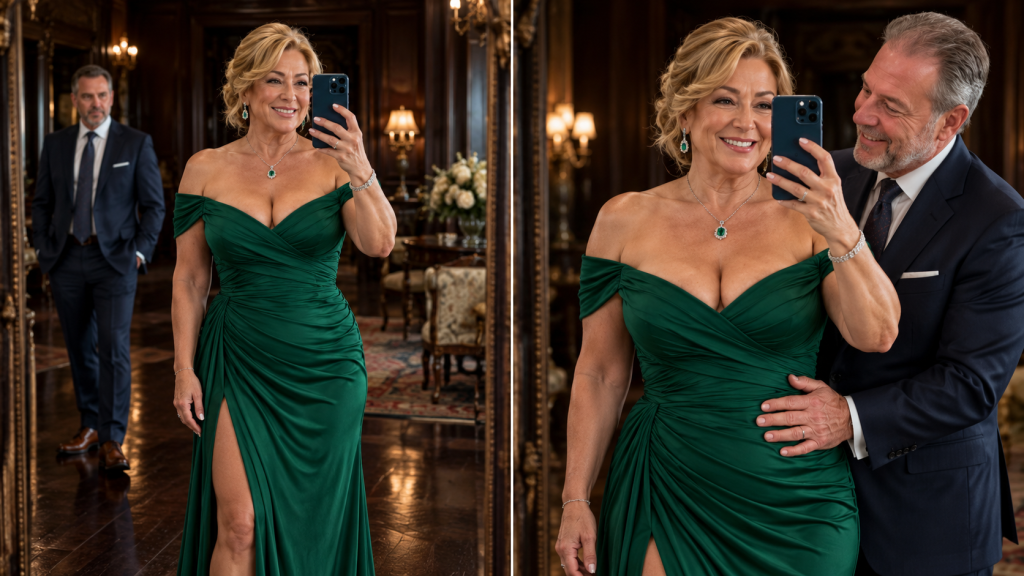
Caleb looked as if he wanted to disappear beneath the table. Other diners were pretending not to listen. Again, nobody was fooling anyone. Damon leaned forward. “You are twenty-four years old. You do not understand marriage.”
Jake finally turned toward him.
“I understand what humiliation sounds like.”
Damon’s face hardened.
“This is none of your business.”
“You made it my business.”
“How?”
Jake lifted his phone.
“Because you texted me.”
Damon went completely still.
I looked between them.
“Texted you what?”
Jake swallowed.
Then slid his phone across the table toward me.
A message thread.
Damon’s name at the top.
Three weeks earlier.
Dad: Your mother has been acting strange lately.
Jake: Strange how?
Dad: Dressing younger. Talking about changing her hair. Wanting to travel. Spending money on herself.
Jake: That sounds normal.
Then another message.
Dad: I need you boys to help me keep her grounded. She’s turning fifty and seems determined to embarrass herself.
My chest tightened.
I kept scrolling.
Jake: What exactly do you want us to do?
Dad: Just don’t encourage it. She listens to you.
Then:
Dad: If she buys something ridiculous for her birthday, tell her the truth. She needs to act her age.
My hand started shaking.
I looked at Damon.
“You asked our sons to help you shame me?”
“No.”
Jake laughed once.
A bitter sound.
“You literally wrote it.”
Damon ignored him.
“Elena, I was worried.”
“About what?”
“You’ve been different lately.”
“Different?”
“You’ve been…”
He looked around the restaurant.
Then lowered his voice.
“Restless.”
Something inside me shifted.
Not broke.
Shifted.
Maybe because I had spent too many years hearing that tone.
The one that made an ordinary feeling sound like a character flaw.
“What does restless mean?”
I asked.
Damon sighed.
“You know what I mean.”
“No.”
My voice was calm now.
“I don’t.”
He rubbed his forehead.
“You’ve been talking about changing things.”
“What things?”
“Going away with Rachel.”
“Taking that photography class.”
“Working more hours at the gallery.”
“Buying clothes you never used to wear.”
I stared at him.
“That is your evidence?”
“I didn’t say evidence.”
“You told our sons I needed to be kept grounded.”
A flush climbed up his neck.
“I was trying to protect you from making yourself look foolish.”
For one second, I felt the old reflex.
The one that would have whispered:
Maybe he has a point.
Maybe I am trying too hard.
Maybe fifty is too old for green silk.
Maybe wanting more from life after raising three children is selfish.
Then I remembered the pavement outside.
His disgusted expression.
The strangers watching.
The sentence:
I’m not walking in there with you looking like a desperate joke.
And something in me simply refused.
“No.”
I said.
Damon frowned.
“No what?”
“No, you were not protecting me.”
I pushed his phone back across the table.
“You were managing me.”
Rachel inhaled sharply.
Damon turned toward her.
“Stay out of this.”
She leaned back.
“Gladly.”
Then:
“As soon as you stop calling me to complain about my sister.”
My head snapped toward her.
“What?”
Rachel froze.
Damon looked at her with pure fury.
I stared.
“He called you?”
She looked guilty.
“Three times.”
“When?”
“The last two months.”
“What did he say?”
“Elena.”
Damon’s tone became warning.
I ignored him.
“Rachel.”
She swallowed.
“That you were having some kind of… midlife episode.”
My face went hot.
“What?”
“He said you were becoming obsessed with attention.”
Damon slapped one hand against the table.
“For God’s sake.”
Rachel’s husband murmured:
“Damon.”
“No.”
Damon looked around.
“You all want to make me the villain because I said one thing about a dress?”
Jake stood again.
“It wasn’t one thing.”
Damon stared at him.
“What now?”
Jake’s face changed.
Not angry.
Nervous.
That frightened me more.
“Tell Mum where you were last Thursday.”
The color left Damon’s face.
Everything in the restaurant seemed to recede.
I looked at Jake.
“What?”
He did not look away from his father.
“Dad.”
Damon’s voice became dangerously quiet.
“Do not do this.”
Jake’s eyes filled.
“You told me you were in Raleigh for work.”
My stomach tightened.
Damon pushed himself upright.
“I was.”
“No.”
Jake said.
“You weren’t.”
Silence.
Damon stared.
Jake continued.
“I was at the Harborview Hotel.”
My heart began pounding.
“Why?”
I whispered.
Jake glanced at me.
“My company had a conference.”
Then back at Damon.
“I saw him.”
Damon closed his eyes.
Only for a second.
That was enough.
I knew before Jake said anything else.
My body knew.
That strange animal instinct that understands betrayal before language catches up.
I whispered:
“He wasn’t alone.”
Jake shook his head.
“No.”
Damon stood.
“Elena, we are not discussing this here.”
The world tilted.
“Who was she?”
He looked toward the exit.
“Come outside.”
“No.”
“Elena.”
“No.”
I gripped the edge of the table.
“You humiliated me outside because of a dress.”
“You can answer me inside.”
Damon’s face tightened.
“It isn’t what you think.”
Rachel muttered:
“Oh, that sentence never improves anything.”
Damon ignored her.
I looked at Jake.
“Who?”
“I don’t know her.”
“Did you see them kiss?”
Jake’s face crumpled.
And that was my answer.
The room disappeared.
Twenty-five years of marriage.
Three sons.
Christmases.
Mortgages.
Flu.
Football games.
College applications.
Sunday grocery lists.
The first apartment where we slept on a mattress because we could not afford a bedframe.
Damon holding my hand while Jake was born.
Damon crying when Noah broke his arm.
Damon teaching Caleb to shave.
All of it collided with a hotel lobby.
A woman I did not know.
My husband’s mouth on hers.
“Elena.”
Damon stepped toward me.
I lifted one hand.
“Don’t touch me.”
He stopped.
His face changed.
For the first time that night, he looked frightened.
“It wasn’t…”
He swallowed.
“It wasn’t supposed to happen.”
Jake laughed bitterly.
“Which time?”
Damon turned.
“What?”
I looked at Jake.
“What did you just say?”
He looked sick.
“I’m sorry, Mum.”
“How many times?”
“I don’t know.”
“Jake.”
“I only saw them once.”
“Then why did you say which time?”
“Because when Dad saw me…”
He paused.
“…he asked me not to tell you until he could end it properly.”
My heart cracked.
“When did he see you?”
“That night.”
“Did he speak to you?”
“Yes.”
“What did he say?”
Jake’s eyes filled.
“He said it was complicated.”
Of course.
“He said they’d only been seeing each other a little while.”
Of course.
“He said he loved you.”
Of course.
“And he asked me not to ruin your birthday.”
That one almost made me laugh.
I turned slowly toward Damon.
“You asked our son to keep your affair secret so my birthday wouldn’t be ruined?”
“Elena.”
“You let him sit with that for a week?”
Damon’s voice broke.
“I panicked.”
“No.”
Jake said.
“You planned.”
Damon turned.
“Enough.”
Jake slammed his palm on the table.
“You keep saying that.”
His voice cracked.
“But you had me lying to Mum every time she asked if you’d called.”
I stared.
“What?”
Jake looked at me.
“The night after I saw him, you asked me whether Dad seemed stressed.”
I remembered.
We had been on the phone.
I told Jake his father had been distant.
Jake said work was probably busy.
I stared at my son.
“You knew?”
“I’m sorry.”
He started crying.
A grown man.
My firstborn.
Crying at my birthday dinner because his father had handed him an adult secret and told him to protect me with it.
My anger changed direction immediately.
“No.”
I stood and wrapped my arms around him.
“Do not apologize to me.”
“But I lied.”
“You were cornered.”
“I should’ve told you.”
“You are my son.”
I held his face.
“You are not responsible for managing my marriage.”
Behind us, Damon whispered:
“I never meant to put him in the middle.”
Jake pulled away and turned.
“Then why did you?”
Damon opened his mouth.
Nothing came.
Caleb spoke for the first time.
“You put all of us in the middle.”
Everyone looked at him.
He was eighteen.
The youngest.
Usually quiet when conflict entered a room.
His hands were shaking.
“Last month you asked me whether Mum had been talking about leaving you.”
I stared at Damon.
“What?”
Caleb looked at me.
“He said you’d been acting unhappy.”
Damon closed his eyes.
“And he told me not to mention it because it might upset you.”
Noah laughed bitterly.
“He told me she was ‘going through something.’”
My head turned.
“You too?”
Noah nodded.
“He asked if I thought you seemed unstable.”
My stomach dropped.
Damon snapped:
“I did not say unstable.”
Noah pulled out his phone.
“You used the word ‘erratic.’”
Silence.
A chill moved through me.
Not because of the affair.
Not even because of the cruelty.
Because a pattern was becoming visible.
Damon had not merely been insulting me.
He had been building a story.
One son at a time.
My sister.
Relatives.
I was changing.
I was restless.
I was desperate.
I was embarrassing myself.
I was erratic.
Why?
I sat slowly.
“Damon.”
He looked at me.
“Why have you been telling people there’s something wrong with me?”
“There isn’t.”
“Then why?”
He looked away.
Rachel whispered:
“Elena.”
I knew that tone.
Something else.
“What?”
She hesitated.
“I think I know.”
Damon’s face hardened.
“Rachel.”
She ignored him.
“Two weeks ago he asked me whether you’d said anything about selling the house.”
My heartbeat changed.
“What?”
“He said you’d mentioned maybe wanting something smaller once the boys were fully out.”
I stared at Damon.
I had never said that.
Not once.
Our house was nearly paid off.
I loved that house.
It held twenty-five years of us.
“Why would he ask you that?”
Rachel looked at him.
“Tell her.”
Damon’s jaw tightened.
“Tell me what?”
No answer.
Jake stared at his father.
“Dad.”
Damon grabbed his coat from the back of the chair.
“I’m leaving.”
I stood.
“No.”
He froze.
The word surprised both of us.
I stepped closer.
“You gave me an ultimatum outside.”
“Now I’m giving you one.”
“Elena, not here.”
“Here.”
My hands were trembling, but my voice wasn’t.
“You answer one question before you walk away.”
“What?”
“Were you planning to leave me?”
He stared.
Nothing.
No denial.
No outrage.
Just silence.
The truth can arrive without words.
I nodded slowly.
“How long?”
“Elena.”
“How long?”
He looked around the table.
Then sat.
Defeated.
“Three months.”
My chest hollowed.
“You’ve been planning to leave for three months.”
“Thinking about it.”
“With her?”
He looked down.
“Yes.”
Jake swore under his breath.
Rachel gripped my hand.
I pulled it away.
Not because I did not want comfort.
Because I needed to feel the table beneath me.
Something solid.
“Who is she?”
“Marissa Cole.”
“From work?”
“Yes.”
“How long?”
Damon whispered:
“Eight months.”
I laughed.
I could not help it.
Eight months.
My emerald dress had existed for four days.
My photography class for three weeks.
My extra gallery shifts for two months.
He had been cheating before any of the things he claimed made me “restless.”
The timeline destroyed his story.
“You said I changed.”
I whispered.
Damon looked up.
“What?”
“You told everyone I changed.”
“But you started seeing her eight months ago.”
“Elena—”
“I bought the dress this week.”
“I signed up for photography last month.”
“I started more hours at the gallery in July.”
“You were already sleeping with someone else.”
He flinched.
“I did not say sleeping.”
I stared.
He closed his eyes.
Bad correction.
Very bad.
“Were you?”
Silence.
“Yes.”
Rachel swore.
Noah stood and walked away from the table.
Caleb began crying.
Jake stared at his father like he did not recognize him.
I felt strangely calm.
“Why did my dress upset you?”
Damon looked confused.
“What?”
“Answer me.”
He rubbed both hands over his face.
“I don’t know.”
“That’s not true.”
He whispered:
“You looked…”
He stopped.
“What?”
“Happy.”
My heart twisted.
He looked ashamed.
“Confident.”
“And that bothered you.”
He did not answer.
“Why?”
Damon’s voice broke.
“Because it made everything harder.”
The restaurant around us disappeared again.
I whispered:
“Everything meaning leaving me.”
“Yes.”
There it was.
The ugliest truth was not that he thought I looked ridiculous.
He didn’t.
He thought I looked like a woman who might survive him.
That was worse.
“You wanted me small.”
I said.
Damon shook his head quickly.
“No.”
“Yes.”
“I didn’t think of it that way.”
“But that is what you did.”
“Elena—”
“You told our children I was embarrassing.”
“You told Rachel I was desperate for attention.”
“You called me erratic.”
“You stood outside and made me cry.”
I felt tears sliding down my cheeks now.
“You needed me to believe nobody else would look at me with kindness because you were already planning to leave.”
His face crumpled.
“No.”
“Then tell me I’m wrong.”
He could not.
That silence ended something.
Not the marriage.
Not yet.
But my confusion.
I picked up my handbag.
Jake stood.
“Mum.”
“I’m going home.”
Damon stood too.
“I’ll drive you.”
“No.”
“Elena.”
“No.”
This time the word felt different.
Not defensive.
Mine.
Rachel reached for her keys.
“I’ll take you.”
I nodded.
Damon stepped into my path.
“Please.”
I looked at him.
He was crying.
For twenty-five years, Damon’s tears could undo me.
Not because he used them manipulatively.
Because I loved him.
That night, they did not move me.
“Move.”
He did.
As I walked out of the restaurant, I heard chairs scraping behind me.
All three sons followed.
Outside, the night air hit my face.
The same pavement.
The same patio.
The same strangers.
One woman looked at my dress and smiled.
Not pity.
Just a smile.
I almost laughed.
Forty minutes earlier, I had stood there believing the lowest moment of my birthday was my husband calling me ridiculous.
I had been wrong.
The lowest moment was realizing he never believed it.
He had needed me to.
That distinction changed everything.
We went to Rachel’s house.
All four of us.
Me.
Jake.
Noah.
Caleb.
Rachel gave me pajamas.
I changed out of the green dress carefully.
Not because I hated it.
Because I did not want Damon attached to it forever.
I hung it over the bedroom door.
Jake stood in the hallway.
“You okay?”
“No.”
“Do you want me to stay?”
“Yes.”
He came in.
Sat on the floor.
I sat on the bed.
For a while, neither of us spoke.
Then I said:
“You should never have been put in that position.”
Jake looked down.
“I should have told you at the hotel.”
“Maybe.”
He looked up.
I continued.
“But that failure belongs to your father before it belongs to you.”
His eyes filled.
“I thought if I gave him a few days, he’d fix it.”
“I know.”
“He said he was ending it.”
“I know.”
“And then tonight…”
His voice cracked.
“He was so cruel to you.”
I reached down and took his hand.
“That is why you stood up.”
“Yes.”
“I’m glad you did.”
“I’m sorry your birthday was ruined.”
I looked at the green dress.
Then back at him.
“It wasn’t.”
He stared.
“Mum.”
“I mean it.”
“How?”
“Because I know.”
The words surprised me.
But they were true.
“I know now.”
There are birthdays you celebrate with cake.
Others with truth.
Mine had both.
The next morning, Damon sent twenty-seven messages.
I did not read them.
Not at first.
I called an attorney.
Her name was Priya Shah.
She had handled Rachel’s business contracts.
I told her I was not sure I wanted a divorce.
She said:
“That is fine.”
No pressure.
No dramatic advice.
Just:
“You do not need to decide the marriage today.”
“We can protect information first.”
That sentence helped.
Information.
Not revenge.
I gathered bank statements.
Tax returns.
Retirement accounts.
Mortgage documents.
Credit cards.
For twenty-five years, Damon and I had handled money jointly.
Mostly.
Or so I believed.
By noon, I learned there was an account I had never seen.
Not enormous.
But secret.
$31,800.
Opened four months earlier.
I stared at the number.
“His?”
Priya asked.
“Apparently.”
“Source?”
We traced it.
Transfers from his bonuses.
Some legitimate separate compensation.
Some money moved from our joint savings.
$12,000.
That hurt.
Not because we would become poor.
We would not.
Because while Damon complained about my $219 birthday dress, he had quietly moved twelve thousand dollars where I could not see it.
Priya asked:
“Any unusual card charges?”
I almost did not want to know.
But we looked.
Hotel.
Restaurants.
Jewelry.
Weekend in Asheville on a date Damon told me he was at a regional sales conference.
A spa in Charlotte.
A boutique hotel in Savannah.
Eight months.
Not one mistake.
A second life.
Not luxurious.
Not cinematic.
Just enough.
A hundred lies.
Two hundred.
Small lies are what make long affairs possible.
Not one dramatic deception.
Thousands of ordinary sentences.
Traffic was terrible.
The meeting ran late.
My battery died.
I already ate.
Don’t wait up.
I stared at our statements.
“I feel stupid.”
Priya looked at me.
“No.”
I glanced up.
She shook her head.
“You were married.”
“Trusting the person you married is not stupidity.”
I cried.
Because I needed someone to say it.
By evening, Damon was outside Rachel’s house.
He did not knock.
Good.
He texted:
Please give me ten minutes.
I read it.
Then another.
Not to defend myself.
Another.
I need to apologize to the boys too.
I did not answer.
Jake did.
Not from my phone.
His own.
Go home, Dad.
Damon replied:
I need to talk to your mother.
Jake:
She knows. That doesn’t mean you get access whenever you want.
I looked at him.
“You don’t have to fight my battles.”
“I know.”
“Do you?”
He exhaled.
“Trying.”
Good.
That first week, Damon behaved like a drowning man.
Flowers.
Letters.
Calls.
Messages.
Voicemails.
He told me Marissa was over.
He told me he had confessed everything to her.
He told me he had booked therapy.
He told me he would give me every password.
He told me the account was mine if I wanted it.
He told me he would quit his job.
He told me he would sell the car.
Anything.
Every promise sounded enormous.
I trusted none of them.
Not because they were false.
Because panic promises are easy.
Character takes longer.
On the fourth day, I finally read his letter.
Not because I forgave him.
Because I needed to know what story he was telling now.
Elena,
There is no defense for what I said outside the restaurant.
Good start.
There is even less defense for the fact that I did not believe it.
I stopped.
He understood that part.
I continued.
You looked beautiful.
That was the problem.
My throat tightened.
I have spent months telling myself you were distant, dissatisfied, changing, and hard to live with because those explanations made what I was doing easier to tolerate.
When I saw you in that dress, happy and confident, the story I had built became harder to believe.
I closed my eyes.
There it was.
Not just cruelty.
Narrative.
He needed a version of me that made his betrayal feel inevitable.
I wanted you to feel foolish because if you felt foolish, I did not have to feel guilty.
My hands started shaking.
That is ugly to write.
It is uglier that it is true.
He continued.
Marissa knew I was married.
My stomach tightened.
But I told her we were emotionally finished.
We were not.
I told her you no longer wanted affection.
That was not true.
I told her we were waiting until Caleb finished school to separate.
I stared.
Caleb.
He had used our youngest child as a fictional deadline.
You did not know any of this because I had never had that conversation with you.
I kept reading.
I wanted two incompatible things.
I wanted the life we built, and I wanted the feeling of being admired by someone who did not know my failures.
I handled that conflict by turning you into the reason I was unhappy.
Tears fell onto the paper.
Not because I wanted him back.
Because the letter was honest in a way our marriage had not been for months.
Maybe years.
I am sorry I asked our sons to manage you.
I am sorry I asked Jake to carry my secret.
I am sorry I made Noah question your stability.
I am sorry I made Caleb afraid our marriage was your fault.
That one broke me.
Caleb had barely spoken since the restaurant.
He kept asking whether I needed anything.
Tea.
Food.
A charger.
A blanket.
Like usefulness could stop a family from breaking.
I recognized that instinct.
I had taught it to him.
Not intentionally.
But children learn what mothers model.
Keep everyone comfortable.
Stay useful.
Do not make trouble.
I folded the letter.
Rachel sat beside me.
“Do you believe him?”
“Yes.”
She looked surprised.
“Does that mean you’re going back?”
“No.”
Believing an apology is not the same as returning to the person who made it necessary.
That became one of the hardest lessons of my fiftieth year.
Two weeks after my birthday, the boys took me to Charleston.
The trip they had planned.
I almost canceled.
Then Caleb said:
“If you cancel because of Dad, he still gets to decide what happens after what he did.”
That boy.
I packed the green dress.
Rachel came too.
The first night, we went to dinner near the water.
I stood in the hotel room holding the dress.
Could not put it on.
My body remembered the pavement.
The shame.
Damon’s expression.
Rachel sat on the bed.
“You don’t have to wear it.”
“I know.”
“That means you can.”
I looked at her.
She smiled.
“Choice, Elena.”
There it was.
I put it on.
Slowly.
Zipped it.
Looked in the mirror.
Same dress.
Different woman.
No.
That was too dramatic.
Same woman.
That was the point.
The woman outside the restaurant had already been me.
The humiliation had not made me weak.
The dress had not made me brave.
I had simply been given information.
I walked downstairs.
Jake looked up first.
He smiled.
Not exaggerated.
Not the fake cheerfulness people use around someone recently betrayed.
Just:
“You look nice, Mum.”
“Thank you.”
Caleb said:
“Dad was an idiot.”
Noah added:
“Historically, yes.”
I laughed so hard I nearly cried.
We ate seafood.
Took terrible photographs.
Walked by the water.
At one point, Jake handed his phone to a stranger and asked her to take a picture of the four of us.
I stood in the middle.
Green dress.
Three sons.
No Damon.
That photograph became important later.
Not because it proved I looked beautiful.
Because when I saw it, I did not see an abandoned wife.
I saw a woman in the middle of her own life.
That distinction saved me more than compliments ever could.
When we returned home, I moved into a short-term rental.
Not Rachel’s.
Not the family house.
Mine.
A small furnished apartment with an ugly beige sofa and a balcony that overlooked a parking garage.
I loved it.
The first night, I ordered Thai food.
Sat cross-legged on the floor.
Watched a terrible movie.
No one asked what was for dinner.
No one needed me to find a charger.
No one changed the channel.
No one sighed when I laughed too loudly.
Then I cried for two hours.
Freedom and grief can exist in the same room.
People talk about leaving as if relief erases love.
It does not.
I loved Damon.
That made everything harder.
There had been good years.
So many.
He was not cruel for twenty-five years.
If he had been, leaving might have been simpler.
He had been funny.
Generous.
A good father in many ways.
He had sat beside my mother during chemotherapy.
He built the boys’ bunk beds himself.
He brought me coffee every Sunday for nearly two decades.
He knew I hated driving in snow and always took my car when storms came.
He had loved me.
Then he betrayed me.
Both truths existed.
That is what made the decision so painful.
I started therapy.
My therapist was named Dr. Elaine Mercer.
On our third session, she asked:
“When did you first start making yourself smaller for Damon?”
I almost laughed.
“I didn’t.”
She waited.
Annoying woman.
Then I remembered something.
Fifteen years earlier.
I had been offered a management position at the museum gift shop where I worked part-time.
More hours.
Better pay.
Some travel.
I turned it down because Damon’s work schedule was unpredictable and the boys were young.
He did not force me.
Important distinction.
But when I mentioned maybe accepting, he said:
“Do we really need both of us chasing careers?”
Both.
His career was not chasing.
Mine would have been.
I turned it down.
Another memory.
Seven years earlier, Rachel invited me on a women’s trip to New York.
Damon joked:
“What are you going to do there, start clubbing?”
I laughed.
Did not go.
Another.
When I started wearing brighter lipstick after forty-five, he said:
“Trying to get someone’s attention?”
Joking.
Always joking.
I stopped wearing it.
Small things.
None enough alone.
Together, a map.
Dr. Mercer asked:
“Was Damon controlling?”
I hated the word.
“No.”
Then:
“Not exactly.”
She waited.
I continued.
“He liked certainty.”
“What kind?”
“He liked knowing who we were.”
“His job.”
“My job.”
“The boys.”
“The house.”
“Our routines.”
“And when you changed?”
“I think it scared him.”
“What did he do with that fear?”
I looked down.
“He made the change sound ridiculous.”
There.
That was more accurate than any label.
Damon was not a cartoon tyrant.
He was a man who had grown comfortable with a wife whose sacrifices made his world predictable.
Then when I began changing in ordinary ways, he turned his discomfort into criticism.
The affair magnified it.
Marissa did not cause the problem.
Neither did my dress.
They revealed it.
Damon and I began couples counseling six weeks after the birthday.
Not because I promised reconciliation.
Because after twenty-five years, I wanted to know whether there was anything left worth understanding.
The first session was brutal.
Damon sat across from me.
Thinner.
Gray around the eyes.
He had moved into an apartment.
Marissa was no longer in his life.
Not because I demanded it.
Because she ended things after discovering how much he had lied.
That surprised me.
Damon had told her I knew we were separating.
I did not.
He had told her the boys knew.
They did not.
He had told her we slept in separate bedrooms.
We did not.
When Marissa realized the truth, she sent one message:
Do not make your wife the villain in the story you tell yourself about what we did.
Then ended it.
I never spoke to her.
I did not need to.
In counseling, Damon said:
“I want to come home.”
I looked at him.
“I know.”
“Do you?”
“Yes.”
“Then why won’t you tell me if there’s a chance?”
I thought carefully.
“Because you spent eight months building a life around what you wanted before asking me what I wanted.”
“I am not going to repeat that pattern by giving you an answer before I have one.”
He stared.
Then nodded.
That was the first time I saw genuine change.
Not flowers.
Not tears.
Not passwords.
He accepted uncertainty.
Slowly.
Painfully.
We spent four months in counseling.
I learned things I did not expect.
Damon had turned fifty-three that year.
His company was restructuring.
A younger colleague had been promoted over him.
His father had recently developed heart problems.
He was terrified of becoming irrelevant.
None of that excused anything.
But it explained the soil.
Marissa admired him.
Asked for advice.
Told him he was experienced.
He liked feeling important.
Then he came home to a wife who was also becoming more independent.
More interested in life outside him.
Instead of seeing that as growth, he experienced it as abandonment.
He never said that aloud until therapy.
“I thought you were leaving me behind.”
I stared.
“So you had an affair.”
“I know.”
“You were afraid I might leave, so you left first.”
His eyes filled.
“Yes.”
Then he added:
“And I wanted you to be the one who looked like she was falling apart.”
That was the hardest truth he ever admitted.
I nodded.
“Why?”
“Because then I could be the stable one.”
“And the boys would understand?”
His face crumpled.
“Yes.”
The room went still.
He had not only been preparing to leave.
He had been preparing his defense.
Not legally.
Emotionally.
He wanted the children to see him as the reasonable parent.
The long-suffering husband.
The man who finally gave up after Elena became “difficult.”
My dress interfered with the script.
A confident woman in emerald green did not look like the unstable wife he had described.
So he tried to humiliate me back into the role.
Dr. Mercer asked:
“What do you want to say to Elena now?”
Damon looked at me.
“I tried to make your confidence look like desperation because I was desperate.”
My eyes filled.
That sentence stayed with me.
Not because it healed us.
Because it named what happened.
After six months, I decided to file for divorce.
People expected the decision to happen at the restaurant.
It didn’t.
That night broke the illusion.
The decision came much later.
Quietly.
On a Tuesday morning.
I woke in my little apartment.
Made coffee.
Opened the balcony door.
Heard traffic.
And realized I had spent three days without wondering whether Damon would approve of something.
Three days.
It felt enormous.
I called Priya.
“I’m ready.”
She did not say congratulations.
Good lawyers know divorce is not a graduation.
She said:
“Okay.”
That was enough.
Damon cried when I told him.
“So that’s it?”
“No.”
I said.
“It’s not ‘that’s it.’”
“It is twenty-five years.”
“It is three children.”
“It is a whole life.”
“It matters.”
“Then why end it?”
I looked at him.
“Because something can matter and still be over.”
He covered his face.
“I can change.”
“I believe you.”
He looked up.
That surprised him.
“I do.”
I continued.
“But I don’t want to make my future depend on whether you do.”
He cried.
So did I.
We signed papers eleven months after my fiftieth birthday.
The house was sold.
I could have fought to keep it.
I didn’t want it.
Too many rooms shaped around the woman I had been.
Damon and I divided retirement accounts.
The hidden $12,000 from joint savings was credited back in the settlement.
He kept his secret account after adjustments.
I kept my own savings and my share of the house equity.
No courtroom battle.
No dramatic judge.
No one “won.”
That mattered.
The boys struggled differently.
Jake stopped speaking to Damon for five months.
I told him:
“Do not punish your father for me.”
He stared.
“I’m not.”
“Good.”
“I’m punishing him for putting me in the position of lying to you.”
Fair.
I said:
“Then that belongs to you.”
Eventually, Jake met Damon for coffee.
Two hours.
He came home exhausted.
“What happened?”
I asked.
“He apologized.”
“Okay.”
“I yelled.”
“Okay.”
“He cried.”
“Okay.”
Jake sighed.
“You’re annoyingly neutral.”
“I’m trying.”
Noah remained angry longer.
He had taken the “erratic” message personally.
“I started watching you.”
he told me.
“What?”
“After Dad asked if you seemed unstable.”
My stomach tightened.
“I started checking.”
“If you forgot something.”
“If you repeated yourself.”
“If you seemed weird.”
My eyes filled.
“Noah.”
“I’m sorry.”
“No.”
I held his face.
“Your father put that thought there.”
“He apologized.”
“It still happened.”
I hugged him.
That was the damage Damon had not predicted.
Words change how people watch each other.
Even after the lie is removed.
Caleb blamed himself for almost nothing and everything.
Typical youngest child.
He said:
“If I’d told you Dad asked whether you were leaving, maybe you would’ve known.”
I said:
“You were eighteen.”
“So?”
“So adults do not get to outsource moral responsibility to teenagers.”
He looked at me.
“That sounds rehearsed.”
“Therapy.”
“Expensive?”
“Very.”
He smiled.
Damon rebuilt his relationships with them slowly.
Not through gifts.
I asked him once not to do that.
He listened.
Instead, he showed up.
Noah moved apartments.
Damon helped carry boxes.
Jake ran a half marathon.
Damon stood at mile eleven holding a ridiculous sign.
Caleb’s car broke down.
Damon helped arrange a tow but made Caleb handle the repair shop himself.
Small things.
Ordinary fatherhood.
Without demanding forgiveness every time.
That mattered.
I rebuilt too.
The first thing I did was increase my hours at the gallery.
Not because I needed the money.
Because I liked being there.
Then I enrolled in the photography class.
I was terrible.
Truly terrible.
My first assignment was supposed to capture “light and emotional texture.”
I submitted a blurry photo of a pigeon.
The instructor stared at it.
Then said:
“Interesting.”
I knew what that meant.
I laughed for ten minutes.
I improved.
Slowly.
I began photographing ordinary things.
Hands.
Windows.
Empty chairs.
Old couples walking.
Teenagers waiting at bus stops.
Women laughing when they thought no one was watching.
At fifty-two, one of my photographs was included in a local exhibition.
Nothing prestigious.
Community gallery.
Twenty artists.
My photograph showed an older woman in a red coat standing alone at a train station.
Her face was turned away.
The title was:
Still Going Somewhere.
Jake cried when he saw it.
“Mum.”
“What?”
“That’s so obvious.”
I laughed.
“I know.”
Damon came to the exhibition.
He asked first.
By text.
Would it be okay if I came?
Choice.
That word again.
I said yes.
He stood in front of the photograph for a long time.
Then found me.
“It’s beautiful.”
“Thank you.”
He hesitated.
“You look happy.”
I smiled.
“I am.”
Pain crossed his face.
Not because he wanted me unhappy.
Because there was a time he had.
He nodded.
“Good.”
Then left.
No scene.
That was growth too.
At fifty-three, I traveled to Portugal with Rachel.
Damon once joked I would hate traveling without him.
I did not.
I got lost in Lisbon.
Ordered the wrong food twice.
Missed a train.
Bought expensive shoes I did not need.
Rachel snored like construction equipment.
It was wonderful.
At fifty-four, I cut my hair shorter.
No one’s permission.
At fifty-five, I wore the emerald dress again.
Not to prove anything.
To Caleb’s university graduation.
He saw me and grinned.
“That dress.”
I laughed.
“This old thing?”
He hugged me.
“You kept it.”
“Of course.”
Damon attended too.
He saw the dress.
Our eyes met.
For one moment, the restaurant returned.
Then he walked over.
“You look beautiful.”
I looked at him.
“Thank you.”
That was all.
No victory.
No revenge.
Just a compliment arriving five years late with no power over the woman wearing it.
At dinner afterward, Caleb gave a toast.
“To Mum.”
I groaned.
“No.”
“Yes.”
He smiled.
“For teaching me that loving somebody does not mean agreeing with the version of you they prefer.”
My throat tightened.
Damon looked down.
Caleb continued.
“And to Dad.”
Everyone froze.
Damon looked up.
“For learning that too.”
Silence.
Then Damon nodded.
That was enough.
Years passed.
Jake married first.
Then Noah.
Caleb swore he never would.
Naturally, he married at thirty-one.
At Jake’s wedding, Damon and I were seated at different tables.
By then, neither of us cared.
During the mother-son dance, Jake whispered:
“Do you ever wish you stayed?”
I stared at him.
“What a romantic wedding question.”
He laughed.
“Sorry.”
I thought.
“No.”
“Never?”
“I miss things.”
“That is different.”
“What things?”
“Your father making pancakes.”
“His terrible singing.”
“Christmas mornings when all five of us were home.”
“The feeling of knowing who would be beside me at seventy.”
My voice softened.
“I miss the future I thought we had.”
Jake’s eyes filled.
“But I don’t wish I had stayed once I knew I needed to leave.”
He nodded.
“That makes sense.”
“Good.”
“Because I made it up just now.”
He laughed during the dance.
The photographer captured it.
Another favorite picture.
At Noah’s wedding, Damon brought someone.
Her name was Claire.
He told me beforehand.
Not to ask permission.
Out of courtesy.
I appreciated that.
Claire was sixty.
A librarian.
Warm.
Funny.
Nothing like Marissa.
Nothing like me.
Good.
Damon introduced us.
“Elena, this is Claire.”
Claire smiled.
“I’ve heard a lot about you.”
I raised one eyebrow.
Damon went pale.
Claire laughed.
“Only things your sons tell me.”
I laughed too.
Damon exhaled.
We became friendly in the way people can when nobody is competing.
Years earlier, that would have seemed impossible.
But life becomes less interested in clean categories as you age.
Good person.
Bad person.
Winner.
Loser.
Damon did something cruel.
Then changed.
I left.
Then healed.
Neither required the other to remain permanently frozen.
One evening, years after the divorce, Damon called.
Not text.
Called.
I almost did not answer.
Then did.
“Everything okay?”
“Yes.”
His voice sounded strange.
“I found something.”
“What?”
“A box in storage.”
My stomach tightened.
“What kind of box?”
“Your things.”
“What things?”
“From college.”
I had forgotten.
Sketchbooks.
Photographs.
Old journals.
Before marriage, I had studied visual arts.
Not seriously enough to build a career.
Enough to love it.
Damon said:
“There’s a letter.”
“What letter?”
“From Professor Alden.”
I remembered the name.
A professor who encouraged me to apply for a summer program in Florence.
I never went.
I told myself money was the reason.
Then life happened.
Marriage.
Children.
Work.
Damon said:
“You were offered a scholarship.”
My breath caught.
“I know.”
“You never told me.”
“We weren’t married yet.”
“Why didn’t you go?”
I laughed softly.
“I was twenty-three.”
“I was scared.”
“Of what?”
“Leaving.”
He went quiet.
Then:
“I always thought I was the reason you didn’t.”
“You weren’t.”
“Are you sure?”
“Yes.”
That mattered.
Not every sacrifice was his fault.
Healing also required me to stop retroactively turning him into the explanation for every road I did not take.
I had choices too.
Some I made.
Some I avoided.
Some I blamed on circumstances because that was easier.
I said:
“I chose not to go.”
Damon whispered:
“I’m sorry anyway.”
“For what?”
“For the times later when I made you afraid to want things.”
My eyes filled.
That was a better apology than trying to claim responsibility for my entire life.
“Thank you.”
He mailed the box.
Inside were photographs I had taken at twenty-two.
Bad.
Then good.
Better than the pigeon, at least.
I laughed.
One picture showed me in an emerald-green scarf.
I had forgotten it.
Rachel stared when she saw it.
“You’ve always liked that color.”
Apparently.
The dress had not been reinvention.
Maybe it was return.
At sixty, I threw myself a birthday party.
No surprise.
I planned it.
A small restaurant.
Friends.
Children.
Grandchildren beginning to appear.
Damon came with Claire.
I wore dark blue.
People expected green.
I enjoyed disappointing them.
During dinner, Jake stood.
I pointed at him.
“Sit down.”
“No.”
Everyone laughed.
He lifted his glass.
“Ten years ago, Dad stood outside a restaurant and told Mum she was embarrassing herself.”
Damon groaned.
“Oh God.”
Jake smiled.
“Relax.”
Then he looked at me.
“That night I thought standing up for Mum meant protecting her.”
His voice softened.
“I was wrong.”
“She didn’t need us to rescue her.”
“She needed the truth.”
My eyes filled.
Jake continued.
“And then she rescued herself.”
I shook my head.
“No.”
He grinned.
“Fine.”
“She did the paperwork herself.”
Everyone laughed.
Damon stood next.
I stared.
“Really?”
“One sentence.”
He looked at me.
“I spent years regretting what I said about that dress.”
The room became quiet.
“Then I realized the worst part was not the insult.”
“It was that I wanted Elena to believe it.”
My throat tightened.
He continued.
“She taught me something I wish I had understood sooner.”
“When you love someone, their confidence is not a threat to your place in their life.”
“You do not need them smaller to keep them close.”
Silence.
Then he looked at me.
“Happy birthday, Elena.”
I nodded.
“Thank you.”
He sat.
That was the closest our story ever came to a perfect ending.
Not reconciliation.
Recognition.
At sixty-five, I stopped working at the gallery.
Not retired.
Shifted.
I taught beginner photography classes twice a month.
Mostly older adults.
People who bought cameras after raising children.
After retirement.
After divorce.
After widowhood.
After cancer.
After careers.
People who believed they had missed the age for beginning.
On the first day, I always said:
“You are allowed to be bad at something new.”
That became my favorite sentence.
A woman once raised her hand.
“I’m seventy-two.”
“Okay.”
“Isn’t that late?”
“For what?”
“To become good.”
I smiled.
“Probably.”
She looked horrified.
I continued.
“So what?”
The room laughed.
“We are not auditioning for immortality.”
“We are learning to notice light.”
She came back every week.
At sixty-eight, I published a small book of photographs.
Nothing famous.
Local press.
Title:
Still Going Somewhere.
On the first page, I wrote:
For everyone who confused getting older with becoming invisible.
I did not mention Damon.
He bought twelve copies.
Naturally.
I told him that was excessive.
He said:
“You once bought twelve identical lunchboxes over twelve school years.”
“Those were necessary.”
“So are these.”
We were friends by then.
Not best friends.
Not pretend family.
A different relationship.
Boundaries made it possible.
He never came to my home uninvited.
I never discussed his relationship with Claire unless he raised it.
We did holidays around the boys without making them negotiate our emotions.
It took years.
Worth it.
When Damon turned seventy, he invited me to a family dinner.
I went.
After cake, he handed me a small box.
“What’s this?”
“Not a gift.”
“That is literally a box.”
“Open it.”
Inside was a folded napkin.
I stared.
“What?”
He laughed.
“Look.”
I unfolded it.
A faded restaurant logo.
The same restaurant from my fiftieth birthday.
My stomach tightened.
“What is this?”
“I found it in an old coat.”
He had apparently stuffed the napkin into his pocket that night.
On it, written in pen, were five words.
You looked beautiful. I panicked.
My eyes filled.
“When did you write this?”
“That night.”
“When?”
“After you left.”
“Why didn’t you give it to me?”
“Because it wasn’t enough.”
I stared at the napkin.
He continued.
“I thought about using it in one of my apology letters.”
“But it made me look more self-aware than I was.”
That surprised me.
He smiled sadly.
“I knew I had hurt you.”
“I did not yet understand why.”
I folded it.
“Do you want it?”
I thought.
Then handed it back.
“No.”
He looked surprised.
“You keep it.”
“Why?”
“Because I don’t need evidence anymore.”
His eyes filled.
He nodded.
That night, I went home and opened my closet.
The emerald dress was still there.
Too tight now.
Time had changed my body.
Good.
Bodies are supposed to change.
I touched the fabric.
For years, people had asked why I kept it.
Symbol.
Memory.
Defiance.
The truth was simpler.
It was a beautiful dress.
I liked it.
That was enough.
At seventy-two, my granddaughter Lily found it.
She was twenty.
She held it up.
“Grandma.”
“What?”
“This is amazing.”
“Vintage.”
She stared.
“Rude.”
“Accurate.”
She tried it on.
It fit.
Of course it did.
She spun in front of the mirror.
I saw myself at fifty.
Then not.
She was herself.
“Can I wear it to Mum’s anniversary party?”
I smiled.
“Yes.”
She paused.
“Really?”
“It is a dress.”
“You tell stories about it like it changed your life.”
I laughed.
“No.”
“What?”
“The dress did nothing.”
She frowned.
“Then why is everyone obsessed with it?”
“Because families like objects.”
“Objects make stories easier.”
“The truth is messier.”
“What truth?”
I sat on the bed.
“Your grandfather insulted me because he was frightened.”
“I believed him for about five minutes.”
“Then your father told the truth.”
“And I spent several years figuring out who I was when nobody else got to decide.”
Lily looked at the dress.
“So it’s not magic.”
“No.”
“Good.”
“Why?”
She smiled.
“Then if I spill wine on it, you can’t kill me.”
I laughed until I cried.
She wore it.
Damon saw her at the anniversary party.
He almost choked.
“Oh no.”
Lily grinned.
“You recognize it?”
“Unfortunately.”
She spun once.
“What do you think?”
Damon looked at her.
Then at me.
He smiled.
“You look exactly your age.”
Lily frowned.
“I’m twenty.”
“Perfect.”
We both laughed.
Later that night, Damon stood beside me near the garden.
“You okay?”
“Yes.”
“Seeing the dress?”
“It’s cloth, Damon.”
“I know.”
He looked toward Lily.
“Funny.”
“What?”
“I spent so much time that night telling you to act your age.”
“And?”
“I don’t even know what that means anymore.”
I smiled.
“Neither did you then.”
“True.”
We stood quietly.
Then he said:
“Elena.”
“Yes?”
“If Jake hadn’t stood up that night…”
I knew what he was asking.
Would I have learned?
Would he have left?
Would the lie have continued?
I thought.
“I don’t know.”
He nodded.
“Me neither.”
Maybe Marissa would have eventually forced a decision.
Maybe Damon would have confessed.
Maybe he would have continued making me smaller until I believed him.
Maybe I would have found another clue.
Lives depend on ordinary interruptions more than we like to admit.
A son hearing through a restaurant entrance.
A phone message.
A dress.
Five minutes.
But I did know one thing.
“Jake didn’t create the truth.”
I said.
“He only said it out loud.”
Damon nodded.
“Yes.”
That was the real gift.
By seventy-five, I had been divorced from Damon nearly twenty-five years.
Almost as long as we had been married.
That startled me.
People assume important relationships end when marriages do.
They don’t.
The form changes.
The impact remains.
Damon was part of my life because he was the father of our children.
Because history happened.
Because some wounds healed into information.
Because eventually, we became capable of kindness without pretending we had never hurt each other.
Claire died before either of us expected.
Cancer.
Damon was devastated.
I went to the funeral.
Not because I owed him.
Because I had liked her.
Because grief deserves witnesses.
Afterward, Damon whispered:
“I don’t know how to do this.”
I understood.
Losing someone after learning how to love better is its own cruelty.
I touched his shoulder.
“You don’t have to know.”
He cried.
I did not take him home.
Jake did.
Boundaries.
Still.
A year later, Damon wrote me one final long letter.
Not because he was dying.
He wasn’t.
Because his therapist had asked him to write about the worst thing he had done in his marriage.
He sent it only after asking if I wanted it.
I said yes.
The letter began:
The worst thing I did was not the affair.
I stopped.
He continued.
The affair was betrayal.
But what I did afterward was an attempt to alter Elena’s relationship with herself.
My throat tightened.
I wanted my sons to see her as unstable.
I wanted her sister to see her as desperate.
I wanted Elena to look into a mirror and doubt whether joy still belonged to her at fifty.
I did that because if she doubted herself, my leaving would feel less cruel.
He had finally said it without excuses.
I thought guilt could be reduced by lowering the person I was hurting.
That was cowardice.
I cried.
Not because it was new.
Because he had carried the lesson.
I am grateful Jake spoke.
I am grateful Elena left the restaurant.
I am grateful she did not spend the rest of her life proving I was wrong.
She simply lived as if my opinion no longer had jurisdiction.
That line made me laugh.
Jurisdiction.
Priya would have loved it.
He ended:
I once told Elena to act her age.
I should have asked myself why her age frightened me.
I know now.
Her growing did not mean I was disappearing.
I wish I had learned that before I tried to dim her.
Damon.
I kept the letter.
Not beside the dress.
In my desk.
Separate.
At eighty, I no longer wore heels.
My knees objected.
The emerald dress belonged to Lily now.
My hair was silver.
My face looked like a face that had lived.
Good.
On my eightieth birthday, all three sons came.
Grandchildren.
Great-grandchildren beginning to arrive.
Damon came too.
He walked with a cane.
Complained about parking.
Some things survive moral growth.
Jake gave a speech.
Of course.
“Twenty-nine years ago…”
I pointed.
“Thirty.”
“Fine.”
“Thirty years ago, I stood up at Mum’s fiftieth birthday dinner.”
People listened.
Lily wore green.
Not the dress.
Different one.
Jake continued.
“I thought I was confronting Dad.”
Damon murmured:
“You were.”
Everyone laughed.
Jake smiled.
“But now I think the real thing that happened was Mum stopped defending herself to people who had already decided what version of her made them comfortable.”
My eyes filled.
He looked toward me.
“Happy birthday, Mum.”
“You still embarrass us regularly.”
I laughed.
“Good.”
After cake, Damon found me near the window.
“Eighty.”
“Yes.”
“You’re not twenty anymore.”
I stared at him.
He grinned.
I hit him lightly with my napkin.
“Careful.”
He laughed.
“You look happy.”
“I am.”
He nodded.
“Good.”
Then:
“I mean that correctly now.”
I smiled.
“I know.”
He died two years later.
A stroke.
Quick.
The boys were with him.
I arrived at the hospital after.
Not as wife.
Not widow.
Something without a clean title.
The mother of his children.
A person who once loved him.
A person he once wounded.
A person who later forgave him.
A person who never went back.
All true.
Jake handed me Damon’s watch.
“He wanted you to have this.”
I shook my head.
“No.”
“Mum.”
“Give it to Caleb.”
“Why?”
I smiled.
“Your father was always late.”
Jake laughed through tears.
That broke all of us.
At the funeral, I sat with the boys.
Not front row because of marital status.
Front row because they asked.
The pastor talked about Damon’s life.
Work.
Fatherhood.
Friendships.
Failures.
Growth.
Good.
No saint.
No villain.
A man.
Afterward, Noah asked:
“Did you love Dad at the end?”
I thought carefully.
“Yes.”
He looked surprised.
“In what way?”
I smiled.
“That is a younger person’s question.”
He laughed.
“What does that mean?”
“Love becomes less interested in categories.”
I looked toward the cemetery.
“I loved the boy I married.”
“The man who raised you.”
“The man who hurt me.”
“The man who learned.”
“I did not want to be married to him.”
“That does not mean every form of love disappeared.”
Noah nodded.
Then whispered:
“I’m glad.”
“So am I.”
At home, I opened the second black notebook.
No.
Wrong story.
By then, I had many notebooks.
Photography notes.
Travel journals.
Recipes.
Letters.
In one, I wrote:
Damon died today.
Then stopped.
What else?
Finally:
We were married twenty-five years.
We were divorced thirty-two.
He changed my life in both periods.
I forgive him.
I do not regret leaving.
Both sentences belonged together.
That was the whole lesson.
Forgiveness does not require revision.
Age does not require disappearance.
Love does not require surrender.
And confidence is not an insult to anyone who truly loves you.
Years later, Lily asked me what I would say to the woman I had been that night outside the restaurant.
The fifty-year-old in green.
Crying on pavement.
Humiliated.
Afraid to walk inside alone.
I thought for a long time.
Then said:
“I would not tell her she looks beautiful.”
Lily frowned.
“Why not?”
“Because that was never the real question.”
I smiled.
“I would tell her this.”
“You are allowed to enter the room even when the person beside you refuses to be proud of you.”
“You are allowed to celebrate yourself before anyone gives permission.”
“You are allowed to age visibly.”
“You are allowed to change.”
“You are allowed to become unfamiliar to people who benefited from your predictability.”
“You are allowed to disappoint the version of you they preferred.”
Lily’s eyes filled.
“And the dress?”
I laughed.
“Wear the dress.”
She smiled.
“Obviously.”
“Yes.”
“Obviously.”
Because in the end, Damon had been wrong about more than fabric.
I was not twenty.
I was fifty.
Then sixty.
Then seventy.
Then eighty.
Each age took something.
Each age gave something.
I did not become less visible.
I became less willing to disappear.
And that turned out to be far more beautiful than any dress I could ever wear.
THE END STORIES! THANK YOU FOR READING GOOD LUCK! ❤️
Related Posts



