I stared at the small brass key in Daniel’s palm. The faded hospital tag attached to it had one number stamped into the metal. 417. For several seconds, nobody in the salon spoke. My manager had stopped pretending she wasn’t listening. The receptionist’s face had gone pale.
Even the stylist who had rolled her chair away from Daniel earlier was staring now. But the only person I could see was the man sitting in my chair.The man with my mother’s tattoo.
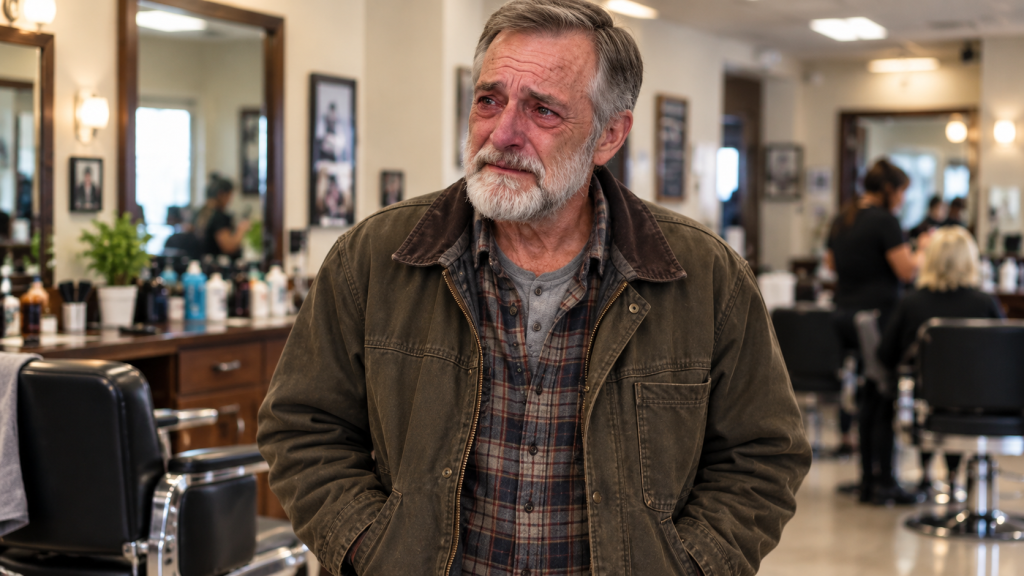
The man who had just told me she had hidden evidence before she died. I whispered, “What is in locker 417?” Daniel closed his fingers around the key. “Your mother’s truth.” I felt something cold move through me.
“That isn’t an answer.”
“No.”
His eyes dropped.
“But it’s the only one I can give you here.”
I looked around the salon.
He was right.
Suddenly every mirror felt like an audience.
I untied my apron.
My manager finally found her voice.
“Where do you think you’re going?”
I stared at her.
“My shift ended twelve minutes ago.”
“You still owe for his service.”
Daniel immediately reached into his pocket.
I stopped him.
“I said I’d cover it.”
My manager crossed her arms.
“Fifty dollars.”
I took out my phone, transferred the amount through the salon system, and showed her the confirmation.
Then I picked up my coat.
Daniel looked embarrassed.
“You shouldn’t have done that.”
“I think we are well beyond talking about the haircut.”
He stood slowly.
The transformation still startled me.
He had walked in looking tired, almost defeated.
Now his hair was trimmed neatly around his ears and collar.
He still wore worn clothes.
One shoe was still splitting near the sole.
But there was dignity in his face that had been hidden beneath exhaustion.
He looked like someone who had been waiting years for a door to open.
Outside, the air was sharp and gray.
Daniel stopped beneath the awning.
“I need to tell you something before you come with me.”
My stomach tightened.
“What?”
“I did know where you worked.”
That stopped me.
“You came looking for me?”
“Yes.”
My pulse quickened.
“So the job interview—”
“Is real.”
He raised both hands.
“I swear.”
“It’s at a hotel three blocks away.”
“Maintenance supervisor.”
“They know about my housing situation.”
“There’s a transitional program connected to the job.”
He gave a sad little smile.
“I really did only have a dollar.”
I stared at him.
“Then why didn’t you just tell me who you were when you walked in?”
His eyes filled.
“Because I’ve imagined meeting you for thirty-two years.”
My chest tightened.
“And every version in my head ended differently.”
He looked toward the traffic.
“In some, you hugged me.”
“In others, you called the police.”
“In one, you didn’t believe me.”
He smiled faintly.
“That was probably the most realistic.”
I said nothing.
Then he whispered,
“When your manager told me to leave, I thought maybe that was the answer.”
“What answer?”
“Whether I still had any right to interrupt your life.”
I stared at him.
“That is not a decision my manager gets to make.”
He looked at me.
“No.”
“It should have been yours.”
Those words mattered more than he probably knew.
I asked:
“Where is the locker?”
“Forty minutes away.”
“Do you have a car?”
He almost laughed.
“No.”
Of course he didn’t.
I looked toward mine.
Then back at him.
“Get in.”
He hesitated.
“You don’t know me.”
“That appears to be the entire problem.”
We drove in silence for the first ten minutes.
Daniel sat stiffly in the passenger seat, as if touching anything might make him responsible for replacing it.
I kept glancing at the bluebird tattoo.
Finally I asked:
“What did it mean?”
He looked at his wrist.
The faded bird.
Then smiled.
“Your mother and I were nineteen.”
“That much I know.”
“We were broke.”
“I assume that part too.”
He laughed softly.
“We had exactly enough money for one tattoo each.”
“She wanted something that meant freedom.”
“I wanted something that meant home.”
He looked toward the window.
“So the artist suggested bluebirds.”
“One flies away.”
“One finds its way back.”
My throat tightened.
“Which were you?”
“Your mother said she was the one who would always leave.”
“I said I was the one who would always come back.”
He laughed sadly.
“Turns out we were both wrong.”
I gripped the steering wheel.
Then asked the question I had been avoiding.
“Are you my father?”
Daniel stopped breathing.
He did not answer immediately.
That was enough.
I pulled into an empty church parking lot.
Put the car in park.
Turned toward him.
“Are you my biological father?”
His eyes filled.
“Yes.”
The word shattered something.
Not because I had never wondered.
I had.
As a child, people often said I looked like my mother.
Almost nobody said I looked like the man I called Dad.
Robert Hayes.
The man who taught me to drive.
The man who attended school recitals.
The man who sat silently through my mother’s funeral and then sold the house eight months later.
The man I had not spoken to in almost four years.
I whispered,
“Did he know?”
Daniel nodded.
“Yes.”
“Did my mother?”
“Yes.”
“Did everyone know except me?”
“No.”
His voice sharpened.
“No.”
“Your grandmother knew.”
“Robert knew.”
“Your mother knew.”
“I knew.”
“That was enough people.”
I looked away.
Cars moved along the street beyond the parking lot.
Ordinary people going to ordinary places.
I envied every one of them.
“When did you find out?”
“I knew before you were born.”
I laughed bitterly.
“Convenient.”
Daniel flinched.
“You have every right to hate me.”
“Do I?”
“Yes.”
“Good.”
I turned toward him again.
“Why weren’t you there?”
His face changed.
That was when I saw the shame.
Not the theatrical kind.
Old shame.
The kind worn smooth by years.
“I wasn’t ready to be a father.”
I stared.
“Then?”
“Yes.”
“That’s your explanation?”
“No.”
“It’s the beginning.”
He took a breath.
“When your mother got pregnant, I loved her.”
“But love is not the same as being prepared.”
“I had lost my job.”
“I was drinking too much.”
“I had been arrested once for fighting outside a bar.”
“No conviction, but it happened.”
“I lived in a room above a garage.”
“And every sentence I said started with what I planned to do someday.”
My anger became more complicated.
I hated that.
It would have been easier if he had been a saint separated from me by one villain.
He continued.
“Robert had known your mother’s family for years.”
“He was eight years older.”
“Stable job.”
“House.”
“Insurance.”
“Everything I didn’t have.”
“Did she love him?”
Daniel looked down.
“At first?”
“I think she loved safety.”
That hurt.
He continued.
“Your grandmother pushed hard.”
“She told your mother a baby needed stability, not promises.”
“I hated her for it.”
Then he looked at me.
“She wasn’t entirely wrong about me.”
I said nothing.
“Your mother asked me to get sober.”
“I promised.”
“Then I relapsed.”
“One time.”
“That was enough.”
“She told me she was marrying Robert.”
I whispered,
“And you let her?”
Daniel laughed painfully.
“She wasn’t property.”
Fair.
“She asked me not to come to the wedding.”
“So I didn’t.”
“She asked me to let Robert raise you without disruption.”
“And you agreed?”
His eyes closed.
“For two years.”
My heart began pounding.
“What happened after two years?”
“I got sober.”
“For real.”
“I had steady work.”
“I had an apartment.”
“I wrote her.”
“She didn’t answer.”
“I wrote again.”
“Nothing.”
“So I showed up.”
“At our house?”
“Yes.”
I had no memory of that.
“How old was I?”
“Almost three.”
“What happened?”
Daniel looked toward the dashboard.
“Robert opened the door.”
My stomach tightened.
“He knew exactly who I was.”
“He told me your mother wanted nothing to do with me.”
“I didn’t believe him.”
“So I waited outside her job.”
I stared.
“That sounds terrible.”
“I know.”
“I apologized when I saw her.”
“She wasn’t afraid of me.”
“She was furious.”
“With you?”
“With Robert.”
I felt cold.
Daniel continued.
“She had never seen my letters.”
I closed my eyes.
Of course.
Another secret.
Another person deciding what information someone else should receive.
“What did Robert do with them?”
“Your mother found some later.”
“In his desk.”
“Opened.”
“She confronted him.”
“That was when things changed.”
I looked at Daniel.
“How?”
“She began to understand he wasn’t simply protective.”
“He needed control.”
“Over money.”
“Mail.”
“Who she saw.”
“What she believed.”
My throat tightened.
The Robert I remembered had been strict.
Organized.
Private.
But never openly violent in front of me.
He controlled every bill.
Every account.
Every schedule.
As a child, I thought that meant he was responsible.
Maybe children give adults generous names for things they do not yet understand.
Daniel said,
“Your mother met me privately.”
“Once.”
“At a diner.”
“She apologized.”
“I apologized.”
“And she let me see you from across the parking lot.”
I stared.
“What?”
“You were with your grandmother.”
“You had a red coat.”
My breath caught.
I had photographs of that coat.
“I remember you were mad because your glove fell in a puddle.”
I froze.
That memory existed.
Tiny.
A woman laughing.
My grandmother bending down.
And a man near a pickup truck.
I had never known who he was.
“You saw me?”
Daniel nodded.
“Five minutes.”
“That was all.”
Then his face tightened.
“Robert found out.”
“How?”
“I don’t know.”
“He always seemed to know things.”
“What did he do?”
“He gave your mother a choice.”
“What choice?”
“Cut contact with me completely.”
“Or he would divorce her and fight for custody.”
I stared.
“That doesn’t make sense.”
“I wasn’t his biological child.”
“No.”
“But legally, he was your father.”
“He was married to your mother when you were born.”
“He had signed everything.”
“He had raised you.”
“And he had money.”
“Lawyers.”
“Your mother had almost none of that outside the marriage.”
I looked away.
Daniel continued.
“He also threatened to use my drinking history.”
“The arrest.”
“Everything.”
“Your mother was terrified he could turn you into the battlefield.”
I whispered,
“So she made you promise.”
“Yes.”
“Not to contact me.”
“Yes.”
“For how long?”
His eyes filled.
“She said until she found a safe way out.”
My heart sank.
“But she never did.”
“No.”
I started crying.
Quietly.
Not because Daniel had become my father in that parking lot.
Because my mother had become someone else.
Someone frightened.
Someone planning.
Someone I had never known.
I wiped my face.
“Drive to the locker.”
Daniel nodded.
We went.
The storage facility was old.
Rows of metal doors.
Concrete.
Fluorescent lights buzzing overhead.
Unit 417 sat at the far end of the second corridor.
Daniel inserted the key.
His hand shook.
“You open it.”
I stared.
“Why?”
“Because your mother rented it in your name.”
I turned the lock.
The door rolled upward.
Inside were six plastic tubs.
A cedar chest.
Three banker’s boxes.
And one old blue suitcase.
My mother’s.
I recognized it instantly.
She had used it when I was a child.
Vacations.
Christmas trips.
The summer we drove to Wisconsin and got a flat tire halfway there.
My knees weakened.
I touched the handle.
“Why is this here?”
Daniel whispered,
“Open it.”
Inside were letters.
Hundreds.
Some tied with ribbon.
Some sealed.
Some opened.
Some returned.
All addressed between my mother and Daniel.
My anger rose again.
“How did you get these?”
“Your mother gave them to me before she died.”
I looked up sharply.
“You saw her before she died?”
“Yes.”
“How long before?”
“Six weeks.”
My mouth went dry.
“You saw my mother six weeks before she died, and nobody told me?”
Daniel flinched.
“I know.”
“Were you at the hospital?”
“No.”
“Funeral?”
“No.”
“Why?”
“Because she made me promise.”
I slammed the suitcase lid shut.
“You really like that sentence.”
He looked devastated.
“I hated that promise.”
“Then why keep it?”
“Because she was dying.”
“And because she believed Robert would destroy the evidence if he knew I was involved.”
I turned away.
Evidence.
Locker.
Robert.
My mother.
Every answer created another question.
I opened the first banker’s box.
Inside were financial statements.
Tax returns.
Loan documents.
Photocopies of signatures.
A power of attorney.
Then I saw my own name.
My Social Security number.
My signature.
Except it was not mine.
I stared.
“What is this?”
Daniel came closer but did not touch the paper.
“Your mother found those.”
A line of credit.
Opened when I was nineteen.
Thirty-eight thousand dollars.
My hands began shaking.
“I never took this loan.”
“I know.”
“I was in college.”
“I know.”
“Who did?”
Daniel whispered,
“Robert.”
I felt sick.
I remembered that year.
My credit had suddenly dropped.
A collection notice had gone to my parents’ house.
Robert told me it was a clerical error connected to a student account.
He said he handled it.
I thanked him.
My God.
I thanked him.
I kept digging.
Another account.
A brokerage withdrawal in my mother’s name.
Then a transfer into a company called Hayes Development Services.
Robert’s business.
$112,000.
Another.
$86,000.
Another.
$51,500.
I stared at Daniel.
“How much?”
His eyes lowered.
“Your mother believed over three hundred thousand.”
I sat on the concrete floor.
For a while, I could not feel my hands.
Daniel crouched several feet away.
Not too close.
Good.
I whispered,
“Where did the money come from?”
“Your grandfather.”
“My mother’s father?”
“Yes.”
“He left her a separate inheritance.”
“And part of it was meant to be held for you.”
I looked at the documents again.
“Robert stole it.”
Daniel was careful.
“Your mother believed he transferred it without her informed consent.”
“He used powers of attorney she said she never knowingly signed.”
“And your identity on at least one account.”
“How did you find proof?”
Daniel reached toward the second box.
Then stopped.
“Can I?”
I nodded.
He pulled out a thick folder.
“After your mother contacted me again, she asked whether I knew anyone who could help her understand the finances.”
“I had been working bookkeeping for a small construction company.”
“I wasn’t an investigator.”
“But I knew enough to see the signatures were wrong.”
“So I paid for a forensic accountant.”
“With what money?”
He smiled sadly.
“Most of my savings.”
I stared at him.
“Why?”
“Because she asked.”
It was such a simple answer.
That hurt more than something dramatic would have.
Inside the folder were reports.
Timelines.
Bank statements.
A handwriting comparison.
Emails.
Robert had moved money through two business entities.
Some appeared to repay legitimate household expenses.
Some did not.
The evidence was not a perfect movie-villain ledger with every theft labeled.
It was messy.
Transfers.
Loans.
Reimbursements.
Signature disputes.
But enough to make my stomach turn.
Then I found a small recorder.
Daniel looked at it.
“That is the part your mother was most afraid of.”
I pressed play.
Static.
Then my mother’s voice.
Older.
Tired.
But unmistakably hers.
“Robert, I’m asking you for the last time. Why is there a loan in her name?”
My entire body froze.
Robert answered.
“You don’t understand how family finances work.”
“You used her Social Security number.”
“I fixed it.”
“You forged her signature.”
Silence.
Then Robert:
“I protected this family.”
My mother laughed.
Not kindly.
“You keep using that word.”
My breath caught.
Daniel looked at me.
The recording continued.
“You made decisions nobody agreed to.”
“I kept this house afloat.”
“With my father’s money.”
“With our money.”
“It was not yours.”
“It became ours when we married.”
“No.”
My mother’s voice hardened.
“It became available to you because I trusted you.”
There was a long silence.
Then Robert said something that made my skin crawl.
“If Daniel comes anywhere near her, I will tell her what he was.”
My mother answered:
“She already deserves to know.”
“No.”
Robert’s voice sharpened.
“She deserves a father who stayed.”
Daniel closed his eyes.
The recording continued.
My mother said:
“You kept him away.”
“He stayed away.”
“Because I asked him to.”
“Exactly.”
“You were always good at making everyone else carry your decisions.”
A chair scraped.
Then Robert said:
“If you leave me, you leave with nothing.”
My mother whispered,
“Then I’ll leave with the truth.”
The recording ended.
I sat frozen.
Tears slid down my face.
Daniel whispered,
“She planned to file.”
“For divorce?”
“Yes.”
“Did she?”
“No.”
“Why?”
“Three weeks later, she got the diagnosis.”
My mother had died of pancreatic cancer.
Four months after diagnosis.
Fast.
Brutal.
I had spent those months taking her to appointments.
Cooking soup she could not eat.
Sleeping in a chair beside her bed.
And I had never known she was also carrying this.
“Why didn’t she tell me?”
Daniel’s eyes filled.
“She wanted to.”
“That’s what everyone says.”
“I know.”
“Did she think I was too weak?”
“No.”
“Then what?”
“She was ashamed.”
I stared.
“Of what?”
“That she stayed.”
I felt something inside me break open.
Daniel continued.
“She said if she told you, you would ask why she did not leave sooner.”
“She thought you would see her differently.”
I started crying harder.
“She was wrong.”
“Yes.”
“She was so wrong.”
“Yes.”
I pressed my hands against my face.
For years, I had thought my mother’s greatest regret was dying young.
Now I understood there had been another.
She had spent years inside a marriage she no longer trusted.
Then hidden that truth from me because shame convinced her I would judge her.
I whispered,
“I would have helped her.”
Daniel’s voice broke.
“I know.”
The third box contained something else.
A DNA test.
My name.
Daniel’s.
Probability of paternity:
99.99%.
I stared.
“When was this done?”
“After she contacted me during her illness.”
“How?”
“She had a sample from a medical test of yours.”
I looked at him sharply.
“That feels invasive.”
“It was.”
At least he did not defend it.
“She wanted certainty before leaving anything in writing.”
I shook my head.
“Another choice made for me.”
“Yes.”
He looked ashamed.
“She knew it too.”
Then he handed me a sealed envelope.
My name.
My mother’s handwriting.
This one was thicker.
I could barely open it.
My darling girl,
I stopped.
Her voice filled my head immediately.
Not the sick voice.
The healthy one.
The one that called me from grocery stores because she could never remember which coffee I liked.
I kept reading.
If you are holding this letter, then either Daniel found you or you found the locker yourself.
I am sorry that the truth reached you without me sitting beside you.
Tears blurred the words.
Daniel is your biological father.
There it was.
Simple.
No drama.
No apology yet.
Just truth.
Robert raised you. That is also true.
I paused.
That mattered.
My mother did not erase one man to make room for the other.
For many years, I believed keeping those truths separate protected you from adult mistakes. I understand now that secrecy also has a cost.
My hand trembled.
You deserved to know where you came from.
You also deserved not to be used as leverage between three frightened adults.
I wiped my eyes.
Daniel had started crying too.
Daniel was not ready when you were born.
He lowered his head.
Robert was stable when I desperately needed stability.
I made choices that made sense to me then. Some of them I would make differently now.
That was my mother.
Even dying, she refused to make herself innocent.
I kept reading.
Robert loved you in ways that were real.
That sentence surprised me.
Then:
He also controlled money, information, and access in ways I did not recognize soon enough.
Both things can be true.
My chest tightened.
Yes.
That was harder than turning him into a monster.
Because Robert had taught me to ride a bicycle.
He came to my graduations.
He held my hand when I had my appendix removed.
He bought me my first toolbox because he said every woman should know how to fix what she owns.
Those memories were real.
So were the forged signatures.
The intercepted letters.
The stolen money.
People are not easier to understand just because they have hurt us.
My mother continued.
I discovered the financial fraud too late. Daniel helped me document it.
I intended to leave Robert and tell you everything. Then I became ill.
By the time I understood how little time I had, I became frightened that dropping every truth into your grief would be another selfish act.
I whispered,
“It wouldn’t have been.”
Daniel said nothing.
I continued.
Perhaps I was wrong.
I have been wrong before.
A faint laugh escaped me.
That sounded like her.
I asked Daniel to wait until you were established and safe.
I did not ask him to disappear forever.
I looked up.
Daniel’s face had changed.
“What?”
He whispered,
“Keep reading.”
If Robert is still alive when you read this, do not confront him alone.
My stomach tightened.
Robert was alive.
Seventy-one.
Retired.
Living in Arizona.
We had not spoken in almost four years after an argument over the sale of my mother’s jewelry.
I kept reading.
The financial documents may have legal value. They may not. Time changes what can be recovered. Speak to an attorney before you decide what to do.
Thank God.
Even my dying mother knew life was not a television show where one envelope solves everything.
Then:
Daniel promised not to contact you until he could do so without making you responsible for his life.
I looked at him.
His eyes filled.
If he arrives asking for rescue, you are allowed to say no.
Daniel laughed through tears.
“That sounds like her.”
I almost smiled.
Then I read:
If he arrives simply asking to be known, that choice belongs to you.
That line broke me.
I folded the letter.
Pressed it against my chest.
And cried on the floor of storage locker 417 beside a man I had cut hair for less than two hours earlier.
A man who was apparently my father.
Eventually, I asked:
“Why are you homeless?”
He looked ashamed.
I hated that his first instinct was shame.
“Tell me.”
He nodded.
“I had a decent life for a while.”
“Not rich.”
“Stable.”
“I worked bookkeeping.”
“Then warehouse management.”
“I married once.”
My chest tightened.
“You have another family?”
“No children.”
“The marriage ended twelve years ago.”
“Mostly because I made everything about old regret.”
Fair.
“Then I got sick.”
“What kind of sick?”
“Heart failure.”
I stared.
He continued quickly.
“It is managed.”
“I’m not dying tomorrow.”
“Then what did you mean by running out of time?”
“The storage unit.”
I frowned.
He pointed toward the boxes.
“I’ve been paying it since your mother died.”
“How long?”
“Eight years.”
My mouth fell open.
“You paid for this for eight years?”
“Yes.”
“With what?”
“At first, my wages.”
“Then savings.”
“Then disability.”
“Then not very well.”
He smiled sadly.
“The unit was scheduled for auction Friday.”
My stomach dropped.
“Friday?”
“Yes.”
“I had sixty-three dollars left.”
“The balance was two hundred and eleven.”
“So you came looking for me.”
“Yes.”
“And the job interview?”
“Was supposed to solve next month.”
I looked at him.
“Why not just take the evidence out?”
“Where would I put it?”
That silenced me.
His belongings fit into one backpack.
He had no apartment.
No secure car.
No relative willing to store boxes.
The storage locker had become the only place where my mother’s truth could physically exist.
I started laughing.
Not because anything was funny.
Because life has a cruel sense of scale.
Three hundred thousand dollars of disputed transfers.
Thirty years of secrets.
A biological father.
A forged line of credit.
And the whole truth was forty-eight hours away from being sold at auction because nobody had two hundred eleven dollars.
I stood.
“Come on.”
“Where?”
“Front office.”
I paid the balance.
Daniel protested.
I ignored him.
Then I paid six more months.
He looked furious.
“I did not bring you here for money.”
“I know.”
“Then don’t—”
“Stop.”
He stopped.
“This is not for you.”
I pointed toward the unit.
“This is for me.”
He looked at me.
Then nodded.
“Okay.”
That mattered.
No argument.
No pride disguised as control.
Just okay.
The next thing I did was call a lawyer.
Not Robert.
Not my grandmother.
Not my manager.
A lawyer.
Her name was Priya Shah.
She specialized in estate and financial abuse litigation.
I told her the short version.
There was a long silence.
Then she said:
“Do not contact the man who raised you.”
“Excellent.”
“Do not remove or write on original documents unnecessarily.”
“Okay.”
“Photograph the unit.”
“Done.”
“Make an inventory.”
“Working on it.”
“Do not post any of this online.”
I almost laughed.
“I’m not twenty.”
“That has never stopped anyone.”
Fair.
Within a week, Priya had reviewed enough to tell me something important.
“We do not know yet whether every transfer was illegal.”
I appreciated that immediately.
She did not feed my anger.
“Some may have been authorized.”
“Some signatures require forensic review.”
“Some claims may be barred by limitation periods.”
“Some may involve your mother’s estate.”
“Some involve your identity directly.”
“What about the loan in my name?”
“That is our strongest immediate issue.”
It turned out the account had been opened using my Social Security number, an address I had not lived at after college, and a signature an examiner later concluded was not mine.
The debt had been settled years earlier.
By Robert.
Using money from my mother’s inheritance.
It was almost elegant.
Create debt in my name.
Use her money to pay it.
Tell me the collection notice was a mistake.
Everyone remains grateful.
I felt sick.
Priya asked:
“Do you want to pursue this?”
“Yes.”
“Why?”
The question surprised me.
“Because he stole.”
“That may be true.”
“But I’m asking what you want.”
I thought.
“Truth.”
“Anything else?”
“If money can be recovered, yes.”
“Punishment?”
I paused.
“Maybe.”
She nodded.
“Good.”
“Knowing that now will help later.”
Daniel’s job interview went well.
He called me afterward.
Not Dad.
Daniel.
We had agreed on that.
Titles should not arrive before relationships.
“They offered me the job.”
I smiled.
“Really?”
“Thirty hours a week to start.”
“Housing?”
“Transitional room for three months.”
His voice broke.
“I have a door.”
That destroyed me.
A door.
Such a small thing.
He said:
“I bought shoes.”
I laughed through tears.
“With what?”
“They gave me a work-clothing voucher.”
“Good.”
“What kind?”
“Ugly black ones.”
“Perfect.”
We started meeting once a week.
Coffee.
Lunch.
Sometimes nothing heavier than weather.
I asked about my mother.
He told me things.
She hated mayonnaise as a teenager.
Loved Motown.
Cheated at Monopoly.
Once drove forty miles with the parking brake partly engaged.
I laughed so hard I cried.
Then some days I hated him.
For staying away.
For not fighting harder.
For accepting a promise that erased him from my childhood.
One afternoon, I said:
“You could have tried more.”
He nodded.
“Yes.”
That angered me.
“Don’t just agree.”
“What do you want me to say?”
“Defend yourself.”
He looked at me for a long moment.
“No.”
“Why?”
“Because I did not fight hard enough.”
My eyes filled.
“I was ashamed of who I had been when you were born.”
“Then later I used respecting your mother’s wishes to hide inside that shame.”
He looked down.
“I told myself staying away was noble.”
“Part of it was.”
“Part of it was cowardice.”
That was the moment I began trusting him.
Not when the DNA test said 99.99%.
When he stopped asking the truth to make him look good.
Robert received a letter from Priya two months later.
A preservation demand.
Request for records.
Notice concerning disputed financial transactions and identity use.
His attorney responded.
Of course he had one.
Robert denied forging anything.
Claimed my mother had authorized all transfers.
Claimed the line of credit in my name had been created “for family purposes” with my implied consent.
I laughed so hard when Priya read that phrase that she had to wait.
“Implied consent?”
“Yes.”
“I was nineteen.”
“Yes.”
“I did not know the account existed.”
“I am aware.”
“What exactly was implied?”
Priya smiled.
“Apparently your existence.”
The case widened.
A forensic accountant traced more than we expected.
Not three hundred thousand.
Closer to four hundred eighty-six thousand dollars moved over fifteen years.
But not all of it was recoverable.
And not all of it was necessarily stolen.
Some paid mortgages.
Medical costs.
Education.
Household expenses.
My mother had benefited from some.
That mattered.
Truth does not improve when you exaggerate it.
But roughly $214,000 in transfers appeared to have gone directly into Robert’s business accounts without clear authorization.
The loan in my name was separate.
Then Priya found something else.
My mother had quietly changed her will six months before she died.
I had never known.
The copy filed with the attorney left me sixty percent of her separate estate.
The remaining forty percent went to Robert.
The version Robert submitted after her death left him almost everything.
My skin went cold.
“What?”
Priya held up both copies.
“The signatures differ.”
I stared.
“Are you telling me he forged her will?”
“I am telling you we have two inconsistent documents.”
“And we are investigating.”
That answer saved me from running straight to Arizona.
Weeks later, the handwriting expert concluded the later signature was likely not my mother’s.
The witnessing formalities were also questionable.
One witness had been Robert’s employee.
The other could not be located.
Suddenly this was not just family ugliness.
It was probate litigation.
Potential fraud.
Maybe criminal referral.
Robert called me for the first time in four years.
I almost did not answer.
Priya had told me not to discuss the case.
I answered anyway.
“Hello.”
His voice was older than I remembered.
“You hired a lawyer.”
“Yes.”
“After everything I did for you.”
There it was.
Not hello.
Not are you okay.
After everything.
I said:
“I was wondering how quickly we’d reach that sentence.”
He went quiet.
“Daniel found you.”
“Yes.”
“He is poison.”
I almost laughed.
“He gave me documents.”
“He gave you lies.”
“Then let the records prove that.”
“He abandoned you.”
“Yes.”
That stopped him.
I continued.
“He did.”
“I’m not pretending he didn’t.”
“Then why are you listening to him?”
“Because flawed people can still tell the truth.”
Silence.
Then Robert said:
“I raised you.”
“Yes.”
“I paid for you.”
“Yes.”
“I loved you.”
My throat tightened.
“I think you did.”
His breathing changed.
“Then why are you doing this?”
“Because love does not make forgery legal.”
He exploded.
“You have no idea what your mother was like!”
I closed my eyes.
There was the man I remembered.
The one who became cruel only when control failed.
I whispered,
“Careful.”
“She was terrified of money.”
“She could never make decisions.”
“So you made them for her?”
“I protected her.”
Again.
Always protect.
I said:
“She recorded you.”
Silence.
Complete.
Then:
“What?”
I had said too much.
Priya would murder me.
But the silence told me more than any confession.
I continued carefully.
“Talk to your attorney.”
Then hung up.
Priya did not actually murder me.
She did, however, use several phrases that meant she wanted to.
“You cannot improvise during active litigation.”
“I know.”
“You especially cannot reveal evidence strategically before we have decided to.”
“I know.”
“Do you enjoy making my life difficult?”
“Apparently.”
She sighed.
“Your mother would have liked me.”
“You have no idea.”
The probate dispute settled before trial.
That disappointed part of me.
I wanted a judge.
A courtroom.
A declaration.
Truth stamped with authority.
But Priya explained the risks.
Age of documents.
Dead witnesses.
Legal costs.
Uncertainty.
Robert’s declining health.
The possibility that some financial conduct could be explained as marital management even if ethically ugly.
Settlement was not surrender.
It was choice.
Under the agreement, Robert repaid a substantial portion to my mother’s estate.
The disputed will was withdrawn.
A revised distribution was recognized based on the earlier valid instrument.
My identity-theft claim was resolved separately.
The amount did not restore thirty years.
Money cannot.
But it repaired my credit record formally.
It returned funds that should have been mine.
And it forced something more important.
Robert signed a sworn statement acknowledging that I had not authorized the line of credit.
I framed that page.
Not in my living room.
I’m not deranged.
In a file cabinet.
Still.
I knew where it was.
There was also a criminal investigation.
It did not become a spectacular prosecution.
Robert was old.
Records were old.
Some conduct was beyond limitations periods.
Some evidence was strongest in civil court.
He ultimately entered a plea on a narrower financial offense involving falsified documentation connected to the account in my name.
Probation.
Restitution.
No dramatic prison sentence.
Strangers later told me that was not enough.
They were not the ones living inside it.
I did not need Robert destroyed.
I needed reality returned to the correct names.
My mother was not stupid.
Daniel was not a saint.
Robert was not only the father who taught me to ride a bike.
I was not an ungrateful daughter for asking what happened.
Reality became complicated.
That was enough.
I met Robert once afterward.
At his request.
Public place.
Priya knew.
Daniel did not come.
That mattered.
This was between Robert and me.
He looked smaller than I remembered.
Old men often do when you finally stop seeing them through a child’s eyes.
He said:
“You look like him now.”
I knew who he meant.
“Maybe I always did.”
He looked away.
Then:
“Did he tell you I kept him away?”
“Yes.”
“He would have ruined your life.”
I stared at him.
“You don’t get to know that.”
“He was drunk.”
“He got sober.”
“He could have relapsed.”
“You could have become honest.”
His face tightened.
I continued.
“We can build alternate futures all day.”
“None of them justify forged signatures.”
He looked down.
Then whispered:
“I was afraid your mother would leave.”
There it was.
Not protection.
Fear.
Finally.
“I loved her.”
I believed him.
That was the tragedy.
“You loved her badly.”
His eyes filled.
“Yes.”
He cried.
I did not reach across the table.
He continued.
“When Daniel came back, I knew she still loved part of him.”
“I thought if she saw him again, I would lose everything.”
“So you intercepted letters.”
“Yes.”
“Controlled money.”
He nodded.
“Used my identity.”
Silence.
Then:
“Yes.”
My heart broke.
Not because it was new.
Because he said it without a lawyer around.
I whispered,
“You raised me.”
He looked at me.
“Yes.”
“You were my father.”
Tears filled his eyes.
“Yes.”
“And you still did those things.”
“Yes.”
Both.
Always both.
I stood.
“Goodbye, Robert.”
He started crying harder.
“Will I see you again?”
I thought carefully.
“No.”
That was the last time.
He died two years later.
I attended the funeral.
Daniel did not.
People found that confusing.
They wanted a clean side.
Biological father good.
Legal father bad.
Life refused.
I stood beside Robert’s casket and remembered pancake breakfasts.
Driving lessons.
The toolbox.
The way he stayed awake all night when I had pneumonia at fourteen.
Then I remembered the intercepted letters.
My mother’s money.
The forged signature.
I cried for the father I had.
And for the father he chose not to be.
Grief can hold both.
Daniel and I grew slowly.
No instant “Dad.”
For almost a year, he remained Daniel.
Then one evening, we were repairing a shelf in my apartment.
He drilled through the wrong side of the wood.
I stared.
He stared.
Then I said:
“Dad.”
He froze.
So did I.
The word had escaped before I decided.
His eyes filled immediately.
I pointed at the damaged shelf.
“Do not make this a moment.”
He started crying.
“I’m not.”
“You absolutely are.”
He laughed through tears.
I did too.
After that, Dad arrived slowly.
Sometimes Daniel.
Sometimes Dad.
Relationships do not need one label every day.
He stayed at the hotel job for three years.
Saved money.
Moved into a small apartment.
He hated charity.
Loved discounts.
Insisted on paying for coffee even when it meant counting coins.
I stopped trying to rescue him.
That was important.
My mother’s letter had warned me.
If he arrived asking for rescue, I could say no.
He did not.
He asked for time.
So I gave him time.
He also paid me back fifty dollars.
For the haircut.
I refused.
He mailed it anyway.
I mailed it back.
He returned it inside a birthday card.
I finally spent it on dinner for both of us.
He said:
“Compromise.”
I said:
“Annoying.”
He smiled.
Genetics, apparently.
The bluebird tattoo changed meaning too.
For most of my childhood, it had been my mother’s unanswered question.
Then it became proof.
Then pain.
Eventually, it became a story.
On what would have been my mother’s seventieth birthday, Daniel and I visited her grave.
He had never gone.
Not once.
He stood several feet away.
Hands in his coat pockets.
I said:
“You can come closer.”
He shook his head.
“I don’t know if I should.”
I almost laughed.
“She cannot complain.”
“That never stopped her before.”
I smiled.
Then took his arm.
We walked to the stone together.
He stared at her name.
Evelyn Hayes.
Not Mercer.
Not Daniel’s wife.
Not his.
Just Evelyn.
He touched the bluebird on his wrist.
“I kept the promise too long.”
I looked at him.
“What?”
“She told me not to make my need for forgiveness your burden.”
“I turned that into disappearing.”
He shook his head.
“I should have found a way to give you the choice sooner.”
I stared at my mother’s grave.
“She should have too.”
He nodded.
We stood there.
Not defending them.
Not condemning them.
Just naming what was true.
Then Daniel whispered:
“She loved you more than anything.”
“I know.”
“And she was afraid.”
“I know.”
“Do you forgive her?”
I thought.
“Mostly.”
He laughed softly.
“That sounds like Evelyn.”
“What about you?”
He stared at the stone.
“I don’t think she needs my forgiveness.”
“That wasn’t the question.”
He looked at me.
Then smiled sadly.
“Yes.”
I nodded.
“Mostly?”
He laughed.
“Mostly.”
Good.
Years later, the salon where I had met Daniel changed ownership.
My old manager left.
The new owner renovated everything.
New chairs.
New mirrors.
New prices.
I stayed.
But one thing changed because of Daniel.
I convinced the owner to create a small community service program.
One evening a month.
Free basic cuts for people referred through shelters, reentry programs, job placement offices, and local nonprofits.
No humiliation.
No proving who was deserving in front of a room full of strangers.
Appointments.
Dignity.
I called the program Bluebird Hours.
Daniel hated the name.
Which meant he secretly loved it.
The first evening, twelve people came.
One man had an interview.
A woman had not had her hair cut in three years.
A teenager needed a school photo.
Nothing miraculous happened.
No hidden millionaires.
No dramatic inheritances.
Just people sitting in chairs and being treated like customers instead of problems.
That mattered to me.
Because Daniel had not walked into the salon disguised as a rich man testing our kindness.
He was actually homeless.
Actually had one dollar.
Actually needed a haircut.
The reward for helping him was not money.
It was truth.
That was better.
My mother’s recovered estate gave me enough to pay off my student loans and put a down payment on a small condo.
I did not quit my job.
I liked cutting hair.
People thought that was strange.
After all the courtroom drama, secret letters, financial settlement—
surely I should want a new life.
I did have a new life.
It just happened to contain the old work I loved.
Money does not have to transform you to matter.
Sometimes it simply removes a weight.
Daniel’s health eventually worsened.
Not suddenly.
His heart.
Then his kidneys.
Years of hard living collect interest too.
I sat beside him during appointments.
Not every one.
He hated that.
He said:
“You have a job.”
I said:
“You’re my father.”
He replied:
“Dangerous sentence.”
He was right.
Family can become an excuse to erase boundaries if you are careless.
So I asked.
“Do you want me there?”
Sometimes yes.
Sometimes no.
I learned.
The final year of his life, Daniel gave me an envelope.
I stared at it.
“No.”
He laughed.
“What?”
“I’m done with old men handing me mysterious envelopes.”
“Open it.”
Inside was one dollar.
The same bill?
Probably not.
But he claimed it was.
I looked at him.
“You’re ridiculous.”
He smiled.
“You gave me a haircut when I had a dollar.”
“No.”
“I gave you a haircut when you had an emotional ambush prepared.”
“Details.”
Then he became serious.
“I want you to keep it.”
“Why?”
“Because I spent most of my life believing I had to arrive with enough before I could ask someone to let me belong.”
His eyes filled.
“You taught me that sometimes you can show up with one dollar and the truth.”
I cried.
“That sounds dangerously sentimental.”
“I’m dying.”
“You’ve become manipulative.”
“Finally.”
We laughed.
Daniel died six years after walking into my salon.
Not homeless.
Not alone.
In a small hospice room with ugly curtains and one decent window.
I held his hand.
The bluebird tattoo had faded even more.
His last clear words were:
“Your mother always said my bird looked like a pigeon.”
I laughed through tears.
“It does.”
“Traitor.”
Then he slept.
He did not wake.
At his funeral, I placed one thing beside the urn.
Not the dollar.
I kept that.
A photograph.
The one from the envelope.
My mother holding me as a newborn.
Daniel beside her.
Young.
Terrified.
Happy.
Complicated.
A family that existed before I knew it existed.
Not a perfect family.
Not even a functional one.
But mine.
Afterward, I visited my mother’s grave again.
Alone.
I sat on the grass.
Then said:
“You could have just told me.”
The wind moved through the trees.
No answer.
Typical mother.
I smiled.
Then cried.
Then told her everything.
About the storage locker.
Robert.
The settlement.
Daniel’s apartment.
Bluebird Hours.
The terrible shelf he drilled through.
How he cried the first time I accidentally called him Dad.
I told her I was angry.
Still.
I told her I understood more now.
Also still.
Then I said the thing I had taken years to learn:
“Trying to protect me did not give you the right to erase my choices.”
My voice shook.
“But I know you were afraid.”
Both truths.
Always both.
I left a small bluebird pin against her stone.
Then stood.
For years, I had thought the tattoo was the mystery.
It wasn’t.
The real mystery was why people who love each other sometimes decide truth is too dangerous to share.
My mother did it.
Robert did it.
Daniel did it by staying away too long.
Every one of them believed silence served some purpose.
Protection.
Stability.
Shame.
Fear.
Control.
And every silence eventually sent the bill to someone else.
Me.
That is what I carried forward.
Not distrust.
Not bitterness.
A different rule.
Love can be gentle.
Love can wait.
Love can forgive.
But love should not decide that another person is safer without their own truth.
The old bluebird tattoo on Daniel’s wrist was never magical.
It did not prove destiny.
It did not erase the years he missed.
It was simply a promise two nineteen-year-olds made before they understood how difficult adulthood could become.
One flies away.
One comes home.
My mother died before telling me which bird she thought she had become.
Daniel spent decades believing he had failed at being the one who came back.
Maybe they were both wrong.
Maybe I was the bluebird.
The one left with all their unfinished directions.
The one who had to decide what home meant after everyone else stopped choosing for me.
Sometimes, on Bluebird evenings at the salon, someone sits in my chair embarrassed because they cannot pay.
I always think of Daniel.
Not as a lesson that every stranger hides some dramatic secret.
Most do not.
I think of how easily the room changed when one person stopped seeing a problem and saw a human being.
The first day Daniel walked into my salon, I thought I was giving a homeless man a haircut.
I had no idea he was carrying my mother’s handwriting inside his coat.
I had no idea he carried my face in his memory.
I had no idea one faded tattoo could reopen an entire family history.
But that is the strange thing about kindness.
You rarely know what door you are opening when you offer it.
Sometimes it is only a haircut.
Sometimes it is dignity.
And sometimes, if life has been keeping a secret long enough, the person in your chair looks into the mirror with tears in his eyes and finally gives you back a piece of yourself.
THE END STORIES! THANK YOU FOR READING GOOD LUCK! ❤️
Related Posts