For three full seconds, nobody in the ballroom moved. Not Mark. Not Diane. Not me. Two hundred wedding guests sat beneath crystal chandeliers while the quartet near the dance floor slowly lowered their instruments. The cake knife was still in my hand. White frosting clung to the silver blade.
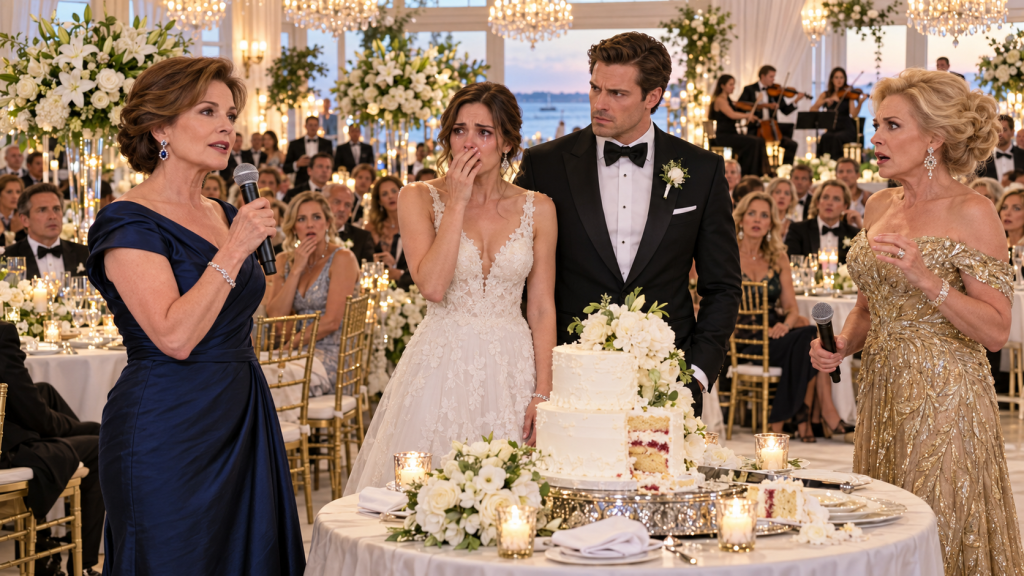
Behind me, my attorney, Rebecca Lin, remained standing beside her table. In front of me, Mark looked at the prenuptial disclosure as though it had somehow betrayed him. Then he looked at my father. “You brought a lawyer to my wedding?” Dad’s expression did not change. “No.” He glanced toward Rebecca. “My daughter did.”
That was not completely true. Rebecca was both my attorney and an old family friend. She had been invited months earlier. But I understood what Dad was doing. He was reminding Mark of something Mark seemed to have forgotten. I had a life before him.
A career before him.
Assets before him.
People who loved me before him.
And none of those things had vanished simply because I had put on a white dress.
Mark turned toward me.
“Sophie, can we please go somewhere private?”
I stared at him.
A few minutes earlier, he had let his mother announce publicly that my home would become hers.
Now privacy mattered.
“No.”
His jaw tightened.
“This is our wedding.”
“I know.”
“Then stop turning it into a courtroom.”
My mother laughed softly.
Mark looked at her.
Mom folded her arms.
“You should have thought of that before signing legal documents you apparently never intended to honor.”
Diane stepped forward.
Her gold gown glittered beneath the lights.
“You people are unbelievable.”
Mom raised one eyebrow.
“You people?”
Diane pointed toward the folder.
“You set him up.”
“No.”
My mother’s voice was calm.
“You exposed yourselves.”
Diane turned to me.
“Sophie, do you honestly think your mother transferring your own home into her name was normal?”
That question would have worked on me three months earlier.
It almost worked now.
Almost.
I looked at Mom.
For months, I had resented what she made me do.
I had felt dishonest.
Childish.
Controlled.
Now I finally understood.
She had not taken my home.
She had moved it somewhere Mark’s family could not reach.
I turned back to Diane.
“No.”
My voice shook.
“It wasn’t normal.”
She smiled as though she had won.
Then I continued.
“But neither was planning where you’d put your furniture before asking whether I wanted you in my home.”
Her smile disappeared.
A few guests murmured.
Mark reached for my elbow.
I stepped away before he touched me.
“Don’t.”
“Sophie.”
“No.”
My voice grew steadier.
“You knew.”
He looked around the room.
Every eye was on him.
That mattered to Mark.
Image had always mattered.
He lowered his voice.
“We discussed helping my mother.”
“No, we didn’t.”
“We talked about her retirement.”
“That is not the same thing as giving her my condo.”
“I never said giving.”
I stared.
“You told her she could live there.”
He exhaled sharply.
“Eventually.”
“Without asking me.”
“We’re married now.”
The words dropped between us.
We’re married now.
As if the vows had transferred ownership.
Of me.
Of my money.
Of my home.
My mother’s face changed.
She heard it too.
I asked quietly,
“What exactly did you think changed when I said ‘I do’?”
Mark frowned.
“What is that supposed to mean?”
“Did you think my apartment became yours?”
“No.”
“Did you think my decisions became yours?”
“Of course not.”
“Then why did you promise my property to your mother?”
He looked toward Diane.
That tiny glance answered more than anything he said.
I followed it.
Diane’s face had lost some color.
I suddenly realized something.
She was nervous.
Not embarrassed.
Not insulted.
Nervous.
I looked at Dad.
He was already opening the folder again.
My stomach tightened.
“What else is in there?”
Dad’s eyes met mine.
“Sophie.”
“What else?”
Mark snapped,
“Enough.”
Dad ignored him.
“Your mother didn’t ask you to move the deed because of one phone call from Diane.”
I turned toward Mom.
“What?”
Mom closed her eyes.
For the first time that night, she looked guilty.
My heart began to pound.
“Mom.”
She looked at me.
“I found something.”
“When?”
“Four months ago.”
Before she asked me to transfer the condo.
“What?”
She hesitated.
Dad answered.
“A draft financing application.”
Mark went still.
I looked at him.
“What financing application?”
Nobody answered.
I turned toward Rebecca.
She walked over slowly.
“Mark and Diane were exploring a home-equity loan secured by your condo.”
My entire body went cold.
“That’s impossible.”
Rebecca nodded.
“It would have been difficult without your signature.”
“Difficult?”
“Not impossible to attempt.”
My eyes moved toward Mark.
His face told me everything.
I whispered,
“You were going to borrow against my apartment?”
“No.”
He said it too fast.
Rebecca opened the folder.
She slid a document across the cake table.
My name was at the top.
Sophie Bennett.
Property address beneath it.
Loan amount:
$1,250,000.
For a moment, the room disappeared.
The chandeliers.
Guests.
Flowers.
Music.
Everything.
All I could see was that number.
One million two hundred fifty thousand dollars.
My voice came out thin.
“What is this?”
Mark swallowed.
“A preliminary inquiry.”
“For what?”
“No loan was taken.”
“That wasn’t my question.”
Diane stepped in.
“It was only a contingency.”
I turned slowly.
“For what?”
She hesitated.
There.
The fear again.
Dad answered.
“For her house.”
I stared.
Diane’s house in Westchester.
Large.
Old.
Beautiful from the outside.
Always immaculate.
I had assumed it was paid off.
My mother said quietly,
“Diane has significant debt.”
Mark closed his eyes.
I looked at him.
“How much?”
“Sophie.”
“How much?”
He rubbed his forehead.
“It isn’t relevant.”
I laughed.
A sharp, broken sound.
“You planned to borrow more than a million dollars against my home and somehow her debt isn’t relevant?”
His mother snapped,
“It was family debt.”
I looked at her.
“No.”
The word came easily.
“It was your debt.”
Her face hardened.
“I raised Mark alone after his father left.”
I blinked.
“What does that have to do with my condo?”
“Everything.”
She stepped closer.
“I sacrificed for him.”
“I paid for his schools.”
“I helped him build his career.”
“And now he has a wife who can afford a five-million-dollar apartment while I’m expected to struggle?”
The room went completely still.
There it was.
Not gratitude.
Not family.
Entitlement.
My wealth had become evidence of her deprivation.
My success had somehow created her claim.
I stared at Mark.
“Did you agree with this?”
He looked exhausted.
“I thought we could help.”
“By hiding it from me?”
“I was going to tell you.”
“When?”
“After the wedding.”
Of course.
After.
After the vows.
After legal entanglement.
After the guests.
After the photos.
After I became harder to leave without consequence.
My stomach turned.
Mom reached for my hand.
I took it.
For the first time that night.
Mark saw.
His face changed.
“You planned all this with them.”
I stared.
“No.”
“You transferred the condo behind my back.”
“I did.”
His voice rose.
“And I’m supposed to be the dishonest one?”
The accusation hit.
Because part of me still felt guilty.
Rebecca stepped forward.
“Sophie transferred the property legally before marriage. She had every right to do so.”
Mark ignored her.
“You hid a five-million-dollar asset transfer from me.”
Mom said,
“She hid nothing that belonged to you.”
He turned on her.
“You manipulated her.”
Mom’s eyes hardened.
“No.”
“I recognized you.”
That stopped him.
I looked at Mom.
“What does that mean?”
She looked at me.
Then at Diane.
And suddenly the room became very quiet again.
“Because I married one.”
My throat tightened.
“What?”
Mom took a slow breath.
“Before your father.”
Dad looked at the floor.
I had known my mother had been briefly married in her twenties.
I knew almost nothing about it.
She never discussed him.
Not even his name.
Mom continued.
“My first husband was charming.”
“Generous.”
“Protective.”
“He loved telling me not to worry about money.”
My skin prickled.
“He also slowly put everything in positions where I needed his permission.”
“Bank accounts.”
“Property.”
“Business shares my father had given me.”
She looked at Mark.
“And every time I questioned him, he said the same thing you said to Sophie.”
Mark’s mouth tightened.
“What?”
Mom’s voice became almost a whisper.
“‘We’re married now.’”
I looked at her.
The cold fingers.
The locked bedroom door.
The sentence:
A woman doesn’t lose her home because she’s stupid.
She loses it because she’s too trusting.
Now I understood the experience in her eyes.
“What happened?”
I asked.
Mom looked at me.
“I lost almost everything.”
My chest tightened.
“I was twenty-seven.”
“Embarrassed.”
“And too proud to tell my parents until the damage was done.”
Dad touched her shoulder.
Mom continued.
“When I saw Diane asking questions about your building’s transfer rules before you were even married…”
She swallowed.
“I remembered how it starts.”
Diane scoffed.
“This is absurd.”
Mom turned.
“No.”
“It’s familiar.”
Mark looked at me.
“You’re going to let your mother compare me to some man you’ve never met?”
I stared.
“No.”
His face softened slightly.
Then I said,
“I’m going to compare what you did to what you did.”
That wiped the relief away.
The wedding ended forty minutes later.
Not officially.
There was no announcement.
No dramatic cancellation.
We had already signed the marriage license.
Legally, the ceremony had happened.
Emotionally, the marriage was already bleeding.
Guests began leaving in waves.
Some hugged me.
Some avoided eye contact.
Some whispered.
I hated all of them for looking.
Then felt ashamed for hating them.
Humiliation is strange.
The people witnessing it become part of the wound even when they did nothing wrong.
My college roommate Maya took my bouquet.
“You don’t need to carry this.”
I almost laughed.
“Why?”
“Because you’re crushing the stems.”
I looked down.
She was right.
My fingers were white around the ribbon.
I handed it to her.
Mark’s best man, Eric, cornered him near the bar.
They argued quietly.
Diane disappeared into a side room with two relatives.
My father spoke to the venue coordinator.
Mom stayed beside me.
Rebecca made three calls.
I stood in my wedding dress feeling like I was watching someone else’s catastrophe.
Then Mark came toward me.
“Sophie.”
Mom stepped forward.
I shook my head.
“It’s okay.”
She moved away, but not far.
Mark stopped in front of me.
His tie was loose.
His hair no longer perfect.
For the first time all day, he looked like a human being instead of a groom in a magazine.
“I’m sorry.”
I looked at him.
“For which part?”
His face tightened.
“The speech.”
I almost smiled.
“That’s the smallest part.”
“I know.”
“Do you?”
He lowered his voice.
“My mother shouldn’t have announced anything.”
“No.”
“She got carried away.”
“No.”
“Sophie—”
“She didn’t invent the plan.”
Silence.
“You did.”
His eyes filled.
“We did.”
I stared.
That was the first honest word.
We.
He continued.
“My mother was scared.”
“About losing her house?”
“Yes.”
“Then sell it.”
His jaw tightened.
“She’s lived there thirty years.”
“And?”
He looked shocked.
As though I had suggested putting her on the street.
I continued.
“She owns an asset she can’t afford.”
“Selling it is a financial decision.”
“It isn’t cruelty.”
“She would lose her life.”
“No.”
“She would lose a house.”
I looked at him.
“There’s a difference.”
He stared.
Then said,
“You don’t understand what it’s like to be afraid of money.”
That one hurt.
Because it was designed to make my success morally suspicious.
I took a breath.
“You’re right.”
His face changed.
“I don’t know what her fear feels like.”
“But I know what mine feels like.”
I pointed toward the folder.
“Mine feels like realizing my husband planned to use my home to solve a problem he never told me existed.”
His eyes filled.
“I thought once we were married, we’d make decisions together.”
“Together?”
I almost laughed.
“You made the decision already.”
“I was going to bring you into it.”
“After.”
He looked away.
The word sat between us.
After.
I asked,
“Did you ever intend to tell me before the loan paperwork was ready?”
He did not answer.
That was answer enough.
“Did you think I’d say no?”
He whispered,
“Yes.”
My chest hurt.
“So you waited until saying no would be harder.”
His eyes closed.
“I thought once you understood—”
“No.”
My voice shook.
“You thought once I was your wife, I would feel obligated.”
He looked at me.
And I saw it.
Recognition.
He knew I was right.
That was when something inside me went quiet.
Not dead.
Clear.
I took off my wedding ring.
Mark’s face changed.
“Sophie.”
I held it.
The diamonds caught the light.
Hours earlier, I had thought this ring represented a future.
Now it looked like jewelry.
Expensive.
Beautiful.
Replaceable.
I placed it in his palm.
His fingers closed reflexively.
“I need space.”
His eyes filled.
“We just got married.”
“I know.”
“That has to mean something.”
“It does.”
I looked at him.
“It means you had the opportunity to begin honestly.”
“And you didn’t.”
I spent my wedding night in my parents’ guest room.
Not the honeymoon suite.
Not Paris, where we were supposed to fly the next morning.
My dress hung over a chair.
I wore one of Mom’s old T-shirts.
At 2:00 a.m., I sat on the bathroom floor and cried so hard I thought I might vomit.
Mom found me.
She sat beside me.
No speech.
No “I told you so.”
Just sat.
Eventually, I whispered,
“I loved him.”
“I know.”
“He loved me.”
Mom was quiet.
Then said,
“I think he probably did.”
I looked at her.
“Then why?”
She leaned against the wall.
“Love does not cure entitlement.”
That sentence hurt.
“People can love you and still believe they deserve things from you.”
She took my hand.
“Sometimes that’s what makes it harder.”
I cried again.
After a while, I asked,
“Why didn’t you tell me everything three months ago?”
Mom looked ashamed.
“Because I knew you would defend him.”
I looked down.
She was right.
“I thought if I told you Diane had contacted the condo board, you’d confront Mark.”
“I would have.”
“And if he apologized?”
“I probably would have believed him.”
Mom nodded.
“So I protected the asset first.”
I stared.
“Without protecting the marriage.”
Her face broke.
“Yes.”
“I’m sorry.”
I wiped my eyes.
“Do you regret it?”
“No.”
The answer came immediately.
That surprised me.
Mom continued.
“I regret not trusting you with more of the truth.”
“But I don’t regret protecting your home.”
I nodded.
Neither did I.
Not anymore.
The honeymoon was canceled.
The marriage was not.
Not immediately.
That shocked everyone.
Especially my father.
He asked,
“You’re considering staying?”
“I’m considering understanding.”
Dad frowned.
“Those aren’t the same thing.”
“I know.”
Mom said nothing.
She trusted me now.
That mattered.
Rebecca explained the legal options.
Because the marriage had been entered into and the license filed, there were specific routes depending on facts and state law.
She would not promise me an annulment.
She would not dramatize.
She said,
“We document everything and decide whether divorce, annulment, or another remedy is appropriate after reviewing evidence.”
I appreciated that.
The world had become too full of people declaring certainty.
I wanted someone who respected facts.
Mark moved into a hotel.
I stayed with my parents for ten days.
Then I returned to the Tribeca condo.
Or technically, Mom’s condo.
That became absurd.
She hated having it in her name.
I hated it too.
But Rebecca advised us not to rush another transfer while everything was being reviewed.
For the first time, I walked through my own living room and noticed how vulnerable property could feel.
Walls.
Glass.
Steel.
Millions of dollars.
Yet ownership was ultimately paper.
Names.
Signatures.
Consent.
I had spent my career understanding financial risk for corporations.
I had somehow assumed love was exempt.
It wasn’t.
Mark asked to meet after twelve days.
I agreed.
Public place.
A quiet restaurant at three in the afternoon.
He looked terrible.
That gave me no satisfaction.
I had expected it might.
He sat across from me.
“Thank you for coming.”
I nodded.
He pushed a folder toward me.
I stiffened.
“What is that?”
“Everything.”
I almost laughed.
“That word has become dangerous.”
He flinched.
“Bank statements.”
“Mom’s debts.”
“Emails.”
“The loan inquiry.”
“I want you to see all of it.”
I did not touch the folder.
“Why now?”
“Because I finally understand that if I give you only what I think you can handle, I’m doing the same thing again.”
That surprised me.
I looked at him.
“Therapy?”
He almost smiled.
“Twice already.”
“Good.”
He lowered his eyes.
“My mother owes just under nine hundred thousand dollars.”
My chest tightened.
“On the house?”
“Mortgage, home-equity line, taxes, credit cards.”
“Jesus.”
“She kept refinancing.”
“Why?”
“Lifestyle.”
That word carried decades.
Country club.
Trips.
Jewelry.
Renovations.
The gold gown.
Image.
Mark continued.
“When Dad left, she became obsessed with proving she hadn’t fallen.”
I looked at him.
“Did you know before we got engaged?”
“Yes.”
There it was.
No softening.
I appreciated the pain of it.
“Did you plan to use my condo before we got engaged?”
“No.”
“When?”
“After.”
“How long after?”
He looked ashamed.
“About two months.”
I laughed quietly.
Two months into our engagement.
While I was tasting cakes.
Choosing invitations.
Planning a future.
“What made you think of it?”
“My mother.”
Of course.
“She said the apartment was too valuable to sit there without being leveraged.”
I stared.
“My home.”
“Yes.”
“Her solution was to borrow against it.”
“Yes.”
“And you agreed.”
“Eventually.”
“Why?”
His eyes filled.
“Because I’ve spent my whole life fixing things for her.”
There it was.
Not excuse.
But pattern.
“She made me feel like her sacrifices were a bill I could never finish paying.”
My anger softened by one degree.
Not enough to return.
Enough to understand.
Mark continued.
“When I told her I was marrying you, she was happy.”
I almost laughed.
“I noticed.”
“But then she learned what the condo was worth.”
My skin crawled.
“And?”
“She started talking about family security.”
“Shared assets.”
“Generational planning.”
“All the words that make greed sound respectable.”
I looked at him.
“At least you know what they are now.”
He nodded.
“I do.”
“Why didn’t you tell her no?”
His eyes filled.
“Because part of me agreed.”
There.
The truth I needed.
Not just bullied son.
Not helpless.
He wanted it too.
He continued.
“I thought if you had five million dollars in property and we were building a life together, using some of that value to save my mother’s house wasn’t outrageous.”
I stared.
“And if I had agreed after being told everything?”
His face tightened.
“That would have been different.”
“Yes.”
He nodded.
“I know.”
I finally opened the folder.
The numbers were ugly.
But one document was worse.
A spreadsheet.
Columns.
Projected loan.
Interest.
Diane’s mortgage payoff.
Renovation reserve.
And one line:
Tribeca occupancy plan — Diane after 65 / Sophie & Mark relocate to Westchester or purchase second residence.
I looked up.
“You planned where I would live.”
Mark closed his eyes.
“Yes.”
My hands trembled.
I slid the paper back.
“That’s the part I can’t get past.”
“I know.”
“No.”
I looked at him.
“You still think the money is the main betrayal.”
“It isn’t.”
“What is?”
“You pictured my life without me.”
Silence.
“You decided where I would live.”
“What my home would finance.”
“Who would occupy it.”
“How I would feel after the wedding.”
“You built a future using my consent as a detail you could obtain later.”
His face collapsed.
He cried.
Quietly.
I watched.
I still loved him.
That was the terrible part.
Love does not vanish on schedule.
Even when it should.
He whispered,
“I’m sorry.”
I believed him.
That did not answer what came next.
Three weeks later, Diane called me.
I almost did not answer.
Then I did.
“Sophie.”
Her voice sounded different.
No polish.
No performance.
“Yes?”
“I need to see you.”
“No.”
Silence.
I surprised myself.
She tried again.
“Please.”
“Why?”
“I want to apologize.”
“You can do it on the phone.”
She inhaled.
“I was wrong.”
I waited.
Nothing followed.
No but.
Interesting.
She continued.
“I had no right to speak about your home as though it belonged to me.”
“No.”
“I had no right to ask Mark to solve my problems using your assets.”
“No.”
“I had no right to contact your building.”
“No.”
Her voice shook.
“I’m embarrassed.”
I almost said good.
I didn’t.
Instead:
“Embarrassment is not the same as accountability.”
She was quiet.
Then said,
“I know.”
That surprised me.
“I listed my house.”
I sat straighter.
“What?”
“I put it on the market.”
“Why?”
“Because your mother told me something.”
My pulse changed.
“When did you speak to my mother?”
“Yesterday.”
Of course.
“What did she say?”
Diane gave a weak laugh.
“She said, ‘If keeping your house requires stealing someone else’s, you can’t afford your house.’”
I closed my eyes.
That was absolutely my mother.
Diane continued.
“I hated her for saying it.”
“I imagine.”
“Then I realized I hated it because it was true.”
I said nothing.
She whispered,
“I don’t expect forgiveness.”
“Good.”
Her breath caught.
I continued.
“But selling the house is probably the right decision.”
“I know.”
She began crying.
I felt no triumph.
Only sadness.
Because underneath entitlement was fear.
A woman terrified that downsizing meant failure.
A son taught to rescue her.
A bride treated like an asset.
Pain did not excuse any of it.
But understanding made revenge less appealing.
I did not want revenge.
I wanted out of the machinery.
Then came the second twist.
Rebecca called me one morning.
“Come to my office.”
“What happened?”
“I found another document.”
My stomach dropped.
“What kind?”
“An investment subscription.”
I closed my eyes.
“Mark?”
“Yes.”
“How much?”
“Two hundred fifty thousand.”
My heart pounded.
“From where?”
“That’s the problem.”
I arrived forty minutes later.
Rebecca placed the document in front of me.
An LLC investment.
Mark had signed.
Diane had signed.
The investor name listed:
Sophie Bennett-Marshall Family Holdings.
I stared.
“There is no Sophie Bennett-Marshall Family Holdings.”
“Correct.”
“Who created it?”
“Mark.”
My stomach turned.
“What money?”
Rebecca slid over bank records.
A transfer from an account I recognized.
Our wedding account.
My parents had deposited $150,000 there for wedding expenses.
Mark’s family deposited $25,000.
I had added another $100,000 from my savings.
After vendors were paid, roughly $260,000 remained temporarily before final reconciliation.
Mark had moved $250,000.
I stopped breathing.
“When?”
“Three days before the wedding.”
My hands went cold.
“Where?”
“Into a private real-estate fund.”
I looked at her.
“For Diane?”
“Partly.”
“What does that mean?”
“The fund was planning to acquire distressed residential properties.”
She paused.
“One target property was Diane’s house.”
I laughed.
I laughed because the alternative was screaming.
“He invested wedding money into a fund trying to buy his mother’s house?”
“Yes.”
“Why?”
“If the fund acquired it, she could potentially remain as a tenant under favorable terms while investors benefited from appreciation.”
I stared.
“So he was trying to save her house another way.”
“Yes.”
“Without telling me.”
“Yes.”
The pattern again.
Always hidden.
Always justified.
Always for family.
I asked,
“Did he steal the money?”
Rebecca chose her words carefully.
“The account access authority needs review.”
“You both had access.”
“The question is whether the transfer violated agreements and representations.”
“But morally?”
She looked at me.
“That part you don’t need me for.”
I laughed bitterly.
No.
I didn’t.
I called Mark.
He answered instantly.
“Sophie?”
“Two hundred fifty thousand.”
Silence.
His breathing changed.
“You found it.”
I closed my eyes.
“You knew I would.”
“Eventually.”
Eventually.
The word of our marriage.
After.
Eventually.
Later.
When convenient.
“When were you going to tell me?”
He said nothing.
“Mark.”
“After the investment closed.”
I laughed.
“You invested our wedding funds without asking me.”
“I was going to replace your portion.”
“With what?”
“Returns.”
I nearly dropped the phone.
“You were gambling with our money.”
“It was a legitimate investment.”
“That’s not the point.”
“I know.”
“No.”
My voice shook.
“You keep learning the sentence after the behavior.”
He began crying.
“Sophie, please.”
“No.”
Everything became clear.
Not emotionally.
Structurally.
He did not simply have a problem with his mother.
He had a problem with consent.
He believed good intentions could substitute for permission.
That he could act first and explain later.
That results could retroactively make secrecy acceptable.
If the loan saved Diane’s house, I would understand.
If the investment earned money, I would understand.
If the retirement plan worked, I would understand.
My understanding was always scheduled after his decision.
I whispered,
“I’m filing.”
Silence.
“For divorce?”
“Yes.”
“Sophie.”
“I love you.”
His breath caught.
“That’s what makes this sad.”
He began crying.
“I can fix this.”
“No.”
“You can fix yourself.”
I swallowed.
“But I cannot spend my marriage waiting to discover what you’ve decided for me next.”
I hung up.
Then I cried in Rebecca’s office until my mascara stained a stack of legal paper.
The legal process lasted ten months.
I will not pretend it was glamorous.
Divorce rarely is.
Even wealthy people sit beneath fluorescent lights.
Even five-million-dollar property disputes arrive in dull folders.
The wedding account transfer was traced.
Most of the money was recovered because the investment had not fully closed.
Mark cooperated once he understood hiding anything else would make everything worse.
The condo remained safely outside the marital mess because of the pre-marriage transfer, though lawyers carefully addressed the title structure and eventual return.
Mom transferred it back to me only after Rebecca confirmed the timing and documentation were clean.
The day the deed returned to my name, Mom cried.
I did too.
We sat in Rebecca’s conference room.
Mom handed me the pen.
“This time, no secrets.”
I looked at her.
“No secrets.”
I signed.
The condo was mine again.
Not because my mother controlled me.
Because she had held something for me until I learned how easily love could blur ownership.
Afterward, I asked,
“Would you do it again?”
Mom smiled sadly.
“I’d tell you more.”
“But yes.”
I laughed.
“Of course.”
She took my hand.
“One day you’ll have a daughter and hate how often I was right.”
“Don’t curse me.”
She laughed.
Diane sold her house.
She moved into a two-bedroom condo in White Plains.
Not Tribeca.
Not luxury by her standards.
Perfectly comfortable.
The first time I heard, I expected satisfaction.
Instead, I felt relief.
She had survived downsizing.
Imagine that.
No social death.
No collapse.
No tragedy.
Just a smaller kitchen.
Her life had not ended.
Sometimes entitlement is just fear with better furniture.
Mark and I saw each other at the final divorce hearing.
He looked healthier.
That surprised me.
Therapy.
Distance from Diane.
Financial counseling.
He had moved into a modest rental.
Sold his expensive car.
Started paying back what had been mishandled without complaint.
The judge asked the necessary questions.
We answered.
Then it was over.
Marriage length:
Less than a year.
Planning length:
Nearly two.
Grief length:
Unknown.
Outside the courthouse, Mark caught up to me.
“Sophie.”
I turned.
He held no ring.
No folder.
Nothing.
“I’m sorry.”
I nodded.
“I know.”
“I keep thinking about the wedding.”
“So do I.”
He looked embarrassed.
“My mother with the microphone.”
Despite myself, I smiled.
“Hard to forget.”
He gave a weak laugh.
Then became serious.
“I thought marriage meant merging.”
I waited.
“I didn’t understand that merging still requires two people to agree.”
That was the closest he had come to naming it.
I nodded.
“Yes.”
He looked at me.
“Do you hate me?”
“No.”
He seemed surprised.
“I hated what you did.”
“I hated how small you made my choices.”
“I hated that you made me doubt whether protecting myself was betrayal.”
I swallowed.
“But I don’t hate you.”
His eyes filled.
“Do you think I loved you?”
That question hurt.
Because people like simple stories.
He used you.
He never loved you.
He was always bad.
Life is usually uglier.
And kinder.
At the same time.
“Yes.”
I said it carefully.
“I think you loved me.”
His face broke.
“But?”
I looked at him.
“You loved me while still believing you had the right to manage me.”
Tears slid down his face.
“That isn’t enough.”
“No.”
He nodded.
Then asked,
“Do you think I can change?”
I thought about Diane selling the house.
Mark returning money.
Therapy.
His honesty in the final months.
“I think you can.”
Hope appeared.
I continued.
“But not for me.”
He closed his eyes.
That hurt him.
It hurt me too.
Some growth comes after the relationship it might have saved.
That does not make the growth worthless.
It simply means consequences still count.
I hugged him once.
Briefly.
Then walked away.
For a year, I stayed single.
Not dramatically.
No vows against men.
No revenge dating.
I worked.
Traveled.
Learned how to sit alone in my condo without feeling abandoned.
That was harder than expected.
The apartment had once been full of imagined futures.
Mark cooking.
Children.
Sunday coffee.
Diane had almost stolen the physical space.
Mark had almost stolen the emotional one.
For months, every room felt like an argument.
So I changed things.
Not because I had to.
Because I could.
I replaced the dining table Diane had once admired.
Painted the guest room.
Changed the bedroom curtains.
Moved my desk toward the windows.
Small decisions.
Mine.
That word became sacred.
Mine did not mean selfish.
It meant consent.
Two years after the wedding, Mom came over for dinner.
She walked through the apartment slowly.
“What?”
I asked.
She smiled.
“It finally looks like you again.”
I looked around.
She was right.
No traces of wedding magazines.
No boxes labeled future nursery.
No furniture chosen because Mark preferred darker wood.
Just me.
I poured wine.
Mom raised her glass.
“To property rights.”
I laughed.
“You’re impossible.”
“To mothers who meddle.”
“Dangerous toast.”
She grinned.
Then became serious.
“I’m sorry I scared you.”
“When?”
“When I made you transfer the deed.”
I thought about it.
“I was furious.”
“I know.”
“I thought you didn’t trust Mark.”
“I didn’t.”
“I thought that meant you didn’t trust me.”
Mom’s face softened.
“That was never it.”
I nodded.
“I know now.”
She reached across the table.
“You were allowed to make your own mistake.”
That surprised me.
“What?”
“I’ve thought about that a lot.”
She looked down.
“I protected the condo.”
“But I could not protect your heart.”
“No.”
“And maybe I shouldn’t have tried to.”
I squeezed her hand.
“You gave me time.”
“For what?”
“To see the difference between someone loving what I had and respecting that it was mine.”
Mom’s eyes filled.
We drank.
Quietly.
Three years later, I met Daniel.
Not at a gala.
Not through work.
At a bookstore.
I dropped a stack of travel guides.
He helped pick them up.
Completely unromantic.
Perfect.
When we began dating seriously, I told him everything.
Early.
The condo.
The marriage.
The deed transfer.
The almost-loan.
The wedding fund.
All of it.
He listened.
Then said,
“That must have been terrifying.”
Not:
Why would you let your mother do that?
Not:
Five million?
Not:
So technically your mom owned it?
Just:
That must have been terrifying.
I almost cried.
Months later, when he first stayed overnight, he asked:
“Which drawer can I use?”
That question.
So small.
So ordinary.
Nearly broke me.
Because he asked.
He did not assume space became his because love existed.
I gave him two drawers.
Eventually four.
Years later, half the closet.
Consent can be romantic.
Nobody tells you that.
Daniel and I married quietly.
Thirty-two guests.
No microphone available to anyone except the officiant.
Mom insisted on that.
I laughed.
Diane was not there.
Mark was not there.
They had their lives.
I had mine.
Before the ceremony, Mom came into the dressing room.
She carried a small envelope.
I groaned.
“If this is another deed, I’m leaving.”
She laughed.
Inside was a copy of the original transfer document.
The one that put the condo in her name before my first wedding.
Across the front, she had written:
Trust should never require surrendering your keys.
I cried.
“Mom.”
She hugged me.
Then whispered,
“And Daniel signed a prenup.”
I pulled back.
“What?”
She grinned.
“I’m kidding.”
I stared.
She laughed so hard she had to sit down.
“For once, Sophie, I know nothing.”
“Good.”
She smiled.
“You told me he signed one.”
I groaned.
“Mom.”
Some things never change.
Years later, I saw Diane again.
At a charity event.
She looked smaller.
Not physically.
Softer.
She approached carefully.
“Sophie.”
“Diane.”
For a moment, we stood there with an entire failed marriage between us.
She smiled sadly.
“You look happy.”
“I am.”
“I’m glad.”
I believed her.
That surprised me.
She looked toward the room.
“I owe you an apology I don’t think I ever gave correctly.”
I said nothing.
She continued.
“I thought because my son loved you, what was yours would eventually become ours.”
There it was.
The exact disease.
“I thought family meant access.”
I nodded.
“Yes.”
She looked ashamed.
“It took losing my house to understand that losing a house was not the same as losing dignity.”
My chest tightened.
“That’s good.”
She smiled faintly.
“I’m still not thrilled about White Plains.”
I laughed.
She did too.
Then she whispered,
“I’m sorry I stood at your wedding and treated your home like an inheritance I had already received.”
I looked at her.
“Thank you.”
“Do you forgive me?”
I thought about it.
“Yes.”
Her eyes filled.
“But forgiveness doesn’t make what happened smaller.”
“I know.”
That answer mattered.
We hugged once.
Then walked away.
No reconciliation.
No family reunion.
Just two women no longer carrying the same weapon.
Mark remarried too.
I learned through mutual friends.
His wife was a teacher.
No family fortune.
No Tribeca condo.
Apparently, he told her everything before proposing.
That mattered to me more than I expected.
Not because I wanted him back.
Because pain should teach something.
Otherwise it is only pain.
Years later, he emailed me once.
Subject:
No need to respond.
I opened it.
He wrote:
My wife and I bought a small house last month. Every decision was made together. I thought you might want to know I finally understand why that matters.
I cried.
Then smiled.
I did not respond.
He was right.
No response needed.
My condo is still mine.
Years later.
Still Tribeca.
Still too expensive.
Still flooded with morning light.
Daniel and I eventually bought another home together when we had children.
But I kept the condo.
Not because I expected the marriage to fail.
Not because Mom raised me to distrust everyone.
Because ownership can coexist with love.
That was the lesson.
Daniel never once asked me to sell it.
Never once referred to it as ours unless I did.
When our daughter, Lily, turned eighteen, I took her there.
We stood by the windows.
Manhattan below us.
She asked,
“Why did Grandma once own this?”
I laughed.
The story had become family legend in fragments.
“You’re old enough now.”
So I told her.
Everything.
The first wedding.
Diane.
The microphone.
The retirement announcement.
Mark’s loan plan.
My mother’s strange demand.
The deed.
The divorce.
Lily stared at me.
“Grandma transferred a five-million-dollar condo into her own name to protect you?”
“Yes.”
“That is insane.”
“Yes.”
“Also kind of iconic.”
I laughed.
“She’ll love hearing that.”
Lily walked toward the window.
Then asked,
“Didn’t you feel bad hiding it from your fiancé?”
“Yes.”
“Would you do it again?”
I thought carefully.
“No.”
She turned.
I smiled.
“I would protect myself again.”
“But I would insist on understanding why.”
“I would ask harder questions sooner.”
“I would tell the truth where it was safe to tell it.”
“And I would never confuse secrecy with strength.”
She nodded.
“What if someone gets mad because I protect my own stuff?”
I walked over.
“Let them.”
She smiled.
“And if I love them?”
“Especially then.”
Her face became thoughtful.
I touched her shoulder.
“The right person may have feelings about your boundaries.”
“They may ask questions.”
“They may disagree.”
“But they will not treat your boundary like theft from them.”
She nodded.
Then looked around.
“Can I have this condo someday?”
I stared at her.
She grinned.
“Worth a try.”
I laughed so loudly the doorman probably heard downstairs.
“Your grandmother would be proud.”
Mom died at eighty-four.
Peacefully.
Dad beside her.
Me holding one hand.
Lily holding the other.
In her final weeks, she became forgetful.
But there was one story she remembered perfectly.
My first wedding.
She told every nurse.
Every visitor.
Every poor home-care aide trapped in the room.
“My daughter’s mother-in-law tried to steal her condo.”
I would groan.
“Mom.”
Then she would grin.
“And I sold it out from under her.”
“You didn’t actually sell it.”
“Details.”
Even dying, she preferred the better version.
One evening, when we were alone, she looked at me.
“Did I do right?”
I knew what she meant.
The deed.
The secrecy.
The interference.
I squeezed her hand.
“You protected me the best way you knew how.”
Her eyes filled.
“That isn’t the same answer.”
“No.”
She smiled weakly.
“You always were difficult.”
“You raised me.”
She laughed.
Then whispered,
“Good.”
“What?”
“That you became difficult.”
I cried.
She continued.
“Women lose too much trying to stay easy to love.”
That sentence became one of the last gifts she gave me.
I kissed her forehead.
“You saved my home.”
She shook her head slowly.
“No.”
Her voice barely carried.
“You saved it.”
“I only held the paper.”
I never forgot that.
Years after Mom died, I found the certified deed copy in one of her old files.
The paper had yellowed slightly.
On the back, in her handwriting, she had written something I had never seen.
Sophie will hate me for this today. I hope one day she understands I am not teaching her to distrust marriage. I am teaching her that love should survive a locked door.
I sat on the floor of her study and cried.
Because finally, I understood the distinction.
A locked door is not rejection.
A separate account is not betrayal.
A prenup is not proof that love is weak.
Property in one person’s name does not make a marriage less real.
Trust is not demonstrated by removing every protection you have.
Sometimes trust is demonstrated by respecting the protections that remain.
Mark had believed my boundaries were evidence I did not love him enough.
Daniel understood they were evidence I belonged to myself first.
That difference changed my life.
People still tell the story of my first wedding.
Usually wrong.
They say my mother humiliated Diane.
That she sold the condo.
That Mark tried to steal five million dollars.
That I walked out before the cake was cut.
Stories get simpler as they travel.
The truth was more complicated.
Mark did not arrive with a villain’s plan to take everything.
He arrived with something more common.
The belief that marriage would eventually make my no negotiable.
Diane did not think she was stealing.
She thought family entitled her to resources.
Mom did not possess perfect wisdom.
She acted partly from fear shaped by her own past.
And I was not some brilliant heroine who saw everything coming.
I almost walked directly into it.
What saved me was not intelligence.
It was structure.
Paperwork.
Timing.
Someone experienced enough to notice danger before I wanted to see it.
And eventually, my willingness to stop defending what hurt me.
That matters.
Because betrayal rarely begins with one enormous act.
It begins with language.
“Don’t be difficult.”
“We’re family.”
“You have more than enough.”
“It’s only temporary.”
“We’ll talk about it later.”
“Why are you so protective?”
“We’re married now.”
Then, one day, you realize every sentence has been moving you a little farther away from the right to choose.
So if there is one thing I would tell the bride I was that night, standing under chandeliers while Diane raised a glass to my condo, it would be this:
Put down the cake knife.
Breathe.
Do not argue about whether you are generous.
Generosity was never the question.
Ask instead:
Who decided?
Who decided where you would live?
Who decided what your property would secure?
Who decided what sacrifice was reasonable?
Who decided your no would eventually become yes?
If the answer is everyone except you—
you have your answer.
My mother thought she was protecting a five-million-dollar condo.
She was wrong.
The apartment was never the most valuable thing at risk.
The most valuable thing was my authority over my own life.
The condo was just where the lesson became visible.
And that is why, every time I stand at those windows now, watching Manhattan light up beneath me, I do not think about money.
I think about Mom’s cold fingers closing around mine.
I think about Diane’s gold dress.
Mark’s hand leaving my waist.
My father opening that folder.
The silence of two hundred guests.
And one sentence from my mother that changed everything:
“Actually, Diane, that property belongs entirely to me.”
At the time, I thought she was talking about real estate.
Years later, I understood what she was really giving back to me.
The right to say:
This life belongs to me.
And love—real love—has to knock before it enters.
THE END STORIES! THANK YOU FOR READING GOOD LUCK !❤️
Related Posts



