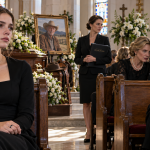
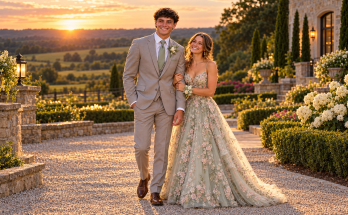
Gabriel stepped into the hospital room holding attorney Daniel Price’s hand like he was afraid the floor itself might move beneath him. My oldest son was twenty. Tall now. Broad shoulders.
Robert’s mannerisms in places that had nothing to do with blood. The way he rubbed his thumb against his index finger when nervous. The way he looked at the floor before delivering bad news. The way he always stood slightly between his younger siblings and whatever frightened them.
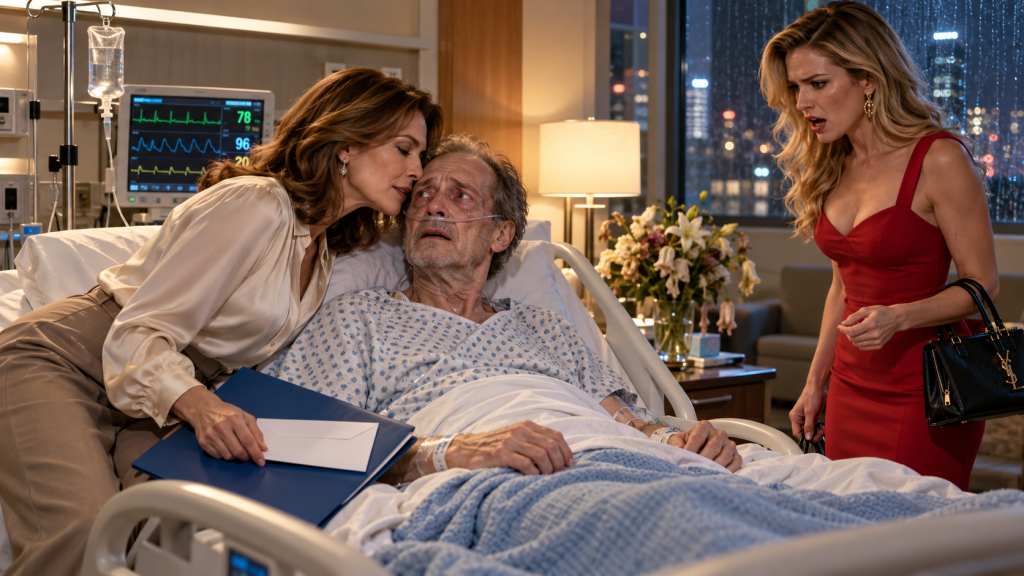
Robert stared at him. “Gabriel…” My son did not answer. Daniel Price closed the door behind them. Then he looked at me. “The emergency order was signed at 10:36.” Danielle’s face tightened. “What emergency order?”
Daniel set a thin folder on the counter.
“The transfer of the Mendoza Holdings shares into the new trust has been temporarily restrained pending review.”
Danielle stared at him.
“What does that mean?”
“It means no distributions, transfers, redemptions, or beneficiary changes involving the disputed shares until the court determines whether the transfer was valid.”
Robert’s breathing became shallow.
He looked at me.
“You filed against me?”
I almost laughed.
Even now.
Dying.
Yellow-skinned.
Barely able to raise his head.
And the betrayal that offended him most was mine.
“You transferred eighteen million dollars in company shares away from your four children.”
“They aren’t—”
He stopped.
Too late.
Gabriel looked up.
“They aren’t what?”
The room went silent.
I closed my eyes.
That was the moment I had dreaded for twelve years.
Not Danielle.
Not the affair.
Not the money.
This.
My son hearing half a truth from a dying man who had already used it as a weapon.
I moved toward Gabriel.
“Not here.”
He looked at me.
“Mom.”
“Not like this.”
His face tightened.
“I already know something.”
Robert whispered,
“Valerie…”
I turned toward him.
“No.”
My voice was quiet.
“You do not get to control when truth exists anymore.”
Danielle was still holding the white envelope.
Her fingers trembled around the DNA reports and fertility records.
She looked between Gabriel and me.
Then at Robert.
“What does he mean?”
I took the envelope from her.
Not roughly.
Just firmly.
“This does not belong to you.”
“It concerns his child.”
Her hand went to her stomach.
I looked at her belly.
Then back at Robert.
“Maybe.”
Danielle froze.
Robert shut his eyes.
She stared at me.
“What is that supposed to mean?”
I did not answer.
Not yet.
Because unlike Robert, I had learned that truth did not need to be hurled simply because it could hurt someone.
Gabriel was the person who mattered in that room.
Not Danielle.
Not even Robert.
My son.
I touched his arm.
“Come outside.”
He did.
Daniel Price followed us into the hallway.
The hospital was almost silent at midnight.
A cleaning cart squeaked somewhere beyond the nurses’ station.
Rain tapped against the dark windows.
Gabriel leaned against the wall.
“Mom, what is happening?”
I wanted to lie.
Just for five more minutes.
Parents do that sometimes.
We call it protection when what we really mean is delay.
But Gabriel was twenty.
And he had already found enough to know that his life contained a locked room.
I took his hand.
“You remember when you were little and Dad told you we needed help from doctors to have children?”
He nodded slowly.
“Yes.”
“He said there were complications.”
“Yes.”
I swallowed.
“Your father was infertile.”
Gabriel’s face changed.
I continued before fear could invent something crueler.
“You were conceived through donor insemination.”
He stared at me.
The hallway seemed to narrow.
“So he’s not my biological father?”
“No.”
The word broke something in his face.
I held tighter.
“But he is your legal father.”
“He chose to become your father.”
“He signed the clinic consent forms.”
“He was there when you were born.”
“He named you.”
“He raised you.”
“He is the only father you have ever known.”
Gabriel pulled his hand away.
“Did he know?”
“Yes.”
His voice sharpened.
“All twenty years?”
“Yes.”
He turned toward the hospital window.
I waited.
Then he asked the question that tore me apart.
“Did you know?”
“Yes.”
He spun around.
“Mom.”
“I knew we needed a donor.”
“But the others?”
I took a breath.
“All four of you were conceived through the same fertility program.”
His mouth opened.
I continued.
“Your father and I agreed to keep it private until you were old enough to understand and until each of you could decide what you wanted to know about the donor.”
He stared at me.
“You never told us.”
“No.”
“Why?”
“At first because you were children.”
“And later?”
That was harder.
“Because Robert kept saying it would hurt you.”
Gabriel laughed once.
A bitter little sound.
“And now he’s using it to take money away from us.”
“Yes.”
I did not protect Robert from that sentence.
Gabriel covered his face.
For a long moment, he did not speak.
Then:
“Does Sofia know?”
“No.”
“Lucas?”
“No.”
“Elena?”
“No.”
His three younger siblings were seventeen, fifteen, and twelve.
Still at home.
Still believing their father’s worst secret was an affair.
I said:
“They will hear it carefully.”
“With a therapist if necessary.”
“With records.”
“With time.”
“Not tonight.”
Gabriel looked at me.
“Why did Dad do this?”
I knew which part he meant.
Not the donor.
The trust.
The exclusion.
I whispered:
“Because he decided biology mattered only when it was financially useful.”
Gabriel looked away.
That sentence would hurt me for years.
Daniel Price stepped closer.
“There’s something else you should understand, Gabriel.”
My son looked at him.
Daniel spoke carefully.
“The fact that you and your siblings were donor-conceived does not automatically erase your legal relationship with your father.”
Gabriel frowned.
“Then why did he write that?”
“Because he was trying to create a trust structure that treated biological descent as a condition.”
“Can he do that?”
Daniel paused.
“That question is complicated.”
Good lawyer.
No dramatic certainty.
“The trust language is being challenged.”
“The company shares are subject to a shareholder agreement.”
“Some of the shares may also involve marital-property issues.”
“And your father signed written fertility-clinic consents acknowledging legal parentage.”
Gabriel stared at the floor.
“So he may have built the whole thing on a lie.”
Daniel nodded.
“Possibly several.”
That was when the door behind us opened.
Danielle stepped into the hallway.
She was crying.
Not theatrically.
Not like the mistress I had imagined for twelve years.
Like a frightened pregnant woman who had just discovered the man she loved had lied about something fundamental.
She looked at me.
“You said all four children were donor-conceived.”
“Yes.”
She swallowed.
“Because Robert couldn’t have children.”
“Yes.”
“Couldn’t?”
I understood.
I looked toward Robert’s room.
Then back at her.
“The report from twelve years ago showed persistent azoospermia.”
She stared.
“What does that mean?”
Daniel answered quietly.
“No sperm detected.”
Danielle’s face lost all color.
Her hand went to her stomach again.
I felt no triumph.
That surprised me.
For twelve years, I had imagined the woman on the screen.
Red lips.
Silk robe.
Laughing while my baby cried in the next room.
I imagined wanting to see her hurt.
But standing there, watching her realize Robert may not be the biological father of the child she carried, revenge felt childish.
The truth was already cruel enough.
She whispered,
“He told me the doctors were wrong.”
I said nothing.
“He said he’d had treatment.”
Still nothing.
“He said it had changed.”
Gabriel looked at her.
“Did you know about us?”
Danielle stared at him.
“I knew your father said you weren’t biologically his.”
My son flinched.
She immediately shook her head.
“I’m sorry.”
“No.”
Gabriel’s voice hardened.
“What did you think that meant?”
Danielle cried.
“He told me your mother had used a donor because she desperately wanted children.”
“That he agreed.”
“That you were legally his.”
“But he said he wanted one child who was biologically his before he died.”
I closed my eyes.
Of course.
Robert had turned even infertility into romance.
A dying man seeking his true bloodline.
Danielle whispered,
“I believed him.”
I looked at her stomach.
“If the trust depends on that baby being Robert’s biological child, then you need independent counsel.”
She stared at me.
“You’re helping me?”
“No.”
I shook my head.
“I’m telling you not to trust anyone in this room blindly.”
That included me.
Especially me.
She deserved her own lawyer.
Her child deserved one too.
At 12:26 a.m., Robert’s condition worsened.
The nurse came into the hallway.
“Family?”
I looked at Gabriel.
Then at Danielle.
Then at Daniel Price.
The nurse continued.
“He’s asking for his wife.”
Danielle looked at me.
I almost corrected the nurse.
Ex-wife in spirit.
Wife on paper.
Instead, I walked back into the room.
Robert was breathing through an oxygen mask now.
His eyes found mine.
Fear lived there.
Not fear of death.
Fear of losing authorship.
He lifted one shaking hand.
I moved closer.
“Val.”
“Yes.”
“Gabriel knows.”
“Yes.”
He shut his eyes.
“I didn’t want him to find out like this.”
I felt something hard inside me.
“You created a trust calling him non-biological issue.”
He opened his eyes again.
“I was trying to fix things.”
“For whom?”
No answer.
“Danielle?”
Still nothing.
“Her baby?”
His eyes filled.
“I wanted a son who was mine.”
I stared at him.
“You had two sons.”
“You know what I mean.”
“Yes.”
That was the horror.
I did.
“You mean genetically yours.”
He looked ashamed.
“Yes.”
I pulled the chair closer.
Then sat.
“You held Gabriel when he had pneumonia at three.”
Robert cried.
“You taught Lucas to ride a bike.”
His face crumpled.
“You stayed up all night when Elena had surgery.”
“Stop.”
“You called Sofia your little shadow.”
“Valerie…”
“You signed every fertility consent form.”
“I know.”
“You chose them.”
“I know.”
“Then twelve years later you decided their blood mattered more than everything you had actually done as their father.”
He turned his face away.
The monitor beeped.
Slow.
Steady.
Merciless.
Finally he whispered:
“I was angry.”
“At whom?”
“Myself.”
That answer surprised me.
He continued.
“I hated knowing I couldn’t…”
He stopped to breathe.
“Couldn’t give you children.”
“You did give me children.”
“No.”
“Yes.”
I leaned closer.
“Fatherhood is not sperm.”
Tears moved into his hairline.
“I didn’t understand that then.”
“You understood it when they called you Dad.”
He closed his eyes.
I sat back.
For years, I had imagined this bedside moment as revenge.
I thought I would finally tell him everything.
Every hotel receipt.
Every transfer.
Every night I cried without making noise.
Every lie.
Every humiliation.
Instead, sitting beside a dying man, I realized he already knew what he had done.
My anger did not need to perform.
I said:
“You asked me not to destroy your name.”
He opened his eyes.
“I’m not going to.”
Hope appeared too quickly.
Then I finished.
“I’m going to stop protecting it.”
The hope vanished.
That was the difference.
I was not going to call newspapers.
Not going to turn his funeral into a spectacle.
Not going to gather our children around his bed and read twelve years of adultery aloud.
But I was finished cleaning his history.
If the children asked, I would answer.
If the court asked, I would testify.
If the company asked, I would provide records.
If Danielle asked what he promised me versus her, I would show documents.
Silence had been my choice for twelve years.
Now truth would be theirs.
Robert whispered:
“Is Danielle’s baby mine?”
I stared.
He genuinely did not know.
“Did you ever have repeat fertility testing?”
“No.”
“Did a doctor ever tell you the condition reversed?”
He closed his eyes.
“No.”
There it was.
He had not believed medicine.
He had believed desire.
“I don’t know whose baby it is,” I said.
He started crying again.
Not because of Danielle’s betrayal.
Because his fantasy of biological redemption had cracked.
That made me sadder than I wanted to admit.
“What happens to the trust?” he asked.
“Lawyers.”
Even dying, he almost smiled.
“You planned this.”
“Yes.”
“How long?”
“Twelve years.”
His eyes widened.
Not because he didn’t know I knew about Danielle.
Because he finally understood the scale.
I opened my handbag.
Pulled out a small flash drive.
Receipts.
Transfers.
Messages.
Hotel confirmations.
Company records.
Copies of fertility consent forms.
The newer will.
The trust.
I placed it on the table beside him.
“You thought I spent twelve years being quiet.”
“I spent twelve years making sure your lies couldn’t become my children’s inheritance.”
He stared at the drive.
“Why didn’t you leave me?”
That question had followed me too.
I answered it honestly.
“At first?”
“Yes.”
“I was terrified.”
He swallowed.
“We had four children.”
“My practice barely existed.”
“You controlled most of the money.”
“I had no idea what leaving would look like.”
He closed his eyes.
“And later?”
I looked at him.
“Later I stayed because I wanted the children older.”
“Then because I wanted my own income.”
“Then because your company became tangled with our assets.”
“Then because every year I told myself I had already survived the last one.”
He whispered:
“Did you ever still love me?”
That was the cruelest question.
“Yes.”
His face broke.
“Yes,” I repeated.
“Sometimes.”
“Not all the time.”
“Not enough to trust you.”
“But yes.”
That truth hurt him more than hatred would have.
Good.
Not because I wanted pain.
Because truth should be allowed its actual shape.
The children arrived before dawn.
Not because I called them to witness death.
Because Robert asked.
Gabriel drove Sofia and Lucas.
My sister brought Elena.
Danielle stepped out before they entered.
That was her choice.
I was grateful.
Robert saw the children one at a time.
Gabriel first.
I stayed near the door.
My son stood beside the bed.
Robert whispered:
“I’m sorry.”
Gabriel’s face stayed still.
“For what?”
Robert cried.
“Too much.”
“No.”
Gabriel shook his head.
“Pick something.”
I almost intervened.
Then stopped.
He deserved specificity too.
Robert breathed through pain.
“I’m sorry I treated biology like it erased being your father.”
Gabriel’s jaw tightened.
Robert continued.
“I’m sorry I tried to leave you less because of something you never chose.”
Tears filled Gabriel’s eyes.
“Did you love me?”
Robert answered immediately.
“Yes.”
Gabriel’s face twisted.
“Then why?”
Robert closed his eyes.
“Because people can love you and still be weak enough to hurt you.”
Gabriel looked at me.
I gave him nothing to use.
No answer.
This belonged between them.
My son leaned down.
Kissed Robert’s forehead.
Then whispered:
“I love you too.”
Robert sobbed.
Gabriel continued.
“But I don’t forgive this yet.”
That may have been the bravest thing anyone said that night.
Love without instant forgiveness.
Robert nodded.
“Okay.”
Sofia came next.
She did not know about the donor yet.
Neither did Lucas or Elena.
Robert did not tell them.
For once, he obeyed a boundary.
He apologized for the affair.
Sofia cried.
Asked whether he ever loved Mom.
He said yes.
She asked whether he loved Danielle.
He said yes.
Sofia looked furious.
“You can’t love two people.”
Robert whispered:
“You can.”
Then:
“But loving two people doesn’t make lying to both of them honorable.”
That was the closest he came to wisdom.
Lucas barely spoke.
He stood beside the bed with his hands in his pockets.
Robert said:
“I’m sorry.”
Lucas replied:
“Okay.”
Not forgiveness.
Not cruelty.
Just the only word a fifteen-year-old had.
Elena was last.
Twelve.
Still young enough that death seemed like an adult trick.
She climbed onto the edge of the bed.
Robert touched her hair.
“You’re my baby.”
She cried.
“I’m not a baby.”
“Yes, you are.”
She laid her head on his shoulder.
“Are you scared?”
Robert looked at me.
Then answered her.
“Yes.”
Elena whispered:
“Me too.”
He died at 4:18 a.m.
Not during a confession.
Not while holding Danielle’s hand.
Not after some final curse.
He simply stopped breathing while I sat on one side and Elena slept in a chair near the window.
The monitor changed.
The nurse entered.
Then silence arrived.
After thirteen years of marriage and twelve years of betrayal, Robert’s last moment was not dramatic.
His hand was warm.
Then it wasn’t.
That was all.
Danielle cried in the chapel.
I did too.
For different versions of the same man.
The funeral came six days later.
People expected me to expose him.
They had heard rumors about Danielle appearing at the hospital.
They had seen lawyers.
Company executives.
Whispers.
I said nothing publicly.
The obituary named all four children.
No mention of biology.
No mention of Danielle’s pregnancy.
No saintly language about devotion.
Just facts.
Father.
Husband.
Business founder.
Son.
Friend.
Complicated human being reduced to appropriate nouns.
Danielle did not attend.
Her choice.
The real war began afterward.
Robert’s will was filed.
The newer one.
The one I had shown him.
It left personal property and several investment accounts partly to Danielle.
That was painful.
Legally possible in some respects.
But he had also attempted to move controlling company shares into the trust for Danielle’s unborn child.
The children were excluded based on the phrase:
not biological issue of the settlor.
Daniel Price challenged the structure on several grounds.
Not because donor-conceived children automatically have identical rights in every private trust.
The law can become technical.
The challenge rested on the actual documents.
The fertility consent agreements.
The company shareholder restrictions.
Robert’s earlier estate plan.
The timing of the transfer.
The source of certain shares.
And evidence that marital assets had been moved without the required consent.
For sixteen months, nothing felt settled.
That mattered.
There was no magical morning where a judge read one sentence and handed me eighteen million dollars.
Real legal conflict is slow.
Expensive.
Unromantic.
Deposition rooms.
Tax returns.
Experts.
Corporate valuation.
Medical records.
Arguments over definitions.
My children hated it.
So did I.
The company board froze major distributions while ownership was litigated.
Employees became nervous.
Robert’s business partners blamed Danielle.
Some blamed me.
A few blamed dead Robert, which at least had the benefit of accuracy.
Then came the paternity question.
Danielle needed to establish whether her unborn child fit the trust description Robert had written.
She hired her own attorney.
Good.
The court approved testing after the baby was born, using preserved hospital tissue and verified DNA material from Robert.
The child was born healthy.
A boy.
Danielle named him Samuel.
I learned that through lawyers.
Not gossip.
The DNA result came seven weeks later.
Robert was not Samuel’s biological father.
I sat in Daniel Price’s office reading the report.
Expected satisfaction.
Felt none.
I asked:
“Does Danielle know?”
“Yes.”
“How is she?”
Daniel looked at me.
“That is not a legal question.”
“I know.”
He sighed.
“According to counsel, devastated.”
I stared at the page.
“Who is the father?”
“Not relevant to our matter unless she raises it.”
Good.
Samuel did not deserve his conception to become courtroom entertainment.
Later, I learned Danielle had been involved briefly with another man during one of Robert’s periods of pulling away.
She had believed Robert was the father because of timing.
Maybe she lied to him.
Maybe she lied to herself.
I did not investigate.
I was done collecting other women’s shame.
The DNA result weakened the trust’s stated biological premise.
But it did not automatically erase Samuel.
Robert had named a specific unborn child associated with Danielle in some documents.
Other documents used biological language.
Lawyers fought about that too.
Eventually, the settlement did something I had not expected.
Samuel received a protected financial provision.
Not eighteen million.
Not company control.
A much smaller trust funded partly from Robert’s personal estate, structured so Danielle could not simply withdraw it for herself.
My children agreed.
Gabriel surprised me.
He said:
“The baby didn’t do anything.”
Exactly.
Sofia agreed.
Lucas shrugged and said:
“Dad made enough mess. We don’t need to make more.”
Elena asked only:
“Is he our brother?”
That was harder.
I answered:
“Not biologically.”
“Not legally in the same way.”
“But he is part of something your father created.”
She thought.
“Can I just call him Samuel?”
“Yes.”
Children sometimes find the cleanest language.
The disputed company shares were eventually divided under a settlement rather than one side winning everything.
Some transfers into Robert’s new trust were unwound.
Some personal bequests to Danielle remained.
My marital property claims were resolved.
The four children received meaningful interests through a restructured family holding arrangement.
Independent trustees.
Independent management.
No child suddenly became an eighteen-million-dollar cash recipient.
Good.
Money that large can become another kind of violence when dropped onto grief.
The company stayed operational.
That mattered to me.
Hundreds of employees had no part in Robert’s private life.
They deserved paychecks that did not depend on our family collapsing elegantly.
Gabriel joined the company briefly after college.
Then left.
Everyone expected him to take Robert’s place.
He refused.
“I don’t want Dad’s chair to become my personality.”
I almost applauded.
He became an engineer instead.
Built bridges.
Real ones.
Sofia went into medicine.
Lucas became a teacher.
Elena studied photography.
None of them built a life around proving Robert wrong.
That was the best outcome.
Telling the younger children about donor conception was harder than any courtroom.
We waited until several months after the funeral.
Too long?
Maybe.
Too soon?
Maybe.
Parenting rarely offers exact timing.
Dr. Miriam Hale, a family therapist experienced in donor conception, helped us.
We sat in my living room.
No hospital.
No lawyers.
No envelopes.
I told them the truth.
Robert and I had wanted children.
Medical testing showed we needed donor sperm.
We chose a fertility program.
Robert signed consent.
We agreed he would be their father.
The donor was not a secret because of shame.
But we had delayed too long because Robert feared losing how they saw him.
Sofia cried first.
“So Gabriel knew?”
“Yes.”
“For months?”
“Only shortly before Dad died.”
She looked hurt.
“Why him?”
“Because he found part of the trust.”
Not favoritism.
Circumstance.
Lucas asked:
“Do we have the same donor?”
“Yes.”
Elena asked:
“Can we know who he is?”
“Possibly, depending on the clinic records and what you choose.”
Then she asked the question I feared.
“Does this mean Dad wasn’t our real dad?”
I answered immediately.
“No.”
She stared.
“Biology and parenthood are different questions.”
“Robert was your father.”
“He also made choices that hurt you.”
“Both are true.”
Lucas looked angry.
“So Dad knew and still wrote that trust.”
“Yes.”
He stood up.
Paced.
Then punched a couch cushion.
I let him.
Sofia whispered:
“That’s disgusting.”
I did not defend Robert.
Nor did I turn him into a monster.
I said:
“It was a cruel decision.”
That is what it was.
Not proof his twenty years of fatherhood were fake.
Proof that fear and ego can corrupt even real love.
For months, they processed differently.
Sofia wanted donor records immediately.
Gabriel did not.
Lucas said he never wanted to know.
Then changed his mind at twenty-four.
Elena treated it as a mystery for a while.
I had to remind her:
“The donor is a person.”
“Not a missing character in a movie.”
She rolled her eyes.
Later thanked me.
The clinic records eventually gave them access to identifying information under the program’s updated policies and consent structure.
They made their own choices.
I did not orchestrate a reunion.
This was their biology.
Not my redemption project.
Gabriel eventually met the donor once.
Coffee.
Forty minutes.
He came home and said:
“He has my eyebrows.”
Then:
“And absolutely none of Dad’s terrible jokes.”
That was enough for him.
Sofia developed a longer correspondence.
Lucas never met him.
Elena waited until she was thirty.
Choice.
That became the word I wished our family had learned earlier.
Danielle and I met again three years after Robert died.
She requested it.
I almost declined.
Then agreed.
A café in Evanston.
Public.
Quiet.
She looked different.
No red dress.
No perfume cloud.
Just jeans, a gray sweater, hair pulled back.
Samuel was with a babysitter.
She sat across from me.
“Thank you for agreeing to come.”
I nodded.
She took a breath.
“I owe you an apology.”
I looked at her.
“For which part?”
She almost smiled.
Fair.
“For sleeping with your husband for twelve years.”
Good beginning.
“For believing every cruel thing he told me about you.”
She swallowed.
“For laughing about you.”
My chest tightened.
That first video call still lived somewhere inside me.
Red lips.
Silk robe.
Tell her you have an early meeting.
Danielle continued.
“And for thinking that because he loved me, what I was doing to you mattered less.”
There.
Truth.
She did not say:
He manipulated me.
Though he had.
She did not say:
I was young.
Though she had been.
She owned her part.
I said:
“Thank you.”
She cried.
“I used to think you were pathetic.”
That hurt.
She continued quickly.
“Because you stayed.”
“I thought if you had any dignity you would leave.”
I looked at her.
“And then?”
“Then I became the woman he lied to.”
She wiped her face.
“He told me Samuel was his miracle.”
“He told me the trust proved I mattered more.”
“He told me he had finally built the family he actually wanted.”
I felt something sad and heavy.
Danielle whispered:
“I realized he had been feeding both of us a hierarchy.”
That was exactly it.
Wife.
Mistress.
Biological child.
Donor child.
Legitimate.
Illegitimate.
Chosen.
Discarded.
Robert needed people ranked so he could feel powerful deciding the order.
I asked:
“Do you regret Samuel?”
She looked horrified.
“No.”
“Good.”
“He is the best thing in my life.”
“Then don’t let Robert’s lie become part of how you explain your son.”
She cried harder.
“I don’t know how.”
“You will.”
That was the only advice I gave.
We never became friends.
But years later, when Samuel graduated high school, Danielle sent me a photograph.
I showed Elena.
She smiled.
“He looks like her.”
“Yes.”
No drama.
No inheritance battle.
Just a young man in a graduation gown.
Robert’s most destructive plan had failed to turn him into a weapon forever.
That mattered.
My psychology practice grew after Robert’s death.
People assumed I specialized in infidelity.
I did not.
I avoided it for years.
Too close.
Instead, I worked with grief.
Identity.
Family systems.
Later, I began seeing women navigating betrayal.
Carefully.
With supervision.
With boundaries.
I never told clients:
I know exactly how you feel.
Nobody does.
I learned to say:
“You do not have to make a decision at the same speed as your pain.”
That sentence came from my own life.
People judged me for staying twelve years.
Some called me strong.
Some called me calculating.
Some said I wasted my life.
They were all partly wrong.
I stayed because I was afraid.
Then because I was practical.
Then because I was angry.
Then because I had children.
Then because I had built a financial exit but not an emotional one.
Then because Robert got sick.
Then because cancer complicated everything.
Human motives do not line up neatly.
I did not spend twelve years smiling while plotting revenge every morning.
I packed lunches.
Saw patients.
Went to parent-teacher conferences.
Laughed.
Cried.
Sometimes forgot Danielle existed for an entire afternoon.
Sometimes hated Robert.
Sometimes loved him.
Sometimes wanted out.
Sometimes wanted the version of him I married to reappear.
He never did.
Or maybe he appeared in pieces.
That is what made leaving emotionally difficult.
Evil is easy to leave.
Contradictory people are harder.
Robert could betray me and still sit beside Elena’s hospital bed for three nights.
He could wire money to Danielle and still remember my mother’s birthday.
He could lie to me and still make coffee exactly the way I liked it.
None of those good acts erased the betrayal.
None of the betrayal erased every good act.
Learning to hold both truths was painful.
Necessary.
The children needed that from me.
They did not need me to tell them their father had never loved them.
Because he did.
He also failed them.
Both.
Always both.
The hospital nurses learned the truth slowly.
One wrote me a note months later.
I called you a saint. I’m sorry.
I almost laughed.
She continued:
I understand now that caregiving does not always mean reconciliation.
That meant something to me.
I had cared for Robert because he was dying.
Because he was my children’s father.
Because I needed to know who I was when cruelty would have been easy.
Not because he deserved sainthood from me.
Not because marriage vows erased betrayal.
Not because I forgave everything.
Care can be an expression of character without becoming absolution.
That became one of the most important lessons of my life.
The blue folder stayed in my office for years.
Robert’s final will.
The trust.
The exclusion language.
At first, I kept it as evidence.
Later, as warning.
Then one day, when Elena was twenty-six, she found it.
She was helping me move offices.
“What’s this?”
I looked.
The blue folder.
For a moment, I was back in the hospital.
Danielle’s red dress.
Robert crying.
11:47 p.m.
I said:
“Old paperwork.”
Elena opened it.
Saw her father’s name.
Then the trust language.
She looked at me.
“You kept this?”
“Yes.”
“Why?”
I thought.
“I don’t know anymore.”
She closed the folder.
“Can we shred it?”
My first instinct was no.
Then I realized every legally necessary copy already existed with counsel.
The paper in my office had become a relic.
I nodded.
We fed it through the shredder.
Page by page.
Not ceremonially.
The machine jammed twice.
Elena swore.
I laughed.
Perfect.
Trauma rarely ends with violins.
Sometimes it ends because the shredder overheats.
Robert’s first message to Danielle remained longer.
I miss you, my love.
For years, that sentence could still make my stomach turn.
Then one day, I read it while organizing archived files.
Nothing happened.
No shaking.
No rage.
Just words written by a dead man to a woman I no longer hated.
I deleted my personal copy.
The legal archive remained where required.
I did not need it in my phone.
That night, I slept better.
Gabriel married at thirty-one.
Before the ceremony, he came to my hotel room.
Nervous.
Tie crooked.
I fixed it.
He said:
“Mom?”
“Yes?”
“Did Dad ever regret Danielle?”
I thought.
“Sometimes.”
“Did he regret you?”
That question surprised me.
“No.”
“How do you know?”
“Because regret and love weren’t his problem.”
“What was?”
“Entitlement.”
Gabriel looked at me.
I continued.
“He thought loving someone gave him the right to rearrange truth around what he wanted.”
My son nodded slowly.
Then said:
“I’m scared of becoming him.”
I touched his face.
“Then notice when someone tells you no.”
He frowned.
“That’s it?”
“Not all of it.”
I smiled.
“But it’s a good beginning.”
He laughed.
Then went downstairs and married a woman who corrected him publicly and loved him privately.
Robert would have been confused.
I was delighted.
Sofia had two children.
Lucas adopted one.
Elena chose not to have any.
Nobody treated her decision as tragedy.
We had learned something.
Family did not require reproduction to prove itself.
Perhaps that was the most ironic inheritance Robert left.
He spent his last months obsessed with biological continuation.
His children grew up understanding family more broadly than he ever did.
Years later, Samuel contacted Gabriel.
Not through lawyers.
Through social media.
He was twenty.
He wrote:
I know we aren’t technically brothers, but our lives got tied together before I was born. Would you ever want to meet?
Gabriel showed me the message.
“What should I do?”
I smiled.
“You’re thirty-nine.”
“I know.”
“So why are you asking your mother?”
“Because you enjoy suffering.”
“True.”
Then I said:
“Do what you want.”
He met Samuel.
They had lunch.
No magical bond.
No rejection.
Just two men comparing stories about a dead person who had shaped both families differently.
Gabriel later told me:
“He asked if Dad was a good father.”
“What did you say?”
“The truth.”
I waited.
“He was.”
Then:
“Until he wasn’t.”
That sentence was imperfect.
But I understood it.
One winter, long after the lawsuits ended, I visited Robert’s grave alone.
I rarely went.
The children did occasionally.
Danielle never, as far as I knew.
Snow covered the grass in thin patches.
I stood before his name.
Robert Alejandro Mendoza.
Beloved father.
Businessman.
Dates.
Stone simplifies people.
I brought no flowers.
I said:
“You were right about one thing.”
The wind moved through the bare trees.
“I did have what I needed.”
Not him.
Never him.
The children.
My mind.
My work.
The records.
My ability to leave eventually.
My ability to care without becoming blind.
My ability to tell the truth after silence stopped protecting anyone.
I looked at his name.
“For twelve years, I thought my punishment was knowing.”
That was true.
Knowing about Danielle.
Knowing every lie.
Knowing the hotel names.
Knowing what perfume meant when he came home.
But knowledge had not been punishment.
Knowledge had been painful.
Silence had been the prison.
And Robert’s punishment?
It was not cancer.
I never believed that.
Illness is not moral arithmetic.
Cancer did not arrive because he cheated.
Good people get cancer.
Faithful people die.
Cruel people live to ninety.
I refused to turn disease into divine revenge.
His punishment was simpler.
He spent years building a family he did not know how to honor.
Then died knowing they would finally see him without the version he curated.
That was consequence enough.
And even that was not mine to savor.
I turned away from the grave.
Went home.
Made coffee.
Answered patient emails.
Called Elena.
Argued with Lucas about Christmas.
Ordinary life.
That became my victory.
Years after Robert died, a young therapist at my practice asked why I had never remarried.
I smiled.
“I dated.”
“Seriously?”
“Twice.”
“What happened?”
“One wanted Florida.”
“I hate humidity.”
She laughed.
“That’s it?”
“Yes.”
Not every woman who survives betrayal needs a new husband to prove she healed.
I built a life I liked.
A condo near the lake.
Books everywhere.
Grandchildren leaving toys under my couch.
Friends who knew the whole story and rarely mentioned it.
Sunday dinners.
Quiet mornings.
No phone turned face down on the table.
No hotel receipts hidden in pockets.
No pretending.
That was romance enough.
On my seventieth birthday, all four children came.
Gabriel brought his wife.
Sofia brought too much dessert.
Lucas argued with the caterer.
Elena took photographs nobody hated.
At one point, they gave me a box.
Inside were copies of four letters.
One from each child.
I complained immediately.
“You know I hate emotional ambushes.”
Elena said:
“Too bad.”
Gabriel’s letter began:
Thank you for never telling us Dad didn’t love us just because he failed us.
I stopped reading.
Couldn’t continue for a minute.
Sofia’s said:
Thank you for teaching me biology can tell me where I came from without telling me who belongs to me.
Lucas wrote:
Thank you for letting me be angry longer than everyone thought was polite.
And Elena:
Thank you for not making your silence our inheritance.
That one finished me.
I cried.
Ugly crying.
Grandchildren laughing.
Sofia handed me tissues.
Gabriel said:
“Saint Valerie.”
I pointed at him.
“Never call me that.”
Everyone laughed.
Good.
I had spent enough years being called saintly for tolerating what should never have been tolerated.
I wanted a different legacy.
Not endurance.
Discernment.
Not revenge.
Boundaries.
Not silence.
Choice.
Later that night, after everyone left, Elena stayed behind to help.
She found the old white envelope in a drawer.
The one from Robert’s hospital room.
Empty now.
She held it up.
“Why do you still have this?”
I stared.
No DNA reports.
No bank records.
No trust documents.
Just paper.
I smiled.
“Habit.”
She tore it in half.
I laughed.
“Excuse me?”
“You didn’t stop me.”
She tore it again.
Then dropped it into the recycling bin.
I looked at the pieces.
Nothing happened.
No grief.
No anger.
Just paper.
Good.
Some things should become ordinary again.
Before she left, Elena kissed my cheek.
“Mom?”
“Yes?”
“What did you whisper to Dad that night?”
I looked at her.
She had never asked.
None of them had.
I smiled faintly.
“I told him his punishment was just beginning.”
Her eyebrows rose.
“That sounds terrifying.”
“I was angry.”
“What did you mean?”
I thought for a long time.
Then answered differently than I would have at fifty.
“At the time, I thought I meant the trust.”
“The affair.”
“The truth.”
“The children finding out.”
“The company.”
“The money.”
“And now?”
I looked toward the dark window.
“Now I think I meant he could no longer control what everyone believed about him.”
Elena nodded.
“That’s fair.”
Then she asked:
“Was it revenge?”
“No.”
I smiled sadly.
“Not in the end.”
“What was it?”
I thought of Robert’s hand in mine.
Danielle’s red dress.
Gabriel entering with a lawyer.
The children learning where their biology came from.
Samuel growing up outside a trust war.
The blue folder shredded.
The grave under snow.
My life afterward.
“The end of editing.”
Elena frowned.
“What?”
“For twelve years, your father edited reality.”
“I edited myself.”
“Danielle edited what she knew.”
“Grandparents edited what they told people.”
“Lawyers edited documents.”
“Everyone kept arranging the story.”
I touched her hand.
“That night, it stopped being arranged.”
She smiled.
“I like that better.”
So did I.
Robert believed death would freeze his version of himself.
Successful businessman.
Devoted father.
Beloved husband.
Private lover.
Future biological son.
A neat legacy divided into accounts and shares.
But death does not preserve lies just because the person who told them is no longer alive.
Records remain.
Children ask questions.
Women stop protecting reputations that cost them too much.
And sometimes a life built on secrets does not explode.
It simply gets corrected.
One document.
One conversation.
One boundary at a time.
For twelve years, Robert thought my silence meant ignorance.
Then he thought it meant weakness.
At the end, he learned what it had actually become.
Preparation.
But the thing I am proudest of is not that I was prepared to fight him.
It is that once the fight was over, I stopped fighting a dead man.
I let my children love him.
I let them hate parts of him.
I let Danielle raise Samuel without my judgment.
I let myself remember good mornings without feeling disloyal to the bad ones.
I let truth become information instead of a weapon.
That took longer than gathering evidence.
Longer than court.
Longer than grief.
But eventually, Robert became what all people become in memory.
Complicated.
Dead.
Unable to control the living.
And I became something I had almost forgotten how to be.
Free.
THE END STORIES! THANK YOU FOR READING GOOD LUCK !❤️
Related Posts