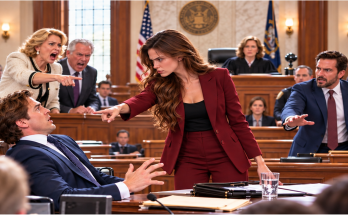
“Don’t believe him! He’s lying about all of it!” Chloe pounded the bedroom door again. Arthur did not move. Neither did I. The envelope from my mother trembled in my hand. For years, I had imagined hearing her voice again. Sometimes in dreams.
Sometimes in the middle of grocery stores when a woman laughed the same way she used to. Sometimes when I was sick and wanted somebody to tell me I would be all right. Now her handwriting was resting against my palm, and my best friend was screaming from the hallway that the man I had married less than six hours earlier was lying about her.

I looked at Arthur. “Open the door.” He closed his eyes. “I think you should read the letter first.” “No.” My voice surprised even me. “You have already decided too much for me today.” He looked down. That landed. “Open the door.” Arthur unlocked it. Chloe nearly fell inside. Her face was wet with tears.
Her wedding dress from earlier had been replaced by jeans and a sweatshirt, as if she had driven home, changed, discovered something horrifying, then raced back.
Her father, Peter, stood several feet behind her.
And behind him was Arthur’s eldest son, Victor.
The photograph from Arthur’s envelope flashed in my mind.
Peter and Victor.
Standing together.
Smiling.
The two men Arthur had just accused of destroying my mother.
Chloe rushed toward me.
“Please come with me.”
I stepped backward.
“What is happening?”
She looked at Arthur.
“You told her about Rosa?”
That was my mother’s name.
My stomach turned.
“You knew?”
Chloe looked at me.
Her face broke.
“Not everything.”
“You knew my mother worked for your family?”
“I found out three days ago.”
“Three days?”
“Yes.”
“And you said nothing?”
“My dad told me Arthur was confused.”
Peter moved forward.
“Chloe.”
She turned.
“No.”
Something in her voice stopped him.
She faced me again.
“My father said Grandpa had become obsessed with an old company scandal.”
“He said you were connected to a former employee who stole money.”
My skin went cold.
“Stole?”
“That is what I was told.”
Arthur whispered:
“Of course.”
Peter snapped:
“Do not pretend you are innocent.”
I looked between them.
One old man.
One middle-aged man.
Victor.
Chloe.
A dead mother.
A wedding I had entered for money.
And somehow I was still the person in the room who knew least.
I held up the envelope.
“Everybody stops.”
No one spoke.
I pointed at Arthur.
“You told me my mother was framed.”
“Yes.”
I pointed at Peter.
“Chloe says she was told my mother stole.”
Peter opened his mouth.
I raised my voice.
“No.”
“Not yet.”
Then I looked at Chloe.
“You said he is lying.”
She nodded.
“About what?”
Chloe swallowed.
“About being the innocent man who finally uncovered everything.”
Arthur’s face changed.
I turned toward him.
“What does she mean?”
He said nothing.
Chloe whispered:
“Read your mother’s letter.”
Arthur closed his eyes.
That frightened me more than anything.
I broke the seal.
The first line was written in the same handwriting I remembered from lunch notes and birthday cards.
My darling girl,
My vision blurred immediately.
I sat on the edge of the bed.
Chloe moved toward me.
I raised one hand.
“Please.”
She stopped.
I kept reading.
If you are holding this, Arthur has either finally become brave or finally run out of places to hide.
I looked up.
Arthur did not defend himself.
My pulse hammered.
I continued.
Whatever he has told you about Victor and Peter, understand this first: they were not the only people who failed me.
The room became silent.
Arthur looked suddenly older than seventy-six.
Not wealthy.
Not powerful.
Old.
I read aloud.
“‘Arthur did not create the fraud.’”
Victor folded his arms.
Peter stared at the floor.
“‘But after he learned the truth, he protected the men who did.’”
My throat tightened.
Chloe covered her mouth.
Arthur whispered:
“Yes.”
I looked at him.
“You knew?”
“Eventually.”
“How eventually?”
He looked toward the windows.
“Six weeks after your mother was accused.”
“Six weeks?”
“I found discrepancies.”
“You found proof?”
“Yes.”
“And what did you do?”
He did not answer.
My mother’s letter did.
He came to me privately.
He said he believed me.
He also said exposing the truth immediately could destroy the company, send his son to prison, implicate Chloe’s father, and collapse financing that employed nearly eight hundred people.
I stared at Victor.
His face remained hard.
Peter’s had gone gray.
I read faster.
Arthur asked me for time.
I gave him forty-eight hours.
He took six months.
I felt physically sick.
Arthur whispered:
“I was a coward.”
I ignored him.
During those six months, I lost my job, my professional license was suspended pending investigation, my name appeared in two newspapers, and several members of my own family decided I was a thief.
My hands started shaking.
That explained so much.
The whispers.
My grandmother crying when I asked where Mom had gone.
My uncle saying:
“Some people choose money over family.”
I had been nine.
Nine years old.
I had spent childhood believing my mother stole from rich people and ran.
I looked at Arthur.
“You let that happen?”
He could barely meet my eyes.
“Yes.”
I stood.
The letter slid toward the floor.
Chloe caught it.
I walked toward Arthur.
“You knew she was innocent.”
“Yes.”
“And you stayed quiet.”
“Yes.”
“Why?”
He looked at Victor.
Then Peter.
“Because I loved my son.”
Victor laughed bitterly.
“Don’t use me now.”
Arthur looked at him.
“I am not.”
Then back at me.
“I also loved the company.”
“Loved my name.”
“Loved what people thought I had built.”
“And I convinced myself that delaying the truth was different from burying it.”
My eyes burned.
“You let my mother be called a criminal because you were worried about your company?”
“Yes.”
I slapped him.
The sound cracked through the room.
Chloe gasped.
Peter stepped forward.
Arthur lifted a hand.
“No.”
He touched his cheek.
I had never hit anyone in my life.
The shame arrived immediately.
Not because he did not deserve my anger.
Because anger did not make my hand righteous.
“I shouldn’t have done that.”
Arthur looked at me.
“No.”
“You shouldn’t.”
He paused.
“But I understand.”
“I don’t need you to understand.”
I turned away.
I took the letter back from Chloe.
My hands shook so badly I had to sit again.
I continued reading.
Eventually, Arthur did expose part of the truth.
Part.
Of course.
Victor and Peter resigned from certain positions. Money was returned through private settlements. Lawyers wrote words like accounting irregularities and governance failures because wealthy men can hire language soft enough to survive almost anything.
Victor’s jaw tightened.
I looked at him.
“Did you steal?”
He did not answer.
Arthur said:
“Yes.”
Victor snapped:
“Shut up.”
I stood again.
“No.”
I pointed at Victor.
“Did you steal?”
His face hardened.
“We moved funds through subsidiaries.”
Peter said:
“Victor.”
“What?”
Victor looked at him.
“We are past euphemisms.”
Then he looked at me.
“Yes.”
The word entered me coldly.
“How much?”
“Initially?”
I laughed without humor.
“There are stages?”
He closed his eyes.
“About three-point-two million.”
Chloe whispered:
“Dad?”
Peter looked away.
I stared.
“Three-point-two million?”
Victor nodded.
“Over several years.”
“Your mother noticed invoices that didn’t reconcile.”
“She traced them.”
“She confronted Peter first.”
I looked at Peter.
My best friend’s father.
The man who had fed me at Thanksgiving.
The man who had once helped me move a sofa.
“You knew her?”
His eyes filled.
“Yes.”
“You framed her?”
He shook his head.
“Victor altered the general ledger.”
Victor snapped:
“And you provided the access credentials.”
Peter turned toward him.
“You said we were moving the exposure.”
“You knew what we were doing.”
Chloe shouted:
“Stop!”
Both men went silent.
She looked at her father.
“You told me she stole.”
Peter’s face collapsed.
“I told you what the family had publicly maintained.”
“That is not an answer.”
“No.”
He looked at her.
“I lied.”
Chloe stepped backward.
Her hand found mine.
For the first time that night, I did not pull away.
Peter continued.
“Rosa found us.”
“We thought she would go to the board.”
“Victor created records making it appear some transfers had been initiated from her account.”
“Then Arthur…”
He stopped.
I looked at Arthur.
“Then Arthur what?”
Arthur answered himself.
“I let the false narrative stand while I negotiated privately.”
I felt nauseated.
“So all of you destroyed her.”
“No.”
Arthur shook his head.
“Do not flatten it.”
I stared at him.
His voice remained steady.
“Victor and Peter committed the fraud.”
“They falsified records.”
“They shifted blame.”
“I discovered enough to stop the lie and failed to do so quickly.”
“We are not equally responsible.”
He looked at me.
“But my part is mine.”
I hated him for being precise.
Because precision made rage harder.
I returned to Mom’s letter.
Arthur eventually gave me proof sufficient to clear my professional record.
He paid my legal fees.
He offered me money.
I refused most of it.
That sounded like her.
Then:
But I accepted one thing.
Equity.
I stopped.
Arthur looked at me.
“Keep reading.”
I told Arthur that if his family’s greed destroyed my career, part of what they had built through that greed would belong to the child who had to live with my name afterward.
My pulse quickened.
Eight percent of Whitmore Holdings’ private development subsidiary was placed in trust for you.
I stared at the page.
Eight percent.
I knew nothing about finance, but I knew what Arthur’s name meant in that city.
Buildings.
Hotels.
Warehouses.
Land.
My mouth went dry.
I looked at Arthur.
“What is that worth?”
He did not answer.
I stood.
“How much?”
Victor said bitterly:
“Tell her.”
Arthur looked at me.
“Depending on valuation…”
“How much?”
“Between eleven and fourteen million dollars.”
I stopped breathing.
Chloe whispered:
“Oh my God.”
I almost laughed.
I had married a seventy-six-year-old man because I thought inheriting his money was my only path out of poverty.
And all along, there had been millions in my own name.
Millions linked not to seduction.
Not marriage.
Not inheritance.
My mother.
My mother’s work.
My mother’s humiliation.
My mother’s insistence that something stolen from her life not disappear completely.
I looked at Arthur.
“You knew?”
“Yes.”
“For how long?”
“Since the trust was created.”
“Since I was a child?”
“Yes.”
The room seemed to tilt.
“Why didn’t I know?”
Arthur’s face broke.
“Your mother set conditions.”
“What conditions?”
“She did not want control released while litigation remained active.”
“She also wanted you to reach twenty-five.”
“I’m twenty-eight.”
Silence.
Three years.
I stared at him.
“You had three years.”
“Yes.”
“Why didn’t you tell me?”
His voice lowered.
“I tried once.”
“When?”
“The first time you came to dinner with Chloe.”
I remembered.
Arthur asking what I did.
Where I lived.
Whether I was happy.
I thought he was merely kind.
“What happened?”
“I lost my nerve.”
My stomach turned.
“Again.”
“Yes.”
I laughed.
Not because anything was funny.
“Then you decided marriage would be easier?”
Arthur lowered his eyes.
“No.”
“Tell the truth.”
His voice became almost inaudible.
“Yes.”
I stepped backward.
Chloe whispered:
“Grandpa…”
I stared at him.
“You knew I had money of my own.”
“Yes.”
“You knew I was terrified of being poor.”
“Yes.”
“You listened to me talk about rent.”
“Yes.”
“You listened to me say I had nowhere to go.”
“Yes.”
“And you offered marriage while withholding the fact that I already had financial security?”
His eyes filled.
“Yes.”
My whole body went cold.
“That is monstrous.”
Arthur nodded.
“Yes.”
Victor laughed once.
“Finally.”
Arthur looked at him.
“Do not mistake my guilt for your innocence.”
Victor’s smile vanished.
I pointed toward Arthur.
“Why?”
He looked at me.
“Because I needed someone outside the family.”
“No.”
“You could hire a lawyer.”
“Yes.”
“An investigator.”
“Yes.”
“A trustee.”
“Yes.”
“So why me?”
He closed his eyes.
“Because your mother’s trust owns eight percent of Whitmore Urban Development.”
“The disputed transfers Victor and Peter buried involve the same subsidiary.”
“You had standing as a beneficiary and shareholder through the trust once it was disclosed.”
“Then why marry you?”
He did not answer immediately.
I waited.
Finally:
“Because Victor had already petitioned privately to have me declared incompetent.”
Chloe gasped.
Victor did not deny it.
Arthur continued.
“My estate plan was being challenged.”
“My board appointments were being attacked.”
“Any new transfer I made to you could be characterized as manipulation by a stranger.”
“But a wife…”
I finished.
“A wife would be harder to erase.”
He nodded.
I felt sick.
“You turned me into a legal tactic.”
“Yes.”
“You told me it was about companionship.”
“Partly.”
“Do not.”
My voice cracked.
“Do not put affection over coercion and call it complicated.”
Arthur went still.
I continued.
“You knew information that would have changed my decision.”
“Yes.”
“You withheld it because you thought I might refuse.”
“Yes.”
“Then I did not consent to the marriage you understood you were proposing.”
Silence.
Chloe started crying.
Arthur looked as though I had struck him again.
Good.
This time I used truth.
He whispered:
“You are right.”
Victor rolled his eyes.
“Oh, spare us.”
I turned on him.
“No.”
“You don’t get to mock accountability because you have less of it.”
His mouth closed.
Then Chloe said:
“Grandpa, tell her the rest.”
Arthur looked at her.
“What rest?”
“You changed the trust documents last month.”
His face tightened.
I turned.
“What did he change?”
Chloe pulled papers from her backpack.
“My father showed me copies.”
Peter whispered:
“Chloe.”
She ignored him.
She handed them to me.
“I thought Grandpa was trying to steal from the family by transferring assets to you.”
Arthur looked exhausted.
“I did transfer assets.”
I stared.
“How much?”
“Not to you personally.”
“What?”
“To a restitution trust.”
Victor exploded.
“You gave away forty percent of your voting shares!”
Arthur looked at him.
“I placed them in an irrevocable trust.”
“For whom?”
“Former employees.”
“Retirees.”
“Several whistleblowers.”
“And the company pension reserve.”
Victor stepped forward.
“That company belongs to us.”
Arthur’s expression changed.
For the first time all night, steel returned to him.
“No.”
“I founded it.”
“You inherited access.”
“There is a difference.”
Victor’s face reddened.
“You’re punishing your children.”
Arthur shook his head.
“I am correcting something I spent thirty years avoiding.”
Chloe looked at me.
“That is why I came here.”
“I thought he was marrying you to hide what he was doing.”
“Dad told me you had manipulated him.”
Peter closed his eyes.
Chloe continued.
“I believed it.”
Her voice broke.
“I believed you were using him.”
I stared at my best friend.
“That is why you said I was that kind of person?”
“Yes.”
“Not because I married for money?”
“Partly.”
She wiped her face.
“But mostly because Dad showed me documents and said you had been asking Grandpa about the will.”
“I never asked him about the will.”
“I know that now.”
“You cut me off.”
“I know.”
“You were the only person I had.”
Her face crumpled.
“I know.”
I looked away.
Chloe whispered:
“I am sorry.”
I could not say it was okay.
It wasn’t.
But I believed the apology.
That was different.
Arthur spoke.
“The marriage was my idea.”
“No one else’s.”
“I told her I intended to leave her financially secure.”
“That was true.”
“But I did not tell her she already was.”
Victor said:
“Because you needed a bride you could control.”
Arthur looked at him.
“Yes.”
The honesty stunned everyone.
He continued.
“And that was wrong.”
I turned toward him.
“Do you expect me to stay married to you?”
“No.”
That surprised me.
He walked to the desk and took out another folder.
He handed it to me.
Inside was a signed agreement.
Separate counsel certification.
A letter from an attorney.
“What is this?”
“A post-marriage acknowledgment.”
“I prepared it before today.”
“Why?”
“In case you wanted out the moment I told you.”
I looked up.
He continued.
“The restitution trust is irrevocable.”
“Your mother’s trust is yours regardless of our marriage.”
“You receive no additional control over either by remaining my wife.”
“I also executed a fixed bequest to you before the wedding.”
“How much?”
“Two hundred thousand.”
Victor scoffed.
Arthur ignored him.
“It is compensation for the disruption I caused, not payment for staying.”
“You can refuse it.”
I stared at the pages.
“And the marriage?”
“My attorney can begin annulment or divorce proceedings tomorrow.”
I laughed bitterly.
“Convenient.”
“Yes.”
“You engineered the trap and prepared the exit.”
“Yes.”
“Do you hear yourself?”
“Yes.”
He looked shattered.
“I have spent most of my life thinking preparation was the same as morality.”
That sentence silenced me.
He continued.
“I believed if I gave you an exit after manipulating you into entering, I had preserved your freedom.”
“I had not.”
No one spoke.
Then Peter said quietly:
“We should leave.”
I looked at him.
“No.”
He froze.
“You do not leave until I know what happened to my mother.”
Peter’s face drained.
Arthur looked at the letter.
“There is more.”
I sat again.
My mother’s words waited.
I left the city because I could no longer walk into a grocery store without wondering who had read the accusation.
Some relatives believed me. Some did not.
I wanted to take you with me.
My throat closed.
I read slower.
Your grandmother refused. She said I was unstable and that dragging a child across the country would destroy what little normal life you had left.
My grandmother.
The woman who raised me after Mom disappeared.
The woman who told me:
“Your mother made choices.”
I felt ill.
I fought her.
Arthur paid for a lawyer.
The custody dispute became ugly.
I stared at Arthur.
“You paid?”
“Yes.”
“Why didn’t she get me?”
His voice was barely audible.
“Because the fraud accusation had not yet been publicly corrected when the first hearing occurred.”
Of course.
His delay.
His cowardice.
It had legal consequences too.
I returned to the letter.
By the time my name was formally cleared, you were living with your grandmother, attending school, and terrified whenever adults argued about where you belonged.
I made the worst decision of my life.
I could barely see.
I stopped fighting.
My heart broke.
Not because I stopped loving you.
Because every time I visited, you cried when I left and cried when I arrived.
I remembered something.
A woman in a blue coat.
A bus station.
My grandmother gripping my shoulder too tightly.
I had thought it was a dream.
I convinced myself stability mattered more than being loved by me in person.
Maybe I was right.
Maybe I was a coward too.
Tears fell onto the paper.
I wrote.
Your grandmother returned some letters.
My hands went cold.
Others Arthur held because I asked him to keep them until you were old enough to hear everything.
I looked at him.
“How many?”
“Thirty-seven.”
I almost stopped breathing.
“Thirty-seven letters?”
“Yes.”
“Where are they?”
“In the library safe.”
I stood.
“Now.”
Arthur nodded.
We went downstairs.
The entire wedding night felt unreal now.
My dress trailed behind me through rooms filled with paintings and dark wood.
A bride walking through her husband’s mansion to collect decades of mail from her mother.
Chloe followed.
Peter and Victor stayed behind.
Or perhaps Arthur told security to keep them there.
I did not care.
In the library, Arthur opened a wall safe.
Inside was a narrow box.
My name.
Thirty-seven envelopes.
Birthdays.
Christmases.
Graduation years.
Some unopened.
Some with postal markings.
One was addressed to my grandmother.
RETURN TO SENDER written across it.
My knees weakened.
I touched them.
Years of my mother trying to exist in my life through paper.
I whispered:
“Why didn’t you give these to me at eighteen?”
Arthur looked down.
“Because Rosa asked me not to until the company matter was resolved.”
“It was resolved years ago.”
“Yes.”
“And after that?”
He said nothing.
“After that?”
“Shame.”
I laughed bitterly.
“Your shame stole more years.”
“Yes.”
“I hate you.”
He nodded.
“You should.”
“No.”
I looked directly at him.
“Do not tell me what I should feel.”
He swallowed.
“You’re right.”
I took the box.
Then noticed one envelope with a different date.
Seven years ago.
I looked at Arthur.
“When did she die?”
His face changed.
Chloe covered her mouth.
Arthur answered:
“Six years ago.”
The room tilted.
I sat down.
“How?”
“Cancer.”
“Where?”
“Oregon.”
“Were you there?”
“At the end.”
The words were gentle.
I hated them.
“You were there?”
“Yes.”
“And I wasn’t.”
He nodded.
Tears filled his eyes.
“She asked for you.”
I made a sound I did not recognize.
I pressed both hands over my face.
My mother had died asking for me.
And this man knew where I was.
Maybe not exactly.
But Chloe knew me.
We were in university together then.
Arthur could have found me with one phone call.
I looked up.
“You could have told Chloe.”
“Yes.”
“You could have told me.”
“Yes.”
“Why didn’t you?”
His voice broke.
“Rosa made me promise not to tell you while she was dying.”
I stared.
“What?”
“She believed you had exams.”
“You were about to graduate.”
“She said if you knew, you would leave university and come.”
“I would have.”
“She knew.”
My hands shook.
“So she chose for me too.”
Arthur closed his eyes.
“Yes.”
The realization cut differently.
My mother loved me.
She had been wronged.
She had also made a choice for me because she believed love gave her permission.
Just like Arthur.
Just like my grandmother.
Everyone protecting me.
Everyone deciding.
No one asking.
I laughed through tears.
“What is wrong with all of you?”
Chloe sat beside me.
I looked at her.
“You too.”
She lowered her eyes.
“Yes.”
“You decided I was using your grandfather.”
“Yes.”
“Instead of asking me.”
“Yes.”
“You all love secrets more than people.”
She started crying.
“I’m sorry.”
I looked at the box of letters.
“I believe you.”
Her head lifted.
“But I don’t know if I forgive you yet.”
She nodded.
“That’s fair.”
Arthur stood near the safe.
I asked:
“Did Mom know about the trust value before she died?”
“Yes.”
“Did she want me to have it?”
“Yes.”
“Why no direct notice?”
“She appointed an independent trustee.”
“Not me.”
“Who?”
“Harold Stein.”
“I don’t know him.”
“He retired two years ago.”
“Who replaced him?”
Arthur looked uncomfortable.
“My family office.”
I laughed.
“Of course.”
Another conflict.
He immediately added:
“I have already petitioned to transfer administration to an independent institution.”
“Before the wedding?”
“Yes.”
“Why?”
“Because I knew this was indefensible.”
I looked at him.
“Yet you still married me.”
“Yes.”
Honesty did not absolve him.
But it made one thing possible.
I could finally see the shape of the harm.
Not a single villain.
A family system built around powerful people deciding the truth should arrive only when convenient.
I stood.
“I want to leave.”
Arthur nodded.
“The driver will—”
“No.”
I shook my head.
“I’ll call a car.”
“Fine.”
“I am taking the letters.”
“They are yours.”
“And the trust documents.”
He nodded.
“Copies are already prepared.”
I looked at Chloe.
“Are you coming?”
She looked stunned.
“Do you want me to?”
“No.”
The truth surprised both of us.
“I don’t know.”
Her face fell.
I continued.
“I need one night where nobody who loves me decides what I should do next.”
She nodded slowly.
“Okay.”
I changed out of the wedding dress.
Not in Arthur’s bedroom.
In the guest room.
I folded it over a chair.
Then I called a hotel.
Paid for one night with my own debit card.
Thirty-seven letters in my suitcase.
A marriage certificate barely dry.
Millions I had not known were mine.
And exactly eighty-four dollars in my checking account until payday.
Life did not transform cleanly.
At the hotel, I read until sunrise.
Letter one.
Mom apologizing for missing my tenth birthday.
Letter four.
She had started bookkeeping work in Portland.
Letter eight.
She saw a girl with my haircut and cried in a pharmacy.
Letter twelve.
She had remarried briefly.
It ended.
Letter fourteen.
She was proud I got into university.
I froze.
How did she know?
At the bottom:
Arthur keeps me informed when I ask, though I know less than I want.
I cried harder.
She had been watching from a distance.
Not enough.
Never enough.
But not gone.
Letter nineteen.
She confessed she sometimes hated my grandmother.
Then apologized for writing it.
Letter twenty-two.
Adults can love you and still do damage because they confuse fear with wisdom.
I stared at that line for a long time.
Letter twenty-seven.
Cancer diagnosis.
She did not know how long.
Letter thirty-one.
I am afraid you will remember me only as the woman who left.
I whispered into the empty hotel room:
“I did.”
The next line:
If that happened, it is partly because I chose silence when I should have trusted you with difficult truth.
I pressed the paper to my mouth.
Even my mother understood it eventually.
Letter thirty-seven was the last.
Written three weeks before she died.
My darling girl,
If Arthur gives you this one, then at least one man in that family has finally stopped confusing secrecy with protection.
I laughed through tears.
Do not waste your life proving I was good.
I was not always good.
I was frightened.
I was proud.
I made choices for you without asking because motherhood made me believe loving you gave me special permission.
It did not.
My heart broke open.
If there is one inheritance I want you to keep, let it be this: nobody gets to own your choices by saying they love you.
I sat completely still.
Not family.
Not a husband.
Not me.
Then:
And if Arthur ever asks something of you that feels like a debt, remember he already owes us more than money can settle.
I laughed.
Even dying, she had seen him.
The last line:
You were never difficult to love.
I stopped breathing.
That sentence was the wound underneath everything.
Not pretty enough.
Not lovable enough.
Too quiet.
Too awkward.
Too much.
No one would choose me.
That belief had followed me into Arthur’s proposal.
He listened.
He noticed me.
He wanted me.
And because I had spent my life believing that being chosen was rare, I had mistaken being selected for being loved.
I cried until sunrise.
Then I slept.
At eleven, a lawyer called.
Not Arthur’s.
Mine.
Or potentially mine.
Her name was Naomi Park.
She said:
“Arthur Whitmore instructed me before the wedding to contact you if you left the estate.”
I almost hung up.
Then she added:
“He is not my client.”
That mattered.
“Who pays you?”
“A legal-expense reserve inside Rosa Ellis’s trust.”
My mother’s trust.
I sat up.
“You represent the trust?”
“I can represent you personally if you choose after we review conflicts.”
“You may also hire someone else.”
“What do I actually own?”
“Not Arthur’s inheritance.”
Her directness steadied me.
“Your mother’s trust holds an eight-percent economic interest in Whitmore Urban Development, with limited voting rights currently under dispute.”
“Estimated net value last quarter was twelve-point-seven million dollars.”
My entire body went numb.
“Twelve million?”
“Approximately.”
I whispered:
“I married him for money.”
Naomi paused.
Then:
“That is not a legal question.”
I laughed.
For the first time that morning.
She continued.
“The marriage does not create your trust interest.”
“It predates the marriage.”
“It also does not require you to remain married.”
“What about Arthur’s estate?”
“He executed a prenuptial agreement.”
“I signed it.”
“Yes.”
I remembered.
His attorney explained that I would receive a fixed inheritance and no claim against certain family assets.
I had been so ashamed of why I was marrying him that I signed quickly.
Naomi said:
“The agreement may be subject to scrutiny depending on disclosure.”
“You had separate counsel?”
“A lawyer Arthur arranged.”
“That may matter.”
“What do you recommend?”
“I recommend you do nothing today.”
“No transfers.”
“No resignations.”
“No public statements.”
“No agreement with Arthur’s family.”
“And no one gets access to your original letters.”
Finally.
A person telling me not what to choose, but how to preserve my ability to choose.
I liked her immediately.
I asked:
“Can I end the marriage?”
“Yes.”
“How?”
“We discuss annulment and divorce theories with family-law counsel.”
“If there was material nondisclosure or fraud regarding the nature of the agreement, there may be options.”
“But do not assume marriage disappears because everyone behaved badly.”
Reality.
Process.
I appreciated it.
The next two months were chaos.
Victor challenged Arthur’s capacity.
Peter supported him initially.
A petition alleged Arthur had been manipulated by a younger woman seeking wealth.
Me.
Newspapers picked it up.
76-YEAR-OLD TYCOON MARRIES GRANDDAUGHTER’S FRIEND.
FAMILY WAR ERUPTS OVER WHITMORE FORTUNE.
Pictures of me appeared online.
Old university photos.
A terrible yearbook picture.
People called me a gold digger.
That part was not entirely false.
I had married knowing money mattered.
I refused to rewrite myself as innocent.
When Naomi asked:
“Did you marry Arthur partly because you expected financial security?”
I said:
“Yes.”
She nodded.
“Good.”
“Good?”
“Truth is easier to defend than a prettier lie.”
So I told the truth.
Arthur proposed.
I was frightened of poverty.
I accepted partly because of money.
I also liked him.
Trusted him.
Believed companionship was real.
All of those things could exist together.
Victor’s attorneys wanted a clean villain.
I would not give them one.
Neither would Arthur.
He underwent independent capacity evaluations.
Two doctors concluded he understood his assets, marriage, and estate decisions when he acted.
That did not make his behavior moral.
It made him competent.
Important difference.
The restitution trust survived initial challenge because Arthur had created it months before the wedding with independent counsel and documented reasons tied to historic company misconduct.
The marriage had not caused it.
I had not known it existed.
That destroyed Victor’s favorite theory.
Then came a larger twist.
An old external hard drive from my mother’s audit files was found in archival storage.
On it:
Invoices.
Wire records.
Internal emails.
And a recorded meeting.
Victor’s voice.
Peter’s.
Arthur’s.
My mother’s.
The date was five months after she was accused.
I listened in Naomi’s office.
Mom’s voice was younger than I remembered.
Sharp.
Controlled.
“You know I didn’t take the money.”
Arthur answered:
“I know.”
My eyes closed.
Hearing him admit it while her life was still ruined made me sick.
Mom:
“Then clear my name.”
Arthur:
“I am trying to preserve eight hundred jobs.”
Mom:
“You are trying to preserve your son.”
Silence.
Victor:
“You have no idea what this will do to the company.”
Mom:
“I know exactly what you did to the company.”
Peter:
“Rosa, take the settlement.”
Mom:
“No.”
Victor:
“Then you leave us no choice.”
Mom:
“Is that a threat?”
Arthur:
“Enough.”
Then the sentence that changed everything:
Arthur said:
“Victor, if anything happens to her or her daughter, I go to the board tomorrow.”
Silence.
I looked at Naomi.
“What does that mean?”
She said:
“It suggests threats had been made.”
My blood went cold.
Later in the recording, Mom said:
“You don’t get points for drawing the line after helping them move it.”
Arthur answered:
“I know.”
Even then.
He knew.
The files triggered renewed civil scrutiny.
Not criminal prosecution for decades-old conduct automatically.
Statutes.
Settlements.
Evidentiary issues.
People online wanted handcuffs.
Reality offered something more complicated.
The company commissioned an independent historical review.
The old fraud was documented publicly.
My mother’s name was formally cleared in the corporate record.
The company issued a statement acknowledging she had been wrongly accused and that leadership had failed to correct the record promptly.
I hated the phrase leadership failed.
Too bloodless.
But beneath it was her name.
Rosa Ellis.
Innocent.
Publicly.
Finally.
I visited her grave in Oregon three months after the wedding.
Alone.
Chloe offered to come.
I said no.
Arthur offered his plane.
I said absolutely not.
I flew economy.
Rented a compact car.
Bought flowers from a grocery store.
The grave was small.
Rosa Maria Ellis.
Beloved Mother.
Beloved Friend.
I stared at Mother for a long time.
Someone had known.
Someone had loved her in those missing years.
I sat in the grass.
“I’m angry at you.”
The wind moved through the trees.
“I understand why you stayed away.”
“I still hate that you did.”
I swallowed.
“I wish you had trusted me with your illness.”
“I would have come.”
Tears fell.
“I would have missed every exam.”
“I would have graduated later.”
“You did not get to decide that losing you quietly was better for me.”
I touched the stone.
Then:
“But I know you loved me.”
That sentence was difficult.
Necessary.
“I know now.”
I stayed two hours.
Before leaving, I placed a copy of the corporate statement beside the flowers.
Ridiculous.
Paper would get wet.
Blow away.
But I needed to bring it to her.
Rosa Ellis was wrongly accused.
Too late for her career.
Too late for us.
Still true.
When I returned, Chloe was waiting outside my apartment.
Not Arthur’s estate.
Mine.
I had moved into a modest one-bedroom rental while the marriage case proceeded.
I had access to trust distributions now.
I could have rented a penthouse.
I didn’t.
For the first time, I wanted to know what kind of life I would choose without performing poverty or wealth.
Chloe held two coffees.
“I remembered your order.”
I looked at her.
“Are you trying to buy forgiveness for six dollars?”
“Seven fifty.”
“Inflation.”
I almost smiled.
She handed me one.
“Can I come in?”
I thought.
Then stepped aside.
We sat on the floor because my sofa had not arrived.
She looked around.
“You have twelve million dollars and no couch.”
“Apparently wealth does not improve shipping windows.”
She laughed.
Then became serious.
“I found something else.”
Of course.
This family produced secrets like other families produced laundry.
“What?”
“Dad kept journals.”
I groaned.
“Please tell me nobody else wrote a letter.”
“Not technically.”
She handed me photocopied pages.
Peter’s handwriting.
Dates from decades earlier.
One entry read:
Rosa confronted me. Victor says we can shift the entries. I told him no. Then I helped anyway. I keep telling myself I am protecting Lydia and Chloe. Truth: I am protecting myself.
I looked up.
“Your father wrote that?”
“Yes.”
Another:
Arthur knows more than he admits. We are all waiting for someone else to become moral first.
I sat back.
That line stayed with me.
Chloe whispered:
“Dad wants to cooperate with the review.”
“Why now?”
“He says he’s tired.”
“That isn’t morality.”
“I know.”
She looked at me.
“But maybe tired people can still tell the truth.”
Fair.
I asked:
“What do you want from me?”
Her eyes filled.
“My friend.”
I looked away.
“You threw me away in one afternoon.”
“I know.”
“You looked at me like marrying for money revealed I had secretly been disgusting all along.”
Chloe cried.
“Yes.”
“I spent my whole life believing people would leave if they saw something ugly in me.”
“You knew that.”
“I know.”
“And then you did exactly that.”
She covered her face.
“I know.”
Silence.
I continued.
“I was marrying a man fifty years older because I was scared of being poor.”
“That deserved concern.”
“Maybe anger.”
“Maybe an intervention.”
“But you didn’t ask whether I was safe.”
“You asked what kind of person I was.”
Her shoulders shook.
“I’m sorry.”
I believed her.
Again.
But apologies are not time machines.
I said:
“I miss you.”
She looked up.
“I miss you too.”
“That does not mean we go back.”
Her face tightened.
“I know.”
“We start somewhere smaller.”
She nodded.
“Coffee?”
I looked at the cup.
“Apparently.”
That was how we began again.
Not best friends.
Not immediately.
Coffee.
Texts.
Boundaries.
Truth.
Peter testified in the company review.
He admitted his role.
He returned additional assets traceable to the old scheme as part of a civil settlement.
Victor fought everything.
He claimed memory failures.
Blamed accountants.
Blamed Peter.
Blamed Arthur.
Blamed my mother.
Then investigators found one email he had written twenty-eight years earlier.
If Rosa talks, make sure the board thinks she is protecting herself. Once credibility goes, facts become negotiable.
That sentence destroyed what remained of his defense publicly.
Facts become negotiable.
That had been the family method for decades.
Arthur read the email in silence.
Then said:
“I raised him.”
Not:
I caused everything.
Not:
This is my fault.
Just:
I raised him.
Enough.
Victor was removed from the board.
He retained substantial personal wealth.
That angered people.
How could he still be rich?
Because consequences are not fairy tales.
He lost positions.
Influence.
Some assets through settlement.
Reputation.
But not every house.
Not every dollar.
Justice is not poverty imposed on bad people.
It is accountability where law and evidence allow.
I had to learn that too.
Peter resigned from the company completely.
His marriage to Chloe’s mother, Lydia, nearly ended.
They entered therapy.
Not my business.
Chloe stopped defending him.
She also stopped reducing him to one crime.
That was harder.
“He was a good father to me,” she said once.
I nodded.
“And he helped destroy my mother.”
“Yes.”
“Both.”
She cried.
“Yes.”
Human beings are inconvenient that way.
Arthur and I remained legally married for seven months.
Not romantically.
Not physically.
We never shared a bed.
Not once.
That mattered to me.
The night of the wedding, after the truth, he moved into another wing of the house before I left.
Later, people online invented stories.
I stopped reading.
My attorney pursued annulment based on material misrepresentation and the circumstances of consent.
Arthur did not contest.
The court process still required time.
Paper.
Hearings.
Declarations.
At one hearing, the judge asked me:
“Did you understand you were marrying Mr. Whitmore?”
“Yes.”
“Did you understand his age and wealth?”
“Yes.”
“Did you marry partly expecting financial benefit?”
“Yes.”
Arthur’s attorney looked surprised by my bluntness.
The judge continued.
“What did you not understand?”
I looked at Arthur across the courtroom.
“That he already controlled information proving I had millions of dollars of my own.”
Silence.
“That he wanted the marriage partly to strengthen his position in an internal family dispute.”
“That my mother had been wronged by his family.”
“And that he personally had participated in keeping her innocence secret for months.”
The judge nodded.
No dramatic gavel.
No gasps.
Just the law doing slow work.
The marriage was ultimately annulled.
Not erased emotionally.
Nothing could do that.
But legally, it ended.
The day the order became final, Arthur asked to see me.
I almost refused.
Then agreed to meet in Naomi’s office.
Neutral territory.
Arthur entered with a cane.
He seemed smaller.
Age had accelerated over those months.
He sat across from me.
“I brought something.”
I sighed.
“If it is another envelope…”
He smiled.
“No.”
A small wooden box.
Inside was my mother’s old employee badge.
Rosa Ellis.
Senior Accounting Analyst.
Her photograph.
Confident.
Beautiful.
Not in the polished way magazines mean beautiful.
Alive.
Certain.
I touched the plastic.
“Where did you find this?”
“Company archives.”
I looked at him.
“Why give it to me?”
“Because it is hers.”
Not:
Because you forgave me.
Not:
Because I deserve closure.
Just ownership.
I took it.
Arthur continued.
“I owe you an apology without a request attached.”
I waited.
“I used your financial fear.”
“Yes.”
“I withheld information because I believed my purpose justified controlling your decision.”
“Yes.”
“I told myself marrying me would protect you.”
“Yes.”
“It protected my plan.”
I stared at him.
He continued.
“I also enjoyed your company.”
“I cared for you.”
“I believe that was real.”
I almost interrupted.
He lifted a hand.
“But feelings do not improve consent after the fact.”
I let him continue.
“I am sorry.”
There it was.
Accurate.
No defense.
I asked:
“Why did you wait until seventy-six to learn this?”
He laughed weakly.
“Because money lets people postpone lessons other people are forced to learn early.”
That was probably the wisest thing he ever said.
I looked at him.
“Do you expect forgiveness?”
“No.”
“Do you want it?”
“Yes.”
Honest.
“But wanting is not the same as being owed.”
Good.
I said:
“I don’t know if I forgive you.”
He nodded.
“Fair.”
“I understand you.”
“That is different.”
“Yes.”
“I think you loved your family.”
“Yes.”
“And your company.”
“Yes.”
“And yourself.”
“Yes.”
“You kept making cowards’ decisions because each one looked temporary.”
His eyes filled.
“Yes.”
I leaned back.
“My mother paid for them.”
“Yes.”
“So did I.”
“Yes.”
He looked down.
Then:
“I have changed my will.”
I laughed.
“Of course you have.”
“This is not about you.”
“Good.”
He smiled faintly.
“The majority of my remaining personal estate will go to the restitution foundation and several charities.”
“Fixed amounts to children and grandchildren.”
“Nothing contingent on loyalty.”
“That seems healthier.”
“Late.”
“Yes.”
He looked at me.
“The two-hundred-thousand-dollar bequest to you remains.”
“I don’t want it.”
“I expected that.”
“Then remove it.”
He nodded.
“I will.”
That mattered.
No argument.
No:
Your mother would want.
No:
You deserve.
My choice.
Finally.
Arthur died eighteen months later.
Heart failure.
Peacefully.
Chloe called me.
I sat on the edge of my bed.
No shock.
No collapse.
Just a strange emptiness.
“Were you with him?”
“Yes.”
“What did he say?”
Chloe hesitated.
“Your name.”
I closed my eyes.
“What?”
“He asked whether you were okay.”
I laughed softly.
“Did you answer?”
“Yes.”
“What did you say?”
“That you were building your own life.”
I cried.
Not because I loved him like a husband.
I never did.
But because he had been a complicated bridge between my mother’s destroyed life and mine.
He harmed us.
Helped us.
Manipulated me.
Told me truths others buried.
Regretted too late.
Tried anyway.
Death did not simplify him.
I was grateful for that.
I attended the funeral.
Not in the front row.
Not as widow.
The annulment had ended that title.
I sat beside Chloe.
Victor sat across the aisle.
Peter behind him.
No one fought.
Death had exhausted everyone temporarily.
The eulogy did not turn Arthur into a saint.
Chloe spoke.
She said:
“My grandfather built enormous things.”
“Buildings.”
“Companies.”
“Fortunes.”
Then she paused.
“But some of the most important things he did near the end were smaller.”
“Admitting what he had hidden.”
“Returning control he had taken.”
“Writing corrections beside old lies.”
My throat tightened.
She continued.
“He taught me that regret is not repair.”
“Repair is what you do after regret makes excuses impossible.”
I looked at her.
She had changed too.
After the funeral, Victor approached me.
I almost walked away.
He said:
“Your mother was difficult.”
I stared at him.
He smiled bitterly.
“See?”
“You still hate me.”
“No.”
I shook my head.
“I’m waiting to see whether you are about to insult a dead woman.”
He looked down.
“She wouldn’t accept the settlement.”
“Good.”
“She could have saved herself years of trouble.”
“No.”
I stepped closer.
“She could have made your trouble quieter.”
“That is different.”
His jaw tightened.
Then he surprised me.
“You sound like her.”
I did not know whether it was an insult.
I chose to take it as a gift.
“Thank you.”
He almost smiled.
Then:
“I was wrong.”
My heartbeat changed.
He continued.
“About her.”
“About the money.”
“About what we did.”
I waited.
That was all.
Not enough for absolution.
Enough for truth.
I said:
“Yes.”
Then walked away.
My mother’s trust changed my life.
But not in the way I imagined wealth would.
I did not quit work immediately.
I could have.
Instead, I hired an independent fiduciary adviser.
A tax attorney.
An accountant who had never met Arthur’s family.
I learned what I owned.
The trust’s value fluctuated.
Twelve-point-seven million was not a pile of cash.
Part was equity.
Part distributions.
Part subject to company performance.
I had spent years imagining rich people lived without uncertainty.
They just had more complicated uncertainty.
I sold a portion of my interest gradually.
Diversified.
Paid taxes.
Created reserves.
No yacht.
No mansion.
I bought a two-bedroom condo.
The first night there, I sat on the floor because I still did not have the right dining table.
Chloe brought takeout.
She looked around.
“This is anticlimactic.”
“What were you expecting?”
“A marble staircase.”
“I hate stairs.”
She smiled.
Our friendship rebuilt slowly.
Very slowly.
There were weeks I did not answer.
She respected that.
Months later, I called her first.
She noticed.
Did not make a big deal of it.
Good.
Eventually we traveled together again.
Not luxury.
A weekend near the coast.
She paid her half.
I paid mine.
Ridiculous considering our families’ finances.
Necessary anyway.
At dinner, she said:
“Do you ever regret marrying Grandpa?”
I thought.
“Yes.”
She looked surprised.
Then I continued.
“And no.”
“That’s irritating.”
“Life is irritating.”
I stirred my coffee.
“I regret agreeing to a marriage because I believed money was the only way someone like me could become safe.”
“I regret letting being chosen feel more important than understanding why.”
“I regret that he manipulated me.”
“But if I erase the marriage, I erase learning the truth about Mom.”
Chloe nodded.
“So you’re grateful?”
“No.”
I smiled.
“I refuse to make trauma pay rent by turning it into gratitude.”
She laughed.
Then became serious.
“I like that.”
“So do I.”
“I can say something changed my life without pretending I am thankful it hurt.”
That became important.
People love redemption stories because they make suffering look efficient.
Pain happens.
Lesson learned.
Everything worth it.
No.
Some things are not worth what they cost.
My mother’s lost years were not worth it.
My childhood without her was not worth it.
Arthur’s deception was not worth it.
The best we can do is refuse to waste what remains.
I used part of the trust to establish a legal-defense fund for employees accused of financial misconduct after reporting internal wrongdoing.
Not in my mother’s name at first.
I did not want to turn her into branding.
Later, after talking with people who knew her in Oregon, I changed my mind.
They said she would have laughed at false modesty.
So we named one fellowship:
The Rosa Ellis Integrity Fellowship.
It paid for independent forensic accounting and legal representation for whistleblowers who could not afford to defend themselves.
At the launch, I said:
“My mother was not punished because there was no evidence.”
“She was punished because powerful people controlled which evidence mattered.”
I looked toward Chloe.
Peter had come.
He sat in the back.
I continued.
“Systems become dangerous when credibility can be assigned by wealth.”
Afterward, Peter approached.
“I’m glad you did this.”
I looked at him.
“Thank you.”
He swallowed.
“I don’t expect anything from you.”
“Good.”
He almost laughed.
“I deserved that.”
“Yes.”
He looked toward my mother’s photograph.
“I think about her every day.”
I said nothing.
He continued.
“I told myself for years that Victor was worse.”
“He initiated more.”
“He took more.”
“He forged the first record.”
I waited.
Peter’s eyes filled.
“But I helped because I wanted what he promised.”
“A partnership.”
“Status.”
“Access.”
He looked at me.
“I knew enough.”
There.
The sentence everyone eventually reaches if they are lucky enough to stop lying.
I knew enough.
I said:
“That matters.”
He nodded.
“I know.”
We never became close.
But when he died years later, Chloe asked if I would attend the funeral.
I did.
For her.
Not him.
That distinction felt healthy.
My family story changed too.
The relatives who had cut my mother off began calling once her innocence became public.
A cousin I barely knew wrote:
“We always suspected she wasn’t guilty.”
I did not reply.
My grandmother had died before the truth surfaced.
I could not confront her.
That hurt.
There are conversations death cancels without permission.
I found one of her old journals through my aunt.
Inside, an entry from the custody dispute:
Rosa says she is innocent. I believe she may be. But the girl needs stability. I cannot let a scandal follow her.
My first reaction was rage.
Then sorrow.
My grandmother had not necessarily believed Mom guilty.
She believed reputation was dangerous.
So she tried to protect me by separating me from the person carrying the scandal.
Another adult deciding.
Another fear dressed as wisdom.
I closed the journal.
I could not forgive her in person.
I could understand her without approving.
That became enough.
Years passed.
At thirty-four, I fell in love for the first time.
Actually fell.
Not because someone chose me.
Not because money promised safety.
His name was Daniel.
A teacher.
Divorced.
One daughter.
He met me at a literacy fundraiser.
For three months, he had no idea how much money I had.
That was intentional.
Not manipulation.
Privacy.
When the relationship became serious, I told him.
All of it.
Arthur.
The marriage.
The trust.
My mother.
The family scandal.
He sat quietly.
Then asked:
“Are you telling me because you think I’ll leave?”
I looked at him.
“Yes.”
He nodded.
“I might need time to understand the complexity.”
Fair.
“But I’m not leaving because you once married someone for money.”
I stared.
“Why?”
He smiled.
“Because people are allowed to have chapters.”
That sentence healed something I had not realized was still bleeding.
I asked:
“You don’t think I’m that kind of person?”
He frowned.
“What kind?”
Exactly.
We married three years later.
Small ceremony.
No mansion.
No business deal.
Chloe stood beside me.
Before walking down the aisle, she adjusted my veil.
Her hands shook.
“What?”
I asked.
She cried.
“I’m thinking about your first wedding.”
“So am I.”
“I’m sorry.”
“I know.”
“No.”
She wiped her eyes.
“I’m sorry I made your worst fear true.”
I stared at her.
“What worst fear?”
“That if someone saw something ugly in you, they would leave.”
My throat tightened.
She remembered.
Of course she did.
I held her hand.
“You did.”
She cried harder.
“And you came back.”
“Yes.”
“Slowly.”
“Yes.”
“That matters too.”
She nodded.
We hugged.
Not as girls who believed friendship meant never failing.
As women who had survived learning otherwise.
Daniel and I signed a prenuptial agreement.
This time I read every page.
Separate lawyers.
Full disclosure.
Questions.
Edits.
No shame.
When I signed, Daniel said:
“Romantic.”
I smiled.
“Extremely.”
The agreement did not weaken love.
It removed uncertainty from places love did not need to carry.
Arthur would have appreciated that.
My mother would have appreciated it more.
Daniel’s daughter, Lily, once asked me:
“Were you really married to Chloe’s grandpa?”
Children are excellent at subtlety.
“Yes.”
“That’s weird.”
“Yes.”
“Did you love him?”
I thought.
“Not like I love your dad.”
“Then why?”
“Because I was scared.”
“Of him?”
“No.”
“Of being poor.”
She frowned.
“That makes people get married?”
“Sometimes people make very big decisions because they believe there are very few doors.”
She thought.
“Was there another door?”
“Yes.”
“What?”
“The truth.”
I smiled sadly.
“I just didn’t know anyone was hiding it.”
She accepted that.
Children often understand moral complexity faster than adults when we stop lying to them.
At forty-five, I sold the remaining Whitmore Urban Development interest.
Not because the company was failing.
Because I wanted financial distance.
The sale required independent valuation.
Negotiation.
Taxes.
No family handshake.
Victor had no control by then.
Chloe owned a small inherited stake.
We kept friendship separate.
I placed much of the proceeds into diversified investments and expanded the fellowship.
For the first time, nothing in my financial life depended on Arthur’s family.
That felt better than being rich.
Freedom is not simply having money.
Sometimes it is having fewer hidden obligations attached to it.
I kept one thing from Arthur.
The employee badge he gave me.
Mom’s face.
Her name.
Every year on her birthday, I placed it on my desk.
Not as proof she had been perfect.
As proof she existed beyond what people accused her of.
At fifty, I visited Arthur’s grave.
Alone.
I had not been there since the funeral.
I stood looking at his name.
Arthur James Whitmore.
Founder.
Father.
Grandfather.
Nothing about me.
Good.
I said:
“I think I forgive you.”
The words surprised me.
Then:
“Some of you.”
I laughed.
Forgiveness is not accounting.
No final balance.
No number at zero.
“I forgive the old man who admitted what he did.”
“I do not forgive the younger man fast enough.”
“That is probably unfair.”
The wind moved through the trees.
“I don’t care.”
Then I placed no flowers.
Arthur had enough flowers.
I left.
At fifty-eight, Chloe and I found one last recording while donating family archives to a university collection.
My mother.
Arthur.
Recorded shortly before Mom left the company.
Arthur asked:
“What do you want from me?”
Rosa answered:
“For once?”
“Yes.”
“Stop asking how much something costs after you’ve already decided somebody else should pay for it.”
Chloe and I looked at each other.
Then burst out laughing.
“That woman was terrifying,” Chloe said.
I wiped tears from my eyes.
“I wish I remembered more of her.”
“You remember enough.”
I thought.
Maybe.
Then the recording continued.
Arthur said:
“Your daughter will inherit something meaningful from this.”
Mom answered:
“She better inherit more than money.”
Silence.
Arthur:
“What?”
Mom:
“The ability to say no.”
I stopped breathing.
Chloe reached for my hand.
All those years.
The marriage.
The letters.
The trust.
The annulment.
The friendship.
The second marriage.
The fellowship.
Every boundary.
And my mother had named the inheritance before I understood it.
The ability to say no.
No to being abandoned quietly.
No to being bought.
No to being used.
No to staying married because wealth made leaving seem ungrateful.
No to pretending Chloe’s betrayal did not hurt.
No to hating her forever because anger felt safer than trust.
No to turning Arthur into either monster or saint.
No to allowing money to decide whether I deserved dignity.
And eventually:
Yes.
Yes to my own life.
Yes to love after humiliation.
Yes to truth that arrived late.
Yes to relationships rebuilt carefully rather than theatrically.
Yes to wealth used without worship.
Yes to my mother being complicated and still loved.
That was the real inheritance.
Not Arthur’s fortune.
Not even Rosa’s twelve million dollars.
Choice.
My mother lost too much of hers.
Arthur stole some of mine.
My grandmother tried to protect mine by taking it.
Chloe ignored mine when she decided who I had become.
And for years, I surrendered mine because I thought being unwanted was worse than being controlled.
I know better now.
When people hear the story, they always stop at the strange beginning.
“You married your best friend’s seventy-six-year-old grandfather?”
Yes.
“For the inheritance?”
Partly.
“And then he told you a family secret on the wedding night?”
Yes.
They expect the lesson to be:
The gold digger learned money cannot buy happiness.
Too simple.
Money can buy many forms of safety.
Anyone who has been poor knows that.
Rent paid on time is happiness.
Medicine is happiness.
A working car is happiness.
The ability to leave a dangerous home is happiness.
Pretending money does not matter is often a luxury of people who have enough.
My mistake was not wanting financial security.
My mistake was believing I had to surrender my judgment to obtain it.
Arthur’s mistake was not wanting to correct his family’s wrongdoing.
His mistake was thinking a noble purpose gave him permission to manipulate another person into serving it.
Chloe’s mistake was not worrying I was making a terrible decision.
Her mistake was deciding what my decision said about my entire character before asking why I made it.
My mother’s mistake was not trying to protect me.
Her mistake was believing protection allowed her to choose which losses I was strong enough to face.
Everyone loved somebody.
Everyone hurt somebody.
That is what made the story difficult.
And real.
Years after Arthur’s death, I received one final item from the university archive.
A scanned handwritten note found inside one of his private ledgers.
No envelope.
Thank God.
Just three lines.
Rosa was right.
Money cannot repair what secrecy destroys.
But truth, even late, can at least stop the next lie from inheriting the future.
I printed it.
Then placed it beside my mother’s employee badge.
Not because Arthur deserved equal space.
Because the two objects belonged to the same lesson.
One woman lost her reputation because powerful men controlled the story.
One powerful man spent the end of his life learning that confession does not erase what silence cost.
And one awkward girl who thought nobody would ever love her grew into a woman who finally understood something neither wealth nor marriage had taught her:
Being chosen is not the same as being cherished.
Being needed is not the same as being respected.
Being protected is not the same as being free.
And being alone is not the worst thing that can happen to you.
Losing your voice while surrounded by people who claim to love you is worse.
On the last anniversary of my mother’s death before I turned sixty, I visited Oregon again.
Daniel came with me this time.
Chloe too.
We stood around Rosa’s grave.
Three people whose lives would never have intersected without a fraud committed decades earlier.
Chloe placed flowers down.
“I wish I had known her.”
I smiled.
“You would’ve been scared of her.”
“Probably.”
Daniel looked at the stone.
“So this is the woman who caused all the paperwork.”
I laughed.
“Essentially.”
We stood there in warm afternoon light.
No reporters.
No lawyers.
No inheritance fight.
No wedding dress.
Just people.
I touched my mother’s name.
“I’m okay.”
I had wanted to tell her that for years.
Then I corrected myself.
“No.”
“I’m more than okay.”
Behind me, Chloe cried.
Daniel took my hand.
I looked at both of them.
My family.
Not by perfect loyalty.
By repeated choice.
I smiled.
And for the first time in my life, I did not feel lucky that people had stayed.
I felt worthy of relationships in which staying was mutual.
That difference changed everything.
THE END STORIES! THANK YOU FOR READING GOOD LUCK !❤️
Related Posts