The courtroom seemed to stop breathing. My husband, Daniel Bennett, stood with one hand stretched toward the envelope that my ten-year-old daughter had placed before the judge. “Mr. Bennett, sit down,” the judge ordered. Daniel didn’t move.
His eyes were fixed on the documents. The bailiff stepped between him and the bench. “Sir, step back.” For one terrifying second, I thought Daniel might actually try to push past him. Then his attorney grabbed his sleeve. “Daniel,” she whispered sharply. “Sit down. Now.” He slowly lowered himself into his chair.
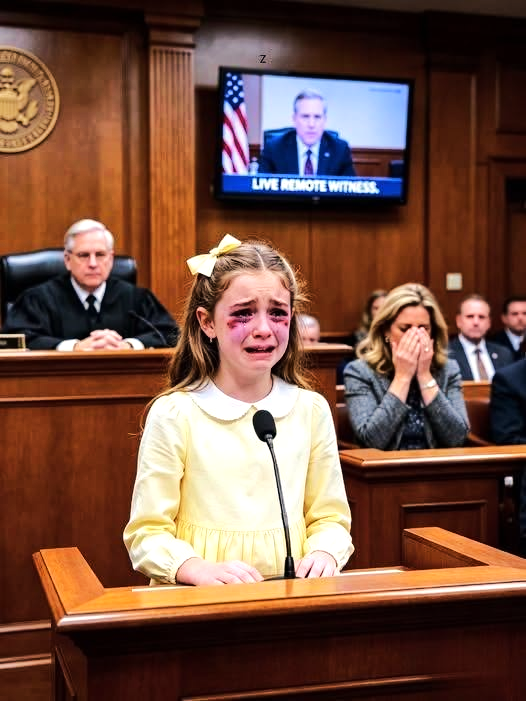
I had spent fourteen years married to that man. I knew the expressions he made when he was angry, embarrassed, or disappointed. But I had never seen him look quite like that. He wasn’t furious because someone had accused him unfairly. He looked like a man who had just watched a locked door open.
And he knew exactly what was behind it.
The judge looked toward the papers.
“Counsel, we are not going to resolve the authenticity of these documents in the middle of an unexpected presentation.”
He turned toward the clerk.
“Mark the materials for identification, secure the originals, and ensure no copies containing this child’s private financial information are publicly distributed.”
Then he looked at my daughter.
“Emma, you’ve done enough for today.”
She was trembling.
Her little fingers were curled around the edge of her backpack.
“But, Your Honor—”
He softened his voice.
“You don’t have to explain anything more right now. The adults have a responsibility to handle this properly.”
Emma looked toward me.
And I saw something in her expression that nearly destroyed me.
Relief.
Not triumph.
Not excitement.
Relief that somebody had finally told her she could stop carrying the secret.
My attorney, Evelyn Grant, leaned toward me.
“Laura, stay seated.”
I hadn’t realized I was trying to stand.
I stared at the top page of the envelope.
My mother’s name was printed there.
Margaret Reeves.
Underneath it was a signature I recognized almost immediately.
My mother had written her capital M with a long, graceful curve.
When I was little, she used to sign my school permission slips while drinking coffee at the kitchen table.
She’d written birthday cards in that same handwriting.
Christmas letters.
Notes tucked inside books.
The final message she’d left me before she died.
But the document on the judge’s desk carried a date eighteen months after her death.
I knew that because I could remember the precise hour my mother’s heart stopped.
September 14.
Six forty-two in the evening.
I had been holding her hand.
She hadn’t signed anything after that.
She hadn’t even been alive.
Daniel’s attorney stood.
“Your Honor, we object to drawing conclusions from materials that have not been authenticated.”
The judge nodded.
“That concern is noted. We will address admissibility, preservation, and any necessary examination through the proper process.”
Evelyn rose.
“Your Honor, given the apparent financial irregularities and the allegations affecting custody, we request a prompt protective hearing and preservation of the relevant accounts and records.”
The judge considered her.
“Submit the appropriate motion with the supporting material. I will hear it on an expedited schedule.”
Daniel suddenly spoke.
“This is ridiculous.”
His attorney touched his arm.
He pulled away.
“She stole those papers!”
My heart stopped.
The judge looked at him.
“Mr. Bennett, you will speak through counsel unless I address you directly.”
Daniel stared at Emma.
“She had no right to go through my things.”
Emma flinched.
And something inside me changed.
For months, I’d sat quietly while he told people I was unstable.
For months, I’d let attorneys speak for me while he described me as emotional, irrational, and incapable of accepting the end of our marriage.
But watching him turn his anger toward our daughter was more than I could bear.
I stood.
“Don’t you dare blame her.”
My voice shook.
The judge immediately intervened.
“Mrs. Bennett, please sit down.”
I did.
My hands were trembling.
“I’m sorry, Your Honor.”
He looked toward Emma.
Then toward both attorneys.
“This child is not to be subjected to accusations or pressure about these materials. Any further discussion involving her will be handled through appropriate procedures.”
Daniel looked away.
For the first time that morning, he seemed to understand that everyone was watching him.
The judge called a recess.
Within minutes, Emma and I were in a quiet room beside the courtroom.
A court staff member brought her a bottle of water.
Evelyn remained with us briefly before speaking with the clerk and opposing counsel.
Emma sat on a chair that was too large for her.
Her sneakers barely touched the floor.
I knelt in front of her.
“Sweetheart.”
She stared at her hands.
“Are you mad?”
I felt tears rush into my eyes.
“Oh, Emma.”
I gathered her into my arms.
“Never for telling me you were frightened.”
She began crying.
“I didn’t want Dad to get in trouble.”
I held her tighter.
“I know.”
“He said if you found out, you’d make everything worse.”
My stomach tightened.
“Found out what?”
She pulled back just enough to look at me.
“About Grandma’s money.”
I stared at her.
Then she whispered:
“He said it was the only way to keep us together.”
I wanted to ask a hundred questions.
What had Daniel told her?
How long had she known?
Why hadn’t she come to me?
But Evelyn returned before I could speak.
She saw Emma’s tears and immediately sat beside us.
“Emma,” she said gently, “I need you to know something.”
My daughter looked up.
“You did not cause your parents’ divorce. And you aren’t responsible for what happens with the money.”
Emma swallowed.
“But I found the papers.”
“You did. Now the adults need to investigate them.”
Evelyn glanced at me.
“Laura, we shouldn’t question her further about the recording right now. A child specialist can help obtain any information needed without making her repeat the experience over and over.”
I nodded.
I was grateful she’d said it.
Because at that moment, my fear could easily have turned my daughter into someone I depended on for answers.
She was ten years old.
She needed her mother.
Not another investigator.
When we left the courthouse, Daniel was standing near the exit with his attorney.
I tried to keep walking.
But he stepped forward.
“Laura.”
I stopped.
Emma tightened her grip on my hand.
Daniel looked at her backpack.
“Where’s the rest of it?”
I felt cold.
“The rest of what?”
His eyes flashed.
“Don’t play games.”
Evelyn appeared beside me.
“Mr. Bennett, direct any questions concerning evidence to counsel.”
He ignored her.
“Emma, sweetheart, you need to tell Daddy where you found those things.”
My daughter moved behind me.
I could feel her little hand trembling.
Evelyn’s voice became firm.
“Daniel, do not question the child about the evidence.”
His attorney caught up with him.
“Let’s go.”
For a moment, he stared at me.
Then he whispered:
“You have no idea what you’ve started.”
I looked at the man I’d once trusted more than anyone in the world.
And I answered quietly:
“No, Daniel. I think I’m finally beginning to understand what you started.”
That night, Emma slept beside me.
She hadn’t done that in years.
She was growing up so quickly.
Usually, she insisted she was too old to need help falling asleep.
But after the hearing, she’d asked whether she could stay in my room.
I said yes immediately.
Around midnight, she began crying in her sleep.
I turned on the bedside lamp.
“Emma?”
Her eyes opened.
She looked frightened.
“Did Dad come?”
My heart broke.
“No, sweetheart.”
She sat up.
“Are you sure?”
I pulled her close.
“He isn’t here.”
She buried her face against my shoulder.
Then she whispered:
“Mom, I thought he was going to take the envelope back.”
I stroked her hair.
“He didn’t.”
“What if he gets mad again?”
I swallowed.
“Then we ask for help. You don’t have to face that alone.”
She held me tighter.
And I realized how much fear had been living in our house while I thought she was merely sad about the divorce.
The next morning, Evelyn called.
“Laura, the judge has scheduled a preliminary hearing on our emergency requests.”
I sat down at the kitchen table.
“What happens now?”
“We’ve also retained a forensic document examiner and arranged for a qualified specialist to preserve and analyze the recording.”
I looked toward the hallway.
Emma was still asleep.
“Will they have to question her?”
“Possibly, but we’ll request that any interview be limited, age-appropriate, and handled by a professional familiar with children in family proceedings.”
I nodded.
“And the money?”
Evelyn paused.
“We need to trace it.”
I closed my eyes.
“One hundred and eighty thousand dollars.”
“Yes.”
“That was supposed to be Emma’s education fund.”
“Then we need the actual trust instrument, bank records, and all purported amendments.”
I took a breath.
“I can tell you what my mother intended.”
“I know. But we also need to establish what the documents legally required.”
My mother had been a public school music teacher for thirty-four years.
She never had much money when I was growing up.
She saved grocery coupons.
Repaired clothes.
Drove the same car until the seats wore thin.
When my father died, she was fifty-nine.
She continued working and lived carefully.
Years later, she inherited a small property from her sister.
She sold it, invested most of the proceeds, and established a trust for Emma.
She wanted my daughter to have opportunities she herself had never had.
Music lessons.
University.
Travel.
A chance to build a life without starting beneath a mountain of debt.
When she died, the trust held investments worth a little over $260,000.
Emma was seven.
My mother had named me as successor trustee.
The money wasn’t meant to support our household.
It was meant to be managed for Emma under the terms of the trust.
Daniel knew that.
He’d sat beside me when my mother explained her wishes.
He’d held her hand and promised we’d honor them.
Three months before he filed for divorce, I noticed that the trust statements had stopped arriving.
When I asked Daniel, he told me everything had moved online.
“It’s probably just a paperless setting,” he said.
I believed him.
Then I tried logging into the old account.
The password no longer worked.
Daniel told me the financial adviser had updated the system.
He promised to help.
But somehow, every time I asked, he had another reason we couldn’t look.
A meeting.
A forgotten password.
A busy weekend.
Then my mother’s original trust binder disappeared from the locked drawer of my desk.
I thought I’d misplaced it.
I’d been struggling with grief, insomnia, and the stress of our deteriorating marriage.
Daniel told me I was becoming forgetful.
And little by little, I began believing him.
Now I wondered how many things I’d blamed on my own exhaustion that someone else had deliberately hidden.
That thought frightened me almost as much as the missing money.
Because when someone repeatedly tells you your memory is unreliable, you eventually stop trusting the evidence of your own life.
And I had nearly stopped trusting mine.
Three days later, I sat in a conference room with Evelyn and a trust attorney named Jonathan Patel.
A stack of documents lay on the table.
Jonathan had obtained certified copies of my mother’s trust records from the attorney who originally prepared them.
When I saw the first page, my eyes filled.
THE MARGARET REEVES FAMILY TRUST.
I recognized the blue binding.
My mother had chosen it herself because she said important documents didn’t have to look frightening.
Jonathan turned to the provisions concerning Emma.
“Your mother established a separate trust share for her granddaughter,” he explained. “The funds could be used for certain approved expenses benefiting Emma, but they weren’t an unrestricted family bank account.”
I nodded.
“And I was the trustee after Mom died.”
“Yes. The original documents identify you as her successor.”
He turned another page.
“If you couldn’t serve, there was a designated independent successor. Daniel wasn’t named.”
I stared at him.
“Then how did he get access?”
Jonathan glanced at Evelyn.
“That’s what the altered documents attempted to accomplish.”
He placed the questioned papers beside the originals.
One document claimed I had resigned as trustee.
Another appointed Daniel to replace me.
A third purported to amend the trust’s distribution provisions.
The amendment carried my mother’s signature.
It was dated November 22, 2024.
Fourteen months after she died.
I stared at the date.
My stomach twisted.
“Whoever did this didn’t even check when she died?”
Jonathan’s expression was grave.
“It’s possible they assumed nobody would compare the dates. Or they expected the paperwork to be processed without a close review.”
I looked toward the signature.
My mother had spent her life insisting that children tell the truth, even when it was difficult.
Now her handwriting had been copied onto a document meant to take money from the granddaughter she adored.
I pressed my hand against my mouth.
There was another detail.
The trustee resignation supposedly signed by me was dated January 17.
I knew that date.
I had spent most of that day in an emergency department after a severe respiratory infection.
Daniel had driven me there.
I’d been frightened and exhausted, struggling to breathe comfortably.
He’d held my purse.
My phone.
My insurance cards.
Everything.
“You were hospitalized that day?” Evelyn asked.
“For several hours.”
“Did you meet with a notary or sign any trust paperwork?”
“No.”
Jonathan nodded.
“We’ll obtain the relevant records and compare the stated execution circumstances.”
I stared at the page.
Daniel had told me I was confused after that illness.
That I’d forgotten conversations.
That I wasn’t remembering things correctly.
He’d even used that period in his divorce filing as an example of my supposed instability.
Now a document he relied upon claimed I’d performed an important legal act on the same day.
Evelyn turned to me.
“Laura, I need you to hear something.”
I looked up.
“An illness, grief, or an emotional reaction doesn’t automatically make someone incapable of parenting or managing finances.”
Tears filled my eyes.
She continued.
“Your husband has made allegations. That doesn’t establish they’re true.”
I nodded.
For months, I’d been afraid that crying too much in court would prove Daniel right.
That showing anger would make me look unstable.
That admitting I was frightened would be used against me.
Evelyn slid a tissue box toward me.
“You’re allowed to have feelings about being betrayed.”
That was all it took.
I began crying.
The forensic review of Emma’s phone came next.
A specialist created a preserved copy of the original recordings and documented the files’ available metadata.
The videos hadn’t been edited on Emma’s device, although the analyst cautioned that technical findings alone couldn’t establish every detail of when or why the events occurred.
One recording showed our kitchen.
Emma had apparently left her phone on the counter while working on a school video project.
The camera faced the fruit bowl.
Daniel stood near the refrigerator, speaking with a man whose voice I recognized.
Owen Mercer.
My mother’s former financial adviser.
He’d helped her review investments for years.
He had attended her funeral.
I remembered him shaking my hand afterward and saying:
“Margaret wanted Emma to have a secure future.”
Now I heard him speaking to Daniel in my kitchen.
“Laura’s asking questions again,” Daniel said.
Owen replied, “Then you need to give her an explanation she can verify.”
Daniel laughed bitterly.
“What, tell her the money’s gone?”
I gripped the edge of the table.
The recording continued.
Owen sounded tense.
“I told you those withdrawals would create a problem.”
Daniel lowered his voice.
“You said the documents would work.”
“I said the custodian might accept them. I didn’t say they would survive scrutiny.”
There was a pause.
Then Daniel said:
“She doesn’t have the original binder. She can’t prove anything without it.”
My stomach turned.
Owen replied, “That’s not how trust records work, Daniel.”
“Then help me finish this before she gets access.”
I looked at Jonathan.
“That’s Owen.”
He nodded.
“We’ve identified him as a person whose records need to be obtained.”
I stared at the screen.
A man my mother trusted had apparently been involved in discussions about the documents used to remove me as trustee.
I felt another piece of my past break apart.
The second recording was shorter.
Daniel’s voice was angrier.
Emma had left the phone in the hallway, near the kitchen doorway.
The video showed mostly darkness and the edge of a cabinet.
But his words were clear.
“She keeps saying she’s going to call the bank.”
Then silence, as though he were listening to someone on the phone.
“I can’t have her getting those statements before the custody hearing.”
Another pause.
“No, she doesn’t know about the transfer.”
I felt my heart hammering.
Then Daniel said the sentence that had been haunting me since the courtroom.
“Once the court believes she can’t cope, she’ll be too busy defending herself to go looking for the money.”
I covered my mouth.
He continued.
“I don’t care if she cries. Every time she falls apart, it helps my case.”
The recording ended.
For several seconds, nobody spoke.
Then I whispered:
“He knew.”
Evelyn looked at me.
“What do you mean?”
“He knew how frightened I was. He knew I was having trouble sleeping. He knew I cried when Emma asked whether we’d still be a family.”
My voice broke.
“And he was using it.”
For months, Daniel had kept a list of incidents he claimed showed I was emotionally unstable.
The night I cried in our kitchen after he announced he wanted a divorce.
The time I raised my voice when he refused to explain a missing bank statement.
The afternoon I forgot a school appointment because I was exhausted.
He’d photographed an overturned laundry basket after an argument and described it as evidence I’d destroyed property.
He’d submitted carefully selected text messages in which I begged him not to take Emma away.
I knew those messages made me look desperate.
Because I had been desperate.
I loved my daughter.
I was losing my marriage.
And I thought I was going to lose her too.
But the recordings suggested Daniel wasn’t simply observing my reactions.
He was choosing moments when I was frightened and presenting them without the circumstances that produced them.
Jonathan looked toward Evelyn.
“There’s another distinction we should be careful about. Custody doesn’t automatically give someone authority over a separate trust.”
I looked up.
“Then why was Daniel so determined to get primary custody?”
“Custody could have helped him control communications, gain access to information, and influence how decisions concerning Emma were presented. But it would not legally erase the trustee requirements.”
Evelyn nodded.
“He may have believed it would make his fraudulent arrangement harder to challenge.”
I stared at the screen.
Daniel hadn’t merely wanted to win our divorce.
He wanted to keep me occupied, discredited, and far away from the financial documents that could expose him.
And he had been willing to make our daughter afraid in the process.
The following week, the family court held a hearing concerning temporary parenting arrangements and the preservation of evidence.
The judge reviewed submissions from both sides.
He didn’t declare Daniel guilty of financial crimes.
He didn’t treat Emma’s recording as a magic answer to every custody question.
Instead, he considered the allegations, the corroborating documents, and the effect the conflict appeared to be having on Emma.
He ordered that the child not be questioned by either parent about the evidence or encouraged to choose sides.
A child specialist was appointed to help assess her needs.
The court also established temporary arrangements designed to reduce conflict while the competing allegations were investigated.
Direct exchanges between Daniel and me were replaced with a neutral process.
Communication about Emma’s schedule went through a monitored parenting application.
The trust issues proceeded through separate legal channels.
It was slower than the dramatic victory I had imagined when I first saw the envelope.
But it was also safer for my daughter.
After the hearing, Daniel passed me in the hallway.
He looked exhausted.
For the first time, he didn’t appear confident.
“Laura,” he said.
I stopped several feet away.
“What?”
He glanced toward Evelyn.
“Can we talk without her?”
“No.”
He looked hurt.
“You used to trust me.”
I stared at him.
“I did.”
His expression tightened.
“I’m still Emma’s father.”
“I know.”
“Then you should want us to work this out.”
I took a slow breath.
“I want Emma to be safe. And I want the truth about her trust.”
Daniel looked at me for a long moment.
Then whispered:
“You’re going to destroy me.”
I shook my head.
“No, Daniel.”
My eyes filled.
“I’m going to stop pretending I don’t see what happened.”
Two months passed before the financial investigation revealed where Emma’s inheritance had gone.
By then, I had learned to live with two kinds of waiting.
There was the ordinary waiting of divorce.
Court dates.
Attorney calls.
Temporary schedules.
The exhausting process of dividing a life that two people had once planned to share forever.
And then there was the waiting that came with suspected financial betrayal.
Every time my phone rang, I wondered whether someone had discovered another forged document.
Every time an unfamiliar envelope arrived, I worried that Daniel had used my name somewhere else.
I checked my accounts constantly.
I changed passwords.
I reviewed credit reports.
I became suspicious of ordinary emails.
Sometimes I hated what that fear was turning me into.
But Evelyn reminded me that caution after a serious breach of trust wasn’t the same thing as instability.
It was a response to something real.
The investigation into the trust involved the financial institution that had held my mother’s investments, the professionals whose names appeared on the paperwork, and the separate legal process addressing the trust’s administration.
The original trust documents were authenticated through the attorney who prepared them.
My mother’s death certificate confirmed that she could not have signed the later amendment.
Hospital records and other evidence supported my account that I had not executed the purported trustee resignation in the circumstances described.
A document examiner found significant concerns with the questioned signatures, including evidence that images had been copied from earlier documents.
And the electronic records associated with the submissions led investigators toward people who had handled the paperwork after my mother’s death.
One afternoon, Jonathan called.
“Laura, we received the transaction history.”
I sat down immediately.
“Where did the money go?”
He paused.
“Some of it went to a company associated with Daniel.”
My throat tightened.
“How much?”
“One hundred and ten thousand dollars.”
I stared at the wall.
“And the rest?”
“Forty-two thousand went to a consulting business associated with Owen Mercer. The remaining twenty-eight thousand appears to have been used to satisfy personal debts and related expenses.”
I closed my eyes.
My mother’s money.
Emma’s future.
Split into transfers that looked like ordinary business transactions.
“What was Daniel’s company doing with it?” I asked.
Jonathan turned a page.
“He invested in a proposed marina redevelopment project through Bennett Property Group.”
I sat perfectly still.
A marina.
I remembered Daniel talking about one.
Almost two years earlier, he’d attended meetings about a waterfront commercial property.
He told me he’d found a promising investment opportunity.
He spoke about boat slips, restaurants, short-term rentals, and tourism.
But whenever I asked how much money he intended to risk, he changed the subject.
Eventually, he said the deal had fallen through.
I believed him.
Now I understood that the deal hadn’t simply fallen through.
He had taken my daughter’s trust money and used it to chase a business opportunity without lawful authority.
“The project failed?” I whispered.
“It’s stalled,” Jonathan said. “There are assets and competing claims, so recovery may be possible, but we can’t assume the entire amount is available.”
I pressed my hand against my forehead.
“And Owen?”
“His consulting company received substantial payments connected to the transaction.”
I stared at the floor.
The man who had shaken my hand at my mother’s funeral had been paid tens of thousands of dollars.
The man who promised to protect Emma’s future had benefited while that future was put at risk.
That evening, I went into Emma’s room.
She was doing homework at her desk.
A little purple lamp illuminated her books.
She was humming softly, the same way my mother used to hum while preparing dinner.
I leaned against the doorway.
“Hey, sweetheart.”
She looked up.
“Hi, Mom.”
“Homework going okay?”
She nodded.
“I’m almost done.”
I watched her write another sentence.
Then she turned.
“Mom?”
“Yes?”
“Is Grandma’s money gone?”
My heart tightened.
I hadn’t told her the details.
But she knew there had been financial questions, and she was old enough to understand that something important had happened.
I sat beside her.
“Some of the money was taken out of the account without proper authorization. People are working to recover it.”
She looked down.
“Was it because I wanted piano lessons?”
I stared.
“What?”
She began twisting her pencil between her fingers.
“Dad said the money was for me. And that sometimes people have to make sacrifices when children want expensive things.”
My chest ached.
“Oh, Emma.”
She looked frightened.
“I told him I didn’t need piano lessons anymore.”
I reached for her hand.
“Sweetheart, Grandma set that money aside because she loved you. Your lessons had nothing to do with someone taking money from the account without permission.”
Her eyes filled.
“But Dad said—”
I gently interrupted.
“Emma, the adults are responsible for their own financial decisions. None of this is because of something you asked for.”
She began crying.
I pulled her close.
Then she whispered:
“I heard Dad say he didn’t want you to find out.”
I stroked her hair.
“I know.”
She swallowed.
“I was scared he’d be mad if I told.”
My throat tightened.
“Did he tell you not to?”
She nodded.
I waited.
Then she said:
“He told me grown-up money problems weren’t my business. But he also said if you got upset, the judge might decide I shouldn’t live with you.”
The words felt like a knife.
I held her close.
“Emma, you shouldn’t have been put in that position.”
She began sobbing.
“I didn’t know what to do.”
“You didn’t have to know.”
I kissed her forehead.
“You were supposed to be a kid.”
Over the following weeks, Emma began meeting with a child therapist.
At first, she hated the idea.
“Does that mean something’s wrong with me?” she asked.
I shook my head.
“No, sweetheart. It means you’ve been through something difficult, and there’s someone who can help you talk about how you’re feeling.”
She thought about it.
“Like when Grandma went to physical therapy after she hurt her knee?”
I smiled.
“Something like that. Different kind of help.”
Emma nodded.
Then she asked:
“Do I have to talk about Dad?”
“Only at a pace that feels safe, with help from the professional who’s there for you.”
She looked relieved.
Her therapist helped her understand that children were not responsible for protecting adults from the consequences of their actions.
Emma practiced naming her feelings.
Fear.
Anger.
Sadness.
Confusion.
And one that surprised me.
Guilt.
She felt guilty because she loved Daniel.
Even after what he’d done.
Even after watching him become angry in the courtroom.
She still remembered the father who taught her to ride a bicycle.
Who made pancakes shaped like hearts.
Who stayed up late building a cardboard castle for her school project.
I understood.
Because I also remembered that man.
And knowing he had done something terrible didn’t erase every good memory we’d shared.
One evening, Emma asked me a question that left me speechless.
“Mom, can somebody love you and still do something really wrong?”
I looked at her.
“Yes.”
She considered that.
“Then how do you know whether to trust them?”
I took a breath.
“Trust isn’t only about what someone says they feel. It’s also about whether they tell the truth, respect your boundaries, and take responsibility when they hurt you.”
She was quiet.
Then whispered:
“Can you love somebody and not trust them yet?”
My eyes filled.
“Yes, sweetheart.”
I reached for her hand.
“You can.”
Meanwhile, Daniel’s confidence began to unravel.
The court received records contradicting important parts of his account of my supposed inability to manage daily life.
The custody evaluator interviewed relevant adults and reviewed properly submitted information.
School records showed that Emma had generally been thriving under our care before the conflict escalated.
Her teachers described me as an involved, reliable parent.
Her pediatrician’s records did not support the dramatic medical claims Daniel had made in informal statements.
And the recordings showed that he had discussed presenting my distress in a way designed to undermine me.
None of those things meant I was a perfect mother.
I wasn’t.
I had cried in front of Emma more than I should have.
I’d sometimes been impatient during the worst weeks.
And I regretted letting her see how frightened I was about the divorce.
But the evidence did not support the picture of a mother incapable of caring for her child.
The greatest surprise came from someone I had almost forgotten.
A woman named Nina Torres contacted Evelyn.
She had worked as an administrative assistant at Owen Mercer’s financial advisory office.
At first, I didn’t understand why she wanted to speak with us.
Then Evelyn explained.
Nina had retained copies of work-related correspondence because she’d raised concerns internally about the trust documentation before leaving the firm.
She was willing to provide information through proper legal channels.
At a meeting several days later, Nina sat across from us, her hands wrapped around a glass of water.
She looked nervous.
“I don’t want to make this worse for the little girl,” she said.
My throat tightened.
“Emma?”
She nodded.
“I saw her name in the trust file.”
I waited.
Nina looked toward Jonathan.
“I was asked to prepare an account transfer packet. When I reviewed the paperwork, I noticed the amendment carried Margaret Reeves’s signature, but the date was after her death.”
I leaned forward.
“You noticed?”
She nodded.
“I checked the archived client record. Her death had already been documented.”
“What did you do?”
“I asked Owen.”
Her eyes filled.
“He told me the signature page had been misdated and that the attorneys would correct it.”
I stared at her.
“Did they?”
She shook her head.
“Not that I saw.”
Nina explained that she’d sent a follow-up email asking for proper verification before documents were submitted to the custodian.
Owen replied that the matter had already been reviewed by legal counsel.
Later, Nina learned that the paperwork had been submitted through a different channel.
She raised concerns with the firm’s compliance department.
Then she left the firm.
“I kept the messages because I was worried they’d say I’d processed it,” she explained.
Evelyn nodded.
“Those records may help establish who knew about the discrepancies and when.”
I looked at Nina.
“Why are you coming forward now?”
Her eyes filled.
“Because I read that a child’s trust was involved.”
She swallowed.
“And because I should have pushed harder when I saw something that didn’t make sense.”
I reached across the table.
“You did raise the issue.”
She nodded.
“But it wasn’t enough to stop the transfer.”
For a moment, we sat quietly.
Then I said:
“You couldn’t make every decision for the people above you.”
Her face crumpled.
I recognized that look.
The unbearable burden of believing you should have been able to stop something someone else chose to do.
Emma had been carrying it.
I’d been carrying it.
And now Nina was carrying it too.
Her correspondence became important evidence.
It showed that concerns about the deceased signer’s name had been identified before the disputed documents were processed.
It also led to additional records concerning the handling of the withdrawal requests.
The financial institution conducted an internal review of its verification procedures.
Its own failures became part of the recovery discussions.
For the first time, I began to believe that we might recover a meaningful portion of the money.
But that hope came with another painful discovery.
The paperwork hadn’t been prepared in a single desperate afternoon.
Some of the arrangements had begun months before Daniel filed for divorce.
He’d been planning how to move money out of Emma’s trust while still coming home, eating dinner with us, and telling me everything was fine.
One night, I found an old photograph on my phone.
Daniel, Emma, and me standing beside a Christmas tree.
He had his arm around my shoulders.
Emma was laughing because he’d put a ridiculous paper crown on his head.
The photograph had been taken during the same winter when the suspicious trust documents were being prepared.
I stared at the smiling faces.
I remembered that evening.
The hot chocolate.
The music.
The way Daniel had kissed my forehead while we watched Emma open presents.
And I understood that the hardest part of betrayal wasn’t always the money or even the lie.
Sometimes it was discovering that a memory you’d cherished had existed alongside something you never knew was happening.
I closed the photograph.
Then I walked into Emma’s room.
She was asleep with one hand beneath her cheek.
I sat beside her and watched her breathe.
And I made myself a promise.
Whatever the legal proceedings brought, I would not let the worst thing Daniel had done become the only story my daughter remembered about her childhood.
The final custody evaluation arrived almost seven months after Emma walked into court carrying that envelope.
I remember the morning Evelyn called.
I was standing in the kitchen, pouring cereal into a bowl.
Emma was upstairs searching for a missing library book.
Outside, rain tapped against the windows.
“Laura,” Evelyn said, “we have the evaluator’s recommendations.”
My stomach tightened.
I put down the cereal box.
“Tell me.”
She spoke carefully.
The evaluator recommended that Emma’s primary residence remain with me.
The report identified concerns about Daniel’s handling of conflict, his attempts to involve Emma in adult financial matters, and the pressure she’d experienced concerning the recordings.
It also recognized the importance of her relationship with her father, provided that contact could occur safely and without further manipulation.
The recommendation included a structured parenting plan, continued therapeutic support, and safeguards against questioning Emma about the legal disputes.
I leaned against the counter.
For a moment, I couldn’t speak.
“Laura?”
“I’m here.”
“Are you okay?”
I began crying.
“I think so.”
The recommendation wasn’t a final judgment.
The court still had to consider the evidence and enter appropriate orders.
But the report mattered.
For months, Daniel had described me as an unstable wife who couldn’t accept that our marriage was over.
Now an independent professional had examined the circumstances and reached a very different understanding.
I wasn’t perfect.
I wasn’t calm every moment.
But I was a mother trying to protect her daughter from a conflict neither of us had chosen.
When Emma came downstairs, she found me wiping my eyes.
“Mom?”
I turned.
“Hi, sweetheart.”
She looked worried.
“Are those sad tears?”
I smiled through them.
“No.”
She considered that.
“Happy tears?”
“Mostly relieved ones.”
Emma nodded as though that made perfect sense.
Then she held up her library book.
“I found it.”
I laughed.
“Where?”
“Under my bed.”
“Of course.”
And in that small, ordinary moment, I felt something precious returning.
The ability to be a family without every conversation revolving around fear.
Daniel’s attorney requested a settlement conference before the final parenting hearing.
I agreed to participate through counsel.
I wasn’t interested in another emotional confrontation.
I wanted a stable plan for Emma.
I wanted the divorce completed.
And I wanted the financial matters addressed without turning our daughter into the center of a public battle.
At the conference, Daniel looked different.
He’d lost weight.
His face seemed drawn.
He no longer wore the confident smile that had frightened me in the courtroom.
When we sat across from each other, he looked at me for a long moment.
Then whispered:
“I never thought it would go this far.”
I stared at him.
“What did you think would happen?”
He lowered his eyes.
“I thought I’d fix the investment before anyone noticed.”
My chest tightened.
“You mean before Emma noticed?”
He flinched.
“Laura—”
“Or before I noticed?”
He covered his face.
“I know.”
I looked toward Evelyn.
She gave me a small nod, reminding me to let the attorneys handle the negotiations.
But there was one thing I needed to say.
“Daniel, you didn’t just take money. You made our daughter believe telling the truth could destroy our family.”
He began crying.
I looked at him.
Then I continued.
“You told her that if I became upset, she might lose me.”
His voice broke.
“I was scared.”
“So was she.”
He lowered his head.
And for once, he didn’t argue.
The financial recovery took longer.
Some funds had been moved into accounts that could be traced.
Some were tied up in Daniel’s failed marina project.
Other amounts had been spent.
The institution holding the trust assets reviewed its role in accepting the disputed documents.
Claims were pursued against responsible parties, including the people involved in preparing and submitting the false paperwork.
Through a combination of recovered funds, negotiated resolutions, and other legally available remedies, approximately $124,000 was eventually restored to Emma’s trust.
I cried when Jonathan told me.
Not because the entire loss had been repaired.
It hadn’t.
There were still fifty-six thousand dollars in principal that needed to be recovered, along with questions concerning lost investment returns, fees, and other financial consequences.
But the trust wasn’t empty.
And the recovery meant my mother’s gift still had a future.
Jonathan showed me the revised account statement.
The recovered amount appeared alongside the assets that had never been withdrawn.
The funds remained in a protected account under the trust’s terms, with administration reviewed and corrected through the appropriate legal process.
I stared at the balance.
Then I whispered:
“Mom, we’re getting it back.”
Daniel agreed to a restitution arrangement addressing his responsibility for the remaining loss.
It was supported by enforceable documentation rather than another promise made across a kitchen table.
Owen Mercer’s involvement led to professional scrutiny and separate legal proceedings.
Neither man’s actions were excused simply because they claimed they intended to restore the money later.
And the financial institution’s own role was examined instead of being hidden behind the word mistake.
I couldn’t force every consequence to happen quickly.
But the paper trail was no longer buried.
One afternoon, Evelyn called with another development.
“Laura, the trust attorney found something in the original estate file.”
My heart tightened.
“What?”
“A letter.”
I sat down.
“From my mother?”
“Yes.”
“Was it about Daniel?”
“No. It appears to be a personal letter she asked her estate attorney to keep with her records.”
I closed my eyes.
“Why am I only hearing about it now?”
“The attorney was reviewing the archived file during the document investigation. It had been placed among correspondence rather than the operative trust papers.”
Evelyn paused.
“Would you like to see it?”
I could barely speak.
“Yes.”
The letter arrived in a large white envelope.
My mother’s handwriting appeared on the front.
For Laura.
I sat on the living room floor because I couldn’t make myself open it standing up.
For a moment, I simply held it.
Then I carefully unfolded the paper.
My darling Laura,
If you’re reading this, I hope you know how deeply I loved watching you become a mother.
You have always tried so hard to keep everyone safe.
When you were little, you cried whenever somebody in the family was unhappy. You thought it was your job to make everything right.
I pressed the letter against my chest.
That had been me.
Even as a child.
The little girl who tried to make peace whenever my parents argued.
Who apologized when someone else was upset.
Who believed loving people meant fixing their problems.
I wiped my eyes and continued.
I hope you teach Emma something I wish I’d taught you sooner.
Being a good person doesn’t mean being responsible for everybody else’s choices.
You can be kind without accepting unkindness.
You can love someone and still say no.
And if life ever becomes difficult, I hope you remember that you are stronger than you think.
Tears blurred the rest of the page.
At the bottom, she’d written:
The money I’m leaving for Emma is not the most important gift I can give her.
The most important gift is knowing she belongs to people who love her, tell her the truth, and make her feel safe.
With all my love,
Mom.
I sat on the floor and cried for a long time.
My mother hadn’t known what Daniel would do.
She hadn’t predicted the divorce.
She hadn’t left a secret warning about forged signatures.
She’d simply known her daughter.
And somehow, years before I needed those words, she’d written exactly what I was struggling to believe.
That evening, I told Emma I’d found a letter from Grandma.
Her eyes widened.
“Can I see?”
I smiled.
“Of course.”
We sat together on the couch.
I read the parts about kindness and courage.
When I finished, Emma was quiet.
Then she asked:
“Did Grandma know I was going to be brave?”
I kissed her forehead.
“I think she knew you had a good heart.”
Emma smiled.
Then her expression changed.
“Mom?”
“Yes?”
“Do you wish I’d never made the video?”
I froze.
I’d asked myself that question many times.
The recording had helped reveal the truth.
But it had also placed an enormous emotional burden on a little girl.
I looked at her carefully.
“I wish you’d never needed to.”
She considered that.
Then whispered:
“Me too.”
I pulled her close.
“And I want you to know something. You don’t have to do anything like that again to protect me.”
She looked up.
“Promise?”
I nodded.
“I promise I’ll ask grown-ups for help when I need it. You get to be my daughter.”
She relaxed against me.
For the first time since the hearing, I felt certain she believed me.
The divorce became final the following spring.
There was no dramatic speech.
No crowd outside the courthouse.
No moment when Daniel suddenly admitted every terrible thing he’d done and begged the world to forgive him.
There were signatures.
Court orders.
Financial disclosures.
A parenting plan.
And the quiet, exhausting conclusion of a marriage I once believed would last the rest of my life.
The court established Emma’s primary residence with me.
Daniel’s parenting time followed a structured arrangement that reflected the professional recommendations and the court’s findings.
The plan included clear boundaries around discussing the divorce, financial disputes, and evidence with Emma.
For a period, contact took place with additional safeguards and professional support.
As time passed, changes depended on his conduct, the recommendations of the professionals involved, and Emma’s well-being.
There was no automatic return to the way things had been.
Trust, I had learned, could not be ordered back into existence.
It had to be earned through consistent behavior.
Daniel continued facing consequences connected to the financial documents and trust withdrawals.
The civil recovery arrangements remained enforceable, and the separate investigations followed their own processes.
He could no longer dismiss what happened as a family misunderstanding.
I didn’t spend my days trying to punish him.
I spent them ensuring Emma’s trust was properly administered, her needs were met, and the agreements protecting her were followed.
Those were different goals.
It took me a long time to understand the difference.
One afternoon, Daniel sent a message through the parenting application.
Laura, I know an apology doesn’t fix anything. I’m continuing to cooperate with the financial process and with Emma’s counselor.
I understand that I’ve damaged her trust.
I want her to know she wasn’t responsible for any of it.
I read the message twice.
The old version of me would have called immediately.
I would have tried to comfort him.
I would have reassured him that he was still a good father.
I might even have minimized what happened because I couldn’t bear the thought of someone I once loved feeling ashamed.
Instead, I replied:
Please continue showing Emma through your actions that she is safe, loved, and not responsible for adult decisions.
Then I put down the phone.
For once, I didn’t feel guilty.
Emma began to change.
Slowly.
Quietly.
Her laughter returned first.
Then her appetite.
Then the silly songs she used to sing while brushing her teeth.
She started inviting friends over again.
She became interested in the school science fair.
And she resumed the piano lessons she’d abandoned because she believed they were costing our family too much.
The first afternoon she returned from her lesson, she walked through the front door smiling.
“Mom!”
I looked up.
“What happened?”
“I learned something new!”
She rushed to the piano.
Her little fingers found the keys.
The melody wasn’t perfect.
She missed a note and started again.
But I sat beside her and listened as though it were the most beautiful music I’d ever heard.
Because in a way, it was.
My mother had loved music.
Emma loved music.
And now neither a forged document nor someone else’s bad decisions would make my daughter feel ashamed of enjoying it.
On the anniversary of my mother’s death, Emma and I visited her grave.
We brought white lilies.
My mother’s favorite.
Emma placed them carefully beside the headstone.
Then she sat next to me on the grass.
“Mom?”
“Yes, sweetheart?”
“Do you think Grandma knows what happened?”
I looked at the stone.
For a moment, I couldn’t answer.
“I don’t know exactly what happens after we die,” I said gently. “But I know Grandma loved you very much.”
Emma nodded.
Then she whispered:
“I wish I could tell her I didn’t mean for her money to get taken.”
My heart tightened.
I turned toward her.
“Oh, Emma. Grandma would never have blamed you.”
She looked at me.
“Really?”
“Never.”
I reached for her hand.
“The adults responsible for that money were supposed to protect it. You didn’t do anything to make them take it.”
She was quiet for a moment.
Then she smiled sadly.
“I think Grandma would’ve been mad at Dad.”
I took a breath.
“She would have wanted him to take responsibility.”
Emma nodded.
Then she leaned against me.
“I miss her.”
I kissed her hair.
“So do I.”
A few months later, Emma had her first piano recital since the divorce.
I arrived early.
Not because I was afraid of missing something.
Because I was excited.
She wore a pale blue dress and little silver shoes.
Her hair was tied back with a ribbon.
When she spotted me in the audience, she waved so enthusiastically that her teacher gently reminded her to prepare for her turn.
I laughed.
For a moment, I remembered her standing in the courtroom with a phone in her hands.
The fear.
The trembling.
The desperate courage.
Then I looked at her now.
Smiling beneath the stage lights.
Waiting to play music.
And I felt something inside me settle.
This was where she belonged.
Not at the center of a legal battle.
Not carrying evidence against her father.
Not trying to rescue her mother.
Here.
Among other children.
Being allowed to make mistakes, learn, and enjoy something beautiful.
When her name was called, Emma walked to the piano.
She adjusted the bench.
Placed her hands over the keys.
And began to play.
The melody was one my mother used to hum.
I hadn’t realized Emma had chosen it.
By the time she reached the second verse, tears were running down my cheeks.
But I didn’t hide them.
I didn’t worry someone might call me unstable because I cried.
I was a mother listening to her child play music.
I was allowed to be moved.
I was allowed to feel.
Afterward, Emma came running toward me.
“Mom! Did you hear the middle part?”
I laughed through tears.
“Every note.”
“I messed up a little.”
“You kept going.”
She grinned.
Then she hugged me.
“Grandma would’ve liked it.”
I held her close.
“She would’ve loved it.”
That night, we celebrated with pizza and strawberry ice cream.
Emma insisted that we eat at the kitchen table instead of in front of the television.
She said it felt more special.
While we were eating, she looked at me with an expression that told me another important question was coming.
“Mom?”
“Yes?”
“Are you happy now?”
I paused.
It was such a simple question.
And the answer wasn’t.
I still had difficult days.
Sometimes I missed the family I’d imagined we would be.
Sometimes I woke in the night remembering Daniel’s voice in those recordings.
There were bills to pay, appointments to attend, and financial proceedings that had not entirely ended.
But I wasn’t living in constant fear anymore.
I no longer spent my days trying to prove I wasn’t the person my husband claimed I was.
I looked at Emma.
“Yes,” I said.
“I think I’m becoming happy again.”
She smiled.
“Me too.”
In the months that followed, the remaining recovery efforts continued.
The trust’s professional administration was strengthened, with regular reporting and clearer safeguards.
The money already restored remained protected for Emma under the trust’s terms.
The outstanding amounts remained subject to repayment and collection rather than being quietly forgotten.
I no longer checked the account every morning.
I had learned that vigilance was necessary, but living in constant fear was not.
My mother’s gift mattered.
But as her letter reminded me, the account balance was not the only future we had to protect.
Emma’s sense of safety mattered too.
Her laughter mattered.
Her ability to trust her own voice.
And her freedom to grow up without believing she had to solve adult problems.
One evening, nearly two years after that unforgettable courtroom hearing, I found Emma in the kitchen.
She was eleven now, almost twelve.
She was sitting at the table working on a school project about family history.
Photographs were scattered around her.
There was one of my mother at the piano.
One of Emma as a toddler.
And another of the three of us from before the divorce.
Daniel, Emma, and me.
I stopped when I saw it.
For a moment, I felt the old ache.
Emma looked up.
“Mom?”
“Yes?”
“Can I use a picture with Dad in my project?”
I sat beside her.
“Of course.”
She studied my face.
“You won’t be sad?”
I took a breath.
“Sometimes memories make me sad. But your dad is part of your story, sweetheart. You don’t have to pretend otherwise to protect me.”
She smiled.
“Okay.”
Then she pointed to the photograph of Grandma.
“I want to write about how she taught me piano.”
I nodded.
“She’d love that.”
Emma picked up her pencil.
Then paused.
“Mom, what do you think the most important thing our family learned was?”
I considered the question.
There were so many possible answers.
That signatures mattered.
That money could be stolen.
That people could lie convincingly.
That courts needed evidence, and evidence needed to be checked.
But those weren’t the things I most wanted my daughter to carry into adulthood.
I looked at her.
“I think we learned that telling the truth matters, even when it’s frightening.”
She nodded thoughtfully.
Then I added:
“And that nobody should have to carry a frightening secret alone.”
Emma smiled.
She wrote something in her notebook.
I leaned closer.
Across the page, in her careful handwriting, she’d written:
Our family learned that love should make people feel safe.
I covered my mouth.
For a moment, I couldn’t speak.
Then I reached for her hand.
“Yes, sweetheart,” I whispered.
“That’s exactly right.”
I still remember the moment Daniel reached across the courtroom table for that envelope.
I remember the judge’s voice.
The bailiff stepping forward.
The look on my husband’s face when he realized the papers might expose what he’d hidden.
For a long time, I thought that was the moment my life changed.
But now I know better.
My life began changing when I stopped believing I had to defend myself against every accusation.
When I learned to trust evidence instead of manipulation.
When I stopped asking my daughter to reassure me that everything would be all right.
And when I understood that protecting Emma meant more than winning custody or recovering money.
It meant giving her back the childhood that fear had been stealing.
I had entered that courtroom believing I might lose everything.
My marriage.
My reputation.
My daughter.
And the inheritance my mother had left for her.
But I walked out of that difficult chapter with something I hadn’t expected to recover.
My confidence in myself.
I wasn’t the unstable woman Daniel described.
I was a mother who had been frightened, betrayed, and pushed beyond what she thought she could endure.
And I had survived.
As for Emma, I hope she never has to be that brave again.
I hope the rest of her childhood is filled with piano recitals, school projects, sleepovers, silly jokes, and ordinary days.
I hope she learns that courage is not always about standing before a judge with proof in your hands.
Sometimes courage is telling someone you’re scared.
Sometimes it’s asking for help.
Sometimes it’s loving a person while recognizing that their behavior must change.
And sometimes it’s choosing peace over a fight you never wanted.
On the final page of her family history project, Emma pasted a photograph of my mother holding her as a baby.
Underneath, she wrote:
Grandma gave me something valuable, but Mom taught me I was valuable even without it.
I read those words alone in the kitchen after Emma went to bed.
And I cried.
Not the frightened tears Daniel once tried to use against me.
These were tears of gratitude.
Because my daughter no longer believed she needed to save me.
She knew I would be there to protect her.
And that was the ending I’d wanted all along.
The day my daughter silenced the courtroom wasn’t the day she saved our family.
It was the day the truth finally gave us the chance to become a family where she could simply be a child again.
THE END STORIES! THANK YOU FOR READING GOOD LUCK !❤️
Related Posts



