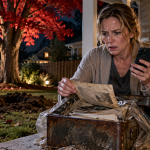
Skyla stood beside the dining table, her fingers resting on the car keys she no longer needed. For a moment, I thought she was going to tell me she’d borrowed money from someone dangerous. Maybe she’d dropped out of college. Maybe she’d sacrificed something even more precious than her grandmother’s bracelet.
But what she said next made the blood drain from my face. “Your mother offered me seventy-five thousand dollars to disappear from your life.” I stared at her. “What?” Skyla gave a small, exhausted laugh. “She said she’d transfer the money immediately if I signed an agreement promising never to contact you again.”

My chest tightened. “No. My mother wouldn’t—” “She did.” Skyla reached into her worn folder and pulled out a folded sheet of paper. She placed it between us. At the top was the name of a law firm I recognized. The firm had handled several legal matters for my parents over the years. Beneath it were two words: SEPARATION AGREEMENT.
I picked it up.
The document offered Skyla seventy-five thousand dollars in exchange for ending our relationship, maintaining confidentiality about the payment, and agreeing not to contact me.
The offer was expressly conditional on her signature.
At the bottom was a space for her name.
It was blank.
My hands began trembling.
“When did she give you this?”
“The second day.”
I looked up.
“The second day you were gone?”
Skyla nodded.
“I went to your parents’ house because I thought they might help with your treatment.”
My stomach twisted.
“She told me they couldn’t afford it.”
“That’s what she said at first.”
Skyla’s eyes filled.
“Then she asked how much I’d need to forget about you.”
I stared at the unsigned agreement.
My mother had more money than most people earned in several lifetimes.
She owned three properties, traveled internationally whenever she pleased, and spent more on one vacation than Skyla earned in six months.
Yet when a frightened young woman came to her believing I might die, she’d treated the situation as an opportunity to remove her from my life.
And the worst part was that my mother hadn’t invented the cruelty alone.
I’d opened the door.
I’d created the lie.
“What did you say?” I whispered.
Skyla looked at me as though the question itself hurt.
“I told her I wasn’t trying to buy your love or sell mine.”
Her voice broke.
“I told her that if you really were sick, you needed people who cared about you, not people negotiating over who should disappear.”
I lowered my head.
“She said I should think about my future,” Skyla continued. “She said seventy-five thousand dollars would pay my tuition and give me a fresh start.”
“And you refused?”
“Yes.”
“Why?”
She stared at me.
“Because I loved you.”
Those four words were so simple that they almost knocked the air from my lungs.
She didn’t say them proudly.
She didn’t smile.
She spoke as though she were mourning something that had already died.
I reached toward her.
“Skyla—”
She stepped back.
“Don’t.”
My hand stopped in the air.
She looked down at it.
“Please don’t touch me right now.”
I lowered my arm immediately.
For several seconds, the only sound was the hum of the refrigerator.
Then Skyla opened her folder again.
She took out a small bank envelope and placed it beside the unsigned agreement.
Inside was a cashier’s check made payable to her, representing the money she’d received for her car, along with a smaller amount from her savings.
“I was going to ask you to use this toward your treatment,” she whispered.
My throat closed.
She stared at the envelope.
“I know it isn’t much compared with what you have. But I thought if we could get you into a hospital, maybe there’d be enough time to find other options.”
I couldn’t speak.
Her old car had been a faded blue Honda with a cracked dashboard and a passenger window that sometimes refused to close.
She called it Blueberry.
I’d teased her about it dozens of times.
I’d offered to replace it.
She always refused.
“It still gets me where I need to go,” she would say. “And it’s mine.”
Now she’d sold the car she depended on for work and school because she believed I was dying.
A man who could afford ten new cars without checking his bank balance.
A man who had pretended he couldn’t afford treatment just to find out how much she’d sacrifice.
“Where did you go for five days?” I asked.
She sat down slowly, as though her legs could no longer hold her.
“First, I went to your parents.”
I nodded.
“Then I took a bus to a medical center in another city. I thought maybe somebody there could explain what treatment options existed.”
She rubbed her forehead.
“I spent hours talking to patient advocates and asking about financial assistance. They told me they’d need actual medical records before they could evaluate anything.”
I looked away.
Of course they did.
There were no records.
No diagnosis.
No doctor.
Only a lie I’d told convincingly enough to frighten someone who trusted me.
“I called the hospital you claimed had diagnosed you,” she continued. “Nobody could confirm the specialist’s name. I thought maybe I’d misunderstood.”
She swallowed.
“So I kept trying.”
Tears slipped down her cheeks.
“I found a shelter where travelers accompanying patients could sometimes stay at reduced cost. I slept there one night. Another night I stayed with an old classmate.”
My stomach tightened.
“You should have called me.”
Her expression changed.
“You told me you were dying, and now you’re upset that I didn’t call you?”
I fell silent.
She looked at me for a long moment.
“I asked you not to call because I knew you’d tell me to stop looking for help. You kept saying there was nothing anybody could do.”
She wiped her eyes.
“I thought if you knew where I was, you’d insist I come home and accept it.”
I remembered those conversations.
I’d told her the situation was hopeless.
I’d said the doctors had given up.
I’d watched her cry and done nothing to stop it.
Because every frightened question she asked had seemed like more evidence for my ridiculous test.
I covered my face.
“Do you know what the hardest part was?” she asked.
I shook my head.
“It wasn’t the bus rides. It wasn’t selling my car.”
She paused.
“It was going to sleep every night wondering whether you’d still be alive when I woke up.”
I closed my eyes.
Her voice became smaller.
“Every time my phone vibrated, I thought it would be someone telling me you were gone.”
I tried to speak.
Nothing came out.
Skyla looked toward the window.
“My grandmother died when I was seventeen.”
I nodded.
I knew that.
Her grandmother, June, had raised her after Skyla’s mother died when she was young.
June had been a seamstress, a stubborn woman with a warm smile who taught Skyla how to stretch a dollar and how to survive difficult days without losing her kindness.
Skyla rarely spoke about her final weeks because the memory still hurt.
“She was sick for a long time,” Skyla whispered. “And I spent so much of that time afraid.”
My chest tightened.
“When you told me you were dying, I felt seventeen again.”
She brushed away tears.
“Only this time I thought maybe I could do something. Maybe if I worked hard enough, called enough people, found enough money, I wouldn’t have to watch somebody else I loved disappear.”
I began crying.
I couldn’t stop.
Because I finally understood what I’d done.
I hadn’t merely tested whether my girlfriend loved me for my money.
I’d taken the most painful experience of her childhood and used it as a measuring stick for her devotion.
“Skyla,” I whispered, “I’m so sorry.”
She looked at me.
“I know you are.”
“I’ll buy your car back.”
She shook her head.
“That’s not what I’m asking.”
“I’ll get the bracelet too. I’ll pay for everything.”
“Please stop.”
Her voice wasn’t loud.
But I stopped immediately.
She looked exhausted.
“Do you understand what you’re doing?”
I swallowed.
“Trying to make this right.”
“No.”
She shook her head.
“You’re reaching for the one thing you’ve always had when something goes wrong.”
I stared at her.
“Money.”
I looked down.
She continued.
“You think if you pay enough, fix enough, replace enough, the problem disappears.”
My eyes filled.
“But the problem isn’t that I lost my car.”
I nodded slowly.
“The problem is that you looked at me, after almost two years together, and decided my love needed to be tested.”
Her voice broke.
“And you chose the one thing you knew would terrify me.”
I had no answer.
Because she was right.
Skyla gathered her papers.
I watched as she carefully returned the letters to the folder.
“Are you leaving?” I asked.
She nodded.
“Where will you go?”
“To my friend Maya’s apartment.”
I looked toward the car keys.
Then remembered.
“Skyla, you don’t have a car anymore.”
“I know.”
“Please let me drive you.”
She shook her head.
“Maya’s coming.”
I felt an awful emptiness.
“Can we talk tomorrow?”
She stopped.
Then turned toward me.
“I don’t know.”
I swallowed.
“Do you still love me?”
Her face crumpled.
For a moment, she looked as though she might collapse beneath the weight of the question.
Then she whispered:
“That’s what makes this so painful.”
I waited.
She looked directly into my eyes.
“I still love you. But I don’t know if I can trust you enough to stay.”
A car horn sounded outside.
Skyla picked up her bag.
I wanted to beg.
To promise.
To get down on my knees and tell her I’d never do anything so cruel again.
But for the first time, I understood that my desperation didn’t give me the right to demand comfort from the person I’d hurt.
I stepped aside.
She walked toward the door.
Then stopped.
“There’s something else.”
I looked at her.
“What?”
“Tomorrow morning, call the organizations listed in the folder.”
I frowned.
“Why?”
“Because I made preliminary inquiries about assistance using the information you gave me. Nobody approved or paid for anything, but they deserve to know the medical story wasn’t real.”
My throat tightened.
Even now, after everything I’d done, she was thinking about the people whose time we’d wasted.
“I will,” I whispered.
She nodded.
Then she looked at me one last time.
“I didn’t need you to be poor to love you.”
Tears slipped down her cheeks.
“I just needed you to be honest.”
And then she left.
The front door closed softly behind her.
I stood there, listening to Maya’s car drive away.
For almost two years, Skyla had filled my house with small signs of life.
A chipped yellow mug beside the coffee machine.
A half-finished puzzle on the living-room table.
A handwritten grocery list stuck to the refrigerator.
Her favorite blanket folded over the sofa.
I walked toward the kitchen.
On the counter sat a little container of homemade soup she’d brought me three days before disappearing.
She’d made it because she believed I was too sick to cook.
There was a note taped to the lid.
Eat something, please. You need your strength. Love, Sky.
I picked it up.
And then I sank onto the kitchen floor and cried.
Not quietly.
Not elegantly.
I cried like a little boy who had finally understood he’d broken something priceless.
For the first time in my life, money couldn’t protect me from the consequences of my own choices.
I stayed on that floor until the house grew dark.
Then I called my mother.
She answered cheerfully.
“Darling! I’ve been meaning to call. How are you?”
I closed my eyes.
“Did you offer Skyla seventy-five thousand dollars to leave me?”
Silence.
Then she said:
“Where did you hear that?”
“She showed me the agreement.”
Another pause.
“Oh, sweetheart.”
Her voice became almost soothing.
“I was only trying to protect you.”
I looked at Skyla’s abandoned mug.
“From what?”
“From somebody who might see your success as an opportunity.”
I laughed.
A bitter, unfamiliar sound.
“She refused your money.”
My mother sighed.
“That’s what she says.”
“I have the unsigned document.”
“She may have been holding out for more.”
Something inside me snapped.
“Stop.”
My mother fell silent.
I stood.
“Do not say another word about her motives.”
“Ethan, I’m your mother.”
“And Skyla was the person I claimed to love.”
My voice shook.
“You treated her like she had a price.”
Mother’s tone hardened.
“I was trying to help you learn the truth.”
I stared at the wall.
“No.”
I swallowed.
“The truth is that she was the only person in this entire situation who didn’t treat love like a transaction.”
My mother made a sound of disbelief.
“You’re blaming me?”
I closed my eyes.
“No. I’m responsible for lying about being sick. Nobody forced me to do that.”
“Exactly,” she said quickly. “You made a decision. And now this girl is using your guilt to make herself look like a saint.”
I gripped the phone.
“She sold her car.”
Mother paused.
“She told you that?”
“Yes.”
“And you believe her?”
I looked at the sale receipt on the dining table.
“The paperwork is real.”
My mother was quiet for several seconds.
Then she said, “Well, that was certainly dramatic.”
I felt suddenly exhausted.
“Mom, she thought I was dying.”
Mother sighed.
“Ethan, people behave strangely when money is involved.”
I looked toward the window.
Skyla had refused seventy-five thousand dollars.
She had given up the car she relied on.
And my mother was still talking about money.
“I’m going to end this conversation,” I said.
“Don’t be ridiculous.”
“We can talk when you’re ready to acknowledge what you did.”
“Ethan—”
I ended the call.
Then I turned my phone off.
The next morning, I woke on the sofa with a terrible headache.
For a few seconds, I forgot what had happened.
Then I saw Skyla’s folder.
And remembered everything.
I called the patient-assistance organizations she’d contacted, using the information she’d left.
I explained that there was no genuine diagnosis and that any preliminary inquiries based on it should be closed.
I apologized for the time spent discussing a situation that didn’t exist.
Nobody congratulated me for correcting the lie.
Nobody needed to.
It was simply something I should have done.
Then I called the hospital where Skyla had sought guidance.
A patient advocate thanked me for clarifying the circumstances.
Before ending the call, she said something that stayed with me.
“Sir, the young woman who contacted us sounded very worried about you.”
I closed my eyes.
“I know.”
“She asked careful questions. She wanted to understand every possible option.”
My throat tightened.
“I’m sorry.”
The woman paused.
Then said gently:
“I hope you understand how much fear she was carrying.”
I could barely answer.
“Yes.”
Later that morning, I called the pawnshop.
I explained that I wanted to redeem the bracelet Skyla had pawned, provided the shop’s policies allowed it.
The clerk checked the transaction.
“The item is still here,” he said.
My heart lifted.
“Can I purchase it back?”
“There are conditions around redemption. If the owner authorizes someone else to collect it, we can explain the process.”
I paused.
Of course.
It was Skyla’s property.
Not mine.
I couldn’t simply walk into every situation and take control because I could pay.
I thanked him and ended the call.
Then I wrote a short message to Skyla.
I contacted the organizations you approached and corrected the information. I’m sorry for involving them in my lie. The pawnshop says your bracelet can still be redeemed. I won’t interfere with your property or make arrangements without your permission. If you’d like me to cover the cost, I will, without conditions.
I stared at the message for nearly ten minutes.
Then sent it.
She didn’t reply.
By afternoon, my best friend, Cole, appeared at my door.
He walked inside carrying two coffees.
“Man, you look terrible.”
I stared at him.
“Skyla knows.”
He stopped.
“What?”
“She knows I lied.”
Cole’s face changed.
Then he shrugged.
“Well, that complicates things.”
I couldn’t believe what I was hearing.
“Complicates things?”
He set the coffees down.
“Look, if she really loved you, she’ll get over it.”
I stared.
Cole had been one of the people who encouraged the test.
He’d known me since college.
We’d started businesses together, lost money together, celebrated successes together.
I had trusted his opinions because he’d always been confident.
Now that confidence sounded like something uglier.
“Do you remember what you said when I first mentioned Skyla?” I asked.
He frowned.
“What?”
“You said I needed to find out what she’d do if the money disappeared.”
Cole shrugged.
“And?”
“She thought I was dying.”
He looked away.
“She didn’t know it was fake.”
“That’s the point.”
I stood.
“She believed me.”
Cole rubbed his forehead.
“Ethan, you’re getting emotional.”
I laughed bitterly.
“You’re right. I am.”
He looked annoyed.
“I’m just saying you got the answer you wanted.”
I stared at him.
“No.”
His eyebrows rose.
“What do you mean?”
“I didn’t want an answer. I wanted reassurance without having to trust anyone.”
Cole gave a small laugh.
“That’s basically the same thing.”
“It isn’t.”
I stepped closer.
“I manufactured a crisis and watched the person I loved suffer because I was afraid she might take advantage of me.”
For the first time, Cole didn’t have an immediate reply.
He picked up one of the coffees.
“So what now? You buy her a new car and take her somewhere nice?”
I shook my head.
“She doesn’t want that.”
“Then give her a few days.”
I stared.
“You still don’t understand.”
Cole rolled his eyes.
“Ethan, don’t tell me you’re going to spend the rest of your life apologizing.”
I thought of Skyla sleeping in a room near a hospital, worrying I might die.
I thought of her grandmother’s bracelet.
The worn folder.
The five days she’d spent searching for doctors who could treat a disease I didn’t have.
Then I looked at the man standing before me.
“Cole, I need you to leave.”
He blinked.
“What?”
“I need some distance from you.”
He stared.
“Over a girl?”
I felt sick.
“No.”
I opened the front door.
“Over the kind of person I’ve become when I listen to you instead of thinking about what’s right.”
Cole’s expression hardened.
“You’ll regret cutting off your friends for some college girl.”
I said nothing.
He walked outside.
Before leaving, he turned.
“Just remember who was here before her.”
I closed the door.
For the first time, I didn’t feel as though losing Cole meant losing someone who truly understood me.
I felt as though I was finally beginning to understand myself.
That evening, my father called.
His voice was unusually subdued.
“Your mother says you had an argument.”
I sat at the kitchen counter.
“Yes.”
“About Skyla?”
“Yes.”
He was quiet.
Then asked:
“Did you really tell that girl you were dying?”
I closed my eyes.
“I did.”
“Why?”
I swallowed.
“Because I was afraid she loved my money more than me.”
Dad didn’t speak for several seconds.
Then he said:
“And what did you learn?”
My throat tightened.
“That I didn’t deserve the trust she gave me.”
There was a long silence.
Then my father sighed.
“Come see me tomorrow.”
I arrived at my parents’ house the following afternoon.
The driveway was lined with expensive cars.
A gardener was trimming the hedges.
The marble fountain in the courtyard looked exactly as it had when I was a child.
I’d grown up surrounded by beautiful things.
But standing there, I suddenly remembered how rarely anyone in that house apologized.
When I made mistakes as a boy, my parents preferred to fix the consequences rather than discuss what I’d done.
Broken window?
Pay for it.
Damaged bicycle?
Replace it.
Hurt somebody’s feelings?
Send an expensive gift.
I was thirty-three years old.
And only now was I beginning to understand how deeply I’d absorbed that way of thinking.
My father was waiting in his study.
He stood beside a tall bookshelf, holding a photograph.
When I entered, he turned.
“Sit down, Ethan.”
I sat.
He placed the photograph on the desk.
It showed him and my mother on their wedding day.
They looked so young.
My father wore a plain dark suit.
My mother held a small bouquet of flowers.
I stared.
“Why are you showing me this?”
He sat opposite me.
“Do you know how much money I had when I married your mother?”
I shook my head.
“Not much,” he said.
I looked up.
That surprised me.
I’d always known my parents became wealthy through a successful manufacturing business, but I had assumed they’d been comfortable from the beginning.
Dad smiled sadly.
“I owned a used truck, had a few thousand dollars in savings, and was working sixty-hour weeks.”
I stared at the photograph.
“Mom never told me.”
“She remembers those days differently than I do.”
He looked down.
“We struggled. We argued about bills. We worried about rent.”
I listened.
“Your mother stayed with me through all of it.”
He paused.
“And when the business succeeded, we started worrying that everyone wanted something from us.”
I looked at him.
“Even people who loved us?”
Dad nodded.
“Sometimes especially them.”
He leaned back.
“Your mother became suspicious of people outside our circle. I didn’t challenge it enough.”
I swallowed.
“You warned me about Skyla.”
“Yes.”
“Why?”
He looked at me.
“Because I worried you were being naive.”
I stared.
“Did you have any evidence she was using me?”
He thought for a moment.
“No.”
The answer hurt.
“Then why did you say it?”
Dad lowered his eyes.
“Because I had become accustomed to judging people by what they had to gain.”
I looked at the photograph.
He continued.
“Your mother and I worked very hard to build our wealth. Somewhere along the way, we began treating it as something everyone else wanted to take.”
I swallowed.
“And I believed you.”
Dad looked at me.
“Yes.”
I waited for him to say it wasn’t his fault.
Instead, he said:
“I was wrong to encourage that fear without any reason to doubt Skyla.”
My eyes filled.
“But Ethan, your decision to invent a serious illness was your own.”
I nodded.
“I know.”
He leaned forward.
“You cannot blame your mother, your friends, or me for that.”
“I won’t.”
Dad folded his hands.
“What did Skyla do?”
I told him.
Everything.
The pawnshop.
The car.
The bus rides.
The assistance programs.
The nights she spent worrying.
The seventy-five-thousand-dollar offer.
When I finished, my father looked toward the window.
For a long time, he said nothing.
Then I noticed tears in his eyes.
I’d seen my father cry only once before.
At his own father’s funeral.
He looked back at me.
“Her grandmother’s bracelet?”
I nodded.
“She pawned it.”
Dad closed his eyes.
Then whispered:
“Your mother offered that girl money to abandon you while she thought you might be dying.”
I didn’t answer.
My father rubbed his forehead.
“I need to speak with her.”
“Dad—”
He held up his hand.
“Not to make excuses. To take responsibility for what happened in my own home.”
I swallowed.
He looked at me.
“And you need to take responsibility for what happened in yours.”
Before I left, Dad opened a drawer and pulled out a small envelope.
Inside was an old photograph of me at seven.
I was sitting on the back of his truck, holding a toy airplane.
My mother stood beside us, laughing.
Dad looked at the picture.
“Do you remember this?”
I smiled faintly.
“No.”
“Your mother was sick that week. Nothing serious, but enough that we were worried for a few days.”
I looked up.
“You were frightened?”
“Very.”
He paused.
“When someone you love is ill, the fear can make everything else disappear.”
I felt tears rising again.
Dad placed the photograph in my hand.
“You made Skyla live inside that fear for five days.”
My throat closed.
He looked directly at me.
“Don’t ever call what you did a harmless test.”
I lowered my head.
“I won’t.”
When I returned home, I found a message from Skyla.
My heart raced.
I opened it.
Thank you for correcting the medical inquiries. Please don’t contact the pawnshop again for now. I need to make decisions about my own things. I’ll let you know if I want help with the bracelet.
I read it three times.
It wasn’t forgiveness.
It wasn’t an invitation.
But she’d answered.
I typed:
I understand. I’m sorry. I’ll respect what you’ve asked.
Then I put my phone down.
No promises.
No elaborate declarations.
No expensive offer designed to make her reply.
For once, I let my words be exactly what they were.
Two days later, I called a therapist.
I’d never been to therapy before.
I had always believed people with successful careers and comfortable lives should be able to solve their own problems.
But sitting in my first appointment, I realized that I could manage a business with hundreds of employees and still know very little about how to manage my own fear.
The therapist’s name was Dr. Leah Morgan.
She listened while I explained the situation.
Then she asked:
“What were you hoping would happen when you told Skyla you were sick?”
I stared.
“I wanted to know she’d stay.”
“And if she stayed?”
“I thought I’d feel secure.”
Dr. Morgan nodded.
“And if she left?”
“I’d know she didn’t love me.”
She leaned forward.
“Were those really the only two possibilities?”
I frowned.
“What do you mean?”
“Could she have left temporarily to seek help? Could she have become overwhelmed? Could she have needed support herself?”
I thought of Skyla’s five-day journey.
I lowered my head.
“Yes.”
Dr. Morgan waited.
Then asked:
“So did your test actually measure love?”
I stared at my hands.
“No.”
“What did it measure?”
I thought for a long time.
Finally, I whispered:
“How someone responded to a false emergency I created.”
She nodded.
“And what did creating that emergency do to your relationship?”
I closed my eyes.
“It destroyed her trust.”
The sessions weren’t comfortable.
I wanted a plan.
A timeline.
A checklist.
Tell me what to do, and I’ll do it.
But Dr. Morgan wouldn’t turn another person’s forgiveness into a project I could manage.
She asked me to examine why I expected betrayal.
Why I had believed people who knew nothing about Skyla’s character over the person who’d shared almost two years of her life with me.
Why I considered vulnerability dangerous.
And why, when Skyla was suffering, I’d kept the lie going.
That last question was the hardest.
Because I couldn’t blame my parents.
I couldn’t blame Cole.
I couldn’t blame anyone else.
I had seen her crying.
I’d had dozens of opportunities to tell her the truth.
And each time, I’d chosen my own need for reassurance over her peace of mind.
One afternoon, Dr. Morgan asked:
“Do you think Skyla has to forgive you for your work to matter?”
I looked up.
I had never considered that.
“I hope she does.”
“That wasn’t my question.”
I swallowed.
“No.”
“Why?”
I thought about it.
Then answered:
“Because I never want to be the kind of person who does something like this again. Even if she never comes back.”
Dr. Morgan nodded.
“That’s something worth working toward.”
Three weeks after Skyla left, I received a handwritten letter.
It arrived in a plain envelope with no return address.
I recognized her handwriting immediately.
I sat at the kitchen table before opening it.
Inside were four pages.
The first began:
Ethan,
I’ve spent a lot of time thinking about us.
Not just what happened, but the two years before it.
I remember the day you sat beside me at the laundromat when my washing machine broke. You wore a suit that cost more than my rent, but you didn’t complain once.
I remember you helping me study for my chemistry final even though you barely remembered anything about chemistry.
I remember how you used to call after my night shifts just to make sure I got home safely.
My eyes filled.
Those things were real. I don’t want to pretend they weren’t.
I continued reading.
But I also remember you sometimes making jokes about how little money I had. I remember your mother asking whether I planned to find a real career after college. I remember feeling as though I had to prove I wasn’t interested in your bank account every time we went somewhere expensive.
My throat tightened.
I thought loving you would eventually make those doubts disappear.
Instead, you turned them into a test I couldn’t know I was taking.
I wiped my cheeks.
Then I reached the next paragraph.
I didn’t leave because you lost your money, Ethan. I left because you made me believe I might lose you. And when I came back, I discovered that the person I thought I knew had been watching me suffer on purpose.
I covered my mouth.
The words hurt because they were true.
On the last page, she wrote:
I’m not ready to see you.
I don’t know whether I’ll ever be ready to be your girlfriend again.
But I want you to understand something.
I don’t regret trying to help you.
I regret that you made my love feel foolish.
Please don’t try to solve this by buying me things. If you really understand what happened, show it by respecting the time and space I’ve asked for.
Skyla.
I folded the letter carefully.
Then placed it beside her photograph.
For the first time, I realized that the most loving thing I could do for her might be to let her walk away.
Even if she never returned.
A month passed.
Then another.
Skyla didn’t call.
I didn’t send flowers.
I didn’t show up at her college.
And when Cole suggested through a mutual friend that I should make a grand romantic gesture outside her apartment, I declined.
The old version of me might have rented a billboard.
Bought a diamond necklace.
Filled an entire room with roses.
But all those gestures would have been about my desire to be forgiven.
Not her need to feel safe.
During those months, I began noticing things about my life I’d never questioned.
At work, I realized some employees were afraid to disagree with me.
I had never shouted at them, but I was accustomed to having the final answer.
If a project went wrong, I often stepped in with money or authority before asking what the people involved actually needed.
Once I started listening, I discovered how much I had missed.
One afternoon, my operations manager, Daniel, mentioned that an employee had been struggling with medical bills after his wife’s surgery.
“Why didn’t he ask for help sooner?” I asked.
Daniel looked uncomfortable.
“Honestly? I think he was afraid we’d see him as unreliable.”
I sat quietly.
A year earlier, I might have written a check and congratulated myself for solving the problem.
Instead, I asked Daniel what support systems our company already had.
The answer was disappointing.
So, working with human resources and legal advisers, we reviewed our medical-leave policies, emergency assistance procedures, and the ways employees could ask for help without exposing private details to supervisors.
It wasn’t a tribute with Skyla’s name on it.
I didn’t tell her.
It didn’t erase what I’d done.
But I began recognizing that people’s dignity mattered more than my ability to rescue them.
My mother took longer to change.
At first, she remained convinced Skyla was manipulating me.
She called my father repeatedly, insisting he’d allowed me to become ungrateful.
She sent me articles about wealthy men being exploited by romantic partners.
I stopped engaging with those arguments.
Then, one Sunday, Dad asked me to visit.
When I arrived, Mother was sitting at the kitchen table.
She looked unusually subdued.
Dad stood near the window.
“I asked your mother to read Skyla’s letter,” he said.
I stiffened.
“What?”
He raised his hand.
“Only the portion you had agreed I could share about what happened. Not the entire private letter.”
I relaxed slightly.
Mother looked at me.
“I didn’t realize how frightened she was.”
I stared.
“You didn’t ask.”
She lowered her eyes.
“No.”
Dad sat beside her.
Mother twisted her wedding ring around her finger.
“I thought she would take the money,” she whispered.
I swallowed.
“And if she had?”
Mother began crying.
“I would have believed I’d been right about her.”
I looked away.
She continued.
“But she didn’t. She was worried about you. She refused to leave.”
Her voice broke.
“And instead of respecting that, I assumed she was calculating.”
For several seconds, nobody spoke.
Then Mother looked at me.
“I was wrong.”
I felt something loosen inside my chest.
Not forgiveness.
Not yet.
But relief that she was finally speaking honestly.
She reached into her handbag.
There was another envelope.
My stomach tightened.
“What’s that?”
“A letter to Skyla.”
I stared.
Mother pushed it toward me.
“I wanted you to give it to her.”
I looked at the envelope.
Then pushed it back.
“No.”
Mother blinked.
“Ethan—”
“She asked me not to contact her except when necessary. I’m not going to use her request for space as another opportunity to make her deal with our family.”
Mother lowered her eyes.
Dad nodded.
“If Skyla ever chooses to speak with you, you can ask whether she’s willing to receive an apology,” he told her.
Mother looked at the envelope.
Then slowly put it away.
For the first time in my memory, she accepted a boundary without arguing.
Three months after Skyla left, I received a message from Maya.
She’d never been particularly fond of me.
After the deception, I couldn’t blame her.
Her message was short.
Skyla asked me to send you this. She wants to meet next Saturday at the coffee shop near campus. Noon. She’d like me nearby. Please don’t bring anyone.
I stared at the screen.
My heart began pounding.
I read it again.
Then replied:
Thank you. I’ll be there.
For the next week, I struggled not to imagine what the meeting might mean.
Was she ready to forgive me?
Did she want to end things officially?
Had she found someone else?
Dr. Morgan reminded me that trying to predict Skyla’s intentions was another way of placing my fears at the center of the situation.
“She has something she wants to say,” the therapist told me.
“Your job is to listen.”
So that was what I decided to do.
On Saturday, I arrived ten minutes early.
I wore jeans and a simple blue shirt.
Not because I wanted to pretend I wasn’t wealthy.
Because I’d finally realized I didn’t need my clothes to announce anything about me.
Skyla was sitting at a table near the window.
Her hair was tied back.
She wore a cream-colored sweater and held a cup of tea between her hands.
Maya sat at another table within sight, reading a book.
When Skyla looked up, my heart nearly stopped.
For a moment, we simply stared at each other.
Then she nodded.
“Hi, Ethan.”
“Hi, Sky.”
I sat opposite her.
She looked healthier than she had on the night she’d left.
But there was a new caution in her expression.
One I’d put there.
“How are your classes?” I asked.
She smiled faintly.
“Busy.”
“Are you still working at the restaurant?”
“Three evenings a week.”
I nodded.
“How’s everything else?”
She took a sip of tea.
“I’m figuring things out.”
I wanted to ask about the car.
The bracelet.
Her rent.
Her tuition.
But I remembered her letter.
So I waited.
After a moment, she reached into her handbag.
My heart tightened.
She placed a small velvet pouch on the table.
Then opened it.
Inside was her grandmother’s silver bracelet.
I stared.
“You got it back.”
Skyla smiled.
“Yes.”
My eyes filled.
“How?”
“I saved.”
She looked down at the bracelet.
“After I sold the car, I had enough money to cover the pawn redemption and some immediate expenses. I worked extra shifts and made a plan.”
I swallowed.
“I wish I’d been able to help.”
She nodded.
“I know.”
Then she said:
“But I needed to prove something to myself.”
“What?”
“That losing my car didn’t mean I’d lost my independence.”
I stared at her.
She fastened the bracelet around her wrist.
It looked exactly where it belonged.
After a while, Skyla took a deep breath.
“I didn’t invite you here to tell you everything is okay.”
I nodded.
“I understand.”
“I still get upset when I think about what happened.”
My throat tightened.
“I know.”
She looked at me.
“Sometimes I remember sitting on that bus, trying to find a hospital that could help you, and I get so angry I have to put my phone away.”
I lowered my eyes.
“I’m sorry.”
She nodded.
“I believe you regret it.”
I looked up.
“But regret and trust aren’t the same thing,” she continued.
“No,” I whispered.
“They aren’t.”
She studied my face.
“Maya told me you’ve been seeing a therapist.”
I nodded.
“Yes.”
“Why?”
I thought carefully.
“Because I don’t want to keep measuring whether people love me by how much they sacrifice for me.”
Her expression softened slightly.
I continued.
“And because I need to understand why I could watch someone I loved suffer and still keep lying.”
She looked down.
“That matters.”
I nodded.
“I’m not doing it so you’ll come back.”
Her eyes filled.
“Good.”
We talked for almost two hours.
At one point, Skyla asked me something I hadn’t expected.
“Were you ever happy with me?”
I stared.
“Of course.”
She looked unconvinced.
“Then why wasn’t it enough?”
I felt a deep ache.
I thought about our evenings cooking dinner.
Our road trips.
The first time she’d fallen asleep on my shoulder during a movie.
The way she’d cheered when my company won a major contract.
“I think I was happy,” I said slowly, “but I was afraid happiness could disappear.”
She watched me.
“So you tried to control it.”
I nodded.
“Yes.”
She looked out the window.
“That makes me sad.”
“Me too.”
She turned back.
“I never needed you to guarantee our future, Ethan.”
My throat tightened.
“I know.”
“I just wanted us to have one that was honest.”
Before leaving, Skyla placed a folded piece of paper on the table.
It contained a list of expenses she’d incurred because of my lie.
Transportation.
The pawnshop fees.
Meals during the medical-center trip.
A portion of the loss she’d taken by selling her car quickly.
She’d calculated the amounts carefully and included receipts.
I looked at her.
“What’s this?”
“I thought about what you said. That you wanted to take responsibility for the costs you caused.”
I nodded.
She looked directly at me.
“I’ve decided I do want reimbursement for these expenses. It doesn’t mean I’m coming back. And I don’t want gifts or anything extra.”
I swallowed.
“Of course.”
“We can arrange it through a straightforward transfer.”
I nodded.
“And no strings.”
Her expression softened.
“Exactly.”
I agreed.
Not because paying the money would make me feel better.
Because she’d suffered a real financial loss as a result of my deception, and she was telling me what would help address that particular harm.
There were other things money couldn’t repair.
But that didn’t mean I should leave her bearing expenses I’d caused.
When we stood to leave, I looked at her.
“Skyla?”
“Yes?”
“Thank you for meeting me.”
She smiled faintly.
“Thank you for listening.”
I hesitated.
Then asked:
“Would you ever want to do this again?”
She considered the question.
“Maybe.”
My heart lifted.
Then she raised one finger.
“But don’t turn that into a promise.”
I gave a small smile.
“I won’t.”
She looked relieved.
Then she walked toward Maya.
I watched the two friends leave together.
For once, I didn’t follow.
I didn’t call after her.
And I didn’t mistake a little hope for permission to rush her.
Over the next few months, Skyla and I met occasionally.
Sometimes we had coffee.
Sometimes we walked through the park near her college.
Sometimes we sat together for an hour and talked about ordinary things.
Her classes.
My work.
The weather.
A restaurant she’d discovered with excellent pancakes.
We weren’t dating.
Not yet.
But slowly, we were learning how to speak to each other without pretending the past hadn’t happened.
And I discovered something extraordinary.
The quieter I became, the more I heard her.
One afternoon, Skyla mentioned that she’d been offered a paid internship at a community health organization.
Her eyes brightened as she described the work.
“They help people understand their medical bills and locate assistance programs.”
I smiled.
“That sounds perfect for you.”
She looked down.
“I think so.”
Then she said:
“It’s strange. I spent those five days trying to find help for someone who wasn’t actually sick.”
My stomach tightened.
She noticed.
“Ethan, I’m not bringing it up to hurt you.”
I nodded.
“I know.”
She continued.
“But I learned how confusing the medical system can be when someone is frightened and doesn’t know where to turn.”
I listened.
“Now I’ll be helping people who really need those resources.”
I smiled through tears.
“I’m proud of you.”
She looked at me.
“Thank you.”
Then she added something I hadn’t expected.
“Something good can come from a terrible experience without making the terrible experience okay.”
I nodded slowly.
She was right.
I couldn’t transform my cruelty into a beautiful love story simply because Skyla had found meaning in what she’d learned.
But I could respect the fact that she was choosing what to do with her own future.
By the following autumn, we’d begun spending more time together.
One evening, Skyla invited me to dinner at her apartment.
Maya was there when I arrived.
She examined me with an expression that made me feel as though I were standing before a judge.
“Ethan.”
“Hello, Maya.”
She folded her arms.
“If you hurt her again, don’t expect me to be polite.”
I nodded.
“I wouldn’t.”
She studied me.
Then said:
“Good.”
Skyla appeared from the kitchen.
“Maya, stop interrogating him.”
Maya smiled.
“I’m not interrogating him. I’m being welcoming.”
Skyla laughed.
And for the first time in months, I heard the carefree sound I’d missed so desperately.
After Maya left, Skyla and I prepared dinner together.
She chopped vegetables while I worked on the pasta.
At one point, I reached for the salt.
She laughed.
“Ethan, that’s sugar.”
I looked down.
She was right.
I began laughing too.
For a moment, the kitchen felt like the old days.
Then Skyla became quiet.
I turned.
“Everything okay?”
She nodded slowly.
“Yes.”
I waited.
She looked at me.
“It’s just strange.”
“What is?”
“Feeling happy with you again.”
My chest tightened.
I put down the spoon.
“We don’t have to rush anything.”
She nodded.
“I know.”
Then she stepped closer.
For a moment, neither of us spoke.
Finally, she whispered:
“I think I’d like to try dating you again.”
My heart began pounding.
“Skyla…”
She raised a hand.
“Slowly.”
I nodded immediately.
“However slowly you want.”
She smiled.
“And no tests.”
Tears filled my eyes.
“No tests.”
She looked at me seriously.
“If you’re frightened about something, tell me.”
“I will.”
“If you think I’m angry, ask me.”
“I will.”
“And if you ever feel like you need to make me prove I love you, we need to talk about that feeling instead of turning it into some horrible game.”
I swallowed.
“Yes.”
She took my hand.
“Then maybe we can try.”
I leaned forward.
But stopped before kissing her.
She smiled faintly.
“You can ask, Ethan.”
My eyes filled.
“May I kiss you?”
She nodded.
“Yes.”
And when she kissed me, I didn’t feel as though I’d won something.
I felt grateful that she had made a choice freely.
A few weeks later, Skyla told me she was ready to speak with my parents.
I was surprised.
“You don’t have to.”
“I know.”
She looked thoughtful.
“But your mother hurt me too. And I’d like the opportunity to tell her that myself.”
I nodded.
“Then we’ll arrange it however you’re comfortable.”
Skyla requested a meeting at a quiet restaurant.
No lawyers.
No expensive gifts.
No speeches prepared in advance.
Just a conversation.
My father arrived first.
He stood when Skyla approached.
“Skyla,” he said gently, “thank you for agreeing to see us.”
She nodded.
“Hello, Mr. Bennett.”
He looked uncomfortable.
“I owe you an apology.”
She waited.
“I judged you without knowing you. I encouraged my son to be suspicious, and that helped create the circumstances in which he hurt you.”
His voice grew rough.
“I was wrong.”
Skyla looked at him for a long moment.
Then nodded.
“Thank you for saying that.”
My mother arrived a few minutes later.
She looked nervous.
I’d rarely seen her nervous.
She was accustomed to commanding rooms, organizing charity events, and making decisions with absolute confidence.
But when she sat across from Skyla, she seemed smaller somehow.
“Skyla,” she began.
Skyla looked directly at her.
“I know you wanted me out of Ethan’s life.”
Mother lowered her eyes.
“Yes.”
“You offered me money while I believed he was dying.”
Mother’s hands trembled.
“Yes.”
Skyla continued.
“I came to you because I thought a mother would want to help her son.”
My mother began crying.
Skyla didn’t stop.
“I was scared. I was desperate. And you treated my fear like an opportunity to negotiate.”
Mother covered her mouth.
“I’m sorry.”
Skyla nodded.
“I believe you understand more now. But I need you to understand something else.”
Mother looked up.
“I didn’t refuse your offer because seventy-five thousand dollars meant nothing to me.”
Her voice shook.
“That money could have changed my life. I could have finished college without worrying about every paycheck.”
I felt tears rising.
Skyla continued.
“I refused because I thought Ethan needed help, and I wasn’t willing to abandon him for a payment.”
My mother was crying openly.
“And if he had truly been sick,” Skyla whispered, “your offer would have made an already terrible time even more painful.”
Mother lowered her head.
“I was cruel.”
“Yes,” Skyla answered.
There was no anger in the word.
Only truth.
After a long silence, my mother spoke again.
“I thought wealth was the greatest protection I could give my family.”
Skyla looked at her.
“And did it protect Ethan from what happened?”
Mother began crying harder.
“No.”
Skyla nodded.
“Then maybe love needs something money can’t provide.”
My father reached for Mother’s hand.
She looked toward me.
“Ethan, I am sorry I encouraged you to doubt her.”
I swallowed.
“Thank you.”
Then she turned back to Skyla.
“I don’t expect you to forgive me today.”
Skyla nodded.
“Good. Because I can’t promise that.”
Mother accepted the answer.
And for the first time, I saw my parents treat someone with less money not as a problem to manage, but as a person whose feelings mattered.
Time continued moving.
Skyla completed another semester.
Her internship became a permanent part-time position while she finished her degree.
I continued therapy.
We learned to disagree without threatening the relationship.
Sometimes that meant pausing a conversation.
Sometimes it meant admitting we were afraid.
Sometimes it meant saying something as simple as, “I need reassurance today,” without making the other person earn the right to provide it.
I stopped allowing friends to make jokes about Skyla’s finances.
And I stopped treating her independence as rejection.
If she wanted to pay for dinner, she paid.
If I offered help and she declined, I accepted her answer.
If we made plans involving money, we discussed them honestly.
There were no hidden conditions.
No secret tests.
No calculations designed to discover who loved whom more.
On the day Skyla graduated, I sat in the audience beside Maya and my parents.
The auditorium was packed.
Families waved flowers.
Students adjusted their graduation caps.
A little boy behind us kept asking when his sister would walk across the stage.
Then Skyla’s name was called.
She stepped forward.
Smiling.
Confident.
Wearing the same silver bracelet her grandmother had given her years earlier.
As she crossed the stage, she looked toward our section.
Her eyes found mine.
I stood and applauded.
So did Maya.
And, to my surprise, so did my parents.
Skyla accepted her diploma, then turned toward the audience with a smile so bright it made my heart ache.
I remembered the young woman who used to survive on noodles to pay her tuition.
The woman who drove a car that barely worked.
The woman who once believed she might have to sacrifice everything to save me.
Now she was standing on that stage because she’d worked relentlessly for her future.
Not because I bought it.
Not because my parents approved.
Because it was hers.
After the ceremony, she ran toward us.
Maya hugged her first.
Then my father congratulated her.
My mother offered a small bouquet of flowers.
Skyla accepted them with a smile.
Finally, she turned toward me.
“Well?” she asked playfully. “What do you think?”
I smiled through tears.
“I think your grandmother would be incredibly proud.”
Her expression changed.
She looked down at the bracelet.
Then whispered:
“I hope so.”
I took her hand.
“I know I’m proud.”
She smiled.
Then she wrapped her arms around me.
And I held her while the graduation crowd moved around us.
That evening, Skyla invited me to visit her grandmother’s grave.
I’d never been there before.
The cemetery was small and peaceful.
We brought flowers.
Skyla knelt beside the headstone.
“Hi, Nana,” she whispered.
My eyes filled.
She touched the silver bracelet.
“I finished school.”
A breeze moved through the trees.
Skyla smiled sadly.
“And I’m doing okay.”
I stood a respectful distance away.
Then she looked toward me.
“Ethan, come here.”
I stepped closer.
She took my hand.
“Nana, this is Ethan.”
Her voice trembled.
“He made a terrible mistake.”
My throat tightened.
“But he’s been trying very hard to become someone I can trust.”
She looked at me.
Then smiled gently.
“And I love him.”
Tears slipped down my cheeks.
I looked at the headstone.
“I wish I could have met you, June.”
For a moment, I couldn’t speak.
Then I whispered:
“Thank you for teaching her what love looks like.”
A year after the night Skyla returned with that worn folder, we were sitting together on my back porch.
The evening was warm.
She had her feet tucked beneath a blanket.
I held two cups of tea.
Our relationship was different now.
Less dramatic.
More honest.
And in many ways, much stronger.
Skyla looked toward the garden.
“Do you ever think about those five days?”
I nodded.
“Yes.”
“Me too.”
I swallowed.
“I’m sorry.”
She turned toward me.
“I know.”
Then she leaned against my shoulder.
“I don’t think I’ll ever forget what happened.”
“I don’t expect you to.”
She was quiet.
Then whispered:
“But I don’t feel like I’m waiting for the next test anymore.”
My eyes filled.
I kissed her forehead.
“I’m glad.”
She lifted her wrist.
The bracelet caught the evening light.
“Did I ever tell you what Nana said when she gave me this?”
I shook my head.
“No.”
Skyla smiled.
“She said, ‘Never let somebody convince you that love is a debt you have to repay.’”
My throat tightened.
She looked at me.
“I didn’t understand it when I was little.”
I nodded.
“And now?”
She smiled sadly.
“Now I do.”
We sat quietly.
Then she added:
“I love you, Ethan. But I don’t love you because you need me to prove something.”
I turned toward her.
She squeezed my hand.
“I love you because of the person you’re choosing to become.”
My eyes filled.
“And I love you for who you are,” I whispered. “Not for what you’ll sacrifice for me.”
I used to think wealth meant I could protect myself from heartbreak.
I had expensive cars.
A beautiful house.
A successful business.
And enough money to solve most ordinary problems.
But none of it protected me from the damage I caused when I let fear become more important than trust.
I almost lost the person who loved me most because I couldn’t believe love could exist without a hidden price.
Skyla had never asked me to fund her education.
She had never demanded luxury.
She had never treated my success as something she was entitled to.
All she’d wanted was to be loved without being judged.
And I made her prove what she’d already shown me every day.
The five days she disappeared did not reveal that she was greedy.
They revealed how much she was willing to do for someone she believed was suffering.
But the real lesson wasn’t that she passed my test.
It was that I had no right to give her one.
I learned that trust cannot be built through deception.
That fear does not excuse cruelty.
That an apology is only meaningful when it is followed by changed behavior.
And that love is not measured by how much suffering someone will endure to keep you.
One evening, Skyla and I were making dinner together when she suddenly laughed.
“What?” I asked.
She shook her head.
“Nothing.”
“Come on. Tell me.”
She looked at me with a playful smile.
“Do you remember how you used to insist on paying for everything?”
I groaned.
“Unfortunately.”
She reached into her pocket and pulled out a folded receipt.
“I bought the groceries today.”
I stared.
Then laughed.
“Skyla—”
She raised an eyebrow.
“No arguments.”
I held up my hands.
“None.”
She grinned.
“Good.”
Then she stepped closer and kissed me.
And as I stood there holding the woman I’d nearly lost, I realized how beautiful an ordinary evening could be when neither person had anything to prove.
Sometimes people ask me whether Skyla and I are planning to get married.
I smile.
We talk about the future openly now.
We have dreams.
Plans.
Questions we’re still answering.
And we’re in no rush to turn any of them into another examination of our love.
I used to believe that if somebody loved you enough, they’d pass whatever test life placed before them.
Now I understand that genuine love isn’t a contest.
It’s a promise to treat another person’s trust with care.
The night Skyla walked through my door carrying that worn folder, I thought she had returned to prove she loved me.
But she hadn’t.
She came back because she wanted to help someone she believed was in danger, and because she hoped I would finally tell her the truth.
And when she discovered the lie, she had the courage to leave.
She loved me enough to try to save me.
But she also loved herself enough to refuse a relationship built on deception.
That was what finally changed me.
Not the money she’d sacrificed.
Not the bracelet she’d pawned.
Not the car she’d sold.
It was realizing that the woman I’d tried to test had shown more integrity in five frightening days than I’d shown throughout the entire deception.
I thought I was rich because of what I owned.
Skyla taught me that the richest life is one where love doesn’t have to be purchased, tested, or proven through pain.
And every time I see that silver bracelet around her wrist, I remember the promise I made to myself:
Never again will I make someone suffer to prove something they have already shown me through love.
THE END STORIES! THANK YOU FOR READING GOOD LUCK !❤️
Related Posts