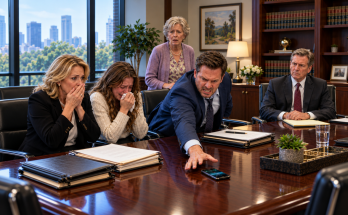
Skyla stood beside the dining table, her fingers resting on the keys to a car she no longer owned. Her eyes were red, her face pale, and the exhaustion in her expression was unlike anything I’d seen during our two years together. I’d watched her come home after fourteen-hour days of classes and work.
I’d seen her fall asleep over textbooks, skip meals to pay tuition, and drive through rain in a car that sounded as though it might fall apart before reaching the next intersection. But I’d never seen her look at me the way she did that evening. Not angry. Not exactly. She looked as though she was standing in front of someone she no longer recognized.
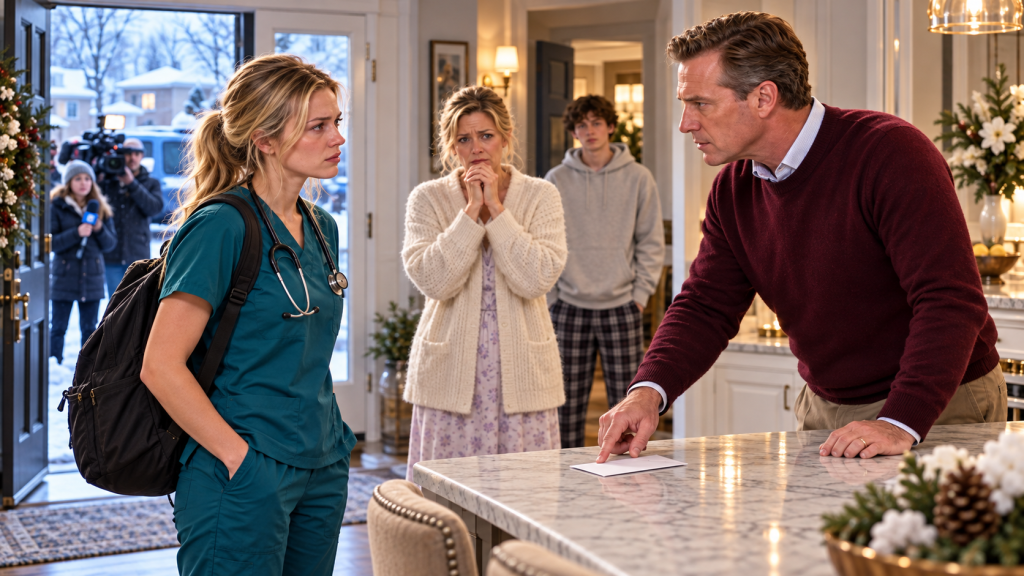
“There’s one more thing you don’t know about those five days,” she repeated. I swallowed. “What?” She reached into the worn folder and removed a white envelope. Across the front was my mother’s name. Mrs. Diane Reed. My stomach tightened. “Why do you have something from my mother?”
Skyla placed it on the table.
“Because I went to see your parents.”
I stared.
“You what?”
“On the second day.”
My throat went dry.
She continued quietly.
“I thought if your parents understood how frightened you were, maybe they’d help with the treatment. I knew they were wealthy. I knew you said they wouldn’t help, but I couldn’t believe they’d let their son suffer without even trying.”
I closed my eyes.
“Skyla—”
“Please let me finish.”
I fell silent.
She looked down at the envelope.
“I took a bus to their house. Your mother answered the door. I begged her to help you. I told her I’d found programs that might cover some of the expenses, but there was still a huge amount we couldn’t manage.”
Her voice trembled.
“Do you know what she said?”
I couldn’t answer.
“She asked how much money I wanted.”
I stared at her.
“At first, I thought she meant for your treatment. I started explaining the estimates I’d written down.”
Skyla gave a broken laugh.
“Then she said, ‘No, sweetheart. How much money would it take for you to disappear from Nathan’s life?’”
My stomach dropped.
I knew my mother had never approved of Skyla.
But hearing those words made something inside me turn cold.
Skyla opened the envelope.
Inside was a check.
I recognized my mother’s handwriting immediately.
$50,000
Payable to Skyla Morgan.
I looked up.
“She gave you fifty thousand dollars?”
“Offered,” Skyla corrected. “I never accepted it.”
I stared at the uncashed check.
My mother had offered Skyla more money than she could earn in an entire year of working evenings and weekends.
Money that could have paid her remaining college expenses.
Money that could have replaced her unreliable car and given her a little breathing room.
And Skyla had walked away.
“Why didn’t you take it?” I whispered.
Her expression changed.
“Because I thought you were dying, Nathan.”
My eyes burned.
She continued.
“Your mother told me I could have the money if I agreed to stop contacting you. She said it was time I understood that your family didn’t want me.”
A tear slid down her cheek.
“I told her that if you were seriously ill, then this wasn’t about whether your family liked me. It was about helping someone I loved.”
I pressed my hands against the edge of the table.
“And what did she say?”
Skyla stared at me.
“She laughed.”
For a moment, I forgot how to breathe.
Then Skyla delivered the sentence that shattered whatever excuse I still had.
“She said, ‘Nathan needs to learn whether you’re worth his time. You’re making this much more difficult than it needs to be.’”
I stared.
My mother knew.
Not just that I’d told Skyla about a fictional illness.
She knew it was a test.
And she’d used that knowledge to offer my girlfriend money to disappear.
“Did she tell you I wasn’t sick?” I asked.
“Not then.”
Skyla shook her head.
“I was too frightened to understand what she meant. I thought she was simply being cruel.”
She paused.
“Yesterday, after I discovered that the specialist you named didn’t exist at the hospital, I called your mother again.”
My pulse hammered.
“What happened?”
“She told me the truth.”
My face burned.
“She said there had never been any diagnosis. She told me you were trying to find out whether I was with you for your money.”
Skyla’s voice became very quiet.
“And then she said I had failed because I’d disappeared.”
I couldn’t speak.
She looked at the folder.
“I told her I’d spent those days trying to find help.”
Her eyes filled again.
“She said, ‘Well, if that story makes you feel better, dear.’”
I stared at my girlfriend.
I had wanted to test whether she loved me.
Instead, I’d created a situation in which someone who loved me desperately had been mocked by the people closest to me.
And I had allowed it.
“Skyla, I didn’t know my mother did that.”
She nodded slowly.
“I believe you.”
For one hopeful second, I thought that meant something.
Then she continued.
“But you knew you were lying to me.”
I looked down.
“Yes.”
“You knew I was frightened.”
“Yes.”
“You watched me call doctors and ask about payment plans.”
My eyes filled.
“Yes.”
“And you could have stopped it at any moment.”
I couldn’t answer.
Skyla swallowed.
“You watched me suffer because you wanted to find out whether I’d suffer for you.”
The words struck harder than anything else she’d said.
I began crying.
Not quiet, dignified tears.
I covered my mouth and bent forward as the shame finally overwhelmed me.
She didn’t rush to comfort me.
And I understood why.
For two days, I’d watched her cry about a fictional illness.
I’d accepted her concern as evidence in a ridiculous experiment.
I had no right to expect her to soothe me now.
When I finally looked up, Skyla was closing the folder.
“Please don’t go,” I whispered.
Her hands stopped.
“Nathan.”
“I know I don’t deserve to ask.”
She looked at me.
“Then why are you asking?”
“Because I love you.”
Her expression crumpled.
For a moment, I thought she might cry again.
Instead, she whispered:
“Do you?”
I felt as though she’d struck me.
“Of course.”
She shook her head.
“You wanted proof that I loved you. But you never stopped to ask whether you were loving me properly.”
I opened my mouth.
Nothing came out.
She picked up her backpack.
“Skyla, please. I’ll make this right.”
She stared at me.
“How?”
“I’ll buy your car back. I’ll get your bracelet. I’ll pay your tuition. Whatever you need.”
Her expression changed.
And I immediately knew I’d made another mistake.
“You still think money is the answer.”
“No, that’s not what I meant.”
“Then listen.”
She took a breath.
“I didn’t fall in love with you because you could buy things for me. I fell in love with the man who used to bring me coffee before my early classes. The man who drove across town when my tire went flat. The man who listened when I talked about becoming a nurse.”
Her voice broke.
“I didn’t know that same man was keeping score.”
I began crying again.
“I’m sorry.”
“I know you are now.”
She looked toward the door.
“But I need you to understand something.”
I waited.
“I’m leaving because you lied to me, Nathan. Not because you don’t have money.”
Then she walked out.
I stood in the living room for nearly an hour.
The apartment felt enormous.
The marble countertops.
The expensive furniture.
The floor-to-ceiling windows.
Everything I’d once considered evidence of a successful life suddenly seemed cold and pointless.
On the dining table sat Skyla’s folder.
She had left it behind.
There were handwritten notes on every page.
Telephone numbers.
Hospital assistance programs.
Questions for specialists.
A carefully organized list of possible treatment expenses.
At the bottom of one page, she’d written:
If the first hospital says no, try another. Don’t give up.
I sat down.
And that was when I cried like a child.
Not because I’d lost a bet.
Not because my girlfriend had failed some imaginary test.
But because the woman I’d doubted had spent five days trying to save my life.
And I had spent those same five days congratulating myself for discovering she didn’t love me.
My name is Nathan Reed.
I was thirty-two years old, the founder of a profitable logistics software company.
I’d grown up in a wealthy family and had never experienced the kind of financial uncertainty Skyla lived with every day.
I’d always believed that made me fortunate.
But somewhere along the way, I’d begun treating money as a measure of people’s intentions.
If someone was kind, I wondered what they wanted.
If someone offered affection, I wondered what they hoped to receive.
And when Skyla loved me without asking for anything, I convinced myself the only way to be certain was to make her believe I was losing everything.
It was an ugly thing to admit.
But I had to admit it before anything in my life could change.
The next morning, my best friend Cole called.
I almost didn’t answer.
Cole had been one of the loudest voices encouraging my test.
He’d known me since business school.
He was charming, confident, and endlessly suspicious of anyone who didn’t come from money.
When I answered, he laughed.
“Well? Did she come crawling back?”
I stared at the wall.
“Don’t talk about her like that.”
He paused.
“What?”
“Don’t talk about Skyla like that.”
Cole chuckled.
“Relax, man. I told you she’d disappear the second she thought the money was gone.”
“She didn’t disappear because she wanted to leave.”
“What?”
“She was trying to find treatment for me.”
Silence.
Then he laughed again.
“Come on.”
I closed my eyes.
“She sold her car, Cole. She pawned her grandmother’s bracelet. She traveled six hours to speak with people who might help.”
He stopped laughing.
For a moment, I thought he understood.
Then he said:
“That’s a pretty convincing performance.”
Something inside me hardened.
“Performance?”
“Nathan, girls like that know how to play the long game.”
I took a breath.
“Skyla was trying to save someone she loved.”
Cole sighed.
“Don’t get emotional just because she produced a few papers.”
I looked at the folder.
The notes she’d written through sleepless nights.
The receipt from the pawnshop.
The bus ticket.
“Cole, I lied to her about dying.”
“Yeah. And?”
I went still.
He continued.
“The whole point was to find out what she’d do.”
I stared at my phone.
“And you think what I did was acceptable?”
He laughed.
“You’re getting soft.”
For the first time in our friendship, I heard the cruelty behind the confidence.
“No,” I answered quietly.
“I’m finally seeing what you’ve been encouraging me to become.”
Then I ended the call.
But Cole wasn’t finished.
An hour later, a message appeared in our old group chat.
There were six men in the group.
Friends from business school, investment circles, and family gatherings.
Cole had written:
Our boy Nathan almost fell for the charity-act comeback. Girl sold her car and everything. Give her an Oscar.
Underneath were laughing emojis.
Then another message appeared.
Guess the gold-digger test got complicated.
I stared at the screen.
It wasn’t simply that Cole had supported my idea.
He’d turned Skyla’s fear into entertainment.
And I had made that possible.
I typed a message.
Then deleted it.
I wanted to blame him.
But I knew the truth.
He hadn’t forced me to lie.
I’d chosen to do that myself.
Finally, I wrote:
I lied to Skyla about having a life-threatening illness. She believed me and made sacrifices to find help. I was wrong. There was nothing funny or clever about what I did. Do not contact her or discuss her again.
I sent it.
Then left the group.
That afternoon, I drove to my parents’ house.
It was a sprawling property behind iron gates, with manicured gardens and a fountain that ran even during the coldest months.
I’d grown up there.
My childhood had been comfortable, protected, and carefully managed.
We had family holidays abroad.
Private tutors.
Expensive schools.
And a housekeeper who remembered birthdays better than most of our relatives.
But there was one thing we rarely did.
We talked honestly about fear.
In our family, fear was considered weakness.
You didn’t admit you were lonely.
You didn’t confess you’d made a mistake.
You controlled the situation before the situation controlled you.
Looking back, I could see how easily that attitude had poisoned my relationship with Skyla.
My mother was arranging flowers when I entered.
“Nathan!”
She smiled.
“Darling, I was going to call you. How are you feeling?”
I stared at her.
“I know about the check.”
Her smile faded.
“What check?”
“The fifty thousand dollars you offered Skyla.”
She placed the flowers down.
“Oh.”
I waited.
She sighed.
“Honestly, Nathan, I don’t see why you’re upset.”
I felt my jaw tighten.
“You tried to pay my girlfriend to leave me.”
“She was going to leave eventually.”
“She thought I was dying.”
Mother waved a hand.
“And now we know she wasn’t particularly bright if she believed such a ridiculous story.”
I stared.
“Mom.”
She looked irritated.
“What?”
“She sold her car trying to help me.”
My mother shrugged.
“That was her decision.”
“She pawned her grandmother’s bracelet.”
“Again, her decision.”
I stepped back.
For years, I’d thought my mother’s coolness was wisdom.
Now I saw how easily she’d dismissed another person’s pain.
“Why did you do it?” I asked.
She looked at me as if the answer were obvious.
“Because I wanted to protect you.”
“From what?”
“Being exploited.”
I stared at her.
“Skyla never asked me for money.”
“That doesn’t prove anything.”
“She refused the money you offered her.”
Mother’s expression hardened.
“Which could simply mean she expected to get more by staying with you.”
I felt something inside me break.
There was no evidence my mother would accept.
If Skyla took money, she was greedy.
If she refused money, she was calculating.
If she stayed, she was after my wealth.
If she left, she never loved me.
It wasn’t a test she could pass.
And I’d been foolish enough to adopt the same thinking.
My father entered the room during the argument.
Richard Reed was sixty-four, broad-shouldered, and accustomed to having the final word.
He looked between us.
“What’s going on?”
“Your son is upset because Skyla apparently took his little experiment seriously,” Mother said.
Dad frowned.
“Nathan, I thought we settled this.”
I turned toward him.
“Did you know Mom offered her money?”
He looked at her.
Then back at me.
“Yes.”
My heart sank.
“And you were comfortable with that?”
He folded his arms.
“The girl needed to understand the boundaries.”
I stared.
“She’s my girlfriend, not an employee negotiating severance.”
His expression hardened.
“Watch your tone.”
For the first time in my adult life, I didn’t lower my voice.
“No. You need to hear me.”
Dad looked stunned.
I continued.
“I lied to someone who trusted me. You encouraged it. Then Mom offered her money to abandon someone she believed was sick.”
My voice shook.
“And you’re both acting like she’s the one who did something shameful.”
Father’s eyes narrowed.
“Nathan, you wouldn’t have your business without this family’s connections.”
There it was.
The sentence that had shaped so many of my decisions.
Our money.
Our reputation.
Our connections.
Everything was framed as something I owed the family for receiving.
I looked at him.
“I know I’m fortunate. I know you helped me when I started.”
He nodded sharply.
“Then remember that.”
“But I won’t keep hurting people to prove I deserve your approval.”
He stared.
Then he said something I would never forget.
“Don’t come crying to me when that girl takes everything you have.”
I looked him directly in the eyes.
“She didn’t take anything from me.”
My voice broke.
“I destroyed something she gave me freely.”
I left my parents’ house without staying for dinner.
As I drove away, my phone buzzed with messages.
Mother accused me of being ungrateful.
Father said I’d embarrassed the family.
Cole wanted to know why I’d left the group chat.
I silenced the notifications.
And for the first time, I realized how many people in my life were comfortable telling me what to think about someone they’d never tried to understand.
Skyla had been right.
The problem wasn’t that I possessed money.
The problem was what I’d allowed money to do to my judgment.
For the next three days, I didn’t contact Skyla.
Not because I no longer wanted to.
I wanted to call her every hour.
I wanted to explain how much I regretted everything, tell her I’d confronted my parents, and beg her to give me another chance.
But I remembered how many times she’d called while believing I was ill.
How many times I’d let the phone ring because I wanted to see whether she’d become desperate enough.
I wasn’t going to turn my guilt into another reason to demand her attention.
Instead, I began trying to repair what I could without expecting forgiveness in return.
The first thing I did was contact the pawnshop.
Skyla had left the receipt inside the folder.
The bracelet had belonged to her grandmother, Alma Morgan.
I’d heard stories about Alma almost from the first day Skyla and I met.
She’d raised Skyla after her parents died in a highway accident when Skyla was eleven.
She’d worked as a school cafeteria cook, lived in a two-bedroom apartment, and somehow always found enough money for birthday cakes, school supplies, and secondhand dance shoes.
The bracelet was the one valuable piece of jewelry Alma owned.
On Skyla’s eighteenth birthday, she’d placed it around her granddaughter’s wrist.
“Silver won’t make you rich,” she told her, “but being loved is a kind of wealth nobody can take away.”
Alma died two years before Skyla met me.
And Skyla had worn that bracelet every single day since.
Except now.
Because she’d pawned it to help pay for treatment I didn’t need.
The pawnbroker was an older man named Mr. Kaplan.
When I called, he confirmed the bracelet was still in his inventory, but he couldn’t simply hand over another customer’s property because I offered money.
I understood.
He explained what authorization would be needed for someone else to redeem it.
I thanked him.
Then I sent Skyla a short message.
I found out your bracelet can still be redeemed. I would like to cover the cost because my lie led you to pawn it. I understand if you don’t want contact with me. If you prefer, I can arrange payment through someone you trust. There are no conditions.
I stared at the message for several minutes.
Then I sent it.
I didn’t add that I missed her.
I didn’t ask her to come home.
I didn’t tell her how much I’d been crying.
For once, I tried to make the message about what she needed instead of what I wanted.
She answered the following afternoon.
Please coordinate with Maya. She’ll arrange it. Thank you.
That was all.
No hearts.
No affectionate nickname.
No question about how I was doing.
It hurt.
But I understood.
Maya Chen was Skyla’s roommate and closest friend.
I’d met her several times.
She was a pharmacy technician studying toward a healthcare degree, practical and protective in a way I’d once found intimidating.
Now I realized she’d had good reason to watch me carefully.
When I called, she answered coldly.
“Nathan.”
“Hi, Maya.”
“What do you want?”
“I want to pay for Skyla’s bracelet to be redeemed.”
“She told me.”
I swallowed.
“I can send you the money, or meet you at the pawnshop if that helps.”
There was a pause.
Then Maya said:
“Do you understand what that bracelet meant to her?”
I closed my eyes.
“Yes.”
“No, Nathan. I don’t think you do.”
I let her continue.
“She used to clean it with a little cloth her grandmother kept in a sewing box. When she was nervous before exams, she’d touch the clasp because it reminded her that somebody believed in her.”
My throat tightened.
Maya’s voice shook.
“She gave that up because you made her think you might die.”
I pressed my hand against my forehead.
“I know.”
“You knew her grandmother was gone.”
“Yes.”
“And you still did this?”
My voice broke.
“Yes.”
She was quiet.
Then she said:
“Skyla doesn’t want me to insult you. She told me to let you do the decent thing.”
I stared at the floor.
“I’ll do whatever is necessary to get it back to her.”
“Good.”
She paused.
“Just don’t confuse fixing a financial loss with fixing what you did to her heart.”
Two days later, Maya collected the bracelet from Mr. Kaplan after Skyla arranged the necessary authorization.
I paid the redemption amount and associated charges.
Maya sent me a photograph of the silver chain resting inside its little blue box.
She has it back, she wrote.
I stared at the photograph.
Then I began crying.
It was only a bracelet.
A small piece of silver that wouldn’t have meant much to anyone who didn’t know its history.
But for a frightened young woman, it had been a reminder of home.
And for five days, she’d believed her boyfriend’s life mattered more than the last physical gift from the grandmother who’d raised her.
I felt ashamed that she’d ever had to make such a choice.
The car was more complicated.
Skyla had sold it to a used-car dealer who’d already listed it for resale.
I contacted the dealership and learned it hadn’t been sold.
The manager recognized the transaction.
“Yes,” he said. “Young woman brought it in last week. Older hatchback, high mileage.”
I swallowed.
“Can it be returned to her if she wants it?”
He hesitated.
“Possibly, but we need to speak with the customer. We can’t just reverse a completed sale because somebody else requests it.”
“I understand.”
I asked for a written breakdown of the amount required to unwind the transaction if Skyla chose to do so.
Then I forwarded the information to Maya.
Skyla’s response came two days later.
I don’t want the old car back. I sold it because it was unreliable anyway. But I do want you to reimburse the financial loss you caused, without strings attached.
I read the message several times.
Then I replied:
Of course. We can document the amount and arrange a transfer through Maya or directly, whichever you prefer.
She chose a direct transfer.
I repaid the amount she’d lost, including the reasonable costs connected to selling the vehicle hurriedly.
She accepted it.
Not as a gift.
Not as a sign that we were getting back together.
As restitution.
It was the first time I’d ever been grateful someone understood the difference.
But the bracelet and car were only the visible losses.
The more I thought about those five days, the more I realized how much I still didn’t know.
Had Skyla missed classes?
Had she lost wages?
Had she neglected her own health?
Had she eaten properly while traveling?
I wanted to ask.
Then I stopped myself.
I had no right to demand a complete accounting of her suffering so I could feel I’d repaired it.
If she needed reimbursement for other direct expenses, I could offer it.
But she did not owe me every private detail of those five days.
One evening, Maya called unexpectedly.
“Nathan?”
I sat upright.
“Is Skyla okay?”
“She is.”
I exhaled.
“Thank goodness.”
Maya hesitated.
“There’s something I think you should know.”
I felt my stomach tighten.
“What?”
“She missed a clinical placement orientation while she was away.”
I closed my eyes.
Skyla had spent months preparing for her final year of nursing school.
Her clinical placements were everything to her.
She wanted to work in pediatric care eventually, particularly with families struggling to navigate complex medical treatment.
“Is she going to lose her place?”
“Not necessarily. The program has a process for requesting an alternative orientation, and she’s working with her coordinator.”
I swallowed.
“Can I help?”
“Not by calling her school.”
I looked down.
“I wasn’t going to.”
“Good.”
Then Maya said:
“She doesn’t need a wealthy boyfriend persuading people to bend rules for her. She needs a chance to finish what she started.”
I nodded.
“Understood.”
There was a pause.
Then Maya’s voice softened slightly.
“She’s trying really hard, Nathan.”
My eyes filled.
“I know.”
“No,” Maya answered gently. “I’m not sure you do. But maybe you’re starting to.”
After that call, I began seeing details I’d ignored before.
Skyla had once told me that her greatest fear wasn’t being poor.
It was depending on someone who could take help away whenever she disagreed with them.
At the time, I’d thought she was being excessively independent.
Now I understood.
She had spent her childhood watching Alma make careful decisions with limited money.
Every favor mattered.
Every promise mattered.
And when a person had very little, the ability to choose for yourself could be more valuable than the offer of financial comfort.
I’d spent our relationship trying to show Skyla that she could trust my wealth.
She’d been trying to show me that she wanted to be trusted without it.
Then, two weeks after she left, I received a letter.
Not a text.
Not an email.
An actual letter delivered to my office.
Her handwriting appeared on the envelope.
I sat at my desk for nearly ten minutes before opening it.
Inside were three pages.
Nathan,
I’m writing because I don’t want our last conversation to be the only thing we remember about two years together.
My throat tightened.
I loved you. That wasn’t an act. I didn’t stay because your family was wealthy, and I didn’t refuse their money because I was playing some clever game.
I stayed because you made ordinary days feel beautiful.
Do you remember the night my car broke down outside the library? It was raining, and I was crying because I’d missed the last bus.
You arrived with two cups of terrible gas-station coffee and a blanket from your trunk. You didn’t make fun of me or tell me what I’d done wrong. You just sat beside me until the tow truck came.
Tears blurred the page.
I remembered.
It had been one of our first months together.
She’d been embarrassed about the car.
I’d told her it was the best excuse I’d ever had to spend an extra hour with her.
That was the Nathan I fell in love with.
I thought he was the person you were when nobody else was watching.
I wiped my eyes.
Then continued.
When you told me you were dying, I was terrified. My grandmother spent the last months of her life receiving medical care, and I still remember how helpless I felt when there wasn’t anything I could do except sit beside her.
I promised myself that if someone I loved ever needed help, I wouldn’t disappear because I was frightened.
That’s why I left to find treatment options.
I wasn’t running away from you.
I was running toward whatever hope I could find.
I pressed my hand against my mouth.
But now I know you were watching me as though I were a suspect.
You didn’t ask whether I was afraid. You wanted to see whether I’d leave.
And when I returned, you lied again, even after I gave you a chance to tell me the truth.
That sentence hurt the most.
Because it was undeniable.
I don’t know whether I can trust you again.
I don’t know whether we have a future.
But I hope you learn that love isn’t something you prove by creating a crisis.
You prove it by being truthful when the truth makes you vulnerable.
Skyla.
I sat at my desk until the office lights switched to their evening setting.
Outside, the city moved beneath a pale sunset.
My company occupied three floors of a modern building.
I’d built it through hard work, good luck, and opportunities made easier by my family’s connections.
I’d always been proud of what I’d achieved.
But that evening, surrounded by everything I’d worked for, I felt poorer than I ever had in my life.
Because Skyla had described the man she once believed I was.
And I wasn’t sure when I’d stopped being him.
I didn’t answer Skyla’s letter immediately.
For years, when something went wrong in my life, my instinct had been to fix it quickly.
I negotiated harder.
Spent more money.
Called someone influential.
Made the problem disappear.
But I couldn’t negotiate Skyla’s trust back.
I couldn’t buy another version of the night I’d told her I was dying.
And I couldn’t erase the memory of how she looked when I admitted I’d invented everything.
So I did something unfamiliar.
I asked for help.
My first appointment with a therapist named Dr. Elaine Harper took place on a Thursday afternoon.
I almost canceled.
I told myself I didn’t need therapy.
I was successful.
Healthy.
Financially secure.
I wasn’t struggling to function.
But when Dr. Harper asked why I’d come, I found myself saying:
“I hurt the person who loved me most because I couldn’t believe she loved me.”
She waited.
I stared at my hands.
“Everyone told me she wanted my money.”
“And what did Skyla do that made you believe those warnings?”
I opened my mouth.
Then stopped.
For nearly a minute, I couldn’t think of an answer.
Finally, I whispered:
“Nothing.”
Dr. Harper nodded.
“Then why did the warnings seem more convincing than her behavior?”
I looked toward the window.
That question stayed with me for weeks.
We talked about my childhood.
About growing up in a house where mistakes were treated as failures.
About the way my father spoke about business relationships as though every person was either useful or dangerous.
About my mother’s habit of measuring people by their education, income, and family background.
We also talked about my responsibility.
Dr. Harper never let me turn my upbringing into an excuse.
“You learned to distrust people,” she told me during one session. “But you still made the decision to deceive Skyla.”
I nodded.
“I know.”
“What would accountability look like if she never comes back?”
I stared at her.
I’d been avoiding that possibility.
Then I whispered:
“Being different anyway.”
She nodded.
“That’s where the work begins.”
A month after Skyla left, I received a message from Maya.
It contained only four words.
We have a problem.
My stomach tightened.
I called immediately.
“What happened?”
Maya sounded furious.
“Your mother contacted Skyla’s nursing program.”
For a moment, I couldn’t speak.
“What?”
“She filed a complaint.”
My chest went cold.
“About what?”
“Alleged financial misconduct. She claimed Skyla approached your family demanding money while pretending to help with your illness.”
I stood so quickly my chair rolled backward.
“She didn’t do that!”
“I know.”
Maya’s voice shook.
“But now the school is reviewing the complaint.”
I gripped the edge of my desk.
“Did my mother provide anything?”
“A copy of the check she offered Skyla.”
I closed my eyes.
My mother had offered my girlfriend money to disappear.
Skyla refused.
And now that same check was being used to imply she’d tried to obtain money dishonestly.
For several seconds, I was so angry I couldn’t speak.
Then Maya said something that stopped me.
“Nathan, Skyla asked me not to tell you.”
I went still.
“Why?”
“Because she doesn’t want another argument involving your family.”
I swallowed.
“Then why are you telling me?”
Maya’s voice softened.
“Because your name is central to the allegation. She needs a truthful record of what happened, whether she wants to speak to you or not.”
I sat down.
“Tell me what I can do.”
The next morning, I called an attorney.
Not my father’s lawyer.
Not the expensive firm my family had used for years.
I contacted an independent attorney and explained what I’d done.
Every part.
The fictional diagnosis.
The invented treatment cost.
The repeated lies.
The messages.
My mother’s offer.
The uncashed check.
And the school complaint.
It was humiliating.
But there was no point in asking for help while hiding the truth.
The attorney helped me prepare a factual signed statement describing my conduct and identifying the relevant messages and witnesses.
I made clear that Skyla had never requested money for herself.
She had offered to help me obtain medical care because she believed I was seriously ill.
The alleged illness was fabricated by me.
The statement also explained that my mother had offered Skyla money to end our relationship, not the other way around.
I provided relevant records through appropriate channels for the school’s review.
I didn’t ask the school to favor Skyla.
I asked it to assess the actual facts.
Two days later, my father appeared at my office.
He entered without an appointment.
I looked up from my desk.
“Dad.”
He shut the door.
“What have you done?”
I took a breath.
“What are you referring to?”
“Your mother tells me you’ve submitted a statement accusing her of wrongdoing.”
I stood.
“I submitted a truthful account of what happened.”
His face darkened.
“You’re willing to embarrass your own family over that girl?”
I felt anger rise.
Then I remembered my therapy sessions.
I kept my voice steady.
“Skyla could lose a professional opportunity because of a false allegation.”
Father waved his hand.
“Universities deal with complaints all the time.”
“That doesn’t make a dishonest complaint harmless.”
He stepped closer.
“Your mother was trying to protect you.”
I looked at him.
“She was trying to protect our family’s pride.”
His jaw tightened.
“You have no idea what it takes to maintain a reputation like ours.”
I thought of Skyla.
Of the silver bracelet.
Of her sitting on a bus for hours while believing I might be dying.
Then I looked at my father.
“I know what it cost me to protect it.”
He stared.
Dad straightened his jacket.
“If you continue this, don’t expect our support.”
I nodded.
“I understand.”
“You may think your business is independent, Nathan, but don’t forget who helped introduce you to your first investors.”
“I haven’t forgotten.”
“Then show some gratitude.”
I looked him directly in the eyes.
“I’m grateful for the opportunities you gave me. But gratitude doesn’t require me to lie for you.”
His expression hardened.
For a moment, I thought he might shout.
Instead, he shook his head.
“You’ve changed.”
I swallowed.
“I hope so.”
He left without another word.
When the door closed, my hands were shaking.
I wasn’t proud of standing up to my father simply because I’d won an argument.
There had been no winner.
I’d damaged a relationship I once believed was unbreakable.
But for the first time, I had refused to purchase peace with someone else’s dignity.
The school’s review continued for several weeks.
Skyla was allowed to provide her account and supporting information.
She submitted the correspondence she’d received from medical assistance organizations, the uncashed check, and my signed statement.
Maya accompanied her to one meeting.
I wasn’t there.
I respected that.
Eventually, the school informed Skyla that the complaint did not establish misconduct on her part.
Her clinical placement arrangements continued.
When Maya told me, I sat down in relief.
“She’s okay?”
“She still has a lot to recover from,” Maya answered. “But her place in the program is secure.”
I closed my eyes.
“Thank goodness.”
Then Maya said something unexpected.
“She read your statement.”
I swallowed.
“All right.”
“She said you didn’t try to make yourself look better.”
I looked down.
“There wasn’t anything to make look better.”
Maya paused.
“That’s what she said too.”
A week later, Skyla sent me a message.
Thank you for correcting the record at my school. I appreciate that you told the truth.
I stared at the screen.
Then replied:
You deserved the truth from the beginning. I’m sorry it took so much damage for me to understand that.
She didn’t answer.
But for once, I didn’t mistake silence for rejection.
Sometimes silence simply meant a person was living a life that didn’t revolve around me.
One Saturday, I drove to the treatment center Skyla had visited.
I didn’t tell anyone connected to her.
I didn’t ask whether she’d been there recently.
I wasn’t trying to find her.
I wanted to understand the place she’d gone when she believed I needed medical help.
The center was affiliated with a nonprofit patient-support organization called Bridgeway.
It helped families navigate referrals, transportation, temporary lodging, and financial assistance programs.
Its office occupied a modest building beside a regional hospital.
There were no marble floors.
No dramatic lobby.
Just a waiting area with children’s drawings on the walls and a coffee machine that looked older than I was.
I asked to speak with someone about supporting the organization.
A program coordinator named Miriam Torres met with me.
“What made you interested in our work?” she asked.
I hesitated.
Then answered honestly.
“Someone I hurt came here trying to help me. I didn’t understand what this place did until afterward.”
Miriam studied me.
Then nodded.
“Would you like to know how our programs work?”
“Yes.”
She explained how patients sometimes traveled long distances to reach appropriate specialists.
How transportation and lodging costs could become overwhelming even when medical insurance covered part of the care.
How a person might have a treatment option available but struggle to attend appointments because they couldn’t afford time away from work or somewhere to stay.
I listened.
For the first time, I wasn’t viewing illness as a fictional problem in a relationship test.
I was listening to the practical difficulties real families faced.
Miriam showed me a public annual report.
There were stories of parents traveling with children.
Older adults needing repeated appointments.
Patients missing work for weeks.
The organization couldn’t guarantee medical outcomes.
But it could help people reach care and navigate the resources available.
I stared at the report.
Then asked:
“What do you need most?”
Miriam smiled sadly.
“Reliable funding. Especially for transportation and short-term lodging. Those needs never disappear.”
I worked with the organization’s leadership to arrange a substantial unrestricted contribution, with appropriate oversight and reporting.
I didn’t put Skyla’s name on it.
I didn’t ask for a plaque.
I didn’t want photographs or an announcement.
And I didn’t tell Skyla.
For once, I wanted to do something useful without turning it into evidence that I deserved to be loved.
That evening, I returned home and found one of Skyla’s old textbooks in the living room.
She’d forgotten it when she moved out.
It was filled with sticky notes.
On the inside cover, she’d written a sentence in blue ink:
Patients remember how you make them feel when they’re frightened.
I sat on the sofa holding the book.
For months, I’d been trying to understand why Skyla had sacrificed so much during those five days.
The answer had been in front of me all along.
She understood what fear did to people.
And she’d wanted to make sure I never had to face it alone.
I looked at the empty space beside me.
Then whispered:
“I’m sorry, Skyla.”
This time, I didn’t say it expecting an answer.
Four months after Skyla left, she called me.
I was leaving a meeting when her name appeared on my phone.
For a moment, I thought I was imagining it.
Then I answered.
“Skyla?”
“Hi, Nathan.”
Her voice was familiar enough to make my chest ache.
“Hi.”
A long silence followed.
Then she said:
“Would you be willing to meet for coffee?”
I stopped walking.
“Of course.”
She hesitated.
“Just coffee. I don’t want you to think—”
“I understand,” I interrupted gently. “No expectations.”
She exhaled.
“There’s a little diner near the campus. Saturday morning?”
I smiled despite the tears filling my eyes.
“I know the place.”
“Ten o’clock?”
“I’ll be there.”
I arrived fifteen minutes early.
The diner had cracked vinyl booths, slightly crooked tables, and a waitress who called everyone honey.
I’d eaten there with Skyla countless times.
It was one of the few restaurants where she insisted on paying for her own meal because the prices didn’t make her uncomfortable.
I sat beside the window.
At exactly ten, she walked through the door.
Her hair was shorter.
She wore jeans and a pale yellow sweater.
And around her wrist was her grandmother’s silver bracelet.
My throat tightened.
She saw me looking at it.
Then smiled faintly.
“Maya helped me get it back.”
I nodded.
“I’m glad.”
We sat down.
For several minutes, we spoke about ordinary things.
Her classes.
My work.
Maya’s new apartment.
The waitress brought coffee.
Skyla added too much sugar, just as she always had.
Then she looked at me.
“I heard something interesting about Bridgeway.”
My heart skipped.
I set down my cup.
“Oh?”
She studied my face.
“They received a major donation a few months ago.”
I nodded.
“That’s good.”
Her mouth twitched.
“Nathan.”
I sighed.
“Yes?”
“Was it you?”
I considered pretending I didn’t know.
The impulse lasted only a second.
Then I answered.
“Yes.”
She looked down.
“Why didn’t you tell me?”
“Because it wasn’t supposed to be about me.”
She was quiet.
I continued.
“I went there because I wanted to understand where you’d spent those five days. I learned what the organization actually does. They needed support, and I could help.”
I paused.
“I didn’t donate because I thought it would bring you back.”
Skyla looked at me.
“How do I know that?”
The question hurt.
But it was fair.
I took a breath.
“You don’t have to believe it because I say it. All I can tell you is that I would make the same contribution if you never spoke to me again.”
She studied me for a long time.
Then nodded.
“That’s different from the Nathan I remember.”
I looked down.
“I hope so.”
We talked for nearly two hours.
Not once did I ask her to come home.
Not once did I tell her I couldn’t survive without her.
Instead, I listened.
Skyla told me how difficult the previous months had been.
She’d struggled with concentrating.
There were days when she’d look at her phone and feel anxious because she remembered the frantic calls she’d made while thinking I was ill.
She’d spoken with a counselor through her college.
She’d worked hard to catch up with classes.
And she’d slowly begun feeling like herself again.
“I hated that I still missed you,” she admitted.
My eyes filled.
“I missed you too.”
She looked toward the window.
“I was angry with myself for missing someone who hurt me.”
I swallowed.
“You had every reason to be angry.”
She nodded.
“I know.”
Then she looked back at me.
“But I also remembered the good parts.”
I held my breath.
She continued.
“I remembered who you were before you listened to everyone else. I wondered whether that person was still there.”
I looked at her.
“I’m trying to become someone you wouldn’t have needed to wonder about.”
Her eyes filled.
For a moment, neither of us spoke.
Then Skyla opened her purse.
“I brought something.”
My stomach tightened.
She withdrew a folded piece of paper.
It looked worn, as though it had been opened and closed many times.
“What is it?” I asked.
She stared at it.
“A letter.”
I waited.
She swallowed.
“I wrote it on the fourth night I was away.”
My chest tightened.
“Why?”
She looked up.
“Because I was afraid the treatment wouldn’t work.”
I felt cold.
She continued.
“I thought there might come a day when you were too sick to talk. Or when I couldn’t find the right words.”
Her voice broke.
“So I wrote down everything I wanted you to know.”
I couldn’t speak.
Skyla looked at the paper.
“I was going to give it to you after we found a doctor. I wanted you to have something to read on the days you felt frightened.”
She hesitated.
“Would you like to see it?”
I nodded.
My hands trembled as she placed the letter before me.
Nathan,
I don’t know what the doctors will say, and I don’t know how much time we have.
But I want you to remember something.
You were loved long before you told me you were sick.
You were loved when you brought me coffee after class.
You were loved when you helped me carry groceries up three flights of stairs.
You were loved when you listened to my ridiculous stories and laughed even when they weren’t funny.
My vision blurred.
I continued.
And if tomorrow everything changes, I want you to know that none of those ordinary moments were small to me.
You once asked what I’d do if I could have anything in the world.
I told you I’d finish college, become a nurse, and buy a little house with a garden.
But I forgot to tell you something.
In every version of that future, I hoped you’d be there.
I covered my mouth.
Tears dropped onto the paper.
Skyla sat quietly.
I read the final lines.
If I can’t make everything better, I’ll still sit beside you.
If you get frightened, you don’t have to pretend to be brave.
And if all I can give you is my time and my love, I’ll give you both.
Always, Skyla.
I lowered the letter.
For several seconds, I couldn’t see clearly.
Then I began sobbing.
Right there in the diner.
With strangers eating pancakes and the waitress refilling coffee nearby.
I cried harder than I had in years.
Skyla’s eyes filled too.
“Nathan?”
I shook my head.
“I’m sorry.”
She reached across the table and placed her hand over mine.
Just for a moment.
Then she whispered:
“I know.”
I looked up.
“You wrote that while I was lying to you.”
She nodded.
“I did.”
My voice broke.
“You were preparing to stand beside me through something that wasn’t even real.”
“Yes.”
I stared at her.
“Why did you bring it?”
She looked toward the window.
“Because I wanted you to understand that my love wasn’t something you needed to manufacture a crisis to discover.”
I nodded through tears.
Then she said:
“And because I wanted to see whether I could sit across from you again without feeling afraid.”
I took a slow breath.
“Can you?”
She looked at me.
For a long time, she didn’t answer.
Then she whispered:
“A little.”
It wasn’t forgiveness.
It wasn’t reconciliation.
But it was more hope than I’d allowed myself to expect.
We didn’t get back together that morning.
Skyla made that clear.
“I don’t want to rush,” she said.
“I don’t either.”
She looked surprised.
I smiled sadly.
“I know that sounds strange coming from someone who used to try to solve every problem in an afternoon.”
She laughed softly.
“Yes. It does.”
I nodded.
“But I understand now that trust isn’t a contract you sign once. It’s something you have to keep earning through ordinary behavior.”
She looked down.
Then smiled.
“That’s a good place to start.”
Over the next few months, we began spending time together again.
Slowly.
Carefully.
Sometimes we met for coffee.
Sometimes we walked through a park.
Once, she invited me to watch an outdoor movie with Maya and several classmates.
Maya looked at me suspiciously when I arrived.
I couldn’t blame her.
But halfway through the movie, she handed me a bag of popcorn.
“Don’t eat all of it,” she warned.
I smiled.
“Yes, ma’am.”
She rolled her eyes.
It was a small moment.
But it mattered.
There were difficult conversations.
Skyla sometimes asked questions about the fake diagnosis.
Why I’d chosen that particular lie.
Why I’d ignored her calls.
Why I’d let her think my parents couldn’t help.
I answered honestly.
Even when the answers made me ashamed.
Sometimes she became angry.
Sometimes she cried.
Sometimes she said she needed a few days without talking.
And I respected that.
I no longer interpreted every boundary as a threat.
One evening, we were walking beside a lake when Skyla stopped.
“Nathan?”
“Yes?”
“What would you do if you were afraid I didn’t love you again?”
I thought carefully.
The old version of me might have promised I’d never feel insecure.
But I was learning not to promise things simply because they sounded beautiful.
“I’d tell you I was frightened,” I answered.
She watched me.
“And then?”
“I’d listen to your answer.”
She nodded.
“And if I needed space?”
“I’d respect it.”
Her eyes filled.
Then she asked:
“Would you ever test me again?”
I shook my head.
“No.”
She held my gaze.
“Why?”
“Because creating suffering to measure love isn’t love. It’s control.”
For a long moment, she said nothing.
Then she reached for my hand.
And this time, she didn’t let go.
A year after the evening Skyla returned with that worn folder, she graduated from nursing school.
I attended the ceremony.
So did Maya, several of her classmates, and two former neighbors who’d known her grandmother.
Skyla wore her graduation gown over a simple blue dress.
Her grandmother’s bracelet glimmered at her wrist.
When her name was announced, I stood and applauded until my hands hurt.
She walked across the stage.
Accepted her diploma.
And smiled so brightly that I forgot, for a moment, every painful thing that had happened between us.
She’d done it.
Through night shifts.
Unreliable transportation.
Financial stress.
A heartbreak I had caused.
And months of trying to rebuild her confidence.
She’d done it.
After the ceremony, I found her standing beside Maya.
The moment Skyla saw me, she smiled.
“Nathan!”
I walked toward her.
“Congratulations.”
She laughed.
“Thank you.”
I held out a small bouquet of wildflowers.
No diamonds.
No expensive jewelry.
Just flowers in the colors she’d always loved.
She took them carefully.
“They’re beautiful.”
I smiled.
“So are you.”
She blushed.
Then Maya pretended to cough.
“Please, you two. Some of us are trying to take photographs.”
We laughed.
Later, Skyla asked me to walk with her.
We crossed the campus lawn beneath the warm afternoon sunlight.
Students were celebrating with their families.
Parents hugged graduates.
Friends posed for photographs.
A little girl ran across the grass carrying a balloon.
Skyla watched them.
Then looked at me.
“Grandma would have loved this.”
I nodded.
“She would have been so proud.”
Her eyes filled.
“I used to imagine her sitting in the front row.”
I took her hand.
“I think she’d be proud of more than your diploma.”
She looked at me.
“What do you mean?”
I smiled.
“She raised someone who works hard, keeps her promises, and cares about people even when life gets difficult.”
A tear slid down her cheek.
“Thank you.”
Then she stopped walking.
“Nathan?”
“Yes?”
“I want to tell you something.”
My heart began pounding.
She looked nervous.
“I’ve been thinking about us.”
I waited.
She took a breath.
“I don’t want to spend the rest of my life punishing you for what happened.”
My eyes filled.
“But I also don’t want to pretend it didn’t happen.”
“I understand.”
She nodded.
“I’ve seen you change. Not just when you’re with me, but in the decisions you’ve made when you didn’t know whether I’d ever come back.”
I swallowed.
Then she smiled.
“And I still love you.”
For a moment, the world seemed to become completely silent.
I stared at her.
“Skyla…”
She laughed through tears.
“I know.”
I shook my head.
“I don’t deserve—”
She raised one finger.
“Don’t.”
I stopped.
She stepped closer.
“This isn’t about what you deserve. It’s about what I choose.”
I looked at her.
“And I’m choosing to try again.”
My eyes filled.
“Are you sure?”
She smiled.
“Yes.”
Then she added:
“Slowly. Honestly. And with absolutely no ridiculous tests.”
I laughed through tears.
“I promise.”
She put her arms around me.
And for the first time in a year, I held her without wondering whether she loved me for my money.
I knew she did not.
The question was whether I could keep becoming someone worthy of the trust she was choosing to offer again.
My relationship with my parents remained complicated.
My mother eventually acknowledged that filing the complaint against Skyla had been wrong.
But an apology didn’t automatically restore trust.
Skyla wasn’t required to resume family dinners or pretend she felt comfortable around people who’d tried to humiliate her.
I supported that.
My parents and I continued having difficult conversations about money, status, and respect.
Sometimes those conversations went badly.
Sometimes we made progress.
But I stopped allowing their opinions to determine how I treated the person I loved.
And that change was permanent.
Cole tried contacting me several times.
He sent jokes.
Invitations.
Messages about how much fun we used to have.
Eventually, he wrote:
Are you really throwing away years of friendship over some girl?
I read the message.
Then replied:
I’m ending a friendship because I no longer want to participate in cruelty disguised as wisdom.
I didn’t hear from him again.
Another year passed.
Skyla began working as a nurse.
She was exhausted after long shifts, but she loved her work.
Sometimes she came home telling me about patients who’d taught her something unexpected.
She never shared private details she wasn’t entitled to share.
Instead, she talked about what it meant to reassure someone who was frightened.
To sit with a person who needed more than medical instructions.
To remember that every patient had a life outside the hospital walls.
I loved listening to her.
And I learned to ask something simple.
“Do you want advice, or do you want me to listen?”
Most evenings, she smiled and said:
“Just listen.”
So I did.
We never returned to exactly the relationship we’d had before.
That was impossible.
Instead, we built something different.
More honest.
Less impressive from the outside, perhaps.
But stronger where it mattered.
Skyla maintained her own financial independence.
We discussed money openly rather than treating it like a forbidden subject.
I stopped using extravagant gifts whenever I felt guilty.
And when either of us was frightened, we tried to say so instead of hiding behind anger, silence, or tests.
One rainy evening, I came home after a difficult day at work.
Skyla was sitting on the sofa with her feet tucked beneath her.
She looked up.
“Hey.”
I smiled.
“Hey.”
She studied me.
“Bad day?”
I nodded.
“Pretty bad.”
She opened her arms.
“Come here.”
I sat beside her.
She wrapped an arm around my shoulders.
For a while, we said nothing.
Then she asked:
“Want to tell me about it?”
I took a breath.
And I did.
I told her I’d made a mistake at work.
That I was worried about a project.
That I felt embarrassed because I’d missed something important.
She listened.
She didn’t laugh.
She didn’t question whether I was strong enough to handle it.
She didn’t ask me to prove anything.
She simply stayed.
Later, as we made dinner, I noticed the silver bracelet on her wrist.
The clasp had been repaired.
Its surface had been polished, though a few scratches remained.
“Your grandmother would be proud of you,” I said.
Skyla looked down.
“I hope so.”
Then she smiled.
“She always said you could tell a person’s character by what they did when they were afraid.”
My throat tightened.
I thought about the terrible fear that had made me test her love.
The fear that people wanted my wealth instead of me.
The fear that affection could disappear the moment life became difficult.
I’d allowed that fear to turn me into someone I barely recognized.
“What else did she say?” I asked.
Skyla touched the bracelet.
“She said brave people aren’t the ones who never get frightened. They’re the ones who choose not to hurt others because of it.”
I stared at her.
Then nodded.
“I wish I’d met her.”
Skyla smiled sadly.
“I think she would have liked you.”
I looked surprised.
“Even after what I did?”
She considered that.
“Not immediately.”
We both laughed.
Then she continued.
“But if she saw you taking responsibility and doing the work to change, I think she’d give you a chance to show who you wanted to become.”
I took her hand.
“I’m grateful you did.”
Sometimes I remember the five days Skyla disappeared.
I remember staring at my phone, convinced her silence proved she didn’t love me.
I remember listening to my friends and parents tell me I’d been right to doubt her.
I remember feeling smug because I thought I’d uncovered the truth.
And then I remember the evening she returned.
The worn folder.
The bus ticket.
The pawnshop receipt.
The letters from specialists.
Her scraped hands.
Her tired eyes.
And the terrible realization that while I was questioning whether she loved me, she was willing to give up the few things she owned because she believed I might die.
I had grown up surrounded by money.
I’d believed wealth gave me security.
It could buy beautiful houses.
Expensive cars.
Comfort.
Opportunities.
And help in countless difficult situations.
But there was one thing it couldn’t guarantee.
That someone would care about me when there was nothing left to gain.
Skyla had answered that question without ever knowing she was being tested.
And the tragedy was that I nearly lost her because I didn’t believe the answer.
Now, when people ask how I knew Skyla was the woman I wanted to spend my life with, I never tell them I tested her.
I tell them I learned the difference between being wealthy and being worthy of someone’s trust.
I tell them that a person who loves you should never have to suffer to prove it.
And I tell them that the strongest relationships aren’t built on tricks, fear, or desperate sacrifices.
They’re built on honesty.
Respect.
And the quiet choice to keep showing up for each other.
One evening, long after we’d begun building our future together, Skyla found me looking through the old folder she’d once left on my dining table.
She sat beside me.
“You still have that?”
I nodded.
“I kept it.”
“Why?”
I looked at the handwritten pages.
The notes.
The assistance applications.
The bus ticket.
The evidence of love I’d been too foolish to recognize.
“Because I never want to forget what I almost threw away.”
Skyla smiled gently.
Then she took the folder from my hands and closed it.
“You don’t need to punish yourself forever, Nathan.”
I looked at her.
“I know.”
She leaned against my shoulder.
“Then remember something else too.”
“What?”
She smiled.
“We’re still here.”
I wrapped my arms around her.
And suddenly, I understood.
The most beautiful part of our story wasn’t that she had once been willing to sacrifice everything for me.
It was that, after all the pain and uncertainty, we had learned how to love each other without demanding sacrifices as proof.
I pretended to be dying because I wanted to know whether a poor girl truly loved a rich man.
But when she returned after five days, I discovered something far more important.
She had never needed to prove her love to me.
I was the one who needed to learn how to love her.
THE END STORIES! THANK YOU FOR READING GOOD LUCK !❤️
Related Posts