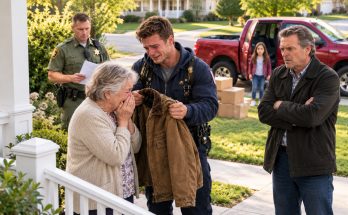
The black car disappeared around the corner before I could reach the gate. I ran after it anyway. Barefoot. Without my jacket. Without thinking. “MATTHEW!” Regina’s scream followed me into the night. I stopped in the middle of the driveway, staring at the empty street. My mother was gone.
The woman who had worked double shifts cleaning hotel rooms after my father died. The woman who kept every birthday card I had ever written. The woman who apologized for needing heart surgery because she knew how much money it would cost.
Someone had taken her from the hospital. And somehow, it was because of me. My phone was still connected to the nurse. “Mr. Hernandez? Are you there?” I pressed it against my ear. “Who took her?” “The man presented identification and told the discharge desk he was your mother’s son. We’re reviewing exactly what happened.”
“My mother just had surgery! She can’t be discharged!”
The nurse’s voice trembled.
“I understand. Our supervisor has contacted hospital security.”
“Call the police!”
“We’re doing that now.”
I could barely breathe.
Then Regina reached me.
“Matthew, give me the phone.”
I stepped away.
“Don’t touch me.”
She froze.
I looked into the face of the woman I had fallen in love with.
The woman who kissed me as though I mattered.
The woman who cooked my mother’s favorite recipes.
The woman who had just admitted she married me because my father’s past could threaten her family.
“Did you know?” I whispered.
Her eyes filled.
“No.”
“Did you know they would take her?”
“No, Matthew.”
I pointed toward the street.
“Then why did they know exactly where she was?”
Regina opened her mouth.
Nothing came out.
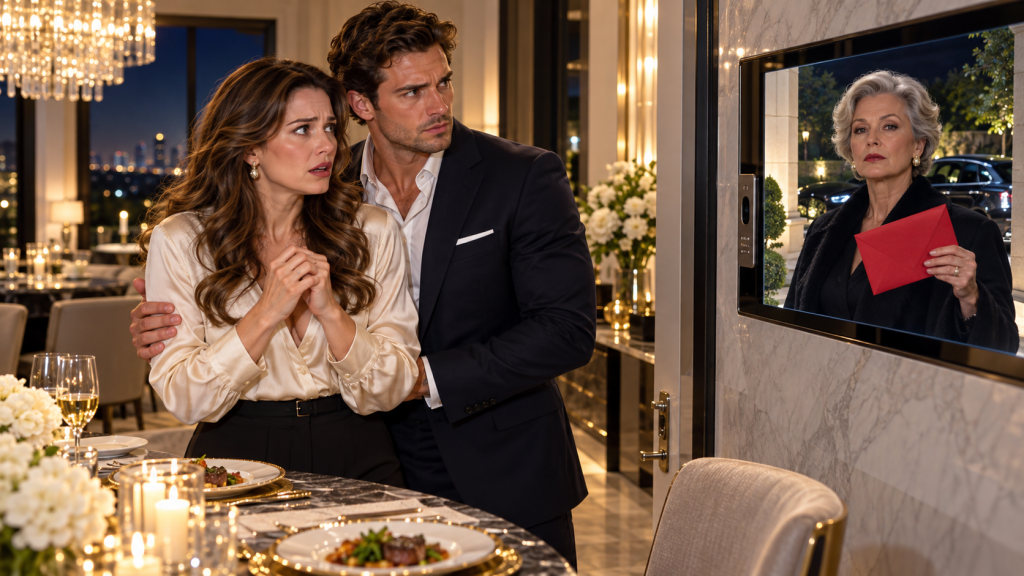
Behind us, Clara Voss approached slowly, clutching her red envelope.
“Because Arthur never leaves a threat unfinished,” she said.
Regina turned.
“Clara, please.”
“No.” The older woman’s voice broke. “You told me Julian was safe too.”
I looked between them.
“Who was Julian?”
Regina began crying.
Clara answered.
“My son was an accountant who discovered what Arthur had done. Regina married him under an arrangement much like yours. Ten months later, he was dead.”
My stomach twisted.
Regina shook her head.
“Julian was my friend. He volunteered to help.”
“And Matthew didn’t?” Clara demanded.
Regina looked at me.
Her silence said enough.
I turned away.
The hospital nurse was still speaking.
“Mr. Hernandez, the security team has identified a possible vehicle registration. Please remain available to the officers.”
I forced myself to listen.
She gave me the number of the investigating unit and confirmed that an emergency alert had been issued.
Then she said something that made my blood freeze.
“Your mother left a message before the man arrived.”
I closed my eyes.
“What message?”
“She told the nurse that if anyone asked about her husband’s belongings, we should call you.”
I stared toward the empty street.
“My father’s belongings?”
“Yes, sir.”
Then the nurse added, “She said something about a chain.”
My father’s gold chain.
The one I’d sold to help pay for her operation.
I slowly lowered the phone.
And for the first time, I wondered whether I’d sold something far more valuable than gold.
We returned to the house because the police needed to speak to everyone who had witnessed the black car.
I stayed in the living room, refusing to sit.
Regina contacted the hospital’s security supervisor and provided footage from our driveway cameras.
Clara called a retired detective who had once investigated Julian’s death.
No one tried to follow the car.
No one suggested we become heroes in a midnight chase.
But every passing minute felt unbearable.
At 11:42, Regina’s brother Patrick arrived.
He didn’t bother knocking.
He marched through the front door wearing a wrinkled shirt and carrying his motorcycle helmet.
I stepped toward him.
“Did your father take my mother?”
Patrick looked genuinely startled.
“What?”
“Don’t pretend you don’t know what I’m talking about.”
He looked toward Regina.
“What happened?”
She explained quickly.
His expression darkened.
Then he said something unexpected.
“Dad’s finally frightened.”
Clara turned.
“Arthur should have been frightened twenty years ago.”
Patrick looked at her.
For a moment, something passed between them.
Not surprise.
Recognition.
I stared.
“You know each other.”
Patrick lowered his eyes.
Clara spoke first.
“Patrick was the last person Julian called before he died.”
The room fell silent.
Regina whispered, “What?”
Patrick closed his eyes.
“Clara, don’t.”
“You’ve hidden behind your father’s money long enough.”
I looked at him.
“Why did Julian call you?”
Patrick sat heavily on the sofa.
For the first time since I’d known him, he looked less like an arrogant millionaire and more like a man who hadn’t slept properly in years.
“Julian discovered payments from Albright subsidiaries to a security contractor. He thought they were being used to intimidate former employees.”
My heart hammered.
“Former employees like my father?”
Patrick nodded.
“Your father worked on the company’s transport fleet. He found evidence that Arthur knew about dangerous brake defects before a crash that killed eleven workers.”
I felt sick.
I remembered the old newspaper photograph.
A burned-out bus beneath an overpass.
Men wearing helmets.
Families standing behind police barricades.
My father had once told me that some accidents were merely crimes wearing different clothes.
He’d never explained what he meant.
Patrick continued.
“Arthur’s people altered maintenance records. Your father kept copies.”
I stared at him.
“Why didn’t he go to the police?”
“He tried. Some evidence was dismissed as incomplete. Other records disappeared. He was threatened. He eventually stopped speaking publicly.”
Clara’s eyes filled.
“Julian found the payment trail that could connect the cover-up to the executives who ordered it.”
“And then he died,” I whispered.
Patrick nodded.
“A car crash on the freeway. Investigators ruled it an accident.”
Clara held up the photograph of her son’s wrist.
“The black triangle was there when I identified his body.”
Patrick went pale.
I looked at him.
“What does it mean?”
He swallowed.
“It’s a mark used by a private security team employed by my father. Not an official company insignia. Something their supervisor used to identify people being moved between locations.”
Regina stared at him.
“You knew?”
“I suspected.”
“Patrick!”
He flinched.
“You think I haven’t spent every day since Julian’s funeral wondering what I should have done?”
Clara began crying.
Patrick lowered his head.
“Julian called me because he thought I would help him. I told him to leave town.”
I stepped closer.
“Did you warn your father?”
Patrick looked up.
His face crumpled.
“Yes.”
The word hung between us.
Clara covered her mouth.
Regina stepped backward as though he’d struck her.
Patrick began shaking.
“I thought Dad would threaten him, not kill him. I thought he would scare him into returning the files.”
Clara’s voice cracked.
“And my son died.”
Patrick couldn’t look at her.
I felt rage rise through my chest.
“Where is my mother?”
He stared at me.
“I don’t know.”
“Then tell me where your father’s security people take someone they want to keep quiet.”
He hesitated.
Too long.
“Patrick.”
Finally, he whispered a name.
“Mariner House.”
Regina went still.
I looked at her.
“What is that?”
Her voice was barely audible.
“A private recovery facility my father owns outside Pasadena.”
My phone rang.
Detective Elena Morales.
“Mr. Hernandez, we’ve located a vehicle associated with the people who removed your mother. We believe she’s been taken to a medical property outside Pasadena.”
I looked at Patrick.
Then at Regina.
And suddenly, I understood that the people I’d spent a year trying to impress had brought danger directly to the woman I loved most.
“Mariner House,” I told Detective Morales.
There was a pause.
“How do you know that name?”
I looked at Patrick.
“Someone in the family identified it.”
“Do you have a specific address?”
Regina took the phone and gave the address from memory.
Then the detective said, “Mr. Hernandez, stay where you are. We have officers responding, and we need you somewhere we can reach you.”
I wanted to scream.
My mother had spent her life telling me to remain calm when things went wrong.
When our electricity was shut off for three days, she lit candles and called it camping.
When Dad died, she held me while I cried, even though she had just lost the love of her life.
When the doctors said her heart needed surgery, she apologized because she knew I was frightened.
Now she was somewhere unfamiliar, recovering from a major operation, surrounded by people who might harm her.
And I was being told to wait.
Regina stood beside me.
“Matthew, I know what you’re thinking.”
I looked at her.
“You don’t know anything about what I’m thinking.”
Her face crumpled.
“That’s fair.”
For the first time since we’d met, she didn’t try to control the conversation.
She simply stood there and let me be angry.
Clara sat beside the fireplace.
Patrick remained on the sofa, staring at his hands.
The mansion was silent except for the clock above the mantel.
I remembered signing the marriage contract in Regina’s office.
One hundred thousand dollars.
Twelve months.
No feelings.
I had thought I was selling a year of my life to save my mother.
Now I wondered whether I had unknowingly sold her safety along with it.
At 1:18 in the morning, Detective Morales called again.
“We found your mother.”
My legs weakened.
“Is she alive?”
“Yes.”
I covered my face.
Regina caught my arm before I fell.
“She was conscious when officers arrived. Emergency personnel are taking her to a hospital now.”
I started crying.
“Can I see her?”
“We’ll tell you where she’s being taken once she’s assessed. The medical staff will need to make sure she’s stable enough for visitors.”
I pressed my hand against my mouth.
“Was she hurt?”
“She’s weak and has been through an ordeal. We’re investigating what happened at the facility.”
Then the detective paused.
“Mr. Hernandez, she gave us a message for you.”
My breath caught.
“What?”
“She said, ‘Tell Matthew I’m sorry I kept his father’s secret.’”
I stared at the wall.
My father’s secret.
The chain.
The bus crash.
Twenty years of silence.
Everything seemed to be reaching toward me from a past I’d never fully understood.
By morning, I was sitting beside my mother’s hospital bed.
Her name was Elena Hernandez.
She was sixty-two, with silver beginning to thread through her dark hair and hands made rough by decades of work.
Her face looked smaller against the white pillow.
But when she opened her eyes, she smiled.
“Mijo.”
I began crying immediately.
I took her hand.
“Mom.”
She touched my cheek.
“Why do you look so terrible?”
I laughed through my tears.
“Because somebody took you from the hospital!”
Her smile faded.
She looked toward the door.
“Did they find the man?”
“The police are investigating.”
She nodded.
Then she whispered, “I told them I wasn’t ready to leave.”
My throat tightened.
“What happened?”
“A man came to my room. He said you were waiting downstairs. He knew your name. He knew about the surgery.”
I held her hand tighter.
“He said he’d take me somewhere quieter to recover.”
I closed my eyes.
“Mom, why did you go?”
She looked ashamed.
“I was tired. I thought maybe you arranged something because you didn’t want me worrying about the bill.”
I shook my head.
“Don’t blame yourself.”
She began crying.
“When we arrived, I knew something was wrong. I asked to call you. They told me to rest.”
I stared at her.
“Did they give you anything?”
“A nurse brought medication. I asked what it was and refused until someone explained.”
My chest tightened.
She looked at me.
“I heard one of the men mention your father’s old chain.”
I leaned forward.
“What about it?”
Her eyes filled.
“Your father told me never to sell it.”
I swallowed.
“Mom, I sold it.”
She nodded.
“I know.”
“I needed money for your surgery.”
Tears rolled down her cheeks.
“Oh, Matthew.”
I shook my head.
“I thought it was just gold.”
She took a shaky breath.
“Your father put something inside the clasp.”
I stared at her.
“What?”
“A tiny metal capsule. He said it contained a key to the records he’d hidden.”
My heart pounded.
“Why didn’t you tell me?”
“Because after he died, people came looking for his things.”
She closed her eyes.
“They threatened us, Matthew. They said there would be consequences if anyone tried to reopen the accident investigation.”
My stomach turned.
“I thought if I left everything alone, they’d leave you alone.”
She began crying.
“You were only fourteen when your father died. I couldn’t bear the thought of losing you too.”
I held her.
For a long time, neither of us spoke.
Then she whispered, “When you sold that chain, I wanted to stop you.”
I pulled away.
“Why didn’t you?”
She looked ashamed.
“Because I needed the operation, and you had already sold everything else.”
My eyes filled.
I remembered the morning I’d handed the chain to the jeweler.
The way my fingers lingered on the clasp.
The way I’d whispered an apology to Dad before accepting the money.
I looked at my mother.
“Where are the records?”
She shook her head.
“Your father never told me. Only that the key would make sense if we ever needed it.”
I stared toward the hospital window.
Twenty years earlier, my father had kept evidence of a deadly corporate cover-up.
Julian had discovered the financial trail.
And now Regina’s family was trying to ensure neither secret reached the public.
I took my mother’s hand.
“I’m going to find the chain.”
Her face tightened.
“Matthew, please be careful.”
I bent down and kissed her forehead.
“I promise.”
But before I left, she called my name.
“Mijo?”
I turned.
She studied my face.
“Do you love that woman?”
I froze.
Regina.
The woman who had paid me to marry her.
The woman whose father might have arranged Julian’s death.
The woman who had just helped the police locate my mother.
I looked down.
“Yes.”
My mother closed her eyes.
Then she whispered, “Then be very careful that your love doesn’t become another secret somebody can use against you.”
The jeweler’s shop opened at nine.
I arrived ten minutes early and waited outside until the owner unlocked the door.
His name was Rafael.
He remembered me immediately.
“Matthew. How’s your mother?”
“She’s recovering.”
His expression softened.
“Good. I’m glad.”
I swallowed.
“Rafael, the gold chain I sold you. Do you still have it?”
He frowned.
“Your father’s chain?”
I nodded.
He looked uncomfortable.
“Someone came asking about it.”
My blood froze.
“Who?”
“A man in an expensive suit. He offered me much more than I paid you.”
I stared at him.
“Did you sell it?”
Rafael shook his head.
“No. I thought it was strange. I told him the chain had already been sent away.”
My breath caught.
“But it hadn’t?”
He glanced toward the back room.
“I kept it because I knew it belonged to your father.”
Tears filled my eyes.
Rafael had known Dad for years.
He’d sold him the cheap wedding bands my parents wore when they couldn’t afford anything else.
He’d repaired my mother’s bracelet after its clasp broke.
He’d even lent me money once when I was sixteen and needed to buy textbooks.
“Rafael,” I whispered, “I need it back.”
He studied me.
Then he went into the back room.
When he returned, he was carrying a small velvet pouch.
He placed it on the counter.
Inside lay the chain.
The gold had lost some of its shine.
One link was slightly bent.
But it was unmistakably my father’s.
Rafael looked at me.
“I knew you’d come for it.”
I began crying.
Then I reached for my wallet.
He shook his head.
“We’ll settle the money another day.”
“Rafael—”
“Your father helped me keep this shop when I was struggling. Let me do something for his son.”
I stared at him.
Then we embraced across the counter.
For the second time in twenty-four hours, someone who had nothing to gain chose kindness anyway.
And somehow, that made the cruelty of the Albrights seem even more monstrous.
Inside the chain’s heavy clasp was a tiny seam.
I had never noticed it.
Rafael examined it beneath a jeweler’s lamp.
“This wasn’t made this way originally,” he said. “Someone modified it.”
My mouth went dry.
“Can you open it?”
He nodded.
Carefully, he released a hidden catch.
A narrow metal cylinder slid into his palm.
Inside was a folded slip of paper and a small brass key.
The key bore the number 214.
On the paper, in handwriting I recognized immediately, were three words.
MARIA KNOWS WHERE.
I stared.
Maria was my father’s younger sister.
Aunt Maria.
She had lived in San Diego for years.
After Dad’s death, we’d drifted apart because my mother couldn’t bear talking about the past.
But I still had her number.
I called.
She answered with a laugh.
“Matthew? Well, this is a surprise.”
“Aunt Maria, I found Dad’s chain.”
Her laughter stopped.
A long silence followed.
Then she whispered, “Does it still have the key?”
I closed my eyes.
“Yes.”
“Where are you?”
“At a jeweler’s shop.”
“Don’t tell anyone else about the key. I’m coming to Los Angeles.”
I swallowed.
“Aunt Maria, what’s going on?”
Her voice broke.
“Your father trusted me with something. I’ve been waiting twenty years for someone brave enough to ask about it.”
Then she hung up.
I stood beneath the jeweler’s lights, holding a tiny brass key.
For the first time, I realized my father hadn’t left us without protection.
He had left us a choice.
And he’d trusted that one day, when the danger became impossible to ignore, someone in our family would make it.
Aunt Maria arrived that evening carrying a battered leather handbag.
She was seventy-one, with gray hair pulled into a braid and the same stubborn eyes my father had possessed.
When she saw me, she began crying.
“You look so much like him.”
I hugged her.
For a moment, I was fourteen again, standing beside Dad’s grave while she held my shoulders and promised I’d never be alone.
Then she pulled away.
“Show me the key.”
I handed it over.
She stared at the number.
Two hundred and fourteen.
Her fingers trembled.
“This belonged to a safe-deposit box your father arranged through a credit union. Your mother and I were listed as authorized holders.”
My heart raced.
“What’s inside?”
“Copies of everything he gathered after the crash.”
I stared at her.
“Why didn’t you tell us?”
Her face crumpled.
“Your father wanted Elena to have the choice. After his death, she begged me not to reopen the case. She was afraid they’d hurt you.”
I looked toward the hospital.
She continued.
“I respected her decision. Maybe that was wrong.”
I shook my head.
“You were trying to protect us.”
Maria looked down.
“Sometimes protecting someone becomes another way of keeping them in the dark.”
The words reminded me painfully of Regina.
Aunt Maria opened her handbag.
Inside was a yellowed photograph of Dad standing beside a damaged passenger shuttle.
The front of the vehicle had been crushed.
Its wheels were blackened.
A handwritten date appeared in the corner.
OCTOBER 18, 2005.
I stared.
“That was the crash.”
She nodded.
“Eleven workers died. The vehicle belonged to a fleet maintained by a subsidiary of Albright Holdings.”
My stomach tightened.
“Dad told me he’d been blamed for the brakes.”
“He was.”
Her eyes filled.
“Arthur’s executives claimed the maintenance team had ignored safety procedures. Your father knew the company had delayed repairs and altered inspection records. He’d warned them that the braking systems needed immediate attention.”
I looked down.
“But the company said he was lying.”
Maria nodded.
“He lost his job. Then he began receiving threats.”
I remembered the last years of Dad’s life.
The way he checked the front windows before bedtime.
The way he insisted I call when I arrived at school.
The way he stopped wearing his work uniform because he said he was tired of people staring.
I’d thought he was ashamed.
Now I understood.
He’d been frightened.
And he’d carried that fear alone because he believed silence would keep us safe.
The next morning, Maria, my mother, and I arranged access to the safe-deposit box through the credit union.
It took identity verification and paperwork.
Nothing about it was dramatic.
No alarms.
No secret tunnels.
Just a quiet office, an old metal box, and a clerk who had no idea how long we’d been waiting to open it.
Inside were sealed envelopes.
Maintenance records.
Copies of inspection reports.
Photographs of damaged parts.
And a small portable drive containing scanned documents and an audio file.
There was also a letter addressed to me.
My hands shook as I opened it.
Matthew,
If you’re reading this, I wasn’t able to finish what I started.
I wanted to tell the truth about the men who died in that shuttle. I wanted their families to know the company had been warned.
But men with money made it clear that the truth could cost us everything.
Your mother asked me to choose between justice and keeping you safe.
I chose my family.
I don’t regret loving you more than I hated those men.
But I regret that the workers’ families never received the truth.
I began crying.
The letter continued.
Someday, when you’re old enough to understand, remember this.
Being poor doesn’t make your word less valuable.
And being powerful doesn’t make another man’s lies become truth.
I love you, son.
Dad.
I pressed the letter against my chest.
My father had died believing he’d failed.
Not because he hadn’t found the truth.
But because he’d been unable to make the world listen.
I looked at Maria.
“What happened to him?”
Her face tightened.
“He died after a fall at a repair shop where he’d found temporary work. The investigation concluded it was an accident.”
I felt cold.
“Was it?”
She looked away.
“I don’t know.”
For twenty years, that uncertainty had haunted my mother.
Now it was haunting me.
But this time, we had records.
And people who could help determine what they actually proved.
The documents went to Detective Morales and an independent attorney.
Clara provided Julian’s records too.
His red envelope contained copies of payments made to a private security contractor, along with notes from an internal audit.
The details didn’t answer every question.
But they identified connections investigators had never been able to establish from the crash investigation alone.
And buried in Julian’s notes was a reference that made my heart pound.
HERNANDEZ — ORIGINAL INSPECTION RECORDS. FAMILY MAY RETAIN DUPLICATES.
Julian had known my father’s name.
He’d been searching for the evidence.
Then he’d died before he could obtain it.
Clara sat beside me as the investigator reviewed the material.
“My son believed he was close,” she whispered.
I looked at her.
“He was.”
Her eyes filled.
I reached for her hand.
For years, Clara had believed Regina was partly responsible for Julian’s death.
Now she was finally beginning to understand the scale of the scheme that had trapped all of us.
But the truth didn’t make forgiveness easier.
It only made blame harder to place neatly on one person.
Then Detective Morales showed us another photograph.
It had been taken at Mariner House after my mother’s rescue.
On Elena’s wrist, beneath the hospital bracelet, was a small black triangle.
My stomach turned.
The same mark Julian had carried.
Clara covered her mouth.
I stared at the photograph.
“Why did they mark her?”
Morales looked serious.
“We’re investigating the people who transferred her and whether that marking was used by the security contractor Patrick identified.”
I closed my eyes.
The triangle wasn’t proof that a person would die.
But it was proof of something terrible.
Someone had treated my mother as an object to be transported.
A problem to be handled.
A person whose choices could be erased with a mark and a forged signature.
And I knew then that I couldn’t simply take the money Regina had promised and walk away.
Not while the people who had frightened my father were still deciding what happened to other families.
The anniversary was eighteen days away.
Eighteen days until the strange provision in the Albright family trust could give me a controlling vote over a significant block of company shares.
Eighteen days until Arthur might lose the power he’d exercised for decades.
And eighteen days until Regina’s original plan was supposed to succeed.
She explained it to me in her study one evening, with the trust documents spread across the desk.
We hadn’t slept in the same room since my mother disappeared.
I was staying in a small apartment near the hospital, paid for with my own savings and help from friends who refused to let me face everything alone.
Regina hadn’t asked me to come home.
That, at least, was a change.
“The trust was written by my grandfather,” she said. “He believed married men should have final authority over major family decisions. I spent years trying to challenge the structure, but the provisions affecting my shares remained.”
I stared at the documents.
“So marrying someone gives him control?”
“After twelve months, the spouse becomes the designated voting representative for a block of shares I inherited. The trustees can challenge misconduct, but Arthur has controlled the existing appointments for years.”
I looked at her.
“And you wanted to put me in that position.”
She nodded.
“Someone he couldn’t pressure through the family.”
I almost laughed.
“You picked the man who couldn’t afford his mother’s surgery.”
Her face crumpled.
“I know.”
I stepped away from the desk.
“You didn’t choose me because I was independent, Regina. You chose me because I was desperate.”
Tears filled her eyes.
“Yes.”
The admission hurt more than another excuse would have.
She looked down.
“I told myself I was saving the company. I knew my father was responsible for financial misconduct, but I didn’t understand everything about the crash until later.”
“And Julian?”
Her eyes filled.
“He was my oldest friend. An accountant. He offered to help investigate Arthur’s records, and we made an arrangement similar to ours.”
“Were you in love with him?”
She shook her head.
“No.”
I swallowed.
“Did he know how dangerous it could become?”
Her tears spilled over.
“Not enough. I didn’t either.”
For a while, neither of us spoke.
Then she whispered, “After he died, I told myself I would never involve another person.”
I looked at her.
“But you did.”
“Yes.”
“Why?”
“Because Arthur was preparing to sell the transport subsidiaries and erase the last records tying him to the old case. I thought I could stop him if I controlled the voting block.”
I stared at her.
“And when you learned who my father was?”
Regina closed her eyes.
“I’d already selected you from company personnel records. Then I discovered your surname in Julian’s files.”
My stomach tightened.
“Before I signed?”
She opened her eyes.
“Yes.”
I took a step backward.
She began crying.
“I should have told you. I knew that. But I was afraid you’d refuse.”
I laughed bitterly.
“So you let me sell my father’s chain and beg for money while you already knew the company had arranged payment for my mother’s operation.”
Her face twisted with shame.
“The hospital had received a provisional payment authorization. I didn’t know whether Arthur would withdraw it, so I insisted the contract payment go directly to you.”
“You still let me believe I had no choice.”
She lowered her head.
“Yes.”
I stared at the woman I loved.
For months, I’d imagined our marriage becoming real because she had slowly learned to trust me.
Now I understood that even her tenderness had existed beside secrets she didn’t think I deserved to know.
I pulled a folded copy of our contract from my pocket.
Then I placed it on the desk.
“This says I can’t fall in love.”
Regina wiped her face.
“I know.”
“Did you write that?”
“No. The family attorney drafted it.”
“But you signed it.”
“Yes.”
I looked at her.
“And the clause saying you owe me nothing if I die?”
She began shaking.
“I questioned it. The attorney told me it was a standard termination provision.”
“Did you question it again after Julian?”
She covered her mouth.
No answer.
I nodded.
There it was.
The silence that mattered.
I walked toward the door.
“Matthew,” she whispered.
I stopped.
“I love you.”
For a moment, everything inside me hurt.
Because I believed she did.
Or at least, I believed she wanted to.
But love couldn’t undo the choices she’d made.
I turned toward her.
“Then stop trying to make me your solution.”
Her face crumpled.
I continued.
“If I decide to help stop your father, it’ll be because I choose to. Not because I’m your employee. Not because you paid for my mother’s surgery. And not because some dead man wrote a trust that treats a husband like the owner of his wife.”
She nodded through tears.
“You’re right.”
Then I said the words that finally made her understand how much she had cost us.
“I would have stood beside you if you’d told me the truth.”
I left before she could answer.
Three days before the anniversary, investigators obtained additional evidence from former Albright employees.
One of them was the man who had transferred my mother from the hospital.
He’d been detained after officers identified him from security footage.
Through his attorney, he began cooperating.
He identified a supervisor responsible for the transfers at Mariner House and provided records connecting the security contractor to payments authorized by senior Albright personnel.
Other witnesses described efforts to intimidate workers who questioned the old transportation records.
The evidence did not magically resolve every crime.
Investigators still had to establish who ordered what, which records were authentic, and whether Julian’s death was connected to the same network.
But the questions were no longer being asked by grieving relatives whom powerful executives could dismiss.
They were being asked by investigators with documents, witnesses, and judicial authority.
Arthur responded by calling an emergency board meeting.
Regina received the notice the next morning.
The proposed agenda included the sale of several subsidiaries and the termination of outstanding internal investigations.
A vote was scheduled for the day after our anniversary.
The timing was unmistakable.
Arthur expected Regina’s marriage to collapse before my voting authority took effect.
And if it didn’t, he intended to challenge my eligibility.
Patrick called me that afternoon.
“Matthew, Dad knows about the trust date.”
I was sitting beside my mother’s hospital bed.
She was asleep, the afternoon sunlight resting across her blanket.
I lowered my voice.
“Of course he does.”
Patrick hesitated.
“He’s offered me control of a division if I support the sale.”
I closed my eyes.
“Are you going to?”
For a long time, he said nothing.
Then he whispered, “I spent years telling myself I didn’t know enough to challenge him.”
I waited.
“Julian called me because he thought I would help. I betrayed him.”
His voice broke.
“I don’t want to spend the rest of my life doing that again.”
I looked toward Mom.
“Then tell the investigators what you know.”
Patrick took a shaky breath.
“I already have.”
The following morning, Detective Morales contacted me.
She told me that investigators had obtained additional warrants connected to the financial and security records.
Arthur had been questioned through his attorneys.
The planned asset sale was now subject to emergency legal challenges because of the allegations of concealed liabilities and the developing investigation.
Then she said something that surprised me.
“Mr. Hernandez, your wife has provided documents we didn’t know existed.”
I stared at my phone.
“What documents?”
“Copies of private correspondence between her father and the family attorney. They include discussions of the death-termination clauses in both marriage arrangements.”
My stomach tightened.
“Julian’s and mine?”
“Yes.”
I closed my eyes.
Regina had finally done what she’d been too frightened to do from the beginning.
She’d stopped protecting the family.
Even though telling the truth could expose her own misconduct.
When I asked why she’d provided the documents, Morales answered simply.
“She said you had a right to know what you agreed to.”
For a moment, I couldn’t speak.
Because honesty had arrived terribly late.
But it had finally arrived without conditions.
On the morning of our first wedding anniversary, I returned to the Albright mansion.
I wasn’t wearing a borrowed suit.
I wasn’t carrying Regina’s coffee.
And I wasn’t waiting beside the garage for instructions.
I wore the dark jacket my mother had bought me when I graduated from community college.
It was inexpensive, slightly worn at the cuffs, and entirely mine.
Regina met me at the door.
She looked exhausted.
“Matthew.”
“Good morning.”
For a moment, she seemed unsure whether she was allowed to smile.
Then she stepped aside.
Inside, the same portraits watched from the walls.
The same marble floors reflected the morning sunlight.
But the house no longer made me feel small.
We went into the library.
Arthur was waiting in his wheelchair.
Patrick stood beside the window.
Clara was there too, accompanied by her attorney.
I hadn’t expected her.
Arthur looked at me.
“Well,” he said. “The hired husband finally arrives.”
I felt the old humiliation rising.
Then I remembered Dad’s letter.
Being poor doesn’t make your word less valuable.
I looked Arthur directly in the eyes.
“My name is Matthew Hernandez.”
He gave a dismissive smile.
“I know who you are.”
“No,” I said quietly. “You know the price my wife offered me. That isn’t the same thing.”
Patrick lowered his head.
Arthur’s expression hardened.
“You think you can come into my home and threaten me?”
I shook my head.
“I came because the trustees asked me to confirm my position before tomorrow’s meeting.”
He laughed.
“You’re an employee. Nothing more.”
Regina spoke.
“Matthew is my husband.”
Arthur turned toward her.
“A husband you purchased.”
The words hurt.
Because they were true.
But Regina didn’t look away.
“Yes,” she said. “And that was wrong.”
The room fell silent.
She continued.
“I used his desperation to protect myself. I withheld information he needed to make an informed decision. I can’t undo that.”
Her voice trembled.
“But I can stop doing it.”
Arthur stared at her.
Regina looked toward me.
“Matthew doesn’t owe me his vote.”
I felt my throat tighten.
Then Arthur leaned forward.
“Do you have any idea what happens if these subsidiaries aren’t sold?”
Patrick answered.
“We may finally have to acknowledge what the company did.”
Arthur turned sharply.
“You ungrateful boy.”
Patrick didn’t flinch.
“I know I’ve been a coward, Dad.”
His eyes filled.
“But I’m done helping you make other people pay for it.”
Arthur looked around the room.
His daughter.
His son.
Julian’s mother.
And the mechanic’s son he’d never expected to become anything more than a servant.
For the first time, he seemed to understand that money couldn’t make every person in the room obey him.
I placed my voting authorization on the table.
“My decision is to oppose the sale and support independent oversight.”
Arthur’s face drained.
Regina closed her eyes.
Clara began crying.
I turned toward Arthur.
“I don’t know whether you ordered anyone’s death. That’s for investigators and courts to determine.”
He stared at me.
“But I know eleven workers died in a crash after people warned your company about dangerous defects.”
My voice broke.
“I know my father spent the rest of his life carrying the shame your company placed on him.”
I looked toward Clara.
“And I know Julian died trying to find out what happened.”
For a moment, nobody spoke.
Then I said, “You don’t get to bury the records again.”
The board meeting took place the following day.
My voting authority was confirmed for the relevant shares under the trust provisions, subject to the continuing legal challenges.
The proposed sale did not receive the required approval.
An independent committee was appointed to cooperate with the investigations and review the company’s conduct.
Arthur’s executive powers were suspended while the board considered the evidence.
None of that established his criminal guilt.
None of it brought back the workers who died or Clara’s son.
But it meant the investigation could continue without the company rushing to dispose of the businesses and records at its center.
In the months that followed, investigators brought charges against several people connected with the financial and security operations.
Further proceedings examined the original crash and the circumstances of Julian’s death.
Patrick continued cooperating.
Clara attended every hearing she could.
And my father’s name was finally included in the public account of the warnings that had been ignored.
One afternoon, I visited his grave with Mom.
She was walking more comfortably after her recovery, though she still moved slowly.
I placed a copy of the independent report beside the flowers.
“Dad,” I whispered, “people finally know you tried.”
My mother began crying.
She touched his headstone.
Then she whispered, “You can rest now, Antonio.”
I stood beside her until the sun began to set.
For twenty years, she’d carried a secret because she believed the truth would destroy our family.
Now the truth had become the thing allowing us to heal.
Six months after the board meeting, Regina asked to see me.
We met at a small restaurant in East Los Angeles.
Not one of her expensive private dining rooms.
Just a place with cracked red booths, warm tortillas, and the smell of coffee drifting from the kitchen.
She arrived without a driver.
Without an assistant.
Without anyone carrying her handbag.
She sat across from me.
“Matthew, I’ve brought something.”
My stomach tightened.
She placed an envelope on the table.
Inside were documents confirming the termination of our private payment arrangement and the settlement of the remaining compensation owed to me.
She had also retained separate legal counsel to review the marriage and the trust consequences, without asking me to surrender my rights.
“I don’t want our marriage to be a transaction anymore,” she said.
I looked at her.
“And what do you want it to be?”
Her eyes filled.
“I don’t know whether I’ve earned the right to ask.”
For a moment, I remembered the woman sitting on her kitchen floor, clutching medication and trembling.
I remembered the kiss after the gala.
The meatloaf she’d cooked because my mother told her it was my favorite.
And I remembered all the lies that had surrounded those moments.
“Regina,” I whispered, “I loved you before I knew the truth.”
She began crying.
“I know.”
“But loving you didn’t mean I stopped being hurt.”
She nodded.
“I understand.”
I looked down at the envelope.
Then back at her.
“I don’t want to pretend the contract never happened.”
“Neither do I.”
“And I don’t want you paying for my loyalty.”
She wiped her cheeks.
“Then don’t give it to me unless you choose to.”
We sat quietly.
Then I reached across the table and took her hand.
Not because I had to.
Not because she was my boss.
Not because she was rich.
Because after everything, I still wanted to know whether the woman I’d fallen in love with could learn to love without control.
“I can’t promise we’ll make it,” I said.
Regina smiled through tears.
“I know.”
“But maybe we can start by telling each other the truth.”
She squeezed my hand.
“I’d like that.”
For the first time, her smile didn’t look perfect.
It looked real.
A year later, my mother invited Regina to Sunday dinner.
There were no crystal chandeliers.
No servants.
No photographers.
Just a small kitchen, a pot of stew, and my father’s photograph hanging beside the refrigerator.
Regina helped wash dishes.
Mom pretended not to notice that she’d never held a dish towel quite correctly.
And after dinner, I watched the two women laughing over a recipe my father used to love.
For a moment, I thought about the afternoon Regina slid that contract across her desk.
One hundred thousand dollars.
Twelve months.
Zero feelings.
I had signed because I believed money was the only way to save the person I loved most.
I never imagined the agreement would lead me into a family secret twenty years old.
Or that I’d discover the truth about my father’s disgrace.
Or that the woman who bought my loyalty would eventually have to learn that love could never be purchased.
That night, Regina stood beside me on Mom’s porch.
“Matthew?”
“Yes?”
“Do you regret signing?”
I looked toward the kitchen window.
Mom was humming while putting away the plates.
My father had been vindicated.
Clara had finally begun receiving answers about Julian.
And the company that once silenced workers was being forced to confront its history.
I took Regina’s hand.
“I regret that you thought buying me was the only way I’d stand beside you.”
Her eyes filled.
“But I don’t regret finding the truth.”
She leaned her head against my shoulder.
For a while, we watched the city lights.
Then I smiled.
“And if we’re going to stay married, I have one condition.”
She looked up nervously.
“What?”
“No more contracts telling us what we’re allowed to feel.”
Regina began laughing.
Then she cried.
And so did I.
Because for the first time, neither of us was trying to save a company, satisfy a family, or survive a deadline.
We were simply two imperfect people choosing whether to build something honest.
My boss paid me to become her husband for a year. She thought she was buying someone who would obey.
Instead, we both learned that the only love worth keeping is the love freely given.
THE END STORIES! THANK YOU FOR READING GOOD LUCK !❤️
Related Posts