➡️ PART 4 — THE FINAL PART ➡️
I’ve lived seventy-two years, buried a good husband, raised a son, and learned how to stretch a dollar farther than most people could stretch a rubber band.
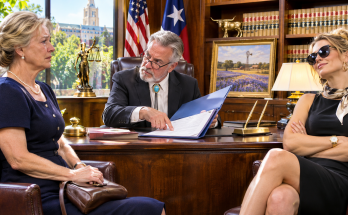
But nothing prepared me for the words my attorney spoke that Thursday afternoon.
“Mrs. Dunlap, the email suggested that your son should handle your financial affairs because you were no longer capable of managing them yourself.”
I sat at my kitchen table, staring at the little white card Shaye had made.
Rides $20, cash only, thank you!
That smiling face she’d drawn suddenly didn’t seem funny anymore.
“Patricia,” I whispered, “are you saying my own boy tried to take control of my money?”
She answered carefully.
“I’m saying someone submitted a statement to the lender naming Kirk as the person responsible for your financial decisions. We need to establish who authorized it and why.”
I looked toward Earnest’s photograph on the refrigerator.
For fifty-one years, that man had stood beside me through sickness, layoffs, broken appliances, and the kind of ordinary troubles that make up a marriage.
He’d always said, “Zell, don’t let anybody make you feel foolish for protecting what you worked for.”
Now I understood why.
I swallowed.
“Well, Patricia, I suppose we’d better get to work.”
The following Monday, Lula drove me to Patricia Bell’s office.
I wore my navy church dress and carried a folder containing every document I could find.
The original vehicle title.
Insurance statements.
The bill of sale.
My bank records showing the purchase.
And Shaye’s ridiculous little ride card.
Lula glanced at the stack.
“Zell, you look like you’re fixing to audit the whole government.”
I smiled.
“Just my family, honey. That’s trouble enough.”
Patricia met us in the conference room.
She had requested records from the state motor vehicle agency and the lender.
The official vehicle records still listed me as the legal owner.
No completed transfer had been recorded.
I let out a breath I hadn’t realized I was holding.
“So the car is still mine?”
“Yes, Mrs. Dunlap.”
Patricia placed another paper on the table.
“But the document submitted with the loan application appears to have been altered.”
My stomach tightened.
“Altered how?”
“It shows a transfer that isn’t reflected in the official records.”
Lula leaned forward.
“Somebody made themselves a pretend title?”
Patricia nodded.
“That’s one possibility.”
I looked down at the paper.
Then I noticed something.
A date.
June seventeenth.
My wedding anniversary.
I stared at it.
“That date means something.”
Patricia looked up.
“What?”
“June seventeenth. Earnest and I would’ve been married fifty-three years that day.”
I swallowed.
“I remember exactly where I was.”
Lula nodded.
“You were with me.”
I looked toward Patricia.
“We drove to the cemetery that morning. Then we had lunch at the little place on Main Street.”
Patricia made a note.
“Did you see Kirk or Shaye that day?”
“No.”
I shook my head.
“And I certainly didn’t sign over my car.”
Patricia explained that the disputed loan application had been rejected after the lender couldn’t verify the ownership documents.
No money had been released.
The lender had also referred the questionable materials for further examination.
I nodded.
That was a relief.
But it didn’t erase what had happened.
Someone had placed my name on documents without my permission.
Someone had told a lender I couldn’t handle my own affairs.
And now I needed to decide how to respond without letting anger turn me into somebody I didn’t recognize.
When we left the office, Lula stopped beside her Crown Victoria.
“Zell, are you going to call the police?”
I looked toward the parking lot.
“Patricia’s helping me make the proper reports.”
Lula nodded.
“Good.”
Then she studied my face.
“You alright?”
I tried to smile.
But my mouth trembled.
“Lula, I bought that boy a car because I didn’t want him struggling.”
She stepped closer.
“I know.”
“I thought if I made his life easier, he’d have more time for his children.”
Lula took my hand.
“And that was a kind thing.”
I shook my head.
“But somewhere along the way, he decided my kindness meant he could take whatever he wanted.”
My oldest friend sighed.
“Then it’s time he learned the difference.”
That evening, I called Kirk.
He answered on the fourth ring.
“Mama?”
“We need to talk.”
He hesitated.
“About the SUV?”
“About quite a bit more than that.”
Silence.
Then he whispered, “Shaye said you hired a lawyer.”
“I did.”
He sighed.
“Mama, you’re making this bigger than it needs to be.”
I closed my eyes.
There it was again.
The same tired excuse people use when they want you to forget something before they’ve admitted doing it.
“Kirk, somebody signed my name to a loan application.”
He said nothing.
“And somebody submitted paperwork claiming I wasn’t capable of handling my money.”
His breathing changed.
“Who told you that?”
“My attorney.”
A long pause followed.
Then he whispered.
“Mama, I didn’t know Shaye sent that email.”
I gripped the telephone.
“But you knew about the loan application.”
He sighed.
“I told you that.”
“And the altered title?”
He went silent.
My heart sank.
“Kirk.”
His voice became small.
“I didn’t think she’d actually use it.”
For several seconds, I couldn’t speak.
Then I asked, “Use what?”
He began crying.
“Mama, we were desperate.”
I closed my eyes.
“Son, tell me what happened.”
Kirk explained that after his hours at the paper mill were reduced, he and Shaye had fallen behind on several bills.
Credit cards.
A personal loan.
An expensive furniture purchase.
And something else.
A failed investment in a small delivery business that one of Shaye’s cousins had encouraged them to join.
They’d put in nearly twelve thousand dollars.
Most of it borrowed.
When the venture collapsed, they were left owing money they couldn’t repay.
“Why didn’t you tell me?” I asked.
Kirk swallowed.
“Because I was ashamed.”
I shook my head.
“Son, being in debt isn’t shameful.”
He began crying harder.
“But lying about it is.”
Then he told me about the title.
Shaye had found an old photograph of my vehicle paperwork in a folder Kirk kept on his phone.
She used the information to prepare a document suggesting I’d transferred ownership.
Kirk admitted he’d seen the document before it was submitted.
He claimed he believed it was only being used to estimate the vehicle’s value.
I listened without interrupting.
Then asked the question that had been weighing on my heart.
“Kirk, did you know my name was being signed without my permission?”
He whispered.
“Yes, Mama.”
The room went quiet.
I closed my eyes.
That one word hurt more than any of the others.
Yes.
My own son knew.
And he hadn’t stopped it.
I thought about the little boy who used to climb into Earnest’s lap during thunderstorms.
The teenager who cried when his first dog died.
The young father who’d held his newborn daughter with tears running down his cheeks.
I loved that boy.
I loved the man he’d become.
But loving him didn’t mean I had to pretend he’d done nothing wrong.
I took a slow breath.
“Kirk, you need to tell Patricia and the proper authorities everything you know.”
He began sobbing.
“Mama, are you going to have me arrested?”
I swallowed.
“Son, I’m going to tell the truth.”
He cried harder.
“And what happens after that depends on what the evidence shows and what the law requires.”
For the first time in my life, I ended a telephone conversation with my son without trying to make him feel better.
I sat at my kitchen table afterward.
Then I cried.
Not loud.
Not dramatically.
Just the quiet, exhausted tears of a mother who wishes she could reach backward through time and teach one lesson again.
The following week, Shaye came to my house.
She arrived just after lunchtime, carrying a casserole dish.
I opened the door.
She smiled nervously.
“Miss Ozella, I brought you some chicken and rice.”
I looked at the dish.
Then at her.
“That’s thoughtful.”
She shifted her weight.
“Can I come in?”
I stepped aside.
We sat in the kitchen.
For several minutes, she talked about the weather, the children, and the church picnic.
Then she finally said what she’d come to say.
“I think this whole thing has gotten out of hand.”
I folded my hands.
“Which thing, Shaye?”
She looked irritated.
“The car. The loan. All of it.”
I nodded.
“That’s quite a few things.”
She sighed.
“Nobody was trying to hurt you.”
I studied her face.
“Then why did somebody sign my name?”
Shaye looked away.
“We were going to pay the loan back.”
I swallowed.
“That wasn’t my question.”
She rubbed her forehead.
“Kirk’s been under pressure.”
I nodded.
“I know.”
“And the kids need things.”
I looked at her.
“So did Kirk when he was little.”
She frowned.
“What?”
“Earnest and I had bills. We had lean years. We had times when the refrigerator looked mighty empty.”
I leaned forward.
“But we didn’t solve those problems by putting somebody else’s name on paperwork.”
Shaye’s eyes filled.
“You’re making me sound terrible.”
I shook my head.
“I’m asking you to take responsibility.”
She began crying.
For a moment, I felt the familiar urge to comfort her.
To tell her things would work out.
To offer money.
But then I remembered Kayla’s voice.
Grandma, I like coming to your house because nobody asks me for anything.
I took a breath.
“Shaye, I’ve tried to help this family for years.”
She wiped her face.
“I know.”
“But I won’t help by pretending something dishonest was acceptable.”
Her shoulders slumped.
For the first time, she looked genuinely frightened.
“What’s going to happen to us?”
I answered quietly.
“I don’t know.”
Then I added.
“But telling the truth is where you start.”
The investigation took several months.
The lender provided its records.
The disputed signatures were examined.
Kirk and Shaye gave statements.
The matter was handled through the appropriate legal channels, and both had to confront the consequences of their involvement.
No loan had been funded.
The SUV hadn’t been legally transferred.
And my ownership remained intact.
Those facts mattered.
But they didn’t erase the attempted misuse of my name and documents.
Eventually, the financial and legal issues were addressed through formal agreements and proceedings appropriate to the evidence.
Shaye accepted responsibility for preparing and submitting the false paperwork.
Kirk acknowledged that he’d known enough to intervene and failed to do so.
Both were required to deal with the consequences.
I didn’t celebrate.
There was nothing joyful about watching your child answer for a serious mistake.
But there was relief in knowing the truth had finally been spoken.
During those months, my life changed in ways I hadn’t expected.
I bought the little blue sedan Lula and I had found.
Mr. Garraway helped me arrange the insurance properly.
I kept the silver SUV secured while the paperwork questions were resolved.
Then, once everything was settled, I decided to sell it.
Not to Kirk.
Not to Shaye.
To an unrelated buyer through a reputable dealership.
When the money arrived, I placed it in my savings account.
And for the first time in two years, I owned a vehicle that nobody else considered theirs.
Lula came over the day I brought the blue sedan home.
She walked around it twice.
Kicked one tire.
Then nodded solemnly.
“Well, Zell, I reckon she’ll do.”
I laughed.
“You sound like Earnest.”
She grinned.
“That man had good sense.”
We sat on the porch with iced tea.
Then Lula asked something unexpected.
“You still think about those twenty-dollar rides?”
I nodded.
“Sometimes.”
She looked toward the driveway.
“Funny how something so small can show you something so big.”
I smiled sadly.
“Yes, ma’am.”
Because it hadn’t really been about twenty dollars.
It had been about respect.
The Sunday Sunshine Ride Circle continued growing.
At first, there were only five volunteers.
Lula.
Me.
Two deacons.
And Mrs. Peabody’s nephew, who had recently retired.
Within three months, we had twelve drivers and a simple scheduling system run through the church office.
We helped older members get to services, medical appointments, and the grocery store.
We made sure volunteers understood their responsibilities.
Nobody was expected to drive when they were tired, sick, or uncomfortable.
And nobody was pressured into providing more help than they could safely manage.
I liked that part best.
I’d learned how easily generosity could become a trap when people stopped asking whether the person helping still had a choice.
One afternoon, I drove Miss Hattie Briggs home from a doctor’s appointment.
She sat beside me holding a little paper bag of prescriptions.
“Ozella,” she said, “I surely appreciate you.”
I smiled.
“I’m glad I could help.”
She reached into her pocketbook.
“Let me give you something for gas.”
I shook my head.
“No, honey.”
Her eyes filled.
“But I don’t want to take advantage.”
I glanced toward her.
“Then you already understand the difference.”
She looked puzzled.
I smiled.
“People who appreciate kindness don’t act like they’re entitled to it.”
That evening, I wrote those words on a piece of paper.
I tucked it into my Bible.
Not because I planned to preach to anybody.
But because I wanted to remember them myself.
My relationship with Kirk remained difficult.
He called occasionally.
At first, every conversation seemed to circle back to the SUV.
He asked whether I’d reconsidered.
Whether I’d help him buy another vehicle.
Whether I understood how hard things had become.
I listened.
Then reminded him that rebuilding his finances was his responsibility.
I offered to help him find information about budgeting classes and transportation options.
But I didn’t offer another car.
And I didn’t hand him money.
He wasn’t pleased.
Sometimes he ended our conversations abruptly.
Sometimes he didn’t call for weeks.
Those silences hurt.
But I learned to survive them.
Then, one Saturday afternoon, Kayla came over.
She helped me make peach cobbler.
We stood in the kitchen peeling fruit while she told me about school.
After a while, she grew quiet.
“Grandma?”
“Yes, sugar?”
“Are you mad at Daddy forever?”
My heart tightened.
I put down the knife.
“No, sweetheart.”
She looked relieved.
“Really?”
I nodded.
“I love your daddy.”
She hesitated.
“Then why don’t you let him have the car?”
I smiled sadly.
“Because loving somebody doesn’t mean giving them everything they ask for.”
Kayla thought about that.
Then whispered.
“Even when they’re your kid?”
I reached for her hand.
“Especially when you’re trying to teach them something important.”
She looked toward the window.
Then said something that nearly broke my heart.
“Daddy cries sometimes.”
I swallowed.
“I’m sorry to hear that.”
She nodded.
“He says he disappointed Grandpa.”
My eyes filled.
I looked toward Earnest’s picture.
For several seconds, I couldn’t speak.
Then I whispered.
“Your grandpa loved your daddy very much.”
Kayla nodded.
“I know.”
I squeezed her hand.
“And I do too.”
The following Sunday, I received a phone call before church.
It was Kirk.
“Mama?”
“Morning, son.”
He hesitated.
“Could I come see you after the service?”
I took a breath.
“Of course.”
His voice sounded different.
Quieter.
Less defensive.
“There’s something I want to tell you.”
My heart tightened.
“Alright.”
When Kirk arrived that afternoon, he wasn’t carrying excuses.
He wasn’t asking for the SUV.
And he wasn’t demanding money.
He carried a small cardboard box.
He placed it on my kitchen table.
“What’s that?” I asked.
He swallowed.
“Some things I found while cleaning out the garage.”
I opened the box.
Inside were photographs.
Old birthday cards.
A little wooden race car Earnest had made for him.
And a folded piece of notebook paper.
I recognized the handwriting immediately.
Earnest’s.
My hands began trembling.
“What is this?”
Kirk sat down.
“Dad wrote it to me when I turned eighteen.”
I carefully unfolded the paper.
Son,
There’ll come a day when you think being a man means having the nicest truck, the biggest house, or the most money.
Don’t let the world fool you.
Being a man means keeping your word when nobody’s watching.
It means looking after people without making them feel small.
And it means remembering that the people who helped you get started don’t owe you the rest of their lives.
My eyes filled.
The last sentence nearly stopped my heart.
“If your mama ever needs you, don’t make her feel like helping her is a burden.”
I pressed the letter against my chest.
Kirk began crying.
“I found it last night.”
I looked toward him.
He wiped his face.
“I’d forgotten he wrote it.”
I nodded.
Then he whispered.
“Mama, I was so ashamed when my hours got cut.”
My heart tightened.
“I know.”
“I kept thinking I was failing my family.”
He swallowed.
“Shaye and I made stupid decisions because we were scared.”
I listened.
He continued.
“But I knew what was happening with your paperwork.”
Tears rolled down his cheeks.
“And I let it happen.”
For several seconds, he couldn’t speak.
Then he whispered.
“I didn’t just fail Dad.”
He looked directly at me.
“I failed you.”
My own tears began falling.
“Kirk…”
He shook his head.
“No, Mama. Let me finish.”
I nodded.
He took a shaky breath.
“You bought me that SUV when I couldn’t get financing.”
I smiled sadly.
“I remember.”
“You sold your Buick because I promised I’d carry you.”
His voice broke.
“And then I charged you to get to church.”
I wiped my cheeks.
He looked devastated.
“I treated you like you were asking me for a favor when you were the one who’d been doing me favors for years.”
For the first time, my son wasn’t explaining why he’d done something wrong.
He was acknowledging that it was wrong.
There is a difference.
A mighty important one.
I reached across the table.
“Kirk, I forgive you.”
He began crying harder.
“But forgiveness doesn’t mean we’re going back to the way things were.”
He nodded.
“I know.”
“I won’t be signing another loan.”
“I know.”
“And I won’t be buying another vehicle.”
He wiped his face.
“I didn’t come to ask.”
I smiled through tears.
“Good.”
Then he said something that surprised me.
“I got a second job.”
I looked up.
“Doing what?”
“Weekend maintenance at the community center.”
I nodded.
“That’s good, son.”
He smiled faintly.
“And I’ve been taking the bus to the mill when I can’t borrow a ride.”
My eyes filled.
He continued.
“We’re working with a financial counselor.”
I nodded.
“That’s a good start.”
Then he looked toward me.
“I should’ve done all that before asking you to carry us.”
I reached for his hand.
“Well, baby, it’s never too late to start taking responsibility.”
Over the following months, Kirk slowly changed.
Not overnight.
Not perfectly.
He still made mistakes.
But he stopped expecting me to rescue him from every difficulty.
He learned to budget.
He paid down debts.
And he began taking responsibility for his own transportation.
Shaye’s relationship with me took longer to repair.
She had hurt me deeply.
And she knew it.
Eventually, she came to my house and apologized without blaming Kirk, the children, or their financial problems.
She admitted that she’d treated my generosity as something she could use rather than something she should respect.
I listened.
Then told her the truth.
“I don’t hate you, Shaye.”
Her eyes filled.
“But trust takes longer to rebuild than it takes to break.”
She nodded.
“I understand.”
And for once, I believed she did.
One Sunday morning, nearly a year after Kirk first handed me that little white card, I stood on my porch in my lavender dress.
My Bible rested beneath my arm.
The sky was clear.
The air smelled of fresh-cut grass.
And my little blue sedan sat in the driveway.
I was reaching for my keys when another car pulled up.
Kirk stepped out.
He’d purchased an older used sedan with money he’d saved.
Nothing fancy.
But it was his.
He smiled nervously.
“Morning, Mama.”
I smiled.
“Morning, son.”
He walked around to the passenger door.
Then stopped.
For a moment, I remembered that first Sunday.
The white card.
The twenty dollars.
Shaye laughing from the front seat.
My heart tightened.
Then Kirk opened the door.
“Mama, would you like a ride to church?”
I smiled.
“Well, that’s kind of you.”
He nodded.
“No charge.”
I laughed softly.
“Not even waiting time?”
His eyes filled.
“No, ma’am.”
Then he whispered.
“You’re my mama. You shouldn’t have to buy my kindness.”
I stood there for a moment.
Then I reached for his hand.
“Kirk, I appreciate the offer.”
He smiled.
“But today I’m driving myself.”
His expression changed briefly.
Then he nodded.
“Alright, Mama.”
I squeezed his hand.
“Maybe next Sunday.”
He smiled.
“I’d like that.”
That morning, I drove to church with the windows cracked open.
The radio played an old gospel song Earnest used to love.
I sang along.
Not particularly well.
But with enthusiasm.
When I pulled into the church parking lot, Lula was standing beside her Crown Victoria.
She waved both arms.
“Zell!”
I rolled down the window.
“What is it, woman?”
She grinned.
“You look happy.”
I smiled.
“I am.”
She looked toward my blue sedan.
“Still enjoying your freedom?”
I laughed.
“Every mile of it.”
After the service, Kirk found me near the fellowship hall.
Shaye stood beside him.
The children were already helping themselves to cookies.
Kirk reached into his pocket.
Then handed me a folded twenty-dollar bill.
I frowned.
“What’s this?”
He smiled sadly.
“The first ride I charged you for.”
My eyes filled.
“Kirk…”
He shook his head.
“I know it doesn’t fix everything.”
I looked toward him.
He continued.
“But I wanted to give it back.”
I took the money.
Then opened my pocketbook.
Inside was the original white card Shaye had made.
I’d kept it all that time.
I handed it to Kirk.
He stared at the smiling face.
Then his eyes filled.
I smiled gently.
“Keep that, son.”
He swallowed.
“Why?”
“So you never forget how much twenty dollars can cost when it makes somebody feel unloved.”
He folded the card carefully.
Then hugged me.
I held him close.
For a moment, I remembered the little boy who used to fall asleep against my shoulder.
The teenager who’d bring me wildflowers because he couldn’t afford a birthday present.
The young father who’d promised to make us proud.
I knew that boy was still somewhere inside the grown man standing before me.
And I hoped he’d keep finding his way back.
That afternoon, I returned home and placed the twenty-dollar bill inside my Bible.
Right beside the little piece of paper I’d written months earlier.
People who appreciate kindness don’t act like they’re entitled to it.
I smiled.
Then I looked toward Earnest’s photograph.
“Well, old man,” I whispered, “I reckon we finally taught that boy something.”
The house was quiet.
But for a moment, I could almost hear Earnest laughing.
I made myself a cup of tea.
Sat on the porch.
And watched the sunlight stretch across my driveway.
The little blue sedan gleamed beneath the afternoon sky.
It wasn’t an expensive car.
It didn’t have fancy seats or a navigation screen big enough to watch television on.
But it represented something no amount of money could replace.
Freedom.
Dignity.
And the right to make decisions about my own life.
People sometimes ask why I didn’t simply give Kirk the SUV and forget the whole thing.
I tell them the truth.
Because it was never only about the vehicle.
It was about a promise.
A mother who gave what she could.
A son who forgot to be grateful.
And a family that had to learn the hard way that generosity doesn’t erase ownership.
I love my son.
I always will.
But love doesn’t mean handing someone your last dollar while they laugh about how little you have left.
Love doesn’t mean accepting disrespect because you’re afraid of losing a relationship.
And love certainly doesn’t mean allowing someone to sign your name, control your property, or question your independence simply because they’re family.
Sometimes love means saying no.
Sometimes it means letting grown children face the consequences of their own decisions.
And sometimes it means taking back the keys.
Nine days after Kirk started charging me for rides, he came storming onto my porch convinced somebody had stolen his SUV.
He looked past my shoulder and saw it sitting in my driveway.
That was the moment he discovered something he’d forgotten.
The car had never belonged to him.
But the greater lesson came afterward.
Because over the months that followed, he learned that his mother’s patience wasn’t permission.
Her generosity wasn’t an obligation.
And her love wasn’t something he could put a price on.
As the sun began setting, I reached for my Bible and opened it to the folded twenty-dollar bill.
I smoothed it carefully.
Then smiled.
It wasn’t much money.
But it reminded me of everything we’d survived.
The anger.
The heartbreak.
The painful conversations.
The mistakes.
And the slow, imperfect beginning of forgiveness.
I closed the Bible.
Looked toward Earnest’s photograph.
And whispered.
“Gas might not be free, honey.”
Then I smiled.
“But neither is a mother’s trust.”
And for the first time in a long while, I knew my son understood the difference.