➡️ PART 3 ➡️
I’ve lived seventy-two years on this earth, and I’ve learned that some of the worst heartbreaks don’t come with shouting or slamming doors. Sometimes they arrive on an ordinary Tuesday morning, folded inside a white envelope, carrying a signature that looks almost exactly like your own.
I stood beside my silver SUV, holding that loan application while the morning sun warmed the driveway. My name was written across the bottom. Ozella Mae Dunlap. Only I hadn’t written it. I knew every little curve of my signature. I’d been writing it since I married Earnest fifty-one years earlier. And whoever had signed that application had gotten one important thing wrong.
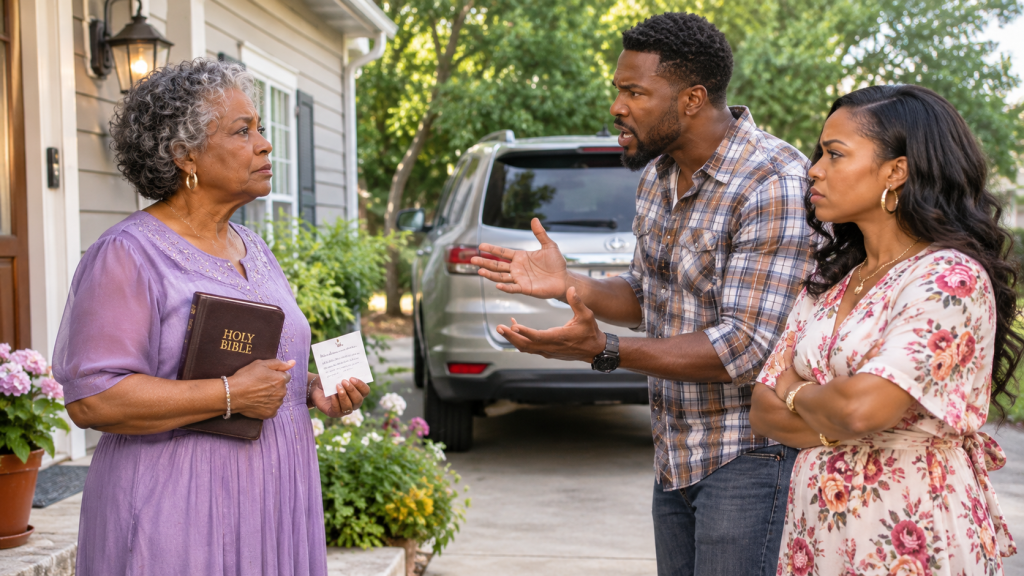
I always put a little loop beneath the final letter of Dunlap. This signature didn’t have one. I looked toward my daughter-in-law. “Shaye, explain this.” Her face turned pale. Kirk reached for the envelope. “Let me see that, Mama.” I pulled it away. “Not yet.” Lula stepped closer. And for once in her seventy-nine years, my oldest friend wasn’t laughing. Shaye folded her arms.
“That’s private paperwork.” I looked at her. “Private paperwork with my name on it?” She glanced toward Kirk. “Tell your mother.” My son rubbed his forehead. “Shaye, don’t start.” I felt my stomach tighten. “Tell me what?” Neither answered. I looked down at the document again.
The application listed a loan amount of eighteen thousand five hundred dollars.
The silver SUV was described as proposed collateral.
And beneath the section marked Vehicle Owner Authorization, someone had signed my name.
I looked up.
“Kirk, were you planning to borrow money against my car?”
He swallowed.
“Mama, it wasn’t like that.”
I sighed.
“Son, every time somebody says it wasn’t like that, it usually turns out to be exactly like that.”
Lula let out a little snort.
I gave her a look.
She pressed her lips together.
Shaye stepped forward.
“We needed money.”
I nodded.
“Most folks do.”
She looked irritated.
“Kirk’s hours have been cut at the mill.”
My heart tightened.
I turned toward my son.
“You didn’t tell me.”
He stared at the driveway.
“I didn’t want you worrying.”
I almost laughed.
He didn’t want me worrying.
But he had no trouble charging me twenty dollars to ride in a car I’d purchased with my husband’s life insurance money.
I shook my head.
“Then why didn’t you ask me for help?”
Shaye answered before Kirk could speak.
“Because you always make everything complicated.”
I stared at her.
“By asking what you’re doing with my money?”
The morning went quiet.
Even the birds seemed to stop singing.
Then Kirk whispered, “Mama, we haven’t gotten the loan.”
I looked toward him.
“Have you submitted this application?”
He hesitated.
“No.”
Shaye glanced away.
Something in her expression told me the conversation wasn’t finished.
I folded the paper carefully.
“Good.”
Then I looked at both of them.
“Because we’re going to find out exactly what happened before anybody signs another thing.”
Shaye threw up her hands.
“You’re acting like we’re criminals!”
I took a slow breath.
“I’m acting like a woman who found somebody else’s handwriting beneath her own name.”
Kirk looked miserable.
“Mama, please.”
I touched his arm.
“Son, I love you.”
His eyes filled.
“But loving you doesn’t mean pretending this doesn’t matter.”
Shaye gave an irritated sigh.
Then marched toward her car.
“Kirk, are you coming?”
He stood there for a moment.
His eyes moved from me to the SUV.
Then toward his wife.
Finally, he whispered, “I’ll call you later, Mama.”
I nodded.
“Alright.”
As he walked away, I felt a familiar ache in my chest.
The same one I’d felt when Earnest died.
The terrible realization that somebody you love can be standing right in front of you and still seem impossibly far away.
Lula watched their car disappear around the corner.
Then she turned toward me.
“Zell, don’t you dare cry over that foolishness.”
I opened my mouth.
But my eyes were already filling.
She sighed.
“Oh, honey.”
Then she wrapped her arms around me.
And I cried right there beside the SUV.
Not because I wanted eighteen thousand dollars.
Not because I needed another car.
But because I’d raised Kirk to understand that honesty mattered.
Earnest and I had worked ourselves tired teaching that boy the difference between what belonged to him and what didn’t.
And now I was holding a document that made me wonder how much of those lessons he’d forgotten.
After breakfast, I called Mr. Garraway.
He’d been our insurance man for nearly thirty years.
When I explained what had happened, his usually cheerful voice turned serious.
“Miss Ozella, don’t sign anything.”
“I wasn’t planning to.”
“And don’t give anybody the title.”
“It’s in my filing cabinet.”
“Good.”
He paused.
“Have you contacted the lender?”
“Not yet.”
“Then let’s figure out who issued that paperwork.”
I looked down at the application.
The lender’s name appeared near the top.
Pine Ridge Community Credit.
I’d never done business with them.
Mr. Garraway gave me the number of a local attorney who handled consumer financial matters.
Then he said something that made me smile.
“Miss Ozella, Earnest would be proud of you for checking the paperwork.”
My eyes filled.
“That man checked everything.”
Mr. Garraway laughed softly.
“Yes, ma’am. He surely did.”
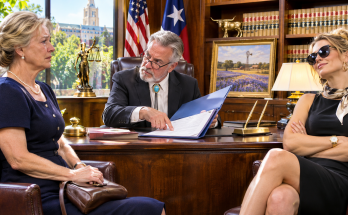
By noon, Lula and I were sitting in the office of attorney Patricia Bell.
Patricia was a woman in her late fifties with silver-framed glasses and a voice that made you feel she’d heard every excuse people could invent.
She examined the application carefully.
Then looked at me.
“Mrs. Dunlap, did you authorize anyone to use your vehicle as collateral?”
“No, ma’am.”
“Did you sign this?”
“No.”
“Have you given Kirk or Shaye permission to sign documents on your behalf?”
I shook my head.
“Never.”
Patricia nodded.
“Then we’ll contact the lender and establish whether this was ever submitted, approved, or funded.”
I swallowed.
“Could they take my car?”
“Not simply because someone filled out a form. We need to verify whether any valid security interest exists.”
I felt my shoulders relax.
Then Patricia added, “We’ll also request the relevant records and help you protect your personal information.”
Before we left, she asked me another question.
“Mrs. Dunlap, whose name appears on the vehicle title?”
“Mine.”
“And who pays the insurance?”
“Me.”
“Did you ever transfer ownership to your son?”
“No.”
She smiled gently.
“Then it’s important that everyone understand the legal ownership is separate from whatever family arrangement you made about using the vehicle.”
I nodded.
For two years, Kirk had driven that SUV as though it belonged to him.
I’d never minded.
I wanted him to have reliable transportation.
But somewhere along the way, my generosity had become something he believed he could control.
That afternoon, I drove the silver SUV to the grocery store.
It felt strange sitting behind the wheel.
I’d been so accustomed to depending on Kirk that I’d almost forgotten the pleasure of deciding where to go without asking anybody.
I bought a loaf of bread.
Some peaches.
A little container of potato salad.
And a bouquet of yellow daisies.
Earnest used to bring me daisies whenever he came home from working overtime.
He always said roses were too fancy for a woman who looked prettiest laughing over a bowl of butter beans.
I placed the flowers beside his picture when I got home.
Then whispered, “Well, old man, I finally took my car back.”
For a moment, I could almost hear him chuckling.
That evening, my granddaughter Kayla called.
She’s fifteen, with her father’s brown eyes and her mother’s quick way of speaking.
“Grandma?”
“Hello, sugar.”
She sounded nervous.
“Is Daddy mad at you?”
My heart tightened.
“Why would you ask that?”
“He said you took the SUV.”
I sighed.
“I brought my car home, sweetheart.”
She went quiet.
Then whispered, “Mom said you’re trying to make us lose everything.”
I closed my eyes.
I wasn’t going to turn my granddaughter into a messenger between angry adults.
“Kayla, grown-up money problems aren’t yours to solve.”
She was silent.
Then asked, “Can I still come over Saturday?”
My heart softened.
“Of course you can.”
She sounded relieved.
“Good.”
Then she whispered something that stayed with me long after we hung up.
“Grandma, I like coming to your house because nobody asks me for anything.”
I sat at the kitchen table for nearly an hour after that call.
That little girl had given me something to think about.
Maybe Kirk and Shaye weren’t simply struggling financially.
Maybe their house had become a place where everybody felt the weight of what they owed.
Money could do that.
It could turn a family dinner into an argument.
A school expense into a crisis.
A ride to church into a transaction.
And love into something people started measuring in dollars.
I looked toward Earnest’s picture.
“That’s not how we raised him.”
But I knew I couldn’t raise Kirk again.
He was forty-five years old.
He had a wife, children, and responsibilities of his own.
All I could do now was decide how I would let him treat me.
The following morning, Patricia Bell called.
“Mrs. Dunlap, we’ve received preliminary information from the lender.”
I sat down.
“Tell me.”
“The application was submitted electronically.”
My stomach tightened.
“Submitted?”
“Yes. But it hasn’t been funded.”
I exhaled.
“Thank goodness.”
Patricia continued.
“The lender identified discrepancies in the ownership documentation and placed the application on hold.”
I nodded.
“Then nobody got the money?”
“That’s what we’ve been told so far.”
My heart slowed.
Then Patricia said something unexpected.
“The application lists a different contact email from yours.”
I frowned.
“Whose?”
She hesitated.
“An address containing Shaye’s name.”
I sat motionless.
I wasn’t surprised.
But somehow, hearing it confirmed still hurt.
“Does that mean Shaye submitted it?”
“It suggests a connection, but we’ll need additional records to determine who completed the application.”
I nodded.
Patricia was careful.
She didn’t make accusations she couldn’t support.
And I appreciated that.
Then I asked, “What about my signature?”
“The lender is reviewing the authorization. We’ve formally disputed it.”
I looked toward the kitchen window.
“Alright.”
Later that afternoon, Kirk came by alone.
He arrived in an old pickup truck borrowed from a coworker.
When I opened the door, he looked exhausted.
His work shirt was wrinkled.
Dark circles surrounded his eyes.
“Mama.”
“Hello, Kirk.”
He stood awkwardly on the porch.
“Can I come in?”
I stepped aside.
We sat at the kitchen table.
For a long time, neither spoke.
Then he whispered, “I’m sorry about the rides.”
I studied his face.
“Are you?”
He nodded.
“I shouldn’t have charged you.”
I folded my hands.
“Then why did you?”
He looked toward the floor.
“Shaye said we needed to start treating the SUV like a business asset.”
I frowned.
“A business asset?”
He nodded.
“We’d been talking about making extra money.”
My stomach tightened.
“What kind of business?”
He swallowed.
“A transportation service.”
I stared at him.
“You mean driving people around?”
He nodded.
“Church rides. Grocery trips. Doctor appointments.”
I almost laughed.
“Well, son, that explains the little card.”
His face reddened.
“Shaye made them.”
“I noticed.”
He rubbed his forehead.
“We thought we could charge people for rides.”
I looked toward him.
“Did you ask me whether you could use my vehicle for that?”
He shook his head.
“No.”
“And did you check whether the insurance covered commercial use?”
He stared at me.
“No.”
I sighed.
“Well, there you go.”
Kirk looked miserable.
“Mama, I know I messed up.”
I nodded.
“Yes, you did.”
He swallowed.
“Can I get the SUV back?”
I looked at him for a long moment.
“No.”
His expression collapsed.
“But I need to get to work.”
I nodded.
“I understand.”
“Then what am I supposed to do?”
I reached across the table and touched his hand.
“You’re going to have to make another arrangement.”
His eyes filled.
“Mama, I can’t afford another car.”
I smiled sadly.
“That’s why you should’ve taken better care of the one somebody let you use.”
He lowered his head.
For a moment, he looked like the little boy who used to come home with scraped knees.
I wanted to hug him.
Tell him everything would be alright.
Hand him the keys.
But I remembered the twenty-dollar rides.
The extra ten dollars for waiting.
The request for tips.
And the loan application bearing my name.
Love wasn’t the problem.
My inability to say no had become the problem.
And I wasn’t going to solve it by doing the same thing again.
Then Kirk said something unexpected.
“Mama, I didn’t know Shaye had actually submitted the application.”
I sat straighter.
“What?”
He swallowed.
“She told me she was just checking loan options.”
My heart tightened.
“And my signature?”
He looked ashamed.
“I knew she copied it onto the form.”
I stared at him.
“Kirk.”
His eyes filled.
“I thought it was just a draft.”
I shook my head.
“Son, you knew somebody put my name on a document I hadn’t signed.”
He began crying.
“I know.”
My voice broke.
“And you didn’t tell me.”
For several seconds, neither spoke.
Then he whispered, “I didn’t think it would go anywhere.”
I looked toward Earnest’s photograph.
“That’s how people get themselves in trouble.”
Kirk wiped his face.
“I know.”
I took a breath.
“You need to tell Patricia exactly what you knew.”
He nodded.
“And Shaye needs to do the same.”
He looked frightened.
“Will she get arrested?”
I shook my head.
“That’s not something I can answer.”
Then I added quietly.
“But hiding what happened won’t make it better.”
After Kirk left, Lula arrived with a peach cobbler.
She set it on the table.
Then looked at my face.
“That boy been here?”
I nodded.
“Yes.”
She pulled out a chair.
“Did he apologize?”
“Some.”
Lula frowned.
“Some?”
I smiled sadly.
“He apologized for charging me.”
“And the loan application?”
I sighed.
“That’s going to take more honesty than he’s given me so far.”
Lula nodded.
Then she cut two generous slices of cobbler.
“Well, Zell, at least we’ve got dessert.”
I laughed.
And for a few minutes, that was enough.
Over the next several days, I arranged my own transportation.
The SUV was mine, but I didn’t want to rely on it forever.
I started looking at smaller vehicles.
Something comfortable.
Easy to park.
Good on gas.
Mr. Garraway helped me review the insurance options.
Lula insisted on accompanying me to the dealership.
“You need somebody who can spot a crooked salesman,” she declared.
I laughed.
“Lula, you think everybody’s crooked.”
She shrugged.
“Only until they prove otherwise.”
We found a little blue sedan that reminded me of my old Buick.
It wasn’t fancy.
But it was comfortable.
When I sat behind the wheel, I felt something I hadn’t felt in years.
Independence.
Not the kind people talk about in speeches.
The quiet kind.
Being able to drive yourself to church.
Pick up your medication.
Visit a friend.
Buy peaches because they’re on sale.
Without wondering whether someone will charge you for the privilege.
I smiled.
Then whispered, “Earnest, you would’ve liked this one.”
But the biggest surprise came the following Sunday.
I drove the silver SUV to church.
Lula followed in her Crown Victoria.
When we reached the parking lot, Mrs. Hattie Briggs was standing near the entrance.
Hattie was eighty-six and had recently stopped driving.
She looked surprised.
“Ozella, I thought Kirk was bringing you.”
I smiled.
“Not anymore.”
She nodded.
Then sighed.
“I surely wish I had a ride to the doctor Tuesday.”
I looked toward her.
“Where’s your appointment?”
“Over at the clinic on Maple Street.”
I thought for a moment.
Then smiled.
“I can take you.”
Her eyes widened.
“Oh, honey, I couldn’t impose.”
I laughed.
“Miss Hattie, it’s no trouble.”
She reached for her purse.
“How much do you charge?”
For a moment, I remembered Shaye’s little white card.
The smiley face.
The words Rides $20, cash only.
I looked toward Hattie.
Then answered.
“Not a penny.”
After church, Lula caught me near the fellowship hall.
“Zell, I heard you’re starting a taxi service.”
I laughed.
“Don’t you start.”
She grinned.
“Free rides, apparently.”
I nodded.
“Hattie needed help.”
Lula looked thoughtful.
Then said, “You know, there are plenty of folks around here who can’t drive anymore.”
I glanced toward the parking lot.
“That’s true.”
She smiled mischievously.
“What if we organized something?”
I laughed.
“Lula, we’re both old enough to know better than starting another project.”
She shrugged.
“Which means we’re old enough to do it anyway.”
By Wednesday, we’d spoken with the church office.
Several members volunteered to provide occasional transportation.
We discussed schedules, insurance, safety, and how to make sure nobody was pressured into doing more than they could manage.
Nothing complicated.
Just neighbors helping neighbors.
Lula called it the Sunday Sunshine Ride Circle.
I told her the name sounded like a children’s television program.
She told me to mind my business.
But I loved it.
For the first time since Kirk handed me that little white card, I felt something beginning to heal.
My son had tried to turn a family favor into a business.
And now I was helping create a way for people to offer kindness without confusing generosity with obligation.
Then, one Thursday afternoon, Patricia Bell called again.
Her voice was serious.
“Mrs. Dunlap, we have additional information.”
I sat down.
“About the loan?”
“Yes.”
My stomach tightened.
“What happened?”
“The lender has confirmed the application was submitted using an electronic address associated with Shaye.”
I nodded.
“And?”
“They also identified a supporting document that raises questions.”
My heart pounded.
“What kind of document?”
“A copy of what appears to be a vehicle title.”
I frowned.
“Mine?”
“That’s what it purports to be.”
My hands began trembling.
“But I have the original title right here.”
Patricia paused.
“That’s important.”
Then she said something that made my blood turn cold.
“The copy submitted to the lender lists a different owner.”
I stared at the telephone.
“What?”
Patricia took a slow breath.
“The document appears to show that ownership was transferred from you to Kirk.”
My stomach tightened.
“That’s impossible.”
“Have you ever signed a title transfer?”
“No.”
“Have you visited the motor vehicle office with Kirk?”
“Never.”
For several seconds, I couldn’t speak.
Then I whispered.
“Patricia, are you saying somebody tried to make it look like I gave him my car?”
She answered carefully.
“That’s one possibility. We need to verify the document’s origin and compare it with the official title records.”
I closed my eyes.
For years, I’d believed the worst thing Kirk had done was charge his mother for rides.
Then I’d found the loan application.
Now there was a document suggesting someone had tried to transfer ownership of my SUV without my consent.
I looked toward Earnest’s photograph.
His familiar smile seemed suddenly very far away.
“Patricia,” I whispered, “what do we do now?”
Her voice was calm.
“We obtain the official records and document everything.”
I nodded.
Then she added.
“Mrs. Dunlap, there’s one more thing.”
My heart tightened.
“What?”
“The lender received an email after the application was placed on hold.”
I swallowed.
“From whom?”
“An address associated with Shaye.”
My hands began trembling.
“What did it say?”
Patricia paused.
Then answered.
“It claimed you were no longer capable of managing your financial affairs.”
For several seconds, the kitchen seemed to tilt.
I stared at the title lying beside my checkbook.
The house was quiet.
The refrigerator hummed.
Sunlight spilled across the yellow daisies beside Earnest’s picture.
And I suddenly understood that the trouble might be much bigger than twenty-dollar rides.
Someone had apparently tried to convince a lender that I couldn’t make my own decisions.
Someone had submitted documents using my name.
And someone was trying to turn a car I had purchased with my husband’s life insurance into collateral for a loan I never wanted.
I took a long breath.
Then asked Patricia.
“Did they say who should manage my money instead?”
She hesitated.
Then whispered.
“Yes, Mrs. Dunlap.”
My heart pounded.
“Who?”
Her answer nearly made me drop the telephone.
“Your son, Kirk.”
I sat motionless.
For seventy-two years, I’d believed that raising a child meant teaching him how to stand on his own.
But now my own son was connected to paperwork suggesting that I was no longer capable of standing on mine.
And as I stared at the little white card Shaye had made, I realized something heartbreaking.
The twenty dollars hadn’t been the greatest insult.
It was discovering how easily the people I’d helped could begin treating my independence as something they were entitled to take.