PART 1
On my daughter’s birthday, she told me she did not want me in her life anymore, so I quietly stood, said, “Then I’ll respect your decision,” and drove away in the Mercedes. A few hours later, she demanded that I bring the car back, but I never answered. Three days after that, a moving truck stopped outside her house. She believed I was acting out of hurt. Her father assumed I would eventually calm down and continue funding the life they had built around my silence. Neither of them understood what the key in my hand actually represented—or what was waiting inside the red folder in my office.
The party had been arranged for months.
I rented a private ballroom outside Chicago, ordered the lemon cake Brittany had loved since she was six, and displayed framed photographs along the entrance wall. In one, she was asleep against my shoulder on a city bus. In another, she stood on her first day of kindergarten wearing a red backpack that was almost as big as she was.
At the end of the display was a recent graduation portrait.
She looked confident, polished, and completely ready for the world.
I remember standing there before the guests arrived, straightening the corner of the frame and thinking, Eighteen years. Somehow, we made it.
By nine o’clock, the ballroom was crowded. Her friends gathered near the dance floor. Parents stood in small groups holding drinks. A jazz trio played near the windows while servers moved quietly between tables.
Brittany stood on the stage in a silver dress, laughing with her father, Travis, and his wife, Vanessa.
Travis had been mostly absent during Brittany’s childhood. Then two years earlier, after my real estate company was featured in a local business article, he suddenly became interested in reconnecting.
I never tried to stop her from seeing him.
I believed she deserved the opportunity to form her own opinion.
What I failed to understand was how easily an eighteen-year-old could mistake effortless approval for unconditional love.
Travis never asked about homework. He never challenged her over missed curfews. He told her my rules were about control rather than care. Vanessa called her sophisticated, mature, and misunderstood.
Together, they turned me into the woman who supposedly used money and work to control everyone around her.
That night, I still believed time would eventually reveal the truth.
I walked toward the stage carrying a small black leather box.
“Before we cut the cake,” I said, “I have one more present.”
The room stirred when Brittany opened it.
Inside was the key to a black Mercedes she had admired for months.
For one brief second, her expression softened. She threw her arms around me, and everyone applauded while her friends rushed toward the windows to look at the car parked beneath the entrance canopy.
For a moment, I allowed myself to believe the distance between us had disappeared.
Then Travis leaned close and whispered something in her ear.
Her smile changed.
Brittany picked up a glass of sparkling cider from a tray and stepped toward the microphone.
“I want to say something.”
The music faded. Conversations stopped. Even the servers paused along the walls.
She thanked her friends. She thanked Vanessa for helping her choose the dress. She thanked Travis for “being there when it mattered.”
Then she looked straight at me.
“For most of my life,” she said, “I’ve felt like another project.”
The room became painfully silent.
She said I believed paying for things gave me permission to control her decisions. She said she had never asked me to build a company, create rules, or remind her of everything I had sacrificed.
Travis placed one hand on her shoulder.
Vanessa lowered her eyes with a carefully practiced expression of sympathy.
Brittany tightened her grip around the Mercedes key.
“I’m eighteen now. I get to choose who I consider my family.”
My brother started to rise from his chair, but his wife, Kendra, quietly touched his sleeve.
Then Brittany said the sentence that changed everything in the room.
“I wish you had never been my mother.”
No one applauded.
A chair scraped softly near the back. One of Brittany’s teachers looked down at the table. The photographer slowly lowered his camera.
My daughter stared at me, waiting for the reaction she had clearly been told would come.
She expected tears.
Anger.
A speech.
Instead, I crossed the ballroom and stopped directly in front of her.
I held out my hand.
Her fingers tightened around the key.
“What are you doing?” she asked.
“I need the key back.”
“You gave it to me.”
“The ownership transfer has not been completed.”
Travis stepped closer.
“Jocelyn, don’t make this embarrassing.”
I looked at him once.
“The vehicle is titled to my company. Brittany was supposed to complete a driving course and sign the insurance agreement before ownership was transferred.”
Brittany gave a short, bitter laugh.
“Of course there were conditions.”
“They were safety requirements.”
“There are always requirements with you.”
I let the silence remain between us.
“You’ve made it clear that you don’t want me making decisions for you or supporting you in ways you consider controlling.”
“That’s right.”
I nodded.
“Then I’ll respect your decision.”
I took the key from her hand, turned around, and walked away.
Outside, the night felt colder than it had twenty minutes earlier. The valet brought the Mercedes around, and I slid behind the steering wheel.
A white envelope with Brittany’s name written across the front rested on the passenger seat.
Inside was the agreement she had never seen. It explained that I would cover the insurance throughout college as long as she completed the driving course and promised never to drive whenever she felt unsafe.
At the bottom, I had written one sentence by hand:
No mistake you ever make will matter more to me than knowing you made it home safely.
My phone lit up before I reached the expressway.
Bring my car back.
Another message appeared seconds later.
You can’t take away my birthday present just because you’re upset.
Then:
Dad says his lawyer will contact you.
I turned the phone facedown and continued driving downtown.
My office occupied the upper floors of a glass building near the river. The lobby was almost empty when I arrived. I took the private elevator upstairs, set the Mercedes key on my desk, and unlocked the lowest drawer of a filing cabinet.
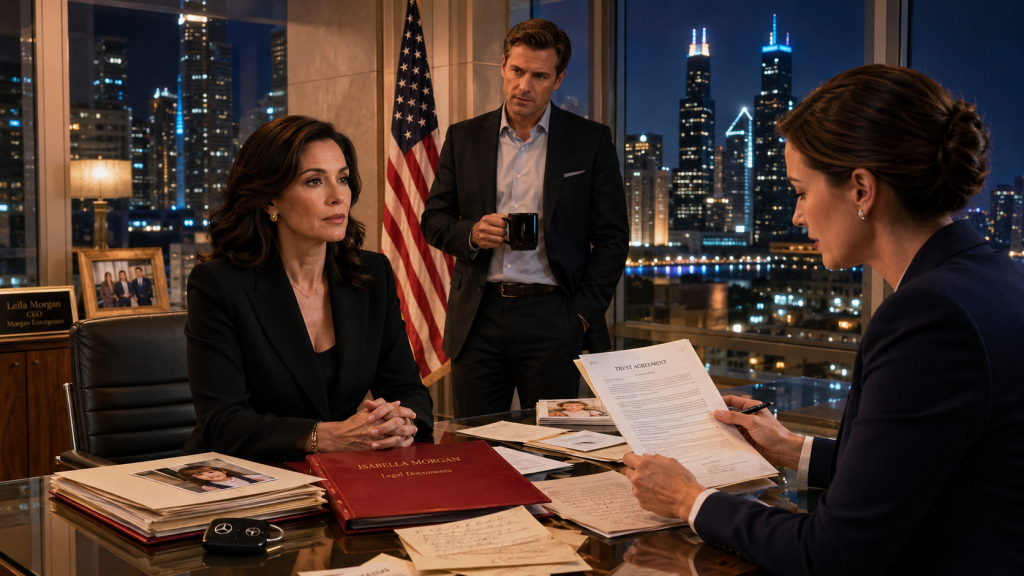
Inside was a thick red folder marked with Brittany’s name.
It contained her trust documents, the vehicle title, several old letters, and paperwork connected to the suburban house where Travis lived with Vanessa.
A house Brittany believed belonged to him.
I spread the documents across the glass desk and focused on one particular agreement bearing Travis’s signature on every page.
Years earlier, when his finances had started falling apart, I had quietly stepped in because Brittany had just begun spending weekends with him. She loved having a bedroom there. She loved the school district. She believed her father had finally created a stable home for her.
I had protected that belief much longer than I should have.
At three in the morning, Kendra arrived with my brother and three cups of coffee.
She was more than family. She was also the attorney who had prepared Brittany’s trust and reviewed every document connected to the house.
She sat across from me and opened the red folder.
“What do you want to do?” she asked.
“I want to stop protecting people from agreements they knowingly signed.”
Her eyes moved toward the trust..
PART 2
Richard lifted the ringing phone while I stayed on the porch, one hand gripping mine and the other pressed against my stomach.
The siren was getting closer.
I could still see Daniel’s desk through the open doorway. Papers had been disturbed. The folder Richard had brought into my kitchen was still there. Everything he had walked in believing he controlled suddenly depended on facts he had apparently never bothered to verify.
Margaret remained on the line with me.
Daniel had protected the house. He had protected the investment accounts. He had protected the controlling shares in Hale-Mercer Logistics. And if my father had actually forged my authorization while trying to liquidate the estate, the protection Daniel built could turn Richard’s own actions against him.
I watched my father listen to whoever was on the other end of his phone.
His face drained of color.
The ambulance still hadn’t reached my driveway, but something inside that house had already changed. Richard wasn’t looking at Daniel’s desk anymore.
Then Kelsey stopped laughing.
PART 3
Daniel looked at the clock.
“Jocelyn, you’ve been supporting that house for six years.”
“Seven.”
He frowned.
“Seven?”
I nodded.
“Seven years, three months, and twelve days.”
He gave me a tired smile.
“You actually counted?”
“I counted because I needed to remember how long I had been pretending it didn’t bother me.”
Kendra reopened the folder.
The first document was the original property agreement.
Travis had purchased the suburban house after his second marriage, but the down payment had not come from his salary.
It had come from me.
At the time, I had convinced myself it was a gift for Brittany.
Travis had been struggling financially. His credit was damaged. His business had collapsed after a series of bad investments, and he was terrified Brittany would stop wanting to visit him.
So I had offered him a solution.
I would purchase the property through one of my holding companies.
He could live there.
Brittany could have her room.
He would make monthly payments.
And once the agreed amount was repaid, the property could be transferred.
There was only one condition.
The house could never be sold, refinanced, or transferred without my written consent while Brittany was still a minor.
It had seemed reasonable.
At the time, I hadn’t wanted to control Travis.
I wanted to give my daughter a stable place to spend time with her father.
But then something happened.
Travis stopped making the payments.
At first, it was one month.
Then three.
Then six.
I never pushed.
I simply paid the mortgage myself.
Taxes.
Insurance.
Repairs.
Property maintenance.
When the roof needed replacing, I paid.
When the furnace broke, I paid.
When Brittany wanted her bedroom remodeled, I paid.
When Travis bought a new truck and complained that the house needed landscaping, I paid for that too.
I had never told Brittany.
Not once.
Because every time she came home from Travis’s house smiling, I thought the same thing:
Let her have her father.
She deserves that.
Kendra tapped the agreement.
“You know what this clause means?”
“Yes.”
“You can terminate his occupancy.”
“I know.”
“And the property reverts to your company.”
“I know.”
Daniel looked between us.
“Does Brittany know any of this?”
“No.”
“Does Travis?”
“He signed it.”
Daniel rubbed his forehead.
“Then he knows.”
Kendra’s expression hardened.
“Maybe he knows the agreement exists. But I doubt he remembers what he signed.”
I looked at the photograph on my desk.
Brittany at five years old.
Missing one front tooth.
Holding a birthday cupcake.
Her arms wrapped around my neck.
I remembered that birthday.
Travis had promised to come.
He never did.
I had told her he was stuck at work.
She believed me.
I had become very good at protecting people from truths they weren’t ready to hear.
Maybe too good.
My phone buzzed.
I glanced at the screen.
Brittany.
I didn’t answer.
A second call came.
Then a third.
Finally, a message appeared.
Mom, Dad says you’re being ridiculous.
I closed my eyes.
Kendra watched me.
“You don’t have to respond tonight.”
“I know.”
Another message appeared.
He said the Mercedes is mine because you gave it to me.
Then:
If you don’t bring it back tomorrow, I’m going to report it stolen.
Daniel slowly exhaled.
“She wouldn’t.”
I looked at him.
“You don’t know what she’s capable of when she’s angry.”
“She’s eighteen.”
“She’s also hurt.”
Kendra shook her head.
“She’s been influenced.”
“By Travis?”
“By everyone who benefits from believing you are the villain.”
That sentence stayed with me.
Because suddenly, something became painfully clear.
For years, I had been trying to prove that I loved my daughter.
Travis had been trying to prove that I didn’t.
And somehow, he had been winning.
Not because he loved her more.
Because he had never required anything from her.
He didn’t enforce rules.
He didn’t say no.
He didn’t make her face consequences.
He simply smiled and told her whatever she wanted to hear.
I had been the one saying:
Come home before midnight.
Study before going out.
Wear your seatbelt.
Don’t drive when you’re exhausted.
Don’t let anyone make you feel like you owe them something.
And perhaps the hardest one of all:
People who love you are allowed to tell you when you’re wrong.
At eighteen, those words sounded like control.
At thirty-eight, I knew they were love.
Kendra pushed the folder toward me.
“What are you going to do?”
I closed it.
“Nothing tonight.”
Daniel looked relieved.
“Good.”
“Tomorrow morning, I’ll have the property company send Travis the notice.”
His expression fell.
“You’re serious.”
“Yes.”
Kendra nodded.
“Then we need to do this carefully.”
“I don’t want revenge.”
“I know.”
“I want boundaries.”
She smiled sadly.
“Sometimes people who benefited from your lack of boundaries will call boundaries revenge.”
I stood.
“Then let them.”
The next morning, I woke at six.
For the first time in years, I didn’t check whether Brittany had texted me.
I made coffee.
I sat by the kitchen window.
I watched the sun rise over the trees.
At seven fifteen, my assistant called.
“Ms. Parker?”
“Yes?”
“There are two reporters downstairs.”
I frowned.
“Reporters?”
“Yes. They say they’re following up on an incident involving your daughter.”
My stomach tightened.
“Who contacted them?”
“I don’t know.”
“Send them away.”
“I already did.”
“Thank you.”
I hung up.
Three minutes later, my phone rang.
This time it was a number I didn’t recognize.
I answered.
“Hello?”
“Mrs. Parker?”
“Yes.”
“My name is Ethan Cole. I’m a reporter with the Chicago Herald.”
“I don’t give interviews about my family.”
“I understand.”
“Then there’s nothing else to discuss.”
“Actually, there is.”
His voice changed.
“Your daughter has told several people that you financially control her life.”
I said nothing.
“She also claims you revoked a birthday gift because she rejected you publicly.”
I looked out the window.
There it was.
The story.
Already spreading.
“How did you get my daughter’s statement?”
“She gave it to us.”
Of course she had.
“What exactly did she say?”
There was a pause.
Then he said:
“She said she was afraid of what you might do if she became independent.”
I almost laughed.
Not because it was funny.
Because it was so far from the truth that it hurt.
“Mr. Cole.”
“Yes?”
“Do you have children?”
“One daughter.”
“Then I hope someday she makes a decision that breaks your heart.”
He was silent.
“And when she does,” I continued, “I hope you love her enough to respect it.”
Then I hung up.
I didn’t cry.
I didn’t call Brittany.
I didn’t call Travis.
Instead, I called Kendra.
“It’s started.”
“What happened?”
“Press.”
She sighed.
“I was afraid of that.”
“Send the notice.”
“Are you sure?”
“Yes.”
“Then I’ll file everything today.”
At eight thirty, the first legal notice went out.
At nine, Travis called.
I watched his name appear on my screen.
I didn’t answer.
He called again.
Then again.
Finally, he left a voicemail.
“Jocelyn, this is insane. Whatever you’re trying to prove, stop.”
I deleted it.
Twenty minutes later, Brittany called.
I answered.
“Mom?”
Her voice sounded different.
Less confident.
“What?”
“Dad says you sent him something.”
“I did.”
“What is it?”
“You should ask him.”
“He said you’re trying to take the house.”
“I’m not trying to take anything.”
“But it’s his house.”
“No.”
Silence.
“What do you mean?”
“The house belongs to Parker Holdings.”
“But Dad lives there.”
“Yes.”
“You bought it?”
“I bought it when you were eleven.”
There was a long pause.
“You never told me.”
“I didn’t want you to think your father couldn’t provide for you.”
Her breathing changed.
“So you lied to me?”
“I protected you from an adult problem.”
“You always do that.”
“Maybe.”
Her voice hardened again.
“You can’t just take his house.”
“I’m not taking your father’s house.”
“You’re destroying my family.”
“No, Brittany.”
I swallowed.
“I’m finally allowing your father to take responsibility for his own family.”
She didn’t respond.
I continued.
“The property agreement gives him thirty days to leave or refinance the house under his own name.”
“You can’t.”
“I can.”
“Dad says you’re doing this because I rejected you.”
“I didn’t do it because you rejected me.”
“Then why now?”
I looked at the red folder sitting on my desk.
“Because you asked me not to be your mother anymore.”
She went quiet.
“I told you I would respect that.”
“You’re really going to abandon me?”
“No.”
My voice cracked for the first time.
“I’m going to stop rescuing you.”
The line went silent.
Then she whispered:
“I hate you.”
The words landed differently this time.
Not because they hurt less.
Because I finally understood I didn’t have to chase after them.
“I love you,” I said.
Then I hung up.
Three days later, the moving truck arrived.
Exactly as promised.
At 10:12 in the morning, a large white truck pulled up outside Travis’s house.
Two movers stepped out.
Then another.
They began carrying boxes from the garage.
Brittany stood on the front steps.
She was wearing sunglasses despite the cloudy weather.
Travis came outside shouting.
“What are you doing?”
One of the movers handed him a document.
“Sir, we’re here on behalf of Parker Holdings.”
“You can’t remove my belongings.”
“We’ve been instructed to remove company-owned property.”
Travis froze.
“What company-owned property?”
The mover looked at the inventory list.
“Appliances. Outdoor equipment. Furniture purchased through the company account. Several electronics.”
Brittany stared.
“What?”
The movers continued.
Inside the house, they began removing things she had always assumed belonged to Travis.
The television in the living room.
The sectional sofa.
The dining set.
The bedroom furniture.
The expensive outdoor grill.
Even the refrigerator.
Brittany watched in disbelief.
“Dad?”
Travis turned red.
“Your mother is insane.”
Then the garage door opened.
Inside sat a second vehicle.
A black SUV.
Brittany recognized it immediately.
She had driven it dozens of times.
She turned toward her father.
“That’s yours.”
“No.”
“You told me you bought it.”
Travis said nothing.
Brittany walked closer.
A Parker Holdings sticker was visible on the registration documents sitting on the dashboard.
Her face changed.
“What is going on?”
Travis grabbed the papers.
“Your mother is trying to humiliate me.”
“Did she buy this too?”
“That’s not the point.”
“What is the point?”
He looked at her.
And for the first time, Brittany saw something she had never seen on his face before.
Fear.
Real fear.
She stepped backward.
“Dad?”
He didn’t answer.
Her phone rang.
It was Vanessa.
Brittany answered.
“Where are you?”
“At Dad’s.”
“Oh.”
Vanessa hesitated.
“Brittany, maybe you should come home with me.”
“Why?”
“Because there’s something you need to know.”
Brittany’s face tightened.
“What?”
Vanessa took a breath.
“Your father didn’t tell you everything.”
Brittany looked toward the house.
“What didn’t he tell me?”
“That the mortgage was never his.”
Brittany slowly lowered the phone.
Behind her, another mover carried out a framed photograph.
It was a picture of Brittany at eleven.
Standing in front of the same house.
Smiling beside Travis.
Brittany stared at it.
Then at the house.
Then at her father.
Suddenly, a memory surfaced.
She remembered her mother dropping her off there years ago.
Her mother had stood beside the driveway while Travis opened the door.
Brittany remembered asking:
“Mom, why don’t you come inside?”
And her mother had smiled.
“Because this is your time with Dad.”
At the time, Brittany had thought her mother was simply being distant.
Now she wondered if she had misunderstood everything.
That afternoon, Brittany came to my office.
She didn’t call first.
My receptionist buzzed me.
“Ms. Parker, Brittany is here.”
I closed my eyes.
“Send her in.”
The door opened.
She walked inside slowly.
No sunglasses.
No anger.
No performance.
Just my daughter.
She looked younger than she had at the birthday party.
She sat across from me.
Neither of us spoke.
Finally, she said:
“Did you buy Dad’s house?”
“Yes.”
“Why?”
“Because you needed somewhere to feel safe.”
She looked down.
“And the cars?”
“Some were purchased through the company.”
“The furniture?”
“Yes.”
“The college account?”
Her eyes lifted.
“What college account?”
I froze.
Kendra had been right.
Brittany didn’t know.
“There is a trust.”
“How much?”
“That isn’t the point.”
“How much, Mom?”
I stared at her.
“Enough to pay for your education, housing, and basic living expenses through graduate school.”
Her mouth opened slightly.
“Graduate school?”
“Yes.”
“You planned all that?”
“I planned for you to have options.”
She looked away.
“And what were the conditions?”
I pushed a copy across the desk.
“There were no conditions about loving me.”
Her eyes filled.
“The only conditions were that you stay in school, avoid reckless financial decisions, and never use the money to support someone else’s debts.”
She stared at the document.
Then she whispered:
“Dad told me you were going to cut me off the day I turned eighteen.”
“I never planned to cut you off.”
“Then why did he say that?”
I didn’t answer.
Because I knew the answer.
And I wanted her to discover it herself.
She looked up.
“Did Dad know about the trust?”
“Yes.”
“How?”
“He signed the acknowledgment when it was established.”
Her face went pale.
“He knew?”
“Yes.”
“And he never told me?”
“No.”
She stood suddenly.
“Why?”
I remained seated.
“That’s something you need to ask him.”
She wiped her eyes.
“I don’t know what to believe anymore.”
“You don’t have to believe me.”
She looked at me.
“What?”
“You don’t owe me belief simply because I’m your mother.”
“Then what do you want?”
I took a breath.
“I want you to learn how to ask questions before choosing sides.”
She stared at me.
“I wanted you to have both parents.”
Her lips trembled.
“I thought you hated Dad.”
“I hated what he did sometimes.”
“What’s the difference?”
“The difference is that I never wanted you to hate him.”
She began crying.
Quietly.
Without drama.
The kind of crying that comes when someone realizes an entire story they believed about their childhood might not have been true.
I stood.
I wanted to hug her.
Every instinct in me screamed to cross the room.
But I didn’t.
She had asked me to respect her boundaries.
So I stayed where I was.
After nearly a minute, she whispered:
“Do you still love me?”
My throat tightened.
“Every day.”
“Even after what I said?”
“Especially then.”
She nodded.
Then she walked toward the door.
Before leaving, she turned.
“Mom?”
“Yes?”
“What’s in the red folder?”
I looked at the desk.
“Everything you need to know.”
She swallowed.
“Can I read it?”
I nodded.
“But once you open it, I won’t explain anything for you.”
“Why?”
“Because it’s time you saw the truth for yourself.”
She picked up the red folder.
Her fingers trembled.
And as she walked out of my office with it pressed against her chest, I knew the hardest part of our story had not ended.
It had finally begun.
PART 4
Brittany did not open the red folder in the elevator.
She carried it down twelve floors, walked through the glass lobby, and stepped outside into the August afternoon with it pressed against her chest.
She sat in her car for almost twenty minutes.
She didn’t start the engine.
She simply stared at the folder.
For eighteen years, she had believed she understood her family.
Her mother was controlling.
Her father was misunderstood.
Vanessa was the supportive adult who encouraged her independence.
And Brittany herself was the daughter who had finally found the courage to stand up for herself.
That version of her life had been simple.
Comfortable.
And completely incomplete.
She opened the folder.
The first document was dated seven years earlier.
Parker Holdings — Residential Property Agreement
Her eyes moved down the page.
The purchaser was Parker Holdings.
The resident was Travis Morgan.
The beneficiary listed under the agreement was Brittany Parker.
She read it once.
Then again.
Her father’s signature was at the bottom.
Her mother’s signature was beside it.
There was another signature she didn’t recognize.
A witness.
Brittany turned the page.
The next document was a bank statement.
Then another.
Then another.
Mortgage payments.
Property taxes.
Insurance.
Roof repairs.
Heating repairs.
Landscaping.
Furniture.
School expenses.
Every payment came from the same company.
Her mother’s company.
Brittany’s breathing became shallow.
She turned another page.
There was a handwritten note.
Her mother’s handwriting.
Brittany loves the house. Don’t let her know we’re paying for it. She needs to believe her father can give her a home.
Brittany stopped.
She pressed the paper against her lap.
For several minutes, she couldn’t read anything else.
Then she found another note.
This one was older.
Travis is behind again. I’ll cover it. Please don’t send him a notice. Brittany has a father now, and I don’t want her to feel like she’s losing him.
The date was six years ago.
Brittany remembered that year.
She had been twelve.
She remembered coming home from school one afternoon and finding her mother exhausted at the kitchen table.
Her mother had smiled and said she was tired from work.
Brittany had believed her.
She kept reading.
There were no dramatic secrets.
No hidden crimes.
No shocking confession.
Instead, there was something far more painful.
Proof.
Years of proof.
Her mother had quietly paid for things while making sure Brittany never knew.
There were receipts for school supplies.
Medical bills.
Summer camps.
Car insurance.
A laptop.
A piano.
A tutoring program.
Even the expensive graduation dress Brittany had complained was “way too much.”
Everything was documented.
Everything had been paid.
And at the end of each year, there was a single handwritten line.
Don’t tell Brittany. She should never feel like she owes me.
Brittany covered her mouth.
Then she reached the trust documents.
She read the conditions.
They were exactly as her mother had explained.
Education.
Housing.
Basic living expenses.
Protection from third-party debts.
No requirement to remain close to her mother.
No requirement to live at home.
No requirement to work for her mother’s company.
No requirement to follow her mother’s career path.
There was even a clause allowing Brittany to appoint an independent trustee if she ever believed her mother was interfering with her decisions.
Brittany stared at it.
Then she found a letter addressed to her.
It was sealed.
The date on the envelope was three years earlier.
She opened it.
Her mother’s handwriting filled the page.
Brittany,
If you’re reading this, then you’re probably old enough to make decisions I can’t make for you anymore.
I hope I’m still here when you open this.
I hope we’re close.
But if we’re not, I want you to know something.
Everything I’ve built was never meant to buy your love.
Money can buy a house.
It can pay tuition.
It can repair a roof.
It can put a car in a driveway.
But it cannot make a daughter love her mother.
I never want you to confuse support with debt.
If one day you decide you don’t want me in your life, I will be devastated.
But I will still respect you.
I will still want you safe.
And I will still love you.
Not because you are my daughter and therefore owe me something.
Because you are my daughter.
Love,
Mom.
Brittany read the letter twice.
Then she put her head against the steering wheel and cried.
Not because her mother had won.
Because she suddenly realized there had never been a competition.
Her mother had never been trying to win against Travis.
She had been trying to keep Brittany from having to choose.
And Brittany had chosen anyway.
That evening, Brittany drove to Travis’s house.
Or what had been Travis’s house.
The moving truck was gone.
The driveway was nearly empty.
Several rooms were stripped of furniture.
Travis sat at the kitchen table.
Vanessa was standing near the sink.
Brittany walked inside.
Neither of them spoke.
Finally, Travis said:
“You went to her.”
Brittany put the red folder on the table.
“Yes.”
His face tightened.
“What did she tell you?”
“Nothing.”
“What do you mean?”
“She didn’t have to.”
Brittany opened the folder.
“I read everything.”
Travis stood.
“Your mother has manipulated those documents.”
“Your signature is on them.”
He froze.
“I was under pressure.”
“From whom?”
“You don’t understand.”
“Then explain it.”
He looked away.
Brittany’s voice became firmer.
“Explain why Mom paid the mortgage.”
Silence.
“Explain why Mom paid for the roof.”
Nothing.
“Explain why Mom paid the taxes.”
“Brittany—”
“Explain why you told me she was controlling me when she was paying for everything you told me she couldn’t afford.”
Vanessa stepped forward.
“Brittany, your father was trying to protect you.”
Brittany looked at her.
“From what?”
Vanessa didn’t answer.
“From the truth?”
Still nothing.
Brittany’s eyes filled.
“You both told me my mother used money to control me.”
Travis sat down.
“We were angry.”
“No.”
Brittany shook her head.
“You were afraid.”
He looked at her.
“You were afraid she’d stop paying.”
His jaw tightened.
“You don’t understand how complicated things were.”
“I understand perfectly.”
She pointed to the folder.
“You knew.”
Travis stared at the documents.
“I knew she helped.”
“Helped?”
Brittany laughed bitterly.
“She paid for almost everything.”
“She wanted to.”
“No.”
Her voice cracked.
“She wanted me to believe you were my father.”
Travis said nothing.
“And you let her.”
His eyes dropped.
That silence told Brittany everything.
She closed the folder.
“I need some space.”
“Brittany.”
She turned toward the door.
“I love you, Dad.”
He looked up.
“But I don’t trust you right now.”
The words destroyed him more than anger would have.
She left.
Vanessa followed her outside.
“Brittany.”
She stopped.
“I owe you an apology.”
Brittany turned.
Vanessa looked exhausted.
“I should have told you.”
“Told me what?”
“That your mother wasn’t what we said she was.”
“Why didn’t you?”
Vanessa looked toward the house.
“Because I was afraid.”
“Of my mother?”
“No.”
She swallowed.
“Of losing your father.”
Brittany stared at her.
And for the first time, she understood how many adults had built their lives around fear.
Fear of losing money.
Fear of losing status.
Fear of losing relationships.
Fear of admitting mistakes.
Her mother had been the only person who had been willing to lose everything rather than make Brittany carry the burden.
THE END! THANK YOU FOR READING GOOD LUCK IN LIFE !❤️
Related Posts