The attorney reached into his briefcase and removed another envelope. This one was not in Irene’s handwriting. It was yellowed with age. The corners were soft. Across the front, in faded blue ink, someone had typed:
MRS. IRENE HARRIS My chest tightened. Mrs. Harris. Even the Army had called her my wife. The lawyer placed the envelope on the table between us. “My name is Samuel Avery,” he said quietly. “I handled Irene’s estate planning for the last eleven years.”
I stared at the envelope. “Who took it?” “That is what I came here to explain.” “Then explain it.” My voice came out harsher than I intended. Samuel did not flinch. He had probably spent enough time with dying people and angry families to know grief rarely speaks politely.
He opened a folder.
“The original marriage license from 1966 was signed by you, Irene, the officiant, and the witnesses.”
“Yes.”
“I remember.”
“But it was never entered into the county marriage register.”
“So you said.”
“It should have been.”
I looked at him.
“What happened?”
Samuel took out a photocopy of an old ledger.
At the bottom of the page was my name.
Harold James Harris.
Beside it:
Irene Louise Mercer.
Then, in a narrow handwritten column, were three words.
HOLD — E. MERCER
I stared.
Mercer.
Irene’s maiden name.
“Who is E. Mercer?”
Samuel watched my face carefully.
“You already know.”
My heart began pounding.
“No.”
“Mr. Harris—”
“No.”
I pushed the paper away.
Irene’s father had been named Edwin Mercer.
Edwin had worked for the county for almost thirty years.
Not as a judge.
Not as some powerful politician.
As an assistant clerk.
The kind of man who knew where every form belonged.
The kind of man who corrected people if they wrote a date with the wrong kind of pen.
The kind of man who had spent sixty years telling anyone who would listen that rules mattered.
I looked at Samuel.
“You’re telling me her father stopped our license?”
“We believe so.”
“Believe?”
Samuel nodded.
“Irene asked me not to accuse anyone without proof.”
“That sounds like her.”
“After her death, I received access to a sealed administrative file that had been transferred to county archives when the clerk’s office was renovated.”
He slid another document toward me.
It was an internal memorandum.
Dated July 1966.
Signed by Edwin Mercer.
The paper shook in my hands.
I could still picture him.
White shirt.
Thin black tie.
A face that always looked as if someone had disappointed him.
License irregularity. Do not enter pending family review.
I read it twice.
“What irregularity?”
Samuel shook his head.
“There wasn’t one.”
I looked up.
“What?”
“We had the officiant’s registration checked.”
“He was authorized.”
“The witnesses were valid.”
“The dates matched.”
“The fee was paid.”
“The license was complete.”
My throat tightened.
“So Edwin made it up.”
“Yes.”
“Why?”
Samuel exhaled.
“We found another letter.”
Of course we did.
Apparently my life had become a series of old envelopes revealing things I should have known while everyone involved was still alive enough to answer questions.
Samuel placed a photocopy in front of me.
It was Edwin’s handwriting.
Addressed to his older brother.
I read:
Irene is making a mistake because the boy is shipping out and she is frightened. If Harris returns and they still want the arrangement, they can marry properly. If he does not, I will not have my daughter tied at twenty-one to a dead soldier’s name, debts, or government complications.
My hands went numb.
I read it again.
Then again.
The words did not improve with repetition.
“If he does not.”
Samuel remained silent.
I stood.
I needed to move.
The house suddenly felt too small.
I walked toward the living room.
Irene’s chair was there.
Her knitting basket was still beside it.
A paperback novel lay upside down on the end table because she believed bookmarks were unnecessary if you had “a respectable memory.”
She had argued that for forty years.
I stared at the chair.
“Your father did this?”
The words came out before I remembered she could no longer hear them.
I turned toward Samuel.
“He came to our anniversaries.”
“Yes.”
“He toasted us.”
Samuel lowered his eyes.
“He stood beside me at our twenty-fifth anniversary and called me his son.”
I laughed.
It sounded terrible.
“He knew?”
“Yes.”
“All those years?”
“Yes.”
My legs weakened.
I sat in Irene’s chair.
It felt wrong.
I immediately stood again.
Some places remain someone’s even after they are gone.
Samuel waited.
I asked,
“Did Irene know her father did it?”
“No.”
“Not even after she found out the license was missing?”
“She suspected someone had interfered.”
“Why?”
Samuel opened Irene’s letter to another page.
“She left additional instructions for me.”
I took it.
Irene had written:
Harold, when Samuel told me the license had never been recorded, I remembered something my father said shortly after you returned from Vietnam.
We were arguing because he thought we should live closer to my parents. I told him I was married and had my own household.
He said, “You are lucky some things were never made as permanent as you believed.”
I stopped reading.
I remembered that argument.
Not the exact words.
Only Irene crying afterward.
She told me her father was having trouble accepting that she had grown up.
I told her he would adjust.
Eventually, he did.
Or so I thought.
I continued.
At the time, I believed he meant marriage itself could fail. After Samuel discovered the missing filing, I wondered whether he meant something else.
I lowered the paper.
“She suspected him.”
“Yes.”
“Why didn’t she ask him?”
“He had been dead nineteen years by then.”
Of course.
Always too late.
I rubbed my face.
“What about this?”
I pointed toward the military envelope.
Samuel nodded.
“That was mailed in March 1967.”
I remembered March.
I had been in a military hospital.
Shrapnel wound.
Infection.
Fever.
For three days, I had been too sick to write.
Irene later told me those days were the worst of the entire deployment because every time the mail came without my handwriting she imagined the chaplain walking up her parents’ driveway.
Samuel opened the envelope.
The letter inside came from the Army Casualty Assistance Division.
My heart began pounding as I read.
Dear Mrs. Irene Harris,
Private First Class Harold J. Harris has named you as spouse and primary beneficiary on certain personnel documents. During routine verification following his hospitalization, no recorded civil marriage certificate could be located in the county identified on his file.
I stopped.
“I never knew this.”
Samuel nodded.
“Keep reading.”
Please submit a certified copy of the marriage record or contact this office within thirty days so that your relationship status and associated records may be corrected.
There was more.
Instructions.
Addresses.
Phone numbers.
Bureaucratic language.
Nothing dramatic.
And yet if Irene had received that letter, she would have discovered everything in 1967.
We could have fixed it.
I would have come home.
We would have gone to the courthouse.
Signed whatever needed signing.
Made it legal beyond question.
Instead, someone removed the letter.
“Edwin?”
I asked.
Samuel slid one final document across the table.
It was a mail log.
I did not understand it at first.
Then I saw Irene’s childhood address.
Her parents’ house.
The letter had arrived there because she was staying with them while I was overseas.
Beside it was a notation.
Received — E.M.
My stomach turned.
“That could mean anything.”
Samuel nodded.
“By itself, yes.”
Then he gave me another sheet.
An affidavit.
Signed thirty-eight years earlier by a woman named Margaret Cole.
The name meant nothing to me.
“Who is she?”
“She worked in the county clerk’s office with Edwin.”
The affidavit had been part of a closed personnel complaint.
I read.
Margaret stated that in 1988, shortly before retirement, Edwin Mercer admitted to withholding his daughter’s marriage license in 1966.
He told her he had believed he was “protecting Irene from widowhood.”
Margaret challenged him.
He told her it no longer mattered because:
They seem happy enough. No harm done.
No harm done.
I read those three words so many times they became shapes.
No harm done.
Sixty years.
A secret Irene carried to the grave because she was afraid telling me would make our entire life feel counterfeit.
No harm done.
I placed the paper down carefully.
If I had held it tighter, I might have torn it.
Samuel said,
“Margaret did not report the admission immediately.”
“Why not?”
“She said she was afraid.”
“Of Edwin?”
“Of scandal.”
I laughed.
“Of course.”
Samuel continued.
“Years later, during a separate county records investigation, she gave the statement.”
“The matter was never pursued because Edwin had already retired, no financial fraud had been identified, and no complaint came from you or Irene because neither of you knew.”
I stared at the floor.
Everyone protecting everyone from something.
Edwin protecting Irene from widowhood.
Margaret protecting the county from scandal.
Irene protecting me from shock before heart surgery.
And all that protection had accomplished was sixty years of ignorance.
I whispered,
“People should really stop protecting me.”
Samuel almost smiled.
“Irene wrote something similar.”
I looked up.
“What?”
He turned to another page.
Harold, if you are angry that I waited after I learned the truth, you have every right to be.
I told myself I was protecting your heart.
The uglier truth is that I was also protecting myself from seeing your face when I told you.
I closed my eyes.
There she was.
My Irene.
Still incapable of giving herself an easy excuse.
I continued reading.
For fifty years, I believed our wedding happened exactly the way we remembered it.
When Samuel discovered the missing record, I felt ashamed, which is ridiculous because neither of us caused it.
But shame is not always rational.
I kept imagining you looking at me and asking whether I had known.
Then I imagined answering yes.
I could not bear it.
Tears fell onto the paper.
I wiped them away too quickly.
The ink had already dried years before.
Of course it had.
I was trying to protect words from water when the woman who wrote them was already beyond every protection I could offer.
Samuel gave me time.
Eventually, I asked:
“What does this mean legally?”
His expression changed.
Professional now.
Careful.
“It is complicated.”
“I am eighty-six.”
“I don’t have time for complicated.”
He almost laughed.
Then stopped himself.
I said,
“You can laugh.”
“Irene would have.”
That broke something loose.
Samuel smiled.
Then said,
“Formally, the license was never recorded.”
“Yes.”
“That creates a real legal defect.”
“However, the consequences are not as simple as saying sixty years vanished.”
I stared at him.
“We need to look at the state law that applied over different periods.”
“You and Irene entered a ceremonial marriage in good faith.”
“You lived publicly as spouses for sixty years.”
“You filed taxes as married.”
“You titled property jointly.”
“You raised children as a married couple.”
“You named each other in estate documents.”
“You had medical powers of attorney.”
“Beneficiary designations.”
“Joint accounts.”
“All of that matters.”
“So were we married or not?”
Samuel exhaled.
“If you’re asking whether there is a perfectly recorded marriage certificate from 1966, no.”
“If you’re asking whether the law may recognize marital rights through other doctrines and evidence, there is a strong argument.”
I stared.
“That sounds like lawyer language for maybe.”
“Yes.”
“Thank you for being honest.”
He nodded.
“Fortunately, Irene planned for uncertainty.”
“What did she do?”
Samuel removed another folder.
Of course.
Irene had always loved folders.
She labeled spices.
She dated leftovers.
She once made a chart comparing vacuum cleaners.
Naturally, she had built a legal fortress before dying.
Samuel placed a trust document before me.
“She created a revocable trust.”
“Why?”
“To make sure the house, investments, and personal property passed according to her wishes regardless of marital status.”
My chest tightened.
“She thought I might lose the house?”
“She wanted to make sure you didn’t.”
I looked around.
The kitchen.
The hallway.
The living room.
The backyard where we planted the maple after our youngest was born.
Irene had quietly made sure I would not be evicted from the life we built together because her father interfered with paperwork sixty years earlier.
“She left me everything?”
“No.”
I looked at Samuel.
He smiled slightly.
“She knew you’d hate that.”
He explained.
The house remained mine for life, then passed equally to the children.
Certain investments came directly to me.
Others were divided among the children and grandchildren.
A scholarship fund would be created in Irene’s name at the community college where we first met.
“She remembered that place?”
“She specifically wrote that it was where you annoyed her into eventually dating you.”
I laughed.
That was accurate.
For the first time since the funeral, I laughed without guilt.
It hurt.
But it felt good.
Then Samuel handed me another document.
“What’s this?”
“A sworn declaration Irene signed two years ago.”
I read.
I, Irene Louise Mercer Harris, declare that from the day of our wedding ceremony in 1966 until the present, I have considered Harold James Harris my husband in every moral, personal, familial, and practical sense of that word.
My vision blurred.
Any defect in the recording of our marriage license was unknown to us for the overwhelming majority of our life together and was not caused by either Harold or me.
I kept reading.
If any court, agency, institution, or person attempts to use that defect to diminish Harold’s rights or to imply that our life was less than a marriage, I reject that interpretation completely.
I stopped.
My hands shook again.
“She wrote that?”
“Yes.”
I looked at Samuel.
“She was preparing to fight after she died.”
“That sounds like Irene.”
I laughed through tears.
“Yes.”
“It does.”
Then came the part that mattered most.
Harold, paperwork can name a relationship. It cannot create the sixty years we lived inside it.
I closed my eyes.
There were days when I had thought marriage was the certificate.
The ring.
The ceremony.
The taxes.
The anniversary date.
But memory began arriving faster than law.
Irene screaming at me because I bought a motorcycle without telling her.
Irene sleeping in a chair beside my hospital bed after heart surgery.
Me holding her hair when chemotherapy made her sick.
Her dancing barefoot in the kitchen at fifty-eight.
The argument we had in 1979 because I worked too much.
The Christmas she burned the turkey and blamed the oven.
The night our oldest daughter called from college crying after a breakup and Irene drove three hours without asking me.
The way she always stole my side of the blanket and then denied it.
The life.
All of it.
Had I really believed a county stamp created that?
No.
But I had believed the stamp confirmed something we had both chosen.
Finding out it didn’t exist still hurt.
Both truths could stand.
I whispered,
“I’m angry at her.”
Samuel nodded.
“That’s allowed.”
“She knew for ten years.”
“Yes.”
“She slept beside me every night.”
“Yes.”
“She let me toast our sixtieth anniversary.”
“Yes.”
I started crying again.
“We had a cake.”
Samuel waited.
“It said sixty years.”
My voice broke.
“Everyone clapped.”
I looked at him.
“She knew.”
“Yes.”
That was the wound.
Not Edwin.
Not the clerk’s ledger.
Irene.
The woman who had never lied to me about anything important.
Or so I believed.
Samuel said quietly,
“She wrote about the anniversary.”
I looked up.
He turned the page.
I almost told you before our sixtieth anniversary dinner.
Then you stood in front of the mirror struggling with that blue tie you refuse to replace, and I thought: What exactly would I be telling him?
That the county never did its job?
That my father betrayed us?
That the six decades we lived are somehow less true?
I was afraid the secret would become larger than the life.
I read the sentence again.
Larger than the life.
That was what had happened to me the moment Samuel arrived.
One defect.
One secret.
And suddenly every memory felt cross-examined.
Irene had feared exactly that.
I was still angry.
Understanding does not dissolve anger.
But it gave the anger shape.
The next day, I called our children.
All three.
I did not tell them over the phone.
I asked them to come home.
Our oldest, Laura, arrived first.
Sixty-two.
School principal.
Irene’s stubborn chin.
Our son Michael came next.
Fifty-nine.
Accountant.
The only person in the family who could make a spreadsheet feel judgmental.
Our youngest, Daniel, arrived from Cincinnati just after dinner.
Fifty-five.
Still somehow treated like the baby despite having two grandchildren of his own.
They sat around our dining table.
I placed Irene’s letter in the center.
Laura frowned.
“What is that?”
“Your mother had a secret.”
Michael’s expression changed instantly.
Daniel said,
“Dad, please don’t say she had another family.”
I stared.
“What?”
He shrugged.
“That’s where my mind went.”
Laura elbowed him.
I almost laughed.
Then I said:
“Your mother and I were never properly recorded as married.”
Nobody spoke.
Michael blinked.
Laura frowned.
Daniel actually laughed.
Then stopped when he saw my face.
“What?”
I explained.
The license.
Edwin.
The Army letter.
Irene learning the truth ten years ago.
Her silence.
When I finished, nobody spoke for a long time.
Then Laura stood.
She looked furious.
Not confused.
Furious.
“She knew?”
“Yes.”
“For ten years?”
“Yes.”
“And she didn’t tell you?”
“No.”
Laura walked toward the window.
“That is not okay.”
I felt strangely defensive.
“She was afraid.”
“So?”
Her voice sharpened.
“She was your wife.”
The word hung there.
Wife.
Michael looked at her.
“Apparently, technically—”
“Michael.”
She snapped.
“Not now.”
He closed his mouth.
Daniel read the declaration.
Then looked at me.
“Does this change anything financially?”
“Samuel says the estate is structured so very little depends on the marriage status.”
“Good.”
Michael asked,
“What about survivor benefits?”
“We’re checking.”
“Taxes?”
“Checking.”
“Social Security?”
“Checking.”
Laura turned.
“Can everybody stop turning Mom into a tax problem?”
Michael looked wounded.
“I’m trying to help.”
“I know.”
She sat down.
Then started crying.
“I’m mad at her.”
I nodded.
“Me too.”
That surprised them.
Laura stared.
“You are?”
“Yes.”
“I’m also still in love with her.”
That silenced the room.
I continued.
“One feeling did not cancel the other while she was alive.”
“I don’t see why death should suddenly make emotions simpler.”
Daniel lowered his eyes.
Then asked,
“Do you feel like she lied about your whole life?”
I thought for a long time.
“The first day?”
“Yes.”
“And now?”
I looked at the letter.
“No.”
“I think she lied about one terrible thing for ten years.”
“That is serious enough.”
“I don’t need to inflate it into sixty years.”
That answer surprised me.
I had not known it until I said it.
That became the beginning of healing.
Not pretending Irene’s secret was small.
Keeping it the correct size.
The next week, Samuel and I went to the courthouse.
I had not been there in decades.
The building smelled exactly like every government building in America.
Paper.
Dust.
Old heat.
A woman at the records desk brought out the original ledger.
Not the copy.
I ran my finger beneath our names.
Harold James Harris.
Irene Louise Mercer.
HOLD — E. MERCER
My hand trembled.
Samuel stood beside me.
“You don’t have to do this.”
“Yes.”
“I do.”
“Why?”
I looked at the ledger.
“Because Edwin was a real person.”
“For the last week, I’ve been fighting a ghost in my head.”
“I want to see what he actually did.”
We reviewed everything.
There was no grand conspiracy.
No hidden gang of corrupt officials.
No one stole a fortune.
One father, frightened and arrogant, abused a small amount of authority.
That was enough.
He withheld one record.
Intercepted one letter.
Then remained silent while time made confession harder.
I understood him more than I wanted to.
That frightened me.
Because wasn’t that what Irene had done too?
One silence.
Then another year.
Then another.
The difference was motive.
The difference was harm.
But the mechanism was similar.
People tell themselves:
I’ll explain later.
Then later becomes heavier than today.
Samuel must have seen something in my face.
“What are you thinking?”
“That secrets compound.”
He nodded.
“Yes.”
“Like interest.”
“You sound like Michael.”
“God forbid.”
He laughed.
We filed a petition seeking formal recognition of the marriage relationship for purposes where recognition remained relevant.
I did not understand every legal theory.
Good-faith ceremonial marriage.
Putative spouse rights.
Reliance.
Estoppel.
Equitable recognition.
Samuel explained them.
I understood enough.
The court would decide what the law could recognize.
But I had another request.
“Can the marriage license itself be entered now?”
Samuel hesitated.
“Not simply as if nothing happened.”
“Why?”
“Because Irene is deceased.”
“And because records cannot just be rewritten based on emotion.”
I nodded.
“I don’t want fake paperwork.”
“Good.”
“We can seek a declaratory order reflecting what occurred.”
“That may allow the historical record to be annotated.”
“Annotated?”
“Yes.”
I smiled.
“Irene would hate that word.”
“Why?”
“She hated footnotes.”
Samuel laughed.
The legal process took months.
At eighty-six, months are not nothing.
I became impatient.
I called Samuel too often.
He eventually said,
“Harold, courts do not move faster because you glare at me.”
“I can try.”
“You have.”
Our children helped.
Laura found wedding photographs.
Michael located old tax returns.
Daniel found the diner receipt from our wedding day.
I stared at him.
“How did you find that?”
“Mom kept it.”
Of course she did.
Inside a shoebox labeled:
1966–1969 MISC.
The receipt was faded.
Two hamburgers.
Two coffees.
One slice of pie.
$3.84.
I held that tiny piece of paper and cried harder than I had over the legal documents.
Because that was our wedding.
Not the license.
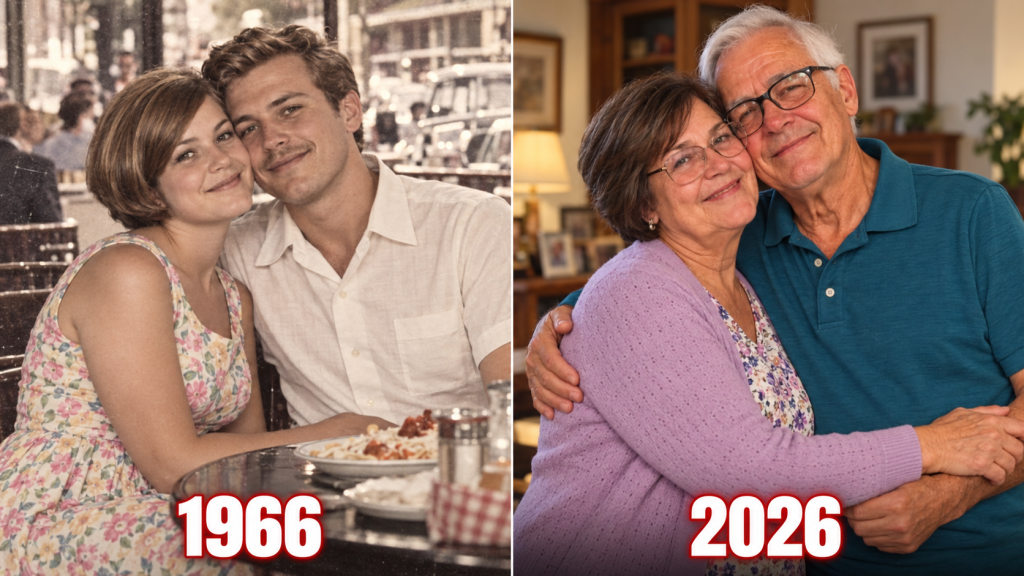
Not the ledger.
Two broke kids eating dinner while I wore an Army haircut and Irene wore a white dress with blue flowers.
Daniel sat beside me.
“You okay?”
“No.”
“Good no or bad no?”
“At my age, those categories become less useful.”
He smiled.
Then gave me another envelope.
“This was in the box too.”
Inside was one of my letters from Vietnam.
My handwriting.
Young.
Slanted.
Terrible.
Irene,
I had a dream last night that we were old and still arguing about money.
I laughed.
Daniel looked over my shoulder.
“Accurate.”
“Extremely.”
I kept reading.
If I get home, I want a yellow kitchen. You said yellow is ugly. I am willing to compromise by letting you admit you are wrong.
I cried.
Our first kitchen had been yellow.
Irene picked the paint.
She never admitted anything.
Perfect woman.
Terrible negotiator.
Then I found the last line.
Sometimes I worry I married you too quickly. Then I imagine not being married to you and that feels worse.
I stared at the words.
Married.
I had written them from Vietnam.
I had believed them then.
I believed them now.
Eventually, the court hearing came.
Nothing dramatic.
No packed courtroom.
No television cameras.
Just my children.
Samuel.
A judge.
Records.
The judge was a woman younger than our youngest son.
That amused me.
She reviewed the evidence.
The signed but unrecorded license.
The officiant’s certification.
The internal hold note.
Edwin’s memorandum.
The Army verification letter.
Margaret Cole’s affidavit.
Our tax history.
Joint property.
Irene’s declaration.
Then she looked at me.
“Mr. Harris, do you understand that the court cannot recreate history exactly as though the administrative defect never occurred?”
“Yes.”
“Do you understand that different legal consequences may depend on statutes in effect at different times?”
“Yes.”
“Do you understand that the court’s ruling concerns legal status and rights, not the emotional validity of your relationship?”
I almost smiled.
“Yes.”
She looked over her glasses.
“That last distinction appears important here.”
“It is.”
The ruling came weeks later.
Samuel called.
“Harold.”
“What?”
“We have the order.”
My heart pounded.
“And?”
“The court recognized your relationship for the relevant surviving-spouse and estate purposes we petitioned for, based on the ceremonial marriage, good-faith reliance, your continuous marital relationship, and the evidence of wrongful nonrecording.”
I sat down.
“Say that in English.”
He laughed.
“For the issues we asked the court to decide, you are being treated as Irene’s surviving spouse.”
My throat closed.
“Are we married?”
Samuel paused.
“I knew you’d ask that.”
“Answer.”
“The judge entered an order recognizing the marriage relationship and directing the county to annotate the historical record to reflect the 1966 ceremony and the improper failure to record the license.”
I started crying.
“Annotate?”
“Yes.”
“Irene still hates footnotes.”
Samuel laughed.
I did too.
Then he became quiet.
“Harold.”
“Yes?”
“This didn’t make your marriage real.”
“I know.”
“It made the record catch up.”
That sentence stayed with me.
The record caught up.
Sixty years late.
But it caught up.
The county issued a certified amended record referencing the court order.
I held it in my hands.
It was official.
Stamped.
Sealed.
Legal.
And strangely, it felt lighter than I expected.
I thought I would stare at it for hours.
Instead, I put it on the table beside the diner receipt.
The diner receipt mattered more.
That surprised me.
Our children organized a small gathering on what would have been our sixty-first anniversary.
I resisted.
“Irene is dead.”
Laura looked at me.
“We noticed.”
“Then why have an anniversary?”
“Because you had sixty years.”
Michael corrected:
“Sixty-one, technically.”
Laura glared.
He raised his hands.
“Sorry.”
We gathered in the backyard.
Children.
Grandchildren.
No giant celebration.
No speeches planned.
That meant there were, naturally, speeches.
Our oldest granddaughter, Sophie, stood holding a glass of lemonade.
“Grandma used to tell me Grandpa chased her for almost a year before she agreed to date him.”
“True.”
I said.
Sophie smiled.
“She also said marriage was mostly deciding which annoying habits you are willing to grow old beside.”
Everyone laughed.
Then Sophie looked at me.
“So whatever the county forgot to file, I think you two did the rest.”
I started crying.
Of course.
I had become embarrassingly easy to make cry.
We ate pie.
Irene would have liked that.
Then Laura handed me a small package.
Inside was a framed copy of the amended record.
I stared.
“You framed government paperwork?”
She nodded.
“It seemed appropriate.”
Michael said,
“We were going to frame the diner receipt, but Dad keeps touching it with greasy fingers.”
“I do not.”
Everyone disagreed.
The record went on the wall.
Not above our wedding photograph.
Beside it.
Equal height.
The law next to the life.
That felt right.
Months later, I went through Irene’s closet.
That was harder than court.
People think the dramatic secrets are the things that break you after death.
They aren’t always.
Sometimes it is a cardigan.
A shoe.
Half a bottle of perfume.
I found the white dress.
Not the original exactly as it had been.
She had altered it years later for a costume party.
Still.
Pale blue flowers.
I pressed the fabric against my face.
It smelled like cedar.
Not Irene.
That made me cry.
Inside the dress pocket was a small folded note.
I almost laughed.
Irene had apparently hidden letters everywhere except where I needed them while she was alive.
The note was recent.
Written in her old, slightly trembling handwriting.
Harold,
If you found the dress, you are probably making a mess of the closet.
I laughed through tears.
Please do not throw away my blue shoes. They are ugly, but Sophie likes them.
Typical.
Then:
I hope Samuel has already told you everything.
My chest tightened.
I know you may be angry.
I also know you well enough to believe that eventually you will ask whether the missing paper changes what we were.
I stopped breathing.
My answer is no.
But I also know that is not mine to decide for you.
That sentence mattered.
She did not tell me how to feel.
She had already controlled the truth long enough.
If you decide I betrayed you by waiting, I understand.
If you decide to forgive me, thank you.
If you do both, that would be very like our marriage.
I laughed.
Because yes.
We had spent sixty years being angry and loving each other simultaneously.
Why would death make us less complicated?
I continued.
I have one request.
Do not let my father become the most important person in our wedding story.
I sat down on the closet floor.
He does not deserve that much space.
Tears rolled down my face.
Remember the diner.
Remember that terrible coffee.
Remember you dropped ketchup on your shirt.
I had forgotten that.
Suddenly I could see it.
Bright red spot.
Irene laughing.
Me insisting nobody would notice.
Everyone noticed.
Remember that I chose you.
The clerk did not choose you.
My father did not choose you.
The Army did not choose you.
I did.
I stopped reading.
For a long time.
That was the answer.
Not to the law.
To me.
I had spent months asking:
Was she really my wife?
Wrong question.
Did we choose each other?
Yes.
Every day?
No.
Some days we chose irritation.
Some days silence.
Some days we slept facing opposite walls.
There were years we came frighteningly close to failing.
After Vietnam, I drank too much for a while.
Irene threatened to leave.
She should have.
I stopped.
When our middle child was born, Irene sank into a depression neither of us understood.
I told her to “cheer up.”
She did not speak to me for two days.
I deserved longer.
When I retired, I followed her around the house until she finally shouted:
“Harold, I married you. I did not hire you as a supervisor.”
We were not a fairy tale.
Good.
Fairy tales end before mortgages.
Before grief.
Before sick parents.
Before hearing aids.
Before resentment.
Before forgiveness becomes less romantic and more practical.
Our marriage happened in all those places.
A county record could not create it.
But I stopped pretending the record did not matter either.
It mattered because Irene’s father took a choice that belonged to us.
He decided paperwork should reflect his judgment instead of ours.
That was wrong.
The amended record mattered because someone finally corrected that theft of agency.
Not because it made me love Irene more.
Because it acknowledged that Edwin had no right to decide whether our commitment counted.
That distinction brought me peace.
I visited Edwin’s grave once.
Only once.
I stood there with my cane.
His stone looked smaller than I remembered him.
That happens when you outlive someone’s authority.
I said:
“You were wrong.”
Nothing happened.
No thunder.
No spiritual revelation.
A lawn mower ran somewhere near the cemetery office.
I continued.
“You thought you were protecting her.”
“Maybe you even believed that.”
“You still had no right.”
I stood there another minute.
Then:
“She had a good life.”
My voice broke.
“I did too.”
I looked at his name.
“And you don’t get credit for that.”
Then I left.
That was enough.
I did not forgive him.
I did not need to.
He was dead.
My anger had nowhere useful to go except into the ground with him.
So eventually I let it stay there.
The stranger part was forgiving Irene.
Not because her wrongdoing was larger.
Because love makes betrayal more personal.
She had known.
Ten years.
During those ten years, we traveled to Maine.
Celebrated grandchildren.
Survived my heart surgery.
Watched our oldest retire.
Sat through hundreds of ordinary breakfasts.
Every one contained a secret.
At first that fact contaminated the memories.
Then slowly, something changed.
I began seeing the ten years differently.
Not as ten years during which she was secretly laughing at me.
She wasn’t.
She was afraid.
Wrong.
But afraid.
She kept the secret because she loved the life so much she became terrified truth might damage it.
That does not make the choice right.
It makes it human.
Forgiveness became possible when I stopped asking whether her reason was good enough.
It wasn’t.
I started asking whether I wanted her worst fearful decision to be the final definition of sixty years.
I did not.
I forgave her.
Mostly.
Some mornings I woke angry again.
That seemed fair.
I told her photograph:
“I forgive you today.”
Other mornings:
“Not today, Irene.”
Then I made coffee.
Marriage continued even with only one person in the room.
Funny thing.
The social media post I eventually wrote about all this became more popular than I expected.
I had joined because my granddaughter Sophie said older people were “surprisingly good at storytelling online.”
I told her that sounded insulting.
She said it was.
I wrote about Irene.
Not every legal detail.
Not Edwin’s full name.
Not the county.
Just the truth.
That I buried the woman I believed was my legal wife and learned afterward that paperwork had failed us sixty years earlier.
Thousands of strangers responded.
Some said:
“A piece of paper doesn’t matter.”
I understood what they meant.
But I disagreed slightly.
Paper matters.
Legal rights matter.
Records matter.
Consent matters.
Others said:
“She lied to you. I’d never forgive her.”
Maybe they wouldn’t.
They did not have to.
Forgiveness is not a public referendum.
Others wrote:
“You were married in every way that counts.”
Closer.
But still incomplete.
Because the legal part counted too.
That was why correcting it mattered.
The answer was not that law meant nothing.
The answer was that law was one part of a marriage, not the whole thing.
A certificate protects rights.
It records intent.
It matters.
But it does not hold your hand when you are frightened.
It does not raise children.
It does not apologize after cruel words.
It does not sit beside a hospital bed.
People do that.
We did.
A year after Irene died, I went back to the diner.
It had changed names twice.
The old counter was gone.
The booths were newer.
Nobody remembered us.
Why would they?
I sat alone.
Ordered a hamburger.
Coffee.
Pie.
The waitress was maybe nineteen.
She asked:
“Celebrating something?”
I looked at the empty seat across from me.
“Yes.”
“What?”
I smiled.
“My anniversary.”
She glanced at the empty chair.
Then back at me.
Something softened in her face.
“How many years?”
I thought about the question.
Legally?
Emotionally?
From ceremony?
From amended order?
Then I realized Irene would be furious if I complicated it.
“Sixty-one.”
The waitress smiled.
“That’s amazing.”
“It was.”
She walked away.
I looked at the empty seat.
“See?”
I whispered.
“Still married.”
A couple nearby probably thought I was senile.
That amused me.
The coffee was still terrible.
Perfect.
I paid.
Left a large tip.
Then, before leaving, I took the old diner receipt from my wallet.
Yes.
I carried it sometimes.
My children hated that.
I compared the prices.
Three dollars and eighty-four cents then.
Almost thirty dollars now.
I could hear Irene complaining.
I laughed out loud.
Then cried.
Then laughed again.
Grief at eighty-six is not elegant.
It does not need to be.
On the anniversary of the court order, Samuel called.
“Harold.”
“What?”
“I wanted to check in.”
“Lawyers do that for free?”
“Occasionally.”
“I don’t trust it.”
He laughed.
Then asked:
“Do you still think of Irene differently?”
I looked toward her photograph.
“Yes.”
He became quiet.
Then I continued.
“I know her better now.”
That surprised him.
“How?”
“Because now I know something she was afraid to tell me.”
“That doesn’t make the secret good.”
“No.”
“It makes her less polished.”
I smiled.
“I loved the polished Irene.”
“I loved the stubborn Irene.”
“The frightened Irene gets to belong too.”
Samuel said nothing for a while.
Then:
“She would have liked that.”
“I know.”
Irene left one more surprise.
Not a legal one.
Thank God.
A box of letters for the grandchildren.
Each labeled.
Sophie.
Matthew.
Emma.
Jacob.
Lucas.
She had written them over several years.
Advice.
Stories.
Recipes.
Warnings not to trust my directions because I refuse to admit when I am lost.
Accurate.
The final letter was for me.
Not secret.
She had instructed Sophie to give it to me one year after her death.
Sophie arrived with it exactly on time.
“Grandma was terrifyingly organized.”
“Yes.”
“Do you want me to stay?”
“No.”
She hugged me.
Then left.
I opened it at the dining table.
Harold,
If you are reading this, you have survived one year without me.
I laughed.
“Barely.”
I hope you are eating vegetables.
“I am not.”
I know you are not.
I laughed harder.
Then:
There is something I want to say now that you have had time to be angry.
I am sorry.
No explanation.
No defense.
Just:
I am sorry I did not trust you with the truth when I learned it.
I spent our entire marriage asking you to tell me difficult things, and at the end I failed to do the same.
My eyes filled.
You deserved to know.
That sentence healed more than all the others.
Not:
I was protecting you.
Not:
It changed nothing.
You deserved to know.
Yes.
I had.
She continued.
I hope by now you understand that my silence came from fear, not from doubting what we were.
But fear does not excuse taking someone else’s choice away.
I stopped.
That was exactly what Edwin had done to her.
And she understood, finally, that in a smaller way she repeated the same mistake with me.
He withheld truth because he decided she could not handle her own marriage.
She withheld truth because she decided my heart could not handle it.
Different motives.
Same theft of choice.
I whispered,
“You figured it out.”
Tears fell.
I kept reading.
Please forgive me if you can.
If you cannot, I still had sixty years with you, which is more grace than I ever deserved.
I shook my head.
“You deserved it.”
Then the final lines:
You once told me marriage meant promising to stay.
You were wrong.
I laughed.
Of course she waited until death to continue an argument.
Marriage meant choosing again after all the moments when staying stopped being automatic.
We did that.
Whatever the record said, we did that.
Love,
Irene
I sat there for a very long time.
Then I took the amended marriage record off the wall.
Placed it beside her letter.
Beside the old diner receipt.
Three pieces of paper.
One said the county recognized us.
One said she was sorry.
One said two hamburgers, two coffees, and one slice of pie cost $3.84.
If someone asked me which one proved we were married, I could not answer.
Maybe none.
Maybe all.
Maybe proof was the wrong word.
The county record proved legal recognition.
The apology proved trust mattered.
The diner receipt proved we had once been young and stupid enough to think three dollars and eighty-four cents was an expensive dinner.
The marriage itself existed between those papers.
In sixty years of days no archive could contain.
I still wear my ring.
People sometimes ask why.
I tell them:
“Because I’m married.”
Technically, Samuel says “widowed” would be more accurate.
Samuel is a lawyer.
We forgive him.
I know Irene is gone.
I know I cannot choose her again tomorrow in the way I did while she was alive.
But I can still choose what our life means.
I choose not to let Edwin’s interference become the headline.
I choose not to let Irene’s ten-year secret erase her fifty years of innocent belief.
I choose to remain angry at what was wrong.
And grateful for what was right.
Both.
Always both.
The day Samuel knocked on my door, I thought he had come to tell me my marriage never existed.
He hadn’t.
He came to tell me a record did not exist.
For a while, I confused the two.
I don’t anymore.
Edwin stopped a license from entering a book.
He did not stop Irene from waiting for me after Vietnam.
He did not stop us from building a home.
He did not stop three children from calling us Mom and Dad.
He did not stop five grandchildren from climbing onto Irene’s lap.
He did not stop arguments.
Forgiveness.
Illness.
Retirement.
Anniversaries.
Or the final night when I held her hand and told her she could let go.
And Irene’s silence?
It hurt.
It still does.
But even that cannot reach backward and steal what we lived before it.
The secret was ten years.
The love was sixty.
I refuse to give the smaller number the larger meaning.
So when people ask me now whether Irene was really my wife, I do not show them the court order.
I do not explain putative spouse doctrine.
I do not discuss county records.
I tell them about the diner.
The white dress with blue flowers.
The terrible coffee.
The ketchup on my shirt.
The young woman across from me rolling her eyes because I had already started talking about our future children before we could afford dessert.
I tell them about coming home from Vietnam.
About her standing there.
About choosing her.
Again.
And again.
And again.
Until she ran out of tomorrows.
That was my marriage.
The paperwork finally caught up.
But love had arrived sixty years earlier.
THE END STORIES! THANK YOU FOR READING GOOD LUCK! ❤️
Related Posts