
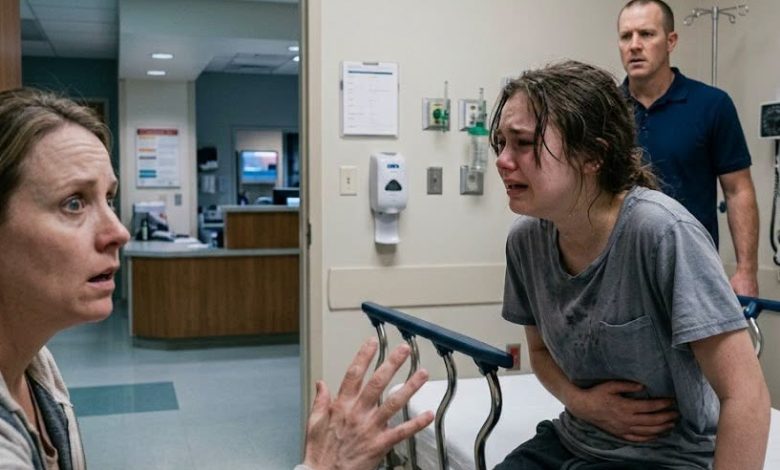
A teenage girl had been vomiting for three days, and her father said she was just being dramatic, until in the emergency room she screamed a sentence that left her mother frozen: “He knows why it hurts.”

At 3:18 a.m., I stood outside our bathroom listening to my fifteen-year-old daughter cry into the sink. The light buzzed overhead while bleach mixed with fever sweat, sour vomit, and cheap hand soap.
Emily was folded over the porcelain bowl, one arm locked around her stomach so tightly her fingertips had gone white. Michael watched from the doorway like her pain was something she had chosen to inconvenience him with.
“If you drag her to the ER over one of her little performances, don’t expect me to pay a dime.”
Emily had been vomiting for almost three days. Then came the fever. What scared me most was when she stopped complaining and began moving through the hallway bent at the waist, one hand against the wall because standing straight drained the color from her face.
Whenever Michael’s footsteps crossed the bedroom floor, her eyes snapped toward the door before dropping again.
“She’s exaggerating,” he said. “She always does this when she has a test.”
For fifteen years, I had known that voice. It could turn concern into weakness and a question into disrespect. I had handed Michael my paycheck, my passwords, my schedule, and far too much of my judgment.
Emily had learned the same survival habit I had: stay quiet, stay small, don’t make him angry.
Then she spit something pink into the sink.
“We’re going to the emergency room,” I said.
Michael took the thermometer from my hand and stared at the number. “Don’t be ridiculous, Sarah. You make her weak by babying her.”
I looked past him at Emily and made the first decision in years that didn’t depend on whether Michael approved.
Before dawn, she collapsed beside the shower. Water tapped behind the curtain. Her gray hoodie was twisted beneath one shoulder, and her cracked phone was pressed against her chest.
Her lips were dry. Her eyes barely opened when I touched her cheek.
“Mom,” she whispered. “Don’t tell Dad.”
That hurt worse than the fever. My daughter wasn’t afraid of the hospital. She was afraid of going home.
At 4:06 a.m., I pulled emergency cash from between the clean towels, grabbed her hoodie, and helped her through the back door without turning on a light.
In the rideshare, Emily rested her head against my shoulder while my hands shook in my lap.
“If he finds out,” she whispered, “he’s going to get worse.”
“It doesn’t matter anymore,” I told her.
I needed those words to become true before we reached the hospital.
At the county hospital intake desk, a nurse wrapped an orange triage band around Emily’s wrist. Three terrifying days became three clean phrases on a form: abdominal pain, fever, persistent vomiting.
“How long has she been like this?” the nurse asked.
“Three days.”
Her expression changed.
The doctor pressed gently on Emily’s abdomen.
Emily screamed.
A woman holding a paper coffee cup froze. An orderly stopped with one hand on a metal bed rail. The receptionist’s fingers hovered above her keyboard.
“I need blood work and an ultrasound now,” the doctor said.
Then he stopped watching the monitor and started watching Emily. He saw her flinch when a man’s voice carried down the corridor. He saw her fingers close around my sleeve. He saw her glance toward the doorway whenever shoes approached.
“I need to speak with her alone,” he told me.
My phone started vibrating.
Michael.
Fifteen missed calls.
Then a message appeared: Where are you?
Another arrived before I could answer.
If you took her to the hospital, you’re going to regret it.
Twenty minutes later, the doctor returned to Emily’s treatment bay and pulled the curtain closed behind him.
PART 2
The doctor’s face had changed.
“Mrs. Bennett, your daughter needs urgent surgery.”
My knees nearly gave out. I gripped the plastic chair beside Emily’s bed until my fingers hurt.
“What does she have?”
“An advanced infection. Likely complicated appendicitis. If you had waited much longer, it could have been fatal.”
For a second, all I could hear was Michael’s voice from our bathroom: She’s exaggerating. You make her weak by babying her.
Emily looked exhausted beneath the hospital blanket, the orange triage band still wrapped around her wrist. Her cracked phone rested near her hand.
Then a man’s voice rose beyond the curtain.
“I’m her father. I want to see my daughter now.”
Every muscle in my body tightened.
Michael had found us.
The same man who had threatened me for bringing our sick daughter to the hospital was now arguing at reception while doctors were preparing her for urgent surgery.
Then Michael stepped away from the reception desk and started toward the treatment area.
The moment Michael walked toward the hospital treatment area, Sarah knew the argument was no longer about a fever, a stomachache, or a worried mother overreacting. It was about the decision she had finally made after fifteen years of letting someone else control every choice.
Her daughter Emily was behind the curtain waiting for urgent surgery. The orange triage band around her wrist represented three terrifying days of pain that had been dismissed inside their own home. And now the man who told Sarah she was being dramatic was demanding access to the very child he had refused to believe.
Hours earlier, their house had been quiet except for the sounds coming from the bathroom.
At 3:18 a.m., Sarah stood outside the door and listened as her fifteen-year-old daughter cried into the sink. The overhead light buzzed. The smell of bleach mixed with fever sweat, vomit, and hand soap filled the small room.
Emily was bent over the porcelain bowl, one arm wrapped tightly around her stomach. Her fingers had turned pale from how hard she was holding herself together.
Sarah could see something was wrong.
This was not a teenager trying to avoid a test. This was not someone looking for attention. Her daughter was fighting through pain that had taken away her ability to stand straight.
But Michael did not see it that way.
From the doorway, he watched as if Emily’s suffering was an inconvenience placed in front of him.
“If you drag her to the ER over one of her little performances, don’t expect me to pay a dime,” he said.
Those words stayed with Sarah.
For years, she had heard the same pattern. A concern became an accusation. A question became disrespect. A request became a problem.
Michael had a way of making Sarah doubt her own judgment until she needed his approval before making even the smallest decision.
Over time, Emily had learned the same habit.
Stay quiet.
Stay small.
Do not make him angry.
That was what frightened Sarah the most.
Her daughter was not afraid of a hospital. She was afraid of what would happen when her father found out she had asked for help.
Emily had been sick for almost three days. First came the vomiting. Then the fever. Then the change Sarah could not ignore.
Emily stopped complaining.
She simply moved slowly through the hallway, bent at the waist, one hand against the wall because standing upright seemed to take everything she had.
Whenever Michael walked across the bedroom floor, Emily looked toward the door immediately.
Then she looked away.
“She’s exaggerating,” Michael said. “She always does this when she has a test.”
Sarah had heard that voice before. It was the voice that turned compassion into weakness and made people apologize for needing help.
Then Emily spit something pink into the sink.
That was the moment everything changed.
“We’re going to the emergency room,” Sarah said.
Michael grabbed the thermometer from her hand and looked at the number.
“Don’t be ridiculous, Sarah. You make her weak by babying her.”
For years, Sarah had adjusted herself around his reactions. She had handed over her paycheck, her passwords, her schedule, and too much of her confidence.
But standing there, watching her daughter struggle to breathe through pain, she made a decision without asking whether Michael approved.
She was taking Emily for help.
Before dawn, Emily collapsed beside the shower.
The water tapped behind the curtain. Her gray hoodie was twisted under one shoulder. Her cracked phone was pressed against her chest.
Her lips were dry. Her eyes barely opened when Sarah touched her face.
“Mom,” Emily whispered. “Don’t tell Dad.”
That sentence hurt more than the fever.
Sarah realized her daughter was not worried about the hospital bill, the waiting room, or the tests.
She was worried about going back home.
At 4:06 a.m., Sarah pulled emergency cash from between clean towels, grabbed Emily’s hoodie, and helped her leave through the back door without turning on a light.
In the rideshare, Emily leaned against her mother’s shoulder while Sarah stared at her shaking hands.
“If he finds out,” Emily whispered, “he’s going to get worse.”
Sarah answered with words she needed to believe.
“It doesn’t matter anymore.”
She needed those words to become true before they reached the hospital.
At intake, a nurse wrapped an orange triage band around Emily’s wrist.
Three terrifying days became three simple phrases on a medical form: abdominal pain, fever, persistent vomiting.
The nurse looked up.
“How long has she been like this?”
“Three days,” Sarah answered.
The nurse’s expression changed.
The doctor examined Emily carefully. He pressed gently on her abdomen.
Emily screamed.
The reaction changed the room.
A woman holding a paper coffee cup stopped moving. An orderly paused beside a metal bed rail. The receptionist looked up from the keyboard.
The doctor immediately ordered blood work and an ultrasound.
But then he noticed something else.
He noticed Emily’s reaction when a man’s voice echoed from the hallway.
He noticed her fingers closing around Sarah’s sleeve.
He noticed the way she looked toward the doorway whenever footsteps approached.
The doctor asked to speak with Emily alone.
Sarah stepped away, but her phone immediately began vibrating.
Michael.
Fifteen missed calls.
Then the message appeared.
Where are you?
Before Sarah could answer, another message arrived.
If you took her to the hospital, you’re going to regret it.
Twenty minutes later, the doctor returned.
His expression had changed.
“Mrs. Bennett, your daughter needs urgent surgery.”
Sarah grabbed the plastic chair beside Emily’s bed because her knees almost gave out.
“What does she have?”
“An advanced infection. Likely complicated appendicitis. If you had waited much longer, it could have been fatal.”
For a moment, Sarah could only hear Michael’s voice from the bathroom.
She’s exaggerating.
You make her weak by babying her.
The words sounded different now.
They were no longer an opinion.
They were the reason Sarah had almost waited.
Emily lay beneath the hospital blanket, exhausted but awake. Her cracked phone rested near her hand. The orange wristband remained around her arm.
Then another voice came from outside the curtain.
“I’m her father. I want to see my daughter now.”
Sarah froze.
Michael had found them.
The same man who had threatened her for taking Emily to the hospital was now demanding to enter while doctors prepared their daughter for surgery.
He moved away from the reception desk and walked toward the treatment area.
But this time, Sarah was not standing in the bathroom doorway wondering if she was allowed to make a decision.
She was standing beside her daughter.
She had already chosen.
The situation forced Sarah to see something she had spent years avoiding. Love was not measured by how long someone stayed quiet to keep peace. It was not proven by accepting every accusation or explaining every choice.
Sometimes love looked like opening a back door before sunrise.
Sometimes it looked like making a phone call someone else did not want made.
Sometimes it looked like standing between a child and the fear they had been carrying alone.
Emily’s emergency was not only about a medical condition. It exposed the deeper problem inside their home: the way fear had shaped their family’s decisions.
Sarah had believed she was protecting her marriage by avoiding conflict.
But Emily had been learning a different lesson.
She had been learning that pain should be hidden if the wrong person was watching.
The hospital changed that.
Doctors saw what Sarah had been trying to explain.
Emily’s body showed the truth even when she was too scared to say it.
And for the first time in years, Sarah listened to her own instincts before anyone else could tell her she was wrong.
As Emily was prepared for surgery, Sarah stayed beside the bed.
The hallway outside was still full of unanswered questions.
Michael wanted control back.
Sarah wanted her daughter safe.
And the next choice would determine whether Sarah returned to the same life she had always known or finally protected the person who needed her most.
Because when the curtain opened and Michael stepped closer, Sarah understood one thing clearly.
This was no longer about whether Emily was sick.
Everyone finally knew she was.
The question was what would happen when the person who dismissed her pain had to face the truth.
THE END STORIES! THANK YOU FOR READING GOOD LUCK !❤️
Related Posts


