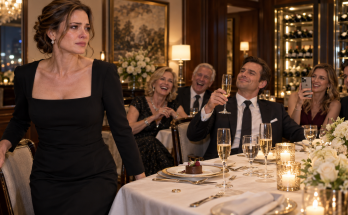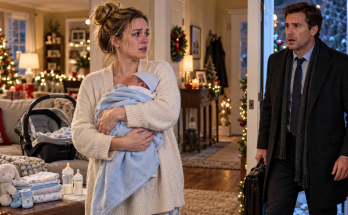
My wife left me with our six daughters for a wealthy man — 15 years later, she showed up at our oldest daughter’s wedding, but what our daughter did in front of all 150 guests shocked everyone.

“I’ll be at our daughter’s wedding. What would my NEW family think if I missed such an important event? So I’ll be there!”
When I saw that message from my ex-wife, Maya, I nearly fainted.
Fifteen years ago, I stood there holding our nine-month-old daughter in my arms, watching Maya pack her things into suitcases.
Back then, she said:
“You CAN’T give me the life I want. But Harry can. He bought me a new car and even took me to the Maldives. Do you understand the kind of life he gives me? The one I deserve. And you can’t give me anything.”
Harry was her boss, the man she’d already been cheating on me with for months.
Then she slammed the door.
She disappeared.
But I stayed.
Fifteen years of silence.
I had to raise our six little girls on my own.
I worked double shifts. I learned to tell the difference between ten different shades of pink. I never missed a single school performance. I was always there for them.
Now my oldest daughter, Adele, was getting married.
When I told her that her mother wanted to come to the wedding, she smiled and said:
“Dad, tell her she can come. I’ll even prepare a SPECIAL WELCOME for her.”
I didn’t want to see Maya. But if this was what my daughter wanted, I wasn’t going to stand in her way.
The wedding day arrived.
All the guests had gathered. Then Maya showed up.
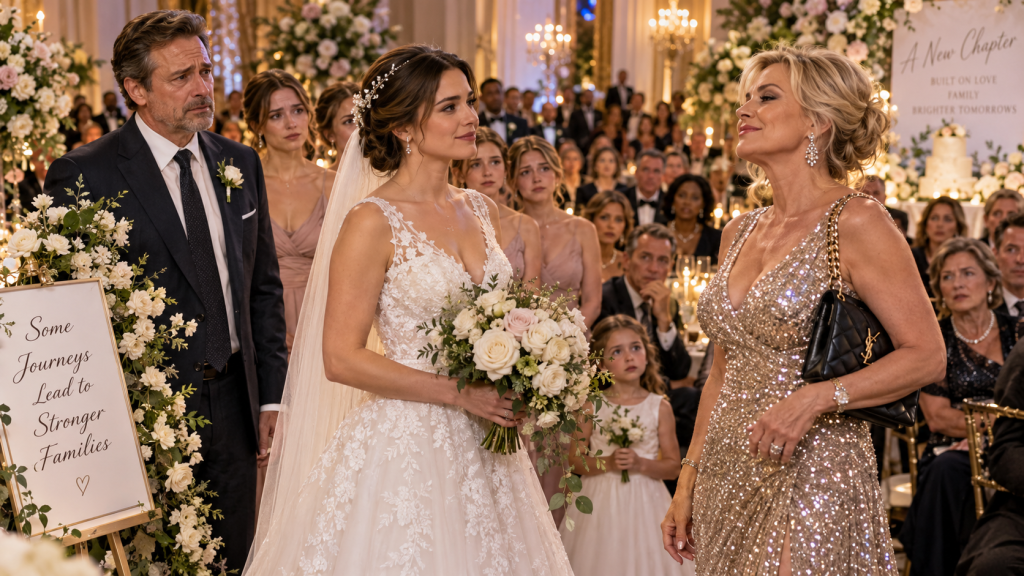
She was wearing an expensive sparkly dress and carrying a designer handbag.
She hugged Adele and said:
“Honey, we’re finally together again. You have to understand… back then, it was all your FATHER’S FAULT. He was POOR and couldn’t give me anything. And I deserved more.
PART 2 — THE SPECIAL WELCOME
Maya’s words seemed to hang above the reception hall long after she stopped speaking.
“He was poor and couldn’t give me anything. And I deserved more.”
For several seconds, no one answered.
Not Adele.
Not me.
Not even the bridesmaids standing beside the flower-covered arch.
Around us, nearly one hundred and fifty guests shifted uncomfortably in their seats, glasses paused halfway to mouths, conversations dying one by one beneath the soft music playing from the speakers.
Maya seemed not to notice.
Or perhaps she noticed and mistook the silence for admiration.
She looked exactly like someone who had spent fifteen years convincing herself that leaving six little girls behind had been an act of courage instead of abandonment.
Diamonds glimmered at her ears.
A silver bracelet caught the light whenever she moved her hand.
Her champagne-colored gown probably cost more than the first car I bought after she left.
And that handbag she had placed carefully on the table beside her chair bore the unmistakable logo of a designer brand my daughters used to joke about seeing in fashion magazines.
Maya had clearly come prepared to be seen.
What she had not prepared for was being remembered.
Adele looked at her mother for a long moment.
Then she smiled.
It was not a cruel smile.
That frightened me more.
My daughter had always been gentle.
Even as a child, Adele had been the one who carried injured insects outside instead of stepping on them.
She was the one who divided the last cookie into six crooked pieces so every sister could have some.
She hated humiliating people.
She hated scenes.
So when she smiled at Maya with almost perfect calm and said, “I’m glad you brought that up,” something cold moved through my chest.
Maya blinked.
“Brought what up, sweetheart?”
“The life Dad couldn’t give you.”
My ex-wife laughed softly.
“Oh, honey, I hope you don’t think I’m criticizing your father. We were young. Sometimes people simply want different things.”
I saw my second daughter, Lily, turn her face away.
Beside her, Rachel clenched her jaw.
The younger girls said nothing.
They had agreed before the ceremony that whatever happened, Adele would decide how this played out.
I had not been included in that conversation.
That realization should probably have worried me more than it did.
Adele touched Maya’s arm.
“Come with me.”
Maya’s eyebrows lifted.
“Right now?”
“Yes.”
Adele glanced toward the small stage beside the dance floor.
“It’s time for your special welcome.”
That finally caught everyone’s attention.
The photographer lowered his camera.
The wedding coordinator froze near the cake table.
Even Adele’s new husband, Daniel, looked toward me with an expression that seemed to ask whether I knew what was happening.
I shook my head slightly.
I did not.
Maya brightened.
“A special welcome?”
She actually touched her chest.
“Oh, Adele.”
Her eyes shone.
For one foolish second, I wondered whether perhaps my daughter had chosen forgiveness.
Maybe she had prepared a slideshow of childhood photographs.
Maybe she planned to introduce Maya to the family.
Maybe, despite everything, Adele wanted to offer her mother a place inside a day she had not earned.
Then Adele took the microphone.
“Before dinner begins,” she said, “I want to thank someone.”
Maya smiled at the crowd.
I watched her straighten her shoulders.
“For those who don’t know,” Adele continued, “my biological mother is here today.”
A few people looked toward Maya.
She raised one hand delicately.
“And because most of you have never met her, I thought tonight would be the perfect opportunity to introduce her properly.”
Adele looked directly at Maya.
“After all, introductions should tell people the truth.”
The smile left Maya’s face.
Only a little.
But I saw it.
So did Lily.
Adele turned toward the large screen behind the stage.
A photograph appeared.
Six little girls sat crowded on an old brown couch.
The picture had been taken fifteen years ago.
Adele was eight.
Lily was seven.
Rachel was five.
Sophie was four.
Emma was two.
And Grace, the baby, was nine months old.
I stood behind them wearing a stained gray T-shirt, holding Grace against my chest.
My eyes looked exhausted.
I remembered that photograph.
My sister had taken it three days after Maya left.
I had not slept more than two consecutive hours.
Grace had an ear infection.
Emma had started wetting the bed again.
Sophie kept asking when Mommy was coming home.
Rachel refused to eat anything except toast.
Lily had begun packing a backpack every morning because she believed Maya might return and take them on a trip.
And Adele…
Adele had stopped crying.
That had scared me most.
She simply watched everything.
Silently.
Like an eight-year-old trying to become an adult before anyone could abandon her again.
Adele looked toward the screen.
“This was us three days after Mom left.”
The room became very quiet.
Maya’s shoulders stiffened.
“Adele,” she said softly.
But my daughter continued.
“She left because she said Dad was poor.”
A second photograph appeared.
My old pickup truck.
Rust above the wheel.
A cracked side mirror.
Three child seats squeezed into the back.
The crowd chuckled faintly.
Even I almost smiled.
“That truck,” Adele said, “broke down so often that Dad kept jumper cables under the driver’s seat and a toolbox behind Grace’s car seat.”
The next photograph showed me kneeling beside the truck in the rain.
I had forgotten it existed.
“He couldn’t afford a new one,” Adele said.
“Because six daughters needed shoes.”
The photograph changed.
Six pairs of children’s shoes lined up beside our front door.
“And school supplies.”
Another photograph.
“And medicine.”
Another.
“And birthday cakes.”
Another.
“And braces.”
Rachel automatically covered her mouth.
People laughed gently.
She laughed too.
“And dance lessons.”
A picture of Lily in a crooked pink tutu appeared.
“And soccer uniforms.”
Sophie raised both hands from her table.
“That championship was rigged!” she shouted.
The room laughed louder.
Even Adele smiled.
Then another photograph appeared.
Me asleep at the kitchen table.
My head rested on folded arms.
A plate sat untouched beside me.
A pile of unpaid bills lay near my elbow.
The laughter disappeared.
I remembered that night too.
At least I thought I did.
There had been hundreds like it.
Adele’s voice softened.
“Dad worked twelve-hour shifts at the warehouse.”
The picture changed.
“He repaired neighbors’ cars on weekends.”
Another photograph.
“He delivered groceries at night for almost two years.”
Another.
“And when he came home exhausted, he still braided our hair.”
The screen showed me standing behind Emma.
Her hair pointed in at least four different directions.
The guests laughed again.
I covered my face.
“Oh God.”
Emma called from her table.
“You were terrible at it, Dad.”
“I know.”
“But you learned.”
That sentence struck me harder than I expected.
You learned.
Yes.
I had learned.
I learned ponytails and pancakes.
I learned which daughter needed advice and which needed silence.
I learned how to wash blood from soccer socks.
How to sit outside bathrooms during first periods.
How to explain heartbreak without threatening teenage boys.
How to sew dance costumes badly.
How to check homework I barely understood.
How to stay awake beside beds when fevers climbed.
How to stretch forty dollars across five days.
How to smile when I was terrified.
How to tell six little girls that everything would be okay when I had absolutely no idea whether it would be.
Maya suddenly looked uncomfortable.
“I’m not sure this is appropriate for a wedding.”
Adele turned toward her.
“Neither was telling me five minutes after arriving that Dad’s poverty made you abandon us.”
A collective breath moved through the room.
Maya’s face changed.
“I did not abandon you.”
The words came quickly.
Too quickly.
Adele stared at her.
“You left.”
“I left your father.”
“You left six children.”
“That’s not fair.”
“No?”
Maya glanced around, suddenly aware that every eye in the room was on her.
She lowered her voice.
“There were circumstances you were too young to understand.”
Adele nodded.
“You’re right.”
For a second, Maya seemed relieved.
Then Adele reached beneath the podium.
She lifted a white binder.
“I was eight.”
She placed it on the podium.
“So I spent fifteen years trying to understand.”
My stomach tightened.
“What is that?” Maya asked.
Adele opened the binder.
“Letters.”
Maya’s expression shifted.
“What letters?”
“The ones I wrote you.”
My heart dropped.
I had known Adele wrote letters after Maya left.
I had not known she kept copies.
Adele removed one sheet.
“I wrote this when I was nine.”
She did not read everything.
Only a few lines.
“Mom, tomorrow is my school play. I’m a tree. I know that isn’t a big part, but Dad helped me paint the branches. If you come, I’ll look for you from the stage.”
Adele lowered the page.
“You didn’t come.”
Maya swallowed.
Another page.
“I wrote this when I was eleven.”
Adele’s voice remained steady.
“Mom, I won the spelling competition. Dad cried even though he says he didn’t.”
Soft laughter moved through the room.
I looked at the floor.
Adele continued.
“I asked if you wanted a picture.”
She closed the letter.
“You never answered.”
Another.
“Thirteen.”
Another.
“Sixteen.”
Another.
“High-school graduation.”
One by one, she placed the letters on the podium.
They made almost no sound.
Yet each one seemed heavier than the last.
Maya’s face had gone pale.
“I never received those.”
Adele stopped.
The entire room seemed to freeze.
“What?”
Maya looked toward me.
“I never received them.”
Every head followed her gaze.
Mine included.
I stood.
For fifteen years, I had imagined this moment in a hundred ugly variations.
Maya blaming me.
Maya accusing me of keeping the girls away.
Maya reinventing history until she could live with herself.
I had promised myself I would never shout.
So I didn’t.
I reached into my jacket pocket.
And placed my phone on the table.
“I mailed the first ones,” I said.
“After that, Adele emailed you.”
Maya shook her head.
“You changed my email address.”
“No.”
“You blocked me.”
“No.”
“You must have done something.”
“Maya.”
I looked directly at her.
“You called twice in fifteen years.”
Silence.
“The first time was eleven months after you left.”
I remembered it as clearly as I remembered the day each daughter was born.
“You asked me to sign documents so Harry could put an apartment in both your names.”
Maya stared at me.
“The second time was when your father died.”
I paused.
“You wanted to know whether the girls would attend the funeral.”
Someone near the back whispered something.
I continued.
“I never blocked you.”
I felt fifteen years of swallowed anger sitting behind my ribs.
“I never had to.”
“You did that yourself.”
Maya’s mouth opened.
Nothing came out.
Then Adele said quietly, “Dad never spoke badly about you.”
Maya looked at her.
Adele’s eyes had filled with tears.
“That’s the part you probably don’t know.”
She swallowed.
“When I asked why you left, he told me adults sometimes make choices children can’t understand.”
She looked at me.
“When Lily asked whether you didn’t love us anymore, he told her never to believe that.”
Lily started crying.
“When Rachel tore your photograph in half, Dad taped it back together.”
Rachel lowered her head.
“When Sophie said she hated you, Dad told her hate was too heavy for a little girl to carry.”
Sophie covered her mouth.
“When Emma stopped remembering your face, he put your photograph beside her bed.”
Emma began to sob.
“And Grace…”
Adele stopped.
Grace was seventeen now.
Beautiful.
Quiet.
The only one who truly had no memory of her mother.
Adele looked toward her youngest sister.
“When Grace asked what your voice sounded like, Dad played the old videos.”
Maya looked at Grace.
Something broke in her expression.
Grace did not look away.
“You want to know something funny?” Adele asked.
Her voice trembled now.
“I spent years defending you in my own imagination.”
Maya whispered her name.
“Adele—”
“I told myself maybe Harry wouldn’t let you contact us.”
She wiped a tear from beneath her eye.
“I told myself maybe you were ashamed.”
Another tear fell.
“Maybe you were sick.”
Another.
“Maybe you thought we hated you.”
Her breath caught.
“I invented a thousand reasons because the truth was too painful.”
The room was utterly silent.
“The truth was that you chose not to know us.”
Maya’s voice cracked.
“That isn’t true.”
“Then tell me my favorite color.”
Maya froze.
Adele waited.
“What?”
“My favorite color.”
Maya searched her face.
“Pink?”
Adele smiled through tears.
“Green.”
She looked toward Lily.
“What does Lily do for work?”
Maya did not answer.
“Where did Rachel go to college?”
Silence.
“What instrument does Sophie play?”
Nothing.
“What is Emma allergic to?”
Nothing.
Adele looked toward Grace.
“What is Grace’s middle name?”
Maya stared at the youngest daughter she had left at nine months old.
Tears gathered in her eyes.
But still she said nothing.
“Her middle name is Maya,” Adele whispered.
That shattered something in the room.
Even I had to look away.
Grace lowered her head.
Maya covered her mouth.
Adele continued more softly.
“Dad named her after you.”
Maya looked at me.
I could not speak.
Because yes.
I had.
Before everything fell apart, Maya had once been the woman I loved most in the world.
When Grace was born, she had been tiny and red and furious, and Maya had laughed while holding her.
“She has your stubbornness,” I had said.
“Then she’ll survive anything,” Maya replied.
We gave her Maya as a middle name.
Nine months later, her mother disappeared.
But I never changed it.
Children should not have to erase half of themselves because an adult failed them.
Maya began crying.
Not elegantly.
Not the delicate tears of a woman concerned about mascara.
Her shoulders shook.
“Adele, please.”
My daughter closed the binder.
“No.”
The word was quiet.
But absolute.
“I’m not finished.”
She turned toward the screen.
Another photograph appeared.
This one was recent.
All six daughters stood around me on my sixtieth birthday.
Adele had one arm around my shoulders.
Grace was kissing my cheek.
Emma was holding a cake.
The others were laughing.
Adele looked toward the guests.
“My mother said Dad couldn’t give her anything.”
She turned back toward Maya.
“So I want to show everyone what he gave us.”
The photographs began changing slowly.
“Security.”
Me carrying sleepy children from the car.
“Patience.”
Me helping Lily with homework.
“Tradition.”
Christmas pancakes shaped like snowmen.
“Courage.”
Sitting beside Rachel before her surgery.
“Consistency.”
Six lunch boxes lined up every morning.
“Home.”
The little house I nearly lost twice.
“Education.”
Graduation photographs.
“Laughter.”
Camping trips.
“Dignity.”
Six daughters dressed for Adele’s college graduation.
“And love.”
The final photograph appeared.
It had been taken earlier that afternoon.
I stood outside the bridal suite.
Adele was in her wedding dress.
Her forehead rested against mine.
Neither of us knew anyone was taking the photograph.
I remembered what she had whispered.
“You did it, Dad.”
At the time I thought she meant surviving the stress of planning the wedding.
Now I understood.
You did it.
You raised us.
You kept us together.
You made it here.
My vision blurred.
Adele looked toward the guests.
“My father could not give my mother the Maldives.”
A few people laughed softly.
“He couldn’t give her luxury cars.”
Another pause.
“He couldn’t give her diamonds.”
Then Adele looked at me.
“But he gave six little girls something far more expensive.”
Her voice broke.
“He gave us fifteen years of his life.”
I pressed my lips together.
“He gave us mornings when he was exhausted.”
Tears rolled down her face.
“He gave us nights when he was afraid.”
My daughters were crying now.
So was Daniel.
So were several guests.
“He gave us every piece of himself.”
Adele smiled at me.
“And he never once sent us an invoice.”
Laughter broke through tears around the hall.
I covered my eyes.
For several seconds, I could not breathe properly.
Then Adele turned toward Maya again.
“And that is your special welcome.”
Maya wiped her cheeks.
“You brought me here to humiliate me.”
Adele shook her head.
“No.”
“Then what do you call this?”
“The truth.”
“You could have done this privately.”
“Yes.”
“Then why didn’t you?”
Adele was silent for a moment.
Then she said, “Because you abandoned us privately and returned publicly.”
Maya flinched.
“You walked into my wedding wearing diamonds and blamed the man who stayed.”
Adele’s voice grew firmer.
“You wanted one hundred and fifty people to hear your version.”
“So now they’ve heard ours.”
Applause began somewhere near the back.
I turned.
One person stood.
Then another.
Then ten.
Then twenty.
Within seconds, nearly the entire room was standing.
But they were not looking at Maya.
They were looking at me.
I wished they wouldn’t.
I had never raised my daughters for applause.
I had not stayed because I was heroic.
I stayed because they were mine.
Because fathers do not deserve medals for loving their children.
Because when six frightened girls stand in front of you, there is no respectable alternative except becoming whatever they need.
Still, when Adele walked toward me, I could not stop crying.
She wrapped her arms around me.
Then Lily came.
Then Rachel.
Then Sophie.
Then Emma.
Then Grace.
Suddenly all six daughters were around me.
The same way they had once crowded onto that old brown couch.
Except now they were grown.
Strong.
Brilliant.
Kind.
And I realized something I had never allowed myself to say.
We had made it.
Not perfectly.
Not without scars.
But we had made it.
Over their shoulders, I saw Maya standing alone.
For the first time since she arrived, her expensive dress looked strangely small.
So did her diamonds.
So did everything she had once believed mattered.
After the applause ended, Adele returned to the microphone.
“I have one more thing.”
I groaned.
“Adele.”
People laughed.
She smiled.
“This isn’t about Mom.”
Then she looked toward Daniel.
“It’s about marriage.”
Daniel stepped toward her.
Adele took his hands.
“I spent most of my childhood afraid that love meant someone could wake up one morning and decide you were no longer worth staying for.”
My heart tightened.
Daniel’s expression softened.
“But Dad taught me something different.”
She looked at me.
“He taught me that love isn’t proven by where you vacation.”
She looked back at her husband.
“It isn’t proved by what kind of car you drive.”
Her voice softened.
“Love is who sits beside you when the car breaks down.”
A ripple of laughter moved through the room.
“Love is who gets up at three in the morning when someone is sick.”
“Love is who stays when staying is inconvenient.”
“Love is who learns.”
My daughters looked at me.
“Love is who keeps showing up.”
Daniel squeezed her hands.
Adele smiled.
“So when I marry you today, Daniel, that’s the marriage I want.”
Then she turned toward me.
“The kind my father taught me without ever having one.”
That sentence opened a place inside me I thought had healed years before.
I cried harder than I had when I walked her down the aisle.
Later, while the reception resumed, Maya disappeared.
For almost an hour I assumed she had left.
Part of me was relieved.
Another part felt something I did not want to name.
Sadness, perhaps.
Not for the woman she had become.
For the woman I once believed she would be.
After dinner, I stepped outside onto the terrace.
The summer air was cool.
Fairy lights hung between the trees.
Music drifted through the open doors.
Maya was standing alone near the railing.
She had removed her heels.
For the first time that night, she looked older than I remembered.
Not old.
Just tired.
Human.
She heard me approach.
“Did you know she was going to do that?”
“No.”
Maya gave a bitter laugh.
“You expect me to believe that?”
“I stopped expecting you to believe me a long time ago.”
She stared into the darkness.
“Harry left me.”
There it was.
The explanation I suspected was coming.
I said nothing.
“Three years ago.”
Still, I said nothing.
“He met someone younger.”
Her mouth twisted.
“Funny, isn’t it?”
“No.”
She looked at me.
“No?”
“I don’t think ruining someone’s life is funny just because they once ruined mine.”
That seemed to hurt her more than cruelty would have.
Maya wiped at her eyes.
“I thought money would make everything easier.”
I leaned against the railing.
“Did it?”
“For a while.”
She stared down at her bare feet.
“We traveled.”
“I know.”
“He bought me things.”
“I know.”
“We had this enormous house.”
“I know.”
“How?”
“The girls found pictures online years ago.”
Maya closed her eyes.
Of course they had.
Children abandoned by a parent become detectives.
They search social media.
Photographs.
Birth announcements.
Addresses.
Anything that might explain why someone chose another life.
Maya whispered, “I should have called.”
“Yes.”
“I should have come back.”
“Yes.”
“I was ashamed.”
I looked at her.
“Then you should have been ashamed while sitting beside your daughters.”
She flinched.
“You don’t understand.”
“No.”
I shook my head.
“I understand perfectly.”
My voice remained quiet.
“You were ashamed for one year.”
“Then two.”
“Then five.”
“At some point shame stops being an explanation.”
I looked through the glass doors.
My daughters were dancing together.
“It becomes another excuse.”
Maya cried silently.
“Do they hate me?”
“I don’t know.”
“What did you tell them?”
“The truth.”
“That I cheated?”
“When they were old enough.”
“That I left for Harry?”
“Yes.”
“That I chose money?”
I hesitated.
“That part you told them yourself tonight.”
Maya lowered her head.
For several moments neither of us spoke.
Then she said something I had not expected.
“You were a better parent than I could ever have been.”
I watched my daughters dance.
“No.”
Maya looked at me.
“I was just the parent who stayed.”
She started crying again.
“That matters.”
“Yes.”
I finally looked at her.
“It matters more than you understood.”
Behind us, the terrace door opened.
Grace stepped outside.
Maya froze.
The youngest daughter.
The baby she had abandoned.
Grace walked slowly toward us.
She had changed out of her bridesmaid heels and wore white sneakers beneath her dress.
For a moment I saw the nine-month-old child she had once been.
Then she stopped several feet from Maya.
“Dad?”
“Yes?”
“Adele wants you inside.”
I understood.
“You sure?”
Grace nodded.
I squeezed her shoulder as I passed.
Then I left them alone.
Not because Maya deserved privacy.
Because Grace did.
I never asked exactly what they said.
Years later, Grace told me only one sentence.
She had asked Maya why.
Maya had given her a long answer about fear, youth, resentment, poverty, Harry, shame, and bad decisions.
Grace listened.
Then she said:
“You spent fifteen years explaining why you left. Dad spent fifteen years making sure we never had to.”
That was all.
Maya stayed another twenty minutes.
Before she left, she approached Adele.
I was too far away to hear everything.
But I saw Maya remove something from her purse.
A small envelope.
Adele refused it.
Maya tried again.
Adele shook her head.
Finally, Maya put the envelope away.
Then she hugged herself because no one else would.
And walked toward the exit.
Halfway there, Adele called her name.
Maya turned so quickly I almost felt sorry for her.
Adele walked toward her.
They stood facing each other beneath the chandelier.
“I don’t forgive you,” Adele said.
Maya nodded slowly.
“I understand.”
“But I’m not saying I never will.”
Maya’s face crumpled.
Adele lifted one hand.
“Don’t misunderstand me.”
Her voice was calm.
“You don’t get to return because Harry left.”
Maya lowered her eyes.
“You don’t get to call yourself Mom because you attended one wedding.”
Another nod.
“And if you want any relationship with us, you’re going to build it the way Dad built everything.”
Maya whispered, “How?”
“One day at a time.”
Then Adele added the words I will remember for the rest of my life.
“And you don’t get to skip the hard days.”
Maya began crying.
For once, no one rushed to comfort her.
Some lessons need silence.
Maya left.
The music started again.
Life continued.
And perhaps that was the strangest part.
For fifteen years, I had imagined that seeing Maya again would tear open every old wound.
Instead, I discovered they were already scars.
Tender sometimes.
Visible always.
But closed.
Close to midnight, after most of the older guests had gone, Adele found me sitting alone near the dance floor.
She dropped into the chair beside me.
Her wedding dress spilled around her like white water.
“You angry?”
I looked at her.
“For the slideshow?”
She nodded.
I pretended to think.
“The photograph of me asleep at the kitchen table was unnecessary.”
She laughed.
“You snored.”
“I was working two jobs.”
“You still snored.”
I smiled.
Then my eyes became serious.
“Why tonight?”
Adele looked toward the empty dance floor.
“Because she blamed you.”
“That didn’t require a public trial.”
“I know.”
She twisted her wedding ring slowly.
“I had another speech.”
“What kind?”
“A mean one.”
I raised an eyebrow.
“You?”
“Very mean.”
“What changed?”
Adele looked at me.
“You did.”
“I didn’t do anything.”
“You never taught us revenge.”
Her eyes filled again.
“You taught us consequences.”
She rested her head on my shoulder.
“So I didn’t want to destroy her.”
“I wanted her to see what she threw away.”
I kissed the top of her head.
For a while we sat quietly.
Then Adele whispered, “Dad?”
“Yeah?”
“Were we enough?”
My chest tightened.
“What?”
“All six of us.”
She looked younger suddenly.
Eight years old again.
Afraid.
“You lost your marriage.”
“You worked constantly.”
“You never remarried.”
Her voice became smaller.
“Were we enough to make it worth it?”
I stared at my daughter.
Then I took her face gently between my hands.
“Adele.”
She blinked through tears.
“You girls were never the consolation prize.”
Her mouth trembled.
“You were the prize.”
She began crying.
So did I.
I pulled her against me.
“I didn’t lose fifteen years because your mother left.”
I whispered into her hair.
“I got fifteen years with you.”
She held me tighter.
“With all of you.”
Across the room, Lily spotted us.
Then Rachel.
Then Sophie.
Then Emma.
Then Grace.
“Oh no,” I muttered.
Adele laughed through tears.
Within seconds, they were coming toward us.
Six grown women.
My girls.
My impossible, noisy, stubborn, wonderful girls.
They surrounded my chair.
Somebody hugged my neck.
Someone kissed my cheek.
Someone stepped on my foot.
Someone complained that Sophie was crushing her.
It was exactly like every family moment we had ever survived.
Messy.
Loud.
Imperfect.
Ours.
Daniel stood a few feet away, smiling.
I pointed at him.
“You wanted to marry into this.”
He laughed.
“I know.”
“You can still run.”
Adele threw a napkin at me.
Everyone laughed.
And in that moment, I understood something I had spent years trying to learn.
Maya had once told me I could not give her the life she wanted.
She was right.
I could not give her luxury resorts.
I could not give her sports cars.
I could not give her penthouses or diamonds or first-class flights.
But fifteen years later, when I stood surrounded by six daughters who still called me first when life frightened them, who still argued over who sat beside me at dinner, who still came home for Christmas even when their lives carried them farther away…
I finally understood the difference between having money and having wealth.
Money can buy a beautiful house.
But it cannot make six children want to come home to it.
Money can buy expensive vacations.
But it cannot purchase the memories you missed while you were gone.
Money can buy diamonds.
But it cannot make someone trust you.
Money can buy almost anything that can be held.
The most important things in my life were the things no one could purchase.
Adele suddenly grabbed my hand.
“Come on.”
“Where?”
“Dance.”
“I already danced.”
“That was the father-daughter dance.”
She pulled harder.
“This is different.”
“What is it?”
She smiled.
“The family dance.”
All six daughters dragged me onto the floor.
Daniel followed.
The DJ, apparently already warned, changed the song.
We danced badly.
Very badly.
At one point Grace nearly knocked over a chair.
Sophie accused Lily of stepping on her dress.
Emma was laughing so hard she had to wipe mascara from beneath her eyes.
Rachel kept trying to organize everyone.
Adele stopped her.
“No organizing.”
“We need structure.”
“We’re dancing.”
“Our family requires structure.”
“That ship sailed fifteen years ago.”
I laughed until my stomach hurt.
Then I looked around the circle.
Six daughters.
One new son-in-law.
One hundred fading memories of difficult years.
And thousands of good ones.
For the first time in a very long while, I did not think about who had left.
I thought about who had stayed.
Maybe that is what healing really is.
Not forgetting the door that closed.
But eventually becoming more grateful for the people still standing inside the room.
Months later, Maya began sending letters.
Not gifts.
Adele had made that clear.
No expensive jewelry.
No checks.
No attempts to purchase forgiveness.
Letters.
Some daughters answered.
Some did not.
Grace waited almost a year.
Adele answered after four months.
Their relationship never became simple.
Real life rarely offers such clean endings.
There were angry conversations.
Missed calls.
Questions Maya could not answer without crying.
Birthdays where she was invited.
Holidays where she was not.
Trust came slowly.
Painfully.
Honestly.
And that was probably the only way it could come.
As for me, Maya eventually apologized.
Not the theatrical apology I once imagined.
It happened almost two years after Adele’s wedding.
She came to my house one afternoon.
The same little house she had once despised.
The porch had been repainted.
The kitchen remodeled.
The old couch was gone.
But the marks where six girls had measured their height still remained on the hallway wall.
Maya stood in front of them for a long time.
Adele — age nine.
Lily — age eight.
Rachel — age six.
Sophie — age five.
Emma — age three.
Grace — age one.
Then another year.
Another.
Another.
Fifteen years recorded in pencil.
Maya touched Grace’s final mark.
“She’s taller than me.”
“Yes.”
Maya smiled sadly.
“I missed everything.”
I could have said yes.
Instead I said, “You missed a lot.”
Maybe that difference mattered.
She looked at me.
“I’m sorry.”
I waited.
“For Harry?”
“No.”
“For leaving?”
“Yes.”
Her voice broke.
“For blaming you.”
She wiped her eyes.
“For making you believe being a good man wasn’t enough because you didn’t have enough money.”
I looked toward those pencil marks.
“For making the girls wonder why they weren’t worth coming back for.”
That apology mattered more.
Not because it repaired anything.
Some things cannot be repaired.
But broken things can still become part of a meaningful life.
I nodded.
“Thank you.”
She looked surprised.
“That’s it?”
“That’s it.”
“You forgive me?”
I thought for a moment.
Then I smiled gently.
“Maya, I stopped needing you to be sorry a long time ago.”
She cried.
And somehow, that was the closest thing to forgiveness either of us needed.
She left shortly afterward.
I watched her walk down the driveway.
This time, unlike fifteen years earlier, I was not holding a baby.
No little girls were crying behind me.
No suitcases were being loaded while my world collapsed.
The house behind me was quiet.
Safe.
Full of photographs.
Full of history.
Full of proof that being left behind does not mean your life remains empty.
Sometimes the person who walks away believes they are heading toward something better.
Sometimes the people they leave behind discover something better together.
And sometimes, fifteen years later, beneath the lights of a wedding hall filled with one hundred and fifty witnesses, the truth finally becomes impossible to deny.
Maya had left because she believed I could not give her enough.
She was right.
I could not give her the life she wanted.
But I gave our daughters the father they needed.
And in the end, that turned out to be worth more than anything money could have bought.
PART 3 — THE LIFE WE BUILT AFTER SHE LEFT
For a long time after Adele’s wedding, I thought the story had ended there.
I thought the applause had been the ending.
I thought Maya walking out of the reception alone, carrying her expensive handbag beneath one arm and fifteen years of regret beneath the other, had been the final scene.
I was wrong.
Because families do not end when the music stops.
Pain does not disappear when the guests go home.
And forgiveness, when it comes at all, rarely arrives beneath chandeliers.
Usually, it comes quietly.
In ordinary kitchens.
In unanswered phone calls.
In birthdays that hurt less than the ones before.
In children growing older and deciding which pieces of their past they still want to carry.
Life continued.
That was the miracle of it.
The morning after the wedding, I woke in the hotel at six-thirty out of habit.
For almost twenty years, my body had forgotten how to sleep late.
Six daughters had trained me too well.
Someone had always needed breakfast.
Someone had always forgotten homework.
Someone had always been late for practice.
Someone had always been crying over something that felt like the end of the world.
Even after they grew up and moved away, I still woke before sunrise.
I lay there staring at the ceiling, listening to the quiet hum of the air conditioner.
For the first time in years, no one needed me immediately.
No lunch boxes.
No school runs.
No emergencies.
No wedding schedule taped to the refrigerator.
Just silence.
I should have felt peaceful.
Instead, I felt strangely empty.
Then there was a knock at my door.
Three knocks.
Fast.
Impatient.
I smiled before I even got out of bed.
Only one person in my family knocked like she was trying to win an argument with the door.
I opened it.
Grace stood in the hallway holding two coffees and wearing yesterday’s bridesmaid sweatshirt over pajama shorts.
Her hair looked like she had fought a hurricane in her sleep.
“Morning.”
“Morning.”
She handed me a cup.
“Peace offering.”
“For what?”
“Nothing yet.”
I narrowed my eyes.
“That sounds threatening.”
She walked past me.
“I just thought you might be awake.”
“I am always awake.”
“Exactly.”
She sat near the window and tucked her legs beneath herself.
For a while, neither of us said anything.
Then Grace looked down at her coffee.
“Mom texted me.”
There it was.
The word still sounded unfamiliar in her mouth.
Mom.
For Grace, Maya had always been more idea than person.
More absence than memory.
“What did she say?”
Grace handed me her phone.
The message was short.
Thank you for speaking to me last night.
I know I have no right to ask anything from you.
I won’t push.
But if you ever decide you want to know me, I’ll answer honestly.
Even if the answers make you hate me.
I handed the phone back.
“What do you think?”
Grace shrugged.
“I don’t know.”
“That’s allowed.”
She stared through the window.
“I thought I’d feel better after talking to her.”
“And?”
“I don’t.”
Her voice was small.
“I feel worse.”
I sat across from her.
“That’s allowed too.”
Grace smiled faintly.
“You always say that.”
“What?”
“That whatever we feel is allowed.”
“Usually is.”
She looked at me.
“Were you angry when she left?”
I almost laughed.
“Angry?”
“Like really angry.”
I looked into my coffee.
There are questions your children ask when they are young.
And there are questions they wait until adulthood to ask because they know the answer might change the way they see you.
“Yes.”
“How angry?”
I thought about the nights after Maya left.
The way I would put six girls to bed, wash bottles, fold laundry, lock the doors, then sit alone in the kitchen after midnight.
I remembered breaking a plate against the sink one night because Maya had posted a photograph of herself smiling beside Harry on a beach.
I remembered punching the steering wheel until my knuckles bled after the bank called to tell me our joint account had been nearly emptied.
I remembered hearing Sophie crying for her mother from upstairs and hating Maya so much that it frightened me.
“Very angry.”
Grace nodded.
“Did you hate her?”
“Sometimes.”
“You never told us.”
“That wasn’t your burden.”
She looked at me for a long moment.
“How did you stop?”
I leaned back.
“I didn’t wake up one morning and stop.”
I searched for the right words.
“Anger left in pieces.”
Grace listened.
“The first piece disappeared the day Adele rode a bike without training wheels.”
I smiled.
“Another disappeared when Lily made honor roll.”
“Another when Rachel got her college acceptance letter.”
“Another when Sophie scored the winning goal in high school.”
“Another when Emma called me from her first apartment and asked how to unclog a sink.”
Grace laughed.
“And the last?”
I looked at her.
“The last piece probably disappeared when you graduated.”
Her expression changed.
“Why?”
“Because I finally understood that your mother leaving had not destroyed us.”
I paused.
“It had hurt us.”
“Badly.”
“But it had not destroyed us.”
Grace wiped at one eye.
“And when you realize someone no longer has the power to destroy you, it becomes harder to hate them.”
She stared at me.
I added, “Indifference is quieter than anger.”
“Do you feel nothing for her?”
That question was harder.
I looked toward the window.
“No.”
“I don’t feel nothing.”
Grace waited.
“There are people you love once who become part of the architecture of your life.”
I rubbed my thumb along the paper cup.
“You stop living in the house you built with them, but you still remember where the windows were.”
Grace’s eyes filled.
“You loved her a lot.”
“Yes.”
“Do you still?”
I smiled sadly.
“Not in a way that asks for anything.”
That seemed to make sense to her.
She nodded.
Then she looked down at Maya’s message again.
“I don’t know if I want her in my life.”
“You don’t have to decide today.”
“But what if I wait too long?”
“Then you wait too long.”
“What if she dies?”
The question hit me harder than I expected.
I reached across the table and took her hand.
“Then whatever you chose while she was alive will still have been your choice.”
Grace swallowed.
“You don’t owe someone access to you just because time is limited.”
She nodded.
“But if you do want to know her, don’t avoid it simply because you think forgiving her would betray me.”
Her eyes widened.
“I would never—”
“I know.”
I squeezed her fingers.
“But listen to me.”
She did.
“Your mother hurt me.”
“She hurt all of you.”
“But if one day you love her again, that does not mean you love me less.”
Grace started crying.
I continued.
“Love is not a pie.”
She laughed through her tears.
“A pie?”
“I raised six daughters. Everything eventually becomes a food analogy.”
She wiped her cheeks.
“I’m serious.”
“So am I.”
I smiled.
“You do not protect me by staying angry forever.”
That morning, Grace did not answer Maya.
Not yet.
But she saved the number.
Sometimes that is how healing begins.
Not with forgiveness.
With not deleting the possibility.
The first year after the wedding was awkward.
Maya wrote letters.
Actual letters.
Paper.
Envelopes.
Stamps.
No expensive gifts.
Adele had been serious about that.
On Rachel’s birthday, Maya sent a card.
No money inside.
Just four handwritten pages.
Rachel read them alone.
Then she put them in a drawer.
She did not answer.
On Sophie’s birthday, Maya sent a photograph from when Sophie was a baby.
Sophie cried for almost an hour.
Then she called me.
“Dad?”
“Yeah?”
“Why does seeing a photo make me miss someone I barely remember?”
I sat at my kitchen table.
“Because sometimes we don’t miss the person.”
I paused.
“We miss what should have happened.”
Silence.
“I hate that.”
“I know.”
Two weeks later, Sophie mailed Maya a letter.
It had three sentences.
I don’t forgive you.
But I’m willing to hear the truth.
Don’t lie to me.
Maya answered.
For once, she did not lie.
That mattered.
Lily took longer.
She was the angriest.
People always assumed Rachel would be because she had inherited my stubbornness.
But Lily had spent most of her childhood pretending everything was fine.
Children who become easy after abandonment are often carrying the heaviest questions.
Lily never caused trouble.
Never missed curfew.
Never failed a class.
Never asked for anything expensive.
When she was twelve, I once found her adding up grocery prices in the kitchen because she wanted to know whether we could afford her school trip.
A twelve-year-old should not have known how much electricity cost.
But Lily did.
She had learned scarcity as a second language.
So when Maya reached out, Lily refused every attempt.
“She doesn’t get to come back because she’s lonely,” she told me.
“You’re right.”
“She doesn’t get to feel guilty and make that our problem.”
“You’re right.”
“She missed my entire childhood.”
“Yes.”
Lily looked at me angrily.
“Stop agreeing with me.”
I smiled.
“What would you prefer?”
“I don’t know.”
She burst into tears.
“I just want someone to tell me what I’m supposed to feel.”
I stood and held her.
“You feel what you feel.”
“I hate that answer.”
“I know.”
She cried against my chest.
“I wanted her at my graduation.”
I closed my eyes.
“I know.”
“I wanted her when I got my period.”
“I know.”
“I wanted her when my first boyfriend dumped me.”
“I know.”
“You were there.”
I stroked her hair.
“I was.”
“But I still wanted her.”
That sentence hurt.
Not because I felt inadequate.
Because children are allowed to need more than one parent.
I had never wanted my presence to become proof that Maya’s absence did not matter.
Of course it mattered.
It mattered terribly.
“I know,” I whispered.
Lily did not speak to Maya until almost two years after Adele’s wedding.
When she finally did, the conversation lasted seven minutes.
Then she hung up.
Maya called again three months later.
That call lasted twelve minutes.
Then twenty.
Then an hour.
It was not a reunion.
It was construction.
Slow.
Measured.
Fragile.
One beam at a time.
Adele and Daniel settled into marriage.
They bought a modest house twenty minutes from mine.
It had a crooked backyard fence, old kitchen cabinets, and exactly the kind of porch Adele had always wanted.
One Sunday afternoon, Daniel called.
“Can you come over?”
“Everything okay?”
“Depends how you define okay.”
I heard Adele shouting in the background.
“Daniel!”
He lowered his voice.
“We bought a dining table.”
“So?”
“It came in fourteen pieces.”
“That sounds normal.”
“Dad.”
He had started calling me Dad six months after the wedding.
I pretended not to care.
I cared deeply.
“The instructions are in Swedish.”
I sighed.
“I’ll bring tools.”
When I arrived, Adele was sitting on the floor surrounded by wooden panels.
“This marriage is over.”
Daniel pointed at her.
“You see?”
I looked at the pieces.
“You’ve been married eleven months.”
“Long enough.”
“Do you want the table or not?”
“Yes.”
“Then stop threatening divorce over furniture.”
Adele crossed her arms.
“Dad.”
“What?”
“You’re supposed to be on my side.”
“I’m on the table’s side.”
Three hours later, we finished it.
Mostly.
One leg was slightly crooked.
Daniel suggested pretending the floor was uneven.
I respected that solution.
We ate pizza at the new table that night.
Adele sat across from me.
“You know what’s weird?”
“What?”
“This.”
She gestured around the room.
“Being married.”
“You’ve been married almost a year.”
“I know.”
She looked at Daniel.
“Sometimes I still expect him to leave.”
The room became quiet.
Daniel reached for her hand.
Adele stared at their joined fingers.
“I know it’s irrational.”
“It isn’t,” I said.
She looked at me.
“It just isn’t necessarily true.”
She swallowed.
I leaned forward.
“Your mother leaving taught you that people can disappear.”
Adele nodded.
“But Daniel staying can teach you that people can also remain.”
Daniel squeezed her hand.
“You have to let new experiences argue with old wounds.”
Adele smiled slightly.
“Since when did you become philosophical?”
“Since I spent twenty years giving daughters advice I invented three seconds before saying it.”
She laughed.
And just like that, the moment softened.
A year later, Adele called me at four in the morning.
I answered before the second ring.
“What happened?”
She was crying.
“Dad.”
I sat upright.
“What?”
“I’m pregnant.”
For several seconds, I forgot how language worked.
“You’re what?”
She laughed through tears.
“Pregnant.”
I pressed one hand over my mouth.
“Are you sure?”
“I’ve taken four tests.”
“Four?”
“I panicked.”
Daniel called from somewhere nearby.
“She bought the entire pharmacy.”
I laughed.
Then I cried.
Not neatly.
Not quietly.
I cried like a man who suddenly realized the little girl he once carried sleeping from the car was going to carry a child of her own.
Months later, when the baby arrived, Adele asked me to come to the hospital.
I stood outside the room until Daniel opened the door.
“She wants you.”
Inside, Adele lay exhausted beneath white blankets.
In her arms was a tiny baby girl.
I stopped walking.
There are moments when time folds.
I saw Adele at eight.
Grace at nine months.
Six little girls crowded into the old house.
Lunch boxes.
Fevers.
Hair ribbons.
Birthday candles.
Then I saw this new child.
Proof that life had continued farther than I once dared to imagine.
Adele smiled.
“Come meet your granddaughter.”
I walked closer.
“What’s her name?”
Adele looked at Daniel.
Then back at me.
“Eleanor James.”
I blinked.
“James?”
“My middle name is James.”
She smiled.
“I know.”
My throat tightened.
“Why?”
Adele looked down at her daughter.
“Because someday she’ll ask me what kind of man her grandfather was.”
My eyes filled.
“And I want her to carry part of the answer.”
I sat down before my knees embarrassed me.
She placed Eleanor in my arms.
The baby weighed almost nothing.
Yet somehow, she held the weight of my entire life.
“Hello,” I whispered.
Eleanor yawned.
I laughed through tears.
“Yeah.”
“You’re one of us.”
“You’re already tired.”
Adele watched me.
“Dad?”
“Hmm?”
“You’re going to spoil her.”
“Absolutely.”
“No.”
“Yes.”
“Dad.”
“I waited decades for grandparent privileges.”
Daniel pointed at me.
“I told you.”
And for the first time in my life, I got to love a child without worrying whether the electric bill had been paid.
There is a particular sweetness in becoming a grandparent after raising children alone.
You finally get the joy without the terror.
I could hand Eleanor back when she screamed.
This felt like cheating.
Maya met Eleanor when the baby was six months old.
Adele had debated it for weeks.
When she finally called me, she sounded nervous.
“I invited Mom.”
I was quiet for half a second.
Adele noticed.
“Is that okay?”
“Adele.”
“What?”
“You do not need my permission to have a relationship with your mother.”
“I know.”
“But?”
“No but.”
She exhaled.
“I just don’t want to hurt you.”
“You aren’t.”
She was quiet.
Then I said, “I mean that.”
Maya came on a Sunday afternoon.
I was already at Adele’s house helping Daniel fix a leaking faucet.
When Maya arrived, she stopped in the doorway.
I had not seen her in several months.
She looked different.
Her clothes were still nice, but simpler.
No glittering jewelry.
No performance.
She carried a small stuffed rabbit.
Not designer.
Not extravagant.
Just soft.
Adele opened the door wider.
“Come in.”
Maya entered.
Eleanor was sleeping against Daniel’s chest.
Maya saw her.
Her entire face changed.
“Oh.”
Only one word.
But every year she had missed seemed to be inside it.
Daniel carefully transferred the baby to Adele.
Adele looked at Maya.
“Do you want to hold her?”
Maya started crying before she answered.
“Yes.”
Adele placed Eleanor in her arms.
Maya stared down at her granddaughter.
For a while, nobody said anything.
Then Maya whispered, “She looks like you.”
Adele smiled.
“Dad says she looks like a potato.”
“I said a beautiful potato.”
Everyone laughed.
Even Maya.
Especially Maya.
It was strange.
For a moment, it felt almost normal.
Then Eleanor opened her eyes.
Maya touched one tiny cheek.
“You’re beautiful.”
Her voice broke.
“I’m sorry I missed so much before you.”
Adele looked away.
So did I.
Not every apology needs an audience.
Later, while Maya sat in the living room with Adele, I went outside to load my tools.
Maya followed me.
“James.”
I turned.
“Thank you.”
“For what?”
“For not making them choose.”
I leaned against the truck.
“They shouldn’t have to.”
She nodded.
“I don’t think I would have been as generous.”
“This isn’t generosity.”
She looked at me.
“It’s love.”
Maya smiled sadly.
“You always did make it sound simple.”
I shook my head.
“It isn’t simple.”
“It’s just clear.”
She looked toward the house.
“I envy you.”
I said nothing.
“She trusts you.”
“Who?”
“Adele.”
I looked through the window.
She was bouncing Eleanor gently.
“She knows you’ll always be there.”
Maya wiped her eyes.
“I wonder what that feels like.”
I almost answered sharply.
Almost.
The old version of me might have.
But age had softened some edges.
So I said, “You can become someone people trust.”
Maya looked at me.
“It will just take longer than wanting it to.”
She nodded.
Then she walked back inside.
Years passed.
The girls married.
Some divorced.
Some remarried.
Careers changed.
Houses changed.
Cars changed.
Hair changed.
Opinions changed constantly.
Sunday dinner did not.
That remained sacred.
Not every week.
Life became too busy for that.
But once a month, whoever could come did.
My table became too small.
Then much too small.
Eventually, Daniel and I built a long one.
Better than the first one.
Mostly level.
By then there were grandchildren.
Eleanor.
Thomas.
June.
Micah.
Then twins, Ava and Rose.
My house, which had once felt enormous after the girls moved out, became loud again.
Toys appeared beneath furniture.
Fingerprints returned to windows.
Someone was always stealing cookies before dinner.
I pretended to object.
Nobody believed me.
One Sunday, years after Adele’s wedding, I stood in the kitchen slicing bread while everyone filled the house.
Lily was arguing with Rachel over politics.
Sophie was telling a story too loudly.
Emma was helping one of the children with homework.
Grace was sitting on the counter even though I had told her since childhood not to sit there.
Adele was trying to keep Eleanor from feeding the dog cheese.
Daniel was failing to help.
Then the doorbell rang.
The room quieted slightly.
Adele looked at me.
“Were you expecting anyone?”
“No.”
Grace walked to the door.
She opened it.
Maya stood outside holding a pie.
A store-bought one.
Thank God.
The woman could never bake.
For one second, the room seemed unsure of itself.
Then Grace smiled.
“You’re early.”
“I know.”
Maya stepped inside.
Rachel greeted her.
Then Sophie.
Then Emma.
Lily gave her a hug.
A short one.
But a hug.
Maya saw me in the kitchen.
“Hi.”
“Hi.”
She lifted the pie.
“I brought dessert.”
“Did you bake it?”
She rolled her eyes.
“I’ve made mistakes in my life, James.”
The girls laughed.
I laughed too.
That moment would have been impossible years earlier.
Not because the past had been erased.
It had not.
Maya still missed fifteen years.
Nothing could change that.
She would never remember Adele’s first date because she had not been there.
She would never remember Grace’s kindergarten graduation.
She would never know which lullabies worked best when Emma was sick.
She would never know how Lily sounded when laughing with braces.
There are losses that apology cannot reverse.
But sometimes forgiveness is not pretending the missing years never happened.
Sometimes forgiveness is refusing to make the missing years the only years that matter.
Maya became part of the family again.
Not at the center.
Not where she once might have stood.
But somewhere honest.
Somewhere earned.
That was enough.
One afternoon, long after dinner, everyone left except Adele.
She helped me wash dishes.
I had more gray hair now.
My knees complained about stairs.
She had lines near her eyes when she smiled.
Time had done what time always does.
It carried us forward whether we were ready or not.
Adele handed me a plate.
“Dad.”
“Yeah?”
“You ever think about getting married again?”
I nearly dropped it.
“What?”
“You heard me.”
“I’m seventy.”
“So?”
“So what do you expect me to do? Start dating?”
“Why not?”
“I own three good shirts.”
“That’s enough.”
“I like going to bed at nine.”
“There are women who appreciate that.”
“I snore.”
“So does Mom.”
I stared at her.
She laughed.
“I mean—never mind.”
I shook my head.
“Terrible child.”
She dried another plate.
“Seriously.”
I looked out the kitchen window.
“For a long time, I thought being alone was part of the price.”
“For what?”
“For staying.”
Adele frowned.
“You didn’t owe us your whole life.”
“I know that now.”
Her voice softened.
“Do you?”
I thought about it.
Then nodded.
“Yes.”
Adele smiled.
“Good.”
“Why?”
“Because Mrs. Callahan from across the street thinks you’re handsome.”
I nearly choked.
“Adele.”
“What?”
“She’s been widowed three years.”
“Adele.”
“She makes excellent lasagna.”
“Go home.”
“She likes gardening.”
“Out.”
“She asked if you’re seeing anyone.”
I pointed toward the door.
“Goodnight.”
Adele kissed my cheek.
“Think about it.”
“I won’t.”
I did.
Mrs. Callahan’s name was Evelyn.
We had coffee.
Then dinner.
Then another dinner.
She was funny.
Calm.
She had raised two sons.
She did not need saving.
Neither did I.
That mattered.
We did not fall in love like people in their twenties.
There were no dramatic declarations.
No desperate promises.
We fell in love like people who had already survived the endings of other lives.
Carefully.
Gratefully.
With room for ghosts.
Two years later, Evelyn and I married in my backyard.
Only family attended.
Maya came.
I wondered whether that would be strange.
It was.
For about thirty seconds.
Then Eleanor dropped a cupcake on Maya’s dress, and everyone forgot to be uncomfortable.
Before the ceremony, Maya found me near the porch.
She looked at my suit.
“You clean up well.”
“So do you.”
She smiled.
“I’m happy for you.”
I believed her.
“Thank you.”
She hesitated.
Then said, “You deserved this sooner.”
I looked toward Evelyn.
Maybe I had.
Maybe not.
“Sooner wouldn’t have been her.”
Maya nodded.
That answer seemed to comfort both of us.
When the music began, my six daughters walked with me.
All six.
They insisted.
I had once walked Adele down the aisle.
Now they walked me.
Halfway toward Evelyn, Grace whispered, “Don’t trip.”
“I taught you to walk.”
“Different shoes.”
Sophie hissed, “Stop talking.”
Lily was crying.
Rachel claimed she had allergies.
Emma squeezed my arm.
Adele looked at me.
“You okay?”
I looked around.
At my daughters.
At the grandchildren.
At Evelyn.
At Maya sitting quietly among the guests.
At the little house behind us.
The same house where six frightened girls had once cried themselves to sleep after their mother left.
The house where I learned to braid hair.
Where homework covered the table.
Where bills kept me awake.
Where birthdays came even when money did not.
Where apologies eventually arrived.
Where grandchildren now raced through rooms that had once felt painfully empty.
I smiled.
“Yeah.”
And for perhaps the first time in my life, the answer was completely true.
“I’m okay.”
Years later, when people asked about Maya leaving, they often expected a simple story.
A villain.
A victim.
A punishment.
A victory.
Real life was messier.
Maya was wrong.
Terribly wrong.
She hurt people who trusted her.
She abandoned children who needed her.
She chased a life she believed would make her valuable.
And she paid for it in years she could never recover.
But she was also human.
And humans are capable of becoming better after doing terrible things.
That did not erase what happened.
It simply meant the worst thing someone had done did not have to become the last thing they ever did.
My daughters learned that.
So did I.
By the time my first great-grandchild was born, Maya and I could sit at the same table and laugh.
Not because history had vanished.
Because history had finally stopped controlling the room.
One Christmas, all six daughters brought their families home.
There were coats piled on beds.
Shoes everywhere.
Children racing through the hallway.
Evelyn complaining that no one used coasters.
Daniel carving turkey badly.
Adele correcting him.
Maya laughing beside Grace.
Music playing.
Lights glowing around the windows.
I stepped outside for a moment.
Snow had begun to fall.
The house behind me looked warm.
Full.
Alive.
Adele found me standing on the porch.
“You hiding?”
“Resting.”
“Same thing at your age.”
“Respect your elders.”
She wrapped a blanket around my shoulders.
For a while, we watched the snow.
Then she asked, “Do you remember what Mom said when she left?”
I knew exactly what she meant.
“You can’t give me the life I want.”
“Yes.”
I nodded.
Adele looked through the window.
Inside, Maya was helping Eleanor with something at the table.
Grace was laughing.
Evelyn was calling everyone to dinner.
Children ran through the room.
“Do you ever think about that?”
“Sometimes.”
Adele leaned against me.
“She was wrong.”
I shook my head.
“No.”
Adele looked surprised.
“She wasn’t.”
“What?”
“She was right.”
I looked at my daughter.
“I couldn’t give her the life she wanted.”
I smiled.
“But I could build the life I wanted.”
Adele’s eyes softened.
“And what was that?”
I looked through the glass.
At the noise.
The chaos.
The people.
The years.
“This.”
She rested her head against my shoulder.
Inside, someone shouted that the potatoes were getting cold.
I sighed.
“Duty calls.”
Adele laughed.
We walked inside together.
And before I closed the door, I looked back once at the snow falling over the yard.
Fifteen years earlier, I had stood in almost the same place wondering how one man could possibly raise six daughters alone.
I had been terrified.
Broke.
Angry.
Exhausted.
I thought Maya had taken the future with her when she left.
She had not.
The future had been asleep in six bedrooms down the hall.
The future had been wearing mismatched socks.
The future had needed help with homework.
The future had cried for its mother.
The future had trusted me to stay.
So I stayed.
Not perfectly.
Not gracefully.
But completely.
And that became the great lesson of my life.
People often imagine love as something grand.
A wedding.
A diamond.
A holiday beneath blue skies.
A photograph taken somewhere beautiful.
But most love does not look like that.
Love looks like a father standing over a stove at six in the morning because six children need breakfast.
Love looks like a worn-out man learning how to braid hair from a library book.
Love looks like sitting beside a hospital bed.
Love looks like tuition payments.
Waiting outside dressing rooms.
Fixing broken cars.
Listening to heartbreak.
Showing up to school plays where your daughter is playing a tree.
Love looks almost ordinary.
That is why people underestimate it.
They mistake glamour for value.
They mistake excitement for devotion.
They mistake being impressed for being loved.
Maya had once chosen the man who could give her more.
I became the man who stayed when there was less.
Less money.
Less sleep.
Less freedom.
Less certainty.
And somehow, through all that less, my daughters and I built more.
More memories.
More loyalty.
More laughter.
More life than I had ever imagined.
That was the thing Maya finally understood.
And it was the thing I wished every one of my daughters would remember long after I was gone.
Never measure love by what someone promises when life is easy.
Measure it by who remains when everything becomes inconvenient.
Measure it by who comes back to the hospital.
Who answers at two in the morning.
Who remembers the small things.
Who sits beside you when you have nothing interesting to say.
Who keeps choosing you long after the excitement of choosing has worn off.
Because the people who truly love us are rarely the ones who give us the most impressive life.
They are the ones who refuse to disappear from the ordinary one.
That night, I returned to the table.
Six daughters looked up.
Children shouted.
Evelyn handed me a plate.
Maya moved a chair so I could sit.
Adele raised her glass.
“To Dad.”
Everyone groaned.
“Oh no.”
“Speech.”
“I’m not making a speech.”
“You always make speeches.”
“I’m making a toast.”
“That’s a small speech.”
Adele ignored them.
She looked at me.
Her eyes were wet.
“To the man who taught us that staying is an action.”
The room quieted.
“To the man who taught us that love is not what you say when everything is beautiful.”
Her voice broke.
“It’s what you do when everything is hard.”
I looked around the table.
Lily.
Rachel.
Sophie.
Emma.
Grace.
Adele.
The six little girls I had once been terrified I would fail.
They raised their glasses.
And in that moment, I knew something with absolute certainty.
I had not failed them.
I had made mistakes.
Thousands.
I had burned dinners.
Forgot appointments.
Said the wrong thing.
Worked too much.
Worried too often.
Lost my temper.
Fallen asleep during movies I promised to watch.
I had been an imperfect father.
But I had been there.
And sometimes presence is the foundation on which everything else can be repaired.
I raised my glass.
“To my girls.”
Adele shook her head.
“No.”
She smiled through tears.
“To our family.”
I looked around the table again.
At Maya.
At Evelyn.
At children and grandchildren.
At daughters who had become women.
At all the chairs filled by people who had chosen, in one way or another, to remain.
Then I smiled.
“To our family.”
Glasses touched.
Children laughed.
Somebody dropped a fork.
Someone complained about the gravy.
The dog barked beneath the table.
Life carried on.
Beautifully.
Messily.
Completely.
And that was the ending I never could have imagined on the night Maya left.
Back then, I thought my family had been broken.
I know better now.
We had not been broken.
We had been unfinished.
And for the next fifteen years, one ordinary day at a time, we finished building ourselves.
Not around the person who left.
Around the people who stayed.
And that made all the difference.
THE END STORIES! THANK YOU FOR READING GOOD LUCK !❤️
Related Posts