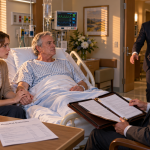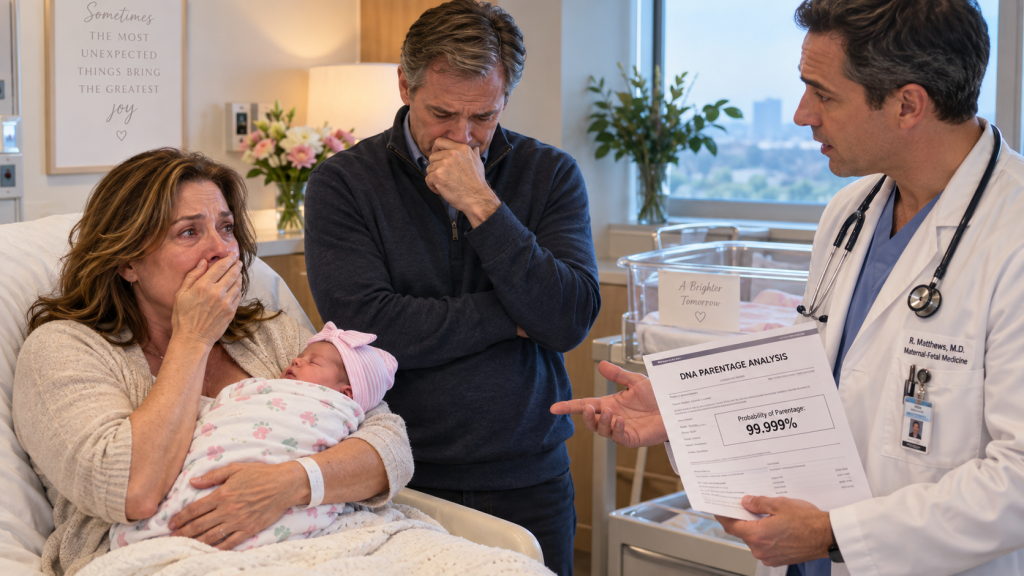
My husband called me at 2 a.m. and put a newborn girl in my arms — then the hospital called before we reached home and told us to turn around.

At 2:06 a.m., my phone rang.
It was my husband, Michael.
He’d left home hours earlier after telling me one of his coworkers had been taken to the hospital.
But the moment I answered, his voice sounded strange.
“Get dressed and come to St. Joseph’s.”
“What happened? Is someone hurt?”
“No. Just… please come.”
Twenty minutes later, I rushed through the hospital entrance.
Michael was waiting for me near the maternity ward.
And there was a newborn girl in his arms.
I stopped walking.
For twenty-two years, we’d raised three sons.
I’d always dreamed of having a daughter.
Now my husband was standing in front of me holding one.
“Michael… whose baby is that?”
He swallowed.
Then he walked over and gently placed her in my arms.
“She’s ours.”
I just stared at him.
Months earlier, we’d quietly applied to become emergency foster parents, but we’d heard nothing since.
Michael said the hospital had called him because a baby needed a home immediately.
“The paperwork’s done. We can take her tonight.”
When he placed her in my arms, I started crying.
She was tiny. Dark hair. Perfect little fingers.
Michael said her name was Lucy.
We hadn’t even reached our neighborhood when his phone rang.
The hospital.
A nurse sounded terrified.
“Turn around. Do not take that baby home.”
Michael slammed on the brakes.
“What happened?”
“We checked the mother’s records again.”
Michael’s face went completely white.
Back at the hospital, a doctor was waiting with two security officers.
He took us into a private room.
“I need to ask you something. Have you ever donated eggs?”
“No.”
“Had embryos frozen?”
“Never.”
He looked at Michael.
My husband wouldn’t meet my eyes.
Then the doctor handed me a preliminary lab report.
Lucy wasn’t biologically related to Michael.
But beside my name was:
Parent-child match: 99.9%.
I almost laughed.
“That’s impossible. I’m fifty-one.”
PART 2 — THE SISTER MY HUSBAND NEVER TOLD ME ABOUT
For several seconds, nobody in the hospital room spoke.
I stared at the report.
Then at the newborn sleeping in the clear bassinet beside the wall.
Then at my husband.
Michael still would not meet my eyes.
The doctor reached for the paper.
“Mrs. Bennett, I need to correct something before this goes any further.”
I pulled the report away.
“No.”
My voice sounded strange.
“First tell me how a fifty-one-year-old woman who has never donated eggs, never frozen embryos, and definitely did not give birth tonight can have a newborn with a ninety-nine-point-nine-percent parent-child match.”
The doctor nodded slowly.
“That result is why we brought you back.”
“It is also preliminary.”
“Preliminary?”
I laughed.
Nothing about it was funny.
“You handed me a paper saying this baby is mine.”
“I handed you a report saying the DNA profile we compared is compatible with maternity.”
“That is not exactly the same thing.”
I stared.
“Doctor, this would be an excellent moment to stop talking like a laboratory.”
His expression softened.
“My name is Dr. Sethi.”
“Fine.”
“Dr. Sethi.”
I pointed toward Lucy.
“Whose baby is she?”
Michael closed his eyes.
And that was the moment I stopped being afraid of the laboratory report.
I became afraid of my husband.
“Michael.”
He finally looked at me.
Twenty-eight years of marriage.
Three sons.
Mortgage payments.
Flu seasons.
College graduations.
His father’s funeral.
My mother’s death.
I knew every version of his face.
Or I thought I did.
The man in front of me looked guilty before anyone had accused him of anything.
“What do you know?”
I whispered.
Dr. Sethi looked between us.
Michael swallowed.
“There’s something I should’ve told you.”
My stomach turned.
“That sentence has never improved a marriage.”
He flinched.
Good.
Dr. Sethi intervened.
“Before you discuss family history, there’s something medically important you both need to understand.”
I stared at Michael for another second.
Then nodded.
The doctor sat across from me.
“The sample used for the preliminary comparison was not collected from you tonight.”
I frowned.
“What sample?”
“An archived genetic sample associated with your hospital patient number.”
I tried to understand.
“Why does this hospital have my DNA?”
“You had genetic testing seven years ago.”
Then I remembered.
After my older sister—no.
I stopped.
I had no sister.
After an aunt developed ovarian cancer, my gynecologist had recommended hereditary-cancer screening.
Blood draw.
Forms.
A negative result.
I had forgotten almost everything about it.
“That sample?”
“Yes.”
“Why compare Lucy to that?”
Dr. Sethi looked toward the door, then back.
“Because the woman who delivered Lucy was admitted under information that partially overlapped with your medical record.”
My skin went cold.
“What does partially mean?”
“Name variation.”
“Date of birth.”
“Previous address.”
“And an emergency contact connected to your family.”
I turned toward Michael.
He looked down.
There it was again.
“The birth mother gave them my identity?”
I asked.
“Not exactly.”
Dr. Sethi said.
“We are still determining whether this was deliberate identity use, an old chart merge, or something else.”
“The records go back more than a decade.”
“Her legal name appears to be different.”
“What name?”
The doctor hesitated.
“Rebecca Hale.”
Nothing.
The name meant absolutely nothing to me.
I looked at Michael.
It meant something to him.
He sat down.
Slowly.
I stopped breathing.
“You know her.”
Not a question.
Michael rubbed both hands over his face.
“Yes.”
The word broke something open.
“How?”
He looked at Dr. Sethi.
Then at the security officers by the wall.
Then at me.
“Can we do this privately?”
“No.”
I said it immediately.
“You had privacy.”
“Apparently a great deal of it.”
“Now you answer me.”
One security officer looked toward the floor.
Dr. Sethi remained still.
Michael whispered:
“She contacted me eighteen months ago.”
My heart pounded.
“Why?”
“Because she was looking for you.”
I laughed once.
Sharp.
“You know, Michael, every answer is somehow making this worse.”
“I know.”
“Why was a pregnant fifty-one-year-old stranger looking for me?”
He finally met my eyes.
“Because she believed she was your sister.”
The room disappeared.
I stared at him.
“No.”
Michael said nothing.
“I don’t have a sister.”
He swallowed.
“She believed you were twins.”
I actually smiled.
Not because I believed him.
Because sometimes the truth becomes so absurd that your mind temporarily rejects the entire category.
“Twins.”
“Yes.”
“I was an only child.”
“I know what you were told.”
“What I was told?”
My voice rose.
Dr. Sethi spoke quietly.
“Mrs. Bennett.”
I turned.
“Would an identical twin explain this test?”
He paused.
“Yes.”
The word landed harder than anything Michael had said.
Dr. Sethi leaned forward.
“An ordinary parentage panel looks at inherited genetic markers.”
“Identical twins share essentially the same inherited DNA profile.”
“If Rebecca Hale is your identical twin, her biological child can appear compatible as your biological child on a standard maternity analysis.”
I looked toward Lucy.
The baby slept through the destruction of my childhood.
Tiny chest rising.
Falling.
Unconcerned.
“So she might not be my daughter.”
“She is almost certainly not.”
The doctor said it carefully.
“But she may be your niece.”
My niece.
I had gone from mother to aunt in one sentence.
And somehow neither word made sense.
“Can you prove Rebecca is my twin?”
“Yes.”
“With specialized analysis and records.”
“We’ve already ordered confirmatory testing.”
“Why?”
“Because Ms. Hale’s medical record contains references to an identical sibling.”
My skin went cold.
“References from when?”
Dr. Sethi glanced at a chart.
“Earliest one we have is nineteen ninety-eight.”
Twenty-eight years ago.
Long before Michael claimed to know her.
Someone had known.
For decades.
I turned toward him.
“How much did you know?”
Michael looked miserable.
“Not all of it.”
“That is not an amount.”
“I knew Rebecca believed you were her twin.”
“For eighteen months.”
“Yes.”
“And you never told me.”
“No.”
“Did you meet her?”
“Yes.”
“How many times?”
He hesitated.
“How many?”
“Six.”
The number hurt more than one.
One could be panic.
Six was a relationship.
“Where?”
“Coffee shops.”
“Her apartment.”
“Once at her fertility clinic.”
I stared.
“You went to her fertility clinic?”
“She needed someone to drive her.”
“Why you?”
“Because she had nobody else.”
“And I did?”
His face crumpled.
“That’s exactly what she was afraid of.”
I almost stood.
Dr. Sethi shifted as if worried I might collapse.
I didn’t.
“Afraid of what?”
Michael asked quietly:
“That you would feel responsible for her the second you learned she existed.”
I stared.
“How touching.”
My voice shook.
“So you protected me from having a sister.”
“No.”
“Then what did you do?”
“I kept waiting for the right time.”
There it was.
The phrase cowards use when time is doing the work they are afraid to do.
“What was wrong with now?”
I asked.
Michael looked at Lucy.
“Rebecca asked me not to tell you until after the baby was born.”
I almost laughed again.
“Why does this woman get to decide what I know about my own family?”
“She didn’t.”
“You did.”
He closed his eyes.
“Yes.”
Finally.
A true sentence without decoration.
Dr. Sethi spoke again.
“There’s another reason we asked you to return immediately.”
I looked at him.
“Is Rebecca alive?”
Michael stood abruptly.
“Yes.”
Too fast.
Dr. Sethi’s face told me the rest.
“She suffered a severe postpartum hemorrhage.”
“She required emergency surgery.”
“She is currently in intensive care.”
I looked at Lucy.
“Is she dying?”
“We don’t know.”
“Her condition is serious.”
Michael whispered:
“She was stable when they let us leave.”
“Then she deteriorated.”
the doctor said.
That explained the terrified call.
Not merely the DNA.
The mother who was supposed to reclaim Lucy after recovery might not be able to.
I looked at Michael.
“You knew she was giving birth tonight.”
“Yes.”
“Your coworker was never in the hospital.”
He looked down.
“No.”
“Rebecca called you.”
“Yes.”
“Why?”
“Her planned support person got COVID two days ago.”
“She had nobody.”
My anger rose again.
“She had me.”
Michael’s eyes filled.
“I know.”
“No.”
I shook my head.
“You do not get to say that.”
“She had a sister fifteen miles away and you decided she had nobody.”
“I was trying to honor what she wanted.”
“And what did I want?”
Silence.
Exactly.
I looked at the bassinet.
“How did Lucy end up in our arms?”
Michael rubbed his forehead.
“Rebecca had made an emergency-care plan.”
“With the hospital social worker and child-services liaison.”
“She knew her pregnancy was high-risk.”
“She listed us as temporary caregivers if she became incapacitated.”
I stared.
“Us?”
“Yes.”
“Did she use my name?”
“Yes.”
“Did you sign something for me?”
Michael’s head snapped up.
“No.”
At least that answer came fast.
“No.”
“Your emergency-foster approval was already on file.”
“The household had been cleared.”
“Rebecca listed our household as preferred temporary placement.”
“The social worker believed you had been informed.”
I looked at Dr. Sethi.
He nodded reluctantly.
“That appears to be part of the breakdown.”
So Michael had not forged me.
He had simply built a plan around a consent he assumed he could obtain once the baby was already in my arms.
That was not much comfort.
“When you said ‘she’s ours’…”
My voice broke.
Michael started crying.
“I was scared.”
“That is not an explanation.”
“I thought Rebecca might die.”
“And I knew you’d love Lucy.”
I stared at him.
He continued.
“I thought if they placed her with us first, then I could explain Rebecca after.”
For several seconds, I could not speak.
Then I whispered:
“You used a newborn baby to make the truth harder for me to refuse.”
His face collapsed.
“I didn’t think of it like that.”
“I know.”
That was the problem.
Lucy stirred.
Made a soft sound.
Every adult in the room stopped.
I moved to the bassinet.
Without thinking, I put my hand against her stomach.
Warm.
Alive.
Completely innocent.
She had no idea that one woman might be her mother, another her aunt, and one frightened man had placed her into a family secret before she was six hours old.
Her fingers curled around mine.
My heart broke anyway.
Biology was suddenly the least important thing about the feeling.
A hospital social worker arrived twenty minutes later.
Her name was Dana Brooks.
She looked exhausted and furious in the professional way only people who deal with emergencies for a living can manage.
She apologized first.
Not for the entire universe.
For the specific thing the hospital had done wrong.
“We should not have allowed discharge to proceed before the maternal identity discrepancy was resolved.”
“Even with the temporary-care plan, the situation changed too quickly.”
“That is on us.”
I appreciated the sentence.
No blaming the computer.
No hiding behind procedure.
Then she looked at Michael.
“And the placement notes indicate Mrs. Bennett had been informed about Ms. Hale.”
Michael stared at the floor.
Dana understood.
“Were you?”
she asked me.
“No.”
Her face hardened.
Not at me.
The temporary placement was paused.
Lucy remained at the hospital while Rebecca was in intensive care and the legal and medical facts were clarified.
We were allowed to stay with her.
But we were not taking her home that night.
That hurt in a way I had not expected.
Only two hours earlier, I did not know Lucy existed.
Now the thought of leaving her in a hospital bassinet felt like abandoning someone.
Human attachment is embarrassingly fast when a baby closes her fist around your finger.
At four-thirty in the morning, Michael and I sat in a family waiting room.
Across from each other.
A vending machine hummed between us and the rest of the world.
I asked:
“Tell me everything.”
He nodded.
No argument this time.
So he did.
Eighteen months earlier, Rebecca had sent him a Facebook message.
Not me.
Him.
She had found our family through an ancestry site.
One of our sons—our middle son, Daniel—had taken a consumer DNA test as part of a college genetics project years earlier.
His profile later produced a close-family match to Rebecca.
Not parent.
Not sibling.
Something more like an aunt.
Rebecca had spent months trying to understand it.
Then she found Daniel’s social media.
Then Michael.
She did not contact me because she was afraid.
“Why you?”
I asked.
“Because my profile was public.”
“And mine wasn’t.”
“You quit social media after your mother died.”
True.
One ordinary decision.
A privacy setting.
And apparently eighteen months of my life had happened around it.
Michael met Rebecca at a diner.
He showed me a photograph from that first meeting.
I nearly dropped his phone.
The woman looked like me.
Not exactly.
Her hair was shorter.
Face thinner.
A scar near her left eyebrow.
But the eyes—
My eyes.
My mother’s mouth.
My hands.
I stared until the photograph blurred.
“How did you look at her and come home without telling me?”
Michael cried again.
“I almost told you that night.”
“Then why didn’t you?”
“Because she begged me not to.”
“Again, why did that matter more than me?”
“It shouldn’t have.”
Good.
At least he had stopped pretending there was a noble answer.
Rebecca told him she had been adopted privately as an infant.
The adoption documents were sealed.
Her adoptive parents had died.
For most of her life, she believed her birth mother was a teenager who simply could not keep her.
Then genetic genealogy began giving her relatives that did not fit the story.
Eventually, a retired nurse who had worked at the hospital where we were born told her something shocking.
Our mother had delivered twin girls.
One baby went home with her.
One did not.
My stomach twisted.
“Why?”
Michael looked toward the floor.
“Rebecca didn’t know.”
“Not completely.”
“She thought your grandmother arranged it.”
My grandmother.
The woman who taught me biscuits.
Who kept peppermints in her handbag.
Who told me every birthday that I had been “the prettiest baby in Georgia.”
People can love you and still carry truths large enough to distort a family.
Apparently both things can fit inside one handbag.
“Did my mother know?”
I whispered.
Michael hesitated.
My skin went cold.
“Michael.”
“Yes.”
I stopped breathing.
“How do you know?”
“Rebecca found a letter.”
He reached into his jacket.
Then stopped.
“I don’t have it here.”
“Whose letter?”
“Your mother’s.”
“To Rebecca’s adoptive mother.”
The room tilted.
“How old?”
“Nineteen seventy-five.”
The year we were born.
My mother had known.
Not suspected.
Known.
Michael explained what Rebecca had pieced together.
Our mother had been twenty.
Unmarried.
Pregnant with twins.
My biological father disappeared during the pregnancy.
My grandmother was supporting three children already.
Money was almost nonexistent.
A distant cousin and her husband had been unable to conceive.
The adults made a decision.
One baby would stay.
One would be adopted by the cousin.
Private.
Quiet.
Legal enough for the era.
Cruel enough to haunt everyone afterward.
I had been kept.
Rebecca had been given away.
“Why wasn’t I ever told?”
Michael shook his head.
“I don’t know.”
Rebecca believed shame hardened into silence.
Years passed.
The cousin moved to Florida.
Contact faded.
Then our mother married the man I always knew as Dad.
He adopted me.
A new family story formed around the child who remained.
Only child.
Wanted child.
Miracle.
Every repetition made the missing baby harder to explain.
So no one did.
I thought of my mother near the end of her life.
Morphine.
Hospital bed.
She had once squeezed my hand and said:
There are things mothers do because they are scared that children spend years calling betrayal.
I thought she meant staying with my alcoholic father too long.
Maybe she had been trying to tell me.
Maybe not.
Grief makes fortune-tellers of the living.
“Did Rebecca hate me?”
I asked.
Michael looked shocked.
“No.”
“She was terrified you would think she did.”
“What did she think of me?”
He smiled sadly.
“She kept asking what food you liked.”
I stared.
“What?”
“She wanted to know stupid things.”
“Coffee.”
“Movies.”
“Whether you snored.”
I laughed through tears.
“I do not snore.”
Michael gave me a look.
Even now.
Marriage muscle memory.
Then the smile disappeared.
“She wanted to meet you.”
“Then why didn’t she?”
His face changed.
That answer mattered.
“She was sick.”
My heart tightened.
“With what?”
“Ovarian cancer.”
The room went silent.
Of course.
The genetic screening.
The family history I had never understood.
“Is that why she came looking?”
“Partly.”
“She went into remission two years ago.”
“She had an embryo frozen from an IVF cycle years earlier, before treatment.”
There it was.
The pregnancy at fifty-one.
Not impossible magic.
A frozen embryo.
Her own biological child.
Transferred after oncology and maternal-fetal specialists cleared her to try.
I stared toward the maternity wing.
“She chose to get pregnant after cancer?”
“Yes.”
“Why?”
Michael looked at me.
“Because she had spent her whole life without biological family.”
That sentence ended my anger for exactly three seconds.
Then started a different grief.
“She wanted Lucy.”
he continued.
“More than anything.”
“She knew the pregnancy would be risky.”
“She knew the cancer could come back.”
“Did it?”
Michael hesitated.
I closed my eyes.
“Michael.”
“Yes.”
The remission had ended four months earlier.
Not catastrophically yet.
But imaging showed recurrence.
Treatment options existed.
Pregnancy complicated them.
Rebecca decided to carry Lucy to delivery before beginning more aggressive treatment.
I stood.
“What?”
“I know.”
“No.”
“You knew she had cancer.”
“Yes.”
“You knew she was pregnant.”
“Yes.”
“You knew she might die.”
“Yes.”
“And you let me shop for Christmas presents and argue about paint colors while my twin sister went to chemotherapy appointments alone?”
“She didn’t want you told like that.”
I turned on him.
“There is no version of this where that sentence helps you.”
He nodded.
Tears ran down his face.
“I know.”
I walked to the window.
Outside, the parking garage lights glowed against black sky.
Somewhere on another floor, my twin sister was unconscious after giving birth to a baby I had briefly believed was mine.
My husband had known she existed for eighteen months.
My dead mother had known for fifty-one years.
And everyone had apparently agreed I was the person who needed protecting from my own life.
I thought about every time I had said:
“I wish I’d had a sister.”
Every time.
Michael had heard at least two of them.
I turned.
“You listened to me say I wished I had a sister.”
His face broke.
“I know.”
That was when I slapped him.
Once.
Hard.
The sound shocked both of us.
Immediately, I regretted it.
Not my anger.
The slap.
I had never hit him before.
He touched his cheek.
Did not step toward me.
I whispered:
“I’m sorry.”
He nodded.
“I understand.”
“No.”
I shook my head.
“Don’t make it noble.”
“I shouldn’t have hit you.”
“Both things can be true.”
That sentence sounded like something a therapist would say.
Maybe we needed one.
If we still had a marriage after sunrise.
At six-ten, Daniel arrived.
Our son.
Thirty years old.
Still wearing pajama pants beneath a winter coat because Michael had called him from the waiting room.
I had not wanted him called.
Michael asked first this time.
Progress arriving offensively late.
Daniel walked in.
Looked at me.
Then his father.
Then said:
“What happened?”
I answered.
“Apparently your DNA test found me a sister.”
He stared.
“What?”
There are some sentences no mother expects to tell her son before breakfast.
Our other two sons arrived within the hour.
Ben.
Twenty-seven.
Andrew.
Twenty-four.
Three grown men crowded around vending-machine coffee while we explained that their mother had an identical twin none of us knew about.
Correction.
None of they knew about.
I watched each of them look at Michael when that distinction became clear.
Daniel spoke first.
“You knew?”
Michael nodded.
“How long?”
“Eighteen months.”
Daniel stood.
Walked away.
Ben swore.
Andrew simply stared at his father with tears in his eyes.
That reaction hurt Michael most.
I could tell.
Good.
Then I hated myself for thinking good.
Families are ugly in emergencies.
People are.
At eight-twenty, Dr. Sethi returned.
He had the confirmatory results.
Not the most sophisticated possible twin-differentiation analysis yet.
But enough combined evidence.
Rebecca and I shared markers consistent with monozygotic—identical—twinship.
Lucy’s DNA was consistent with Rebecca as her biological mother.
Not me.
My daughter-shaped miracle had become my niece.
And somehow I loved her anyway.
Maybe labels were simply arriving after attachment.
Then Dr. Sethi said:
“Rebecca is awake.”
Everything in me stopped.
“Can I see her?”
He hesitated.
“She asked for you.”
Michael began crying.
I looked at him.
For the first time all night, he did not try to come.
He simply said:
“Go.”
So I did.
Rebecca looked nothing like the woman in Michael’s photograph.
Hospital light strips people down.
She was pale.
Oxygen beneath her nose.
Dark hair flattened against the pillow.
IV lines.
Monitors.
Yet when I reached the doorway, I stopped.
Because she turned her face.
And I saw myself.
Not a mirror.
Something stranger.
The life I might have worn if history had moved one baby differently.
Her eyes filled immediately.
Mine too.
For a long time, neither of us spoke.
Then she whispered:
“You’re taller.”
I laughed.
A broken little sound.
“That’s what you have?”
She smiled weakly.
“I had fifty-one years to prepare.”
“And apparently wasted all of them.”
I walked to the bed.
Rebecca held out her hand.
I stared.
Then took it.
Same long fingers.
Same crooked pinky.
I had broken mine at twelve falling from a bicycle.
Hers had never broken.
For some reason, that difference nearly destroyed me.
“Hi.”
she whispered.
“Hi.”
I sat.
The monitors kept time for us.
I asked the question I hated most.
“Why Michael?”
Her eyes closed.
“I was scared.”
I almost laughed.
Apparently fear had been running my family for half a century.
“Of me?”
“Yes.”
“Why?”
“Because you were the one she kept.”
The words hurt.
Rebecca immediately looked guilty.
“I know it wasn’t your choice.”
“I know that.”
“But knowing something and not feeling it are different.”
There it was.
Honesty.
Ugly.
Useful.
She continued.
“I spent years imagining you.”
“The girl who got Mom.”
“The birthdays.”
“The family stories.”
“The father who adopted you.”
“Christmas.”
“I hated you sometimes.”
I swallowed.
“Thank you for saying it.”
She looked surprised.
“Most people would deny it.”
“I’m too tired for noble sisters.”
A weak laugh.
Then she squeezed my hand.
“I stopped hating you after I found Daniel.”
“Why?”
“Because I saw his graduation pictures.”
I frowned.
“That cured fifty years of resentment?”
“No.”
She smiled.
“But he has your nose.”
I started crying again.
“Why didn’t you call me?”
“I wrote messages.”
“Deleted them.”
“Called once.”
“Hung up before it rang.”
“Then I found Michael.”
She looked toward the door.
“He was easier.”
Of course.
Everyone in my life found Michael easier when they wanted something from me.
“He told me you had just started sleeping normally again after your mother died.”
“That you had spent two years caring for her.”
“I thought…”
She stopped.
“What?”
“That I would become another responsibility.”
I stared at her.
“So you decided for me.”
Her face crumpled.
“Yes.”
Good.
No excuse.
“Then the cancer came back.”
Rebecca whispered.
“And suddenly I didn’t want our first conversation to be, ‘Hi, I’m your secret twin and I might die.’”
“So you waited.”
“Yes.”
“For what?”
“Lucy.”
My eyes moved toward the ICU door.
“I thought once she was born…”
Her voice weakened.
“I thought I would have something joyful to bring you.”
I understood.
And hated it.
“You didn’t need to bring me anything.”
She cried.
“I know that now.”
I asked:
“Why did you list us for Lucy?”
Rebecca stared at our joined hands.
“Because I watched your family from far away.”
The sentence chilled me.
She corrected quickly:
“Not like that.”
“Public things.”
“Daniel’s graduation.”
“Ben’s wedding.”
“Andrew’s marathon.”
“You raised good men.”
I laughed through tears.
“They leave dishes in sinks.”
“Good men can be disgusting.”
Fair.
“I wanted Lucy to have family if I couldn’t.”
Rebecca continued.
“Not strangers.”
“Not because foster parents are bad.”
“But because I had spent my whole life wondering why blood existed somewhere without me.”
My throat closed.
“And you thought I’d just take her?”
“I hoped.”
There it was.
Not assumed.
Hoped.
Then:
“I made Michael promise he would tell you before she came home.”
I stopped breathing.
Slowly, I turned my head toward the door.
Michael was not there.
Good.
Because I needed the sentence alone.
“He promised?”
Rebecca nodded.
“When?”
“Last week.”
My stomach dropped.
“Did he tell you he had?”
Her eyes widened.
“No.”
And suddenly Michael’s betrayal changed shape again.
Not eighteen months of silence.
Not only that.
He had promised Rebecca he would finally tell me.
Then on the night Lucy was born, he still had not.
Instead, he put the baby in my arms first.
I let go of Rebecca’s hand.
Not because of her.
Because I needed both of mine to cover my face.
She whispered:
“I’m sorry.”
I shook my head.
“This part isn’t yours.”
For once, I knew exactly where responsibility belonged.
Rebecca rested for a few minutes.
Then said:
“There’s something else.”
I laughed helplessly.
“No.”
She smiled weakly.
“That’s exactly what Michael said.”
My chest tightened.
“What?”
“Last month.”
“When I gave him the envelope.”
“What envelope?”
Her face changed.
“I thought he gave it to you.”
I stared.
“Rebecca.”
She swallowed.
“Mom’s letters.”
Plural.
Not one.
“Letters to who?”
“To me.”
My heart stopped.
“She wrote every year.”
The room went silent.
I could barely breathe.
“Our mother wrote to you?”
“Yes.”
“Every year?”
“Until I was eighteen.”
“But I thought contact faded.”
Rebecca’s eyes filled.
“That’s what Michael believed too.”
“Until I found the letters after my adoptive mother died.”
“What do they say?”
Rebecca looked at me.
The answer frightened me before she spoke.
“She didn’t stop looking for me.”
My entire childhood shifted.
“She tried to get me back.”
I stared.
“What?”
Rebecca squeezed her eyes shut.
“Grandma stopped her.”
I could hear my pulse.
“She gave you away.”
I whispered.
Rebecca shook her head.
“Not exactly.”
“Our grandmother arranged the adoption when Mom was still recovering from the delivery.”
“She had severe postpartum depression.”
“She signed papers.”
“But according to the letters, she regretted it almost immediately.”
“She tried to reverse it.”
“The family told her it would destroy both households.”
“That the adoption was final.”
“That I was better off.”
I thought of my grandmother’s peppermints.
Biscuits.
Birthday stories.
Human beings refuse to stay one thing.
It would have been easier if they did.
“Why did Michael have the letters?”
“I gave him copies.”
“When?”
“Last month.”
“Why?”
“Because I wanted you to know the truth before we met.”
“And he kept them.”
Rebecca looked devastated.
“I thought he had given them to you.”
I stood.
My chair scraped against the floor.
The nurse looked through the glass.
I forced myself to breathe.
Michael had not merely hidden a sister.
He was now holding my dead mother’s words.
Words meant for me.
“Where are the originals?”
“With me.”
Rebecca whispered.
“In my apartment.”
“Copies?”
“Michael has them.”
I nodded.
Something inside me became very calm.
The kind of calm that comes after fear finally turns into a decision.
Rebecca watched me.
“Are you leaving?”
“No.”
I looked at her.
“I’ve spent fifty-one years without a sister.”
“I’m not wasting the morning because I’m angry at my husband.”
Her face collapsed.
I sat again.
Took her hand.
“Tell me one thing Mom wrote.”
Rebecca cried silently.
Then whispered:
“She wrote that she hoped someday we would sit at the same table and complain about her together.”
I laughed so hard I cried.
“That sounds like her.”
“I know.”
And for the first time, Rebecca and I laughed at the same memory of a woman only one of us had ever been allowed to call Mom.
An hour later, a nurse brought Lucy into the ICU.
Rebecca could not hold her safely yet.
So I did.
I sat beside my twin sister holding her daughter.
My niece.
Lucy opened her eyes for half a second.
Dark.
Serious.
Then closed them again.
Rebecca touched one finger to her cheek.
“She looks like our mother.”
I stared.
“You remember Mom?”
“No.”
She smiled sadly.
“I remember photographs.”
Different kinds of memory.
Different losses.
Michael appeared at the doorway.
He did not enter.
Smart man.
I looked at him over Lucy’s head.
Our sons stood behind him.
Three faces.
Our life.
Our family.
My sister beside me.
Her daughter in my arms.
Nothing about the scene fit the life I had gone to bed expecting.
Michael whispered:
“Can I come in?”
I looked at Rebecca.
She looked at me.
Nobody answered for anybody else.
Good.
Finally.
“Rebecca?”
I asked.
She nodded.
“Yes.”
So Michael entered.
He stopped beside the bed.
Rebecca looked at him.
“You didn’t tell her.”
He lowered his eyes.
“No.”
“You promised.”
“I know.”
My anger sharpened.
Rebecca whispered:
“Why?”
Michael started crying.
“I kept thinking one more day.”
“Then one more week.”
“I thought if the baby was born healthy, I could tell her the whole story with something good at the end.”
I stared.
Again.
A curated truth.
Edited for my emotional convenience.
“How many people in this family think I’m incapable of surviving information?”
I asked.
Nobody answered.
Good question.
No good answer.
Then I said:
“Where are my mother’s letters?”
Michael looked at me.
His face went white.
Rebecca closed her eyes.
Our sons stared.
“What letters?”
Daniel asked.
Michael swallowed.
“At home.”
“Where?”
“In my desk.”
I nodded.
“Do not touch them.”
“I won’t.”
“Do not decide which one I should read first.”
“I won’t.”
“Do not summarize them.”
“I won’t.”
“Do not explain why you waited.”
He opened his mouth.
Then closed it.
Good.
I looked at my husband of twenty-eight years.
I loved him.
That was the terrible part.
The man who coached Little League.
Who held my hand through my mother’s hospice.
Who remembered exactly how much milk I wanted in coffee.
Who had also spent eighteen months deciding which pieces of my own family history I was emotionally prepared to own.
Both were true.
Love does not erase control simply because control is motivated by fear.
Michael whispered:
“What happens to us?”
I looked at Lucy.
Then Rebecca.
Then our sons.
“I don’t know.”
His eyes filled.
For once, I let uncertainty remain uncertainty.
No reassurance because he was frightened.
No punishment because I was furious.
Just truth.
“I don’t know.”
He nodded.
That may have been the first thing that night he had no choice but to accept.
Before noon, Rebecca’s condition stabilized.
Still serious.
But better.
The doctors sounded cautiously optimistic.
Lucy remained in the hospital while child-services staff reviewed the temporary plan.
This time, I participated.
Every question.
Every signature.
Every choice.
Nobody assumed.
Nobody used the phrase:
She’ll understand later.
I signed the temporary-care paperwork myself.
Not because Lucy was mine.
Because Rebecca asked.
And I said yes.
That difference meant everything.
Then Dana, the social worker, pulled me aside.
“There’s one more document we need to discuss.”
I almost laughed.
“This hospital should retire that phrase.”
She smiled apologetically.
Then handed me a copy.
It was a letter from Rebecca.
Prepared weeks earlier.
Addressed to me.
Not Michael.
Me.
Across the top she had written:
If I cannot tell you myself.
My hands shook.
“Can I read this later?”
Dana nodded.
“Of course.”
My choice.
God, I loved those two words now.
I put the letter into my purse.
Then walked back toward Rebecca’s room.
Michael stood at the far end of the hallway with our sons.
He did not follow.
He did not ask what the letter said.
Maybe he was learning.
Maybe too late.
Maybe not.
I was not ready to decide.
Inside, Rebecca was sleeping.
Lucy rested in the bassinet beside her.
I sat between them.
For fifty-one years, I had thought I understood the shape of my family.
Mother.
Father.
Husband.
Three sons.
No daughters.
No siblings.
A clean little diagram.
By noon, every line had changed.
My mother had been a frightened twenty-year-old who lost one daughter and raised another.
My grandmother had made a decision that may have saved one household and damaged two lives.
My husband had hidden a truth because he confused protection with permission.
My sister had spent half a century imagining me.
And the daughter I thought had fallen into my arms at two in the morning was not my daughter at all.
She was something stranger.
A beginning.
I opened my purse.
Touched Rebecca’s sealed letter.
Did not read it.
Not yet.
For once, I did not need the next answer immediately.
I already knew the question that mattered most.
Not:
Why did everyone lie?
Not:
Who gets Lucy?
Not even:
Can I forgive Michael?
The real question was simpler.
Now that the truth finally belonged to me—
what would I choose to do with it?
Then Rebecca stirred.
Her eyes opened.
She looked toward Lucy.
Then at me.
And whispered:
“There’s one person who still doesn’t know we found each other.”
I frowned.
“Who?”
Rebecca’s face changed.
“Our father.”
I stopped breathing.
“My father is dead.”
She shook her head.
“No.”
Then, very quietly:
“The man who raised you is dead.”
I stared.
Rebecca squeezed my hand.
“Our biological father is alive.”
And just like that, at fifty-one years old, I learned my family still had another door nobody had opened.
PART 3 — THE FAMILY NOBODY GOT TO CHOOSE FOR ME
“My father is dead.”
The sentence came out automatically.
Rebecca shook her head against the hospital pillow.
“No.”
Her voice was barely stronger than the monitors around her.
“The man who raised you died.”
I stared at her.
“That man was my father.”
“I know.”
“Then choose your words carefully.”
Her eyes filled.
“I’m sorry.”
I immediately regretted the sharpness.
Not the boundary.
The sharpness.
Rebecca had almost bled to death six hours earlier.
Neither of us needed to win a vocabulary argument.
I took her hand again.
“Who is he?”
She swallowed.
“Peter Wallace.”
The name meant nothing to me.
Fifty-one years of life, and the man who contributed half my DNA had never occupied even one syllable of it.
“Where is he?”
“North Carolina.”
“Does he know about me?”
Rebecca looked toward Lucy’s bassinet.
“He knows there were two babies.”
My stomach tightened.
“But he doesn’t know we found each other.”
There was the distinction.
Another missing piece.
Another person waiting beyond a door I had not known existed.
For once, I did not reach for the handle.
“Not today.”
I said.
Rebecca nodded immediately.
“Not today.”
That answer felt almost holy.
No one decided for me.
Rebecca remained in intensive care for another day.
Then a step-down unit.
Then a regular postpartum room.
Her blood counts improved slowly.
Her doctors spoke in careful language.
Stable.
Recovering.
Monitoring.
No one promised anything dramatic.
The cancer did not disappear because she survived childbirth.
It waited.
A separate battle.
Treatment would begin again once her body could tolerate it.
That frightened me.
But for the first time since two in the morning, fear did not immediately turn into action.
I was learning.
Sometimes loving someone means not racing ahead of the question they have not asked yet.
Lucy came home with me four days later.
Not secretly.
Not because Michael placed her in my arms and told me she was ours.
Because Rebecca sat with a social worker, looked at me, and asked:
“Would you take her until I’m stronger?”
I answered:
“Yes.”
Then the hospital documented it properly.
My name.
My signature.
Rebecca’s consent.
The temporary-care plan.
Medical instructions.
Pediatrician information.
Emergency numbers.
Everything painfully ordinary.
Beautifully ordinary.
Michael did not sign for me.
Did not answer first.
Did not even sit beside me while I reviewed the papers.
He stayed across the room.
Waiting.
That was probably the first apology he made that did not use words.
He did not come home with us.
That was my decision too.
I told him in the hospital cafeteria.
“I need space.”
His face fell.
“For how long?”
“I don’t know.”
He nodded.
No bargaining.
No reminding me that he loved me.
No explanation that his intentions had been good.
He called Daniel and asked if he could stay in his spare room.
Daniel said yes.
Our sons were furious with him.
But they were also his sons.
I refused to make them choose.
That was another lesson our family had learned too late.
Love is not a courtroom where every relative must declare a side before recess.
The first night Lucy slept in our house, I sat beside the borrowed bassinet until sunrise.
I had raised three babies.
I knew newborn noises.
The squeaks.
Snorts.
Tiny sighs.
The terrifying silence that makes a parent lean close just to confirm a chest is moving.
Still, Lucy felt different.
Not because she was a girl.
Not because of the mystery.
Because every time I looked at her, I saw the life Rebecca should have been living beside her.
I was not replacing my sister.
I was holding her place.
That distinction mattered.
At three-thirty, Lucy opened her eyes.
Dark.
Serious.
I whispered:
“Your mother is coming back.”
Then added:
“She better.”
As though stubbornness could become medicine.
The next morning, Michael came by with diapers.
He rang the doorbell.
Twenty-eight years of marriage and he rang the bell at his own house.
I opened the door.
He did not step inside.
“I brought newborn diapers.”
“Thank you.”
“And formula in case—”
“She’s breastfeeding when she can and the hospital sent supplementation instructions.”
He nodded.
“Right.”
Silence.
Then:
“How is she?”
“Lucy or Rebecca?”
“Both.”
That mattered.
“Lucy kept me awake all night.”
He almost smiled.
“Rebecca’s stable.”
“Good.”
He looked toward the hallway.
“Can I see the baby?”
I thought.
Not long.
But long enough that he noticed I was deciding.
“Yes.”
He waited until I moved aside.
Permission.
Again.
Michael stood beside the bassinet.
Lucy slept with one fist against her cheek.
He began crying before he touched her.
“I really thought…”
He stopped.
“What?”
I asked.
“That if I put her in your arms first, everything afterward would feel less terrible.”
There it was.
The truth without polish.
I folded my arms.
“Because I wanted a daughter.”
“Yes.”
“You used that.”
His face crumpled.
“Yes.”
“I need you to understand how cruel that was.”
“I do.”
“No.”
I shook my head.
“You understand that I’m angry.”
“That’s different.”
He looked at me.
I continued.
“For twenty minutes in that car, I thought the thing I had secretly wanted for half my life had happened.”
“I thought someone had chosen us.”
“I let myself imagine pink blankets and school mornings and everything ridiculous in between.”
“Then the hospital called.”
“And suddenly the baby was connected to my body.”
“Then she wasn’t.”
“Then she was my niece.”
“Then she had a mother.”
“Then that mother was my sister.”
My voice broke.
“You let me fall in love before you gave me the facts.”
Michael covered his face.
“I know.”
“Now you do.”
“Yes.”
That was better.
I did not tell him to leave immediately.
We sat at the kitchen table.
The same table where we had discussed college tuition, braces, funerals, vacations, and whether Andrew could have a motorcycle.
Michael placed one folder between us.
Not blue.
Not dramatic.
Plain manila.
“I wrote down everything.”
I stared.
“Everything what?”
“Everything I knew.”
“Dates.”
“When Rebecca first contacted me.”
“Every meeting.”
“What she told me.”
“What I told her.”
“When she gave me the letters.”
“When I promised I would tell you.”
“I included the messages.”
“Nothing deleted.”
I looked at the folder.
“Why?”
“So you don’t have to rely on me remembering in whatever way makes me look best.”
That sentence hurt.
Because it was good.
Because it was late.
I pushed the folder aside.
“I’m not ready.”
Michael nodded.
“It’ll be there when you are.”
He left twenty minutes later.
The folder stayed unopened for six days.
My choice.
Rebecca came home from the hospital after nine days.
Not to my house.
To her apartment.
That surprised everyone except her.
Michael assumed she would want us around.
Daniel thought she should stay with me.
Ben offered to move furniture.
Andrew started researching air purifiers.
Three sons and one husband, all immediately prepared to reorganize a sick woman’s life.
I watched them.
Then asked Rebecca:
“What do you want?”
She smiled.
“My own bed.”
So that was what happened.
She went home.
I arranged a rotating meal schedule only after she approved it.
Our sons visited when invited.
Michael stayed away unless she asked.
I came most often.
But I knocked.
Every time.
Even after she gave me a key.
The first afternoon at her apartment, I stood outside with soup cooling in my hands.
She opened the door.
“You know you have a key.”
“I know.”
“So why knock?”
I looked at her.
“Do you want me here?”
Her face softened.
“Yes.”
“Then good.”
I walked in.
She started crying.
“Don’t.”
I said.
“I’ll ruin the soup.”
That was how we became sisters.
Not through DNA.
Not through hospital reports.
Through soup and permission.
Rebecca’s apartment was full of pieces of a life I had never seen.
Ceramic birds.
Mystery novels.
A terrible green couch.
Photographs of adoptive parents I had never met.
A framed college degree.
A box of old birthday cards.
The original letters from our mother.
She kept those in a fireproof case.
The first time she brought them out, I could not touch them.
“I thought I wanted these more than anything.”
I whispered.
“You don’t have to read them.”
That sentence saved me.
Not:
You should.
Not:
Mom wanted you to know.
You don’t have to.
I waited another week.
Then read the first.
Our mother had been twenty years old.
The handwriting looked young.
Rounder than I remembered.
My sweet girl,
That was how every letter began.
Not Rebecca.
Not the name her adoptive family eventually gave her.
Just:
My sweet girl.
The first letter was written three months after the adoption.
Mom wrote that she had tried to reverse it.
That my grandmother told her she would ruin four lives.
The adoptive family had already bonded.
The paperwork had been signed.
Money had changed hands for legal expenses.
People used phrases like:
best for the child.
stability.
too late.
Mom wrote:
I do not know whether wanting you back is selfish or whether giving up is cowardly. Everyone around me has an answer. I am the only one who doesn’t.
I stopped reading.
Rebecca sat beside me.
Neither of us spoke.
Then I said:
“She sounds like me.”
Rebecca nodded.
“I know.”
The letters continued.
One every birthday.
Sometimes two.
Mom described me.
That hurt.
Your sister learned to walk today.
Your sister hates peas.
Your sister has a scar on her chin now because she tried to jump from the porch like a superhero.
My entire childhood had been mailed to a daughter who never received the letters.
Because Rebecca’s adoptive mother kept them.
Not destroyed.
Not returned.
Stored.
Why?
Rebecca never knew.
Fear, probably.
Another adult protecting a child from information she had decided would be too complicated.
Our family had apparently built an entire religion around that mistake.
In the fifth-year letter, Mom mentioned Peter Wallace.
Our biological father.
Peter came by again. Mother sent him away. I didn’t stop her. I need to own that. I was still angry he disappeared when I was pregnant, and part of me wanted him to feel what absence felt like.
I stared at the sentence.
So my grandmother had not single-handedly erased him.
My mother had participated.
Painfully.
Honestly.
Peter had left during the pregnancy.
Returned after the birth.
Tried several times during our early childhood.
Then stopped.
Not because he was legally forbidden.
Because the adults made it hard.
And he accepted hard as impossible.
Different thing.
Rebecca had already spoken to him once.
Through a DNA site.
A forty-minute phone call.
That was all.
“He apologized.”
she told me.
“For leaving?”
“Yes.”
“Did he explain?”
“He was twenty-one.”
“That’s not an explanation.”
“He knows.”
“What did he say?”
Rebecca thought.
“He said he was scared of becoming the kind of father his father had been.”
“So he solved that by becoming absent?”
“That’s basically what I told him.”
I looked at her.
“I like you.”
“Good.”
“We’re stuck now.”
That felt strangely wonderful.
We did not call Peter for another month.
Not because Michael delayed it.
Not because Rebecca did.
Because I wasn’t ready.
Then one afternoon during Rebecca’s chemotherapy infusion, she asked:
“Today?”
I looked at the IV line running into her arm.
“Seriously?”
“You’ll have a harder time escaping.”
I laughed.
“Fine.”
We called.
Video.
Peter Wallace appeared on-screen from a kitchen in Asheville.
He was seventy-two.
White hair.
Glasses.
A nose I recognized immediately because Daniel had it.
Genetics are rude.
They introduce themselves before people do.
Peter stared at us.
Two fifty-one-year-old women sitting side by side.
His face collapsed.
“Oh.”
That was all.
Just:
“Oh.”
Then he cried.
I did not call him Dad.
Never did.
The man who raised me had earned that word through fevers, school plays, bad report cards, and sitting beside Mom during chemotherapy.
Peter contributed DNA.
Later, he contributed truth.
That became enough for a different relationship.
Not the same one.
He told us what he remembered.
Our mother calling him crying when she learned it was twins.
Him panicking.
Leaving town for three weeks.
By the time he returned, one baby had been placed.
He fought with my grandmother.
Then with Mom.
Mom blamed him for disappearing.
He blamed her family for adoption decisions.
Everyone was young.
Everyone was terrified.
Nobody behaved nobly.
He came back a few times.
Then met another woman.
Moved.
Started over.
“I told myself you were better without me.”
he said.
I looked at the screen.
“That seems to be the favorite sentence in this family.”
He closed his eyes.
“Yes.”
“Did anyone ask us?”
“No.”
Good answer.
Peter did not ask for forgiveness.
That helped.
He did not send money.
Did not try to become a grandfather to our sons immediately.
Did not book a flight and appear on the porch.
He said:
“If you want another call, tell me.”
Then waited.
We called again three weeks later.
Eventually he visited.
Hotel.
Not our house.
Two days.
We had lunch.
I hated the way he chewed ice.
Rebecca loved that I hated something about him because apparently it made him real.
We asked questions.
He answered what he knew.
Admitted what he did not.
When he left, I felt no miraculous completion.
Only less blank space.
Sometimes that is enough.
Rebecca began chemotherapy when Lucy was seven weeks old.
I took Lucy during infusion days.
Sometimes overnight.
Sometimes not.
The first time Rebecca called from her apartment at midnight and said:
“I need help,”
I cried after hanging up.
Not because she needed me.
Because she asked.
Directly.
No intermediary.
No secret plan.
No one guessing what love required.
I drove over.
She handed me Lucy.
Then went to the bathroom and vomited.
Sisters are glamorous like that.
The cancer responded.
Not permanently.
Not magically.
But enough.
Scans improved.
Then stabilized.
Then changed again.
We learned not to treat every lab number like a prophecy.
Rebecca’s doctors gave options.
She chose.
Sometimes I disagreed.
I did not confuse disagreement with authority.
That was new.
When she chose a treatment break once because side effects had become unbearable, every instinct in me screamed:
Keep fighting.
Instead I asked:
“Do you want me to tell you what I think?”
She said:
“No.”
I nearly exploded.
Then nodded.
“Okay.”
Later she asked.
I told her.
She still chose differently.
And the earth remained on its axis.
Amazing.
Michael and I stayed separated for four months.
He lived with Daniel for six weeks, then rented a small apartment.
People asked whether we were divorcing.
I answered:
“I don’t know.”
That phrase became easier every time.
Not knowing stopped feeling like failure.
It became space where truth could arrive before decisions.
We started counseling.
Not because our sons begged.
Not because Rebecca wanted us together.
Because Michael asked once.
I said yes.
Our therapist, Dr. Elena Morris, asked him in the second session:
“What did you believe would happen if you told your wife immediately about Rebecca?”
Michael answered:
“She would drop everything.”
I looked at him.
He continued.
“She had just spent almost two years caring for her mother before she died.”
“She was exhausted.”
“She had started sleeping again.”
“Laughing again.”
“I thought if she learned she had a twin with cancer…”
He stopped.
“You thought I would disappear into taking care of her.”
“Yes.”
I stared.
There it was.
Not only Rebecca’s request.
Michael’s fear.
“You didn’t trust me to choose how much I could give.”
“No.”
he whispered.
“Why?”
“Because I’ve watched you give until there’s nothing left.”
That hurt because it contained truth.
I had done that.
With my mother.
With the boys.
With him.
Still.
My habit of overgiving did not make my choices communal property.
Dr. Morris asked:
“What would respecting her autonomy have looked like?”
Michael cried.
“Telling her.”
“When?”
“The first day.”
“And then?”
“Asking what she wanted.”
“And if she chose to overextend herself?”
Michael looked at me.
“Then I could tell her I was worried.”
“And?”
“Let her decide.”
There.
So simple.
So late.
Still worth learning.
My part was harder than I expected.
Dr. Morris asked why I had slapped him.
I answered:
“Because I was furious.”
“That explains the feeling.”
she said.
“Not the action.”
I hated her immediately.
Then apologized to Michael again.
Not:
I’m sorry, but you deserved—
Just:
“I should not have hit you.”
He accepted.
Accountability is less satisfying when everyone has some.
More useful, though.
I read Michael’s timeline after two months.
Every meeting.
Every message.
Every lie by omission.
He had not hidden money.
Had not slept with Rebecca.
Had not fathered Lucy.
My mind had invented all three possibilities during the first hospital hour.
What he had done was quieter.
He had appointed himself editor of my life.
Removed chapters until he thought I could handle them.
Then planned a reveal around a newborn baby because he thought joy would soften betrayal.
That was enough damage on its own.
We did not need invented sins.
He gave me my mother’s copied letters unopened.
All of them.
Rubber-banded exactly as Rebecca had given them to him.
“I didn’t read these.”
he said.
I checked with Rebecca later.
He had not.
One boundary he had kept.
That mattered.
It did not erase the others.
Nothing did.
Relationships are not accounting ledgers where one good act cancels a bad one.
Michael moved home after seven months.
Not because I forgave everything.
Because I wanted him there.
I made that distinction clear.
He kept the apartment another two months anyway.
“In case you change your mind.”
I smiled.
“Look at you respecting exits.”
He smiled back.
Painfully.
We were not fixed.
But we had stopped pretending fixed was the only acceptable state.
We were rebuilding.
Those are different verbs.
Lucy turned one in Rebecca’s apartment.
Small party.
Three balloons because Rebecca said more was environmentally irresponsible and I said she was cheap.
Peter came.
Michael came.
Our sons.
A few friends.
No enormous reconciliation photograph.
No magical family portrait where every secret became worthwhile because everyone ended up together.
We were simply there.
Complicated.
Trying.
Lucy smashed cake into her hair.
Rebecca laughed so hard she had to sit down.
I watched her.
Same face as mine.
Different laugh.
I had spent fifty-one years believing I was an only child.
Now I could tell which footsteps in the hallway belonged to my sister.
That felt like grief and a gift at the same time.
At two, Lucy started calling me “Auntie.”
Not Mama.
Not second mom.
Auntie.
The first time, she stretched both arms toward me and shouted it across the room.
I cried.
Rebecca laughed.
“You’re pathetic.”
“I waited fifty-three years for the title.”
“You’ve been an aunt to Daniel’s kids.”
“Not from my sister.”
She went quiet.
Then cried too.
Good.
Equality.
Rebecca’s cancer became part of our lives without becoming all of them.
Some years were better.
Some worse.
Treatment changed.
Hair came and went.
So did energy.
Lucy grew.
Preschool.
Then kindergarten.
Rebecca saw all of it.
That became our definition of victory.
Not cure language doctors had never promised.
Time.
Breakfast.
School shoes.
Ordinary Tuesdays.
At Lucy’s first school performance, Rebecca sat between me and Michael.
She whispered:
“If this child sings off-key, I blame the donor.”
I laughed so loudly another parent turned around.
Sisters.
Ridiculous.
Late.
Real.
Peter remained Peter.
He visited twice a year.
Sometimes more.
He became “Grandpa Peter” to Lucy only after Rebecca asked whether she wanted that word.
Our sons called him Peter.
He accepted it.
He had four other children from his later marriage.
Half-siblings.
Another whole branch.
I met them eventually.
Not all at once.
I had learned my lesson about family arriving in bulk.
One relationship at a time.
One yes at a time.
I also changed my medical records.
That became unexpectedly emotional.
Family history:
Twin sister with ovarian cancer.
Biological mother—
new details.
Biological father—
living.
I met with a genetic counselor.
New testing.
No secret matching.
No archived identity confusion.
My sons got accurate information too.
For decades, secrecy had not merely shaped our feelings.
It had shaped our medicine.
That angered me differently.
Truth is not only emotional property.
Sometimes it affects bodies.
Risk.
Screening.
Decisions.
Another reason no one gets to decide you are better off not knowing.
My mother’s letters ended when Rebecca turned eighteen.
The final one was the hardest.
My sweet girl,
You are an adult today. I have told myself for years that I stayed away because disrupting your life would be selfish. I no longer know whether that was wisdom or fear. Perhaps they are sometimes the same sentence spoken by different people.
Then:
I hope one day you know your sister. Not because blood creates obligation. It doesn’t. But because I have spent eighteen years loving two daughters in separate rooms inside my heart, and I am tired of pretending one room does not exist.
I could not finish aloud.
Rebecca did.
Her voice shook.
If you ever meet her, tell her none of this was her fault. Tell her I loved her too. Tell both of you I am sorry adults kept making choices and calling them protection.
We sat together afterward.
No one spoke.
Mom had understood eventually.
Too late to repair it herself.
Not too late to leave us a warning.
Years later, when Lucy was six, her teacher assigned a family-tree project.
Of course.
Apparently elementary schools remain committed to chaos.
Rebecca called me.
“You need to see this.”
I went over.
Lucy had drawn a tree with thick green branches.
Rebecca at the center.
Her donor father represented by a little question mark because Rebecca had explained age-appropriately that science had helped create her.
Me beside Rebecca.
Michael beside me.
Our three sons on another branch.
Peter above us.
Our mother.
The father who raised me, labeled:
Auntie’s Dad
Not biologically precise.
Emotionally perfect.
Then Lucy had drawn herself beneath Rebecca.
I pointed.
“Why am I so close to your mother?”
Lucy looked offended.
“Because you’re twins.”
“But the branches don’t work that way.”
She rolled her eyes.
“I ran out of room.”
Family genealogy defeated by construction paper.
Good.
Then I noticed something written beneath my name.
Auntie — emergency person
I stared.
“What does that mean?”
Lucy shrugged.
“If Mom gets sick, you come.”
Rebecca and I looked at each other.
My throat tightened.
Six years earlier, that idea would have terrified me.
Responsibility.
Loss.
Another person arranging my future.
Now it felt different.
Because we had talked about it.
Legal documents existed.
Guardianship preferences.
Trust arrangements.
Backups.
Alternates.
Everything discussed openly.
Nothing assumed.
I was not emergency person because Rebecca believed blood entitled her to me.
I was emergency person because she asked.
And I said yes.
Michael stood beside me that night while I washed dishes.
He was older.
So was I.
Marriage does that if you let it survive long enough.
He dried a plate.
Then asked:
“Do you ever wish I had never answered Rebecca’s message?”
I looked at him.
“No.”
His eyes filled.
“Do you wish I had told you immediately?”
“Yes.”
No hesitation.
He nodded.
“I know.”
That difference had become the foundation of our repair.
We did not rewrite his secrecy as necessary because beautiful things followed.
Rebecca.
Lucy.
Peter.
None of them justified what he had done.
Good outcomes do not retroactively grant permission.
I touched his hand.
“But I’m glad you answered her.”
He smiled.
“Both?”
“Both.”
He laughed softly.
“Human beings remain inconveniently—”
“Don’t.”
“What?”
“Wrong story.”
We both laughed.
Maybe every family eventually invents the same wisdom.
I never became Lucy’s mother.
That matters.
The first morning I held her, some part of me tried to turn the moment into the daughter I never had.
I understand that impulse now.
But Lucy was never an answer to an old wish.
She was Rebecca’s daughter.
My niece.
Her own person.
I got something better than the fantasy.
I got to love a girl without needing her to complete anything in me.
And I got a sister.
Late.
Not too late.
There were things we never recovered.
Childhood.
Shared bedrooms.
Fights over clothes.
Teenage secrets.
Standing beside each other at Mom’s funeral.
Nothing replaces missing years.
We stopped trying.
Instead we collected ordinary ones.
Christmas mornings.
Doctor appointments.
Arguments about politics.
Borrowed sweaters.
Phone calls that began with:
“Are you busy?”
and always meant:
“I’m calling anyway.”
One lifetime had been taken from us.
We built another from what remained.
The strangest part is that the night everything began, I thought the impossible thing was the baby.
A newborn placed in my arms at two in the morning.
Then a hospital calling before we reached home.
Then DNA saying mother.
I was wrong.
Lucy was never the impossible part.
The impossible part was discovering how many people had loved me while still believing love gave them the right to manage what I knew.
My grandmother.
My mother.
Rebecca’s adoptive mother.
Michael.
Even Rebecca, for a while.
All frightened.
All convinced timing could transform truth into something gentler.
It rarely does.
Truth delayed usually arrives carrying interest.
I am older now.
Rebecca too.
That sentence alone is a gift.
Her disease has had periods of progression and stability, treatment and rest.
We stopped predicting.
We plan shorter.
Birthdays.
Summers.
Christmas.
Next scan.
Next school year.
There is humility in loving someone whose future refuses guarantees.
Maybe there should be humility in all love.
We just forget when everyone appears healthy.
Every Christmas, Lucy sleeps at our house one night.
Not because Rebecca needs her gone.
Because Lucy likes our old attic room and Michael makes cinnamon pancakes.
One year, when she was seven, I woke around two in the morning.
Her bed was empty.
For one terrible second, my entire body returned to that first hospital night.
The phone.
The baby.
The lies.
Then I heard whispering downstairs.
I almost laughed.
Of course.
I walked toward the living room.
Did not open my camera.
Did not creep.
I simply called:
“Lucy?”
Silence.
Then:
“Don’t come in!”
Michael’s voice followed:
“We are wrapping your present.”
I stood outside the door.
Years earlier, those words would have tightened every muscle.
A secret.
A closed room.
People deciding I should not know something.
Instead I asked:
“Is this a good secret or something that affects my actual life?”
Michael laughed.
Lucy shouted:
“Good secret!”
I considered.
“Fine.”
Then went back upstairs.
Trust rebuilt does not mean never being afraid again.
It means fear no longer gets to write the whole story.
Christmas morning, Lucy handed me a crooked package.
Inside was a framed photograph.
Rebecca and me sitting beside each other at Lucy’s sixth birthday.
Same eyes.
Different hair.
Both laughing.
Beneath it, Lucy had written in purple marker:
MY MOM AND MY AUNTIE FOUND EACH OTHER LATE BUT THEY KEPT EACH OTHER ANYWAY.
I cried.
Naturally.
Lucy groaned.
“You always cry.”
“I’m old.”
“That’s not why.”
Fair.
Rebecca came in later carrying pie.
Michael took her coat.
Peter called on video.
Our sons arrived with children and too much food.
The house became loud.
Wrong glasses on tables.
Shoes in hallways.
Someone arguing about oven temperature.
No one managing the truth.
No one arranging another person’s answer in advance.
Just family.
The kind you inherit.
The kind you discover.
The kind you forgive.
The kind you keep at a distance.
The kind you choose.
Sometimes the same person moves between all five categories over a lifetime.
That night, after everyone left, Michael and I sat beside the Christmas tree.
He looked at the photograph Lucy gave me.
Then said:
“If I could go back—”
I stopped him.
“You can’t.”
“I know.”
“We don’t get to repair the past by imagining ourselves behaving better inside it.”
He nodded.
“What do we do?”
I leaned against him.
“What we’ve been doing.”
“Ask.”
“Tell.”
“Let the answer belong to the person who has to live it.”
Michael smiled.
“That simple?”
“No.”
I looked at him.
“That hard.”
At 2:06 in the morning years ago, my husband called and told me to come to a hospital.
He put a newborn girl in my arms.
For twenty minutes, I thought life had handed me the daughter I always wanted.
Then the hospital called us back.
The baby was not mine.
The DNA was not what it seemed.
My husband was hiding a sister.
My mother had hidden one first.
My biological father was alive.
And every answer opened another question.
For a long time, I thought the story was about discovering who Lucy belonged to.
It wasn’t.
Lucy belonged first to herself.
Rebecca was her mother.
I was her aunt.
Michael was my husband, not my keeper.
Peter was my biological father, not the man who earned the word Dad.
And the truth about my family belonged to me whether other people believed I was ready for it or not.
That was the lesson.
I had spent half my life believing love meant protecting people from pain.
Now I know better.
Love can sit beside someone while pain arrives.
It can hold a hand.
Bring soup.
Take a baby for the night.
Pay for therapy.
Wait outside a hospital room.
It can say:
“I’m scared.”
“I disagree.”
“I’m not ready.”
“I forgive you.”
“I don’t forgive you yet.”
But love does not get to edit another person’s life and call the missing pages mercy.
Lucy was never the daughter I lost.
Rebecca was never the sister who completed me.
Michael was never simply the husband who betrayed me.
Peter was never only the father who left.
My mother was never only the woman who kept a secret.
People are larger than the worst choice we discover about them.
That does not mean the choice disappears.
It means we stop letting one page pretend to be the whole book.
And sometimes, very late in life, someone you never knew existed sits beside you at a kitchen table.
She reaches for your coffee by mistake because you take it exactly the same way.
You both complain that the other talks too loudly.
You discover you hate the same perfume.
You argue over whose mother had the harder life.
Then a little girl runs through the room shouting:
“Mom! Auntie!”
And two women turn at exactly the same time.
That is when I understand what was taken from us.
And what was not.
We lost fifty-one years.
We did not lose all the years after.
Those belonged to us.
No one got to choose otherwise.
THE END STORIES! THANK YOU FOR READING GOOD LUCK !❤️
Related Posts