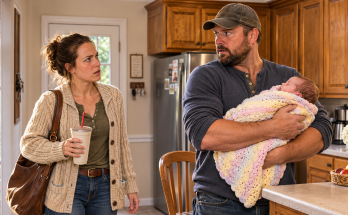
The mortgage broker’s voice filled my foyer, calm and professional, while the people standing around me looked as though the floor had begun to disappear beneath their feet. “Mrs. Hale, the appraisal authorization submitted with your mortgage application identifies Connor Hale as having an ownership interest in the property on Willow Creek Drive. However, the county records show a different ownership history.
We need to understand that discrepancy before proceeding.” My daughter-in-law, Melinda, stood with the phone pressed against her palm. For twelve years, I’d watched her handle difficult conversations with the confidence of a woman who believed she could always talk her way out of trouble.
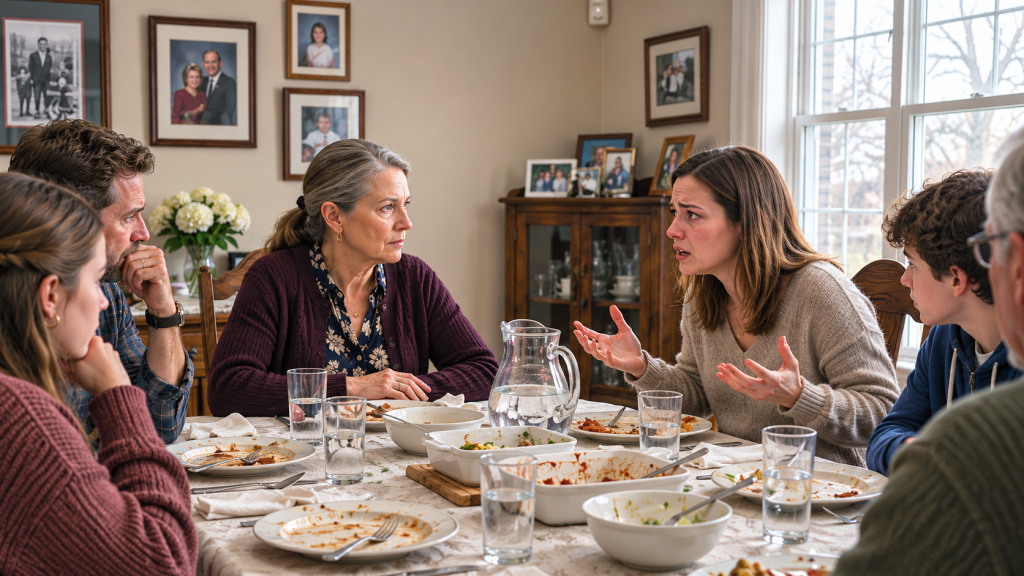
That confidence had vanished. Connor stared at her. “What appraisal authorization?” Melinda swallowed. “It’s just paperwork.” The voice on the phone continued. “Mrs. Hale, we’ll need the property owner’s actual authorization and documentation establishing any proposed collateral interest. Until then, the application will remain under review.” I held out my hand.
“May I speak with you?”
Melinda looked at me as though I’d asked her to jump from a moving car.
Then she handed me the phone.
“Hello,” I said. “My name is Evelyn Hale. I own the property you’re discussing, now through my trust. I have not authorized anyone to pledge it as collateral for Connor and Melinda’s mortgage.”
There was a brief silence.
“Thank you for clarifying that, Mrs. Hale. We will document your statement and explain the appropriate next steps. We may need to verify your identity and the relevant records through our formal process.”
“Of course.”
I took a breath.
“And I would appreciate copies of any documents bearing my name or purporting to contain my signature, through whatever procedure is appropriate.”
“Understood.”
When the call ended, I handed the phone back to Melinda.
Nobody spoke.
Then Connor asked, very quietly, “What did you send them?”
Melinda’s lips trembled.
“I thought we could work something out.”
“Melinda.”
His voice sounded different from anything I’d heard in years.
“What did you send them?”
She looked toward the children.
“Not here.”
I followed her gaze.
Jackson, fourteen, was standing beside his younger sister with his arms crossed protectively in front of her.
Lily’s eyes were filled with tears.
I suddenly felt ashamed of the adults in the room.
Not because I had told the truth.
Because we were allowing two children to stand in the middle of a financial argument they didn’t understand and couldn’t possibly resolve.
“Ruth,” I said, “would you take Jackson and Lily into the living room?”
My sister understood immediately.
“Come on, you two. Let’s find something sweet in the kitchen first.”
Jackson didn’t move.
“Grandma, are they taking your house?”
I walked toward him.
“No, sweetheart.”
“Then why is Mom crying?”
I looked at Melinda.
For the first time that evening, I saw fear beneath her anger.
Because the person she’d spent years treating as an inconvenience was standing in front of the one thing she could not argue away.
The truth.
“Your mom and dad have some important grown-up decisions to make,” I told Jackson. “And none of those decisions are your responsibility.”
He studied me.
“Promise?”
I placed my hand against his cheek.
“Promise.”
He nodded.
Then took Lily’s hand and followed Ruth down the hallway.
Only when they were gone did I turn back toward my son and his wife.
“Now,” I said, “we’re going to discuss those papers.”
Melinda sat at the dining table.
The same table where she had congratulated herself on finally buying a house.
The same table where she had thanked me for supposedly living under my own roof without paying anything.
Her glass of wine remained untouched.
Connor stood beside the window.
I could see his reflection in the dark glass.
He looked suddenly older than forty.
“Mom,” he said, “did you really transfer this house into a trust?”
“Yes.”
“Without telling me?”
I looked at him carefully.
“Connor, for twelve years, you and Melinda have made decisions about my home without telling me. The difference is that I had the legal authority to make mine.”
He flinched.
I regretted the sharpness of my voice, but not the substance.
I continued.
“Arthur helped me establish the trust because I wanted clear instructions about the property and my future. I also wanted to avoid confusion if I became ill.”
Melinda gave a bitter little laugh.
“Convenient timing.”
I turned toward her.
“Actually, the timing began six months ago, when I realized I was afraid to ask permission to rearrange my own kitchen.”
She looked down.
“For months, I have been reviewing my finances and deciding where I want to live. Your announcement tonight didn’t create those decisions. It simply made them impossible to postpone.”
Connor rubbed his forehead.
“And the land behind the house?”
“Sold.”
He stared at me.
“That was part of the garden.”
“It was the unused two-acre parcel beyond the old fence. The buyer has separate access, and the sale was completed with the necessary approvals.”
Melinda whispered, “My father wanted that property.”
“I know.”
“He’s been talking about it for years.”
“I know that too.”
She looked up sharply.
“Then why didn’t you offer it to him?”
I folded my hands.
“Because I wasn’t obligated to sell my land to your father.”
Connor finally pulled out a chair.
He sat heavily.
“Mom, I need to understand something. The payments I’ve made over the years—didn’t any of that give me a stake in the property?”
I looked at him.
It was the first reasonable question he’d asked all evening.
“Your father and I bought this house long before you married Melinda. I took out a loan to help cover debts when you lost your job. You signed a note acknowledging what you owed.”
He nodded slowly.
“I remember.”
“You later contributed money toward household expenses and some repairs. Those contributions mattered. But they didn’t automatically make you an owner.”
He looked toward the floor.
“I honestly thought we’d worked out some arrangement.”
“We worked out a place for your family to live while you recovered financially. I never agreed to transfer the house.”
He was silent.
Then he whispered, “I guess I stopped remembering the difference.”
My heart hurt.
There was my son.
The boy Thomas and I had taught to ride a bicycle on the driveway.
The young man who had once called me every Sunday from college.
The father of two beautiful children.
I could still see him inside the weary man sitting across from me.
But loving him wasn’t going to make his assumptions true.
I turned toward Melinda.
“Now, I want to know what you submitted to the mortgage company.”
She wiped her face.
“It’s complicated.”
“Then begin with the first document.”
She looked at Connor.
He didn’t rescue her.
Finally, she whispered, “I sent them a copy of an old property valuation.”
“That wouldn’t establish ownership,” I said.
“I know.”
She swallowed.
“And an authorization letter.”
The room went still.
“What authorization letter?”
She looked down.
“The one saying you had agreed to let us use equity from this house.”
My chest tightened.
“Melinda, I never agreed to that.”
“I thought you would.”
“You didn’t ask.”
Her eyes filled.
“I was going to.”
I studied her.
“And whose signature was on the letter?”
For a long moment, she didn’t speak.
Then she whispered:
“Yours.”
Connor stood so quickly his chair struck the wall.
“Melinda!”
She began crying.
“I didn’t think they’d actually use it without speaking to Evelyn!”
My son stared at her.
“You signed Mom’s name?”
“It wasn’t like that!”
“Then what was it like?”
She covered her face.
“I copied it from an old birthday card.”
I felt my stomach drop.
A birthday card.
One of the hundreds I’d written over twelve years.
A card I’d probably tucked money into.
A card I signed with love.
And she’d used that signature to make a lender believe I’d agreed to something I knew nothing about.
I sat very still.
I had expected Melinda to argue.
To insult me.
To say I was confused about property law.
But I hadn’t expected the casual way she treated my consent.
As though signing my name were simply another household convenience.
Like borrowing a casserole dish.
Or moving my favorite chair.
Connor turned toward me.
“Mom, I didn’t know.”
I looked at him.
“Did you know she was telling the lender you had equity here?”
He hesitated.
“Yes.”
My throat tightened.
“Did you correct her?”
He looked down.
“No.”
I nodded slowly.
There it was again.
Not a forged signature from my son.
But silence when honesty was needed.
“Melinda,” I said, “you need to provide the original document to the lender and tell them you submitted it without authorization.”
She began sobbing.
“They’ll deny our mortgage.”
“That may happen.”
“We could lose our deposit.”
“That’s something you and your attorney will need to address.”
She stared at me.
“You want to ruin us.”
I shook my head.
“No. I want my name removed from a financial obligation I never accepted.”
Connor lowered himself back into the chair.
He looked stunned.
For years, he’d allowed Melinda to answer difficult questions for both of them.
Now he was discovering what happened when avoiding conflict became a way of participating in dishonesty.
I rose from the table.
“Arthur will be involved in any further communications about my property. I won’t sign anything tonight, and neither of you should attempt to change or remove records.”
Melinda’s face hardened.
“You’re treating us like criminals.”
I looked at her.
“I’m treating an unauthorized signature as a serious matter.”
She lowered her eyes.
I continued.
“You need your own legal advice. You also need to be truthful with the lender.”
Then I looked toward Connor.
“And tomorrow, I want you to call me without Melinda speaking for you. We need to discuss practical arrangements for the children and your move.”
He nodded.
“Okay, Mom.”
I paused.
“One more thing.”
They both looked up.
“Never again discuss moving me into assisted living as though my future belongs to you.”
Neither answered.
I turned and walked out of the room.
Ruth was waiting in the hallway.
The children were upstairs looking at old photographs.
She took one look at me and opened her arms.
I hadn’t realized how much I needed that.
I leaned against my sister and began crying.
Not because I regretted what I’d done.
Because protecting yourself can hurt terribly when the people you’re protecting yourself from are the people you love most.
Ruth held me for a long time.
Then whispered, “Thomas would be proud of you.”
I shook my head.
“I don’t feel very brave.”
She smiled sadly.
“Bravery isn’t feeling good about the hard thing, Evelyn.”
I looked at her.
“It’s doing the hard thing without turning cruel.”
That night, after everyone left, I sat alone in Thomas’s old study.
Or rather, what remained of it.
Melinda had turned the room into a playroom years earlier.
There were baskets of toys beneath the windows.
Bright cushions on the sofa.
A shelf filled with children’s books.
All perfectly lovely things.
But Thomas’s desk was gone.
His maps had been taken down.
The little brass lamp he’d kept beside his chair had disappeared into a storage closet.
For years, I’d told myself I didn’t mind.
After all, Jackson and Lily deserved space to play.
But I remembered the day Melinda announced the change.
She hadn’t asked.
She’d simply told me that an old man’s study was a waste of a perfectly good room.
I sat in the little armchair by the window.
Then whispered into the quiet:
“Thomas, I think I’ve finally made a mess of things.”
The room remained still.
And then I remembered something my husband used to say whenever a repair around the house became complicated.
“Evie, sometimes you’ve got to pull the bad boards up before you can fix the floor.”
I smiled through tears.
Perhaps that was what I was doing.
Not destroying my family.
Removing the damaged pieces that nobody wanted to acknowledge.
The next morning, Arthur Vance arrived at nine.
He was seventy-one, with silver hair, narrow reading glasses, and an old-fashioned leather briefcase.
He had been our family attorney for more than twenty years.
Thomas trusted him.
So did I.
Arthur sat across from me at the kitchen table and listened as I explained the mortgage broker’s call.
When I reached the part about Melinda copying my signature, his expression changed.
“Did she admit that in writing?”
“No. She said it at dinner.”
“Who heard her?”
“Connor. Ruth. Me.”
He nodded.
“We’ll record your recollections while they’re fresh. We should also contact the lender through the proper channels, preserve any relevant documentation, and review whether a report to the appropriate authorities is warranted.”
I swallowed.
“Arthur, I don’t want my grandchildren’s mother taken away in handcuffs.”
He looked at me kindly.
“Evelyn, we aren’t going to speculate about outcomes. Our immediate job is to establish what was submitted and prevent anyone from acting on documents you didn’t authorize.”
I nodded.
He continued.
“You’re allowed to protect yourself without deciding every consequence in advance.”
Then Arthur reviewed the trust documents.
He explained again that the transfer didn’t magically extinguish anyone else’s rights or erase valid financial claims.
The trust governed my ownership and estate planning, but questions about the old promissory note, household contributions, and occupancy still had to be handled according to the law.
As for Connor and Melinda leaving the property, Arthur would provide the proper notice and follow the required procedures, rather than assuming the words “thirty days” alone guaranteed a particular outcome.
I appreciated that.
I didn’t want shortcuts.
I wanted something that could withstand scrutiny.
“Are you still comfortable moving into the cottage?” Arthur asked.
I looked toward the garden.
“More than ever.”
He smiled.
“Then let’s make sure the transition is orderly.”
Before leaving, Arthur opened a separate folder.
“There is one other thing we need to discuss.”
My stomach tightened.
“What?”
“The loan you took out twelve years ago to help Connor.”
I nodded.
“What about it?”
“Connor acknowledged the debt, but we need to reconcile the payments and determine what, if anything, remains enforceable.”
I sighed.
“I don’t want to take my son to court for every dollar.”
“I understand.”
Arthur leaned forward.
“But that doesn’t mean the history should be rewritten.”
I looked at him.
He continued.
“Sometimes the purpose of an accounting is not to collect money. Sometimes it’s to establish the truth.”
I thought about Melinda thanking me for supposedly living in my own house without paying anything.
Twelve years of generosity had been turned into a story about my dependence.
Perhaps Arthur was right.
The truth needed its own records.
At noon, Connor called.
His voice sounded tired.
“Mom?”
“Hello, sweetheart.”
He hesitated.
“Can I come over?”
I glanced toward the boxes stacked beside the dining room.
“Yes.”
“Alone.”
I felt my heart tighten.
“All right.”
He arrived twenty minutes later.
No Melinda.
No children.
No polished explanation about how everyone had misunderstood the situation.
Just my son standing on the porch with red eyes and a folded piece of paper in his hand.
“Come in,” I said.
He stepped into the hallway.
For a moment, neither of us spoke.
Then he looked at me.
“Mom, I owe you an apology.”
I swallowed.
“For what?”
He closed his eyes.
“For letting Melinda talk to you like you didn’t belong in your own house.”
My eyes filled.
He continued.
“For pretending I didn’t hear her.”
His voice broke.
“And for acting like being a good husband meant being a silent son.”
I sat down slowly.
Connor remained standing.
“After Dad died, you let us move in. You paid off debts I was too ashamed to admit we’d accumulated. You helped raise Jackson and Lily.”
He wiped his face.
“And somewhere along the way, I started treating all that help like it was normal.”
I nodded.
“That can happen.”
He shook his head.
“No, Mom. It happened because I let it.”
For the first time in years, he wasn’t blaming stress, circumstances, or his wife.
He was speaking about his own choices.
He placed the folded paper on the table.
“I wrote down everything I can remember about the mortgage application.”
I opened it.
There were dates.
Meetings.
Messages from the broker.
And notes about when Melinda first suggested using my property to strengthen their application.
My eyes stopped on one sentence.
I knew Mom had never promised us the house, but I kept hoping she would agree if we got close enough to closing.
I looked up.
“Connor.”
His eyes filled.
“I know.”
I swallowed.
“You were counting on putting me in a position where saying no would hurt your family.”
He looked down.
“Yes.”
I sat quietly.
That admission hurt almost as much as Melinda’s signature.
Because it told me my son had not simply misunderstood.
He’d known there was a difference between asking for help and arranging circumstances so refusal would feel impossible.
He began crying.
“I’m sorry, Mom.”
I looked at him.
“Do you understand why I need to move?”
He nodded.
“Yes.”
“Do you understand why I can’t continue being your financial safety net?”
He swallowed.
“Yes.”
I took a breath.
“Then we can begin figuring out what a healthier relationship looks like.”
He looked up.
“Does that mean you still want us in your life?”
My heart broke at the question.
“Oh, Connor.”
I stood and took his hand.
“You’re my son. I love you.”
His eyes filled.
“But I don’t want a relationship where love means I must surrender my decisions.”
He nodded.
“I understand.”
I hoped he did.
For the first time, I believed he might.
The next surprise came three days later.
I was packing Thomas’s books when Melinda’s father, Richard Bell, appeared at my front door.
Richard was a retired property developer who had spent much of his life buying houses, renovating them, and selling them at a profit.
He was the kind of man who looked at a beautiful old tree and wondered how many parking spaces could fit beneath it.
He stood on my porch wearing a camel-colored coat and an expression that suggested he’d come to resolve a minor administrative inconvenience.
“Evelyn.”
“Richard.”
He gave me a tight smile.
“I understand there’s been some unpleasantness.”
I looked at him.
“That’s one way of describing it.”
He glanced toward the boxes behind me.
“May I come in?”
I considered refusing.
Then stepped aside.
But I left the front door open.
Richard entered the sitting room.
He looked around with the interested expression of a man inspecting a property.
“You’re really moving.”
“Yes.”
“Melinda said you’d purchased a cottage.”
“I have.”
He nodded.
“Well, good for you.”
Then he sat down.
“Evelyn, I’m here because the situation with Connor and Melinda’s purchase has become unnecessarily complicated.”
I remained standing.
“Richard, if you’re here about their mortgage application, their attorney should speak with the lender.”
He waved a hand.
“Let’s not get lawyers involved in every family discussion.”
I almost smiled.
“That seems a strange suggestion considering what’s happened.”
His expression tightened.
He leaned forward.
“I offered to purchase your rear parcel several years ago.”
“I remember.”
“You declined.”
“I did.”
“And now I understand you’ve sold it to someone else.”
“Yes.”
He sighed.
“I would have paid a fair price.”
“I received a fair price.”
“Perhaps. But keeping things within the family might have been wiser.”
I stared at him.
“Richard, you never became a member of my family simply because our children married.”
His mouth tightened.
Then he said:
“Melinda believed you intended to transfer the property to Connor eventually.”
I shook my head.
“I never told her that.”
Richard hesitated.
“Well, she certainly believed it.”
I looked at him.
“Believing you own something doesn’t make it yours.”
For a moment, his polished expression slipped.
Then he surprised me.
“Evelyn, I was the one who suggested they look into using a family property as collateral.”
I stared.
“What?”
He lifted his hands.
“Not without the owner’s permission, obviously.”
I said nothing.
He continued.
“Connor and Melinda were struggling to qualify. I told them that if you were willing to assist, a lender might consider some additional security.”
My stomach tightened.
“Did you know they hadn’t asked me?”
He looked away.
“Melinda said it was arranged.”
I studied him.
“Did you see the authorization?”
“Only a copy.”
“And did you question it?”
He swallowed.
“I assumed she had spoken with you.”
I took a slow breath.
“Richard, you have decades of experience in property transactions.”
He nodded.
“Then you know that assuming an owner consented is not the same as verifying it.”
He lowered his eyes.
For the first time since I’d known him, he had nothing confident to say.
Then he whispered:
“I didn’t know she copied your signature.”
I looked at him.
“I hope that’s true.”
His head lifted.
“Evelyn—”
“I’m not accusing you of anything. I’m telling you that these matters will be reviewed through the proper channels.”
He sighed.
“I suppose they will.”
Then, after a long silence, he said:
“Melinda’s terrified.”
I nodded.
“I imagine she is.”
“She’s afraid Connor will leave her.”
My heart tightened.
That was something I hadn’t expected.
“Richard, their marriage is theirs to work through.”
He nodded reluctantly.
I continued.
“And their children need both parents to act responsibly now, regardless of what happens between them.”
He rose.
At the doorway, he turned toward me.
“I always thought you were too generous with them.”
I stared.
Then he added:
“I didn’t realize you knew it too.”
And with that, he left.
I stood in the hallway for several minutes after his car disappeared.
I had spent years believing Richard encouraged Melinda’s entitlement.
Perhaps he had.
But now I was beginning to see how many people had allowed assumptions to replace honest conversations.
Richard assumed Melinda had spoken to me.
Connor assumed I’d eventually give in.
Melinda assumed that because I’d helped before, I’d always help again.
And I had assumed that kindness would eventually teach them gratitude.
We’d built an entire family arrangement on assumptions.
Now it was collapsing beneath the weight of them.
The mortgage lender completed its initial review over the following weeks.
Connor and Melinda’s application could not proceed on the terms they’d proposed.
The lender requested explanations concerning the authorization letter and referred the matter for further examination.
Their hoped-for house purchase fell apart.
The seller was unwilling to wait indefinitely, and the financing contingency became the subject of difficult conversations about what portion of their deposit, if any, could be recovered under the contract.
Melinda blamed me at first.
She sent a long message accusing me of destroying her children’s future.
I read it carefully.
Then waited until the next morning before replying.
I did not agree to secure your mortgage with my property. I hope you and Connor find a home you can afford, but I will not accept responsibility for a document signed without my permission.
She didn’t answer.
Three days later, she sent another message.
I don’t know how to fix this.
For the first time, I believed her.
Meanwhile, I moved into my cottage.
The morning the movers arrived, I woke before dawn.
I walked slowly through the old house.
The kitchen where Thomas used to make pancakes.
The staircase where Connor once slid down the banister and frightened me half to death.
The dining room where Jackson celebrated his first birthday.
The little sunroom where Lily learned to read.
Every room held a thousand moments.
Some beautiful.
Some painful.
Some so ordinary I’d forgotten them until I saw the empty spaces where furniture used to stand.
I stopped in Thomas’s study.
His desk had been returned from storage.
I ran my hand across its polished surface.
There was a little scratch near the corner where he’d dropped a screwdriver while repairing a drawer.
I remembered scolding him.
He’d laughed and said, “Well, Evie, now it has character.”
I began crying.
For years, I’d been afraid to move because I thought leaving the house meant leaving Thomas.
But standing there, I finally understood that love doesn’t remain trapped inside walls.
It travels with the people who remember it.
Ruth arrived just as the movers finished wrapping the dining table.
She found me sitting on the stairs.
“Having second thoughts?”
I smiled through tears.
“About the house? No.”
She sat beside me.
“Then what?”
I looked toward the hallway.
“About how long I waited.”
Ruth took my hand.
“Evie, you spent twelve years loving your family in the way you thought was best.”
I nodded.
“And now you’re learning another way.”
I smiled sadly.
“At my age.”
She laughed.
“Especially at your age. You’re not finished growing simply because your hair has turned gray.”
I leaned against her.
For a moment, we sat together like two girls again, whispering on the stairs of our childhood home.
My new cottage stood beside the community botanical garden.
It was smaller than the old house, but every room had sunlight.
There were apple trees along the back fence, a screened porch, and a bright kitchen with pale green cabinets.
I placed Thomas’s reading chair near the window.
Hung our wedding photograph in the hallway.
And set his old brass lamp beside my bed.
The first evening, I made myself a bowl of soup.
I ate at a little round table overlooking the garden.
Nobody criticized the menu.
Nobody moved my belongings.
Nobody told me the curtains needed replacing.
After dinner, I carried my tea onto the porch.
The air smelled of leaves and fresh earth.
A robin settled on the fence.
For a while, I simply sat there listening to the quiet.
Then I realized something strange.
I wasn’t lonely.
I was alone.
And there was a difference.
The children came to visit the following Saturday.
Jackson and Lily arrived carrying overnight bags.
Ruth had helped me prepare the guest bedrooms.
Jackson immediately claimed the room facing the apple trees.
Lily chose the one with the little white bookshelf.
“Grandma,” she whispered, “can I leave some books here?”
My throat tightened.
“Of course, sweetheart.”
She smiled.
“Then it can be my second home.”
I hugged her.
“That sounds wonderful.”
That evening, we baked chocolate chip cookies.
Jackson measured the flour.
Lily insisted on adding extra chocolate.
I pretended not to notice when they ate half the dough before it reached the oven.
Later, we sat on the porch wrapped in blankets.
The children watched fireflies drift over the garden.
Then Jackson asked:
“Grandma, are you mad at Mom?”
I took a slow breath.
“Your mother and I have had some serious disagreements.”
He looked down.
“She cries a lot now.”
My heart tightened.
“I’m sorry she’s hurting.”
He studied me.
“Do you hate her?”
I shook my head.
“No.”
“Then why can’t everybody just go back to how things were?”
I looked toward the apple trees.
Because how things were had been hurting me.
Because returning to the old arrangement would have meant pretending the truth didn’t matter.
Because sometimes children can see the happiness in a home without understanding what one adult has sacrificed to preserve it.
I chose my words carefully.
“Jackson, sometimes people need to make changes so they can treat each other better.”
He frowned.
“Even if the changes are sad?”
“Especially then.”
Lily leaned against me.
“Mom says you’re making them move.”
I stroked her hair.
“Your parents need a place of their own. They wanted that too, remember?”
She nodded.
“But their house didn’t work out.”
“I know.”
Her voice trembled.
“Will we be homeless?”
My heart broke.
I turned toward her.
“Your parents are working on a new plan. There are also adults who can help them find housing. You won’t be responsible for any of that.”
Jackson looked at me.
“Could we stay here if something happened?”
I took his hand.
“Your grandfather and I built this family to look after one another. If you need help, we’ll work out what’s safe and appropriate.”
He nodded.
Then whispered:
“Okay.”
I wished I could promise the world would never hurt them.
But I had learned that promises should be things a person could actually keep.
So I promised what I could.
Love.
Honesty.
And a door they would always be welcome to knock on.
The following Monday, Connor came to see me.
He brought a small box.
Inside were Thomas’s old woodworking tools.
“I found these in the garage,” he said.
I smiled.
“I wondered where they’d gone.”
He placed the box on the porch table.
Then looked around.
“This is a nice place, Mom.”
“Thank you.”
He nodded toward the garden.
“Dad would have loved that.”
My eyes filled.
“He would.”
For a while, we sat quietly.
Then Connor took a breath.
“Melinda and I found an apartment.”
I looked up.
“Where?”
“Near the kids’ school.”
“That’s good.”
He nodded.
“It’s smaller than the house we wanted.”
I smiled.
“Most first homes are.”
He gave a tired laugh.
“We’re renting. We won’t be buying for a while.”
I studied him.
“And can you afford it?”
He nodded.
“Yes. Barely, but yes.”
For the first time in twelve years, my son was describing a living arrangement based on what he and his wife could actually pay for.
It should have been a small thing.
To me, it felt enormous.
He looked toward his hands.
“We’ve been meeting with a financial counselor.”
I nodded.
“Good.”
“And a marriage counselor.”
I looked up.
He swallowed.
“Things have been difficult.”
I waited.
“Melinda’s afraid I’ll never forgive her for the letter.”
My throat tightened.
“Will you?”
He considered.
“I don’t know yet.”
I nodded.
“That’s an honest answer.”
Connor rubbed his forehead.
“She says she never thought about it as fraud. She thought if the house helped us qualify, we’d explain everything to you afterward.”
I stared at him.
“Connor, your wife used my name to obtain something I hadn’t agreed to provide.”
He lowered his eyes.
“I know.”
I continued gently.
“I hope she can accept responsibility without making excuses. But deciding what that means for your marriage is your work, not mine.”
He nodded.
“I understand.”
Then he asked:
“Mom, do you think Dad would be disappointed in me?”
I looked toward Thomas’s old toolbox.
For a moment, I could almost see him standing in the garage, teaching Connor how to hold a hammer.
I took a slow breath.
“Your father believed that a person’s character wasn’t measured by whether they made mistakes.”
Connor looked up.
“He believed it was measured by what they did after making them.”
His eyes filled.
I continued.
“He would want you to take responsibility, tell the truth, and protect your children from the consequences as much as you reasonably can.”
Connor covered his face.
“I wish he were here.”
I reached for his hand.
“So do I, sweetheart.”
Three months later, Connor and Melinda moved out of my old house.
The transition wasn’t effortless.
They had belongings accumulated over twelve years.
Furniture.
Children’s toys.
Boxes of photographs.
Holiday decorations.
And far more kitchen equipment than anyone could reasonably need.
There were disagreements about what belonged to whom.
Arthur helped resolve the practical questions.
Some items were clearly mine.
Some were theirs.
Others had been purchased together over the years.
We made lists, checked receipts where needed, and divided things sensibly.
Nobody was locked out.
Nobody’s possessions were thrown onto a lawn.
The occupancy was brought to an end through written agreements and the proper legal process.
I didn’t want to frighten my grandchildren or make the separation more painful than it already was.
I simply wanted the old arrangement to end.
On moving day, I went to the house one final time before the leasing agency took over.
The rooms looked enormous without furniture.
Sunlight filled the empty dining room.
I stood beside the window where Thomas used to watch the neighborhood children ride bicycles.
Then I heard footsteps.
Melinda appeared in the doorway.
She looked different.
Her hair was tied back.
She wore jeans and an old sweatshirt.
There was no wine glass.
No sharp smile.
No audience waiting to applaud her.
“Evelyn.”
“Melinda.”
For a moment, neither of us spoke.
Then she whispered:
“Can I say something?”
I nodded.
She walked toward the empty dining table’s former place.
“I used to think you were lucky to have us here.”
I studied her.
She swallowed.
“I thought we were doing you a favor by keeping you company.”
I looked toward the window.
“Sometimes you were.”
Her eyes filled.
“But I never considered what it cost you.”
I waited.
She continued.
“You gave us a home when we had nowhere to go. You helped with the children. You paid bills when we couldn’t.”
A tear slipped down her cheek.
“And I turned all that into a story where we were the generous ones.”
I felt my throat tighten.
“Yes, Melinda. You did.”
She covered her face.
“I’m sorry.”
I didn’t rush to comfort her.
I’d spent years making other people’s apologies easier by insisting everything was fine.
Everything wasn’t fine.
And she needed to sit with that truth.
After a moment, she lowered her hands.
“The mortgage letter was wrong.”
I nodded.
“It was.”
“I knew you hadn’t signed it.”
I looked at her.
She swallowed.
“I kept telling myself you’d eventually agree. I wanted that house so badly, Evelyn. I wanted to walk into something of my own and prove we’d finally made it.”
Her voice broke.
“But I tried to get there by using something that wasn’t mine.”
I sat on the windowsill.
“Melinda, I was happy when you announced you’d bought a house.”
She looked up.
“I know.”
“No. I don’t think you do.”
My eyes filled.
“I’ve wanted Connor and the children to have their own place for years. Somewhere you could decorate however you liked. Somewhere you could build your own traditions.”
She began crying.
“I know.”
“But instead of sharing that joy with me, you used it as an opportunity to humiliate me.”
Her shoulders shook.
“I was cruel.”
I nodded.
“Yes.”
For a long time, the only sound was the wind moving through the trees outside.
Then Melinda whispered:
“I don’t know if you’ll ever forgive me.”
I thought carefully.
Forgiveness wasn’t something I wanted to use as a reward for a tearful apology.
Neither was it a command I could give myself.
“Melinda, I hope we can build a respectful relationship someday.”
She looked up.
“But trust takes time.”
She nodded.
“And you’ll need to show, through your choices, that you understand other people’s boundaries.”
Her eyes filled.
“I want to try.”
I took a breath.
“Then begin by being honest with your children, in a way that’s appropriate for their age. They need to know that Grandma didn’t abandon them or take away their home.”
She nodded.
“I will.”
As she turned to leave, she stopped.
“Evelyn?”
“Yes?”
“Thomas’s old lamp is in the box by the stairs. I found it in storage.”
My throat tightened.
“Thank you.”
She hesitated.
Then added:
“And I put his study photographs with it. I should never have taken them down without asking you.”
I looked at her.
For a moment, I saw not the woman who’d tried to push me out of my own home, but another person beginning to understand the harm she’d done.
“Thank you, Melinda.”
She nodded.
Then walked away.
The months passed.
My old house was prepared for new tenants.
Arthur and the leasing agency handled the arrangements, and a quiet family eventually moved in.
They had two young children and a golden retriever.
When I met them, the mother told me she loved the big dining room.
“It feels like a house where people have shared a lot of happy meals.”
I smiled.
“Yes,” I said. “It has.”
I didn’t tell her about the arguments.
The humiliations.
The painful evening when my daughter-in-law tried to order me out of my own home.
I told her about Thomas instead.
About the Christmas dinners.
The birthday cakes.
The summer evenings when Connor and his friends raced bicycles along the driveway.
Because those memories were real too.
The unhappy ending of one chapter didn’t erase everything beautiful that came before it.
The questions surrounding the mortgage application took longer to resolve.
The lender reviewed the disputed documents, and Arthur advised me through the formal process.
The unauthorized letter was documented.
My actual ownership and lack of consent were established.
Melinda, with her own attorney’s advice, acknowledged submitting the letter without my authorization and cooperated with the review.
There were consequences for her decision, including the failed financing and the scrutiny that followed.
Any separate legal questions were left to the appropriate people to assess.
I didn’t demand a public spectacle.
I didn’t want revenge.
I wanted the record corrected and my future protected.
That was enough for me to continue building my life.
One afternoon, almost a year after the dinner announcement, I was tending roses in my little cottage garden when Jackson arrived on his bicycle.
He was fifteen now, taller than his father had been at that age.
He leaned his bike against the fence.
“Grandma?”
I looked up.
“Hello, sweetheart.”
He smiled.
“Can I help?”
I handed him a pair of gardening gloves.
“Absolutely.”
We worked quietly for a while.
Then he asked:
“Grandma, do you think people can really change?”
I paused.
“What makes you ask?”
He looked toward the flowers.
“Mom’s different now.”
I nodded.
“How?”
He considered.
“She says thank you more.”
I smiled.
“That’s a good start.”
“And she listens when Lily says she doesn’t want to do something.”
I looked at him.
“That’s important.”
He continued.
“She and Dad still argue sometimes. But they don’t pretend everything’s fine anymore.”
I thought about those words.
For years, I’d believed a peaceful family was one where nobody argued.
Now I understood that sometimes a family became healthier when people finally stopped hiding what hurt.
Jackson knelt beside a rosebush.
Then said quietly:
“I was scared when everybody was fighting.”
My heart tightened.
“I know.”
“I thought we’d never have Christmas together again.”
I set down my gardening shears.
“Come here.”
He stood, and I hugged him.
“Jackson, adults sometimes make mistakes that change where families live or how they spend time together.”
He nodded.
“But those changes don’t mean the love has to disappear.”
He leaned against me.
“I know.”
We stood together for a moment.
Then he whispered:
“I’m glad you didn’t move far away.”
I smiled.
“Me too, sweetheart.”
That Christmas, I decided to host a small gathering at the cottage.
Not because anyone demanded it.
Not because I felt obligated.
Because I wanted to.
I invited Ruth, Connor, Melinda, Jackson, and Lily.
Everyone understood the plan beforehand.
The meal would be simple.
Connor would bring the main dish.
Melinda would prepare the vegetables.
Ruth would bring dessert.
And the children would help set the table.
I would make Thomas’s favorite cranberry sauce.
Nothing more.
On Christmas morning, I woke to sunlight streaming across my bedroom.
Outside, frost covered the apple trees.
I made myself coffee and sat beside the window.
Thomas’s photograph rested on the dresser.
He was smiling in the old picture, wearing the brown sweater I used to tease him about.
I picked it up.
“Well, Thomas,” I whispered, “we’re having Christmas dinner.”
I smiled.
“But I’m not cooking for three days this time.”
I could almost hear his laugh.
“About time, Evie.”
At noon, Connor arrived carrying a large roasting pan.
Melinda followed with covered dishes.
Jackson held a bag of rolls.
Lily carried a small bouquet of flowers.
“Grandma!”
She hurried into my arms.
I kissed her cheek.
“Hello, darling.”
Then Connor stepped toward me.
“Merry Christmas, Mom.”
He hugged me.
Not the distracted embrace he’d given me for years.
A real hug.
The kind where somebody stops thinking about what they need next.
My eyes filled.
“Merry Christmas, sweetheart.”
Melinda stood near the doorway.
For a moment, she looked uncertain.
Then she held out the vegetables.
“I made your recipe.”
I smiled.
“Did you?”
She nodded.
“The one with the rosemary.”
I looked toward Thomas’s photograph.
He had loved that recipe.
“Thank you.”
She took a breath.
“And Evelyn?”
“Yes?”
“Thank you for inviting us.”
Such ordinary words.
Yet I couldn’t remember the last time she’d thanked me for something without adding a complaint.
I nodded.
“You’re welcome.”
Dinner wasn’t perfect.
The rolls were slightly burned.
Connor forgot the serving spoon.
Jackson spilled cranberry sauce on the tablecloth.
And Lily complained that someone had taken the last crispy potato.
We laughed.
We cleaned up together.
We told stories about Thomas.
Connor remembered the time his father accidentally painted the garage door shut.
Ruth nearly choked laughing.
Even Melinda smiled.
And when the dishes were finished, nobody left me standing alone in the kitchen.
Later that evening, Connor found me on the porch.
The sky was turning violet.
Lights glowed softly among the apple trees.
He stood beside me for a while.
Then said:
“Mom, I’ve been thinking about something.”
I smiled.
“That’s usually how trouble starts.”
He laughed.
Then grew serious.
“I used to think being a good son meant making sure you never needed anything.”
I looked at him.
He continued.
“So when Melinda said we were taking care of you, part of me wanted to believe it. It made me feel successful.”
My throat tightened.
He swallowed.
“But I wasn’t really listening to what you needed.”
I nodded.
“That’s true.”
He looked toward the garden.
“And when you finally told us, I acted like you’d betrayed us.”
I waited.
Then he whispered:
“I’m sorry.”
I took his hand.
“Connor, I don’t need you to build your life around me.”
His eyes filled.
“I know.”
“I want you to have a happy marriage, raise your children, and make a home of your own.”
He nodded.
“But I also want you to remember that I am still a person with dreams.”
His expression softened.
“I think I’m finally learning that.”
He reached into his coat pocket.
“I brought you something.”
It was a small wooden box.
I opened it.
Inside was a brass nameplate.
The engraving read:
EVELYN & THOMAS HALE
HOME IS WHERE LOVE IS HONORED
My eyes filled.
Connor smiled nervously.
“I found the old brass from Dad’s workshop. Had it cleaned and engraved.”
I ran my finger across the letters.
For a moment, I couldn’t speak.
Then I whispered:
“Your father would have loved this.”
Connor wiped his eyes.
“I hoped so.”
We mounted the little plaque beside my cottage’s front door the following week.
Not because I wanted to pretend Thomas was still alive.
But because the life we’d built together deserved to be remembered with love.
And because I wanted everyone who crossed that threshold to understand something important.
A home is not a prize won by the loudest person.
It is not an entitlement created by staying long enough.
And it is not a place where one person must become smaller so everybody else can feel important.
A home should be somewhere everyone is treated with dignity.
Including the person who opened the door in the first place.
Today, I spend my mornings tending the garden.
I volunteer twice a week at the community botanical garden.
I have friends who stop by for coffee.
A sister who calls even when nothing is wrong.
Grandchildren who know my door is open.
And a son who is slowly learning how to love me without expecting me to solve every problem.
My relationship with Melinda is still a work in progress.
There are moments when old habits return.
Occasions when she speaks too sharply or assumes something without asking.
But now I speak up.
And more often than not, she listens.
That’s progress.
Not perfection.
But progress.
Sometimes people ask whether I regret transferring the house into a trust, buying the cottage, or insisting that Connor and Melinda move out.
I regret the pain.
I regret the years we wasted pretending our arrangement was working.
And I regret how long it took me to understand that silence was not the same as peace.
But I don’t regret protecting my independence.
I don’t regret expecting honesty.
And I don’t regret finally learning that generosity should never require a person to surrender their dignity.
My name is Evelyn Hale.
I’m a widow.
A mother.
A grandmother.
And a woman who spent twelve years believing that keeping everyone happy was the same as keeping her family together.
I was wrong.
Real love doesn’t demand that one person disappear to make room for everyone else.
Real love leaves space for boundaries.
For honest conversations.
For mistakes to be acknowledged.
And for people to grow.
That night at the dining table, Melinda believed she’d finally gained enough authority to tell me where I belonged.
She expected me to panic.
To cry.
To beg for permission to remain in the house Thomas and I had bought together.
Instead, I stood up.
Not because I’d stopped loving my family.
But because I finally understood that loving them didn’t mean abandoning myself.
And now, when I sit beneath the apple trees with my evening tea, I no longer wonder whether I’m welcome in my own home.
I know I am.
Because this life is mine to live.
My memories are mine to cherish.
And my future is mine to decide.
Sometimes the strongest thing a mother can do for her family is stop carrying responsibilities that were never meant to be hers forever.
And sometimes, the greatest gift she can give herself is the courage to begin again.
THE END STORIES! THANK YOU FOR READING GOOD LUCK !❤️
Related Posts