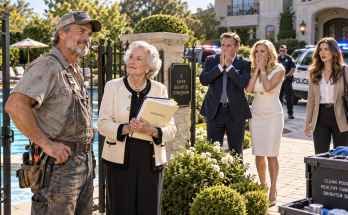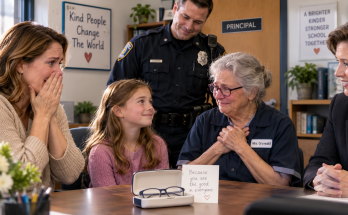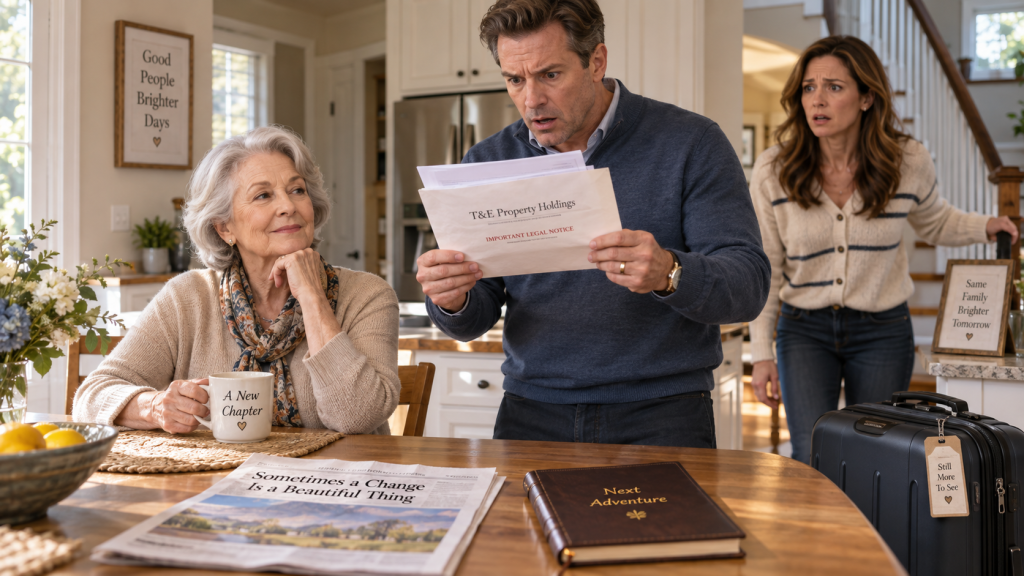
For my 73rd birthday, my daughter-in-law handed me a $2 scratch-off ticket and laughed as I uncovered the numbers. I smiled, thanked her, and kept silent about what appeared beneath the silver layer. 10 months later, my son showed me a brochure for the senior residence he and his wife had already selected for me. I calmly replied, “That seems fine.” The following morning, a letter was delivered to their home. When my son finished reading it, he looked at me as though he had never truly known his own mother.

That scratch ticket was the only present they gave me for my birthday that year. The price label was still attached to the card.
“Perhaps you’ll win enough money to buy a bus ticket, Evelyn,” my daughter-in-law, Paige, teased.
My son, Graham, joined in laughing.
My grandchildren laughed as well because they saw their parents doing it.
I used my thumbnail to scratch the ticket while Paige sliced the cake I had made for my own celebration.
Then the winning symbols appeared.
I examined them carefully.
Then I checked a second time.
My heart started racing.
No one paid attention.
Graham was filling the wineglasses. Paige was saying the icing tasted too sugary. The children were focused on their phones.
I folded the ticket in half and tucked it inside the pocket of my cardigan.
“Didn’t win anything?” Graham asked.
I gave him a smile.
“Not even enough for the bus.”
Paige laughed again.
I thanked her for the birthday card and started collecting the dirty dishes.
That evening showed me just how much a woman can conceal behind a peaceful expression.
I am Evelyn Mercer, and I am 73 years old.
I had been living with Graham and Paige for almost 4 years, ever since my husband, Thomas, di.
In the beginning, Graham had urged me to come and stay with them.
“You shouldn’t live by yourself, Mom.”
I honestly thought he wanted me in his home.
But little by little, I became more helpful than wanted.
I prepared meals because Paige often stayed late at work.
After cooking, I cleaned the kitchen as well.
I bought groceries, folded their clothes, cared for the children, and changed my schedule whenever someone asked me for help.
Nobody ever formally told me those duties belonged to me.
They simply became my responsibility over time.
Then, one night, as I carried clean towels past the kitchen, I heard Paige say:
“Your mother is starting to become a problem.”
Graham breathed out heavily.
“What do you expect me to do? She’s still my mother.”
His response wounded me more deeply than Paige’s comment.
I had devoted most of my life to taking care of him.
Now, showing concern for me seemed like an unwanted duty.
That was why I said nothing when I learned that the silly ticket hidden in my cardigan was worth several million dollars.
The next Monday, after everyone had left the house, I hired a taxi and traveled downtown.
A lawyer who specialized in estates, Martin Hale, inspected the ticket.
“Have you told anyone about this?” he asked.
“No.”
“Then continue keeping it private until we make sure you’re protected.”
During the weeks that followed, Martin helped me collect the winnings with as much privacy as the law permitted, arrange the funds, revise my will, and establish several trusts.
Because of taxes and the payment conditions, the amount I actually collected was much smaller than the advertised $11 million prize.
Even so, it was far more money than I would ever need.
I created educational trusts for my grandchildren that neither Graham nor Paige would be able to access.
I also reserved enough money to secure my own future.
Afterward, Martin offered me one important suggestion.
“Don’t transform your entire life all at once.”
I followed his advice.
I returned to the house.
I prepared the evening meal.
I cut out discount coupons for Paige.
I folded the clean towels.
For several months, no one suspected a thing.
Quietly, however, I started building a future that was entirely my own.
In March, Martin learned that the older gentleman who owned Graham’s rented home was thinking about putting it on the market.
The man lived in Florida and had become weary of managing a rental property from another state.
I told Martin to investigate the possibility.
That was the only information Graham ever received.
Several weeks later, Graham announced during dinner that the house apparently had a new owner.
“Some business purchased it,” he explained.
“Is that so?” I replied.
“T&E Property Holdings. They’re probably some kind of investment group.”
The initials immediately reminded me of Thomas.
Years earlier, his small fishing company had operated under the name T&E Outdoor Supply.
Thomas and Evelyn.
Throughout Graham’s childhood, boxes marked with those initials had been stacked around him.
But he never recognized the connection.
Once the sale was completed, Graham simply started mailing his monthly rental payments to a new location.
From time to time, he complained about the company that had become his landlord.
I quietly handed him the bowl of potatoes.
In June, I made another purchase.
It was a small yellow cottage near Wilmington, only 15 minutes away from my sister, Ruth.
The home had 2 bedrooms, blooming rose bushes, a broad front porch, and a softly colored yellow kitchen.
The moment I entered it, I imagined spending my remaining years there without feeling as though I was slowly being erased.
Ruth and my lawyers were the only people who knew about it.
I decorated the cottage a little at a time.
A sofa upholstered in blue fabric.
A sturdy oak dining table.
A comfortable chair for reading beside the window.
I still had not chosen the exact day when I would move out of Graham’s home.
Then, 2 weeks ago, he made that choice for me.
We were having dinner when Graham placed his fork on the table.
“Mom, Paige and I have discussed something.”
Paige gave me a warm-looking smile.
“We discovered a place that we believe you’re going to enjoy.”
Graham passed a brochure across the table.
Pine Harbor Senior Living.
I studied the picture of a cheerful elderly couple printed on its front.
“You’ve been searching for retirement residences?”
“We visited this one,” Paige answered.
They had gone without me.
She tapped a picture of a compact studio apartment in the independent-living wing.
“They provide food, rides, and activities. You would be surrounded by people your age.”
I turned toward Graham.
“And you arranged all of this before speaking with me?”
“We thought you might become anxious,” he said.
Paige quickly continued, “We only placed a refundable deposit to reserve the room. You still need to attend the assessment and complete the paperwork.”
“Then the decision hasn’t been finalized?”
“Not officially.”
“When were you expecting me to leave?”
Graham paused before answering.
“January 1.”
We were only halfway through November.
“Why does it have to be January 1?”
For a moment, neither of them spoke.
Finally, Graham admitted that Owen wanted to take over the bedroom I occupied downstairs.
He was growing up.
He needed a larger room.
Apparently, they had been making these plans for several months.
Paige stretched her hand across the table.
“You’ll enjoy yourself more when you’re with others in your age group.”
I stared at my son.
“This really is the best choice, Mom.”
A deep stillness settled inside me.
Then I smiled at them.
“I think you’re right.”
Both of them looked surprised.
“You really agree?” Paige asked.
“Yes.”
The relief on their faces appeared instantly.
That reaction hurt even more than seeing the brochure.
They thought their difficulty had simply disappeared.
Later that evening, I telephoned Martin.
“I’m prepared.”
He understood exactly what I was saying.
Together, we went over every detail once more.
Graham and Paige rented the home on a month-to-month basis, and Martin verified that their agreement could lawfully be terminated after they received the proper notice.
The house would be placed on the market afterward.
I no longer wished to have my money connected to my son’s family.
The official notice was scheduled to reach them on December 1.
I also instructed Martin to place a letter written in my own hand inside the envelope.
Tonight is November 30.
My packed suitcase is waiting beside my bedroom entrance.
Tomorrow morning, a courier is scheduled to arrive at 8:30.
At 9:15, a taxi will come to take me to my new life.
The courier showed up at 8:27.
I was seated at the kitchen table, slowly drinking my coffee.
Graham went to open the front door.
About a minute later, he walked back in holding a thick envelope.
“T&E Property Holdings,” he said under his breath.
He tore it open.
His brow tightened as he read.
“What is this?”
Paige walked down the stairs.
PART 2 — THE HOUSE THEY THOUGHT WAS THEIRS
Paige came down the stairs tying the belt of her robe.
“What is it?”
Graham did not answer.
He read the first page again.
Then the second.
His mouth moved slightly, but no words came out.
I remained at the kitchen table with both hands around my coffee cup.
At seventy-three, I had learned that silence can do work people usually ruin by talking too soon.
Finally Paige snatched the papers from him.
Her eyes moved down the page.
Then stopped.
“What does this mean?”
Graham looked at me.
For the first time that morning, he seemed to remember I was sitting there.
“The lease is being terminated.”
Paige frowned.
“What?”
He pointed toward the notice.
“December thirty-first.”
The date was exactly what Martin had explained to me.
Their tenancy was month-to-month.
Proper written notice.
No lockouts.
No furniture on the curb.
No theatrical eviction before Christmas.
Just a lawful ending.
Which somehow frightened them more.
Paige read aloud.
“‘T&E Property Holdings hereby provides notice that the month-to-month tenancy for the residence located at—’”
She stopped.
“This has to be a mistake.”
“It isn’t.”
I said.
Both of them looked at me.
Graham’s expression changed first.
Not understanding.
Suspicion.
“What do you mean?”
I took another sip of coffee.
“The notice is valid.”
“How would you know?”
I looked at the envelope.
Then at my son.
Because sometimes the truth deserves a little room before it enters.
Finally I said:
“Read the letter.”
There was a smaller envelope inside the larger one.
Cream paper.
His name and Paige’s written in my handwriting.
Graham recognized it immediately.
“Mom?”
“Read it.”
He opened it.
Paige moved beside him.
I had written the letter three nights earlier at Martin’s office.
Then rewritten it twice because the first version sounded too angry and the second sounded too pleased with itself.
The final version was short.
At least by the standards of a woman who had swallowed four years of sentences.
Graham began reading silently.
Then his lips stopped moving.
“What?”
Paige asked.
He handed her the page.
She read.
I knew every word without looking.
Graham and Paige,
You have spent several months deciding where I should live next. I have also spent several months deciding. The difference is that I made plans for myself.
I will not be moving to Pine Harbor.
I have already purchased another home, and I will be leaving this morning.
T&E Property Holdings purchased this house earlier this year. I am the beneficial owner of the company through the structure my attorney created for me. Your tenancy will end according to the notice enclosed. Nothing is being taken from you without proper notice, and nothing has been done outside the lease arrangement you already accepted.
Please recover the refundable deposit you placed at Pine Harbor. I never authorized the reservation and will not sign the admission documents.
I am not asking you to agree with my decision.
I am informing you of mine.
Evelyn
Paige lowered the letter.
Her face had gone completely still.
Graham stared at me.
“T&E.”
I said nothing.
His eyes narrowed.
Then something from childhood finally returned.
“T and E.”
He whispered.
I smiled faintly.
“Thomas and Evelyn.”
The color left his face.
For years, when Graham was a boy, cardboard boxes from Thomas’s little fishing-supply business had filled our garage.
T&E OUTDOOR SUPPLY
The letters had been printed in dark green across every carton.
Thomas used to joke that the company had my name first in spirit even if the T came first in print.
Graham had built forts from those boxes.
Used them for school projects.
Once cut a hole in one and pretended it was a television.
And yet, when a company named T&E Property Holdings bought the house he rented, he never saw it.
Perhaps people stop noticing symbols when they no longer think the people behind them are important.
That thought hurt.
I let it pass.
“You bought this house?”
Paige asked.
Her voice had risen.
“Through a company.”
I answered.
“With what money?”
There it was.
The first question.
Not:
Where are you moving?
Not:
Why didn’t you tell us?
Not even:
Are you safe?
With what money?
I looked at her.
“Mine.”
She laughed.
It sounded almost frightened.
“Evelyn, you clip coupons.”
“Yes.”
“You argue over produce prices.”
“I dislike paying six dollars for berries that taste like water.”
“That doesn’t explain how you bought a house.”
“No.”
“It doesn’t.”
Graham stepped forward.
“How much money do you have?”
I looked at my son.
The boy I once carried into the emergency room with a broken arm.
The teenager I sat beside after his first heartbreak.
The man who had invited me into his home after Thomas died.
The man who had gradually begun speaking about me as though I were another household problem to organize.
“I have enough.”
“That’s not an answer.”
“It is the answer I’m giving.”
His jaw tightened.
“Mom.”
I almost smiled.
Children can turn the word into a demand long after they stop being children.
Paige suddenly looked toward the kitchen counter.
Then back at me.
Her eyes widened.
“No.”
Graham turned.
“What?”
She stared at me.
“The ticket.”
Nobody moved.
“What ticket?”
he asked.
Paige’s mouth opened.
Closed.
Then:
“Her birthday.”
A small, strange silence entered the kitchen.
I could almost hear the scratch of my thumbnail over silver coating again.
That ridiculous little card.
The price sticker still attached.
The laughter.
Bus ticket.
Not even enough for the bus.
Graham slowly turned back toward me.
His face changed.
“Did that ticket win?”
I looked at him.
“Yes.”
Paige grabbed the back of a chair.
“How much?”
I did not answer.
Her voice became sharper.
“How much, Evelyn?”
“Enough to buy berries without coupons.”
She stared.
“This is not funny.”
“No.”
“It wasn’t very funny on my birthday either.”
That landed.
Good.
Not because I wanted to punish her.
Because sometimes people need to hear the echo of their own joke after the room has changed.
Graham sat down.
“Mom.”
I could see the arithmetic beginning behind his eyes.
The property company.
The second house I had mentioned in the letter.
Lawyers.
Trusts, perhaps, if he was imaginative.
“How much was the ticket?”
I looked at my coffee.
“The advertised prize was eleven million.”
The kitchen went silent.
Even the refrigerator seemed to stop humming.
Paige lowered herself into the chair opposite me.
Graham whispered:
“Eleven million dollars?”
“Advertised.”
I corrected.
“Taxes and the payment structure reduced what I actually received.”
He stared.
“Still millions?”
“Yes.”
Paige covered her mouth.
Then looked at Graham.
Then back at me.
“You’ve had millions of dollars for ten months?”
“Yes.”
“And you lived here?”
“Yes.”
“You kept cooking?”
“Yes.”
“You kept buying groceries?”
“Yes.”
“You let us think—”
She stopped.
I waited.
“Think what?”
She did not answer.
Poor?
Dependent?
Grateful?
Too old to have choices?
Sometimes people discover their own assumptions only when they are forced to finish the sentence.
Graham stood again.
“You lied to us.”
That hurt more than I expected.
“I kept something private.”
“You told me the ticket didn’t win.”
“Yes.”
“That is a lie.”
He was right.
I nodded.
“Yes.”
His anger seemed to stumble because I did not defend myself.
“I lied about the ticket.”
“Why?”
The hardest question always arrives after the easiest accusation.
I looked toward the window.
Morning light was touching the bare branches outside.
“Because I wanted time.”
“For what?”
“To know what the money meant before everybody else told me.”
His expression changed.
“Everybody else?”
“Lawyers.”
“Family.”
“People who suddenly remember birthdays when numbers get large.”
“I did not know whether I wanted a new house.”
“A trust.”
“Charitable gifts.”
“Nothing.”
“I did not even know whether I wanted anyone to know.”
Paige said:
“We’re not anyone.”
“No.”
I looked at them.
“You are exactly the people whose reaction mattered most.”
Graham’s eyes hardened.
“So this was a test.”
I thought about it.
“No.”
That surprised all three of us.
“Not at first.”
“What does that mean?”
“It means I did not buy the ticket expecting to judge you.”
“I did not win and immediately design an experiment.”
“I was grieving your father.”
“I was overwhelmed.”
“I was afraid.”
I took a breath.
“But as the months passed, I did begin noticing things differently.”
“The way you talked around me.”
“The way decisions were made.”
“The way my help had become expected.”
“And yes, eventually I wanted to see whether anyone would ask what I wanted before making the next plan.”
Paige crossed her arms.
“And we failed.”
I looked at her.
“This is not a game show.”
“No one failed an exam.”
“You made a choice.”
“I made another.”
Graham pointed toward the notice.
“You bought our house.”
“No.”
“I bought the house your landlord wanted to sell.”
“You knew we lived here.”
“Yes.”
“Why?”
That question had kept me awake for weeks.
At first, revenge had been part of the answer.
I had imagined how Paige might look when she discovered she had been complaining about “that awful investment company” to the woman who owned it.
I am not proud of that.
But old women are allowed ugly impulses too.
The important thing is what we do after recognizing them.
“I bought it because I needed time.”
I said.
“What does that even mean?”
“If another investor bought it and ended your tenancy immediately, everything would change before I was ready.”
“If you learned I had money, everything would change before I was ready.”
“By owning the property through a company and keeping management separate, I could preserve the situation while I decided where I wanted to go.”
Graham stared.
“So you collected our rent.”
“No.”
“The property company received rent.”
“That company is yours.”
“Yes.”
“Same thing.”
“Not quite.”
Martin would have been proud of me.
Paige laughed in disbelief.
“You were our landlord.”
“Indirectly.”
“And you sat here while we complained about the rent.”
“The rent never increased after the purchase.”
“That’s not the point.”
“You’re right.”
It wasn’t.
The point was secrecy.
Control.
The very things I had begun resenting from them.
That realization had bothered me enough that I had discussed it with Martin before deciding to terminate the tenancy.
He had asked me one uncomfortable question:
“Evelyn, are you keeping the property because it is a sound investment or because you enjoy knowing something they don’t?”
I hated him for almost eleven minutes.
Then admitted:
“Both.”
That was when I knew the house needed to be sold.
“I am selling the property after you leave.”
I said.
Graham blinked.
“What?”
“I don’t want our financial relationship to continue.”
“Why not?”
“Because I am your mother.”
“Not your landlord.”
Paige looked at the notice again.
“So we have thirty days.”
“You have the period stated in the notice.”
“You’re putting us out right before New Year’s.”
I looked at her.
“No.”
“You selected January first as the date I should move.”
The words hung there.
Paige’s face flushed.
“That’s different.”
“How?”
“Pine Harbor was arranged for you.”
“Yes.”
“Without me.”
She looked away.
Graham said:
“That was because we thought it would be better.”
“For whom?”
He opened his mouth.
Nothing came out.
I did not enjoy that.
I expected to.
Instead it made me tired.
Winning money had not transformed me into someone who enjoyed hurting my son.
It simply made it harder to pretend hurt did not exist.
Footsteps sounded on the stairs.
Owen appeared first.
Sixteen.
Hair sticking up.
Phone in one hand.
His younger sister, Lily, followed behind him.
“What’s going on?”
Owen asked.
Nobody answered immediately.
His eyes went toward the suitcase near my bedroom door.
“Grandma?”
I smiled.
“Good morning.”
“Are you leaving?”
“Yes.”
His expression changed.
“Today?”
“Yes.”
Paige immediately said:
“Your grandmother has been keeping some very big secrets.”
I turned toward her.
“Do not put the children in the middle.”
“They live here.”
“They are not parties to our disagreement.”
Owen looked between us.
“What secrets?”
I could see Paige ready to answer.
I spoke first.
“I bought a house near Aunt Ruth.”
That was true.
The part he needed.
“You’re moving?”
Lily asked.
“Yes.”
“Because of us?”
My heart broke.
“No.”
I stood and walked toward her.
“Never because of you.”
She looked at the suitcase.
“Then why?”
“Because I think I am ready to have my own home again.”
She frowned.
“You already have this room.”
I smiled.
“Yes.”
“But a room and a home are not always the same thing.”
That was more than a twelve-year-old needed.
Still, she seemed to understand something.
Children often do.
Owen looked at his father.
“Is this because you were sending Grandma to that old-person place?”
Graham stiffened.
“Owen.”
“What?”
“You said she wanted to go.”
The kitchen became very still.
I looked at Graham.
He looked at Paige.
Paige looked at the floor.
There it was.
Another little story told to make their decision easier.
I asked quietly:
“You told them I wanted Pine Harbor?”
Graham’s face tightened.
“We didn’t want them upset.”
Of course.
Everyone protects everyone with lies until nobody knows where the truth lives.
Owen looked at me.
“You didn’t want to go?”
“No.”
“Did Dad know?”
I did not answer.
Not because I wanted to protect Graham.
Because I refused to recruit his son into my argument.
“I think that is something you should ask your parents later.”
Graham looked relieved.
I noticed.
But I let him have the relief.
Boundaries should not require humiliation.
Lily hugged me.
Hard.
“Can I visit?”
The question nearly destroyed me.
“Anytime.”
“Promise?”
“Yes.”
“Do you have Wi-Fi?”
I laughed through tears.
“Yes.”
“Then okay.”
Children establish priorities quickly.
Owen hugged me next.
Longer than I expected.
Then whispered:
“Dad said the retirement place had a game room.”
“It probably does.”
“I still think your house will be better.”
“So do I.”
At 9:13, headlights appeared outside.
My taxi.
Two minutes early.
Perfect.
Graham looked through the window.
“You’re actually leaving now?”
“Yes.”
“What about your things?”
“Most are already gone.”
His eyes widened.
He had not noticed.
That hurt him.
I could see it.
For weeks, while everyone left for work and school, Ruth and I had moved boxes one or two at a time.
My books.
Thomas’s photograph.
Winter clothes.
Mom’s china.
The quilt Lily helped me sew.
All the things that mattered.
My room still looked occupied because I had learned how little space a life actually requires to appear present.
“Mom.”
Graham’s voice broke.
I stopped beside the suitcase.
He looked suddenly younger.
Not the man discussing senior residences.
My son.
The boy who once refused to sleep at summer camp unless I promised to leave the hallway light on at home.
“Are you angry with me?”
The honest answer was yes.
So I gave him a better one.
“I am hurt.”
He looked down.
“That’s worse.”
“Sometimes.”
Paige began crying quietly.
I had not expected that either.
Money did not simplify anyone.
Graham said:
“You could have told me you wanted to leave.”
“I could have.”
“Why didn’t you?”
Because I wanted him to feel surprised.
Because part of me wanted him to experience a decision already made.
Because I wanted him to understand what the Pine Harbor brochure felt like.
That was the ugliest honest answer.
So I told him.
“Partly because I wanted you to understand how it feels when someone else arranges your future before mentioning it.”
His face changed.
Then I continued:
“That was not the best part of me.”
He looked up.
“I should have spoken sooner.”
“So should you.”
Both things could stand.
I was learning that money did not have to buy me moral perfection either.
Paige wiped her face.
“Did you ever actually like living here?”
That question surprised me.
“Yes.”
She looked shocked.
“In the beginning, very much.”
I looked around the kitchen.
“Some of my happiest evenings after Thomas died happened in this room.”
“Making pizza with the children.”
“Watching Graham burn steaks.”
“He still burns them.”
Owen called from the stairs.
“Thank you.”
I smiled.
Then looked back at Paige.
“You gave me somewhere to land when I didn’t know how to be alone.”
“That mattered.”
Her eyes filled.
“Then what changed?”
I thought.
“I became useful.”
“That isn’t bad.”
“No.”
“But useful slowly became expected.”
“And expected became invisible.”
No one spoke.
I picked up my purse.
The taxi driver came toward the porch.
Owen grabbed my suitcase before he could.
“I’ll carry it.”
Graham reached too.
Owen got there first.
I almost laughed.
Three generations negotiating luggage.
At the front door, I looked back once.
Not dramatically.
Just long enough to remember the room.
The coupons on the counter.
Paige’s coffee mug.
The wall clock Thomas helped Graham hang crooked when they moved in.
Four years of my life.
Not wasted.
Not entirely happy.
Still mine.
Graham followed me to the driveway.
“Where exactly are you going?”
“Near Wilmington.”
“Near Aunt Ruth?”
“Yes.”
“How far?”
“A little over two hours.”
His face softened.
“That’s all?”
I smiled.
“Did you think I was emigrating?”
“I don’t know what I think anymore.”
Fair.
He looked toward the taxi.
Then said:
“Was the money the only reason you could leave?”
The question stopped me.
I thought about the yellow cottage.
The lawyer.
The investment accounts.
The trusts.
The answer would have been easy.
Yes.
Money created choices.
But that was not all.
“No.”
I said.
“It made leaving easier.”
“What was the other reason?”
“I finally believed I was allowed to choose something just because I wanted it.”
His eyes filled.
I kissed his cheek.
Then got into the taxi.
As we pulled away, Lily stood at the window waving both hands.
Owen stood on the porch.
Paige behind him.
Graham in the driveway.
I did not feel triumphant.
That surprised me most.
For months, I had imagined leaving as some magnificent act of revenge.
Instead I felt grief.
Freedom.
Guilt.
Relief.
Love.
All occupying the same body.
Human emotions apparently do not respect property lines.
Ruth was waiting on the yellow cottage porch when I arrived.
She wore a purple sweater and had already opened a bottle of champagne.
“It is ten in the morning.”
I said.
“I’m retired.”
“That is not how clocks work.”
“It is how sisters work.”
I laughed.
Then cried before reaching the steps.
Ruth came down.
Held me.
No questions.
I buried my face in her shoulder.
“I left.”
“I know.”
“I thought I would feel happier.”
“You will.”
“What if I don’t?”
“Then you’ll feel something else.”
That was Ruth.
No inspirational nonsense.
Just room.
Inside, sunlight filled the yellow kitchen.
My blue sofa waited in the living room.
Thomas’s photograph sat beside the reading chair.
Rose bushes outside had gone bare for winter.
The house felt unfamiliar.
But unfamiliar in a way that belonged to me.
I walked from room to room touching things.
The dining table.
Curtains.
A chipped ceramic bowl Ruth had given me.
My own front door.
My own key.
At seventy-three, possession should not have felt revolutionary.
It did.
The first night was harder.
No grandchildren thumping upstairs.
No Paige running the dishwasher at eleven.
No Graham coughing in the hallway.
Silence pressed against the windows.
For one panicked moment, I wondered if I had made a terrible mistake.
Then I remembered my first night after marrying Thomas.
We had rented a tiny apartment beside a laundromat.
I cried because I missed my mother.
Thomas thought I regretted marrying him.
I did not.
New freedom can still feel lonely.
One does not invalidate the other.
At seven the next morning, I made one egg.
One piece of toast.
One cup of coffee.
Then stared at the sink.
Only my plate.
It felt absurdly luxurious.
I left it there until noon just because I could.
That may have been the first irresponsible thing my millions purchased.
Graham called that afternoon.
I considered not answering.
Then did.
“Hi.”
“Hi, Mom.”
Silence.
Then:
“Is the house nice?”
“Yes.”
“Heat working?”
“Yes.”
“Locks good?”
“Yes.”
“Smoke detectors?”
I laughed.
“Graham.”
“Sorry.”
He sounded embarrassed.
Then:
“Owen says you have a porch.”
“I do.”
“He wants to visit.”
“He can.”
“What about us?”
There it was.
I sat beside the window.
“You can visit too.”
“When?”
“We will arrange something.”
Not:
Anytime.
That mattered.
I wanted family.
Not open access.
Then Graham said:
“Paige is furious about the house notice.”
“I assumed.”
“She thinks you bought the property to humiliate us.”
“Did you tell her I’m selling it?”
“Yes.”
“That made her more furious.”
I almost smiled.
“Graham.”
“Yes?”
“Do you understand why I don’t want to remain your landlord?”
He was quiet.
“Because then we would keep fighting about money.”
“Partly.”
“And because you don’t want us depending on you.”
“Yes.”
Another pause.
“I wish you’d told me.”
“I know.”
Then:
“I wish you’d told me before Pine Harbor.”
He exhaled.
“I know.”
A beginning.
Not resolution.
He asked about the lottery amount again.
I declined.
He asked whether the grandchildren were “taken care of.”
That phrase irritated me until I understood what he meant.
College.
I told him:
“There are education trusts.”
His voice changed.
“Mom.”
“Yes?”
“You did that?”
“Yes.”
“For Owen and Lily?”
“Yes.”
Neither he nor Paige could access them.
I did not add that immediately.
Then decided I should.
“The trusts are independently managed for education and certain future needs.”
“They are not accounts for you or Paige.”
Silence.
Then:
“I wasn’t asking for us.”
“I know.”
Did I?
Mostly.
I was still learning to stop turning every question into evidence.
The grandchildren visited the following weekend.
Ruth brought cookies.
Owen inspected every room as though evaluating a college dormitory.
Lily chose the guest bedroom immediately.
“You have two bedrooms.”
she announced.
“Yes.”
“So this one is mine.”
“No.”
She looked offended.
“It is the guest room.”
“I’m a guest.”
“Sometimes.”
She considered.
“Fine.”
Then put a hairbrush in the bathroom drawer anyway.
I let her.
Boundaries can still contain softness.
Owen stood beside me on the porch that evening.
“Dad feels terrible.”
I looked at him.
“That is between your father and me.”
“I know.”
He kicked lightly at the railing.
“He keeps saying he didn’t mean to kick you out.”
“I don’t think he thought of it that way.”
“Do you?”
I thought.
“Yes.”
The word hurt.
Then:
“But I also think he believed he was solving a problem.”
“Were you the problem?”
Children sometimes ask the cleanest questions.
“No.”
I said.
“That was the mistake.”
He nodded.
Then whispered:
“Mom said you tricked them.”
There it was.
I breathed.
“Do you think I did?”
He shrugged.
“You didn’t tell them you owned the house.”
“No.”
“That seems kind of trick-ish.”
I laughed.
“Fair.”
“But they didn’t tell you about Pine Harbor.”
“No.”
“So everybody was sneaky.”
I stared at my sixteen-year-old grandson.
“That is an annoyingly accurate summary.”
He smiled.
“I’m gifted.”
Apparently my millions had bought nothing capable of stopping teenage confidence.
Over the following weeks, Graham and Paige found another rental.
Smaller.
Less expensive.
Owen hated moving.
Lily cried because her bedroom was smaller.
Paige blamed me at first.
Perhaps some of that was fair.
They had proper notice.
Still, moving is difficult.
I did not pretend otherwise.
I also did not extend the tenancy.
That mattered.
Compassion does not require cancelling every boundary when someone is unhappy with it.
T&E sold the house in February.
The buyer was a young couple with a baby.
When Martin told me, I felt strangely relieved.
No more rent checks from Graham.
No more property reports.
No financial string connecting my son’s home to my bank account.
The sale proceeds went back into my investment structure.
Boring.
Exactly what I wanted.
Then came Pine Harbor.
I had almost forgotten about the deposit.
Paige said it was refundable.
I assumed they would cancel.
Martin called me one Tuesday morning.
His voice had the particular tone attorneys use when they wish ordinary people would stop creating interesting paperwork.
“Evelyn, did you ever sign anything for Pine Harbor?”
“No.”
“Anything electronic?”
“No.”
“Complete an online assessment?”
“No.”
“Authorize Graham or Paige to complete forms for you?”
“No.”
A pause.
My stomach tightened.
“Why?”
“Pine Harbor sent a copy of the preliminary residency file after we notified them you would not be proceeding.”
I sat straighter.
“And?”
“There are documents in the file that concern me.”
Martin emailed them while we spoke.
I opened my tablet.
A scanned application appeared.
Name:
Evelyn Mercer.
Date of birth.
Social Security number partly masked.
Insurance information.
Monthly Social Security income.
Pension amount.
My stomach turned.
Graham knew some of that.
I had given him copies years earlier when he helped me organize documents after Thomas died.
That alone did not prove wrongdoing.
Then I reached the next page.
Resident Financial Assessment Authorization
Beneath it was a signature.
My signature.
Almost.
I stared.
“Martin.”
“I know.”
“I didn’t sign this.”
“I know that is what you’re telling me.”
“Look at it.”
“It’s my name.”
“Yes.”
“But I did not put it there.”
He remained calm.
I had begun to appreciate calm professionals.
They keep terror from becoming conclusions.
“Is this a contract?”
I asked.
“Not by itself.”
“Am I liable for something?”
“I do not see evidence of an enforceable residency contract at this stage.”
“The deposit appears to have been paid by Graham and Paige.”
“You never completed admission.”
“That is good.”
I breathed.
Then:
“Then why does this matter?”
“Because the facility’s file contains an electronic representation that you authorized financial screening.”
My hand tightened around the tablet.
“Who submitted it?”
“We are finding out.”
The form included an email address.
Not mine.
Something created from my name and birth year.
evelynm194—
I stopped breathing.
“I’ve never seen that email.”
“I assumed not.”
The phone number attached to it belonged to Paige.
I closed my eyes.
Not enough.
Still not enough to decide exactly who created what.
Martin continued.
“There is more.”
I almost laughed.
Attorneys should be banned from that phrase too.
“What?”
“The facility requested proof of assets for the independent-living assessment.”
I looked down.
Attached were three pages from one of my old brokerage statements.
Not the new lottery money.
An older retirement account I had owned before Thomas died.
The statement was four years old.
The copy had handwritten notes in the margin.
My son’s handwriting.
I recognized it immediately.
My chest tightened.
Years earlier, after Thomas’s death, Graham had sat at the same kitchen table where I later received the Pine Harbor brochure.
He had helped me sort insurance policies.
Pensions.
Bank statements.
Death certificates.
I had cried so hard some days I could barely read.
He made folders.
Labels.
Lists.
At the time, I had been grateful.
I was still grateful.
But those same copies had now appeared in a senior-living application I never authorized.
Trust can remain real even after someone uses part of it badly.
That complexity made the hurt deeper.
Martin said:
“I want you to be careful about conclusions.”
“Graham may have believed he was permitted to submit background information while exploring the facility.”
“Paige may have completed some sections.”
“The signature issue is separate.”
“We need the submission records.”
I stared at the screen.
The signature did not look hand-drawn.
It looked pasted.
Then I remembered.
A medical release.
Four years earlier.
I had signed a form allowing Graham to speak with a hospital billing office after Thomas died.
He had scanned it.
My signature.
Saved somewhere.
My stomach turned.
“Martin.”
“Yes?”
“Can a signature be copied from another document?”
“Of course.”
“Can we prove that happened?”
“Possibly.”
“But do not decide that it did until we have the original electronic records.”
Facts first.
Again.
I hated facts.
Loved them.
Needed them.
I looked around my yellow kitchen.
My house.
My coffee.
My decisions.
For ten months, I had thought the most painful thing Graham and Paige had done was reserve a room for me because Owen wanted my bedroom.
Perhaps I had misunderstood the size of the problem.
The room was only the result.
The deeper assumption was that because I had once trusted my son to help manage papers while I was grieving, some piece of that permission had quietly become permanent in his mind.
Just as cooking had become my responsibility.
Laundry.
Groceries.
Childcare.
Useful things have a way of becoming ownership when nobody stops to ask whether the person providing them ever agreed to forever.
Perhaps information could become the same.
“Do they know you have this?”
I asked.
“Not yet.”
Martin answered.
“What do we do?”
“First, Pine Harbor preserves the electronic records.”
“Then we determine who submitted the application and how.”
“Then you decide what you want.”
There it was.
The sentence I had spent seventy-three years hearing too rarely.
You decide.
After we hung up, I sat alone for a long time.
Then I opened the bottom drawer beside my stove.
Inside was the old birthday card Paige had given me.
I had kept it.
I do not know why.
Maybe because the scratch ticket had been inside.
Maybe because humans preserve strange artifacts from the moments their lives split into before and after.
The card still had the price sticker.
$2.99
Inside, Paige had written:
Hope this is your lucky year!
I traced the words with one finger.
She had been right.
Just not in the way any of us understood.
The money had not been the luckiest part.
Money had merely given me enough room to discover where my choices ended and everyone else’s assumptions began.
And now, sitting in the first home that had belonged only to my own decisions in nearly half a century, I looked at a senior-living form carrying a signature I knew I had never written.
For months, I had believed Graham and Paige had made one decision without me.
Pine Harbor.
One room.
One move.
One January date.
But if Martin was right, they had not simply made a plan and hoped I would agree.
Someone had begun making me look as though I already had.
And for the first time since uncovering those winning numbers beneath the silver scratch-off coating, the money was not what frightened me.
My own name was.
PART 3 — THE SIGNATURE THAT FINALLY BECAME MINE AGAIN
Pine Harbor answered Martin’s preservation request within forty-eight hours.
No drama.
No police.
No one arriving at Paige’s door with handcuffs.
Just a secure file transfer containing timestamps, intake records, emails, browser information, and the kind of ordinary administrative details people rarely think about until those details become the difference between memory and proof.
Martin called me to his office.
Ruth drove.
I could have gone alone.
I did not need to prove that anymore.
Accepting company is different from needing permission.
That distinction had become one of the quiet luxuries of my new life.
Martin laid the documents in front of us.
“Before we go through them,” he said, “I want to remind you of something.”
I smiled faintly.
“Facts first.”
He looked pleased.
“I’ve trained you.”
“No. You’ve annoyed me into competence.”
Ruth laughed.
Martin ignored both of us.
“The facility confirms there is no completed residency agreement.”
“Good.”
“No financial obligation has attached to you.”
“Good.”
“The deposit was paid from Graham and Paige’s joint account and is refundable.”
“Also good.”
“However, the authorization form was submitted electronically in your name.”
My chest tightened.
“And?”
He slid the audit record toward me.
The application had been opened from an internet address associated with Graham and Paige’s home.
No surprise.
The financial documents had been uploaded at 9:14 p.m.
The signature authorization was completed six minutes later.
The email address used was the one I had never seen.
The phone number belonged to Paige.
Then Martin pointed to one more line.
Account created by: P. Mercer
Paige.
My stomach turned.
Ruth whispered:
“Oh, Evelyn.”
I stared at the page.
“What does that prove?”
Martin answered carefully.
“That someone using identifying information associated with Paige created the resident profile.”
“Does it prove she copied my signature?”
“Not by itself.”
Of course.
Never one clean answer.
Life prefers layers.
Then he turned the page.
Pine Harbor’s intake coordinator had exchanged four emails with Paige.
The first was harmless.
We’re exploring independent living for my mother-in-law.
The second:
She is hesitant about change, but the family agrees this would be best.
I read that sentence twice.
The family agrees.
A sentence containing everyone except the person whose address was about to change.
The third email asked whether the unit could be held without my attending the assessment yet.
The coordinator replied that preliminary forms and a refundable deposit could reserve the space temporarily, but the prospective resident would still need to complete admission and consent requirements.
Then came Paige’s response:
She gets anxious with paperwork. I handle most of these things for her.
My throat tightened.
Ruth reached for my hand.
I let her.
Martin turned to the final email.
Paige had attached the signed authorization.
Her message said:
I’ve completed what I can so we don’t lose the room. Evelyn will be relieved once the details are settled.
I stared at that sentence until the words stopped looking like language.
Relieved once the details are settled.
Not:
Once she decides.
Not:
Once she visits.
Once the details are settled.
The decision had already happened in Paige’s mind.
All that remained was managing my reaction.
I had spent four years cooking in that woman’s kitchen.
Washing her towels.
Driving her children.
Clipping coupons for her groceries.
And somewhere along the way she had mistaken my willingness to help for a general permission slip.
“Did Graham know?”
I asked.
Martin opened another folder.
“That requires nuance.”
I almost laughed.
“Of course it does.”
The financial statement uploads had come from Graham’s user account on the family computer.
He had forwarded Paige several old documents from the folder he created after Thomas died.
Pension summary.
Old brokerage statement.
Insurance information.
A scan containing my Social Security number.
He had done that three days before the Pine Harbor application was created.
There were also texts.
Not secret surveillance.
Records voluntarily provided by Graham after Martin contacted them through counsel.
One message from Paige:
Can you send me your mom’s financial folder? Pine Harbor needs proof she can afford the unit.
Graham:
She hasn’t said yes yet.
My heart jumped.
He knew.
Then Paige:
She basically did. She said we should look into options. If we wait, someone will take the studio.
Graham:
Fine. Just don’t lock anything in.
There it was.
Not innocent.
Not fully informed either.
Ruth muttered:
“Coward.”
Martin glanced at her.
She shrugged.
“I’m not your client.”
I almost smiled.
Then kept reading.
Later that evening, Graham sent the scanned documents.
No message saying I authorized release.
No instruction to use my signature.
But no effort to ask me either.
He knew I had not said yes.
Still handed over the papers.
Because the room might disappear.
Because logistics felt more urgent than consent.
The family disease again.
Arrange first.
Explain later.
“What about the signature?”
I asked.
Martin placed a comparison sheet before me.
My signature on the Pine Harbor authorization.
My signature from the hospital billing release after Thomas died.
They were identical.
Not similar.
Identical.
Same slight hesitation on the E.
Same upward hook on the final r.
Same tiny break where the pen had skipped over textured paper.
A copied image.
My skin went cold.
“Who had the scan?”
“Graham did.”
I whispered:
“He scanned that form.”
“Yes.”
“Did he send that too?”
Martin nodded slowly.
“It was contained in the same digital folder he forwarded.”
I closed my eyes.
“So either of them could have used it.”
“Technically, yes.”
“But the application was created under Paige’s name.”
“Yes.”
“And her phone.”
“Yes.”
“Did she admit it?”
Martin’s expression changed.
That answered before he spoke.
“She retained counsel.”
I stared.
Not because that made her guilty.
People are allowed lawyers.
I had one.
Still, my stomach tightened.
“What did she say?”
“Through counsel, Paige acknowledged attaching the signature image.”
Ruth inhaled sharply.
There it was.
I sat back.
For a long time, nobody spoke.
Then I asked:
“Why?”
Martin read from the written statement.
Paige claimed she believed the authorization was preliminary.
She believed I would eventually agree.
She said she had used the saved signature because the reservation deadline was approaching and she did not want to “stress me with technical forms” before the family had the rest arranged.
Stress me.
At seventy-three.
A woman who had buried a husband.
Raised a child.
Balanced a household through layoffs, recessions, illness, and every ordinary emergency life invents.
Too fragile for a residency authorization.
Not too fragile to cook for five people.
Interesting.
“She says she didn’t think it was fraud.”
Ruth said bitterly.
Martin lifted a hand.
“She says she did not understand the legal significance.”
“Better?”
Ruth asked.
“I’m not evaluating her soul.”
Martin replied.
“Only the record.”
I looked at him.
“What happens now?”
“Pine Harbor has voided the file.”
“They are refunding the deposit to Graham and Paige.”
“They have confirmed no residency contract exists.”
“They will delete or restrict the improperly submitted material consistent with their retention obligations and your request.”
“And Paige?”
“That is a separate question.”
He looked at me.
“You have options.”
Civil claims, perhaps.
A complaint.
Potential referral regarding misuse of personal information, depending on the full facts and applicable law.
But Martin refused to promise me a cinematic prosecution over one copied signature on an incomplete senior-living authorization.
There had been no completed admission.
No money taken from me.
No transfer of my property.
The act still mattered.
Consequences did not have to become spectacle to be real.
“What do you recommend?”
I asked.
Martin shook his head.
“No.”
I frowned.
“No what?”
“You’ve spent months learning to decide.”
“I am not replacing Paige in the role of deciding what outcome should make you comfortable.”
I stared at him.
Ruth smiled.
“I like him.”
“I don’t.”
Martin continued.
“I will explain the options.”
“You choose.”
There it was again.
My life had apparently become an expensive seminar in one sentence.
You choose.
I did not decide that day.
That was part of choosing too.
I went home.
My yellow cottage looked almost absurdly peaceful.
Blue sofa.
Oak table.
Winter sunlight across the floor.
I made tea.
Did not call Graham.
Did not call Paige.
Did not write an angry letter.
At seventy-three, I finally discovered that urgency is often something other people benefit from.
I did not owe anyone a fast reaction simply because they were uncomfortable waiting for it.
Graham called at seven that evening.
I watched the phone ring.
Answered on the fifth ring.
“Mom.”
His voice sounded awful.
“Hello, Graham.”
“Martin called my attorney.”
“Yes.”
Silence.
Then:
“I didn’t know she used your signature.”
“I believe you.”
The speed of my answer surprised him.
Maybe me too.
“You do?”
“Yes.”
The evidence supported it.
I was angry enough without inventing extra crimes.
He exhaled shakily.
“I gave her the file.”
“Yes.”
“I shouldn’t have.”
“No.”
“I knew you hadn’t agreed.”
“Yes.”
“Mom…”
I waited.
He cried quietly.
“I kept telling myself we were just getting information together.”
“Why?”
“Because if we asked you first, you might say no.”
There it was.
Not Paige now.
My son.
“And what would have been wrong with that?”
I asked.
“Nothing.”
“Then why avoid it?”
He took a long time.
Finally:
“Because Owen wanted your room.”
The answer was so small it broke something in me.
Not hatred.
Illness.
Money.
Emergency.
A teenage bedroom.
Four years of my life reorganized because a growing boy wanted more space.
A reasonable desire.
Handled through an unreasonable assumption.
Graham continued.
“Paige kept saying you’d be happier around people your age.”
“And you?”
“I wanted to believe her.”
“Why?”
“Because it made what we wanted sound good for you.”
The honesty hurt.
Still, I preferred it.
I sat by the window.
Outside, the rose bushes were bare.
“Did you want me gone?”
“No.”
Too fast.
“Think before answering.”
Silence.
Then:
“Sometimes.”
There.
A real answer.
My throat tightened.
“Sometimes the house felt crowded.”
“Sometimes Paige and I wanted privacy.”
“Sometimes I resented that dinner plans had to include you.”
I closed my eyes.
He continued.
“And then I hated myself for feeling that way because you helped us constantly.”
“So instead of telling me the truth…”
“We turned it into your benefit.”
“Yes.”
His voice broke.
“Yes.”
That mattered more than the lottery.
More than the house.
More than Paige’s copied signature.
Because underneath everything was the thing families fear admitting:
Love does not erase inconvenience.
You can love an aging parent and still want more privacy.
Love a child and need quiet.
Love a spouse and resent sacrifice.
The danger begins when ordinary selfishness dresses itself as wisdom and starts making decisions for someone else.
Graham had wanted space.
He could have said:
“Mom, this arrangement isn’t working anymore. Can we talk about what comes next?”
That would have hurt.
But it would have respected me.
Instead he handed me a brochure.
A finished answer to a question nobody had asked aloud.
“I wish you had told me.”
I said.
“I know.”
“No.”
I stared at the darkening window.
“I might have agreed to move.”
Silence.
He whispered:
“What?”
“I was already thinking about it.”
That truth stunned him.
“I loved the children.”
“I liked being with all of you.”
“But I also missed having my own kitchen.”
“My own mornings.”
“A house where no one asked whether I was using the washing machine.”
He cried harder.
“If you had asked me in March, maybe we could have planned together.”
“Mom…”
“But you didn’t ask.”
“No.”
“And Paige used my signature.”
“I know.”
“That is different from overcrowding.”
“I know.”
“Different from being tired.”
“I know.”
“Different from a mistake.”
He whispered:
“Yes.”
Good.
I told him I had not decided what I would do legally.
He did not ask me not to act.
That helped.
He only said:
“Whatever you decide, I won’t defend what happened.”
I believed he meant it.
Then he asked:
“Can I still come for Christmas?”
The question nearly broke me.
Not because I wanted to punish him.
Because months earlier he would have assumed.
Of course Christmas.
Of course access.
Of course Mom accommodates.
Now he asked.
“Yes.”
I said.
“You can come.”
Paige did not call for three days.
When she finally did, her voice sounded smaller than I had ever heard it.
“Evelyn.”
I almost said:
What?
Instead:
“Hello, Paige.”
She started crying.
I let her.
Not coldly.
I simply did not rush to make the person who hurt me feel less ashamed about having hurt me.
That was new.
Eventually she said:
“I don’t have an excuse.”
“Good.”
“I thought I did.”
“What was it?”
“That I knew what you would want eventually.”
I almost laughed.
Everyone in my life had become an expert on my eventual desires.
She continued.
“I thought once you saw Pine Harbor you’d agree.”
“So you used my signature before I agreed.”
“Yes.”
“Why not wait?”
“The room might have been taken.”
There.
A studio apartment had become more important than my answer.
She heard it when she said it.
I could tell.
“I’m sorry.”
she whispered.
“I know that doesn’t fix it.”
“No.”
“Do you hate me?”
I thought.
“No.”
She cried harder.
“That almost feels worse.”
“It shouldn’t.”
I looked around my cottage.
“You hurt me.”
“That is not the same as me needing you to become a monster.”
Silence.
Then:
“Will you report me?”
The question arrived carefully.
Fear underneath.
I answered honestly.
“I haven’t decided.”
She inhaled.
“Okay.”
No pleading.
No reminding me about the grandchildren.
No accusation that I was tearing the family apart.
Just okay.
That mattered.
I eventually chose not to pursue a civil lawsuit.
Not because the signature was harmless.
It was not.
Not because Paige deserved immediate forgiveness.
She did not get to decide that.
I chose instead to make the consequences concrete.
Through attorneys, Paige signed a written acknowledgment that she had no authority to sign, submit, access, or act on my behalf in financial, medical, housing, or legal matters.
Graham did the same.
Any old copies of my identification or financial records in their possession were to be returned or securely destroyed, except where legally required to retain something.
I changed account credentials.
Updated emergency contacts.
Replaced documents.
My independent agents remained the people I had chosen.
The line was written clearly now.
Not because family should require contracts to love one another.
Because sometimes paperwork helps people remember where love stops and authority begins.
I also filed a formal complaint with Pine Harbor about its intake practices.
Not to punish the woman who answered emails.
To ask a reasonable question:
Why had a facility considering an older resident accepted a family member’s assertion that “she gets anxious with paperwork” without directly confirming the resident’s consent before accepting a signature authorization?
To Pine Harbor’s credit, they reviewed the process.
They changed parts of it.
Future prospective residents had to receive direct confirmation at specified stages unless a valid legal representative existed.
No family member could simply describe themselves as “handling things.”
That mattered to me more than damages.
Maybe another seventy-three-year-old woman would be asked before somebody reserved the rest of her life.
Good.
Paige entered counseling.
I learned this accidentally from Graham.
I told him I did not need reports.
He stopped giving them.
Another boundary.
Months later, Paige told me herself that she had been forced to confront something she disliked.
“My mother was like this.”
she said.
We were sitting on my porch.
First time she visited alone.
“She arranged everything.”
“Vacations.”
“College.”
“My wedding.”
“If I objected, she’d say she’d already paid the deposit.”
I looked at her.
“And you hated it?”
“Yes.”
“Then why repeat it?”
Paige stared at her hands.
“Because I learned that’s what competent women do.”
That sentence softened me.
Not absolved.
Softened.
People often repeat the thing that hurt them once they are old enough to sit in the powerful chair.
That is how family habits survive people who swear they hated them.
She looked up.
“I thought I was being efficient.”
“I know.”
“I was also irritated with you.”
I appreciated that she did not make herself noble.
“Why?”
“You were always there.”
I nodded.
“We asked you to be.”
“I know.”
“But then I started feeling like the house wasn’t mine.”
That hurt.
Still, I listened.
“And instead of talking to you, I complained to Graham.”
“Yes.”
“And every time you helped, I felt guilty for resenting you.”
“So I started turning the resentment into reasons you’d be happier somewhere else.”
She cried.
“I’m sorry.”
This time, the apology landed differently.
Not because she cried more.
Because she had finally stopped describing herself as someone who had only wanted what was best for me.
She admitted she had wanted something for herself.
Privacy.
Space.
Control of her home.
Ordinary things.
Had she simply said that, I might have understood.
“Paige.”
“Yes?”
“I was difficult to live with sometimes.”
She stared at me.
“You were?”
“Of course.”
I smiled.
“I reorganized your spice cabinet.”
Her mouth twitched.
“You did.”
“Twice.”
“Yes.”
“I judged how you loaded the dishwasher.”
“Constantly.”
“You buy terrible tomatoes.”
She laughed.
Then cried again.
I reached across the little porch table.
Not to erase what happened.
Just to touch her hand.
Two women finally talking about what living together had actually been.
Not saintly grandmother.
Not selfish daughter-in-law.
Two imperfect adults in one crowded house.
That conversation should have happened years earlier.
Money did not create it.
Distance did.
Graham and Paige moved into a smaller rental.
At first they complained.
Then stopped.
Owen got the larger bedroom anyway.
Lily painted hers green.
Paige sent me photographs.
I responded with heart emojis like a normal grandmother.
No property-management reports.
No rent relationship.
No hidden ownership.
Clean.
The grandchildren’s education trusts remained exactly as Martin and I originally structured them.
That surprised Graham.
“You didn’t change them?”
“Why would I?”
He looked ashamed.
“Because of us.”
“The trusts are for Owen and Lily.”
“They did not sign anything.”
He nodded.
Right.
Children should not become collateral in adult disappointment.
I had learned enough about control to avoid using money as a family scoreboard.
I did revise my will again.
Not to cut Graham out entirely.
Not to enrich Ruth out of gratitude.
Not to punish Paige from beyond the grave.
Martin asked me to wait six months.
I waited eight.
Time is useful.
Anger speaks loudly at first.
Values speak more clearly after it grows tired.
My eventual plan was simple.
A portion to Graham.
A portion to charitable work Thomas and I had cared about.
The grandchildren’s separate trusts.
A gift to Ruth because she had been my sister before the money and remained one afterward.
And the cottage handled in a way that gave nobody reason to fight over whether my porch proved who loved me most.
No surprises.
No dead-hand revenge.
When the plan was final, I told Graham the broad structure.
He looked at me.
“That’s more than I deserve.”
I answered:
“Inheritance is not a character prize.”
Dad would have liked that sentence.
Thomas too.
I did something else with the money.
Something no one in the family expected.
I created a small fund through a local nonprofit that helped older adults obtain independent legal advice before major housing transitions.
Not to stop senior living.
Pine Harbor itself was probably perfectly fine.
Some people love places like it.
Some choose them happily.
The problem was never the building.
The problem was choice.
The fund paid for consultations.
Review of contracts.
Powers of attorney.
Housing documents.
Things families often call “just paperwork” until the paperwork starts making decisions.
We named the program Thomas & Evelyn Choices Fund.
T&E.
Again.
This time everyone recognized the initials.
Ruth said Thomas would have laughed.
“He’d ask why his name got second billing in the brochure.”
“It doesn’t.”
“What?”
“T comes before E.”
“Oh.”
She looked disappointed.
“I wanted a fight.”
Sisters.
My relationship with Graham did not return to what it had been.
Good.
The old relationship had depended too much on him assuming and me accommodating.
We built something different.
He called before visiting.
At first, absurdly formally.
“Mom, would Saturday at two be convenient?”
I finally said:
“You sound like the dentist.”
He relaxed eventually.
Sometimes he came without the children.
We drank coffee.
Talked about Thomas.
Work.
His blood pressure.
The terrible baseball team he still supported.
Not every conversation became a summit about boundaries.
That would have been exhausting.
Healing is partly when ordinary topics become possible again.
One afternoon, two years after I moved, Graham sat on my porch and looked toward the roses.
“They’re doing well.”
“Yes.”
“Dad would’ve liked this place.”
My throat tightened.
“He would.”
Then Graham said:
“I think I was jealous.”
I looked at him.
“Of what?”
“That you still had choices.”
I frowned.
He continued.
“I was fifty-one.”
“Mortgage.”
“Kids.”
“College coming.”
“Work.”
“Everything felt fixed.”
“You were seventy-three and suddenly talking about trips, Ruth, maybe volunteering again.”
“I think part of me saw you as freer than I was.”
That surprised me.
He laughed bitterly.
“Which is ridiculous.”
“Is it?”
“I treated you like you were the dependent one.”
“And maybe you were the one who felt trapped.”
He looked at me.
“Yes.”
There it was.
Families are strange mirrors.
Sometimes we resent the person we think needs us because they remind us of the freedom we believe we no longer have.
“Did that make Pine Harbor okay?”
he asked.
“No.”
“Good.”
He smiled.
“I was worried therapy had made you too understanding.”
“Never.”
He laughed.
Then grew serious.
“I’m sorry.”
He had apologized before.
But this one came years later.
No crisis.
No lawyer.
No fear of losing access to money.
Just an ordinary afternoon.
Those apologies matter differently.
“I know.”
I said.
And this time, I meant:
I accept that you are trying.
Not:
Everything is erased.
Adults often need both truths.
Paige and I became something unexpected.
Not mother and daughter.
Not best friends.
Something quieter.
She began calling before Thanksgiving.
“Do you want to come?”
Not:
We’re doing Thanksgiving here.
Do you want.
Some years I said yes.
One year I went to Ruth’s instead.
Paige said:
“Have fun.”
No guilt.
No children deployed as leverage.
Miraculous.
At seventy-six, I took my first trip alone.
Savannah.
Four days.
People acted as though I had crossed the Atlantic in a canoe.
Graham called twice.
I ignored the second call.
Then texted:
Alive. Eating cake. Stop monitoring.
He replied:
Understood. Bring cake.
Progress.
At seventy-eight, I finally told Owen and Lily the full story of the scratch ticket.
They were old enough.
We sat at my dining table.
Owen stared.
“You had millions while you were clipping coupons?”
“Yes.”
“That is unhinged.”
“Watch your language.”
Lily laughed.
Then asked:
“Were Mom and Dad mean to you?”
Children want clean categories even when they are adults.
I thought carefully.
“Sometimes.”
“That’s it?”
“Sometimes I was unfair to them too.”
Owen frowned.
“How?”
“I kept secrets partly because I wanted to see what they would do.”
Lily asked:
“Was that bad?”
“Yes.”
“Was sending you to Pine Harbor bad?”
“Yes.”
“Can both be bad?”
I smiled.
“Yes.”
She leaned back.
“Being an adult sounds terrible.”
“Mostly paperwork.”
Then Owen asked:
“Did the ticket change everything?”
I thought about the yellow cottage.
The trusts.
The house I bought through T&E.
The lawyers.
The hurt.
The freedom.
“No.”
I said.
“It changed what I could afford to do.”
“What changed everything then?”
I looked at them.
“Realizing that having options means very little if you still let other people choose them for you.”
They both grew quiet.
Good.
Not every lesson needs applause.
I kept the original scratch-off ticket.
After claiming the prize, Martin arranged for me to retain a copy and documentation; the original process itself involved formal validation, of course.
But I kept the birthday card.
That was what mattered.
The little price sticker.
Paige’s joke inside.
Hope this is your lucky year!
For a long time, I considered throwing it away.
Then one winter morning, I found it while cleaning my desk.
I stared at it.
And realized it no longer hurt.
Not because the joke became kind.
Because it had lost authority.
Objects do that.
They stay the same while we become someone else around them.
I called Paige.
“Do you remember the birthday card?”
Silence.
Then:
“Oh God.”
I laughed.
“Relax.”
“I still wake up remembering that bus-ticket joke.”
“You should.”
“Evelyn.”
“I’m kidding.”
Mostly.
She laughed nervously.
Then I said:
“I found the card.”
“Are you going to burn it?”
“No.”
“Why not?”
I looked around my kitchen.
My yellow walls.
My cup.
My own quiet.
“Because I like the woman who came after it.”
Paige did not speak for a moment.
Then whispered:
“I do too.”
That was enough.
By eighty, I had slowed down.
Not stopped.
There is a difference younger people often miss.
I hired someone to help with the garden.
Chose it.
Stopped driving at night.
Chose it.
Added a local care manager as an emergency contact.
Chose it.
Eventually I toured senior communities.
Yes.
Me.
Voluntarily.
Graham nearly fell out of his chair when I told him.
“Pine Harbor?”
“Absolutely not.”
He laughed so hard he coughed.
I toured another place near Ruth.
Nice dining room.
Library.
Apartments with balconies.
I did not move.
Not yet.
Maybe someday.
The possibility no longer felt like exile because the brochure was in my hand.
That was the whole difference.
At eighty-two, I updated my medical power of attorney.
Graham was first.
Ruth had died the previous spring.
That grief changed the cottage.
The fifteen-minute drive to my sister’s house became a road with no reason at the end.
For months, I considered moving.
Graham did not suggest it once.
Not because he did not worry.
I knew he did.
Finally I asked:
“Why aren’t you telling me what to do?”
He smiled sadly.
“I’m trainable.”
I laughed.
Then cried.
I named him as healthcare agent because by then he had earned something back.
Not ownership.
Trust.
They are not the same.
When we signed the documents, Graham looked at the line with his name.
Then at me.
“Are you sure?”
The question nearly broke me.
Five years earlier, he would have assumed.
Now he asked.
“Yes.”
I said.
“I’m sure.”
He signed where he was supposed to.
Nothing more.
That evening, alone in the cottage, I thought about signatures.
The one Paige copied.
The ones I had placed on trusts.
The deed.
The education accounts.
The nonprofit documents.
The medical power of attorney.
All just ink or pixels.
Yet every one carried something invisible behind it.
Consent.
That was what a signature meant.
Not handwriting.
Not a familiar shape someone could lift from an old form.
A decision.
Mine.
Without that, the prettiest signature in the world was only a picture of my name.
For my eighty-third birthday, Graham gave me a scratch-off ticket.
Two dollars.
I stared at it.
He looked nervous.
Then Paige said:
“We debated this for six months.”
Owen groaned.
“Grandma, please just scratch it.”
Lily laughed.
I did.
Everyone watched.
No winning symbols.
I held it up.
“Nothing.”
Graham smiled.
“Thank God.”
The whole table erupted.
I laughed until tears ran down my face.
Not because the joke was perfect.
Because this time nobody was waiting for my money.
Nobody was arranging my future.
Nobody was treating me like a burden disguised as family responsibility.
We were simply together.
Cake.
Coffee.
Bad jokes.
Ordinary love.
Worth more than the first ticket ever was.
The original eleven-million-dollar win changed my circumstances.
I would be foolish to pretend otherwise.
Money bought the cottage.
Privacy.
Lawyers.
Security.
Time.
Choice.
But money did not teach Graham to ask.
It did not teach Paige why a copied signature was a violation.
It did not teach me to stop confusing usefulness with belonging.
Those lessons cost something no lottery could pay.
Pride.
Honesty.
Distance.
Apologies.
Years.
I once believed becoming wealthy had saved me from Pine Harbor.
That is not quite true.
Had I never won, perhaps I would still have left Graham’s home.
Maybe into a small apartment.
Maybe with Ruth.
Maybe even into a senior community I chose myself.
It would have been harder.
But the principle would have been the same.
The fortune gave me options.
The courage came later.
Quietly.
Like most important things.
People sometimes hear my story and focus on the clever part.
The old woman secretly wins millions.
Buys her son’s rental property through a company using initials from her late husband’s business.
Waits.
Then sends notice the morning she moves out.
It sounds satisfying when told quickly.
Almost like revenge.
But revenge was never the part worth keeping.
The part worth keeping was the morning after I left.
One egg.
One piece of toast.
One plate in the sink.
Nobody asking where I was going.
Nobody needing me to fold towels.
Nobody deciding I was anxious, difficult, elderly, lonely, or ready.
Just me.
In a yellow kitchen.
Choosing whether to wash the plate.
I waited until noon.
Because I could.
And that is what I would tell any family now.
Do not confuse helping an older person with owning the next chapter.
Do not call control concern because concern sounds kinder.
Do not reserve the room, sign the paper, sell the house, move the money, schedule the appointment, or announce the plan first and then ask whether they agree.
Ask first.
Then listen.
Even if the answer is inconvenient.
Especially then.
My son once thought moving me to Pine Harbor was the best choice.
Maybe it would have been.
That was never the point.
The point was that the choice belonged to me.
My daughter-in-law once thought my signature was merely the shape of my name.
She learned otherwise.
And I once believed silence made me peaceful.
I learned silence can also make you disappear.
That may have been the most expensive lesson of all.
Fortunately, I could afford it.
I still keep the birthday card in my desk.
Not as evidence.
Not as a trophy.
As a marker.
Before that card, I had become very skilled at being useful.
After it, slowly, painfully, I learned how to become visible again.
The winning numbers were hidden beneath a thin silver layer.
My life was not.
It had simply been covered by years of habit.
Expectation.
Grief.
And other people’s plans.
Money scratched none of that away.
I did.
One decision at a time.
One no.
One yes.
One signature that finally meant exactly what it was supposed to mean.
Mine.
THE END STORIES! THANK YOU FOR READING GOOD LUCK !❤️
Related Posts