My son began spending his free hours with his 50-year-old coworker — I invited the man to dinner; then he said to me, “There’s time for you to know what I really want from your son.”

My husband left when Tyler was just six years old. Since then, it was just the two of us.
I understood that I could never replace the father his absence created, but I tried my best to make sure Tyler never questioned how much he was loved.
When he graduated, he got his first full-time position at the local hardware store. Shortly after, one name turned up in nearly every conversation.
Richard. His 50-year-old coworker.
“He’s not like everyone else, Mom,” Tyler mentioned one night. “He pays attention. When I speak, he actually values my opinion.”
Initially, I felt relieved. Tyler had found an older person he respected and trusted.
Yet, it wasn’t long before Richard seemed to take over Tyler’s life.
He had Tyler over at his house almost every weekend. Every time I suggested dinner or a movie together, Tyler was already committed to plans with Richard.
I told myself my son had found the father figure he always lacked.
But as they became more connected, my uneasy feeling grew harder to dismiss.
Richard wasn’t a relation or a long-time family friend. He was a 50-year-old who had suddenly forged a close relationship with my son.
Maybe I was being overly protective, but their large age gap couldn’t be ignored.
Then, one Sunday, Tyler spoke to me.
“Mom, I want you to get to know Richard. Can I bring him over for dinner?”
I accepted because I care about Tyler. In truth, I also wanted to judge for myself whether Richard was someone trustworthy.
Richard arrived at six with a bottle of wine. He was gracious, courteous, and seemed effortlessly personable.
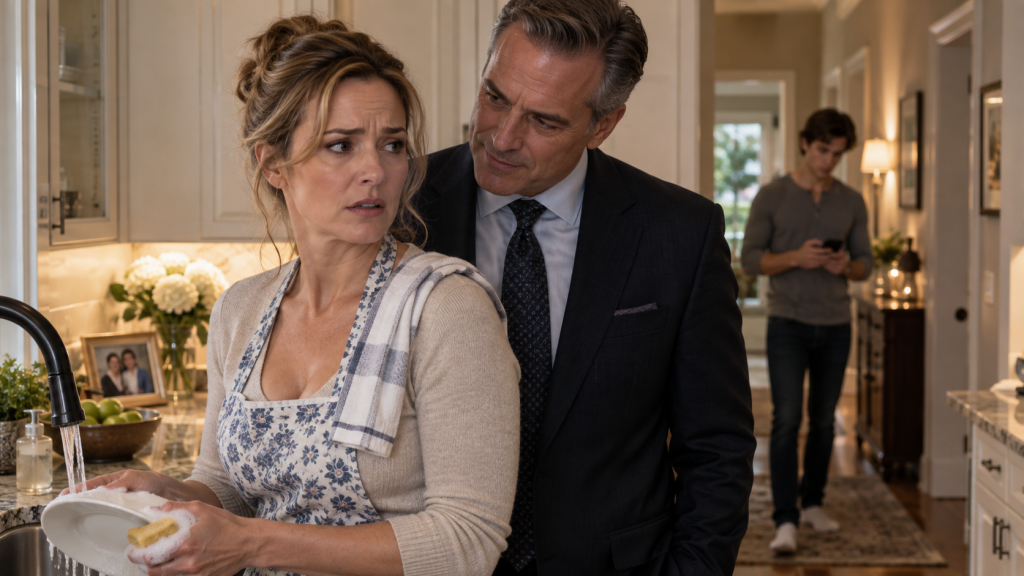
After dinner, Tyler remembered something to show Richard and headed down the hallway. I collected the plates and took them to the kitchen.
Soon after, Richard came in as well.
He stood behind me, checked that Tyler was gone down the hall, and turned toward me, his expression suddenly cold.
“It’s time you learned what I really want from your son,” he said in a low voice.
My hands paused in the water.
Richard fixed his stare on me and added: “You didn’t honestly believe I’d done all of this for no reason, did you?
PART 2 — THE MAN WHO KNEW WHERE TYLER’S FATHER WENT
My hands stopped beneath the running water.
A plate slipped from my fingers and struck the bottom of the sink.
It did not break.
For some reason, I remember being grateful for that.
Richard stood behind me.
The warmth he had carried through dinner was gone.
The easy smile.
The pleasant stories about the hardware store.
The way he had complimented my roast and asked thoughtful questions about my music students.
All of it had vanished.
For the first time, I saw the man beneath the manners.
Not cruel.
Not exactly.
But deliberate.
A man who had entered my house knowing something I did not.
I turned off the faucet.
“What do you want from my son?”
Richard glanced toward the hallway.
Tyler was still in his bedroom looking for an old guitar pedal he wanted to show him.
Richard lowered his voice.
“I want him to make a decision.”
“What decision?”
“One he should have been allowed to make years ago.”
My stomach tightened.
“About what?”
Richard looked directly at me.
“His father.”
For a moment, I thought I had misheard him.
“My husband?”
“Your former husband.”
“He left twenty years ago.”
“I know.”
Something cold moved through me.
“How?”
Richard said nothing.
That silence told me more than an answer could have.
I stepped back.
“You knew him.”
Richard nodded.
“Yes.”
The kitchen suddenly felt too small.
I gripped the counter.
“What was his name?”
Richard hesitated.
I almost laughed.
“If you knew him, tell me his name.”
“Daniel Parker.”
My knees weakened.
There are names that stop belonging to ordinary language after enough years.
Daniel had become one of those.
I had not spoken it aloud in months.
Maybe longer.
To Tyler, he was usually just:
Dad.
To me:
your father.
To everyone else:
my ex-husband.
Daniel was something I kept in a drawer behind twenty years of groceries, parent-teacher conferences, birthdays, fevers, graduation photographs, and every ordinary Tuesday I survived without him.
Then a stranger stood in my kitchen and said his name as though he had spoken it recently.
“You knew Daniel.”
Richard nodded again.
“For years.”
“When?”
“Before he left.”
I stared.
“How long before?”
“Eight years.”
My mouth went dry.
“You were friends?”
“For a while.”
“For a while?”
Richard looked toward the hallway again.
“We worked together.”
“Where?”
“Halpern Machine.”
I remembered the place.
Industrial park near the river.
Daniel worked there when Tyler was born.
He came home smelling like metal dust and machine oil.
I had not thought about that smell in years.
Richard continued.
“I was there when Daniel hurt his back.”
My chest tightened.
That part I remembered.
A steel component slipped during a shift.
Daniel twisted while trying to catch it.
Two damaged discs.
Months of pain.
Physical therapy.
Pain medication.
Then more pain medication.
Then arguments about whether he was taking more than prescribed.
I looked at Richard.
“How much do you know?”
“More than you were ever told.”
Anger arrived immediately.
“By whom?”
“Daniel.”
“When?”
“Over the years.”
I stepped closer.
“Over the years?”
Richard did not move.
“Is he alive?”
The question escaped before I could decide whether I wanted the answer.
Richard looked at me for several seconds.
Then said:
“Yes.”
Twenty years disappeared.
Not gradually.
All at once.
I was thirty-one again.
Standing in our old kitchen.
Daniel’s half-empty coffee mug on the counter.
His closet missing three shirts.
Tyler sitting on the floor asking why Daddy had taken his blue suitcase.
I heard myself whisper:
“Alive?”
“Yes.”
“Where?”
“About ninety miles from here.”
I slapped him.
I did not plan to.
My hand simply moved.
The sound cracked through the kitchen.
Richard’s head turned slightly.
He did not raise a hand.
Did not curse.
Did not even look surprised.
I stared at my palm afterward as if it belonged to somebody else.
Then I said:
“Get out.”
Richard looked at me.
“I understand.”
“No, you don’t.”
My voice shook.
“Get out of my house.”
Then Tyler spoke from the hallway.
“Why did you hit him?”
I turned.
My son stood beneath the kitchen archway.
The guitar pedal was still in his hand.
His face had gone pale.
“Tyler—”
“What happened?”
Nobody answered.
Then he looked at Richard.
“What did you say to her?”
Richard’s voice was quiet.
“Something I should have told both of you together.”
“Tell me now.”
I moved toward Tyler.
“Sweetheart—”
He stepped back.
“Mom.”
There was something in his voice I had never heard before.
Not anger.
Fear.
“Tell me what he said.”
I looked at Richard.
Then at my son.
There are secrets that grow heavier every year they remain secret even when you were never the person keeping them.
I said:
“He knows your father.”
Tyler stopped breathing.
The guitar pedal slipped from his fingers.
It hit the hardwood floor.
No one picked it up.
“What?”
Richard stepped forward.
Tyler immediately raised one hand.
“Don’t.”
Richard stopped.
Good.
“Mom.”
Tyler looked at me.
“You said Dad disappeared.”
“He did.”
“You said you didn’t know where.”
“I didn’t.”
“Do you now?”
“No.”
Then I looked at Richard.
“Apparently he does.”
Tyler stared at him.
Richard said:
“Your father is alive.”
The color left my son’s face.
For several seconds he seemed not to understand the sentence.
Then he laughed.
A single broken sound.
“No.”
Richard said nothing.
“No.”
Tyler repeated.
“You don’t get to come into my house and say that.”
“I know.”
“Stop saying you know.”
Richard nodded.
Fair.
Tyler’s hands began shaking.
“Where is he?”
Richard looked at me.
I hated that he checked.
He had spent too long deciding what other people should be allowed to hear.
“Tell him.”
I said.
“Daniel lives in Fairmont.”
Tyler frowned.
“That’s an hour and a half away.”
“Yes.”
“Twenty years?”
“No.”
Richard answered carefully.
“He moved there eleven years ago.”
“Where was he before?”
“Mostly Arizona.”
“Why?”
Richard exhaled.
“Treatment.”
Tyler stared.
“For what?”
I already knew.
Or thought I did.
Richard said:
“Addiction.”
The room became very still.
Tyler looked at me.
“You knew?”
My answer came quickly.
“I knew your father had a problem with pain medication.”
“That’s not what I asked.”
I swallowed.
“I knew he was using too much.”
“How much?”
“I don’t know.”
“Mom.”
“I don’t know.”
I hated how defensive I sounded.
So I forced myself to slow down.
“Your father was injured when you were little.”
“He was prescribed pills.”
“At first everything was legitimate.”
“Then prescriptions ran out faster.”
“He started seeing different doctors.”
“Borrowing money.”
“Missing work.”
“I found pills hidden in the garage.”
Tyler looked as if I had begun describing somebody else’s childhood.
“Why didn’t you tell me?”
“You were six.”
“I’m twenty-six now.”
That landed.
Yes.
Twenty-six.
Not six.
Sometimes mothers keep protecting the child version of a person long after the adult is standing in front of them asking for the truth.
“I should have told you more when you were older.”
I said.
Tyler nodded slowly.
“Yes.”
No mercy.
Just truth.
I deserved that.
He turned to Richard.
“What happened?”
Richard pulled out a kitchen chair.
He did not sit until Tyler did.
I remained standing.
I needed the counter behind me.
Richard spoke carefully.
“Your father became addicted after his injury.”
“He tried stopping several times.”
“He would get sick.”
“Start again.”
“Then he began buying pills outside prescriptions.”
I closed my eyes.
That part I had suspected.
Never proved.
Richard continued.
“He owed people money.”
“Not organized crime.”
“Nothing like that.”
“Dealers.”
“Other workers.”
“Friends.”
“Me.”
I looked at him.
“You lent him money?”
“Twice.”
“And?”
“He lied about why he needed it.”
That sounded like Daniel near the end.
Lies small enough to become ordinary.
Gas.
Groceries.
Electric bill.
Everything always almost true.
Richard continued.
“One night Daniel called me from a gas station.”
“He had Tyler with him.”
My eyes snapped open.
“What?”
Tyler looked at me.
“You don’t remember?”
I did.
God.
I did.
Tyler was six.
Daniel was supposed to take him for ice cream.
They came home almost four hours late.
Daniel said the car battery died.
Tyler had been asleep in the back seat.
I had screamed at Daniel on the driveway.
He screamed back.
Then apologized.
I believed the battery story because believing it allowed the night to end.
Richard’s face changed.
“The battery didn’t die.”
“What happened?”
“He nodded off in the car.”
My blood turned cold.
“With Tyler?”
Richard nodded.
“The car was parked.”
“He hadn’t been driving when it happened.”
“I want to be clear about that.”
Facts.
Even now.
“But he had taken pills.”
“A lot.”
“Someone at the station saw Tyler crying in the back seat and woke him.”
Tyler’s face collapsed inward.
“I remember the gas station.”
I looked at him.
“What?”
He stared toward the table.
“I remember fluorescent lights.”
“Dad bought me chocolate milk.”
“That’s all.”
The memory had survived without context.
Children do that.
They keep the color of the room after adults throw away the explanation.
“What did you do?”
I asked Richard.
“I drove them home.”
“No.”
“You didn’t.”
Daniel had driven home.
At least that was what I believed.
Richard shook his head.
“I followed behind.”
“He insisted on driving because he didn’t want you asking why I had his keys.”
My stomach turned.
“You let him?”
“Yes.”
Richard’s face tightened.
“It is one of several things I would do differently.”
“That doesn’t help me now.”
“I know.”
I hated that phrase.
He knew everything too late.
Richard said the gas-station incident frightened Daniel.
For almost two weeks, he stopped using.
Then withdrawal hit harder.
He went back.
Another month passed.
Then he stole medication from the workplace first-aid supply.
Management discovered it.
He was going to be fired.
Possibly reported.
That was when Daniel finally told Richard he needed help.
Richard’s older brother had gone through addiction treatment years earlier.
Richard knew a residential program in Arizona.
Thirty days.
Then ninety.
Daniel resisted.
Until the night I gave him an ultimatum.
I remembered that night too.
Tyler asleep upstairs.
Daniel pacing the kitchen.
Me holding a pharmacy receipt.
I said:
You get help, or you leave this house.
He stared at me for a long time.
Then said:
Maybe leaving is the help.
The next morning, he was gone.
For twenty years, I thought those were the words of a man choosing drugs over us.
Apparently they had been the words of a man leaving for treatment.
At least at first.
“Why didn’t he tell me?”
My voice cracked.
Richard looked ashamed.
“He was supposed to.”
“Supposed to?”
“I drove him to the airport.”
“What did you tell him?”
“That he should tell you before we left.”
“And?”
“He said if he heard your voice, he wouldn’t go.”
I started crying.
Not beautifully.
Angry tears.
“He had a six-year-old son.”
“I know.”
“He could have written a note.”
“Yes.”
“He could have called from treatment.”
“Yes.”
“He could have done a thousand things.”
“Yes.”
Richard did not rescue Daniel from any of them.
Good.
Because I was one excuse away from throwing him out again.
“What happened after rehab?”
Tyler asked.
His voice was flat now.
Too flat.
Richard looked at him.
“Your father relapsed.”
“Of course.”
Tyler laughed bitterly.
“Then again.”
“He left treatment twice.”
“Eventually completed a longer program.”
“How long?”
“Almost eighteen months between facilities and sober housing.”
“And then?”
“He stayed sober.”
Tyler stared.
“How long?”
“Seventeen years.”
The answer landed like betrayal.
Seventeen.
Years.
Not months.
Not a newly recovering man who stayed away because chaos followed him.
Seventeen years in which Daniel could have found a telephone.
A stamp.
A road.
His son.
Tyler stood.
“So what exactly is the excuse?”
Richard did not move.
“There isn’t one.”
“Then why are you here?”
“Because your father is dying.”
The words flattened the room.
I closed my eyes.
Of course.
Stories like this never resurrect people without placing a clock beside them.
Tyler stopped.
“What?”
“Pancreatic cancer.”
Richard said.
“Stage four.”
“When?”
“Diagnosed five months ago.”
“How long?”
“No one can tell exactly.”
“Doctors think months.”
Tyler turned away.
Walked three steps.
Then turned back.
“He had seventeen years.”
“Yes.”
“And suddenly now he needs me because he’s dying?”
Richard’s expression tightened.
“No.”
“What do you mean no?”
“He hasn’t asked to see you.”
That surprised all of us.
Tyler stared.
“Then what are you doing?”
Richard was silent.
And suddenly I understood the colder thing in his kitchen expression.
This was not simply Daniel sending a messenger.
Richard had made a decision.
Again.
“Does Daniel know you’re here?”
I asked.
Richard looked at me.
“Not exactly.”
Tyler laughed.
“You’re kidding.”
“He knows I found you.”
Richard said.
“What does that mean?”
“I told him I had located Tyler.”
“He told me not to contact him.”
The room erupted.
Tyler shoved the chair backward.
“So you ignored him?”
“Yes.”
I stared at Richard.
“You spent twenty years helping one man keep a secret, and your solution was to betray him too?”
Richard’s jaw tightened.
“When you put it that way—”
“How else would I put it?”
He rubbed his face.
“Badly.”
At least he knew.
Tyler looked furious.
“Why?”
Richard met his eyes.
“Because Daniel does not get to make this decision for you twice.”
Silence.
There it was.
The reason.
Not noble enough to erase manipulation.
But understandable.
Richard continued.
“He decided you were better without him when you were six.”
“Maybe he believed that then.”
“Maybe he even had reasons.”
“But he stayed away when you were ten.”
“Fifteen.”
“Twenty.”
“Twenty-five.”
“Now he’s dying, and he decided again that your life will be better if you never know.”
Richard leaned forward.
“I got tired of watching him call cowardice sacrifice.”
Tyler’s face changed.
Not softer.
More confused.
“So you took a job at the hardware store?”
Tyler asked.
Richard hesitated.
“No.”
“I’d worked there six years.”
“How did you recognize me?”
“Your name.”
“That’s it?”
“No.”
Richard looked almost embarrassed.
“You look like Daniel.”
Tyler’s jaw tightened.
I saw it too.
I had always seen it.
The same eyebrows.
Same way of touching the back of his neck when uncomfortable.
Genetics can feel cruel when someone leaves.
“You knew immediately?”
“Not immediately.”
“The name caught me.”
“Then you mentioned your mother taught music.”
Richard looked at me.
“I knew your name.”
“So you befriended him.”
I said.
Richard nodded.
“Yes.”
“For information?”
“At first.”
Tyler flinched.
I saw it.
Richard did too.
That was the wound.
Every lunch.
Every weekend project.
Every conversation Tyler thought mattered.
Now contaminated by purpose.
Tyler’s voice became very quiet.
“When I told you about applying for supervisor…”
Richard looked at him.
“I cared.”
“When you helped me rebuild the motorcycle?”
“I cared.”
“When I told you about Dad leaving?”
Richard closed his eyes.
“Yes.”
“You already knew.”
“Yes.”
Tyler turned away.
“Jesus.”
Richard stood.
“Tyler.”
“Don’t.”
“I didn’t expect—”
Tyler spun back.
“You didn’t expect what?”
“That I’d trust you?”
Richard had no answer.
Tyler laughed bitterly.
“That’s the part you needed.”
“You needed me to trust you enough that when you dropped this on me, I wouldn’t throw you out.”
Richard’s face tightened.
“That’s fair.”
“Stop saying things are fair.”
Tyler’s voice broke.
“You made me feel like I finally had somebody older who wanted nothing from me.”
The sentence hurt me too.
Richard’s eyes filled.
“I know.”
“No.”
Tyler shook his head.
“You don’t.”
Then he left.
Front door.
Hard slam.
My first instinct was to follow.
Richard stopped me with one sentence.
“He has his keys.”
I glared at him.
“I know.”
No one was stopping me from going after my son.
But Richard’s observation reminded me Tyler was twenty-six.
Not six.
I walked to the window instead.
Watched him get into his car.
He sat there.
Did not drive.
Good.
I stayed where I was.
Ten minutes later, the headlights came on.
Then he left.
I let him.
It was one of the hardest things I had done as a mother.
Richard remained in the kitchen.
I turned toward him.
“Get out.”
He nodded.
Then reached inside his jacket.
I tensed.
He pulled out an envelope.
Thick.
Old.
Tyler’s name written across the front.
I recognized Daniel’s handwriting immediately.
Even after twenty years.
The D slanted sharply.
The T crossed too far to the right.
“When is that from?”
I asked.
“Different times.”
“What?”
“It holds six letters.”
My stomach tightened.
“Daniel wrote to Tyler?”
“Yes.”
“When?”
“The first when Tyler was seven.”
I stared.
“Then why didn’t I get it?”
“Because Daniel never sent it.”
“Why do you have them?”
“He gave them to me over the years.”
“Why?”
Richard looked ashamed.
“I was supposed to destroy them.”
I laughed.
Of course.
Everyone in this story had apparently spent twenty years making decisions about what my son could know.
“And you didn’t.”
“No.”
“Why?”
“At first because I thought Daniel would change his mind.”
“And later?”
Richard looked toward the front door Tyler had slammed.
“Because I started thinking someone might need proof that he had loved him.”
That sentence made me angrier.
“Letters he never sent are not parenting.”
“No.”
“Regret is not parenting.”
“No.”
“Thinking about your child somewhere else is not the same as being there.”
“No.”
Richard accepted each blow.
He deserved them.
Maybe that was why I kept going.
“Do not romanticize him to Tyler.”
“I won’t.”
“Do not tell my son his father stayed away because he loved him too much.”
“I won’t.”
“Daniel abandoned him.”
Richard swallowed.
“Yes.”
“He may have been sick.”
“He may have been ashamed.”
“He may have become sober.”
“All of that can explain.”
“None of it makes twenty years disappear.”
“I agree.”
I stared.
Then pointed at the envelope.
“What do you want me to do with that?”
“Nothing.”
“Then why bring it?”
“Because if Tyler wants it, it exists.”
His choice.
Finally.
A choice.
That did not make me forgive Richard.
But it made me take the envelope.
Before leaving, he stopped at the door.
“There’s one more thing.”
I almost laughed.
“Of course there is.”
Richard looked at me.
“Daniel didn’t stay away only because of shame.”
Every muscle in my body tightened.
“What else?”
“He believed you hated him.”
“I did.”
Richard almost smiled sadly.
“Fair.”
I crossed my arms.
“What are you trying to say?”
“After he had been sober three years, I told him to call you.”
My chest tightened.
“He did?”
“No.”
“Then what—”
“He came here.”
I stopped.
“What?”
“Not this house.”
“Your old house.”
“When?”
“Nineteen years ago.”
My mouth went dry.
Tyler would have been seven.
Maybe eight.
“What happened?”
Richard looked miserable.
“He watched from across the street.”
“You were with him?”
“Yes.”
“You let him do that?”
“I was trying to get him to knock.”
“Did he?”
“No.”
“Why?”
Richard hesitated.
Then:
“Because another man came out of your house carrying Tyler.”
I frowned.
“What man?”
And then I knew.
My brother.
David.
Tyler’s Uncle David had stayed with us for several months after Daniel left.
He helped with childcare.
Repairs.
Everything.
Richard continued.
“Daniel saw a man carrying Tyler to the car.”
“You laughed at something.”
“He saw the three of you leave together.”
“He thought you had remarried.”
I stared.
“That’s ridiculous.”
“I told him.”
“You told him wrong.”
“I did.”
“Did he ask?”
“No.”
Of course.
Cowardice looking for confirmation.
“He used that as an excuse?”
I asked.
“Yes.”
Richard did not soften it.
“He said Tyler finally had a stable man in his life.”
“I told him that was something he invented from five minutes across a street.”
“He didn’t listen.”
My anger almost became laughter.
The absurdity.
Twenty years of absence partly supported by one coward’s assumption from across a road.
Then I stopped.
“No.”
Richard frowned.
“What?”
“Don’t give me that.”
“What?”
“He could have checked.”
“Yes.”
“He could have called.”
“Yes.”
“He could have asked you.”
“Yes.”
“One mistake doesn’t explain nineteen more years.”
“No.”
Good.
We agreed on something.
Richard left his phone number on the table.
“I won’t contact Tyler again unless he contacts me.”
“That should have been your first rule.”
“Yes.”
Then he left.
I locked the door.
Not because I feared him.
Because closing it felt necessary.
Tyler came home at 2:11 in the morning.
I heard the key.
Then footsteps.
He walked into the kitchen.
I was still there.
Tea cold.
Daniel’s letters untouched on the table.
Tyler saw them.
“What are those?”
I told him.
He stared for a long time.
“Did you read them?”
“No.”
“Why not?”
“They’re yours.”
His expression broke slightly.
Then:
“I don’t want them.”
“Okay.”
“You can throw them away.”
“No.”
“Why?”
“Because not wanting something tonight doesn’t mean you won’t want it in ten years.”
He looked at me.
“You kept things from me too.”
There it was.
I nodded.
“Yes.”
“Why?”
“Because I thought a child needed one simple story.”
“Dad left.”
“That was the story.”
“It was true.”
“Just incomplete.”
Tyler sat.
“I’m not a child.”
“No.”
“And I haven’t been for a long time.”
“I know.”
“Do you?”
That hurt.
I deserved that too.
“I’m trying to.”
We talked until dawn.
Not about Richard at first.
About Daniel.
The version Tyler never knew.
His father before addiction.
The man who sang badly in the shower.
Who once drove three towns over because Tyler wanted a birthday cake shaped like a dinosaur and every bakery nearby said no.
Who loved old motorcycles.
Who hated mushrooms.
Who was impatient.
Who could be funny.
Who became secretive.
Unreliable.
Ashamed.
Who scared me near the end, not because he struck us—he never did—but because I never knew which version of him would come home.
Tyler listened.
Then asked:
“Did he love me?”
The question nearly destroyed me.
“Yes.”
I said.
“That makes it worse.”
Tyler looked up.
“How?”
“Because love was there.”
“And he still left.”
There was no comforting answer.
So I did not manufacture one.
“Yes.”
At sunrise, Tyler reached for the envelope.
Then stopped.
“I hate him.”
“Okay.”
“I want to see him.”
“Okay.”
“I hate that I want to.”
“Also okay.”
He laughed weakly.
“Everything is okay with you now?”
“No.”
I smiled.
“I’m just learning not to decide which feelings you’re allowed.”
He looked at me.
Then picked up the envelope.
He did not open it.
He placed it beside him.
“Would you come with me?”
“To see Daniel?”
He nodded.
My entire body resisted.
Twenty years of anger stood up at once.
Then I looked at my son.
Not six.
Twenty-six.
Asking.
Not being managed.
“Yes.”
I said.
“If you decide to go.”
He called Richard that afternoon.
I did not listen.
I went into my bedroom and closed the door.
Privacy.
Another skill mothers learn embarrassingly late.
An hour later Tyler knocked.
“Saturday.”
My stomach tightened.
“Daniel agreed?”
Tyler shook his head.
“He doesn’t know.”
I stared.
“Richard is going to surprise a dying man?”
“No.”
Tyler’s expression hardened.
“I told Richard if he does one more thing without asking everyone involved first, I never speak to him again.”
Good.
“What happens?”
“Richard is calling Dad.”
“Then Dad gets to say yes or no.”
“And if he says no?”
Tyler’s jaw tightened.
“Then he says no.”
It cost him to say that.
I could see it.
“But I still get the letters.”
“Yes.”
“And the truth.”
“As much as anyone knows it.”
He nodded.
That was the only arrangement he could control.
Daniel said yes.
Two days later.
The meeting was scheduled for Saturday at a hospice center outside Fairmont.
Neutral.
No one’s home.
One hour.
Tyler’s rules.
Richard would bring Daniel into the room.
Then leave.
I would enter only if Tyler wanted me there.
No surprises.
No speeches.
No cameras.
No pressure for forgiveness.
I was proud of my son before the meeting even happened.
He had spent twenty years without a father and somehow understood boundaries better than the men trying to substitute for one.
Friday night, Tyler finally opened the first letter.
I did not ask.
He came into my room afterward carrying it.
His face was wet.
“He wrote this when I was seven.”
I sat.
Tyler read one line aloud.
I hope someday you learn to ride a bicycle without being afraid of falling. I’m sorry I’m not there to teach you.
Tyler laughed bitterly.
“Uncle David taught me.”
“I know.”
“Dad knew he was supposed to.”
“Yes.”
“He knew.”
I nodded.
Sometimes the deepest wound is discovering absence was conscious.
Not forgotten.
Chosen repeatedly.
Tyler read another letter.
Age twelve.
Daniel had somehow learned Tyler joined school band.
Richard had told him.
Another at sixteen.
Graduation approaching.
One at twenty-one.
Daniel wrote:
I keep thinking the longer I wait, the more selfish it becomes to arrive and ask you to rearrange your life around my guilt.
Tyler stopped.
Then whispered:
“At least he knew.”
I said nothing.
The final letter had been written three months earlier.
After the cancer diagnosis.
Tyler did not read that one aloud.
He folded it.
Put it back.
Then said:
“I still want to go.”
“Okay.”
Saturday arrived gray and cold.
Richard waited outside the hospice entrance.
He looked older than he had at dinner.
Perhaps guilt ages faster when exposed to daylight.
Tyler walked toward him.
Richard said:
“He’s in Room 14.”
Tyler nodded.
“Does he know I’m here?”
“Yes.”
“What did you tell him?”
“That you asked to come.”
“Nothing else?”
“Nothing.”
Tyler studied him.
Then:
“Good.”
Richard’s eyes filled slightly.
Tyler did not comfort him.
Neither did I.
This meeting was not Richard’s absolution.
We reached Room 14.
Tyler stopped outside.
His hand shook once.
I touched his arm.
“Want me with you?”
He thought.
Then:
“At first.”
So we entered together.
Daniel Parker was lying beside a window.
For twenty years, I imagined this moment in versions.
Daniel wealthy.
Broken.
Remarried.
Homeless.
Regretful.
Unrecognizable.
Dead.
Reality was quieter.
He looked seventy despite being only fifty-three.
Cancer had hollowed his cheeks.
His hair was mostly gray.
An oxygen tube rested beneath his nose.
But I knew him.
Immediately.
The shape of his hands.
The crooked little finger he broke playing basketball in high school.
His eyes.
Tyler’s eyes.
Daniel looked at me.
Then at his son.
And began crying.
No words.
Just tears.
For once, maybe words knew they had not earned the first turn.
Tyler stood near the door.
Daniel whispered:
“Hi.”
Twenty years.
One word.
Tyler’s jaw trembled.
Then he said:
“You don’t get to call me son yet.”
Daniel closed his eyes.
“Okay.”
Good.
No argument.
Tyler moved farther into the room.
I stayed near the wall.
Daniel looked at me.
“I’m sorry.”
I almost laughed.
Too small.
Too late.
Still perhaps necessary.
I said:
“This isn’t my meeting.”
Then turned to Tyler.
“Do you want me to stay?”
He looked at Daniel.
Then at me.
“I think I need to do this alone.”
Every part of me wanted to refuse.
Instead I nodded.
“I’ll be outside.”
I closed the door behind me.
And for once, I did not press my ear against it.
Richard was sitting down the hallway.
I walked past him.
He stood.
“How is—”
I kept walking.
Ten minutes later, he approached carefully.
“I owe you an apology.”
I stared out the window.
“You owe Tyler one.”
“I know.”
“And?”
“You too.”
I looked at him.
“For what exactly?”
“For deciding I knew when the truth should arrive.”
That was finally the right answer.
Not for contacting us.
Not only.
For control.
Richard continued.
“I told myself Daniel had taken Tyler’s choice away long enough.”
“So you took another one.”
“Yes.”
“You befriended my son under false pretenses.”
“Yes.”
“You became important to him before telling him why.”
“Yes.”
His eyes lowered.
“I started because of Daniel.”
“I stayed because I genuinely cared about Tyler.”
“Both are true.”
I hated how familiar that phrase had become.
But it was.
“What do you want from him now?”
I asked.
Richard looked down the hall toward Room 14.
“Nothing.”
“Really?”
“I want him to choose whether I’m still part of his life.”
There it was.
At last.
Not:
I want his forgiveness.
Not:
I want to be his father figure.
Choice.
I nodded.
“That is probably the first respectable thing you’ve done in my house.”
He almost smiled.
“I’ll take it.”
Tyler remained inside for ninety-two minutes.
Not the agreed hour.
His choice.
When he finally emerged, his face looked older.
Not destroyed.
Changed.
I stood.
He walked directly into my arms.
I held him.
Twenty-six years old.
Larger than me.
Still my child.
I did not ask what Daniel said.
Tyler would tell me if he wanted.
Instead:
“Ready to go?”
He nodded.
Then stopped.
Looked back at the door.
“Not yet.”
My heart tightened.
“I’m going back tomorrow.”
Richard looked surprised.
So did I.
Tyler saw us.
“Don’t.”
We both stopped.
“This isn’t forgiveness.”
he said.
“I know.”
I replied.
Richard wisely said nothing.
Tyler continued.
“He has things I want to ask.”
“And he doesn’t have much time.”
“I’m angry.”
“I may stay angry.”
“But I’m not letting his cowardice decide how much truth I get.”
I nodded.
“That sounds right.”
Then Tyler looked at Richard.
“I’m not speaking to you for a while.”
Richard’s face fell.
But he nodded.
“Okay.”
“You don’t come to work conversations with me unless I start them.”
“Okay.”
“No surprise visits.”
“Okay.”
“And stop trying to manage what happens between me and him.”
“I will.”
Tyler studied him.
Then:
“If you mean that, maybe later.”
Richard nodded.
No pleading.
Better.
We started toward the exit.
Then the hospice door behind us opened.
A nurse stepped out.
“Tyler?”
He turned.
“Your father asked me to give you this.”
She held a small key.
Old brass.
A paper tag tied to it.
Tyler frowned.
“What is it?”
The nurse shook her head.
“I don’t know.”
Tyler looked through the doorway.
Daniel was watching from the bed.
Tyler walked back.
Not inside.
Just close enough to speak.
“What does it open?”
Daniel’s voice was barely audible from where I stood.
“Storage unit.”
Tyler’s expression tightened.
“What’s inside?”
Daniel looked at me.
Then back at Tyler.
And said:
“Everything I was too afraid to send.”
Tyler stared.
“More letters?”
Daniel shook his head.
“No.”
Then he said something that made even Richard stand completely still.
“Your mother’s things.”
I felt the floor disappear beneath me.
“My things?”
Daniel closed his eyes.
“Not yours.”
He swallowed painfully.
“Things from before I left.”
Tyler frowned.
“What things?”
Daniel looked at me.
And for the first time all day, the shame in his face became something closer to fear.
“Proof.”
I stepped forward.
“Proof of what?”
Daniel’s eyes filled.
He whispered:
“That I wasn’t the only person who knew I was leaving.”
The hallway went silent.
I stared at him.
Daniel had disappeared twenty years earlier.
I had believed Richard was finally the missing witness.
Apparently he wasn’t.
Someone else had known.
Someone close enough to possess things Daniel believed belonged to me.
And whatever waited inside that storage unit had frightened a dying man more than seeing the wife and son he abandoned.
PART 3 — THE TRUTH WE KEPT CALLING PROTECTION
The brass key stayed in Tyler’s pocket all night.
I knew because I heard it strike the kitchen counter when he came downstairs for water at three in the morning.
Neither of us slept much.
At breakfast, Tyler sat across from me wearing the same sweatshirt he had worn to the hospice.
His coffee went cold.
The key lay between us.
Small.
Ordinary.
Far too innocent-looking for something Daniel had described as opening twenty years of truth.
I finally asked:
“Do you want to go?”
Tyler stared at it.
“To the storage unit?”
“Yes.”
He rubbed both hands over his face.
“I don’t know.”
“Then we don’t.”
He looked up.
“That easy?”
“It needs to be.”
He studied me for a moment.
Maybe checking whether I actually meant it.
I did.
I was learning that love sometimes sounded disappointingly simple.
Okay.
Not yet.
Your choice.
No dramatic speeches.
No secret plans.
Just room.
Tyler visited Daniel again that afternoon.
Alone.
I drove him because he asked.
Then sat in the hospice parking lot with a mystery novel I did not read.
He stayed almost two hours.
When he returned, his eyes were red.
But he looked calmer.
“What happened?”
I asked.
Tyler fastened his seat belt.
“He told me what’s in the storage unit.”
My hands tightened around the steering wheel.
“And?”
“He said I should decide whether you hear it from him or see it yourself.”
That surprised me.
“What did you choose?”
Tyler looked toward the hospice windows.
“I want us to go together.”
I nodded.
“Okay.”
Then he said:
“Uncle David’s involved.”
My heart stopped.
Of all the names Daniel could have given him, that was the one I was not prepared to hear.
“My brother?”
“Yes.”
“How?”
Tyler looked at me.
“I think we should see the papers first.”
Facts.
Again.
My twenty-six-year-old son had apparently learned in two days what the rest of us had spent decades avoiding.
I started the car.
The storage facility sat behind a tire shop on the edge of Fairmont.
Nothing mysterious about it.
Rows of beige metal doors.
Security cameras.
An office with candy bars beside the register.
Unit 218 was halfway down the second row.
Tyler stood in front of it for several seconds.
“You okay?”
I asked.
“No.”
“Me neither.”
He almost smiled.
Then placed the brass key in the lock.
It turned.
The metal door rattled upward.
And twenty years of absence waited inside cardboard boxes.
There was no secret fortune.
No criminal evidence.
No second family.
Just a life someone had been too ashamed to throw away and too frightened to return to.
Six plastic tubs.
Three cardboard boxes.
An old motorcycle helmet.
A folding chair.
A toolbox.
A lamp.
And, in the back corner, Daniel’s blue suitcase.
The same one Tyler had asked about when he was six.
I knew it immediately.
The sight of it nearly knocked the air from me.
Tyler saw my face.
“That’s it?”
I nodded.
“Dad’s suitcase?”
“Yes.”
“The one he left with?”
“Yes.”
Tyler stepped toward it.
Then stopped.
Sometimes objects remember more than people want them to.
The first plastic tub contained photographs.
Our wedding.
Tyler as a newborn.
Daniel holding him in the hospital with an expression of complete terror.
A birthday party.
A beach vacation.
Tyler asleep with spaghetti sauce on his cheek.
Ordinary family photographs.
That was somehow worse.
I had spent twenty years imagining Daniel had escaped us.
His storage unit suggested he had carried us everywhere.
Again, that did not make him a father.
But it complicated the absence.
Everything complicated the absence.
Tyler picked up one photograph.
He was about four.
Sitting on Daniel’s shoulders.
Both of them laughing.
“I don’t remember this.”
I sat beside him on the concrete floor.
“You hated getting down.”
“Dad would walk around the house with you up there until his neck hurt.”
Tyler stared at the photograph.
“Was he good then?”
The question hurt.
“Sometimes.”
He looked at me.
“That’s not what I asked.”
I thought.
Then answered honestly.
“Yes.”
“Before the pills got bad, he was a good father.”
Tyler’s eyes filled.
“I almost wish you’d say he wasn’t.”
“I know.”
Because simple abandonment would have been easier if nothing valuable had come before it.
The second box contained letters.
Not the six Daniel had given Richard.
Different letters.
Some from rehabilitation programs.
Some bills.
Recovery worksheets.
Meeting notes.
Then Tyler found an envelope with handwriting I recognized almost as quickly as Daniel’s.
My brother’s.
Daniel — Desert Springs Recovery Center, Tucson, Arizona.
I stopped breathing.
Tyler looked at me.
“Uncle David wrote him?”
“I didn’t know.”
He opened the envelope.
The letter was dated twelve days after Daniel disappeared.
Tyler read silently.
Then handed it to me.
My brother had written:
They’re safe. She thinks you left because of the pills. I told her I don’t know where you went because that is what you asked me to say. I already hate this arrangement. Finish the thirty days, come home sober, and tell her yourself. I am not doing this indefinitely.
I read it twice.
Then a third time.
My hands began shaking.
David knew.
Not years later.
Not after Daniel rebuilt his life.
From the beginning.
My own brother had sat at my kitchen table while I cried.
Held Tyler while I called hospitals.
Watched me ask whether Daniel had been arrested.
Dead.
Sleeping under a bridge.
With someone else.
And David knew where he was.
Tyler whispered:
“Mom.”
I could not answer.
Another letter sat underneath.
Three months later.
David again.
You left treatment. Richard told me. Do not ask me to keep lying for you while you keep running. Tyler asks when you’re coming home. She barely sleeps. Get sober before you call either of them.
Then another.
Eight months later.
I don’t know where you are now. If you contact me again while using, I will not help you. They need stability more than they need another promise.
David had not been protecting Daniel.
That did not make it better.
It made it different.
Tyler sat back against a box.
“He knew.”
“Yes.”
“Uncle David knew.”
“Yes.”
“He taught me to ride a bike.”
My throat closed.
“He did.”
“He came to every baseball game.”
“Yes.”
“He knew where Dad went.”
“At first.”
Tyler’s jaw tightened.
“That matters.”
“Yes.”
No defense.
Not yet.
Maybe never.
Then we found the letter that changed everything.
It was dated three years after Daniel left.
By then, according to Richard, Daniel had been sober for more than a year.
The envelope was addressed to David.
Inside was a copy of a second envelope.
That one had my name on it.
Daniel had written:
David, I am coming home next month. I do not expect her to take me back. I don’t deserve that. But Tyler deserves to know I did not leave because I stopped loving him. Please give her the enclosed letter first. If she tells me never to come near them, I will respect it. I only need her to make the decision knowing I am sober now.
My vision blurred.
“He tried.”
Tyler whispered.
Once.
Three years late.
But he tried.
Then beneath it was David’s reply.
Only one page.
I recognized every angry stroke of my brother’s pen.
Don’t come back.
The words were underlined.
She finally sleeps again. Tyler is doing well. You don’t get to disappear for three years and arrive because you finally became the man you were supposed to be before leaving. They rebuilt without you. If you love them, leave them alone.
I put the letter down.
My hands were numb.
Tyler read the rest.
David had written that I was teaching full-time again.
That Tyler had stopped asking every morning whether Daniel was coming home.
That the house finally felt peaceful.
Then:
If she wants to find you someday, that should be her choice. Do not make me the messenger for another promise.
The irony almost made me laugh.
David said my choice should matter.
Then made the choice himself.
“Did Dad answer?”
Tyler asked.
We searched.
One short note.
Never mailed.
You’re right. Tell them I’m sorry.
That was it.
Tyler threw the paper back into the box.
“No.”
I looked at him.
“No what?”
“He doesn’t get to blame Uncle David either.”
“I don’t think he is.”
“He could have called you.”
“Yes.”
“He knew your number.”
“Yes.”
“He could have driven here.”
“Yes.”
“He could have written directly.”
“Yes.”
Tyler stood.
“Everybody keeps finding somebody else to hand the decision to.”
That sentence filled the storage unit.
Daniel handed it to Richard.
Richard handed it to Tyler.
David took it from me.
I simplified it for Tyler.
Everyone deciding.
Everyone protecting.
Nobody asking.
We sat in silence.
Then Tyler found another envelope.
This one contained the letter Daniel intended for me.
Still sealed.
My name across the front.
I stared at it.
Twenty-three-year-old paper.
Twenty-three years of a sentence waiting to be read.
Tyler held it out.
“Do you want it?”
My first instinct was yes.
My second was fear.
Then something new.
Choice.
“I do.”
He gave it to me.
I opened it.
Daniel’s letter began:
I don’t know whether I’m allowed to call you by the name I used when we were married, so I won’t.
My eyes filled.
He wrote that he had been sober fourteen months.
That he was working again.
Living in a recovery house.
Attending meetings.
Paying back people he owed.
He did not ask me to forgive him.
Then:
I left because I was afraid if I stayed, I would hurt Tyler by becoming someone he could not trust. I understand now that leaving without explanation hurt him anyway. Maybe worse.
I kept reading.
I told myself disappearing was sacrifice. Mostly it was shame.
There it was.
Daniel’s life condensed into one sentence.
He wrote:
I am not asking to come back as your husband. I gave up the right to expect that. I am asking whether I may someday speak to Tyler, supervised, slowly, on whatever terms you believe are safe.
I stopped.
That was all he had wanted then.
Not the marriage.
Not the house.
A conversation.
And David had never given me the letter.
Anger rose so fast I felt dizzy.
Then the next paragraph stopped me.
If you say no, I will accept it. I have already taken enough choices away from you.
I laughed once.
Bitterly.
Everybody in this family had apparently understood the language of choice only while writing letters nobody delivered.
The final line read:
I hope someday Tyler knows that his father’s absence was not caused by a lack of love. It was caused by a man who confused being ashamed with being gone.
I folded the letter.
Carefully.
Then placed it in my purse.
Tyler looked at me.
“What are you going to do?”
“Call David.”
His face tightened.
“Want me there?”
“Yes.”
Then:
“No.”
I thought.
“No.”
“This one is mine.”
Tyler nodded.
“Okay.”
We were getting good at that word.
I called my brother from the parking lot.
David answered cheerfully.
“Hey, stranger.”
I almost cried at the normality.
“I found Daniel.”
Silence.
Complete.
Not confusion.
Not surprise.
Silence.
That told me everything before he spoke.
“Where?”
His voice had changed.
“Fairmont.”
Another pause.
“Is he okay?”
“He’s dying.”
David exhaled.
Long.
Painfully.
Then whispered:
“I wondered if that would be what finally happened.”
I shut my eyes.
“You knew he was sober.”
Silence.
“Yes.”
“You knew he tried to contact me.”
“Yes.”
“You had a letter.”
David started crying before I did.
“I did.”
I wanted to scream.
Instead I asked:
“Why?”
No elaborate accusation.
Just one word.
David answered slowly.
“Because I hated him.”
Honest.
That was unexpected.
Then:
“And because I loved you.”
Both.
Of course.
He continued.
“I watched you spend the first year waiting for the phone.”
“I watched Tyler sit at the window every time a car slowed down.”
“I watched Daniel relapse.”
“Disappear from treatment.”
“Lie.”
“Then suddenly he was sober and wanted back in.”
“I thought he was going to reopen everything.”
“You thought.”
“Yes.”
“You thought for me.”
David began crying harder.
“Yes.”
“You sat with me while I blamed myself.”
“I know.”
“You watched me tell Tyler his father chose another life.”
“I know.”
“You knew that wasn’t the whole truth.”
“Yes.”
“Did you ever plan to tell me?”
David’s answer came after too long.
“I kept thinking later.”
Later.
The graveyard where difficult truths go to avoid being spoken.
“When?”
“I don’t know.”
“When Tyler turned eighteen?”
“I thought about it.”
“But didn’t.”
“No.”
“College?”
“No.”
“My fiftieth birthday?”
He said nothing.
I laughed bitterly.
“So never.”
“I was ashamed.”
There it was again.
Shame.
The family inheritance nobody had listed in a will.
David said:
“I thought if I told you after ten years, you’d ask why I waited ten years.”
“You were right.”
“Then fifteen.”
“Yes.”
“Then it got impossible.”
“No.”
I wiped tears from my face.
“It got more uncomfortable.”
“That’s different.”
He became quiet.
Then David said the thing that almost made me hang up.
“I was like a father to Tyler.”
My anger exploded.
“You were his uncle.”
“I know.”
“No.”
“You need to hear me.”
I stood beside the car, shaking.
“You do not get extra ownership because Daniel failed.”
David went silent.
“You showed up.”
“Yes.”
“You helped.”
“Yes.”
“I am grateful.”
My voice cracked.
“But you used that closeness to convince yourself you had the right to decide whether Tyler knew his own father was sober.”
David whispered:
“You’re right.”
I hated how badly I wanted him to argue.
Anger is easier when the other person keeps defending themselves.
He didn’t.
“I’m sorry.”
he said.
I closed my eyes.
“I don’t know what to do with that yet.”
“You don’t have to do anything.”
Good answer.
Finally.
“Does Tyler know?”
“Yes.”
“Oh God.”
“He’s angry.”
“He should be.”
“Do not call him.”
“I won’t.”
“Do not send an explanation.”
“Okay.”
“He gets to decide when.”
David started crying again.
“Okay.”
I hung up.
Then I stood beside my car and sobbed until Tyler quietly got out of the passenger seat.
I had told him the conversation was mine.
He respected that.
Until the conversation ended.
Then he put his arms around me.
That was different.
We went back to Daniel’s hospice the following day.
Together at first.
Daniel looked worse.
Cancer had accelerated as though it had overheard all of us discussing time.
Tyler placed David’s letter on the bedside table.
Daniel stared at it.
“So you found it.”
“Yes.”
“I’m sorry.”
Tyler sat.
“I’m getting tired of that sentence.”
Daniel almost smiled.
“Me too.”
“Then answer questions.”
Daniel nodded.
For the next hour, Tyler asked everything.
Why did you leave without saying goodbye?
Why didn’t you call from rehab?
Why did you relapse?
Why did you stay away once you were sober?
Why didn’t you verify who Uncle David was?
Why did you keep letters instead of sending them?
Why did you let Richard know more about me than I knew about you?
Daniel answered slowly.
Sometimes:
“I don’t remember.”
Sometimes:
“I was afraid.”
Sometimes:
“I was high.”
Sometimes:
“I thought you were better without me.”
And, more than once:
“I was a coward.”
Tyler did not accept that as a complete explanation.
Good.
He said:
“Coward isn’t an answer.”
Daniel looked at him.
“What do you mean?”
“It’s a label.”
“Tell me what you were afraid of.”
That question seemed to undo him.
Daniel cried.
Then said:
“That you would love me.”
Tyler stared.
Daniel continued.
“Because if you hated me, I could tell myself staying away didn’t hurt you.”
“If you still loved me…”
His voice broke.
“…then every birthday I missed was something I was doing to a child who wanted me.”
Tyler looked away.
I covered my mouth.
There are forms of guilt so selfish they masquerade as punishment.
Daniel had punished himself by staying away.
Tyler had paid the sentence.
“Did you think about me?”
Tyler asked.
“Every day.”
Tyler’s face hardened.
“Don’t say that like it makes anything better.”
Daniel closed his eyes.
“It doesn’t.”
Good.
No romance.
No absolution.
Just truth.
Then Tyler asked:
“Are you asking me to forgive you before you die?”
Daniel’s eyes opened.
“No.”
“Really?”
“I want it.”
Daniel breathed shallowly.
“I’m still selfish enough to want it.”
“But no.”
“You don’t owe me a clean death.”
That sentence broke the room.
Tyler stared at him.
Then said:
“Good.”
Not cruelly.
Honestly.
He visited four more times.
I came twice.
Not because Daniel and I reconciled.
We didn’t.
There was too much missing life between us.
On my second visit, Daniel looked at me and said:
“I was wrong.”
I asked:
“About what?”
He almost laughed.
“Pick something.”
Despite myself, I smiled.
Then he became serious.
“I thought leaving would make you safer.”
“It made me poorer.”
“I know.”
“Angrier.”
“I know.”
“Lonelier.”
His eyes filled.
“I know.”
I shook my head.
“No.”
“You know now.”
He accepted that.
“Yes.”
I asked the question I had carried for two decades.
“Did you ever stop loving me?”
Daniel looked surprised.
Then horrified.
“No.”
I laughed bitterly.
“You understand why that isn’t comforting.”
“Yes.”
“Love is supposed to make people stay.”
“Sometimes.”
he whispered.
“Sometimes sick people love badly.”
That was perhaps the most honest thing he ever said.
I did not forgive him.
But I stopped needing to decide whether the marriage had been fake.
It hadn’t.
It had been real.
Then broken.
Those are not opposites.
Daniel died six weeks after our first visit.
Tyler was not with him.
That was deliberate.
The afternoon before, he sat beside Daniel for forty minutes.
They talked about motorcycles.
Hardware.
The gas station.
Nothing important.
Everything important.
Before leaving, Tyler stood by the bed.
Daniel said:
“You coming tomorrow?”
Tyler paused.
Then:
“I don’t know.”
Daniel nodded.
“Okay.”
Tyler moved toward the door.
Then turned back.
“I’m glad I met you.”
Daniel began crying.
Tyler continued:
“I’m still angry.”
“I know.”
“I don’t forgive all of it.”
“I know.”
“But I’m glad I came.”
Daniel whispered:
“Me too.”
That was their goodbye.
No deathbed absolution.
No miraculous father-son restoration.
Something smaller.
More honest.
Enough.
Daniel died at 4:23 the following morning with a hospice nurse beside him.
He did not die alone.
And Tyler did not have to sacrifice his own peace to prevent it.
Both mattered.
The funeral was small.
Recovery friends.
A few former coworkers.
Richard.
Tyler.
Me.
David did not come.
Not because he did not care.
Because Tyler had asked him not to.
David respected that.
Finally.
I sat beside Tyler.
Richard sat three rows behind us.
No one performed family.
No one needed to.
At the end, a man from Daniel’s recovery group spoke.
He said:
“Daniel helped newcomers because he understood how dangerous shame becomes when you confuse it with accountability.”
I looked at Tyler.
He was crying.
So was I.
People can teach lessons they fail to live completely.
Maybe most of us do.
Daniel left Tyler almost nothing financially.
A few tools.
The motorcycle helmet.
The contents of the storage unit.
And a modest bank account, most of which went toward funeral expenses and remaining medical bills.
Good.
Money would have made everything noisier.
Tyler kept one toolbox.
The photographs.
And the six unsent letters.
The rest he sorted slowly.
I took the letter Daniel had written me.
Nothing else.
Twenty years were not reparable through possessions.
Richard stayed away.
For almost four months.
At work, he treated Tyler professionally.
No lunches unless Tyler asked.
No weekend projects.
No fatherly advice.
Then one day, Tyler came home and said:
“I had coffee with Richard.”
I looked up.
“How was it?”
“Weird.”
“Good weird?”
“Just weird.”
Fair.
Then:
“I told him if he wants to be in my life, he has to be Richard.”
I smiled.
“What does that mean?”
“No replacement dad.”
“No secret mission.”
“No deciding what I need.”
“And?”
“He said okay.”
I waited.
Tyler shrugged.
“We’ll see.”
Good.
Relationships should sometimes have probation periods.
David took longer.
Almost a year.
He sent birthday cards.
No explanations.
No guilt.
Just:
Love, Uncle David.
Tyler did not respond to the first.
Or the second.
Then one Saturday, he asked me:
“Do you want to see him?”
I stared.
“Do you?”
“I asked first.”
I thought about my brother.
The man who had lied to me.
The man who also taught Tyler to ride a bicycle.
The man who sat beside me at funerals.
Fixed our furnace.
Helped pay for Tyler’s first used car when I was short.
Human beings are terribly inconvenient when they refuse to become only the worst thing they did.
“Yes.”
I said.
“But I’m scared I’ll yell.”
Tyler smiled.
“That might be healthy.”
David came to our house.
He stood on the porch holding nothing.
No flowers.
No gifts.
Good.
I opened the door.
For a moment we simply looked at one another.
Then he said:
“I’m sorry.”
I almost laughed.
Our family needed new vocabulary.
Instead I asked:
“Do you understand what you did?”
David nodded.
“I thought because Daniel was unreliable, someone reliable had to make the decisions.”
“Yes.”
“And I made being reliable into permission.”
My throat tightened.
That was it.
Exactly.
Tyler joined us.
David looked at him.
Tears appeared immediately.
“Tyler.”
Tyler said:
“Don’t tell me you were trying to protect me.”
David stopped.
Then nodded.
“Okay.”
“Tell me what you did.”
David swallowed.
“I kept information from you and your mother because I believed I knew what outcome was best.”
Good.
“Did you love me?”
“Yes.”
Tyler’s face tightened.
“That doesn’t cancel it.”
“No.”
“Do you understand that?”
“Yes.”
Tyler nodded.
Then:
“I don’t know if I forgive you yet.”
David started crying.
“That’s okay.”
It was.
Finally, everyone understood.
We had dinner.
Awkward.
Painful.
Ordinary.
David did not become fully restored that night.
Neither did Richard.
Daniel was dead.
Nothing had been fixed.
Yet something fundamental had changed.
Nobody was hiding the shape of reality anymore.
That turned out to be more valuable than harmony.
A year after Daniel died, Tyler moved into his own apartment.
He had been saving.
Nothing fancy.
Second floor above a bakery.
The place smelled like bread every morning.
Richard helped him carry a sofa.
David assembled a shelf.
I brought groceries Tyler did not ask for.
Some habits die slower.
Tyler looked around at all three of us and said:
“I need everyone to understand something.”
We waited.
“This is my home.”
I smiled.
“Yes.”
“That means no emergency keys unless I give them.”
Richard raised both hands.
David nodded.
I tried to look innocent.
Tyler stared at me.
“Mom.”
“Fine.”
Everyone laughed.
That sound mattered.
Not because pain disappeared.
Because truth had finally learned to live beside laughter without one erasing the other.
Later that evening, Tyler and I sat on his tiny balcony.
He had Daniel’s toolbox beneath a chair.
Not displayed.
Not hidden.
Just useful.
He opened a beer.
I had tea.
“You know what’s strange?”
he asked.
“What?”
“I spent my whole childhood thinking Dad left because I wasn’t enough.”
My chest hurt.
“Tyler…”
“I know now.”
He looked at me.
“You told me it wasn’t my fault.”
“A million times.”
“Yes.”
“But children don’t believe reasons they can’t see.”
I became quiet.
He continued.
“Then I spent twenty years thinking if I were smarter or funnier or better at sports, maybe he would’ve wanted to find me.”
“He did want to.”
Tyler nodded.
“I know.”
“That doesn’t fix it.”
“No.”
“But it changes what I thought about myself.”
That may have been the greatest thing truth gave him.
Not a father.
A correction.
He looked toward the street.
“I’m still mad at him.”
“You can be.”
“I miss him.”
“You can do that too.”
“I barely knew him.”
“Yes.”
“That feels stupid.”
“No.”
Tyler smiled.
“You’re getting good at this.”
“At what?”
“Not telling me what my feelings mean.”
I laughed.
“Only took twenty-six years.”
Then he became serious.
“Mom?”
“Yes?”
“Why didn’t you ever tell me about the addiction when I got older?”
There it was.
My turn.
No Daniel.
No Richard.
No David.
Me.
I put down my tea.
“Because the simple story became comfortable.”
Tyler listened.
“You were six when he left.”
“I told you Dad was sick and had gone away.”
“When you were ten, I told myself you were too young for addiction.”
“At fourteen, I was afraid you would think you could inherit it.”
“At eighteen, you were graduating and happy.”
“At twenty-one, you were building your own life.”
“There was always a reason to wait.”
I looked at him.
“The reasons sounded responsible.”
“But underneath them…”
I swallowed.
“…I didn’t want to reopen my own pain.”
Tyler nodded.
No anger.
Not yet.
Maybe not needed.
Then he said:
“Thank you for saying that.”
I almost cried.
No forgiveness required.
Just truth.
Years passed.
Tyler stayed at the hardware store.
Then became department supervisor.
Richard retired eventually.
On his last day, Tyler attended the little employee party.
He gave Richard a card.
I asked what it said.
Tyler told me to mind my business.
Healthy boundaries.
Apparently exhausting when applied to mothers.
David became part of our holidays again.
Slowly.
He never regained the unquestioned place he once had.
That was right.
Trust returned in smaller portions.
More deliberate.
He accepted that.
Sometimes accountability means living gratefully inside a smaller relationship than the one you damaged.
Tyler never called Daniel “Dad” easily.
Not even after death.
Sometimes:
“My father.”
Sometimes:
“Daniel.”
Once, when telling a funny hospice story, he said:
“Dad.”
Then stopped.
I pretended not to notice.
He did too.
Names need time.
The storage unit disappeared from our lives.
We emptied it.
Closed the account.
Returned the key.
Before doing so, Tyler stood inside the empty concrete space one final time.
No boxes.
No photographs.
No blue suitcase.
Just bare walls.
He turned the little brass key in his fingers.
“Twenty years in here.”
I stood beside him.
“Some of it.”
Then he looked at me.
“Do you think everybody was trying to do the right thing?”
I thought about Daniel.
Leaving for treatment without goodbye.
Richard keeping secrets.
David intercepting letters.
Me simplifying Tyler’s history.
Good intentions everywhere.
Damage everywhere.
“No.”
Tyler looked surprised.
I continued.
“I think sometimes we were trying to do what made us less afraid.”
He nodded.
“That sounds more honest.”
It was.
Daniel feared rejection.
David feared chaos.
Richard feared Daniel dying with the truth buried.
I feared Tyler being hurt by a complicated father.
We all called our fear protection because protection sounded noble.
But protection without consent can become control with kind language.
That was the lesson none of us had learned soon enough.
Tyler had.
Perhaps because he was the one who paid for our lessons.
Before we left, he held out the brass key.
“What should I do with it?”
I smiled.
“Your choice.”
He rolled his eyes.
“You’re going to use that answer forever now.”
“Absolutely.”
He laughed.
Then dropped the key into the facility’s return box.
No keepsake.
No symbolism preserved in velvet.
Just metal landing against metal.
A door closed because we were done needing it open.
Years later, Tyler married.
Not immediately.
Not because every family story requires romance to prove healing.
He was thirty-two.
Her name was Maya.
She taught middle-school science and possessed the terrifying ability to make Tyler admit when he was wrong before dessert.
I adored her.
Carefully.
From an appropriate distance.
Mostly.
At their wedding, there was no empty chair for Daniel.
Tyler had considered one.
Then decided against it.
“He missed too many days alive.”
he said.
“I don’t want death giving him a better attendance record.”
Dark.
Very Tyler.
But inside his jacket pocket, he carried one photograph.
Daniel holding him as a newborn.
Nobody else knew until he told me later.
That was enough.
Private remembrance.
No performance.
Richard attended.
So did David.
They sat at different tables.
Nobody fought.
Progress can be deeply boring.
I recommend it.
When Tyler danced with me, he said:
“You know what I remember most about growing up?”
I braced.
“What?”
“You always being there.”
Tears came instantly.
“Tyler.”
“No.”
He smiled.
“I know you made mistakes.”
“Many.”
“A shocking number.”
“Rude.”
“But I never wondered whether you loved me.”
I looked at him.
“That was the one thing I was sure I could give you.”
“You did.”
Then he added:
“But loving somebody and trusting them with the truth are different skills.”
I laughed through tears.
“Apparently.”
He squeezed my hand.
“You got better.”
That was all the absolution I needed.
Maybe more than I deserved.
A year later, Tyler had a son.
They named him Eli.
Not Daniel.
Not Richard.
Not David.
His own name.
His own beginning.
The first time I held him, Tyler watched me suspiciously.
“What?”
I asked.
“No secret family history until he’s at least forty-eight hours old.”
I laughed.
Then became serious.
“You decide what he knows.”
Tyler shook his head.
“No.”
I frowned.
“What?”
“We decide what’s age-appropriate.”
“But when he becomes old enough to ask…”
He looked at his sleeping son.
“…we answer.”
There it was.
The whole inheritance rewritten in one sentence.
When Eli was six, the same age Tyler had been when Daniel disappeared, Tyler called me one evening.
His voice sounded strange.
“Mom?”
“What happened?”
“Nothing.”
“Then why do you sound like that?”
He was quiet.
Then:
“Eli asked what Grandpa Daniel was like.”
My heart tightened.
“What did you say?”
“The truth.”
“How much?”
“That he was funny.”
“Loved motorcycles.”
“Got sick with addiction.”
“Left.”
“Got better.”
“Stayed away too long.”
“And that I met him before he died.”
I sat down.
“How did Eli take that?”
“He asked if Daniel liked dinosaurs.”
I laughed so hard I cried.
Children are merciful without trying.
After we hung up, I opened the drawer where I kept Daniel’s old letter.
The one David withheld.
The paper had softened at the folds.
I read the final line again.
I hope someday Tyler knows that his father’s absence was not caused by a lack of love. It was caused by a man who confused being ashamed with being gone.
For years, that sentence made me angry.
Now it made me sad.
Daniel understood himself eventually.
Understanding did not return the years.
But perhaps truth did not always exist to repair the past.
Sometimes it simply stops the past from lying to the future.
That was enough.
Richard had once stood behind me in my kitchen and said:
“It’s time you learned what I really want from your son.”
That night, I thought he wanted something sinister.
Then I discovered something almost as dangerous in a quieter way.
He wanted to decide when Tyler was ready for the truth.
Daniel had done the same by withholding himself.
David had done it by withholding a letter.
I had done it by withholding complexity.
Different motives.
Same mistake.
We all believed love gave us special authority over what another person was allowed to know.
It did not.
Love gives responsibility.
Not ownership.
Tyler taught us that.
Not with speeches.
With boundaries.
Tell me.
Leave me alone.
Come with me.
Not yet.
I want the letters.
I don’t forgive you.
I’m glad I came.
You can stay in my life, but differently.
Choice by choice, he rebuilt the part of himself everyone else had spent years trying to manage.
And somehow, when he finally stopped being protected from the truth, he became safer inside it.
Daniel died without getting everything he wanted.
Good.
So did the rest of us.
Richard did not become Tyler’s father.
David did not return automatically to the place he once occupied.
I did not get to remain the mother who had always done everything right.
Tyler did not get twenty lost years back.
There are stories where truth arrives and every wound closes.
This was not one.
Our truth arrived late.
It hurt.
It changed relationships.
It made some of them smaller.
But smaller and honest turned out to be better than large relationships held together by silence.
The last time Tyler and I talked about Daniel, we were sitting on my porch.
Eli was riding a bicycle in the driveway.
Tyler had one hand hovering nervously behind the seat.
“Let go.”
Eli yelled.
Tyler released him.
The bicycle wobbled.
Straightened.
Moved forward.
Eli screamed with joy.
Tyler stood there watching.
Not chasing.
Not holding the handlebars.
Just close enough if his son fell.
I smiled.
Tyler looked at me.
“What?”
“Nothing.”
“You’re doing the sentimental mother face.”
“I have no idea what you mean.”
“Terrifying.”
Then Eli shouted:
“Dad! Look!”
Tyler turned immediately.
“I’m looking!”
Not controlling.
Not steering.
Looking.
There.
Present.
Exactly where his own father had not been.
I thought about Daniel’s unsent letter to seven-year-old Tyler:
I hope someday you learn to ride a bicycle without being afraid of falling. I’m sorry I’m not there to teach you.
Daniel never taught him.
David did.
Then David failed him differently.
Then Richard tried to fill a space that was never his.
Then Tyler grew up.
And now he stood in a driveway teaching his own child something none of us had managed to teach cleanly.
You can let go without disappearing.
You can give someone freedom without abandoning them.
You can stand nearby without taking the handlebars.
That is love too.
Maybe the hardest kind.
For years, I thought the tragedy of Tyler’s childhood was that his father left.
Now I understand that absence was only part of it.
The rest was all the truth adults buried afterward because we were frightened of what honesty might do.
In the end, honesty did hurt.
But not nearly as much as twenty years without it.
And if there is one thing I would tell anyone who loves a child enough to want to protect them from every painful truth, it is this:
Tell them what belongs to them when they are old enough to carry it.
Do not hand them more than they can bear.
But do not keep their life locked inside your fear either.
Because eventually they will grow strong enough to open the door themselves.
And when they do, what hurts most may not be what was behind it.
It may be discovering how many people they loved had been holding the key.
THE END STORIES! THANK YOU FOR READING GOOD LUCK !❤️
Related Posts