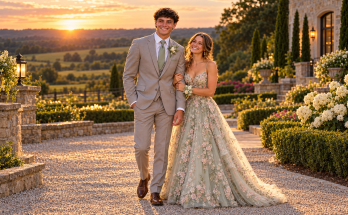
“There’s something else you should know about why Daniel disappeared after Dad died.” Sophie’s voice was so gentle that it somehow hurt more than accusation. Around us, the wedding carried on in fragments. A little girl chased soap bubbles near the fence.
Someone arranged lemonade glasses on an old wooden table. Wildflowers trembled in mismatched jars beneath strings of warm lights. It was painfully simple. Beautiful in a way money could not manufacture. And I had arrived intending to laugh at it. I looked at Daniel.
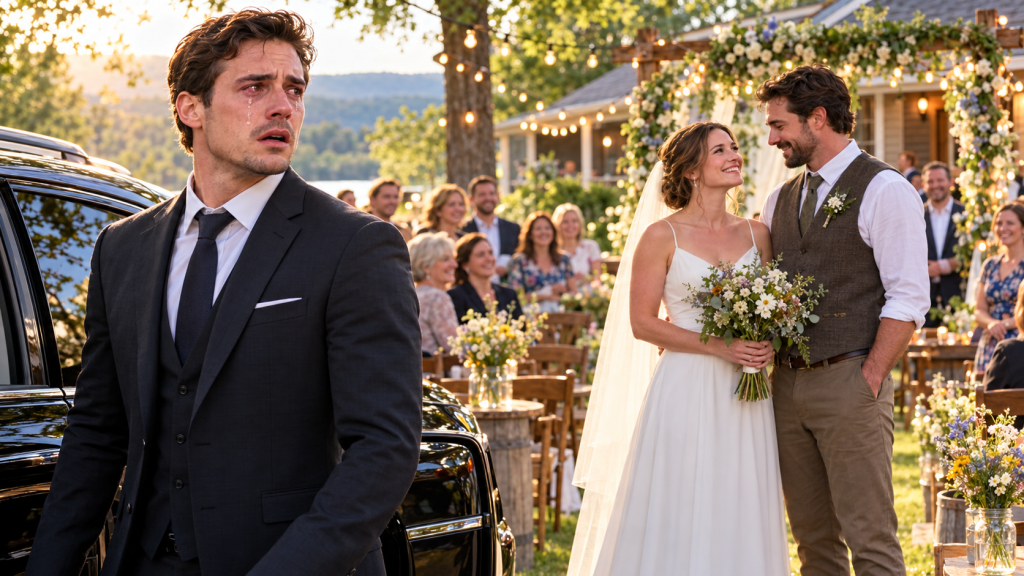
My older brother lowered his eyes. “Sophie,” he said quietly. “No.” She squeezed his hand. “He should know.” A cold weight settled in my stomach. “Know what?” Daniel stared past me toward the driveway, where my polished BMW sat like evidence of the man I had worked so hard to become.
Then he looked back.
“You remember Dad’s house?”
“Of course.”
“You remember thinking I sold it after the funeral?”
My throat tightened.
I did remember.
The day after Dad was buried, Daniel told me the house would probably have to go.
I had been furious.
I accused him of mismanaging everything.
I told him Dad had spent his life saving while Daniel spent his life “working jobs that went nowhere.”
I remembered every word because some cruelties stay preserved inside us even when we spend years pretending they were justified.
“I remember.”
Daniel nodded.
“I didn’t sell it because I wanted money.”
“Then why?”
“The bank took it.”
My chest tightened.
“No.”
“Yes.”
“Dad owned that house.”
“He owed against it.”
“That doesn’t make sense.”
Daniel gave a humorless smile.
“It makes perfect sense if you know what he borrowed for.”
I stared.
Sophie looked at me.
“For you, David.”
I laughed once.
The sound came out wrong.
“For me?”
Daniel nodded slowly.
“When you got into Columbia, Dad cried.”
I remembered.
He stood in our little kitchen holding the acceptance letter.
He kept reading the first line aloud as though the university might change its mind if he stopped.
Dear Mr. Harris, we are pleased…
Dad had worked maintenance.
Night shifts.
Weekend repairs.
Anything that paid.
He had finished high school but never college.
My acceptance became family mythology overnight.
Daniel continued.
“Your aid package didn’t cover everything.”
“I had scholarships.”
“You lost part of one after your second year.”
I remembered that too.
A departmental grant disappeared after funding changes.
Dad told me not to worry.
“Your father finds a way.”
That was what he said.
I thought it meant savings.
I had never asked.
Daniel continued.
“He refinanced the house.”
My mouth went dry.
“How much?”
“First time?”
He paused.
“Thirty-two thousand.”
I stared at him.
“Then he borrowed again the next year.”
“How much altogether?”
Daniel looked at Sophie before answering.
“Ninety-four thousand by graduation.”
The world seemed to narrow.
“No.”
“You can say no as many times as you want.”
“It doesn’t change the loan statements.”
I looked at Sophie.
She said nothing.
No pity.
Good.
I couldn’t have survived pity.
Daniel continued.
“Dad also had credit-card debt.”
“Medical bills from Mom.”
“Repairs.”
“Your graduation trip.”
I interrupted.
“He told me he had saved for that.”
“He hadn’t.”
I stepped backward.
The heel of my expensive shoe sank slightly into the lawn.
“How do you know all this?”
“Because I handled the estate.”
“You disappeared.”
“After.”
He looked at me.
“I spent eight months cleaning up what was left.”
My throat tightened.
“What did you do?”
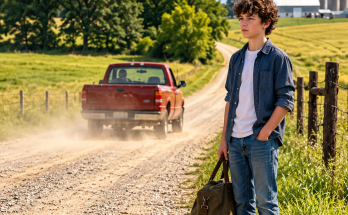
“Sold my truck.”
I remembered that truck.
A beat-up red Ford Daniel had restored himself.
He loved it.
“What else?”
“Dad’s tools.”
I stared at him.
“The Craftsman chest?”
“Yes.”
“He left that to you.”
“I know.”
“Why?”
“Because the lender didn’t care about sentiment.”
I looked away.
My eyes burned.
Daniel continued.
“I used my savings.”
“How much?”
“Twenty-six thousand.”
“And you still lost the house?”
“Yes.”
The word was simple.
There was nothing dramatic left in his voice.
That made it worse.
I asked:
“Why didn’t you tell me?”
Daniel’s face changed.
Because that was the real question.
Not the money.
Not the house.
Why did I not know?
He reached inside his jacket and took out another folded paper.
Dad’s handwriting.
The sight of it made something in my chest collapse.
Daniel handed it over.
Daniel,
David has spent his whole life terrified of being poor. He thinks success will finally make him safe. Do not make my debt another thing he carries because I wanted him to have a chance I never had.
I stopped reading.
The paper shook in my hand.
Daniel said:
“There’s more.”
I forced myself to continue.
If I am gone before the loans are settled, deal with what you can. Tell him only when he is old enough to understand that accepting help does not make a man weak.
Dad’s signature followed.
Frank Harris.
My father.
I had spent five years in corporate boardrooms telling people I had built myself from nothing.
Nothing.
The word suddenly disgusted me.
My father had borrowed against his roof.
My brother had sold his truck.
And I had called myself self-made.
I looked at Daniel.
“When were you going to tell me?”
He laughed bitterly.
“Dad thought you’d become old enough to understand.”
“I guess we were both waiting.”
I winced.
“I deserved that.”
“Yes.”
He looked almost surprised when I said it.
Then I remembered something.
“At the funeral…”
Daniel’s jaw tightened.
“What?”
“I told you not to come asking me for money.”
“Yes.”
My stomach twisted.
“And you already knew all this.”
“Yes.”
I closed my eyes.
Rain.
Church parking lot.
Daniel in muddy boots.
Me in a tailored black suit.
“You’re thirty,” I had said.
“Get your life together.”
I remembered his face now.
Not angry.
Tired.
I had believed silence meant I won the argument.
It had actually been a man deciding I was too cruel to trust with the truth.
“I’m sorry.”
Daniel stared at me.
“For what?”
I opened my mouth.
Everything was too large.
So I chose one thing.
“For saying that at Dad’s funeral.”
He nodded once.
Good.
No instant forgiveness.
No:
It’s okay.
It wasn’t.
Sophie spoke.
“That still isn’t why he disappeared.”
I looked at her.
Then at Daniel.
“What else?”
Daniel gripped his cane.
“Dad’s debt explained why I left the city.”
“But not why I stayed gone.”
My stomach tightened again.
He continued.
“Three years ago, I was working on a commercial project outside Albany.”
“The scaffolding accident?”
“Yes.”
“What happened?”
“You know the Northstar project?”
My heart stopped.
Northstar.
The name alone changed the air.
My company’s largest regional development contract.
Hotels.
Office towers.
Luxury retail.
A deal that helped earn my promotion to Deputy Director of Sales.
I stared at my brother.
“What does Northstar have to do with you?”
He gave me a sad smile.
“I was on one of their sites.”
I could barely breathe.
“The one that collapsed?”
“Yes.”
My mouth went dry.
I remembered the incident.
News reports.
Six injured workers.
One nearly killed.
Our executives called it a subcontractor failure.
Legal handled everything.
I had attended one meeting where people discussed reputational exposure.
I had never seen names.
“Were you…”
I could not finish.
Daniel nodded.
“I was the worker airlifted out.”
My knees felt weak.
“No.”
“There’s that word again.”
I stared at his left leg.
The cane.
The stiffness.
The man Sophie had visited in rehabilitation.
My brother.
One of the nameless injured workers inside a report I had once skimmed before lunch.
“What exactly happened?”
Daniel looked toward Sophie.
Then back at me.
“A locking mechanism on the scaffold failed.”
“The platform dropped.”
“Two levels.”
“I went through temporary decking.”
“I don’t remember the impact.”
Sophie squeezed his hand.
Daniel continued.
“Pelvis fractured.”
“Femur shattered.”
“Three vertebrae damaged.”
“Nerve injury.”
My stomach turned.
“I spent eleven days in intensive care.”
I whispered:
“I didn’t know.”
“No.”
“Why didn’t anyone tell me?”
Daniel laughed.
“Who?”
“You hadn’t spoken to me in four years.”
I looked down.
Right.
I had not even known where he lived.
Not truly.
I told myself he had disappeared.
But people do not disappear just because we stop looking.
I asked:
“What does any of this have to do with my company?”
Daniel hesitated.
“That is the part I almost didn’t tell you today.”
My heart pounded.
“Tell me.”
“The lawsuit uncovered emails.”
I went cold.
“What emails?”
“Cost-reduction pressure.”
“Schedule pressure.”
“Safety staffing.”
“That’s operations.”
“Yes.”
“Not my department.”
“I know.”
I exhaled.
Then Daniel continued.
“But there was an email from you.”
My breath stopped again.
“What email?”
He looked almost apologetic.
That frightened me more than anger.
“Northstar complained that the contractor’s revised numbers were too high.”
“Yes.”
I remembered the negotiation.
Margins.
Quarterly targets.
Valerie’s father breathing down my neck.
Daniel continued.
“Your team was pushing for another eight percent.”
“That was commercial negotiation.”
“I know.”
“What did I write?”
Daniel held my gaze.
“‘I don’t care where they find the savings. Make the number work.’”
The sentence hit me like physical force.
I remembered it.
Not the exact day.
But I remembered writing versions of it dozens of times.
I didn’t care where the savings came from.
Because I didn’t have to see where they came from.
I whispered:
“That doesn’t mean safety.”
“No.”
Daniel’s answer came immediately.
“I know.”
“Did my email cause the accident?”
“No.”
“Tell me the truth.”
“I am.”
He stepped closer.
“The immediate cause was faulty equipment and a missed inspection.”
“Would a normal inspection have caught it?”
“Possibly.”
“Possibly?”
“Yes.”
“Not certainly?”
“No.”
I swallowed.
“Who reduced inspections?”
“The subcontractor.”
“Because of us?”
Daniel shook his head.
“Not that simple.”
“Then what?”
“Northstar squeezed the primary contractor.”
“The primary contractor squeezed the subcontractor.”
“The subcontractor reduced staffing and inspection frequency.”
“Your company helped create pressure.”
He paused.
“But pressure is not the same as a direct order to skip safety.”
I closed my eyes.
He could have blamed me.
Would have been easier.
Instead he gave me the truth.
Messier.
Harder.
I said:
“So I didn’t cause your accident.”
“No.”
“But…”
“You worked inside the system that made cutting corners profitable.”
My eyes opened.
He continued.
“So did other people.”
“So did executives above you.”
“So did contractors.”
“So did managers who signed safety plans.”
“This isn’t a murder mystery where one email pushed me off a scaffold.”
His voice softened.
“But when I saw your name…”
He stopped.
“What?”
“I hated you.”
I stared.
Daniel swallowed.
“I had spent years paying Dad’s debt because he believed in you.”
“Then I nearly died on a project tied to the company you bragged about.”
“I knew it wasn’t fair to blame you for all of it.”
“But I did.”
My throat tightened.
“Why didn’t you call me?”
He laughed bitterly.
“What would I say?”
“Congratulations on the promotion.”
“By the way, your quarterly targets may have helped make somebody decide safety could wait?”
I flinched.
Sophie touched his arm.
“Daniel.”
He nodded.
“I know.”
He looked back at me.
“That’s why I stayed gone.”
“Not because I thought you were evil.”
“Because I didn’t know whether I could look at you without seeing everything I had lost.”
Silence spread between us.
The music from the backyard sounded distant now.
Someone laughed near the dessert table.
A wedding.
Their wedding.
And I had turned it into a courtroom for my conscience.
I whispered:
“Did Sophie know?”
“Yes.”
“When?”
“Before we started dating.”
I looked at her.
She met my eyes.
“You knew my company was involved?”
“Yes.”
“And you never called me?”
Her expression remained calm.
“Why would I?”
The answer was so simple it hurt.
Because I was no longer part of her life.
I had imagined myself as the great unfinished chapter in Sophie’s story.
Apparently I had been a closed book for years.
She continued.
“Daniel showed me the case files because he was angry.”
“I listened.”
“I didn’t tell him you were innocent.”
“I didn’t tell him you were guilty.”
“I told him he should separate what he could prove from what he wanted to blame.”
I laughed weakly.
“That sounds like you.”
“Yes.”
She smiled faintly.
“I’m still me.”
That sentence broke something open.
She was still herself.
I was the one who had changed into someone I barely recognized.
Sophie continued.
“I did tell him one thing.”
“What?”
“That the David I knew in college would have cared if workers were getting hurt.”
I looked away.
“Would he?”
“Yes.”
Her answer came without hesitation.
“The man who once gave his entire food budget to a classmate whose mother was sick?”
I frowned.
“I forgot that.”
“I didn’t.”
“The man who worked three nights in the economics lab because he wanted to help me pass statistics?”
I almost smiled.
“You were terrible at statistics.”
“I still am.”
Daniel looked between us.
“I was told there would be no flirting.”
Sophie smacked his arm.
That tiny joke saved me from collapsing.
Then she looked back at me.
“You weren’t always this version of yourself, David.”
The words were not absolution.
They were worse.
Because they meant I had choices.
I had not been destined to become arrogant.
I had practiced it.
Repeated it.
Rewarded it.
I looked at Daniel.
“What happened with the lawsuit?”
“Settlement.”
“With who?”
“Subcontractor.”
“Primary contractor.”
“Northstar.”
“Your company contributed through insurers and settlement agreements.”
“No admission?”
“Partial safety findings.”
“Some negligence assigned.”
“Most liability spread.”
I nodded automatically.
Corporate language returned.
Daniel noticed.
“You’re doing it again.”
“What?”
“Turning bodies into percentages.”
I closed my mouth.
He was right.
“How much did you get?”
His face hardened.
“Why?”
“I don’t know.”
“Then don’t ask.”
I nodded.
“Okay.”
He relaxed slightly.
Then:
“Enough to survive.”
“Not enough to make the accident worth it.”
Of course.
No amount could.
Sophie said:
“When I met Daniel, the settlement had not come through.”
Daniel smiled.
“I had seventy-six dollars.”
“Eighty-three before coffee.”
“I bought you coffee?”
“You bought yourself coffee.”
“Details.”
She laughed.
I watched them.
There it was.
The thing I had come to mock.
A poor man.
A receptionist.
Except Sophie now worked in patient support at the rehabilitation center.
Daniel taught vocational safety courses and consulted on construction risk.
They lived modestly.
They were not glamorous.
And yet every look between them had something my penthouse marriage had never contained.
Safety.
Not excitement.
Not status.
Safety.
The freedom to exist without auditioning.
I suddenly understood how exhausted I was.
I had been auditioning for Valerie for five years.
For her father.
For the company.
For myself.
Always proving I belonged in rooms where everyone seemed richer than me.
Daniel looked at my suit.
“You came here to laugh at us?”
There was no gentle way out.
“Yes.”
Sophie closed her eyes.
Daniel nodded as if he had expected it.
I continued quickly.
“I heard Sophie was marrying a poor construction worker.”
“And?”
“I wanted her to see what she had lost.”
Daniel actually laughed.
Not kindly.
“That’s incredible.”
“I know.”
“No.”
He looked at Sophie.
“This man drove two hours to demonstrate depreciation in person.”
Despite myself, I laughed.
Then stopped.
“I’m sorry.”
Daniel’s humor vanished.
“Don’t apologize because you discovered I’m your brother.”
“I’m not.”
“Then why?”
“Because even if the groom had been a stranger…”
I swallowed.
“I would still have been a bastard.”
Sophie’s eyes softened.
Daniel looked at me for a long time.
Then:
“That’s closer.”
A woman near the flower arch called:
“Sophie, sweetheart, we really need to start.”
Sophie glanced at the chairs.
The ceremony.
Their day.
I stepped backward.
“I should go.”
Daniel said nothing.
I turned.
“David.”
Sophie’s voice stopped me.
I looked over my shoulder.
She walked toward me.
“You can leave because you’re ashamed.”
I said nothing.
“Or you can stay because your brother is getting married.”
Daniel stared at her.
“Sophie.”
She looked at him.
“He can sit in the back.”
I almost cried again.
“Why?”
Her answer was quiet.
“Because humiliation is not the same as growth.”
That sentence followed me for the rest of my life.
Daniel pointed toward the last row.
“One chair.”
I nodded.
“Thank you.”
He held up a finger.
“No speeches.”
“Fine.”
“No BMW stories.”
“Fine.”
“No telling anyone what wine costs more.”
“I don’t do that.”
Sophie and Daniel stared at me.
“Fine.”
“And if you say the words ‘market value’ during my wedding,” Daniel added, “I will run you over with my cane.”
“You can’t run.”
“Then I’ll limp aggressively.”
Sophie laughed.
And somehow, for the first time in seven years, I laughed with my brother.
It hurt.
Good.
Some pain is evidence that numbness is ending.
I sat in the last row.
At 4:17 p.m., my phone lit with Valerie’s name.
I silenced it.
She called again.
I silenced it again.
The ceremony began.
Sophie walked toward Daniel through grass scattered with wildflower petals.
No cathedral.
No quartet.
No expensive floral installation.
Her mother held her arm.
Daniel cried before she reached him.
He made no attempt to hide it.
I remembered the man I had been at twenty-five.
I would have called that weakness.
At thirty-two, I suddenly envied it.
The officiant spoke about partnership.
Then she said:
“Love is not choosing the person who makes your life look most impressive.”
My throat tightened.
“Love is choosing the person whose dignity you are willing to protect when there is nothing to gain from doing so.”
I looked down.
Surely Sophie had not written the ceremony specifically to destroy me.
Then again, perhaps the universe had finally grown tired of subtlety.
Daniel gave his vows first.
“Sophie.”
His voice shook.
“You met me when I could barely stand.”
He paused.
“Literally.”
Everyone laughed.
He continued.
“I was angry.”
“Broke.”
“Embarrassed.”
“Impossible.”
Sophie whispered:
“Very.”
More laughter.
Daniel smiled.
“You never treated me like a project.”
“You never loved the version of me you hoped I might become.”
“You loved the man sitting in front of you when I had nothing impressive to offer.”
My vision blurred.
He continued.
“So I promise I will never make you earn kindness from me.”
That sentence struck the deepest.
Never make you earn kindness.
I had spent five years earning kindness from Valerie.
A good quarter.
A polished presentation.
The right clothes.
The right dinner conversation.
A promotion.
Every soft moment in our marriage felt conditional.
And I had once done the same thing to Sophie.
I had loved her while believing she still had time to become more suitable.
More successful.
More impressive.
When she did not transform quickly enough, I left.
I called it ambition.
It was conditional love.
Sophie’s vows were simpler.
“You stayed alive long enough for me to meet you.”
Daniel smiled through tears.
“Barely.”
“And every day since,” she continued, “you have taught me that dignity has nothing to do with salary.”
My throat closed.
“I promise not to measure our life by what strangers envy.”
For one second, her eyes moved toward the back row.
Toward me.
Not cruel.
Not triumphant.
Just true.
When they kissed, everyone rose.
I stood too.
I applauded harder than anyone.
Not because I had been forgiven.
Because their happiness no longer needed to be about me.
That was new.
After the ceremony, I tried to leave quietly.
Daniel found me beside my BMW.
He tapped the roof.
“Still nice.”
I smiled weakly.
“You always liked cars.”
“Still do.”
“Dad would hate the maintenance.”
“He would.”
Silence.
Then:
“I’m sorry.”
Daniel leaned against his cane.
“For what now?”
“For being embarrassed by you.”
His face changed.
That was the sentence he needed.
Not the debt.
Not the wedding.
That.
I continued.
“I used to introduce you like I was apologizing.”
He nodded.
“You’d say, ‘My brother works construction,’ and then immediately tell people about your internship.”
I closed my eyes.
“Yes.”
“You know what I heard?”
“What?”
“‘Please don’t judge me because this is my family.’”
I swallowed.
“That’s what I meant.”
Honesty is ugly before it becomes useful.
Daniel looked away.
“At least you finally said it.”
“I’m ashamed.”
“You should be.”
“Yes.”
He looked back.
That surprised him again.
I continued.
“But I don’t want shame to be the only thing I do.”
Daniel stared at me.
Then:
“Good.”
“What should I do?”
His expression hardened slightly.
“That isn’t my job.”
Of course.
I nodded.
“You’re right.”
He started walking back toward the reception.
Then stopped.
“David.”
“Yes?”
“Dad was proud of you.”
My throat tightened.
“He worried about you.”
“Different thing.”
I looked down.
“He died thinking I was successful.”
Daniel shook his head.
“He died thinking you were his son.”
The tears came fast.
I did not hide them.
Daniel left me standing beside the car.
I drove back to Manhattan after sunset.
No music.
No phone calls answered.
I replayed everything.
Dad’s debt.
Daniel’s accident.
My email.
Sophie’s vows.
My own laughter when I heard she was marrying “a poor guy.”
By the time I reached our apartment, Valerie was waiting.
White blouse.
Wineglass.
Perfect posture.
“What the hell happened to you?”
I took off my jacket.
“My brother got married.”
She frowned.
“You have a brother?”
I stared at her.
Five years of marriage.
“You didn’t know?”
“You never talk about him.”
Exactly.
She took a sip.
“And Sophie?”
“She married him.”
Valerie’s eyes widened.
Then she laughed.
That laugh decided more than she realized.
“The receptionist married your construction-worker brother?”
I said nothing.
She smiled.
“That is almost too perfect.”
My chest tightened.
“He was injured.”
“What?”
“Scaffolding collapse.”
She shrugged slightly.
“Construction is dangerous.”
“He almost died.”
Her expression barely changed.
Then:
“Why is this suddenly my problem?”
I stared at her.
Not because she was uniquely monstrous.
Because I recognized myself.
This was how I sounded.
Every time I reduced someone’s struggle to a category.
Poor choices.
Bad career.
Unskilled labor.
Not my problem.
I said:
“Northstar.”
Her hand stopped halfway to her mouth.
There.
A reaction.
“You know the project?”
“Of course.”
“My brother was one of the injured workers.”
Silence.
Then:
“David…”
“You knew?”
“No.”
“Valerie.”
“I knew there was litigation.”
“That isn’t what I asked.”
She put the glass down.
“I did not know your brother was involved.”
I believed that.
Partly.
“What do you know about the safety issues?”
She looked annoyed.
“Why are we doing this tonight?”
“Because I just found out my brother almost died on a project that helped make my career.”
“That’s melodramatic.”
I stared at her.
She continued.
“Your sales team didn’t build the scaffold.”
“No.”
“Then stop acting guilty for everything.”
That should have comforted me.
Instead, it sounded like the exact escape hatch I wanted to avoid.
I said:
“I’m going to sleep in the guest room.”
She laughed.
“Because Sophie got married?”
“No.”
I looked at her.
“Because I finally heard how we talk about people.”
Her face hardened.
“We?”
“Yes.”
That was the first honest conversation in our marriage.
It did not go well.
The next Monday, I requested the archived Northstar files.
I had legitimate access to the sales records.
Compliance noticed.
Asked why.
I told them.
Not everything.
Enough.
The records were worse than I expected.
Not criminal confession.
Something more ordinary.
Pressure.
Emails.
Deadlines.
Warnings.
One operations manager wrote:
Current cost target cannot be achieved responsibly without reducing inspection frequency, staffing, or both.
A senior executive replied:
Then find a contractor who can achieve it.
The executive was Richard Richards.
Valerie’s father.
My CEO.
My career-maker.
I sat alone in my office, staring at his name.
There were later emails showing the subcontractor proposed reduced inspection staffing.
Approved by project operations.
Not me.
Still.
The pressure flowed downward exactly as Daniel described.
I found my own message.
I don’t care where they find the savings. Make the number work.
Reading it now felt different.
I remembered writing it while eating lunch at my desk.
I had probably moved on to another account within five minutes.
Somewhere else, somebody took that number and converted it into fewer labor hours.
Fewer inspections.
Less redundancy.
Maybe the failed pin would still have been missed.
Maybe not.
I did not know.
And that uncertainty was precisely why the warning should have mattered.
I forwarded the relevant correspondence to internal compliance.
Then requested a formal review.
Two hours later, Valerie called.
“What are you doing?”
“My job.”
“My father says you reopened Northstar.”
“I requested compliance review.”
“Why?”
“You know why.”
“Because of Daniel?”
“Because there were documented safety concerns.”
“The case settled.”
“Settling does not mean the process was good.”
Silence.
Then:
“You need to think carefully.”
That phrase used to control me.
My promotion.
My mortgage.
My access to Richard.
Now it sounded small.
“I am.”
“If you embarrass my father, don’t expect him to protect your position.”
There it was.
Protection.
I looked around my office.
Glass walls.
City view.
Awards.
A room I had once believed proved my worth.
I said:
“If my position requires protecting him from compliance, it isn’t much of a position.”
She hung up.
I sat there terrified.
Not triumphant.
Terrified.
That mattered.
Courage rarely feels like power.
Usually it feels like nausea while you do something anyway.
The review took six months.
External counsel.
Document holds.
Board interviews.
Audits.
Northstar was not revealed to be some vast murder conspiracy.
Reality was less theatrical.
More damning in a different way.
Cost pressure had repeatedly overridden warnings.
No executive ordered anyone to endanger workers.
But people who raised concerns were treated as obstacles.
Deadlines mattered more than uncertainty.
Richard had personally dismissed two documented warnings without sufficient review.
The subcontractor bore direct responsibility for missed inspections and defective equipment oversight.
The primary contractor shared responsibility for supervision.
Our company bore part of the commercial pressure and governance failure.
Liability had already been partly resolved through settlement.
But internally?
The board was furious.
Richard resigned.
Official statement:
planned leadership transition.
Everyone knew.
My own role was reviewed too.
I admitted the email.
The pressure.
What I knew.
What I did not know.
I was not fired.
Sometimes consequences are quieter.
My promotion disappeared.
Accounts moved away from me.
Meetings became smaller.
People stopped inviting me to certain dinners.
Valerie called it humiliation.
I started calling it clarity.
Our marriage collapsed during the review.
Not because of Sophie.
Not because of Daniel.
Because once I stopped wanting Richard’s approval more than my own respect, Valerie and I had almost nothing left to build around.
She filed for divorce first.
In mediation she said:
“You changed after that wedding.”
I thought.
“No.”
“I started changing.”
“That’s the same thing.”
“No.”
I looked at her.
“Change is a process.”
“Leaving Sophie was a decision.”
“Marrying you was a decision.”
“Using your father’s approval as proof I mattered was thousands of little decisions.”
She stared at me.
“So I’m the villain?”
“No.”
That surprised her.
I continued.
“You treated me badly sometimes.”
“Yes.”
“I let you because being married to you made me feel successful.”
Her eyes filled.
“I loved you.”
“I loved you too.”
“Then why wasn’t that enough?”
I almost laughed.
Because I had once asked Sophie the opposite question without words.
Why wasn’t love enough to compensate for her lack of status?
Now life returned the question.
I said:
“Love doesn’t automatically make two people good for each other.”
We divorced eleven months later.
No revenge.
No dramatic public humiliation.
No secret baby.
Just attorneys.
Property.
Two exhausted people.
Valerie kept the apartment.
I kept some investments.
Sold the BMW.
Daniel laughed when he heard.
“You finally developed taste?”
“The maintenance was obscene.”
“Dad tried to tell you.”
We had started speaking by then.
Slowly.
For the first year after the wedding, I called him once every couple weeks.
Mostly voicemail.
“Hope your class went well.”
“Happy birthday.”
“I found Mom’s old cookbook.”
Nothing dramatic.
No:
Please forgive me.
No:
I’ve changed.
Because changed people should not need to announce themselves constantly.
Eventually, Daniel answered.
“Stop leaving polite messages.”
“What should I leave?”
“Something funny.”
“I’m not funny.”
“I know.”
That was our first real opening.
I visited.
Their house was small.
Two bedrooms.
Rental at first.
Scratched kitchen table.
Books everywhere.
Daniel’s cane beside the sofa.
Sophie handed me coffee.
Black.
I stared.
“You remember?”
She shrugged.
“I remember lots of things.”
For one stupid second, something old moved inside me.
Regret.
Possibility.
Then she added:
“Remembering isn’t the same as wanting things back.”
I nodded.
“I know.”
And I did.
Finally.
She loved Daniel.
Not as the man she settled for after me.
Not as revenge.
Not as some poetic downgrade.
She loved him.
Their relationship did not exist in reference to mine.
That realization freed all three of us.
Daniel asked me to help with his training nonprofit.
Not money.
At first.
Budgets.
Grant projections.
Insurance.
Procurement.
He had formed a small organization teaching construction safety and apprenticeship skills to workers who could not afford expensive certification programs.
I looked at his spreadsheet.
It was terrible.
I said:
“This is criminal.”
He looked offended.
“It works.”
“No.”
“It breathes.”
“That’s not the same.”
Sophie yelled from the kitchen:
“Please save us, Columbia.”
I smiled.
So I helped.
For once, economics did not make me superior.
It made me useful.
That difference changed everything.
We spent three hours fixing his budget.
At the end, Daniel leaned back.
“You’re good at this.”
“Columbia.”
He threw a paperclip at me.
“Don’t ruin the moment.”
I laughed.
Then asked:
“How much did you personally spend cleaning up Dad’s debt?”
His face closed.
“Why?”
“Because I need to know.”
“No, you don’t.”
“Daniel.”
He sighed.
“About sixty-three thousand.”
My chest tightened.
“Plus the truck?”
“Yes.”
“Tools?”
“Yes.”
“Why didn’t you ever ask me to repay half?”
He stared at the computer screen.
“Because by the time you had money, I didn’t want your money.”
“What did you want?”
He looked at me.
“My brother.”
There was no clever response.
I swallowed.
“I’m sorry.”
He nodded.
“I know.”
That was the first time he said it without distance.
I asked:
“Can I repay you?”
“No.”
“Please.”
“No.”
“Daniel.”
He thought.
Then:
“Fund three apprentices.”
“What?”
“Tools.”
“Certification.”
“Transportation stipend.”
“That’s it?”
“That’s not nothing.”
“You’ll let me do that?”
“Anonymous.”
“Why anonymous?”
“Because your ego needs exercise.”
I laughed.
Then realized he meant it.
Three apprentices.
One was a nineteen-year-old named Luis who had dropped out of school to help his mother.
Bad test scores.
Brilliant with electrical systems.
Old me would have read the résumé and moved on.
Daniel said:
“He sees circuits in his head.”
Luis became licensed five years later.
At his certification dinner, he hugged Daniel.
Then me.
“Thank you for believing in me.”
I almost corrected him.
Daniel believed first.
Then I stopped.
Belief can be learned.
I said:
“You earned it.”
Daniel heard.
He smiled.
Sophie changed careers too.
She moved from volunteer support into rehabilitation program management.
Then community services.
The receptionist I once considered unambitious eventually managed a team of forty-two people and coordinated services for hundreds of patients.
One night at dinner, I said:
“You know, you became pretty successful.”
She stared at me.
Daniel groaned.
“Walk it back.”
I laughed.
“I mean by my old standards.”
Sophie smiled.
“That’s worse.”
“Fine.”
I raised both hands.
“You were always successful.”
She shook her head.
“No.”
I looked at her.
“I wasn’t.”
“Not always.”
“I was kind.”
“I worked.”
“I survived.”
“But I also hid behind being needed because I was afraid to ask for more.”
That surprised me.
Sophie continued.
“You weren’t the only person who had to grow up.”
That mattered.
I had spent years turning her into a moral symbol.
The good woman I left.
That was another way of refusing to see her fully.
She was not a saint.
She was a person.
That made my apology more meaningful, not less.
Years passed.
The nonprofit grew.
Five apprentices became twelve.
Then thirty.
Daniel partnered with unions and safety organizations.
He never became wealthy.
He became respected.
There is a difference.
At forty-one, I left corporate sales entirely.
Not as a dramatic sacrifice.
I was simply finished.
I started consulting for smaller companies on sales systems, procurement ethics, and contractor risk.
The first year I earned half my old salary.
I panicked constantly.
The old poverty fear returned.
What if work dries up?
What if I lose the apartment?
What if everyone sees I fell?
Then I realized:
No one was looking as closely as I imagined.
That was another freedom.
I bought a used Subaru.
Daniel laughed for ten straight minutes.
“This is what defeat looks like.”
“It has all-wheel drive.”
“So does a tractor.”
Sophie made him stop.
I kept the Subaru eleven years.
At forty-three, I met Leah.
Public-school history teacher.
Funny.
Divorced.
Completely unimpressed by job titles.
On our third date she asked:
“What are you proudest of?”
The old answers came automatically.
Columbia.
Deputy director before thirty.
Major international accounts.
Then I stopped.
I said:
“My brother answers my phone calls.”
Leah stared at me.
“That sounds like a story.”
“It’s long.”
“Good.”
We married three years later.
A backyard wedding.
Yes.
String lights.
Daniel showed up in a suit he actually owned.
I looked him up and down.
“Expensive.”
He frowned.
“Don’t insult me at your wedding.”
Sophie laughed.
During my vows, I told Leah:
“I spent a long time thinking love was supposed to prove something about me to strangers.”
She squeezed my hands.
“I promise not to turn you into evidence that I succeeded.”
Daniel looked down.
Probably crying.
He later insisted it was pollen.
At the reception, he handed me an envelope.
I groaned.
“Another dead-person letter?”
“No.”
Inside was a photocopy of an old check.
Dad’s handwriting.
PAY TO THE ORDER OF COLUMBIA UNIVERSITY — $32,000.
Memo:
DAVID — FALL TUITION
My eyes blurred.
“Why do you have this?”
“Found it in storage.”
I ran my thumb across Dad’s signature.
“He really paid that.”
“Yes.”
“I thought…”
“I know.”
Daniel looked toward the lights.
“He believed in you.”
I whispered:
“I wasted so much time trying to prove he was right.”
Daniel looked at me.
“Maybe he didn’t need proof.”
That thought had never occurred to me.
Maybe Dad did not invest in me because he expected a return.
Maybe sacrifice was not a loan.
Maybe love was not accounting.
I folded the photocopy.
Daniel said:
“Keep it.”
“No.”
“What?”
“I don’t want to turn it into debt.”
He smiled slowly.
“Look at you.”
“What?”
“Learning.”
I kept it anyway.
Not as an invoice.
As history.
Five years later, Richard Richards called me.
My former father-in-law.
His voice had aged.
“David.”
“Richard.”
“I hear your brother has a worker-safety program.”
“Yes.”
“I’d like to donate.”
I tensed.
“How much?”
“Two hundred thousand.”
Old David would have heard the number first.
Newer David asked:
“Why?”
Silence.
Then:
“Does it matter?”
“Yes.”
He sighed.
“I spent forty years believing leadership meant demanding results and letting other people figure out the cost.”
I said nothing.
Richard continued.
“When Northstar happened, I told myself I never ordered anyone to cut safety.”
“You didn’t.”
“I know.”
“But I made it expensive to tell me something couldn’t be done.”
There it was.
Accountability.
Not total blame.
Not innocence.
I said:
“I’ll ask Daniel.”
Daniel said no.
Immediately.
“No.”
“It could fund twenty apprentices.”
“No.”
“Why?”
“I don’t want him buying moral anesthesia.”
Fair.
“What if he genuinely wants to help?”
“Then he can help somewhere that doesn’t need to forgive him.”
I called Richard.
“He said no.”
Long silence.
Then:
“How do I change his mind?”
“You don’t.”
Richard was quiet.
I continued.
“He suggested an independent worker-safety organization.”
Richard donated there.
No press release.
No building named after him.
I learned about it accidentally years later.
That mattered more.
Valerie changed too.
I heard she left her father’s company after our divorce.
Started an interior-design business.
Failed.
Started again.
Years later, we ran into each other at a restaurant.
She was alone.
So was I.
We spoke for ten minutes.
No bitterness.
She said:
“I was awful to you.”
I smiled faintly.
“I was awful before I met you.”
“That doesn’t erase me.”
“No.”
She looked down.
“I used Dad’s approval like oxygen.”
I understood.
“I used it too.”
She looked at me.
“I think I married you partly because he liked you.”
I nodded.
“I think I married you partly because he liked you too.”
We laughed.
Sad.
Honest.
Two people using each other as mirrors.
She asked:
“Are you happy?”
I thought.
“Peaceful.”
“That sounds old.”
“It feels expensive.”
She smiled.
Then we said goodbye.
No reconciliation.
No revenge.
Just less poison.
Daniel’s health remained complicated.
His left leg worsened with age.
At forty-seven, he needed another surgery.
Sophie called me the night before.
“He’s scared.”
“Daniel?”
“He won’t say it.”
I drove up.
Found him sitting on the porch.
Dark.
Cold.
“You look terrible,” he said.
“You’re having surgery.”
“I know. Why do you look terrible?”
I sat beside him.
Silence.
Then he whispered:
“What if I lose more mobility?”
There it was.
I answered like a brother.
Not a consultant.
“I’ll be here.”
He stared.
“That’s not what I asked.”
“I know.”
“What if I can’t teach?”
“We adapt.”
“What if the nonprofit suffers?”
“We adapt.”
“What if Sophie gets tired?”
“She’ll tell you herself.”
He smiled faintly.
Then:
“What if I need help?”
I looked at him.
“Then you need help.”
He laughed.
“That simple?”
“No.”
“But still true.”
Surgery went well.
Recovery did not.
Pain.
Frustration.
Months of therapy.
I brought food.
Terrible food.
Daniel complained about everything.
Normal brotherhood.
One morning, I helped him pull on a sock.
Our eyes met.
He said:
“If twenty-five-year-old you could see this…”
“He’d hire somebody.”
Daniel laughed so hard he nearly fell off the bed.
We never discussed the irony again.
We didn’t need to.
At fifty, Daniel’s nonprofit opened a permanent training center.
Three classrooms.
Workshop.
Safety simulation space.
Nothing grand.
Everything useful.
The board wanted Daniel’s name on it.
He refused.
Then they suggested Dad’s.
Daniel called me.
“What do you think?”
“He’d hate it.”
“Exactly.”
We compromised.
One scholarship:
Frank Harris Second-Chance Apprenticeship.
For people who started late.
Dropped out.
Changed careers.
Failed exams.
Recovered from addiction.
Returned after prison for nonviolent offenses.
People whose lives did not look polished enough for easy admiration.
At the opening, Daniel gave a speech.
He stood with his cane.
Gray at his temples.
He pointed at me.
“My brother went to Columbia.”
Everyone looked.
I wanted to crawl under a chair.
“I barely finished community college.”
Laughter.
“He wore suits.”
“I wore boots.”
“He thought he was better than me.”
More laughter.
I covered my face.
Daniel grinned.
“He was wrong.”
Applause.
I shouted:
“Wrap it up.”
He laughed.
Then became serious.
“I also spent years believing being angry at him proved I didn’t need him.”
The room quieted.
“That was wrong too.”
He looked at me.
“People can fail you and still change.”
“Sometimes they don’t.”
“Sometimes they apologize because consequences hurt and nothing else.”
“But sometimes…”
He paused.
“Change becomes behavior.”
My eyes filled.
“And when that happens, you’re allowed to notice.”
Not required.
Allowed.
That was Daniel.
No cheap forgiveness.
No permanent punishment.
Choice.
He continued:
“This place exists because somebody noticed potential before the résumé looked impressive.”
“That’s what Dad did for David.”
“That’s what Sophie did for me.”
“That’s what we try to do here.”
I looked down.
When he finished, I hugged him.
He whispered:
“Don’t make this weird.”
“Too late.”
He hugged back.
Dad would have been proud.
For the first time, I believed he would have been proud of both of us at once.
Not in competition.
That was another thing I had invented.
Scarcity.
Only one successful son.
Only one person worthy of admiration.
Dad never said that.
I did.
Sophie and Daniel never became conventionally rich.
They bought a modest house eventually.
Paid a mortgage.
Argued over insurance.
Took one vacation every few years.
Daniel drove a pickup until it had 180,000 miles.
Sophie used coupons even after she didn’t need to.
They disagreed.
Sometimes badly.
No perfect marriage.
But one thing never changed.
Neither used the other’s weakness as leverage.
The older I got, the more extraordinary that seemed.
At Christmas, years after their wedding, a niece asked:
“Uncle David, were you at Aunt Sophie and Uncle Daniel’s wedding?”
The room went quiet.
Daniel started smiling.
I pointed.
“Don’t.”
He ignored me.
“Your Uncle David came because he heard I was poor.”
The children laughed.
I groaned.
Sophie added:
“He wanted to make fun of us.”
Leah turned toward me.
“I heard the edited version.”
“Everyone settle down.”
The niece asked:
“What happened?”
Daniel said:
“He saw me.”
The laughter softened.
That was the truth.
I saw him.
Not as the embarrassing brother.
Not as a laborer.
Not as a case file.
My brother.
And once I saw him clearly, I could no longer avoid seeing myself.
I said:
“I realized I was the poorest man there.”
Daniel groaned.
“That is disgustingly sentimental.”
Sophie cried anyway.
Leah squeezed my hand.
Someone asked for pie.
Life moved on.
At sixty-two, I found Dad’s original letter again.
The one Daniel had carried to the wedding.
Never become so successful that you can no longer recognize a good person.
For years, I thought Dad meant Sophie.
Then Daniel.
Eventually, I realized he also meant me.
Not that I had secretly always been good.
That would have been too easy.
He meant I should remain capable of recognizing goodness as something worth choosing.
Even in myself.
Especially after failure.
Shame tells you:
You are the worst thing you did.
Ego tells you:
You did nothing wrong.
Responsibility sits somewhere harder.
You did it.
It mattered.
Now what will you do next?
That question built the second half of my life.
Daniel died at seventy-six.
Peacefully.
Not from the leg.
Not from construction.
A stroke in his sleep.
Sophie called me at 5:12 a.m.
I answered before the second ring.
She said nothing.
I knew.
I sat on the edge of the bed.
Leah sleeping beside me.
Morning still dark.
“No.”
Sophie cried.
“He’s gone.”
My brother.
The man I lost for seven years.
The man I almost lost forever because I needed to feel superior.
The man who let me earn my way back one ordinary choice at a time.
I drove up that morning.
No BMW.
No suit.
No arrogance.
Just an old man driving too fast toward grief.
Sophie was sitting at the kitchen table.
Daniel’s cane leaned beside his chair.
I stared at it.
She followed my eyes.
“He hated that thing.”
“I know.”
“He named it.”
“What?”
“Gerald.”
I laughed through tears.
“He never told me.”
“He thought you’d mock him.”
“I would have.”
“I know.”
We sat there for hours.
Later, sorting Daniel’s desk, I found an envelope.
Of course.
This family had a problem with envelopes.
My name.
I opened it.
David,
If you’re reading this, I’m dead, which means I finally won an argument by leaving before you could respond.
I laughed.
Then cried.
Do not turn me into a saint because I died.
I was stubborn.
I held grudges too long.
I once stole Dad’s socket wrench and blamed you.
I stared.
“You bastard.”
Sophie laughed from across the room.
“You found that part?”
“Yes.”
I continued.
You were arrogant.
Then you were less arrogant.
That counts.
My vision blurred.
You once thought I was poor because I worked with my hands.
I once thought you were empty because you worked behind a desk.
We were both lazy in the ways we judged each other.
I stopped.
That was Daniel.
Even dying, refusing a simple morality play.
Dad paid for your education because he believed in what you could become.
I covered what I could because I loved you even when I didn’t like you.
You spent the next forty years paying it forward instead of trying to repay me.
That was enough.
I pressed the letter against my chest.
At the bottom:
Also, the Subaru was ugly.
I laughed until my ribs hurt.
At the funeral, people told stories.
Daniel teaching apprentices.
Daniel yelling about hard hats.
Daniel showing up with groceries when somebody lost work.
Daniel hating hospitals.
Daniel dancing badly at weddings.
No one said:
Poor laborer.
No one said:
Failed career.
No one said:
Man who never became rich.
They described what he gave.
What he built.
Who felt safer because he existed.
I stood to speak.
For a long time, I could not.
Then I looked at Sophie.
Gray-haired.
Tired.
Still the woman who once stopped me from leaving their wedding because humiliation was not the lesson.
I said:
“When I was young, I thought success meant entering a room and making people wonder how you got so far.”
Silence.
“My brother taught me something better.”
I looked at Daniel’s photograph.
“Success is entering a room and leaving nobody smaller because you were there.”
My voice broke.
“Daniel spent his life doing that.”
I sat down.
No longer speech.
Just truth.
Afterward, Sophie gave me Dad’s original letter.
“Keep it.”
“I thought Daniel wanted it.”
“He did.”
“He also wanted you to have it eventually.”
I stared at the paper.
“Why?”
Sophie smiled.
“Because he stopped needing proof that your father loved him.”
My throat tightened.
That was the last gift Daniel gave me.
Freedom from competition.
I kept the letter.
Years later, we placed a copy at the training center.
Not the famous line.
That felt too easy.
Instead, another sentence from Dad’s papers went beneath Daniel’s photograph:
A man’s work should help him stand taller without making someone else kneel.
I had spent decades learning that.
Better late than never.
Sophie lived another nine years.
We became family in the truest sense after Daniel died.
Not because she became mine.
Never.
Because grief no longer needed strange categories.
I drove her to appointments.
She criticized my parking.
I fixed her television.
She complained that I changed the settings.
Every Christmas, she made the same terrible fruitcake Daniel loved.
I ate it out of loyalty to the dead.
She knew.
One afternoon, when we were both old enough to stop pretending memory was perfect, she said:
“Do you know what I thought when I saw you at our wedding?”
“What?”
“I thought, ‘Of course he wore that suit.’”
I laughed.
“That’s it?”
“No.”
She looked toward the window.
“I also thought you looked lonely.”
That surprised me.
“I was married.”
“I know.”
“Successful.”
“I know.”
“Why lonely?”
She smiled sadly.
“Because you kept looking around to see who noticed you.”
I sat with that.
All those years later, she still knew how to find the exact truth.
I said:
“You were right.”
“I usually was.”
“Daniel would disagree.”
“That’s why I waited until he died to say it.”
We laughed.
Then she became serious.
“David.”
“Yes?”
“You know I forgave you a long time ago.”
I looked down.
“I never asked.”
“I know.”
“Why tell me now?”
“Because forgiveness and wanting you back were never the same thing.”
I nodded.
“I learned that.”
She reached across the table and squeezed my hand.
“You did.”
That was enough.
When Sophie died, the training center planted a tree beside Daniel’s memorial plaque.
No statues.
Daniel would have hated statues.
I stood beneath it with Leah.
The leaves were still small.
Life beginning where two people had ended.
I thought about the backyard wedding.
The wildflowers.
The borrowed suit.
The cane.
The arrogant man arriving in a luxury car.
If I could return to that afternoon, would I change anything?
Of course.
I would not mock.
I would call Daniel years earlier.
I would ask Dad how he paid tuition.
I would tell Sophie I was sorry before life needed to humiliate me into understanding.
I would question the Northstar emails.
I would care about safety concerns before my brother’s body made them personal.
But none of us are allowed to revise the first half.
Only write what comes after.
That may be the hardest mercy life gives us.
Years later, a young apprentice at the center asked me how I knew Daniel.
I looked at his photograph.
“My brother.”
The young man smiled.
“He must’ve been something.”
“Yes.”
Then:
“Was he always this wise?”
I laughed.
“No.”
“Neither was I.”
The apprentice looked confused.
Good.
People should not become legends just because they die.
Daniel was a man.
Imperfect.
Stubborn.
Kind.
Sometimes bitter.
Often generous.
Poor by my old definition.
Rich by every one that lasted.
I looked through the workshop windows.
Young people learning trades.
Safety harnesses hanging properly.
Instructors checking equipment twice.
A scholarship funded in Dad’s name.
The continuation of a life I once mocked without understanding.
And I thought about that first moment at the wedding.
I stepped into the backyard believing I had arrived from another world.
More refined.
More successful.
Better.
Then I saw the groom.
My brother.
The man who sold his truck while I drove imported cars.
The man who absorbed Dad’s debts while I bragged about being self-made.
The man who almost died inside the machinery of a corporate culture I helped reward.
The man who lost part of his body and still became someone capable of giving safety to others.
The man Sophie loved when he had seventy-six dollars left after coffee.
And I turned away and cried.
For years, people who heard the story assumed I cried because I realized Sophie had married my brother.
That was only part of it.
I cried because in one terrible second, everything I used to measure human worth collapsed.
Salary.
Title.
Car.
Office.
Last name.
Connections.
None of it told me who had character.
None of it told me who would stay.
None of it told me who had quietly carried my family when I was too proud to notice.
I had gone there hoping Sophie would look at me and regret losing me.
Instead, I looked at Daniel and regretted losing myself.
That was the real beginning.
Not of punishment.
Of change.
And if there is one thing my brother taught me before he left this world, it is this:
Regret is not proof of goodness.
Tears are not transformation.
Apologies are not repair.
The only thing that matters is what a person does after finally seeing clearly.
I spent the rest of my life trying to answer that.
Not perfectly.
But honestly.
And somewhere, I like to imagine Dad finally stopped worrying whether either of his sons had become successful enough.
Because by the end, we had learned the better question.
Had we become people worth standing beside?
Daniel had.
And because he gave me another chance to be his brother…
Eventually,
so did I.
THE END STORIES! THANK YOU FOR READING GOOD LUCK !❤️
Related Posts