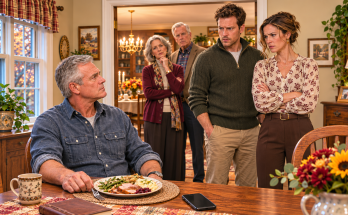
For a moment, I could hear nothing except the soft ticking of the clock in our hallway. My mother stood on the doorstep, snow melting from the shoulders of her winter coat, looking at me as though she had just revealed an embarrassing family secret rather than something that could threaten my children’s futures.
I stared at her. “Mom,” I said slowly, “what do you mean Dad used the education fund as collateral?” She glanced past me toward the living room. “Can we please discuss this somewhere private?” I didn’t move. “Whose education fund?” Her fingers tightened around her purse.
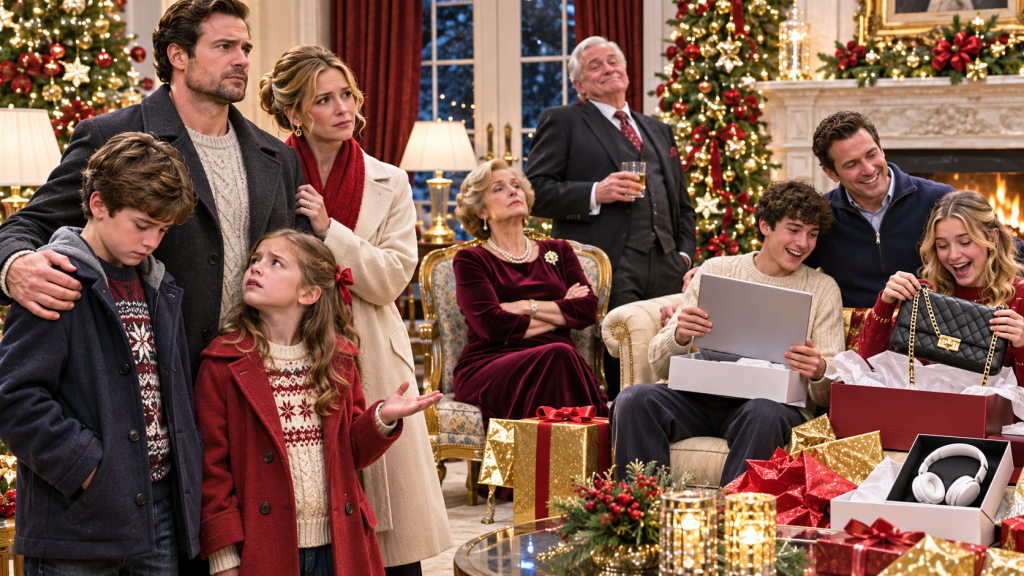
“Paul, you’re making me nervous.” “Mom.” My voice was quiet. “Whose money?” She closed her eyes. “The money your grandmother left for the grandchildren.” I felt a sudden chill. My grandmother, Margaret Whitfield, had died four years earlier. She was a retired librarian who believed three things mattered more than almost anything else: keeping your promises, learning something new every day, and never making a child feel unimportant.
She had left money intended to support the education of her great-grandchildren.
Michael.
Sophie.
And Daniel’s two children, Olivia and Mason.
I knew about the fund.
I had attended the meeting where the family discussed Grandma’s wishes.
But I’d never imagined my father would use money intended for those children to support Daniel’s mortgage.
“Mom,” I whispered, “please tell me you’re mistaken.”
Her eyes filled.
“I wish I were.”
Behind me, Sophie called again.
“Daddy? Is Grandma coming inside?”
I looked toward the living room.
My daughter was standing beside the Christmas tree, holding the little paper angel she’d made at school.
I smiled as gently as I could.
“Not right now, sweetheart. Go help your brother.”
She nodded and disappeared.
Then I turned back to my mother.
“Come into the kitchen.”
My wife, Rebecca, was already waiting beside the table.
She had heard enough of the conversation to know something was wrong.
Mom sat down without removing her coat.
I poured her a glass of water.
My hands were trembling.
Rebecca touched my arm.
“Paul, sit.”
I did.
Then I looked at my mother.
“Start from the beginning.”
Mom lowered her eyes.
“Daniel’s business started having problems last spring.”
I nodded.
“I know that now.”
“He lost several important customers.”
She swallowed.
“And he borrowed money to keep it operating.”
“From whom?”
“Different lenders.”
I waited.
“Your father helped him with some payments.”
My chest tightened.
“How much?”
She hesitated.
“About thirty thousand dollars.”
I stared.
“And you didn’t tell me?”
“Daniel was embarrassed.”
I looked down.
There it was again.
Daniel’s embarrassment had become a family emergency that required everyone’s cooperation.
My children’s disappointment, apparently, had been something they were expected to endure quietly.
Mom continued.
“Then Daniel bought the house.”
I frowned.
“Last summer?”
She nodded.
“But he didn’t have enough money for the down payment.”
Rebecca leaned forward.
“Then how did he buy it?”
Mom’s eyes filled.
“Your father helped arrange the financing.”
I felt sick.
“With Grandma’s money?”
She shook her head quickly.
“Not exactly.”
I stared at her.
“What does that mean?”
She took a shaky breath.
“He used the fund as security for a loan.”
For several seconds, I couldn’t speak.
Then Rebecca asked the question I was struggling to form.
“Was your husband authorized to do that?”
Mom looked frightened.
“I don’t know.”
I turned toward her.
“Mom, who manages the education fund?”
“Your father and Grandma’s attorney were involved when it was established.”
I frowned.
“Which attorney?”
“Mr. Ellison.”
I remembered him.
A quiet man with silver glasses who’d handled Grandma’s estate.
I hadn’t spoken to him since the funeral.
“Did Mr. Ellison approve the arrangement?”
Mom looked down.
“I don’t think Dad consulted him.”
My stomach dropped.
Rebecca took my hand.
“Paul, we need to verify the actual documents before assuming anything about what’s legally possible.”
I nodded.
She was right.
Mom might have misunderstood.
Dad might have exaggerated what he’d done.
The fund could have restrictions that prevented the arrangement from being valid.
But the possibility alone was frightening.
I looked at my mother.
“Did Dad sign something involving my children’s money?”
Her lips trembled.
“Yes.”
I closed my eyes.
“And you knew?”
Tears rolled down her cheeks.
“Not at first.”
“When did you find out?”
She looked away.
“October.”
I stared.
“Two months ago?”
She nodded.
I leaned back.
“So when you sent us the Christmas message saying there would be no gifts, you already knew?”
Mom began crying.
“Yes.”
I looked toward the living room.
Michael and Sophie were laughing at something on the television.
They had no idea their grandparents might have put their education savings at risk.
They didn’t know Daniel’s business had failed.
They didn’t know their cousins’ expensive presents were part of a family desperately trying to conceal financial trouble.
They only knew they’d been invited to a Christmas celebration where everyone else received gifts.
My mother reached for my hand.
“Paul, we didn’t mean to hurt them.”
I gently moved my hand away.
“Then why did you?”
She sobbed.
“Your father thought Daniel’s children needed something happy.”
I nodded slowly.
“And mine didn’t?”
“That’s not what we meant.”
“But that’s what you did.”
Her shoulders shook.
I took a breath.
“Mom, Michael and Sophie aren’t responsible for Daniel’s financial problems.”
“I know.”
“They aren’t responsible for his marriage.”
“I know.”
“And they shouldn’t have to pretend they’re invisible so your family can protect him from embarrassment.”
Mom covered her face.
Rebecca sat quietly beside me.
For years, I’d been told to understand.
Understand Daniel needed more attention.
Understand he was going through a difficult time.
Understand that my parents couldn’t be expected to treat us exactly the same.
I’d accepted those explanations when I was a child.
But I wouldn’t offer my children as the next generation of people expected to understand.
Mom eventually stood.
“I should go.”
I nodded.
Before she reached the door, she turned back.
“Paul?”
“Yes?”
“Are you going to tell Daniel?”
I looked at her.
“I’m going to find out what’s happened to the fund.”
Her face tightened.
“Your father will be furious.”
I felt an old ache.
Even at thirty-six, some part of me still reacted to the possibility of Dad’s disapproval.
But I looked toward Sophie, who was hanging another paper ornament on our tree.
Then I answered.
“Mom, Dad’s feelings aren’t more important than my children’s future.”
She stared at me.
For a moment, I thought she might argue.
Instead, she whispered, “You’re right.”
And left.
That night, after Michael and Sophie went to bed, Rebecca and I sat at the kitchen table.
The Christmas lights glowed softly through the doorway.
Our children’s new books and games were scattered across the living room.
Normally, I loved the quiet after Christmas.
The warm house.
The dishes finally washed.
The feeling that we’d made another beautiful memory together.
But now I couldn’t stop thinking about Grandma.
Margaret Whitfield was the kind of woman who saved every birthday card.
She wrote thank-you notes in blue ink.
She knew the name of every child on her street.
And when Michael was born, she held him against her chest and whispered, “This little boy deserves every chance we can give him.”
Three years later, when Sophie arrived, Grandma cried so hard the nurses brought her tissues.
She loved Daniel’s children too.
She never compared them.
Never treated one branch of the family as more deserving than another.
If a child needed attention, Grandma gave it.
If another child needed encouragement, she gave that too.
She believed love wasn’t a limited resource.
I looked at Rebecca.
“Grandma trusted Dad.”
Rebecca nodded.
“I know.”
“He was supposed to protect that money.”
She took my hand.
“Then we’ll find out whether he did.”
I swallowed.
“And if he didn’t?”
She looked at me.
“Then we deal with the facts.”
I nodded.
For the first time that evening, I felt something steadier than anger.
Resolve.
The following morning, I called Harold Ellison.
He remembered me immediately.
“Paul Whitfield. It’s been a long time.”
“Yes, sir.”
“How are Rebecca and the children?”
“They’re well.”
I hesitated.
“Mr. Ellison, I have questions about Grandma’s education fund.”
His tone changed slightly.
“Of course.”
I explained what Mom had told me.
The mortgage.
The loan.
The claim that Dad had used the fund as security.
There was a long silence.
Then Mr. Ellison said, “Paul, I’d like you to come into my office.”
My stomach tightened.
“Is something wrong?”
“I don’t want to speculate before reviewing the records.”
I nodded.
“When?”
“Tomorrow morning.”
I swallowed.
“I’ll be there.”
Before we hung up, he added, “Bring any documents your family has concerning the arrangement.”
“I don’t have any.”
He paused.
“Then we’ll begin with the records I can properly share.”
Mr. Ellison’s office smelled faintly of coffee and old paper.
There were framed photographs of mountains on the walls.
A small brass clock sat on his desk.
He looked almost exactly as I remembered him from Grandma’s estate meeting.
Except his hair was whiter.
He invited Rebecca and me to sit.
Then opened a folder.
“Paul, your grandmother established an educational trust for her great-grandchildren.”
I nodded.
“The exact structure matters.”
He turned a page.
“The assets were intended to support their education under the trust’s terms. The beneficiaries have interests governed by those documents.”
Rebecca leaned forward.
“Could Paul’s father legally pledge those assets for Daniel’s mortgage?”
Mr. Ellison looked serious.
“A trustee’s authority is limited by the governing instrument and applicable law. Using trust assets to support a personal obligation unrelated to the beneficiaries can raise substantial concerns.”
I swallowed.
“So did he?”
“We’re investigating whether an attempted pledge or related transaction occurred and whether any institution actually relied upon it.”
I leaned forward.
“Grandma’s money could be gone?”
He shook his head gently.
“Let’s not jump ahead.”
He opened another document.
“Based on the available account information, the trust assets have not simply disappeared.”
I exhaled.
“Thank God.”
“But there is a problem.”
My relief vanished.
“What?”
He looked at me.
“Your father submitted paperwork representing that certain beneficiaries’ interests had been addressed through family consent.”
I stared.
“Family consent?”
He nodded.
“Among the supporting materials is a document bearing what appears to be your signature.”
My heart stopped.
I stared at Mr. Ellison.
“My signature?”
He turned the page toward me.
There it was.
Paul Whitfield.
A signature at the bottom of a consent document.
It resembled mine.
The shape of the P.
The loop in the W.
Even the slight slant I’d developed from signing work documents too quickly.
But I had never seen that paper.
I looked up.
“I didn’t sign this.”
Mr. Ellison nodded.
“That’s important.”
Rebecca leaned closer.
“Do you have an original?”
“Not yet.”
I stared at the document.
“What does it say?”
Mr. Ellison explained that the paper purported to acknowledge a financial arrangement affecting the education fund and represented that I had been informed of certain risks.
My chest tightened.
I hadn’t been informed.
I hadn’t consented.
I hadn’t even known Daniel needed help with a mortgage.
I looked at Rebecca.
She was pale.
Then I turned back to Mr. Ellison.
“Who submitted it?”
He took a breath.
“The records indicate it came through your father’s correspondence with the lender.”
I closed my eyes.
My own father.
The man who once told me lying was worse than failing.
The man who lectured me about responsibility after a B in mathematics.
The man who’d looked at my devastated children on Christmas night and said:
You understand.
I opened my eyes.
“No,” I whispered.
“I don’t.”
Mr. Ellison arranged for the disputed document to be formally reviewed.
He also explained that the trust needed independent protection from any transaction that wasn’t properly authorized.
Rebecca and I worked with qualified counsel to ensure Michael’s and Sophie’s interests were considered.
I wanted the records preserved.
The validity of the purported consent examined.
And any improper encumbrance challenged through the appropriate process.
I didn’t want dramatic accusations.
I wanted facts.
Who signed?
Who submitted?
Who approved?
What money moved?
And what did the trust documents actually permit?
That evening, Dad called.
His name appeared on my phone.
For a moment, I considered letting it ring.
Then I answered.
“Hello, Dad.”
His voice was cold.
“Your mother says you’ve been talking to lawyers.”
I took a breath.
“Yes.”
“You’re making a family matter unnecessarily complicated.”
I closed my eyes.
“Dad, there’s a document with my signature on it.”
He went silent.
“I didn’t sign it.”
His breathing changed.
Then he said, “You don’t understand how much pressure Daniel’s been under.”
I stared at the wall.
“Dad, I’m not talking about Daniel’s feelings.”
He sounded irritated.
“Of course you’re not. You’ve always thought you were better than him.”
My chest tightened.
Then I replied.
“No, Dad.”
My voice was steady.
“I’ve spent my whole life being told to understand why he needed more.”
He didn’t answer.
“But this is my children’s education.”
I swallowed.
“And I won’t let anyone put it at risk because Daniel wants a house he can’t afford.”
Dad began shouting.
“You think everything is about money!”
I closed my eyes.
“No.”
I thought about Sophie.
About Michael staring at the floor.
About Grandma’s hands holding a newborn baby.
“It’s about trust.”
Dad laughed bitterly.
“Trust? You’re investigating your own father!”
“Yes.”
The word surprised even me.
For years, I’d softened every disagreement.
Explained.
Compromised.
Apologized.
Now I simply said yes.
Dad fell silent.
I continued.
“Because you’ve given me a reason to ask questions.”
He took a breath.
“You’re going to destroy this family.”
My chest ached.
Then I whispered, “Dad, the family was already hurting.”
He didn’t answer.
“Christmas didn’t create the problem.”
My voice trembled.
“It showed me how far you’d go to pretend there wasn’t one.”
He hung up.
The following weeks were difficult.
Dad refused to discuss the fund directly with me.
Mom called repeatedly.
Sometimes crying.
Sometimes asking me to be patient.
Sometimes explaining that Daniel was under terrible stress.
Daniel sent angry messages.
He said I was embarrassing everyone.
That the mortgage issue was temporary.
That I didn’t understand what it meant to have a business fail.
I didn’t respond to the insults.
Instead, I forwarded relevant information to the professionals reviewing the trust.
One afternoon, Daniel appeared at my office building.
He waited beside the entrance as I left work.
I stopped.
“Daniel?”
He looked exhausted.
His expensive coat hung loosely from his shoulders.
“Paul, we need to talk.”
I glanced toward the street.
“Then let’s go somewhere quiet.”
We sat in a nearby café.
For a while, neither of us spoke.
Then he leaned forward.
“Do you have any idea what you’ve done?”
I looked at him.
“I’ve asked whether money intended for our children has been put at risk.”
He shook his head.
“Dad was trying to help me.”
“I know.”
“Then why are you treating him like a criminal?”
I took a breath.
“Because a document appeared with my signature on it, and I didn’t sign it.”
Daniel went still.
His eyes dropped toward the table.
And I felt my stomach tighten.
“Daniel?”
He didn’t answer.
I leaned forward.
“Did you know about the document?”
His face reddened.
Then he whispered, “Dad said he’d handle it.”
I stared at him.
“What does that mean?”
Daniel rubbed his forehead.
“He said there was a way to use the education fund without actually withdrawing the money.”
I swallowed.
“And you agreed?”
He looked down.
“I needed the financing.”
I took a breath.
“Did you know my name was being used?”
He hesitated.
“Paul…”
I waited.
Then he whispered, “I knew they needed family consent.”
My chest tightened.
“And?”
He closed his eyes.
“I thought Dad would talk to you.”
I stared.
“Did you ask whether he had?”
Daniel shook his head.
“No.”
For a moment, I couldn’t speak.
Then I asked, “Why not?”
He looked up.
His eyes filled.
“Because I knew you’d probably say no.”
There it was.
The truth beneath all the excuses.
They didn’t ask because they suspected I’d refuse.
And they believed that was enough reason to proceed without me.
I leaned back.
Then whispered, “Daniel, saying no is my right.”
He looked down.
“I know.”
I shook my head.
“No.”
My voice trembled.
“I don’t think you do.”
For the first time in years, I told my brother what growing up beside him had felt like.
I didn’t shout.
I didn’t list every childhood grievance.
But I told him enough.
The car Dad excused.
The grades he criticized.
The job Dad arranged for Daniel.
The graduation he barely celebrated for me.
The constant expectation that I should be understanding because Daniel needed more.
My brother listened.
At first, he looked defensive.
Then uncomfortable.
Finally, ashamed.
“I didn’t realize you felt that way,” he whispered.
I smiled sadly.
“That’s because nobody asked.”
He looked down.
I continued.
“And now it’s happening to our children.”
His eyes filled.
“Paul…”
I shook my head.
“Michael and Sophie didn’t do anything wrong.”
“I know.”
“They weren’t responsible for your business.”
“I know.”
“And they didn’t deserve to sit there watching your children open expensive gifts while they received nothing.”
Daniel covered his face.
For a long moment, he was silent.
Then he whispered, “I told Mom not to make a big deal out of Christmas.”
I stared.
“What?”
He looked up.
“I said we shouldn’t exchange gifts.”
My chest tightened.
He continued.
“But Dad insisted.”
I frowned.
“Why?”
Daniel looked away.
“He wanted Olivia and Mason to think everything was normal.”
I sat back.
“And that was more important than telling the truth?”
Daniel began crying.
“I don’t know what I was thinking.”
Later, I learned there was another reason the Christmas gifts were so extravagant.
Dad had promised Daniel’s children expensive presents months earlier.
Before the business failed.
Before the mortgage became a problem.
Before anyone realized how desperate Daniel’s finances had become.
He didn’t want to break that promise.
So he invented a new rule.
No presents for everyone.
Except Daniel’s children.
That way, he could keep his promise without explaining why he couldn’t treat all four grandchildren equally.
It was such a familiar pattern that I almost laughed when Mom finally admitted it.
Dad had spent years making promises to Daniel.
Then expecting everyone else to adjust when those promises became difficult to keep.
And this time, he had done it with my children watching.
The most painful discovery came from Grandma’s old files.
Mr. Ellison found a letter she’d written shortly before her death.
It was addressed to my father.
The letter wasn’t a legal amendment.
It didn’t change the trust.
But it explained her intentions.
I sat in Mr. Ellison’s office while he read it aloud.
I want each child to know that education is an opportunity, not a competition.
My eyes filled.
Please don’t let family disagreements or adult financial troubles determine which of them receives support.
I closed my eyes.
Paul and Daniel have different gifts. Their children will too. Love them without measuring one against the other.
For a moment, I couldn’t breathe.
Grandma had seen it.
Years earlier.
She’d recognized the comparisons.
The favoritism.
The way my parents handled differences between their sons.
And she’d tried to protect the next generation.
I wiped my eyes.
Then whispered, “She knew.”
Mr. Ellison nodded gently.
“She cared deeply about all of them.”
I looked down.
“She left instructions because she wanted this to stop.”
He took a breath.
“She left a trust because she wanted the children’s interests protected.”
I nodded.
Then said quietly, “Let’s make sure they are.”
The review eventually established that my father had exceeded the authority he possessed when he attempted to involve the education trust in Daniel’s financing.
The purported consent bearing my signature was disputed and could not be treated as genuine authorization from me.
There were questions about how the document had been prepared and submitted.
Those questions were referred to the appropriate professionals and authorities for further examination.
The financial institutions reviewed their records.
The parties negotiated corrective arrangements.
And the trust’s interests were protected through the applicable legal process.
The feared loss of the entire education fund did not occur.
The attempted arrangement was addressed before the children lost the money Grandma had intended for them.
But correcting the situation was not simple.
There were legal expenses.
Administrative costs.
And financial obligations that had to be resolved.
Dad’s decisions carried consequences.
Not because I wanted him humiliated.
Because the money belonged to a protected purpose.
And no one had the right to disregard that purpose simply because Daniel needed help.
The house Daniel had purchased became another problem.
His business had failed.
His income had fallen.
And the mortgage payments were beyond what he could comfortably afford.
He and his wife, Melissa, had been trying to keep up appearances.
They continued hosting dinners.
Buying expensive things.
Posting family photographs in beautiful rooms.
Meanwhile, the financial pressure was growing.
When the refinancing arrangement connected to the education fund could not proceed, they had to face reality.
The house was too expensive.
They couldn’t sustain it.
Eventually, Daniel and Melissa sold it.
They moved into a smaller home.
It was painful.
Olivia and Mason were upset.
The family had to adjust.
But they were safe.
They had a roof over their heads.
And their parents finally began building a financial plan based on what they could actually afford.
The first time I visited Daniel’s new home, he looked embarrassed.
“It’s not much,” he said.
I stepped inside.
The living room was small.
There were boxes near the wall.
The kitchen cabinets were old.
But sunlight streamed through the windows.
I looked around.
“It seems comfortable.”
He smiled faintly.
“It’s a big change.”
I nodded.
“I imagine.”
He hesitated.
“Dad thinks it’s humiliating.”
My chest tightened.
I looked at my brother.
“Daniel, there’s nothing humiliating about living within your means.”
He stared at me.
I continued.
“Your children need stability more than they need a house designed to impress people.”
His eyes filled.
He nodded slowly.
“I’m starting to understand that.”
My parents did not adjust so easily.
Dad was furious.
At the lawyers.
At the bank.
At Mr. Ellison.
At me.
He insisted he’d only been trying to help Daniel.
He said the family should have handled everything privately.
He complained that I’d damaged his reputation.
For a while, I stopped responding to his calls.
Not because I wanted to punish him.
But because every conversation became another attempt to make me responsible for his feelings.
Mom continued reaching out.
I answered occasionally.
But I made one boundary clear.
I would not discuss reconciliation while my parents continued minimizing what happened to Michael and Sophie.
Mom didn’t like that.
She cried.
Asked whether I wanted her to suffer.
Said she’d made mistakes but didn’t deserve to lose her grandchildren.
I listened.
Then said gently, “Mom, this isn’t about making you suffer.”
She was quiet.
“It’s about keeping my children from being hurt again.”
One afternoon, Sophie came into my office while I was working from home.
She carried a sheet of paper.
“Dad?”
I looked up.
“Yes, sweetheart?”
“Can I ask something?”
I smiled.
“Always.”
She climbed onto the chair beside me.
Then looked down.
“Are Grandma and Grandpa mad at us?”
My chest tightened.
“Why would you think that?”
She shrugged.
“Because we haven’t seen them.”
I took a breath.
“No, Sophie. You haven’t done anything wrong.”
She studied my face.
“Then why don’t they come?”
I hesitated.
Children deserve honesty.
But they don’t need to carry adult conflicts they can’t control.
I thought carefully.
“Grandma and Grandpa made some choices that hurt our feelings.”
Sophie nodded.
“And we’re giving everyone time to understand what happened.”
She looked down.
“Was it because we didn’t get presents?”
I swallowed.
“That was part of it.”
She was quiet.
Then whispered, “I didn’t need a MacBook.”
My eyes filled.
“I know.”
She looked up.
“I just wanted Grandma to give me something too.”
My throat tightened.
I pulled her gently into my arms.
“Oh, sweetheart.”
She began crying.
“It felt like she forgot us.”
I held her.
And in that moment, I understood again why I’d written the letter.
It was never about expensive gifts.
It was about two children wondering why their grandparents could celebrate other children while overlooking them.
Michael handled things differently.
At eleven, he was old enough to recognize favoritism.
But not old enough to understand why adults would allow it to continue.
He became quieter when family gatherings were mentioned.
One evening, he asked me, “Dad, did Grandpa treat you like that when you were little?”
I was washing dishes.
The question caught me off guard.
I turned toward him.
“Sometimes.”
He leaned against the counter.
“Did it hurt?”
I took a breath.
“Yes.”
He looked down.
“Then why didn’t you stop going?”
I smiled sadly.
“Because I kept hoping things would change.”
He considered.
Then asked, “Did they?”
I looked at him.
“Not the way I hoped.”
His eyes filled.
I dried my hands.
Then knelt beside him.
“But I learned something important.”
“What?”
“That we don’t have to keep putting ourselves in situations where we’re treated unfairly just because we’re related to someone.”
He nodded slowly.
Then whispered, “I’m glad we left.”
My throat tightened.
“Me too, buddy.”
The months passed.
Spring arrived.
Michael returned to baseball.
Sophie started taking art classes.
Rebecca and I focused on building a life where our children felt secure and celebrated.
We went camping.
Visited museums.
Hosted friends.
And created family traditions of our own.
At Easter, we invited neighbors for brunch.
On birthdays, we let each child choose an activity.
And when Christmas came again, we made our own plans.
There were no complicated family group chats.
No promises about gifts that applied differently depending on whose children were involved.
No anxious negotiations about who might feel offended.
Just our family.
Our little house.
And the quiet joy of making memories together.
That December, Mom sent a card.
Inside was a handwritten note.
Paul, we miss you all very much.
Your father and I know last Christmas was painful.
We hope someday you’ll let us make things right.
I read it twice.
Then placed it on the kitchen table.
Rebecca looked at me.
“What do you think?”
I took a breath.
“I think it’s a beginning.”
She nodded.
“But it’s not enough.”
I looked toward the living room.
Michael and Sophie were decorating the tree.
Sophie had made another paper angel.
This time, she placed it at the very top.
I smiled.
“No.”
“Not yet.”
Christmas morning was beautiful.
The children woke early.
There were presents under our tree.
Nothing extravagant.
Books.
Games.
Art supplies.
A new baseball glove for Michael.
A watercolor set for Sophie.
Rebecca made cinnamon rolls.
I brewed coffee.
We opened gifts slowly.
Laughing.
Taking photographs.
Enjoying the morning.
At one point, Sophie handed me a small package.
“Dad, this is for you.”
I smiled.
“For me?”
She nodded eagerly.
I unwrapped it.
Inside was a small framed drawing.
Our family.
Four people standing beneath a Christmas tree.
Everyone smiling.
Everyone holding hands.
And beneath the picture, Sophie had written:
EVERYBODY BELONGS HERE.
My eyes filled.
I looked at her.
“Sweetheart…”
She smiled.
“Do you like it?”
I pulled her into my arms.
“I love it.”
That afternoon, Dad called.
I hesitated before answering.
“Hello?”
“Paul.”
His voice sounded different.
Older.
Tired.
“Merry Christmas.”
I took a breath.
“Merry Christmas, Dad.”
There was a pause.
Then he whispered, “Your mother says the children are doing well.”
“They are.”
He nodded, though I couldn’t see him.
“Good.”
Another silence.
Then he said, “I’ve been thinking about last Christmas.”
My chest tightened.
I waited.
He continued.
“I think I owe you an apology.”
For a moment, I couldn’t speak.
My father had rarely apologized.
Not when I was a child.
Not when he made unfair comparisons.
Not when he dismissed something that mattered to me.
I swallowed.
“I’m listening.”
He took a breath.
“I was wrong to make different rules for the grandchildren.”
My eyes filled.
He continued.
“And I was wrong to tell you to understand when your children were hurt.”
I closed my eyes.
Then he added, “I was also wrong about Grandma’s fund.”
My throat tightened.
He paused.
“I convinced myself I was helping Daniel.”
I listened.
“But I put money intended for all four children at risk.”
His voice broke.
“And I did it without being honest with you.”
For the first time in years, I heard my father take responsibility without immediately explaining why someone else had made his choices necessary.
I sat down.
Then whispered, “Thank you for saying that.”
Dad began crying.
“Paul, I don’t know how to fix this.”
I looked toward the tree.
Sophie was showing Rebecca her new paints.
Michael was laughing at something on his tablet.
I took a breath.
“You can’t fix it with gifts.”
Dad nodded.
“I know.”
“And you can’t make the hurt disappear by asking us to forget.”
“I understand.”
I swallowed.
“If you want a relationship with Michael and Sophie, you have to show them they’re valued.”
He was silent.
Then whispered, “How?”
I thought carefully.
“Start by getting to know them.”
Dad didn’t answer.
I continued.
“Michael loves baseball.”
He nodded.
“Sophie loves drawing.”
His voice broke.
“I know.”
“Then ask about those things.”
I took a breath.
“And listen to the answers.”
He was quiet.
Then whispered, “Okay.”
I smiled sadly.
“That’s where we start.”
Rebuilding the relationship with my parents took time.
We didn’t immediately return to every holiday gathering.
We didn’t pretend the forged consent document or financial problems had never happened.
There were still legal and administrative matters to resolve.
And there were conversations my father found uncomfortable.
But he began changing.
He called Michael after baseball games.
Asked Sophie about her paintings.
Remembered their school events.
And stopped turning every family conversation back to Daniel.
Mom made an effort too.
She visited us for ordinary afternoons.
Brought homemade soup.
Helped Rebecca with a garden project.
And asked the children what they wanted to do instead of planning everything around Daniel’s family.
At first, Michael remained cautious.
Sophie was shy.
Neither wanted to be hurt again.
I understood.
I didn’t pressure them.
I let the relationships develop at their pace.
One Saturday afternoon, Dad came to watch Michael’s baseball game.
He stood near the fence wearing an old jacket.
When Michael stepped up to bat, Dad leaned forward.
“Come on, buddy!”
Michael swung.
The ball sailed into the outfield.
He ran.
First base.
Second base.
Then stopped at third.
Dad cheered so loudly that several parents turned around.
I laughed.
After the game, Michael came running toward us.
His face was flushed.
“Dad! Did you see?”
I smiled.
“Every second.”
Then he looked toward Grandpa.
Dad held out his hand.
“That was one fine hit.”
Michael hesitated.
Then smiled.
“Thanks, Grandpa.”
My chest tightened.
For a moment, I remembered Christmas.
The silence.
The unanswered questions.
Then I looked at my son.
He was smiling.
Not because Grandpa had bought him something expensive.
Because Grandpa had shown up.
Sophie took longer.
She’d been younger when the Christmas incident happened.
Her question about Santa had come from a place of innocent confusion.
But the hurt stayed with her.
One afternoon, Mom invited her to a small art exhibition.
I asked Sophie whether she wanted to go.
She thought carefully.
Then said, “Will Grandma actually look at my pictures?”
My throat tightened.
“Yes, sweetheart.”
“How do you know?”
I took a breath.
“Because we’ve talked about why that matters.”
She considered.
Then nodded.
“Okay.”
At the exhibition, Mom spent almost an hour beside Sophie.
Looking at her paintings.
Asking questions.
Listening to her explanations.
When they returned home, Sophie was smiling.
“Dad!”
I looked up.
“What happened?”
“Grandma liked my blue painting best!”
I smiled.
“That’s wonderful.”
She nodded enthusiastically.
“And she asked if I could teach her how to paint clouds.”
My eyes filled.
For a moment, I thought of the drawing she’d given Mom the previous Christmas.
The one Mom had placed aside.
Now my daughter was being asked to teach her grandmother something.
Not because she was finally worthy.
She always had been.
But because Grandma was finally learning to notice.
Daniel’s path was complicated.
His business never reopened.
He found work with another company.
The salary was smaller.
The title less impressive.
But the job was stable.
He began attending financial counseling with Melissa.
They learned to budget.
Reduce debt.
And discuss money honestly.
It wasn’t easy.
There were arguments.
Disappointments.
And moments when Daniel called Dad hoping for another rescue.
But Dad had begun changing too.
Instead of immediately reaching for his checkbook, he encouraged Daniel to work through the problem himself.
At first, my brother was furious.
He accused Dad of abandoning him.
Said the family had always helped.
Complained that I had somehow turned everyone against him.
But eventually, he began recognizing something.
Being rescued repeatedly had not taught him how to become secure.
It had taught him how to expect rescue.
And that expectation had damaged his confidence more than he’d understood.
Two years after the Christmas incident, Daniel asked to meet me.
We sat in a café near my office.
He looked older.
There were lines around his eyes.
His expression was quieter.
“Paul.”
I nodded.
“Daniel.”
He took a breath.
“I’ve wanted to apologize.”
I waited.
He looked down.
“For Christmas.”
My chest tightened.
“I know you were hurt.”
I nodded.
“My children were hurt.”
He swallowed.
“I know.”
He looked at me.
“I didn’t stop Dad.”
I remained quiet.
“I knew the gift arrangement was unfair.”
His voice broke.
“And I let it happen because I wanted my kids to have something wonderful after a terrible year.”
I nodded slowly.
Then he whispered, “But I didn’t think about what that meant for yours.”
My eyes filled.
I looked at him.
“Daniel, I wanted Olivia and Mason to have a wonderful Christmas too.”
He stared.
“I really did.”
He swallowed.
“I know.”
I continued.
“What hurt was being told there would be no gifts, then watching my children realize the rule only applied to them.”
He nodded.
“I’m sorry.”
For a while, we sat quietly.
Then Daniel said something unexpected.
“Paul, I think I spent my whole life competing with you.”
I frowned.
“Competing?”
He nodded.
“You were always the responsible one.”
I almost laughed.
“Dad didn’t make it sound that way.”
Daniel smiled sadly.
“That’s because he thought you didn’t need praise.”
My chest tightened.
He continued.
“You got good grades.”
“Went to college.”
“Built a career.”
“Never needed rescuing.”
He looked down.
“And I always felt like I was falling behind.”
I listened.
“So when Dad offered help, I took it.”
His voice broke.
“And every time he helped, I felt worse about myself.”
I stared at him.
For the first time, I understood how our father’s favoritism had harmed both of us.
I’d learned that my needs mattered less.
Daniel had learned that he couldn’t survive without constant intervention.
Different wounds.
The same family pattern.
I took a breath.
“Daniel, I never wanted you to fail.”
His eyes filled.
“I know that now.”
I continued.
“I just wanted us both to be treated like we mattered.”
He began crying.
“I’m sorry.”
We didn’t become best friends overnight.
Too much had happened.
But the conversation gave us a place to begin.
Daniel started asking about Michael and Sophie.
Not only when he wanted something.
He attended a few family gatherings.
Brought simple gifts for the children on their birthdays.
And learned that showing up mattered more than making an impression.
His children changed too.
Olivia and Mason had been embarrassed when they learned what happened that Christmas.
At first, they felt guilty.
I told them they hadn’t done anything wrong.
They were children.
They’d accepted gifts from their grandparents.
They weren’t responsible for the adults’ decisions.
That distinction mattered.
I didn’t want them carrying shame for something they hadn’t chosen.
Over time, the cousins became closer.
They played games.
Shared school stories.
And began rebuilding the easy relationship they’d had when they were younger.
The following Christmas, we hosted dinner at our house.
It was the first time both branches of the family had gathered together since the incident.
Rebecca and I talked carefully before agreeing.
We established clear expectations.
No secret gift exchanges during the gathering.
No comparisons.
No surprise announcements.
Anyone who wanted to give separate gifts could do so privately, without creating a spectacle that excluded children.
The goal wasn’t to control generosity.
It was to protect the children from another public lesson in favoritism.
Everyone agreed.
When the day arrived, our house smelled of roasted turkey and cinnamon.
Sophie helped decorate the table.
Michael carried extra chairs into the dining room.
Olivia and Mason arrived with their parents.
Mom brought pie.
Dad carried a casserole.
For the first hour, I felt nervous.
I kept watching the children.
Waiting for some old pattern to return.
But slowly, the tension eased.
They laughed.
Played games.
And gathered around the table.
No expensive spectacle.
No child staring at the floor.
Just family sharing dinner.
After dessert, Dad stood.
He looked around the room.
Then cleared his throat.
“I’d like to say something.”
My stomach tightened.
Rebecca touched my knee beneath the table.
Dad looked at the children.
“Two years ago, I made a mistake.”
The room became quiet.
He continued.
“I treated some of my grandchildren differently from others.”
His voice broke.
“And I hurt people I love.”
Michael looked toward me.
Sophie held Rebecca’s hand.
Dad took a breath.
“I thought I was helping one part of the family.”
He shook his head.
“But I forgot that love isn’t supposed to work that way.”
My eyes filled.
He looked at Michael and Sophie.
“I’m sorry I made you feel less important.”
Sophie stared at him.
Then whispered, “We thought you forgot us.”
Dad began crying.
“I know.”
He knelt beside her chair.
“I didn’t forget you.”
His voice trembled.
“But I acted like your feelings didn’t matter.”
Sophie looked down.
Dad continued.
“And that was wrong.”
For a moment, nobody spoke.
Then Sophie asked, “Do you like our pictures now?”
My heart broke.
Dad nodded through tears.
“Yes, sweetheart.”
She looked at him.
“All of them?”
He smiled.
“All of them.”
Sophie considered that.
Then reached into her pocket.
She pulled out a folded piece of paper.
A drawing.
Our entire family standing beside a Christmas tree.
Everyone holding hands.
Everyone smiling.
She handed it to Dad.
“I made another one.”
He took it carefully.
His eyes filled.
“Thank you.”
She nodded.
“Don’t put it away where nobody can see.”
Dad began crying.
“I won’t.”
And this time, I believed him.
Later that evening, as everyone was leaving, Dad approached me.
“Paul.”
I turned.
“Yes?”
He looked toward the living room.
The children were laughing together.
Rebecca was helping Mom collect plates.
Daniel was talking with Michael about baseball.
Dad took a breath.
“I spent years thinking I was keeping the family together.”
I nodded.
“I know.”
He looked down.
“But I think I was making everyone compete for a place.”
My chest tightened.
He continued.
“I don’t know why I did that.”
I thought carefully.
“Maybe you thought Daniel needed more help.”
He nodded.
“Maybe you thought I’d be fine without it.”
His eyes filled.
“That’s exactly what I thought.”
I took a breath.
“Dad, being capable doesn’t mean someone doesn’t need love.”
He began crying.
I continued.
“And struggling doesn’t mean someone should be protected from every consequence.”
He nodded slowly.
“I understand.”
For the first time, I believed he was beginning to.
The education fund remained protected under the corrected arrangements.
The trustees and professionals responsible for it implemented stronger oversight and clearer procedures.
The records were reviewed.
The disputed consent was addressed.
And the children’s educational interests continued to be administered according to Grandma’s intentions.
I didn’t celebrate that as a victory over Dad.
I considered it a responsibility fulfilled.
Grandma had wanted all her great-grandchildren to have opportunities.
Not just the children whose parents needed the most help.
All of them.
And that was what the fund was meant to support.
As the years passed, my relationship with my parents became healthier.
Not perfect.
There were still moments when Dad slipped into old habits.
Times when Mom tried to soften an uncomfortable truth.
Occasions when Daniel expected someone to make things easier for him.
But we had learned to recognize those patterns.
And, more importantly, to speak about them.
I no longer remained silent simply because I didn’t want to create conflict.
I stopped interpreting every disagreement as a threat to the family.
And I learned that boundaries could coexist with affection.
That was a profound change.
Michael grew taller.
Sophie became more confident.
They developed interests and friendships that had nothing to do with our extended family.
Michael joined a robotics club.
Sophie began entering local art competitions.
Rebecca and I encouraged them.
Not because we expected them to be exceptional.
But because we wanted them to feel free to discover who they were.
Their grandparents learned to do the same.
Dad attended a robotics exhibition and asked Michael to explain his project.
Mom went to Sophie’s art show and spent half an hour discussing watercolor techniques.
Small things.
Ordinary things.
But they mattered.
Because children don’t need every adult to buy them expensive presents.
They need adults who are interested in them.
Who notice what makes them happy.
Who show up.
Who listen.
One afternoon, three years after that Christmas, Sophie came home from school carrying a certificate.
She’d won an art award.
Rebecca hugged her.
I congratulated her.
Then Sophie asked whether she could call Grandma.
I felt my chest tighten.
“Of course.”
She dialed.
Mom answered.
“Hello, sweetheart!”
Sophie grinned.
“Grandma! I won!”
Mom gasped.
“Oh, Sophie!”
They talked for fifteen minutes.
Sophie explained her painting.
Mom asked questions.
Then promised to attend the exhibition.
Afterward, Sophie put down the phone.
She looked at me.
“Dad?”
“Yes?”
“Grandma really likes my art.”
I smiled.
“She does.”
Sophie nodded.
Then said something that made my eyes fill.
“I know that now.”
That was when I realized healing often arrives quietly.
Not through grand gestures.
Not through expensive apologies.
But through consistent attention.
An invitation.
A phone call.
A promise kept.
A child who no longer doubts whether she’s valued.
On the fifth Christmas after the incident, we gathered at Mom and Dad’s house again.
The decorations were familiar.
The tree stood beside the fireplace.
The dining room smelled of turkey and cinnamon.
And the same couch where Michael and Sophie had once sat feeling invisible was now occupied by cousins laughing together.
But something had changed.
The adults were more careful.
Not anxious.
Not artificial.
Simply aware.
Before dessert, Dad announced that he had something for the children.
For a moment, my stomach tightened.
Then he held up four identical envelopes.
Michael.
Sophie.
Olivia.
Mason.
I looked toward Rebecca.
She smiled faintly.
Dad handed each child an envelope.
Inside was a handwritten letter.
Not money.
Not expensive gifts.
A letter describing what he admired about each grandchild.
Michael’s curiosity.
Sophie’s creativity.
Olivia’s kindness.
Mason’s determination.
I watched Michael read his.
Then Sophie.
The children smiled.
And for the first time, I saw my father give them something no amount of money could replace.
The feeling of being known.
Later that night, after the guests had gone, Dad asked me to stay for a few minutes.
We sat in the living room.
The Christmas tree lights glowed softly.
He looked toward the fireplace.
“Paul, do you remember when you were little and I used to say you were the responsible one?”
I nodded.
“Yes.”
He sighed.
“I thought it was a compliment.”
I looked at him.
“Sometimes it was.”
He nodded slowly.
“But I used it as an excuse not to notice when you needed something.”
My chest tightened.
He continued.
“I’d tell myself Daniel needed more.”
He shook his head.
“And because you didn’t complain, I assumed you were fine.”
I looked down.
“I wasn’t always fine.”
His eyes filled.
“I know.”
For a moment, we sat quietly.
Then he whispered, “I’m sorry I took your strength for granted.”
Tears filled my eyes.
I nodded.
“Thank you, Dad.”
He reached across the table.
And took my hand.
I didn’t suddenly forget the years of favoritism.
I didn’t pretend that one conversation erased childhood disappointments.
But I felt something loosen inside me.
Because for so long, I’d been waiting for my father to recognize what he’d done.
Not to praise me.
Not to tell me I was better than Daniel.
Only to acknowledge that I’d needed him too.
Now he had.
And that mattered.
When we drove home that night, Sophie fell asleep in the back seat.
Michael was listening to music through his headphones.
Rebecca rested her hand on mine.
For a while, we drove in silence.
Then she whispered, “That went well.”
I smiled.
“Yes.”
She looked toward the back seat.
“Remember the drive home five years ago?”
My chest tightened.
I nodded.
The silence.
Michael staring out the window.
Sophie asking why Santa hadn’t brought them anything.
The helpless feeling of knowing my children had been hurt by people who were supposed to love them.
I took a breath.
“I remember.”
Rebecca squeezed my hand.
“Look at them now.”
I glanced in the rearview mirror.
Michael was smiling at something on his phone.
Sophie slept peacefully.
My eyes filled.
“Yeah.”
I smiled.
“Look at them now.”
People sometimes ask whether the letter I sent my parents was worth it.
I think about that question carefully.
The letter caused conflict.
It exposed painful family patterns.
It led to difficult conversations.
And eventually, it brought financial wrongdoing into the open.
For a while, our family became more divided than ever.
But the problems hadn’t begun with my letter.
They were already there.
The favoritism.
The silence.
The unrealistic expectations.
The financial secrecy.
The belief that one child could be asked to sacrifice because another needed more.
I simply stopped pretending those things were harmless.
I didn’t want revenge against my parents.
I wanted them to understand.
And I wanted my children to grow up knowing that love shouldn’t require them to accept humiliation.
I wanted Michael to understand that being responsible doesn’t mean your feelings matter less.
I wanted Sophie to know that someone else’s generosity toward another child doesn’t diminish her worth.
And I wanted both of them to learn that they never have to compete for basic respect.
The Christmas gifts were never the real issue.
A MacBook couldn’t measure love.
Neither could a designer handbag.
My children had gifts at home.
They had food.
Warm beds.
Parents who adored them.
What hurt was watching their grandparents create a celebration where the children were treated as though they didn’t belong.
And what changed our family wasn’t the money.
It was finally naming the hurt.
I think often about Grandma Margaret.
Her quiet wisdom.
Her handwritten letters.
Her belief that every child deserved opportunity.
She had recognized the danger of favoritism long before I fully understood it.
And in her own way, she’d tried to protect the next generation.
I hope she’d be proud of what happened afterward.
Not the arguments.
Not the legal proceedings.
But the way our family eventually learned to treat one another more honestly.
One winter evening, Sophie brought me a drawing.
She was thirteen now.
Her paintings had become more detailed.
Her confidence had grown.
She handed me a sheet of paper.
“Dad, I made this for you.”
I smiled.
“What is it?”
She grinned.
“Open it.”
I unfolded the drawing.
It showed a long dining table.
A Christmas tree.
Warm lights.
And several children sitting together.
Everyone had a plate.
Everyone had a chair.
Everyone was smiling.
At the bottom, Sophie had written:
NOBODY EATS ALONE.
My eyes filled.
I looked at her.
“Sweetheart, this is beautiful.”
She smiled.
“It’s how Christmas should be.”
I nodded.
“Yes.”
Then I hugged her.
And held her a little longer than usual.
That evening, I placed the drawing beside the one she’d made years earlier.
The one with our family holding hands beneath the Christmas tree.
I looked at both.
And thought about how much had changed.
My daughter no longer wondered why Santa had forgotten her.
My son no longer felt he needed to pretend being excluded didn’t hurt.
My parents had begun learning to show love without comparison.
And my brother was finally building a life he could sustain without constant rescue.
Not perfect.
Not untouched by old habits.
But better.
I had spent much of my childhood believing that being the responsible son meant I wasn’t allowed to need anything.
That I should always understand.
Always forgive.
Always step aside.
And never make trouble.
But when I saw those same expectations placed on Michael and Sophie, something changed.
I could tolerate unfairness directed at me for years.
I couldn’t accept teaching my children that unfairness was the price of belonging.
The letter I wrote the morning after Christmas was simple.
I didn’t demand presents.
I didn’t ask for compensation.
I didn’t threaten to end every relationship.
I described what happened.
I described how my children felt.
And I asked my parents to take responsibility.
That was all.
But sometimes the most powerful thing you can do is tell the truth clearly and refuse to soften it for people who would rather not hear it.
Years later, my father told me something I’ll never forget.
He said, “Paul, I thought your letter was an attack on our family.”
I looked at him.
“And now?”
He smiled sadly.
“Now I think it was the first honest conversation we’d avoided for too many years.”
My eyes filled.
Because that was exactly what I’d hoped.
Not to destroy the family.
But to give us a chance to become something healthier.
The greatest lesson I learned is that fairness doesn’t always mean every person receives the same thing.
Different children have different needs.
Different families face different circumstances.
And generosity can take many forms.
But fairness does require honesty.
It requires respect.
It requires remembering that one person’s hardship does not make another person’s feelings unimportant.
My parents could have helped Daniel’s children.
They could have given them gifts.
They could have explained the situation beforehand.
We might have understood.
What they couldn’t reasonably expect was for my children to sit there quietly while an agreement applied only to them.
And then be told that their hurt was something they should simply accept.
Last Christmas, Dad called me a week before the holiday.
“Paul?”
“Yes, Dad?”
“Your mother and I are planning dinner.”
I smiled.
“That sounds nice.”
He hesitated.
“Would you, Rebecca, and the children like to come?”
My chest warmed.
“We’d love to.”
He sounded relieved.
Then added, “And Paul?”
“Yes?”
“We’re not doing any surprise gift exchanges.”
I laughed.
“Good.”
He chuckled.
“But I do have something for the kids.”
I paused.
“What?”
He smiled through the phone.
“Letters.”
I felt my eyes fill.
“Letters?”
“Yes.”
“Four of them.”
He took a breath.
“One for each grandchild.”
I smiled.
“That sounds perfect.”
On Christmas Day, we arrived at my parents’ house just before five.
Snow covered the front lawn.
Lights glowed in the windows.
Mom opened the door.
“There you are!”
She hugged Rebecca.
Then the children.
Then me.
Dad appeared behind her.
He smiled.
“Come in. Dinner’s almost ready.”
I stepped inside.
The house smelled of cinnamon and roasted turkey.
The tree stood beside the fireplace.
The same living room where everything had once gone wrong.
But this time, nobody was performing.
Nobody was hiding expensive surprises.
Nobody was asking my children to pretend they didn’t feel excluded.
We were simply together.
After dinner, Dad handed each grandchild a letter.
Michael opened his.
Sophie opened hers.
Olivia and Mason read theirs too.
The room was quiet.
Then Sophie looked up.
“Grandpa?”
He smiled.
“Yes, sweetheart?”
“Thank you.”
Her voice was soft.
He nodded.
“You’re welcome.”
She walked toward him.
And hugged him.
For a moment, I saw tears fill his eyes.
He held her carefully.
Then whispered, “I’m glad you’re here.”
Sophie smiled.
“Me too.”
I stood beside Rebecca and watched.
For years, I’d wanted my father to say something like that to me.
To make me feel wanted without having to earn it.
Now he was saying it to my daughter.
And instead of feeling jealous, I felt grateful.
Because the pattern was changing.
The next generation didn’t have to inherit every wound from the one before.
When we left that evening, Dad walked us to the door.
He shook my hand.
Then pulled me into a hug.
“Love you, son.”
My throat tightened.
“Love you too, Dad.”
He stepped back.
Then smiled.
“I’m glad you came.”
I nodded.
“So am I.”
And this time, I didn’t have to wonder whether he meant it.
I used to think the hardest part of Christmas was watching my children receive nothing while their cousins opened expensive gifts.
But looking back, the hardest part was realizing how close I had come to teaching them that silence was the price of keeping peace.
That their feelings mattered less because someone else had greater problems.
That being good meant accepting unfair treatment without complaint.
I’m grateful I didn’t.
Because children don’t need perfect grandparents.
They don’t need every holiday to look like a magazine photograph.
They don’t need expensive presents.
They need adults who notice them.
Who tell the truth.
Who keep promises.
And who make room for them at the table.
That Christmas night, five years earlier, I put my children’s coats on and walked them out of my parents’ house.
I didn’t shout.
I didn’t demand gifts.
I didn’t embarrass anyone.
I simply refused to make Michael and Sophie sit through another moment of being treated as though they mattered less.
The following morning, I wrote a letter.
And that letter changed our family.
Not because it forced anyone to love us.
But because it made clear that love without respect wasn’t enough.
I didn’t ask my parents to spend the same amount of money on every child.
I asked them to remember that every child has a heart.
I didn’t want expensive presents.
I wanted my children to know they belonged.
And in the end, that was the gift worth protecting.
THE END STORIES! THANK YOU FOR READING GOOD LUCK !❤️
Related Posts