The photograph trembled between my fingers. For nearly three decades, I had believed death had taken everyone who mattered most to me. My husband, Daniel. Our daughter, Eleanor. The laughter that once filled our kitchen. The little shoes I had never found the courage to throw away.
And now, sitting across from my attorney, I was being told that a child I had adopted out of love might be the granddaughter I never knew existed. But the most frightening revelation wasn’t the photograph. It was the name on the last page. Eleanor Wilson. My daughter.
A woman who had been declared dead twenty-eight years earlier. I stared at the signature. The capital E curled backward, just as Eleanor used to write it when she was a teenager. The final stroke of the W stretched beneath the rest of the name. I recognized the handwriting so completely that, for one terrible moment, I could almost hear her voice.
“Mom, you’re staring.”
Those were the words Eleanor used to say when I watched her doing homework at the kitchen table.
I pressed one hand against my chest.
“Mr. Bennett,” I whispered, “what am I looking at?”
My attorney, Samuel Bennett, didn’t answer immediately.
He was a careful man in his early sixties, with silver hair and the habit of removing his glasses whenever he had difficult news to deliver.
He removed them now.
“It’s a request for information about Lily’s current placement,” he explained. “It appears to have been submitted through an online portal using your daughter’s name.”
I shook my head.
“That’s impossible.”
“I understand.”
“No, Samuel. You don’t.”
My voice cracked.
“I buried my daughter.”
He leaned forward.
“Mrs. Wilson, the name on this form doesn’t prove Eleanor is alive. Someone could have used her identity. The signature could have been copied. We need the agency to verify the source and determine whether any protected information was disclosed.”
I stared at the page.
“Was Lily’s address given to this person?”
“Not according to the information we have.”
I closed my eyes.
That was the first good thing I’d heard since entering his office.
Samuel continued gently.
“The adoption agency has been notified, and we’ve requested that all future inquiries be handled through verified channels. Lily’s safety comes first.”
I nodded.
Then looked again at the photograph of Grace holding a newborn.
The silver dove necklace caught the sunlight in the picture.
I’d given that necklace to Eleanor on her sixteenth birthday.
She had worn it almost every day afterward.
And now, more than a quarter of a century later, another young woman was wearing it.
“Who was Grace?” I asked.
Samuel opened another folder.
“That’s what we’re going to find out.”
I drove home that afternoon with a heaviness I hadn’t felt since the day the police came to my door.
For years, I had measured my life in two parts.
Before the accident.
And after.
Before, there had been Sunday pancakes and family vacations, Daniel singing badly while washing dishes, and Eleanor leaving half-finished drawings scattered across the dining table.
After, there had been silence.
A house that felt too large.
A telephone that never rang with the voices I wanted to hear.
And birthdays that seemed to arrive only to remind me how much had been taken away.
I had survived by serving other people.
At the church, there were always children who needed winter coats, parents struggling to pay rent, and elderly neighbors who appreciated someone stopping by with groceries.
Helping them gave structure to days that otherwise seemed endless.
But I had never imagined that volunteering would lead me to Lily.
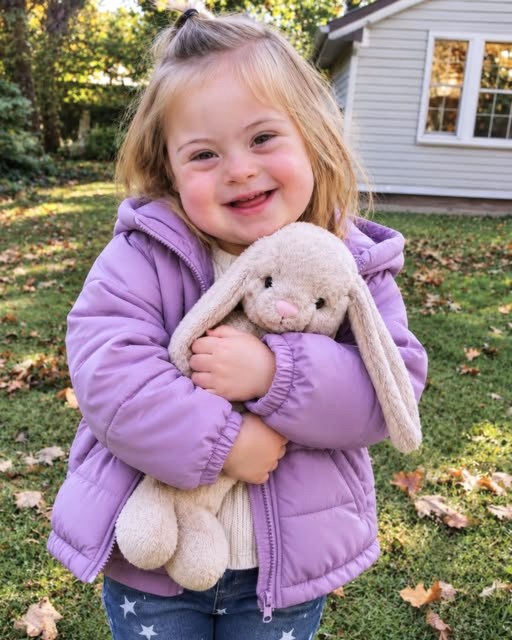
The little girl with bright brown eyes and a stubborn habit of folding her arms when she didn’t get her way.
The child who insisted that all her stuffed animals needed a blanket before she could go to sleep.
The child who had somehow made my house feel like a home again.
Whatever the folder meant, one thing was certain.
I was not going to let another secret steal her childhood.
When I opened my front door, Lily came running from the living room.
“Mommy!”
She collided with my knees, her curls bouncing.
I bent and wrapped my arms around her.
“Oh, my sweet girl.”
She kissed my cheek.
“Miss Clara let me make cookies!”
Clara Jenkins, my closest friend from church, appeared in the doorway wearing a flour-covered apron.
“She supervised,” Clara said with a smile. “Very enthusiastically.”
Lily giggled.
“I put sprinkles!”
“On everything,” Clara added.
I laughed, although tears were gathering behind my eyes.
Lily took my hand and pulled me toward the kitchen.
“Come see!”
There were six cookies on a cooling rack.
Three were shaped like stars.
Two resembled misshapen hearts.
And the last looked suspiciously like a potato.
I pointed toward it.
“What’s that one?”
Lily looked offended.
“A princess.”
Clara burst out laughing.
I picked Lily up.
“Well, she’s the most beautiful princess I’ve ever seen.”
Lily beamed.
And in that moment, with her arms around my neck, I understood something Samuel’s documents could never change.
I hadn’t become Lily’s mother because of a possible biological connection.
I’d become her mother the day I decided she deserved someone who would stay.
That evening, after Lily fell asleep, Clara sat with me in the kitchen.
I’d told her enough to explain why I was shaken, while keeping sensitive details about the investigation private.
She listened quietly as I described the photograph.
When I finished, she reached for my hand.
“Margaret, are you telling me Lily might be Eleanor’s granddaughter?”
I nodded.
“Which would make Lily my great-granddaughter.”
Clara’s eyes filled.
“Oh, Margaret.”
I stared at the table.
“Twenty-eight years.”
My voice trembled.
“Twenty-eight years, Clara. I lived all that time believing Eleanor’s life had ended before she could become a mother.”
Clara squeezed my fingers.
“But you don’t know that yet.”
“I know.”
She studied me.
“Have you thought about what happens if the records are wrong?”
I looked toward the hallway.
“Then Lily is still my daughter.”
Clara smiled through tears.
“And if they’re right?”
I swallowed.
“Then she’s still my daughter.”
That night, I dreamed about Eleanor.
She was sixteen again, standing in our kitchen wearing jeans and a yellow sweater.
Her hair was tied back with a blue ribbon.
“Mom,” she called, “where’s my necklace?”
I opened a drawer.
The silver dove lay inside.
But when I reached for it, the kitchen began to disappear.
The walls faded.
The floor turned white.
And Eleanor was gone.
I woke with tears on my face.
For a long time, I sat in the darkness.
Then I heard small footsteps.
Lily appeared in my doorway carrying her stuffed rabbit.
“Mommy?”
I wiped my cheeks.
“Yes, sweetheart?”
She climbed onto my bed.
“Bad dream?”
I nodded.
“A little one.”
Lily studied me seriously.
Then placed her rabbit in my lap.
“Bunny makes dreams nice.”
I pulled her against me.
“Thank you, darling.”
She settled beneath the covers.
And while the house grew quiet again, I held my daughter and wondered how much love could travel through generations before anyone realized where it had begun.
Three days later, Samuel called.
“Margaret, we’ve made progress.”
I sat down immediately.
“Tell me.”
“The agency has confirmed that the request bearing Eleanor’s name did not originate from a verified family member. The contact details led to an email account created recently.”
My heart sank.
“Then someone was pretending to be her?”
“That appears likely. They’re preserving the records and reviewing who might have submitted it.”
I looked toward the garden.
“Do you know who?”
“Not yet.”
He paused.
“There’s something else. We’ve obtained authorization to review additional historical records relevant to Lily’s family history. We also have a lead concerning Grace’s birth.”
My heart began pounding.
“Grace?”
“Yes.”
He took a breath.
“Margaret, according to the records we’ve been able to locate, Grace was born about seven months after the accident that killed your husband and daughter.”
I gripped the telephone.
“Seven months?”
“That’s right.”
I swallowed.
“But Eleanor was seventeen.”
“Yes.”
“And nobody ever told me she was pregnant.”
Samuel’s voice softened.
“That’s one of the questions we need to investigate.”
I sat silently, trying to remember the final months of Eleanor’s life.
She had been quieter than usual.
I remembered that.
She’d stopped going to certain parties and spent more time in her bedroom.
Once, I found her crying on the back porch.
When I asked what was wrong, she said she’d had an argument with a friend.
I believed her.
Why wouldn’t I?
She was seventeen.
Teenagers cried over friendships, boys, examinations, and a thousand worries they weren’t ready to share with their parents.
I had no reason to imagine she was carrying a child.
But now the possibility was sitting in front of me like a door I’d somehow failed to notice.
“Samuel,” I whispered, “is it possible Eleanor gave birth after the accident?”
There was a pause.
“Margaret, we need to distinguish what the records actually establish from what they suggest.”
I closed my eyes.
He continued.
“The death records identify Eleanor as having died in the crash. If those records are accurate, she couldn’t have given birth seven months later. The dates may be wrong, the family relationship may have been recorded incorrectly, or someone may have used another person’s identity.”
I nodded slowly.
“Then we verify everything.”
“Exactly.”
A week later, Samuel arranged a meeting with a woman named Denise Parker.
Denise had worked at the hospital where Eleanor and Daniel were taken after the accident.
She had since retired.
Samuel explained that Denise had voluntarily contacted the relevant investigators after hearing that old records were being reviewed. She couldn’t simply disclose protected medical files, but she could discuss her own recollections and identify where official inquiries might lead.
I arrived at Samuel’s office just before noon.
Denise was already there.
She was a slender woman with gray hair, wearing a navy cardigan and a small gold cross.
When she saw me, her expression changed.
“Margaret Wilson?”
I nodded.
She stood.
“Oh, dear.”
Then she stepped forward and took both my hands.
“I remember your family.”
My throat tightened.
“Do you?”
She nodded.
“Your husband. Your daughter. That terrible accident.”
For a moment, neither of us spoke.
Then Denise whispered:
“There’s something about that night I’ve never stopped wondering about.”
We sat around Samuel’s conference table.
Denise folded her hands.
“The accident happened during a storm,” she began. “There were several vehicles involved, and the emergency department was overwhelmed.”
I remembered the rain.
It had been falling so hard that the police officer on my porch looked as though he’d stepped out of a river.
Denise continued.
“I wasn’t part of the surgical team. I worked with patient registration and family communications.”
Samuel nodded.
“And what do you remember?”
Denise looked at me.
“There was confusion about one young female patient. An identification bracelet had been prepared, but another employee questioned whether it matched the woman being transferred.”
My heart began pounding.
“Was that Eleanor?”
Denise hesitated.
“I can’t say with certainty. I only remember that the name Wilson was involved.”
I pressed a hand against my chest.
“Was somebody alive?”
Denise looked pained.
“Margaret, I don’t want to give you false hope. I didn’t personally examine the patient, and my memory is nearly three decades old.”
I nodded, fighting tears.
She continued.
“But I remember raising a question about a registration discrepancy. I never learned how it was resolved.”
Samuel made a note.
“That’s helpful. We can request the appropriate archived records through authorized procedures.”
Denise turned toward me.
“I’m sorry I can’t tell you more.”
I reached for her hand.
“You’ve told me something I needed to know.”
Because for the first time, I had reason to ask whether the story I’d lived with for twenty-eight years was complete.
The formal record review took time.
Some files were stored on microfilm.
Others had been archived under outdated identification systems.
Certain records required legal authorization.
Samuel was patient about explaining every step.
He never pretended that finding one unusual document settled a mystery.
And I was grateful.
After losing Daniel and Eleanor, I knew how dangerous hope could feel when it rose too quickly.
I needed the truth.
Not another beautiful story that would collapse beneath its own weight.
One afternoon, while we waited, Lily came home from preschool carrying a drawing.
She’d painted three people standing under a rainbow.
One was small.
One was tall.
And one stood between them wearing a yellow dress.
“Who’s this?” I asked, pointing to the third figure.
Lily shrugged.
“A lady.”
“What lady?”
She thought for a moment.
“The lady who sings.”
I felt a strange chill.
“Where did you see her?”
Lily frowned.
“Dream.”
I smiled gently.
“Was it a nice dream?”
She nodded.
“She sang the sleepy song.”
I pulled Lily into my lap.
Children’s dreams are full of familiar songs, half-remembered voices, and things they cannot yet explain.
I didn’t want to turn her innocent imagination into evidence for a mystery she knew nothing about.
So I kissed her cheek.
“That sounds lovely.”
She smiled.
Then she began humming.
A familiar melody.
The lullaby I had sung to Eleanor when she was little.
I sat very still.
But I reminded myself that I’d sung that same lullaby to Lily dozens of times since her adoption.
There was nothing supernatural about her remembering it.
And perhaps that was beautiful enough.
The next breakthrough arrived in February.
Samuel asked me to come to his office again.
When I entered, he was standing beside the window.
“Margaret, please sit down.”
My stomach tightened.
“Have you found something?”
He nodded.
“We’ve identified Grace’s legal birth records and obtained additional historical documentation. There were name changes and clerical inconsistencies that complicated the search.”
I sat down.
He placed a certified record in front of me.
I read the name.
Grace Miller.
Then the birth date.
Then the mother’s name.
Eleanor Wilson.
My hands went numb.
I looked at Samuel.
He nodded carefully.
“The record identifies Eleanor as Grace’s mother.”
I stared at the paper.
“But Eleanor was dead.”
Samuel’s expression was grave.
“That’s why there’s another record you need to see.”
He placed a second document beside the first.
It concerned the identification of the young woman reported deceased after the highway accident.
The identification process had relied heavily on circumstances and personal belongings.
There were discrepancies in later records.
And a formal review had now been initiated.
I could barely breathe.
“Samuel.”
He leaned forward.
“Margaret, we have substantial reason to believe the person identified as Eleanor may not have been your daughter.”
The room seemed to tilt.
I gripped the chair.
“Are you saying Eleanor survived?”
He took a slow breath.
“I’m saying there is evidence that she may have. We still need to establish exactly what happened afterward.”
I began crying.
For twenty-eight years, I’d spoken of my daughter in the past tense.
Now a possibility existed that I had never dared imagine.
Somewhere beyond my grief, Eleanor might have lived.
And I had not known.
I don’t remember leaving Samuel’s office.
I remember the cold air against my face.
I remember sitting inside my car with both hands gripping the steering wheel.
And I remember looking at the photograph of Eleanor that I’d carried in my purse for twenty-eight years.
She was seventeen in that picture.
Laughing beside Daniel.
Her head tilted toward his shoulder.
Her whole life seemingly waiting ahead of her.
“Eleanor,” I whispered, “where have you been?”
Then I began to cry.
Not the quiet tears I’d grown accustomed to.
These were the terrible, shaking sobs of a mother who had buried a child and suddenly discovered that the grave might not contain the person she’d spent her life mourning.
I was afraid to believe it.
And even more afraid not to.
Samuel called me that evening.
“Margaret, I have another update.”
I held the telephone tightly.
“Have you found her?”
“Not yet. But the vital records review has established that Eleanor Wilson’s name was used in a later identity change associated with a woman named Anna Mercer.”
I sat down.
“Anna Mercer?”
“Yes. The records suggest that a woman with that name was treated for a significant traumatic brain injury after the accident and subsequently lived under a different identity.”
My throat tightened.
“Was she Eleanor?”
“We don’t have final confirmation.”
I closed my eyes.
Samuel continued.
“But we’ve located an old guardianship proceeding and a series of records connecting Anna Mercer to Grace Miller.”
I stared at the wall.
“Grace’s mother?”
“That’s what we’re investigating.”
My voice broke.
“Where is Anna now?”
He paused.
“The last reliable address is associated with a residential care community several hours away.”
I stood.
“I’m going.”
“Margaret, please. We need to proceed carefully. The information is old, and if Anna is living with cognitive impairment, we must respect her privacy and confirm who she is before arranging any contact.”
I pressed my hand against my mouth.
He was right.
I knew he was right.
But somewhere in the world might be a woman whose hair I’d brushed before school, whose birthday cakes I’d baked, whose last words to me had been, “See you later, Mom.”
And I had spent twenty-eight years believing those words were a farewell.
The waiting was nearly unbearable.
Each morning, I prepared Lily’s breakfast.
Helped her choose her clothes.
Brushed her hair.
Read her stories.
And tried to behave like the mother she needed instead of a woman unraveling under the weight of uncertainty.
Lily noticed anyway.
One evening, while I was folding laundry, she climbed onto the sofa beside me.
“Mommy sad?”
I looked at her.
“A little, sweetheart.”
She touched my cheek.
“Need hug?”
I opened my arms.
She climbed into my lap.
I held her for a long time.
Then whispered, “Sometimes grown-ups miss people they love.”
Lily nodded solemnly.
“I miss my pink shoes.”
Despite everything, I laughed.
“Your pink shoes?”
She nodded.
“The sparkly ones.”
“They got too small, darling.”
She sighed as though I’d described the greatest tragedy in human history.
Then she hugged me again.
“Still miss them.”
I kissed her forehead.
“I understand.”
And somehow, that tiny exchange reminded me that missing someone didn’t mean life had stopped.
There was still laundry to fold.
There were still stories to read.
And there was still a little girl who needed me to be present.
Two weeks later, Samuel called with the news I’d been afraid to hope for.
“Margaret, we’ve made contact with Anna Mercer’s authorized representative.”
I stopped breathing.
“And?”
“There’s strong documentary evidence that Anna Mercer is Eleanor Wilson.”
I gripped the telephone.
He continued.
“She survived the accident. She had severe injuries, including a brain injury that affected memory. The identity confusion from that night appears to have contributed to a series of mistakes that were never properly reconciled.”
My eyes filled.
“How could that happen?”
“The full investigation isn’t finished. It appears another young woman was mistakenly identified as Eleanor in the chaos following the collision. Later records were handled under different names, and your daughter’s recovery took place within a complicated guardianship arrangement.”
I sank into a chair.
“My daughter was alive.”
Samuel paused.
“Margaret, the evidence is very strong. A formal identity confirmation is still being arranged.”
I pressed my hand against my mouth.
Twenty-eight years.
Twenty-eight Christmas mornings.
Twenty-eight birthdays.
Twenty-eight years of placing flowers beside a grave.
And my daughter had lived somewhere beyond my reach.
“Did she remember us?” I whispered.
Samuel’s voice softened.
“She experienced substantial memory loss, particularly concerning the period before the accident. According to her representative, some memories returned gradually, but she had limited access to reliable information about her original identity.”
I closed my eyes.
“And nobody contacted me?”
“That’s one of the questions the records review must answer.”
I began crying.
Not because Samuel had disappointed me.
Because I suddenly understood that my daughter might have spent years searching for the very mother who thought she’d been buried.
The first meeting took place in a quiet room at the residential community where Anna lived.
A social worker named Helen met me at the entrance.
She was warm and patient.
She explained that Anna had ongoing memory difficulties but was able to make many decisions for herself with appropriate support.
She had been told about the possibility of our relationship.
She wanted to meet me.
I stood outside the room, holding an old photograph of Eleanor.
My knees trembled.
Helen touched my arm.
“Margaret, you don’t have to say everything today.”
I looked at her.
“How do I say anything?”
She smiled gently.
“Start with hello.”
The door opened.
A woman sat beside the window.
Her hair was streaked with silver.
Her face was thinner than Eleanor’s had been.
There were lines around her eyes.
And a faint scar above her left eyebrow.
But when she looked up, I recognized something.
The way she tilted her head.
The way her mouth tightened before she smiled.
The small movement of her fingers against the armrest.
My breath caught.
“Eleanor?”
She looked at me.
For several seconds, neither of us spoke.
Then she whispered:
“Margaret?”
I covered my mouth.
She stared at me.
“My mother was named Margaret.”
Tears filled my eyes.
“Yes.”
Her face trembled.
“Are you…”
I nodded.
“I’m your mother.”
She began crying.
I crossed the room slowly.
“May I hug you?”
She nodded.
And then I wrapped my arms around the daughter I had buried twenty-eight years earlier.
I cannot describe that embrace without feeling my heart break all over again.
She was no longer seventeen.
She had lived decades I knew nothing about.
There were experiences I had not shared, decisions I had not helped her make, and pain I had not been there to comfort.
But she was warm.
She was breathing.
And when she leaned against me, she whispered:
“Mom.”
I held her tighter.
“Oh, my darling girl.”
We sat together for almost two hours.
Eleanor told me what she could remember.
The hospital.
The confusion.
The months of rehabilitation.
A woman named Beatrice, who had helped coordinate her care and later became her legal guardian while she was still a minor.
The name Anna Mercer had appeared in records during those early years, and she had gradually begun using it.
Her memories of childhood came in fragments.
A yellow kitchen.
A man singing while washing dishes.
A silver necklace shaped like a dove.
And a woman brushing her hair before school.
I listened, hardly breathing.
“Daniel,” she whispered. “Was that my father’s name?”
Tears filled my eyes.
“Yes.”
She closed her eyes.
“I remember his laugh.”
I held her hand.
“He loved you very much.”
Then she asked:
“Did he die?”
I swallowed.
“Yes, sweetheart. In the accident.”
She bowed her head.
Although she’d apparently been told that years earlier, hearing it from someone who had known him brought a new kind of grief.
I sat beside her and let her cry.
For once, I didn’t try to make loss smaller.
I simply stayed.
Eventually, she looked toward me.
“They told me my parents were dead.”
My heart tightened.
“Both of us?”
She nodded.
“When I began asking questions, people showed me old records. There wasn’t much I could understand. I thought perhaps I was remembering a family that wasn’t mine.”
I closed my eyes.
“Oh, Eleanor.”
She squeezed my hand.
“Later, after Grace was born, I tried to look for answers. But I was frightened of being wrong.”
I stared.
“Grace.”
Her expression softened.
“My daughter.”
I began crying.
“You had a daughter.”
Eleanor smiled sadly.
“She was wonderful.”
I held my breath.
“Tell me about her.”
For the next hour, Eleanor spoke about Grace.
Grace had been born while Eleanor was still recovering and receiving support.
There had been complications involving Eleanor’s capacity, guardianship, and the arrangements made for the baby. Grace spent parts of her childhood with extended caregivers, but Eleanor remained involved to the extent she could.
She remembered Grace’s first steps.
Her favorite bedtime story.
The way she sang while brushing her teeth.
And the day she gave Grace the silver dove necklace.
I touched my chest.
“That necklace was mine to give you.”
Eleanor nodded slowly.
“I thought it came from my mother.”
I began crying again.
“It did.”
Then Eleanor’s smile faded.
“Grace died.”
I took her hand.
“I know.”
Her voice trembled.
“She had a little girl.”
My heart began pounding.
“Lily.”
Eleanor looked up sharply.
“You know Lily?”
I swallowed.
“Yes.”
Her eyes filled.
“Is she all right?”
I could barely speak.
“She’s safe.”
Eleanor covered her mouth.
“Thank God.”
I leaned forward.
“Eleanor, there’s something I need to tell you.”
She stared at me.
I took a slow breath.
“I adopted Lily.”
For a moment, she didn’t move.
Then her eyes widened.
“You?”
I nodded.
“She’s my daughter now.”
Eleanor looked toward the window.
Then began to sob.
I held her hand.
“She was all alone when I met her,” I whispered. “And I loved her the moment I saw her.”
Eleanor closed her eyes.
“Grace used to say her little girl deserved a family that would never give up on her.”
My voice broke.
“She has one.”
Later, Helen joined us.
She explained that Eleanor’s recent request for information about Lily had been prompted by growing concern after she learned that Grace’s daughter was in foster care.
A support worker had helped her prepare an inquiry, but an intermediary mistakenly submitted it under the old name, without completing the required identity verification.
That explained why the request initially appeared suspicious.
It did not explain the threatening letters.
The agency continued investigating those separately.
For the first time, the mysterious signature no longer frightened me.
It represented a woman trying to find a child she’d feared was lost.
A grandmother.
A mother.
My daughter.
Before I left, Eleanor touched my arm.
“Mom?”
I turned.
“Yes, sweetheart?”
She looked uncertain.
“Will you come back?”
The question nearly brought me to my knees.
For twenty-eight years, I’d dreamed of hearing my daughter speak to me again.
And now she was asking whether I would leave her.
I knelt beside her chair.
“Oh, Eleanor.”
I held both her hands.
“I will come back. We’ll take this one day at a time, but I am not disappearing.”
She smiled through tears.
Then whispered:
“I used to dream about a woman singing.”
My throat tightened.
“What song?”
She hummed a few notes.
The same lullaby I’d sung to her when she was small.
The same song Lily now loved.
I began to cry.
Eleanor looked frightened.
“Did I upset you?”
I shook my head.
“No, sweetheart.”
I leaned forward and kissed her forehead.
“You remembered.”
There was still one mystery left.
The five families.
The anonymous warnings.
The terrible claims that Lily had inherited a dangerous illness.
I couldn’t forget that five separate households had apparently considered bringing Lily home, only to withdraw after receiving frightening messages.
I wanted to know who had done that to her.
But I also knew that discovering the truth required more than anger.
It required evidence.
The investigation continued for several months.
The agency reviewed correspondence, placement records, and the conduct of people who had access to Lily’s case.
Eventually, investigators identified a former contracted placement coordinator named Martin Kessler.
Martin had been involved in arranging prospective family meetings.
The evidence indicated that he had sent misleading medical warnings and threatening messages to several families.
He had no authority to make those claims.
He had used private information in ways that violated his responsibilities.
His actions were referred to the appropriate authorities, and the agency began reviewing other cases he had handled.
When Samuel told me, I felt physically sick.
“Why?” I whispered.
He sighed.
“The investigation suggests he wanted to steer Lily toward a particular placement arrangement involving people he knew. Some of his communications indicate he hoped to receive improper compensation.”
I closed my eyes.
“She was three years old.”
“I know.”
“A little girl.”
Samuel’s voice softened.
“Margaret, the important thing is that she’s safe now.”
I nodded.
But my heart ached for the families who had been frightened into walking away.
And for Lily, who had spent months waiting for somebody to choose her.
A qualified medical specialist also reviewed the health allegations.
There was no reliable evidence supporting the alarming hereditary diagnosis described in the anonymous letters.
Like any child, Lily had medical needs that deserved ordinary, attentive care.
But she was not the frightening medical mystery Martin had invented.
I asked Samuel whether the five families had been told.
“The agency is contacting them through appropriate channels,” he said. “They deserve accurate information, and privacy obligations still apply.”
I nodded.
I didn’t want Lily’s life turned into a public scandal.
She was not a case number.
Not a headline.
Not a prize somebody had tried to manipulate.
She was a child who loved pancakes, butterflies, and a stuffed rabbit with one crooked ear.
And that was how I intended to raise her.
Meanwhile, the biological relationship was finally confirmed through properly arranged testing and documentary review.
Eleanor was Grace’s biological mother.
Grace was Lily’s biological mother.
And Eleanor was my daughter.
The medical and identification findings also supported what the historical investigation had suggested: Eleanor had survived the accident and lived for years under the name Anna Mercer.
The old death record required formal correction.
That process was complicated.
There were archival errors, unanswered questions about the original identification, and decisions made long ago by people who were no longer available to explain them.
Some details remained unresolved.
But the central truth was no longer in doubt.
My daughter was alive.
And the little girl sleeping beneath my roof was her granddaughter.
My great-granddaughter.
My legally adopted daughter.
Both relationships were true.
When I finally told Clara, my friend from church, she covered her mouth and began to cry.
“Margaret, I don’t even know what to say.”
I smiled through tears.
“Neither do I.”
She held my hands.
“After everything you’ve been through…”
I looked toward the living room, where Lily was building a castle from wooden blocks.
“I thought my family was gone,” I whispered.
Clara shook her head gently.
“Your family was changing before you knew it.”
I watched Lily carefully balance another block on top of her castle.
Then I smiled.
“Yes.”
Eleanor’s relationship with Lily developed slowly.
I didn’t simply arrive at the care community one afternoon and announce that the woman sitting beside the window was Lily’s grandmother.
Lily was still very young.
She had already experienced enough disruption.
With guidance from professionals familiar with adoption and early childhood development, we arranged short, comfortable visits.
The first time they met, Eleanor held a picture book.
Lily climbed onto the sofa beside her.
“Read?”
Eleanor smiled.
“I’d love to.”
And just like that, they began.
Not with explanations about generations.
Not with a dramatic announcement.
But with a story about a rabbit who couldn’t find its way home.
Halfway through the book, Lily looked at Eleanor.
“You know my song?”
Eleanor glanced toward me.
Then began humming.
The lullaby.
Lily’s face lit up.
“Mommy sings that!”
Eleanor smiled through tears.
“Does she?”
Lily nodded enthusiastically.
“Every night.”
I stood in the doorway, unable to move.
Once, I’d sung that melody to a little girl named Eleanor.
Years later, Eleanor had sung it to Grace.
And Grace, somehow, had passed it to Lily.
The song had survived every separation.
Every unanswered question.
Every year we had spent apart.
It had traveled farther than any of us.
And now, in a quiet room filled with afternoon sunlight, it had come home.
The following spring, I made another difficult decision.
I began arranging more support for our family.
At sixty-nine, I was healthy and active.
But I was also realistic.
Lily deserved a secure future regardless of what happened to me.
I worked with Samuel and qualified advisers to update my estate plan, designate appropriate guardianship arrangements for consideration if they were ever needed, and establish financial protections for Lily’s upbringing and education.
I spoke with Clara and other trusted people about providing support.
I also made sure that Eleanor’s needs and wishes were respected, without assuming that her memory difficulties meant she had no voice in her own life.
We were not going to replace one set of hidden decisions with another.
This family had lost too much to secrecy already.
One afternoon, Eleanor visited my house for the first time.
We had arranged transportation and support so the visit would be comfortable.
She stood in the entryway, looking around.
Her eyes moved toward the staircase.
Then toward the living room.
And finally toward the kitchen.
“Mom,” she whispered.
I turned.
She pointed toward the doorway.
“Was the wall yellow?”
My breath caught.
“Yes.”
She looked at me.
“And Dad used to sing there?”
Tears filled my eyes.
“Every evening.”
Eleanor smiled.
“I remember.”
Then she began crying.
I put my arms around her.
For a long time, we stood in the hallway of the house she’d left as a teenager.
I couldn’t restore the life we would have lived.
There were birthdays we could never celebrate together.
Years of illness I hadn’t been there to help her through.
A granddaughter I hadn’t held as a newborn.
And a son-in-law I’d never had the chance to meet.
But now, standing together, we had something we hadn’t been given before.
Tomorrow.
That afternoon, Lily insisted that Eleanor join us for tea.
She arranged three plastic cups around her little table.
Placed a stuffed bear in the fourth chair.
And announced that everyone must wear a crown.
Eleanor laughed as Lily placed a paper crown crookedly on her head.
“Am I a queen?” she asked.
Lily considered.
“You’re the princess.”
Eleanor smiled.
“And who’s the queen?”
Lily pointed at me.
“Mommy.”
I laughed.
“What does that make you?”
Lily straightened her shoulders.
“The boss.”
Eleanor burst out laughing.
And suddenly I heard it.
My daughter’s laughter.
Not the seventeen-year-old laugh preserved in my memory.
An older laugh.
Changed by life.
But unmistakably hers.
I felt tears sliding down my cheeks.
Because sometimes miracles do not arrive with thunder or great announcements.
Sometimes they sit at a tiny table wearing a paper crown.
That summer, we visited Grace’s resting place.
Eleanor wanted to go.
I went with her.
Lily stayed with Clara that afternoon because we wanted to give Eleanor the space she needed to grieve.
We brought flowers.
White lilies.
Eleanor stood beside her daughter’s headstone for a long time.
Then whispered:
“Grace, your little girl is safe.”
I put my arm around her.
She began crying.
“I couldn’t protect her, Mom.”
I swallowed.
“You loved her.”
She shook her head.
“I wanted to do more.”
I held her gently.
“We all wish we’d had more time.”
She turned toward me.
And in that moment, I saw that grief had not skipped a generation.
It had traveled through us.
Changed our lives.
And brought us together again in ways neither of us could have imagined.
Months later, on Lily’s fourth birthday, our little house was filled with laughter.
Clara baked a cake.
Friends from church brought balloons.
Eleanor arrived carrying a beautifully wrapped gift.
Inside was a small silver necklace shaped like a dove.
A new one.
Made especially for Lily.
Eleanor had chosen it with help.
And inside the box was a little card.
For Lily, with all the love our family has carried through the years.
I read the words aloud.
Lily stared at the necklace.
“Birdie!”
I laughed.
“Yes, sweetheart.”
She looked at Eleanor.
“For me?”
Eleanor nodded.
“For you.”
Lily climbed into her lap.
“Thank you.”
And then she hugged her.
A simple, spontaneous hug.
Eleanor closed her eyes.
I watched her hold the little girl.
And I thought of Grace.
Of Daniel.
Of all the people whose lives had become part of this extraordinary story.
After the guests left, Lily fell asleep on the sofa with frosting on her cheek.
Eleanor sat beside me.
The house was quiet.
She looked toward Lily.
“Mom?”
“Yes, darling?”
“Do you ever wish things had happened differently?”
My eyes filled.
“Every day.”
She nodded.
“Me too.”
I took her hand.
Then I looked at the little girl sleeping beneath the blanket.
“But I don’t want to spend the rest of our lives missing what’s here because of what we lost.”
Eleanor leaned against me.
“Neither do I.”
When I was sixty-eight, people thought I was too old to begin raising a child.
Some said I was being reckless.
Others said I was trying to replace the daughter I’d lost.
And several quietly suggested that I didn’t understand what I was taking on.
Perhaps they were right about one thing.
I didn’t understand.
I didn’t know Lily’s full history.
I didn’t know why five families had walked away.
I didn’t know about the hidden records, the false warnings, or the silver dove necklace.
And I certainly didn’t know that the daughter I’d mourned for twenty-eight years might still be alive.
All I knew was that a little girl sat alone while other children played.
And when I looked into her eyes, I could not bear the thought of leaving her to believe nobody wanted her.
Today, our family looks different from the one I once imagined.
Eleanor continues to receive support and build a life that honors both her independence and her needs.
Lily is growing into a bright, fearless little girl who asks a hundred questions before breakfast.
And I am an older mother who keeps extra reading glasses in every room because my daughter is forever hiding the ones I need.
We have difficult days.
There are appointments.
Questions.
Memories that return unexpectedly.
And grief that sometimes catches us when we least expect it.
But there is also laughter.
Music.
Birthday cake.
The ordinary miracle of someone calling from another room and knowing that the person they love will answer.
Sometimes I think about the five families who decided not to adopt Lily.
I don’t hate them.
They were given frightening, misleading information and placed under pressure they should never have faced.
I wish they’d been told the truth.
But I no longer wonder why Lily came into my life.
I know that I chose her.
And that, regardless of whatever mysteries surrounded her birth, she deserved to be chosen.
The folder Samuel handed me didn’t change the reason I loved Lily.
It changed what I knew about the people who had loved her before me.
It showed me that history can be broken by mistakes, fear, and dishonesty.
But it also taught me that love can survive those things.
Not by erasing the harm.
Not by pretending loss doesn’t matter.
But by giving us the courage to care for whoever is standing before us now.
One evening, as I tucked Lily into bed, she touched my face.
“Mommy?”
“Yes, my darling?”
“Will you sing?”
I smiled.
“Of course.”
I began the lullaby.
The same melody I’d sung to Eleanor.
The same melody Eleanor had carried into Grace’s life.
And the same melody that now settled my little girl into sleep.
When I finished, Lily looked up at me.
“Mommy, you stay?”
I kissed her forehead.
“Yes, sweetheart. I’m right here.”
She smiled.
Then closed her eyes.
For twenty-eight years, I thought my story had ended on a dark highway.
Then, at sixty-eight, I met a little girl who needed a mother.
I went looking for a way to give her a family.
And discovered that love had been finding its way back to mine.
I didn’t adopt Lily because she was connected to my past. I adopted her because she deserved a future.
And in giving her that future, I found a new one too.
THE END STORIES! THANK YOU FOR READING GOOD LUCK !❤️
Related Posts