➡️ PART 3 ENDING PART ➡️
Rocky’s thumb hovered over the second video.
For a moment, he could not make himself press play.
His face was wet with tears.
Behind the hospital-room window, Claire was laughing.
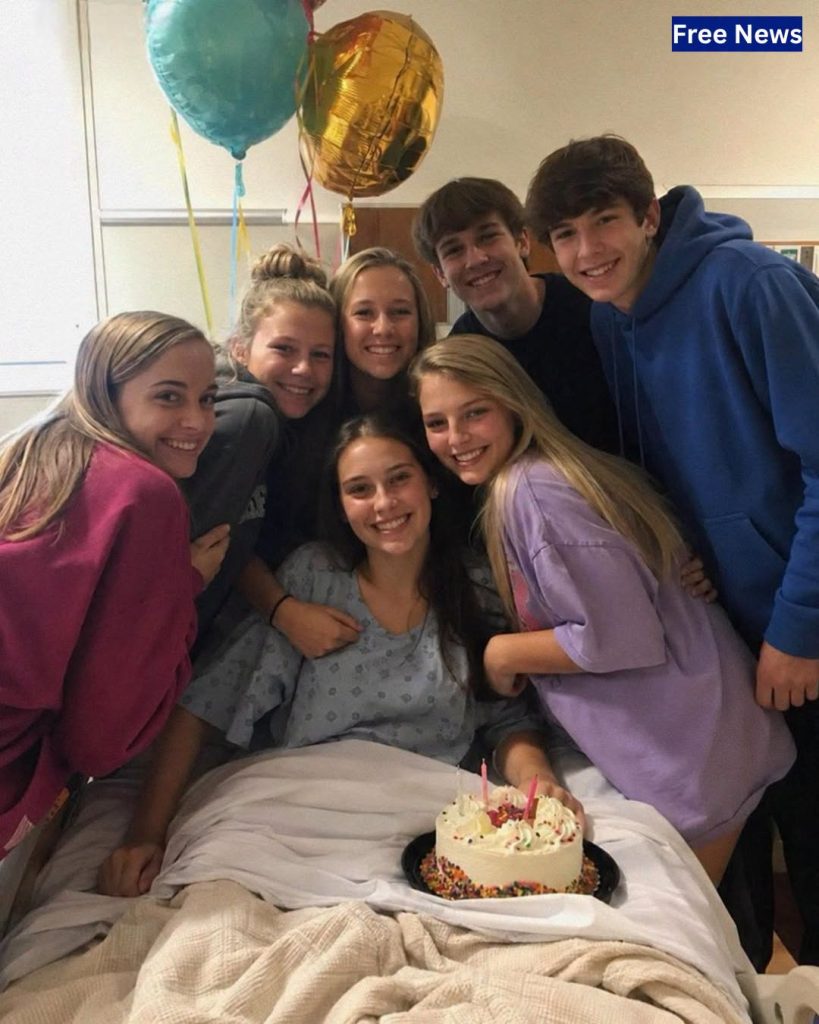
One of the girls had put the enormous stuffed bear in the visitor’s chair and balanced a paper cup on its head. Claire was pale enough that the blue veins at her temples showed beneath her skin, but she was smiling.
Actually smiling.
I had spent years wishing those children would make her smile.
Now, standing beside Rocky in a hospital corridor, I suddenly wished they would all go home.
“Play it.”
I whispered.
Rocky swallowed.
Then touched the screen.
The video began several minutes after the first one had ended.
The rain was still pouring.
The camera shook violently.
Noah was lying on the muddy bank, coughing water while Rocky knelt beside him.
Then Claire appeared.
She was on her hands and knees.
Her clothes clung to her body.
Mud streaked her face.
Someone behind the camera shouted:
“Claire, are you okay?”
She lifted one hand.
“I’m fine.”
Even through the tiny phone speaker, I could hear her teeth chattering.
Then Noah began crying.
Not because he was hurt.
Because he was terrified.
“I don’t want Mom to know.”
he sobbed.
Rocky hugged him.
“She’s going to kill me.”
Another teenager said:
“We have to call someone.”
“No.”
Rocky shouted.
“We’ll all get suspended.”
Then the camera turned toward Claire.
She had managed to stand.
Barely.
Her arms were wrapped around herself.
“Everybody stop.”
Her voice was weak.
But they stopped.
That was the strange thing about Claire.
People who mocked her still listened when she spoke seriously.
She looked at Noah.
“Can you breathe?”
He nodded.
“Does anything hurt?”
“My ankle.”
Claire knelt.
She examined it.
Then she looked toward Rocky.
“He needs to be checked.”
“No hospital.”
Rocky said immediately.
“Rocky—”
“No.”
His voice cracked.
“My dad will lose his mind.”
Claire stared at him.
I could see something changing in her expression.
Not agreement.
Calculation.
She knew these children had tormented her.
She also knew they were scared.
Then she said:
“We call your mom.”
Rocky shook his head.
“No.”
“We call her, or I call 911.”
“Claire.”
“Pick.”
He cursed.
Then took out his phone.
The video skipped forward.
Rocky explained beside me:
“Jenna stopped recording for a while.”
“What happened?”
“My mom came.”
“Did she know Claire went into the water?”
He shook his head.
“Claire lied.”
My heart dropped.
The video resumed.
A woman I recognized as Rocky’s mother stood beneath an umbrella beside her car.
She looked frantic.
Noah was wrapped in two coats.
“What happened?”
she demanded.
Nobody answered.
Then Claire stepped forward.
“He slipped.”
Rocky’s mother stared at the flooded creek.
“What were you doing down here?”
“We were taking pictures.”
Claire said.
“Claire.”
Rocky whispered beside me.
“She took all of it.”
I looked at him.
“What?”
“The blame.”
On the video, Rocky’s mother asked:
“Who told Noah to cross?”
Silence.
Claire looked at Rocky.
Then at the others.
Nobody spoke.
Finally she said:
“It was my idea to come down here.”
My knees weakened.
“No.”
I whispered.
Rocky was crying again.
“She knew if my parents found out I’d dared him, they’d pull me from school. I’d already been suspended twice.”
On the screen, his mother was furious.
“You could have gotten him killed!”
“I know.”
Claire said.
Not defensive.
Not angry.
Just quietly.
“I’m sorry.”
I gripped the wall.
That was my daughter.
Apologizing for almost killing a boy she had actually saved.
The video continued.
Rocky’s mother took Noah away.
The car disappeared.
Then the teenagers stood in the rain.
Nobody knew what to say.
Finally Rocky turned toward Claire.
“Why did you do that?”
She was shivering violently now.
“You didn’t.”
“You could’ve told her.”
“Yes.”
“You hate me.”
Claire looked at him.
“No.”
“You should.”
“I don’t.”
“After everything I’ve done?”
Claire stared at him for a long moment.
Then said something I will remember until I die.
“I don’t have to become cruel just because you were cruel to me.”
Rocky covered his face beside me.
On the video, nobody spoke.
Then Claire added:
“But don’t confuse kindness with permission.”
Rocky looked up.
She pointed at him.
“You don’t touch my backpack again.”
He nodded.
“You don’t call me names.”
Another nod.
“You don’t let anyone else do it either.”
“I won’t.”
“And if Noah ever does something dangerous because you dared him again, I tell everyone.”
Rocky actually laughed through tears.
“Okay.”
Claire looked at the others.
“That goes for all of you.”
They nodded.
Then Jenna, the girl recording, asked:
“Why are you protecting us?”
Claire’s answer was almost lost beneath the rain.
“I’m protecting Noah.”
The video ended.
I stared at the black screen.
For several seconds, the hallway disappeared.
There was only my daughter’s voice inside my head.
I don’t have to become cruel just because you were cruel to me.
Rocky crouched beside me.
“Mrs. Carter?”
I could barely hear him.
“How long was she in that water?”
“I don’t know.”
“Guess.”
“Maybe five minutes.”
“Five?”
“Maybe less.”
“Was it cold?”
He nodded.
“Freezing.”
“When did she start feeling sick?”
“The next morning.”
I stood so quickly I became dizzy.
“Get her doctor.”
Rocky looked frightened.
“Now.”
I went into Claire’s room.
The laughter stopped immediately.
Every child looked at me.
Claire saw Rocky’s phone in my hand.
And knew.
Her face changed.
“Mom.”
I stared at her.
Not angry.
Not yet.
Too terrified for anger.
“Why didn’t you tell me?”
She looked at Rocky.
He lowered his head.
“I’m sorry.”
he whispered.
Claire closed her eyes.
“You promised.”
“I know.”
“You promised me.”
“I know.”
“Rocky.”
His voice broke.
“You’re getting worse.”
Claire looked away.
“I was protecting you.”
“You already protected me.”
he said.
“You saved Noah.”
Then he started crying.
“You don’t have to save me from everything else.”
That sentence silenced the room.
I walked to Claire’s bed.
Her hands were cold.
They were always cold lately.
I had noticed.
Of course I had noticed.
But now they felt different.
Evidence.
“How long were you in the creek?”
She shrugged.
“Claire.”
“I don’t know.”
“Why didn’t you tell the doctors?”
“I didn’t think it mattered.”
“You got sick the next morning.”
“I thought it was just a cold.”
“Why didn’t you tell me?”
Her eyes filled.
“Because you’d ask why I was there.”
“Yes.”
“And then I’d have to tell you about Noah.”
“Yes.”
“And then Rocky would get suspended.”
I stared at her.
“Sweetheart.”
“He was already in trouble.”
“Sweetheart.”
“He would’ve been kicked off the basketball team.”
“Claire.”
She finally looked at me.
“I didn’t want his whole life ruined.”
Something inside me cracked.
“And what about your life?”
She started crying.
“I didn’t know I’d get this sick.”
I sat beside her.
“Oh, baby.”
“I didn’t.”
“I know.”
“I thought I’d feel better.”
“I know.”
“I didn’t mean—”
I pulled her against me.
Her body felt too light.
That frightened me most.
“You do not have to apologize.”
I whispered.
“I should’ve told you.”
“Yes.”
“You’re mad.”
“I am.”
She stiffened.
I held her tighter.
“I am furious because I love you.”
She cried against me.
“I am furious that you thought protecting everyone else mattered more than letting us protect you.”
The room had become silent.
Every classmate heard it.
Good.
Maybe they needed to.
“You are kind.”
I said.
“But kindness does not mean sacrificing yourself until there is nothing left.”
Claire sobbed.
“I just didn’t want anyone hurt.”
“You were hurt.”
She had no answer.
I kissed her hair.
“You count too.”
That became the sentence around which everything else changed.
You count too.
The doctors came quickly.
Rocky showed them both videos.
Suddenly the questions changed.
Had Claire swallowed water?
Yes.
Had she coughed afterward?
Yes.
Had she had chills?
Yes.
When had the fever started?
The following morning.
Had she mentioned chest pain?
A little.
Shortness of breath?
She had called it tiredness.
The medical team ordered new tests.
New imaging.
New cultures.
I will not pretend I understood every term.
I remember fragments.
Aspiration.
Contaminated water.
Inflammation.
Infection.
Atypical organism.
Secondary complications.
I remember one doctor sitting with me later and saying:
“This history matters.”
That sentence filled me with rage.
Not at him.
At silence.
At promises.
At fear.
At the ridiculous chain of decisions that had brought us here.
A dare.
A flooded creek.
A rescue.
A lie.
A promise.
A fever.
Days of uncertainty.
The doctors adjusted Claire’s treatment while waiting for more results.
Within forty-eight hours, one test identified an uncommon bacterial infection consistent with exposure to contaminated water, complicated by pneumonia.
There was no magical instant cure.
Real illness does not respect dramatic timing.
But for the first time, the doctors had a direction.
Claire received targeted antibiotics.
She remained frighteningly weak.
The first night after the diagnosis, I sat beside her.
Everyone else had gone.
The room was dim.
Machines made soft noises.
Claire opened her eyes.
“Mom?”
“I’m here.”
“Are you still mad?”
“Yes.”
She gave me a tired smile.
“At least you’re honest.”
“Always.”
I held her hand.
“Are you mad at Rocky?”
I thought.
“Yes.”
“Please don’t be.”
“I am allowed to have feelings too.”
She looked at me.
That almost made me laugh.
My own words returning.
“You’re right.”
I said.
“But I’m not going to punish him.”
“Okay.”
“I am angry at all of them.”
She became quiet.
“For bullying you.”
“They stopped.”
“After you saved Noah.”
She looked away.
I hated the implication.
“So?”
“So you should never have had to nearly die before they discovered you were human.”
Tears filled her eyes.
“They know.”
“Now.”
“They’re sorry.”
“I believe some of them are.”
“All of them.”
“Maybe.”
She frowned.
“You don’t believe people can change?”
“I absolutely do.”
I squeezed her hand.
“But change doesn’t erase what happened before it.”
She thought about that.
Then whispered:
“I don’t want them to feel guilty forever.”
I smiled sadly.
“You really are my daughter.”
“What does that mean?”
“It means you worry about everyone.”
“Is that bad?”
“No.”
I brushed hair from her forehead.
“But I want you to learn something earlier than I did.”
“What?”
“Compassion needs boundaries.”
She watched me.
“You can understand why someone hurt you without pretending they didn’t.”
She nodded slowly.
“You can forgive someone without giving them unlimited access to you.”
Another nod.
“And you can love people without becoming responsible for every consequence of their choices.”
That one made her look away.
She knew.
“Rocky should’ve faced consequences for the dare.”
I said.
“Yes.”
“You protected him from that.”
“Yes.”
“Do you understand why that wasn’t necessarily kindness?”
Her eyes filled.
“I thought it was.”
“I know.”
“If I’d told, he might’ve been expelled.”
“Maybe.”
“He would’ve hated me.”
There it was.
The deepest truth.
Not just protecting Noah.
Not just mercy.
Claire had wanted something.
Acceptance.
After years of rejection, she had finally held something powerful enough to make those children look at her differently.
And she had been afraid to lose it.
I did not say that cruelly.
I asked:
“Were you afraid they’d start bullying you again?”
She cried.
That was my answer.
“Oh, Claire.”
“I know it’s stupid.”
“No.”
“It is.”
“No.”
I climbed carefully onto the edge of the bed.
She leaned against me.
“I just wanted them to stop hating me.”
“I know.”
“They were nice after.”
“I know.”
“Rocky apologized.”
“I know.”
“Jenna invited me to sit with them.”
“I know.”
Her voice became tiny.
“It felt good.”
That destroyed me.
Because beneath all her courage and moral language was a sixteen-year-old girl who had spent years eating lunch alone.
Of course it felt good.
Of course she wanted to keep it.
We all want belonging.
Sometimes badly enough to negotiate against ourselves.
“You deserved kindness before the creek.”
I whispered.
She cried harder.
“You deserved friendship before you rescued anyone.”
I kissed her forehead.
“You do not have to earn humane treatment by saving someone’s life.”
She nodded against me.
“And if these kids are really becoming your friends, they’ll still be your friends when you tell the truth.”
“What truth?”
“That you’re angry.”
She pulled back.
“I’m not.”
I looked at her.
She looked away.
“Yes, you are.”
“No.”
“Claire.”
Silence.
Then:
“Maybe a little.”
“How little?”
She started crying again.
“I hate that they like me now.”
There it was.
Finally.
“I hate it.”
She covered her face.
“Why couldn’t they like me before?”
I held her.
“I don’t know.”
“I was the same person.”
“I know.”
“I didn’t become nicer.”
“I know.”
“I didn’t become prettier.”
“I know.”
“I just jumped in the water.”
“I know.”
“They brought balloons.”
Her shoulders shook.
“They used to hide my backpack.”
“I know.”
“They made me cry in the bathroom.”
“I know.”
“And now Jenna keeps calling me her best friend.”
She sobbed.
“She doesn’t even know my favorite color.”
That sentence broke me more than the video.
Not because it was profound.
Because it was sixteen.
Specific.
True.
Friendship is not balloons.
It is knowing the favorite color.
Knowing when someone lies about being okay.
Knowing which joke will make them laugh.
Knowing when to sit quietly.
These children were not yet Claire’s friends.
They were remorseful classmates.
Perhaps friendship could grow.
But guilt and friendship were not the same thing.
“You are allowed to be angry.”
I told her.
“What if they leave?”
“Then they leave.”
“I’ll be alone again.”
“Maybe for a while.”
She looked terrified.
I hated saying it.
But I would not teach her to buy companionship with silence.
“Being alone hurts.”
I said.
“But shrinking yourself to keep people near you hurts differently.”
She stared at me.
“Which is worse?”
“I think you already know.”
The next day, Claire asked the class to leave early.
They looked confused.
Rocky lingered.
“Did we do something?”
Claire took a breath.
“Yes.”
Every face changed.
I stood near the window.
I had offered to leave.
Claire asked me to stay.
She looked around at them.
“I know you’re sorry.”
Nobody spoke.
“I know Noah almost getting hurt scared everyone.”
Rocky nodded.
“And I know you’re trying.”
Jenna started crying.
Claire continued.
“But I need you to stop acting like we’re all suddenly best friends.”
That landed hard.
One boy looked down.
Another girl began twisting a bracelet around her wrist.
Claire’s hands trembled.
“I like having people here.”
she admitted.
“I like not being alone.”
Her voice broke.
“But sometimes when you bring me presents, I remember you throwing my books in the trash.”
Jenna covered her mouth.
“When you tell me you love my sweater, I remember you calling my clothes ugly.”
Jenna cried harder.
“When you sit beside me, I remember moving my lunch tray because nobody wanted me at their table.”
Nobody defended themselves.
Good.
Rocky stepped forward.
“Claire—”
She held up a hand.
“Please let me finish.”
He stopped.
“I forgive you.”
Several children looked relieved.
“Don’t.”
Claire said.
Their relief vanished.
“I said I forgive you. I didn’t say everything is fixed.”
I felt tears fill my eyes.
My daughter.
Still gentle.
Finally learning gentleness could have edges.
“I don’t know if I trust you.”
she continued.
“I don’t know if we’re friends.”
She looked at Rocky.
“I don’t know if you would’ve stopped bullying me if Noah hadn’t fallen into the creek.”
Rocky cried openly.
“I don’t know either.”
he whispered.
That was perhaps the best answer he could have given.
Claire nodded.
“Okay.”
Then Jenna said:
“What do we do?”
Claire looked surprised.
“I don’t know.”
“Should we stop coming?”
Claire thought.
“Not if you want to come.”
Jenna nodded.
“But don’t come because you feel guilty.”
Claire added.
“Come because you want to know me.”
That became the beginning.
Not the rescue.
Not the balloons.
That sentence.
Come because you want to know me.
The hospital visits changed after that.
Fewer people came at once.
No more performance.
No giant gifts.
Sometimes two classmates visited.
Sometimes one.
Sometimes nobody.
And that was okay.
Jenna came on Tuesdays.
She learned Claire’s favorite color was green.
Not pastel green.
Deep forest green.
Rocky came often too.
At first, he barely spoke.
He did homework in the chair beside her.
Sometimes Claire slept.
He stayed.
One afternoon, he brought her backpack.
The same backpack he had once hidden in a dumpster.
He had washed it.
Repaired a torn strap.
Attached a tiny green keychain.
Claire stared at it.
“You fixed it?”
“Yes.”
“Why?”
He shrugged.
Then stopped himself.
“No.”
He said.
“I shouldn’t shrug.”
Claire smiled faintly.
“Okay.”
“I fixed it because I damaged it.”
Her eyes filled.
“And because I’m sorry.”
She touched the repaired strap.
“Thank you.”
That was all.
No hug.
No instant absolution.
Just thank you.
It was enough.
Rocky’s parents came to see me.
His mother looked sick with shame.
She had watched the videos.
She knew now that Claire had lied to protect Rocky.
“I yelled at your daughter.”
she whispered.
“I know.”
“I blamed her.”
“Yes.”
“She saved Noah.”
“Yes.”
She started crying.
“I don’t know how to apologize.”
“Start by doing it.”
She did.
Not to me.
To Claire.
She stood beside Claire’s bed and said:
“I believed a story because it was easier than asking more questions.”
Claire listened.
“I am sorry I accused you of putting my son in danger when you were the person who saved him.”
Claire nodded.
Then Rocky’s mother added:
“And I am sorry that my son hurt you at school.”
Rocky stared at the floor.
“I should have taken your mother’s concerns more seriously.”
That mattered to me.
I had called her before.
Twice.
The first time she said:
“Rocky teases everyone.”
The second:
“Teenagers need to work things out.”
Now she understood what those sentences had protected.
Claire said:
“Thank you.”
Rocky’s father was less graceful.
He wanted punishment.
Immediate.
Severe.
He wanted to remove Rocky from basketball.
Transfer schools.
Take his phone.
Ground him indefinitely.
Perhaps some consequences were appropriate.
But I watched something strange happen.
Claire defended Rocky again.
I interrupted.
“No.”
Everyone looked at me.
Claire frowned.
“Mom.”
“No.”
“What?”
“You do not decide his consequences.”
“But—”
“His parents do.”
I turned toward Rocky’s father.
“And the school.”
Then back to Claire.
“You are not responsible for protecting him from accountability.”
She looked annoyed.
Good.
Growth often annoys us.
Rocky said:
“She’s right.”
Claire looked at him.
“I should get consequences.”
he said.
“You saved my brother.”
His voice shook.
“And I treated you like garbage before that.”
“Rocky—”
“No.”
He looked at his parents.
“I’ll take whatever happens.”
That was the first time I saw real maturity in him.
Not guilt.
Responsibility.
There is a difference.
The school investigated.
The bullying had been worse than I knew.
Messages.
Photos.
Cruel jokes in group chats.
Damaged belongings.
Students deliberately excluding Claire.
A teacher had witnessed one incident and dismissed it as “teen drama.”
That teacher apologized.
The principal apologized.
Policies changed.
Several students received disciplinary consequences.
Rocky was temporarily removed from basketball.
He accepted it.
Claire hated that.
“You’re mad because he got consequences?”
I asked.
“No.”
“Yes.”
“I just think he’s changed.”
“Maybe he has.”
“Then why punish him?”
“Because consequences are not always revenge.”
She frowned.
“They can mark that something mattered.”
She thought.
“So even if you forgive someone—”
“Consequences can remain.”
She rolled her eyes.
“You turn everything into a life lesson.”
“Occupational hazard of motherhood.”
“You don’t have an occupation.”
She froze.
I stared.
Then we both started laughing.
I had been a graphic designer before Claire was born.
After she arrived, I had reduced my hours.
After her younger brother, Owen, I left work entirely for several years.
By sixteen, Claire had apparently decided motherhood was not an occupation.
“Wow.”
she said.
“I’m sorry.”
“You’re recovering from pneumonia, so I will delay your eviction.”
She laughed until she coughed.
Then I panicked.
She waved me away.
That laugh was one of the first moments I believed she might truly be getting better.
Her fever eased.
Her oxygen levels improved.
She began eating.
First soup.
Then toast.
Then half a sandwich.
The day she asked for pizza, I nearly kissed the delivery driver.
After three weeks of targeted treatment and careful monitoring, the doctor said:
“If things continue like this, we’re talking about home.”
Home.
The word sounded holy.
Claire cried.
I cried.
Rocky cried when he heard.
Apparently Rocky cried a lot now.
Claire teased him.
“You used to be terrifying.”
“I contain multitudes.”
he said.
“You contain allergies.”
“That too.”
The day Claire left the hospital, there was no giant class celebration.
At her request.
Just family.
Me.
Her father, Michael, who had spent most of the hospitalization traveling back and forth from a work assignment two states away until he arranged leave.
Owen.
Her grandparents.
And outside, near the parking lot, Rocky and Jenna.
They held nothing.
No balloons.
No cupcakes.
No stuffed bear.
They simply waited.
Claire walked toward them slowly.
Still weak.
Rocky smiled.
“Hey.”
“Hey.”
Jenna hugged her.
Then asked first:
“Is this okay?”
Claire smiled.
“Yes.”
That small question meant everything.
Consent.
Awareness.
Respect.
They were learning.
So was Claire.
So was I.
Recovery took months.
Claire did not bounce back.
She tired easily.
She missed school.
Her grades slipped.
That devastated her.
She had always been an excellent student.
One night, I found her crying over a chemistry assignment.
“I can’t think.”
“You’re tired.”
“I used to know this.”
“You will again.”
“What if I don’t?”
“Then we’ll figure out something else.”
She stared at me.
“I wanted to be a doctor.”
“You still can.”
“What if this ruins everything?”
There it was.
The fear beneath recovery.
Illness does not end when you leave the hospital.
Sometimes the body comes home before confidence does.
I sat beside her.
“Your life is not a glass ornament.”
She frowned.
“What?”
“It isn’t one perfect fragile thing that shatters because something goes wrong.”
I closed her textbook.
“You are allowed detours.”
“But college—”
“Will exist.”
“My grades—”
“Can recover.”
“My future—”
“Is not a train you missed because you got sick.”
She cried.
I held her.
“You’re sixteen.”
I whispered.
“You have time.”
She returned to school part-time.
The first morning was brutal.
She stood in front of the mirror for twenty minutes.
Changed shirts three times.
Finally asked:
“Does this look stupid?”
“No.”
“Mom.”
“No.”
“Are people going to stare?”
“Yes.”
Her face fell.
“I won’t lie.”
I said.
“They will.”
“Great.”
“But staring gets boring.”
“You said that about bullying.”
Ouch.
“Fair.”
She smiled.
“Different situation.”
“Hopefully.”
I drove her.
When we reached the entrance, Rocky and Jenna were waiting.
Not the whole class.
Just two people.
Claire looked at me.
“You okay?”
I asked.
“No.”
“Want to go home?”
She thought.
“No.”
That was courage.
Not absence of fear.
A decision made while fear sat beside her.
She got out.
Rocky took her backpack.
Then immediately stopped.
“Can I?”
Claire laughed.
“Yes.”
He carried it.
They walked inside.
I cried in the parking lot.
For ten minutes.
Then went for coffee.
School was different.
Not perfect.
Some students overcompensated.
Some avoided Claire because they felt ashamed.
Some apologized once and expected everything to become normal.
Others genuinely changed.
A few never did.
That mattered too.
Not everyone receives a redemption arc because we want a satisfying story.
One girl, Madison, insisted she had never bullied Claire.
There were screenshots proving otherwise.
She called them jokes.
Claire did not argue.
She simply stopped engaging.
That was new.
Old Claire would have tried to make Madison understand.
New Claire was learning that not every person deserves unlimited explanation.
Rocky changed most visibly.
He became almost militant about bullying.
At first, Claire hated that too.
“You don’t need to become school Batman.”
she told him.
“What?”
“You heard me.”
“I am defending people.”
“You’re yelling at freshmen.”
“One was being mean.”
“You called him a fungus.”
“He was acting fungal.”
“Rocky.”
“Fine.”
Eventually he learned.
Standing up for someone is not the same as controlling everyone around them.
He joined a peer mentoring program.
At first, I suspected it was punishment.
It wasn’t.
He chose it.
The program paired older students with incoming freshmen who struggled socially.
One of his first mentees was a quiet boy named Elias who loved astronomy and spoke so softly people constantly asked him to repeat himself.
Rocky told Claire:
“He reminds me of you.”
Claire glared.
“He’s quiet.”
Rocky corrected.
“He reminds me of how people treated you.”
Better.
Jenna changed differently.
She became Claire’s actual friend.
Slowly.
She learned the favorite color.
The favorite movie.
The fact that Claire hated grape-flavored anything.
That she loved old mystery novels.
That she slept with socks on even in summer.
That she became quiet when angry instead of loud.
That she hated surprise parties.
Friendship grew through details.
One afternoon, almost a year after the hospital, Claire came home furious.
“Jenna is an idiot.”
I smiled.
“Congratulations.”
“What?”
“You have a friend.”
She stared.
“Friends annoy you.”
Claire threw a pillow at me.
They had argued because Jenna canceled plans at the last minute.
Claire told her it hurt.
Jenna apologized.
No hospital.
No rescue.
No guilt.
Just ordinary teenage conflict.
I loved it.
Ordinary became beautiful after nearly losing her.
Noah visited sometimes too.
Rocky’s little brother.
He carried guilt far too large for an eleven-year-old.
The first time he came to our house, he stood in the doorway and burst into tears.
Claire hugged him.
“I am sorry.”
he said.
“For what?”
“You got sick because of me.”
“No.”
“Yes.”
“I got sick because I went into dirty water.”
“To save me.”
“That was my choice.”
“But if I hadn’t—”
Claire crouched.
“Noah.”
He looked at her.
“Listen to me.”
She had become good at this.
“You made a dangerous choice crossing the creek.”
He nodded.
“Rocky made a dangerous choice daring you.”
Another nod.
“I made a choice to go after you.”
He cried.
“You are responsible for learning from what you did.”
She touched his shoulder.
“You are not responsible for carrying my illness forever.”
I stood in the kitchen and cried silently.
She had finally learned to separate compassion from self-erasure.
Maybe better than I had.
The following spring, the school held an assembly about bullying.
They asked Claire to speak.
She said no.
The principal looked surprised.
“You would have a powerful story.”
“I know.”
“We think students could learn from you.”
“I hope they do.”
“So you’ll reconsider?”
“No.”
She told me about it later.
I was proud.
“Why didn’t you want to?”
She shrugged.
Then smiled.
“I don’t want the worst year of my life to become my extracurricular activity.”
Perfect.
Rocky spoke instead.
Not about Claire’s illness.
Not about the rescue.
He spoke about himself.
“I bullied someone because making other people laugh felt like proof that I mattered.”
he told the auditorium.
“I told myself she was too sensitive because that was easier than admitting I was cruel.”
He did not say Claire’s name.
That was her condition.
“I stopped because something happened that forced me to see the person I had decided not to see.”
He paused.
“But I wish I could tell you I stopped because I was good.”
Silence.
“I didn’t.”
His voice shook.
“I stopped because I was ashamed.”
Then he said something I later wrote down.
“Shame can start change, but it cannot finish it.”
The auditorium was quiet.
“If the only reason you’re kind is because you feel guilty, eventually the guilt fades.”
He looked toward the students.
“You have to learn to see people when you don’t owe them anything.”
Claire listened from the back.
She did not clap first.
But she clapped.
That mattered.
Two years passed.
Claire graduated.
Not valedictorian.
That bothered her for approximately six minutes.
Then she got over it.
Her grades had recovered enough for college.
She still wanted medicine.
The hospital had changed something in her.
Not the rescue.
Not the admiration.
The uncertainty.
She remembered what it felt like to have doctors searching for an answer.
She wanted to become the kind of physician who kept asking questions when the first answers failed.
At graduation, Rocky sat three rows away.
Jenna sat beside Claire.
When Claire’s name was called, I screamed embarrassingly loudly.
She glared at me from the stage.
I screamed louder.
Afterward, we took photographs.
Rocky approached.
He looked different.
Taller.
Hair shorter.
Less armor.
“Mrs. Carter.”
“Rocky.”
“I wanted to tell you something.”
“What?”
“Thank you for not hating me forever.”
I considered.
“I did hate you for a little while.”
His eyes widened.
I laughed.
“Sorry.”
“No, that’s fair.”
“I didn’t enjoy it.”
He nodded.
“Claire made it difficult.”
“She’s annoying like that.”
He smiled.
Then became serious.
“I don’t think I would’ve become friends with her if Noah hadn’t fallen.”
“I know.”
His face fell.
“That bothers me.”
“It should.”
He nodded.
“But don’t turn regret into another way of centering yourself.”
He blinked.
“Wow.”
“Motherhood makes you efficient.”
“What does that mean?”
“It means you cannot change why you started.”
I said.
“You can decide why you continue.”
He looked toward Claire.
She was laughing with Jenna.
“I continue because she’s my friend.”
“Good.”
“And because she’s terrifying.”
“Also good.”
College separated them.
Claire went three hours away.
Jenna went west.
Rocky stayed in-state.
For the first year, they tried to maintain a group chat.
It became less active.
That made Claire sad.
Then life happened.
New friends.
Classes.
Relationships.
Work.
The extraordinary intensity of the hospital years softened.
At first, Claire worried that meant the friendships had been fake.
I disagreed.
Some people belong to a chapter.
That does not make the chapter false.
Jenna remained closest.
Rocky became someone Claire spoke to every few months.
Then every year.
That was okay.
Forgiveness did not require permanent intimacy.
At twenty-two, Claire entered medical school.
I cried harder than I had at kindergarten.
She called after her first anatomy lab.
“I think I made a terrible mistake.”
“You’ve said that about every major transition since seventh grade.”
“This is different.”
“You said that too.”
“I hate you.”
“Love you.”
She stayed.
Medicine was hard.
She failed one exam.
Called me sobbing.
Passed the course anyway.
During clinical rotations, she became fascinated by infectious disease.
Of course she did.
When she told me, I laughed.
“What?”
“Nothing.”
“Mom.”
“Life has a sense of humor.”
She understood.
“Oh.”
“Are you sure?”
“Yes.”
“Because you do not owe your illness a career.”
“I know.”
“Good.”
“I like puzzles.”
“You always did.”
“And patients nobody can diagnose scare me.”
I became quiet.
“Because you remember.”
“Yes.”
“Is that why?”
“Partly.”
She paused.
“But mostly because I want them to feel like somebody is still looking.”
That sounded like Claire.
Not martyr Claire.
Not invisible Claire.
Claire who knew the value of being seen.
She became a doctor.
Not overnight.
Years.
Training.
Exhaustion.
Mistakes.
Growth.
She eventually specialized in infectious diseases.
At thirty-one, she called me.
“Mom.”
I knew that tone.
“What?”
“Guess who’s in my hospital.”
“Rocky?”
Silence.
“How did you know?”
“Storytelling symmetry.”
She laughed.
Rocky had appendicitis.
Nothing dramatic.
He was fine.
Claire was not his treating physician.
Thank God.
But she visited.
Apparently he looked at her white coat and said:
“This feels unfair.”
She said:
“Why?”
“You’re the responsible adult.”
“Terrifying, isn’t it?”
He laughed.
Rocky had become a middle-school counselor.
When she told me, I sat down.
“The boy who bullied you became a counselor?”
“Yes.”
“Are background checks broken?”
“Mom.”
“Sorry.”
He was good at it.
Not because former bullies automatically understand bullied children.
But because he had spent years confronting the part of himself capable of cruelty.
He never romanticized it.
When students told him they were being bullied, he did not say:
“They’re probably insecure.”
He did not say:
“Maybe they like you.”
He did not say:
“Just ignore it.”
He said:
“I believe you.”
Then acted.
That mattered.
Jenna became a photographer.
She photographed Claire’s wedding.
Yes.
Claire married.
His name was Thomas.
A quiet engineer with terrible dancing ability and a deep love of terrible science fiction movies.
When Claire introduced him, I liked him immediately.
Not because he was impressive.
Because when Claire spoke, he listened.
That sounds small.
It isn’t.
At their wedding, Rocky came.
So did Jenna.
Noah came too.
Twenty-something.
Tall.
Healthy.
He hugged Claire.
Then hugged me.
During the reception, someone requested a photograph of the old classmates.
Claire agreed.
They gathered.
Older now.
Different.
Some had apologized.
Some had drifted away.
A few were not invited.
That was fine.
Claire stood in the middle.
Not because she was the girl they had once bullied.
Because it was her wedding.
Jenna took the picture using a timer.
Before the camera flashed, Rocky shouted:
“Forest green!”
Claire burst out laughing.
The photograph captured that moment.
Real laughter.
I keep a copy.
Not because it proves everything was healed.
Because it proves people can become something other than the roles in which we first knew them.
Years later, Claire and Thomas had a daughter.
They named her Evelyn.
When Evelyn was six, she came home crying because another child said her glasses made her ugly.
Claire called me.
“I want to drive to school and destroy a first grader.”
“Reasonable.”
“Mom.”
“What?”
“How did you do this?”
“Do what?”
“Watch me get hurt.”
My throat tightened.
“Badly.”
“No.”
“Yes.”
“I always thought you were calm.”
“I cried in private.”
She became quiet.
“I didn’t know.”
“You weren’t supposed to.”
“What do I tell Evelyn?”
“Ask what she needs.”
Claire paused.
“That’s it?”
“No.”
I smiled.
“Then listen to the answer.”
She did.
Evelyn wanted Claire to tell the teacher.
So she did.
No speeches about toughening up.
No “they’ll get bored.”
That phrase haunted me.
I had said it to Claire.
Not because I didn’t care.
Because I did not know what else to say.
The school intervened.
The child apologized.
Life continued.
Claire told me later:
“I kept thinking about the backpack.”
“What backpack?”
“Mine.”
I remembered.
The one Rocky repaired.
“I used to think surviving made me strong.”
she said.
“You were strong.”
“Yes.”
“But Evelyn shouldn’t have to prove she’s strong by enduring what adults can stop.”
I closed my eyes.
There it was.
Generational improvement.
Not raising children to survive the same pain.
Building conditions where they need less survival.
Rocky married too.
A woman named Elena.
They had two sons.
He became the kind of father who apologized quickly.
Claire teased him about it.
Once, his son broke a lamp.
Rocky shouted.
Then immediately knelt and said:
“I shouldn’t have scared you. The lamp matters less than you.”
When he told Claire, she said:
“Who are you?”
He replied:
“Therapy is expensive. I’m getting my money’s worth.”
We all laughed.
Noah became a civil engineer.
Specialized in water infrastructure.
Again, life has humor.
He avoided rivers recreationally.
Understandable.
When he was thirty-four, he returned to the old creek.
The railway bridge had been replaced.
Flood-control barriers had been installed after several incidents.
He sent Claire a photograph.
Looks smaller now.
She replied:
We were smaller then.
That sentence stayed with me.
We were all smaller then.
Children.
Even me, in certain ways.
I had believed kindness meant endless softness.
Claire taught me otherwise.
She had believed forgiveness meant protecting people from consequences.
Life taught her otherwise.
Rocky had believed cruelty could be harmless if everyone laughed.
He learned otherwise.
We all became larger than the mistakes we had made.
Not because time automatically improves people.
Because we worked.
When I was sixty-eight, Claire invited me to speak to a group of medical residents.
I refused.
“Why?”
“Because I am not a doctor.”
“You were the parent of a patient.”
“I was a terrified woman wearing the same sweater for four days.”
“Exactly.”
“What am I supposed to tell them?”
“What you wish doctors had asked.”
That changed my mind.
So I went.
I stood in a hospital conference room.
Claire sat in the back.
Dr. Claire Carter.
White coat.
Same gentle eyes.
I told them:
“Ask what happened before the symptoms.”
They listened.
“Not just medications.”
I said.
“Not just travel.”
“Ask about the day before.”
“The week before.”
“Ask teenagers questions when their parents aren’t in the room.”
That one hurt.
“Give them a chance to tell you things they’re afraid to tell us.”
I looked toward Claire.
She nodded.
“And when a parent keeps saying something is wrong, don’t assume fear makes them unreliable.”
I swallowed.
“Sometimes fear is the only reason we keep noticing.”
Afterward, a resident approached.
“Your daughter is one of the best physicians here.”
I smiled.
“I know.”
“She’s relentless.”
“That sounds less flattering.”
He laughed.
“No, I mean she doesn’t give up on confusing cases.”
I looked across the room.
Claire was talking to another doctor.
For a moment, I saw the sixteen-year-old in the hospital bed.
Pale.
Weak.
Afraid.
Then she turned.
Saw me.
Smiled.
I cried.
Of course.
Mothers become embarrassing with age.
Or perhaps we simply stop apologizing for feeling things.
At seventy-four, I found the old stuffed bear in my attic.
The enormous one from the hospital.
I had forgotten we kept it.
Dust covered its head.
One eye was loose.
I sent Claire a picture.
Look who survived.
She replied immediately.
Burn it.
I laughed.
Why?
It takes up an entire ZIP code.
Then:
Actually, wait.
A week later, she took it.
Her hospital had a program that gave comfort items to pediatric patients.
The bear was professionally cleaned.
Repaired.
Placed in a children’s reading room.
Not given to one patient.
Too large.
Children climbed on it.
Years later, Claire sent me a photograph of a little boy asleep against its enormous paw.
I cried.
Objects can change meaning too.
The backpack remained with Claire.
She kept it in a closet.
One day, when Rocky visited with his family, she showed him.
He stared.
“You kept this?”
“Yes.”
“Why?”
She touched the repaired strap.
“I don’t know.”
He looked embarrassed.
“I did a terrible sewing job.”
“You were seventeen.”
“My mother helped.”
“I knew it.”
“You did not.”
“The stitches are straight.”
He laughed.
Then became serious.
“Does it make you sad?”
Claire thought.
“Not anymore.”
“What does it make you?”
She smiled.
“Grateful.”
Rocky looked uncomfortable.
“For me?”
“For who I became.”
He nodded.
That answer was important.
Claire did not need to be grateful for bullying.
She did not need suffering to become worthy.
Pain can teach.
That does not make pain a teacher we should invite.
She was grateful for herself.
For surviving without letting cruelty define the boundaries of her heart.
But she had also learned not to turn kindness into self-abandonment.
That balance became her life’s work.
When I was eighty-one, my husband Michael died.
Claire’s father.
I have not spoken much about him because this story began with Claire and school.
But he was there.
Steady.
Imperfect.
Working too much when she was young.
Regretting it later.
During her hospitalization, he blamed himself for being away when she became ill.
He shouldn’t have.
But parents are talented at inventing guilt.
He loved Claire fiercely.
When he died, she sat beside me all night.
At one point, I said:
“You should go home.”
“No.”
“Thomas needs you.”
“He’s fine.”
“Evelyn needs you.”
“She’s asleep.”
“You have work.”
She looked at me.
“Mom.”
“What?”
“You count too.”
I broke.
Decades collapsed.
Hospital room.
Sixteen-year-old Claire.
My hand around hers.
You count too.
She remembered.
Perhaps the best things we teach our children are the things they eventually return when we forget them ourselves.
I leaned against her.
She held me.
No martyrdom.
No rescue.
Just love.
At eighty-five, I moved closer to Claire.
Not in with her.
Absolutely not.
I liked my independence.
She complained.
I ignored her.
Rocky visited once while he was in town for a school counseling conference.
He was nearly seventy.
Gray hair.
Glasses.
Still recognizable.
He brought coffee.
We sat on my balcony.
“Mrs. Carter.”
“You are sixty-nine years old.”
I said.
“Call me Anne.”
He smiled.
“Anne.”
“Better.”
He became quiet.
“I still think about the creek.”
“I know.”
“Do you?”
“Yes.”
“Are you still angry?”
I considered.
“At you?”
“Yes.”
“No.”
His shoulders relaxed.
“Don’t look so relieved.”
He laughed.
“I was angry for years.”
“I deserved it.”
“Yes.”
“I wish I could undo it.”
“I know.”
He stared at his coffee.
“I used to think Claire saved Noah that day.”
“She did.”
“Yes.”
“But I think she saved me too.”
I shook my head.
“No.”
He looked surprised.
“She gave you an opportunity.”
I said.
“You saved yourself.”
He thought about that.
“Claire says things like that.”
“She got it from me.”
“She claims the opposite.”
“She’s a liar.”
We laughed.
Then I became serious.
“Do not make her responsible for the man you became.”
“Why?”
“Because then her suffering becomes necessary to your redemption.”
He stared at me.
I continued.
“It wasn’t necessary.”
His eyes filled.
“You could have changed without her nearly dying.”
“Yes.”
“You should have.”
“Yes.”
“But you didn’t.”
“No.”
“So be grateful for the chance you received.”
I said.
“Not for the pain that created it.”
Rocky wiped his eyes.
“Anne?”
“Yes?”
“You’re terrifying.”
“Claire got it from me.”
This time, he agreed.
Claire retired from medicine at sixty-eight.
Her colleagues threw a party.
She hated parties.
They knew.
So they made it small.
Her former patients sent letters.
One came from a man she had treated years earlier after months of unexplained fever.
His letter said:
You were the first doctor who asked me what happened before I got sick.
Claire cried.
I did too.
She framed that letter.
Not her awards.
Not her degrees.
That letter.
Because it connected everything without glorifying what happened to her.
She had taken a wound and built attentiveness around it.
Not identity.
Attentiveness.
There is a difference.
At her retirement dinner, Jenna stood.
Yes.
Still Jenna.
Sixty-eight years old.
Camera around her neck because some people never change.
She said:
“I met Claire when we were fourteen.”
Claire interrupted:
“You ignored me when we were fourteen.”
Everyone laughed.
Jenna nodded.
“Correct.”
Then her voice softened.
“I became her friend when we were sixteen.”
She looked at Claire.
“And I spent years wishing I could change how late I arrived.”
Claire’s eyes filled.
“But Claire taught me that friendship isn’t measured by how perfectly it begins.”
Jenna smiled.
“It is measured by whether you keep learning the person in front of you.”
She held up a green scarf.
“Forest green.”
Claire laughed.
Still remembered.
Details.
Always details.
Rocky spoke next.
Against Claire’s better judgment.
“I was awful.”
Claire shouted:
“Strong opening.”
Laughter.
Rocky smiled.
“I bullied Claire.”
The room quieted.
“I don’t say that proudly.”
He looked at her.
“And I don’t say it to make the story about my guilt.”
Good.
He had learned.
“I say it because she once told me kindness wasn’t permission.”
His voice trembled.
“I have repeated that sentence to hundreds of students.”
Claire covered her mouth.
“And I want her to know that her words traveled farther than either of us imagined.”
He sat.
Claire cried.
Then she stood.
“I hate all of you.”
Everyone laughed.
She looked around the room.
Family.
Friends.
Colleagues.
Thomas.
Evelyn.
Jenna.
Rocky.
Noah.
Me.
“I spent a lot of my childhood wanting people to like me.”
she said.
“I thought if I were quiet enough, useful enough, forgiving enough, maybe nobody would have a reason to hurt me.”
Her voice softened.
“That did not work.”
A few people laughed gently.
“I eventually learned something.”
She looked at me.
“Kindness without self-respect becomes an invitation for the wrong people to keep taking.”
My eyes filled.
“But self-respect without kindness can become another kind of loneliness.”
She paused.
“So I tried to learn both.”
Then she smiled.
“I am still trying.”
That was Claire.
Not saint.
Not victim.
Not hero.
Person.
Still trying.
Years later, when I was very old and Claire had become old enough to complain about her knees, we sat together on her porch.
Thomas had died the previous year.
Jenna lived across the country.
Rocky had passed away peacefully in his sleep.
Noah sent Christmas cards.
Time had done what time always does.
Taken the extraordinary and folded it into history.
Claire brought tea.
“You remember the hospital?”
I laughed.
“Do I remember the worst month of my life?”
“Fair.”
She sat.
“Do you remember Rocky showing you the video?”
“Yes.”
“I was so angry.”
“I know.”
“I thought he betrayed me.”
“He did break a promise.”
“Do you think he was wrong?”
I considered.
“No.”
“Even though he promised?”
“Yes.”
She nodded.
“I think so too.”
“Some promises should be broken.”
I said.
“Which ones?”
“The ones that keep someone in danger.”
She smiled.
“You still turn everything into a lesson.”
“I’m ninety-four.”
I said.
“It’s all I have left.”
She laughed.
Then became quiet.
“Mom?”
“Yes?”
“Were you proud of me for saving Noah?”
I looked at her.
“Of course.”
“More than before?”
The question startled me.
“No.”
“Really?”
“Really.”
She watched me.
“I was proud of you before the creek.”
Tears filled her eyes.
“Before anyone visited.”
I continued.
“Before anyone apologized.”
“Before medical school.”
“Before you became a doctor.”
“Before every patient.”
“Before all of it.”
She cried.
I took her hand.
“You never had to become extraordinary to justify being loved.”
That was perhaps the last great lesson I gave my daughter.
Or perhaps she had given it to me first.
She leaned her head on my shoulder.
We watched evening settle over the yard.
No applause.
No hospital monitors.
No frightened children.
No videos.
Just two old women sitting together.
Mother and daughter.
Enough.
When I think about that hospital corridor now, I still remember the moment Rocky held out his phone.
I remember his tears.
I remember pressing play.
I remember Claire in freezing water.
I remember falling to my knees.
But the older I became, the less I thought the most important part was the rescue.
Yes, Claire saved Noah.
That mattered.
Yes, her classmates changed.
That mattered.
Yes, the video gave the doctors information that helped them identify what was making her sick.
That mattered enormously.
But none of those things were the deepest truth.
The deepest truth was that Claire had been worthy before anyone knew what she had done.
Before Rocky cried.
Before Jenna brought balloons.
Before the class filled her hospital room.
Before the school apologized.
Before she became a doctor.
Before she saved anyone.
She was worthy while eating alone.
Worthy while someone hid her backpack.
Worthy while cruel words were written across her locker.
Worthy when nobody applauded.
Worthy when nobody understood.
That is the part I wish every lonely child could know.
You do not have to rescue the person who hurts you before they owe you decency.
You do not have to become useful to earn a place at the table.
You do not have to forgive on someone else’s schedule.
You do not have to keep secrets that endanger you because you are afraid the truth will inconvenience someone else.
You do not have to bleed before people are required to see you.
And if someone finally recognizes your humanity only after you do something extraordinary, you are allowed to ask why ordinary you was not enough.
Claire asked.
Her classmates had to live with the answer.
Some grew from it.
Some drifted away.
That was life.
Rocky became a good man.
But Claire was not responsible for his redemption.
Jenna became a true friend.
But Claire did not owe her instant trust.
Noah grew up.
But Claire did not spend her life reminding him that he owed it to her.
She gave the rescue back to the past.
That may have been her greatest act of freedom.
She did not build her identity around the day everyone finally saw her.
She built a life around seeing herself.
Years after Claire’s retirement, I found one last photograph tucked inside an old box.
Hospital room.
Sixteen-year-old Claire.
Too thin.
Pale.
Surrounded by classmates.
Balloons above the bed.
That ridiculous bear in the corner.
Rocky stood near the wall.
Jenna leaned beside Claire.
Everyone smiled.
At first, the photograph looked beautiful.
Then I noticed Claire’s expression.
Her smile was real.
But uncertain.
As though she could not quite believe she was allowed to have what she had wanted for so long.
Friends.
I turned the photograph over.
Someone had written:
GET WELL SOON, CLAIRE. WE NEED YOU.
I stared at those words.
We need you.
Once, I would have thought they were beautiful.
Now I would have written something different.
GET WELL SOON, CLAIRE. YOU MATTER EVEN WHEN NOBODY NEEDS ANYTHING FROM YOU.
I kept the photograph.
Not as proof that cruelty turns into friendship.
Sometimes it doesn’t.
Not as proof that kindness always wins.
Life is more complicated.
I kept it because it captured a doorway.
A group of children learning remorse.
A girl learning boundaries.
A mother learning that protecting a gentle child does not mean teaching her to endure endlessly.
We all stood at that doorway.
And somehow, imperfectly, we walked through.
So if you ask me what Claire really did, I could tell you the dramatic answer.
She jumped into freezing floodwater.
She saved Noah.
She took the blame.
She protected children who had hurt her.
She became sick because she concealed what happened.
She forgave people who did not deserve easy forgiveness.
All of that is true.
But after a lifetime, I think the better answer is simpler.
Claire refused to let other people’s cruelty decide what kind of person she would become.
Then, just as importantly, she learned that refusing cruelty did not require refusing herself.
She learned to say:
That hurt me.
I am angry.
I forgive you.
I don’t trust you yet.
No.
Yes.
Please stay.
Please leave.
I need help.
Tell the doctors.
Tell Mom.
Break the promise.
I count too.
Those sentences saved more of her life than jumping into the creek ever did.
And whenever I remember Rocky standing in that hallway, pale and crying, asking me—
“Do you really have no idea what Claire did?”
—I wish I could answer him now.
Yes.
I know exactly what she did.
She saved a boy.
But over the years that followed, Claire did something harder.
She learned to save a place for herself.
And she never surrendered it again.
THE END STORIES! THANK YOU FOR READING GOOD LUCK !❤️
Related Posts