➡️ PART 3 ENDING PART ➡️
Patricia slowly turned toward Marcus.
And suddenly, everyone in the room understood who had made sure I never received a single letter.
Marcus did not deny it.
That was the part I remember most.
He did not look confused.
He did not ask what his mother meant.
He did not laugh and call the accusation ridiculous.
He simply lowered his eyes.
Eight years of silence confessed itself in that one movement.
Lauren took another step away from him.
“Marcus?”
He rubbed a hand over his face.
“Mom, this isn’t the time.”
Patricia stared at him.
“No.”
Her voice shook.
“This is exactly the time.”
The children had gone quiet.
I felt Olivia’s fingers close around mine.
Sophia moved against my other side.
Noah and Ethan stood slightly in front of their sisters without even realizing they were doing it.
They had always been protective that way.
Four children born within three minutes of one another, and somehow the boys had decided from toddlerhood that standing half a step forward constituted security.
I looked at Marcus.
“Where are the letters?”
His jaw tightened.
“Kesha—”
“Where are they?”
“I don’t know.”
Patricia made a broken sound.
“You know.”
Marcus turned toward her.
“I said I don’t know.”
“You told me she returned them.”
Patricia’s voice rose.
“You told me Kesha wanted nothing from this family.”
“You showed me envelopes marked return to sender.”
My stomach turned.
“I never returned anything.”
“I know that now.”
Patricia whispered.
Marcus looked around the room.
His relatives had stopped pretending not to listen.
An uncle stood near the fireplace with a glass suspended halfway to his mouth.
Two cousins sat frozen on the sofa.
An older woman I recognized as Marcus’s aunt covered her lips.
The Christmas tree blinked behind them.
Red.
Gold.
White.
Cheerful little lights illuminating the collapse of a family lie.
Lauren looked at Marcus.
“You told me Kesha terminated the pregnancy.”
I felt the air leave my lungs.
Marcus closed his eyes.
“What?”
I whispered.
Lauren turned toward me.
Her face was pale.
“He told me you weren’t pregnant anymore.”
“He said you admitted the baby might not have been his and then ended the pregnancy before paternity could be established.”
For a moment, I could not speak.
There are lies that insult you.
There are lies that erase you.
Then there are lies so carefully constructed that you realize someone did not merely leave your life.
They rewrote it for everyone who came afterward.
I looked at Marcus.
“You told people I ended my pregnancy?”
He said nothing.
I stepped closer.
“All four of them?”
Still nothing.
“Look at them.”
His eyes lifted.
Noah.
Ethan.
Sophia.
Olivia.
“Look at the children you told everyone never existed.”
His face crumpled.
“Kesha, I made mistakes.”
I laughed.
The sound came out sharp enough to hurt.
“Mistakes?”
I pointed toward the dining table.
“A mistake is forgetting the cranberry sauce.”
“You spent eight years maintaining a lie.”
Marcus glanced at the children.
“Can we not do this in front of them?”
That sentence nearly made me lose whatever composure remained.
“In front of them?”
I repeated.
“You built the lie around them.”
Noah looked up at me.
“Mom?”
I immediately lowered my voice.
“Yes, baby?”
“Did he know about us?”
Marcus looked at him.
I wished I could lift my children out of that room and return them to five minutes earlier.
But truth had arrived.
And unlike Marcus, I was not going to teach them that difficult truth should be hidden simply because adults found it uncomfortable.
“He knew I was pregnant.”
I said carefully.
Noah looked at Marcus.
“With all four of us?”
“No.”
I answered.
“He left before we knew there were four.”
Marcus finally spoke.
“I didn’t know.”
Ethan’s expression hardened.
“But you knew there was at least one.”
Marcus swallowed.
“Yes.”
That one word changed something in my son’s face.
I hated Marcus for making him hear it.
Ethan nodded once.
“So I was right.”
“About what?”
Marcus asked.
“You traded us for money.”
Nobody moved.
Marcus’s mouth opened.
Patricia began crying.
Lauren removed her engagement ring.
Marcus saw her.
“Lauren.”
She held it between two fingers.
“You told me you didn’t have children.”
“I didn’t know—”
“You knew there was a pregnancy.”
“I thought—”
“No.”
Lauren shook her head.
“You don’t get to change verbs halfway through the sentence.”
She placed the ring on the mantel.
“You knew.”
Marcus looked desperate.
“Kesha never contacted me.”
I stared at him.
“You changed your number.”
“You blocked my email.”
“Your attorney sent my attorney a notice saying all future communication had to concern the divorce.”
“I mailed the ultrasound anyway.”
Patricia whispered:
“He showed it to me.”
I looked at her.
“What?”
“He had it.”
She cried.
“He told me you sent it to manipulate him.”
Marcus’s shoulders sagged.
The room tilted slightly.
I remembered that ultrasound.
Eleven weeks.
One little shape.
At the time, nobody knew three more heartbeats were hiding.
I had written on the back:
You don’t have to love me anymore. But this is your child too.
He had received it.
All these years, part of me had wondered whether it disappeared in the mail.
Whether his attorney intercepted it.
Whether Marcus truly believed I had invented the pregnancy to stop the divorce.
No.
He saw it.
He held proof in his hands.
And he still left.
“Why?”
I asked.
Marcus looked at me.
I did not raise my voice.
I no longer needed to.
“Tell them.”
“Kesha.”
“Tell your children why you left.”
“They’re eight.”
“They asked.”
His face twisted.
“My father gave me a choice.”
Patricia turned away.
Marcus looked at the floor.
“The company was struggling.”
“My father was preparing to restructure everything.”
“He told me he would make me president.”
“And?”
“He hated our marriage.”
I almost smiled.
“Your father hated me.”
“Yes.”
“Why?”
Marcus hesitated.
“Because you didn’t come from our world.”
There it was.
The Reynolds family had money.
Old money by Texas standards.
Commercial real estate.
Construction.
Investments.
A family business that Marcus had spent his entire childhood being trained to inherit.
I was the daughter of a school cafeteria worker and a mechanic.
I paid my way through college.
I owned three dresses when Marcus met me.
His father, Charles Reynolds, once asked whether I understood which fork to use at a formal dinner.
I had smiled and asked whether he understood which wrench to use on a leaking water pump.
Marcus laughed.
Charles never forgave me.
“He said you’d hold me back.”
Marcus continued.
“He said a baby would make leaving impossible.”
“So he offered you the company.”
“Yes.”
“In exchange for abandoning your pregnant wife.”
Marcus whispered:
“Yes.”
Ethan stared at him.
“How much is a company worth?”
Nobody answered.
He looked at me.
“Mom?”
“Depends on the company.”
“Was it worth more than us?”
My heart cracked.
I knelt in front of him.
“No.”
“But Dad thought—”
“No.”
I held his shoulders.
“Listen to me.”
“People can make terrible choices about what matters.”
“That does not determine what you are worth.”
Ethan’s eyes filled.
I glanced at the other three.
“This goes for all of you.”
“You were never something anybody could put a price on.”
Noah looked toward Marcus.
“Then why did he?”
I swallowed.
“That’s something he’ll have to live with.”
Marcus sat down.
He suddenly looked much older than forty.
Patricia wiped her face.
“There is more.”
Marcus looked up sharply.
“Mom.”
She ignored him.
“After the divorce, I kept asking about Kesha.”
“I wanted to know whether the baby had been born.”
“Marcus told me you moved.”
“That you wanted no contact.”
“I didn’t believe him.”
“So I hired someone.”
Marcus stood.
“You what?”
“I hired an investigator.”
My heart started pounding.
Patricia looked at me.
“He found you in Austin.”
“When?”
“About seven months after the divorce.”
Seven months.
By then, the quadruplets were infants.
I barely slept.
I worked remotely whenever they slept.
My mother stayed with me for six months.
I measured formula by the ounce and money by the dollar.
“Did he know about the children?”
Patricia nodded.
“All four?”
“Yes.”
I stared at her.
“And you didn’t come?”
Her face crumpled.
“I tried.”
“Mom.”
Marcus warned.
“No.”
Patricia turned on him.
“You have hidden behind my silence long enough.”
Then she looked at me.
“I drove to Austin.”
My heartbeat stopped.
“What?”
“I came to your apartment.”
“When?”
“March.”
Eight years earlier.
March.
I remembered March.
I remembered everything about that exhausted, beautiful, brutal spring.
“What happened?”
“I never reached your door.”
She looked at Marcus.
“He followed me.”
Marcus stared at the floor.
Patricia continued.
“He told me if I interfered, Charles would cut me off financially.”
“He said Charles would destroy whatever chance you had of building a peaceful life.”
“He said they could challenge custody.”
“He said their attorneys would bury you.”
I felt cold.
“Did you believe him?”
“Yes.”
She whispered.
“And I was a coward.”
Marcus shook his head.
“Mom, Dad would have done it.”
“Maybe.”
Patricia snapped.
“But I still left.”
She turned toward my children.
“I sat in my car less than a block from your mother’s apartment.”
“I had four little Christmas presents even though it was March because I had bought them before I knew whether you were boys or girls.”
Sophia’s eyes filled.
“You saw us?”
“No.”
Patricia shook her head.
“I was afraid.”
“And I drove away.”
Olivia looked at her.
“That was bad.”
Children can summarize eight years of adult guilt with breathtaking efficiency.
Patricia nodded.
“Yes.”
“It was.”
“But then you sent letters?”
Sophia asked.
“Every month at first.”
“Then birthdays.”
“Christmas.”
“Money.”
“Cards.”
“Gifts.”
“And Dad took them?”
Patricia looked at Marcus.
“He said he would forward them through the attorney so I wouldn’t create legal trouble.”
I stared at Marcus.
“You took them?”
He whispered:
“Yes.”
“Why?”
“Because Dad found out.”
Of course.
Charles.
Even dead, that man seemed to be sitting at the center of the room.
“He said if Mom established contact, you’d use it to come after the family.”
“For what?”
“Money.”
I laughed.
“I never asked you for a dollar.”
“I know.”
“No.”
I stepped toward him.
“You know now.”
“I knew then.”
That stopped me.
Marcus’s face collapsed.
“I knew you weren’t like that.”
“Then why?”
“Because it was easier.”
The answer was so ugly in its simplicity that nobody spoke.
“Easier?”
I whispered.
“If I told Dad you weren’t asking for anything, he’d have asked why I wasn’t helping you.”
“If Mom saw the children, she’d have wanted them in our lives.”
“If I saw them—”
His voice broke.
He looked at Noah.
Then Ethan.
Sophia.
Olivia.
“If I saw them, I knew I might not be able to keep pretending I’d made the right decision.”
There it was.
Not money.
Not entirely.
Cowardice.
Money had bought the first choice.
Cowardice maintained it.
Lauren stared at him.
“How many letters?”
Marcus closed his eyes.
“I don’t know.”
Patricia answered.
“One hundred and three.”
I looked at her.
“You counted?”
“I kept copies.”
She cried.
“One hundred and three letters.”
“Thirty-two birthday cards.”
“Thirty-two birthday gifts.”
“Eight Christmas packages.”
“College accounts.”
My breath caught.
“What?”
“For each child.”
Marcus turned toward her.
“You said Dad closed those.”
“He tried.”
Patricia’s expression hardened.
“They are mine.”
“The accounts still exist.”
I stood completely still.
“How much?”
“Kesha.”
she said gently.
“We don’t need to talk about that tonight.”
“Good.”
I answered.
“Because I don’t want their money.”
Patricia flinched.
“I understand.”
“No.”
I softened slightly.
“I don’t mean that cruelly.”
“But I did not come here for money.”
“I didn’t come for revenge either.”
Marcus laughed bitterly.
“You arrived in a helicopter.”
I looked at him.
“Yes.”
“Why?”
“Because we had another event this morning and it was the fastest way to get here.”
His expression changed.
“What event?”
“The children opened a community technology center funded through my foundation.”
Silence.
Marcus stared.
Patricia blinked.
Lauren looked at me.
“Your foundation?”
I sighed.
I had not intended to explain my résumé at Christmas dinner.
Marcus, apparently, had done no research.
That did not surprise me.
He had preferred the version of me that made his choices comfortable.
After the divorce, I built a software logistics company from a consulting project I started while the babies slept.
It nearly failed twice.
I sold my car.
I worked nights.
My mother moved in.
Dana joined me in year two.
By year five, we had contracts across three states.
By year seven, a larger company acquired a minority stake.
I was not a billionaire.
I was not a fantasy.
I was simply successful.
Pain had not magically made me rich.
Work had.
Help had.
Timing had.
Luck had.
Mistakes had.
People had.
And, most importantly, surviving Marcus did not automatically create success.
I created it afterward.
That distinction mattered.
Marcus looked at me.
“So you came here to show me what I lost.”
“No.”
I said.
“I came because your message said the family wanted to see me one last time.”
He looked embarrassed.
“And because?”
I smiled without warmth.
“I suspected you were planning to humiliate me.”
Lauren looked at him.
“Were you?”
Marcus said nothing.
Patricia closed her eyes.
Lauren laughed once.
“Of course.”
“What did he tell you?”
I asked.
Lauren hesitated.
Then:
“He said his ex-wife never recovered from the divorce.”
Marcus whispered:
“Lauren.”
“He said you never remarried.”
“That part is true.”
“He said you didn’t have children.”
“Obviously false.”
“He said you bounced between jobs.”
“False.”
“And he said his mother wanted to invite you because she felt sorry for you.”
Patricia’s face turned red.
“I never said that.”
“I know.”
Lauren looked at Marcus.
“Now.”
I looked at him.
“So what was supposed to happen?”
Nothing.
“Marcus.”
He finally answered.
“I thought you might see that everybody had moved on.”
I stared.
“Everybody?”
He gestured helplessly toward Lauren.
“The engagement.”
“The family.”
“The company.”
“I thought maybe it would give you closure.”
I almost admired the arrogance.
“You thought inviting the woman you abandoned while pregnant to watch you announce an engagement would give her closure?”
He said nothing.
“And you expected me to arrive alone.”
“Yes.”
“Broken?”
“No.”
The room remained silent.
I waited.
Marcus’s eyes filled.
“Yes.”
At least that was true.
I nodded.
“Thank you.”
“For what?”
“For finally answering honestly.”
I looked toward my children.
“We’re leaving.”
Patricia panicked.
“Please.”
“Not forever.”
I said.
Her expression changed.
“But this is too much for them.”
Noah immediately protested.
“I’m fine.”
“You asked if your father traded you for a company ten minutes ago.”
He considered.
“Okay.”
“Maybe not completely fine.”
Despite everything, a few people laughed.
The tension broke for half a second.
I gathered coats.
Patricia came toward me.
“Can I see them again?”
I looked at her.
Not Marcus.
Her.
“Yes.”
She began crying.
“But there will be conditions.”
“Anything.”
“You do not make them responsible for your guilt.”
She nodded.
“You don’t tell them they owe you closeness because you sent letters.”
“Yes.”
“You don’t use gifts to make up for time.”
“I understand.”
“And you tell them the truth when they ask questions.”
Patricia nodded.
“I will.”
Sophia tugged my sleeve.
“Can Grandma hug us?”
I looked at her.
“Do you want her to?”
“Yes.”
I turned toward Patricia.
She knelt.
All four children moved toward her.
Patricia wrapped her arms around them.
Then fell apart.
Not elegant tears.
Not movie tears.
She sobbed.
Olivia patted her back.
“It’s okay.”
Patricia shook her head.
“No, sweetheart.”
“It wasn’t okay.”
That answer mattered.
“It wasn’t okay that I stayed away.”
“But I’m very glad you’re here.”
Noah asked:
“Did you really buy us Christmas presents when we were babies?”
“Yes.”
“What?”
Patricia laughed through tears.
“I don’t remember all of them.”
“You said you kept copies.”
“Copies of letters.”
“Oh.”
He looked disappointed.
Then Patricia smiled.
“I remember yours.”
“What?”
“A wooden train.”
Noah grinned.
“I like trains.”
“I know.”
“How?”
“I didn’t.”
she whispered.
“I guessed.”
That almost broke her again.
We left fifteen minutes later.
Marcus followed us outside.
Snow had begun falling.
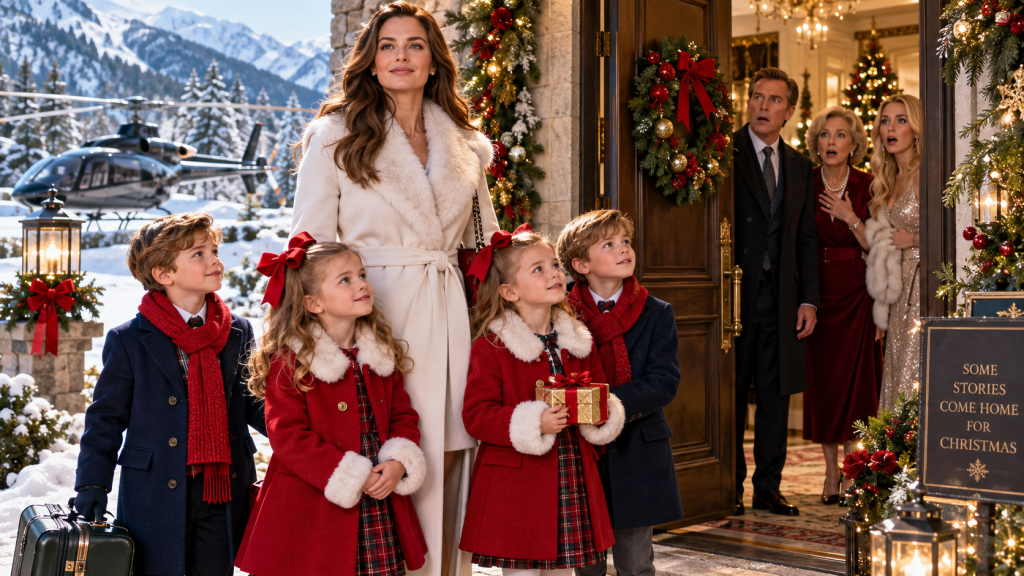
The helicopter waited beyond the lawn.
“Kesha.”
I stopped.
The children continued with Dana, who had accompanied us and wisely remained outside the family explosion.
I turned.
Marcus stood without a coat.
Snow landed in his hair.
“Can I see them?”
I looked at him.
“Not today.”
“Ever?”
“That won’t be my decision alone.”
“They’re eight.”
“They’re people.”
“They already have opinions about you.”
He winced.
“I’m their father.”
“Biologically.”
“That matters.”
“Yes.”
I said.
“It matters.”
“But it does not automatically create a relationship.”
His eyes filled.
“I want to know them.”
“Do you?”
“Yes.”
“Or do you want relief from knowing they exist?”
He stared at me.
“I don’t know.”
That answer surprised me.
Good.
At least honesty had survived the front door.
“Figure that out before you go near them.”
I turned.
“Kesha.”
I looked back.
“I’m sorry.”
The words I once dreamed of hearing finally arrived.
Eight years too late.
And strangely, they did not feel triumphant.
They felt small.
Not meaningless.
Just small.
“Thank you.”
I said.
His face changed.
He had expected something else.
Forgiveness.
Anger.
A speech.
Perhaps tears.
Instead, I left.
The children were unusually quiet during the flight back.
Halfway to Austin, Olivia asked:
“Mom?”
“Yes?”
“Do you hate Dad?”
I looked at her.
“No.”
“Why?”
That question almost made me laugh.
“Because hating someone is a lot of work.”
She considered that.
“Are you mad?”
“Yes.”
“Still?”
“Yes.”
“For eight years?”
“Not every day.”
Sophia looked up.
“Do we have to love him?”
“No.”
Noah frowned.
“Can we?”
“Yes.”
Ethan stared out the window.
“Can I not?”
“Yes.”
That was the first promise I made about Marcus.
No child would be forced into the same emotional response as another.
They were quadruplets.
Not one person divided into four bodies.
Noah was curious.
Sophia was hopeful.
Olivia cautious.
Ethan angry.
All four were allowed.
Patricia began visiting.
Slowly.
The first time, she came without presents.
I appreciated that.
She brought photographs instead.
Pictures of Marcus as a boy.
Daniel—Marcus’s younger brother.
Great-grandparents.
Family houses.
She brought copies of the letters she had written.
Not all at once.
I read the first one alone.
Dear little one,
I don’t know whether you’re a boy or a girl yet. Your father won’t tell me where your mother is. I hope one day she lets me apologize for not being braver.
I cried.
Then I read the date.
Two weeks before the quadruplets were born.
Patricia had not known there were four.
The first letter after she found out began:
Four. Dear God, Kesha had four babies.
I laughed through tears.
I let the children read age-appropriate pieces later.
The money remained untouched.
I told Patricia it could stay in trust until the children were adults.
No conditions.
No emotional debt.
She agreed.
Marcus requested visitation.
I required family therapy first.
He agreed.
The first meeting with the children happened three months after Christmas.
Neutral office.
Child therapist present.
I sat outside.
I wanted to go in.
Every cell in my body wanted to.
But the therapist had asked the children.
They wanted to meet him without me.
That hurt.
I let them.
Forty minutes later, the door opened.
Noah came out first.
He looked thoughtful.
Sophia had been crying.
Olivia held her hand.
Ethan looked furious.
I stood.
“How was it?”
Ethan said:
“He said sorry too much.”
Sophia snapped:
“At least he said it.”
“He kept crying.”
“He’s allowed to cry.”
“He left us!”
“Stop!”
I raised my hand.
“No.”
They stopped.
“You do not have to agree about him.”
I crouched.
“You are each allowed your own relationship with what happened.”
Ethan looked at Sophia.
“She wants to forgive him.”
Sophia shouted:
“I didn’t say that!”
“What did you say?”
“I said I want to see him again.”
Ethan rolled his eyes.
“That’s not forgiveness.”
I said.
Both looked at me.
“You can see someone without forgiving everything.”
“You can forgive someone without trusting them completely.”
“You can love someone and still have boundaries.”
“You don’t have to decide today.”
That became our rule.
No permanent emotional decisions required from eight-year-olds.
Marcus began seeing them once a month.
Supervised.
Then twice.
He never missed.
For two years.
That mattered.
He did not buy extravagant gifts.
The therapist advised against it.
He took them to parks.
Museums.
Lunch.
He learned Noah hated tomatoes.
Ethan loved astronomy.
Sophia wrote stories.
Olivia was afraid of deep water.
He learned their birthdays were technically the same but they hated sharing one cake.
He learned that fatherhood is mostly details.
Not biology.
Not photographs.
Details.
Which child needs the hallway light on.
Which one lies about being scared.
Which one becomes quiet when hurt.
Which one wants to be left alone before being comforted.
Marcus had missed eight years of details.
He could not recover them.
He could learn new ones.
Lauren did not marry him.
I learned that from Patricia.
Marcus asked me about it once.
We were sitting outside the therapist’s office.
“I ruined that too.”
he said.
I looked at him.
“Lauren made her own decision.”
“She said she couldn’t marry someone capable of maintaining a lie for eight years.”
“That sounds reasonable.”
He laughed sadly.
“You haven’t changed.”
“I have changed enormously.”
“You’re still sharp.”
“That part was excellent already.”
He smiled.
Then became serious.
“Why didn’t you remarry?”
I looked at him.
“Do not flatter yourself.”
He laughed.
“I didn’t mean—”
“I know.”
The truth was simple.
I dated.
I loved once.
Almost married once.
It didn’t work.
Then life continued.
I had children.
Friends.
Work.
Family.
Romantic partnership was not the missing piece Marcus imagined.
I had not failed to replace him.
I had simply stopped designing my life around replacement.
“I’m happy.”
I told him.
He nodded.
“I can see that.”
“Are you?”
He thought.
“Getting there.”
Good answer.
Charles Reynolds had died two years before that Christmas dinner.
I had not known.
Patricia eventually gave me something from his files.
A letter.
Addressed to Marcus.
Never sent.
She found it in Charles’s desk after his death.
Marcus asked me to read it.
I almost refused.
Then curiosity won.
Charles wrote that he regretted “the manner” in which the divorce happened.
Not the divorce itself.
Typical.
But near the end, there was one line:
I taught you that protecting the Reynolds name mattered more than becoming a decent Reynolds man. That failure is mine, though what you did with the lesson is yours.
I read it twice.
Then gave it back.
“What do you think?”
Marcus asked.
“I think he’s right.”
Marcus nodded.
“I hated him when I found it.”
“And now?”
“I understand that blaming him for everything is just another way of avoiding my part.”
That was the first moment I believed Marcus might actually change.
Not when he cried.
Not when he apologized.
When he stopped using his father as the final explanation.
Marcus had been twenty-six.
Young.
Pressured.
Afraid.
But adult.
Charles offered the bargain.
Marcus accepted.
Both truths mattered.
By the time the children were twelve, they saw Marcus regularly.
Ethan remained distant.
Marcus respected it.
That mattered most with Ethan.
One afternoon, Marcus invited all four to a baseball game.
Ethan refused.
Marcus said:
“Okay.”
No guilt.
No:
Your siblings are going.
No:
I’m your father.
No wounded performance.
Just:
“Okay. Maybe another time.”
Afterward, Ethan asked me:
“Was he mad?”
“Probably disappointed.”
“But he didn’t say anything.”
“That’s what respecting a boundary looks like.”
Ethan went to the next game.
He never announced why.
Marcus didn’t either.
That was how their relationship began.
Quietly.
At fourteen, the children finally asked to see the original letters.
All of them.
One hundred and three.
We spread them across our dining room table.
Eight years of a grandmother talking to children she believed would never hear her.
Some were funny.
Some painful.
Some repetitive.
Some contained ordinary family news.
Your uncle Daniel got married today.
It snowed eighteen inches.
Your father always hated peas when he was little.
I saw four backpacks in a store window and wondered what colors you’d choose.
That one destroyed me.
Sophia cried.
Noah read silently.
Olivia organized them by date.
Of course she did.
Ethan stopped halfway through.
“I need air.”
I followed him outside.
He sat on the porch steps.
“Dad had these?”
“Some.”
“Grandma says she gave most to him.”
“Yes.”
“He threw them away?”
“I don’t know.”
“I hate him.”
I sat beside him.
“Okay.”
“You’re not going to tell me I don’t?”
“No.”
“I do.”
“I believe you.”
He cried.
“I hate that he gets to be nice now.”
There it was.
One of the hardest truths about change.
When someone who hurt you becomes better, it can feel unfair.
As though their improvement asks you to surrender your anger.
It doesn’t.
“You don’t owe him a shorter recovery because he finally became a better person.”
Ethan looked at me.
“Really?”
“Really.”
“Then what’s the point of him changing?”
“For him to stop causing more harm.”
I put my arm around him.
“His growth is his responsibility.”
“Your healing is yours.”
“They don’t have to happen on the same schedule.”
He leaned against me.
Years later, Ethan told me that conversation saved his relationship with Marcus.
Because once he realized forgiveness was not compulsory, he stopped resisting it as though someone were trying to force it into his hands.
It came later.
Partially.
Naturally.
At sixteen, Noah asked Marcus the hardest question.
We were having dinner.
All of us.
Yes.
Eventually, that became possible.
Patricia.
Marcus.
Me.
The four children.
Even Lauren attended once years later after becoming friendly with Patricia.
Life is strange.
Noah put down his fork.
“Dad?”
Marcus looked up.
“Yes?”
“If Grandpa hadn’t offered you the company, would you have stayed?”
The room became silent.
Marcus thought.
“I don’t know.”
Patricia whispered:
“Marcus.”
“No.”
He shook his head.
“They deserve truth.”
Then he looked at Noah.
“I want to tell you yes.”
“But the man I was then was already too concerned with approval.”
“Maybe your grandfather gave me an excuse to do something cowardly I was already capable of doing.”
Noah nodded slowly.
“That sucks.”
“Yes.”
Marcus said.
“It does.”
Then Noah asked:
“Do you wish you stayed?”
“Every day.”
Ethan stiffened.
Marcus noticed.
“But wishing doesn’t earn anything.”
he added.
“I don’t get credit for regret.”
Ethan relaxed.
Marcus had learned.
At eighteen, the quadruplets graduated high school.
Four caps.
Four gowns.
Four college decisions.
Four tuition conversations.
Patricia’s trusts had grown substantially.
Each child had enough for education and a meaningful start in adulthood.
I sat them down.
“The money is yours.”
I said.
“But before you accept it, understand something.”
Sophia rolled her eyes.
“Here comes Mom’s financial speech.”
“Yes.”
“And because there are four of you, I will make it four times.”
Groaning.
I continued.
“This money is not payment for absence.”
“It does not purchase forgiveness.”
“It does not require Christmas visits.”
“It does not require you to call Patricia Grandma or Marcus Dad.”
“It is a gift.”
“Gifts belong to the recipient once freely given.”
Noah smiled.
“You practiced that.”
“Obviously.”
They accepted.
Ethan used part of his for college and left the rest invested.
Olivia studied medicine.
Noah engineering.
Sophia journalism.
Ethan architecture.
Four lives.
Different.
The helicopter became family mythology.
At college, Sophia told the story constantly.
I discovered this when a friend met me and said:
“Oh my God, you’re Helicopter Mom.”
I stared at Sophia.
She smiled.
“It’s a good story.”
“It makes me sound unhinged.”
“You landed four secret children on Dad’s lawn at Christmas.”
“They weren’t secret to me.”
“Still.”
Marcus eventually laughed about it too.
Years later, he admitted:
“When I heard the helicopter, I thought it was one of Dad’s old business friends trying to be dramatic.”
“And then?”
“You stepped out.”
“With four children.”
“Yes.”
“What did you think?”
He looked at me.
“The first thing?”
“Yes.”
“That Noah walked exactly like me.”
I had never noticed.
“He does?”
“He did.”
Marcus smiled.
“Same stupid shoulder thing.”
“You do have a stupid shoulder thing.”
“Thank you.”
“Anytime.”
Then he became quiet.
“The second thing I thought was that I had made the worst decision of my life.”
“Eight years late.”
“Yes.”
“But I knew.”
I nodded.
We had reached a strange peace by then.
Not friendship exactly.
Not bitterness.
Something mature enough not to require a label.
Marcus remained in the children’s lives.
He never became the father he could have been.
That possibility died when he walked away.
He became another kind.
A late father.
A father who had to ask permission.
A father who could never say:
“After everything I’ve done for you.”
Because everyone knew exactly what he had not done.
And perhaps that humility made him better.
Patricia became Grandma Patty.
Not immediately.
Sophia started it.
Then Noah.
Olivia followed.
Ethan held out another year.
Patricia never complained.
That mattered.
She attended graduations.
Birthdays.
School performances.
She learned not to bring expensive gifts.
She learned to ask.
She learned to apologize without turning the apology into a request for comfort.
One Christmas, years after the helicopter, she handed me a box.
I opened it.
Inside were four tiny knitted hats.
Old.
Baby-sized.
Blue.
Green.
Pink.
Yellow.
“I bought those before I drove to Austin.”
she said.
I touched them.
“You kept them?”
“I couldn’t throw them away.”
My eyes filled.
“I don’t know whether you want them.”
I looked toward the children.
They were teenagers by then.
Arguing over a board game.
“I do.”
Patricia cried.
I hugged her.
Not because the hats erased anything.
They didn’t.
But they proved something.
She had loved them before she knew them.
Imperfectly.
Cowardly at first.
From a distance.
But love had existed.
Then, eventually, courage caught up.
When Patricia turned eighty, all four grandchildren came to Boulder.
No helicopter.
Commercial flight.
She complained.
“I expected an entrance.”
Ethan said:
“We’re saving that for your funeral.”
“Ethan!”
I snapped.
Patricia laughed harder than anyone.
“I like him.”
she said.
“You created part of him.”
Marcus replied.
“Unfortunately.”
The family had become capable of joking about what once could not be spoken.
That is not forgetting.
It is one sign that memory no longer owns the entire room.
Patricia died at eighty-four.
All four grandchildren were with her during her final week.
Marcus sat beside her bed.
So did I.
She looked at me one evening.
“I should have knocked on your door.”
I knew exactly what she meant.
Austin.
March.
Four infants inside.
Her sitting less than a block away.
“Yes.”
I said.
She nodded.
“I spent years wishing you’d tell me it was okay.”
“It wasn’t.”
“I know.”
She smiled.
“That’s why I love you.”
I took her hand.
“But you came later.”
“Eight years later.”
“Yes.”
“Too late.”
“For some things.”
I squeezed her fingers.
“Not for everything.”
She cried.
“Did they love me?”
I looked toward the hallway where four adult grandchildren were making far too much noise.
“Yes.”
“All four?”
I smiled.
“Even Ethan.”
She laughed.
“Especially Ethan.”
The next morning, Patricia asked each grandchild to come in separately.
I never asked what she said.
That belonged to them.
She died that night.
At her funeral, Ethan wore the ugliest tie I had ever seen.
Patricia bought it for him when he was fifteen.
He had pretended to hate it.
He cried through the entire service.
Forgiveness, when it finally came, looked nothing like people expected.
It looked like an ugly tie.
Marcus inherited the Reynolds company.
Again.
But by then it meant something different.
Years earlier, he had believed owning it justified losing us.
Now it mostly looked like a building full of responsibilities.
He sold a significant portion.
Created employee ownership.
Funded Patricia’s charitable work.
And eventually stepped down.
I asked him once:
“Why?”
He smiled.
“I spent half my life trying to own the thing I traded my family for.”
“And?”
“Turns out buildings don’t call on birthdays.”
I laughed.
“No.”
“They don’t.”
At fifty-nine, Marcus remarried.
Not Lauren.
Her name was Rachel.
She knew everything.
Before the wedding, Marcus told the children:
“I don’t need anybody’s permission.”
They stared at him.
Then he smiled.
“But I would like your blessing.”
Sophia hugged him.
Noah shook his hand dramatically.
Olivia kissed his cheek.
Ethan said:
“She seems too good for you.”
Marcus laughed.
“She is.”
“Then yes.”
I attended the wedding.
People found that surprising.
I didn’t.
I was no longer the woman Marcus left.
I was not even primarily his ex-wife anymore.
I was Kesha.
Mother.
Founder.
Friend.
Grandmother eventually.
Woman who loved jazz too loudly.
Woman who killed every orchid she owned.
Woman who survived something painful and then had thousands of ordinary days afterward.
That is what healing gave me.
Ordinariness.
The freedom to be more than the person someone abandoned.
When the quadruplets turned thirty, they recreated the Christmas photograph.
All four stood outside Patricia’s Boulder house.
The property belonged to Marcus then.
The helicopter landing spot was still visible only in family memory.
Sophia brought a toy helicopter.
Of course she did.
They posed with it.
Marcus stood behind them.
I took the photograph.
Then Noah called:
“Mom, get in.”
“I’m taking it.”
“Timer.”
“I hate timers.”
“Mom.”
I joined them.
Marcus stood at one end.
I stood at the other.
Between us:
Noah.
Ethan.
Sophia.
Olivia.
Thirty years old.
Four adults who had once been four tiny heartbeats doctors struggled to distinguish on a monitor.
The photograph captured something I never expected.
Nobody looked broken.
Not me.
Not Marcus.
Not the children.
Not even the history.
History cannot smile.
People can.
Years later, after I retired, Sophia interviewed me for a family project.
She asked:
“Why did you really go to Christmas dinner?”
I laughed.
“You know.”
“No.”
“You’ve told the helicopter version.”
“I want the true version.”
I thought.
“At first?”
“Yes.”
“I wanted him to see me.”
“What do you mean?”
“I wanted Marcus to look at me and realize abandoning me had not destroyed me.”
Sophia nodded.
“Revenge.”
“A little.”
“Mom.”
“Fine.”
“A lot.”
She smiled.
“And after?”
“After what?”
“After you got there.”
I looked out the window.
“Then I realized I didn’t need him to be impressed.”
“That was surprising.”
“Why?”
“Because I had imagined the moment for years.”
“Not the helicopter.”
“The moment he finally understood.”
“I thought it would heal something.”
“Did it?”
“No.”
Sophia frowned.
“What did?”
“Going home.”
“What?”
“Leaving that house with you four.”
“Getting on the helicopter.”
“Hearing you argue over who got the window seat.”
“Realizing Marcus could finally know what he lost and I didn’t have to stay there watching him know it.”
I smiled.
“That healed something.”
Sophia stopped writing.
“That’s good.”
“Use it.”
“I will.”
“Royalties?”
“No.”
“Terrible daughter.”
She laughed.
I lived into my eighties.
Long enough to see all four children build lives Marcus once traded away before meeting them.
Noah became an engineer and had two daughters.
Ethan designed public housing and remained the most stubborn person I knew.
Sophia became a journalist and documentary producer.
Olivia became a pediatric cardiologist.
When Olivia chose her specialty, I cried.
The first time I heard their heartbeats, doctors had warned me a quadruplet pregnancy carried enormous risks.
Four heartbeats had terrified me.
Then sustained me.
Olivia spent her career protecting children’s hearts.
Life does love symmetry.
The children gave me nine grandchildren.
Marcus became Grandpa Marcus.
That took time.
He never asked for a special name.
The oldest grandchild invented it.
Marcus cried in the bathroom afterward.
Rachel told me.
I pretended not to know.
Some dignity should be preserved.
At seventy-five, Marcus suffered a heart attack.
He survived.
All four children came.
So did I.
When I walked into his hospital room, he laughed weakly.
“Full circle.”
“What?”
“You showing up unexpectedly.”
“No helicopter.”
“Disappointing.”
I sat beside him.
He looked old.
So did I.
“Kesha?”
“Yes?”
“Did you ever forgive me?”
There it was.
Decades late.
I thought carefully.
“Yes.”
His eyes filled.
“When?”
“I don’t know.”
“That seems unfair.”
“Forgiveness doesn’t issue certificates.”
He laughed.
“What does it mean?”
“For me?”
“Yes.”
“It meant I stopped wishing the past had been different every time I remembered it.”
He looked at me.
“That’s all?”
“That’s enormous.”
He nodded.
“Do you think the kids forgave me?”
“Ask them.”
“I have.”
“And?”
“They give complicated answers.”
I smiled.
“Then we raised them correctly.”
He laughed.
“We?”
I raised an eyebrow.
He corrected himself immediately.
“You raised them correctly.”
“Better.”
He became serious.
“I wish I had been there.”
“I know.”
“For everything.”
“I know.”
“First steps.”
“Yes.”
“First words.”
“Yes.”
“School.”
“Birthdays.”
“Yes.”
He stared at the blanket.
“Do you ever wish I’d stayed?”
That question surprised me.
I thought of twenty-five-year-old Kesha.
Pregnant.
Terrified.
Begging a man to believe her.
I thought of thirty-three-year-old Kesha stepping from a helicopter with four children.
I thought of eighty-year-old Kesha sitting beside an old man who had finally learned the price of his choice.
“Yes.”
I said.
His eyes lifted.
“For them.”
I continued.
“I wish they had never experienced abandonment.”
“But for me?”
I breathed slowly.
“I stopped wishing for the husband you might have been.”
“Because the husband you actually were made his choice.”
Marcus cried.
“That hurts.”
“I know.”
“But you asked.”
He nodded.
“Thank you for answering.”
He lived another nine years.
When Marcus died, the children were with him.
I was not.
That was right.
His final relationship with them belonged to them.
Ethan called me afterward.
“Mom?”
I knew.
“He’s gone?”
“Yes.”
I closed my eyes.
I felt grief.
Real grief.
Not the grief of a widow.
Not even exactly the grief of an ex-wife.
The grief of losing someone who had occupied a large room in the architecture of my life.
Someone I once loved.
Someone who hurt me.
Someone who changed.
Someone who fathered my children.
Someone who eventually learned to love them.
Life refuses simple categories.
At Marcus’s funeral, all four children spoke together.
Noah began.
“Our father missed our first eight years.”
Ethan continued.
“That was his choice.”
Sophia said:
“He spent the rest of his life knowing he could never recover them.”
Olivia finished:
“But he stopped wasting the years that remained.”
Then Ethan stepped forward again.
This surprised me.
“For a long time, I thought forgiving Dad would mean saying what he did was okay.”
“It wasn’t.”
“It never became okay.”
“I learned that forgiveness can mean allowing a person to become more than the worst thing they did without pretending the worst thing disappeared.”
He looked at me.
“My mother taught me that.”
I cried.
Naturally.
Then Sophia smiled.
“And she taught us never to underestimate a woman with access to a helicopter.”
The church erupted in laughter.
Even I laughed.
Especially I laughed.
Afterward, we returned to Patricia’s old Boulder house.
Christmas lights were not up.
It was summer.
Still, I stood on the lawn.
The same lawn.
I could almost hear rotor blades.
I could see snow spinning.
I could see Marcus in the doorway.
Patricia dropping her glass.
Lauren staring.
Four eight-year-olds stepping into a family that did not know they existed.
Ethan came beside me.
“You okay?”
“Yes.”
“Thinking about Christmas?”
“Yes.”
“Worth it?”
I smiled.
“The helicopter?”
“All of it.”
I thought.
“Pain doesn’t become worthwhile just because something good grows afterward.”
Ethan nodded.
“You always say that.”
“Because people like turning suffering into tuition.”
He laughed.
“But?”
“But I’m proud of what we did with what happened.”
He slipped his arm around me.
“So am I.”
When I died at ninety-one, my children found something in my desk.
The original invitation from Marcus.
I had printed it.
Why?
I don’t know.
Perhaps part of me understood immediately that the message marked a hinge.
Come to Christmas dinner at Mom’s house in Boulder on December 25. The family wants to see you one last time.
Beneath it, years later, I had written:
They did not see me one last time. They saw me for the first time.
Sophia read that at my memorial.
Then she told the helicopter story.
Again.
With embellishments.
Again.
I would have complained.
Then she became serious.
“My mother was abandoned at twenty-five while pregnant.”
“She did not know there were four babies yet.”
“She had no idea how she would raise one.”
“Then doctors found another heartbeat.”
“Then another.”
“Then another.”
People laughed softly.
“She told me once that when the doctor said quadruplets, she stared at the ceiling and said, ‘You’ve got to be kidding me.’”
True.
“People often tell this story as though her success was revenge.”
“It wasn’t.”
“The company wasn’t revenge.”
“The helicopter wasn’t revenge.”
“We weren’t revenge.”
That mattered.
I wish I could have kissed her for saying it.
“My mother did not raise four children to prove our father wrong.”
“She raised us because we were hers.”
“She built a company because she was talented, stubborn, lucky, exhausted, supported, and unwilling to surrender.”
“She accepted our grandmother because Grandma Patricia eventually showed up and did the work.”
“She allowed our father into our lives because she believed our relationships with him belonged to us.”
“She never made us responsible for her anger.”
“And she never pretended his choices hadn’t hurt her.”
Sophia paused.
“The most powerful thing about my mother was not that she arrived in a helicopter.”
“It was that she eventually stopped needing an entrance.”
That was true too.
My later years had no helicopters.
Thank God.
They had gardens.
Grandchildren.
Bad knees.
Coffee.
Sunday calls.
Ordinary Christmases.
That was the victory.
Not spectacle.
Peace.
After my memorial, the four children opened the last envelope in my desk.
It contained four letters.
One for each.
Noah read his privately.
So did Olivia.
Sophia.
Ethan waited until midnight.
His letter said:
My stubborn boy,
You were the angriest when you learned what your father did. I understood why. You were also the child most like him, which I suspect frightened you.
But resemblance is not destiny.
You have his jaw.
His eyes.
His ridiculous refusal to ask for directions.
You do not have to inherit his worst choice.
None of you did.
Your father spent years learning that biology gives you relatives, but choices build relationships.
Remember the same lesson in reverse.
You are not required to remain trapped by a choice someone else made before you were born.
I wasn’t.
Neither are you.
Love, Mom.
Ethan cried.
Then called his siblings.
They met the next morning.
Four children.
Old now themselves.
They brought my letters.
Marcus’s old photographs.
Patricia’s copied letters.
The four baby hats.
And one photograph taken on Christmas Day when they were eight.
Someone—probably one of Marcus’s cousins—had captured the moment immediately after we entered.
I stood behind them.
Marcus stood across the room.
His face was white.
Patricia’s broken wineglass glittered near the doorway.
Noah was looking up.
Probably seconds before asking:
Are you our dad?
For years, that photograph had represented confrontation.
Later, the children saw something else.
Me.
My hands were resting lightly on Sophia’s and Olivia’s shoulders.
Not gripping.
Not pushing.
Just there.
Steady.
Ethan noticed.
“Mom looks scared.”
Sophia stared.
“She does.”
Noah leaned closer.
“I never noticed.”
Neither had I.
Everyone remembered confidence.
The helicopter.
The entrance.
The line.
The shock.
But beneath it, I had been terrified.
Of course I had.
Courage rarely feels like the photographs taken afterward.
Inside courage there is often a frightened person wondering whether coming was a mistake.
But I came.
The children came.
Patricia told the truth.
Marcus eventually told the truth.
And truth changed what Christmas meant in our family.
For decades afterward, every December 25, someone inevitably mentioned the helicopter.
Usually Sophia.
Always Sophia.
Eventually her grandchildren knew the story.
It became family legend.
But the version changed with time.
At first:
Grandma Kesha showed Grandpa Marcus what he lost.
Later:
Grandma Kesha brought four children to meet the family that had abandoned them.
Later still:
One Christmas, a family built on silence finally had to tell the truth.
That was the version I liked best.
Because revenge was never the real ending.
Marcus did lose something.
Eight years.
He could never buy them back.
Not with the company.
Not with Patricia’s trusts.
Not with apologies.
Not with decades of showing up afterward.
Those years remained gone.
Consequences should be allowed to remain consequences.
But he was given something he did not deserve and eventually learned not to treat as entitlement.
More time.
The children gave him years.
Not because I ordered them.
Not because blood demanded it.
Because they chose.
And I was given something too.
Not vindication.
Something quieter.
I learned that the opposite of abandonment is not being chased.
It is knowing your worth remains intact whether the person who left ever returns.
Marcus leaving did not make me worthless.
His regret did not make me valuable.
His shock on that snowy lawn did not prove I had succeeded.
I had been worthy when I was twenty-five, pregnant and crying alone.
I had been worthy when I had no company.
No helicopter.
No assistant.
No impressive office.
I had been worthy when four babies screamed at two in the morning and I sat on the kitchen floor because I was too tired to stand.
I simply did not understand it yet.
That was what I would tell the younger version of myself if I could.
Not:
Wait until he sees you.
Not:
You’ll become successful and make him regret everything.
No.
I would sit beside her.
Take her shaking hands.
And say:
You do not need to become extraordinary to prove that abandoning you was wrong.
You already mattered when he left.
The children already mattered before he knew their names.
Build your life because it belongs to you, not because one day someone who hurt you might be watching.
Then I would tell her one more thing.
Buy earplugs.
Because four newborns were coming.
And she had absolutely no idea.
Maybe she would laugh.
I hope so.
Because laughter returned.
So did Christmas.
So did family.
Not the family I had imagined when I married Marcus.
A different one.
Messier.
Larger.
More honest.
There was Patricia, who failed us first and loved us later.
There was Marcus, who chose money first and spent decades learning that regret could not purchase back time.
There were four children who refused to inherit their father’s shame or their mother’s anger.
And there was me.
Not childless.
Not broken.
Not forgotten.
But more importantly, not defined by proving any of those things.
I was simply Kesha.
And in the end, that was enough.
The last photograph in our family album showed four elderly siblings standing on a snow-covered lawn in Boulder.
Noah.
Ethan.
Sophia.
Olivia.
Behind them stood their children and grandchildren.
Someone had rented a helicopter as a joke for their seventieth birthday.
Naturally.
Sophia arranged it.
Naturally.
As the aircraft descended, snow swirled across the lawn exactly as it had sixty-two years earlier.
The four siblings laughed like children.
And somewhere in that laughter lived every person who had come before them.
Patricia.
Marcus.
Me.
Even Charles, though perhaps only as a warning.
The helicopter landed.
The door opened.
Sophia looked at her brothers and sister.
“Ready?”
Olivia rolled her eyes.
“We’re seventy.”
“So?”
Ethan said:
“My knees aren’t ready.”
Noah laughed.
Then the four of them stepped forward together.
Four lives their father once chose not to know.
Four lives their mother refused to let that choice diminish.
Four lives that became families of their own.
No dramatic confrontation waited at the door this time.
No broken wineglass.
No engagement ring hitting the floor.
No secret.
Only grandchildren running toward them through the snow.
Only laughter.
Only people calling their names.
Only home.
And perhaps that is the ending I had been searching for all along.
Not the moment Marcus saw what he lost.
The moment our children stopped being the things anyone had lost.
They belonged to themselves.
They always had.
And as they walked across that snowy lawn, older than Marcus and I had been when everything began, nobody was arriving to prove anything.
Nobody was there to shock anyone.
Nobody needed revenge.
They were simply coming home for Christmas.
Together.
And this time—
everyone already knew they were coming.
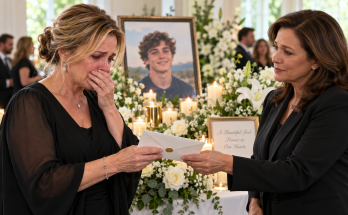
THE END STORIES! THANK YOU FOR READING GOOD LUCK !❤️
Related Posts