➡️ PART 3 ENDING PART ➡️
“A storage property your husband secretly rented five years ago—the same week Jennifer disappeared.”
For a few seconds, I heard nothing except Hope crying against my chest.
Detective Harris was still holding the little silver key.
Two officers stood near my front door.
Red and blue lights moved silently across the living-room walls through the curtains, washing over photographs of Jennifer at six, nine, thirteen, sixteen.
Five years of searching.
Five years of blaming myself.
Five years of waking in the middle of the night wondering whether my daughter had been cold, frightened, hungry, hurt—or dead.
And now a detective was standing in my house telling me that Michael had secretly rented a property the same week she vanished.
“My husband?”
I whispered.
Harris nodded.
“Michael rented it?”
“Yes.”
“You knew about this?”
“We learned about it during the original investigation.”
My knees weakened.
“Then why didn’t anyone tell me?”
Harris looked uncomfortable.
“Because at the time, there was nothing tying the unit to Jennifer.”
I stared at him.
“He rented it the week she disappeared.”
“Yes.”
“And that wasn’t enough?”
“Not for a warrant by itself.”
“What did Michael say it was for?”
“He claimed he was storing business equipment.”
I laughed.
It came out broken.
“Michael didn’t have a business.”
“I know.”
“You know?”
“We checked.”
Hope cried harder.
I held her against my shoulder automatically, patting her back while my mind tore itself apart.
“How long did he keep renting it?”
“Six months.”
“Did you search it?”
“Eventually.”
“And?”
“It was empty.”
I stared.
“Empty?”
“Completely.”
“Then why are you pale?”
Harris looked at the key again.
“Because this isn’t the key to that unit.”
I stopped breathing.
“What?”
“It belongs to the property.”
“What does that mean?”
“The building had an older service section behind the rental units.”
“Maintenance rooms.”
“Utility access.”
“A basement.”
My skin prickled.
“A basement?”
“The owner told us it hadn’t been used in years.”
“And you didn’t search it?”
“We had no probable cause.”
His voice was quieter now.
“And Michael’s lease did not include it.”
I looked at the key.
“But this opens it?”
“I can’t be certain until we test it.”
“Then how do you recognize it?”
“The property manager showed us one during the investigation.”
“Old-fashioned keys.”
“Number stamped near the base.”
Harris turned it over.
B-17.
My stomach dropped.
“What is B-17?”
“I don’t know.”
He slipped the key into an evidence bag.
“But we’re going to find out.”
I held Hope tighter.
“I’m coming.”
“No.”
“Yes.”
“You need to stay here with the baby.”
“This is my daughter.”
“And that may be your granddaughter.”
His tone softened.
“She needs you too.”
I looked down.
Hope had stopped crying.
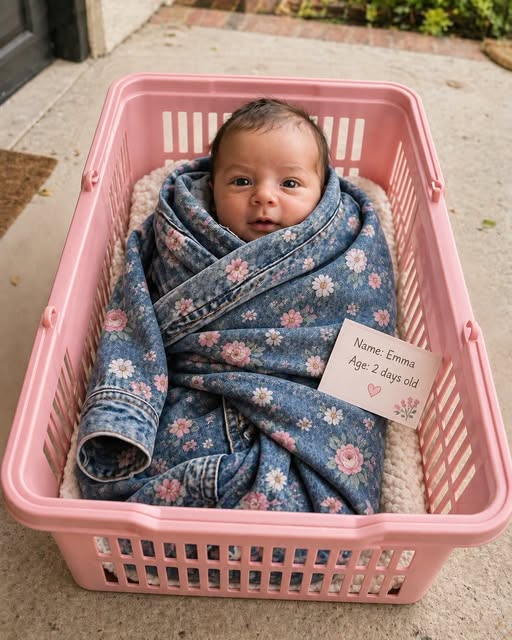
Her tiny fist was curled into Jennifer’s denim jacket.
My daughter’s jacket.
I remembered buying it.
Jennifer was fifteen.
She had tried it on at a thrift store and complained that the sleeves were too long.
I told her she would grow into it.
She rolled her eyes.
“I’m sixteen next year, Mom. I’m basically done growing.”
I bought it anyway.
She wore it almost every day.
When she disappeared, it disappeared with her.
Now it was wrapped around her child.
That jacket had traveled through five years I knew nothing about.
I pressed my lips to Hope’s forehead.
“Find Jennifer.”
I whispered.
Harris nodded.
“We will.”
He turned to leave.
Then I grabbed his sleeve.
“Detective.”
He looked back.
“If Michael did something to her…”
I could not finish.
Harris’s expression became careful.
“We don’t know that yet.”
“He knew where she’d been.”
“The note says that.”
“Yes.”
“And the note was written by Jennifer?”
“We’ll verify handwriting.”
“But you think—”
“I think someone wanted this baby brought to you.”
He looked at Hope.
“And I think the person who left her believed you were safe.”
Safe.
The word hurt.
Because Jennifer had apparently believed I was safe for Hope.
Yet she had not believed I could save her.
Why?
Why had she stayed away?
Why had she not called?
Why had she not come home?
And what did Michael know?
The officers left.
A female officer remained outside until child services could send someone.
I hated hearing those words.
Child services.
Hope was my granddaughter.
At least, I believed she was.
But legally, we knew almost nothing.
I changed her diaper with shaking hands.
There were supplies in the basket.
Three diapers.
A small bottle.
Formula.
A pacifier.
A pink knitted hat.
Everything carefully packed.
This was not someone discarding a baby.
This was someone delivering her.
I searched the basket again.
Nothing.
Then I examined the jacket.
Every seam.
Every pocket.
The lining.
My fingers found something stiff inside a tear near the bottom hem.
I froze.
Carefully, I reached inside.
A photograph.
Folded twice.
I opened it.
Jennifer.
Older.
Thin.
Her hair shorter.
She was sitting on a bed holding Hope.
Alive.
My daughter was alive.
The photograph slipped from my fingers.
I made a sound I did not recognize.
Then I fell to my knees.
“Jennifer.”
I grabbed the photograph again.
“Jennifer.”
Five years.
Five years of imagining a grave.
A ditch.
A river.
An anonymous body.
Five years of scanning crowds.
Five years of seeing girls with brown hair and following them through grocery stores until they turned around.
Five years of dreams where Jennifer came through the front door and said:
“Mom, where have you been?”
Alive.
She was alive.
Or had been recently.
Hope could not have been more than a few weeks old in the photograph.
On the back, written in Jennifer’s handwriting:
She has my eyes and your stubbornness. I’m sorry.
I pressed the photograph against my chest and sobbed.
Hope startled.
I immediately lowered my voice.
“I’m sorry.”
I lifted her.
“Grandma’s okay.”
Grandma.
The word nearly destroyed me.
“I’m your grandma.”
Hope stared at me.
Jennifer had made me a grandmother.
Somewhere.
Alone.
Without me.
I kissed Hope’s forehead.
“We’re going to find your mama.”
The call came forty-three minutes later.
Harris.
“We’re at the property.”
My heart pounded.
“And?”
“The key opened B-17.”
I stood.
“What is it?”
“A basement storage room.”
“What did you find?”
Silence.
“Harris.”
“Personal belongings.”
My stomach turned.
“Whose?”
“We believe Jennifer’s.”
I closed my eyes.
“Is there blood?”
“No.”
“Anything suggesting she died there?”
“Not immediately.”
I breathed again.
“What did you find?”
“A backpack.”
“Clothes.”
“Schoolbooks.”
“Photographs.”
“And letters.”
“Letters?”
“Addressed to you.”
My heart stopped.
“How many?”
“A lot.”
I sat down.
“She wrote to me?”
“Yes.”
“Why didn’t I get them?”
“We don’t know.”
But we both knew who might.
Michael.
“Where is he?”
“We’re looking.”
I glanced at the clock.
“His girlfriend.”
“Ex-girlfriend.”
I blinked.
“What?”
“They separated eight months ago.”
I had not known.
“Where does she live?”
“Officers are speaking with her.”
Then Harris said:
“There is something else.”
“What?”
“The room appears to have been lived in.”
I gripped the phone.
“By Jennifer?”
“Possibly.”
“For five years?”
“No.”
He paused.
“Based on what we’re seeing, probably only during the first several months after she disappeared.”
“Then where did she go?”
“We’re working on that.”
I closed my eyes.
“Harris.”
“Yes?”
“Don’t let Michael talk his way out of this.”
His voice changed.
“He won’t be talking to you without us present.”
That wasn’t an answer.
But it was enough.
Child services arrived.
A woman named Denise.
I expected cold forms and suspicion.
Instead, she sat at my kitchen table and spoke gently.
She looked at the photograph.
The note.
The basket.
Hope.
She asked whether I could care for an infant temporarily.
I almost laughed.
“I raised Jennifer.”
“I know.”
“I mean physically.”
“Do you have a crib?”
“No.”
“Formula?”
“Only what came with her.”
“Car seat?”
“No.”
“Then we’ll get what you need.”
I stared.
“She’s not taking Hope?”
Denise smiled faintly.
“Not tonight.”
I cried.
She pretended not to notice.
Within hours, my silent house changed.
A portable crib arrived.
Diapers.
Formula.
Blankets.
Bottles.
A car seat.
Hope slept beside my bed.
I did not.
I watched her breathe.
Every few minutes, I touched her chest.
Not because I thought she would stop breathing.
Because after five years of absence, I needed proof that someone from Jennifer was physically there.
At 2:13 in the morning, my phone rang.
Harris.
I answered before the first ring finished.
“Did you find her?”
“No.”
My heart fell.
“But we found Michael.”
“Where?”
“At a motel outside town.”
“Why?”
“He was preparing to leave.”
Of course.
“Did he say anything?”
“He wants a lawyer.”
I laughed bitterly.
“Now he knows how to protect someone.”
Harris was silent.
Then:
“We also recovered something from his car.”
“What?”
“A prepaid phone.”
My breath caught.
“There are messages.”
“From Jennifer?”
“We believe so.”
The room seemed to spin.
“How recent?”
“The last one was yesterday.”
I stood.
“Yesterday?”
“Yes.”
“Then he knows where she is.”
“We’re working on it.”
“What does the message say?”
“I can’t give you everything yet.”
“Harris.”
He sighed.
“Jennifer wrote: I did what you wanted. Hope is safe. Now leave Mom alone.”
I sat down.
My blood turned cold.
“What did he want?”
“We don’t know.”
“Why would she think he might hurt me?”
“We don’t know.”
“Stop saying that!”
Hope stirred.
I covered my mouth.
Harris waited.
I lowered my voice.
“I’m sorry.”
“You don’t need to apologize.”
“Yes, I do.”
I looked at Hope.
“I can’t wake her.”
There was a pause.
Then Harris said:
“We’ll find Jennifer.”
This time, I believed he meant it as a promise.
The next morning, they asked me to come to the station.
Denise came with Hope.
I sat in the same interview room where I had sat five years earlier.
Same gray table.
Same terrible coffee.
Different life.
Harris placed copies of the messages in front of me.
Jennifer had been communicating with Michael for nearly three years.
Not constantly.
Sporadically.
Most messages were from him.
You stay away from her.
She finally has a life again.
Don’t destroy your mother’s recovery.
You know what happens if you come back.
Then Jennifer:
I want to talk to Mom.
Michael:
No.
Jennifer:
You don’t get to decide anymore.
Michael:
Try me.
I looked at Harris.
“What did he threaten her with?”
“We’re piecing that together.”
He placed another document in front of me.
A copy of a letter Jennifer had written when she was seventeen.
Mom, I didn’t run because of you. Please believe that. Dad knows. He said if I come home, he’ll tell everyone what happened and you’ll hate me. I can’t survive you hating me too.
I could not breathe.
“What happened?”
Harris looked at me.
“We found a journal.”
I closed my eyes.
“Tell me.”
“Jennifer was involved with someone older.”
My stomach tightened.
“How old?”
“Twenty-eight.”
I felt sick.
“She was sixteen.”
“Yes.”
“Who?”
“A man named Aaron Blake.”
The name meant nothing.
“Did Michael know him?”
“Yes.”
“How?”
Harris hesitated.
“Aaron worked for Michael.”
Everything inside me went cold.
“What?”
“Your husband had hired him for contract work.”
“What kind?”
“Construction and property maintenance.”
I stared.
“Michael knew a twenty-eight-year-old man was involved with our sixteen-year-old daughter?”
“Based on Jennifer’s journal, he found out shortly before she disappeared.”
“Why didn’t he tell me?”
Harris slid another page toward me.
Because Michael had not reacted like a father trying to protect his daughter.
He had reacted like a man protecting himself.
Aaron knew things.
Financial things.
Michael had been stealing from his employer.
Small amounts at first.
Then larger.
Aaron discovered it.
He threatened to expose Michael after Michael learned about Jennifer.
So Michael made a bargain.
He would not report Aaron’s relationship with Jennifer.
Aaron would remain silent about the theft.
I thought I might vomit.
“No.”
Harris’s voice softened.
“I’m sorry.”
“No.”
I pushed the papers away.
“He wouldn’t.”
But even as I said it, another memory surfaced.
Michael screaming after Jennifer disappeared.
You should have known.
You’re her mother.
What kind of mother doesn’t know where her daughter goes?
Projection.
All of it.
He knew.
He had known more than anyone.
“What happened the night she disappeared?”
Harris opened Jennifer’s journal.
“She discovered the arrangement.”
My heart cracked.
Jennifer had learned that her father knew about Aaron.
That he had used her exploitation as leverage.
She confronted Michael.
They fought.
Michael told her that if she told me, he would say she had willingly seduced Aaron.
He threatened to expose private messages and photographs Aaron had kept.
My hands shook.
“She was a child.”
“Yes.”
“She thought I would blame her?”
“Yes.”
“Because Michael told her I would.”
Harris nodded.
Something inside me shattered.
For five years, Michael had told me Jennifer disappeared because I failed as a mother.
At the same time, he had convinced Jennifer she could not return because I would fail her again.
He had kept us apart using the same weapon.
Shame.
“What about the basement?”
“Jennifer hid there.”
“Why?”
“Michael put her there initially.”
I stared.
“He kidnapped her?”
“The legal characterization will be determined by prosecutors.”
“I don’t care what lawyers call it.”
I slammed my palm against the table.
“He put my daughter in a basement.”
Harris nodded.
“Yes.”
“How long?”
“Eleven days.”
My stomach turned.
“Eleven?”
“He told everyone he was searching.”
“He stood beside me at press conferences.”
“Yes.”
“He handed out flyers.”
“Yes.”
“He slept beside me while she was in a basement?”
Harris’s silence answered.
I screamed.
I do not remember standing.
I remember Denise taking Hope.
I remember Harris saying my name.
I remember knocking a paper cup off the table.
I remember five years of grief turning into something hotter.
Michael had slept beside me while our daughter was less than six miles away.
He had watched me beg television cameras for her return.
He had put his arm around me when I cried.
Then blamed me.
Eleven days.
“What happened after eleven days?”
“Aaron took her.”
I went still.
“Michael let him?”
“We believe so.”
“Why?”
“To make the problem disappear.”
I sat down.
My husband had not killed our daughter.
For one second, some primitive part of me felt relief.
Then I understood what he had done instead.
He had handed her back to the adult man exploiting her.
Because Jennifer knew about his theft.
Because protecting himself mattered more.
“What happened to Aaron?”
“That’s where the story changes.”
Harris placed another photograph down.
Aaron Blake.
Then a second.
A woman.
Mid-forties.
Dark hair.
“Who is she?”
“Rebecca Blake.”
“Aaron’s older sister.”
“She found Jennifer.”
“When?”
“Three weeks after Jennifer disappeared.”
“What did she do?”
“She got her away from Aaron.”
My eyes filled.
“Why didn’t she bring her home?”
“She tried.”
I stared.
“What?”
“According to Rebecca, Jennifer panicked.”
“She believed Michael’s threats.”
“She thought Aaron’s photographs would be released.”
“She thought you would blame her.”
“She thought the police would arrest her for helping Aaron.”
“She was sixteen.”
I whispered.
“She was terrified.”
“Yes.”
“Where is Rebecca?”
Harris looked at me.
“We found her this morning.”
My heart stopped.
“And Jennifer?”
“She won’t tell us.”
“What?”
“She says Jennifer made her promise.”
I stood.
“Take me to her.”
Rebecca Blake looked nothing like her brother.
That was my first thought.
My second was that she looked tired enough to have been carrying my daughter for five years too.
She sat across from me.
Hope was with Denise outside.
Rebecca looked at my face and immediately began crying.
“I am so sorry.”
“Where is Jennifer?”
“She’s safe.”
“Where?”
“I promised her.”
“She is my daughter.”
“I know.”
“Then tell me.”
Rebecca shook her head.
“I can’t.”
I leaned forward.
“Five years.”
My voice broke.
“I buried her every day for five years without a body.”
Rebecca closed her eyes.
“I know.”
“No.”
“You don’t.”
“I know because she buried you too.”
That stopped me.
“What?”
Rebecca looked at me.
“Jennifer loves you.”
“She always has.”
“Then why?”
“Fear.”
“Shame.”
“Your husband.”
“She was sixteen when I found her.”
“She barely ate.”
“She barely slept.”
“She was convinced you would look at her and see what Aaron had done.”
I covered my mouth.
“What did Aaron do?”
Rebecca cried.
“Things I wish I could undo.”
I did not ask for details.
I did not need them.
Jennifer would tell me what she wanted, when she wanted.
Rebecca continued.
“I took her to another state.”
“Was that legal?”
“No.”
“Did you know people were searching?”
“Yes.”
“Did you know I was searching?”
“Yes.”
Anger surged.
“Then how could you?”
“I thought I was protecting her.”
“You let me think she was dead.”
“I know.”
“You watched five years pass.”
“I know.”
“You could have called anonymously.”
“I did.”
I froze.
“What?”
“Twice.”
“When?”
“The first year.”
“I called Michael.”
My stomach dropped.
“He answered your home phone.”
“He told me you had attempted suicide.”
“What?”
“He said doctors told everyone not to mention Jennifer.”
“He said hearing her voice could kill you.”
I stared at her.
“I never—”
“I know now.”
Rebecca sobbed.
“I believed him.”
“He sounded devastated.”
“He said he was your husband.”
“He said he was protecting you.”
Michael.
Again.
Always between us.
“What happened after that?”
“Jennifer built a life.”
“How?”
“Slowly.”
Rebecca smiled through tears.
“She finished school.”
“Used another last name for a while.”
“Worked.”
“Went to therapy.”
“Changed towns twice.”
“Then three years ago, she contacted Michael herself.”
“Why?”
“She wanted to come home.”
I closed my eyes.
“He threatened her again.”
“Yes.”
“With the photographs?”
“Not only those.”
“What else?”
Rebecca looked toward the door where Hope was.
“Jennifer was pregnant.”
My eyes opened.
“When?”
“Last year.”
“Who is Hope’s father?”
“A good man.”
That answer surprised me.
“Where is he?”
“Dead.”
I stared.
Rebecca wiped her face.
“His name was Daniel Ruiz.”
“He and Jennifer were together for almost two years.”
“He knew everything.”
“He encouraged her to contact you.”
“What happened?”
“Car accident.”
“Three months before Hope was born.”
My heart broke again.
Jennifer had lost someone she loved while pregnant.
And she had done it without her mother.
Rebecca continued.
“After Daniel died, Jennifer unraveled.”
“She wanted you.”
“She kept saying she wanted her mom.”
I sobbed.
“Then why didn’t she come?”
“Michael.”
Of course.
“He told her if she returned, he would make sure you lost everything.”
“How?”
“He claimed the old theft could be blamed on Jennifer.”
“He had documents.”
“Some forged.”
“Some real.”
“He told her he would say she helped Aaron blackmail him.”
“And because Jennifer had lived under another name and avoided police…”
“She believed him.”
“She thought she’d go to prison.”
“And Hope?”
Rebecca looked down.
“Michael said if Jennifer was arrested, Hope could disappear into foster care.”
I felt physically sick.
“He used her baby.”
“Yes.”
“Against her.”
“Yes.”
“What changed?”
“Jennifer finally stopped believing him.”
“Why?”
Rebecca looked at me.
“Because she became a mother.”
I stared.
“She said the first time she held Hope, she understood something.”
“What?”
“That if Hope ever came to her terrified and ashamed, there was nothing that child could tell her that would make her stop loving her.”
My face collapsed into my hands.
“And then she realized?”
Rebecca nodded.
“She realized you probably felt the same.”
I cried harder than I had cried in five years.
My daughter had needed to become a mother before she could believe her own mother might still love her.
“She wanted to come home.”
Rebecca said.
“But she was afraid Michael was watching you.”
“So she left Hope first.”
“Yes.”
“Why the jacket?”
“Because she knew you’d recognize it.”
“The note?”
“Hers.”
“The key?”
“Proof.”
Rebecca nodded.
“She stole it from Michael years ago.”
“She kept it.”
“Why?”
“In case she ever became brave enough to tell the truth.”
I looked at Rebecca.
“Where is she?”
Rebecca cried.
“She’s scared.”
“So am I.”
“She thinks you’ll ask why she didn’t come sooner.”
“I won’t.”
“She thinks you’ll hate Rebecca.”
I looked at her.
“I’m angry with you.”
Rebecca nodded.
“You should be.”
“But you got my daughter away from Aaron.”
“Yes.”
“And you kept her alive.”
Rebecca broke.
“I tried.”
I reached across the table.
“Then tell her I said this.”
Rebecca looked up.
“Tell Jennifer there is no question she has to answer before I hug her.”
“There is no explanation she owes me before she comes through my door.”
“She can tell me nothing.”
“She can tell me everything.”
“She can sit in silence for a year.”
“But she comes home knowing one thing.”
I pressed my hand against my heart.
“She was sixteen.”
“She was my child.”
“She is still my child.”
“And nothing that happened to her made her dirty, guilty, ruined, or unworthy of coming home.”
Rebecca sobbed.
I continued.
“Tell her Michael lied.”
“Tell her I never stopped looking.”
“Tell her I never blamed her.”
“And tell her Hope is safe.”
Rebecca nodded.
“She knows.”
“What?”
“She can see you.”
My heart stopped.
Rebecca pointed toward the dark observation window.
I turned.
The door behind me opened.
I heard one breath.
A tiny, trembling inhale.
Then:
“Mom?”
Five years.
Five years of imagining that voice.
Five years of hearing it in dreams.
Five years of waking before I could answer.
I turned.
Jennifer stood in the doorway.
Twenty-one.
Thin.
Older.
Different.
Mine.
Her hair reached her shoulders.
There was a scar near her eyebrow.
Her hands shook.
Her eyes were exactly the same.
My baby.
My sixteen-year-old.
My twenty-one-year-old.
All at once.
I stood.
Neither of us moved.
Jennifer started crying.
“I’m sorry.”
I crossed the room.
“No.”
“Mom—”
“No.”
I reached her.
She flinched for half a second.
Not away from me exactly.
Just from sudden movement.
That half-second told me more about the last five years than any police file ever could.
So I stopped.
I lowered my hands.
“You choose.”
I whispered.
Her face crumpled.
“What?”
“You choose whether I hug you.”
Jennifer sobbed.
Then threw herself into my arms.
I held her.
God.
I held my daughter.
She smelled like rain and shampoo.
Her body shook against mine.
I put one hand behind her head exactly as I had when she was little.
“I’m sorry.”
she kept saying.
“I’m sorry.”
“I’m sorry.”
I kissed her hair.
“No.”
“I should’ve called.”
“No.”
“I should’ve come home.”
“You came.”
“I let you think I was dead.”
“You were a child.”
“For five years—”
“You were surviving.”
She pulled back.
“You don’t hate me?”
The question nearly killed me.
“Oh, Jennifer.”
I held her face.
“There is nothing you could have done at sixteen that would make me stop loving you.”
Her knees buckled.
I went down with her.
We sat on the floor.
Holding each other.
Crying.
Rebecca cried at the table.
Harris stood in the doorway and looked away.
Then Jennifer whispered:
“Hope?”
I smiled through tears.
“She’s right outside.”
Jennifer covered her mouth.
“My baby.”
Denise brought Hope in.
Jennifer reached for her.
Hope made a tiny sound.
The moment Jennifer held her, something in my daughter changed.
Her shoulders dropped.
Her breathing slowed.
She kissed Hope’s head.
“Hi, sweetheart.”
Then she looked at me.
“This is your grandma.”
I laughed and cried.
“I already introduced myself.”
Jennifer smiled.
It was the first real smile I had seen from her in five years.
And suddenly she was sixteen again.
No.
Not sixteen.
Twenty-one.
I had to learn that.
One of the first things therapy taught me afterward was not to freeze Jennifer at the age she disappeared.
She had lived five years without me.
Those years mattered.
Even the painful ones.
Especially those.
Michael was arrested.
The investigation took months.
Then longer.
Cases like ours do not resolve in a single dramatic courtroom afternoon.
There were charges related to Jennifer’s confinement, obstruction, evidence tampering, financial crimes, intimidation, and other conduct.
Aaron was arrested in another state.
Rebecca cooperated.
The private photographs were recovered from old devices and destroyed through legal procedures after the evidence process ended.
Jennifer testified.
Not because I asked.
I begged her not to feel obligated.
She did it anyway.
“I want him to hear me.”
she said.
“Who?”
“Dad.”
The word sounded strange coming from her.
She rarely called Michael Dad afterward.
At sentencing, Michael looked smaller than I remembered.
He had once filled every room in our house.
Anger does that.
Control does that.
It makes a person seem enormous.
Consequences returned him to human size.
Jennifer stood before him.
She did not scream.
That made it more powerful.
“You told Mom my disappearance was her fault.”
Michael lowered his head.
“You told me coming home would destroy her.”
“You used the person I loved most to keep me away from the person I loved most.”
He cried.
Jennifer continued.
“For years, I thought you had ruined my life.”
“I don’t think that anymore.”
Michael looked up.
“You damaged it.”
“You changed it.”
“You stole years.”
“But you do not get the whole thing.”
I cried in the gallery.
“So I’m not here to tell you that you ruined me.”
“You didn’t.”
“I’m here to tell you I survived you.”
Michael covered his face.
Jennifer stepped away.
That was the last time she spoke to him for twelve years.
Our marriage ended legally before his criminal case did.
I remember signing the divorce papers.
My attorney asked:
“Are you okay?”
I looked at the signature.
Five years earlier, Michael leaving had felt like a second disappearance.
Now the divorce felt like removing a lock from a door.
“Yes.”
I said.
“I think I finally am.”
Coming home was not easy for Jennifer.
That surprised people.
They expected reunion to fix everything.
It didn’t.
For the first six months, she slept with a chair beneath her bedroom doorknob.
I never mentioned it.
She startled when men raised their voices on television.
She hated basements.
She could not tolerate locked doors.
Sometimes she disappeared for hours without telling me where she was.
The first time, I panicked.
I called her eleven times.
When she returned, she looked terrified.
“I just went to the park.”
“I know.”
“You don’t trust me.”
“No.”
I took a breath.
“I trust you.”
“I don’t trust absence yet.”
She cried.
“So do I have to tell you everywhere I go?”
I wanted to say yes.
Every mothering instinct screamed yes.
Instead:
“No.”
“But can we work out something while we’re both learning?”
We did.
A text.
Not permission.
Not surveillance.
Just:
I’m okay. Home later.
Eventually, she stopped needing to send it.
Eventually, I stopped needing to receive it.
Healing required both of us to loosen our grip.
Hope grew.
That baby who arrived in a plastic shopping basket became the loudest toddler I had ever encountered.
The child who had stared silently at me on my porch developed opinions about everything.
Shoes.
Bananas.
Bedtime.
Dogs.
The moon.
At three, she called me Nana.
At four, she asked why her mother cried sometimes.
Jennifer answered:
“Because Mommy had some sad years.”
Hope thought.
“Are they over?”
Jennifer smiled.
“Mostly.”
Hope accepted that.
Children understand “mostly.”
Adults want absolutes.
At five, Hope found the denim jacket.
I had washed it.
Carefully.
Jennifer kept it in a box.
Hope pulled it out.
“This is ugly.”
Jennifer gasped.
“My jacket!”
“It has holes.”
“Vintage.”
“It smells old.”
“Rude.”
I laughed until I cried.
Then Hope put it on.
The sleeves swallowed her hands.
Jennifer froze.
I saw the memory hit.
The porch.
The basket.
The note.
She began crying.
Hope panicked.
“Mommy?”
Jennifer knelt.
“No, baby.”
“Did I do bad?”
“No.”
She hugged her.
“You did something beautiful.”
“What?”
“You grew.”
That was enough.
Jennifer kept going to therapy.
So did I.
We had separate therapists and occasionally one together.
One day, our family therapist asked me:
“What do you want from Jennifer?”
I said:
“Five years.”
Jennifer looked down.
I immediately understood.
The therapist waited.
I corrected myself.
“No.”
I began crying.
“I want five years.”
“But she can’t give them to me.”
Jennifer cried.
“I wish I could.”
“I know.”
I reached for her hand.
“And if I keep asking the present to repay the past, I’ll lose more time.”
That sentence changed us.
I stopped asking for every detail.
I stopped measuring what I missed.
First job.
Graduation.
First apartment.
Daniel.
Pregnancy.
Hope’s birth.
There were stories Jennifer eventually shared.
Others she kept.
I learned that motherhood does not entitle you to every room inside your child’s memory.
Especially when some rooms contain pain.
Rebecca remained in our lives.
That was complicated.
I resented her.
I loved her.
I blamed her.
I thanked her.
Sometimes all in the same hour.
She had kept Jennifer from me.
She had also saved Jennifer from Aaron.
Both were true.
One afternoon, I finally asked:
“Why didn’t you go to police?”
Rebecca looked tired.
“My brother was a police officer’s drinking buddy.”
“I was afraid.”
“That’s not enough.”
“I know.”
“Why didn’t you contact me directly?”
“I tried through Michael.”
“That’s not directly.”
“I know.”
I stared at her.
“You failed me.”
“Yes.”
“You failed Jennifer too.”
“Yes.”
“But you also saved her.”
Rebecca cried.
“Yes.”
I took a breath.
“I don’t know what to do with all of that.”
“You don’t have to do anything.”
That answer helped.
Forgiveness came later.
Not as a declaration.
As ordinary things.
Rebecca came to Hope’s birthdays.
I stopped feeling angry when she entered the room.
She called Jennifer.
I stopped wondering whether she was replacing me.
Eventually, she became Aunt Rebecca to Hope.
Families can grow around wounds without pretending the wounds were necessary.
That mattered to me.
I refused to call any of it fate.
I would have preferred my daughter never be hurt.
I would have preferred five ordinary years.
Prom dresses.
College applications.
Bad boyfriends her own age.
Laundry arguments.
Too much phone use.
I would trade every profound lesson for boring memories.
Pain is not valuable simply because we learn from it.
We learned because pain happened.
There is a difference.
Detective Harris retired two years after the case ended.
We invited him to dinner.
Jennifer cooked.
Badly.
Hope, age six, whispered:
“Nana, do we have to eat it?”
“Yes.”
“Why?”
“Because your mother made it with love.”
Hope stared at the burned casserole.
“Love tastes weird.”
Harris laughed so hard he nearly choked.
After dinner, he gave Jennifer something.
The silver key.
Released from evidence.
She stared.
“I don’t want it.”
“You don’t have to keep it.”
Harris said.
Jennifer handed it to me.
“I don’t want it either.”
I looked at the little number.
B-17.
A key that had once represented captivity.
Then evidence.
Then truth.
“Let’s throw it away.”
Hope shouted:
“Can I?”
Jennifer smiled.
“Absolutely.”
We drove to the river.
Not for ceremony.
I didn’t want drama.
Hope threw terribly.
The key landed two feet from the bank.
We all stared.
Jennifer burst out laughing.
Harris laughed.
I laughed.
Hope crossed her arms.
“I’m six!”
Harris retrieved it.
We found a metal recycling bin instead.
Less poetic.
More environmentally responsible.
Hope dropped it in.
Clang.
Done.
Sometimes closure sounds like metal hitting the bottom of a recycling bin.
Jennifer went back to school at twenty-four.
Social work.
Of course.
I worried.
“Are you sure?”
“Yes.”
“Working with traumatized teenagers might be difficult.”
“I know.”
“You don’t owe the world your trauma as a career.”
She stared at me.
That sentence landed.
“I know.”
“Then why?”
“Because I’m good at it.”
Fair.
She became a youth advocate.
Not because suffering magically qualified her.
She studied.
Trained.
Built boundaries.
Learned ethics.
Learned when to step away.
She became especially good at telling frightened teenagers:
“You can tell me as much or as little as you’re ready to tell.”
She never said:
“Why didn’t you come sooner?”
Never.
At thirty, she met a man named Thomas.
He was kind.
I distrusted him immediately.
Jennifer laughed.
“Mom.”
“I’m evaluating.”
“You interrogated him about his credit score.”
“Financial stability matters.”
“You asked for references.”
“Character matters.”
“You Googled his parking tickets.”
“Driving habits matter.”
She laughed.
Thomas survived.
He understood Jennifer’s history.
He never demanded details.
When they married, Hope walked Jennifer down the aisle.
I sat in the front row.
Rebecca beside me.
Jennifer wore a simple dress.
Before the ceremony, she came into my room.
“Mom?”
“Yes?”
“Do you wish Dad was here?”
I knew which dad she meant.
Michael.
“No.”
She nodded.
“Me neither.”
Then:
“Do you wish Daniel was?”
Hope’s father.
“Yes.”
Jennifer’s eyes filled.
“Me too.”
I held her.
“You can be happy today and still miss him.”
“I know.”
“Good.”
She smiled.
“Therapy Mom is exhausting.”
“Very expensive too.”
We laughed.
She married Thomas.
They had one child together.
A boy.
They named him Daniel Michael.
That surprised me.
“Michael?”
I asked.
Jennifer nodded.
“Not for Dad.”
“Then who?”
“For me.”
I frowned.
“My middle name is Michelle.”
“Close enough.”
I laughed.
She smiled.
“I wanted to take the name back.”
I understood.
Names, like jackets and keys, can change meaning.
Michael eventually wrote letters from prison.
Jennifer returned the first three unopened.
The fourth she read.
Then nothing for years.
When Hope turned thirteen, Jennifer decided to tell her more.
Not everything.
Enough.
She explained that Grandpa Michael had hurt people and made choices that kept Jennifer away from her family.
Hope asked:
“Did he hurt you?”
“Yes.”
“Did he say sorry?”
“Yes.”
“Did it fix it?”
“No.”
“Then why say sorry?”
Jennifer thought.
“Because apologies are supposed to tell the truth about what you did.”
“They aren’t machines that erase consequences.”
Hope nodded.
“Do you forgive him?”
Jennifer looked at me.
Then back at her daughter.
“Some days.”
That answer was perfect.
Michael was released when Jennifer was in her forties.
By then, I was an old woman.
He requested contact.
Jennifer refused.
Then, two years later, she changed her mind.
One meeting.
Public place.
Thomas nearby.
I did not attend.
When she came home, I asked:
“How was it?”
She sat at my kitchen table.
“He looks old.”
“So do I.”
“You look amazing.”
“Correct answer.”
She smiled.
Then cried.
“He said he loved me.”
I waited.
“I told him I believe he believes that.”
“What did he say?”
“Nothing.”
“Do you believe him?”
Jennifer thought.
“Yes.”
“That doesn’t mean he loved me well.”
I nodded.
“No.”
“Love is not always proof of goodness.”
She wiped her eyes.
“I used to need him to be a monster.”
“And now?”
“I think he was a weak man who repeatedly chose himself when protecting me would have cost him something.”
She looked at me.
“Somehow that’s worse.”
“I understand.”
She met him three more times over the next decade.
No reconciliation.
No restored father-daughter relationship.
Just conversations.
Questions.
Answers.
Boundaries.
When Michael died, Jennifer attended his funeral.
Hope asked why.
Jennifer said:
“Because grief isn’t a reward people earn by treating you well.”
She grieved.
Complicatedly.
She grieved the father he was.
The father he failed to be.
The father he might have become.
The five years.
The basement.
The threats.
The birthday mornings before everything went wrong.
Human beings do not mourn neatly.
I never asked her to.
I lived to ninety-three.
Longer than I expected.
Long enough to see Hope become a mother.
Long enough to see Jennifer’s hair turn silver at the temples.
Long enough that sometimes I looked at her and thought:
She is older than I was when she disappeared.
That realization always stopped me.
For decades, part of me remained on that porch.
Baby in a shopping basket.
Denim jacket.
Note.
Hands shaking.
But the memory softened.
Not because it became less terrible.
Because it stopped being the final page.
When I was ninety-one, Hope interviewed me for a family history project.
She placed a recorder on the table.
“Nana?”
“Yes?”
“What did you think when you found me?”
“That someone had lost their mind.”
She laughed.
“Seriously.”
“I thought you were beautiful.”
“You thought I was creepy.”
I stared.
“Who told you?”
“Mom.”
“Traitor.”
Hope laughed.
“You were staring at me.”
“You stared back.”
“I was a baby.”
“Excuses.”
Then she became serious.
“Were you scared?”
“Terrified.”
“Of me?”
“No.”
“Of hope.”
She frowned.
“What?”
I smiled.
“Not you.”
“The feeling.”
“For five years, I trained myself not to hope too much.”
“Hope hurt.”
“Every phone call could be Jennifer.”
“Every knock could be police.”
“Every unknown number could change everything.”
“Then you appeared.”
“Wrapped in her jacket.”
“With a note saying she was alive.”
I cried.
“You made hope unavoidable.”
Hope reached for my hand.
“So Mom named me right.”
“Yes.”
“Very.”
My final winter was gentle.
Jennifer stayed with me.
One night, snow began falling.
She sat beside my bed reading.
I watched her.
“Jenny?”
She looked up.
Nobody called her Jenny anymore.
Except me.
“Yes, Mom?”
“Come here.”
She moved closer.
I touched her cheek.
“I’m sorry.”
Her face changed.
“For what?”
“For not finding you.”
“Mom.”
“I looked.”
“I know.”
“I should have—”
“No.”
She took my hand.
“We are not doing this.”
I laughed weakly.
“You sound like me.”
“I had a good teacher.”
She kissed my fingers.
“You searched.”
“Dad lied.”
“I was hidden.”
“I was scared.”
“You did not fail me.”
Tears slid into my hair.
“For years, I believed I did.”
“I know.”
“Your father told me—”
“I know.”
She leaned closer.
“And he told me you would hate me.”
“We both believed the version of you he gave us.”
I stared at her.
That was exactly it.
Michael had created two imaginary women.
For me, a reckless daughter who ran away because I failed.
For Jennifer, a judgmental mother who would reject her.
Neither existed.
We had lost five years to people we were told the other had become.
“Promise me something.”
I whispered.
“What?”
“Don’t let anybody define someone you love without checking with them.”
Jennifer smiled through tears.
“I promise.”
“And teach Hope.”
“I already did.”
“Good.”
I closed my eyes.
After a while, Jennifer asked:
“Mom?”
“Yes?”
“Did you ever stop blaming Dad?”
I thought.
“For what he did?”
“No.”
“For everything?”
“Yes.”
She waited.
“There’s a difference.”
“I know.”
“I stopped blaming him for the years after you came home.”
“Those became ours.”
Jennifer squeezed my hand.
That was perhaps the greatest victory.
Michael owned his choices.
He did not own our recovery.
Aaron owned his crimes.
He did not own Jennifer’s adulthood.
Rebecca owned her failures and her courage.
She did not own our forgiveness.
I owned my grief.
But eventually, I also owned my joy.
And Jennifer—
Jennifer owned herself.
I died three weeks later.
Jennifer held one hand.
Hope held the other.
Thomas sat nearby.
My great-grandchildren whispered in the hallway because children are terrible at whispering.
I heard them laughing.
I liked that.
For five years, my house had been too quiet.
In the end, there was noise everywhere.
Before I went, I looked at Jennifer.
She was crying.
“Mom?”
“Yes?”
“I’m here.”
Three words.
The three words I had wanted for five years.
I smiled.
“I know.”
That was enough.
After my funeral, Jennifer and Hope went through my belongings.
They found the missing-person flyers.
I had kept one.
Jennifer at sixteen.
Brown hair.
Bright smile.
MISSING.
Below it, the date.
Hope cried.
“Mom.”
“I know.”
“Grandma kept this?”
“Yes.”
They found newspaper clippings.
Police cards.
Maps.
Notebooks.
Every lead I had written down.
Every phone number.
Every city.
Every name.
Five years of refusing to stop.
Then they found a small box.
Inside was the photograph I had discovered in the jacket.
Jennifer holding newborn Hope.
On the back:
She has my eyes and your stubbornness. I’m sorry.
Beside it was the original note.
Mom, her name is Hope. She’s mine.
And beneath both was another piece of paper.
My handwriting.
Written years later.
Jennifer, if you ever read this after I’m gone, know that the morning Hope arrived was the morning I got you back before you even walked through the door. Until then, grief had convinced me loving you meant waiting for the girl who disappeared. Hope taught me I needed to be ready for the woman who returned. Thank you for coming home as yourself.
Jennifer sat on the floor and cried.
Hope held her.
Then Hope found the denim jacket.
Still there.
Old.
Soft.
Faded almost white at the seams.
“Keep it.”
Jennifer said.
Hope laughed.
“You hated it when I wore it.”
“You called it ugly.”
“It is ugly.”
“Then why keep it?”
Hope touched the sleeve.
“Because it brought me home.”
Jennifer looked at her daughter.
“No.”
She smiled.
“You brought me home.”
Hope kept it anyway.
Years later, when Hope had a daughter of her own, the jacket remained folded in a cedar chest.
She never wrapped another baby in it.
Some objects have already done enough work for one lifetime.
But she told the story.
Carefully.
Not as a horror story.
Not as a family legend about evil men and miraculous reunions.
She told the truth.
A sixteen-year-old girl was exploited by an adult.
Her father failed to protect her and then used shame to control her.
Another flawed adult helped her escape but made choices that prolonged the separation.
A mother searched.
A daughter survived.
A baby arrived.
The police reopened what had never truly been closed.
And eventually two people who had been taught to fear each other’s judgment were finally allowed to speak directly.
That was the center.
Not the basement.
Not Michael.
Not Aaron.
Not even the five missing years.
The center was the moment Jennifer stood in a doorway and said:
“Mom?”
And I turned.
Everything after that came from the answer.
No accusation.
No demand.
No question.
Just love.
Years after my death, Jennifer was invited to speak to a group of parents whose children were missing.
She almost declined.
Then she went.
She stood at a podium.
Gray-haired.
A grandmother herself.
She looked at the photographs parents held.
Young faces.
Smiling faces.
Faces frozen at the age they disappeared.
Jennifer did not promise happy endings.
She knew better.
She did not tell them to keep hoping as though hope were easy.
She said:
“My mother once told me hope was one of the most painful things she carried.”
The room became quiet.
“She said despair was simpler.”
“If you believed the worst, you could stop jumping every time the phone rang.”
“But hope kept making her turn toward doors.”
Jennifer swallowed.
“One morning, a baby was left on her porch.”
People listened.
“That baby was my daughter.”
“She was wrapped in my old jacket.”
“I had been missing five years.”
“My mother found a note saying I was alive.”
Jennifer paused.
“I wish I could tell you that everything became easy after that.”
“It didn’t.”
“Coming home was hard.”
“Being found was hard.”
“Learning the truth was hard.”
“Forgiving myself was hard.”
“Forgiving other people was harder.”
“But my mother did one thing that saved me.”
“She did not ask me why I hadn’t come sooner.”
Jennifer looked across the room.
“When I finally stood in front of her, my first words were an apology.”
“She refused it.”
“She told me I was a child when it began.”
“She gave responsibility back to the adults who had failed me.”
Tears filled her eyes.
“So if your child comes home—tomorrow, next year, ten years from now—please remember that returning may require courage you cannot see.”
“Ask what they need before asking where they’ve been.”
“Let safety come before explanations.”
“And if they are still missing…”
Her voice trembled.
“I cannot promise you an ending.”
“But I can tell you this.”
“Love does not become wasted simply because you cannot currently deliver it.”
“My mother loved me every day I was gone.”
“I didn’t feel it.”
“I didn’t know it.”
“I had been convinced it no longer existed.”
“But when I came home, all five years of it were waiting.”
There was no applause at first.
Only crying.
Then one parent stood.
Then another.
Jennifer went home afterward and opened the cedar chest.
She took out the jacket.
Held it against her face.
For the first time in years, it still faintly smelled like my house.
Or perhaps she imagined it.
Memory is allowed a little poetry.
She smiled.
Hope called that evening.
“Mom?”
“Yes?”
“How did the talk go?”
“Hard.”
“Good hard or bad hard?”
“Both.”
Hope laughed.
“Nana used to say that.”
“I know.”
They talked for an hour.
Before hanging up, Hope said:
“I love you.”
Jennifer answered:
“I love you too.”
Then she sat quietly beside the old jacket.
Once, it had been evidence.
Then a lifeline.
Then a bridge.
Now it was simply a jacket.
And perhaps that was healing too.
The terrible objects became ordinary again.
The key disappeared into recycling.
The missing posters became paper.
The basement became a condemned room eventually demolished with the old storage building.
The jacket became cloth.
The porch became a porch.
The house became noisy.
The past remained true.
But it stopped demanding that everything it touched remain haunted forever.
If there is one thing I wish I could tell every mother standing at a window waiting for someone she loves, it is this:
Do not let another person’s accusation become your private verdict.
For five years, Michael told me Jennifer vanished because I failed her.
I carried that sentence until it felt like my own thought.
It wasn’t.
It was his hiding place.
And for five years, he told Jennifer I would reject her.
She carried that sentence until it sounded like my voice.
It wasn’t.
It was his.
That was the cruelty beneath everything.
He did not only separate us physically.
He put false versions of us inside each other’s minds.
The day we reunited, those false women died.
Jennifer finally met the mother who had never stopped searching.
I finally met the daughter who had never stopped loving me.
And Hope—
little Hope, silent in a shopping basket on a freezing morning—
was the messenger who carried the truth between us.
She arrived without understanding any of it.
Wrapped in faded denim.
Wide eyes open.
A folded note in the pocket.
A silver key hidden underneath.
She did not know she was carrying five years of answers.
She did not know an old jacket would reopen a missing-person case.
She did not know a key would unlock a basement.
She did not know a photograph would give a grieving mother proof that her daughter had lived.
She knew only warmth.
Milk.
A heartbeat.
Arms.
And perhaps that was appropriate.
Because when all the evidence was cataloged, all the statements taken, all the charges filed, all the lies exposed, and all the years mourned, what remained was something far simpler than the mystery that brought her to me.
A baby needed someone to hold her.
A daughter needed somewhere safe to return.
A mother needed to know she had never been forgotten.
And a door that had stayed closed for five years finally opened.
Jennifer walked through it.
Not sixteen anymore.
Not untouched.
Not the same.
But alive.
Alive.
For years, I had prayed for that one word.
I had thought it would be enough.
It wasn’t.
It was better.
Because alive did not mean frozen at sixteen.
Alive meant changing.
Healing.
Arguing.
Laughing.
Raising Hope.
Burning casseroles.
Falling in love again.
Going to therapy.
Having bad days.
Becoming a social worker.
Getting gray hair.
Calling me too often when I got old.
Sitting beside my bed in winter.
Alive was not an ending.
Alive was everything that came afterward.
And that is why, when people later asked what I remembered most about the morning I found Hope, I never said the note.
I never said the key.
I never said the jacket.
I remembered her eyes.
Wide.
Quiet.
Watching me.
At the time, I thought there was something chilling about the way she stared.
Years later, I understood.
There was nothing frightening in those eyes.
I was simply a woman who had lived too long expecting bad news.
Hope had arrived, and I did not recognize her yet.
But eventually I did.
I picked her up.
I opened the door.
And five years after my daughter disappeared, hope came back into my house before Jennifer did.
It waited there in my arms until she was brave enough to follow.
THE END STORIES! THANK YOU FOR READING GOOD LUCK !❤️
Related Posts