➡️ PART 3 ENDING PART ➡️
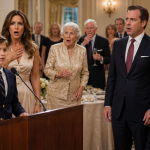
My father stared at the envelope.
FOR MY SON—READ THIS ALOUD.
Five words.
That was all Grandma had written across the front.
Yet I had never seen Richard Whitmore look so frightened of paper.
“Go ahead,” I said.
His eyes snapped toward mine.
“You don’t give me orders.”
“No,” I replied quietly. “Grandma does.”
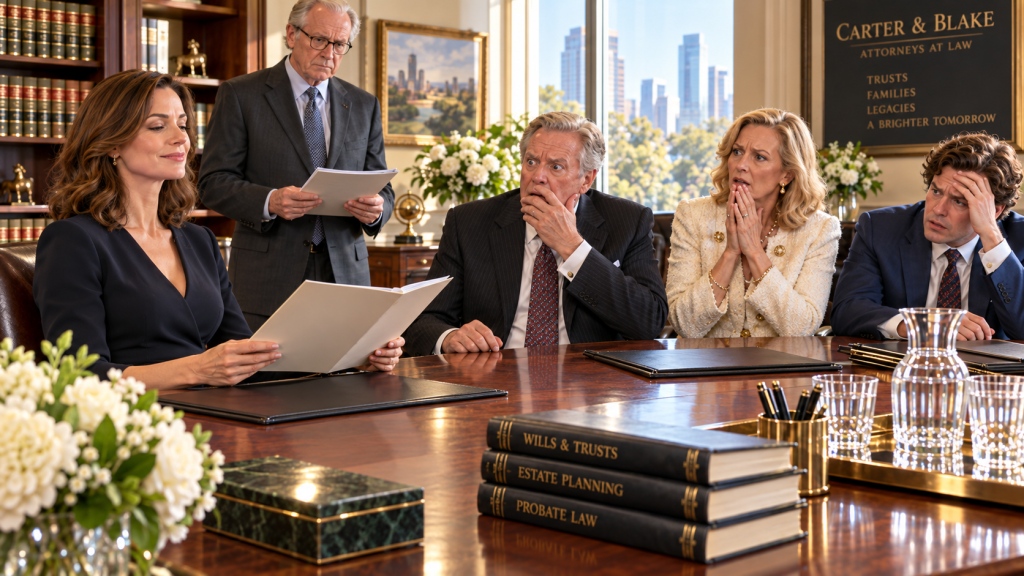
Blake shifted in his chair.
My stepmother, Caroline, stared into her coffee as though there might be an exit hidden at the bottom of the cup.
Mr. Ellis folded his hands.
“Mrs. Whitmore’s instructions are explicit. The letter is to be read aloud before distribution of the residuary estate.”
Dad looked at him.
“And if I refuse?”
“Then we proceed to the alternative instructions she left.”
Dad’s expression tightened.
“What alternative instructions?”
Mr. Ellis did not blink.
“I’ll explain them if they become necessary.”
That was the thing about Grandma.
She understood my father.
She never left him only one door.
She left him two, then arranged both so they led to the truth.
Dad picked up the envelope.
His thumb slid beneath the flap.
For one ridiculous second, I remembered those same hands tying my shoes when I was five.
Teaching me to ride a bicycle at seven.
Holding my report card when I was twelve and saying, “That’s my girl.”
People want cruelty to come from strangers.
It would make life cleaner.
But sometimes the person who teaches you how to ride a bicycle is the same person who changes the locks eleven years later.
Dad unfolded the letter.
His eyes moved across the first line.
Then stopped.
“Read it,” Mr. Ellis said.
Dad looked at me.
I saw hatred.
Then fear.
Then something I had not seen in twenty-two years.
Uncertainty.
He began.
“Richard…”
His voice was steady at first.
“If you are hearing this, then I am gone, and Anna is sitting in the room.”
His jaw tightened.
Blake glanced at me.
Dad continued.
“I know you will be angry that I appointed her executor.”
“You will tell yourself she manipulated me.”
“You will probably tell other people the same thing.”
“I have therefore left medical evaluations from two independent physicians confirming my capacity on the dates I signed every document connected to this estate.”
Caroline closed her eyes.
I almost smiled.
Grandma.
Powerful people hate paperwork when it belongs to someone else.
Dad kept reading.
“I also recorded several meetings with my attorney.”
His voice faltered.
Blake sat upright.
“What recordings?”
Dad snapped.
“Let me finish.”
Grandma’s letter continued.
“I did this because I learned too late that love without records is easily rewritten by the loudest person in the family.”
Something tightened behind my ribs.
That sounded exactly like her.
“I trusted you with my finances because you were my son.”
“I trusted you with the land because your father loved it and I believed you did too.”
“I trusted you to manage my affairs when my arthritis made travel difficult.”
“I did not give you permission to treat my property as yours.”
Dad stopped.
“Richard.”
Mr. Ellis prompted.
Dad’s face reddened.
“I know about the timber.”
The room went still.
“I know about the guesthouse.”
“I know about the withdrawals.”
“I know about the company expenses paid from my accounts.”
“I know about the parcels transferred through Whitmore Development.”
“And I know what you did to Anna.”
My throat closed.
Dad’s hand trembled.
Only slightly.
But I saw it.
“You told the family she abandoned us.”
“She did not.”
“You told me she voluntarily surrendered her college account.”
“She did not.”
“You told me she wanted to sell the lake cottage behind my back.”
“She did not.”
“You told me she stopped visiting when I became ill.”
“She did not.”
Dad stopped again.
This time, nobody prompted him.
He stared at the paper.
I stared at him.
Twenty-two years.
Twenty-two years of being described as difficult.
Ungrateful.
Greedy.
Rebellious.
Twenty-two years of relatives looking at me with that soft, uncomfortable expression people reserve for someone who has supposedly broken a mother’s heart.
And Grandma had known.
Not everything at first.
But enough.
Dad swallowed.
Then continued.
“Anna came every Wednesday.”
Caroline looked at me.
Blake’s face changed.
Dad’s voice became quieter.
“She used the garden gate because you instructed staff not to admit her through the front entrance.”
“She brought me books.”
“Soup.”
“Photographs.”
“She washed my hair when my hands shook too badly.”
“She sat with me when I was frightened.”
“She never once asked me for money.”
“She asked me for records.”
Dad looked up.
His eyes burned into mine.
I did not look away.
He returned to the letter.
“I refused at first because I was ashamed.”
“I had spent years defending you.”
“I called Anna suspicious.”
“I told her she misunderstood.”
“I told myself sons make mistakes.”
“Then I discovered mistakes do not require forged signatures.”
Blake whispered:
“What?”
Dad stopped reading.
Mr. Ellis said nothing.
He didn’t need to.
Blake looked at our father.
“Forged signatures?”
“It’s legal language.”
Dad said.
“No.”
I answered.
“It’s handwriting.”
Dad glared at me.
“Stay out of this.”
I almost laughed.
“I’m the executor.”
For once, those words were enough.
Dad returned to Grandma’s letter.
“I found my name on documents I had never signed.”
“I found authorizations I had never given.”
“I found payments I had never approved.”
“And I found the original letter Anna sent me when you threw her out.”
My heart stopped.
I had forgotten about that letter.
Eighteen years old.
Three nights after Dad changed the locks.
I had written six pages by hand.
I told Grandma everything.
The argument.
The cottage.
Dad’s demand.
My refusal.
The locks.
The college account.
The car.
I mailed it.
Grandma never mentioned it.
Dad had told me later:
“She doesn’t want to hear your version.”
For twenty-two years, I believed he had intercepted it.
Apparently, I had been only partly right.
Dad continued.
“You told me Anna’s letter was hateful.”
“You gave me a photocopy with several paragraphs missing.”
“The original was found last year among papers removed from your office.”
I closed my eyes.
Grandma had seen it.
Eventually.
Dad’s voice cracked.
“She begged me to call her.”
“She was eighteen.”
“She had forty-three dollars.”
“She wrote that she was sleeping beside a washing machine in her friend’s parents’ laundry room because she was afraid you would find her and take the cottage papers.”
Blake stared at me.
“You slept in a laundry room?”
I nodded.
His face fell.
Dad kept reading.
“I cannot return those weeks to Anna.”
“I cannot return the years I believed you instead of asking her.”
“I can only refuse to let my final decision become another instrument you control.”
Dad lowered the letter.
His eyes were wet.
Not tears.
Rage.
“That’s enough.”
Mr. Ellis looked at him.
“There are two pages remaining.”
“I said enough.”
Mr. Ellis calmly reached for a folder.
“Then we move to the alternative instruction.”
Dad froze.
“What is it?”
“If you refuse to complete the reading, I read it.”
Grandma had thought of everything.
Dad sat back.
For a moment, I almost heard her laugh.
He picked up the letter again.
“The lake cottage belongs to Anna.”
Silence.
My heart slammed against my ribs.
I had known the will contained provisions involving the cottage.
As executor, I had seen much of the estate planning.
But Grandma and Mr. Ellis had deliberately kept certain personal bequests sealed until the reading.
I stared at him.
Mr. Ellis gave me the smallest nod.
Dad read again.
“It always should have.”
His voice had gone flat.
“My husband and I purchased that cottage the year Anna was born.”
“We intended it for her.”
“Richard knew this.”
“He asked me repeatedly to transfer it to Whitmore Development.”
“When Anna turned eighteen, he attempted to make her sign documents assigning her future interest to his company.”
“She refused.”
“For that refusal, he removed her from his home.”
Blake turned toward Dad.
“You disowned her over a house?”
“It’s not a house.”
Dad snapped.
“It was a development opportunity.”
I stared at him.
Even now.
Even after twenty-two years.
Even with Grandma speaking from the grave.
He could not hear himself.
The cottage sat on eleven acres beside Lake Briar.
Nothing enormous.
Nothing palatial.
Two bedrooms.
Stone fireplace.
Dock.
Pine trees.
Grandma taught me to swim there.
Grandpa taught me to fish there.
Dad saw waterfront acreage.
I saw summers.
Grandma saw me.
Dad continued reading.
“The cottage, its surrounding acreage, and all associated rights pass to Anna free of any management interest held by Whitmore Development.”
My eyes filled.
“Additionally, Anna shall receive my personal residence and thirty percent of the remaining estate after debts, taxes, charitable bequests, and restitution claims are resolved.”
Caroline gasped.
Dad’s head jerked up.
“Thirty percent?”
Mr. Ellis said:
“Please continue.”
Dad looked ready to tear the letter in half.
Instead, he read.
“Blake shall receive twenty percent through a protected trust not administered by his father.”
Blake’s mouth opened.
Dad turned toward him.
“What?”
Blake stared.
“I didn’t know.”
“You knew.”
“I swear.”
“Richard.”
Mr. Ellis said.
Dad returned to the page.
“My remaining descendants shall receive the distributions described separately in the trust documents.”
“Richard will receive one dollar.”
Nobody moved.
Dad stared at the sentence.
Then laughed.
It was not a sane sound.
“One dollar.”
Blake whispered.
Dad slammed the letter onto the table.
“She couldn’t do this.”
Mr. Ellis answered:
“She did.”
“I am her son.”
“Yes.”
“I managed everything for twenty-two years.”
“That is precisely the problem.”
Dad stood.
The chair scraped violently backward.
“You think you’re clever?”
He pointed at me.
“You think you won?”
I remained seated.
“No.”
“You’ve been waiting for this.”
“No.”
“You hate me.”
I thought about it.
Once, yes.
At twenty.
At twenty-five.
At thirty.
Hatred had kept me warm during years when I had little else.
But hatred is expensive.
Eventually, I got tired of paying.
“I don’t hate you.”
That seemed to anger him more.
“You expect me to believe that?”
“I don’t care what you believe anymore.”
That was the first truly free sentence I had ever said to my father.
His face changed.
He sat down.
Not because anyone told him to.
Because for the first time, perhaps, he understood the room would continue without his permission.
Mr. Ellis opened the will.
The legal reading began.
It was less dramatic than television teaches us.
Clauses.
Trusts.
Percentages.
Tax provisions.
Property descriptions.
Charitable gifts.
Instructions regarding personal possessions.
But beneath the dry language was Grandma’s final architecture.
She had not used her will merely to punish Dad.
She had used it to separate people from his control.
That was different.
Blake’s trust had an independent trustee.
So did the trusts for my cousins.
Grandma had left money to longtime staff.
A nursing scholarship.
The town library.
A domestic violence organization.
An elder legal-aid clinic.
She had directed that the main house be sold unless I wanted to retain it personally.
I didn’t.
The house had stopped feeling like Grandma’s long before she died.
Dad had filled it with corporate dinners and expensive men laughing over whiskey.
I wanted the photographs.
Her recipe box.
Her gardening gloves.
The chipped blue bowl she used for peaches.
Not the dining room where Dad had conducted business beneath my grandfather’s portrait.
Then Mr. Ellis reached the section that mattered most.
“Article Fourteen.”
Dad went still.
Mr. Ellis looked at me.
I nodded.
He continued.
“Before any final distribution to Richard Whitmore’s descendants, the executor is instructed to pursue an accounting of assets transferred, withdrawn, encumbered, sold, or otherwise disposed of during the period of Richard Whitmore’s management.”
Dad’s attorney—who had arrived late and had been silent until then—leaned toward him.
“Don’t speak.”
Dad ignored him.
“This is ridiculous.”
Mr. Ellis continued.
“If the accounting identifies unauthorized transactions, the estate is instructed to seek recovery through all lawful civil remedies.”
Caroline whispered:
“Richard.”
He turned on her.
“You knew she was doing this?”
“No.”
“You lived with me.”
“I didn’t know.”
“You signed things.”
Her face drained.
“What things?”
Dad stopped.
That was a mistake.
A small one.
But everyone heard it.
Caroline looked at him.
“What did I sign?”
“Nothing important.”
“Richard.”
“Not now.”
“What did I sign?”
Blake looked between them.
“Mom?”
Caroline stood.
“I want copies of every document with my signature.”
Dad’s lawyer closed his eyes.
Mr. Ellis said:
“Those can be provided through counsel.”
Caroline stared at my father as though she had just discovered a stranger wearing her husband’s face.
Then she picked up her purse.
“Where are you going?”
Dad demanded.
“To get a lawyer.”
“You already have one.”
“No.”
She looked at the man beside Dad.
“You have one.”
Then she left.
Blake watched the door close.
“Dad.”
“Sit down.”
“I am sitting.”
“Then stay out of it.”
Blake laughed bitterly.
“That’s what you tell everyone, isn’t it?”
Dad stared at him.
“What?”
“Stay out of it.”
“Don’t ask.”
“Don’t look.”
“Anna’s greedy.”
“Grandma’s confused.”
“Mom signed.”
“You managed.”
Blake shook his head.
“Jesus.”
He stood.
“Blake.”
“I need air.”
He left too.
For the first time, Dad and I were almost alone.
Cousins remained.
Attorneys remained.
But the little court he had built around himself was emptying.
One chair at a time.
The preliminary audit became a full forensic accounting.
It took fourteen months.
Not fourteen dramatic days.
Fourteen exhausting months.
Bank statements.
Deeds.
Invoices.
Corporate records.
Tax filings.
Rental agreements.
Timber contracts.
Checks.
Transfers.
Electronic authorizations.
Signatures.
Grandma had been right.
Paperwork.
My father hated paperwork when it belonged to someone else.
He had spent decades assuming nobody would put all the pieces together.
The final number was worse than the preliminary estimate.
Just over $2.4 million in transactions were disputed.
Not all of it was proven theft.
That distinction mattered.
Some expenses had been authorized.
Some were ambiguous.
Some reflected legitimate management costs.
Others did not.
The forensic accountant, a patient woman named Priya Shah, refused to exaggerate.
That made her devastating.
She did not need dramatic language.
She simply said:
“This transaction lacks authorization.”
“This signature does not match.”
“This payment benefited Whitmore Development rather than Mrs. Whitmore.”
“This rental income was deposited into an account she did not control.”
“This timber sale was underreported.”
“This transfer occurred after written revocation of authority.”
Facts.
One after another.
Dad called them technicalities.
Priya called them records.
The lake cottage was the clearest.
Dad had tried three times to transfer development rights.
Grandma refused.
Then, when I was eighteen, he tried another route.
Me.
He had told me:
“Sign this and you’ll still be able to use the cottage.”
I read the document.
Grandma had taught me that too.
Read everything before signing.
The paper assigned any future interest I might receive to Whitmore Development for one dollar.
I said no.
Dad said:
“Don’t be childish.”
I said no again.
He told me I was living in his house.
Driving his car.
Using money he controlled.
I still said no.
He gave me until morning.
I thought he was bluffing.
He wasn’t.
At seven the next morning, my key no longer worked.
My suitcase sat beneath the porch.
Forty-three dollars in my wallet.
Phone disconnected.
Car gone.
College account frozen.
Eighteen.
I stood on the sidewalk and learned exactly how quickly a parent could convert dependence into punishment.
The forensic accountant found the document.
Unsigned.
Dad had kept it.
I asked Priya why.
She shrugged.
“People often preserve evidence because they don’t think of it as evidence.”
That sentence stayed with me.
Dad believed the document proved I had been unreasonable.
To everyone else, it proved why he threw me out.
The lawsuit settled before trial.
Dad hated that.
He wanted to fight.
His attorneys did not.
Grandma’s recordings were too clear.
The signatures too problematic.
The financial trail too extensive.
Whitmore Development returned property interests and paid a substantial settlement to the estate.
Dad sold two commercial properties to cover his obligations.
He did not go to prison.
People who heard the story later always asked that first.
“Did he go to jail?”
No.
The civil case was strongest.
Certain potential criminal issues were referred to authorities, but not every ugly family financial act becomes a dramatic criminal conviction.
Real life is less tidy.
Dad lost money.
Control.
Reputation.
His position at Whitmore Development.
The board removed him after lenders became nervous.
Blake refused to take his place.
That surprised everyone.
Especially Dad.
“What do you mean, no?”
he demanded.
Blake told me about the conversation later.
“I mean no.”
“This company is your inheritance.”
“Apparently Grandma taught us inheritance doesn’t mean obligation.”
Dad reportedly threw a glass.
Blake walked out.
My relationship with Blake was harder.
He had been eleven when Dad threw me out.
For years, I resented him.
He got the father I lost.
The house.
College paid for.
Cars.
Vacations.
Christmases.
He resented me too.
Dad had told him I left because I hated our family.
At the will reading, Blake was forty.
Old enough to question that story.
He hadn’t.
That hurt.
Three months after the reading, he called.
“Can we meet?”
I almost said no.
Then I remembered Grandma.
Truth should be allowed a door.
We met at a diner.
Neutral ground.
Blake arrived early.
He looked nervous.
“I owe you an apology.”
I stirred my coffee.
“Yes.”
He blinked.
“I expected you to say I don’t.”
“You do.”
He laughed once.
“Okay.”
“Go ahead.”
He looked down.
“I believed Dad.”
“You were a kid.”
“Not for twenty-two years.”
That was the right answer.
I looked at him.
He continued.
“When I got older, there were things that didn’t make sense.”
“Like?”
“Grandma kept your picture in her bedroom.”
“She never let Dad take it down.”
“She got angry when people said you abandoned her.”
“She disappeared every Wednesday afternoon when she was still living at home.”
I smiled.
“She wasn’t disappearing.”
“I know that now.”
“She was waiting for me.”
Blake’s eyes filled.
“I could have asked.”
“Yes.”
“I didn’t.”
“No.”
“I’m sorry.”
I believed him.
That did not instantly create a sibling relationship.
We started with coffee.
Then another coffee.
Then lunch.
Then a birthday.
Relationships are often rebuilt through boring repetitions.
Not speeches.
Blake eventually told me what Dad had done to him too.
Different methods.
Same architecture.
Dad paid for everything.
Then reminded Blake that everything could disappear.
He chose Blake’s college.
Job.
First apartment.
Even encouraged his first marriage because the woman’s father had business connections.
Control can look like generosity when the person holding the money smiles.
Blake had never been thrown out.
He had been kept in.
Both could be prisons.
That realization softened something in me.
Not completely.
But enough.
Caroline divorced Dad.
That shocked him more than Grandma’s will.
For months, he insisted she would return.
She didn’t.
Several documents with Caroline’s signature had been signed without her understanding their purpose.
At least two signatures were disputed entirely.
She cooperated with the accounting.
I did not become friends with her.
She had laughed at me too many times.
She had enjoyed being the woman inside the house while I stood outside.
But I stopped making her responsible for choices that were Dad’s.
When she apologized, I listened.
“I thought you were jealous.”
she said.
“Of what?”
“Us.”
I almost laughed.
“I was homeless at eighteen.”
“I know.”
“No.”
I looked at her.
“You know now.”
She cried.
“Yes.”
That was enough.
Not forgiveness.
Not friendship.
Enough.
The lake cottage became mine officially eighteen months after Grandma died.
I drove there alone.
The key shook in my hand.
For twenty-two years, Dad had told me the property was practically worthless unless developed.
He called it an old shack.
A liability.
An emotional attachment.
Maybe it was all three.
I didn’t care.
The door stuck.
Grandma would have laughed.
Inside, dust floated through sunlight.
The furniture was covered.
The fireplace smelled faintly of old ash.
I walked into the kitchen.
The height marks were still beside the pantry door.
ANNA — 7
ANNA — 9
ANNA — 12
Grandpa’s handwriting.
I touched them.
Then I sat on the floor.
And cried.
Not because I had won.
Because I was home.
There is a difference.
I found Grandma’s old fishing hat.
Her coffee mug.
A deck of cards missing the queen of hearts.
In the bedroom closet, behind blankets, I found a box.
My name was written on top.
Inside were copies of every Wednesday.
Not literally.
But close.
Receipts from meals I brought.
Photographs.
Notes.
Birthday cards Grandma had never mailed because she handed them to me in person.
Then a journal.
I almost didn’t read it.
The first page began when I was eighteen.
Anna came today.
Richard says she is trying to manipulate me.
She looks thin.
My throat closed.
Next Wednesday:
Anna came again.
She asked whether I signed papers transferring the cottage.
I told her Richard handles those things.
She looked frightened.
Then:
I am beginning to think I have made a terrible mistake.
I sat on Grandma’s bedroom floor and read.
The journal traced her awakening.
Slow.
Painful.
Embarrassing.
At first, she defended Dad.
Then questioned.
Then investigated.
Then documented.
Years.
She had not become suspicious overnight.
That hurt.
Part of me wanted her to have believed me immediately.
Therapy helped me admit that.
I loved Grandma.
I was grateful.
And I was angry she had taken so long.
Both were true.
One entry said:
Anna asked me today why I believed Richard before I believed her.
I told her because he was my son.
She said, “And I’m your granddaughter.”
I have no answer that does not shame me.
I cried until sunset.
The next page contained the sentence that changed how I remembered Grandma:
I cannot repair Anna’s childhood by giving her property. If I leave her money and call that justice, I will be doing what Richard does—using assets to avoid emotional truth. I owe her an apology that does not come with a check attached.
She had given me that apology.
Six months before she died.
I had been washing her hair.
Her hands shook badly by then.
She suddenly said:
“Anna.”
“Yes?”
“I failed you.”
I stopped.
“No, Grandma.”
“Yes.”
She looked at me in the mirror.
“I helped later.”
“That is not the same as not failing first.”
I remember crying.
She reached for my hand.
“I should have believed you sooner.”
I had said:
“You believed me eventually.”
She answered:
“Do not make my apology smaller to make me comfortable.”
That was Grandma.
Even dying, she refused the easy version.
I framed that sentence in my mind.
Do not make my apology smaller to make me comfortable.
Years later, it would change how I apologized to my own children.
Yes.
Children.
I had built a life during those twenty-two years.
Dad barely knew it.
That was his loss.
I met my husband, Daniel, when I was twenty-seven.
He was a public-school science teacher with terrible handwriting and a habit of putting empty milk cartons back in the refrigerator.
He knew the whole story before he proposed.
He never told me to forgive Dad.
That was one reason I married him.
We had two daughters.
Maya and Elise.
Grandma met both.
Secretly at first.
Then openly once she stopped caring what Dad thought.
Dad had never met them.
Not until after the will.
Maya was fourteen.
Elise eleven.
He asked.
I said no.
Not because I wanted revenge.
Because he had not changed.
People sometimes confuse access with forgiveness.
I could forgive him privately and still refuse to hand him children he might control.
Dad sent gifts.
I returned them.
He sent checks.
Returned.
Then he sent letters.
I read those.
Most were terrible.
I did what I thought was best.
You were difficult.
Families make mistakes.
Your grandmother turned you against me.
No apology.
Just grammar designed to make responsibility disappear.
Then, two years after Grandma died, a different letter came.
One page.
No excuses.
Anna,
I changed the locks.
I froze your college account.
I took your car knowing you had nowhere to go.
I lied to Mother about why you left.
I intercepted your letter.
I used her property as though it belonged to me.
I told myself I was protecting the family when I was protecting my control over it.
I hurt you.
I am sorry.
I read it five times.
Daniel asked:
“Does it change anything?”
“Yes.”
“What?”
“I don’t know yet.”
That was honest.
I did not invite Dad over.
I wrote back.
Thank you for naming what you did. I am not ready for more.
He respected it.
For once.
Six months later, another letter.
Short.
No request.
Then another.
Eventually, I agreed to meet him.
Public park.
Daytime.
I was forty-three.
He was sixty-eight.
He looked smaller.
Age does that.
Consequences too.
We sat on a bench.
For a while, neither spoke.
Then Dad said:
“I don’t know how to do this.”
I looked at him.
“You always knew how to talk.”
“Not without winning.”
That surprised me.
“Then don’t win.”
He nodded.
We sat.
He asked about my life.
Not the money.
Not the cottage.
My life.
Daniel.
The girls.
Work.
I had become an accountant.
Of course.
Grandma found that hilarious.
Powerful people hate paperwork when it belongs to someone else.
I built a career around paperwork.
Dad asked:
“Are you happy?”
“Yes.”
He looked down.
“Good.”
I waited for him to say he deserved credit.
He didn’t.
Progress.
Then he asked:
“Do your daughters know about me?”
“Yes.”
“What do they call me?”
“Grandfather.”
“Not Grandpa?”
“No.”
He absorbed that.
“Fair.”
I almost smiled.
He met them a year later.
Supervised by me.
Not because he was physically dangerous.
Because old habits can be dangerous too.
Maya was blunt.
“Why did you kick Mom out?”
Dad looked at me.
I said nothing.
His question.
His answer.
“Because she wouldn’t sign over property I wanted.”
Maya frowned.
“That is a terrible reason.”
“Yes.”
Elise asked:
“Did you know she didn’t have anywhere to sleep?”
Dad closed his eyes.
“Yes.”
“Then why?”
“I was angry.”
Elise looked disgusted.
“That’s not a reason.”
Dad nodded.
“No.”
“It isn’t.”
Afterward, he cried in his car.
I knew because I saw him.
I did not go comfort him.
That mattered too.
Accountability does not require the injured person to soothe the person finally understanding the injury.
He returned the next month.
Then three months later.
Slowly.
Carefully.
The girls eventually called him Richard.
Not Grandpa.
He accepted it.
Five years later, Elise accidentally called him Grandpa while asking for mashed potatoes.
Everyone froze.
Especially him.
Elise rolled her eyes.
“Don’t make it weird.”
Dad cried anyway.
Quietly.
Into the mashed potatoes, practically.
Maya never called him Grandpa.
That was her choice.
Dad learned not to demand symmetry.
People love asking whether I forgave him.
As though forgiveness is a door marked YES or NO.
Mine was more like weather.
Some days clear.
Some days not.
I forgave the old man sitting quietly at my daughter’s school concert.
I still hated the father who left my suitcase on the porch.
Both lived in my memory.
Eventually, I understood forgiveness did not require choosing one and pretending the other never existed.
Dad never regained control of the estate.
That was important.
I did not make him co-trustee because he improved.
I did not return business interests because he apologized.
Consequences were not cruelty.
Grandma’s plan remained.
The estate recovered enough that every intended beneficiary received what she had designed.
The nursing scholarship became permanent.
The elder legal-aid clinic named a small conference room after Grandma.
She would have hated that.
“She’ll haunt them.”
Blake said.
“Probably.”
The lake cottage stayed in my family.
I did not develop it.
Dad once asked whether I realized what the acreage could be worth.
I stared at him.
He laughed.
“Sorry.”
“Growth.”
I said.
“Painful, isn’t it?”
“Extremely.”
Daniel and I repaired the cottage slowly.
Not luxury renovations.
Roof.
Plumbing.
Windows.
Dock.
We kept the pantry height marks.
Added new ones.
MAYA — 14
ELISE — 11
Then:
MAYA — 16
ELISE — 13
Years later:
grandchildren.
The wall became a family timeline.
Dad’s name never appeared.
Then one summer, when he was seventy-seven, Elise brought her son.
My first grandson.
Dad visited.
Little Theo stood against the pantry wall.
“Measure me!”
Elise handed Dad the pencil.
Everyone became quiet.
Dad looked at me.
Permission.
For once, he asked without words.
I nodded.
His hand shook as he marked the wall.
THEO — 5
Underneath, in tiny letters, he wrote:
Measured by Richard.
Elise saw.
She took the pencil.
Crossed out Richard.
Wrote:
Great-Grandpa.
Dad covered his face.
Nobody laughed.
Even Maya hugged him.
Time did not erase what he had done.
But it created moments he once would have been incapable of receiving without trying to own them.
That was change.
Blake married again.
Happily this time.
He left Whitmore Development entirely.
Started a small woodworking company.
Dad hated the idea at first.
“You went to business school.”
Blake answered:
“Your point?”
Eventually Dad bought a dining table from him.
Full price.
Blake framed the receipt.
We laughed for ten minutes.
The cousins repaired relationships too.
Some apologized.
Some didn’t.
I stopped chasing the ones who didn’t.
Family trees are not contracts requiring equal intimacy with every branch.
Grandma had taught me that without saying it.
At fifty, I stepped down as executor.
The estate was settled.
Trusts operating.
Properties distributed.
Restitution complete.
I kept the slim folder.
The one I placed on the mahogany table.
Grandma’s court-certified appointment.
Sometimes I opened it.
Not because it proved I had won.
Because it reminded me of the woman I was at eighteen.
She thought being thrown out meant she had no power.
She did not know that refusing to sign was power.
She did not know that reading the document was power.
She did not know sleeping in a laundry room rather than surrendering something that was not hers to surrender was power.
She thought power looked like Dad.
Money.
Keys.
Accounts.
Cars.
Locked doors.
Grandma taught me another kind.
Records.
Truth.
Boundaries.
Patience.
The ability to say no even when saying no costs you something.
Dad developed cancer at eighty-one.
Pancreatic.
Late.
We had perhaps six months.
He told me over the phone.
I sat quietly.
Then asked:
“What do you need?”
He cried.
Not because I offered to care for him.
Because I asked.
Control had defined him for so long that receiving care without commanding it was almost a foreign language.
Blake and I divided responsibilities.
Not equally.
Fairly.
There is a difference.
Blake lived closer.
I handled medical paperwork.
Naturally.
Dad joked:
“Your grandmother would enjoy this.”
“She probably arranged it.”
He smiled.
His final months were not a sentimental cleansing.
He was irritable.
Afraid.
Sometimes controlling.
Once he snapped at a nurse.
I told him:
“Stop.”
He stopped.
Imagine that.
Forty years earlier, I could not make him hear no.
Now one word from me could remind him who he was trying to become.
One afternoon, he asked me to take him to the lake cottage.
I almost refused.
Then agreed.
Daniel drove.
Dad sat beside me on the porch.
The lake was still.
He looked at the trees.
“I would’ve ruined this.”
I turned.
“What?”
“If I’d gotten it.”
He smiled faintly.
“I would’ve built twelve luxury houses.”
“Fourteen.”
“You remember the plans?”
“I remember everything.”
He nodded.
“I thought value meant what something could become if you sold it.”
“And now?”
He watched Theo and Elise near the dock.
“I think sometimes value is what you refuse to turn it into.”
That sounded like Grandma.
I told him.
He laughed.
“Don’t insult me.”
We sat quietly.
Then he said:
“Anna.”
“Yes?”
“I knew you had forty-three dollars.”
My body went still.
I looked at him.
“What?”
“The morning I put your suitcase outside.”
“I checked your wallet.”
I could not speak.
“I wanted to know whether you would come back.”
The lake blurred.
“You knew?”
“Yes.”
“You knew I had forty-three dollars.”
“Yes.”
“And you still changed the locks.”
He cried.
“Yes.”
For all the apologies.
All the years.
That detail hurt fresh.
I stood.
Dad reached for me, then stopped himself.
Good.
I walked to the end of the dock.
Daniel followed.
“Do you want to leave?”
“Yes.”
We left.
Dad did not protest.
I did not speak to him for three weeks.
Cancer did not entitle him to immediate forgiveness.
Mortality is not a deadline the injured person must obey.
When I finally returned, Dad said:
“I shouldn’t have told you.”
“No.”
I answered.
“You should have.”
He looked surprised.
“It hurt.”
“Yes.”
“But it was true.”
“Yes.”
“I’m tired of loving edited versions of people.”
Dad cried.
“So am I.”
We did not discuss it again.
A month before he died, he asked Blake and me to come together.
We sat beside his bed.
He handed us two envelopes.
Mine contained no money.
No property.
A letter.
Anna,
When you were eighteen, I believed being your father meant I had the right to control your choices because I controlled your resources.
You taught me no.
I punished you for it.
Your grandmother eventually taught me that money can enforce obedience but cannot create respect.
You taught me something harder: forgiveness cannot be purchased either.
Thank you for never selling yours to me cheaply.
I cried.
At the bottom:
P.S. The cottage was always better without fourteen houses. Do not tell your grandmother I admitted this.
I laughed.
Blake’s letter was private.
He never showed me.
Dad died two weeks later.
Maya held one hand.
Blake held the other.
I stood near the window.
He looked at me.
“Anna?”
“Yes?”
“Forty-three dollars.”
I knew.
“I’m sorry.”
“I know.”
Then:
“Your grandmother was right.”
“About what?”
He smiled weakly.
“Paperwork.”
Those were almost his last coherent words.
At the funeral, people praised his business accomplishments.
I let them.
They were true.
People contain contradictions.
Dad built things.
Employments.
Projects.
Scholarships through his company.
He also harmed people he loved.
One truth did not cancel the other.
Blake spoke.
Then Caroline.
She and Dad had eventually reached a quiet peace, though they never remarried.
Then I stood.
I did not tell the suitcase story.
That belonged to me.
I said:
“My father spent much of his life believing love and control were neighbors.”
“They aren’t.”
The room became still.
“He learned that late.”
“But he did learn.”
“I will not rewrite the years when he hurt me.”
“And I will not erase the years when he tried to become different.”
“Both belong to his life.”
I looked at my daughters.
“My grandmother once told me powerful people hate paperwork when it belongs to someone else.”
A few people laughed.
“What she meant was that truth needs structure.”
“Memory can be denied.”
“Stories can be twisted.”
“Money can intimidate.”
“But sometimes a dated letter, a bank statement, a signed refusal, or a record kept quietly in a drawer can protect someone whose voice is being drowned out.”
I paused.
“My father taught me the danger of control.”
“My grandmother taught me the power of documentation.”
“And life taught me that neither wealth nor inheritance decides who belongs to a family.”
“Behavior does.”
I sat down.
That was enough.
Years later, after Daniel died, I moved permanently to the lake cottage.
Not because I was lonely.
Because I liked mornings there.
Daniel and I had forty-six years.
Good years.
Messy years.
Years with arguments about milk cartons.
Years with daughters.
Grandchildren.
Illness.
Retirement.
He died at seventy-eight with my hand on his chest.
The cottage became quiet afterward.
But not empty.
There is a difference.
Blake visited.
My daughters visited.
Grandchildren invaded every summer.
The pantry wall filled.
Eventually, there was barely room.
At eighty-two, I found myself standing beside the same mahogany table from the will reading.
Mr. Ellis’s office had closed years earlier.
He died at ninety.
His daughter had returned the table to the family because Grandma had originally donated it to the firm decades before.
Maya wanted it.
“Why?”
I asked.
“History.”
“Trauma.”
“Same furniture.”
She laughed.
We put it in the cottage.
Not the dining room.
Too large.
The sunroom.
Grandchildren did puzzles on it.
Paint spilled.
Theo carved a tiny mark underneath and denied it.
The table that once held Dad’s smirk eventually held peanut-butter sandwiches.
I loved that.
Objects can recover too.
At eighty-five, my oldest granddaughter asked me about the will.
She had heard fragments.
“Did Grandma Eleanor leave you everything because your dad was bad?”
“No.”
“What did she leave him?”
“One dollar.”
Her eyes widened.
“Savage.”
I laughed.
“Your generation uses that word too easily.”
“But it was.”
“Maybe.”
“Did you keep the dollar?”
“No.”
“What happened to it?”
I smiled.
Dad had refused it.
Mr. Ellis mailed a check.
Dad never cashed it.
After his death, Blake found it among his papers.
One dollar.
Still attached to the estate letter.
Blake gave it to me.
I framed it.
Not as humiliation.
As a warning.
Money can symbolize power only if people agree to worship it.
Grandma gave Dad one dollar because she wanted the legal record to show she had not forgotten him.
She had deliberately chosen what to give.
That was different from omission.
My granddaughter asked:
“Did getting the cottage make up for being disowned?”
“No.”
She frowned.
“Not even a little?”
“It gave me security.”
“It gave me memories.”
“It gave our family a home.”
“But property cannot give an eighteen-year-old girl back the night she stood on a sidewalk with forty-three dollars.”
“Then what’s justice?”
I looked toward the pantry wall.
“Sometimes justice is stopping the same thing from happening again.”
She thought about that.
“That’s not very exciting.”
“Most useful things aren’t.”
When I turned ninety, my family held a birthday dinner at the cottage.
Four generations.
Noise everywhere.
Blake was eighty-three.
He used a cane.
Still complained about everything.
Maya made Grandma’s peach cobbler.
Badly.
I told her so.
She threatened to take my birthday gift back.
Elise brought photographs.
One was from the will reading.
I had forgotten anyone took one.
There I was.
Forty years old.
At the end of the table.
Hands folded over my purse.
Dad across from me.
Blake leaning back.
Caroline with coffee.
Mr. Ellis beside a stack of documents.
I stared at myself.
“You look terrified.”
my granddaughter said.
“I was.”
“But you looked calm.”
“I practiced.”
That surprised her.
She had heard the story so many times that she imagined me walking into the room knowing I had already won.
I hadn’t.
I knew I was executor.
I knew Grandma had documented things.
But I did not know whether the family would believe me.
I did not know what Dad would do.
I did not know how ugly the accounting would become.
Courage often gets edited after the fact.
People remember the steady voice.
They forget the shaking hands beneath the table.
I told her:
“I wasn’t calm because I wasn’t afraid.”
“I was calm because Grandma taught me I didn’t need to perform my fear for people who might use it against me.”
She nodded.
Then asked:
“What did Grandpa Richard say when you introduced the executor?”
I smiled.
“He went pale.”
Everyone laughed.
Even Blake.
Especially Blake.
That night, after they left, I sat alone on the porch.
The lake reflected the moon.
I thought about eighteen-year-old Anna.
Forty-three dollars.
Laundry room.
Disconnected phone.
No car.
No college fund.
I wanted to reach backward through time and tell her something.
Not:
Grandma will leave you property.
Not:
Dad will lose control.
Not:
You’ll win.
Those things would have meant too much to her.
I would tell her:
You were right to say no.
That was all she needed.
She had spent years wondering whether one signature might have saved her family.
It wouldn’t have.
It would only have taught Dad that love could be purchased with obedience.
She paid dearly for refusing.
But the refusal remained hers.
That was the first thing he could not control.
At ninety-two, I began organizing my own estate.
Maya groaned.
“Mom.”
“What?”
“Can we not?”
“We can.”
“You’re healthy.”
“I’m ninety-two.”
“You’re annoyingly healthy.”
“Paperwork.”
She laughed.
“Grandma Eleanor.”
“Exactly.”
I did not use my will to settle emotional scores.
That was another lesson.
I divided property clearly.
Created trusts where useful.
Gave the cottage jointly to Maya and Elise with instructions allowing either to sell her share under a fair process if keeping it ever became a burden.
No forced family shrine.
No requirement that everyone spend Christmas there.
No inheritance tied to affection.
That mattered.
Love should not arrive with posthumous handcuffs.
I left Grandma’s journal to the family archive.
Dad’s letter to me remained private until my death.
The one-dollar check went to Blake.
He laughed when I told him.
“Why me?”
“Because you’ll appreciate the joke.”
“I might cash it.”
“You wouldn’t dare.”
At ninety-four, Blake died.
He beat me to it.
Rude.
At his memorial, his son handed me an envelope.
Inside was the one-dollar check.
Blake had written on the back:
ANNA—STILL NOT CASHED. SOME PAPERWORK SHOULD STAY PAPERWORK.
I laughed until I cried.
I put it beside Grandma’s appointment document.
Three generations in one folder.
Grandma’s signature.
Dad’s uncashed dollar.
Blake’s joke.
Family history does not have to remain a weapon.
Sometimes it becomes a story people can finally hold without bleeding.
I died at ninety-six.
At the cottage.
Window open.
Lake outside.
Maya and Elise beside me.
The pantry wall crowded with names.
Before I went, Maya asked:
“Mom?”
“Yes?”
“Are you scared?”
“A little.”
She squeezed my hand.
“Do you want anything?”
I thought.
“Open the drawer.”
She did.
Inside was the slim folder.
The executor appointment.
She laughed.
“Seriously?”
“Read the first page.”
“Now?”
“Yes.”
She read Grandma’s name.
Mine.
The date.
Court certification.
Then she looked at me.
“You kept this for fifty-six years.”
“Yes.”
“Why?”
I touched the paper.
“Because this is where Grandma gave me something more important than the estate.”
“What?”
“Authority over my own story.”
Maya cried.
“So dramatic.”
I whispered.
“You raised me.”
“Unfortunately.”
We laughed.
Then Elise asked:
“Do you regret forgiving Richard?”
I thought about Dad.
The suitcase.
The locks.
The forty-three dollars.
The park bench.
The school concert.
Theo’s height mark.
The lake.
His final letter.
“No.”
“Do you regret not forgiving him sooner?”
“No.”
That answer mattered.
Forgiveness offered under pressure is only another form of control.
Mine arrived when it was mine to give.
Not when Dad wanted it.
Not when Grandma died.
Not when he became sick.
When I was ready.
That was the difference.
I closed my eyes.
The last thing I heard was my daughters arguing softly about whether the window should stay open.
Ordinary.
Beautiful.
Home.
After my funeral, they found the final letter I had written to them.
It said:
Maya and Elise,
If you remember one thing about our family, do not remember the money first.
Do not remember the $2.4 million accounting.
Do not remember the cottage.
Do not even remember the one-dollar inheritance, though admittedly that part is funny.
Remember this: control often disguises itself as care.
It says, “I know what’s best.”
It pays the bill, then claims the right to choose your life.
It gives a gift, then keeps the receipt emotionally.
It calls obedience gratitude.
Be careful with that kind of love.
Real care can advise.
Real care can disagree.
Real care can set boundaries.
But real care leaves room for another person’s no.
Your great-grandmother learned this late.
Your grandfather learned it later.
I learned it because both of them taught me from opposite directions.
You will make your own mistakes.
Document important things.
Read before signing.
Keep copies.
Ask questions when money and family occupy the same room.
And never let an inheritance become the price of pretending harm did not happen.
Property is useful.
Money is useful.
Paperwork is very useful.
But none of them can decide your worth.
Love, Mom.
P.S. If either of you builds fourteen luxury houses on Grandma’s land, I will haunt you personally.
Maya laughed so hard she could barely finish reading.
They kept the cottage.
Not because I ordered them.
Because they wanted to.
Years later, Maya’s grandson stood against the pantry wall.
He was six.
His mother marked his height.
There was almost no space left.
She wrote sideways.
Everyone complained.
Someone suggested repainting the wall.
The entire family shouted:
“No!”
So they left it.
Grandpa’s marks.
Mine.
My daughters’.
Grandchildren.
Great-grandchildren.
Theo.
Even Dad’s tiny Measured by Richard, still visible beneath the correction that transformed him into Great-Grandpa.
Nobody erased anything.
That was the final lesson.
Healing was not repainting the wall until the ugly years disappeared.
It was allowing new names to grow around them.
The family eventually donated copies of Grandma’s financial records and journals to a local historical archive as part of a collection on women’s property rights and elder financial exploitation.
Not the private pages.
Some things belonged only to us.
But enough.
The original court-certified appointment remained at the cottage.
Framed.
Below it was Grandma’s sentence:
POWERFUL PEOPLE HATE PAPERWORK WHEN IT BELONGS TO SOMEONE ELSE.
Visitors thought it was funny.
Our family knew better.
Beneath that, Maya added another line from me:
THE MOST IMPORTANT DOCUMENT I EVER SIGNED WAS THE ONE I REFUSED TO SIGN.
That was my story.
Not the inheritance.
Not Dad going pale.
Not the missing millions.
Not becoming executor.
At eighteen, I had no attorney.
No court appointment.
No forensic accountant.
No husband.
No career.
No house.
No car.
No working phone.
Forty-three dollars.
One suitcase.
And a document in front of me.
My father told me to sign.
I said no.
Everything terrible that followed began there.
But so did everything free.
Twenty-two years later, Dad sat across from me at Grandma’s will reading and smirked because he still believed power looked the way it had when I was eighteen.
He thought it was the person with the keys.
The accounts.
The company.
The loudest voice.
Then I opened my purse.
Took out a slim folder.
Introduced the executor.
And watched his face change.
For years, people told the story as though that was the moment I took my power back.
It wasn’t.
I had never completely lost it.
The first time I used it was twenty-two years earlier.
A frightened eighteen-year-old girl looked at her father, looked at a document designed to take something that was not his, and said one word.
No.
The will reading only put that word into the record.
THE END STORIES! THANK YOU FOR READING GOOD LUCK !❤️
Related Posts