➡️ PART 3 ENDING PART➡️
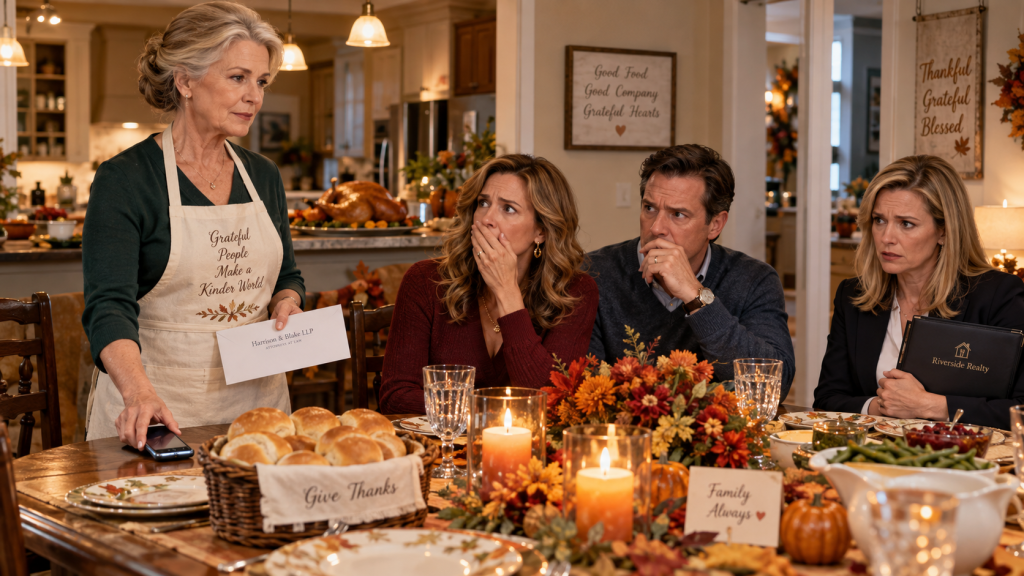
My grandson’s question seemed to remove the air from the room.
“Grandma, is this why Mom asked Dad how fast they could sell your house after you died?”
Nobody moved.
Not me.
Not Suzanne.
Not Kevin.
Not even my daughter.
Ethan stood in the doorway to the den wearing one sock and holding the television remote against his chest.
He was twelve years old.
Old enough to understand when adults lowered their voices.
Too young to have to understand why.
Behind him, his little sister Sophie was still on the couch, staring at the movie we had put on for them even though I could tell from the way she held herself that she was listening too.
My daughter finally found her voice.
“Ethan, go back inside.”
He did not move.
“Mom—”
“Now.”
I put one hand up.
“No.”
My daughter stared at me.
“Mom, this does not involve him.”
“He just told us something.”
“He misunderstood.”
Ethan’s face changed.
I knew that look.
A child hearing an adult rewrite something he knew he had heard correctly.
I hated it immediately.
“Ethan,” I said gently, “you don’t have to explain anything right now.”
My daughter’s chair scraped backward.
“He was eavesdropping.”
Kevin jumped in.
“Kids hear half a conversation and make up the rest.”
Ethan looked at his father.
“I didn’t make it up.”
“Enough.”
Kevin’s voice had that sharp edge adults sometimes use when they want obedience to sound like authority.
Ethan flinched.
I saw it.
So did Suzanne.
She quietly pushed her real-estate folder farther away from herself.
I stood.
“Kevin, you will not speak to him like that in my house.”
Kevin laughed once.
“Rosemary, come on.”
“My house.”
The words surprised everyone.
Maybe because I had spent too many years saying our family home, as if sentimental language changed ownership.
That afternoon I needed the words to be exact.
My house.
My daughter looked toward Ethan.
“Go watch the movie with your sister.”
He stared at me.
I smiled as gently as I could.
“It’s okay, sweetheart.”
He hesitated.
Then said, “Grandma, they talked about it before.”
My heart sank.
“How many times?”
My daughter stood so quickly she knocked her napkin onto the floor.
“Ethan.”
He ignored her.
“Like three.”
Kevin’s face went gray.
I felt the room change.
One accidental phone call could be dismissed.
Three conversations heard by a child could not be stuffed so easily back inside the word misunderstanding.
“Where?” I asked.
“The garage once.”
His voice was getting quieter.
“And in the kitchen after you came over last month.”
I remembered that visit.
My daughter had brought a pie.
Kevin had spent twenty minutes looking at the furnace.
He said mine sounded old.
I thought he was being helpful.
“What did you hear?”
Ethan twisted the remote between his hands.
“They said if you didn’t want to move, Dad knew somebody who could say you were forgetting things.”
My daughter covered her mouth.
Not with horror.
With calculation.
I knew her well enough to see the difference.
She was trying to figure out what else he had heard.
I felt something inside me go cold.
Ethan continued.
“They said once someone was in charge for you, they could sign.”
Suzanne closed her eyes.
Kevin looked at her.
“This is being taken completely out of context.”
Suzanne opened her eyes.
“Kevin, I have been a licensed real-estate broker for eighteen years.”
Nobody spoke.
She pointed toward my phone.
“I just listened to you discuss manufacturing a competency finding so you could obtain control over a property owner’s home.”
Kevin’s mouth opened.
She kept going.
“And now your son is saying he heard earlier discussions about the same plan.”
Her voice was quiet.
“That is not context I want any part of.”
My daughter turned toward her.
“Suzanne, please.”
“No.”
The single word seemed to stun her.
Suzanne stood.
She took the folder from the table.
Then she looked at me.
“Rosemary, I am sorry.”
“You didn’t know.”
“No.”
She glanced at my daughter.
“I was told you wanted a market opinion and were nervous about talking to an agent.”
I nodded.
“That sounds like her version.”
Suzanne looked embarrassed.
“I asked whether you had signed anything yet. Natalie told me paperwork was being arranged.”
There it was.
My daughter’s name.
Natalie.
My child.
The little girl whose bangs I had cut too short before second grade.
The teenager whose first heartbreak had ended with her sleeping in my bed.
The woman standing in my dining room trying to arrange paperwork to remove me from my own life.
“Natalie.”
She looked at me.
“What paperwork?”
“Mom, nothing has been signed.”
“That is not what I asked.”
Her eyes filled.
“It wasn’t like that.”
“What paperwork?”
Kevin pushed back from the table.
“This has gone too far.”
I looked at him.
“You are right.”
He blinked.
“It has.”
Then I looked back at my daughter.
She sat down slowly.
For the first time that day, she looked tired rather than angry.
“There was a power of attorney form.”
My stomach tightened.
“Whose?”
“Yours.”
“I did not ask for one.”
“No.”
“Who prepared it?”
“Kevin downloaded something.”
Kevin muttered, “Jesus Christ, Natalie.”
She turned toward him.
“What?”
“You don’t have to tell her every—”
“Yes,” I said.
“She does.”
He stared at me.
For decades, I had mistaken tolerance for peace.
That afternoon, I understood that peace built on silence is simply pressure stored for later.
Natalie looked at her husband.
Then at me.
“It was just something to have ready.”
“For what?”
“In case you needed help.”
“I have help.”
“You live alone.”
“So do millions of adults.”
“You’re sixty-five.”
The insult was almost funny.
Sixty-five.
Not ninety-five.
Not incapacitated.
Sixty-five.
My knees hurt when it rained, and I had started keeping reading glasses in four different rooms because I was tired of looking for them.
That was apparently enough for my daughter to rehearse removing me from my house.
“I still drive,” I said.
“I know.”
“I do my own banking.”
“I know.”
“I volunteer twice a week.”
“I know.”
“I passed my physical in August.”
“Mom, stop.”
“No.”
I leaned forward.
“You keep talking about me as though I am deteriorating in front of you.”
She looked away.
“You know what I forget?”
She did not answer.
“Passwords.”
Silence.
“Where I left my phone.”
Kevin’s jaw tightened.
“Why I walked into the pantry sometimes.”
Suzanne almost smiled.
“That is not incapacity.”
I looked at Natalie.
“You know what else I remember?”
Her eyes returned to mine.
“Every word of that voicemail.”
Her face changed.
I touched the phone.
“Eleven minutes.”
She looked down.
“I know.”
“No. I don’t think you understood that before today.”
I had played only enough at first to make my point.
Now I slid the phone back toward the center of the table.
“There’s more after the part about the money.”
Kevin looked toward the door.
Natalie did not.
She knew.
I pressed play again.
The recording resumed.
Her voice came through my kitchen speaker.
Familiar.
Casual.
That was the worst part.
People imagine betrayal sounding sinister.
It often sounds like errands.
“…if she signs the health-care form first, then at least we have something showing she trusts us.”
Kevin’s voice:
“And the bank?”
Natalie:
“I can get statements when she’s not looking. She keeps the folder in the bottom desk drawer.”
I felt physically sick hearing it again.
That folder had contained my husband’s life-insurance records.
Tax documents.
Our marriage certificate.
The deed.
Thirty-eight years compressed into paper.
Kevin’s recorded voice continued.
“If Andrew comes around?”
Natalie laughed.
“Andrew barely calls her.”
That hurt for a different reason.
Not because it was true.
Because it was not.
Andrew called every Sunday.
He lived three states away.
He had stopped attending holidays after a fight with Natalie and Kevin three years earlier.
My daughter knew exactly why.
Kevin had asked Andrew to lend him thirty-five thousand dollars for what he called a temporary business problem.
Andrew asked to see financial records before lending that much.
Kevin became insulted.
Natalie told her brother he thought he was better than everyone.
Andrew refused the loan.
They had not spoken since.
Apparently, in the version Natalie told other people, Andrew had abandoned us.
The voicemail continued.
Kevin:
“He’ll make noise if he finds out.”
Natalie:
“After it’s done, what can he do?”
Then her voice, softer:
“Mom trusts me. She always has.”
That one nearly ended me.
Not the house.
Not the money.
That sentence.
Mom trusts me.
She had identified my love as the weak point in the plan.
Nobody moved while the rest of the recording played.
There were discussions of my insurance account.
My home’s likely sale price.
How quickly a listing could go live before Christmas.
What kind of senior community would be “good enough.”
Kevin suggested one forty minutes away because, according to him, “then she won’t be popping back over every day.”
My daughter laughed.
I had heard that laugh four times before Thanksgiving.
It hurt every time.
Now she sat at my table listening to herself.
By minute nine, she was crying.
I did not stop the recording.
By minute ten, Kevin was staring at the floor.
Suzanne had turned toward the window.
At minute eleven, my daughter’s recorded voice said:
“If we move fast, by New Year’s this whole problem is finished.”
Then the accidental call ended.
My kitchen clock ticked.
Sophie’s movie played faintly from the den.
A cartoon character laughed.
Nobody in the dining room did.
I turned off the speaker.
“That,” I said, “was the whole call.”
Natalie wiped her face.
“Mom.”
I held up one hand.
“No.”
Her mouth closed.
“For eleven minutes, I listened to my daughter and her husband talk about my life as a problem.”
Her shoulders shook.
“I listened to you decide where I would live.”
“I know.”
“What would happen to my money.”
“I know.”
“What doctor you could get to say I could no longer decide things for myself.”
She covered her face.
I wanted to comfort her.
That is the strange cruelty of being a parent.
Your child can wound you, and some part of your body still recognizes their crying as a call for help.
I kept my hands in my lap.
Not because I did not love her.
Because comfort should not become an exit from accountability.
Ethan was still standing at the den doorway.
I turned to him.
“Sweetheart.”
He looked at me.
“You did not do anything wrong by hearing something.”
His eyes filled.
“I wasn’t spying.”
“I know.”
“I came down for water.”
“I believe you.”
Natalie looked at him.
“Ethan, please go sit with Sophie.”
He hesitated.
Then looked at me.
I nodded.
“Go ahead.”
This time he did.
When the door closed behind him, I looked at Natalie.
“Your children should never have been anywhere near this.”
“I know.”
“No. Stop saying you know.”
My voice rose for the first time.
She flinched.
“If you knew, you would not have discussed stealing their grandmother’s autonomy in a kitchen where they could hear you.”
Kevin stood.
“That word is ridiculous.”
“What word?”
“Stealing.”
I looked at him.
“You were planning to remove control of my house, my bank account, and my medical decisions using a false competency claim.”
“That was not the plan.”
“Then what was?”
He opened his mouth.
Nothing.
I leaned back.
“Exactly.”
Suzanne quietly put on her coat.
“I’m going to leave.”
Natalie stood.
“Suzanne.”
“I should never have been brought here under false pretenses.”
“It wasn’t—”
Suzanne raised a hand.
“Do not put my name on anything related to this property.”
She looked at me.
“If you ever decide to sell, Rosemary, call whoever you want.”
Then she smiled sadly.
“Preferably after your family has gone home.”
Despite everything, I laughed.
So did she.
Natalie did not.
Suzanne left.
The front door closed.
Kevin watched from the window.
Then said:
“She’s going to tell people.”
That sentence told me everything about him.
Not:
We hurt you.
Not:
Our son heard us.
Not:
What have we done?
She’s going to tell people.
Reputation before remorse.
I looked at Natalie.
She had heard it too.
Something passed over her face.
Small.
Maybe shame.
Maybe recognition.
The doorbell rang.
Kevin almost jumped.
Natalie looked at me.
“Who else is coming?”
I stood.
“My successor trustee.”
Her face went white.
Andrew stepped through the front door carrying a pie.
Of course he had brought a pie.
My son had inherited his father’s terrible instinct that no serious conversation should happen without dessert nearby.
He took one look at the room.
“Guess I missed the turkey.”
Natalie stared at him.
“You knew?”
Andrew’s smile disappeared.
“Yes.”
“How long?”
“Since Tuesday.”
She looked at me.
“You called him before me?”
“I called an attorney.”
“You called Andrew.”
“Yes.”
“Behind my back.”
For a second I could not speak.
Then I laughed.
Not because it was funny.
Because the alternative was shouting.
“Behind your back?”
Natalie looked away.
Andrew set the pie on the counter.
“I didn’t ask Mom to name me.”
“Of course you didn’t.”
“I didn’t.”
“You always wanted Dad to trust you more.”
Andrew’s face changed.
There it was.
An old wound.
One that had nothing to do with Thanksgiving and everything to do with it.
“Nat.”
“Don’t call me that.”
“I haven’t been in this house for Christmas in three years because you told everyone I refused to help you when Kevin’s business had trouble.”
“You did refuse.”
“I refused to write a thirty-five-thousand-dollar check without seeing why he needed it.”
Kevin stepped forward.
“This has nothing to do with you.”
Andrew looked at him.
“My mother just named me successor trustee because you were discussing having her falsely declared incompetent.”
Kevin’s face reddened.
“That doesn’t give you control.”
“No.”
Andrew looked at me.
“It doesn’t.”
He understood something Kevin did not.
Successor trustee did not mean owner.
Not now.
Not while I was alive and capable.
Andrew was there because I trusted him to take over only if I truly could not.
That distinction mattered.
Mr. Sadler had made sure it mattered.
Andrew turned back to his sister.
“Mom is still trustee.”
Natalie crossed her arms.
“For now.”
The words came out before she could stop them.
Silence.
Her face collapsed.
I felt the blow.
Andrew stared at her.
Kevin whispered:
“Natalie.”
She covered her mouth.
“Mom, I didn’t mean—”
“Yes.”
I stood.
“You did.”
“No.”
“You did.”
Tears ran down her face.
“I meant legally.”
“You meant eventually.”
She shook her head desperately.
“I am not waiting for you to die.”
I looked at her.
“Ethan heard you discussing selling my house after I died.”
“That was Kevin.”
Kevin snapped toward her.
“What?”
She turned.
“I said it was you who brought it up.”
“Oh, that is convenient.”
“You did.”
“And you were the one who knew the insurance amount.”
“I’m her daughter!”
Their voices rose.
I watched them turn on each other with astonishing speed.
The plan had required unity while I was the obstacle.
Once exposed, responsibility became something they wanted to divide.
Andrew stepped between them.
“Stop.”
Kevin looked at him.
“Stay out of my marriage.”
“Then stop having your marriage in Mom’s dining room.”
That silenced him.
I was tired suddenly.
Bone tired.
Not because I was sixty-five.
Because betrayal is exhausting.
I had cooked turkey since seven that morning.
I had kneaded rolls.
Set the table.
Ironed the linen napkins my husband bought me twenty years earlier because he thought napkins were a romantic anniversary gift.
I had done all of it while knowing Thanksgiving was going to end this way.
I wanted my house quiet.
That was all.
“Natalie.”
She looked at me.
“Take Kevin and the children home.”
Her eyes widened.
“Mom.”
“Now.”
“What about Thanksgiving?”
I looked at the half-eaten plates.
“It is over.”
She began crying again.
“Please don’t do this.”
I almost laughed.
“Do what?”
“Throw us out.”
“I am asking you to leave my home.”
“You’re punishing the kids.”
“No.”
I looked toward the den.
“I would love for Ethan and Sophie to stay and finish their movie, but I will not put them in the middle of a fight with their parents.”
She looked down.
“Take them home.”
Kevin grabbed his coat.
“Fine.”
He was angry now.
Not ashamed.
Angry.
He pointed toward Andrew.
“When she realizes what he’s doing, don’t come crying to us.”
Andrew did not respond.
I did.
“What is he doing?”
Kevin stared.
“Positioning himself.”
“For what?”
“The money.”
Andrew laughed once.
A humorless sound.
Kevin continued.
“He gets named successor trustee, then suddenly he’s the good son.”
Andrew’s face hardened.
“I have not asked her for a dollar.”
“Yet.”
I looked at Kevin.
“Leave.”
He opened his mouth.
“Now.”
Something in my voice worked.
Maybe Mr. Sadler was right.
Fury and quiet are not the same thing.
Sometimes quiet is what remains after a person stops negotiating.
Kevin went to the den.
A minute later, Sophie came out wearing her coat and carrying the stuffed rabbit she kept at my house.
“Grandma?”
I knelt.
“Yes, baby?”
“Are we still doing pie?”
My heart cracked.
“Not tonight.”
Her face fell.
“I saved you the biggest piece.”
That mattered to her.
So I went into the kitchen.
I cut two enormous pieces of pumpkin pie.
Put them into containers.
One for Sophie.
One for Ethan.
When Ethan came out, he would not look at his parents.
I handed him the container.
“Thank you for telling the truth.”
His face tightened.
“Are you mad?”
“At you?”
He nodded.
“No.”
“Mom is.”
Natalie closed her eyes.
I wanted to say she would get over it.
I did not know that.
So I said:
“Adults are responsible for their own feelings.”
He stared at me.
“That includes your mother.”
Natalie began to cry again.
I hated that she heard it.
I was glad she heard it.
Ethan hugged me.
Long.
Hard.
Then whispered into my sweater:
“I’m sorry.”
I pulled back.
“For what?”
“I should’ve told you before.”
“No.”
He looked at me.
“You are twelve years old.”
“But I knew something was weird.”
“You are twelve.”
I put both hands on his shoulders.
“You do not carry this.”
He nodded, though I knew children do not put down guilt simply because adults tell them to.
That would take time.
Sophie hugged me next.
Natalie stood by the front door.
When the children were outside with Kevin, she turned back.
“Mom.”
I waited.
“I never wanted to hurt you.”
The sentence was so inadequate that it almost sounded cruel.
I said nothing.
“I really thought…”
She stopped.
“What?”
She wiped her face.
“I thought the house was too much.”
“For me?”
“Yes.”
“Did you ask?”
“You always say everything’s fine.”
There it was.
She had mistaken my habit for permission.
I took a breath.
“Yes.”
Her eyes widened.
“I do.”
I stepped closer.
“I have spent my life making it easy for everyone else to believe I’m fine.”
Her face crumpled.
“That part is mine.”
Silence.
“But your choice to exploit that is yours.”
She looked down.
“I’m sorry.”
“I know.”
“Can I call tomorrow?”
“No.”
Her head snapped up.
“Mom.”
“I need time.”
“How much?”
“I don’t know.”
“It’s Thanksgiving.”
“I know.”
She covered her mouth.
I opened the door.
“Goodnight, Natalie.”
She walked out.
The door closed.
The house became quiet.
Andrew and I stood in the hallway.
For a minute, neither of us spoke.
Then he said:
“I brought apple pie.”
I started laughing.
I laughed until I cried.
Then Andrew laughed too.
Somewhere in the middle of it, I sat down on the stairs.
He sat beside me.
We were both crying by then.
Not because anything was funny.
Because human beings can only hold so much pressure before it escapes through whatever opening it finds.
“I ruined Thanksgiving,” I said.
Andrew looked offended.
“Kevin ruined Thanksgiving.”
“I played the recording.”
“Mom.”
“Natalie was crying.”
“Mom.”
“I told them to leave.”
He turned toward me.
“Mom.”
“What?”
“You are doing it again.”
I frowned.
“Doing what?”
“Cleaning up the emotional mess they made.”
That stopped me.
He touched my shoulder.
“You don’t have to decide everybody’s feelings are your fault just because you were the person who finally said something out loud.”
I stared toward the dining room.
The turkey was cold.
The rolls were untouched.
My phone sat beside the butter dish.
“I don’t know who I am if I stop doing that.”
Andrew gave a sad smile.
“Maybe we find out.”
We ate pie at ten o’clock.
No turkey.
Just pie.
Apple for him.
Pumpkin for me.
At some point, I realized I had not eaten dessert first since I was a child.
I thought my husband would have found that funny.
Before Andrew left, he took Mr. Sadler’s envelope.
Read every word.
Then placed it back on the table.
“You really want me to be successor?”
“Yes.”
“You can choose a bank.”
“I know.”
“A professional fiduciary.”
“I know.”
“Someone neutral.”
“I know.”
He looked at me.
“Why me?”
I thought about it.
“Because when your father died, you asked me what I wanted to do with the insurance money.”
He waited.
“Natalie told me what I should do.”
His face tightened.
“I’m not saying she didn’t love me.”
“I know.”
“She does.”
“I know.”
“But you ask.”
Andrew looked away.
That embarrassed him.
Good people are often embarrassed by praise because they do not realize how rare certain simple things can be.
“I’ll do it,” he said.
“If the time comes.”
“If.”
He emphasized the word.
I smiled.
“Thank you.”
He left after midnight.
I slept three hours.
At 6:10 Friday morning, my phone began vibrating.
Natalie.
I watched it ring.
Did not answer.
Again.
Then Kevin.
Then Natalie.
Then a text.
We need to talk before this gets uglier.
I read it twice.
Uglier.
As if the exposure had made it ugly.
Not the plan.
Another text.
Ethan is upset.
That one almost worked.
I called immediately.
Then stopped before pressing the button.
My grandson’s distress was real.
It was also not a reason to bypass my own boundary.
I texted:
Tell Ethan I love him and that none of this is his fault. I will talk to him when you and I have had some space. Please do not use the children to carry messages between us.
Three dots appeared.
Disappeared.
Returned.
Then:
Unbelievable.
I turned off the phone.
At nine, Mr. Sadler called.
“You alive?”
“Barely.”
“How was the turkey?”
“Neglected.”
“Good.”
“What?”
“Means you had priorities.”
I smiled.
Then he became serious.
“What happened?”
I told him everything.
Ethan.
The earlier conversations.
The downloaded power of attorney.
Suzanne.
Andrew arriving.
Natalie’s “for now.”
Mr. Sadler was quiet for several seconds.
Then:
“We tighten things.”
“How?”
“Your medical directive.”
“I have one.”
“Old?”
“Eight years.”
“Who is health-care agent?”
I closed my eyes.
“Natalie.”
“Not anymore.”
The sentence hurt.
Maybe because I already knew.
We updated everything.
Health-care proxy.
Durable financial authority for limited circumstances.
Trust terms.
Successor provisions.
Emergency contacts.
Mr. Sadler added an independent professional co-trustee who would serve with Andrew if incapacity were ever legitimately established.
Not because I distrusted my son.
Because I wanted the next generation to have structure instead of suspicion.
Mr. Sadler also insisted on something else.
A capacity evaluation.
“I’m not crazy.”
“I know.”
“Then why am I being evaluated?”
“Because if someone has discussed fabricating evidence that you are incompetent, I want independent documentation made while nobody can plausibly claim it was arranged after a dispute escalated.”
I hated every second of it.
The doctor was a geriatric psychiatrist named Dr. Levinson.
She was younger than Natalie.
That annoyed me irrationally.
She asked me the date.
The president.
Where I was.
Had me remember words.
Draw a clock.
Explain hypothetical financial decisions.
We spoke about my grief.
My husband.
My family.
The voicemail.
At the end she said:
“You are not demonstrating cognitive impairment.”
I nearly snapped:
“I know.”
She smiled.
“I believe you do.”
Then she added something kinder.
“Documentation is sometimes how competent people protect themselves from people who confuse age with availability.”
I liked her after that.
The formal report went to Mr. Sadler.
A copy went into the trust file.
Another into my safe.
By Monday, Kevin’s cousin had entered the story.
Dr. Aaron Pell.
I had met him twice at weddings.
He was a family medicine physician in another county.
He called me himself.
“Mrs. Mercer?”
“Yes.”
“This is Aaron Pell. Kevin’s cousin.”
My stomach tightened.
“Hello.”
“I need to tell you something uncomfortable.”
I sat down.
“Go ahead.”
“Kevin contacted me last month asking whether I could evaluate you.”
“Last month?”
“Yes.”
The room went very still.
That was before the accidental call.
“What did he say?”
“That you were becoming forgetful and resisting help.”
I closed my eyes.
“Did you agree?”
“No.”
Relief made my hands shake.
“I told him I don’t assess capacity for legal proceedings outside my established patients, and certainly not based on family descriptions.”
“What did he say?”
“He asked if I could just write something preliminary.”
My throat tightened.
“And?”
“I said no.”
“Then why did he say you would sign anything?”
Aaron was silent.
Finally:
“I don’t know.”
He sounded ashamed even though he had done nothing wrong.
“After Thanksgiving, he called me again.”
“What did he want?”
“A letter saying I had concerns.”
“Based on what?”
“He said family observations.”
I laughed.
A brittle sound.
“And?”
“I refused.”
“Thank you.”
“There’s more.”
Of course there was.
“He asked whether I could backdate it.”
I stopped breathing.
“What?”
“To before the trust.”
The world narrowed.
I understood then that Thanksgiving had not frightened Kevin into stopping.
It had frightened him into moving faster.
“Did you?”
“No.”
“Did you tell him that was insane?”
“More professionally.”
Despite myself, I smiled.
Aaron continued.
“I have notes from both calls. I thought you should know.”
“Can you send them to my attorney?”
“Yes.”
“I’ll give you his number.”
That afternoon, Mr. Sadler said one word.
“Good.”
I stared at him across his office.
“Good?”
“For you.”
“Not for my blood pressure.”
“No.”
He read Aaron’s notes.
“This documents an actual attempt to obtain a false or misleading medical statement after the trust was created.”
“What happens now?”
“We preserve it.”
“Do we call police?”
He leaned back.
“Do you want to?”
I did not know.
I wanted Kevin scared.
Then I hated myself for wanting it.
I wanted Natalie protected from him.
Then I remembered she was part of the plan.
I wanted my grandchildren nowhere near consequences.
That was impossible.
Adults build storms; children still hear thunder.
“I don’t know.”
“Then we don’t decide today.”
I nodded.
Mr. Sadler sent Kevin and Natalie a formal cease-and-desist letter.
No contact with my physicians.
No attempts to represent themselves as authorized agents.
No interference with trust assets.
No false statements about my competence.
All communications regarding property or estate planning through counsel.
Copies of the voicemail and Dr. Pell’s notes had been preserved.
The letter was three pages.
The emotional meaning was one sentence:
Stop.
Natalie called me after receiving it.
This time I answered.
“You sent a legal threat to your own daughter.”
Her voice trembled with rage.
“No.”
“What would you call this?”
“A boundary you refused to respect when it was spoken.”
Silence.
“Mom, Kevin called Aaron without telling me.”
There it was.
The first split in the story.
“Did you know he had contacted him before Thanksgiving?”
“No.”
I waited.
Then:
“I knew he was going to ask.”
I closed my eyes.
“That is knowing.”
“No, it isn’t.”
“Yes.”
“Not about the backdating.”
“That part may be new.”
“Mom.”
“What?”
“I didn’t tell him to do that.”
“I believe you.”
She exhaled.
Relief.
Then I continued.
“You still discussed using a doctor to remove my control.”
Her relief disappeared.
“I was scared.”
“Of what?”
“You living alone.”
“No.”
Silence.
“What were you scared of, Natalie?”
She began crying.
I waited.
Finally she whispered:
“Money.”
There it was.
The cleanest truth we had reached.
“What money?”
“Kevin’s company is in trouble.”
“How much trouble?”
A long pause.
“He owes people.”
“How much?”
“I don’t know exactly.”
“You discussed selling my house without knowing how much debt you needed to solve?”
“He told me around a hundred and twenty.”
My stomach turned.
“Business debt?”
“Some.”
“What is the rest?”
Silence.
“Natalie.”
“Credit cards.”
“How much?”
“Forty.”
I closed my eyes.
My daughter and her husband were buried.
That did not excuse anything.
But desperation finally had a number.
“What happened?”
“His business lost two contracts.”
“Why didn’t you tell me?”
She laughed bitterly.
“So you could judge us?”
“I might have helped.”
“You would’ve asked questions.”
“Yes.”
“That’s the problem.”
I nearly dropped the phone.
“What?”
“Kevin said you’d want paperwork. Budgets. You’d make us feel like children.”
I thought of Andrew.
Thirty-five thousand dollars.
Show me the records.
They had called that judgment too.
“No.”
I sat straighter.
“I would have treated you like adults asking for money.”
She cried harder.
“We were embarrassed.”
“So you planned to take it instead?”
“Stop saying take.”
“What word would you prefer?”
She had none.
I softened my voice.
“Did you think I would never find out?”
“I thought once everything was done, you’d be okay.”
That sentence chilled me.
“You thought I would become okay after losing the right to say no?”
“No.”
“Yes.”
“I thought once you were somewhere easier—”
“Easier for whom?”
She stopped.
There are questions people cannot answer because the answer would expose too much.
I continued.
“You told Kevin it’s not like I need my money.”
“I was angry.”
“You said it more than once.”
“I know.”
“I need it because it is mine.”
“That sounds selfish.”
The old version of me would have rushed to defend myself.
Instead I said:
“Maybe.”
She went quiet.
“It is still mine.”
Another silence.
I could feel years rearranging themselves between us.
Natalie had always been able to push me back into justification.
Why I needed something.
Why I wanted privacy.
Why I did not want to host Christmas.
Why I did not want to lend money.
If she could make me explain long enough, eventually I would become embarrassed by my own boundary.
That mechanism stopped working.
“Mom.”
“Yes?”
“Do you hate me?”
I closed my eyes.
“No.”
She began sobbing.
“I wish you did.”
That surprised me.
“Why?”
“Because this would be easier.”
I understood.
Hate creates distance.
Love keeps both people inside the consequence.
“I love you,” I said.
“Then why are you doing this?”
I breathed in.
“Because love does not require me to cooperate with being harmed.”
She cried quietly.
“Can I see you?”
“Not yet.”
“When?”
“I don’t know.”
“Christmas?”
“Probably not.”
That hurt both of us.
“Ethan and Sophie?”
“I want to see them.”
“So you want my children but not me?”
“No.”
I kept my voice steady.
“I want a relationship with my grandchildren that does not require pretending nothing happened.”
She hung up.
I sat at the kitchen table for a long time afterward.
My husband’s chair sat empty across from me.
He had been dead three years.
Sometimes grief comes back disguised as a question:
What would he do?
I could hear him.
Not literally.
Memory.
He had loved Natalie fiercely.
He also had no patience for financial nonsense.
He would have been furious with Kevin.
Then furious with me for feeling guilty about protecting myself.
I laughed.
“Very helpful,” I told the empty chair.
The house stayed quiet through December.
No Christmas gathering.
No grandchildren.
That was the part no one tells you about boundaries.
People praise you for setting them.
They do not always talk about the empty chairs afterward.
I put up the tree anyway.
Small one.
Just six feet.
Andrew came for three days.
We cooked too much food.
Watched old movies.
On Christmas morning, there was a package on the porch.
No return address.
Inside were two handmade ornaments.
One from Ethan.
One from Sophie.
Ethan’s was a wooden house.
On the back he had written:
GRANDMA’S HOUSE.
Then, beneath it in smaller letters:
BECAUSE SHE SAYS SO.
I laughed and cried simultaneously.
Sophie’s ornament was a red heart covered in glitter.
Her note:
I MISS YOUR PIE.
Children know what matters.
I hung both near the top of the tree.
Natalie sent no card.
Kevin sent nothing.
In January, an investigator from adult protective services knocked on my door.
I opened it.
A woman named Marla stood outside.
“Mrs. Mercer?”
“Yes.”
“I’m following up on a concern regarding possible cognitive vulnerability and financial influence.”
I almost laughed.
Of course.
I invited her in.
She explained a report had been made alleging Andrew was pressuring me to alter my estate plan.
There it was.
The next tactic.
For a moment, I was furious.
Then strangely calm.
I made coffee.
I brought out the trust documents.
Dr. Levinson’s evaluation.
The voicemail.
Mr. Sadler’s letter.
Dr. Pell’s notes.
Marla listened to only three minutes of the voicemail before putting up her hand.
“I think I understand.”
“Do you?”
“Yes.”
She looked tired.
“How often does your son visit?”
“Andrew?”
“Yes.”
“Several times a year. He lives three states away.”
“Has he received money from you?”
“No.”
“Property?”
“No.”
“Access to accounts?”
“Only as future successor under the trust if I become incapacitated or die. Not presently.”
“Does he pressure you?”
“He pressures me to replace my smoke-alarm batteries.”
Marla smiled.
Then she asked:
“Do you know who made the report?”
“I have a guess.”
She could not tell me.
She did not need to.
The case closed.
Not dramatically.
A letter two weeks later.
No evidence of exploitation by Andrew.
No finding of incapacity.
No services needed.
I showed it to Mr. Sadler.
He put it into the file.
“Every failed attempt creates another record.”
“That is a depressing way to look at family.”
“It is a useful way to look at litigation.”
I sighed.
Then asked the question I had been avoiding.
“Can they challenge the trust?”
“Anyone can file paper.”
“I mean successfully.”
“Based on what we have now?”
He took off his glasses.
“It would be difficult.”
I nodded.
“I don’t want a war.”
“No.”
“But I’m already in one.”
He shook his head.
“No.”
I looked at him.
“You are defending a border.”
“That sounds like war.”
“Only if you keep letting the people crossing it define the vocabulary.”
I hated when retired attorneys became philosophers.
But he was right.
By spring, Kevin’s business filed for bankruptcy.
I learned from Andrew.
He had seen the public filing.
I did not call Natalie.
Three weeks later, she called me.
Her voice sounded different.
Flat.
“Kevin moved out.”
I sat down.
“What?”
“He’s at his brother’s.”
“I’m sorry.”
“Are you?”
“Yes.”
She laughed bitterly.
“Why?”
“Because even bad marriages contain grief.”
Silence.
“We’re not divorcing.”
“Okay.”
“I just need space.”
“Okay.”
“Don’t sound pleased.”
“I don’t.”
She began crying.
Then said something I had not expected.
“He blamed me.”
“For what?”
“Everything.”
I closed my eyes.
“The trust. The recording. Aaron. Adult protective services.”
“You called them?”
Silence.
There.
Confirmation.
“Yes.”
“Why?”
“I thought Andrew had manipulated you.”
“Did you?”
“At the time.”
“Do you now?”
Another silence.
“No.”
I breathed in.
“What changed?”
“I found his folder.”
“Whose?”
“Kevin’s.”
My stomach tightened.
“What folder?”
“Documents.”
She swallowed.
“He had printed your property tax information.”
I went cold.
“Bank information?”
“Some.”
“Where did he get it?”
“I don’t know.”
She began crying harder.
“There were senior facilities in there. Three.”
I closed my eyes.
He had researched them.
More than one.
This had not been Natalie impulsively responding to financial panic.
There had been planning.
“He highlighted one,” she whispered.
“Which?”
“The cheapest.”
I said nothing.
“Mom.”
I could barely answer.
“Yes?”
“I’m sorry.”
Not the frantic apology from Thanksgiving.
Not the crying.
This one sounded different.
Empty of defense.
“I saw the cost comparison.”
Her voice broke.
“He wrote your house value on top and subtracted six years of assisted living.”
I gripped the phone.
Six years.
Someone had reduced my remaining life to a projected expense column.
“How old did he think I was going to live to?”
The question came out sharper than I intended.
Natalie sobbed.
“I don’t know.”
“No. Tell me.”
“He put seventy-two.”
I was sixty-five.
Seven years.
Kevin had budgeted me.
I looked toward the kitchen window.
My husband and I had planted the maple outside when Natalie was born.
It was enormous now.
Branches reaching above the roof.
I wondered how many more autumns I had.
Not because Kevin wrote seventy-two on a page.
Because none of us knows.
And that was exactly why I refused to let someone else pre-spend my remaining years.
“Mom?”
“I’m here.”
“I didn’t know about the folder.”
“I believe you.”
“I knew about some things.”
“I know.”
“I need you to understand—”
“I do.”
“No.”
She sniffed.
“I thought we were helping ourselves and helping you.”
I closed my eyes.
“That sentence still puts you first.”
She went quiet.
Then whispered:
“You’re right.”
That was new.
No argument.
No “but.”
Just:
You’re right.
Kevin returned home two weeks later.
Their separation lasted three months.
Then six.
By the end of summer, Natalie filed for divorce.
She did not tell me first.
Good.
That decision belonged to her.
When she finally called, she said:
“I’m not doing it because of you.”
“I know.”
“I’m doing it because I don’t know who I am around him anymore.”
I understood that.
“What about the children?”
“We’re figuring it out.”
“Are they okay?”
“No.”
Honest.
“But they’re getting help.”
Also good.
Ethan began therapy.
Sophie too.
Through the divorce process, things emerged.
Kevin had more debt than Natalie knew.
Not gambling.
Not secret affairs.
Business loans.
Tax problems.
Personal credit used to cover payroll.
Then credit used to cover the credit.
A slow collapse dressed as optimism.
Desperation had turned my house into a solution.
My insurance account into another.
My age into leverage.
Natalie had participated because financial fear and marital loyalty had blurred together until theft sounded like planning.
That explanation helped me understand.
It did not make me forget.
Natalie asked to see me alone eleven months after Thanksgiving.
I agreed.
Public place.
A café halfway between our houses.
That was deliberate.
My home still felt too intimate.
Too valuable symbolically.
She arrived early.
No makeup.
Hair pulled back.
She looked older.
So did I, probably.
For a while we spoke about the children.
School.
Soccer.
Ethan’s science project.
Sophie losing a tooth.
Then silence.
Natalie placed an envelope on the table.
My body tightened.
She noticed.
“It’s not paperwork.”
“Good.”
“It’s a letter.”
I did not touch it.
“Read it.”
She swallowed.
Then opened it herself.
“Okay.”
Her hands shook.
She began.
“Mom, I have apologized many times. Most of those apologies were attempts to make you stop being angry.”
I looked up.
She continued.
“I said I was scared. I said Kevin pressured me. I said I thought the house was too much. All of those things are partly true, and none of them excuse what I did.”
My throat tightened.
“I discussed taking control of your property without your permission.”
She paused.
“I discussed using a medical opinion to take away your authority over your own decisions.”
Tears filled her eyes.
“I knew you would say no, and instead of respecting that, I treated your no as a problem to solve.”
There.
The sentence I had needed.
Not:
I only wanted to help.
Not:
You misunderstood.
Not:
Kevin made me.
She continued.
“I used what I knew about you—your dislike of conflict, your trust in me, your love for my children—as tools.”
I looked down.
“I am ashamed of that.”
Her voice broke.
“I also let Ethan hear conversations no child should ever have heard, and when he told the truth, I tried to make him feel wrong for hearing it.”
Now I cried.
Because that had haunted me too.
She wiped her face.
“I do not expect you to trust me because I wrote this.”
Good.
“I do not expect to be put back into your trust, your medical documents, or any role involving your money.”
Better.
“I do not want you to change Andrew’s position.”
My heart cracked slightly.
“I want to rebuild a relationship with you if you ever want one.”
She folded the letter.
Then placed it on the table.
“I am sorry.”
I took it.
Not because the letter fixed anything.
Because for the first time, the apology did not contain a request hidden inside it.
“When did you write this?”
“Last night.”
“How many versions?”
“Seven.”
Despite myself, I smiled.
“So dramatic.”
She laughed through tears.
“Genetic.”
That hurt and healed at the same time.
We sat for a while.
Then she asked:
“Can I hug you?”
There was a time when my daughter would never have asked.
She would have reached.
Assumed.
I looked at her.
“Yes.”
She came around the table.
We hugged.
I cried into her shoulder.
She cried into mine.
It was not reconciliation.
Not fully.
It was contact.
That was enough for one day.
Trust returned differently than love.
Love had never left.
Trust had to be rebuilt like an old staircase.
One board at a time.
Test each step.
Listen for cracks.
Do not rush because the upstairs is waiting.
Natalie began bringing the children to see me.
At first, she stayed only ten minutes.
Then longer.
Kevin had shared custody, but my relationship with the children happened separately.
I made one rule.
They were not messengers.
No questions about their father.
No asking what he said about me.
No using them to carry information.
Ethan once tried anyway.
“Dad says Uncle Andrew took your money.”
I put down the cookie sheet.
“What do you think?”
He shrugged.
“I don’t know.”
“That’s okay.”
“Did he?”
“No.”
“Can you prove it?”
I almost laughed.
“Your father has trained you well.”
His face fell.
I immediately regretted it.
“That was unfair.”
I sat beside him.
“Your uncle has not taken my money. But you do not have to investigate adults for me.”
Ethan nodded.
Then asked:
“Are you still mad at Mom?”
I thought carefully.
“Sometimes.”
“Do you love her?”
“Yes.”
“How?”
There are questions children ask because adults have made love look impossible.
I reached across the table.
“You can love someone and still need them to change how they treat you.”
He looked thoughtful.
“So if someone is bad, you can love them?”
“People are more complicated than bad and good.”
He frowned.
“Dad did bad things.”
“Yes.”
“Mom too.”
“Yes.”
“Are they bad?”
I shook my head.
“They are people who made serious choices that hurt someone.”
He looked relieved.
Maybe because children need permission to love flawed parents.
I would never ask him to choose.
Natalie’s divorce became final eighteen months after Thanksgiving.
She moved into a townhouse.
Smaller than her old place.
She got a job at a hospital billing office.
She had not worked full-time in years.
At first she hated it.
Then she got promoted.
She started paying down her own credit cards.
One afternoon she called.
“I got a bonus.”
“Nice.”
“Three thousand.”
“Very nice.”
“I’m keeping it.”
I laughed.
“Revolutionary.”
She laughed too.
Then went quiet.
“I used to think money sitting in an account was money being wasted.”
I knew exactly what she meant.
My two hundred forty thousand dollars.
Just sitting.
“Now?”
“Now I think sometimes money sitting is doing its job.”
Security.
Choice.
Time.
Exactly.
I never put Natalie back into the trust.
That mattered.
Forgiveness does not require restoring the exact conditions under which someone harmed you.
Andrew remained successor trustee.
The professional co-trustee remained.
My health-care proxy went to Andrew first and a longtime friend second.
Natalie knew.
She accepted it.
That acceptance rebuilt more trust than any demand to be restored could have.
Kevin did not accept anything.
For years, he sent occasional letters.
Not directly after Mr. Sadler’s warning.
Through attorneys at first.
Then, after the divorce, birthday cards.
One apology.
It began:
I was under unbelievable pressure.
I stopped reading.
That was enough.
I did not need his explanation.
Understanding him was no longer required for my peace.
Ethan’s relationship with his father was his.
Sophie’s too.
I never interfered unless safety required it.
Kevin was not violent.
He was not some monster hiding under the story.
He was a desperate, entitled man who crossed lines because he convinced himself the result would justify the method.
That can be dangerous enough.
People do not need to be monsters to do monstrous things.
That lesson made me more cautious than fear ever could.
Two years after Thanksgiving, Mr. Sadler died.
Eighty-one.
Heart attack.
Sudden.
His daughter called me.
I cried harder than I expected.
At his memorial, I sat in the back.
His son told a story about him giving legal advice at barbecues nobody requested.
That sounded right.
Afterward, his daughter handed me a small envelope.
“He left this in your file.”
I almost laughed.
“What is it with old men and envelopes?”
She smiled.
Inside, one index card.
Rosemary—
You were never afraid of confrontation.
You were afraid of hurting people you loved.
Those are different things.
Keep remembering that.
—Sadler
I stood in the parking lot crying.
The man had known me exactly.
I framed that card.
Placed it beside a photograph of my husband.
By sixty-eight, something strange happened.
The stairs actually did start bothering me.
Not because Natalie had said so.
Because knees are traitors.
I began holding the railing every morning.
One winter, I slipped on the third step.
Nothing serious.
Bruised hip.
Bad language.
Andrew called that evening.
“Have you thought about moving?”
I went silent.
He heard it.
“Sorry.”
“No.”
I laughed.
“It’s okay.”
“Forget I asked.”
“No.”
I looked around the living room.
Thirty-eight years had become forty-one.
My husband’s workshop still smelled faintly like sawdust.
His jacket remained in the hall closet because I could not bring myself to donate it.
Natalie had learned to walk in this house.
Andrew had broken the upstairs bathroom window with a baseball.
Ethan had taken his first steps between the sofa and the coffee table.
Sophie once colored the pantry wall.
The house was a container.
Beautiful.
Heavy.
Mine.
For the first time, I asked myself the question without hearing my daughter’s voice inside it.
Do I still want to live here?
The answer surprised me.
Not forever.
That frightened me.
Because selling felt like proving Natalie right.
Therapy had taught me to notice thoughts like that.
So I asked a better question.
If Thanksgiving had never happened, would I consider moving now?
Yes.
There.
That was mine.
Choice changes the meaning of the same action.
I called Suzanne.
She answered on the third ring.
“Rosemary?”
“Yes.”
A pause.
“Everything okay?”
“Yes.”
“I’m calling about the house.”
Another pause.
“Do you want a market analysis?”
I smiled.
“Yes.”
“Do you want one?”
“Yes, Suzanne.”
She laughed.
“Sorry. I had to ask.”
“You absolutely did.”
She came the following Tuesday.
This time, no one smuggled her in under the word friend.
She brought the same kind of folder.
I teased her.
“They always have a folder.”
“We’re required by law to look intimidating.”
She walked through the house slowly.
Asked what updates I had made.
Looked at the roof.
Windows.
Kitchen.
Then sat with me at the table where the voicemail had played years earlier.
“What are you thinking?”
“One floor.”
“Condo?”
“Maybe.”
“Townhouse?”
“No shared walls.”
“Small ranch?”
“Yes.”
She wrote notes.
“No rush?”
“No.”
“Good.”
I told Natalie three weeks later.
Not before Suzanne.
Not because I was hiding.
Because my decision did not require committee approval.
We were having coffee.
“I’m thinking about selling.”
Natalie froze.
For half a second, I watched old guilt cross her face.
Then she put down her cup.
“Okay.”
That was all.
I waited.
She noticed.
“What?”
“You’re not going to tell me what to do?”
She smiled sadly.
“I’m trying very hard not to.”
I laughed.
Then she became serious.
“Do you want help?”
“Yes.”
Her eyes filled.
“What kind?”
That question.
Exactly the right question.
“Help sorting the attic.”
“Done.”
“No financial planning.”
“Understood.”
“No suggesting neighborhoods unless I ask.”
“Understood.”
“No calling senior communities.”
She winced.
“Definitely understood.”
I reached across the table.
She squeezed my hand.
We spent six weekends sorting forty years.
Photographs.
Christmas decorations.
Andrew’s science fair volcano.
Natalie’s prom dress.
My husband’s fishing rods.
Three boxes of cables nobody could identify.
The attic became archaeology.
One afternoon, Natalie found a folder.
She went very still.
“What?”
She handed it to me.
Old life-insurance documents.
My husband’s policy.
The two hundred forty thousand dollars she had once discussed as if it were abandoned money.
“I hate that number,” she whispered.
I looked at her.
“Two-forty?”
She nodded.
“I hear my own voice every time I see it.”
I closed the folder.
“You don’t have to punish yourself forever.”
Her eyes filled.
“Do you still hear it?”
“Sometimes.”
“I’m sorry.”
“I know.”
She wiped her face.
“I’m afraid if I stop feeling guilty, it means I’m forgetting.”
I understood.
“Guilt is not the same as memory.”
She looked at me.
“You can remember without bleeding every time.”
She smiled faintly.
“Therapy?”
“Expensive therapy.”
She laughed.
We kept sorting.
I found a small ranch twelve minutes away.
Two bedrooms.
One floor.
Sunroom.
Enough garden for tomatoes.
No staircase.
I loved it immediately.
I did not make an offer that day.
I went home.
Slept.
Returned alone.
Then made the offer.
Suzanne sold my old house three months later.
Market price.
A young family bought it.
Two children.
At closing, I signed every page myself.
My hand steady.
Natalie sat beside me only because I invited her.
Andrew attended by video call.
When the final document was done, Suzanne smiled.
“Congratulations.”
I laughed.
“On what?”
“Selling your house.”
Natalie looked at me.
Tears filled her eyes.
I knew what she was thinking.
Years earlier, she had wanted this moment.
But not this way.
Not with me choosing.
Not with me receiving every dollar.
Not with my autonomy intact.
I squeezed her hand.
Same outcome.
Completely different story.
That is what consent does.
It changes everything.
The proceeds went into the trust.
Not because I still expected attack.
Because the structure made sense.
I kept my husband’s insurance account too.
Then I did something Natalie never expected.
I spent some.
I took Sophie and Ethan to Italy when they were sixteen and twenty.
Natalie came too.
Andrew met us in Rome.
My husband had always wanted to see Florence.
He never made it.
So we brought a photograph of him.
At the Ponte Vecchio, Natalie held the picture.
She cried.
“He would’ve loved this.”
“Yes.”
“He’d be furious with me.”
I thought.
“Yes.”
She laughed through tears.
“Thanks.”
“He would also have forgiven you.”
Her face changed.
“How do you know?”
“Because he loved you.”
“That’s not always enough.”
“No.”
I looked at her.
“But you changed.”
She cried harder.
That mattered.
My daughter did change.
Not because I exposed her publicly.
Not because the trust scared her.
Not because Kevin left.
She changed because eventually she stopped defending the person she had been.
There is no growth without that surrender.
Years passed.
Ethan became a lawyer.
The irony was unbearable.
When he told me, I said:
“Your great-grandfather’s attorney has cursed this family.”
He laughed.
“Estate law.”
I stared.
“You are joking.”
“No.”
I nearly threw a napkin at him.
He chose elder law eventually.
Partly because of what happened.
I made him promise one thing.
“You do not turn our family story into a courtroom speech.”
“Too late.”
“Ethan.”
“Kidding.”
At twenty-six, he gave a presentation about financial abuse of older adults.
I attended.
He never named us.
He talked about subtle coercion.
Misuse of powers of attorney.
Fraudulent incapacity claims.
The importance of independent counsel.
Then he said:
“Older adults do not lose ownership of their choices because younger relatives believe they know what would be easier.”
My throat tightened.
Afterward, he hugged me.
“That line was yours.”
“I charge royalties.”
He laughed.
Sophie became a physical therapist.
She said she chose it because people deserved to stay strong enough to use their own stairs.
I accused her of emotional manipulation.
She admitted nothing.
Natalie never remarried.
Not because Kevin ruined love for her.
She dated.
Had good years.
Bad dates.
One man who chewed loudly enough that she called me from the restaurant bathroom.
Eventually she decided she liked her life.
That was enough.
Kevin remarried.
We were never close again.
At Ethan’s wedding, he approached me.
Older.
Gray at the temples.
He stood awkwardly beside the bar.
“Rosemary.”
“Kevin.”
He looked toward Ethan.
“Good kid.”
“Yes.”
“You did a lot for him.”
“So did his mother.”
He nodded.
Then:
“I owe you an apology.”
I waited.
He rubbed his hands together.
“I was drowning back then.”
“I know.”
“I thought if we could sell the house…”
He stopped.
I almost smiled.
Even years later, the sentence still wanted to become an explanation.
He heard it too.
He sighed.
“No.”
He shook his head.
“I’m doing it again.”
“Yes.”
He looked at me.
“I planned to take something that wasn’t mine.”
There.
“I was wrong.”
I nodded.
“Yes.”
“I’m sorry.”
“Thank you.”
He looked surprised.
That was all.
No hug.
No reunion.
No promise.
Sometimes closure is simply the correct sentence arriving late.
At my seventieth birthday, Natalie gave me a small speaker.
I stared at it.
She smiled nervously.
“For music.”
“Dangerous gift.”
“I know.”
Andrew almost choked laughing.
Ethan said:
“Does it play eleven-minute voicemails?”
Natalie covered her face.
Everyone shouted at him.
Then, unexpectedly, Natalie started laughing.
Real laughter.
Hard enough that tears came.
“I deserve that.”
I looked around the table.
Years earlier, that voicemail had felt radioactive.
Now we could joke around the edge of it.
Not because it no longer mattered.
Because it no longer controlled the room.
That is one form of healing.
The past becomes something you can look at without becoming the person you were inside it.
I kept the voicemail.
For years.
Three copies.
Phone.
Computer.
Flash drive in Mr. Sadler’s old file.
After I turned seventy-two—the age Kevin had once written into his calculation—I listened to it one last time.
That birthday felt strange.
Seventy-two.
The projected end of usefulness in his spreadsheet.
I sat in the sunroom of my little ranch.
Alive.
Healthy.
Drinking tea.
My tomatoes were failing magnificently.
I pressed play.
“Mom won’t fight it. She hates confrontation.”
My daughter’s younger voice filled the room.
I listened.
Doctor thing.
Insurance.
House.
Not for long.
All of it.
I felt sadness.
But not fear.
Not rage.
At the end, I deleted the copy from my phone.
Not the preserved legal copy.
That stayed with the trust records.
I was not stupid.
But I no longer needed betrayal in my pocket.
That afternoon, Natalie came over carrying a cake.
“Happy birthday.”
“Thank you.”
“Seventy-two.”
“I noticed.”
She froze.
Then understood.
“Oh.”
I looked at her.
She began crying.
“Mom.”
“No.”
I smiled.
“Look at me.”
She did.
“I’m still here.”
She laughed through tears.
“Yes.”
“I’ve spent some money.”
“Yes.”
“I sold the house.”
“Yes.”
“No nursing home.”
She covered her face.
“I know.”
“No fraudulent doctor.”
“I know.”
“No one took my account.”
“I know.”
“And the world survived.”
She sat beside me.
“I am so sorry.”
I touched her hand.
“I know.”
She looked at me.
“Do you ever wish you had never heard the call?”
I thought about that for a long time.
“No.”
Her face changed.
“Really?”
“I wish you had never had the conversation.”
“Yes.”
“But once you did?”
I looked toward the window.
“I’m glad I knew.”
She nodded slowly.
“The truth cost me something.”
I squeezed her hand.
“But the lie would have cost me more.”
We ate cake.
No speaker.
No envelopes.
No realtor.
Just cake.
My trust changed again over the years.
Not because Natalie demanded it.
She never did.
That mattered enormously.
I created education accounts for Ethan and Sophie long before they knew.
When my finances became more than I needed, I gave modest gifts to both children.
Directly.
I donated to legal-aid programs for seniors.
I funded a local transportation service that helped older adults get to appointments without depending entirely on relatives.
Andrew teased me.
“You’re becoming an institution.”
“I’ve always been difficult.”
“No.”
He smiled.
“You’ve become difficult.”
I liked that.
Natalie once asked if I would ever put her back into my estate documents.
I looked at her.
She immediately shook her head.
“That came out wrong.”
“Did you want to know?”
“Maybe.”
“Why?”
She thought.
“Not for money.”
“Then?”
“I guess I wonder whether you trust me again.”
That was honest.
I reached for her hand.
“I trust you with me.”
Her eyes filled.
“What does that mean?”
“It means I trust you to come here, have keys, take me to appointments if I ask, know things about my health.”
She waited.
“I do not need to prove that trust by giving you control over my assets.”
She nodded.
It hurt her.
I saw it.
But she accepted it.
“That’s fair.”
“No.”
She looked confused.
I smiled.
“It’s my choice.”
She laughed.
“Right.”
Fairness had started this entire disaster.
Choice ended it.
Andrew died before me.
That was not supposed to happen.
Younger brother.
Younger son.
Heart attack at sixty-eight.
Sudden.
I was eighty.
There are griefs that turn every other grief into practice.
Losing my husband had nearly broken me.
Losing my son broke something different.
Parents are not built to stand at their children’s funerals.
Natalie sat beside me through the entire service.
Held my hand.
Handled nothing without asking.
When people brought food, she asked where I wanted it.
When I could not remember whether I had taken my medication, she did not say:
See? You’re declining.
She said:
“Do you want me to check the pill organizer?”
Small thing.
Everything.
After Andrew’s death, the trust’s successor provisions changed automatically.
The independent professional trustee moved to first position.
Natalie did not ask to replace him.
Months later, I asked her:
“Were you expecting me to name you?”
She looked horrified.
“No.”
“Really?”
“Mom.”
“I’m asking.”
She thought.
“Years ago, yes.”
The honesty made me smile.
“Now?”
“No.”
“Why?”
She looked at me.
“Because I don’t need legal control over you to know you love me.”
I cried.
She did too.
That sentence completed something we had both been repairing for nearly fifteen years.
I did eventually name her as one of three people who could receive medical information if I wanted.
Not financial control.
Not trustee.
Something appropriate.
A role that matched the trust we had actually rebuilt.
When my health changed in my eighties, Natalie was there.
So were Ethan and Sophie.
The first time a doctor suggested assisted living, the room went quiet.
All of us heard the echo.
I started laughing.
The doctor looked confused.
Natalie covered her face.
Ethan whispered:
“Do not say doctor thing.”
That made it worse.
We laughed until the doctor probably thought the competency concerns had finally become valid.
Then I looked at Natalie.
She waited.
No opinion.
No pressure.
“What do you think?” I asked.
Only then did she speak.
“I think we should look at options.”
“We?”
“If you want company.”
I smiled.
“Yes.”
We toured three communities.
I hated two.
Liked one.
Then decided not yet.
Everyone accepted it.
A year later, I changed my mind.
My knees were worse.
Driving at night had become unpleasant.
I wanted people nearby.
I chose a place with a garden, a library, and coffee strong enough to make my husband proud.
When I signed the papers, Natalie cried.
“What?”
She shook her head.
“Nothing.”
“Say it.”
“I remember saying ‘wherever.’”
I did too.
That word from the voicemail.
Half when she goes wherever.
As though my next home had been a disposal site.
I squeezed her hand.
“This isn’t wherever.”
“No.”
“I picked it.”
“Yes.”
“That’s the difference.”
She cried harder.
I moved in on a Monday.
Ethan brought boxes.
Sophie arranged the kitchen.
Natalie made the bed.
Nobody took anything without asking.
I kept the little ranch for six months.
Then sold it too.
Suzanne had retired by then.
Her daughter listed it.
Apparently real-estate folders are hereditary.
The money went into the trust.
Still mine.
Still serving me.
At eighty-four, I needed help with bills.
I asked the professional trustee to take over investment administration.
Voluntarily.
The first meeting felt strange.
For twenty years I had defended the right to control everything.
Now I was choosing to hand over part of it.
People sometimes misunderstand independence.
They think independence means doing everything alone.
It does not.
It means deciding when help becomes useful.
That is what Natalie had failed to understand all those years earlier.
And, if I am honest, what I had failed to understand too.
I had been so afraid of becoming a burden that I refused help even when it made sense.
After the voicemail, that fear became stronger.
I associated dependence with danger.
Therapy taught me another distinction.
Dependence is not the opposite of autonomy.
Forced dependence is.
Chosen support can be freedom.
At eighty-six, I gave up driving.
My decision.
I hated it.
Called the Department of Motor Vehicles several insulting names.
Ethan took my keys only after I handed them to him.
That mattered.
At eighty-seven, I fell.
Broken wrist.
Nothing catastrophic.
But enough.
Natalie stayed with me for four nights.
On the fifth morning, I woke and found her sleeping in the chair beside the window.
For a moment, she looked thirty again.
Hair messy.
Mouth slightly open.
My daughter.
I remembered Thanksgiving.
Her face turning white as her own voice came through the speaker.
I remembered the anger.
The years.
The letter in the café.
All of it.
Then she woke.
“Why are you staring at me?”
“You drool.”
“I do not.”
“You absolutely do.”
She laughed.
Then stood.
“Do you need the bathroom?”
“Yes.”
“Want help?”
I hesitated.
Old instinct.
Then:
“Yes.”
She offered her arm.
I took it.
Not because she decided I was incapable.
Because I chose to trust her weight beside mine.
That difference still mattered at eighty-seven.
Maybe especially then.
The last Thanksgiving I hosted was not at my house.
I no longer had one in the old sense.
It was in the dining room of my retirement community.
Long table.
Too many relatives.
Ethan with his wife.
Sophie and her husband.
Their children.
Natalie.
Kevin did not come.
We had become cordial but distant.
That was fine.
The turkey was dry.
The rolls were worse than mine.
I complained.
Everyone ignored me.
At dessert, Ethan stood.
“Oh no,” Natalie said.
He grinned.
“I would like to thank Grandma for teaching our family two things.”
I narrowed my eyes.
“This better be flattering.”
“First, never butt-dial a conspiracy.”
The table exploded.
Natalie threw a napkin at him.
I laughed harder than anyone.
He raised his glass.
“Second, if Grandma says she doesn’t want to sell her house, do not bring a realtor.”
Sophie shouted:
“Or a doctor!”
More laughter.
Natalie was crying.
But laughing too.
Then Ethan became serious.
“And third—”
“That’s three things,” I said.
“Grandma.”
“Accuracy matters.”
He smiled.
“Third, people get to decide what happens to their own lives for as long as they can.”
The room quieted.
He looked at me.
“Thank you for fighting for that.”
I felt tears fill my eyes.
“I didn’t fight alone.”
“No.”
He looked toward Natalie.
She was crying openly now.
“Some people learned with you.”
She reached for my hand.
I gave it.
That was our ending.
Not me cutting my daughter out forever.
Not Kevin going to prison.
Not some dramatic courtroom victory.
Real life was more complicated and, in the end, more meaningful than that.
I protected the house.
I protected the money.
But eventually, I learned those had never been the things most at risk.
The real danger was losing authorship of my own life.
My daughter had begun talking about me in the third person while I was still perfectly capable of speaking in the first.
Mom won’t fight it.
She hates confrontation.
She doesn’t need it.
Not for long.
Wherever.
Every sentence made me smaller.
That was the part I refused.
The trust was paperwork.
Useful paperwork.
The recording was evidence.
The attorney was protection.
But the most important thing happened before any of them mattered.
I stopped letting another person’s certainty speak louder than my own voice.
Years after that Thanksgiving, Natalie asked me something while we sat in the garden.
“Mom?”
“Yes?”
“Why didn’t you hang up?”
“The accidental call?”
“Yes.”
I thought.
“I almost did.”
“Why didn’t you?”
“Because I heard my house.”
She looked confused.
“The word?”
“No.”
I smiled sadly.
“I heard the way you were talking about it.”
She lowered her eyes.
“The asset.”
“Yes.”
“I’m sorry.”
“I know.”
“I don’t remember when I started thinking like that.”
“I do.”
She looked up.
“When?”
“When you started believing my things had already become your future.”
That hurt.
But she nodded.
“Yes.”
I continued.
“I think inheritance does something dangerous if people let it.”
“What?”
“It makes them rehearse someone else’s death financially before they have finished loving them alive.”
Natalie began crying.
I held her hand.
“I don’t think you wanted me dead.”
“I didn’t.”
“I know.”
“But you wanted the part after.”
She closed her eyes.
“Yes.”
There it was.
Truth.
Late.
Painful.
Clean.
“I hated waiting for our life to get easier,” she whispered.
I understood more than she knew.
People do terrible things while telling themselves they are only trying to reach relief.
“But I was still here,” I said.
She nodded.
“I know.”
“I needed my house.”
“Yes.”
“My money.”
“Yes.”
“My choices.”
“Yes.”
“And more than any of those, I needed my daughter to see me as a person whose life was still happening.”
She covered her face.
“I know.”
I waited.
Then smiled.
“You learned.”
She lowered her hands.
“Very slowly.”
“Runs in the family.”
She laughed.
So did I.
By the time I was eighty-nine, I had spent a good portion of the insurance money everyone once called wasted.
Travel.
Gifts.
Care.
Charity.
Bad art.
Excellent food.
One absurdly expensive mattress worth every dollar.
The trust had still grown enough that there would be something left.
Probably plenty.
I changed the final distribution one last time.
Ethan and Sophie received shares.
Some went to charity.
Natalie received something too.
Not because she had reclaimed an entitlement.
Because I wanted to give it.
That was the point.
I told her.
She immediately said:
“You don’t have to.”
“I know.”
“Mom.”
“I know.”
“Then why?”
“Because I choose you.”
She cried.
So did I.
That money meant something different because it was not seized in advance.
A gift remains a gift only when the giver retains the right not to give.
I included one letter with the estate papers.
Not Mr. Sadler’s words.
Mine.
Natalie,
If you are reading this, then I am finally unable to argue with you, which I suspect is the only reason you got the last word.
I hope that makes you laugh.
I need you to know something.
The worst moment between us was not the voicemail.
It was not Thanksgiving.
It was not the doctor or the trust or the realtor.
It was the moment I realized you had stopped seeing my future as mine.
But that was not the last moment between us.
You gave me years afterward in which you asked instead of assumed.
You learned to hear no without calling it rejection.
You helped me when I asked.
You stepped back when I did not.
You became my daughter again instead of my manager.
I forgave you a long time ago.
Not because what happened was small.
Because what you did afterward became larger.
Do not use this inheritance to prove I loved you.
I loved you before there was money.
I loved you when I was furious.
I loved you when I changed the locks.
I loved you when you signed divorce papers.
I loved you while we sorted the attic.
I loved you in Italy.
I loved you every time you asked, “What do you want?”
Spend some.
Save some.
Help the children.
Buy something ridiculous.
And please do not discuss anybody else’s house before they are dead.
Love,
Mom
P.S. If a realtor arrives uninvited, I will haunt you.
I sealed it.
Laughed.
Then cried.
That letter stayed with the trust.
I am telling you all of this because people sometimes think the ending to a story like mine should be revenge.
Cut them off.
Leave them nothing.
Make them suffer.
I understand the impulse.
There were nights when I wanted exactly that.
But revenge still organizes your life around the person who hurt you.
I wanted something else.
Freedom.
Freedom looked like a trust at first.
Then a locked door.
Then silence.
Then therapy.
Then selling a house when I wanted to.
Then allowing my daughter back in slowly.
Then accepting her arm when my wrist was broken.
Then changing my will because I chose to.
Freedom kept changing shape as I did.
That is why nobody else could define it for me.
Not Natalie.
Not Kevin.
Not Andrew.
Not Mr. Sadler.
Not a doctor.
Not even the version of myself who thought independence meant never needing anyone.
The person whose life it was got to decide.
Me.
That was the lesson.
I never hated confrontation.
My daughter was wrong about that.
What I hated was the possibility that telling the truth might cost me someone I loved.
For a while, it did.
Then truth gave some of them back differently.
Stronger.
Clearer.
No longer built on my silence.
And when I remember that Thanksgiving now, I do not first hear the voicemail.
I remember the moment after everyone left.
My son and I sitting on the stairs eating pie.
The turkey cold.
The house quiet.
My heart broken.
And for the first time in years, nobody in the room expected anything from me.
Andrew asked:
“What do you want?”
I did not know then.
That was okay.
It took years to answer.
I wanted my life.
Not the house.
Not the money.
My life.
My decisions.
My right to change my mind.
My right to stay.
My right to leave.
My right to accept help.
My right to refuse it.
My right to love my daughter without making her powerful over me.
My right to forgive without forgetting why boundaries existed.
My right to grow old without becoming property waiting to transfer.
That was what I saved on Thanksgiving.
And eventually, it was what my daughter helped me protect too.
The last time Natalie and I talked about that accidental phone call, she smiled sadly and said:
“Eleven minutes changed everything.”
I shook my head.
“No.”
She looked at me.
“The call showed me what had already changed.”
She nodded.
Then asked:
“So what changed everything?”
I thought about it.
The trust.
Mr. Sadler.
Andrew.
Ethan.
Suzanne closing her folder.
My own voice saying leave.
All of them mattered.
But the answer was simpler.
“The moment I stopped pretending it was fine.”
Natalie smiled.
“That sounds right.”
It was.
For most of my life, “It’s fine” had been the sentence I used to prevent conflict.
That Thanksgiving taught me another sentence.
“No.”
No, you may not decide where I live.
No, you may not treat my money as your future.
No, you may not turn age into incapacity.
No, you may not call control concern.
No, you may not use love as permission.
It was astonishing how much life returned after one word.
Years later, the house belonged to strangers.
The insurance account had become travel, care, gifts, and memories.
Mr. Sadler was gone.
Andrew was gone.
Ethan had children.
Sophie had children.
Natalie had gray hair.
I was old enough that sometimes I really did forget why I entered a room.
And when that happened, Natalie never looked frightened.
Never reached for paperwork.
Never corrected me like a child.
She waited.
Usually I remembered.
Sometimes I did not.
Then we laughed.
Because forgetting why you entered a room is not the same thing as forgetting who you are.
And even when age eventually took more from me, the people around me knew the rule.
Help me.
Do not erase me.
Support me.
Do not replace me.
Ask.
Always ask.
That became the inheritance larger than any account.
Ethan taught it to his children.
Sophie taught it to hers.
Natalie lived it with me.
One ugly eleven-minute voicemail had exposed the worst version of our family.
What came after became the work of building a better one.
Not perfect.
Nothing worth loving is perfect.
But honest enough that nobody had to whisper about my future while I was still living it.
And that, in the end, was all I ever wanted.
To be alive in my own life until the last possible moment.
Not an asset.
Not an account.
Not a house waiting to be listed.
Rosemary.
Mother.
Grandmother.
Widow.
Woman.
Still here.
Still choosing.
Still speaking.
And no longer afraid of what might happen when I did.
THE END STORIES! THANK YOU FOR READING GOOD LUCK !❤️
Related Posts