➡️ PART 3 ENDING PART➡️
My hands shook as I opened the final envelope.
For one foolish second, some ugly part of me still expected a number.
A hidden account.
A second property.
A clause Paul had not mentioned.
That realization made me sick before I had even unfolded the paper.
Florence had been dead seven days, and greed still knew how to wake before grief.
Her handwriting covered four pages.
Small.
Elegant.
Steady until the final page, where illness had begun to pull the letters downhill.
At the top she had written:
My dear husband,
I stopped.
Not my name.
Not darling.
Not thief.
Not fool.
Husband.
My throat closed.
I kept reading.
If Paul has followed my instructions, he has already told you that the house is gone. I imagine your first feeling was shock. Your second may have been anger. Do not be ashamed of either. A feeling is only a knock at the door. What you do after opening it tells me more about you.
I glanced toward Paul.
He said nothing.
I returned to the letter.
Yes, I knew.
Three words.
My stomach dropped.
I knew why you kept coming back. Not the first afternoon, perhaps, but certainly by the third week. You were not as mysterious as you believed. You tried very hard not to look at the house, which meant you looked at everything except me. The molding. The silver. Douglas’s paintings. The grand piano you could not play. The staircase. Every man who truly wants to know a woman begins by asking what she loves. You began by asking how long I had lived there.
I covered my mouth.
Memory returned with humiliating clarity.
Florence sitting across from me with tea.
Me trying to sound casual.
“Big place for one person.”
God.
I had thought I was subtle.
She had probably seen through me before the tea cooled.
You asked what Douglas did for a living before you asked what I had done. You asked whether the neighborhood had always been this expensive. You noticed the wheelchair, yes, but you also noticed the property taxes sitting unopened on my desk.
I am old, not stupid. There is a difference people your age often discover too late.
A laugh escaped me.
It sounded awful in Paul’s office.
He smiled faintly.
“That was Florence.”
I nodded.
Then read.
I should have sent you away. A sensible woman would have.
I was not feeling sensible.
I was lonely.
Those words were harder than the accusation.
Douglas had been gone five years. Friends visited, then went home to husbands, children, grandchildren, dogs, noise. People were very kind to me between eleven in the morning and four in the afternoon. Evenings belonged to everyone else.
Then you appeared. Twenty-nine years old. Scared. Broke. Trying to be charming. Terrible at hiding pity. Worse at hiding hunger.
I had to stop again.
Paul reached toward a box of tissues.
I shook my head.
Not yet.
I deserved to see the words clearly.
You wanted my money.
I wanted to be wanted.
There. Now neither of us gets to pretend only one person entered the arrangement with selfish motives.
I looked up sharply.
Paul leaned back.
“She made me promise not to soften anything.”
“She knew that too?”
“She knew almost everything.”
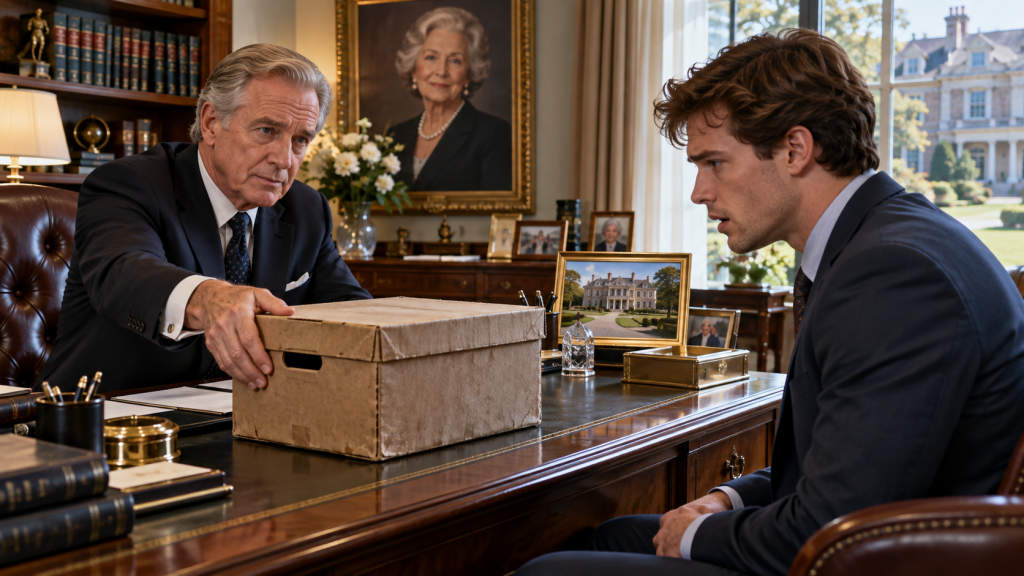
I looked at the box.
Dozens of envelopes.
Dates.
Photographs.
Receipts.
Medical bills.
Three years of a marriage I had believed I understood better than she did.
I kept reading.
At first, I watched you.
I left my wallet on the kitchen counter with four hundred dollars inside. You brought it to me without counting it.
My face burned.
I remembered.
I had seen the cash.
I had thought about taking twenty.
Only twenty.
Enough for groceries.
I had not.
Not because I was good.
Because I was afraid she would notice.
Did that count?
Florence’s next line answered me.
Do not flatter yourself. I know you considered taking some. Your face is terribly honest when your mouth is not.
I laughed again.
Then cried.
The first tear landed on the paper.
I wiped it away quickly.
I asked you to use my credit card for groceries. You brought receipts down to the cent.
I left signed checks in the desk drawer. They remained there.
I mentioned investments. You became curious, but you never asked for account numbers.
Then one afternoon, you stopped pretending to like opera.
I stared.
I remembered that too.
Florence had played something loud and German for nearly an hour while I sat on the sofa attempting to look moved.
Finally, I had said:
“If this man gets any angrier, I think he’s going to climb out of the speakers and assault me.”
Florence had laughed until she cried.
That was the first time I had made her laugh without trying to impress her.
That was the afternoon I began to like you.
My chest hurt.
The first time you fell asleep in my chair, I realized you were exhausted. The first time you cried about your father, I understood why money frightened you so much.
I stopped.
My father.
The stroke.
The rehabilitation bills.
My mother taking time off work.
Their mortgage.
The phone calls I took in grocery-store aisles because I did not want coworkers hearing me beg insurance representatives to explain another denial.
I had not wanted luxury at first.
That is the lie greed tells later.
It points backward at desperation and says:
See?
We were always noble.
We were not.
I had needed money.
Then I saw Florence’s house and began wanting far more than I needed.
Both were true.
Florence knew.
You never directly asked me to pay your father’s bills.
That impressed me.
You came close twice.
I closed my eyes.
She was right.
Once in the kitchen.
Once after a hospital call.
Both times I had swallowed the request.
Part pride.
Part strategy.
If Florence offered on her own, it would feel less like using her.
Another lie.
She continued.
So I helped without telling you.
I looked toward the photocopied checks inside the box.
My voice came out hoarse.
“What did she do?”
Paul folded his hands.
“Keep reading.”
I did.
Some of the assistance you believed came through the hospital hardship program came from me. I arranged it through Paul and a charitable intermediary because I knew you would either refuse me or become more indebted to me emotionally than was healthy.
My eyes filled.
The rehab extension.
The home aide.
The medical equipment.
The bill that mysteriously dropped from twenty-two thousand dollars to three.
I had called the hospital crying.
Someone told me hardship assistance had been approved.
I sat on my kitchen floor that night and thanked God.
Florence had been the paperwork behind God.
I whispered:
“She never told me.”
Paul shook his head.
“No.”
“Why?”
“Because she wanted your father helped.”
“Not your gratitude.”
I looked back at the letter.
You thought you were using me.
Sometimes you were.
Sometimes I was using you too.
Then somewhere between grocery bags and doctors’ appointments, the arrangement became inconveniently real.
I smiled through tears.
That sounded exactly like her.
The next page began with a date.
The date we married.
You said yes too quickly.
I laughed despite myself.
I noticed.
Of course she did.
I also noticed you cried in the bathroom ten minutes before the ceremony. You thought no one heard. I did.
My breathing stopped.
I had gone into the church bathroom, locked the stall, and stared at my reflection.
I remember whispering:
What are you doing?
I had told myself Florence was happy.
That I cared about her.
That marriage would give her companionship and give me security.
A practical exchange.
I had cried because somewhere beneath every justification, I knew I was entering sacred language with an unsacred beginning.
I almost called the wedding off.
I stared at the sentence.
Not because I was afraid you would take my money.
Because I was afraid you would spend the rest of your life believing that wanting it made everything else between us false.
My hands began shaking again.
So I married you.
Perhaps that was selfish.
I was seventy-eight. I had spent years being careful. I wanted one reckless thing before I died.
You were mine.
Then she had crossed it out.
Beneath it:
No. That is not right.
You chose to stay beside me. That was better.
I had to stop reading.
My face disappeared into my hands.
For the first time since Florence died, I truly sobbed.
Not funeral tears.
Not respectable tears.
The kind that bend your spine.
Paul waited.
Lawyers are trained for silence too.
Eventually, I looked up.
“She knew.”
“Yes.”
“All three years?”
“Yes.”
“And she never said anything.”
“She wanted to know what you would become if she did not force the confession.”
I wiped my face.
“That sounds manipulative.”
“It was.”
I stared at him.
Paul shrugged.
“Florence knew that.”
He pointed toward the letter.
“She says so.”
I continued.
There is something I owe you too.
I tested you.
That was not entirely kind.
I sometimes created little opportunities to see what you would do. I left papers where you could find them. I mentioned values. I watched whether you became more affectionate after financial conversations.
My face burned.
Because sometimes I had.
Not always consciously.
Still.
You did, by the way.
I groaned.
Paul actually laughed.
I glared at him.
“Sorry.”
“No, you aren’t.”
“No.”
I read on.
I also noticed something else.
As my health worsened, your behavior did not become greedier. It became less interested in money.
The room went quiet.
When I fell in the bathroom at two in the morning, you carried me before you called anyone.
When I began needing help bathing, you learned how to wash my hair without making me feel helpless.
My vision blurred.
When my hands shook too badly to hold a fork, you ate cold dinners because you fed me first.
I pressed my lips together.
Images came hard.
Florence furious because I had bought plastic shower handles.
Florence refusing to let me help her dress.
Florence crying the first time I had to lift her from the toilet.
Me pretending not to notice.
Not because of money.
I knew that now.
At least I hoped I did.
You changed my bandages.
You learned the names of medications you could barely pronounce.
You slept in a chair beside me at the hospital for nine nights and never once asked Paul about my will.
I stared at Paul.
He nodded.
“You didn’t.”
I whispered:
“I thought about it.”
“I’m sure you did.”
“Does that make it meaningless?”
Paul’s face softened.
“No.”
He said.
“Thinking is free.”
“Character gets expensive when you act.”
I looked down.
Florence’s words continued.
You were not transformed into a saint. Thank God. I would have found that exhausting.
A laugh broke through my tears.
You still noticed the house.
You still calculated.
You still worried about what would happen when I died.
But by the final year, when you asked whether I was frightened, you meant of dying. You did not mean of paperwork.
I could barely see.
Then came the line Paul had warned me about.
Six months before I died, I sold the house.
I swallowed.
Technically, Paul arranged a sale that allowed me to remain there for life, which turned out to be much shorter than any of us expected.
So that was how.
I had continued living there.
Continued assuming the estate owned everything.
Never noticed.
Florence handled documents privately with Paul.
The house sold for $3.8 million.
My chest tightened.
Three point eight.
More than I had imagined.
For one disgusting second, the number lit something ancient inside me.
Florence anticipated that too.
Yes, I can hear you doing arithmetic. Stop it.
I barked a laugh.
Paul smiled.
“She enjoyed writing that line.”
“I hate her.”
“No, you don’t.”
“No.”
I kept reading.
The money did not go to you.
It went into a trust.
My hands slowed.
The first purpose of that trust is your parents.
I stopped breathing.
I read it again.
Then again.
Your father’s long-term medical care is funded. Your mother’s housing is protected. Their mortgage can be satisfied under the trust terms. Necessary home assistance, rehabilitation, medication, and care will be covered for as long as either of them needs it.
I looked at Paul.
“No.”
He nodded.
“Yes.”
“Why?”
His eyes filled.
“Because she loved you.”
That sentence shattered something.
I stood so quickly the chair scraped backward.
“No.”
Paul did not move.
“She couldn’t.”
“She did.”
“That was the house.”
“Yes.”
“That was almost four million dollars.”
“Not all of it will necessarily be spent on your parents.”
He said gently.
“The trust has remainder provisions.”
I barely heard him.
“What happens after?”
Paul waited.
I forced myself to sit.
Then read.
Whatever remains after your parents are gone will fund respite care, home modifications, and emergency assistance for families caring for disabled or elderly relatives. Douglas spent his final two years needing help. I learned what care costs—not merely in dollars, but in sleep, marriages, careers, and dignity. Your fear for your father showed me exactly where this money could matter.
I covered my face.
She had taken the mansion I wanted and turned it into hospital beds, wheelchair ramps, home aides, medication, and breathing room for people who would never know her name.
And for my parents.
Especially my parents.
The very reason I had first walked through her door.
I whispered:
“She gave me what I wanted.”
Paul tilted his head.
“No.”
I corrected myself.
“She gave me what I needed before greed changed the definition.”
Paul said nothing.
That was answer enough.
I returned to the letter.
There was one page left.
The handwriting had become weaker.
Now we reach the part you are most afraid of.
What did I leave you?
My heart thudded.
I hated that it did.
Not the mansion.
Not millions.
Not punishment either.
I breathed.
I purchased a small house on Hawthorne Street eight months ago. Two bedrooms. A ridiculous blue door. Fifteen minutes from your parents. No grand staircase. No marble. The kitchen needs work.
I looked at Paul again.
He reached beneath his desk and placed a key on the table.
Brass.
Blue rubber tag.
HAWTHORNE
I stared.
“No.”
Paul smiled sadly.
“You keep saying that.”
“She bought me a house?”
“A modest one.”
“How modest?”
“Your definition of modest has been corrupted by Florence’s house.”
“Paul.”
“Two hundred and forty thousand.”
I laughed helplessly.
To Florence, apparently, a quarter-million-dollar house was emotional moderation.
I looked at the key.
“I don’t deserve that.”
Paul said:
“You should finish the letter before making moral speeches.”
Fair.
I read.
I know you will want to refuse Hawthorne Street because shame is dramatic and therefore attractive. Do not.
I actually looked around the room.
Paul lifted both hands.
“I didn’t write it.”
I kept reading.
You will tell yourself that refusing the house proves you never truly wanted my money. That would be another performance.
My face burned.
You did want my money.
Then you loved me.
Both can be true.
I stopped.
Those five words.
Both can be true.
Everything inside me had been trying to choose one.
Gold digger.
Husband.
Liar.
Caregiver.
Opportunist.
Widower.
If one was true, I thought the other had to be false.
Florence refused to let me escape into simplicity.
Take the house if you need a home. Sell it if you do not. Give it away if that lets you sleep. Paint the door red because I chose blue and you always hated blue.
But do not confuse self-punishment with integrity.
My eyes filled.
You owe me honesty.
Not misery.
The paper trembled.
Here is what I think you are worth.
I stopped breathing.
This was it.
The sentence Paul had meant.
Not an amount.
Florence wrote:
You are worth the truth about yourself.
My vision disappeared beneath tears.
You were a frightened young man who saw an old woman’s wealth and imagined rescue.
You were selfish.
You were calculating.
You were also tender.
You were patient when no one was watching.
You stayed through indignities that no money could make pleasant.
You held my hand when I could no longer remember whether it was morning.
I pressed the page against the desk.
You started badly.
That does not mean you must end badly.
I cried so hard Paul had to take off his glasses.
He looked away.
I continued.
The trap, darling, was not the will.
The trap was believing you could marry another human being for money without becoming responsible for what happened to your own heart.
I stopped.
There was no sound in the office.
Even the city outside seemed far away.
Then:
I knew what you wanted.
I married you anyway.
You learned who I was.
You loved me anyway.
If I am wrong about that, the house will feel like a consolation prize.
If I am right, you would trade every brick of it for one more ordinary Tuesday with me.
I could not continue for several minutes.
Because I knew the answer.
Not theoretically.
Not nobly.
Immediately.
I would have traded the mansion.
The Hawthorne house.
Every dollar.
Every piece of silver.
For one more Tuesday.
Florence in the kitchen complaining that coffee had become too weak since Douglas died, as though national coffee standards had collapsed with him.
Florence yelling at game-show contestants.
Florence saying my shirts made me look like a divorced substitute teacher.
Florence asleep beside me.
Florence breathing.
I whispered:
“One Tuesday.”
Paul’s face broke.
He nodded.
“I know.”
I forced myself to read the last lines.
Live honestly now.
Help your parents.
Do not turn me into a saint. I was too vain, too stubborn, and far too pleased with myself for outsmarting you.
I laughed through tears.
And please stop wearing that brown jacket. I stayed married to you despite it, not because of it.
A sob became a laugh.
Then the final words.
You came to my door for the wrong reason.
You became my husband for better ones.
That is enough for me.
Love,
Florence
Below her signature, barely legible:
P.S. Paul knows where I hid the good Scotch. Do not let him keep it.
I looked up.
Paul immediately said:
“She specifically left that to me.”
“Liar.”
He sighed.
“Fine.”
For the first time since the funeral, I laughed without guilt.
Then I opened the other envelopes.
All of them.
Not that day.
It took three weeks.
Florence had dated each one.
Some were written before we married.
Some after.
They were not love letters in the usual sense.
They were observations.
A record of me slowly becoming visible to her.
The first envelope said:
He returned my wallet.
One month later:
He asked about Douglas today. Not the company. Douglas. Progress.
Another:
He admitted he hates my opera. I may marry him after all.
I cried when I read that one.
Then:
He did not visit for four days because his father was hospitalized. I missed him enough to become angry. That frightened me.
Another:
He fell asleep on the sofa and called me Florence instead of Mrs. Whitaker when he woke. It sounded different.
I held that letter against my chest.
Another:
He asked what I wanted for my birthday. I said nothing. He brought me tomato seeds because I complained supermarket tomatoes have no souls. I have perhaps made an error. I am becoming attached.
I laughed.
The tomato plants had all died.
Florence blamed the soil.
It was absolutely us.
Another envelope contained a photograph I had never seen.
Me kneeling beside her wheelchair in the garden.
My head turned away.
Her hand resting on my shoulder.
She had written on the back:
He was looking at me here. Not the house.
That one destroyed me.
Then came the harder letters.
Florence was not writing a sentimental revision of me.
She recorded the ugly parts too.
He asked whether I had updated my will. He tried to make it sound like concern. I disliked him for three days.
I remembered.
I had hated myself too.
Another:
He was unusually sweet after I mentioned the investment account. I nearly sent him home. Then he spent forty minutes fixing the sink without being asked. Human beings are inconvenient.
Another:
I caught him looking through an envelope from Paul. He did not open it, but he wanted to. I saw shame on his face. I said nothing.
I remembered that day.
I had reached for the envelope.
Held it.
Then put it down when I heard Florence’s wheelchair in the hall.
For years afterward, I told myself that choosing not to open it proved I had changed.
Maybe.
Or maybe fear stopped me.
Florence’s letter did not decide for me.
That was the point.
She left the contradiction intact.
A letter from our second wedding anniversary was different.
Only three lines.
Today he forgot the date.
I was furious.
This may be the strongest evidence that our marriage is real.
I laughed until I cried.
Her final-year letters were hardest.
The handwriting changed.
The wit remained.
He thinks I don’t notice when he cries in the garage after helping me into bed.
Another:
I wet myself in the pharmacy parking lot today. He covered my lap with his coat and behaved as though nothing had happened. I loved him so violently in that moment I almost forgave the jacket.
I put that letter down and walked outside.
I could not breathe.
I remembered the pharmacy.
Florence had gone silent.
Humiliation can make people disappear inside themselves.
I had taken off my coat.
Tied it around her waist.
Driven home.
Never mentioned it.
I had not been thinking about inheritance.
I knew that now.
Maybe I had known even then.
I simply did not trust my own love because I knew how the story began.
Florence had trusted it before I did.
That was her cruelest gift.
One envelope was labeled:
The day I decided to sell the house.
I opened it last.
He spent six hours on the phone fighting with an insurance company over his father’s rehabilitation while I sat beside him. When the call ended, he apologized for “wasting our afternoon.”
Our afternoon.
Not my afternoon.
Our.
I decided then what to do with the house.
I put the paper down.
The mansion had not been taken from me.
It had been translated.
Into care.
Into time.
Into ramps.
Medication.
Nurses.
My mother sleeping without wondering whether Dad’s next emergency would destroy them financially.
Into strangers getting a weekend off from changing dressings and lifting bodies and pretending exhaustion was love’s natural shape.
Florence turned the thing I coveted into the thing I had originally been afraid I could not provide.
No revenge could have been more precise.
No kindness could have been either.
I visited my parents the following week.
Dad was in his recliner.
His left side still weaker from the stroke.
Mom sat beside him sorting pills into a plastic organizer.
I had not told them everything.
Only that Florence had left arrangements for their care.
Dad stared at me.
“She did what?”
I explained the trust.
Not every number.
Enough.
Mom covered her mouth.
Dad shook his head.
“No.”
Apparently refusal ran in the family.
“Yes.”
“We can’t take that.”
I almost laughed.
“That’s exactly what I told Paul.”
Dad frowned.
“Who’s Paul?”
“Her lawyer.”
“Tell him no.”
“Florence anticipated this.”
My father looked offended by being anticipated by a dead woman.
“What did she say?”
I hesitated.
Then read the paragraph.
My mother began crying.
Dad looked out the window.
For a long time.
Then:
“She came here once.”
I stared.
“What?”
“Florence.”
“When?”
“Last year.”
My stomach dropped.
“She told you?”
“Not about the money.”
Mom said.
“She came when you were away for that work conference.”
“Why?”
Dad smiled faintly.
“She wanted to know whether you were always a terrible liar.”
I covered my face.
Mom laughed through tears.
“She liked us.”
Dad added.
“She asked what you were like before all this.”
“Before what?”
“Before you got scared.”
I stared at him.
“What did you tell her?”
Dad’s eyes filled.
“That you were a good kid.”
My throat tightened.
He continued.
“Not perfect.”
“You stole twenty dollars from my wallet at sixteen.”
“I paid it back.”
“After I noticed.”
Mom elbowed him.
Dad smiled.
Then became serious.
“I told her you started panicking about money after my stroke.”
“I told her you thought it was your job to fix everything.”
“That you stopped sleeping.”
“That you looked at every bill like it had teeth.”
I looked down.
Dad continued.
“She asked if you had always been greedy.”
I could barely breathe.
“What did you say?”
He looked at me.
“No.”
One word.
I cried.
Dad did too.
“She said she didn’t think so either.”
That finished me.
Then I told them the truth.
Not the polished version.
Not:
Florence and I had an unusual marriage.
The truth.
“I started seeing her because I thought she was rich.”
Mom went still.
Dad closed his eyes.
“I married her partly because I thought I would inherit her money.”
Silence.
The kind only parents can create.
Mom whispered:
“Did she know?”
“Yes.”
That startled them more than my confession.
Dad frowned.
“She knew?”
“Almost from the beginning.”
“And still married you?”
“Yes.”
Dad stared.
“That woman was stranger than I thought.”
I laughed through tears.
“She’d agree.”
Mom asked:
“Did you love her?”
There.
The question I had been asking myself since Paul’s office.
I did not hesitate anymore.
“Yes.”
Dad looked at me.
“Then say that without flinching.”
I stared.
“What?”
“You keep confessing the beginning like it erases the ending.”
My father, who once refused therapy because “strangers have enough problems,” suddenly sounded wise.
I almost resented it.
He continued.
“You did a bad thing.”
“Yes.”
“You used someone.”
“Yes.”
“She knew.”
“Yes.”
“She made her own choice.”
“Yes.”
“You loved her when she died?”
“Yes.”
Dad nodded.
“Then don’t lie about either part.”
My mother reached for my hand.
“That’s probably what Florence wanted.”
It was.
I went to Hawthorne Street the next day.
The house was exactly as Florence described.
Small.
Two bedrooms.
One bath.
A crooked mailbox.
Blue door so bright it looked aggressive.
I stood on the sidewalk and laughed.
Then cried.
The key Paul gave me fit.
Inside, the house smelled like fresh paint and emptiness.
There was almost no furniture.
A sofa.
Kitchen table.
Bedframe.
One lamp.
On the kitchen counter sat a single ceramic bowl.
Inside it was a folded note.
Of course.
Florence had apparently prepared for her own death like an exceptionally sarcastic event planner.
I opened it.
I chose the blue door because you hate blue. Grief should not give you complete aesthetic control.
I laughed so loudly the empty house echoed.
Below:
Paint it if you must.
Then:
Make a life here, or somewhere else. Just make one.
I sat on the kitchen floor.
The place was not grand.
No marble.
No paintings worth stealing.
No staircase to impress strangers.
But it had morning light.
A backyard.
A room wide enough for my father’s wheelchair if he ever needed to stay overnight.
Fifteen minutes from my parents.
Florence had not left me the life I fantasized about.
She left me the life I had been too frightened to build honestly.
I moved in two months later.
Kept the door blue.
For a while.
Spitefully.
Then I realized I liked it.
Florence would have been unbearable about that.
Money became complicated after she died.
Not because I suddenly had millions.
I didn’t.
The Hawthorne house was mine.
Florence also left me a modest account intended to cover six months of living expenses while I decided what to do next.
Paul called it “breathing room.”
Florence’s note called it:
Enough money to prevent panic. Not enough to turn you stupid.
I framed that line.
The rest of her liquid estate went where she chose.
Hospice.
Her longtime housekeeper, Marta.
A library.
Two scholarships.
The caregiver trust.
Douglas’s old church.
I received less than people assumed.
More than I deserved, according to the old version of me.
Exactly what Florence intended, according to Florence.
That distinction gradually became enough.
For the first year, I could barely spend any of it.
The trust paid Dad’s rehabilitation bills directly.
I felt guilty every time.
Mom’s mortgage was cleared under the plan Florence created.
I cried when the bank confirmation arrived.
Dad did not.
He sat at the kitchen table and stared at the paper.
Then whispered:
“I spent thirty-four years paying for this house.”
Mom said:
“And Florence finished it.”
Dad nodded.
Then:
“I wish I could thank her.”
I looked at him.
“Me too.”
That became another kind of inheritance.
Gratitude with nowhere to go.
Eventually, we learned to send it outward.
I began volunteering with the respite program funded by the remainder trust.
At first because guilt told me I should.
That is the truth.
I thought if I worked enough unpaid hours, maybe I could balance some invisible ledger.
Paul noticed.
One afternoon he said:
“Florence did not create this foundation so you could perform penance.”
“I’m helping.”
“You’re exhausting yourself.”
“I’m fine.”
“You are beginning to sound like Florence when she refused physical therapy.”
I hated him.
He continued.
“Do you actually want to be here?”
That question stopped me.
I looked around.
A church basement.
Coffee.
Stacks of applications from families needing home ramps, short-term aides, transportation, weekend respite.
Did I want to be there?
“Yes.”
I realized.
Not every day.
Not forever.
But yes.
“Then stay because you want to.”
he said.
“Not because you are trying to earn a dead woman retroactively.”
That sentence hurt.
Useful things often do.
I stayed.
Less.
Better.
The trust’s first major grant after Florence’s death went to a woman named Celia.
Sixty-three.
Caring for her husband after a severe spinal injury.
She had not slept more than four consecutive hours in almost a year.
The grant paid for weekend nursing support twice a month.
When she found out, she cried.
Then said:
“I don’t know who did this.”
I almost told her Florence.
Instead:
“A woman who understood caregiving.”
That was enough.
I went home and sat beneath the blue doorframe for an hour.
Florence had once needed help getting grocery bags through a parking lot.
Now strangers were sleeping because of her house.
There are worse ways for a mansion to disappear.
My father lived another six years.
The trust paid for equipment.
Home assistance.
A second round of physical therapy insurance refused.
Later, hospice.
Those final months would have destroyed us financially without Florence.
More importantly, they might have destroyed us emotionally.
Money could not make Dad well.
It bought help.
Help bought time.
Time let me be his son instead of his full-time nurse.
That was Florence’s real gift.
I understood it the evening a hospice aide helped Dad into bed while I sat beside him telling an old story about a fishing trip.
Without that aide, I would have been lifting, cleaning, measuring medication, terrified I was doing everything wrong.
Instead, I was holding his hand.
Dad whispered:
“Florence did this.”
I nodded.
“Yes.”
Then:
“She really knew you.”
I smiled.
“Unfortunately.”
Dad squeezed my fingers weakly.
“You were lucky.”
That word hurt.
Because I had entered Florence’s life believing she was the lucky one.
A lonely old woman receiving the attention of a younger man.
The arrogance of youth is astonishing.
“Yes.”
I said.
“I was.”
Dad died three days later.
My mother survived him by nine years.
The trust continued helping her.
She remained in their house until she was eighty-four.
Then she decided to move into assisted living.
Her choice.
Florence would have approved.
Mom sold the house.
The trust no longer needed to cover the mortgage.
Some funds returned to the remainder pool.
More caregivers received help.
The circle widened.
Paul and I became friends.
I resented this.
He was smug.
He had known Florence longer.
Held secrets I would never recover.
One evening, years after her death, we opened the “good Scotch.”
It had been sitting in his office safe.
“You thief.”
I told him.
“She said not to let you keep it.”
“She also told me to wait until you were capable of drinking it without turning the evening into a memorial service.”
“How long was I supposed to wait?”
Paul checked his watch.
“Apparently seven years.”
We drank.
Terrible Scotch.
Florence had expensive taste in everything except alcohol.
Paul said:
“She changed the will six times.”
I nearly choked.
“What?”
“Six.”
“Why?”
“You.”
My stomach tightened.
“How?”
“The first will after you began seeing each other left you nothing.”
“Reasonable.”
“The second left you fifty thousand dollars.”
“Why?”
“She said you were becoming less irritating.”
I laughed.
“The third left you a life interest in the house.”
My chest hurt.
“Then?”
“She removed it.”
“When?”
“After the wedding.”
That surprised me.
“Why?”
Paul took a sip.
“She told me she did not want your entire marriage to become a countdown to ownership.”
I stared.
“The fifth version left you more.”
“How much?”
“Not telling you.”
“Why?”
“Because she changed it.”
“Paul.”
He smiled.
“Enough that you would have been wealthy.”
My stomach turned.
“And then she sold the house.”
“Yes.”
“Why?”
He looked at me carefully.
“Because by then she believed you no longer needed wealth from her in order for the marriage to have meant something.”
That sentence sat between us.
Then Paul added:
“And because she thought your parents’ care was a better use.”
“Very romantic.”
“Florence was practical.”
“Yes.”
“Cruelly.”
“Yes.”
We drank.
I dated no one for five years.
Not because Florence had become a saint.
She specifically forbade that in three separate letters.
One said:
If you make my death the reason you never love again, I will consider that the final proof you remain self-centered.
Brutal woman.
I still waited.
Grief took time.
Shame took longer.
I needed to know who I was without Florence’s money anywhere in the question.
So I worked.
Nothing glamorous.
I returned to the field I had left during her final illness.
Earned ordinary pay.
Paid taxes.
Repaired the Hawthorne kitchen gradually.
Badly at first.
I learned.
I did not become rich.
I did become stable.
That felt different.
Earned stability does not sparkle.
It sleeps well.
At forty-two, I met Lena.
At the caregiver foundation, ironically.
Her mother had dementia.
Lena was filling out a respite application and arguing with a volunteer about income documentation.
I helped.
She was furious.
I liked her immediately.
We became friends.
Then something else.
On our fourth dinner, I told her about Florence.
Everything.
Not after six months.
Not after engagement.
Not when forced.
Fourth dinner.
“I married her partly because I wanted her money.”
Lena stared.
Then:
“That’s awful.”
Relief flooded me.
Not because I wanted condemnation.
Because she did not romanticize it.
“Yes.”
I said.
“It was.”
“Did she know?”
“Yes.”
“That’s strange.”
“She was strange.”
“Did you love her?”
“Yes.”
Lena watched me.
Then:
“Do you still?”
I thought.
“Yes.”
She nodded.
“Okay.”
That was it.
No competition with a dead woman.
No demand that I simplify.
Lena understood caregiving.
She understood that love could remain without blocking the doorway.
We married three years later.
Small ceremony.
At Hawthorne Street.
Blue door still blue.
Paul came.
My mother came.
Marta, Florence’s old housekeeper, came and judged the flowers.
Before the ceremony, I stood alone in the kitchen.
Same place I had found Florence’s note years earlier.
For one second, guilt appeared.
Was I replacing her?
Moving on too easily?
Then I remembered another letter.
If you love someone after me, do not compare her to me. That would be insulting to both of us.
I smiled.
“Bossy.”
I whispered.
Then went outside and married Lena.
For love.
Nothing else hidden beneath it.
That did not make the marriage morally superior.
It made it honest from the beginning.
I had learned to appreciate how rare that felt.
Lena and I never had children.
Not by tragedy.
By choice.
We became deeply involved with nieces, nephews, godchildren, and my mother.
Our home stayed small.
We could have moved.
By then I earned enough.
Lena did too.
We did not.
Hawthorne Street became ours.
Not Florence’s punishment.
Not my consolation prize.
Ours.
We renovated the kitchen.
Painted the cabinets green.
Kept the blue door.
Lena asked why.
“Long story.”
“I know the story.”
“Then don’t ask.”
She laughed.
The cardboard box stayed in my closet for decades.
At first, I opened it constantly.
Then less.
Eventually, only on Florence’s birthday.
Then sometimes not even then.
That frightened me.
The first year I forgot the date until evening, I cried.
I thought forgetting meant love was fading.
Lena said:
“Maybe it means grief stopped needing an appointment.”
I hated how wise she was.
Florence would have liked her.
That thought no longer hurt.
Mostly.
The care trust grew.
The original house money did not simply disappear.
It was invested conservatively.
After my parents were gone, the remainder supported hundreds of families over time.
Ramps.
Hospital beds.
Short-term nursing.
Transportation.
Respite weekends.
Emergency hotel stays for caregivers traveling to specialists.
Small things.
Huge things.
A mansion translated into relief.
The foundation eventually named one annual grant after Florence.
I objected.
“She would hate that.”
Paul said:
“She would pretend to.”
Fair.
The first recipient was a twenty-seven-year-old man caring for his mother after a brain injury.
When I met him, I recognized something immediately.
The panic.
The exhaustion.
The way every conversation eventually curved toward money.
He apologized for asking whether more funding might be available.
“Don’t.”
I said.
He looked embarrassed.
“I feel greedy.”
“No.”
“You feel scared.”
He looked at me.
Those are not always different, I almost said.
But sometimes they are.
I knew that better than most.
Instead:
“Need can make money the loudest thing in the room.”
He nodded.
I continued.
“Just don’t let it become the only thing you can hear.”
That was Florence speaking through me.
I did not mind.
Years after Paul retired, he gave me one final envelope.
“I found this in an old file.”
I stared.
“You are joking.”
“No.”
“Florence has been dead twenty-one years.”
“She planned aggressively.”
“Apparently.”
I opened it at home.
Her handwriting.
Strong.
It must have been written early in our marriage.
If you are reading this much later, Paul is either very organized or extremely forgetful.
Accurate.
Then:
There may come a day when you turn our story into something neat. Please don’t.
I smiled.
Do not say I saved you.
My eyes filled.
Do not say you saved me from loneliness.
Do not say our marriage proved age does not matter, or that love conquers greed, or any other nonsense people put on decorative pillows.
I laughed.
We were two flawed people who met at a strange moment.
You wanted money.
I wanted company.
We both concealed parts of that.
Then ordinary life happened to us.
I swallowed.
Ordinary life is powerful.
Groceries. Doctors. Arguments. Bad television. Medication. Laughter. Laundry. Fear.
Eventually, the original bargain became too small to explain what we were.
I cried.
That is all.
It is enough.
Then one final line.
Please tell the story honestly, especially the ugly beginning. Otherwise, you will turn me into the reward for your redemption, and I refuse to be anyone’s plot device.
I laughed until Lena came into the room.
“What?”
I handed her the letter.
She read.
Then said:
“I love her.”
“I know.”
“That’s annoying.”
“Extremely.”
So I began telling the story honestly.
Not publicly at first.
To people close to me.
Then, later, to caregiver groups when people asked why the foundation mattered.
I did not hide my motive.
That was part of what Florence left me.
Truth.
Not polished enough to protect my pride.
I would say:
“I met a wealthy elderly woman and kept seeing her partly because I wanted financial security.”
Rooms would change.
Some people judged.
They should.
Then:
“She knew.”
That changed the room again.
Then:
“We married.”
Then:
“I loved her.”
Some believed me.
Some did not.
I stopped needing unanimous acquittal.
That was another freedom.
Florence knew.
I knew.
That had to be enough.
Did I ever wonder whether I would have stayed if Florence had become poor?
Yes.
For years.
The question tortured me because it had no experiment.
No second life.
No alternate universe where the house vanished during year one and I got to see what I did.
Then I realized something obvious.
By the time Florence became seriously ill, the mansion had already stopped being what kept me awake at night.
Her breathing did.
Her pain.
Whether she was frightened.
Whether I had remembered the pharmacy refill.
Could I prove love pure from the beginning?
No.
It wasn’t.
Could I prove the exact day it became real?
No.
Human beings do not receive receipts for moral transformation.
We simply notice one day that the thing we thought we were chasing is no longer the thing we are afraid to lose.
I had been afraid to lose Florence.
That was enough evidence for me.
Eventually.
My mother died at ninety-one.
Peacefully.
The trust paid for her final care.
Afterward, the last family-beneficiary provision ended and the remaining funds permanently shifted to caregiver assistance.
I received nothing from that transition.
Exactly as Florence intended.
I sat with Lena the day Paul’s former firm sent confirmation.
“Strange?”
she asked.
“Yes.”
“You feel cheated?”
I thought.
“No.”
Then laughed.
“That took thirty years.”
She squeezed my hand.
Progress.
The Hawthorne house appreciated in value.
Of course it did.
Florence would have enjoyed that joke.
The modest house she left me became worth more than I ever expected.
For a while, I wondered whether that somehow violated her plan.
Then I realized houses do not understand symbolism.
Markets definitely do not.
Lena and I eventually placed Hawthorne Street into our own estate plan.
Not to enrich anyone wildly.
We arranged for it to be sold after both of us were gone, with proceeds partly supporting the caregiver fund.
The blue door included.
I wrote a note for the future buyer.
You may paint it. The previous owner was unreasonable.
Then reconsidered.
Florence would haunt me.
I removed the note.
Paul died before I did.
At eighty-four.
His daughter sent me a small wooden box.
Inside was the last of the terrible Scotch.
Unopened.
A note:
Your turn. — Paul
Lena and I drank it on Florence’s birthday.
Still awful.
Some things survive unchanged.
I grew older.
Older than Florence had been when I met her.
That was one of the strangest days of my life.
Seventy-six.
I stood before the bathroom mirror.
Gray hair.
Lines.
A body I once thought belonged to a distant species called old people.
Then I pictured Florence outside the grocery store.
Wheelchair.
Shopping bags.
Suspicious eyes.
I had thought seventy-six meant nearing the end.
At seventy-six, I realized how insulting that assumption was.
I still wanted things.
Still got angry.
Still fell in love with mornings.
Still worried about money occasionally because apparently terror has excellent memory.
Still missed people.
Still made plans.
Florence had been old.
She had also been alive.
Young men confuse those words far too often.
I had.
I visited her grave alone that year.
Lena stayed home.
My request.
I brought tomato seeds.
Ridiculous.
I sat on the grass.
“Hello.”
No answer.
Very rude.
I told her about the trust.
My parents.
Lena.
Paul.
The house.
The blue door.
Then I said the sentence I had been too ashamed to say at her funeral.
“I came for the money.”
Wind moved through the trees.
“I stayed for you.”
I cried.
Not violently.
Old grief.
Soft around the edges.
“I hope that was enough.”
Of course she could not answer.
But I had the letters.
That is enough for me.
So I borrowed her answer.
For once.
People love stories where greed is punished.
They also love stories where greed disappears because of love.
Mine is less clean.
I wanted money.
Real money.
I looked at Florence’s house and imagined a future I had not earned.
I calculated.
I performed kindness sometimes.
I let her believe affection was simpler than it was.
Except she did not believe that.
She saw me.
That was the trap.
Not that she tricked me out of an inheritance.
She tricked me out of the version of myself where I could pretend my motives were invisible.
Then she refused to freeze me there.
That was the gift.
She saw the worst reason I came.
Then kept watching long enough to see whether another reason appeared.
It did.
Had Florence left me the mansion, I would have spent the rest of my life wondering whether every tender thing I did was simply another payment toward it.
By selling it, she removed the prize after the marriage had already become real.
Then she used the money to care for the people whose suffering had made me desperate enough to walk through her door in the first place.
Brutal.
Beautiful.
Infuriating.
Perfectly Florence.
She did not leave me rich.
She left me unable to use poverty, fear, or greed as excuses anymore.
She gave my parents security.
She gave strangers relief.
She gave me a small house with an ugly blue door.
And she gave me a box full of evidence that a person can begin badly without being required to remain the worst version of his beginning.
That was worth more than the mansion.
I know how sentimental that sounds.
At twenty-nine, I would have rolled my eyes.
At seventy-six, I finally understood.
The cardboard box is still here.
Soft now at the corners.
Tape yellowed.
Florence’s handwriting fading.
I keep it in the hall closet.
Not a safe.
Not a bank vault.
Just above the vacuum cleaner.
She would approve.
Every few years, one of my younger relatives asks:
“What’s in there?”
I say:
“Receipts.”
That is partly true.
Receipts for who I was.
Who she was.
What we became.
No dollar amount.
No final balance.
Only ordinary proof.
A wallet returned.
A tomato seed packet.
A photograph.
Hospital bracelets.
My father’s bills.
Letters.
One brass key with a blue tag.
I once thought inheritance meant the things a dead person could no longer use.
Money.
Property.
Jewelry.
Accounts.
Florence taught me another definition.
An inheritance can be a question someone leaves inside you.
Who are you going to be now that I am not here to watch?
That question lasted longer than money would have.
I answered imperfectly.
Worked.
Loved again.
Helped my parents.
Helped strangers.
Made mistakes.
Told the truth more often.
Learned that confession does not erase harm but does stop harm from needing lies to survive.
Kept the blue door.
Mostly out of spite.
And if I could return to that grocery-store parking lot in Burlington, I sometimes wonder what I would tell the twenty-nine-year-old version of myself.
Would I stop him?
Tell him to walk away?
Warn Florence?
Perhaps.
Then Florence’s voice enters my head immediately:
Do not decide for me.
Of course.
She was never a helpless old woman waiting to be rescued or exploited.
She was Florence.
She understood the game before I did.
So maybe I would say nothing.
Maybe I would watch that frightened young man take the shopping bags.
Watch Florence pretend she did not need help.
Watch him notice the mansion.
Watch her notice him noticing.
Two selfish people beginning a story for incomplete reasons.
Then I would leave them alone.
They have work to do.
The morning after I turned seventy-seven, I sat on the Hawthorne porch with coffee.
The blue door behind me.
Lena asleep upstairs.
A letter from the caregiver fund on my lap.
That year, Florence’s old house money had helped forty-three families.
Forty-three.
A mansion once convinced me I could become safe if only it became mine.
Instead, its value moved outward.
Into forty-three households.
Into parents.
Spouses.
Children.
People lifting one another through terrible years.
I looked up at the sky.
Then laughed.
“You win.”
I said.
Florence would have objected.
Marriage is not a competition.
Except when she was winning.
Then it absolutely was.
I married a lonely elderly woman because I wanted her money.
That sentence is true.
It will always be true.
But it is no longer the whole truth.
I married a woman who knew exactly why I came back.
She let me believe I was fooling her because perhaps, in the beginning, each of us needed the illusion.
Then ordinary life stripped the performance away.
By the time Florence died, I was no longer waiting for the mansion.
I was waiting for one more morning when she would open her eyes.
I did not get it.
Instead, her lawyer put a cardboard box in front of me and told me I had walked into her trap.
He was right.
I had.
But Florence’s trap was not designed to take something from me.
It was designed so that, once she was gone, I could no longer hide behind the easiest explanation of who I had been.
Greedy.
Cowardly.
Calculating.
Those were real.
But so were loyal.
Tender.
Frightened.
Changed.
Loved.
Florence left room for all of them.
Then she left me with the responsibility of choosing which ones would write the rest of my life.
I spent decades answering.
And when I finally understood what she had done, the answer was embarrassingly simple.
I had gone looking for an inheritance.
I found a wife.
I lost her.
And what she left behind was not enough money to make me comfortable forever.
It was something far more inconvenient.
A reason to become the man she had decided I might still be.
THE END STORIES! THANK YOU FOR READING GOOD LUCK !❤️
Related Posts