➡️ PART 3 ENDING PART➡️
For several seconds, I could hear nothing except the fluorescent hum above Dr. Evans’s desk.
Not the traffic outside.
Not the paper shifting beneath her hand.
Not even my own breathing.
Only that sentence.
My name appeared above a procedure I had never agreed to.
Bilateral tubal ligation.
Permanent sterilization.
Performed while I was unconscious after trying to end my life.
And beneath it, a signature pretending to be mine.
Michael’s handwriting.
I knew it because I had watched those hands sign birthday cards, mortgage papers, school permission slips, insurance claims, and one anniversary card every year for twenty-seven years.
The first five had said:
Forever.
The later ones simply said:
Michael.
My fingers went cold.
“Are you absolutely certain?”
I asked.
Dr. Evans looked at me carefully.
“About the clips?”
“Yes.”
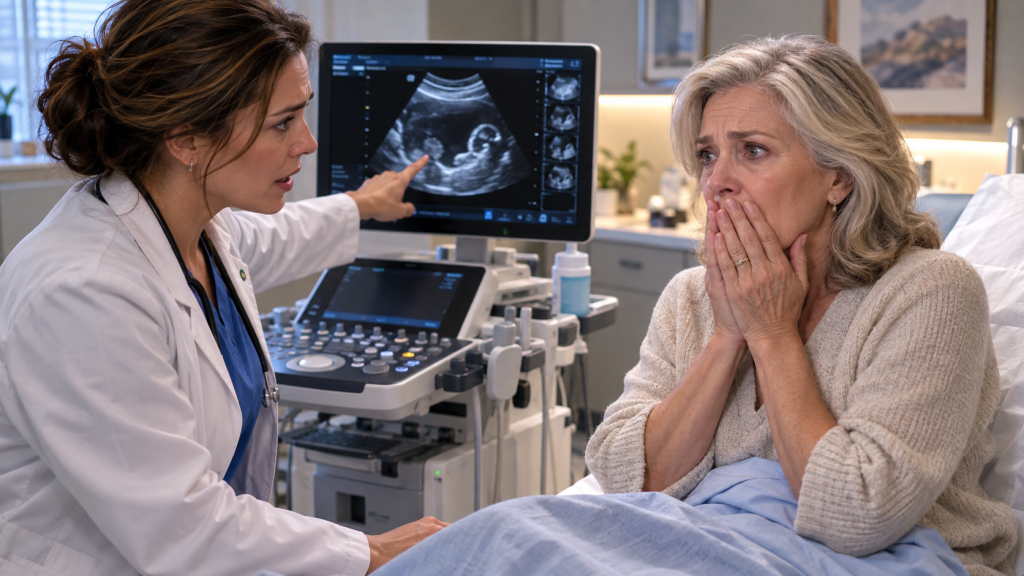
She turned the ultrasound image toward me again.
“I want a gynecologic specialist to review the imaging and the old operative report, but what I’m seeing is consistent with tubal occlusion clips.”
I stared at two bright little shapes inside my own body.
Metal.
Small enough to disappear on a screen if you did not know where to look.
Large enough to divide my life into a before and an after.
“I had periods.”
I whispered.
“Yes.”
“Regular ones.”
“That would be expected.”
“I never knew.”
Her face softened.
“I’m sorry.”
I shook my head.
“No.”
The word came out sharper than I meant.
“You did not do this.”
She nodded.
Then I looked at the old records again.
A procedure.
A surgeon’s name.
A consent form.
Michael’s handwriting.
A nurse asking why I hurt.
My husband telling staff not to discuss it with me.
Eighteen years.
He had come home with me.
Moved me into the guest room.
Brought me soup.
Set medication beside my bed.
Washed the sheets after I vomited.
Then spent almost two decades walking past me in the hallway as if the greatest secret in our marriage was my affair.
All that time, there had been another secret.
Inside me.
Literally.
“What do I do?”
I asked.
Dr. Evans did not answer too quickly.
That was one of the reasons I trusted her.
“First, medically, we confirm exactly what was done and whether the clips are contributing to your current symptoms.”
“Then?”
“If these records are accurate and you truly did not consent, you should speak with an attorney.”
I laughed.
An ugly sound.
“An attorney.”
“Yes.”
“I cheated on my husband.”
Dr. Evans frowned.
I continued.
“I lied to him.”
“I destroyed him.”
Her expression changed.
Not pity.
Concern.
“What does that have to do with whether you consented to surgery?”
The room became very still.
I opened my mouth.
Nothing came out.
Because for eighteen years, everything had been connected to the affair.
Michael’s silence.
My loneliness.
The guest bedroom.
The missed anniversaries.
The way Jake stopped asking why we never touched.
My own belief that happiness had become something I should no longer expect.
I had betrayed him.
Therefore.
Two dangerous words.
I had betrayed him, therefore I deserved distance.
I had betrayed him, therefore I deserved coldness.
I had betrayed him, therefore I should not complain.
Now, sitting in a doctor’s office with evidence that something had been done to my body while I could not stop it, my mind still reached for the same equation.
I betrayed him.
Therefore.
Dr. Evans leaned forward.
“Susan.”
I looked at her.
“You can have done something wrong and still have rights.”
My eyes filled.
She continued quietly.
“One wrongdoing does not make another one disappear.”
The tears came before I could stop them.
I did not go home immediately.
I drove to a grocery-store parking lot and sat in my car for nearly two hours.
I watched people carry bags.
A mother wrestled a toddler into a car seat.
An elderly man returned his cart even though the corral was halfway across the lot.
A teenager sat on the hood of an old Honda drinking something bright blue.
Ordinary life.
I envied every one of them.
Because they did not know that at sixty-seven years old I had just discovered that eighteen years earlier, while unconscious and devastated, someone had made a permanent decision about my body and then allowed me to spend nearly two decades believing the pain was only in my marriage.
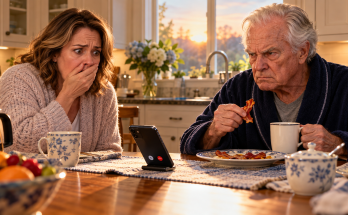
My phone buzzed.
Michael.
Are you coming home for dinner?
Such a normal question.
I stared at it.
Then typed:
Yes.
Deleted it.
Typed:
Later.
Sent.
He replied with a thumbs-up.
A thumbs-up.
There is no adequate emoji for:
Did you have me sterilized while I was unconscious?
I turned the phone over.
Then cried into my hands.
At 6:14 that evening, I opened the front door.
Michael was in the kitchen.
He had made soup.
Tomato.
Grilled cheese on the counter.
After retirement, he had started cooking twice a week.
We had become courteous roommates in old age.
That was our achievement.
He glanced up.
“You’re late.”
I closed the door.
“Doctor ran tests.”
His face changed slightly.
“Everything okay?”
I almost laughed.
“Sit down.”
He looked at me.
“Susan?”
“Sit.”
Something in my voice worked.
He sat.
I did not.
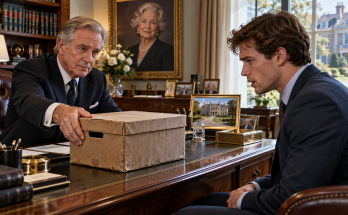
I placed copies of the 2008 records on the table.
The ultrasound image on top.
Michael looked down.
His expression did not change immediately.
Then it did.
Not much.
A tiny loss of color around his mouth.
That was enough.
I had once known his face better than my own.
“What did you do to me?”
I asked.
He looked at the papers again.
For one terrible second, he considered lying.
I saw it.
Then he exhaled.
“Susan.”
“Don’t say my name.”
His eyes lifted.
“Did you know?”
I asked.
He said nothing.
“Did you know I had been sterilized?”
Silence.
The answer entered the room before he spoke.
“Yes.”
My knees weakened.
Even though the record already told me.
Even though Dr. Evans already told me.
Even though I had driven home preparing myself to hear exactly that.
Yes was worse.
Yes had breath.
Yes had lived across the hall from me for eighteen years.
I gripped the back of the chair.
“Did I consent?”
Michael’s eyes dropped.
“No.”
Something inside me tore so quietly I almost missed it.
I sat.
Slowly.
Because my legs no longer seemed related to me.
“Tell me.”
Michael stared at the table.
“I don’t know where to start.”
“Start with why your handwriting is on a consent form bearing my name.”
His face tightened.
“You were in no condition to make decisions.”
“That did not answer the question.”
He looked older suddenly.
Seventy.
Not the fifty-two-year-old man he had been in 2008.
Not the husband whose face I had studied when I woke in the hospital and saw his hand around mine.
An old man cornered by a young man’s choice.
“I signed it.”
he whispered.
I felt physically sick.
“My name?”
“Yes.”
“Why?”
Michael closed his eyes.
Then said:
“Because you had been talking about another child.”
I stared.
“What?”
“Before the affair.”
My breathing stopped.
I remembered.
Of course I remembered.
Jake had been thirteen.
We had talked casually about whether we had waited too long.
I was forty-nine.
It was improbable.
Complicated.
Maybe foolish.
But once, in bed, months before the affair was discovered, I had said:
“What if we had another?”
Michael had smiled.
Said:
“We’d be insane.”
Then kissed my shoulder.
I had forgotten that woman.
The one who still imagined a future with him.
Michael continued.
“After I found out about David…”
David.
The man I had slept with.
The name sounded dusty now.
Not innocent.
Not important enough to explain what came next.
“I couldn’t stop thinking about it.”
Michael said.
“You and him.”
“You leaving.”
“You getting pregnant.”
“You coming back.”
“You asking me to raise someone else’s child.”
My stomach turned.
“I was not pregnant.”
“I know.”
“Did the hospital know?”
“They tested.”
“And?”
“Negative.”
“Then what are you saying?”
He looked at me.
His eyes were wet.
“I was angry.”
There.
Finally.
Not grief.
Not protection.
Anger.
“You were unconscious.”
I said.
“Yes.”
“You had just almost died.”
“Yes.”
“And you decided that was the appropriate moment to make sure I could never have another child?”
Michael flinched.
“It wasn’t like that.”
I laughed.
“Then help me.”
“I need your version to sound less like what it was.”
He rubbed his face.
“The doctor said you were stable.”
“That is not consent.”
“I know.”
“Did you know then?”
Silence.
“Michael.”
“Yes.”
The word came out broken.
“Yes.”
I stared at him.
He continued.
“There had been a discussion in the hospital about your age.”
“Your condition.”
“Future pregnancy risks.”
My anger sharpened.
“With whom?”
“Dr. Keller.”
The surgeon named in the record.
“Why was a surgeon discussing sterilization during an overdose admission?”
Michael looked away.
“He knew us.”
I froze.
“What?”
“From church.”
I searched memory.
Dr. Alan Keller.
Older man.
Tall.
Had once stood two pews behind us.
Had performed gallbladder surgery on Michael’s brother years earlier.
I remembered his wife.
Christmas choir.
Potluck dinners.
My skin crawled.
“He knew me?”
“Yes.”
“And he agreed?”
Michael’s voice fell.
“I told him we had discussed sterilization before.”
“We had not.”
“I know.”
“You lied.”
“Yes.”
“I told him you had said you never wanted to risk pregnancy again.”
My mouth went dry.
“Did he ask me?”
“You were sedated.”
“Then the answer is no.”
Michael nodded.
“He should have waited.”
“You should have waited.”
“I know.”
“No.”
I stood.
“You do not get to say ‘I know’ now as though we are discussing a mistake on a tax return.”
Michael rose too.
“I am not.”
“Sit down.”
He did.
Good.
Because if he had come near me, I did not know what I would have done.
“Why didn’t you tell me afterward?”
I asked.
Michael’s face collapsed.
That question hurt him more.
Good.
He deserved to hurt.
“I was going to.”
“When?”
“When you were stronger.”
“Day two?”
He said nothing.
“Week two?”
Nothing.
“Month two?”
His eyes closed.
I continued.
“Year five?”
“Susan.”
“Year eighteen?”
He whispered:
“I couldn’t.”
I laughed again.
“Couldn’t?”
“No.”
“You chose not to.”
He nodded.
“Yes.”
“Why?”
He looked at me for a long time.
Then finally:
“Because once you recovered, I saw how guilty you were.”
The room seemed to tilt.
“What?”
“You blamed yourself for everything.”
“For the affair.”
“For the pills.”
“For what it did to Jake.”
“And?”
Michael swallowed.
“And I let you.”
My eyes burned.
“You let me what?”
“Think the pain was from the overdose.”
“Think the distance between us was only because of what you had done.”
I stared.
“Because it made punishment easier?”
His face broke.
“Yes.”
The honesty was almost worse than denial.
He started crying.
I did not.
Not then.
Michael pressed both hands to his face.
“I hated you.”
he whispered.
The words should have hurt.
Instead, they clarified.
“I loved you.”
he continued.
“And I hated you.”
“I sat beside that hospital bed and thought you had destroyed every version of our future.”
“You slept with someone else.”
“You lied.”
“Then you nearly died and left me to explain everything to Jake.”
His voice cracked.
“I wanted you alive.”
“And I wanted you to hurt.”
I felt something in me go quiet.
There it was.
The whole truth.
Ugly.
Human.
Unforgivable perhaps.
But at least not pretending to be anything else.
Michael lowered his hands.
“I told myself the procedure would not matter because I was never going to sleep with you again.”
That sentence hit harder than everything before it.
Not because he never touched me.
I knew that.
Because he had made a permanent medical decision on the assumption that he controlled every future I might ever have.
“What if I had left?”
I whispered.
Michael looked at me.
“What if I had divorced you at fifty?”
He said nothing.
“What if I had remarried?”
Silence.
“What if I had wanted another child with someone else?”
“You were forty-nine.”
“That is not your answer to give.”
“I know.”
“Stop saying that!”
I screamed.
Eighteen years of silence shattered inside my own kitchen.
Michael flinched.
I kept going.
“You knew nothing about who I might become.”
“You did not know whether I would leave.”
“Recover.”
“Remarry.”
“Forgive myself.”
“You took one of those choices away because you were angry.”
“Yes.”
he whispered.
And for the first time in eighteen years, I hated him.
Cleanly.
Without guilt.
I packed a suitcase that night.
Michael stood outside the guest bedroom.
The room I had occupied since the hospital.
My punishment room.
I folded clothes.
He watched.
“Where are you going?”
“Hotel.”
“Susan.”
“No.”
“You should stay.”
I looked at him.
“In which bedroom?”
His face fell.
I regretted the cruelty for half a second.
Then remembered that he had chosen rooms for us eighteen years earlier and never asked again.
“I need space.”
“I’ll leave.”
“No.”
I zipped the suitcase.
“I want to be the one who leaves.”
He stared.
“Why?”
Because I had spent eighteen years feeling abandoned without anyone going anywhere.
Because there are moments when a door must close behind you before your mind understands you are allowed to move.
“Because I choose to.”
That was enough.
Jake answered on the third ring.
He was thirty-one now.
Married.
Two children.
Living three states away.
“Mom?”
“Hi.”
“You okay?”
No.
Not remotely.
“I need to tell you something.”
He grew quiet.
“Is Dad okay?”
“Yes.”
That word felt complicated.
Then:
“I left the house tonight.”
Silence.
“What happened?”
I sat on the hotel bed.
A beige room.
Generic artwork.
The kind of place people occupy between lives.
“Something happened in 2008 that I just found out about.”
Jake listened.
I told him carefully.
Not every detail.
Enough.
The overdose.
The operation.
The forged consent.
The records.
Michael’s admission.
By the end, Jake was breathing hard.
“Dad did what?”
“I’m still trying to understand.”
“No.”
His voice rose.
“He did what?”
I closed my eyes.
“Jake.”
“Why are you being calm?”
“Because screaming won’t change it.”
“I’ll scream for both of us.”
Despite everything, a laugh escaped.
Then he began crying.
“My whole childhood…”
I froze.
“What?”
Jake’s voice cracked.
“I thought you were the reason.”
My stomach fell.
“Reason for what?”
“Everything.”
“The rooms.”
“The silence.”
“Dad being miserable.”
“You being sad.”
“He never said it directly.”
“But every time I asked…”
Jake stopped.
“What did he say?”
Silence.
Then:
“That some mistakes change families forever.”
I closed my eyes.
Of course.
Michael had not told Jake the affair details when he was young.
But he had given him enough shape to know blame had a direction.
Toward me.
Jake continued.
“I spent years being mad at you for something I didn’t understand.”
Tears slid down my face.
“You were a child.”
“And he did that to you?”
His anger rose.
“He made you think you deserved it?”
“I made myself think that too.”
“Mom.”
“This part matters.”
I wiped my face.
“I did betray him.”
“I did lie.”
“I did attempt to end my life.”
“Those things hurt your father.”
“And you.”
“I am responsible for them.”
Jake went quiet.
Then I said:
“But they did not give him permission to decide what happened to my body.”
“No.”
Jake whispered.
“No, they didn’t.”
We both cried.
Two truths.
Finally allowed in the same room.
Jake flew in the next morning.
I told him not to confront Michael alone.
He ignored me.
Children remain children no matter how much mortgage they pay.
By the time I reached the house with my attorney’s number in my purse and every intention of keeping things calm, Jake was already in the kitchen.
Michael sat at the table.
Jake stood.
His face red.
“You forged Mom’s signature?”
Michael looked twenty years older.
“Yes.”
Jake laughed once.
Not humor.
Disbelief.
“You let me grow up thinking she destroyed us.”
“She did damage our marriage.”
I stepped into the room.
Jake turned.
“Mom.”
“Sit down.”
“I’m not sitting.”
“Then lower your voice.”
He stared.
Old habit.
Even now I sounded like a mother.
He lowered it.
Michael looked at me.
“You came back.”
“To get documents.”
His hope vanished.
Good.
Not cruel.
Clear.
Jake turned to his father.
“Why?”
Michael looked at him.
“I was angry.”
“For eighteen years?”
Michael did not answer.
Jake shook his head.
“You didn’t have to forgive her.”
The sentence surprised me.
“You could have divorced her.”
“You could have left.”
“You could have hated her.”
“But you stayed and punished her.”
Michael’s eyes filled.
“I thought staying was the right thing for you.”
“For me?”
Jake stared.
“You think I didn’t know something was wrong?”
“I knew every day.”
“The entire house felt like somebody had died.”
That sentence broke me.
Michael started crying.
Jake continued.
“I used to sit upstairs and listen to you two not talk.”
“Do you understand how loud that was?”
No one spoke.
The refrigerator hummed.
Eighteen years of silence finally had a witness.
Jake turned to me.
“And why did you stay?”
I could have said guilt.
Fear.
Money.
Habit.
Shame.
The hope that one morning Michael would look at me differently.
All true.
Instead:
“Because I thought suffering was the price of what I had done.”
Jake’s face crumpled.
I continued.
“I thought leaving would be selfish.”
“I thought asking for warmth would be obscene.”
“I thought your father’s pain mattered more because I caused it.”
“And after enough years, I forgot there were choices other than staying.”
Michael closed his eyes.
Jake whispered:
“Jesus.”
“No.”
I said softly.
“Just humans.”
That was uglier enough.
My attorney’s name was Leah Benton.
She listened without interrupting.
Then asked the first question I should have asked eighteen years earlier.
“Do you want to remain married?”
I stared at her.
“I don’t know.”
“Good.”
I frowned.
“That’s good?”
“It means you’re not asking me to make the emotional decision.”
She folded her hands.
“We can address legal and financial protection while you decide what you want.”
I showed her the medical records.
Her face changed.
“You need to preserve these.”
“I have copies.”
“Good.”
“We should request the complete hospital file, including any archived consent policies, operative notes, billing records, nursing notes, and correspondence that still exists.”
“Can I sue?”
Leah did not give me a television answer.
“Possibly.”
“Eighteen years creates serious timing issues.”
“Discovery rules may matter.”
“The facts and jurisdiction matter.”
“We need more information.”
“What about criminal charges?”
“Same answer.”
“Potentially serious conduct.”
“But the age of the events creates complications.”
I nodded.
The prosecutor’s daughter in me—no, I wasn’t—wrong story. Ignore. The old version of myself wanted a verdict immediately.
Leah refused to give one.
Good.
Then she said:
“One thing is clear regardless of what legal remedies remain.”
“What?”
“Non-emergency sterilization is not something a spouse gets to authorize simply because the patient is unconscious and the marriage is troubled.”
I closed my eyes.
There it was again.
Simple.
So simple I had somehow needed multiple professionals to tell me.
My body had not become marital property because I committed adultery.
The hospital opened an internal review.
Dr. Keller had retired twelve years earlier.
He was still alive.
Eighty-three.
Living in Arizona.
When the hospital contacted him, he initially said he did not remember the case.
Then records refreshed his memory.
That phrase infuriated me.
Records refreshed his memory.
I had lived eighteen years with the consequences.
He needed paper to remember.
The hospital’s risk office eventually met with me and Leah.
I expected defensiveness.
There was some.
Institutions protect themselves.
But there was also something else.
Alarm.
The old record contained no pre-procedure consultation with me.
No documented informed-consent discussion.
No medical urgency requiring sterilization.
No prior signed authorization.
Only the disputed form, Michael’s representations, and Dr. Keller’s operative note stating that sterilization had been “previously discussed with patient and spouse.”
It had not.
A nurse had written an internal concern note that never reached me.
She had documented that I appeared confused when briefly awake and asked why my abdomen hurt.
Another nurse recorded that Michael told staff the matter had been discussed “at length before admission.”
Lie.
After lie.
After lie.
Built while I slept.
Dr. Keller eventually agreed to a recorded interview through attorneys.
I did not attend.
I wanted to.
Leah advised against it.
So I stayed home in my temporary apartment and stared at walls.
Afterward, she called.
“He says Michael presented the sterilization as a previously agreed plan.”
“That doesn’t make it legal.”
“No.”
“He acknowledges he should have verified directly with you once you regained capacity.”
“Should have?”
“Yes.”
“That phrase should be illegal.”
Leah almost smiled.
Then continued.
“He also said he believed there were psychiatric concerns about another pregnancy.”
I stared.
“I had attempted suicide after an affair.”
“Yes.”
“That is not consent.”
“No.”
“Did he say why the procedure needed to happen that night?”
Silence.
Then:
“He could not identify a medical reason requiring that timing.”
There it was.
Not emergency.
Not necessity.
Opportunity.
I felt sick.
The hospital offered a settlement before any lawsuit was filed.
I did not accept immediately.
People assume money is validation.
It is not.
Sometimes money is simply the language institutions use when they cannot return years.
Leah negotiated.
I let her.
Eventually, there was a confidential resolution that covered medical expenses, therapy, legal costs, and compensation.
I will not pretend the number mattered emotionally.
It did financially.
But no check could return the possibility Michael took.
Even if I had never had another child.
Even if biology or age would have prevented it.
The theft was choice.
Not outcome.
That became important.
People kept saying:
“But you were already forty-nine.”
As though a lower probability of pregnancy made consent optional.
No.
A door does not become yours to brick shut because someone might never walk through it.
Michael hired his own attorney.
Of course.
He also started therapy.
That surprised me more.
For two months, I had almost no direct contact with him.
Then he asked, through Leah, if I would meet in a therapist’s office.
I nearly refused.
Then agreed once.
Not reconciliation.
Information.
The therapist was named Dr. Alan Pierce.
I hated his office.
Too many beige pillows.
Michael sat across from me.
He looked smaller.
No ring.
Neither of us had discussed rings.
Mine was in my handbag.
Not on my finger.
Dr. Pierce said:
“You decide what you need from this conversation.”
I looked at Michael.
“Why didn’t you divorce me?”
His face tightened.
“I almost did.”
“Why didn’t you?”
“Jake.”
“Only Jake?”
Michael looked down.
“No.”
“Then what?”
He took a long time.
“I wanted you to stay and see what you had done.”
My stomach turned.
There.
I had suspected it.
Still hurt.
“You wanted an audience for my punishment.”
He began crying.
“Yes.”
Dr. Pierce shifted but did not interfere.
Michael continued.
“I thought if I left, you might recover.”
The room disappeared for a second.
I stared.
“What?”
“If I divorced you…”
He struggled.
“You could tell people I was cruel.”
“You could build another life.”
“You could marry someone else.”
“And I would be the one alone with what you did.”
I whispered:
“So you kept me.”
He closed his eyes.
“Yes.”
“Not as a wife.”
“No.”
“As evidence.”
His face broke.
“Yes.”
I had no tears.
Not yet.
The grief was too large.
Michael whispered:
“I told myself you chose it.”
“What?”
“The guest room.”
“The silence.”
“That you understood.”
I almost laughed.
“People can adapt to cages.”
He flinched.
“I never locked a door.”
“No.”
I said.
“You didn’t need to.”
That sentence stayed between us.
Then I asked:
“Did you ever love me again?”
He looked up.
“I never stopped.”
That made me angry.
“Do not call this love.”
“I’m not defending it.”
“Then use another word.”
He cried.
“I don’t know.”
“Attachment.”
“Grief.”
“Possession.”
“Habit.”
“Maybe all of them.”
I nodded.
More honest.
Then:
“Did you ever consider telling me about the surgery?”
“Every year.”
I stared.
“Every year?”
“On the anniversary of the overdose.”
I felt cold.
“You remembered the date?”
“Yes.”
“And still said nothing.”
“Yes.”
“Why?”
“Because every year made the truth worse.”
That was the clearest answer he gave me.
Secrets grow interest.
Eventually they cost more than anyone can pay.
I filed for divorce two weeks later.
Not because Dr. Pierce told me to.
Not because Jake demanded it.
Not because Leah recommended it.
She didn’t.
I filed because one morning I woke in my rented apartment, made coffee, and realized I did not dread hearing Michael’s footsteps.
That absence told me more than anger.
For eighteen years, I had called endurance devotion.
It wasn’t.
Some marriages end the day trust breaks.
Others end slowly.
Ours had ended so slowly we had mistaken the corpse for furniture.
I signed the petition.
Then cried for six hours.
Freedom does not cancel grief.
Michael did not contest.
That surprised me.
He agreed to mediation.
Property divided.
Retirement accounts handled.
House appraised.
No dramatic battle.
Maybe guilt made him cooperative.
Maybe age.
Maybe therapy.
Maybe all three.
At the final mediation session, he said:
“I want Susan to keep the house.”
I immediately said:
“No.”
Everyone looked at me.
Michael blinked.
“I thought—”
“I don’t want it.”
Thirty-two years in that house.
Jake’s height marks inside the laundry-room door.
Christmas trees.
Affair arguments.
Hospital recovery.
Guest bedroom.
Silence.
No.
The house was sold.
We divided the proceeds according to the agreement.
I moved into a two-bedroom townhouse with terrible wallpaper and enormous windows.
I loved it.
Jake had a harder time with the divorce than he admitted.
Adults like to pretend parents splitting only hurts children if the children are young.
Not true.
Thirty-one-year-olds have childhoods too.
One evening he sat in my new living room holding a beer.
“Do you hate Dad?”
I thought.
“No.”
He looked suspicious.
“How?”
“I hate what he did.”
“Different.”
“Is it?”
“Yes.”
I said.
“If I make him only the worst thing he ever did, I learn nothing.”
Jake stared at me.
“You sound like you’re forgiving him.”
“No.”
“Maybe someday.”
“Maybe not.”
“Forgiveness is not the same as returning.”
He nodded.
Then:
“Do you regret the affair?”
“Yes.”
Immediate.
No complicated philosophy needed.
“I regret lying.”
“I regret involving another person in our marriage instead of ending the marriage or demanding change.”
“I regret hurting your father.”
“I regret what it did to you.”
Jake waited.
Then:
“Do you think Dad had a right to be angry?”
“Absolutely.”
“To leave?”
“Yes.”
“To never forgive you?”
“Yes.”
“To sterilize you?”
“No.”
He nodded.
“Good.”
“Why good?”
“Because I keep thinking maybe you’re trying to make what you did smaller because what he did was worse.”
I smiled sadly.
“No.”
“Pain is not a contest.”
“What I did stays wrong even after what he did.”
“What he did stays wrong even because of what I did.”
Jake stared at his bottle.
“That would be easier if one of you were the villain.”
“I know.”
Life disappoints that way.
The pressure in my abdomen turned out not to be cancer.
Thank God.
Not the sterilization clips either.
A benign fibroid and pelvic-floor changes associated with age.
Treatable.
Manageable.
The specialist did not recommend removing the clips because they were stable and surgery would create unnecessary risk.
I hated that.
“I want them out.”
I told her.
She listened.
Then explained the medical tradeoffs.
No dramatics.
No judgment.
I went home furious.
The thought of those clips remaining inside me felt like Michael still owned something.
Therapy helped with that too.
My therapist asked:
“If removing them were completely safe, would you want them removed?”
“Yes.”
“If keeping them is safer, what does choosing your health now mean?”
I hated her.
Obviously.
Then I understood.
Michael had made one decision without me.
I would not let symbolic revenge make the next one.
So the clips stayed.
Not because he put them there.
Because I chose not to undergo unnecessary surgery.
That distinction mattered more than I expected.
I reclaimed my body without needing to cut it open again.
I joined a swimming class.
Random.
I had not owned a swimsuit in years.
At sixty-eight, I stood in a locker room under fluorescent lights looking at my stomach.
Soft.
Scarred.
Ordinary.
The tiny surgical marks from 2008 were almost invisible.
I touched one.
For years I thought it came from emergency treatment after the overdose.
Now I knew.
I expected rage.
Instead, I felt grief.
Then something gentler.
“This is mine.”
I whispered.
A woman nearby looked at me strangely.
Fair.
Talking to your abdomen in a public locker room is socially ambitious.
I laughed.
Then went swimming.
Retirement changed.
Before the discovery, I had imagined spending retirement in the same house with Michael.
Separate rooms.
Separate television schedules.
Separate grocery lists.
Dying politely.
Now I took a ceramics class.
Terrible decision.
I made a bowl shaped like an accident.
Jake kept it.
I traveled to Santa Fe with a friend named Marianne.
I slept diagonally across hotel beds.
Bought earrings too expensive for costume jewelry and too cheap for investment.
I joined a book club and discovered I hate most book clubs.
I volunteered at a literacy center.
I made dinner for one and stopped apologizing for leftovers.
Small.
Ordinary.
Alive.
That became the word.
Alive.
I had spent eighteen years believing being alive after my overdose created a debt.
Now I began to understand survival was not a loan.
I did not owe suffering as interest.
Michael wrote letters.
At first, I did not read them.
Then I read one.
Then another.
Never immediately.
He did not ask me to come back.
That helped.
The first said:
I spent eighteen years making your guilt useful to me. I am beginning to understand how cruel that was.
I cried.
The second:
I told myself I had stayed because I believed in marriage. The truth is uglier. I stayed because leaving would have meant giving up the right to watch you regret what you did.
At least therapy was productive.
The third:
I am sorry I made your body part of my punishment. There is no explanation that changes what that sentence means.
I kept that one.
Not because it fixed anything.
Because he finally named it without hiding behind my affair.
One year after the divorce, Michael asked whether I would meet for coffee.
I agreed.
Public place.
Daylight.
Two old people sitting across from each other like survivors of a war neither of us won.
He looked at me.
“You look different.”
“I am.”
“Happy?”
I thought.
“More peaceful.”
He nodded.
“That hurts.”
Old Susan would have apologized.
I didn’t.
Michael smiled sadly.
“I know you don’t need to apologize.”
Good.
We drank coffee.
Then he said:
“I need to ask you something.”
“What?”
“Do you think I ruined your life?”
I took my time.
“No.”
He looked surprised.
“You ruined parts of it.”
His face tightened.
“I ruined parts of yours.”
He looked down.
I continued.
“But neither of us gets to claim all the years.”
“Jake exists.”
“Good things happened.”
“We laughed sometimes.”
“Your mother died and I held you.”
“My father died and you handled everything because I couldn’t.”
“We had holidays.”
“Friends.”
“Ordinary Tuesdays.”
“The marriage became terrible.”
“That does not mean every minute inside it was false.”
Michael cried quietly.
“So what do I do with that?”
“That’s not mine to answer.”
He nodded.
Fair.
Then:
“Do you forgive me?”
There it was.
The question.
I looked at the man I had once loved enough to marry.
The man I betrayed.
The man who held my hand after I tried to die.
The man who had my body altered without my consent.
The man who spent eighteen years making silence into punishment.
The man now crying across from me.
“I’m not sure.”
I said.
He nodded.
I continued.
“But I don’t wake up wanting you to suffer.”
He closed his eyes.
“That may be the closest I can get right now.”
“It’s more than I deserve.”
I shook my head.
“Don’t do that.”
He looked up.
“What?”
“Don’t turn shame into another way of centering yourself.”
His eyebrows rose.
Therapy had made me dangerous.
“I am not here to decide what you deserve.”
“Live better.”
“That’s your job.”
He smiled through tears.
“Yes.”
Jake rebuilt his relationship with Michael more slowly.
He asked me once whether I minded.
“No.”
“You sure?”
“Yes.”
“He is your father.”
“Your relationship with him is not a referendum on what happened to me.”
Jake stared.
“You really mean that?”
“I really do.”
Good.
Children should not have to prove loyalty by inheriting hatred.
Even adult children.
Jake eventually began visiting Michael every few weeks.
They went fishing.
Awkward men love activities that reduce eye contact.
I was glad.
Truly.
That surprised me.
Healing sometimes means discovering you no longer need everybody to agree with your pain every day.
The hospital settlement funded something I had not planned.
A patient-consent advocacy program.
Not entirely.
I was not rich enough for that level of mythology.
But I donated a portion to an organization providing legal assistance around medical consent and patient rights.
No building with my name.
No plaque.
I attended one fundraiser.
A woman spoke about waking from a procedure she had not fully understood.
Different facts.
Different case.
Same sentence:
“I thought because I had signed something, I wasn’t allowed to say I felt violated.”
I cried.
Afterward she thanked me for coming.
I did not tell her my story.
Not then.
Some solidarity does not need comparison.
At seventy, I finally told a close friend the whole truth about my affair.
Not the polite version.
Not:
I was lonely.
Though I was.
Not:
Michael worked too much.
Though he did.
I told her:
“I wanted to feel chosen.”
“And instead of asking whether my marriage was dying, I chose secrecy.”
She listened.
Then:
“Do you still hate yourself for it?”
I thought.
“No.”
“Do you excuse it?”
“No.”
She smiled.
“There you are.”
That became another lesson.
Self-forgiveness is not rewriting wrongdoing into innocence.
It is accepting responsibility without making shame your permanent identity.
It took me twenty years to learn that sentence.
At seventy-one, I started dating.
I almost wish I could say I remained serenely single forever.
It would sound dignified.
Instead, his name was Robert.
Widower.
Retired librarian.
Soft voice.
Terrible shirts.
We met at the literacy center.
He asked me for coffee.
I panicked.
Actually panicked.
My therapist earned her fee that week.
On our third date, Robert reached for my hand.
I pulled away.
He immediately said:
“Sorry.”
No irritation.
No wounded pride.
No question.
Just sorry.
I stared at him.
Then started crying.
Poor man.
He thought he had destroyed me by attempting hand-holding.
I explained only a little.
He waited.
Six weeks later, I reached for his hand first.
That mattered.
Choice again.
Always choice.
Physical intimacy was harder.
Eighteen years without touch changes a person.
Trauma changes more.
Age changes more again.
Robert never rushed.
One evening, months later, I told him about the sterilization.
He listened.
Then asked:
“What do you need from me?”
Not:
Who did it?
Not:
How could he?
Not:
Are you okay?
What do you need from me?
I cried.
Then laughed because apparently my retirement years were mostly tears and expensive coffee.
“Patience.”
I said.
“I have a library degree.”
he replied.
“We specialize in waiting.”
Terrible joke.
Good man.
I did not marry Robert.
Not because I was afraid.
Because I did not want to.
We loved each other for eight years.
Kept separate homes.
Traveled.
Shared weekends.
Fought over movies.
I learned that intimacy did not require surrendering architecture.
You can love someone without combining every room.
Michael and I had shared a roof without having a marriage.
Robert and I shared no address and had tenderness.
Life enjoys irony.
Michael never remarried.
Not my responsibility.
He dated once or twice.
Jake told me less than he thought I wanted to know.
Good.
Michael volunteered at a food pantry.
Joined a men’s counseling group through his church.
Eventually spoke privately to other men about anger after betrayal.
I heard this from Jake.
My first reaction was irritation.
Then I stopped.
If he could prevent another person from turning pain into control, good.
He did not need my permission to become better.
Neither had I.
Five years after the discovery, Dr. Evans retired.
At her farewell appointment, I brought flowers.
She laughed.
“What did I do?”
“Ruined my marriage.”
Her face fell.
I smiled.
“Kidding.”
“Mostly.”
Then I became serious.
“You asked the right question.”
She looked at me.
“Which?”
“Are you sure you never had surgery?”
She smiled sadly.
“Medicine is often noticing what doesn’t match the story.”
That sentence sounded like life.
What does not match the story?
For eighteen years, I told myself one story:
I cheated.
Michael withdrew.
I deserved it.
Then one ultrasound showed something that did not fit.
A body often keeps records the mind was never given.
That thought stayed with me.
Jake eventually asked Michael the question I never had.
“What did you think Mom would do if she found out?”
Michael told him:
“I assumed she never would.”
That answer haunted me.
Not because it was surprising.
Because it explained the silence.
Some secrets are maintained by confidence, not fear.
He believed the guest-room years had already convinced me not to ask questions.
He was right.
That was the part I had to forgive in myself.
Not blame.
Forgive.
I had become so accustomed to shame that curiosity felt like rebellion.
I stopped asking what I wanted.
What happened.
What I deserved.
Never again.
At seventy-five, I was invited to speak at a support-group event about rebuilding life after long-term marital estrangement.
I almost declined.
Then agreed.
I told no sensational version.
No villain.
No miracle.
I said:
“For eighteen years, I believed accountability meant accepting any consequence someone else chose for me.”
The room became quiet.
“That was wrong.”
“You are accountable for what you do.”
“You are not required to surrender ownership of yourself as payment.”
A woman in the front row started crying.
So did I.
Apparently tears remained undefeated.
I continued.
“Guilt can teach.”
“Shame can imprison.”
“They are not the same.”
Then I told them the sentence Dr. Evans gave me.
“You can have done something wrong and still have rights.”
I watched people write it down.
I wished someone had told me in 2008.
Michael attended one of those talks.
Without telling me.
I saw him at the back.
Older.
Gray.
Walking with a cane.
For half a second, anger returned.
Then curiosity.
Afterward, he waited until everyone left.
“I’m sorry.”
he said.
“For coming?”
“Yes.”
“I should have asked.”
There.
Even now.
He had learned.
I smiled.
“Thank you.”
He looked toward the empty chairs.
“You were good.”
“I know.”
He laughed.
That surprised us both.
Then he said:
“You said shame can imprison.”
“Yes.”
“I did that to you.”
“Yes.”
“And to myself.”
I looked at him.
“Yes.”
He nodded.
Then:
“I’m glad you got out.”
That sentence finally made me cry in front of him.
Not because I wanted him back.
Because the man who once wanted me to stay and suffer was finally glad I had left.
That was change.
Too late for the marriage.
Still meaningful.
Michael died when I was seventy-eight.
Stroke.
Quick.
Jake called.
I sat at my kitchen table holding the phone.
Robert had died two years earlier.
Life had become a collection of people leaving in different directions.
“Do you want to come?”
Jake asked.
“To the hospital?”
I looked at the clock.
Then:
“Yes.”
Michael was unconscious when I arrived.
No dramatic confession.
No last speech.
Good.
Life does not owe us theater.
I stood beside the bed.
Jake on one side.
Me on the other.
Michael’s hand looked old.
The same hand that had forged my name.
The same hand that had once held mine when Jake was born.
The same hand that fixed our roof.
The same hand that stopped reaching for me.
Human hands.
Capable of tenderness and cruelty.
I touched it.
Not because I forgave everything.
Because I wanted to.
Choice.
Always choice.
He died that night.
At the funeral, the pastor spoke about forgiveness.
Of course.
Pastors love that word.
I listened without becoming angry.
Forgiveness had stopped meaning:
What you did no longer matters.
For me, it meant:
What you did no longer gets to decide what I become next.
By that definition, perhaps I had forgiven Michael years earlier.
Not absolved.
Not reconciled.
Not returned.
Released.
Maybe that was enough.
Jake found something while cleaning out Michael’s desk.
A sealed envelope.
My name.
He called.
“Do you want it?”
I hesitated.
Then:
“Yes.”
Inside was one page.
Michael’s handwriting had become shaky.
Susan,
There is no version of what I did in 2008 that becomes right because you hurt me first. I spent years trying to make sequence into justification. It isn’t.
I stopped reading.
Breathed.
Continued.
You betrayed me. I violated you. Both sentences are true. One does not cancel the other.
My eyes filled.
I wish I had left. I wish I had screamed. I wish I had broken every plate in the kitchen and divorced you the next morning. Any of those things would have been more honest than what I chose.
A laugh escaped through tears.
Michael always hated broken dishes.
Instead, I wanted to control the part of the future I feared most, and then I let your guilt hide what I had done.
I am sorry for the procedure.
I am sorry for the lie.
I am sorry for every year I watched you punish yourself and called it fairness.
I hope the years after me are gentle.
Michael
No request for forgiveness.
No explanation.
No “but.”
I folded the letter.
Put it beside Dr. Evans’s first ultrasound report.
Two documents.
One revealed what happened.
The other named what it meant.
I kept both.
I did not turn Michael into a monster after he died.
Neither did Jake.
We told the truth.
That was harder.
At family dinners, grandchildren heard stories about Grandpa Michael fixing bicycles.
Burning hamburgers.
Falling asleep during movies.
When they were old enough, Jake told them there had been painful things in the marriage too.
No hero mythology.
No demon mythology.
Just a person.
Children can handle complexity better than adults think.
Perhaps because children have not yet spent decades simplifying people into the roles they need.
I am eighty-two now.
The clips are still inside me.
I know that may disappoint anyone who wants a symbolic ending where a surgeon removes them and I hold them in my palm.
Life is not required to provide props.
They stayed because leaving them was medically safer.
And over time, I stopped imagining them as Michael’s final claim on my body.
They are evidence of something that happened.
Nothing more.
My body is mine because I live in it.
Not because it is untouched.
Not because no one ever violated a boundary.
Not because every choice made about it was mine.
Ownership can survive violation.
That was something I needed years to understand.
The guest bedroom from our old house no longer exists.
A young family bought the place.
Jake drove past once.
The shutters are blue now.
The tree we planted when he was six is enormous.
Someone removed the fence Michael built.
Good.
Houses should change owners.
Stories too.
For eighteen years, that room meant punishment.
Now it is probably a child’s bedroom.
Maybe an office.
Maybe full of exercise equipment nobody uses.
The room got another life.
So did I.
Sometimes I think about the Susan who woke in that hospital in 2008.
Throat burning.
Abdomen aching.
Michael holding her hand.
She looked at him and believed tenderness had returned.
That is the part that still hurts most.
Not the clips.
Not the procedure.
His hand.
Because she was so desperate to be forgiven that she interpreted basic care as a miracle.
If I could sit beside that bed now, I would not tell her everything.
She was too fragile.
I would only say:
“Your mistake does not make you unworthy of truth.”
Maybe that would have been enough to make her ask:
Why does my abdomen hurt?
Again.
Louder.
Until someone answered.
I cannot change that she did not.
I can only honor her by asking now.
By choosing now.
By telling the truth now.
That is what life after shame looks like.
Not becoming innocent.
Becoming awake.
People sometimes ask whether I wish I had never had the affair.
Yes.
Of course.
No poetic answer needed.
I wish I had told Michael I was lonely.
I wish I had demanded counseling.
I wish I had left if nothing changed.
I wish I had not involved another man.
I wish I had not lied.
I wish I had not swallowed those pills.
Regret can be simple.
What I no longer wish is that I had suffered more.
For years I believed pain proved remorse.
It doesn’t.
Repair proves remorse.
Honesty.
Change.
Apology.
Different choices.
Suffering by itself is just suffering.
I lost eighteen years learning that.
I refused to lose the rest.
And that is the answer to the question Dr. Evans asked me in that little examination room.
“Susan, are you sure you never had surgery?”
I had said:
“Never.”
I was wrong.
A procedure had happened.
What I had never had was knowledge.
Consent.
Choice.
For eighteen years, I mistook ignorance for memory.
Then a bright little shape on a black-and-white screen opened the past.
It showed me something terrible.
But it also did something else.
It ended the sentence I had been serving.
Not the consequences of my affair.
Those were real.
Not the grief.
That stayed.
It ended the belief that because I had once betrayed someone I loved, I was no longer entitled to belong to myself.
I was.
I always had been.
And when I finally understood that, at sixty-seven years old, I packed one suitcase, walked out of the house where silence had become our marriage, and began the life I had spent eighteen years assuming I no longer deserved.
It was not too late.
That may be the most important thing.
Not forgiveness.
Not punishment.
Not even justice.
Time.
There was still some left.
And for the first time since 2008, it was mine.
THE END STORIES! THANK YOU FOR READING GOOD LUCK !❤️
Related Posts