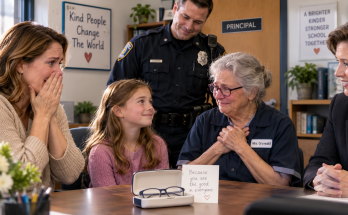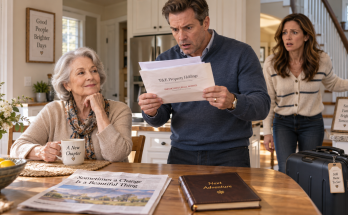
I Won $233 Million In The Lottery And Told No One — Only My Grandson Helped Me. After years of feeling invisible, I called my family and said I needed a little help paying for my medication. My son went silent before blocking me; my daughter replied with a short message: “Mom, please handle it yourself. I’m strapped right now — I’m sure you’ll be okay.” Only my 20-year-old grandson immediately drove 200 miles with his last $300, bringing groceries and an envelope “so you won’t worry.”

Sometimes the cruelest sound in the world isn’t shouting—it’s silence.
Three weeks after quietly winning $233 million in the Mega Millions lottery, Sandra Williams, a 67-year-old widow from Ohio, decided to conduct what she later called a family test. She told no one. Not her son Derek—the polished bank manager who spoke to her the way he spoke to customers with bad credit. Not her daughter Ashley, who once raised her wine glass at Christmas and joked about “finally getting some decent inheritance when the old lady kicks the bucket.”
Sandra had raised them alone after her husband died—working double shifts at Miller’s Diner, pouring coffee until her wrists throbbed, saving every spare dollar to send them through college. She bought their first cars, helped them through early debts, quietly paid loans they swore they’d already handled.
But lately, affection had turned into lectures—and warmth had cooled into a distance no amount of money could repair.
So she picked up the phone.
“Derek,” she said softly, “I’m a little short this month. My heart medication costs more than I expected.”
His voice shifted instantly into professional formality.
“Mom, I can’t keep enabling this behavior. You need to learn how to live within your means.”
Then—click.
Dial tone.
Her daughter’s response came through text.
“Mom, please handle it yourself. I’m strapped right now. I’m sure you’ll be okay.”
No offer of help. No “Are you alright?”
Just two polite dismissals from the children she had carried through every hardship of their lives.
Sandra placed the phone down and smiled—a small, tired smile born from somewhere deeper than anger.
She had more money in one account than her children would earn in their entire lives, yet neither of them could spare a moment of compassion.
Then the phone rang again.
“Grandma?”
It was Jake, her 20-year-old grandson.
“Are you okay? How much do you need? I’ve got maybe $300 saved. I’ll drive down tonight.”
Two hundred miles.
His final $300.
No hesitation. No calculation.
Just love.
That was the moment Sandra understood who still belonged in her heart—and who had quietly removed themselves from it.
The following morning, she called a dealership.
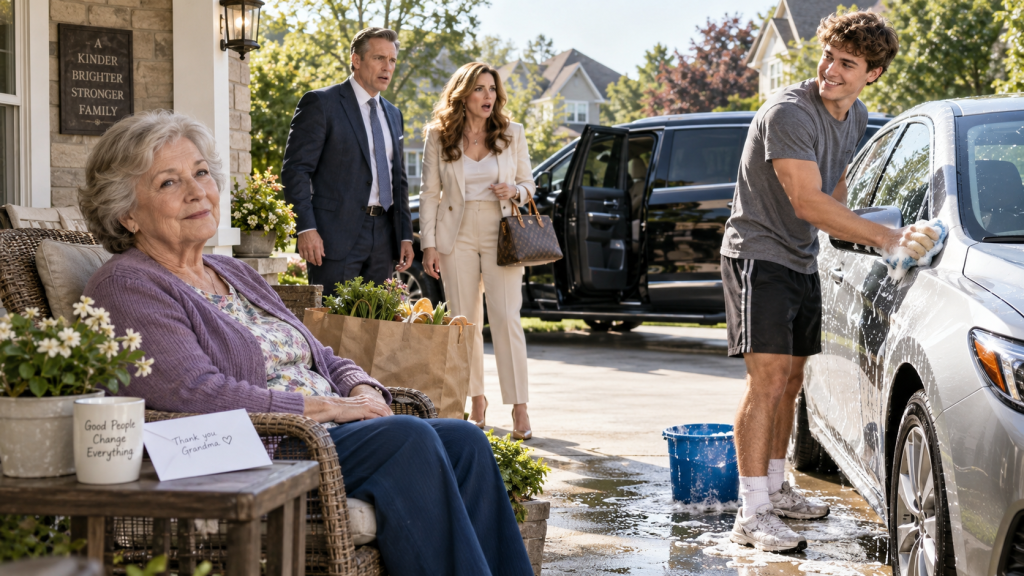
By Saturday, a silver Honda Civic sat shining in her driveway.
Jake was outside washing soap from the hood, smiling like sunlight, when his mother’s Mercedes rolled up to the curb.
Ashley stopped mid-step.
Derek arrived minutes later, his tie loosened, suspicion already in his eyes.
“Mom,” Ashley demanded, “where did you get the money for that car? Last week you said you couldn’t afford your prescriptions.”
Sandra leaned back in her porch chair, a faint smile crossing her face.
“Oh, that?” she said. “I decided to skip my medication this month. Apparently generosity is great for the heart.”
The expressions on their faces—shock, confusion, and sudden worry—were priceless.
What they didn’t realize was the strategy behind her calm expression, crafted by a woman who had spent her life surviving through quiet strength and careful planning.
The lawyers had already been contacted.
The trusts were prepared.
Every conversation, every cold response, had been documented and filed.
And when her children finally discovered the truth—that their mother had never been poor, but the anonymous winner of one of the largest jackpots in the state’s history—it would already be too late to change what their greed had cost them.
Because Sandra’s next step wasn’t about money.
It was about legacy.
About teaching the most powerful lesson a mother can give:
That love without compassion is nothing more than entitlement pretending to be family.
What she did next didn’t just change her will—it redefined the meaning of family forever..
PART 2 — THE MONEY THEY SUDDENLY CARED ABOUT
Ashley stared at the silver Honda as though it had personally offended her.
Jake stood beside the driver’s door with a yellow sponge in one hand and soap running down both wrists.
Derek had arrived three minutes after his sister.
He stepped out of his SUV without even closing the driver’s door.
Neither of my children asked how I was feeling.
Neither asked whether I had gotten the medication.
They looked at the car.
Then at me.
Then back at the car.
That answered a question I had not realized I was still asking.
Ashley folded her arms.
“Mom.”
I took a sip of coffee.
“Yes?”
“Where did you get the money for that?”
I looked at the Honda.
“Which part?”
“The car.”
“I know what you meant.”
“Then why are you being difficult?”
Interesting.
Three weeks earlier, I had called because I said I could not afford heart medication.
Now I had purchased a car, and suddenly both of my children had found the time to drive over.
Concern had apparently been waiting for a visible asset.
Derek walked around the Honda.
He glanced through the window.
Then down at the temporary registration.
His banking instincts had already activated.
“Is this financed?”
“No.”
His head snapped toward me.
“You paid cash?”
“Yes.”
Ashley stared.
“How much?”
Jake finally spoke.
“Does it matter?”
She looked at her son.
“I wasn’t talking to you.”
Jake dropped the sponge into the bucket.
“I know.”
There was something in his voice that made me look at him.
He had driven two hundred miles with his last three hundred dollars because he thought his grandmother could not afford medication.
He had arrived with two bags of groceries, a pharmacy gift card, and an envelope containing two hundred forty dollars because he had spent the rest on gas and food.
Then, when I told him the next morning that the money problem had been “taken care of,” he had not asked by whom.
He simply said:
“Good.”
That was all.
Good.
No audit.
No suspicion.
No entitlement.
Ashley turned back to me.
“You called me last week saying you couldn’t afford medication.”
“Yes.”
“And now there’s a new car here.”
“Yes.”
“That makes no sense.”
“It makes perfect sense to me.”
“Mom.”
She used the word like a warning.
I almost smiled.
Derek stepped closer.
“Did you take out a home-equity loan?”
“No.”
“Cash advance?”
“No.”
“Personal loan?”
“No.”
“Did you borrow from Jake?”
Jake laughed.
Actually laughed.
My daughter’s face hardened.
“This isn’t funny.”
“No.”
I said quietly.
“It really isn’t.”
Ashley pointed toward the car.
“Who is it for?”
I looked at Jake.
His expression changed.
He had not known either.
“Grandma?”
I reached into my cardigan pocket.
The keys felt heavier than they should have.
Maybe because I knew exactly what they represented.
Not a reward.
That was what I had told myself at first.
He came when nobody else did.
He deserves something.
But three conversations with my attorney had stripped some of the drama from that idea.
Love is not a game show.
You should not hand a twenty-year-old an expensive prize because he behaved decently during one difficult weekend.
So I had changed the plan.
The Honda was modest.
Reliable.
Safe.
And more importantly, it came with no requirement that Jake keep proving he loved me.
I held out the keys.
“For you.”
His face went completely blank.
Ashley said:
“Absolutely not.”
The keys had not even reached his hand.
I looked at my daughter.
“I’m sorry?”
“He’s twenty.”
“Yes.”
“He doesn’t need a brand-new car.”
“It isn’t brand-new.”
“It has four hundred miles on it.”
“The dealership used it as a demonstrator.”
“That is basically new.”
Jake stared at the keys.
Then at me.
“Grandma, I can’t take that.”
I smiled.
That response alone almost made me want to insist.
Almost.
But gifts should still allow refusal.
“You can.”
“I mean I shouldn’t.”
“Different question.”
Derek looked between us.
“Where did the money come from?”
There it was again.
Not:
Why Jake?
Not:
Are you sure?
Where did the money come from?
I slid the keys back into my pocket.
“Why are you both so interested?”
Ashley looked offended.
“Because we’re your children.”
I nearly laughed.
Three weeks ago, apparently that relationship had not included a ten-minute drive to a pharmacy.
Now it included financial oversight.
“How is your medication?”
Jake asked.
The porch became silent.
I looked at him.
He shrugged.
“You said you were short.”
“I just want to make sure you got it.”
That was the first time anyone had asked.
I had known the difference intellectually.
Hearing it out loud hurt anyway.
“My medication is fine.”
I said.
Jake nodded.
“Okay.”
Then:
“Then we can talk about the car.”
Ashley stared at him.
“You really drove all the way down here because she said she needed prescription money?”
Jake looked confused.
“Yeah.”
“How much did she ask for?”
“She didn’t give me an amount.”
“So you just came?”
“Yeah.”
“With what?”
He hesitated.
I answered for him.
“Everything he had.”
Ashley’s face changed.
Jake looked embarrassed.
“Grandma.”
“No.”
I looked at my children.
“He drove two hundred miles with three hundred dollars in his bank account.”
“He brought groceries.”
“He brought money.”
“And he never once asked when I was paying him back.”
Derek looked at Jake.
Then me.
“You accepted money from a college student?”
The hypocrisy was so clean it almost impressed me.
“I accepted his groceries.”
“I kept the envelope overnight.”
“Then I returned the money the next morning.”
Jake frowned.
“You told me you found it in my backpack.”
“I put it there.”
He stared.
“I knew it.”
That broke some tension.
Only some.
Ashley said:
“So this is punishment.”
“No.”
“You’re buying Jake a car because we didn’t come running.”
“No.”
“That is exactly what this is.”
I looked at my daughter.
“Do you remember when you were thirty-one and your furnace died?”
Her face changed.
“What does that have to do with anything?”
“How much did I give you?”
She looked away.
“Mom.”
“Eleven thousand dollars.”
Derek turned toward her.
“You told me you used your bonus.”
Ashley snapped:
“It doesn’t matter.”
“It mattered to me.”
I said.
“Do you remember when your first marriage ended and you needed a security deposit?”
“Five thousand.”
“When Emily needed braces?”
“I paid the part insurance didn’t.”
“When you fell behind on the Mercedes because you were between jobs?”
Ashley looked toward her car.
Interesting.
“You helped.”
she said.
“Yes.”
“I helped.”
I turned toward Derek.
“Your turn.”
His face tightened.
“I don’t need a list.”
“I think maybe we all do.”
I had made one before they came.
Not because my attorney told me to.
Because once I started remembering, I could not stop.
Derek’s first car.
College tuition shortfalls.
The credit-card debt he hid from his first wife.
Twenty-two thousand dollars.
The emergency loan for the house down payment.
Fifteen thousand.
The “temporary” business investment in an online venture that disappeared within eight months.
Thirty thousand.
I never asked for repayment.
Most of the time I never even told Ashley.
And I did the same for her without telling Derek.
I had called it privacy.
Maybe some of it was.
Some of it was also a system.
Each child believed they had struggled largely alone because I quietly erased the moments when they did not.
I had turned rescue into something invisible.
Then grown bitter because they forgot the rescuer.
That realization had been unpleasant.
My lawyer, Marian Cole, had not delivered it gently.
She rarely delivered anything gently.
Three days after Jake arrived, I had sat across from Marian in a downtown Columbus office.
The lottery attorney had referred me.
Estate planning.
Trusts.
Tax counsel.
Security.
The entire strange architecture required when an ordinary life suddenly contained two hundred thirty-three million dollars before taxes and structural decisions.
I told her about Derek.
Ashley.
Jake.
The test.
She listened.
Then said:
“Don’t make permanent estate decisions while you’re furious.”
I had been offended.
“I’m not furious.”
“You documented your daughter’s Christmas joke about your death.”
“She said it.”
“I didn’t say she didn’t.”
Marian removed her glasses.
“You won the lottery three weeks ago.”
“Your emotional life is now radioactive.”
“Everyone around you may change.”
“Some for the worse.”
“Some because they are confused.”
“And some because you change first.”
I did not like her.
That was partly why I kept her.
“I know who loves me now.”
I told her.
“No.”
she said.
“You know how three people responded to one request under circumstances they did not fully understand.”
“Derek blocked me.”
“That was cruel.”
“Ashley dismissed me.”
“That was cold.”
“Jake came.”
“That was generous.”
“None of those facts requires you to hand a twenty-year-old a fortune and disinherit everyone else by Friday.”
I stared.
“You take all the fun out of being rich.”
“That’s why you pay me.”
Unfortunately, she had a point.
So we built something slower.
First, my own security.
Medical care.
Housing.
Long-term management.
Privacy.
An investment policy that assumed I could live another thirty years.
A team where no single adviser controlled everything.
Then estate planning.
Not as punishment.
As values translated into documents.
Education trusts for grandchildren.
Health protections.
Charitable giving.
A foundation later, perhaps.
Direct inheritance structured enough that sudden wealth would not become the same kind of rescue I had spent my life providing in smaller doses.
Jake would benefit.
Yes.
But not because he passed a secret test.
Because I wanted to help him build a life without replacing the building.
That distinction mattered.
Now, on the porch, Derek said:
“You can’t compare helping your children to buying Jake a car.”
“Why not?”
“Because we were your kids.”
“And he’s my grandson.”
“That’s different.”
Jake looked at his uncle.
“How?”
Derek did not answer.
Ashley did.
“Because she’s obviously trying to prove something.”
That was closer to the truth than I wanted.
I looked at the silver Honda.
Maybe part of me had wanted the car sitting there when they arrived.
Of course I had.
I had known Ashley drove by on Saturdays when she visited a friend nearby.
I had known Derek would hear from her.
I had created the scene.
Not by accident.
That did not make their reaction good.
It did mean mine was not entirely noble.
“You’re right.”
I said.
Ashley stopped.
“What?”
“Partly.”
She looked suspicious.
“I wanted you to see the car.”
Derek folded his arms.
“Why?”
“Because when neither of you helped me, I was hurt.”
“There.”
Ashley said.
“So it is punishment.”
“No.”
“It’s me admitting I wanted you to feel something.”
“What?”
I thought.
“Embarrassed.”
The honesty surprised even me.
Jake looked down.
Derek’s jaw hardened.
I continued.
“That was not my finest impulse.”
“But neither was what you did.”
Nobody spoke.
Good.
We were finally out of the performance.
Ashley sat on the porch step.
“I really was strapped.”
Her voice had changed.
Less defensive.
More tired.
“How strapped?”
I asked.
She hesitated.
Then:
“Mark’s business has been slow.”
“You drive a Mercedes.”
“It’s leased.”
“Still.”
She stared.
“I didn’t have ten thousand dollars to give you.”
“I didn’t ask for ten thousand.”
“You didn’t tell me what you needed.”
“I told you medication.”
She rubbed her forehead.
“I thought this was another one of those calls.”
“What calls?”
“You know.”
No.
Apparently I did not.
“When something breaks.”
she said.
“The roof.”
“Your taxes.”
“The water heater.”
“You call and say you’re worried.”
“Then I panic because I think you expect us to fix it.”
I stared.
“How many times have I asked you for money?”
Ashley opened her mouth.
Then stopped.
Derek looked uncomfortable.
Jake stayed silent.
I thought back.
Actual requests?
Almost none.
But maybe I had talked about money more than I realized.
The electric bill.
Food prices.
A plumbing repair.
My property tax.
Not because I wanted them to pay.
Because widows talk about practical things.
But perhaps years of me rescuing them had created a strange reversal.
They assumed any mention of hardship was an invoice.
That did not excuse dismissal.
It complicated it.
Life insists on doing that.
Derek said:
“Mom, you’ve always refused help anyway.”
I turned.
“What?”
“When Dad died, I offered to set up automatic payments.”
“You said no.”
“When you needed the bathroom remodeled, Ashley offered contractors.”
“You complained they were too expensive.”
“You make people feel like you don’t need anything, then get angry because they believe you.”
That hurt.
Because some of it was true.
“I called you directly.”
I said.
“About medicine.”
“Yes.”
He looked ashamed.
“I know.”
“Then you blocked me.”
His face changed.
Ashley looked at him.
“You blocked her?”
Derek muttered:
“For a day.”
“Why?”
He looked at me.
“Because I was angry.”
“At what?”
He struggled.
Then said:
“At the idea that this was starting.”
“What?”
“Having to take care of you.”
The sentence hurt more than all the others.
Maybe because it was honest.
Derek sat in the porch chair opposite mine.
His shoulders dropped.
“I’m fifty.”
he said.
“I have two kids in college.”
“I’m behind on retirement.”
“The bank is cutting management positions next year.”
“I’m terrified.”
I stared.
He had never told me that.
Not once.
“You talk about getting older.”
“Medication.”
“Repairs.”
“And all I hear is another responsibility coming.”
He rubbed his eyes.
“I shouldn’t have blocked you.”
“No.”
“You shouldn’t have.”
“I panicked.”
I nodded.
Panic explained.
It did not erase.
That was becoming an important distinction.
Ashley said:
“I thought Derek would help.”
Derek looked at her.
“What?”
“When Mom texted.”
“I figured she’d call you too.”
“So you passed it to me?”
“I thought you had more cash.”
He laughed bitterly.
“So did everyone at Thanksgiving.”
For the first time, I saw them not as the children I had rescued.
Not as the adults who had failed my test.
As middle-aged people carrying private fear.
That softened something in me.
Not everything.
Enough.
Then Ashley looked at the Honda again.
“But that still doesn’t explain this.”
No.
It didn’t.
Jake finally said:
“Grandma, can we talk inside?”
I looked at him.
“Privately?”
He nodded.
We went into the kitchen.
He closed the door.
Then placed the car keys I had eventually handed him onto the table.
“I can’t take it.”
“Why?”
“Because this feels weird.”
I smiled sadly.
“Good instinct.”
He frowned.
“I don’t mean I don’t appreciate it.”
“I know.”
“I just…”
He looked toward the porch.
“Mom and Uncle Derek are acting awful.”
“Yes.”
“But I don’t want to be the good one because they’re the bad ones.”
That sentence nearly broke me.
Twenty years old.
Still capable of seeing what I had missed.
“You’re not.”
I said.
“It feels like it.”
“I drove here because I was scared you weren’t getting medicine.”
“Then the next morning there’s a car.”
He shook his head.
“That’s too much.”
“It has nothing to do with what you gave me.”
“Then why?”
Because I had $233 million.
Because three hundred dollars had become such a small number to me overnight that I forgot what it represented in his life.
Because buying a car felt easier than saying:
You came.
Because I wanted to reward love without recognizing that rewards can distort it.
I chose the simplest honest answer.
“Because I wanted to take care of you.”
Jake sat down.
“You always do.”
There it was again.
The family pattern.
He continued.
“I’m twenty.”
“My car sucks.”
“Yes.”
“It has one working speaker.”
“Yes.”
“And something smells weird when the heater runs.”
“I noticed.”
He smiled.
Then became serious.
“But I’m okay.”
That word.
Okay.
Ashley had used it differently.
I’m sure you’ll be okay.
A dismissal.
Jake used it as a fact about himself.
A boundary.
“I don’t want you spending money you don’t have.”
I almost laughed.
“You think I financed the Honda by skipping prescriptions?”
“Honestly?”
“Yes.”
“A little.”
I reached across the table.
Took his hand.
“Jake, I am not in financial trouble.”
He stared.
“How not in financial trouble?”
“More not than you think.”
Suspicion appeared.
He inherited that from his mother.
“How much?”
“Not yet.”
He frowned.
“I hate mysterious old-person answers.”
“Too bad.”
Then I made him a different offer.
“Keep your old car.”
His face fell.
I laughed.
“For now.”
“Very funny.”
“The Honda stays here.”
“If after a month you still want it, we’ll sit down with the insurance numbers.”
“Registration.”
“Maintenance.”
“You’ll understand exactly what owning it costs.”
“And if you still feel uncomfortable, we sell it.”
He stared.
“You’d really sell it?”
“Yes.”
“What if I want it?”
“Then it’s yours.”
“Why a month?”
“So the car stops being a trophy.”
His expression softened.
“That makes sense.”
“I pay lawyers now.”
“They occasionally improve me.”
When we returned to the porch, Ashley immediately asked:
“Well?”
Jake answered:
“It’s complicated.”
Derek laughed.
“Welcome to family.”
For a brief second, we almost felt normal.
Then Ashley noticed something on the table beside my chair.
An envelope.
Heavy cream paper.
From Cole, Benton & Avery LLP.
Marian’s firm.
Her eyes narrowed.
“You hired a lawyer?”
I reached for the envelope.
Too late.
“What for?”
“Estate planning.”
Both children went completely still.
There it was.
The phrase older parents should apparently never say around adult children unless prepared to watch everyone’s pupils change.
Derek spoke first.
“Estate planning?”
“Yes.”
“Why?”
“Because I have an estate.”
Ashley laughed nervously.
“Your house is worth maybe one-eighty.”
“Probably.”
“And your IRA.”
“Yes.”
“What else?”
I looked at her.
“Why?”
Her face changed.
Derek said:
“Mom, don’t be difficult.”
There was that phrase again.
I had spent my whole life being called difficult whenever I asked the question beneath someone else’s question.
“What exactly do you want to know?”
He sighed.
“If you’re moving assets around because you’re angry with us, we should talk.”
“Should we?”
“Yes.”
“Why?”
“Because you’re making decisions emotionally.”
I almost smiled.
Marian had said the same thing.
For very different reasons.
“I have professional advice.”
“From who?”
I held up the envelope.
Derek stared at the law firm name.
He recognized it.
Bank managers know estate firms.
His posture changed.
That interested me.
“Why are you using Cole Benton?”
he asked.
“They’re expensive.”
“I know.”
“How are you paying them?”
Ashley looked at him.
Then at me.
The atmosphere shifted.
The Honda was no longer the mystery.
The lawyer was.
I stood.
“That’s enough for today.”
Ashley stared.
“Mom.”
“No.”
I shook my head.
“You came here because of the car.”
“We’ve discussed the car.”
“We’ve discussed the medication.”
“And apparently we’ve discussed my future care, my personality, your finances, and everything except whether anybody wants lunch.”
Jake immediately said:
“I do.”
I laughed.
Of course.
Ashley did not.
She was still staring at the law-firm envelope.
“Are you sick?”
That question surprised me.
“No.”
“Are you sure?”
“Yes.”
“Did a doctor find something?”
“No.”
“Then why estate planning now?”
There it was.
For a second, I saw genuine fear.
Not greed.
Fear.
Children hear estate planning and sometimes hear death before they hear money.
That mattered too.
I softened.
“I am not dying.”
Ashley’s shoulders dropped.
Derek looked relieved.
Actually relieved.
Good.
I needed to remember that.
Human beings can care about money and mothers at the same time.
The proportions are what reveal us.
“I’ve had a change in circumstances.”
I said.
“What circumstances?”
Derek asked.
“I’m not ready to discuss them.”
He frowned.
“But I will tell you this.”
I looked at both my children.
“I am financially secure.”
Ashley stared.
“How secure?”
“Secure enough that nobody needs to worry about paying for my medication.”
Jake’s head turned sharply.
Derek went still.
The silence changed.
Not concern now.
Calculation.
I hated that I could recognize it.
Ashley laughed.
Not happily.
“You won something.”
I said nothing.
Her eyes widened.
“Mom.”
Nothing.
She stood.
“Oh my God.”
Derek looked at her.
“What?”
“The lottery.”
My heart thudded once.
Hard.
“She plays every week.”
Ashley looked at me.
“Did you win?”
Jake stared.
Derek’s entire face changed.
He went pale.
Then immediately skeptical.
“Don’t be ridiculous.”
Ashley stepped closer.
“How much?”
I picked up my coffee.
Cold now.
“Enough.”
That was my mistake.
One word.
Enough.
Ashley covered her mouth.
Derek looked at the Honda.
The estate-law envelope.
Me.
Jake.
All the pieces rearranged themselves behind his eyes.
“Mom.”
he whispered.
“What did you win?”
I should have lied.
Maybe.
Marian had warned me:
If you begin disclosure, know where you are stopping.
I had planned to tell them eventually.
Not on the porch.
Not today.
But secrets are like water.
Once a crack opens, pressure does the rest.
“More than I expected.”
Ashley’s eyes filled.
“Millions?”
I said nothing.
Derek stood.
“How many?”
“Sit down.”
“No.”
He stared.
“Are we talking one million?”
“Five?”
“Ten?”
Jake whispered:
“Grandma…”
I looked at him.
He did not look excited.
He looked worried.
Of course he did.
Ashley said:
“Was it that Mega Millions jackpot?”
My silence answered.
Her face drained.
“No.”
Derek looked at her.
“What jackpot?”
“The Ohio ticket.”
“The one from three weeks ago.”
I closed my eyes.
Too late.
Ashley whispered:
“Two hundred thirty-three million.”
Jake sat down.
Derek did not move.
No one breathed normally.
Finally Jake said:
“Grandma?”
“Yes.”
“Did you win two hundred thirty-three million dollars?”
“Advertised jackpot.”
I said automatically.
“Actual structure and taxes are more complicated.”
Derek actually laughed.
Not because it was funny.
Because bankers apparently respond to emotional catastrophe by appreciating technical accuracy.
“You won.”
“Yes.”
Ashley sat.
Hard.
Derek lowered himself into the chair.
Jake stared at me.
Then suddenly stood.
Walked down the porch steps.
“Jake?”
He kept going.
I followed.
He stopped beside the Honda.
“What?”
I asked.
He turned.
“You knew.”
“Yes.”
“When I came here.”
“Yes.”
“When I gave you the money.”
“Yes.”
He looked wounded.
Worse than angry.
“You had two hundred million dollars and you let me hand you my last three hundred?”
There it was.
The question I had known was coming.
“I gave it back.”
“That’s not the point.”
“I know.”
“Do you?”
His eyes filled.
“You let me think you might not be able to buy heart medicine.”
“I needed to know—”
I stopped.
Wrong sentence.
Too late.
His face changed.
“It was a test.”
The word sounded uglier from him.
Behind us, I heard Ashley whisper:
“I knew it.”
Jake stared at me.
“You tested us.”
“Yes.”
I forced myself to own it.
“I did.”
“Why?”
I looked toward my children.
Then at him.
“Because I felt invisible.”
“That doesn’t make it okay.”
“No.”
He stepped back.
“You were scared they only cared about your money.”
“They didn’t know I had money.”
“Exactly.”
He shook his head.
“You wanted to see who loved you when you were poor.”
“Yes.”
“I thought you were sick.”
The sentence cut straight through everything.
“You made me scared for you.”
I had no defense.
“I’m sorry.”
His face crumpled.
“I drove through the night thinking maybe you were choosing between medicine and food.”
“I know.”
“No.”
He wiped his eyes angrily.
“You know now.”
Just like that.
Twenty-year-old Jake dismantled the righteousness I had wrapped around the entire experiment.
“I’m sorry.”
I repeated.
He looked toward the car.
“Is this part of the test too?”
“No.”
“Reward for passing?”
The question hurt because the answer was partly yes.
“At first.”
I admitted.
His eyes closed.
“I changed my mind about thinking of it that way.”
“But you bought it.”
“Yes.”
“Because I came.”
“Yes.”
He laughed bitterly.
“That’s a reward.”
I stepped closer.
“Then don’t take it.”
He looked at me.
“I mean that.”
“The car is not worth making you feel purchased.”
His expression softened slightly.
Not forgiveness.
An opening.
Behind us, Derek said:
“Can we talk about the fact that Mom has two hundred thirty-three million dollars?”
Jake turned.
“No.”
Derek blinked.
“No?”
“No.”
“She just told me she tricked me into thinking she couldn’t afford medicine.”
“That matters more right now.”
Derek looked offended.
To him, a nine-digit number had become the gravitational center of the universe.
Jake refused orbit.
I loved him for that.
Then immediately reminded myself that loving him did not mean rewarding him.
Apparently I needed repetition too.
Ashley approached.
Her face was wet.
“I’m sorry.”
I looked at her.
“For what?”
“The text.”
“That’s convenient timing.”
She flinched.
Good.
Then she said:
“I know.”
Better.
“I’m not going to pretend finding out about the money has nothing to do with why I’m standing here crying.”
“That would be insulting.”
“Yes.”
“But I was scared when you said estate planning.”
“I thought you were sick.”
“And now I’m…”
She laughed helplessly.
“I don’t even know what I am.”
I understood.
Neither did I.
Derek looked at me.
“You should not tell anyone else.”
That sounded like him.
Practical.
Commanding.
“I have lawyers.”
“Good.”
“Financial advisers?”
“Yes.”
“Who?”
“Not your bank.”
His face tightened.
“That was unnecessary.”
“Probably.”
I was still angry.
Growth apparently did not eliminate pettiness overnight.
He rubbed his forehead.
“Mom, this changes everything.”
“No.”
I said.
“It changes money.”
He stared.
“That is everything at that scale.”
“No.”
Jake turned toward me.
I could see him listening.
I continued.
“It does not change who changed my furnace filter last winter.”
“It does not change who called me on my birthday.”
“It does not change who came when I said I was scared.”
Ashley looked down.
Derek’s face hardened.
“So this is going to hang over us forever.”
“What?”
“The test.”
I thought.
“No.”
That answer surprised him.
“It shouldn’t.”
I looked at Jake.
“I’m starting to understand that.”
I sat back down on the porch.
The others slowly followed.
Then I told them what Marian had told me.
Not trust details.
Not account balances.
Not inheritance percentages.
Only the principle.
“I am not rewriting my entire estate because of one phone call.”
Ashley looked surprised.
Derek too.
Jake said nothing.
“But the phone call matters.”
I continued.
“It showed me things.”
“About you.”
“About me.”
“What about you?”
Ashley asked.
I smiled sadly.
“I’ve spent your entire lives solving problems before you had to feel them.”
“You learned to think Mom always handles it.”
“And then I became angry when you did.”
Derek stared at the floor.
“That doesn’t excuse what I did.”
“No.”
“It doesn’t.”
Both truths could stand.
That was apparently the theme of being old.
Derek looked at me.
“How much did you give me over the years?”
I laughed.
“You really want to know?”
“No.”
Then:
“Yes.”
I told him approximately.
His face changed.
Not because the total was enormous compared with my lottery.
It wasn’t.
Compared with my diner wages and widow’s budget?
It was years.
Pieces of my life.
Ashley asked for hers.
I told her too.
She covered her mouth.
“I didn’t know.”
“That was partly my fault.”
“You never asked for it back.”
“No.”
“Why?”
“Because I was your mother.”
Jake said quietly:
“And that’s exactly why you shouldn’t make me take a car because I drove here.”
There it was.
Full circle.
I nodded.
“You’re right.”
He blinked.
“What?”
“I said you’re right.”
“Can you repeat that?”
“Don’t push it.”
He smiled.
The smallest smile.
It felt like a bridge.
The Honda stayed in my driveway.
For thirty days.
Jake returned to college in his awful sedan.
He took his three hundred dollars back.
All of it.
Before leaving, he hugged me.
Longer than usual.
Then whispered:
“Don’t test me again.”
I promised.
Not because he had passed.
Because I had failed part of my own test.
My children stayed for lunch.
That shocked me almost as much as the lottery.
Nobody mentioned inheritance while eating.
Not directly.
Derek asked about security.
Ashley asked whether I planned to move.
I answered some things.
Not others.
When Ashley asked:
“Does Jake know what he’s getting?”
I put down my fork.
“No.”
“Do we?”
“No.”
Her face tightened.
Then she caught herself.
“Okay.”
Not happy.
But restrained.
That counted.
After they left, I called Marian.
“I told them.”
She was silent for two full seconds.
“All of them?”
“Yes.”
“How much?”
“Basically all of it.”
She sighed.
I could hear thirty billable concerns inside that breath.
“What happened?”
I told her.
Including Jake.
Especially Jake.
When I finished, Marian said:
“Good.”
I frowned.
“Good?”
“You needed someone to tell you the test was cruel.”
“I hired you for that.”
“You paid me.”
“That complicates the message.”
Fair.
Then she asked:
“Do you still want to change the trust distributions?”
I looked around my little living room.
Same sofa.
Same lamp.
A fortune sitting in accounts I still could not emotionally understand.
“No.”
“Not today.”
“Excellent.”
“What do I do?”
“Live.”
“That sounds suspiciously cheap for legal advice.”
“It isn’t.”
She hung up.
The next week changed everything.
Flowers arrived.
From Ashley.
A card:
I should have asked if you were okay. No excuse. I’m sorry.
Then groceries.
I called her.
“Stop.”
“I thought you needed—”
“I have groceries.”
“Right.”
Awkward.
Money had broken our old language.
We needed another.
Derek called every morning.
Day one:
“How are you feeling?”
“Fine.”
Day two:
“Take your medication?”
“Yes.”
Day three:
“Any appointments?”
“Derek.”
Silence.
Then:
“I’m overcorrecting.”
“Yes.”
“Sorry.”
“Try again tomorrow.”
He did.
At least he was trying.
I distrusted the timing.
I also knew people sometimes realize they have behaved badly only after something shocks them.
Motives can be mixed.
Love can wake up beside self-interest.
The question is what remains after the excitement fades.
I decided to watch.
Not test.
Watch.
There is a difference.
Jake called once that week.
Not about the lottery.
He needed my meatloaf recipe.
“Seriously?”
“Yes.”
“You could have called your mother.”
“She puts quinoa in it.”
“Fair.”
Before hanging up, he said:
“Love you.”
No mention of money.
I sat at the kitchen table afterward and cried.
Not because Jake was better than everyone.
Because he remained Jake.
That was what I wanted most from all of them.
Then the first problem arrived.
Of course it did.
Money is a bell.
Once rung, people hear it from rooms you forgot existed.
My cousin called.
Then a former coworker.
Then a church acquaintance I had not spoken to in six years.
Apparently someone knew.
I called Ashley.
“Did you tell anybody?”
“No.”
Derek?
“No.”
Jake?
He sounded offended.
“No.”
So how?
Marian’s office began checking.
Not because gossip is illegal.
Because security mattered.
The jackpot claim had created records, advisers, legal structures, banking transactions, and enough moving pieces that complete secrecy was never going to last forever.
We had planned for eventual exposure.
Not immediate exposure.
Two days later, a reporter called my house.
I did not answer.
Then a second.
Then a television station.
By evening, a car sat across the street.
My stomach twisted.
The money stopped feeling like freedom.
It felt like somebody had removed the curtains from my life.
Marian called.
“We need to move you temporarily.”
“I’m not hiding.”
“This isn’t shame.”
“It’s security.”
Another lawyer word I disliked because it was correct.
I packed a suitcase.
I did not stay with Derek.
Or Ashley.
Or Jake.
That mattered.
I moved to a furnished apartment arranged by my team while security improvements were made at home.
My children hated that.
Derek especially.
“You could stay with us.”
“I know.”
“So why won’t you?”
“Because I need to learn whether I can have money without turning my family into employees.”
He went quiet.
Good sentence.
Marian would have been proud.
The story broke publicly three days later.
LOCAL WIDOW CLAIMS MASSIVE LOTTERY PRIZE
Photograph from somewhere.
My name.
Age.
Town.
Suddenly everybody knew.
The woman who had served coffee for thirty years.
The widow with the old porch.
The mother who drove a twelve-year-old Buick.
Worth a headline now.
Not because I had become more interesting.
Because numbers had attached themselves to me.
I hated that.
That evening, Ashley called.
“Mom.”
Her voice sounded strange.
“What?”
“Turn on Channel 8.”
“No.”
“You probably should.”
I did.
A reporter stood outside my old house.
Talking about the jackpot.
Then they showed a brief interview.
A man I recognized.
My former brother-in-law.
He smiled into the camera.
“Sandra’s always been very family oriented.”
I laughed so hard I nearly choked.
Then the reporter said:
“Sources close to the family say questions are already emerging about how the winnings may affect her estate.”
My laughter stopped.
Sources close to the family.
The next morning, Derek showed up at Marian’s office furious.
Not at me.
At the story.
Someone had spoken about the estate.
Someone knew enough to mention trusts.
Not amounts.
Not terms.
Still.
Marian sat all of us down.
Me.
Derek.
Ashley.
Jake on video from school.
Her expression could have frozen boiling water.
“I am going to say this once.”
“No one discusses Sandra’s estate plan.”
“Not because you are ashamed.”
“Because most of it is still being designed.”
“And because speculation creates risk.”
Derek nodded.
Ashley nodded.
Jake looked bored.
Then Marian asked:
“Has anyone discussed the trusts with another person?”
Silence.
I looked around.
Ashley’s eyes moved toward Derek.
Derek noticed.
“What?”
“You told Laura.”
His wife.
“My wife.”
“Yes.”
“That counts as a person.”
Derek’s face tightened.
“I told her Mom was setting up trusts.”
Marian asked:
“What else?”
“Nothing.”
“How did Laura react?”
He hesitated.
That hesitation changed the room.
“Derek.”
I said.
“She asked what we were getting.”
Of course.
“What did you tell her?”
“That I didn’t know.”
“Then?”
“She said I should find out.”
My stomach tightened.
“Did you?”
“No.”
He looked at me.
“Not exactly.”
Not exactly.
The two most dangerous words in family finance.
“What did you do?”
I asked.
Derek looked ashamed.
“I called an estate lawyer.”
The room went silent.
Not Marian.
Another lawyer.
“For what?”
“To understand.”
“Understand what?”
“What rights we have.”
There it was.
Rights.
Twenty days earlier, he had blocked me over medication.
Now he had sought legal advice about rights in money I had not given anyone.
Ashley stared at her brother.
“Are you serious?”
Derek snapped:
“I didn’t sue her.”
“I asked questions.”
Jake’s face on the screen changed.
“Uncle Derek.”
“What?”
“That’s gross.”
Derek looked furious.
“I have a family to think about.”
“So does Grandma.”
Jake replied.
“It’s her.”
Silence.
I looked at my son.
The polished bank manager.
The boy I once worked Christmas Eve so he could have a bicycle.
The man who now looked frightened.
Not greedy exactly.
Frightened.
Again.
Money had magnified the fear already inside him.
Retirement.
College.
Security.
Inheritance became the shortcut his anxiety wanted.
I understood.
I did not excuse.
“What did the lawyer tell you?”
I asked.
Derek stared at the table.
“That while you’re competent, it’s your money.”
I almost smiled.
Excellent lawyer.
“And?”
“That we have no automatic right to dictate gifts or estate distributions.”
“Good.”
“And that trying to pressure you could make things worse.”
“Even better.”
Ashley covered a smile.
Then Marian asked:
“Did this lawyer know Sandra’s name?”
Derek froze.
My stomach dropped.
“Derek.”
“Yes.”
Marian’s expression hardened.
“Firm?”
He told her.
She wrote it down.
“Did they contact anyone?”
“I don’t know.”
That was the first genuinely frightening part.
Not because he had challenged me.
Because information travels through people faster than anyone believes.
Marian stood.
“We’ll handle it.”
I looked at my son.
“You may leave.”
His face crumpled.
“Mom.”
“Please.”
He stood.
Then stopped by the door.
“I’m sorry.”
I did not answer.
Not because I would never forgive him.
Because sometimes an apology needs to spend time in the room after the person leaves.
Ashley stayed.
Jake stayed on video.
Marian stepped out to make calls.
My daughter looked at me.
“I didn’t tell anyone.”
“I believe you.”
She started crying.
“I know you don’t trust us.”
“I don’t know what I trust yet.”
That was honest.
She nodded.
Then said:
“I keep thinking about your phone call.”
“So do I.”
“I had money.”
I looked at her.
“What?”
“Not a lot.”
“But I had money.”
“How much?”
She swallowed.
“Twelve hundred in checking.”
“I could have helped.”
The room became quiet.
“Why didn’t you?”
“I was angry.”
“At me?”
“At everything.”
She wiped her face.
“Mark had just told me we needed twenty thousand for the business.”
“Emily’s tuition bill came.”
“I saw your message and thought, ‘I can’t take one more person needing me.’”
Her voice broke.
“So I made you not my problem.”
The phrase hurt.
Because it sounded familiar.
Not from my life.
From a hundred family stories.
The person who always gives eventually becomes inconvenient when they need.
“I’m sorry.”
Ashley whispered.
“I know money makes the apology suspicious now.”
“Yes.”
“It does.”
She flinched.
I continued.
“That doesn’t mean it’s false.”
She looked at me.
There.
A little grace.
Not absolution.
Room.
Jake said through the laptop:
“Can I say something?”
We both turned.
“Grandma.”
“Yes?”
“When you make your will…”
I almost groaned.
He smiled.
“Not like that.”
“What?”
“Don’t give me more because I drove down.”
I stared.
“Why?”
“Because I don’t want that night to turn into a job I have to keep earning.”
My throat tightened.
He continued.
“I want to visit because I want to.”
“Not because everyone thinks I’m the good grandson with the inheritance.”
There it was.
The exact problem Marian had warned me about.
Money can punish love just as easily as neglect does.
Reward someone enough for being kind, and eventually everyone wonders whether kindness was hired.
“I understand.”
I said.
Jake smiled.
“Good.”
Then:
“I still might want the Honda.”
I laughed so hard Ashley did too.
For the first time in weeks, it sounded like family.
Then Marian returned.
Her face had changed.
Not dramatically.
Professionally.
Which was worse.
“What happened?”
I asked.
She closed the door.
“The reporter’s reference to estate questions may not have come from Derek’s consultation.”
Derek had already left.
Ashley sat straighter.
“Then where?”
Marian looked at me.
“One of the draft trust documents was accessed yesterday through the secure client portal.”
My stomach tightened.
“By who?”
“We don’t know yet.”
“Was anything downloaded?”
“Yes.”
Silence.
“Which document?”
Marian hesitated.
The room suddenly felt cold.
“Your preliminary beneficiary schedule.”
Ashley’s face went pale.
Jake stopped smiling.
That schedule had not been final.
Marian had said it a dozen times.
Still, it contained names.
Percentages.
Charitable allocations.
Grandchildren.
My children.
Jake.
Everything I was still trying to decide without anger making the decision for me.
“How?”
I whispered.
“We’re investigating.”
“Was it hacked?”
“Possibly.”
“Could someone with my login have accessed it?”
“Yes.”
“Who has my login?”
“No one should.”
Should.
A dangerous word.
Then Ashley said:
“Mom.”
I looked at her.
Her face had gone completely white.
“What?”
“When you stayed at my house in June…”
I waited.
“You logged into your email on my laptop.”
My heart stopped.
“So?”
“I don’t know.”
She looked sick.
“But I never cleared the browser.”
The room went silent.
Marian’s expression sharpened.
“Who uses that laptop?”
Ashley swallowed.
“Me.”
“Mark.”
“And sometimes…”
She stopped.
“Who?”
“My daughter.”
“Emily?”
“Yes.”
Jake leaned toward his camera.
“That doesn’t mean—”
“I know.”
Ashley whispered.
“But there’s something else.”
I felt the floor move beneath me.
“What?”
Ashley looked at me.
Then covered her mouth.
“Mark asked me two nights ago whether Jake was really getting more than his kids.”
No one spoke.
My grandson’s face changed.
Not greed.
Fear.
Because suddenly the secret test had escaped my control.
The money was no longer measuring who loved whom.
It was beginning to poison relationships between cousins who had done nothing wrong.
Exactly what Marian had warned me could happen.
I closed my eyes.
Two hundred thirty-three million dollars.
Three weeks earlier, I thought the hard part would be discovering who deserved it.
Now I understood the harder question.
How do you keep a fortune from turning every act of love into evidence?
Every kindness into strategy?
Every disappointment into a percentage?
I opened my eyes.
“Marian.”
“Yes?”
“Freeze the draft.”
“It already is.”
“No more beneficiary changes.”
“Not until we know what happened.”
She nodded.
“Agreed.”
Then I looked at Ashley.
“Go home.”
Her face fell.
“Mom—”
“Not because I think you did this.”
“I need you to find out who used that laptop.”
She nodded.
Then left.
Jake remained on the screen.
“Grandma?”
“Yes?”
“Are you okay?”
The same question.
The first one he had asked before money entered the story.
I smiled.
“Not yet.”
He nodded.
“Okay.”
Then he stayed on the video call.
Did not talk.
Did not ask about the trust.
Did not ask about the car.
He simply stayed.
And for the first time since winning, I understood that legacy was not going to be about finding the one person pure enough to receive my fortune.
Nobody is pure.
Not my children.
Not my grandson.
Not me.
Legacy would be about building something strong enough that money could not turn ordinary human weakness into permanent family war.
Somewhere, someone had downloaded a document showing exactly how I had once considered dividing $233 million.
And before we found out who had taken it, I knew one thing with absolute certainty.
The numbers on that page were no longer the plan.
Because I was done using money to measure love.
And I was about to find out who in my family was willing to learn the same lesson.
PART 3 — THE INHERITANCE MONEY COULDN’T BUY
The portal logs gave us the answer two days later.
Not a hacker in another country.
Not a disgruntled employee.
Not Derek’s estate lawyer.
The document had been opened from Ashley’s home internet connection at 11:47 p.m.
Then downloaded.
Then opened again the next morning.
Marian called me into her office before telling anyone else.
She placed a printed access report on the conference table.
I stared at the numbers as though they might rearrange themselves into someone I did not know.
“They can tell whose computer?”
I asked.
“Not with absolute certainty from this report alone.”
Marian said.
“But we have a device identifier.”
She turned the page.
A browser session.
Ashley’s laptop.
The same laptop where, months earlier, I had checked my email and apparently allowed the browser to remember more than I intended.
My stomach tightened.
“Ashley said Mark uses it.”
“Yes.”
“And Emily.”
“Yes.”
“Could Ashley have done it?”
“Yes.”
“Could Emily?”
“Yes.”
“Could Mark?”
“Yes.”
Marian leaned back.
“So we do not accuse.”
I sighed.
“I know.”
“You sound disappointed.”
“I’m getting tired of responsible procedure.”
“That’s because responsible procedure usually appears right when anger has finally chosen a convenient villain.”
I glared at her.
“You enjoy this too much.”
“Only professionally.”
Ashley arrived twenty minutes later.
Alone.
She looked exhausted.
“Mark wouldn’t come.”
That told us something.
Not enough.
Marian asked her to sit.
Then explained what the logs showed.
Ashley stared at the device description.
Her hands went still.
“That’s our laptop.”
“Yes.”
“I told you that.”
“Yes.”
“Then why are we here?”
“Because we need to know who used it.”
Ashley looked at me.
“I didn’t.”
I believed her.
Not because she was my daughter.
Because she looked hurt before she looked afraid.
There is a difference.
“Emily?”
Marian asked.
“She was at school.”
“Can you verify that?”
“Yes.”
“She had a late study group.”
“Mark?”
Ashley’s face changed.
Just slightly.
There it was.
“He was home.”
she whispered.
Nobody spoke.
Ashley looked at me.
“He asked me about Jake.”
“I know.”
“He asked whether Jake was getting more.”
“I know.”
“I thought he was just being…”
She stopped.
“Being what?”
I asked.
“Mark.”
That answer contained an entire marriage.
Marian spoke gently.
“Did Mark know Sandra had used the laptop?”
Ashley nodded.
“He complained afterward because there were extra tabs open.”
“Did he know she had hired estate counsel?”
“Yes.”
“How?”
“I told him.”
“Did you tell him the firm name?”
Ashley thought.
“Probably.”
“And did you tell him Sandra had won the lottery before it became public?”
“Yes.”
She looked at me quickly.
“He’s my husband.”
“I know.”
“I wasn’t gossiping.”
“I know.”
But information does not become harmless merely because you share it with someone you love.
I had learned that after winning.
Apparently we all were.
Ashley called Mark.
Speakerphone.
He did not answer.
Called again.
Nothing.
Then she sent:
Mom’s attorney knows the trust draft was accessed from our laptop. Call me now.
The phone rang eleven seconds later.
I looked at Marian.
She nodded.
Ashley answered.
“Mark.”
His voice came too quickly.
“What happened?”
Not:
What trust?
What access?
Just:
What happened?
Ashley closed her eyes.
“You opened it.”
Silence.
“Mark.”
Another silence.
Then:
“I saw it open.”
My stomach dropped.
Ashley whispered:
“You said you didn’t know what she was leaving anyone.”
“I didn’t.”
“Then why did you open her estate documents?”
“I wasn’t digging.”
Marian wrote something down.
Apparently “wasn’t digging” had joined “not exactly” in the museum of sentences people use before explaining exactly what they did.
Mark continued.
“The browser had her email open.”
“I saw the law firm notification.”
“I clicked.”
Ashley stared at the table.
“You clicked my mother’s private legal document.”
“I was curious.”
“Then you downloaded it?”
He paused.
That pause answered.
“Yes.”
“Why?”
“Because I wanted to understand what this meant for us.”
There it was.
Us.
A small word that can justify astonishing trespasses when money is involved.
Ashley’s voice sharpened.
“What did my mother’s estate plan have to do with us?”
“Are you serious?”
Mark asked.
“You’re her daughter.”
“Our kids are her grandchildren.”
“My business is struggling.”
“Tuition is coming.”
“We have a mortgage.”
Ashley stood.
“So you thought her money was ours?”
“I thought family looks after family.”
I nearly laughed.
Three weeks earlier, when I had supposedly needed heart medicine, family had apparently operated under a narrower definition.
Marian asked Ashley to hand her the phone.
Ashley did.
“Mr. Cole.”
Marian said.
“My name is Marian Cole.”
A pause.
“Yes.”
“I represent Sandra Williams.”
Longer pause.
Marian continued.
“I am not calling to threaten you.”
“You should preserve any copy of the document you downloaded and not forward, alter, delete, or publish anything further.”
“What do you mean further?”
he asked.
Marian’s eyes sharpened.
“Who did you send it to?”
Silence.
That was the moment Ashley sat back down.
Slowly.
Her face had gone white.
“Mark.”
she whispered.
“Who?”
He exhaled.
“My accountant.”
Ashley closed her eyes.
“Why?”
“I wanted him to tell me whether the numbers were real.”
I stared.
Marian asked:
“And?”
“He said it looked like a draft.”
“Anyone else?”
“No.”
Then, after a pause:
“A business adviser.”
Ashley stood again.
“Mark!”
“I was trying to plan.”
“For what?”
“Our future.”
Her voice broke.
“You planned our future with money my mother had not given us.”
He grew defensive.
“That’s easy for you to say.”
“You don’t have vendors calling.”
“You don’t have payroll.”
“You don’t know what it’s like to be this close to losing everything.”
Ashley laughed.
A terrible little sound.
“I thought we were strapped.”
“We are.”
“How strapped?”
Silence.
Her face changed.
“How much trouble is the business in?”
Mark did not answer.
And suddenly the leaked trust document was no longer only about greed.
It was connected to another secret.
Of course it was.
Money rarely arrives alone.
Ashley took the phone back.
“How bad?”
“We’ll talk at home.”
“No.”
She looked at me.
Then Marian.
“Now.”
Mark finally admitted his company had lost a major contract.
He had used a line of credit to cover payroll.
Then more credit.
He was behind with two suppliers.
The business was not bankrupt.
Not yet.
But the twenty thousand dollars he had told Ashley he needed was not a growth investment.
It was survival money.
Ashley covered her mouth.
“You lied.”
“I was trying not to scare you.”
I nearly stood up.
The sentence.
Again.
Different family.
Same disease.
Protecting people by deciding what truth they can handle.
I looked at my daughter.
She looked at me.
We both understood.
Mark continued.
“When your mom won, I thought…”
He stopped.
“What?”
Ashley asked.
“I thought maybe this was the answer.”
Her eyes filled.
Not rage.
Grief.
“My mother is not your exit strategy.”
Silence.
Then Mark said:
“I know that now.”
Too late for comfort.
Not too late for accountability.
Sometimes those are different timelines.
Marian asked one more question.
“Did you or either adviser contact the press?”
“No.”
“Did you discuss the document with anyone who might have?”
“I don’t think so.”
“That is not the same as no.”
Mark grew quiet.
His accountant had discussed the sudden family wealth with a colleague.
The colleague knew a local reporter socially.
Nobody could prove exactly how the estate-plan reference reached television.
Maybe that path.
Maybe somewhere else.
The public jackpot claim itself had already attracted attention.
Marian eventually decided there was no practical value in turning gossip into a courtroom crusade.
What mattered was locking down my information.
The portal session was revoked.
Passwords changed.
Two-factor authentication.
Separate devices.
A security review.
Boring things.
Beautiful things.
Because boring things keep bad days from becoming worse ones.
Ashley left Marian’s office without going home.
She stayed with me that night.
First time since she was twenty-eight.
We ate grilled-cheese sandwiches in the furnished apartment my team had arranged.
Imagine winning one of the largest lottery jackpots in state history and eating generic cheese because your daughter’s marriage was unraveling.
Money has a sense of humor too.
Ashley sat at the kitchen counter.
“I told him about your lottery.”
“Yes.”
“I gave him information.”
“Yes.”
“I made it possible.”
“No.”
She looked at me.
“You trusted your husband with information about your mother.”
“That was not unreasonable.”
“He crossed the line.”
She cried.
I continued.
“Do not become responsible for another adult’s decision because you were standing near the door he walked through.”
That was something I wished somebody had told me forty years earlier.
About my children.
About rescue.
About guilt.
Then Ashley said:
“I think I understood you today.”
I frowned.
“What do you mean?”
“When you asked for medication money.”
I became still.
She stared at the sandwich.
“I saw Mark’s business trouble and thought, ‘I cannot take one more problem.’”
“So I made your problem smaller in my mind.”
“Then today I found out Mark had been doing the same thing to me.”
“Telling himself I didn’t need the truth because he was managing it.”
She looked at me.
“I hated it.”
I nodded.
“Good.”
She laughed through tears.
“You’re mean.”
“Old.”
“Same thing.”
Maybe.
Ashley did not leave Mark that week.
I was glad.
Not because I thought they should stay married.
Because I had finally learned not every crisis requires an immediate permanent decision.
They went to counseling.
He opened the business books.
All of them.
Ashley learned exactly how much they owed.
It was ugly.
Manageable only with changes.
They sold the Mercedes.
That made me smile privately.
Not because I wanted her humbled.
Because she later told me:
“I thought I needed that car because everyone at school pickup had one.”
Then she laughed.
“Turns out school accepts children arriving in Toyotas.”
Remarkable.
Mark sold a boat he had bought two years earlier and never told Ashley was financed almost entirely.
That conversation nearly ended the marriage.
They kept going.
Not beautifully.
Honestly.
At least more honestly.
His business eventually survived in a smaller form.
Two employees left.
One supplier agreed to a payment plan.
The world did not end because they stopped pretending.
That lesson became important to all of us.
Derek’s repair took longer.
He was furious when he learned Mark had opened the trust draft.
Partly protective of me.
Partly because it made his own visit to an estate attorney look worse by association.
“I did not steal anything.”
he reminded everyone.
“No.”
I told him.
“You asked what rights you had to money I hadn’t given you.”
His face tightened.
“I know how that sounds.”
“It sounds exactly how it was.”
He nodded.
No argument.
Progress.
Then one afternoon he came to my apartment carrying a folder.
I groaned.
“If that’s another estate document, I’m throwing you out.”
“It isn’t.”
He sat down.
Inside were records of every significant amount I had given him since his twenties.
Not all exact.
Most.
Car.
Credit cards.
Down payment.
Business investment.
Emergency repairs.
At the bottom, he had written:
Approximate total: $94,000.
I stared.
“Why did you do this?”
“Because I wanted to see it.”
“See what?”
“What you had already given me before I started worrying about what I was getting later.”
My throat tightened.
“That total isn’t the point.”
“I know.”
He looked at me.
“But I spent years telling myself I was self-made.”
I smiled faintly.
“Most self-made people had somebody bring lunch to the construction site.”
He laughed.
Then cried.
“I’m ashamed.”
he said.
“Of blocking me?”
“Yes.”
“Of the lawyer?”
“Yes.”
“Of wanting an inheritance?”
He thought.
“No.”
That surprised me.
“I don’t think wanting security makes me terrible.”
“Good.”
“I think acting like your money was already part of my retirement plan was terrible.”
Better.
“I’m scared about the bank.”
“I know.”
“I may lose my position next year.”
“I know.”
He looked at me.
“Can I ask for advice without asking for money?”
I smiled.
“Yes.”
That became one of the best conversations we ever had.
Not because I solved his problem.
I didn’t.
He started looking for another job.
Reduced spending.
Increased retirement contributions after changing roles.
He handled it.
Badly some months.
Better others.
Without me silently erasing the discomfort.
That was new for both of us.
Thirty days passed.
The Honda remained in my driveway.
Jake came home from college.
His old car sounded like a lawn mower being murdered when he turned into the driveway.
I stood on the porch with my arms folded.
He climbed out.
“Don’t say it.”
“I said nothing.”
“Your face said plenty.”
“My face is sixty-seven.”
“It’s very judgmental for its age.”
He hugged me.
Then looked toward the Honda.
“You still have it.”
“Yes.”
“You didn’t secretly upgrade it?”
“No.”
“Add gold wheels?”
“I am not insane.”
“Debatable.”
I loved him so much it frightened me.
Which was exactly why I needed to be careful.
Love can become control when fear holds the pen.
We sat at the kitchen table.
Insurance estimates.
Registration.
Maintenance.
His job income.
College expenses.
He looked at the numbers.
Then said:
“I can afford the insurance if I stop ordering food like an idiot.”
“An educational breakthrough.”
He stared at the keys.
“I want it.”
“Okay.”
“Are there strings?”
“No.”
“If I get a bad grade?”
“Still your car.”
“If I don’t visit enough?”
“Still yours.”
“If I disagree with you?”
“I will be deeply offended.”
“Grandma.”
“Still yours.”
He smiled.
Then took the keys.
Not because he had passed.
Because I wanted to give my grandson a reliable car.
A gift became healthier the moment it stopped pretending to be a verdict.
He sold his old car for twenty-seven hundred dollars.
Then tried to give me the money.
Absolutely not.
He put part into savings and used part for tuition.
That pleased me.
I did not reward him for pleasing me.
That part was harder than it sounds.
Marian and I spent six months building the final estate plan.
Six months.
Not six angry days.
We changed it repeatedly.
The original draft—the one Mark opened—had been written when I was still hurt enough to confuse punishment with principle.
Jake’s share had been enormous.
Derek’s and Ashley’s substantially smaller.
Several grandchildren treated differently based on how often they called.
When I read it months later, I felt embarrassed.
Not because I had been wrong to feel hurt.
Because I had almost turned hurt into architecture.
Money can preserve an emotion for generations if you put it into a trust.
That is a terrifying power.
The final plan looked nothing like the leaked one.
First:
Me.
That sounds selfish only to people who believe older women should begin distributing themselves before they die.
My healthcare.
Housing.
Long-term care.
Security.
Travel.
Whatever years remained.
Marian made me repeat:
“I am allowed to spend my own money.”
It took several tries before I stopped laughing.
Then we planned for family.
My grandchildren received equal educational and opportunity trusts.
Not equal cash dumped into accounts at eighteen.
Education.
Training.
First-home assistance within limits.
Health emergencies.
Entrepreneurial support reviewed independently.
The kind of help I wished I had learned to give my children.
Support that opened doors without carrying someone through them unconscious.
Jake received no special inheritance for driving two hundred miles.
When I told him, he grinned.
“Thank God.”
I narrowed my eyes.
“That sounds ungrateful.”
“No.”
“It means I get to remember that night without wondering what it was worth.”
That sentence became part of me.
Derek and Ashley would each inherit defined shares.
Meaningful.
Life-changing by ordinary standards.
Not enough to make the rest of their lives unnecessary.
Their trusts included independent administration for certain assets.
Not because I considered them incompetent.
Because sudden wealth can turn competent people into strange versions of themselves.
I had evidence.
From all of us.
Neither child knew exact numbers.
At first they hated that.
Then, slowly, they accepted it.
I told them the structure.
The values.
The reasons.
No secret moral tests written into legal language.
No clauses saying:
Derek gets less because he blocked me.
Ashley loses money because she sent a cold text.
That would have made me the same rescuer-controller I was trying to stop being.
Their inheritance would not be a report card.
Then came the largest piece.
Charity.
The decision surprised even me.
The first organization we funded helped older adults afford prescriptions and transportation to medical appointments.
The idea came from my lie.
That bothered me.
“I wasn’t actually unable to afford the medicine.”
I told Marian.
“No.”
“But the fear was real before the lottery.”
Years earlier, there had been months when one major prescription would have disrupted my entire budget.
I knew women from Miller’s Diner who split pills.
Skipped refills.
Waited until chest pain became an ambulance.
Not because they wanted to be reckless.
Because rent also needed paying.
So I created a fund.
Not named after me.
Absolutely not.
Its first grants went to local senior-assistance programs, community clinics, and pharmacy-support organizations.
The second part funded scholarships for adults returning to school.
Not only eighteen-year-olds.
Forty-year-old nursing students.
Fifty-year-old bookkeepers.
Widows retraining after a spouse’s death.
People who had spent decades taking care of everybody else and suddenly needed a second beginning.
I understood those people.
I had served them coffee.
I had been them.
The third supported food-security programs and emergency household grants.
Small money.
Furnace money.
Car-repair money.
Medication money.
The exact amounts that can look insignificant beside $233 million and enormous beside an empty checking account.
I remembered every time five hundred dollars had felt like the difference between breathing and drowning.
We designed the fund to remember too.
When Derek learned about the charitable plan, he grew quiet.
“How much is going away from family?”
There it was.
Still human.
Still Derek.
I smiled.
“A lot.”
He winced.
Then laughed at himself.
“I’m working on it.”
“I know.”
He continued.
“Can I ask why?”
“Yes.”
I told him.
He listened.
Then said:
“Dad would’ve liked the scholarship part.”
My husband.
Dead more than twenty years.
The man who used to repair our washing machine with language that would have gotten him removed from church.
I laughed.
“Yes.”
“He would have.”
That was the first time the lottery money felt connected to my old life instead of dropped on top of it.
Ashley reacted differently.
“Can I help?”
I looked at her suspiciously.
“With what?”
“The senior medication fund.”
“Why?”
“Because I keep thinking about that text.”
Of course.
Guilt.
Dangerous fuel.
“I don’t need you to spend the rest of your life atoning for one message.”
“I know.”
“Do you?”
She thought.
“Maybe not.”
Then:
“But I’d like to volunteer somewhere anyway.”
I smiled.
“Then choose somewhere you would still go if nobody knew why.”
She did.
A community pantry.
Not my foundation.
Good.
Her life did not need to become a monument to disappointing me.
The press attention faded.
Slowly.
Another jackpot.
Another scandal.
Another election.
Another weather disaster.
The cameras disappeared from my street.
The world remembered it had other people to stare at.
I eventually returned home.
Same porch.
Different locks.
Better cameras.
A new mailbox.
I did not buy a mansion.
That disappointed everybody.
I did renovate the bathroom.
Heated floors.
At sixty-eight, I became shameless about heated floors.
Money cannot buy happiness, but anyone who says warm tile on an Ohio winter morning contributes nothing has never tried it.
I also bought a house near the lake.
Small by millionaire standards.
Ridiculous by Sandra-from-Miller’s-Diner standards.
I went there on weekends.
Sometimes alone.
Sometimes family.
But nobody received a permanent key automatically.
Even my children.
Especially my children.
I invited people.
That difference mattered.
Access should be given, not assumed.
The first Christmas after the lottery was awful.
Then beautiful.
Then awful again.
In other words, family.
Everyone overthought gifts.
Derek gave me a forty-dollar scarf and immediately explained that he had not wanted to look extravagant.
Ashley bought kitchen towels.
Jake gave me a framed photograph of the old diner.
No one knew how to act around a woman who could buy anything.
Eventually I stood beside the tree and shouted:
“If one more person explains the price of their gift, I am canceling Christmas.”
Silence.
Then Jake said:
“Can a billionaire cancel a federal holiday?”
I threw wrapping paper at him.
Everyone laughed.
We needed that.
At dinner, I noticed something.
Derek cleared the plates.
Ashley packed leftovers.
Jake played cards with his cousins.
Nobody asked about trusts.
Nobody asked about percentages.
Mark was there too.
That had been my decision.
Or rather, Ashley’s decision and my acceptance of it.
They were still married.
Still repairing.
He approached me before dinner.
“I owe you an apology.”
“Yes.”
He almost smiled.
“I accessed something that wasn’t mine.”
“Yes.”
“I justified it because I was scared.”
“Yes.”
“I also thought because Ashley was your daughter, your money would eventually become part of our financial reality.”
“Yes.”
“I was wrong.”
“Yes.”
He laughed softly.
“Are you going to say anything else?”
I thought.
“Don’t do it again.”
“I won’t.”
That was enough.
Forgiveness did not require giving him my passwords.
A year passed.
Then another.
Lottery money became less like lightning and more like infrastructure.
Statements.
Meetings.
Taxes.
Grants.
Budgets.
Investment reports I pretended to understand until someone used an acronym, then forced them to explain it.
I learned one rule early:
If a person managing my money could not explain something in ordinary language, they did not get to make me feel stupid.
That rule saved me more than once.
Derek lost his bank position during a restructuring.
The thing he had feared.
He called me the same afternoon.
My entire body prepared to rescue him.
Old reflex.
“How much do you need?”
I almost asked.
Instead:
“What are you going to do?”
Silence.
Then he laughed.
“You’ve changed.”
“Yes.”
“Annoyingly.”
“Yes.”
He had severance.
Savings.
Options.
He took three months.
Then accepted a smaller role at a regional credit union.
Less status.
More predictable hours.
He hated telling people at first.
Then discovered he liked seeing his grandchildren on Saturdays.
Fear had made him imagine one version of success.
Losing it gave him another.
I did not fund the transition.
I did take him to dinner.
Support is not always a check.
Ashley and Mark sold their big house three years later.
Not because they were broke.
Because they were tired of paying for rooms nobody entered.
They bought something smaller.
Ashley drove a Toyota by then.
She loved telling people this as though surviving a non-luxury vehicle deserved military honors.
“Very brave.”
I would say.
“Thank you.”
she answered solemnly.
We laughed.
Jake graduated.
The Honda survived.
Barely.
At commencement, he hugged me and whispered:
“I still have your three hundred dollars.”
I pulled back.
“What?”
“The original three hundred.”
“You spent some on gas.”
“I replaced it.”
“Why?”
He smiled.
“I keep it in savings.”
“That is financially ridiculous.”
“I know.”
“It reminds me that I had enough to help someone I loved even when I didn’t have much.”
I stopped breathing for a second.
Then hugged him again.
There are inheritances no attorney can draft.
He eventually became a physical therapist.
Not a hedge-fund manager.
Not my foundation director.
Not a professional grandson.
That pleased me enormously.
When he got engaged, he brought his fiancée to my house.
Her name was Lila.
She knew about the lottery.
Everyone did by then.
She did not ask one question about money.
I noticed.
Then immediately caught myself.
Testing.
Again.
Old habits.
I smiled at myself and let it go.
Before their wedding, I offered to contribute a fixed amount.
Jake asked:
“Is this Grandma money or lottery money?”
“What does that mean?”
“Grandma money comes with pie.”
“Lottery money comes with lawyers.”
I laughed.
“Grandma money.”
“Then yes.”
Good.
The foundation grew.
Quietly.
I insisted on that.
No giant photographs of me handing checks to crying people.
No buildings named Sandra Williams Medication Center.
Just grants.
A woman in Dayton got heart medicine through a program we supported.
I never knew her name.
That was perfect.
A widower in Toledo received transportation to dialysis.
A fifty-eight-year-old cafeteria worker enrolled in nursing school.
A grandmother raising two grandchildren got emergency furnace assistance in January.
That one made me cry.
Furnaces had history in our family.
One winter, Marian handed me an annual report.
Total people served.
Programs funded.
Scholarships.
Emergency assistance.
I stared at the number longer than I ever stared at my lottery balance.
“This feels different.”
I said.
“From what?”
“Winning.”
She smiled.
“Winning happened to you.”
“This is something you did.”
Yes.
That was it.
I also spent money foolishly sometimes.
Important disclosure.
I bought a seventy-eight-hundred-dollar massage chair.
Terrible purchase.
It trapped me once.
Jake had to come over and unplug it.
The entire family still talks about that.
I bought first-class airline tickets and discovered I loved them.
No moral lesson.
Legroom is wonderful.
I replaced my old kitchen.
Went to Italy.
Bought shoes that cost more than my first month’s rent.
Then wore them twice because they hurt.
Wealth did not make me wise.
It simply made mistakes less dangerous.
That is not the same thing.
My relationship with my children never returned to exactly what it had been.
Good.
What it had been was not as healthy as I thought.
Before the lottery, I was the invisible emergency fund.
The woman who helped without being asked.
Who expected gratitude without saying so.
Who hid her own needs until they became tests.
Derek and Ashley were adults who loved me but had learned to treat my resilience like a permanent resource.
The jackpot exposed all of it.
Not created.
Exposed.
Then gave us enough time and discomfort to rebuild.
Derek called more.
Not daily anymore.
Thank God.
Sometimes he forgot.
Sometimes I did.
Ashley still occasionally sent a text instead of calling.
I stopped interpreting every short message as evidence of emotional bankruptcy.
Jake sometimes went two weeks without checking in.
I did not rewrite the will.
That may have been the greatest evidence of growth.
Years later, at my seventy-fifth birthday, we gathered at the lake house.
Derek.
Ashley.
Mark.
Jake and Lila.
Grandchildren.
Great-grandchild on the way.
Too much food.
A cake large enough to violate zoning laws.
After dinner, Jake stood.
“Oh no.”
I said.
He smiled.
“I have a toast.”
“I hate public emotion.”
“Sit there.”
Everyone laughed.
He lifted his glass.
“To Grandma.”
I immediately looked for an escape route.
He continued.
“When I was twenty, I drove two hundred miles because I thought she needed medicine.”
The room quieted.
Derek looked down.
Ashley reached for his hand.
Jake continued.
“I thought that night proved something about me.”
“It didn’t.”
I looked at him.
He smiled.
“It proved something about Grandma.”
My eyebrows rose.
“What?”
“That she raised people who knew showing up mattered.”
Derek looked surprised.
So did Ashley.
Jake continued.
“Some of us remembered sooner than others.”
Laughter.
Gentle.
Not cruel.
“And then Grandma learned something too.”
He looked at me.
“That people shouldn’t have to prove love under fake emergencies.”
I covered my face.
“You had to include that?”
“Yes.”
Everyone laughed again.
Then he said:
“The best thing she ever gave me wasn’t the car.”
“Or money.”
“Or whatever is in those mysterious trusts none of us are allowed to ask about.”
Marian would have approved.
“It was the chance to love her without being paid for it.”
The room went still.
My eyes filled.
He raised his glass.
“To showing up when it counts.”
Everyone repeated:
“To showing up.”
Later that night, Derek found me alone on the porch.
Lake black beyond the railing.
He sat beside me.
“Mom.”
“Yes?”
“Can I ask you something?”
“Depends.”
“Do you still remember blocking me?”
I looked at him.
“Of course.”
His face fell.
Then I smiled.
“I also remember everything after.”
He swallowed.
“Which matters more?”
I thought.
“Depends on the day.”
He laughed.
Fair answer.
Then I took his hand.
“One bad choice tells me something about you.”
“It does not have to tell me everything forever.”
His eyes filled.
“I’m glad.”
“So am I.”
Ashley joined us a few minutes later.
She had overheard enough to be irritating.
“What about my text?”
I sighed.
“What is this, annual confession night?”
“I want equal treatment.”
“Fine.”
“I remember your text.”
She winced.
“And?”
“I remember the pantry too.”
Her face changed.
Years earlier, after the lottery, Ashley had started volunteering weekly at a community food pantry.
Not for guilt forever.
Eventually because she loved the people there.
She later joined its board.
Raised money.
Not mine.
Her own network.
Her own work.
“I remember you staying after everybody left to mop the floor.”
I said.
“That counts too.”
Ashley cried.
Derek immediately complained that she was getting the better redemption arc.
There we were.
Family.
When I eventually updated my estate plan again in my eighties, the percentages changed slightly.
Not because someone failed another test.
Because lives change.
Needs change.
Tax rules change.
Charities change.
Families change.
I held a meeting.
Told everybody the broad plan.
No surprises.
No deathbed envelopes designed to punish anyone after I could no longer answer questions.
That mattered to me.
Legacy should not be a final ambush.
I told them plainly:
“You are all receiving something.”
Derek nodded.
Ashley nodded.
Jake sat quietly.
“The majority will continue charitable work.”
Nobody argued.
That was when I knew the money no longer owned the room.
Then Derek said:
“Can I have the massage chair?”
Everyone exploded laughing.
“Absolutely not.”
I said.
“That cursed machine dies with me.”
People still love the beginning of my story.
The widow who won $233 million and told nobody.
The cold children.
The grandson who drove two hundred miles with his last three hundred dollars.
The surprise car.
The secret trusts.
It sounds neat when you shorten it.
Good people.
Bad people.
Reward.
Punishment.
Money revealing the truth.
But that is not what happened.
Not exactly.
Money did reveal things.
It also distorted them.
It magnified fear.
Entitlement.
Generosity.
Shame.
Love.
Every emotion became louder because suddenly everyone believed the stakes had changed.
The hardest truth was that my family had not failed a test I was qualified to administer.
I created a false emergency.
Jake suffered real fear because of it.
Derek and Ashley responded badly.
Both things were true.
Then money entered the room and threatened to freeze all of us inside those roles forever.
Good grandson.
Greedy children.
Wise grandmother.
That would have been another kind of poverty.
A family reduced to one bad day.
So I stopped asking who deserved the money most.
That question was poison.
Instead I asked:
What can money do without becoming the reason someone loves me?
It can pay for education.
Medicine.
Safety.
Time.
Opportunity.
It can reduce suffering.
Open doors.
Fund second chances.
It can make old age less frightening.
It can let a grandmother buy first-class tickets and ridiculous heated floors.
All useful.
What it cannot do is prove affection.
And whenever I tried to make it prove affection, it damaged the very thing I wanted to measure.
Jake taught me that.
Not by bringing three hundred dollars.
By refusing to let that night become a price tag.
Derek taught me something too.
Fear can make a decent person cold.
That does not excuse coldness.
But people can confront what fear turns them into.
Ashley taught me that resentment often hides beneath competence.
She had spent years believing I needed nothing.
I had helped teach her that.
Even Mark taught me something.
Family access is not family ownership.
A password.
A trust.
A bank account.
A mother.
None become yours simply because you stand close enough to reach them.
And I taught myself one thing I wish I had learned much earlier.
I did not have to become poor before discovering whether people cared.
I could simply tell the truth about what I needed.
And if someone disappointed me, I could respond to the disappointment itself.
No secret examination.
No trap.
No prize money at the end.
Just boundaries.
Conversation.
Time.
Much harder.
Much cleaner.
The original preliminary beneficiary schedule—the one Mark downloaded—still exists.
Marian asked once whether I wanted it destroyed.
I said no.
It lives in a sealed file with the rest of the old drafts.
Sometimes I think about that page.
Jake receiving too much.
Derek too little.
Ashley less because of a text message.
My hurt converted into percentages.
I am grateful it never became permanent.
There are documents that show who we are.
And documents that show who we almost became.
Both can be worth keeping.
As for the silver Honda—
Jake drove it for eleven years.
He eventually sold it when his second child was born.
Called me first.
“You sure?”
I asked.
“Grandma, there are crushed crackers in places physics cannot explain.”
“Fair.”
He bought a used SUV.
With his own money.
Before selling the Honda, he drove it to my house one last time.
Parked in the same driveway where Ashley’s Mercedes had once stopped.
We stood beside it.
The paint was faded.
Small dent near the rear wheel.
A sticker from his university half-peeled from the glass.
“So.”
he said.
“So.”
“Good gift.”
I smiled.
“Eventually.”
He laughed.
Then hugged me.
No test.
No envelope.
No audience.
Just my grandson.
I sometimes wonder what would have happened if Derek had sent money immediately.
If Ashley had driven over.
If Jake had been too busy.
Would I have made different trusts?
Probably.
That frightens me.
Not because estate plans should never reflect relationships.
They should.
Because for a while I was prepared to let one afternoon define decades.
We all deserve consequences for our choices.
We also deserve the possibility of becoming more than them.
At sixty-seven, I thought legacy meant deciding who got my money after I died.
I was wrong.
Legacy was happening while I was alive.
Every time I let my children solve a problem I could have erased with a check.
Every time I helped without taking control.
Every prescription our foundation funded.
Every adult student who opened an acceptance letter.
Every time Jake visited without wondering whether someone was keeping score.
Every time Derek called because he wanted to hear my voice.
Every time Ashley sat beside me without asking what anything was worth.
That was inheritance.
The rest was paperwork.
The cruelest sound in the world can be silence.
I still believe that.
But silence is not always final.
Sometimes a person calls back.
Sometimes they apologize badly.
Then better.
Sometimes they spend years becoming someone who would answer differently if the phone rang again.
And sometimes you become someone brave enough to ask for what you need without disguising the request as a test.
That counts too.
I won $233 million.
It changed my life.
Of course it did.
But the most valuable thing that happened was not becoming rich.
It was discovering that compassion cannot be purchased, inherited, rewarded into existence, or forced through fear.
It has to remain voluntary.
That is what makes it love.
And once I understood that, I stopped trying to decide who belonged in my heart based on who deserved a share of my fortune.
I let the money become money.
And I let my family become human again.
THE END STORIES! THANK YOU FOR READING GOOD LUCK !❤️
Related Posts