PART 3 — THE FATHER WHO CHOSE ME
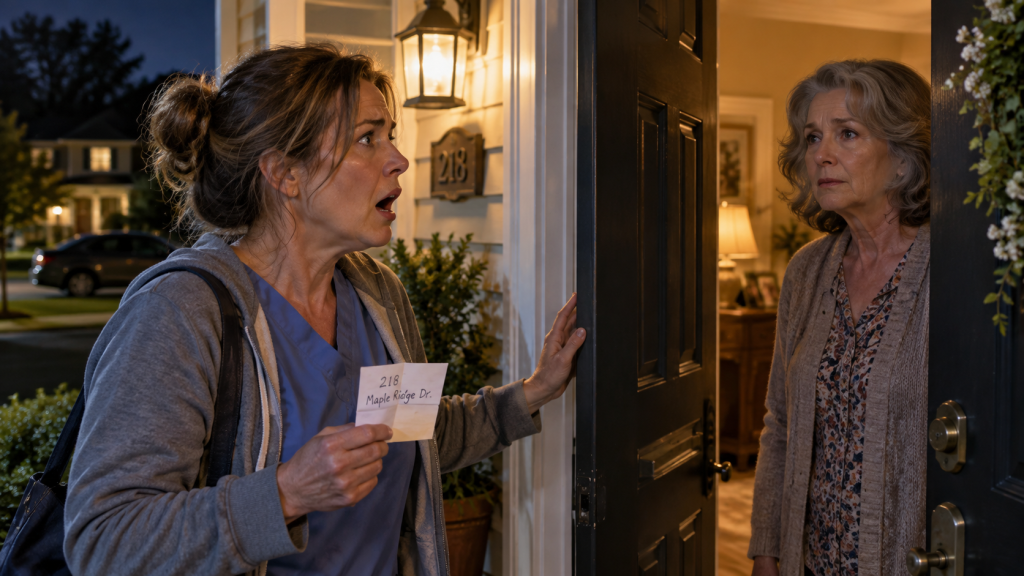
Frank died while I was standing on the porch of the woman I had spent twenty-eight years believing was buried.
For a long time after the nurse spoke, I could not understand the sentence.
“I’m sorry. Frank passed away six minutes ago.”
Six minutes.
I looked at the clock on my phone.
Then at Laura.
Then at the metal box on the porch floor between us.
Six minutes ago, Frank had still existed in the world.
Six minutes ago, his room had contained one more living person.
Six minutes ago, I might have been holding his hand if he had not sent me away.
“Was he alone?”
My voice barely came out.
The nurse hesitated.
“No.”
I shut my eyes.
“Who was with him?”
“His nurse was there.”
A pause.
“And your daughter arrived just before the end.”
My knees weakened.
“Emma?”
“Yes.”
My daughter.
Frank’s granddaughter.
The little girl he had once carried through church during her christening because she screamed every time I tried to hand her to the priest.
She had made it.
I hadn’t.
I covered my face.
Laura moved toward me.
I stepped back so violently she stopped.
“No.”
Her hands dropped.
“I’m sorry.”
“Don’t.”
I could not bear tenderness from her yet.
Not while Frank was dead.
Not while the woman who was supposed to be dead was alive.
Not while the man I had called Dad had left me an address instead of an explanation.
Not while a newspaper clipping told me I had once been a missing child.
I turned away from the porch.
Laura called my name.
The name I had lived with all my life.
“Grace.”
I froze.
She knew it.
Of course she did.
Still, hearing it in her voice felt like stepping into a childhood dream where every room was familiar and wrong.
I turned.
Laura was crying.
“There’s something Frank left here for you.”
I stared.
“What?”
“He called this afternoon.”
My breath stopped.
“He knew you were here?”
“He hoped you would come.”
“What did he say?”
Laura looked toward the metal box.
“He said if he didn’t make it through the night, I was to give you everything.”
I laughed once.
Bitter.
“Everything.”
Twenty-eight years late.
She flinched.
I looked at the photograph again.
Frank.
Laura.
The other man.
The stranger with my face.
“My biological father.”
Laura nodded.
“His name was Thomas Vale.”
Vale.
The surname in the newspaper clipping.
I had been Grace Bennett almost all my remembered life.
Before Frank?
Apparently I had been Grace Vale.
“Is he alive?”
Laura’s face tightened.
“I don’t know for certain.”
“That is not what you said.”
“I said he may be.”
“How do you not know whether the man who ruined my childhood is alive?”
Her eyes filled.
“Because he was very good at disappearing.”
A coldness passed through me.
I thought of Frank in the hospital.
Everything you believe about your childhood — and about who I am — is a lie.
“What did Frank do?”
Laura looked down.
“What do you mean?”
“The newspaper says I was missing.”
“Yes.”
“And you said Frank took me.”
“To protect you.”
“From Thomas?”
“Yes.”
“Did Frank kidnap me?”
Laura looked at me.
“No.”
Then, after a pause:
“But the police believed he did.”
My stomach turned.
“Why?”
“Because I told them he had.”
For the second time that night, my mother destroyed the floor beneath me.
“You what?”
Her face collapsed.
“I told them Frank had taken you.”
I stared.
Frank.
The man who packed my lunches.
The man who braided my hair badly enough that teachers used to redo it.
The man who slept on the floor beside my bed for a month after Mom supposedly died because I was afraid he would disappear too.
A kidnapper.
Because my mother had called him one.
“You’d better start talking.”
Laura nodded.
So I sat down on the porch of a stranger who was not a stranger at all.
And my mother told me how my first life ended.
—
Thomas Vale had been twenty-seven when Laura married him.
She was twenty-one.
She described him the way people often describe dangerous men after enough time has passed to separate charm from character.
Funny.
Generous.
Magnetic.
The sort of man who could make a room believe whatever version of himself he wanted to sell.
He owned part of a freight company with an older business partner named Raymond Keller.
At first, the money was good.
Then very good.
Then impossible.
Laura said she learned slowly that Thomas’s company was moving more than furniture and appliances.
Stolen goods.
Cash.
Sometimes things she never understood and did not want to understand.
When she asked questions, Thomas laughed.
When she kept asking, he stopped laughing.
“He never hit me before you were born,” Laura said.
I looked away.
I knew what came next.
“After?”
“Yes.”
Her voice became quiet.
“Not often.”
I almost laughed.
Not often.
How many people have survived years inside those two words?
“What did he do to me?”
“Nothing at first.”
“At first?”
“He loved you.”
She said it automatically.
I looked at her.
“Don’t do that.”
“What?”
“Don’t use love like it cancels what comes after.”
Laura went still.
Then nodded.
“You’re right.”
That surprised me.
She continued.
“When you were three, he started threatening to take you if I ever left.”
I felt cold.
“He said judges liked fathers with money.”
“He said nobody would believe me.”
“He photographed every bruise I got from anything else and joked that he could say I was unstable.”
I clenched my hands.
“Frank knew?”
“Eventually.”
“How?”
“Frank worked for Thomas.”
I stared.
“What?”
“Not in the freight business exactly.”
“Frank was an accountant.”
That I knew.
Or thought I knew.
He had spent most of my childhood doing books for small businesses from a cramped office over a hardware store.
“He handled legitimate accounts for Thomas.”
Laura looked down.
“And then he started noticing numbers that didn’t make sense.”
“So Frank discovered what Thomas was doing.”
“Yes.”
“And he helped you leave.”
“Yes.”
A bitter smile touched her face.
“He had been telling me for almost a year that I needed to get out.”
“Were you already in love with him?”
The question tasted disloyal.
To whom, I wasn’t sure.
Laura answered anyway.
“No.”
Then:
“Not yet.”
I looked at her.
“He was my friend.”
“Thomas hated that.”
“Frank was the only person who still talked to me like I was a person instead of an extension of Thomas.”
She swallowed.
“The night everything happened, I was supposed to take you and leave.”
My chest tightened.
“How old was I?”
“Four.”
Exactly.
“I packed two bags.”
“One for me.”
“One for you.”
“Frank was going to meet us at a motel outside town.”
“Then what?”
“Thomas found the bags.”
The night deepened around us.
Cars passed at the end of the street.
Normal people inside.
Going home.
Stopping for groceries.
No idea that on one porch a woman was being handed back the first four years of her life.
“He locked you in the upstairs bedroom.”
Laura continued.
My stomach tightened.
“I remember a door.”
She stopped.
“What?”
I closed my eyes.
“Maybe.”
A brass doorknob.
Dark hallway.
Someone shouting downstairs.
A shadow under a door.
I had always believed it was a dream.
Laura’s hand moved toward me.
She stopped before touching.
Good.
“What happened?”
I whispered.
“I called Frank.”
“He came.”
“Thomas had been drinking.”
Laura stared at the porch floor.
“They fought.”
“Physically?”
“Yes.”
“Frank got upstairs and got you out.”
My breath stopped.
“He took me.”
“I told him to.”
“Where were you?”
“Thomas had broken my wrist.”
I looked at her hand automatically.
Even now, I could see the faint thickening near the bone.
“Frank wanted to take me too.”
“But I couldn’t move quickly enough.”
She started crying.
“I told him to take you and go.”
The phrase in the newspaper returned.
CHILD MISSING AFTER FATHER FOUND DEAD.
“What happened to Thomas?”
“I thought he died that night.”
My pulse jumped.
Laura continued.
“After Frank left with you, Thomas dragged me into the kitchen.”
“He was furious.”
“He said Frank had stolen his daughter.”
I swallowed.
“Then someone came to the house.”
“Raymond Keller.”
The business partner.
“What happened?”
“I don’t know everything.”
She closed her eyes.
“I heard them arguing.”
“Money.”
“Records.”
“Thomas accusing Raymond of trying to steal from him.”
“Raymond accusing Thomas of keeping copies of things that could send both of them to prison.”
I waited.
“Then I heard a gunshot.”
My skin prickled.
“Did Thomas shoot him?”
“I don’t know.”
“You were there.”
“I was upstairs by then.”
She lifted her injured hand unconsciously.
“I had locked myself in the bathroom.”
“Then?”
“Smoke.”
I stared.
“Fire?”
“Yes.”
My throat tightened.
“The house burned?”
“Part of it.”
“Whose body did they find?”
Laura’s eyes filled.
“They said Thomas.”
“But it wasn’t?”
“I never believed it was.”
“Why?”
She stared directly at me.
“Because I saw Thomas leave.”
Silence.
“What?”
“From the upstairs bathroom window.”
Her voice shook.
“I saw him run across the backyard.”
“Alive.”
“Before the fire reached the stairs.”
My heart hammered.
“You told police?”
“No.”
“Why not?”
“Because he saw me too.”
She whispered the words.
For one second I could almost see it.
Smoke.
Night.
A woman with a broken wrist at a window.
A man running across a yard.
Stopping.
Looking back.
Knowing she had seen him.
“He pointed at the house.”
Laura said.
“Then at me.”
“And he made a gesture.”
“What gesture?”
She drew one finger slowly across her throat.
The night became much colder.
—
The body found inside was badly burned.
It wore Thomas’s watch.
Thomas’s wedding ring.
Thomas’s jacket.
His wallet was found nearby.
Dental records were incomplete.
The local police identified the dead man as Thomas Vale.
Raymond Keller simply disappeared.
At first.
A few weeks later, investigators began wondering whether the body might actually have been Raymond.
By then, Frank had vanished with me.
Laura was terrified.
Thomas was legally dead.
Frank looked like the obvious kidnapper.
And Laura did something that shaped the next thirty years.
She lied.
“I told police Frank had taken you without permission.”
I stared at her.
“Why?”
“Because I needed Thomas to believe Frank had betrayed me too.”
The answer was so twisted I could barely follow it.
“Explain.”
“If Thomas was alive, he would be listening.”
“To police.”
“To newspapers.”
“To anybody.”
“I thought if he believed Frank took you against my will, he might chase Frank instead of both of us.”
My stomach turned.
“You used Frank as bait.”
Laura began crying.
“Yes.”
The word came out tiny.
I stood.
I could not sit anymore.
“You let the police hunt the man who saved me.”
“Yes.”
“You let everyone think he abducted me.”
“Yes.”
“Did Frank know?”
Her silence answered.
“He agreed?”
“He told me to say whatever would keep you alive.”
That sounded like Frank.
It made me angrier.
Because love should not make a person disposable.
“Where was I?”
“With him.”
“Where?”
“His sister had a cabin in Tennessee.”
I stared.
“I have memories of a cabin.”
Laura cried harder.
“I know.”
“How long?”
“Three weeks.”
“Then what?”
“The police started doubting the identification of Thomas’s body.”
“Frank knew if he stayed hidden with you, he would eventually be found.”
“So he brought me back?”
“To me.”
My breath stopped.
“Yes.”
There was the missing piece.
Frank had not raised me alone from the moment I disappeared.
He returned me.
To Laura.
We lived under different names.
I remembered none of this clearly.
Trauma and being four had turned it into fog.
“Then Frank married you.”
“Yes.”
“Why?”
Laura looked at me.
“Because by then, we loved each other.”
That hurt in a softer place.
“But also because the lawyer said it could help establish a new legal structure around you if we had to move again.”
“What lawyer?”
“A woman named Elaine Mercer.”
“She helped domestic violence victims disappear before there were many formal systems for it.”
Not literally vanish, Laura explained.
New leases.
Different town.
Confidential addresses.
Court petitions.
Everything legal where possible.
Everything quiet.
Frank sold his car.
Changed jobs.
We moved.
Thomas remained dead on paper.
The investigation into Raymond faded.
And for nearly a year, we lived as a family.
Frank.
Laura.
Me.
I had been five when my mother “died.”
I remembered a hospital.
A hallway.
Frank crying.
A woman under a white sheet?
Maybe not.
Memory had filled holes with stories told afterward.
“What happened to you?”
I asked.
Laura’s entire body tightened.
“He found us.”
I knew before she said his name.
“Thomas?”
“Yes.”
—
He appeared outside a grocery store.
Laura was alone.
Frank had me at home.
Thomas pushed her into a car.
Drove.
Threatened.
Demanded to know where I was.
Laura refused.
He beat her badly enough that she woke hours later in a drainage ditch.
A truck driver found her.
The hospital admitted her under a false name because she had identification Elaine had arranged.
Police were contacted.
Not local police.
A state investigator already quietly interested in Thomas’s freight operation.
For the first time, Laura told everything.
Not all publicly.
Enough.
They believed Thomas was alive.
They also believed he would come after me.
That was when the plan changed.
“You were supposed to come with us.”
Laura whispered.
“Frank and me?”
“Yes.”
“Then why didn’t I?”
“Because somebody followed Frank from your preschool.”
Every hair on my arms rose.
“What?”
“A dark sedan.”
“Three days.”
“Same car.”
“Same man.”
“We never proved it was Thomas.”
“But we were terrified.”
“So?”
“So I told Frank I had to disappear separately.”
I stared.
“You chose to leave me.”
Her eyes closed.
“Yes.”
My voice broke.
“You chose it.”
“Yes.”
“Why?”
“If Thomas believed I was dead, he had no reason to keep looking for me.”
“And me?”
Laura sobbed.
“You were supposed to be safer with Frank.”
“Supposed to be?”
“He had no biological connection to Thomas.”
“He could change towns.”
“He could give you a stable life.”
“I was the trail.”
“My family.”
“My history.”
“My name.”
“I thought if I vanished, I would cut the trail.”
My hands shook.
“So you staged your death.”
“Yes.”
“How?”
“A car went into the river.”
“No body recovered.”
“Enough evidence left inside to suggest I was driving.”
My stomach turned.
“Another lie.”
“Yes.”
“You and Frank told me you died.”
“Frank told you.”
“Because you asked him.”
“Yes.”
“Did he want to?”
“No.”
The answer came so fast I believed it.
“He begged me not to.”
Laura covered her face.
“He said you had already lost too much.”
I began crying.
“He said one day you would hate both of us.”
“He was right.”
Laura did not defend herself.
That made it worse.
I looked at her.
“I don’t know if I hate you.”
“You’re allowed.”
“That is not permission I need from you.”
She nodded.
“You’re right.”
Again.
Always agreeing now.
Too late.
“What happened after?”
“I left.”
“Where?”
“For years?”
“Yes.”
She gave me pieces.
Arizona.
Nevada.
Oregon.
Different name.
Different jobs.
A diner.
A school cafeteria.
Later bookkeeping for a plumbing company.
She never remarried.
Never had another child.
“Did you know where I was?”
She hesitated.
“Sometimes.”
My breath caught.
“Frank contacted you?”
“Through Elaine.”
“For years?”
“Not regularly.”
“How much did you know?”
Laura looked ashamed.
“Enough.”
My wedding.
Emma’s birth.
My graduation.
My first house.
Frank sent photographs.
Not many.
One or two a year at first.
Then nothing for stretches.
Then another.
I stared at her.
“You watched my life.”
“From far away.”
“You watched me get married.”
“In a photograph.”
“You knew my daughter existed.”
“Yes.”
“And you stayed away.”
“Yes.”
That was the wound.
Not the original fear.
Not Thomas.
Not survival.
The years after.
The years when I was twenty.
Twenty-five.
Thirty.
Surely by then I deserved the truth.
“Why?”
Laura’s answer came slowly.
“Because Frank kept looking for Thomas.”
I stared.
“He never stopped.”
No.
Of course he didn’t.
Frank did not stop anything once he thought someone he loved might be in danger.
“He found evidence Thomas was still alive twice.”
“What evidence?”
“A bank withdrawal made under an old company alias.”
“Then a photograph.”
Laura stood.
Went inside.
Returned with another envelope.
Inside was a grainy surveillance photograph.
A man outside a pawnshop.
Older.
Heavier.
Hat low.
Even blurred, I saw my eyes.
My nose.
My face.
My biological father.
A date printed below.
Eleven years earlier.
I stopped breathing.
“He was alive.”
“At least then.”
“Yes.”
“Where?”
“Texas.”
“What happened?”
“By the time investigators checked, he was gone.”
“So Frank kept the lie.”
“Yes.”
“And you kept it too.”
“Yes.”
“Until now.”
Laura looked at me.
“Until Frank called last month.”
I froze.
“Last month?”
“He said he was dying.”
“And?”
“He said he couldn’t take the truth with him.”
My throat tightened.
“He said you were old enough to decide what danger you were willing to face.”
My eyes filled.
That sounded like Frank too.
Late.
But finally honest.
“He wanted to tell you sooner.”
Laura continued.
“I begged him not to.”
There it was.
Someone begged me to carry it to my grave.
Frank’s words.
“You.”
“Yes.”
I looked at her.
“You’re the one.”
Laura nodded.
“I asked him to die with the lie.”
The anger that came then was clean.
Not wild.
Clean.
“No.”
She flinched.
“You don’t get to put that on him anymore.”
“I know.”
“No.”
I stepped closer.
“You asked him to carry a secret that belonged to me.”
“Yes.”
“You made him be the face of your death.”
“Yes.”
“You let him raise a grieving child who thought she had nobody left.”
Her face crumpled.
“Yes.”
“He was the one who stayed through every nightmare.”
“Yes.”
“He was the one who sat outside my school when I wouldn’t go in.”
“Yes.”
“He was the one who taught me to drive.”
Laura sobbed.
“Yes.”
“And now he is dead.”
I could barely say the last word.
“He died before I could ask him why.”
Laura whispered:
“I’m sorry.”
I shook my head.
“So am I.”
Then I walked off the porch.
—
Emma was sitting beside Frank’s empty bed when I returned to the hospital.
My daughter was twenty-two.
Too old to be the baby he once bounced through a christening.
Too young to have had to watch him die.
She stood when I entered.
“Mom.”
I ran to her.
Held her.
For several seconds, neither of us spoke.
Then:
“He waited.”
I pulled back.
“What?”
“For you.”
My heart broke.
Emma wiped her face.
“He kept looking at the door.”
“No.”
Tears came.
“I should have stayed.”
“No.”
“Mom.”
“I left.”
“He told you to.”
“I should have—”
Emma grabbed my face with both hands.
“Stop.”
I stared at her.
“He sent you somewhere.”
Her voice broke.
“That mattered to him.”
I cried.
“What were his last words?”
Emma looked toward the bed.
“He couldn’t really talk.”
I swallowed.
“He squeezed my hand.”
Then she smiled through tears.
“And I told him you loved him.”
My knees almost failed.
Emma held me.
“I told him you knew he was your dad.”
I sobbed against my daughter’s shoulder.
“He nodded.”
That was Frank.
Even dying, worried about whether I knew.
I walked to the bed.
His body was still there.
Covered to the chest.
Face peaceful.
I sat.
Took his hand.
Cold now.
Not like earlier.
Earlier there had still been a faint living warmth inside those fingers.
Now nothing.
“Dad.”
The word destroyed me.
I bent over his hand.
“You idiot.”
Emma cried behind me.
“You absolute idiot.”
I laughed through tears.
“You should have told me.”
Silence.
“You should have trusted me.”
Silence.
“You should have let me be angry while you were alive.”
I pressed his knuckles to my forehead.
Then:
“But I love you.”
That was the one thing the truth had not changed.
“I love you.”
I said it until there was no breath left for anything else.
—
Frank’s attorney called the next morning.
His name was Samuel Ross.
I had met him twice.
Once when Frank made a will.
Once when he forced me to sign medical power-of-attorney paperwork because, in his words:
“Death loves paperwork almost as much as government.”
I had laughed then.
Samuel asked me to come to his office.
Frank had left a letter.
Of course.
The man who could not explain thirty years while alive had organized an envelope.
I nearly refused to go.
Then went.
The envelope said:
GRACIE
Nobody called me that except Frank.
I opened it.
The first line:
If you are reading this, I ran out of time or courage. Probably both.
I cried immediately.
Frank wrote like he spoke.
Plain.
No poetry unless it accidentally happened.
I am sorry.
I know apologies are small things beside a lie this large. I am giving you one anyway because it is what I owe first.
I kept reading.
He told the story from his side.
Thomas.
The night he carried me out of the house.
Me barefoot.
Crying because I had left Blue, my stuffed rabbit, upstairs.
Frank went back for it.
That detail broke me.
A burning, violent house.
An armed man somewhere.
And Frank went back for a yellow rabbit because a four-year-old was crying.
You kept saying, “Blue is alone.”
I remember thinking that if I got us out alive, I would never let you feel alone again.
I had to stop reading.
Samuel handed me tissues without speaking.
Eventually, I continued.
Frank wrote about loving Laura.
Marrying her.
The second disappearance.
Her insistence that he tell me she died.
I fought her.
I lost.
I also agreed. Do not let me hide behind your mother’s fear.
My chest tightened.
That was Frank.
Responsibility.
Even now.
I told myself you were five. I told myself children heal. I told myself lies can become mercy if the truth is dangerous enough.
I was wrong about one thing. Lies do not become mercy. At best, they become shelter. And every shelter eventually needs a door. I should have opened yours sooner.
I covered my mouth.
Then:
I almost told you when you were eighteen.
Then I saw a photograph that may have been Thomas.
I almost told you before your wedding.
Then your mother begged me not to make your wedding about fear.
I stopped.
Laura.
Again.
I almost told you when Emma was born.
That was the closest I came. I held her and thought, Grace would burn the whole world down if someone kept her child from her. I realized then what we had taken from Laura and what Laura had taken from you.
Tears blurred the ink.
I did not tell you. That failure is mine.
Then:
I have kept records. Samuel knows where. If Thomas is alive, the authorities will have what they need. Do not go looking for him alone. That is not bravery. That is just making my ghost come back and yell at you.
I laughed out loud.
Samuel smiled.
Barely.
The final page was worse.
You may learn things that change what you think of me. Let them. You do not owe the dead a clean reputation.
If you decide I was a coward, you will not be entirely wrong.
If you decide I was your father anyway, that will be the greatest honor of my life.
I stopped breathing.
Then:
Blood tells you where a body came from. It does not tell you who stayed when that body had a fever at two in the morning.
It does not teach a girl to drive, badly.
It does not pay for braces.
It does not sit in the front row when she graduates.
It does not walk her down the aisle unless someone chooses to show up.
My hands shook.
I chose you.
Every day after Laura left, I chose you.
Not because I was noble. Not because I was replacing anyone. Because you were my daughter.
Then one final paragraph.
Please do one thing for me. Do not spend the rest of your life turning this secret into the only true thing about us. It was a true thing. It was not the only thing.
Also, the apple pancake recipe is your mother’s. I stole it. Tell her I improved it.
I laughed and sobbed at the same time.
The last line:
Love you, Gracie. Still your dad, if you’ll have me.
I pressed the paper against my chest.
Dead people ask impossible questions.
I whispered:
“You idiot.”
Then:
“Of course.”
—
Frank’s funeral was four days later.
Laura asked if she could come.
I said no.
The answer surprised her.
Maybe me too.
“I’m not ready.”
She nodded.
“I understand.”
“You don’t get to stand beside me at another funeral built around a secret.”
Her face tightened.
Fair.
“I understand.”
I did not know whether I would ever want her there.
That was not a decision required that day.
At the church, Emma sat beside me.
My husband, Daniel, on the other side.
Frank had loved Daniel.
Mostly.
He claimed Daniel grilled steaks incorrectly, which to Frank was nearly a moral failing.
When I stood to speak, I had no prepared eulogy.
I had written one.
Then torn it up.
I looked at the photograph beside Frank’s coffin.
Him holding Emma at her christening.
Proud.
Ridiculous tie.
Same man.
Different truth.
I said:
“My father lied to me.”
The church became very still.
Daniel looked up.
Emma squeezed my hand.
I continued.
“That is not usually how people begin a eulogy.”
A few nervous laughs.
“But Frank would hate it if I stood here and turned him into a saint because he died.”
More laughter.
I breathed.
“He kept something from me that belonged to my life.”
“He did it because he was afraid.”
“Because someone asked him.”
“Because he thought protecting me meant deciding what I could bear.”
I swallowed.
“He was wrong.”
Silence.
Then:
“He was also the man who stayed.”
My voice broke.
“When my mother disappeared from my life, Frank was there.”
“When I had nightmares, Frank was there.”
“When I failed my first driving test because I drove over a curb, Frank was there pretending the curb had been poorly designed.”
People laughed.
I cried.
“When I got married, he was there.”
“When my daughter was born, he was there.”
“When I was thirty-six years old and still called because the water heater made a strange noise, he answered.”
I looked at the coffin.
“So I am learning something I wish grief had not been the one to teach me.”
“A person can betray you and love you.”
“A person can make a terrible decision and still have built a life full of good ones around it.”
“Truth does not have to erase love.”
My voice shook.
“Love does not have to erase truth either.”
I looked at Emma.
Then Daniel.
Then Frank.
“He was not my biological father.”
Gasps.
I smiled through tears.
“He was my dad.”
That was all.
Enough.
—
After the funeral, I went to Frank’s house alone.
Almost alone.
Daniel drove me, then waited outside.
I wanted the rooms to myself.
The house smelled like coffee.
Old wood.
Frank’s aftershave.
Absence.
The kitchen was exactly as he had left it.
A newspaper folded on the table.
Half a bag of apples.
A pan hanging above the stove.
I opened the cabinet.
Flour.
Cinnamon.
Nutmeg.
Frank had labels on everything because he believed handwriting was an organizational system.
Then I found the recipe card.
LAURA’S APPLE PANCAKES
Frank had crossed out Laura’s name years earlier and written:
FRANK’S SUPERIOR APPLE PANCAKES
Underneath, in different ink:
More cinnamon. Ignore Laura.
I sat on the kitchen floor.
Cried until Daniel came in anyway.
He found me holding the recipe card.
“Hey.”
I looked at him.
“My mother is alive.”
He knew only pieces.
Enough to be terrified for me.
“I know.”
“My father isn’t my father.”
He knelt.
“Frank?”
“No.”
I shook my head.
“Frank is.”
Daniel understood.
“Yes.”
I started crying again.
“He’s dead.”
Daniel put his arms around me.
“Yes.”
The unfairness of it felt childish and enormous.
I had just learned I had one parent back.
And lost another.
The universe had balanced nothing.
—
Samuel gave the police Frank’s records.
Boxes.
Photographs.
Copies of old correspondence.
A cassette tape from Thomas.
Yes.
Cassette.
That was how old the nightmare was.
A threatening message left on an answering machine after Laura’s staged death.
Thomas’s voice:
You think she’s gone? You think that saves the girl?
I listened once.
Never again.
Authorities reopened parts of the old case.
Not because I demanded revenge.
Because if Thomas was alive, I had a daughter.
A home.
A mother now living openly enough that danger mattered again.
For three weeks, nothing happened.
Then an investigator called.
A fingerprint match had surfaced.
A man arrested five years earlier under the name Thomas Keller in New Mexico had prints matching an old military record for Thomas Vale.
My biological father had been alive.
Five years ago.
The file said charges had been dismissed.
Address outdated.
Then another lead.
Social Security activity connected to yet another name.
A pharmacy record.
A storage unit.
The net tightened.
One month after Frank’s funeral, they found him.
Alive.
Seventy-one years old.
Living in a trailer outside Albuquerque.
My biological father.
The man whose face I wore.
The man who had spent nearly three decades as a ghost.
When they arrested him, he gave a different name.
Then another.
Finally:
Thomas Vale.
I sat at my kitchen table when the investigator told me.
Emma across from me.
Daniel beside me.
Laura on the phone.
Nobody spoke.
Alive.
The word no longer felt miraculous.
Sometimes alive is merely factual.
—
Thomas was charged with old crimes that prosecutors could still pursue.
Fraud.
Identity offenses.
Weapons.
Conduct related to Raymond Keller’s death was investigated again.
The evidence after so many years was imperfect.
Eventually, Thomas admitted Raymond died during their confrontation.
He claimed the shooting was accidental.
The fire was not.
Thomas had set it deliberately.
He dressed Raymond’s body in enough of his belongings to encourage misidentification.
Then disappeared.
A dead man has advantages when creditors, police, and an abused wife are all looking for him.
Frank had been right to fear him.
Laura had been right too.
That did not make every choice they made right.
I needed that distinction.
Fear can be justified.
What fear asks you to do still deserves examination.
Thomas’s attorney requested that I meet him.
I declined.
Then Thomas wrote me.
The envelope sat unopened on my desk for eleven days.
Emma asked:
“Are you going to read it?”
“I don’t know.”
“What do you want?”
“I don’t know.”
She smiled sadly.
“Grandpa would say that’s allowed.”
I looked at her.
“Yes.”
Frank would.
Eventually, I opened it.
The first line:
Gracie,
I almost tore it up.
That name belonged to Frank.
Not him.
I kept reading.
Thomas wrote that he had thought about me every day.
I did not believe him.
He said Laura poisoned me against him.
I laughed.
He said Frank stole me.
My hands shook.
He said:
You were my daughter before you were his.
That sentence clarified everything.
Before.
Ownership.
Chronology.
As though fatherhood were a reservation made first.
I stopped reading.
I did not need the rest.
I wrote one reply.
Only one.
My name is Grace Bennett. Do not call me Gracie.
Then:
Frank did not steal your daughter. He raised a child you frightened everyone into hiding.
And:
Biology answers one question about me. It does not answer who my father was.
I did not ask why.
I did not ask whether he loved me.
I did not ask whether he remembered my fourth birthday.
Those questions belonged to a child I no longer needed to send into his hands.
The final line:
Do not contact my daughter or my family.
I mailed it through my attorney.
Thomas never wrote again.
—
Laura and I did not become mother and daughter immediately.
That would have been a prettier story.
It would also have been a lie.
For months, I saw her once a week.
Public places at first.
Coffee shops.
Parks.
A diner halfway between our houses.
She wanted to hug me every time.
Sometimes I allowed it.
Sometimes I didn’t.
She learned to ask.
That mattered.
We talked.
Mostly about ordinary things.
What food I liked.
What music she hated.
Emma.
Daniel.
Frank.
Especially Frank.
One afternoon, I asked:
“Did you love him?”
Laura stared into her coffee.
“Yes.”
“More than Thomas?”
She gave me a sad look.
“That is like asking whether I preferred shelter or fire.”
I almost smiled.
“Dramatic.”
“True.”
Then she told me about Frank before I remembered him.
How he sang badly while cooking.
How he once bought me a red raincoat three sizes too large because he did not understand children’s clothing.
How he used to walk me around the living room on his feet.
Little pieces.
Not evidence.
Memories borrowed from someone who had them.
I hated needing her for them.
I loved having them.
Both.
—
Then came anger again.
Not linear.
Healing rarely is.
One afternoon, Laura brought a box of letters.
Her letters to Frank.
His replies.
I opened one dated the year I turned twelve.
Laura had written:
Does she still bite the inside of her cheek when she is nervous?
I froze.
I still did.
Another:
Did she like the telescope?
Frank’s reply:
She slept beside it the first night like it was a puppy.
I stared at Laura.
“You sent me that telescope?”
She nodded.
I remembered.
Birthday gift.
Frank said it was from a client who no longer wanted it.
I had loved that thing for years.
“You were in my life.”
“No.”
“You were.”
My voice rose.
“You sent gifts.”
“Sometimes.”
“You asked questions.”
“Yes.”
“You knew me.”
“From a distance.”
“That was your choice.”
Laura began crying.
“Yes.”
I stood.
“I spent my entire childhood talking to a dead mother.”
“I know.”
“I used to tell you things at night.”
Her face collapsed.
“What?”
“I thought maybe dead people could hear.”
I cried.
“I told you when I got my period.”
Laura covered her mouth.
“I told you when a boy kissed me for the first time.”
She sobbed.
“I told you when Frank and I fought.”
“I thought you were somewhere listening.”
My voice broke.
“And you were alive.”
“I’m sorry.”
“You were alive.”
The sentence came out as a scream.
Laura did not move.
Good.
I needed her to stay.
Not defend.
Not leave.
“I know.”
“No.”
I cried.
“I do not think you know what that does to a child.”
“You’re right.”
“I hate that you keep saying that.”
She almost laughed through tears.
“I don’t know what else to say.”
“Say you were wrong.”
“I was wrong.”
The room went quiet.
Laura’s face trembled.
“I was wrong to stay away as long as I did.”
That was different.
Not:
I had to.
Not:
Thomas was dangerous.
Wrong.
“I should have found a way to tell you when you were older.”
My breath slowed.
“I let fear become habit.”
Tears ran down her face.
“And then shame.”
She looked at me.
“Every year I waited made the next year harder.”
“Eventually I was not protecting you anymore.”
“I was protecting myself from what you would say.”
That honesty reached somewhere.
Not forgiveness.
Somewhere.
I sat down.
For the first time, I saw not the dead mother.
Not the liar.
A woman who had survived badly.
Survival deserves compassion.
It does not always deserve acquittal.
I could hold both.
Frank had taught me that too.
—
Emma met Laura three months after Frank’s funeral.
My daughter was skeptical.
Protective.
Twenty-two and convinced she could interrogate people better than trained detectives.
Laura brought nothing.
I had told her not to arrive with gifts.
Good.
Emma studied her face.
Then mine.
Then hers.
“This is weird.”
Laura smiled.
“Yes.”
“You look like Mom.”
Laura’s eyes filled.
“She looks like me.”
Emma frowned.
“I said it first.”
I nearly laughed.
My mother and my daughter.
Arguing within ninety seconds.
Genetics perhaps.
Emma asked direct questions.
“Why did you stay gone?”
Laura answered.
“Were you scared of Frank?”
“No.”
“Did he treat Mom well?”
“Yes.”
“Did you ever want to take her back?”
Every muscle in my body tightened.
Laura looked at me.
Then at Emma.
“Yes.”
I stared.
“When?”
“Many times.”
I had not known.
“Why didn’t you?”
“Because wanting something does not always make it safe or right.”
That answer surprised me.
Emma nodded slowly.
Then:
“Grandpa was my favorite person.”
Laura cried.
“Mine too, once.”
That was the first moment Emma softened.
Later, after Laura left, Emma said:
“I don’t forgive her.”
“I didn’t ask you to.”
“Do you?”
“I don’t know.”
She nodded.
Then:
“She has Grandpa’s pancake recipe?”
I stared.
“You care about this now?”
“Yes.”
Priorities.
—
Laura made the pancakes the following Sunday.
I watched.
Same apples.
Same cinnamon.
Less sugar.
Frank absolutely had improved them.
I did not tell her at first.
She poured batter onto the griddle.
The smell traveled through my kitchen.
Suddenly I was seven.
Frank standing at the stove in pajama pants.
Me on a chair because I insisted on flipping my own pancake.
Sunday light.
Safety.
I cried.
Laura turned.
“Oh.”
“Keep cooking.”
“Grace—”
“Please.”
She nodded.
When she served them, I took one bite.
Closed my eyes.
“Frank used more cinnamon.”
Laura looked offended.
“I knew it.”
I laughed.
So did she.
Then we both cried.
That was the first meal my mother cooked for me in nearly thirty years.
Not perfect.
Not redemptive.
Pancakes cannot carry that much.
Still.
We ate.
—
Thomas’s case ended without a dramatic trial.
He pleaded guilty to several charges.
The old death investigation around Raymond remained complicated by time, destroyed evidence, and conflicting accounts.
He received enough prison time that at his age, release was unlikely.
I did not attend sentencing.
People expected me to.
I didn’t need to see him.
I had his face in my mirror.
That was enough biology.
The court did not decide who my father was.
Life had already done that.
Frank.
—
A year after his death, I visited Frank’s grave alone.
I brought no flowers.
Frank hated cut flowers.
Called them:
“Plants with a countdown.”
He preferred apple pie.
Cemeteries have rules against pie, apparently.
I sat on the grass.
“I met him.”
Not true exactly.
“I wrote him.”
Wind moved through the trees.
“I didn’t need him.”
My voice shook.
“I thought I would.”
That had surprised me.
As a child, I had sometimes wondered about my biological father because I believed he died before memory could hold him.
Now I knew he had lived.
The curiosity did not become longing.
Because there was no empty father-shaped space inside me.
Frank had occupied it completely.
Not perfectly.
Completely.
“I’m still angry with you.”
I said.
A bird landed near the headstone.
Frank would have claimed it was him just to annoy me.
“You should have told me.”
Nothing.
“I would have forgiven you while you were alive.”
Tears came.
“Probably after screaming.”
I smiled.
“You deserved some screaming.”
The grass moved under my fingers.
Then:
“But you were my dad.”
My throat closed.
“You didn’t need my permission for that.”
I cried for a long time.
When I left, I touched his name.
Not stepfather.
Not guardian.
Just Frank Bennett.
Names matter.
Roles sometimes matter more.
—
Laura eventually moved closer.
Not next door.
Thank God.
Twenty minutes away.
We built something.
Not the childhood we lost.
Impossible.
Something adult.
She became Grandma Laura to Emma.
Later, when Emma had a son, Laura became Great-Grandma Laura.
The first time she held him, she cried so hard the baby started crying too.
Emma said:
“Excellent first impression.”
We laughed.
Laura handed him back.
“I’m rusty.”
“Thirty years.”
I said.
She looked at me.
The joke hurt.
We both knew.
Then it softened.
Healing had made room for humor without erasing truth.
That mattered.
—
Laura told me once she had dreamed of Frank.
We were sitting on my porch.
She said:
“He was angry.”
“Sounds right.”
“He told me the pancakes were better his way.”
I laughed.
“That is definitely him.”
Then she became quiet.
“I never thanked him enough.”
“No.”
She looked at me.
“For staying.”
My chest tightened.
“No.”
Then:
“But you can thank him by not wasting what he protected.”
She looked at me.
“What did he protect?”
“Us.”
I surprised myself by saying it.
Not our years apart.
Not the lie.
The possibility that one day we could sit on a porch and argue about cinnamon.
Frank protected that.
Imperfectly.
Expensively.
But he did.
Laura cried.
So did I.
—
When Laura died thirteen years later, I was beside her.
Life has a strange sense of symmetry.
Cancer.
Slow enough for goodbyes.
Fast enough that we still felt cheated.
In her final week, she asked:
“Do you wish Frank never sent you to my house?”
I stared at her.
“What a terrible question.”
“I’m dying.”
“You’ve become manipulative.”
“Answer.”
I thought.
“No.”
She smiled.
“Even knowing everything?”
“Yes.”
“Why?”
“Because truth hurt.”
I took her hand.
“But the lie had already hurt. I just didn’t know where the pain came from.”
Laura closed her eyes.
“That sounds like Frank.”
“Probably stole it from him.”
She smiled.
Then:
“Do you forgive me?”
Years earlier, that question would have made me angry.
Now it felt smaller.
Not unimportant.
Smaller than the life we had built after.
“Yes.”
Her eyes filled.
“Completely?”
I laughed softly.
“Don’t be greedy.”
She laughed too.
Then coughed.
When she settled, I said:
“I forgive you enough.”
“For what?”
“To love you without needing the past to change.”
Laura cried.
“That’s enough.”
“Yes.”
It was.
—
After she died, Emma and I sorted her house.
Boxes.
Photographs.
Letters.
So many letters.
One envelope was addressed:
FOR GRACE, WHEN I AM GONE
I almost refused another dead-parent letter on principle.
Emma said:
“Open it.”
“You open it.”
“No.”
“Coward.”
“Genetics.”
Fair.
Inside, Laura had written:
I spent half my life running from Thomas and the other half wishing I had run toward you sooner.
I stopped.
Then:
If there is one thing I want you to remember about me, let it not be that I disappeared. Remember that eventually, I came back when the door opened.
I cried.
Frank was the bravest person I knew, except when it came to hurting you with the truth. I was the most frightened person I knew, except when it came to leaving to save you. We were both contradictions. So are most people.
Then:
Do not reduce us to our worst decisions. Do not excuse them either.
That line felt like our whole family.
Finally:
I hope Emma never has to wonder whether she is loved.
She didn’t.
Not once.
I had made sure.
—
Years passed.
Thomas died in prison.
I received official notice.
I read his name.
Date.
Cause.
Then set the paper down.
No dramatic release.
No celebration.
No collapse.
A man who shared my blood had died.
That was all.
Daniel asked:
“Are you okay?”
“Yes.”
I waited.
Still yes.
I went to work the next morning.
Came home.
Made dinner.
Life did not change shape.
That, more than anger, told me how little fatherhood biology had earned him.
—
My grandson, Noah, was eight when he asked about the family tree.
School assignment.
Of course.
Children wait until you think secrets have finally gone quiet, then return with poster board.
“Grandma?”
“Yes?”
“Who is your dad?”
“Frank.”
“I know.”
He frowned.
“But Mom says he wasn’t your biological dad.”
Emma had chosen honesty.
Good.
“No.”
“Then who was?”
I looked at the blank family tree.
Thomas Vale’s name waiting invisibly.
I could have avoided.
Didn’t.
“His name was Thomas.”
“Was he your dad?”
Children ask questions adults spend thousands in therapy learning how to phrase.
I thought.
“He was my biological father.”
Noah frowned.
“That’s what I said.”
“No.”
I smiled.
“You asked if he was my dad.”
He waited.
“Frank was my dad.”
Noah considered.
Then:
“So Thomas goes on the tree but Frank gets the heart?”
I stared.
He had drawn tiny hearts next to people he loved.
“Yes.”
My eyes filled.
“Exactly.”
Children.
Brutal editors.
Better than therapists sometimes.
Noah wrote:
Thomas Vale — biological great-grandfather
Then:
Frank Bennett — Great-Grandpa Frank ❤️
I left it exactly that way.
—
I am sixty-one now.
Older than Frank was when he walked me down the aisle.
That seems impossible.
Sometimes I wake Sunday morning and make apple pancakes.
Frank’s version.
More cinnamon.
Laura was wrong.
I keep both recipe cards in the same box.
One in her handwriting.
One in his.
Two people who loved me.
Two people who lied to me.
Two people who saved me.
Two people who hurt me.
Family rarely fits clean categories.
I used to think truth would decide who was good and who was bad.
It didn’t.
Truth made everyone more human.
Except perhaps Thomas.
And even there, I know I saw only the parts of him his choices left behind.
I no longer need to solve him.
—
Sometimes I return to the night Frank died.
I imagine staying.
Ignoring the address.
Sitting beside him until the end.
Would I trade the truth for those last twenty minutes?
For years, I thought yes.
Then no.
Then yes again.
Now?
I don’t ask.
Life does not offer exchanges after the fact.
Frank sent me away because he knew I would never leave his bedside once he stopped speaking.
He wanted me to meet Laura while he was still alive.
Perhaps he hoped I would return and yell at him.
I wish I had.
But Emma told him I loved him.
He knew.
That has to be enough.
Not everything gets a perfect final conversation.
Sometimes love has to survive an unfinished one.
—
Frank’s final secret did not tell me he was not my father.
It taught me that fatherhood had never depended on the secret.
That was the part I misunderstood at first.
I saw the newspaper.
The photograph.
Thomas’s face.
And thought:
Everything is different.
Some things were.
My name before age four.
My mother’s death.
Frank’s history.
The danger around us.
But the apple pancakes were still real.
The scraped knees.
The school plays.
The time Frank drove four hours because I called after a miscarriage and said only:
“Dad.”
The twenty-dollar bill he slipped into my purse every time I visited even when I earned more than he did.
The way he cried when Emma called him Grandpa for the first time.
None of that became counterfeit because the foundation contained a lie.
Truth can revise a story without erasing every chapter.
I learned that slowly.
Painfully.
Gratefully.
—
If I could return to the hospital room and hear Frank whisper:
“There’s something I’ve hidden from you your entire life.”
I would still be afraid.
But I would answer differently.
I would not say:
“I could never hate you.”
That was the promise of someone who thought love and anger could not live together.
They can.
I would tell him:
“Tell me anyway.”
Then I would listen.
I would get angry.
I would probably curse.
Frank would pretend to be offended.
Then I would take his hand.
Because people we love deserve truth while they are alive enough to hear our reaction.
That is the lesson I carry hardest.
Do not protect love from truth.
Love worth keeping needs to survive being known.
—
Emma knows everything now.
Daniel too.
No family mythology.
No dead people turned into saints.
No monsters used to explain every wound.
When Noah asks about Frank, I tell him the funny stories.
When he is old enough, I will tell him the harder ones too.
Not because children deserve every adult detail.
Because silence grows power when everyone feels the shape of a secret but nobody names it.
We do not do that anymore.
That ended with me.
—
Last Christmas, our family gathered at my house.
Emma.
Her husband.
Noah.
Daniel.
Too much food.
At breakfast, Noah asked for pancakes.
I made them.
Apple.
More cinnamon.
When I brought the platter out, Emma took one bite.
Closed her eyes.
“Grandpa.”
I smiled.
“Yes.”
Noah frowned.
“How can food be a person?”
“It can’t.”
Emma said.
“Sometimes it carries one.”
Good answer.
We ate.
Outside, snow fell lightly.
Daniel complained I had used every bowl in the kitchen.
Noah spilled syrup.
Emma laughed.
For one second, I could almost hear Frank behind me.
Too much cinnamon is not a thing, Gracie.
Then Laura:
Your father has no taste.
Two voices.
Gone.
Still present in the life they shaped.
I smiled.
Noah noticed.
“What?”
“Nothing.”
He narrowed his eyes.
“Old people say nothing when it’s something.”
Rude.
Accurate.
I looked around my table.
Then told him:
“I was thinking about my parents.”
“Both?”
He asked.
There it was.
Not Frank or Thomas.
He meant Frank and Laura.
“Yes.”
“Both.”
He nodded and kept eating.
Simple.
—
My biological father gave me a face.
My mother gave me life twice—once by giving birth to me, once by leaving when she believed staying would put me in danger.
Frank gave me something else.
Continuity.
He stood in the empty space.
Day after day.
No applause.
No blood claim.
No promise that biology required him to stay.
He simply stayed.
And yes, he lied.
I will never romanticize that.
He should have told me sooner.
I deserved my own history.
That remains true even now.
But fatherhood is not a prize awarded for perfection.
If it were, most of us would be orphans.
Frank made the biggest mistake of our relationship by believing he had to choose between my safety and my truth.
I spent the years after his death learning I could honor what he protected without pretending the lie was right.
That was how I finally forgave him.
Not by saying:
It didn’t matter.
By saying:
It mattered.
And so did everything else.
—
The scrap of paper Frank pressed into my hand that night is framed in my study.
People think that is strange.
An address.
Nothing beautiful.
His handwriting shaky from dying.
But that address opened the door to every life I had lost.
Laura.
Thomas.
The truth.
My own childhood.
I once thought Frank’s last gift to me was a secret.
It wasn’t.
It was choice.
Late.
Painfully late.
But finally mine.
He gave me the address.
Then he let me decide what to do with everything behind the door.
—
A few months ago, I visited his grave with Emma and Noah.
Noah carried an apple.
I asked why.
“For Great-Grandpa Frank.”
“He cannot eat that.”
“I know.”
Then he placed it beside the headstone anyway.
Emma laughed.
I cried.
Of course.
We stood there for a while.
Then Noah read Frank’s name aloud.
“Was he scared when he died?”
I looked at Emma.
She answered before I could.
“No.”
“How do you know?”
“I was holding his hand.”
Noah nodded.
Then looked at me.
“Were you there?”
“No.”
“Where were you?”
I stared at the stone.
“At a house.”
“What house?”
“The place Grandpa Frank sent me to learn something important.”
Noah thought.
“Did you wish you stayed?”
“Yes.”
Then:
“And I’m glad I went.”
His eyebrows pulled together.
“You can be both?”
I smiled.
“That is most of being a grown-up.”
He looked horrified.
“Sounds bad.”
“It has moments.”
Emma laughed.
Noah ran toward the car.
Emma stayed beside me.
“You okay?”
“Yes.”
I touched the headstone.
This time, the word came without pain.
“Dad.”
Wind moved through the cemetery.
Nothing supernatural.
No sign.
No bird.
No voice.
Just wind.
Enough.
I whispered:
“I know now.”
Not everything.
Nobody ever does.
Enough.
I knew who Frank was.
A liar.
A protector.
A frightened man.
A brave one.
A husband.
A widower who was not really widowed.
A man who carried another person’s secret until it nearly reached his grave.
A father without blood.
My father.
Whole.
Contradictory.
Loved.
I rested my hand on his name one last second.
Then walked back toward my daughter and grandson.
The family he had built by choosing a little girl who was never biologically his and making sure she never had to wonder, even once, whether he would stay.
That was the truth I kept.
Not the only truth.
The truest one.
THE END STORIES! THANK YOU FOR READING GOOD LUCK !❤️
Related Posts