➡️ PART 3 ENDING PART ➡️
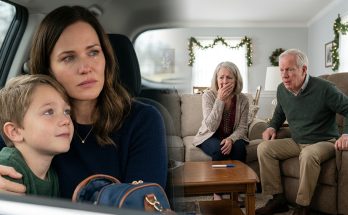
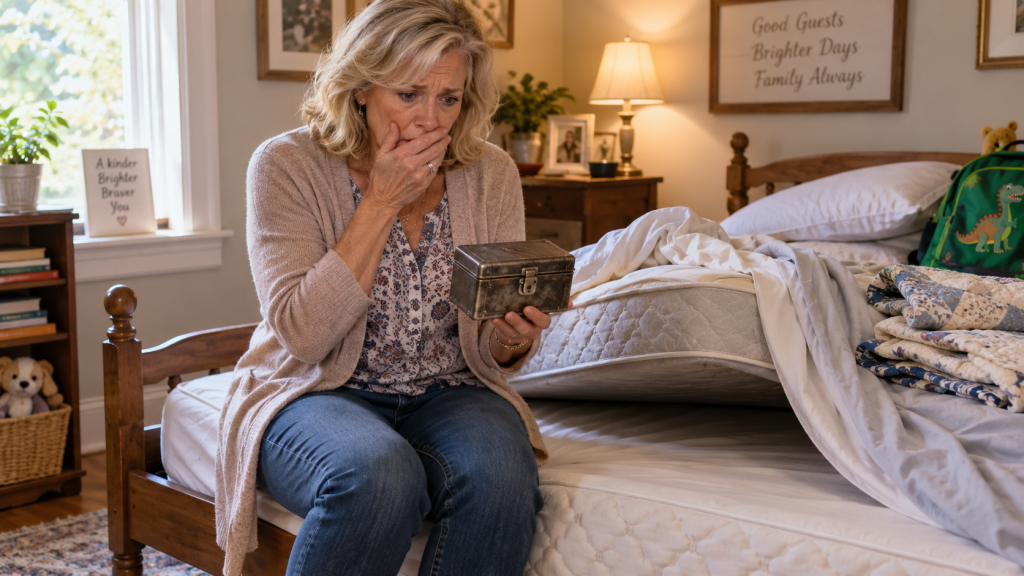
I ended the call with my son and remained sitting on Ben’s bare mattress for a long time.
The little recorder rested in my palm.
Seventeen recordings.
Seventeen small windows into a world my grandchildren had been carrying silently while I baked cookies with them, took them to the park, tucked them beneath clean sheets, and believed the greatest danger in their lives was construction dust that had never existed.
Downstairs, the grandfather clock chimed once.
The sound traveled through the empty house.
For the first time since Ben and Sophie had left, I understood why the silence felt wrong.
It wasn’t peaceful.
It was the absence of two children who had spent the summer pretending everything was all right.
I pressed play on the fifth recording.
At first, there was only rustling.
Then Ben whispered.
“August third.”
He had dated them.
My nine-year-old grandson had dated evidence.
I closed my eyes.
Behind his voice, I could hear Sophie breathing.
“Dad called Grandma today. He asked if she still keeps the house papers in the desk downstairs.”
My stomach tightened.
Then Sophie whispered, “Are we doing something bad?”
“No.”
“How do you know?”
A pause.
“Because Grandma always says telling the truth isn’t bad.”
I broke.
I bent forward, pressed one hand over my eyes, and cried.
That was something I had told them during their first week with me.
Sophie had knocked over a ceramic bird in the living room and tried to hide the pieces beneath a cushion.
When I discovered them, she cried so hard she could barely breathe.
I had knelt in front of her and said, “Sweetheart, breaking something by accident isn’t what gets you in trouble. Hiding the truth is what makes a little problem grow bigger.”
Ben had been standing nearby.
Apparently, he remembered.
Children remember the sentences adults forget saying.
Sometimes those sentences become shelter.
Sometimes they become instructions.
And sometimes, if you are very lucky, they come back to save you.
I listened to the next recording.
Adam’s voice was faint.
It sounded as if Ben had recorded a phone conversation from the hallway.
“Just keep her comfortable,” Adam said.
Tara answered, but her words were muffled.
Then Adam again.
“She trusts me. She always has.”
I stopped the recording.
That sentence hurt more than the others.
Not because it was threatening.
Because it was true.
I had trusted him.
Completely.
Adam was my only son.
His father, my husband Michael, died when Adam was seventeen.
A heart attack.
Sudden.
One ordinary Tuesday morning, Michael kissed me goodbye, complained that we were out of orange juice, and left for work.
By lunchtime, he was gone.
After that, Adam and I became a team.
At least, that was how I remembered it.
I worked.
He finished school.
We grieved badly together until eventually we learned how to grieve better.
When he went to college, I helped.
When he married Tara, I welcomed her.
When Ben was born, I drove four hours just to hold him for twenty minutes.
When Sophie arrived two years later, I stayed with them for three weeks, cooking and cleaning while Tara recovered.
I never kept score.
Love is not supposed to be an invoice.
But listening to those recordings, I wondered whether my refusal to keep score had taught Adam something terrible.
Perhaps he had mistaken unconditional love for unlimited permission.
I listened to every file.
Some contained almost nothing.
Whispers.
Dates.
Fragments of conversations.
In one, Sophie was crying because she wanted to tell me everything.
Ben told her they couldn’t.
“Dad said Grandma might get sick if she finds out.”
“Is Grandma sick?”
“No.”
“Then why would she get sick?”
“I don’t know.”
There was a pause.
Then Ben said something I will remember until I die.
“Maybe grown-ups say stuff like that when they don’t want kids to tell.”
I pressed stop.
Nine years old.
He had already learned to recognize manipulation before he knew the word for it.
That made me proud.
It also made me furious.
Not the wild kind of fury that makes you throw things.
Something colder.
A grandmother’s anger.
The kind that does not need to shout because it has already decided what it will protect.
I carried the recorder downstairs.
Then I opened my laptop.
I copied every file.
Once to the computer.
Once to an external drive.
Once to secure cloud storage.
I photographed the recorder.
I photographed the masking tape with Ben’s handwriting.
Then I wrote down everything I remembered.
Dates Adam called.
The conversation about estate documents.
Questions he had asked about the house.
Comments Tara had made about whether I planned to “downsize eventually.”
Little things.
Things that had seemed harmless when they arrived separately.
Together, they formed a shape.
And I did not like the shape.
The next morning, I called an attorney.
Not Adam.
Not Tara.
An attorney.
Her name was Eleanor Price.
She had handled the probate work after Michael died and had helped me update my will several years earlier.
When I told her I needed an appointment urgently, she made room that afternoon.
I brought everything.
The recorder.
The files.
My estate documents.
Property records.
Bank statements.
Eleanor listened without interrupting.
When I finished, she removed her glasses.
“Have you signed anything recently?”
“No.”
“Anything Adam sent electronically?”
“No.”
“Have you given him power of attorney?”
“No.”
“Access to your bank accounts?”
“No.”
“Passwords?”
“No.”
She nodded.
“Good.”
That single word let me breathe.
“What exactly do you think he’s trying to do?”
Eleanor chose her words carefully.
“I don’t know yet.”
I appreciated that.
She didn’t turn suspicion into fact.
“But based on what you’ve shown me, I don’t want you signing anything he brings you without independent review.”
“I won’t.”
“And I want copies of anything he gives you.”
“Okay.”
She leaned forward.
“There’s another issue.”
“The children.”
“Yes.”
My throat tightened.
“What do I do?”
“You don’t interrogate them.”
“I wouldn’t.”
“I know. But it’s important. If they disclose something concerning, listen. Don’t coach. Don’t suggest answers. Write down their words accurately.”
I nodded.
“And if you believe they’re in immediate danger, contact the appropriate authorities.”
The phrase immediate danger made my stomach turn.
“Do you think they are?”
“I don’t have enough information to say.”
That was the worst answer because it was the correct one.
I drove home feeling older than I had that morning.
That night, I barely slept.
Every time I closed my eyes, I saw Ben standing beside Adam’s car.
Looking toward the guest-room window.
He had been checking.
Not because he had forgotten something.
Because he wanted to make sure he had left it behind.
The following day, Adam called.
“Hey, Mom.”
His voice was cheerful.
Too cheerful.
“Hello, sweetheart.”
I hated how naturally the word came.
Love does not switch off simply because trust does.
“We’ll probably get there around eleven Saturday.”
“That’s fine.”
“Kids are already asking when they can come back.”
My heart twisted.
“Are they?”
“Yeah. They had a great summer.”
“I had a wonderful time with them.”
“We really appreciate it.”
For a second, I almost doubted everything.
That is the dangerous thing about betrayal.
It rarely arrives wearing a villain’s face.
Sometimes it sounds exactly like your child saying thank you.
Then Adam added, “I’ll bring those documents.”
There it was.
“All right.”
“They’re nothing complicated.”
“I’m sure.”
“Just some estate planning stuff.”
“Wonderful.”
He relaxed.
I could hear it.
“Honestly, Mom, I’m glad you’re finally doing this. It makes things easier for everybody.”
Everybody.
I looked around the home Michael and I had bought thirty-four years earlier.
The scratched kitchen table.
The faded mark on the doorway where we measured Adam’s height.
The garden I planted after Michael died because I needed something living to care for.
“What exactly becomes easier?”
I asked.
Adam paused.
“What?”
“The paperwork.”
“Oh. You know. Eventually.”
“Eventually.”
“Yeah.”
He laughed awkwardly.
“Don’t make it weird.”
“I won’t.”
After we hung up, I sat very still.
Don’t make it weird.
Interesting how often people say that immediately before asking you to ignore something that should feel wrong.
Saturday came.
At 10:47, their SUV entered my driveway.
I was waiting.
Not dramatically.
No hidden cameras.
No crowd.
No theatrical confrontation.
Just me.
Adam climbed out first carrying a leather folder.
Tara followed.
Then the rear doors opened.
Ben ran toward me.
“Grandma!”
I bent down.
He hit me so hard around the waist that I almost lost my balance.
Sophie followed.
I hugged them both.
For several seconds, I forgot the adults standing behind them.
Then Ben pulled back.
His eyes searched mine.
He did not ask.
He didn’t need to.
I touched his cheek.
“I changed the sheets.”
His face went pale.
Then his eyes filled.
I whispered, “You’re not in trouble.”
His entire body seemed to loosen.
It was so subtle Adam probably didn’t notice.
I did.
I will never forget it.
The physical weight of a child realizing an adult finally knows.
Sophie stared between us.
Then hugged me again.
Adam approached.
“What are you two whispering about?”
“Grandma stuff,” I said.
Ben looked at me.
Something passed between us.
Trust.
Fragile.
Terrified.
But trust.
We went inside.
I made lunch.
Nothing elaborate.
Soup.
Sandwiches.
Fruit.
Adam kept the leather folder beside his chair.
Ben noticed it repeatedly.
So did I.
After lunch, I sent the children outside to pick tomatoes from the garden.
The moment the back door closed, Adam placed the folder on the table.
“Okay.”
He smiled.
“Boring adult stuff.”
Tara sat beside him.
I remained across from them.
Adam removed several documents.
“Basically, this just simplifies everything.”
I looked at the first page.
The language was dense.
Legal.
There were references to property management.
Authority.
Transfer provisions.
Successor interests.
I did not pretend to understand all of it.
That was what they were counting on.
“Where did these come from?”
“A lawyer.”
“Which lawyer?”
Adam hesitated.
“A guy Tara knows.”
Tara immediately corrected him.
“My coworker’s husband.”
Interesting.
I turned another page.
“Have you read all of this?”
“Of course.”
“Explain it.”
Adam blinked.
“What?”
“Explain what I’m signing.”
“It’s just estate planning.”
“What does this paragraph do?”
I pointed randomly.
He leaned over.
His eyes moved.
“Well, that’s just standard.”
“Standard what?”
“Mom.”
“What authority would you have over the house?”
His face changed.
Barely.
But enough.
“It’s not like that.”
“Then what is it like?”
Tara spoke.
“It prevents complications if anything happens.”
“To whom?”
“To you.”
I looked at her.
“And what exactly are you expecting to happen to me?”
She went pale.
“Nothing.”
Adam sighed.
“Mom, you’re turning this into something it isn’t.”
“Then explain it.”
“I just did.”
“No. You called it simple.”
“It is.”
“Then explaining it should be simple too.”
His jaw tightened.
For the first time, the pleasant son disappeared.
“Why are you acting like this?”
I folded my hands.
“Because I don’t sign documents I don’t understand.”
“You’ve signed plenty of paperwork before.”
“Yes.”
“So?”
“So today I’m reading.”
Tara glanced toward the garden.
Adam lowered his voice.
“Can we not do this?”
“Do what?”
“Act suspicious.”
I looked directly at him.
“I didn’t say I was suspicious.”
He stared at me.
Interesting again.
I had not accused him.
He was defending himself anyway.
I gathered the papers.
His hand shot out.
“What are you doing?”
“Taking these to my attorney.”
The color drained from his face.
“You have an attorney?”
“Yes.”
“Why?”
“Because I own property.”
“You never needed one before.”
“I’ve had one for years.”
He looked at Tara.
She looked at him.
That was the moment I knew.
Not what they had done.
Not every detail.
But enough.
People with innocent paperwork do not panic when you say a lawyer will read it.
Adam reached for the folder.
“I’ll just take them back.”
I put my hand over the papers.
“No.”
“Mom.”
“You brought documents asking for my signature. I am entitled to review them.”
His voice sharpened.
“They’re our documents.”
“Then give me copies.”
“We’ll come back another time.”
“No.”
He stared at me.
Then I said quietly:
“Ben left me something.”
The kitchen changed.
That is the only way I can describe it.
Nothing moved.
But everything changed.
Adam’s face emptied.
Tara stopped breathing.
Outside, I could hear Sophie laughing.
Adam whispered, “What?”
I held his eyes.
“Under the mattress.”
He knew.
Immediately.
That frightened me more than if he had looked confused.
“What did he leave?”
I didn’t answer.
“Mom.”
Tara stood.
“We should get the kids.”
“No.”
She stared at me.
“No?”
“The children are picking tomatoes.”
“They’re our children.”
“Yes.”
“And I am their grandmother.”
“That doesn’t give you authority.”
“I didn’t say it did.”
Adam stood too.
“Where is it?”
There was anger in his voice now.
Not fear for Ben.
Fear of Ben.
That distinction broke something inside me.
“Sit down.”
“Where is the recorder?”
There.
He said it.
I had never told him what Ben left.
The silence afterward was enormous.
Tara closed her eyes.
Adam realized what he had done.
I whispered, “I didn’t say recorder.”
His face turned gray.
“Mom—”
“You knew.”
“No.”
“You knew he had been recording.”
“I suspected.”
“Why?”
“Because he was acting weird.”
“Your nine-year-old son was terrified.”
“He wasn’t terrified.”
“He carried a backpack into every room.”
“He likes that backpack.”
“He slept with it beside him.”
“Kids do weird things.”
“He left seventeen recordings for me.”
Tara covered her mouth.
Adam stared at the table.
I had expected rage.
Instead, what came was grief.
“You sent them here because there were renovations.”
No answer.
“There were no renovations.”
Tara whispered, “There were some.”
“Were there?”
“We were planning—”
“Stop.”
My voice shook.
“Please.”
I looked at my son.
“Just once, don’t make me drag the truth out one inch at a time.”
Adam looked away.
I waited.
Finally, Tara sat down.
“We were having financial problems.”
Adam shot her a look.
She ignored him.
“How bad?”
“Bad.”
“Why didn’t you tell me?”
Adam laughed bitterly.
“Because you’d lecture us.”
I stared at him.
“When have I ever refused to help you?”
“That’s not the point.”
“It seems very much like the point.”
Tara wiped her eyes.
“Adam made some investments.”
My stomach tightened.
“What investments?”
He snapped, “It doesn’t matter.”
“It matters if you were trying to get my house.”
“We weren’t trying to get your house.”
“Then why are these documents here?”
Silence.
I looked at Tara.
She broke first.
“They wanted collateral.”
Adam slammed his palm against the table.
“Tara!”
“No.”
She turned on him.
“No, I’m done.”
The fury between them frightened me.
Not because it was loud.
Because it was familiar to the children.
I understood that now.
Tara looked at me.
“Adam borrowed money.”
“How much?”
She said the number.
I felt the room tilt.
It was more than I expected.
Far more.
“From whom?”
“Banks. Credit lines. Some personal loans.”
“Why?”
Adam stood at the window.
“I thought I could fix it.”
“With what?”
“Investments.”
“What kind?”
He didn’t answer.
Tara did.
“Business opportunities. Then he borrowed more when the first ones failed.”
I stared at my son.
“How long?”
“Almost two years.”
Two years.
Christmases.
Birthdays.
Phone calls.
Family dinners.
Two years of pretending.
“And my house?”
Adam turned around.
“We were never going to take it.”
“Then explain the papers.”
He looked trapped.
Finally, he whispered, “It would’ve allowed us to use some equity.”
There are moments when the heart breaks loudly.
This wasn’t one.
Mine simply became heavy.
“My equity.”
“I would’ve paid it back.”
“My house.”
“I know.”
“The house your father and I spent thirty years paying for.”
“I know.”
“The house I planned to leave behind one day.”
His eyes filled.
“I know.”
“And you wanted me to sign paperwork I didn’t understand so you could borrow against it.”
“I was desperate.”
I stood.
“So was Ben.”
That stopped him.
“You were desperate for money.”
My voice broke.
“Your son was desperate for an adult he could trust.”
Adam looked away.
I walked toward the back window.
Ben and Sophie were kneeling beside the tomato plants.
Ben was placing tomatoes carefully into Sophie’s basket.
Still protecting her.
Always protecting her.
“He’s nine.”
Neither adult spoke.
“Nine.”
I turned around.
“He should be worried about baseball cards and whether he gets extra dessert.”
Tears spilled down my face.
“He should not be hiding a recorder beneath his grandmother’s mattress because he thinks he has to protect her from his parents.”
Tara began sobbing.
Adam sank into the chair.
I continued because I had to.
“You told him not to tell me.”
Adam whispered, “I never told him about the paperwork.”
“You told him there were things he couldn’t tell.”
“I was trying to keep adult problems away from him.”
“No.”
I shook my head.
“You were trying to keep him from exposing adult problems.”
That difference mattered.
Adam covered his face.
For the first time that afternoon, he looked less like a man plotting something and more like the little boy I had once raised.
That made it harder.
Not easier.
Because love does not disappear when someone disappoints you.
It sits beside the disappointment.
Sometimes that is the cruelest part.
I wanted to walk around the table.
Hold him.
Tell him we would fix it.
That was what I had always done.
Then I looked outside at Ben.
And I understood.
If I rescued Adam before protecting Ben, I would become part of the same silence.
So I stayed where I was.
“What happens now?” Tara asked.
“My attorney reviews these documents.”
Adam nodded weakly.
“And the kids?”
I looked at him.
“What about them?”
“Are you going to try to take them?”
There it was.
Fear.
“No.”
His shoulders loosened slightly.
“But I am not going to pretend I didn’t hear those recordings.”
His face tightened again.
“Mom.”
“They were scared.”
“We’ve never hurt them.”
“I didn’t say you had.”
“Then what?”
“I’m saying your children have been living inside adult fear for two years.”
Tara cried harder.
I looked at her.
“Sophie asked Ben whether telling me the truth was bad.”
She covered her mouth.
“Do you understand what that means?”
“I’m sorry.”
“Don’t tell me.”
I pointed toward the garden.
“Eventually, tell them.”
Adam stared at me.
“What do you want?”
I thought about it.
Not the house.
Not revenge.
Not punishment.
“I want the lying to stop.”
Silence.
“All of it.”
I pushed the papers toward him.
“No more secret debts.”
I looked at Tara.
“No more pretending.”
Then Adam.
“No more telling children to protect adults from consequences.”
His eyes lowered.
“And nobody touches my house.”
He nodded.
“I mean it.”
“I know.”
“No.”
I stepped closer.
“I need you to hear me as your mother and as the owner of this home.”
My voice steadied.
“My house is not collateral for your mistakes.”
Adam flinched.
“My savings are not your emergency fund.”
Another breath.
“And my love is not permission.”
He cried then.
My son.
Thirty-seven years old.
Sitting at the kitchen table where he had once done homework.
Crying.
“I messed everything up.”
I wanted to say no.
Instead, I said, “You messed up a lot.”
He laughed through tears.
It sounded terrible.
“I don’t know how to fix it.”
“Then stop trying to fix everything secretly.”
He looked at me.
“Start telling the truth.”
That afternoon became the first honest conversation our family had had in years.
Not pleasant.
Honest.
There is a difference.
The paperwork turned out to be exactly as troubling as Eleanor suspected.
I won’t pretend I understood every legal mechanism.
I didn’t.
That was why I had a lawyer.
But the essential truth was simple.
Signing would have given Adam financial authority and created pathways that could have exposed my property to obligations I had never agreed to assume.
I signed nothing.
Instead, Eleanor helped me strengthen my own estate plan.
Independent protections.
Clear instructions.
No ambiguity.
No shortcuts.
No one received authority merely because they were family.
Adam was furious when he first learned.
Then embarrassed.
Then silent.
But the bigger issue was the children.
Ben and Sophie began seeing a counselor.
So did Adam and Tara.
Not because I forced them.
Because Tara finally admitted something had to change.
The first weeks were ugly.
Adam blamed the debt.
Tara blamed Adam.
Adam blamed Tara for telling me.
They both blamed stress.
Then eventually, painfully, they began blaming their own choices.
That was progress.
Slow progress.
But real.
They sold their oversized house.
Not mine.
Theirs.
They moved into a smaller rental.
Adam sold the expensive SUV.
Tara picked up additional work after the children returned to school.
They negotiated debts.
They cut expenses.
They did the humiliating, ordinary work of cleaning up a mess without stealing somebody else’s broom.
I helped once.
Not with money.
With the children.
When they moved, Ben and Sophie stayed with me for a weekend.
This time, there was no green backpack under the table.
Ben left it upstairs for nearly an entire afternoon.
I noticed.
I said nothing.
That night, he came into the kitchen while I was washing dishes.
“Grandma?”
“Yes, sweetheart?”
“Did you listen to all of them?”
I turned off the water.
“Yes.”
He looked down.
“Even the one where Sophie burped?”
I smiled.
“Unfortunately.”
He laughed.
Then his smile disappeared.
“Are you mad?”
“At you?”
He nodded.
I dried my hands.
Then I knelt in front of him.
“Benjamin, look at me.”
He did.
“You were never supposed to have to do what you did.”
His eyes filled.
“But I’m not angry with you.”
“I lied.”
“You were scared.”
“Dad said—”
“I know.”
He swallowed.
“Is Dad bad?”
There it was.
The question I had dreaded.
Children like simple categories.
Good.
Bad.
Safe.
Dangerous.
Life is rarely that tidy.
“Your dad made some very bad choices.”
Ben waited.
“That doesn’t mean you have to stop loving him.”
“Are you mad at him?”
“Yes.”
His eyes widened at my honesty.
“But I love him too.”
“How?”
I smiled sadly.
“Grown-up hearts are annoyingly complicated.”
He almost smiled.
Then I touched his shoulder.
“But there is something I need you to understand.”
“What?”
“You never have to keep a secret that makes you afraid.”
He nodded.
“Even if a grown-up tells you to?”
“Especially then.”
“What if they get mad?”
“You find another safe grown-up.”
“Like you?”
“Like me.”
He threw his arms around my neck.
I held him.
And for the first time since finding that recorder, I felt something inside me unclench.
Not heal completely.
Just loosen.
Sophie had her own questions.
Mostly about whether she had caused the fighting.
That nearly destroyed Tara when she heard it.
“No,” Tara told her.
Over and over.
“No, baby.”
Children are experts at placing themselves in the center of storms they did not create.
It took months before Sophie believed her.
Adam struggled the most.
He was ashamed of Ben.
Not ashamed of Ben himself.
Ashamed that his son had seen through him.
That distinction took him time to understand.
One evening, almost six months later, Adam came to visit alone.
He sat at my kitchen table.
No leather folder.
No papers.
Just him.
“I hate that recorder.”
I poured coffee.
“I know.”
“I keep thinking about him making those files.”
I sat across from him.
“So do I.”
“He should’ve come to me.”
I stared at him.
“Would you have listened?”
Adam opened his mouth.
Then closed it.
“No.”
The honesty surprised both of us.
“I would’ve told him everything was fine.”
“Yes.”
“I would’ve told him to stop snooping.”
“Probably.”
He looked down.
“So he went around me.”
“He went toward safety.”
Adam’s face tightened.
“That hurts.”
“It should.”
He nodded.
We drank coffee.
Then he said, “I blamed you.”
“For what?”
“For not signing.”
I waited.
“Then I blamed Tara for telling you.”
Another pause.
“Then I blamed Ben for recording us.”
He rubbed his face.
“I blamed everybody except the guy who borrowed the money.”
I said nothing.
He looked at me.
“I was scared.”
“I know.”
“I kept thinking one more loan, one more investment, one good month, and I’d fix everything.”
“That’s how people get deeper.”
“I know.”
His eyes filled.
“I almost used Dad’s house.”
I stiffened.
He corrected himself immediately.
“Your house.”
That mattered.
He noticed.
“So much of my thinking was like that.”
“Like what?”
“Dad’s house. Our future inheritance. Family money.”
He shook his head.
“I had already mentally spent things that weren’t mine.”
I felt something inside me shift.
Not forgiveness.
Recognition.
He finally understood.
“I thought because eventually I’d inherit something, using it early wasn’t really stealing.”
My throat tightened.
“And now?”
“Now I hear how disgusting that sounds.”
“You were desperate.”
“That doesn’t make it yours.”
“No.”
He looked around the kitchen.
“I remember Dad painting this room.”
“So do I.”
“I remember complaining about the smell.”
“You slept at Evan’s friend’s house for two nights.”
Adam laughed.
“I forgot that.”
“I didn’t.”
Then his face softened.
“You and Dad built this.”
“Yes.”
“And I turned it into a number.”
I swallowed.
“Yes.”
He cried quietly.
“I’m sorry, Mom.”
I believed him.
But I had learned something.
Believing an apology does not require immediately restoring access.
So I reached across the table and held his hand.
“I love you.”
He squeezed mine.
“I love you too.”
“We still have work to do.”
“I know.”
And we did.
Trust did not return because Adam cried at my table.
It returned in inches.
He stopped asking me for money.
He showed me his repayment plan once—not because I demanded it, but because he wanted me to know he was handling it.
When he needed help, he asked specifically.
“Can the kids stay Friday?”
Not:
“We need you.”
Not:
“You’re their grandmother.”
A question.
Can they?
Sometimes I said yes.
Once I said no.
He replied:
Okay. We’ll figure something else out.
I stared at that text longer than I care to admit.
Such a small thing.
Such a beautiful thing.
No guilt.
No anger.
No punishment.
Just okay.
We’ll figure something else out.
That is what healthy adults do.
They figure something else out.
A year after I found the recorder, Ben and Sophie came for another summer.
Not the whole summer.
Three weeks.
Their parents weren’t renovating.
Nobody invented an excuse.
Adam simply called.
“Would you like them for part of July?”
I laughed.
“Are you kidding?”
“So that’s a yes?”
“That’s a yes.”
The children arrived with suitcases.
Sophie had grown taller.
Ben had lost two teeth.
And yes, he still had the green backpack.
But something was different.
He tossed it onto the couch when he came inside.
Then forgot about it for three hours.
I nearly cried.
That backpack had once been his portable safe.
Now it was just a backpack again.
We went swimming.
Made pancakes.
Visited the zoo.
Ben taught me a card game with rules he suspiciously seemed to change whenever he was losing.
Sophie covered my refrigerator in drawings.
The house felt alive again.
One afternoon, I changed the sheets.
I lifted Ben’s mattress.
Nothing.
I laughed at myself.
Then I cried.
Because sometimes nothing is the most beautiful thing you can find.
No recorder.
No secret.
No frightened message.
Just dust and a missing sock.
I held that ridiculous sock against my chest and laughed until Ben appeared in the doorway.
“Grandma?”
“Yes?”
“Why are you hugging my sock?”
“I’m old.”
He considered that.
“Okay.”
Then walked away.
Children are wonderfully accepting of nonsense.
That evening, Adam called them.
He spoke to Ben for almost twenty minutes.
I did not listen.
I didn’t need to.
Afterward, Ben came into the kitchen smiling.
“Dad says we’re going camping when we get home.”
“That sounds fun.”
“He says he can’t afford the fancy place, so we’re going to the state park.”
“State parks are wonderful.”
“He said we’re broke.”
I nearly choked.
Ben laughed.
“Not broke-broke. Budget broke.”
I smiled.
“That’s an important distinction.”
He opened the refrigerator.
“Can budget-broke people have ice cream?”
“Absolutely.”
“Good.”
A few months later, Adam finished paying one of the largest debts.
He called me.
“I did it.”
I knew immediately what he meant.
“Congratulations.”
“I thought you’d be more excited.”
“I am.”
“You sound like you’re folding laundry.”
“I am folding laundry.”
“Mom.”
I laughed.
“I’m proud of you.”
Silence.
Then:
“Thanks.”
Not proud because he had made money.
Not proud because he had fixed everything overnight.
Proud because he had stayed with the consequences long enough to change.
Tara changed too.
For a while, I had been angrier with her than I wanted to admit.
She had known.
Maybe not everything.
But enough.
She had participated in the lie.
She had allowed her children to carry it.
Forgiving her took longer.
She never demanded it.
That helped.
One Sunday, she came early to pick up the kids.
She stood in my kitchen twisting her wedding ring.
“I owe you something.”
I smiled faintly.
“Please don’t let it be paperwork.”
She laughed nervously.
“No.”
Then she looked at me.
“I’m sorry.”
I waited.
“I knew Adam was going to ask you to sign documents.”
“Yes.”
“I knew he wasn’t going to explain everything.”
“Yes.”
“And I told myself it wasn’t my responsibility because you were his mother.”
Her eyes filled.
“That was cowardly.”
I appreciated the word.
Not mistake.
Not misunderstanding.
Cowardly.
“I was terrified he’d leave if I fought him.”
“Why?”
“Everything between us had become about money.”
She looked down.
“He was ashamed. I was angry. We were both hiding things.”
“And the children?”
“I thought they didn’t understand.”
Her voice broke.
“I wanted to believe they didn’t.”
I thought of Sophie whispering into the recorder.
Are we doing something bad?
“They understood enough.”
“I know.”
Tara wiped her face.
“I will regret that forever.”
I touched her arm.
“Then use the regret.”
She looked at me.
“Don’t live inside it.”
I had learned that lesson too.
“Use it to make different choices.”
She nodded.
“I am.”
I believed her.
By the second anniversary of the day I found the recorder, Adam and Tara were still married.
That surprised some people.
It surprised them too.
They had gone to counseling.
They had separate responsibilities and shared accounts.
No secret loans.
No hidden credit cards.
No “investments” without both agreeing.
Adam worked overtime.
Tara changed jobs.
They lived smaller.
Strangely, they seemed happier.
Not because poverty is romantic.
It isn’t.
Financial stress is exhausting.
But honesty gave them something money had not.
Solid ground.
My relationship with Adam became different.
Less automatic.
More real.
I stopped rescuing him.
He stopped performing competence for me.
When he struggled, sometimes he said:
“Mom, I messed up.”
And instead of reaching for my checkbook, I asked:
“What are you going to do?”
At first, he hated that question.
Eventually, he started answering it.
Then came the day Ben turned twelve.
His birthday party was at my house.
Children everywhere.
Pizza boxes.
Balloons.
Sophie arguing with someone over a video game.
Adam grilling burgers badly despite having access to perfectly good pizza.
Tara brought out the cake.
Ben blew out twelve candles.
Everyone cheered.
Later, after most people had gone, he found me cleaning the guest room.
He stood in the doorway.
“You still have it?”
I knew immediately.
“The recorder?”
He nodded.
“Yes.”
“Where?”
“Somewhere safe.”
He entered.
“Can I see it?”
I studied him.
“Of course.”
I retrieved it from the locked drawer in my study.
He held it.
His hands were much larger now.
The masking tape remained.
FOR GRANDMA ONLY.
His childhood handwriting looked impossibly small.
“Wow.”
“What?”
“I wrote like a baby.”
“You were nine.”
“Same thing.”
I smiled.
He turned the recorder over.
“Do you ever listen?”
“No.”
“Why keep it?”
I thought carefully.
“Because it reminds me.”
“Of Dad?”
“No.”
“Of what?”
I touched the tape.
“That you trusted me.”
His eyes lowered.
“I was really scared.”
“I know.”
“I thought Dad would hate me.”
“He doesn’t.”
“I know that now.”
He sat on the bed.
“Do you hate him for it?”
“No.”
“Did you?”
I considered lying.
Then decided he deserved better.
“For a little while, I hated what he did.”
“But not him?”
“Sometimes it’s difficult to separate those things.”
He nodded.
That answer seemed enough.
Then he held out the recorder.
“You can throw it away.”
I stared at him.
“Are you sure?”
“Yeah.”
“You don’t want it?”
“No.”
He smiled.
“We don’t need it anymore.”
That sentence nearly broke me.
We.
Don’t.
Need.
It.
An object that once carried his fear had become unnecessary.
That was healing.
Not forgetting what happened.
No longer needing the tools you used to survive it.
I did not throw the recorder away that day.
I waited.
A week later, I called Ben.
“Still sure?”
“Yes, Grandma.”
So I erased the files from the device.
The secure copies connected to the old legal concerns had already been handled appropriately.
Then I removed the masking tape.
I stood over the trash can for a moment.
FOR GRANDMA ONLY.
Three words.
A child’s emergency flare.
I folded the tape once.
Then twice.
And let it fall.
The recorder went into an electronics recycling box.
It felt strangely ordinary.
I expected thunder.
Nothing happened.
The world simply continued.
Years passed.
Ben became a teenager.
Sophie became terrifyingly good at arguing.
Adam joked she would become a lawyer.
I told him he should be afraid.
He agreed.
My house remained mine.
That became almost funny eventually.
Adam never asked about inheriting it again.
One afternoon, years after everything happened, I brought up my estate plan myself.
We were sitting on the porch.
He immediately said, “I don’t want to know.”
I laughed.
“Why?”
“Because last time paperwork and this house were in the same conversation, I nearly destroyed the family.”
“That’s dramatic.”
“Accurate.”
I smiled.
“I’ve made arrangements.”
“Okay.”
“That’s all.”
“Perfect.”
“Aren’t you curious?”
“No.”
He looked toward the garden.
“I hope you spend every dollar.”
I laughed.
“Every dollar?”
“Take cruises.”
“I get seasick.”
“Buy a ridiculous car.”
“I hate driving.”
“Fine. Become addicted to expensive cheese.”
“That I can do.”
We laughed.
Then Adam became serious.
“Mom.”
“Yes?”
“Whatever you leave someday is yours to decide.”
I looked at him.
He meant it.
No performance.
No desperation.
Just truth.
“Thank you.”
He nodded.
Then added, “But I do want Dad’s old watch.”
I smiled.
“You can have the watch.”
His eyes filled.
“Really?”
“Yes.”
“Thanks.”
Michael’s watch had been sitting in my dresser for years.
I gave it to Adam that Christmas.
He cried.
So did I.
He put it on immediately.
It was too loose.
Just as it had been when Adam was seventeen and Michael once let him wear it to prom.
Watching my son fasten his father’s watch around his wrist, I understood how much we had nearly lost.
Not property.
Not money.
Something more fragile.
The right to trust each other with memories.
Adam had almost traded that for financial rescue.
But he came back.
Slowly.
Painfully.
Honestly.
One summer evening, when Ben was sixteen, we were sitting outside watching Sophie chase fireflies with her cousins.
He asked me a question.
“Grandma?”
“Yes?”
“Why didn’t you call the police on Dad?”
I looked at him.
He was old enough now to understand more.
“Because at the time, I didn’t know enough to conclude exactly what had happened legally, and I had professional advice about how to handle the documents and protect myself.”
He nodded.
“But you were mad.”
“Furious.”
“Were you scared?”
“Yes.”
That surprised him.
“You didn’t look scared.”
I smiled.
“Adults often look calm while their insides are doing cartwheels.”
He laughed.
Then became thoughtful.
“I thought I had to save you.”
I looked at him.
“You did something brave.”
“But?”
“But you were a child.”
I touched his shoulder.
“It was never your responsibility to save me.”
“I know.”
“Do you?”
He nodded.
“Yeah.”
Then he looked toward the yard.
“Dad told me that too.”
My heart softened.
“When?”
“A while ago.”
“What did he say?”
Ben smiled faintly.
“He said he was sorry he made me think being the oldest kid meant I had to protect everyone.”
I swallowed.
“That sounds like your dad.”
“Now.”
One word.
Now.
It contained years.
The man Adam had been.
The man he had nearly become.
The man he chose to become instead.
People can change.
But change is not proven by tears.
It is not proven by promises.
It is proven by what your children no longer have to be afraid of.
That night, after everyone left, I went upstairs.
The guest room looked different.
New paint.
Different quilts.
Same wooden bed frame.
I stood beside the mattress.
For a moment, I remembered that morning years earlier.
The empty house.
The sheets in my hands.
The cold recorder hidden in darkness.
I remembered sitting down because my legs stopped working.
I remembered hearing Ben whisper:
Grandma, if you find this, please don’t call Dad yet.
I sat on the mattress again.
Older now.
More gray in my hair.
More lines around my eyes.
But this time, my hands were empty.
And I realized that was exactly how I wanted them.
No recorder.
No papers.
No secret.
Nothing to carry.
Downstairs, the front door opened.
“Mom?”
Adam.
I smiled.
“Up here.”
His footsteps climbed the stairs.
He appeared in the doorway.
“Forgot my phone.”
“It’s downstairs.”
“Of course it is.”
He looked around.
“What are you doing?”
“Remembering.”
His expression changed.
He knew.
He entered slowly.
“This room.”
“Yes.”
He sat beside me.
For a while, neither of us spoke.
Then Adam said, “I still think about it.”
“So do I.”
“I wish I could go back.”
“I know.”
“I’d change everything.”
“I know.”
He looked at me.
“But I can’t.”
“No.”
That is one of adulthood’s hardest truths.
Some things cannot be repaired by returning to the moment before they broke.
There is no before.
Only after.
“What if Ben never completely forgives me?”
I considered it.
“Then you respect whatever relationship he’s able to have with you.”
Adam nodded.
“That scares me.”
“I know.”
“But he’s close to you.”
“Yes.”
“We’re good now.”
“I think so.”
“Still.”
I touched his hand.
“You don’t get to decide when another person’s wound becomes a scar.”
His eyes filled.
“You just keep becoming someone safe enough to stand near while it heals.”
He nodded.
We sat there together.
Mother and son.
On the same mattress where his child had hidden the truth about him.
There was something painfully beautiful about that.
Eventually, Adam laughed softly.
“What?”
“I remember hiding twenty dollars under this mattress when I was fourteen.”
I stared at him.
“You told me Evan stole it.”
“I lied.”
“You little monster.”
He laughed.
“I found it six months later.”
“You let me interrogate your brother.”
“I was fourteen.”
“I’m calling Evan.”
“Mom.”
“I’m serious.”
He was still laughing when we went downstairs.
Maybe that is what forgiveness finally looked like for us.
Not forgetting.
Not excusing.
Being able to laugh in the room where truth once hurt.
My seventieth birthday came on a warm June afternoon.
The whole family gathered at my house.
Adam and Tara.
Ben.
Sophie.
Evan and his family.
Friends.
Neighbors.
There were tables across the yard and strings of lights in the trees.
I protested the size of the celebration.
Nobody listened.
Sophie made a speech.
It was mostly jokes about my cooking.
Ben made one too.
His was shorter.
He stood holding a glass of lemonade.
He was nearly grown now.
Tall.
Broad shoulders.
Michael’s eyes.
He looked at me.
“When I was little, Grandma always told us that this house was a safe place.”
My throat tightened.
Adam looked down.
Ben continued.
“I didn’t really understand what that meant.”
He smiled.
“I thought safe meant nothing bad ever happened here.”
The yard became quiet.
“But I think safe actually means when something bad does happen, you can tell the truth and still be loved afterward.”
I covered my mouth.
Ben’s eyes filled.
“So… happy birthday, Grandma.”
He laughed nervously.
“Thanks for making this a place where we could tell the truth.”
Everyone applauded.
I did not.
I couldn’t.
I simply opened my arms.
Ben came to me.
I held him.
Over his shoulder, I saw Adam.
My son was crying.
Not hiding it.
When Ben released me, Adam approached him.
For a moment, they simply looked at each other.
Then Ben hugged his father.
Nobody said anything.
Nothing needed to be said.
Some apologies are spoken.
Others are lived long enough that one day a child reaches for you again.
Later, after the party ended, I found one final gift on the kitchen table.
A small green backpack.
I stared at it.
“Ben?”
He appeared in the doorway.
“What is this?”
He grinned.
“You remember it?”
“Of course I remember it.”
“I found it in my closet.”
I touched the worn fabric.
The zipper was broken.
One strap had been repaired.
“You want me to keep this?”
“No.”
“Then why is it here?”
He shrugged.
“I thought you might want to see it before I donate it.”
I laughed.
“You sentimental little menace.”
He smiled.
Then he picked it up.
“You know what’s inside?”
I hesitated.
“What?”
He opened it.
Nothing.
Completely empty.
He turned it upside down.
Shook it.
Not a single object fell out.
“See?”
He smiled.
“Nothing.”
My eyes filled.
Years earlier, that backpack had contained the things a frightened child believed he needed to protect himself.
Now it contained air.
Ben zipped it closed.
“I don’t need it anymore.”
I nodded.
“No.”
My voice broke.
“You don’t.”
He hugged me.
Then he carried it away.
I stood alone in the kitchen.
The same kitchen where Adam had once placed those documents in front of me.
The same table where our family had almost broken.
The same room where apologies later began putting it back together.
People talk about inheritance as though it means houses.
Money.
Jewelry.
Land.
Accounts.
But standing there, I understood what I truly wanted to leave my grandchildren.
Not this house.
Not my savings.
Not Michael’s furniture.
I wanted to leave them certainty.
The certainty that love does not require secrecy.
That fear should never be confused with loyalty.
That saying no does not make you cruel.
That adults are responsible for their own mistakes.
That children are never responsible for keeping a family together.
And that when somebody tells you something is wrong, the first gift you can give them is to believe that their fear matters.
A year later, I sold the house.
My decision.
Nobody else’s.
It had become too large for me.
Too many stairs.
Too much garden.
Too many rooms gathering dust.
Adam protested.
Not because he wanted it.
Because he was sentimental.
“You can’t sell this place.”
I laughed.
“Excuse me?”
He immediately raised both hands.
“Bad wording.”
“Very bad.”
“I mean, are you sure?”
“Yes.”
“Okay.”
That was all.
Okay.
I bought a smaller home fifteen minutes from Adam and Tara.
A little bungalow.
One guest room.
A sunny kitchen.
A porch just large enough for two rocking chairs.
When I moved, Adam helped carry boxes.
Ben assembled shelves.
Sophie criticized everyone’s technique while contributing almost nothing.
Tara brought lunch.
At the end of the day, we sat on the floor eating pizza.
Adam looked around.
“It’s nice.”
“It is.”
“Does it feel like home?”
I thought about that.
Then looked at my family.
“Yes.”
Because home had never really been the building.
It was the place where truth was allowed to enter.
Even when truth arrived hidden beneath a mattress.
Especially then.
On my first night in the bungalow, I made the guest bed.
Fresh sheets.
Clean pillowcases.
A soft quilt.
I lifted the mattress corner automatically.
Old habit.
Nothing underneath.
I smiled.
Then I lowered it.
Years ago, finding something beneath a mattress made me forget how to speak.
Now finding nothing made me whisper two words.
“Thank God.”
Not because everything had become perfect.
It hadn’t.
Adam still carried debt for a while.
Tara and he still had difficult days.
Ben still remembered.
Sophie still asked hard questions.
I still occasionally woke angry about what almost happened.
Healing did not erase the story.
It changed what the story controlled.
And that was enough.
On Sundays, the family sometimes gathers at my little bungalow.
The kitchen becomes too crowded.
Someone always complains there aren’t enough chairs.
Ben raids my refrigerator.
Sophie brings friends without asking.
Adam does the dishes.
Tara makes coffee.
Sometimes I sit on the porch and listen to all of them inside.
Years ago, I believed my job as a mother was to keep everyone from falling apart.
Now I know differently.
Love is not holding people together so tightly they never learn to stand.
Love is being there when they tell the truth.
Love is knowing when to help.
Knowing when to step back.
Knowing when to protect.
Knowing when to forgive.
And knowing that forgiveness without change is only another hiding place.
One Sunday afternoon, Ben came outside and sat beside me.
He was seventeen.
Almost a man.
“Grandma?”
“Yes?”
“Do you ever wish I hadn’t left it?”
I knew exactly what he meant.
I looked toward the yard.
Adam was helping Sophie with something near the car.
Tara was laughing through the kitchen window.
The family I might have lost.
The family we had rebuilt.
“No.”
Ben looked at me.
“Never?”
“Never.”
“Even though it caused everything?”
I shook my head.
“No, sweetheart.”
I took his hand.
“It didn’t cause anything.”
He frowned.
“The recorder didn’t create the problem.”
I squeezed his fingers.
“It revealed it.”
He thought about that.
Then nodded.
“And once we knew the truth, we could finally decide what to do with it.”
He smiled faintly.
“I was pretty smart for nine.”
“Insufferably.”
He laughed.
Then rested his head briefly against my shoulder.
For just one second, he was nine again.
My sweet boy.
My brave boy.
The child who should never have needed courage that young.
Inside, Adam called:
“Ben! Come help me!”
Ben stood.
“Coming!”
He took two steps.
Then turned back.
“Love you, Grandma.”
“I love you too.”
He disappeared around the corner.
I sat alone in the afternoon sunlight.
The house behind me was smaller than the one I once owned.
My bank account was mine.
My estate was protected.
But none of that felt like victory.
Victory was hearing Ben answer his father without fear.
Victory was Sophie laughing inside.
Victory was Adam asking instead of taking.
Victory was Tara telling the truth even when it embarrassed her.
Victory was knowing nobody in my family needed a recorder hidden beneath a mattress anymore.
That was enough.
More than enough.
I once thought the most frightening thing I could find beneath a child’s bed would be proof that something terrible had happened.
I was wrong.
The most frightening thing was realizing how long a child had been carrying the truth alone.
And the most beautiful thing I ever found afterward was nothing.
An empty space.
No secrets.
No evidence.
No fear.
Just a mattress resting on an ordinary wooden frame in a room where children could sleep without guarding a green backpack.
That emptiness became precious to me.
Because sometimes an empty space means something is missing.
And sometimes it means something terrible is finally gone.
Ben gave me the truth when he was nine years old.
I gave him the one thing I could offer in return.
I believed him.
Then I made sure he never had to carry it alone again.
And if there is anything worth leaving behind when my time eventually comes, I hope it isn’t merely a house or money or possessions with my name written on them.
I hope Ben and Sophie remember something simpler.
Grandma listened.
Grandma believed us.
Grandma loved our father enough to hold him accountable.
Grandma loved us enough to protect us.
And Grandma taught us that a family does not survive by hiding the truth.
A family survives when the truth can finally come home.
That evening, the sun dropped slowly behind the trees.
The kitchen filled with laughter.
Adam called through the screen door.
“Mom, dinner!”
“I’m coming.”
I stood from my rocking chair.
For a moment, I looked at the people gathered inside.
My son.
My daughter-in-law.
My grandchildren.
Not perfect.
Not untouched.
But together because we had stopped asking silence to hold us together.
Then I went inside.
Ben pulled out a chair for me.
Sophie stole a potato from my plate.
Tara laughed.
Adam complained.
And I looked around the table at the people I loved.
Nobody was whispering.
Nobody was hiding anything.
Nobody was carrying a secret beneath the mattress upstairs.
There was only dinner.
Only laughter.
Only the ordinary noise of people who had finally learned that love did not need darkness to survive.
I sat down among them.
And for the first time since the morning I found that recorder, I did not wonder what else I didn’t know.
I simply listened to my family laugh.
And that sound was enough.
Because the truth had once made me forget how to speak.
But in the end, it taught all of us how to talk to one another again.
THE END STORIES! THANK YOU FOR READING GOOD LUCK !❤️
Related Posts