➡️ PART 3 ENDING PART ➡️
“And according to the report, Mr. Johnson already knows their names.”
The doctor’s words seemed to remain suspended between us.
I looked at Michael.
He did not deny it.
That was the moment something inside me broke.
Not loudly.
Not dramatically.
It was quieter than that.
Like a thread being pulled through fabric until the entire seam suddenly realizes it has nothing left holding it together.
“Who are they?”
Michael stared at the floor.
“Claire—”
“Who are they?”
The doctor looked uncomfortable.
“I can give you a few minutes.”
“No.”
I never took my eyes off my husband.
“You stay.”
Michael lifted his head.
His face was wet.
“Their names are Daniel and Rebecca Hayes.”
I waited.
“Where do they live?”
“Redmond.”
Less than half an hour away.
Ten years.
Less than half an hour.
I grabbed the railing beside Emma’s door because the hallway tilted beneath me.
“And their daughter?”
Michael closed his eyes.
“Her name is Lily.”
Her name.
Not “the other child.”
Not “their daughter.”
Her name.
Michael knew her name.
I whispered:
“You’ve known her name for ten years?”
“Not ten.”
“How long?”
He didn’t answer quickly enough.
“How long, Michael?”
“Nine years.”
My stomach turned.
“You knew where she lived?”
“Yes.”
“You knew who her parents were?”
“Yes.”
“Did you see her?”
Silence.
That silence was an answer.
I stepped backward.
“Did you see her?”
“Once.”
The word was barely audible.
Something hot and violent moved through my chest.
“When?”
“Claire, please—”
“When?”
“She was almost two.”
I stared at him.
Emma was ten feet away.
My daughter.
Or the girl I had raised as my daughter.
Or both.
Language itself had suddenly become cruel.
“You went to see her?”
“I didn’t speak to them.”
“Where?”
“A park.”
I covered my mouth.
The doctor quietly stepped away.
Michael reached toward me.
I moved back.
“Don’t touch me.”
His hand fell.
“I need you to understand.”
“No.”
“Claire—”
“No, Michael.”
My voice cracked.
“You don’t get to ask for understanding before you give me the truth.”
He looked down.
“Everything.”
I pointed toward a row of chairs.
“Sit down and tell me everything.”
So he did.
Ten years earlier, six months after Emma was born, the hospital had contacted Michael while I was at home.
I had been struggling then.
Not with loving Emma.
Never that.
I loved her so fiercely that sometimes I would stand beside her crib simply to make sure she was breathing.
But the birth had nearly killed me.
Recovery had been slow.
Sleep was nonexistent.
Fear lived under my skin.
I checked Emma’s temperature constantly.
Called the pediatrician over every cough.
Woke from nightmares in which I was back in the operating room and could hear a baby crying somewhere I could not reach.
Michael knew.
The hospital told him there had been an internal review concerning identification procedures during the emergency on the night Emma was born.
Two premature girls had been transferred almost simultaneously.
There had been a brief power issue.
A staffing emergency.
Temporary identification procedures.
A discrepancy had later been discovered in archived documentation.
Nothing, at first, was proven.
The hospital asked Michael to bring Emma for testing.
He didn’t.
I stared at him.
“You refused?”
“Yes.”
“Without telling me?”
“Yes.”
“Why?”
“I was terrified.”
“So was I every day after that birth.”
“I know.”
“No, you don’t.”
I leaned toward him.
“Because I was afraid of things that might happen. You were afraid of something that had already happened, and you decided I wasn’t allowed to know.”
He flinched.
Michael continued.
The hospital contacted him repeatedly.
Eventually, he agreed to speak privately with an administrator.
That was when he learned another family might be involved.
Daniel and Rebecca Hayes.
Their daughter, Lily, had been born seventeen minutes after Emma.
Same floor.
Same emergency.
Same neonatal transfer corridor.
The hospital wanted both families to undergo testing.
Michael refused again.
“Why didn’t they contact me directly?”
“They tried.”
I froze.
“What?”
His voice cracked.
“I changed the contact number in the file.”
For a second, I thought I had misheard him.
“You did what?”
“I told them you were medically fragile.”
“You changed my contact information?”
“Yes.”
My hands went numb.
“I was your wife.”
“I know.”
“I was her mother.”
“I know.”
“You intercepted information about my own child.”
“Yes.”
Each answer came without defense now.
That almost made it worse.
“What happened next?”
“The Hayes family agreed to testing.”
My heart stopped.
“And?”
Michael looked toward Emma’s room.
“Their test showed Lily wasn’t biologically related to Rebecca.”
I closed my eyes.
There it was.
The thing we had been circling.
“Was she related to Daniel?”
“Yes.”
I opened my eyes.
Michael was crying.
“And Emma?”
“They didn’t test her.”
“Because you wouldn’t let them.”
“Yes.”
“Then you knew.”
“I suspected.”
“You knew enough.”
“Yes.”
I stood.
I couldn’t sit beside him anymore.
“What did the Hayes family do?”
“They were told there was another potentially affected family, but because we hadn’t consented to testing, the hospital couldn’t give them our identity.”
“And you knew theirs.”
“Yes.”
“How?”
Michael looked ashamed.
“I found it.”
“How?”
“A document was accidentally included in a packet.”
I stared at him.
“You could have called them.”
“Yes.”
“You could have told me.”
“Yes.”
“You could have done anything except what you did.”
“Yes.”
His shoulders shook.
“I know.”
“No.”
I pointed toward Emma’s door.
“You know now.”
My voice broke.
“You didn’t know while you were doing it, because if you had really allowed yourself to know, you couldn’t have kept eating dinner with me every night.”
Michael began sobbing.
“I thought I was protecting us.”
“There is no us in a secret only one person gets to choose.”
That silenced him.
I walked away.
Not far.
Just to the end of the hallway.
I stood beside a vending machine and cried with my forehead against the wall.
Then I heard:
“Mom?”
Emma.
Everything else disappeared.
I ran back.
She was awake.
Her face was pale, but her eyes were open.
“Hey.”
I forced a smile.
“Where did you go?”
“Just outside.”
“Dad’s crying.”
I looked at Michael.
He wiped his face quickly.
Emma frowned.
“Am I dying?”
“No.”
The word came so fast it nearly tore my throat.
“No, sweetheart.”
I sat beside her.
“We’re figuring out what’s making you sick.”
“Then why is Dad crying?”
Because your father hid the possibility that you were switched at birth for ten years.
Because somewhere twenty miles away, another mother may have raised the child I gave birth to.
Because I don’t know what words like mother and daughter mean anymore without feeling like I’m betraying somebody.
Instead, I said:
“Because we’re scared.”
Emma looked at Michael.
“Dad?”
He came closer.
“Yes, bug?”
“You look terrible.”
He laughed through tears.
“So do you.”
“Rude.”
I laughed.
It escaped before I could stop it.
Emma smiled.
That smile saved me.
The doctors continued testing.
Her collapse had brought us to the hospital, but the blood-type discrepancy was not the cause of her collapse.
That mattered.
For several hours, we lived inside two separate nightmares.
One was medical.
One was familial.
The medical one had to come first.
Emma received treatment for her severe anemia.
Additional testing followed.
The doctors investigated nutritional causes, bleeding, absorption problems, autoimmune possibilities, and other explanations.
I stopped being a nurse.
Or tried to.
I became a mother sitting beside a hospital bed counting breaths.
By evening, Emma was more alert.
By the next morning, she had color in her lips again.
Then a pediatric specialist sat with us.
The immediate crisis was treatable.
Emma had a gastrointestinal condition that had interfered with nutrient absorption over time, contributing to significant iron deficiency and anemia.
It would require treatment.
Dietary changes.
Follow-up.
Monitoring.
But the doctor said the sentence I had been begging the universe to let me hear.
“This is manageable.”
I cried so hard I embarrassed Emma.
“Mom.”
“I don’t care.”
“People are looking.”
“Let them.”
She smiled weakly.
Michael stood at the end of the bed crying silently.
For one moment, our eyes met.
Relief crossed between us.
Whatever else had happened, we both loved this child.
That was not in question.
Then came the second nightmare.
The hospital’s legal and patient-relations teams became involved.
Records were reviewed.
An independent process began.
Nobody simply marched another family into Emma’s room.
Nobody announced parentage based on one blood type.
There were procedures.
Consent.
Testing.
Counseling.
Privacy.
For once, I was grateful for slowness.
My entire life had changed too quickly already.
Michael slept in a chair beside Emma the second night.
I went home.
Alone.
The house looked exactly as it had forty-eight hours earlier.
Emma’s cereal bowl was still in the dishwasher.
Her sneakers were beside the stairs.
A purple sweatshirt hung over the couch.
On the refrigerator was a drawing she’d made when she was seven.
Three stick figures.
Mom.
Dad.
Emma.
A crooked yellow sun above us.
I touched the paper.
Then sank to the kitchen floor.
Somewhere in Redmond, perhaps another refrigerator held another drawing.
Another mother.
Another father.
Another little girl.
Maybe she had my eyes.
The thought made me physically ill.
I crawled to the sink and vomited.
Then I sat on the kitchen floor until darkness filled the windows.
At eleven thirty, Michael called.
I stared at his name.
Eventually, I answered.
“Is Emma okay?”
“Yes.”
“That’s all I wanted to know.”
“Claire.”
I almost hung up.
“Please.”
“What?”
“I’m sorry.”
I closed my eyes.
“You don’t get to use that sentence yet.”
Silence.
“I know.”
“No. You keep saying you know.”
My voice shook.
“You knew for years.”
He began crying.
“I was afraid you’d lose her.”
“You were afraid you would.”
That stopped him.
I continued.
“If this were only about protecting me, you would have told me once I recovered.”
He said nothing.
“If it were only about protecting Emma, you would have asked what knowing the truth might mean for her.”
Nothing.
“You were protecting yourself.”
His answer came broken.
“Yes.”
That was the first truth I believed completely.
“I loved her.”
“I know.”
“I couldn’t imagine somebody coming to the door and saying she wasn’t ours.”
“She was always ours.”
“I know that now.”
“Do you?”
My anger rose.
“Because that’s the part you never understood.”
I stood in the dark kitchen.
“If Emma had been switched, finding out wouldn’t erase six months of feeding her at three in the morning. It wouldn’t erase every diaper, every fever, every lullaby. Biology couldn’t come into our house with an eraser.”
Michael sobbed.
“I know.”
“But another family had a right to know too.”
“Yes.”
“And another child.”
“Yes.”
“You made a decision for four parents and two babies because you were afraid.”
“Yes.”
I whispered:
“I don’t know how to forgive that.”
“I’m not asking you to.”
Good.
For once.
The next afternoon, I returned to the hospital.
Emma was sitting up eating applesauce.
She complained about the texture.
That was the most beautiful complaint I had ever heard.
Michael stood when I entered.
I walked past him.
Emma watched us.
Children notice weather before adults admit there is a storm.
“Are you guys fighting?”
I sat beside her.
“Yes.”
Her eyes widened.
Michael looked at me.
I continued.
“But this is not your fault.”
“I didn’t say it was.”
“I know.”
I took her hand.
“I just need you to hear that before your brain starts inventing things.”
She looked down.
Too late.
“What happened?”
I looked at Michael.
He looked terrified.
Good.
He had been deciding what I could handle for ten years.
He would not decide what Emma could handle alone.
But she was ten.
Truth had to be given in a shape a ten-year-old could carry.
“There was a problem at the hospital when you were born.”
“What kind?”
“Two baby girls were being cared for at the same time.”
She frowned.
“And?”
“There is a possibility that there was a mistake identifying which baby belonged to which family.”
Emma stared at me.
I watched understanding arrive slowly.
“You mean…”
Her voice became tiny.
“Like babies switched?”
I squeezed her hand.
“Possibly.”
She pulled her hand away.
“Am I not your kid?”
My heart broke.
I moved closer.
“Emma.”
“Am I?”
“You are my daughter.”
“But—”
“You are my daughter.”
Tears filled her eyes.
“Even if a test says something different?”
“Yes.”
“How?”
I took her face between my hands.
“Because I have loved you every day you’ve been alive.”
She started crying.
“So you’re not giving me away?”
I made a sound I had never heard come out of my own body.
“No.”
I pulled her against me.
“No one is giving you away.”
Michael turned his face.
Emma clung to me.
“What about Dad?”
I looked at him.
Michael came closer.
“I’m your dad.”
“Even if—”
“Yes.”
He knelt beside the bed.
“Nothing changes that.”
Emma cried between us.
Then she asked:
“Is there another girl?”
Silence.
I nodded.
“Maybe.”
“What’s her name?”
I looked at Michael.
He closed his eyes.
“Lily.”
Emma repeated it.
“Lily.”
Then:
“Does she know?”
That question destroyed me.
“I don’t know.”
The truth was, she didn’t.
Not yet.
The Hayes family had protected her from the uncertainty when she was younger.
They had waited.
They had hoped the other family would eventually come forward.
We hadn’t.
Because Michael had made sure we didn’t.
The DNA testing was arranged.
I gave my sample.
Michael gave his.
Emma gave hers.
Then we waited.
Waiting is an extraordinary form of torture when the answer already seems obvious.
Three days later, we sat in a consultation room.
The specialist had the results.
Emma was biologically related to Michael.
She was not biologically related to me.
There was no ambiguity.
No laboratory mistake.
Michael was Emma’s biological father.
I was not her biological mother.
I heard the words.
They did not enter me properly.
I looked at Emma.
My daughter.
She had my habit of chewing the inside of her cheek when nervous.
Except apparently she didn’t.
She had learned it from watching me.
That thought almost made me laugh.
So much of what we call inheritance is imitation.
Love leaves fingerprints too.
The second part followed.
Testing involving the Hayes family confirmed what the records suggested.
Lily Hayes was biologically related to me.
And to Daniel Hayes.
Rebecca Hayes had raised my biological daughter.
I had raised hers.
The room disappeared.
Ten years.
I had a daughter I had never held after infancy.
Except I had held her.
Somewhere in those first chaotic hours.
Perhaps.
Maybe she had been placed on my chest.
Maybe I had kissed her forehead before everything went wrong.
I couldn’t remember.
I hated my own unconsciousness for stealing the memory.
Then I hated myself for thinking of Lily while Emma was sitting beside me.
As though loving one betrayed the other.
Emma whispered:
“Mom?”
I turned immediately.
She looked terrified.
I reached for her.
She came into my arms.
“I’m here.”
“Are you sad?”
“Yes.”
“Because I’m not yours?”
I pulled back.
“Never say that.”
She flinched.
I softened my voice.
“You are mine.”
“But Lily—”
“She is connected to me too.”
“What does that make me?”
“My daughter.”
“What does it make her?”
I began crying.
“I don’t know yet.”
That was the most honest answer I had.
The first contact with the Hayes family happened through counselors.
Rebecca wrote me a letter.
I received it at home.
For two hours, I couldn’t open it.
Finally, I did.
Claire,
I have imagined you for almost ten years.
Sometimes I hated you even though I knew none of this was your fault.
Sometimes I wondered whether you knew.
Sometimes I prayed you didn’t because I couldn’t understand how another mother could live with this uncertainty.
I now understand that you didn’t know.
I am sorry for every angry thought I ever had about you.
Lily is wonderful.
I need you to know that first.
She is safe.
She is loved.
She loves drawing, hates mushrooms, reads books under her blanket after bedtime, and sings terribly but confidently.
I laughed while crying.
Emma sang terribly too.
Then came the sentence that broke me.
I have loved your biological daughter every day of her life.
I promise you she was never without a mother.
I pressed the paper to my chest.
Then I kept reading.
I hope, when you are ready, you can tell me about Emma.
I want to know the girl I gave birth to.
I sat at the kitchen table until morning.
Then I wrote back.
Rebecca,
Emma is safe.
She is loved.
She worries before math tests and then gets nearly every answer right.
She leaves socks everywhere.
She hates tomatoes unless they are in pizza sauce, which apparently makes perfect sense to her.
She apologizes to furniture when she bumps into it.
She has your eyes.
I stopped there.
Cried.
Then continued.
I have loved your biological daughter every day of her life too.
She was never without a mother.
We met two weeks later.
Adults first.
No children.
A counselor’s office.
Neutral.
I arrived alone.
Michael wanted to come.
I said no.
He had already occupied too much of this story.
Rebecca and Daniel were waiting.
I knew her immediately.
Not because I had seen a photograph.
Because she had Emma’s face.
Older.
Different.
But there.
The shape around the eyes.
The small crease between her eyebrows.
The way she pressed her lips together when nervous.
Rebecca stood.
I stopped breathing.
She did too.
Then we both started crying.
No hello.
No handshake.
Just two mothers staring at each other across a room after ten years of unknowingly carrying pieces of each other’s lives.
Rebecca crossed the room.
“Is she okay?”
That was the first thing she asked.
Not:
Why didn’t you come?
Not:
Where is my daughter?
Is she okay?
“Yes.”
I cried harder.
“She’s okay.”
Rebecca covered her mouth.
Daniel stood behind her crying.
Then I asked:
“Is Lily okay?”
“Yes.”
He nodded.
“She’s wonderful.”
We sat.
The counselor began speaking.
I barely heard her.
Rebecca and I stared at each other.
Finally, she asked:
“Did you know?”
“No.”
She nodded.
“I believe you.”
I looked down.
“Michael did.”
Daniel’s face hardened.
Rebecca closed her eyes.
“How much?”
“Enough.”
I told them.
Not every marital detail.
The facts.
The hospital contact.
His refusal.
The changed phone number.
The information about their family.
The park.
Rebecca stood abruptly.
“He saw her?”
“Yes.”
“He saw Lily?”
“Yes.”
Daniel swore.
Rebecca walked to the window.
For a moment, I thought she might leave.
Then she turned.
“We waited.”
Her voice shook.
“We waited for years.”
“I know.”
“We kept thinking your family would test.”
“I know.”
“I used to check the mail like an idiot.”
Tears ran down her face.
“I thought maybe there would be a letter.”
“I’m sorry.”
“You don’t apologize.”
Her voice softened immediately.
“You didn’t know.”
“But you lived with the uncertainty because my husband—”
“Your husband did that.”
She came back to the table.
“You don’t carry his choice for him.”
I stared at her.
A woman who had every reason to hate someone from my family was giving me permission not to inherit my husband’s guilt.
That was the beginning of something I never expected.
Not friendship.
Not yet.
Recognition.
We were both mothers standing inside the same impossible sentence.
The children met a month later.
Very carefully.
Counselors prepared them.
We chose a park.
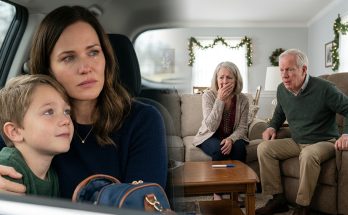
Emma almost refused to get out of the car.
“What if she doesn’t like me?”
“Then she’ll be wrong.”
Emma rolled her eyes.
“Mom.”
“Sorry.”
“What if she wants you?”
My heart stopped.
“Emma.”
“What if she likes you better than her mom?”
I took her hand.
“This is not an audition.”
She looked at me.
“Nobody is choosing replacements.”
“Promise?”
“Yes.”
“Can you promise for them?”
“No.”
She appreciated that answer.
I could see it.
“But Rebecca loves Lily.”
“How do you know?”
“Because I saw her talk about her.”
Emma looked out the window.
“Like you talk about me?”
“Yes.”
That gave her courage.
We walked toward the playground.
Lily stood beside Rebecca.
I saw myself.
Not completely.
Children are not mirrors.
But enough.
My chin.
My mother’s eyebrows.
The same slight tilt of the head I saw in childhood photographs.
My knees weakened.
Rebecca noticed.
She touched my arm.
“Breathe.”
I laughed through tears.
“You’re telling a nurse to breathe?”
“Yes.”
“Rude.”
Lily looked at me.
Emma looked at Rebecca.
Nobody moved.
Then Lily said:
“This is weird.”
Emma nodded.
“Extremely.”
Every adult laughed too loudly.
The girls looked at us like we were embarrassing.
That helped.
They sat on a bench.
Talked.
Slowly.
Then faster.
Within twenty minutes, they discovered they both hated mushrooms.
Rebecca and I stared at each other.
“That’s not genetic,” I said.
“It better not be.”
They laughed.
By the end of the afternoon, they were throwing pinecones at a tree.
Not sisters.
Not strangers.
Something without a name.
That was okay.
We spent too much time at first trying to name everything.
Biological mother.
Raising mother.
Birth daughter.
Other daughter.
Eventually, we learned relationships sometimes need to exist before language catches up.
Nobody switched homes.
That question came from almost everyone who heard the story.
As though children were luggage delivered to the wrong carousel.
There was never a serious question of simply exchanging them.
Emma belonged in our home because it was her home.
Lily belonged in the Hayes home because it was hers.
Biology mattered.
It mattered enormously.
But ten years mattered too.
Bedtime stories mattered.
First steps.
Broken arms.
School concerts.
Inside jokes.
Christmas mornings.
The parent who knew which stuffed animal had to be found before sleep.
The child who knew exactly how her mother took coffee.
Love had built structures biology alone could not replace.
So we expanded.
Awkwardly.
Slowly.
Painfully.
Emma spent time with Rebecca and Daniel.
Lily spent time with me.
The first time Lily came to my house without Rebecca, I was so nervous I cleaned the kitchen twice.
She walked in.
Looked around.
Then saw a photograph of my mother.
She froze.
“Who is that?”
“My mom.”
Lily stepped closer.
“I look like her.”
I stopped breathing.
“Yes.”
She did.
My mother had died before Emma was born.
She never knew either girl.
I sat beside Lily.
“Her name was Margaret.”
“What was she like?”
That question was a gift.
I told her.
She was stubborn.
Funny.
Terrible at directions.
Loved lemon cake.
Hated waste.
Sang while cleaning.
Lily listened as though I were handing her pieces of herself.
Then she asked:
“Would she have liked me?”
I cried.
“She would have adored you.”
Lily cried too.
Then she leaned against me.
Not calling me Mom.
Not needing to.
Just leaning.
I understood then that I did not need to steal a title from Rebecca to have something meaningful with Lily.
I could be Claire.
I could be her biological mother.
I could be another person who loved her.
The relationship could grow into whatever shape she needed.
Emma’s relationship with Rebecca developed differently.
Faster.
That hurt.
I am not proud of that.
Rebecca and Emma had an immediate ease.
Shared expressions.
Similar laugh.
Both loved gardening.
One afternoon, Emma came home from Rebecca’s house carrying a small plant.
“She showed me how to propagate it.”
“That’s nice.”
My voice was too flat.
Emma noticed.
“You’re mad.”
“No.”
“You sound mad.”
“I’m not.”
She stared.
Children are merciless detectors of dishonesty.
I sighed.
“I’m jealous.”
Her eyes widened.
“You are?”
“Yes.”
“Of Rebecca?”
“Yes.”
“Why?”
“Because I’m human.”
Emma considered this.
Then climbed beside me on the couch.
“She’s not replacing you.”
“I know.”
“You told me nobody was replacing anyone.”
“I did.”
“So listen to yourself.”
I stared at her.
“Ten years old and already unbearable.”
She smiled.
Then put her head on my shoulder.
“I like her.”
“I know.”
“I love you.”
“I know.”
“Both can happen.”
I kissed her hair.
“Yes.”
Both can happen.
That became our family motto.
Love is not a pie.
Giving one person a piece does not mean somebody else receives less.
But knowing that intellectually and living it emotionally are very different skills.
We practiced.
Michael was the hardest part.
I asked him to move out two days after Emma came home from the hospital.
He did.
No argument.
That surprised me.
Maybe he finally understood that arguing would only be another attempt to control an outcome.
He rented an apartment nearby.
He remained Emma’s father.
I never interfered with that.
Whatever he had done to me, he had loved Emma.
And Emma loved him.
I refused to use her as punishment.
But our marriage?
That was another question.
For months, I could not look at him without seeing ten years of silence.
Every birthday.
Every family vacation.
Every time he watched me tuck Emma into bed while knowing there was another mother somewhere wondering about her.
Every time he watched me talk about Emma’s eyes and say:
“She gets them from your side.”
He knew.
He let me say it.
That detail haunted me.
We went to counseling.
Not because I promised reconciliation.
Because eighteen years of marriage deserved an honest ending if ending was where we were going.
Michael did something important.
He stopped defending himself.
At first, he had said:
I was scared.
I wanted to protect you.
I couldn’t lose Emma.
Then our counselor asked:
“Why do all your explanations begin with what you felt and end with what Claire lost?”
Michael stared at the floor.
That question changed him.
At our next session, he said:
“I stole Claire’s right to be Emma’s mother with the truth.”
I cried.
He continued.
“I decided that a mother who knew the truth was more dangerous to my happiness than a wife who didn’t.”
My anger softened.
Not disappeared.
Softened.
“I was wrong.”
“Yes.”
“I was selfish.”
“Yes.”
“I loved you.”
“I know.”
“And I still betrayed you.”
“Yes.”
No excuses.
Truth.
That was the first brick in a bridge I did not yet know whether I wanted to cross.
The hospital eventually reached a settlement with both families.
There were investigations.
Policy changes.
Legal agreements.
People asked whether money helped.
It didn’t fix anything.
Money cannot purchase ten missing years.
But it paid for counseling.
Medical expenses.
Education funds.
Practical support.
Those things mattered.
The more important outcome was acknowledgment.
The hospital did not call it an unfortunate misunderstanding.
It acknowledged a catastrophic identification failure.
That language mattered too.
Calling harm by its proper name is part of repair.
Emma recovered.
Slowly.
Her energy returned.
Her cheeks regained color.
She complained about taking supplements.
She returned to school.
Her classmates treated her like a celebrity for approximately three days.
Then somebody spilled chocolate milk during lunch and life moved on.
Her math test?
The one she had worried about the morning she collapsed?
Her teacher let her take it later.
She scored ninety-six.
She came home furious.
“I changed the right answer to the wrong answer.”
I hugged her.
“Tragedy.”
“Mom.”
“Devastating.”
“Stop.”
I laughed.
That ordinary argument felt sacred.
Lily began joining us for occasional dinners.
Emma visited the Hayes family.
Eventually both families spent holidays together.
Not every holiday.
We weren’t trying to create a television special.
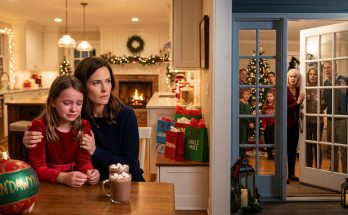
Sometimes we needed separation.
Sometimes Rebecca wanted Christmas morning with Lily.
Sometimes I wanted Emma beside me without complicated emotions in every photograph.
We learned that healthy boundaries did not mean rejection.
They meant breathing room.
Daniel became someone I trusted.
He had suffered differently.
Lily was biologically his.
For years, he had known Rebecca wasn’t biologically related to her while still raising her as their daughter.
He had also lived with the possibility that his biological child had been taken into another family.
One evening, he and I sat outside while the girls played.
“I used to imagine you,” he said.
“What did I look like?”
“Terrible.”
I laughed.
“Thanks.”
“I needed you to be terrible.”
I understood.
“Because if I imagined Emma with a good mother, then I felt guilty for wanting her.”
“Yes.”
He looked at me.
“Then I met you.”
“Disappointing.”
“Very.”
We laughed.
Pain became easier when it no longer needed enemies.
Rebecca and I became friends.
Not because the situation demanded it.
Because eventually we actually liked each other.
She was funnier than I expected.
I was bossier than she expected.
We disagreed about parenting.
Frequently.
Once, Emma asked Rebecca for permission to do something after I had already said no.
Rebecca called me immediately.
“Your daughter is trying to play us.”
“Our daughter biologically or emotionally?”
“Don’t start.”
We laughed.
Then grounded Emma.
Together.
Emma called it “an unfair multinational alliance.”
I was proud of the phrase.
By thirteen, the girls referred to each other as sisters when convenient.
“This is my sister.”
Or:
“She’s technically my biological—ugh, never mind, sister.”
They fought too.
That made me strangely happy.
Real relationships include irritation.
Lily borrowed Emma’s sweater without asking.
Emma exploded.
Lily accused Emma of acting like she owned everything.
Rebecca and I watched from the kitchen.
“Should we intervene?” she asked.
“No.”
“Why?”
“They’re finally behaving like family.”
She smiled.
The marriage took longer.
Two years after the truth came out, Michael asked:
“Do you think you’ll ever let me come home?”
We were sitting in a counselor’s office.
I looked at him.
“I don’t know.”
He nodded.
That was progress.
The old Michael would have tried to convince me.
This one waited.
“Do you want to?”
“Yes.”
“Why?”
“Because I love you.”
“Not enough.”
He flinched.
I continued.
“Love was present while you lied.”
He nodded.
“Then because I want to build something honest with you.”
“Better.”
He almost smiled.
“Anything else?”
“Yes.”
“What?”
“I miss our coffee maker.”
I laughed.
I hated that I laughed.
But I did.
He smiled.
Then became serious.
“I don’t deserve to come home because I waited long enough.”
“No.”
“I don’t deserve it because I’ve suffered.”
“No.”
“And you don’t owe it to Emma.”
“No.”
He looked at me.
“If you ever let me come back, I want it to be because you believe I’m safe with the truth.”
That sentence reached somewhere deep.
Safe with the truth.
That was exactly what he had not been.
Six months later, I invited him to dinner.
Then another.
Eventually he spent an evening at the house.
Then a weekend.
There was no dramatic suitcase at the door.
No swelling music.
One Tuesday, he left a toothbrush.
I stared at it.
Then at him.
“Is that intentional?”
He looked terrified.
“I can take it.”
I laughed.
“Leave it.”
That was how he came home.
A toothbrush.
Not forgiveness completed.
Repair begun.
Years passed.
Emma and Lily grew.
At sixteen, they both wanted driver’s licenses.
I considered moving to another country.
Rebecca agreed.
Michael and Daniel taught them.
This was a terrible decision.
Emma backed into a trash can.
Lily drove onto a curb.
Daniel came home pale.
“I’ve seen combat documentaries less frightening.”
Michael nodded.
“We should’ve raised cyclists.”
The girls rolled their eyes.
At seventeen, Lily asked if she could call me Mom.
The question came while we were washing dishes.
I dropped a plate.
It didn’t break.
“What?”
She looked embarrassed.
“I don’t mean instead of Rebecca.”
“I know.”
“I call her Mom.”
“I know.”
“You’ve always been Claire.”
“I know.”
She looked down.
“But you’re my mom too.”
My throat closed.
“You don’t have to call me anything you’re not comfortable with.”
“I want to.”
I started crying.
Lily did too.
Then she smiled.
“Mom?”
I covered my face.
“Oh, that’s unfair.”
She laughed.
I hugged her.
Later, I called Rebecca.
I was afraid.
Not because I needed permission.
Because I respected her.
“She called me Mom.”
Silence.
Then Rebecca began crying.
“Are you okay?”
“Yes.”
“Are you sure?”
“Yes.”
She sniffed.
“I always wondered when she’d want to.”
“You don’t mind?”
“Claire.”
Her voice softened.
“I had ten years where I was the only mother she knew.”
I closed my eyes.
“You missed those years.”
Tears ran down my face.
“If she has room for two mothers now, I’m not going to make her choose just so I can feel secure.”
I loved Rebecca in that moment.
Deeply.
Not romantically.
Not sentimentally.
As one mother loves another person who has protected her child.
Emma eventually called Rebecca Mom too.
The first time, she did it accidentally.
“Mom, can you—”
She froze.
Rebecca froze.
Emma’s face turned red.
“I meant—”
Rebecca started crying.
Emma groaned.
“Oh my God.”
Then hugged her.
Daniel recorded none of it.
He understood some moments become smaller when a phone appears.
I appreciated him for that.
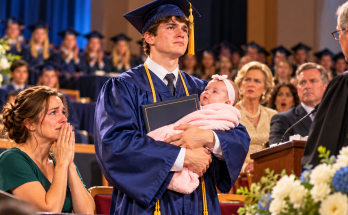
At eighteen, the girls graduated from high school.
Same year.
Different schools.
We attended both ceremonies.
At Emma’s graduation, I sat beside Rebecca.
At Lily’s, she sat beside me.
When Lily crossed the stage, I screamed.
Loudly.
She later said:
“Mom, everyone heard you.”
“Good.”
“You’re embarrassing.”
“Also good.”
Michael smiled beside me.
He had earned his place back gradually.
Our marriage never returned to what it was.
Thank God.
What it had been contained a ten-year secret.
We built something different.
There were rules.
Not formal ones.
Values.
No protective lies.
No deciding alone what the other person could handle.
No confusing fear with permission.
When truth was ugly, we said it ugly.
Sometimes badly.
Sometimes after an argument.
But we said it.
On our twenty-fifth anniversary, Michael and I returned to the restaurant where he had proposed.
Halfway through dinner, he said:
“I have something to tell you.”
My entire body tensed.
He saw it.
His face fell.
Even after all those years, that sentence still had power.
“Sorry.”
“What?”
“I broke your favorite mug.”
I stared.
“The blue one?”
“Yes.”
“You monster.”
“I know.”
“Why didn’t you tell me?”
“It happened this morning.”
“Ten hours of deception.”
“I’m slipping.”
We laughed.
Then he reached across the table.
“I hate that I taught your body to fear secrets.”
My laughter disappeared.
He continued.
“I’m sorry that some part of you will probably always hear those words and wonder whether your life is about to change.”
I squeezed his hand.
“Some scars stay.”
“I know.”
“But they don’t always hurt.”
He nodded.
That was forgiveness.
Not amnesia.
Emma studied psychology.
Of course she did.
“Because of us?” I asked.
“Partly.”
“Should I apologize?”
“Tuition would be better.”
She became interested in child development and family systems.
Lily studied architecture.
She said she liked designing spaces where people felt safe.
I tried not to make symbolism out of everything.
Failed.
At twenty-three, Emma gave me a framed copy of that old math test.
Ninety-six.
At the bottom she had written:
THE TEST I WAS SO WORRIED ABOUT BEFORE OUR ENTIRE FAMILY EXPLODED.
I laughed until I cried.
“Where did you find this?”
“You kept everything.”
“Apparently.”
She sat beside me.
“Mom?”
“Yes?”
“Do you ever wish the hospital never found out?”
I looked at her.
“No.”
“Even after everything?”
“Even after everything.”
“Why?”
I thought carefully.
“Because truth hurt us.”
She waited.
“But the lie was already hurting people we couldn’t see.”
Emma looked down.
“Rebecca.”
“Yes.”
“Lily.”
“Yes.”
“Daniel.”
“Yes.”
“And you, even though you didn’t know.”
I nodded.
“Truth didn’t create the wound.”
I touched her hand.
“It showed us where it was.”
Emma leaned against me.
“Do you ever wish I were biologically yours?”
The question stabbed me even after all those years.
I answered honestly.
“I wish I had given birth to the child I raised.”
She became still.
“And I wish I had raised the child I gave birth to.”
Tears filled my eyes.
“But neither wish means I would trade you.”
Emma cried.
“Because there is no version of my life where losing you becomes acceptable.”
She hugged me.
That was the truth.
People wanted simple answers.
Which girl was my real daughter?
Both.
Who was Emma’s real mother?
Both.
Who was Lily’s?
Both.
Did biology matter?
Yes.
Did raising a child matter?
Yes.
Which mattered more?
Wrong question.
Love is not a courtroom where one kind of motherhood must defeat another.
The mistake had happened in a hospital.
We refused to spend the rest of our lives repeating it emotionally by sorting people into the “correct” families.
We built a larger one.
Messier.
Stranger.
More beautiful.
Years later, Lily married.
Daniel walked her halfway down the aisle.
Then stopped.
Lily turned.
Reached out.
And called:
“Mom.”
Both Rebecca and I stood.
She laughed through tears.
“You two. Come here.”
We walked the rest of the way together.
Three parents.
One daughter.
People cried.
I nearly ruined my makeup.
At the reception, Lily danced first with Daniel.
Then Michael.
That surprised everyone.
Michael had become important to her too.
Not as a father replacing Daniel.
As the man who had raised her biological sister and spent years trying to repair a decision that had harmed both families.
Forgiveness had reached places none of us predicted.
Later, Michael stood beside me watching Emma and Lily dance badly.
“Do you ever think about that day?”
“Which?”
“The hospital.”
“Every time somebody says, ‘Call your husband.’”
He winced.
“Sorry.”
I smiled.
“I’m teasing.”
“Deserved.”
He looked toward the girls.
“I almost destroyed this.”
“Yes.”
He nodded.
I appreciated that he did not ask me to soften it.
Then I said:
“But you also helped rebuild it.”
He looked at me.
“That matters too.”
His eyes filled.
We held hands.
When Emma married three years later, Rebecca helped her get dressed.
I watched from the doorway.
Rebecca fastened a necklace around Emma’s throat.
Emma caught my reflection in the mirror.
“Mom.”
Both Rebecca and I answered:
“Yes?”
We froze.
Then laughed so hard Emma nearly ruined her mascara.
“This is going to be my entire life, isn’t it?”
“Yes,” we said together.
More laughter.
Emma looked at us.
“My moms.”
Two words.
A whole history.
Pain transformed into belonging.
Not erased.
Transformed.
Eventually, grandchildren arrived.
That created new chaos.
One afternoon, my granddaughter asked:
“Grandma, why does Mommy have two moms?”
I smiled.
“Because our family had an unusual beginning.”
“How?”
I looked toward Emma.
She nodded.
So I explained simply.
“When your mommy and Aunt Lily were babies, the hospital made a very serious mistake and they went home with different families.”
My granddaughter’s eyes became enormous.
“Like mail?”
Emma groaned.
“Mom.”
“What? She’s six.”
My granddaughter frowned.
“Then how did you fix it?”
That question stopped me.
How did we fix it?
We didn’t.
Not exactly.
You cannot fix ten missing years.
You cannot return them.
Cannot place two newborns back into bassinets and begin again.
So I answered:
“We told the truth.”
She waited.
“And then?”
“We loved everybody.”
She considered this.
“That’s it?”
I smiled.
“That took a long time.”
She nodded solemnly.
Then asked for cookies.
Children are wise about moving on.
Rebecca died before I did.
Cancer.
Fast.
Cruel.
Emma and Lily were both at her bedside.
So was I.
Near the end, Rebecca asked me to stay after everyone else left.
Her voice was weak.
“Claire.”
“I’m here.”
She reached for my hand.
“You know what I’m afraid of?”
“What?”
“That Lily will feel guilty for grieving you someday because she already grieved me.”
I started crying.
“She won’t.”
“Promise me you’ll tell her.”
“I promise.”
Rebecca smiled.
“You were the strangest gift my life ever gave me.”
I laughed through tears.
“That’s not very romantic.”
“You know what I mean.”
“I do.”
She squeezed my fingers.
“I hated you before I knew you.”
“I know.”
“Then I loved you.”
“I know.”
“You’re annoying.”
“I know.”
She smiled.
“Take care of our girls.”
Our girls.
“Yes.”
She died the following morning.
At her funeral, Emma held one of my hands.
Lily held the other.
Daniel stood beside us.
Michael behind me.
I looked at Rebecca’s photograph and thought:
You kept my daughter safe for ten years when I didn’t even know she needed you.
There is no thank-you large enough for that.
Years later, Daniel died too.
Our strange family became smaller.
Then Michael became ill.
He was seventy-six.
Heart failure.
Manageable at first.
Then less manageable.
One night, near the end, we lay in bed.
He said:
“Claire?”
“Yes?”
“Do you regret taking me back?”
I stared into the darkness.
“No.”
He breathed out.
“Are you sure?”
“Yes.”
“Why?”
I turned toward him.
“Because you changed.”
“I still did it.”
“Yes.”
“You never forgot.”
“No.”
“You shouldn’t.”
“I didn’t.”
He was quiet.
Then:
“I was so afraid of losing Emma that I almost lost everyone.”
I took his hand.
“Yes.”
“I wish I could go back.”
“I know.”
“I’d tell you.”
“I know.”
“Immediately.”
“I know.”
He cried.
I moved closer.
“Michael.”
“Yes?”
“I forgave you years ago.”
“I know.”
“No.”
I touched his face.
“Stop serving a sentence I stopped asking you to serve.”
He sobbed.
So did I.
Forgiveness sometimes has to be given more than once because shame keeps trying to return the debt.
Michael died two months later.
Emma sat beside me at the funeral.
Lily on my other side.
Afterward, Emma whispered:
“Dad made a terrible choice.”
“Yes.”
“He was still a good dad.”
“Yes.”
“Both are true?”
I smiled through tears.
“Both can happen.”
Our family motto.
Years passed.
My hair turned white.
The girls became middle-aged women.
Grandchildren grew taller than me.
The old hospital was renovated until the corridor where the mistake happened no longer existed.
But sometimes I drove past and remembered.
2:17 p.m.
The school calling.
Emma pale on the cot.
My hands shaking around the steering wheel.
The nurse running toward me.
Call your husband right now.
Michael arriving.
The doctor closing the door.
I had believed the worst thing I could hear that day was that my daughter was sick.
Instead, I learned something stranger.
A child can be yours without sharing your blood.
A child can share your blood without sharing your memories.
And neither truth cancels the other.
Near my eightieth birthday, Emma and Lily took me to lunch.
They argued over who would drive.
“You’re both terrible drivers,” I said.
“Mom,” Emma complained.
“You hit a trash can.”
“I was sixteen.”
“Trauma doesn’t expire.”
Lily laughed.
We sat by the window.
Two women.
Both my daughters.
Emma had Rebecca’s eyes.
Lily had mine.
I no longer found that painful.
Beautiful, actually.
Evidence of how far we had traveled.
Halfway through lunch, Lily asked:
“Mom, if you could change one thing, what would it be?”
“The hospital mistake.”
She nodded.
“Obviously.”
Emma asked:
“Not Dad’s secret?”
I thought.
“No.”
They looked surprised.
“I would change the original mistake because it stole ten years from all of us.”
I took a breath.
“But if the mistake still happened, I would change Michael’s silence.”
“Why?”
“Because truth would have given us choices sooner.”
Emma nodded.
“Would we have switched back?”
I smiled sadly.
“You weren’t library books.”
She laughed.
“I don’t know what we would have done.”
I looked at both of them.
“Maybe we would have found a version of this family ten years earlier.”
Lily reached across the table.
Emma put her hand over hers.
Then mine.
Three hands.
Three histories.
One family.
When I returned home that evening, I found the old framed drawing from Emma’s childhood.
Mom.
Dad.
Emma.
Three stick figures.
For years, I thought the drawing had become inaccurate.
Now I understood it had never been a legal document.
It was a child’s picture of who loved her.
Nothing about the truth erased that.
I placed another photograph beside it.
Rebecca.
Daniel.
Lily.
Then a third.
All of us together.
Messy.
Too many people for one frame.
Perfect.
People sometimes ask what makes a real mother.
I dislike the question.
It assumes reality is scarce.
Rebecca was real.
I was real.
Biology was real.
Ten years of bedtime stories were real.
Loss was real.
Jealousy was real.
Forgiveness was real.
So was anger.
So was gratitude.
The heart is large enough to contain contradictory truths without making one counterfeit.
That is what our daughters taught us.
The last time Emma asked me about the day she collapsed, she was forty-seven.
We were sitting on my porch.
“Were you scared?”
“Terrified.”
“What scared you most?”
I smiled.
“At first? Losing you.”
“And later?”
“Still losing you.”
She leaned against me.
“You never did.”
“No.”
Then she said:
“Mom?”
“Yes?”
“Thank you for never making me feel like the wrong baby.”
I stopped breathing.
She continued.
“I know you were grieving Lily.”
Tears filled her eyes.
“But you never looked at me like I was the person who took her place.”
I cried.
“You didn’t take anything.”
“I know.”
“None of it was your fault.”
“I know that too.”
I touched her cheek.
“You were a baby.”
She smiled.
“A very cute baby.”
“Debatable.”
“Mom.”
I laughed.
Then she asked:
“Do you know what Rebecca told me once?”
“What?”
“She said the same thing about Lily.”
My heart broke open beautifully.
Of course she had.
Two mothers.
Two daughters.
Same promise.
No child would carry the guilt of an adult mistake.
That, perhaps, was how we truly fixed what could be fixed.
Not by restoring the past.
By refusing to make the children pay for it.
That night, after Emma left, I sat alone on the porch.
Spring had returned.
Seattle air smelled damp and green.
Somewhere nearby, children were laughing.
I closed my eyes.
For a moment, I could see Emma at ten.
School uniform.
Backpack.
Worrying about her math test.
“Mom, what if I forget everything?”
I remembered fixing her strap.
“You studied. You’ll do great.”
Neither of us knew that by afternoon, our entire understanding of family would collapse.
But maybe family is not what survives because nothing terrible happens.
Maybe family is what people build after terrible things happen and nobody can return to who they were before.
Michael’s secret nearly destroyed us.
The hospital’s mistake changed us forever.
Truth hurt.
It rearranged marriages.
Parenthood.
Identity.
Memory.
But truth also gave Lily her history.
Gave Emma another mother.
Gave Rebecca the daughter she had wondered about.
Gave Daniel the chance to know Emma.
Gave me a relationship with the child I had lost without knowing I had lost her.
And, eventually, truth gave Michael the opportunity to become a man who no longer mistook fear for love.
I wish he had chosen it sooner.
I always will.
Forgiveness does not require rewriting history into something gentler than it was.
He betrayed me.
He also changed.
I was furious.
I also loved him.
Rebecca was Emma’s biological mother.
I was Emma’s mother.
I was Lily’s biological mother.
Rebecca was Lily’s mother.
Both can happen.
Love did not solve everything.
It did something harder.
It made room.
Room for anger without abandonment.
For biology without possession.
For grief without rejection.
For new relationships without replacing old ones.
For forgiveness without forgetting.
For two mothers where the world expected one.
For two daughters where I once thought I had only one.
The nurse who ran toward me that afternoon thought she was calling Michael to help us face terrible news.
She had no idea she was calling the person who had been carrying part of that news for almost a decade.
Neither did I.
But if I could stand in that hospital hallway again, beside the younger version of myself with shaking hands and terror in her chest, I would tell her one thing.
The truth you are about to hear will hurt more than you think you can survive.
But it will not take your daughter from you.
It will give you another one.
It will not erase the family you built.
It will force you to build a larger definition of family.
And one day, years from now, you will sit between two women who both call you Mom, and you will understand something you cannot possibly understand today.
Motherhood was never a blood test.
It was never a hospital bracelet.
It was never a piece of paper telling you which baby belonged in which bassinet.
Motherhood was the staying.
The waking.
The worrying.
The feeding.
The forgiving.
The letting go.
The making room.
The choosing, again and again, to love a child without asking that child to prove she belongs.
Emma belonged.
Lily belonged.
Rebecca belonged.
Daniel belonged.
Michael, after years of repair, belonged.
And so did I.
Not because the hospital got everything right.
Because after it got something terribly wrong, we eventually stopped asking which family each girl should have had.
Instead, we asked what kind of family we could become now that we knew the truth.
The answer took years.
It took tears.
Counseling.
Anger.
Awkward dinners.
Jealousy.
Forgiveness.
Graduations.
Weddings.
Funerals.
Grandchildren.
A lifetime.
But we found it.
We became ours.
And in the end, that was the truth no blood test could ever change.
THE END STORIES! THANK YOU FOR READING GOOD LUCK !❤️
Related Posts